

Kitchen peninsulas with seating create natural gathering spaces encouraging conversation and genuine connection authentically. Comfortable seating invites lingering, open layouts foster interaction, welcoming aesthetics establish hospitality. Your warm peninsula becomes beloved gathering hub where families and friends naturally congregate creating memorable moments together.
Social peninsula design emphasizes comfort through cushioned seating, ambient lighting, and welcoming atmospheres genuinely. Comfortable bar stools encourage lingering conversations, pendant lighting creates gathering ambiance, open sightlines maintain connection. These heartfelt touches prove peninsulas become cherished gathering places when designed celebrating warmth and genuine human connection authentically.
Create inviting peninsula celebrating family togetherness and authentic hospitality genuinely. Prioritize comfortable seating, incorporate welcoming details, and design spaces encouraging meaningful gathering. Your cherished peninsula becomes family favorite precisely because warmth and personal touches transform functional counters into beloved gathering place supporting authentic connection.
Peninsulas for Small Kitchens: Making the Most of Tight Spaces
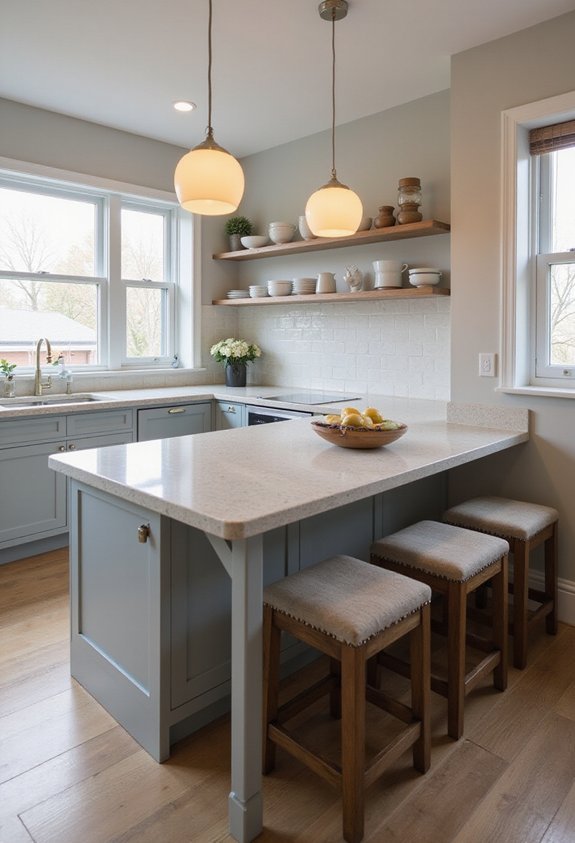
If you’re working with a compact kitchen, you’ll find that a peninsula offers functionality without consuming the floor space a full island would demand. You can position it against an existing wall, creating additional counter space for meal prep while maintaining easy movement throughout your kitchen.
Consider installing a slim peninsula with seating for two to three people. This setup lets you maximize your layout without creating bottlenecks. You’ll benefit from extra storage underneath, perfect for tucking away cookbooks, small appliances, or pantry items.
Choose bar stools that slide completely under the counter when not in use. This flexibility is essential in tight spaces. Opt for open shelving or minimal cabinetry to maintain visual lightness, making your kitchen feel larger than it actually is.
Also read: 13 Kitchen Paint Color Ideas
Open-Concept Layouts: Flowing Peninsulas That Define Zones
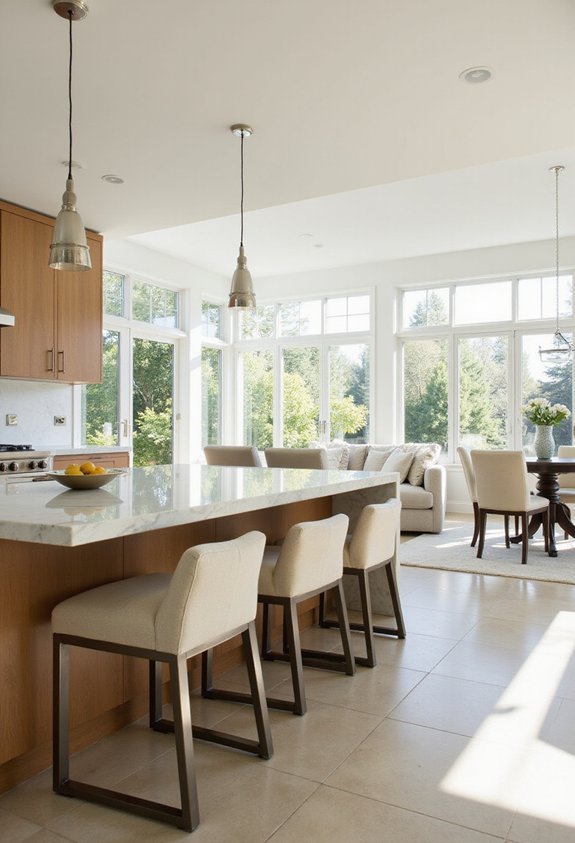
When you’re designing an open-concept kitchen, a peninsula becomes your best tool for establishing distinct zones without closing off your space. You’ll create natural boundaries between your cooking area and living room while maintaining visual flow throughout your home.
A peninsula with seating on one side anchors your kitchen while inviting conversation from adjacent rooms. You can orient it perpendicular to your main cabinetry to maximize its zone-defining impact. Consider adding pendant lighting above the seating area—it’ll enhance the spatial division while providing functional illumination.
This layout works especially well when you position the peninsula to face your living space, allowing you to cook while staying connected to family and guests. You’ll achieve the perfect balance between open-concept openness and functional kitchen definition.
Modern Waterfall Peninsulas With Breakfast Seating
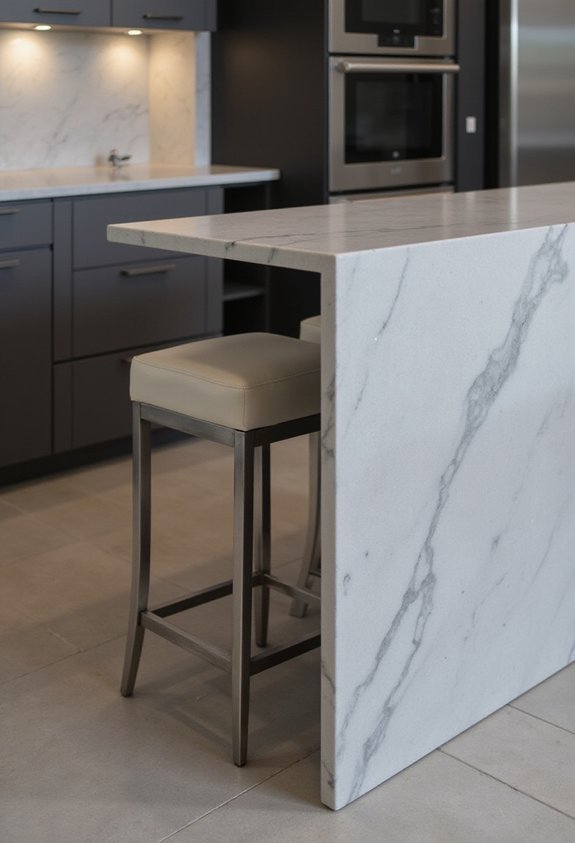
Modern waterfall peninsulas elevate your kitchen’s aesthetic by extending countertop material down the side of the island in a continuous, unbroken line. This sleek design creates visual flow and sophistication throughout your space.
When you incorporate breakfast seating into this style, you’re combining form with function. Position bar stools along the extended countertop to create an informal dining area that encourages conversation and connection. The waterfall edge provides a polished frame for your seating zone.
You’ll appreciate how this design maximizes your peninsula’s usability. The continuous surface accommodates food prep, serving, and dining without requiring multiple materials or visual breaks. Choosing durable, heat-resistant materials guarantees your waterfall peninsula withstands daily wear while maintaining its contemporary appeal.
Rustic Wood Peninsulas With Bar Stools and Character
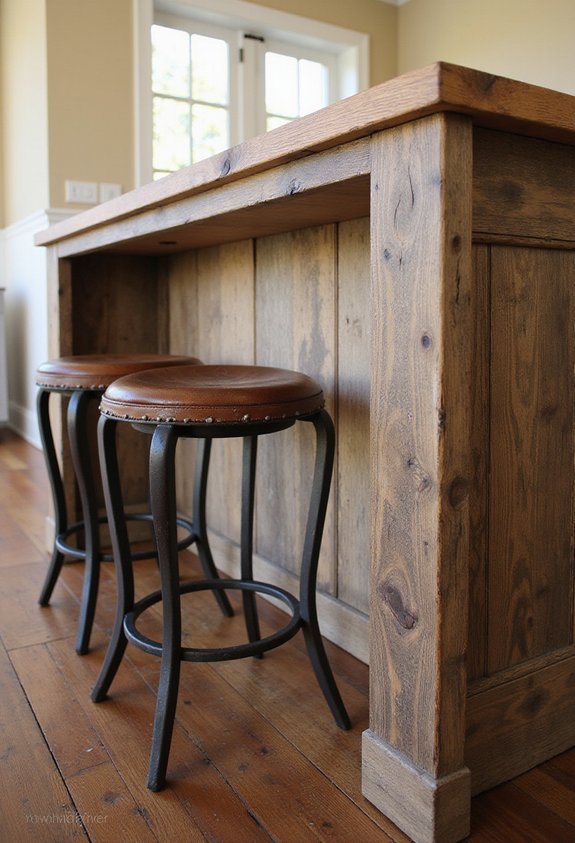
While sleek waterfall designs emphasize minimalism, rustic wood peninsulas bring warmth and authenticity to your kitchen. You’ll appreciate how natural wood grain and weathered finishes create visual interest and timeless appeal.
Pairing your peninsula with sturdy bar stools adds functionality and character. Consider stools with wrought iron frames or reclaimed wood seats that complement your rustic aesthetic. You can arrange three to four stools along the counter for comfortable seating and social gatherings.
The beauty of rustic wood lies in its imperfections—knots, color variations, and distressing enhance charm rather than detract from it. You might incorporate exposed beams or open shelving beneath your peninsula for additional storage while maintaining that authentic feel.
This approach transforms your peninsula into a gathering space that reflects personality and craftsmanship.
Industrial Peninsulas: Metal, Reclaimed Wood, and Edge
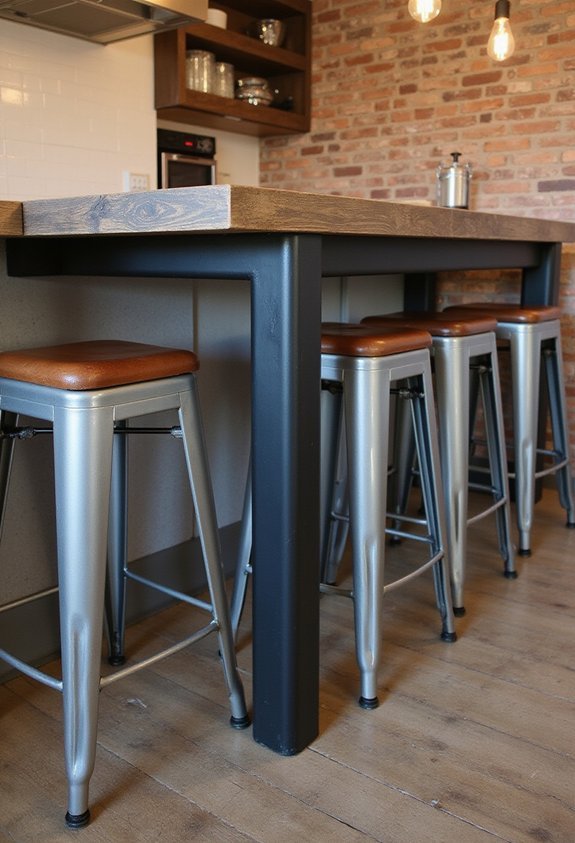
Industrial peninsulas take the character you’ve built with rustic wood and amplify it with raw materials and bold design elements. You’ll incorporate exposed metal frames, steel brackets, and weathered wood to create an edgy aesthetic that commands attention.
Consider pairing reclaimed barn wood with iron pipe legs or steel bases. These materials work together to establish an authentic, utilitarian vibe. You can add metal bar stools with distressed finishes to complement the look.
Lighting plays an essential role here. Suspended industrial pendants with Edison bulbs or metal shades enhance the raw appeal. Concrete countertops or steel work surfaces complete the aesthetic.
This approach works particularly well in open-concept spaces where your peninsula serves as a striking focal point. The contrast between polished and rough textures creates visual interest while maintaining functionality.
Minimalist Peninsulas With Hidden Storage and Clean Lines
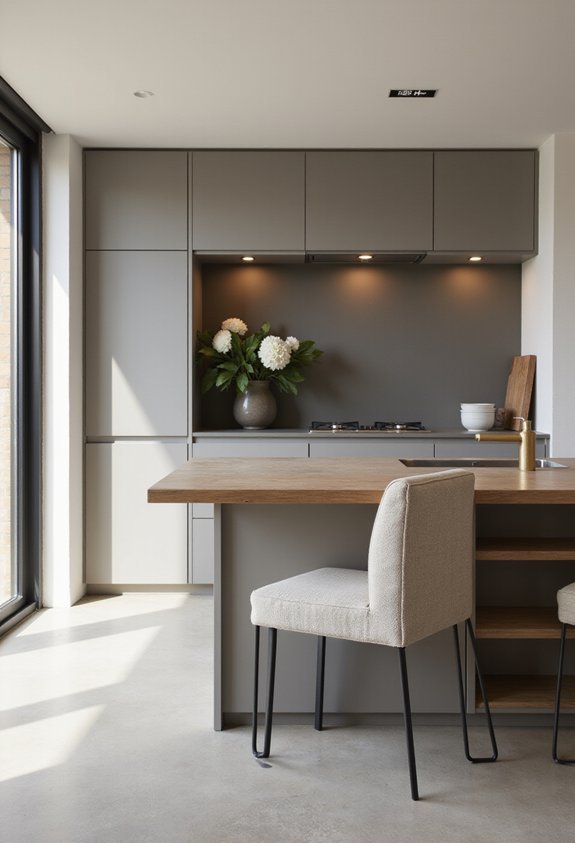
If you’re drawn to streamlined aesthetics, minimalist peninsulas deliver sophisticated functionality without visual clutter. You’ll appreciate how clean lines and hidden storage solutions maximize your kitchen’s efficiency while maintaining an uncluttered appearance.
Consider integrating push-to-open cabinetry that eliminates visible hardware, creating seamless surfaces that appear to float. You can conceal appliances and supplies behind sleek panels, keeping countertops bare and organized. Neutral color palettes—whites, grays, and natural wood tones—enhance the minimalist vibe.
For seating, you’ll want slim stools with metal frames or integrated bench seating that tucks neatly underneath. These options preserve sightlines and maintain the peninsula’s elegant simplicity. Built-in storage within the seating base provides additional functionality without sacrificing style, ensuring your minimalist kitchen remains both beautiful and purposeful.
Curved Peninsulas for Better Traffic Flow and Comfort
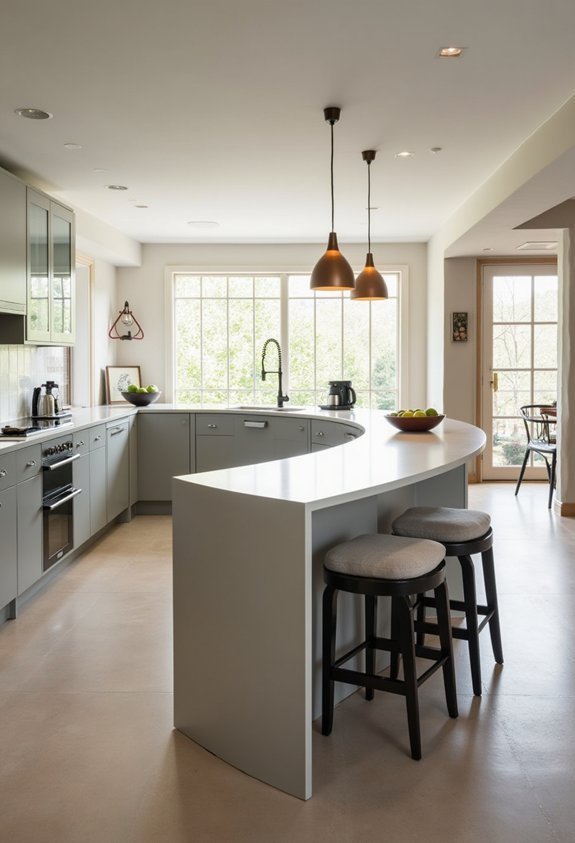
Rounded edges and flowing contours transform how you move through your kitchen, eliminating the sharp corners that interrupt natural traffic patterns. You’ll navigate seamlessly between appliances and work zones without stubbing toes or catching your clothing.
Curved peninsulas naturally guide foot traffic around your cooking space, creating an intuitive layout that feels effortless. The ergonomic design accommodates multiple people simultaneously, reducing collisions and bottlenecks during meal preparation.
Seating along curved surfaces encourages comfortable conversations since diners face each other at varied angles rather than in a straight line. This configuration makes your kitchen feel more spacious while maximizing usable counter space.
You’ll appreciate how curves soften your kitchen’s aesthetic, adding sophistication and visual interest compared to traditional rectangular islands.
Double-Duty Peninsulas: Two-Tier Designs for Maximum Function
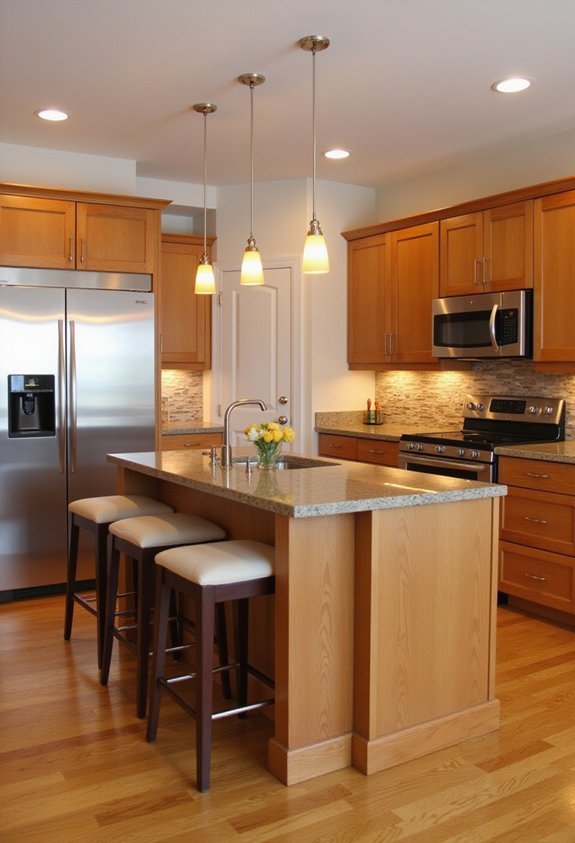
Two-tier peninsula designs maximize your kitchen’s functionality by combining a cooking or prep surface on one level with a lower dining counter on the other. This approach gives you dedicated zones for different activities without sacrificing valuable floor space.
You’ll appreciate the practical separation—your cooking area stays distinct from where guests sit, reducing cross-traffic and improving safety. The elevated prep surface maintains standard counter height for comfortable food preparation, while the lower tier (typically 36 inches) accommodates bar seating.
You can customize materials for each level too. Use durable, easy-clean surfaces where you cook, then opt for warmer finishes at the dining section. Two-tier designs work especially well in open-concept kitchens, allowing you to cook while remaining engaged with family and visitors.
Peninsula Seating Options: Stools, Benches, and Banquettes
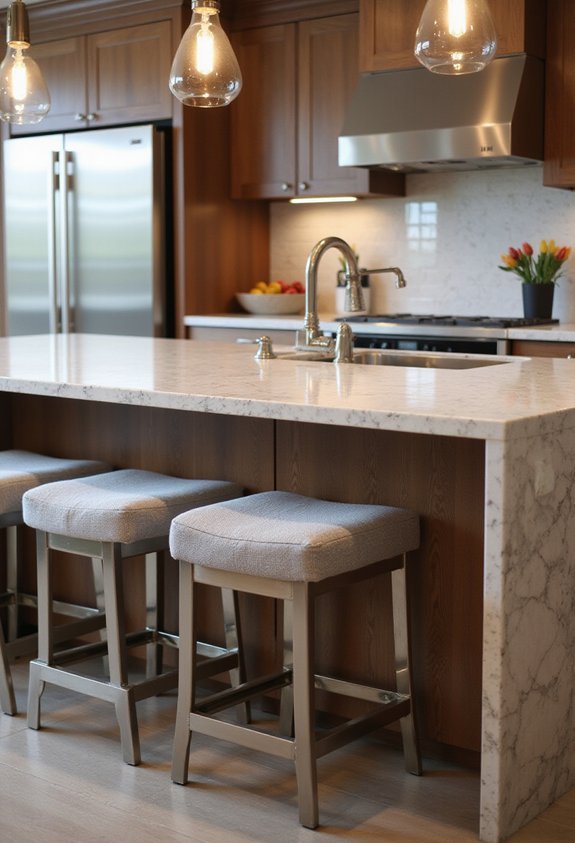
Once you’ve decided on your peninsula’s design, selecting the right seating transforms it from a functional surface into a social hub. You’ll find three primary options to examine.
Bar stools offer flexibility and space-saving benefits, especially swivel or adjustable-height models that accommodate various countertop heights. They’re ideal for casual dining and quick meals.
Benches provide seating for multiple people and create a cozy, built-in feel. You can tuck them partially underneath the peninsula to maximize floor space.
Banquettes combine comfort with storage potential, as many feature under-seat compartments. They’re perfect for families wanting integrated seating without additional furniture.
Choose based on your kitchen’s style, available space, and how you’ll use the peninsula. Each option delivers distinct advantages for your specific needs.
Luxury Peninsulas: Premium Materials and Waterfall Finishes
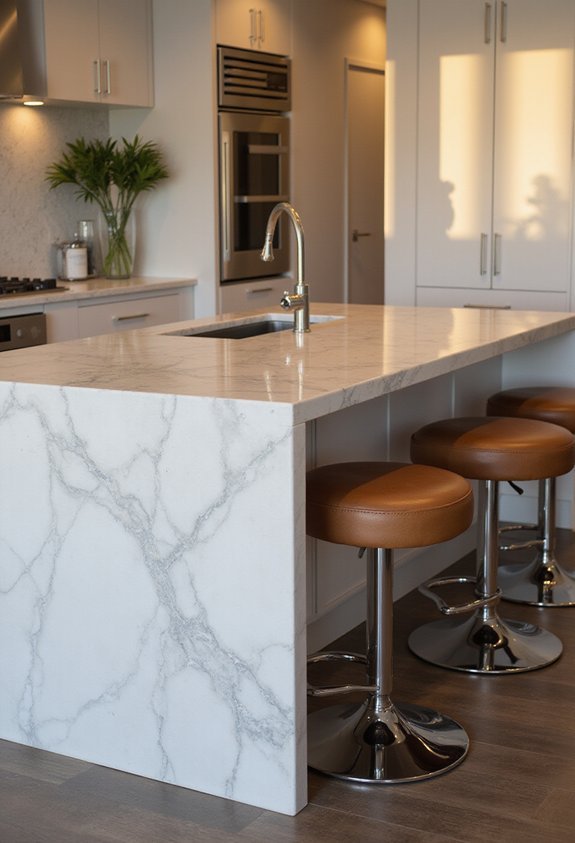
If you’re elevating your kitchen’s aesthetic, luxury peninsulas showcase premium materials and distinctive design elements that command attention. Waterfall finishes create a striking visual by extending countertop material down the peninsula’s side, producing a seamless, high-end appearance that transforms your space.
You’ll find luxury options in marble, granite, quartz, and exotic woods that elevate sophistication. These materials resist staining and scratching, ensuring longevity alongside elegance. Waterfall edges particularly enhance natural stone’s veining and patterns, making them focal points in your kitchen.
Pairing premium countertops with high-quality seating—leather stools, designer bar chairs, or custom banquettes—completes the luxe experience. You’re investing in both functionality and aesthetic refinement that impresses guests and enhances daily living.
Lighting and Style: Elevating Your Peninsula Design
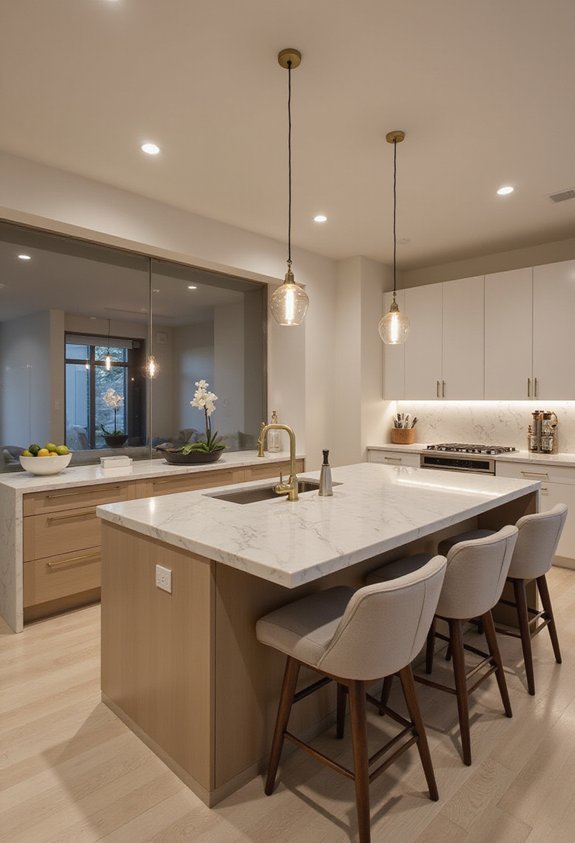
While premium materials and finishes establish your peninsula’s foundation, the right lighting and style choices will truly bring that investment to life. You’ll want to incorporate layered lighting—combine overhead fixtures with pendant lights suspended above seating areas to create ambiance and functionality. Under-cabinet lighting adds practical task illumination while accentuating your countertop’s texture and color.
Your style choices should complement your kitchen’s overall aesthetic. Consider pendant designs that echo your cabinetry hardware or match your faucet finishes. Modern kitchens benefit from sleek, geometric fixtures, while traditional spaces call for classic or farmhouse-inspired options. Don’t overlook dimmer switches, which let you adjust lighting intensity for different moods and activities. These thoughtful design elements transform your peninsula from a functional surface into a stunning focal point.
Peninsula Installation: What to Know Before You Build
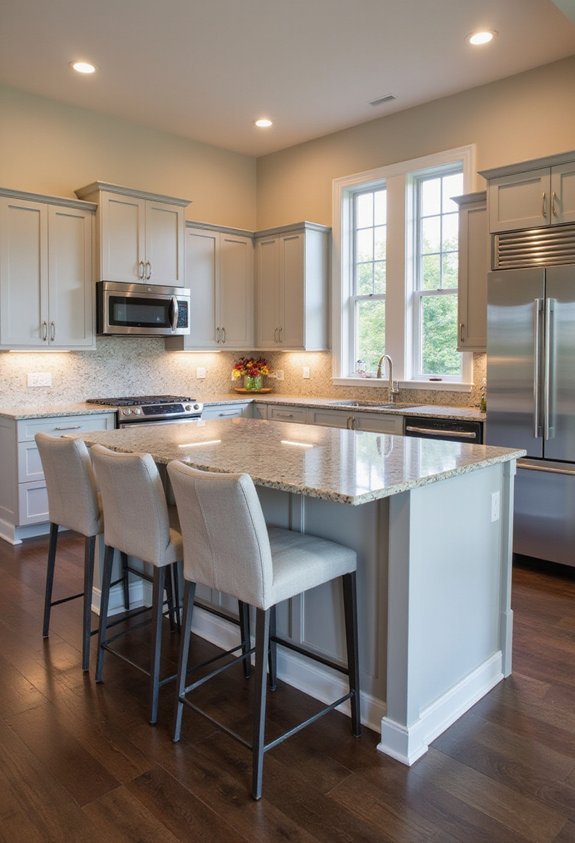
Before you commit to building your kitchen peninsula, you’ll need to assess your space’s structural capabilities and layout constraints. Measure your kitchen carefully to verify you have adequate clearance—typically 42 inches minimum from the peninsula to opposing cabinets for comfortable movement.
Check whether your flooring can support the additional weight and anchoring requirements. You’ll also need to confirm plumbing and electrical lines won’t interfere with installation. Consider traffic flow patterns and guarantee the peninsula won’t obstruct doorways or natural passages through your kitchen.
Consult local building codes, as some jurisdictions impose specific requirements for peninsulas. Hiring a contractor experienced with kitchen renovations helps identify potential issues early. Budget for professional installation to ensure structural integrity and proper support systems that’ll keep your peninsula safe and functional for years.
Frequently Asked Questions
How Much Does It Cost to Install a Kitchen Peninsula With Seating?
You’ll spend between $3,000 and $10,000 installing a kitchen peninsula with seating, depending on size, materials, and labor costs in your area. Custom designs and high-end finishes can push costs higher, while basic installations remain more affordable.
Can I Add a Peninsula to My Kitchen if I Have Limited Plumbing Access?
Yes, you can add a peninsula to your kitchen with limited plumbing access. You’ll simply design it without built-in sinks or appliances. Position your peninsula away from existing plumbing lines, and you’ll maximize your space efficiently.
What Is the Ideal Height for Peninsula Seating and Countertops?
You’ll want your peninsula countertop at 36 inches high for standard dining and food prep. If you’re adding seating, you’ll need 15 inches of knee clearance underneath, positioning bar stools at 24-26 inches tall for comfortable seating.
How Do I Choose the Right Peninsula Size for My Kitchen Layout?
You’ll want to measure your kitchen’s available space and traffic flow patterns first. Then, consider your family’s needs and how you’ll use the peninsula. Choose a size that doesn’t obstruct movement while providing adequate workspace and seating.
Are Kitchen Peninsulas More Practical Than Traditional Kitchen Islands?
You’ll find peninsulas more practical for smaller kitchens since they’re attached to existing cabinetry, saving space and installation costs. They’re easier to access than islands but offer less flexibility for repositioning or expanding your layout later.
Conclusion
You’ll discover that kitchen peninsulas transform your cooking space into a versatile social hub. Whether you’re working with a tight layout or an open-concept design, you can customize your peninsula with modern waterfall edges, rustic wood, or industrial accents. By thoughtfully selecting seating options, lighting, and materials, you’ll create a functional and stylish focal point that enhances both your kitchen’s efficiency and your home’s aesthetic appeal.

