

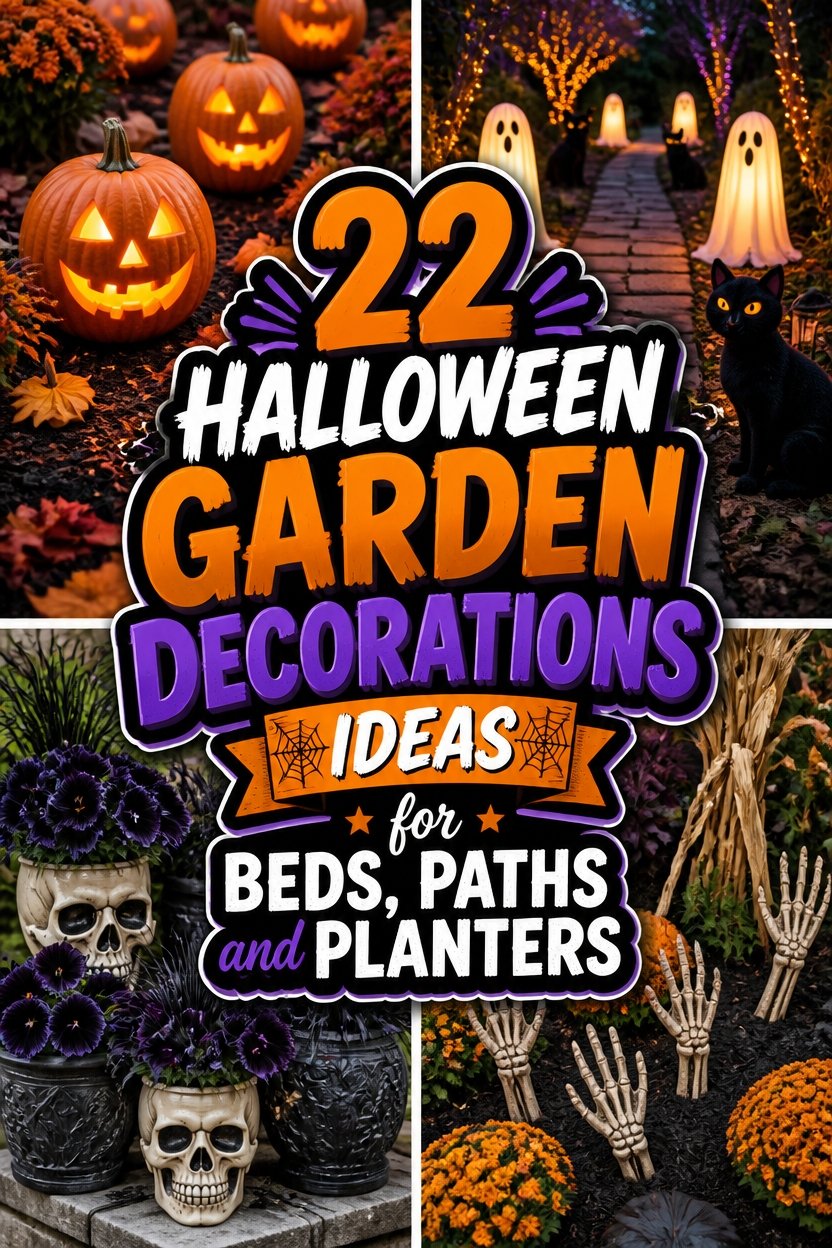
Halloween garden decorations get to use something a bare lawn never can, which is the planting itself.
Cobwebs stretched over a trellis, bats tucked among the ivy, gauze figures rising out of a flower bed. The plants do half the work.
That layering is why gardens tend to look better decorated than yards do.
The ivy on my arbor took a cobweb drape one October and looked genuinely abandoned by the end of the week.
Here is how to work with what is already growing.
Let the Plants Carry the Decoration
Look for structures you already have. Arbors, trellises, tomato cages and tall planters are all frames waiting for fabric or webbing, and none of them need building.
Choose materials that will not harm anything. Loose drapes and stakes pushed into open soil are fine, while wire wrapped around stems and paint sprayed near foliage are not.
Watch your walking routes. Garden paths tend to be narrower than driveways, so keep props to the outer edge and light the ground properly.
You Might Also Love

22 Halloween Garden Decorations Ideas
The list moves through borders, planters, lighting and hanging pieces, all built around existing beds and structures.
Contrast is what makes these read. Black cutouts against green foliage and white gauze against dark mulch both show up from a distance, while grey props tend to vanish into the planting.
Choose a couple for the beds and a couple for the paths, and the garden will look considered end to end.
DIY Halloween Decorations From Household Items
Before purchasing Halloween decorations, homeowners can examine items already available around the house to create garden displays. Old sheets, painted white or black, become ghosts or bats. Mason jars hold battery-operated lights for luminaries.
Broken branches arrange into skeletal structures. Cardboard boxes transform into tombstones with marker details. Plastic bags stuff with newspaper to form figures. These materials require minimal preparation, reducing decoration costs considerably.
Pumpkin Planters and Jack-o’-Lantern Displays
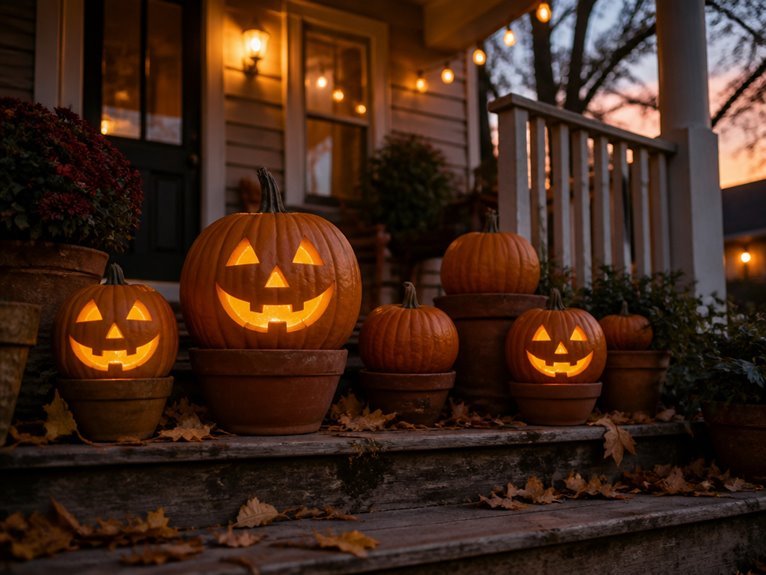
While household items provide budget-friendly decoration options, pumpkins serve as versatile garden focal points that combine seasonal appeal with functional planting opportunities. Hollowed pumpkins can hold mums, ornamental kale, or trailing ivy.
Carved jack-o’-lanterns with lit candles create evening focal points along garden beds and pathways. Grouping pumpkins in odd numbers of three or five produces balanced visual arrangements throughout garden spaces.
Fake Cobwebs Over Arbors, Trellises, and Planters
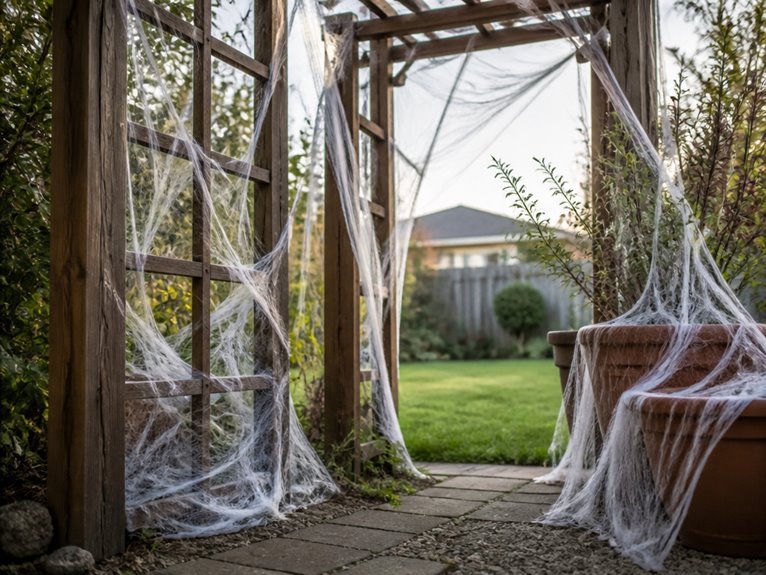
Fake cobwebs effectively transform garden structures into spooky focal points, draping across arbors, trellises, and planters with minimal effort. The synthetic material stretches easily over wooden frames, metal structures, and plant containers. White or gray varieties work best for visibility.
Gardeners can arrange webs to cover entire sections or create small concentrated patches among flowers and foliage for varied visual impact.
Skeletal Garden Borders Along Flower Beds
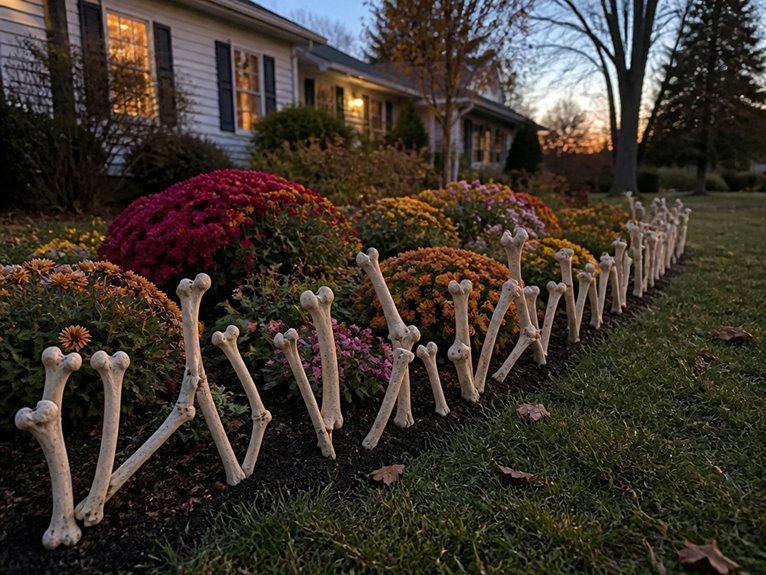
Skeletal garden borders create defined edges around flower beds while establishing a distinctly spooky atmosphere. Homeowners can arrange plastic skeleton parts, including bones and skulls, along bed perimeters.
These borders outline planting areas effectively, directing foot traffic while maintaining seasonal décor. Skeleton borders integrate well with existing landscaping, requiring minimal maintenance throughout the Halloween season.
Skeletal Hands Reaching From Soil Beds
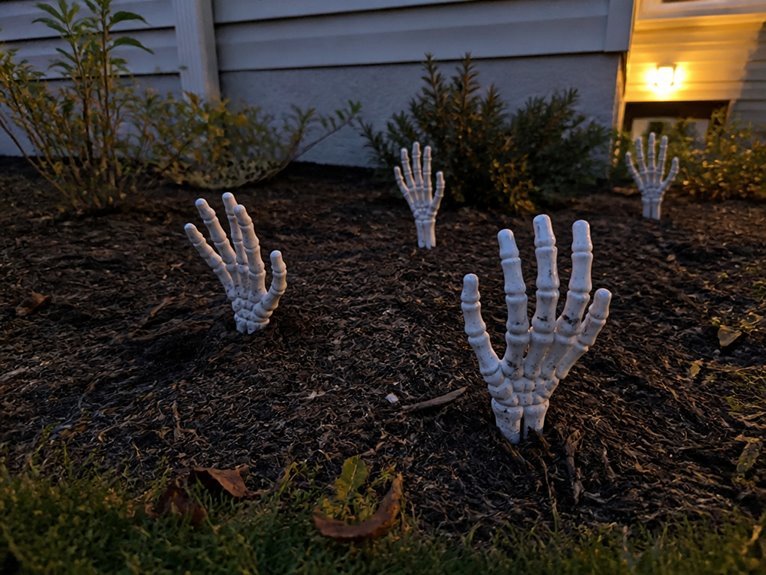
Extending the skeletal theme beyond garden borders, reaching hands add another layer of Halloween atmosphere to outdoor spaces. Foam or plastic hands positioned partially buried in soil beds create an unsettling visual effect.
Gardeners can arrange multiple hands at varying heights, angles, and depths throughout planting areas. Strategically placed near pathways or flower clusters, these props enhance the overall spooky aesthetic without requiring maintenance.
Skull and Crossbones Bed Borders

Skull and crossbones designs create distinct Halloween borders around garden beds, marking planting areas with traditional pirate and gothic imagery. Gardeners can paint these motifs on wooden stakes, plastic edging, or stone pavers, then position them along bed perimeters.
White paint on dark backgrounds enhances visibility. Materials include acrylic paints, stencils, and weatherproof sealers for durability.
Miniature Cemetery Fences Along Garden Walkways
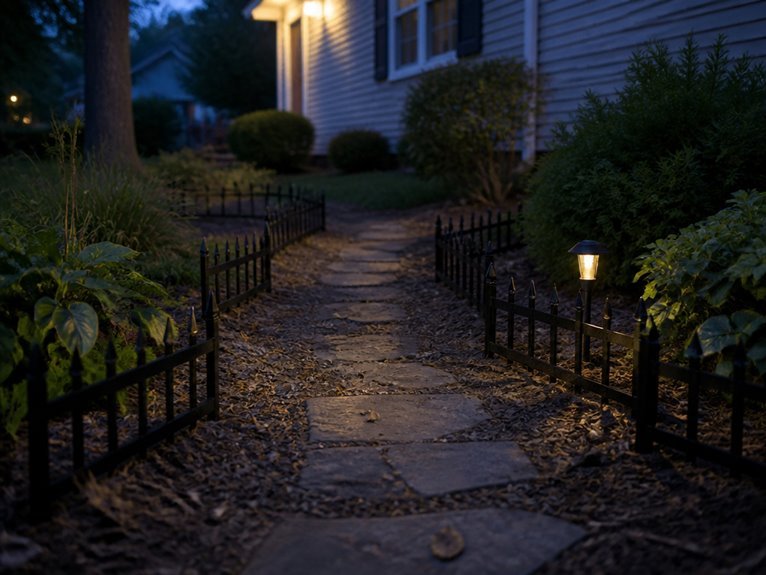
Small picket fences, typically 12 to 24 inches tall, can line garden pathways to create a cemetery aesthetic. These miniature barriers define walkway edges while establishing a graveyard atmosphere.
Plastic or wood options work equally well, requiring minimal maintenance. Black or weathered finishes enhance the effect. Spacing fences 2 to 3 feet apart allows adequate sight lines while maintaining visual impact throughout the garden space.
Tombstone Markers for Pathways and Lawn Edges

Foam and plastic tombstones function as practical focal points along garden borders and walkway edges. These markers, available in various heights and stone finishes, define pathways effectively. Homeowners can anchor them in soil or use stakes for stability.
Gray, black, and weathered white options blend seamlessly with landscape features. Tombstones accommodate epitaphs, names, or dates, adding personalized cemetery aesthetics to outdoor spaces.
You Might Also Love


Spider-Web-Wrapped Climbing Vines and Vine Props
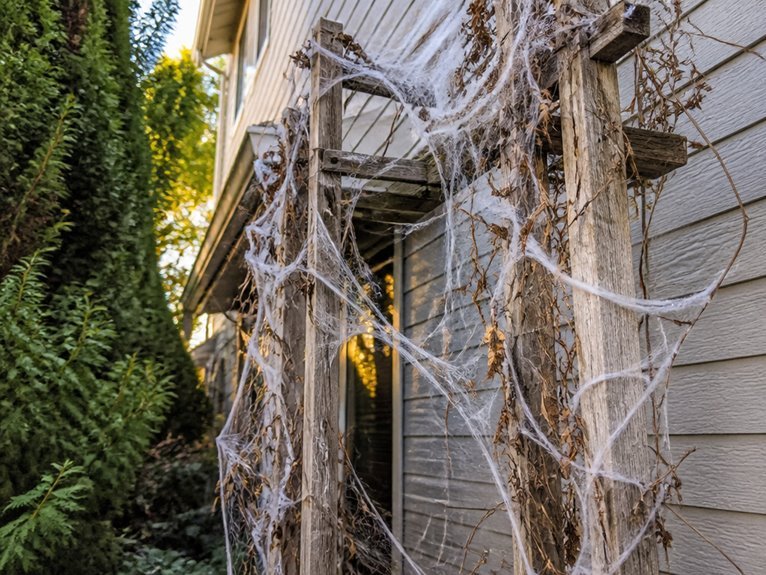
Artificial spider webs draped over climbing vines, trellises, and garden structures create layered visual depth throughout outdoor spaces. Gardeners can wrap webs around ivy, clematis, or pergolas to establish spooky focal points. Black or white webs work effectively, with rubber spiders positioned throughout.
This approach transforms existing garden features into Halloween elements without requiring permanent installations or damage to plants.
Glowing Stones to Light Your Pathways
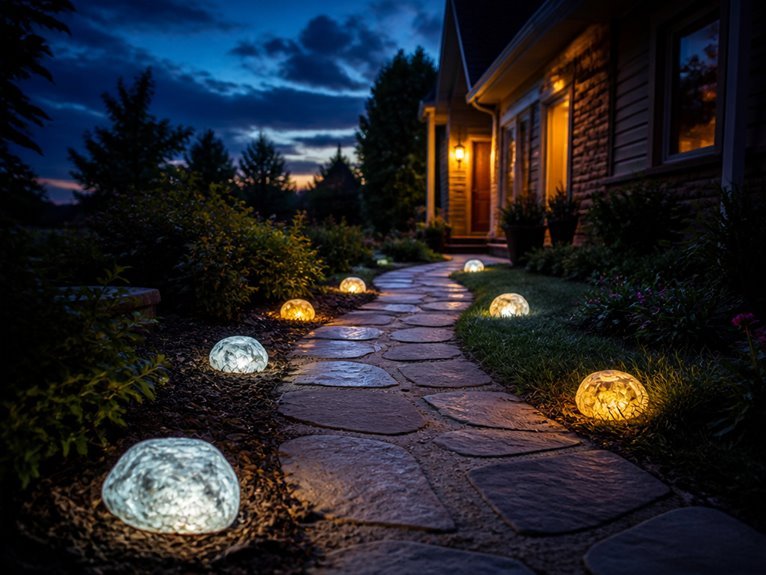
Glowing stones offer a practical solution for illuminating garden pathways while maintaining the Halloween aesthetic established throughout outdoor spaces. Solar-powered glow stones absorb sunlight during day hours, then emit soft light after dark.
Gardeners place these stones along walkways, near planters, and around flower beds. Options include phosphorescent pebbles, LED-embedded rocks, and painted stones treated with glow-in-the-dark coating.
Lantern-Style Pathway Markers With Candles
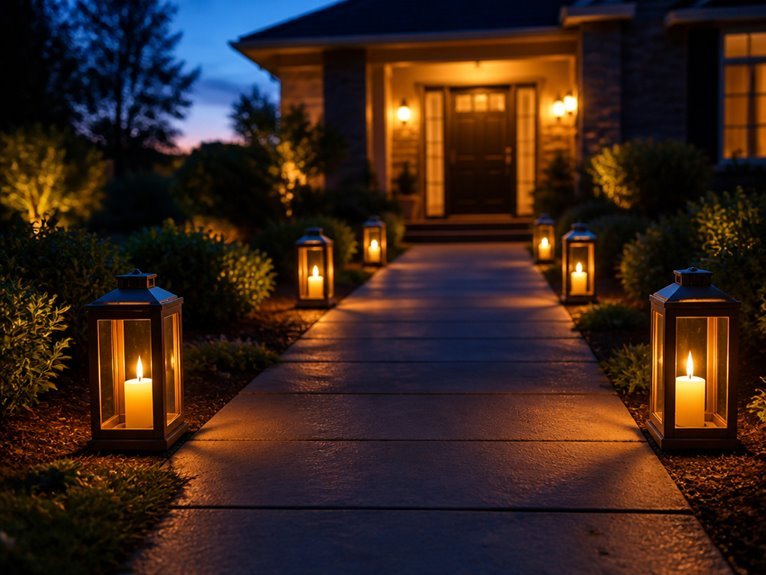
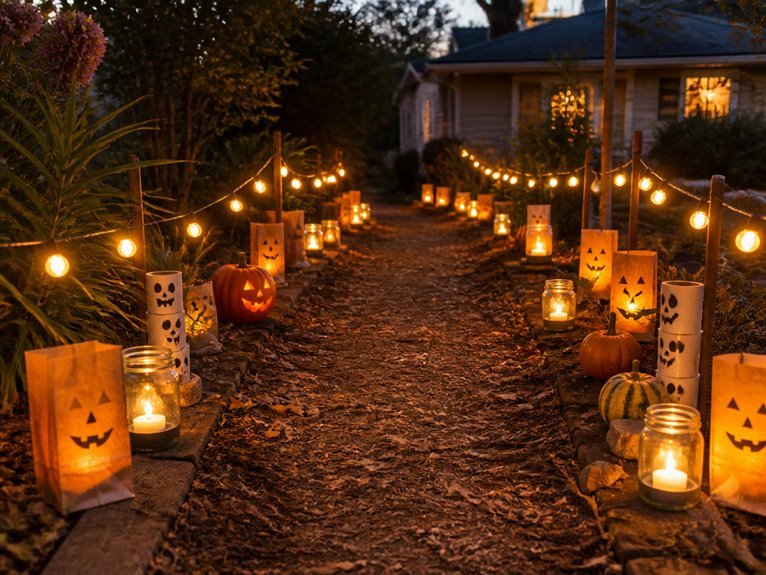
Lanterns represent another effective method for guiding visitors through Halloween gardens while creating ambient nighttime lighting. Paper bag lanterns, metal storm lanterns, and jack-o’-lantern designs work well for this purpose.
Placing battery-operated candles inside prevents fire hazards while maintaining visibility along garden paths. Spacing markers every three to four feet guarantees adequate illumination throughout the yard.
Create Spooky Fog Effects in Plant Beds
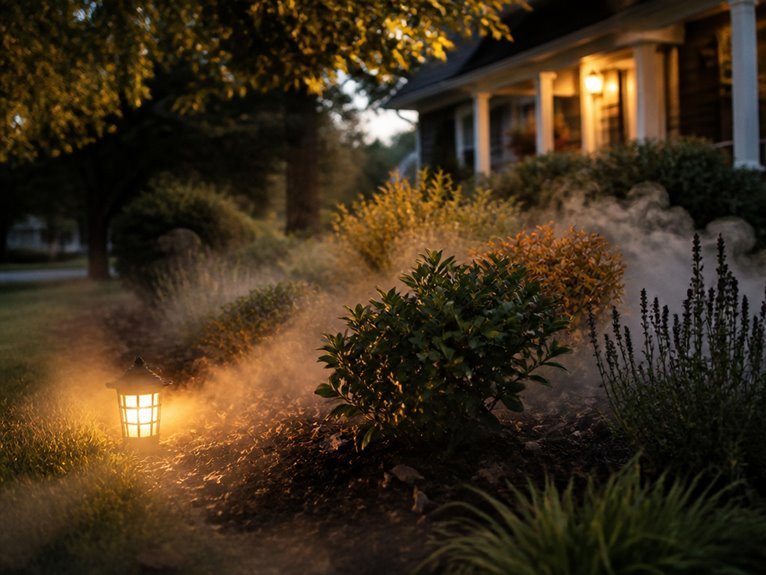
While pathway lighting establishes safe navigation, fog effects around plant beds add atmospheric depth and mystery to Halloween gardens. Dry ice machines create low-lying mist that settles among flowers and shrubs, producing eerie visual layers. Fog chillers offer safer alternatives, dispersing cool vapor without extreme temperatures.
Placing machines strategically behind tall plants enhances concealment, allowing mysterious mist to drift gradually across garden spaces.
Eerie Ground Lights for Pathway Ambiance
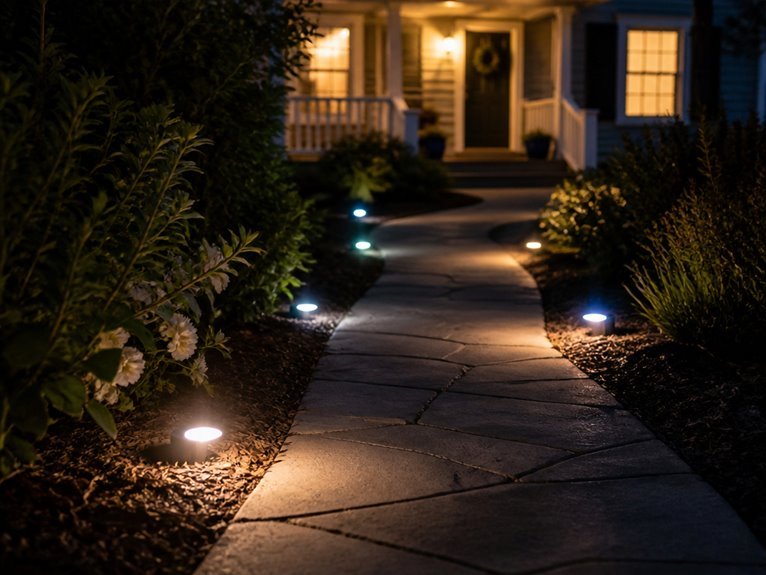
How can pathway lighting transform a Halloween garden into a navigable yet atmospheric space? Ground lights, placed along garden paths, create eerie ambiance while guiding visitors safely.
Solar-powered stake lights, LED string lights, and uplighting techniques work effectively. Orange, purple, and green bulbs enhance the spooky mood. Spacing lights every two to three feet guarantees adequate illumination, preventing tripping hazards while maintaining the desired atmospheric effect throughout the garden.
Halloween String Lighting Through Garden Beds
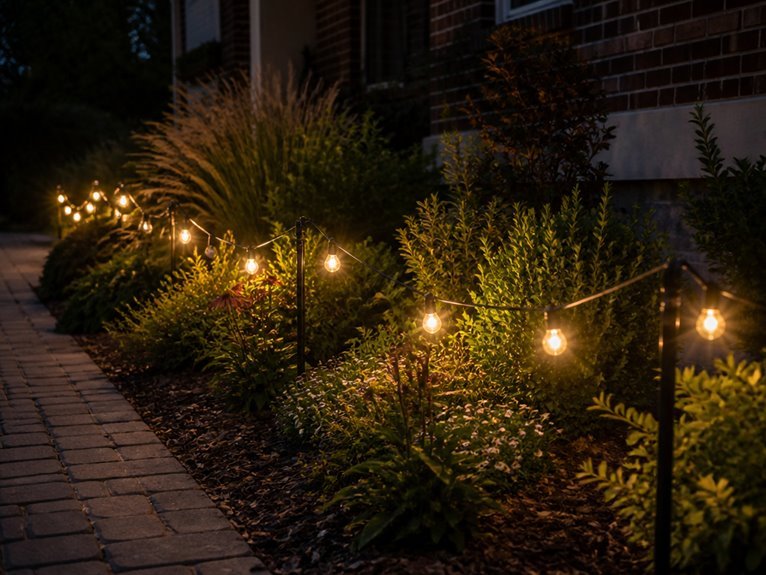
Because string lights woven through garden beds create layered visual interest, they serve as both decorative elements and functional lighting sources. Orange, purple, and white lights work well threaded through shrubs, perennials, and flower beds.
Battery-operated options eliminate extension cord hassles. Positioning lights at varying heights produces depth, making garden spaces appear larger and more atmospheric during evening hours.
Witch Hat Toppers for Tall Planters
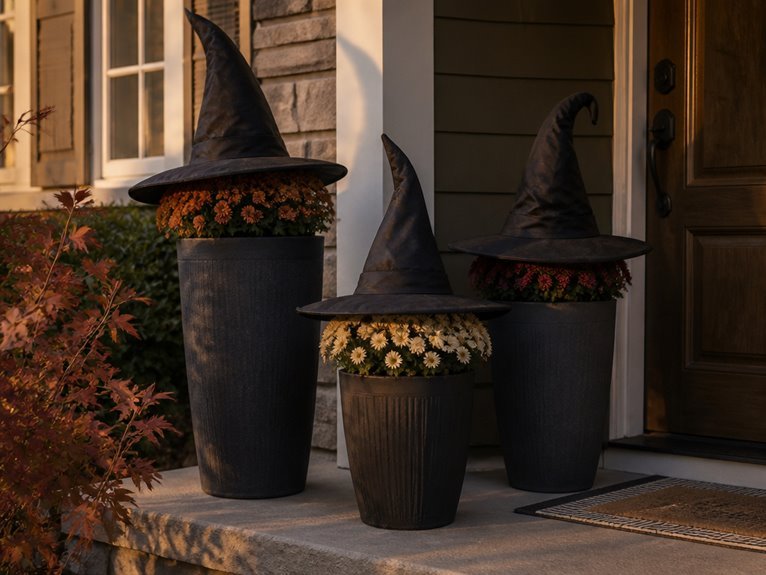
Many gardeners use oversized witch hats as decorative toppers for tall planters, creating striking focal points in outdoor spaces. Black fabric or plastic hats work well for this purpose. Positioning them atop planters containing purple flowers, ornamental grasses, or trailing vines enhances the Halloween aesthetic.
Secure hats firmly to prevent wind damage. This simple decoration method requires minimal installation effort while delivering maximum visual impact throughout the season.
Black Bat Cutouts Among Climbing Vines
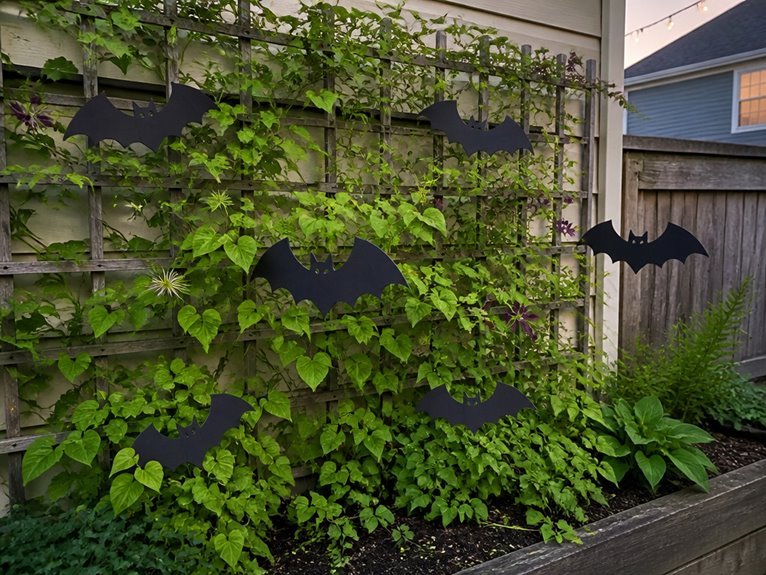
Black bat cutouts offer another layering option for Halloween garden displays, working alongside or instead of planted toppers. These cardboard or plastic silhouettes attach to climbing vines, trellises, and arbors throughout garden beds.
Positioning bats among ivy, clematis, or morning glory creates depth and visual interest. Black cutouts contrast effectively against green foliage, making them visible from various angles and distances around outdoor spaces.
Hanging Bats Above Garden Walkways
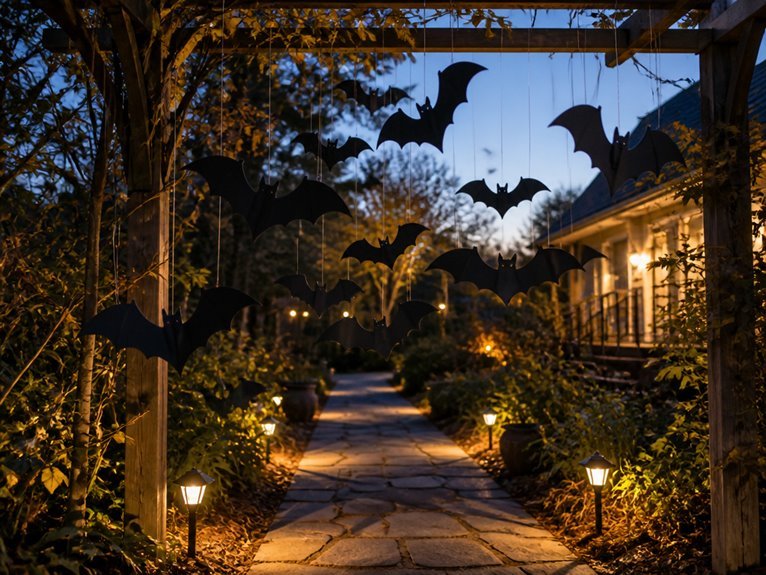
Suspended bat decorations create an overhead presence along garden paths, transforming walkway experiences through vertical placement. Hanging bats from pergolas, arbors, or tree branches establishes focal points above head level.
Black fabric or plastic bats work effectively, positioned at varying heights for visual interest. This approach directs attention upward, creating atmospheric depth without cluttering ground-level spaces where visitors walk.
Ghostly Gauze Figures
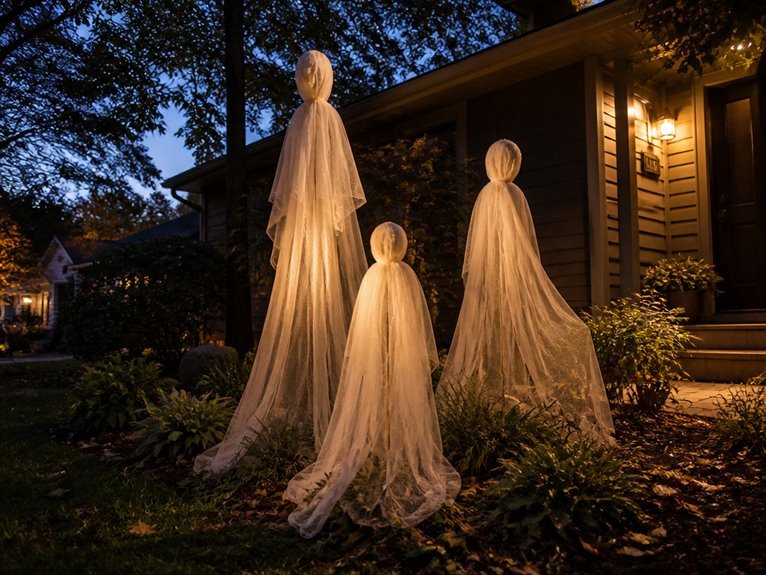
While hanging bats establish overhead visual elements, gauze figures operate at ground and mid-level heights to create spectral forms throughout garden spaces. Gardeners drape white cheesecloth or tulle over wire frames, tomato cages, or garden stakes.
These translucent structures scattered among flower beds, along pathways, and near planters produce ghostly silhouettes. The lightweight fabric moves with wind, enhancing the ethereal appearance throughout October evenings.
Eyeball Ornaments for Planters
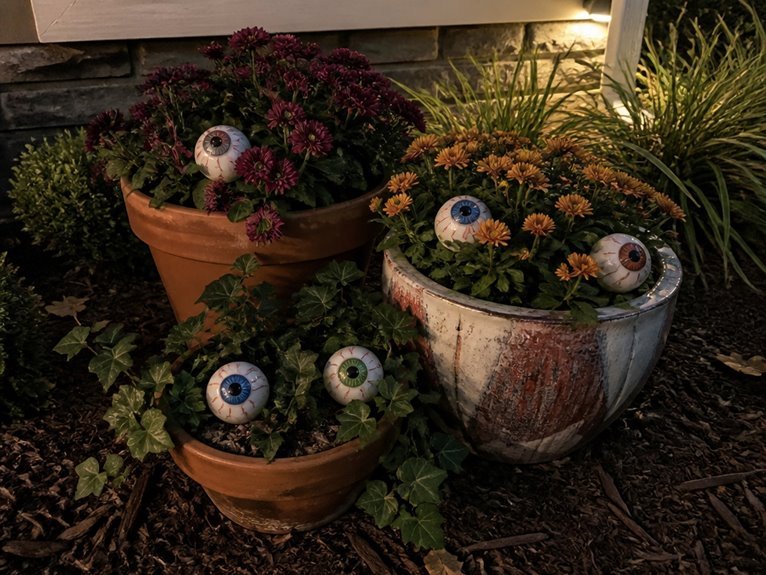
Oversized eyeballs serve as direct, attention-grabbing focal points when positioned within garden containers and flower beds. These ornaments, typically made from painted foam or plastic, create an unsettling visual effect.
Gardeners can place them among soil, flowers, or trailing plants. Red-rimmed versions enhance the eerie appearance. Multiple eyeballs scattered throughout planters increase the overall impact and maintain thematic consistency across outdoor spaces.
Spooky Mummy-Wrapped Planters and Stakes
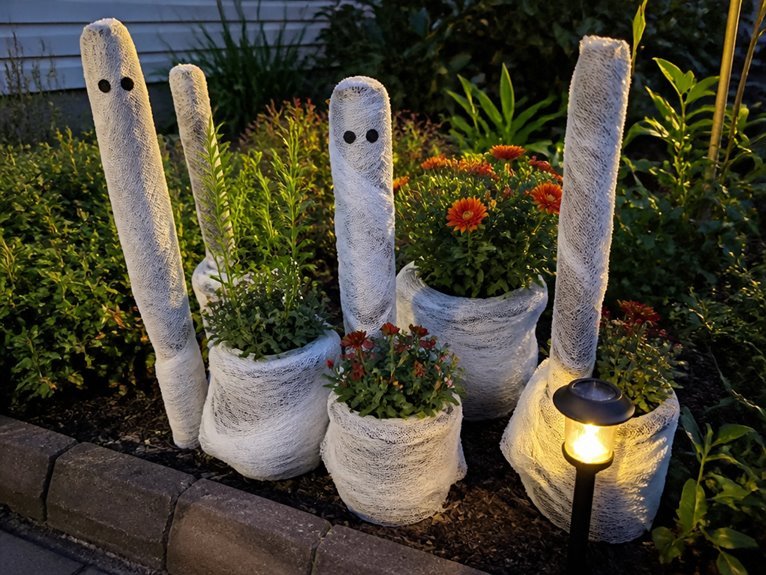
Mummy-wrapped garden features transform standard planters and plant stakes into themed decorations through simple wrapping techniques. White gauze, cheesecloth, or torn fabric strips wound around containers create an authentic mummy appearance. Adding painted or googly eyes enhances the effect.
This method works for clay pots, terracotta planters, wooden stakes, and tomato cages, offering flexible decoration options throughout garden beds and borders.
Black Feather Accents for Planter Displays
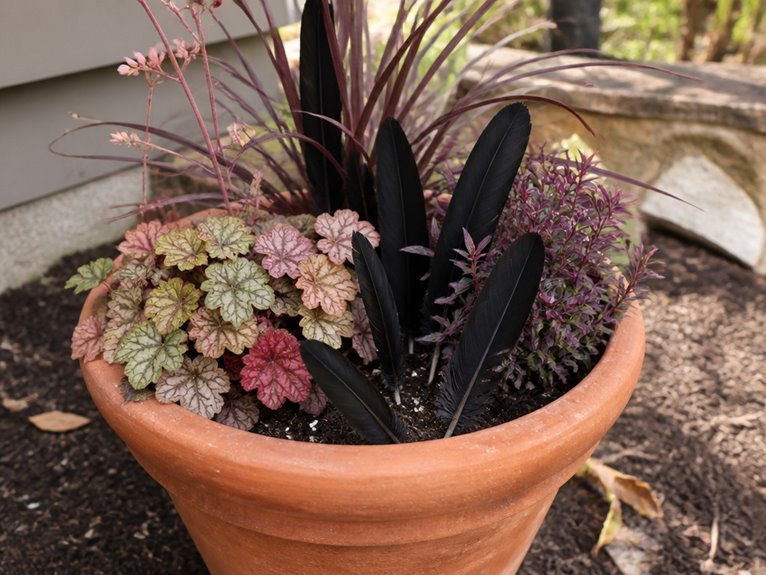
Elegance emerges when black feathers are incorporated into garden planters and container arrangements. Gardeners can insert feathers into soil near trailing ivy, ornamental grasses, or dark petunias. This technique adds vertical interest and visual texture to displays.
Feathers from craft stores work well, as do natural options. The contrast between feather softness and plant foliage creates a refined, gothic aesthetic suitable for autumn gardening projects.
Witch Broom Bundles at Garden Entrances
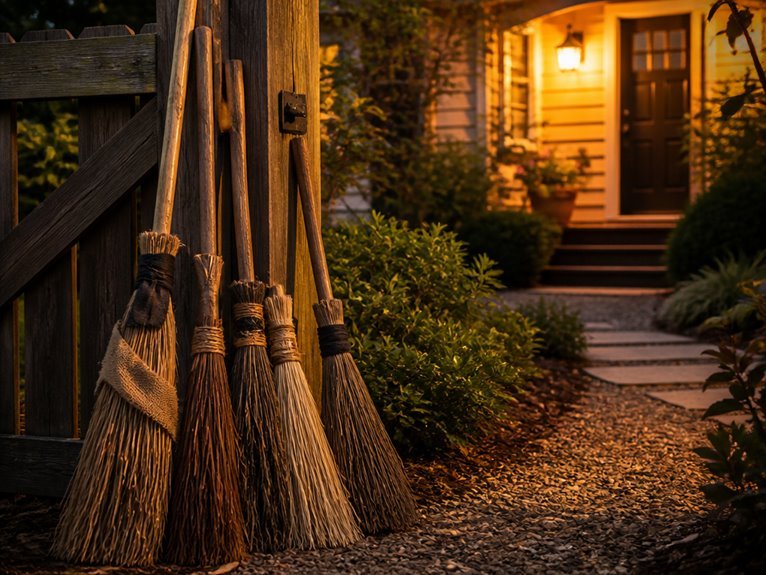
While feather accents bring refined gothic details to planters, witch broom bundles offer a more prominent Halloween statement at garden entry points. Bundled twigs or raffia-tied branches create distinctive focal points flanking doorways and pathways.
Positioning broom clusters near gate entrances, porch steps, and garden borders establishes clear seasonal themes. Groups of three or five bundles arranged at varying heights produce visual interest and atmospheric effect throughout outdoor spaces.
Frequently Asked Questions
How Can I Protect Halloween Garden Decorations From Rain and Wind Damage?
One can secure decorations with stakes or anchors to prevent wind displacement. Waterproof coverings and sealants shield delicate items from rain damage. Positioning decorations in sheltered areas and bringing fragile pieces indoors during severe weather offers additional protection.
What’s the Best Way to Store Halloween Decorations After the Season Ends?
One should store Halloween decorations in a cool, dry place such as a basement or attic. Using labeled containers and wrapping fragile items in bubble wrap prevents damage. Keeping them away from moisture and extreme temperatures guarantees they remain in good condition for next season.
Are Halloween Garden Decorations Safe for Pets and Wildlife?
One wonders: are those cheerful garden decorations actually harmless? Most Halloween decorations prove safe, though certain items warrant caution. Sharp objects, toxic paints, and small choking hazards pose risks. Pet owners should inspect decorations carefully, ensuring nothing endangers curious animals or passing wildlife.
How Do I Prevent Decorations From Damaging Plants or Garden Structures?
One can prevent decoration damage by securing items firmly to withstand wind and weather. Using lightweight materials, avoiding sharp edges, and placing decorations away from plant stems protects garden health. Regular inspections guarantee structures remain intact throughout the season.
What Budget-Friendly Alternatives Exist for Expensive Halloween Decoration Products?
Homeowners can craft DIY decorations using recycled materials like old sheets for ghosts, painted rocks for tombstones, and cardboard for structures. Natural elements such as branches, leaves, and pumpkins offer affordable seasonal alternatives to commercial products.
Conclusion
Transforming a garden with Halloween decorations requires selecting complementary elements that work across multiple zones. A homeowner might combine pumpkin planters along beds, skeletal borders near pathways, and mummy-wrapped stakes around planters, creating cohesive visual impact. This layered approach uses various decoration types strategically positioned throughout the space. Combining household items with purchased décor produces festive results without excessive expense or installation complexity.