

Luxury modern kitchens combine premium materials, cutting-edge technology, and sophisticated design creating exceptional spaces. High-end appliances, marble countertops, and custom cabinetry establish refined elegance throughout. Statement lighting, professional-grade equipment, and seamless finishes celebrate culinary excellence and design sophistication authentically.
Contemporary luxury emphasizes quality over quantity through intentional material selection and architectural detail. Smart home integration, wine coolers, and spa-like amenities support elevated lifestyle expectations. Open layouts encourage entertaining while maintaining professional functionality and genuine cooking capability for serious culinary pursuits.
Your dream kitchen becomes reality through investment in quality, timeless design principles, and authentic craftsmanship. Prioritize premium materials, incorporate meaningful details, and design spaces reflecting genuine culinary passion. This exceptional kitchen becomes sanctuary celebrating cooking artistry, family gathering, and the luxury of genuinely beautiful, functional spaces supporting authentic dreams.
Start With Your Layout: Open-Concept vs. Defined Zones
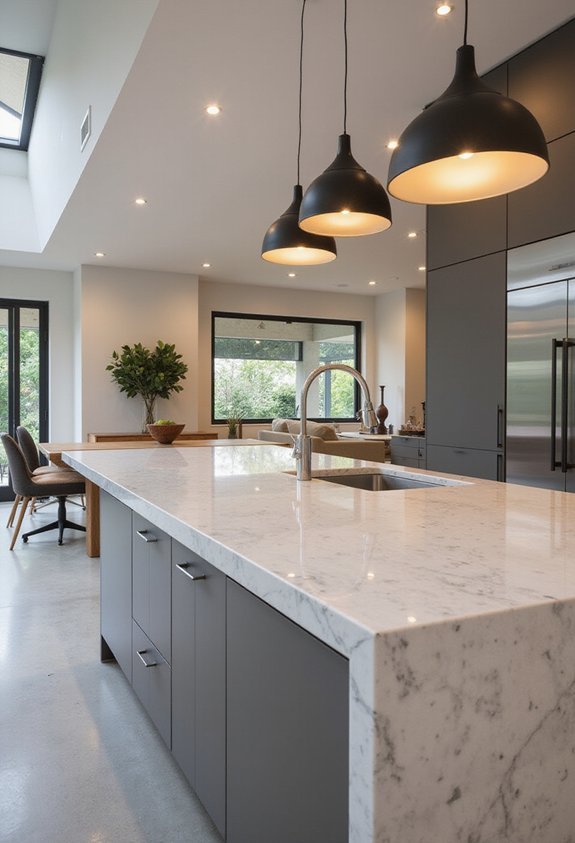
When you’re designing your luxury modern kitchen, the layout you choose will fundamentally shape how you’ll use the space and how it’ll blend with the rest of your home. Open-concept designs eliminate walls, creating seamless passages between your kitchen, dining, and living areas. This approach maximizes natural light and fosters connection with family and guests while cooking.
Alternatively, defined zones establish distinct kitchen areas with subtle boundaries. This layout contains cooking activity, reduces noise and odors spreading throughout your home, and provides visual separation without sacrificing sophistication.
Consider your lifestyle and entertaining habits. If you enjoy hosting large gatherings and value interaction, open-concept works beautifully. If you prefer privacy while cooking or have a busy household, defined zones offer practical functionality. Your choice sets the foundation for every subsequent design decision.
Also read: 13 Kitchen Paint Color Ideas
Choose Your Foundation: Spatial Planning for Luxury Kitchens
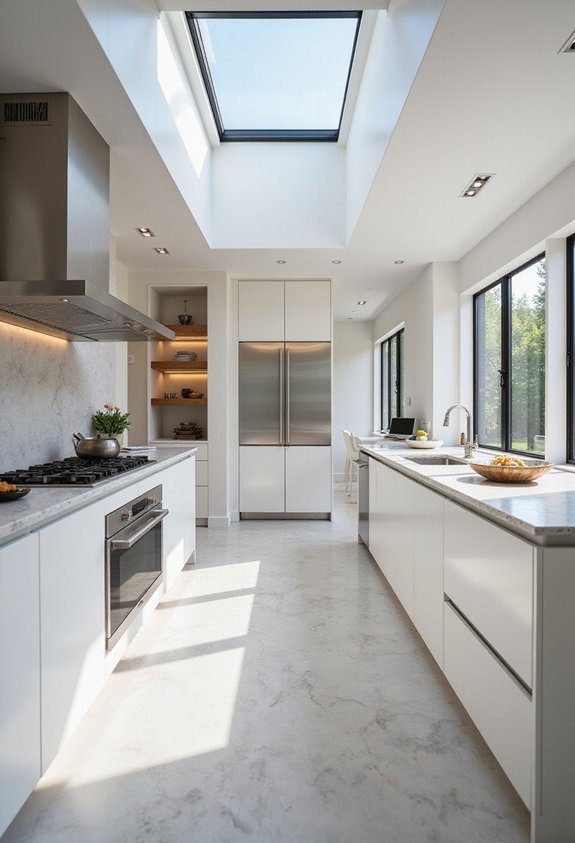
Once you’ve settled on your layout, it’s time to think strategically about how you’ll arrange your kitchen’s essential zones. You’ll want to position your prep area, cooking zone, and storage near each other to create an efficient workflow. Consider the classic work triangle—connecting your sink, stove, and refrigerator—but adapt it to your space’s unique dimensions.
Allocate adequate counter space for food preparation and plating. Position your island strategically to serve as both a functional workspace and social hub. Guarantee appliances don’t compete for counter real estate, and plan electrical outlets and gas lines accordingly.
Think vertically too. You’ll maximize storage and visual interest by utilizing wall space, tall cabinetry, and overhead racks. This strategic planning transforms your luxury kitchen from beautiful to brilliantly functional.
Island Design: The Centerpiece That Works Harder
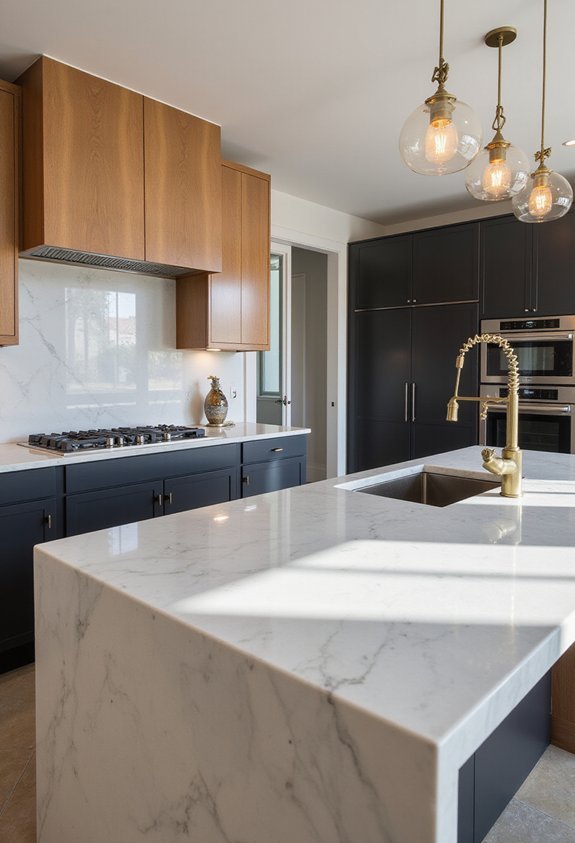
As the focal point of your luxury kitchen, a well-designed island elevates both functionality and aesthetics—it’s where prep work, cooking, storage, and entertaining converge. You’ll want to incorporate multiple work zones: a cooking area with a cooktop or range, ample counter space for food preparation, and a sink for easy cleanup. Include integrated storage with custom cabinetry and drawers to maximize organization. Consider adding seating on one side to create an informal dining or gathering space. Materials matter—select durable surfaces like marble, quartz, or butcher block that complement your kitchen’s design. Lighting above the island should be both task-oriented and decorative, anchoring the space while providing essential illumination for workspace and ambiance.
Countertop Materials: Marble, Quartz, and Premium Alternatives
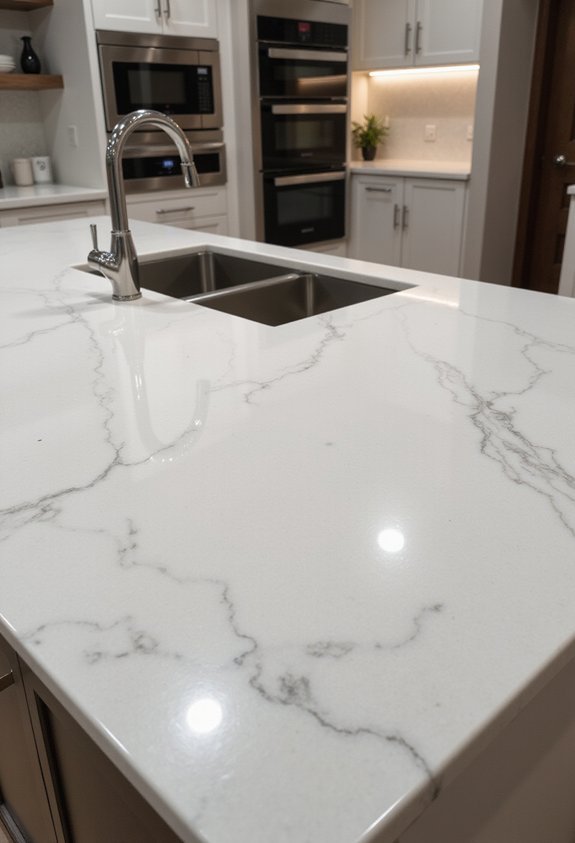
Your island’s visual impact hinges on the countertop you choose—it’s the surface that defines your kitchen’s character and withstands daily demands. Marble offers timeless elegance and luxury appeal, though it requires regular sealing and stains easily. Quartz provides superior durability and low maintenance while delivering the aesthetic you want without marble’s vulnerabilities. If you’re seeking alternatives, consider engineered stone, which combines beauty with resilience, or quartzite for a natural option that rivals quartz in hardness. Porcelain slabs have gained traction for their versatility and stain resistance. Your selection should balance aesthetics with practical considerations—budget, lifestyle, and maintenance commitment. Each material performs differently under heat and impact, so prioritize options that align with your cooking habits and design vision.
Custom Cabinetry: Storage That Disappears Into Design
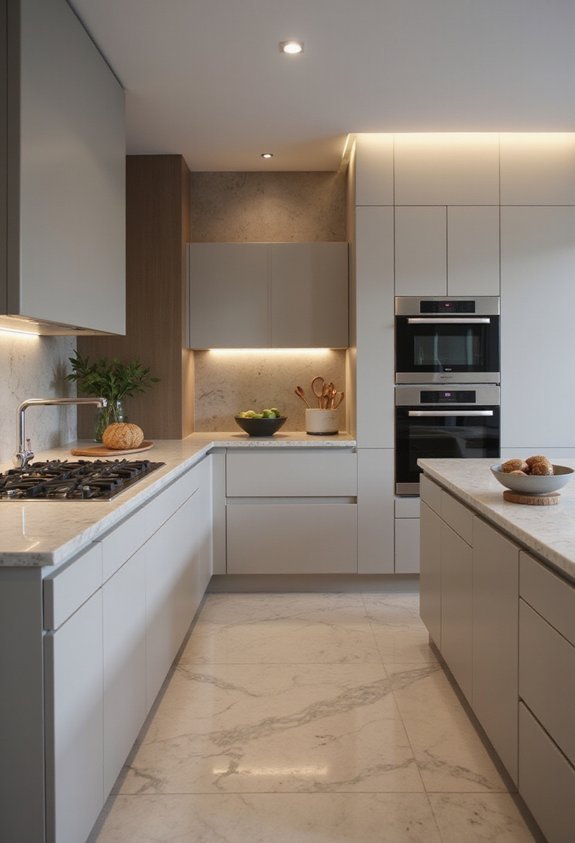
While countertops anchor a kitchen’s visual identity, custom cabinetry determines whether that space functions brilliantly or frustrates you daily. You’ll discover that bespoke cabinetry seamlessly integrates storage into your design scheme, eliminating visual clutter that undermines luxury aesthetics.
Consider handle-less designs that create clean, uninterrupted lines across your walls. You can incorporate soft-close mechanisms that whisper shut, delivering sophistication with every movement. Customization lets you maximize awkward spaces—corner cabinets with pull-out organizers, pantry systems tailored to your cookware, and appliance garages that hide small electronics behind sleek facades.
You’ll appreciate how premium materials like lacquered finishes, natural wood veneers, and matte lacquers elevate functionality into artistry. Your kitchen becomes an extension of your home’s design language rather than a utilitarian afterthought, where every inch serves purpose without sacrificing style.
Integrated Appliances for a Seamless, Hidden Kitchen
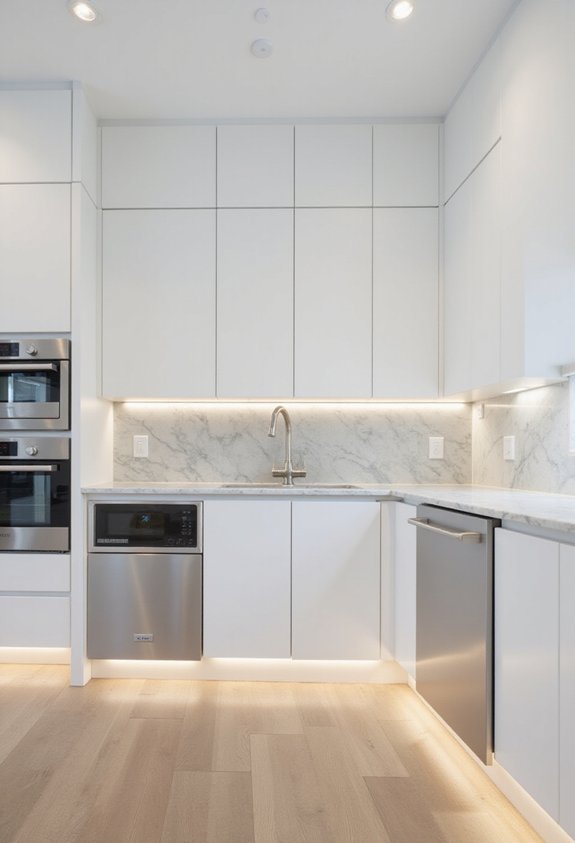
The true luxury kitchen doesn’t announce its appliances—it conceals them. You’ll want to invest in panel-ready refrigerators, dishwashers, and microwaves that blend seamlessly with your cabinetry. This integration creates visual continuity, transforming your kitchen into a sophisticated, uncluttered space.
Consider built-in coffee makers, ovens, and warming drawers positioned at ergonomic heights. You’ll appreciate the streamlined aesthetic while enjoying convenient access. Handle-less designs further enhance the minimalist appeal, eliminating visual interruptions.
Premium brands now offer customizable fronts matching your cabinet finishes perfectly. You’re not compromising functionality—these integrated appliances deliver professional-grade performance. Induction cooktops disappear into island countertops, while vented range hoods hide within cabinetry.
This approach demands careful planning during renovation, but the result justifies the investment. You’ll create a kitchen that feels like an intentional design statement rather than a collection of appliances.
Luxury Lighting: Setting Mood and Functionality
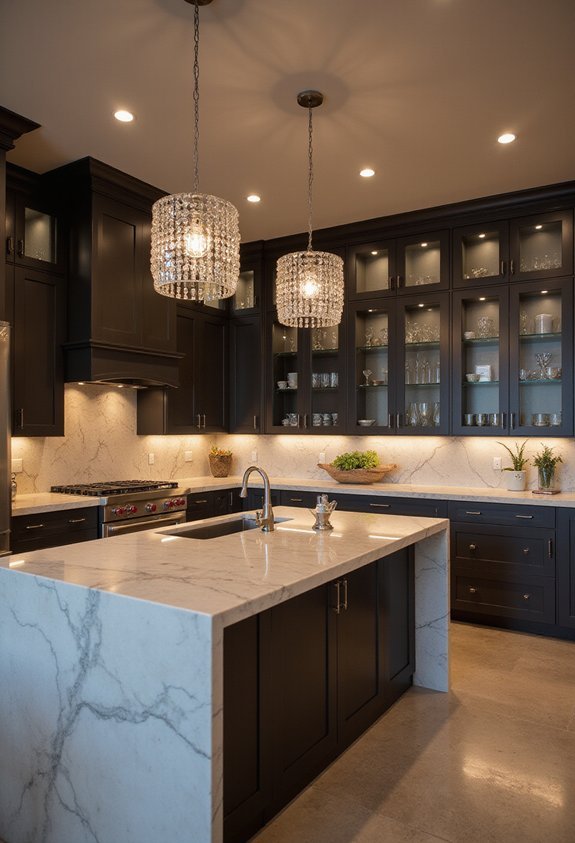
Lighting transforms a kitchen from merely functional to genuinely luxurious—it’s the element that sets mood while serving practical purposes. You’ll want to layer your lighting with pendant fixtures over islands, recessed downlights for task areas, and ambient strips beneath cabinetry that create warmth after dark.
Consider dimmable LED systems that let you adjust intensity throughout the day. Statement fixtures—perhaps sculptural brass pendants or contemporary chandeliers—become focal points that reflect your personal style. Under-cabinet lighting illuminates countertops for food prep while adding subtle elegance.
Smart lighting controls enable you to customize scenes effortlessly. Warm color temperatures (2700K-3000K) foster relaxation during evenings, while cooler tones enhance clarity during cooking. The right lighting doesn’t just illuminate your space; it defines the entire kitchen experience, transforming functionality into sophisticated ambiance.
Natural Materials: Wood, Stone, and Organic Elements
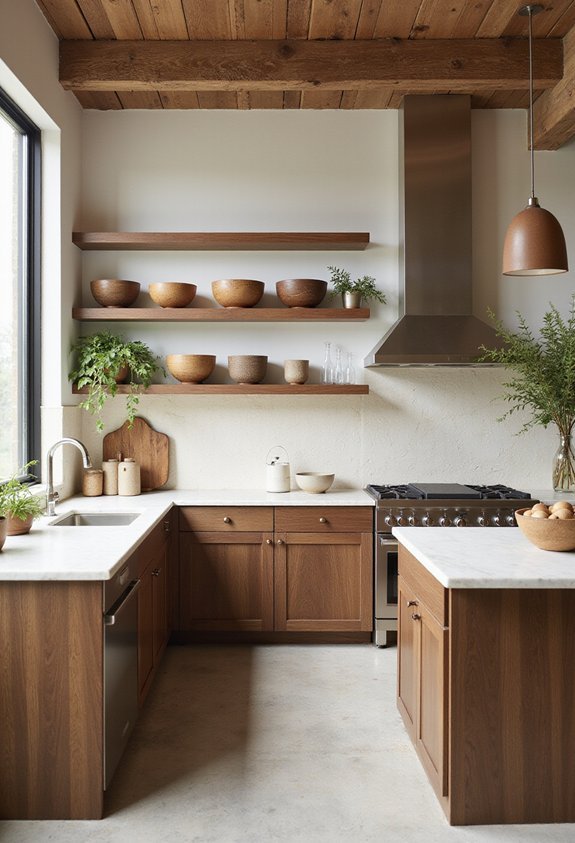
Because luxury kitchens thrive on authenticity, natural materials ground your space in timeless elegance. You’ll find that incorporating wood, stone, and organic elements creates warmth that sleek finishes can’t match.
Consider reclaimed wood cabinetry or live-edge countertops that showcase nature’s imperfections as design features. Marble, granite, and limestone add sophistication while developing character through patina over time. These materials aren’t just beautiful—they’re durable investments.
You can blend organic textures through stone backsplashes, wooden shelving, and natural fiber accents. Pair these elements with your modern fixtures to strike a balance between contemporary design and organic warmth.
This approach transforms your kitchen into a sanctuary where luxury meets nature, creating an inviting yet refined atmosphere for daily living and entertaining.
What Professional-Grade Cooking Equipment Actually Demands
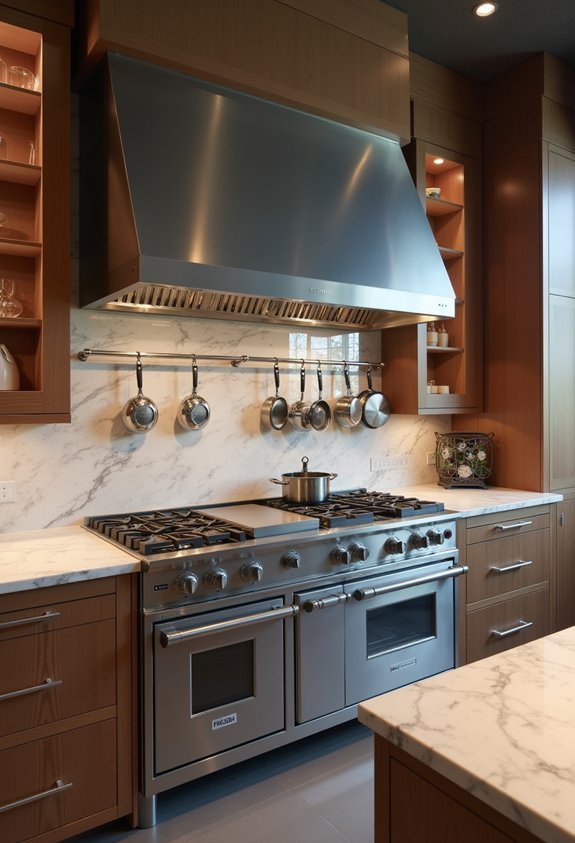
If you’re serious about luxury kitchen functionality, professional-grade equipment requires more than aesthetic appeal—it demands proper infrastructure, ventilation, and maintenance commitment. You’ll need dedicated electrical circuits capable of handling high-power demands, as standard residential wiring won’t support commercial-grade ranges or built-in refrigeration units. Robust ventilation systems must extract heat and moisture efficiently, preventing damage to cabinetry and surrounding materials. Your plumbing needs reinforcement for advanced appliances requiring precise water pressure and temperature control. You’re also investing in ongoing maintenance—professional equipment expects regular servicing and calibration to maintain peak performance. These demands mean consulting with specialists during the planning phase, not after installation. Budget accordingly for infrastructure upgrades that’ll make your professional kitchen truly functional.
Color Palettes: Neutrals, Accents, and Year-Round Appeal
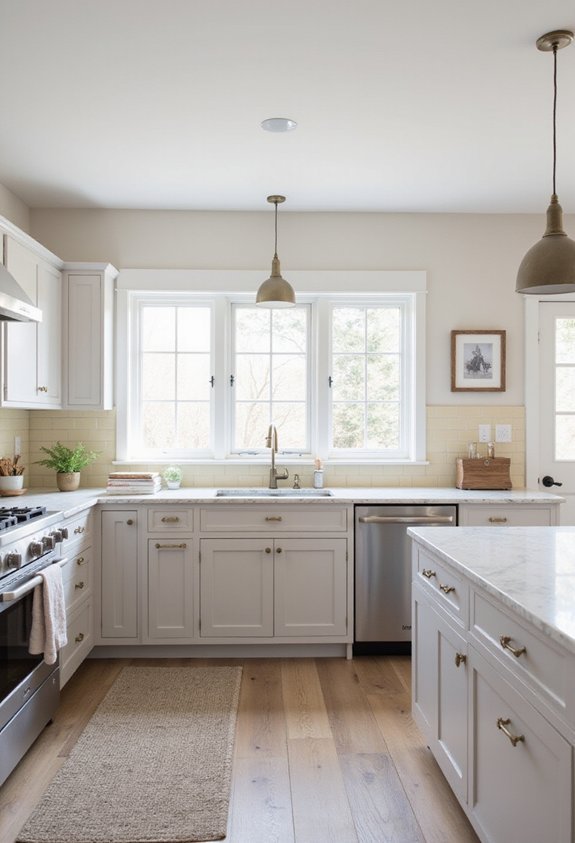
Now that you’ve invested in professional-grade equipment and infrastructure, your color palette becomes the visual framework that ties everything together. You’ll want to anchor your design with neutral base colors—whites, grays, or warm beiges—that won’t feel dated in five years. These foundation tones provide sophistication while allowing your kitchen to function as a timeless backdrop.
Strategic accent colors inject personality without overwhelming the space. Consider deep charcoal cabinetry, rich navy islands, or warm brass hardware that complements your neutrals. These accents should reflect your personal style while remaining versatile enough to evolve with seasonal décor changes.
The beauty of this approach is flexibility. You can shift throw pillows, artwork, or fresh flowers seasonally without redoing your entire kitchen. This balance between permanence and adaptability guarantees your luxury kitchen remains visually fresh year-round.
Smart Technology: Control Without Compromise
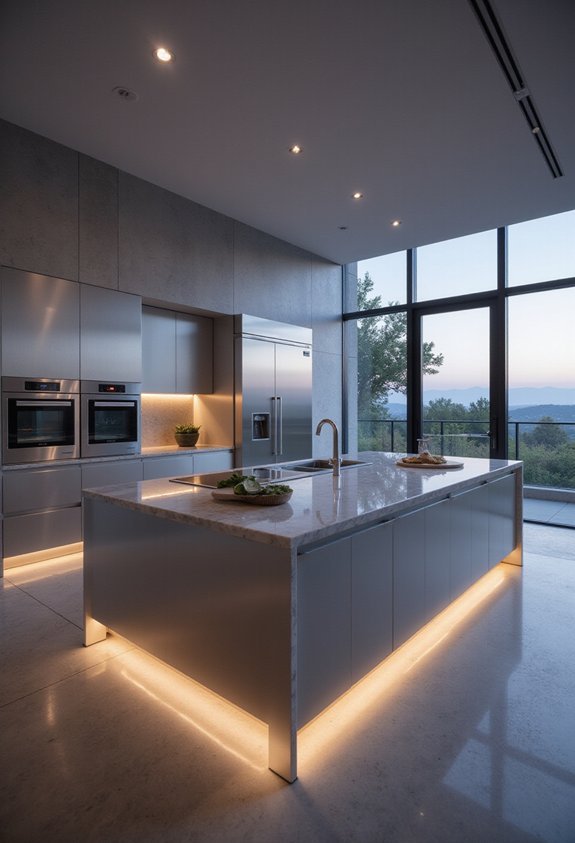
How do you integrate cutting-edge automation into a luxury kitchen without sacrificing its aesthetic appeal? You’ll find that modern smart technology seamlessly blends function with form when thoughtfully implemented.
Invest in integrated appliances with hidden controls and touch-activated surfaces that eliminate visual clutter. Voice-activated systems let you adjust lighting, temperature, and cooking settings hands-free. Conceal wiring through cabinetry and backsplashes to maintain clean lines.
Consider smart refrigeration that monitors inventory, precise induction cooktops with digital interfaces, and app-controlled ventilation systems. These features enhance efficiency while remaining visually subtle.
Select finishes in matte black, stainless steel, or integrated panel fronts that complement your design scheme. The goal isn’t showcasing technology—it’s creating an invisible support system that anticipates your needs while preserving the kitchen’s sophisticated appearance.
Sustainable Luxury: High-End Eco-Friendly Features
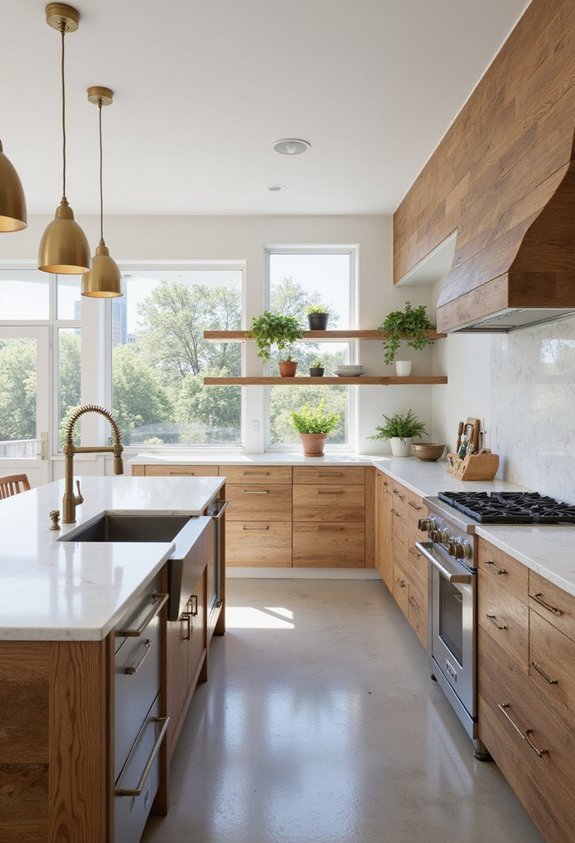
Beyond seamless automation, today’s luxury kitchens achieve sophistication through environmental responsibility. You’re investing in high-end eco-friendly features that don’t compromise on style or performance.
Consider installing energy-efficient appliances with premium finishes—stainless steel refrigerators and induction cooktops that reduce energy consumption while maintaining sleek aesthetics. You’ll appreciate sustainably sourced cabinetry crafted from reclaimed wood or FSC-certified materials that showcase natural beauty.
Implement water-saving fixtures without sacrificing functionality. Designer faucets with aerators and smart leak detection systems protect resources while elevating your kitchen’s elegance.
LED lighting systems you control via smartphone offer ambiance and efficiency. Incorporate recycled glass countertops or sustainable stone that radiate luxury while supporting environmental goals.
You’re creating a kitchen reflecting your values—one that’s visually stunning, technologically advanced, and genuinely responsible.
Beverage Stations: Wine Cooling and Water Features
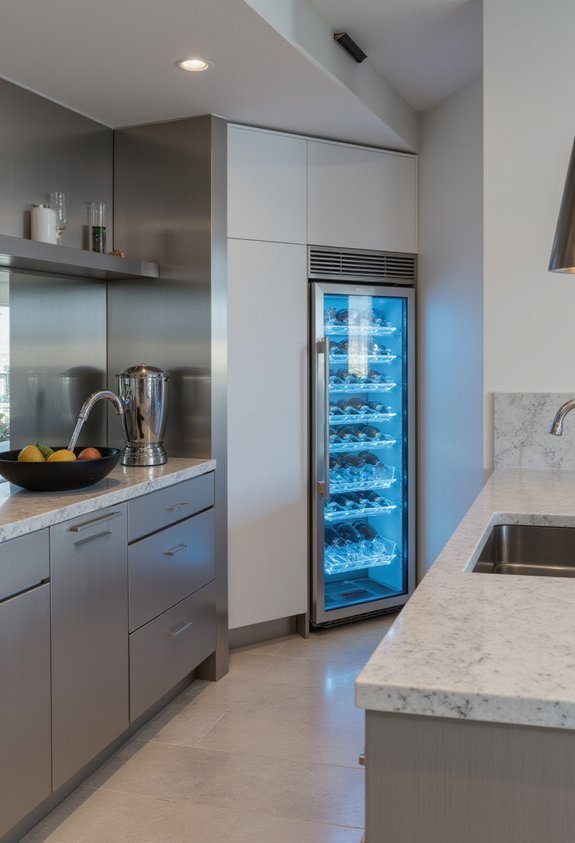
What sets a truly luxurious kitchen apart? A dedicated beverage station that you’ll use daily. You’ll appreciate a built-in wine cooler that maintains perfect temperatures for your collection, whether you’re storing reds, whites, or sparkling varieties. These units blend seamlessly into cabinetry while offering precise climate control.
Complement your wine cooler with a sophisticated water feature—perhaps a filtered water dispenser or an elegant fountain tap. You’ll enjoy instant access to chilled, filtered water without cluttering countertops. Some high-end systems include carbonation options, letting you create sparkling water on demand.
Consider adding a beverage refrigerator nearby for champagne, craft sodas, or premium juices. This integrated approach streamlines entertaining and reflects your commitment to refined living. Your guests will notice these thoughtful details immediately.
Minimalist Elegance: Less Is Luxury
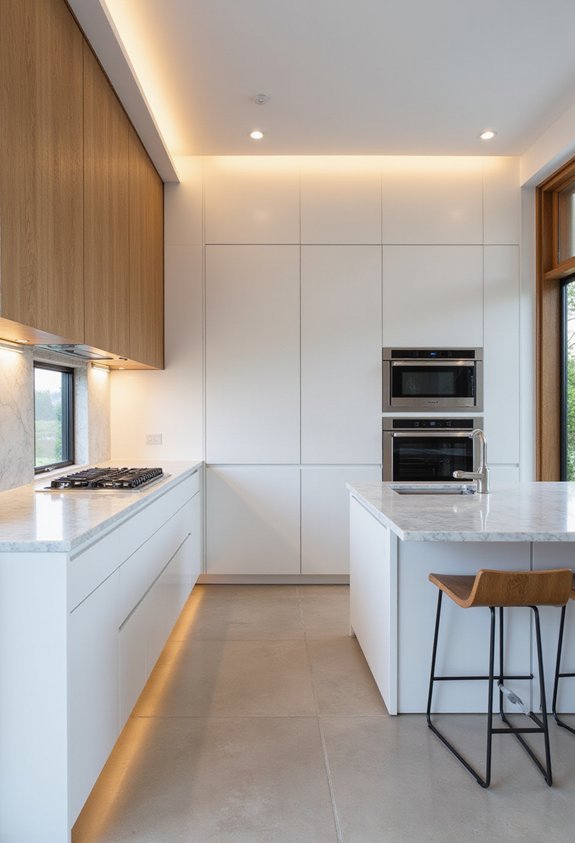
While luxury kitchens often tempt you with endless features and gadgets, true sophistication emerges through restraint. Minimalist elegance strips away the unnecessary, letting quality materials and thoughtful design speak for themselves.
You’ll find that clean lines, uncluttered countertops, and a neutral color palette create a timeless aesthetic that won’t feel dated. Invest in fewer, high-quality appliances rather than multiple specialized gadgets. Conceal storage solutions behind seamless cabinetry to maintain visual calm.
Strategic lighting highlights architectural elements without overwhelming the space. You’ll appreciate how minimal ornamentation allows premium finishes—marble, brushed metals, and natural wood—to become focal points.
This approach demands intentionality in every selection. Each piece you choose must earn its place, creating a kitchen that’s both visually serene and functionally superior.
Design Inspiration Across Multiple Styles
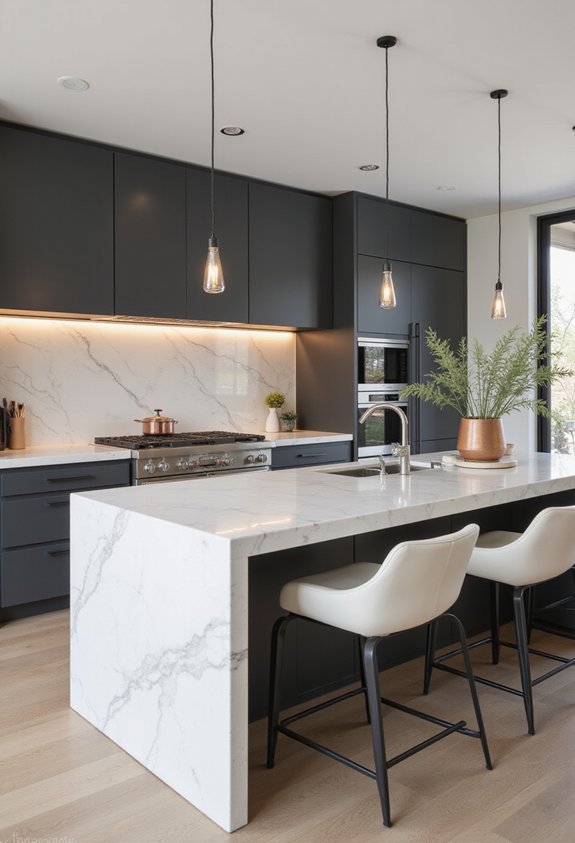
Luxury modern kitchens don’t have to conform to a single aesthetic—you can blend inspirations from various design movements to create something distinctly yours. Consider mixing industrial elements like exposed brick or steel with mid-century modern cabinetry. Pair Scandinavian minimalism with Art Deco accents through lighting fixtures or hardware. You might incorporate Japanese zen principles through clean lines and natural materials, then add contemporary flair with smart appliances and sleek surfaces. Draw from Mediterranean warmth using stone countertops and earthy tones, balanced by modern functionality. The key is intentional curation: select pieces that resonate with your vision rather than following rigid rules. Your dream kitchen reflects personal taste while maintaining sophisticated cohesion across all design elements.
Frequently Asked Questions
How Much Should I Budget for a Luxury Modern Kitchen Renovation?
You should budget between $75,000 and $200,000+ for a luxury modern kitchen renovation. Your costs depend on square footage, appliance quality, cabinetry materials, and whether you’re relocating plumbing or electrical systems. High-end finishes and custom details substantially increase your total investment.
What Is the Typical Timeline for Designing and Installing a Luxury Kitchen?
You’ll typically spend 3-6 months designing your luxury kitchen, then another 2-4 months installing it. The total timeline depends on customization complexity, material availability, and contractor scheduling. You should plan for 5-10 months overall.
Do Luxury Kitchens Require Special Permits or Professional Installation?
Yes, you’ll need permits for structural changes and must hire licensed professionals for plumbing, electrical, and gas work. You can’t skip these requirements—they guarantee your kitchen’s safety, functionality, and compliance with building codes.
How Do I Maintain Marble and Premium Countertops Long-Term?
You’ll maintain marble and premium countertops by sealing them regularly, wiping spills immediately, avoiding acidic cleaners, and using coasters under glasses. You should reseal annually and use pH-neutral products to preserve their beauty and durability long-term.
What Warranty Coverage Is Standard for Luxury Kitchen Appliances and Cabinetry?
You’ll typically find that luxury appliances come with 3-5 year warranties covering parts and labor, while premium cabinetry usually offers lifetime warranties on construction defects. You should always verify your specific coverage details with manufacturers.
Conclusion
You’re now equipped to design your dream luxury kitchen. By blending open-concept layouts with strategic work zones, you’ll create a space that’s both functional and stunning. Don’t shy away from premium materials, custom cabinetry, and smart technology—they’re investments that’ll elevate your daily cooking experience. Remember, true luxury isn’t about excess; it’s about thoughtful choices that reflect your lifestyle and values.

