

Corner kitchen tables create intimate gathering spaces celebrating warmth, connection, and genuine hospitality authentically. Nook-like environments encourage lingering conversations, comfortable seating supports relaxed meals, and dedicated spaces establish family gathering traditions. Your inviting corner becomes beloved gathering hub where families naturally congregate creating lasting memories together.
Cozy corner design emphasizes comfort through cushioned bench seating, soft lighting, and welcoming aesthetics. Upholstered benches provide comfort and warmth, pendant lighting creates ambient atmosphere, meaningful artwork establishes personality. These heartfelt touches prove corner tables become cherished family gathering places when designed celebrating comfort and genuine connection over purely functional efficiency.
Create warm corner table celebrating family togetherness and genuine hospitality genuinely. Prioritize comfort, incorporate welcoming details, and design spaces encouraging meaningful gathering. Your cherished corner becomes family favorite precisely because coziness and personal touches transform functional furniture into beloved gathering place supporting authentic connection.
L-Shaped Tables: Double Your Seating Without Eating Floor Space
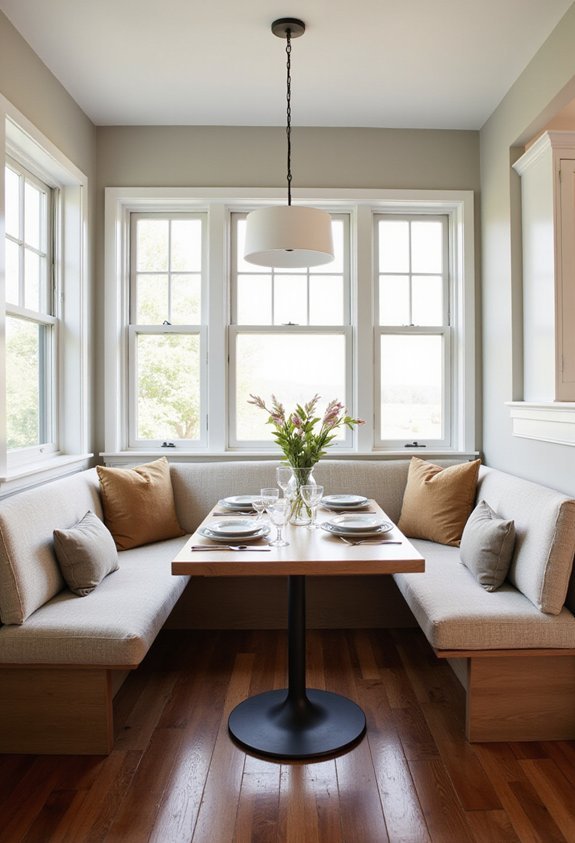
When you’re working with a corner space, L-shaped tables offer an intelligent solution that maximizes seating capacity without consuming additional floor area. You’ll appreciate how these tables fit snugly into corners, utilizing otherwise wasted space effectively.
The design allows you to seat more guests than traditional rectangular tables of similar footprint. You can position one side against a wall and extend the other into your kitchen, creating a natural traffic flow. L-shaped tables work particularly well in galley kitchens or open-concept layouts where space is premium.
You’ve got flexibility too. Choose from various materials and finishes to match your décor. Many models feature storage underneath, giving you extra functionality. If you need versatility, you can find expandable versions that grow with your entertaining needs.
Also read: 13 Kitchen Paint Color Ideas
Built-In Banquette Nooks: Permanent Comfort for Tight Kitchens
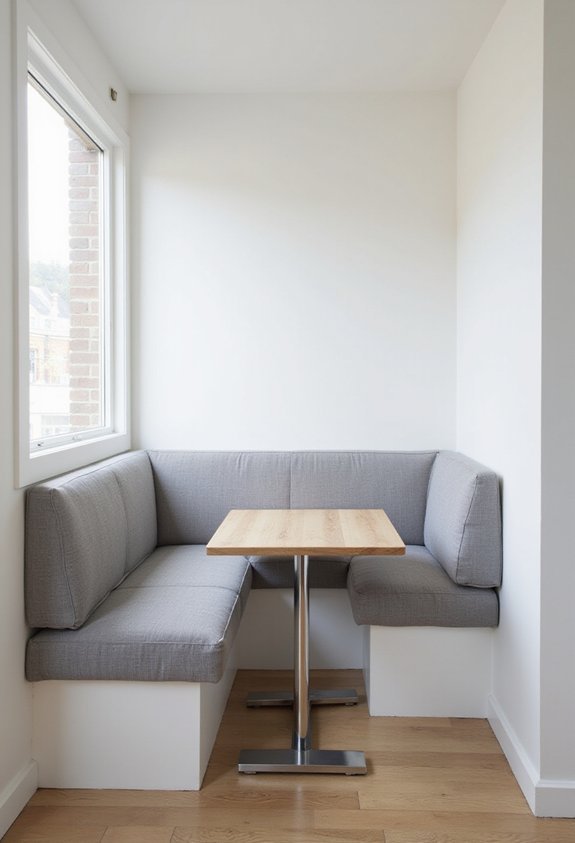
If you’re looking for a seating solution that doesn’t compromise your kitchen’s functionality, a built-in banquette nook delivers comfort and style in one compact package. You’ll maximize your corner space by installing cushioned benches along two walls, creating an efficient dining area that doesn’t require pulling out chairs.
Built-in banquettes offer several advantages over traditional tables. You’re gaining extra storage underneath the seats for kitchen linens, cookbooks, or seasonal items. The fixed design means you’ll never waste precious floor space maneuvering furniture. Custom cushions let you personalize comfort levels and coordinate with your kitchen’s aesthetic.
Installation requires planning—you’ll need to measure your corner carefully and choose durable, washable fabrics that withstand daily use. Pair your banquette with a small table to complete this space-saving dining solution.
Triangular Corner Tables: Design Solutions for Awkward Angles
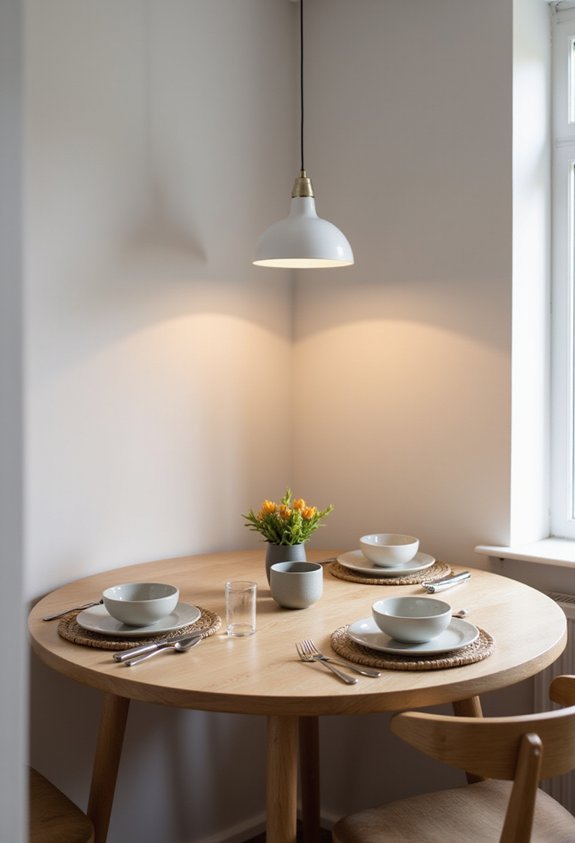
Triangular corner tables solve the geometric challenge that rectangular furniture can’t address in tight kitchen spaces. You’ll find that their angled design fits perfectly into corners, maximizing otherwise wasted square footage. These tables work especially well in L-shaped kitchens or compact apartments where standard rectangular options create awkward gaps.
You can choose from various styles—modern minimalist designs, rustic wood finishes, or contemporary glass tops. The three-sided shape naturally encourages conversation and makes serving easier since you can access the table from multiple angles.
Installation is straightforward; simply position it flush against your corner walls. You’ll appreciate how this solution provides functional dining without consuming excessive floor space. Triangular corner tables offer both practical storage solutions and stylish aesthetics, transforming your kitchen’s unused corners into valuable gathering spaces.
Pedestal Tables: Legroom and Easy Cleaning Underneath
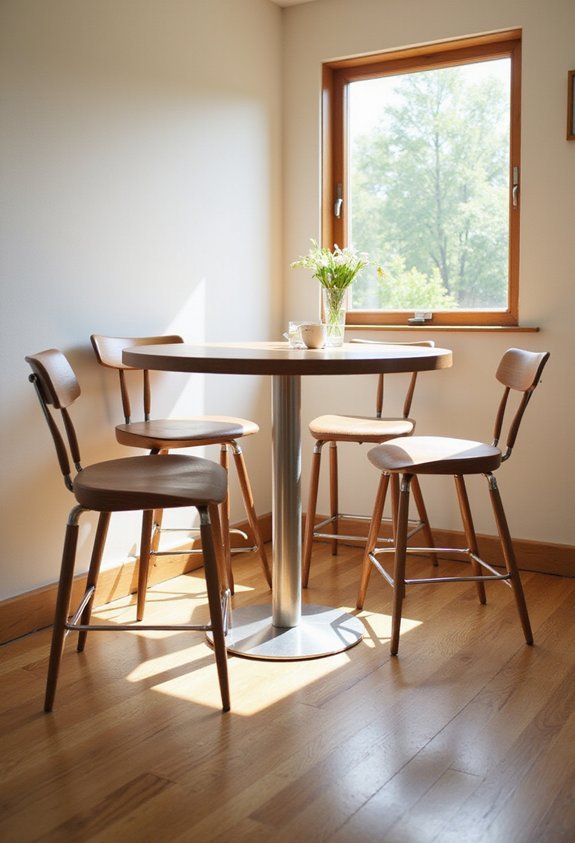
Unlike traditional four-legged designs, pedestal tables offer you superior legroom and simplified maintenance. You’ll appreciate the extra knee space when you’re seated, making meals more comfortable for everyone at your corner table.
The single-post support system eliminates bulky legs that typically obstruct your movement and create cleaning challenges. You can easily sweep or vacuum underneath without maneuvering around multiple obstacles. This streamlined design is particularly valuable in corner settings where space constraints already limit your mobility.
Pedestal tables also allow you to push chairs completely under the surface when not in use, maximizing your kitchen’s floor space. The unobstructed base prevents dust and debris from accumulating in hard-to-reach corners. Consider a pedestal base with a weighted bottom to guarantee stability, especially if you frequently move or adjust your table’s position.
Drop-Leaf Corner Tables: Expand From Compact to Full Size
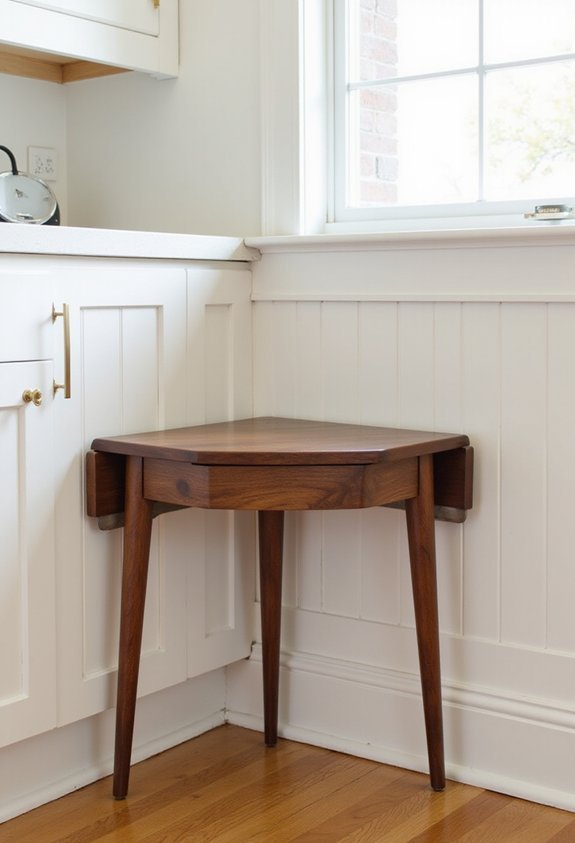
While pedestal tables solve the legroom problem, drop-leaf corner tables take space efficiency further by adapting to your changing needs. You’ll appreciate how these tables maximize your kitchen’s footprint by remaining compact during everyday use, then expanding when you’re entertaining guests or hosting family dinners.
The hinged leaves fold down against the sides, keeping your table slim and unobtrusive. When you need extra surface area, you simply lift and support the leaves with sturdy brackets or legs. This flexibility makes drop-leaf tables ideal for smaller kitchens where space is limited.
You’ll find various styles and finishes available, from traditional wood designs to modern interpretations. Quality construction guarantees smooth operation and stability when extended, giving you reliable functionality that adapts to your lifestyle.
Farmhouse Charm: Warm and Inviting Corner Dining
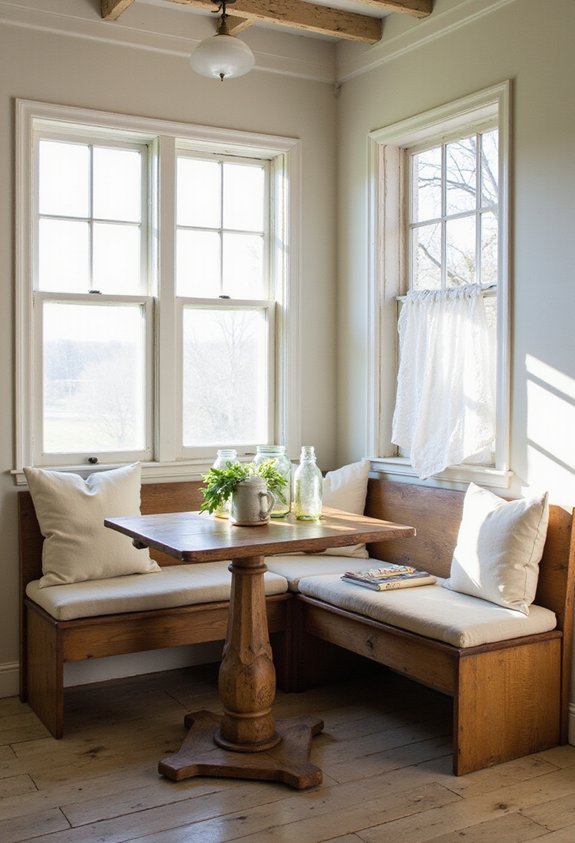
If you’re drawn to cozy, rustic aesthetics, a farmhouse-style corner table can transform your kitchen into a welcoming gathering space. These tables typically feature distressed wood finishes, turned legs, and neutral color palettes that evoke countryside charm. You’ll appreciate how they blend functionality with warmth, creating an inviting atmosphere for family meals and conversations.
Pair your farmhouse table with matching benches and Windsor chairs for an authentic look. Consider adding vintage accessories like mason jar centerpieces or linen table runners to enhance the aesthetic. The beauty of farmhouse design lies in its imperfection—scratches and patina add character rather than detract from appeal.
This style works particularly well in open-concept kitchens, where the table becomes a natural focal point that anchors your dining area while maintaining that coveted homey feeling.
Modern Minimalist Tables: Clean Lines for Contemporary Kitchens
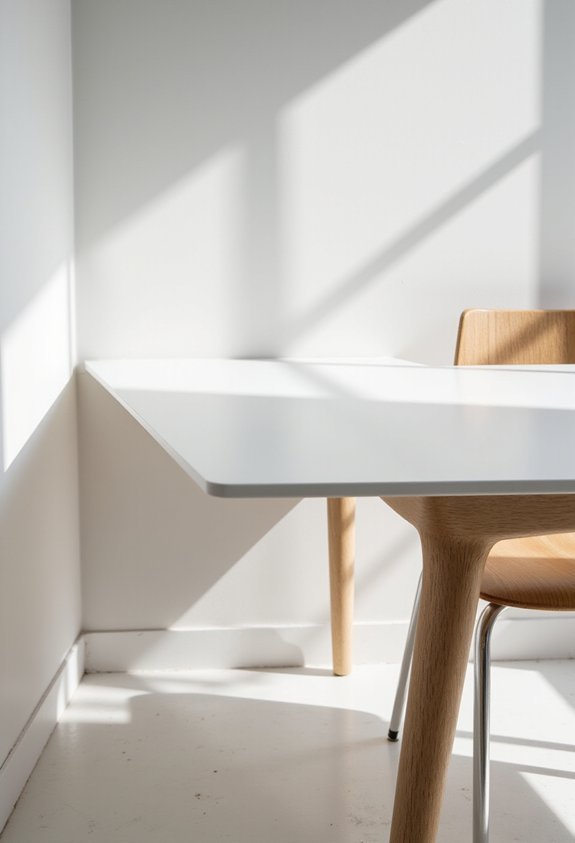
For those favoring sleek design over rustic warmth, modern minimalist corner tables deliver understated elegance through geometric simplicity. You’ll appreciate how clean lines and uncluttered surfaces create visual calm in your kitchen space.
Choose tables with metal frames paired with glass or light wood tops. These combinations maximize light reflection and maintain an airy feel. Opt for neutral color palettes—whites, grays, blacks—that blend seamlessly with contemporary décor.
You’ll find that minimalist designs offer practical benefits too. Without ornamental details, they’re easier to clean and maintain. The streamlined construction provides sturdy support while occupying minimal visual weight.
Consider tables with hidden storage or fold-down extensions if you need functionality without sacrificing the minimalist aesthetic. This approach lets you achieve both style and practicality in your corner dining area.
Hidden Storage: Organization Built Beneath the Table
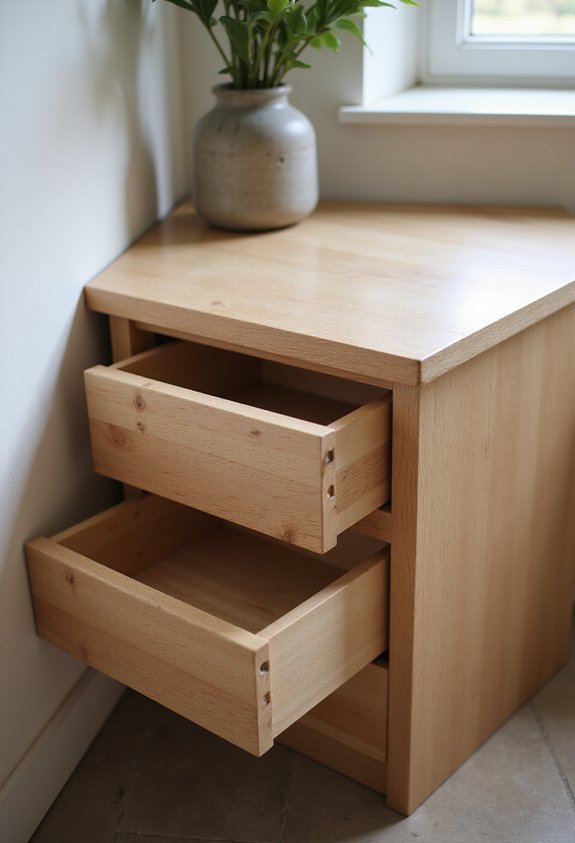
A corner table’s underside presents prime real estate for concealed storage that keeps your kitchen organized without cluttering the visual landscape. You can install pull-out drawers beneath the tabletop to store placemats, napkins, and utensils within arm’s reach. Consider adding shelves or baskets that slide smoothly under the table surface, perfect for cookbooks, small appliances, or pantry overflow. Hinged compartments offer another solution, allowing you to access stored items while maintaining a clean aesthetic. You might incorporate custom cabinetry with soft-close mechanisms to prevent slamming and extend durability. Built-in benches with lift-up seats provide substantial hidden compartments ideal for seasonal items or extra dishware. These integrated storage solutions maximize your kitchen’s functionality while keeping everything neatly out of view.
Industrial Edge: Metal and Wood for Bold Impact
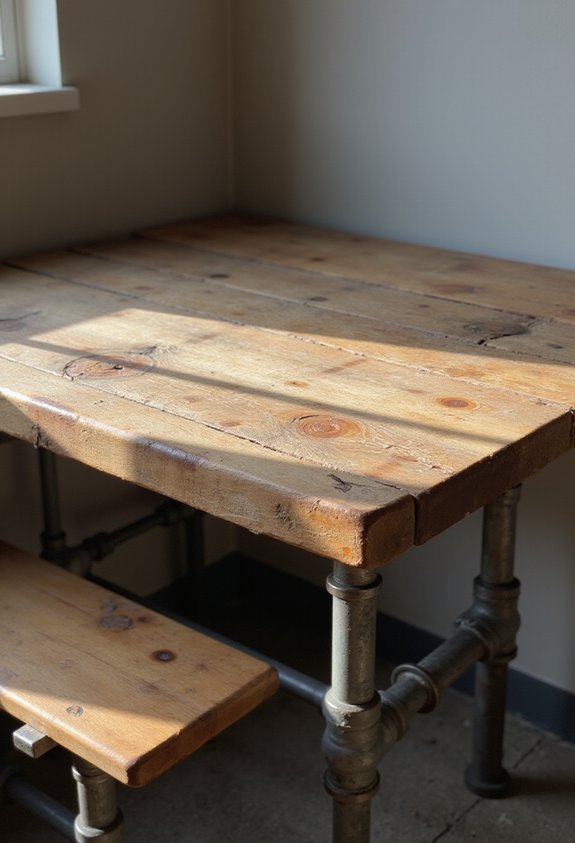
While hidden storage keeps your kitchen organized and clutter-free, you might crave a design approach that celebrates rather than conceals. Industrial style delivers exactly that through bold metal and wood combinations.
You’ll find that steel frames paired with reclaimed wood tops create striking visual contrast. Consider tables featuring wrought iron legs supporting weathered timber surfaces—they’re conversation starters that anchor your kitchen with authenticity.
Metal accents like exposed bolts, brackets, and welded details add character and durability. You can layer in complementary elements: matching metal stools, Edison bulb lighting, or concrete flooring to reinforce the aesthetic.
This style works particularly well in corner placements, where the table becomes a design focal point rather than an afterthought. You’re not just furnishing your kitchen; you’re making a statement about your taste.
Studio and One-Bedroom Solutions: Corner Tables That Don’t Shrink Your Space

When you’re furnishing a compact living space, corner tables offer efficiency without sacrificing style. You’ll maximize your limited square footage by positioning a slender table against two walls, creating a functional dining area that doesn’t dominate the room.
Choose tables with light wood finishes or glass tops to maintain visual openness. These materials reflect light and create the illusion of more space than solid, dark furniture provides. Pair your corner table with slim-profile chairs that tuck neatly underneath when not in use.
Consider drop-leaf designs that you can expand when entertaining and collapse for everyday living. Wall-mounted shelving above your table adds storage without consuming floor space. This strategic arrangement keeps your studio or one-bedroom feeling spacious while providing the dining functionality you need.
Frequently Asked Questions
What Is the Ideal Corner Table Height for Proper Dining Comfort and Posture?
You’ll want your corner table at 30 inches high for ideal dining comfort. This standard height lets you sit with your elbows at a 90-degree angle, promoting proper posture. You’ll find it’s the most ergonomic choice for everyday meals.
How Much Should I Budget for a Quality Corner Kitchen Table?
You’ll typically spend $300–$1,500 for a quality corner kitchen table. Budget $300–$700 for solid wood options, $700–$1,200 for premium designs, and $1,200+ for custom or high-end pieces that’ll last you decades.
What Materials Are Most Durable and Easy to Maintain for Corner Tables?
You’ll find that solid wood, glass, and metal are your most durable options. Wood resists wear well, glass wipes clean easily, and metal won’t stain. You should avoid particle board if you’re seeking longevity and easy maintenance for your corner table.
Can Corner Tables Work in Rental Apartments or Do They Require Installation?
You’ll find that most corner tables don’t require installation—they’re freestanding pieces you can easily move. You’ll appreciate how they’re perfect for rentals since you won’t need to drill holes or modify walls, making them ideal for temporary living situations.
What Are the Best Corner Table Dimensions for Average-Sized Kitchens?
You’ll find that 36-48 inches wide works best for average kitchens. Choose heights between 30-36 inches to match your countertops. You should measure your corner space first, then select a table that doesn’t obstruct traffic flow while maximizing your available area.
Conclusion
You’re discovering that corner kitchen tables aren’t just space-savers—they’re game-changers for your home. Whether you’re drawn to sleek minimalist designs, industrial metal finishes, or hidden storage solutions, you’ll find options that fit your lifestyle perfectly. By choosing the right corner table, you’re transforming wasted space into functional dining that complements your kitchen’s style without overwhelming your home.