

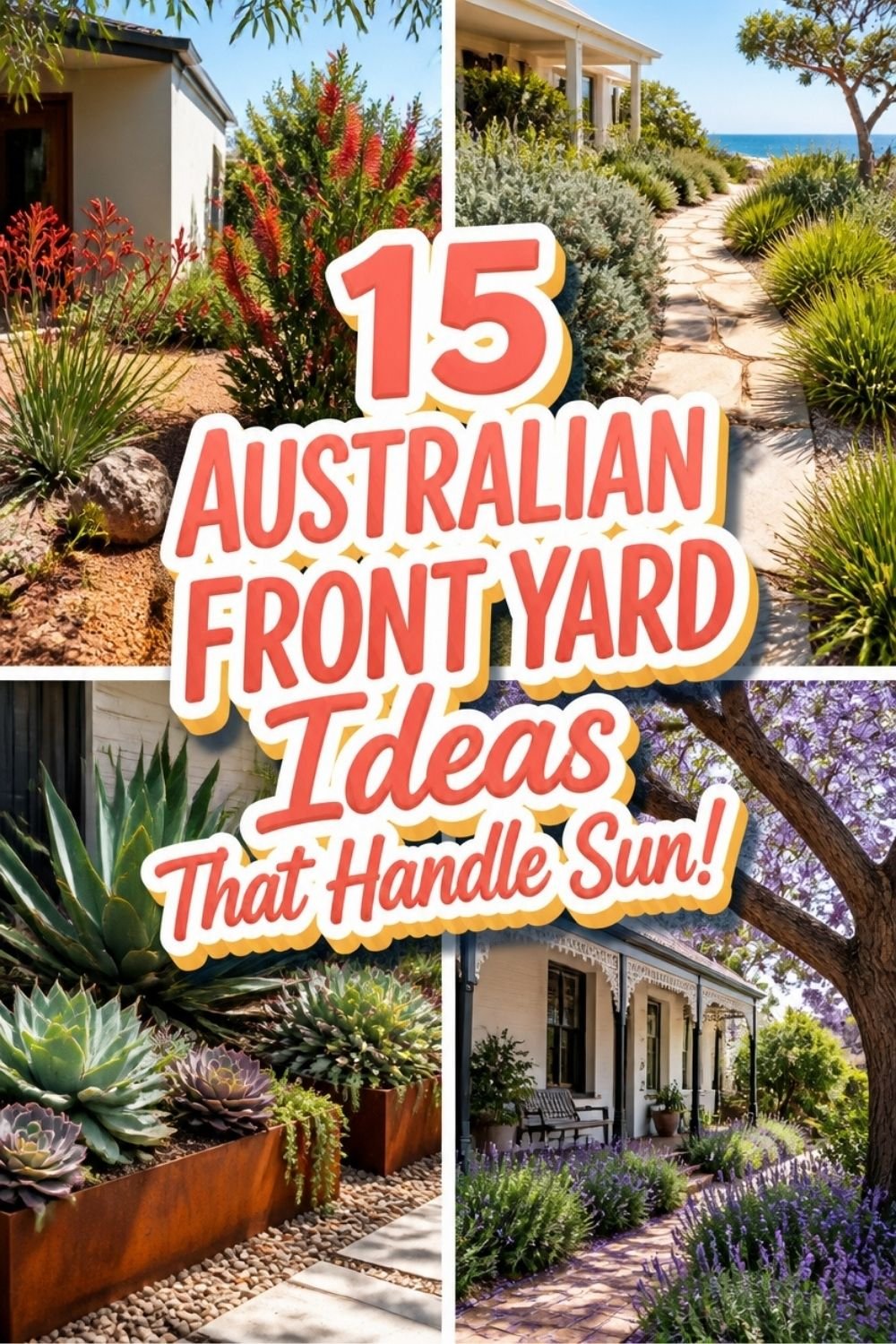
Mid-afternoon heat shimmers off the pavement. You step outside and immediately regret it. Australian summers don’t negotiate, and neither should your front yard.
Here’s something simple. Native plants actually want to be here. Banksia and Grevillea have been dealing with this sun for thousands of years. They bloom through the heat while everything else gasps for water. No special treatment required.
There’s relief in smart choices. Shade sails catch the eye and drop the temperature. Drought-tolerant ground covers spread across the soil where lawns used to die. Stone paths and thoughtful hardscaping reflect less heat than you’d expect.
Each piece works alone. Together, they transform the space.
That crispy wasteland look? Completely optional. The right combination waits for every yard.
Native Plants That Thrive in Full Sun
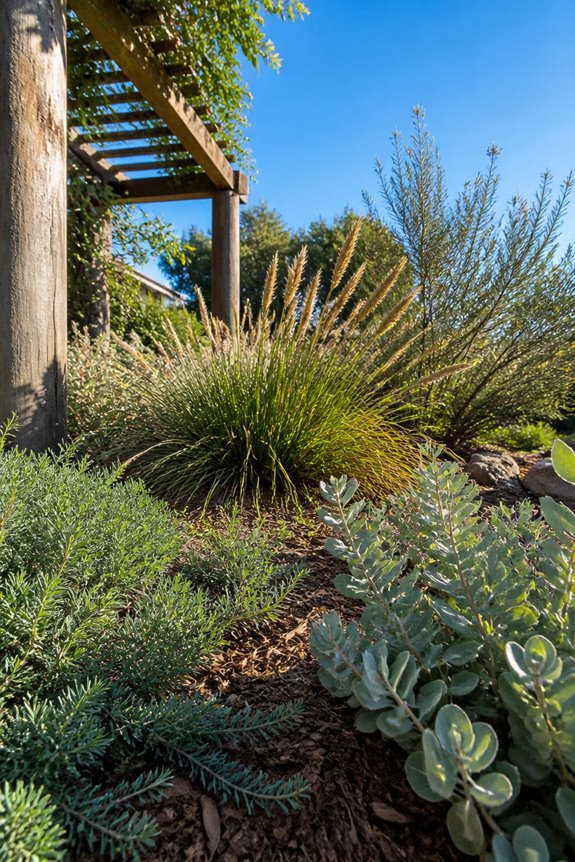
Is your front yard baking in the sun? You’re not alone. Most Australian homeowners see that hot patch as a headache. But flip the script. It’s actually a gift waiting to open.
Native plants *love* full sun. They evolved for this. Banksia shoots up with bold orange-red spikes that stop people mid-step. Grevillea bounces back from anything, even your worst heatwave. Desert Rose? Cheeky pink flowers that actually smile at the glare. These aren’t delicate things. They know their home.
Here’s the trick. Give them space, about a metre between plants. Make sure water drains away. Then step back. While your neighbours battle with wilting exotics, your yard does the heavy lifting itself. No pampering required.
Suddenly that scorching corner isn’t embarrassing. It’s your quiet win.
Also read: 24+ FRONT YARD FLOWER GARDEN Plans That Stay Pretty!
Pergolas, Shade Sails, and Shade Cloth Options
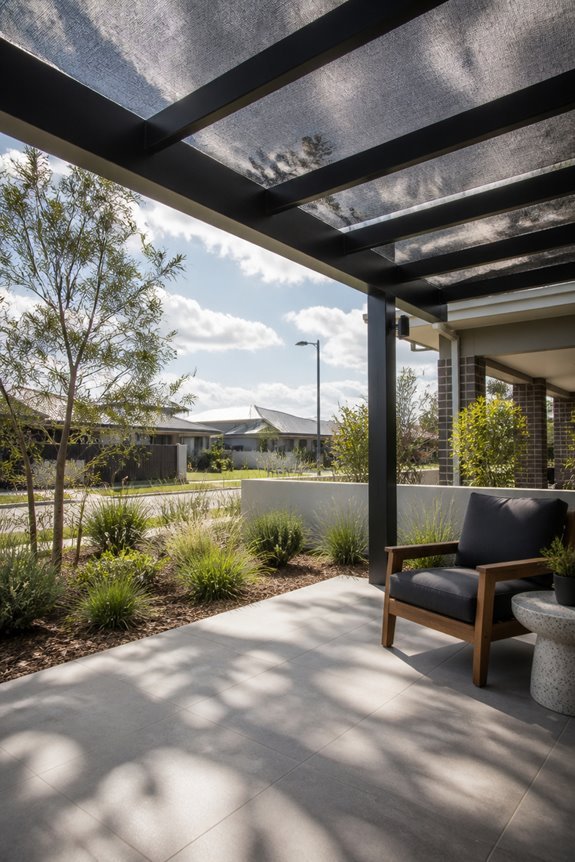
Your natives are soaking up the sun. But you? You’re stuck there roasting right alongside them.
Pergolas are your classic choice. Picture a wooden frame overhead, casting soft light everywhere below. Perfect for that hammock you’ve been meaning to install.
Shade sails cost less and hit harder. Those triangular fabric wings block 95% of UV. Cream, charcoal, or forest green. Pick one that plays nice with your house.
Shade cloth keeps it simple. Stretch it over any frame you’ve got. Instant relief, zero fuss.
Your skin will thank you. So will anyone brave enough to visit during summer.
Drought-Tolerant Ground Covers Instead of Lawn
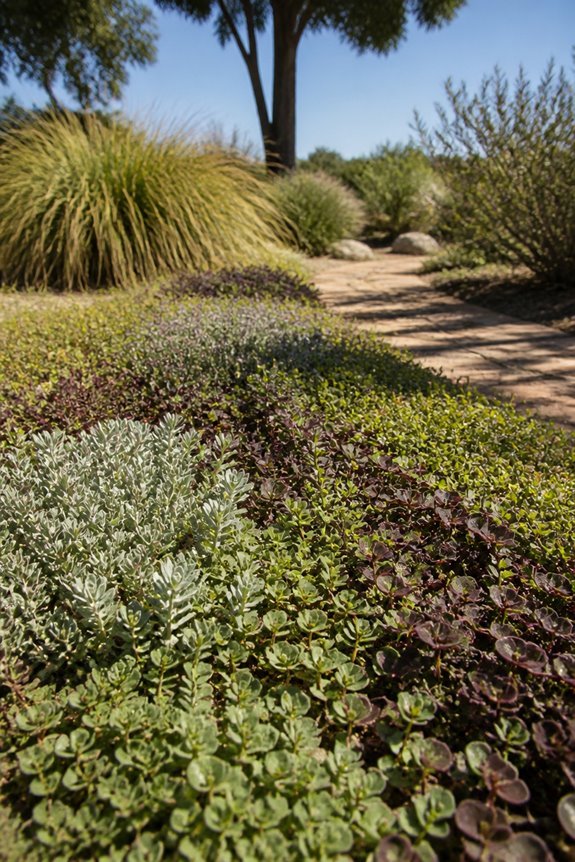
How much water did your lawn drink last summer? Be honest. Most Australian lawns are thirsty, expensive, and frankly, a bit dull.
Ground covers offer a smarter way forward. Native creeping plants like pigface, fan flower, and silver beagle pea thrive on neglect once established. They spread low and wide, blanketing bare soil with purples, pinks, and silvery greens. Your water bill drops. Your weekends open up.
You’ll skip the mower completely. No more Saturday mornings pushing a noisy machine through the heat. Ground covers need roughly three years to fill in properly. After that, they mostly manage themselves. Less lawn, more life. The desert figured this out long ago.
Heat-Reflective Pavers and Permeable Hard Surfaces
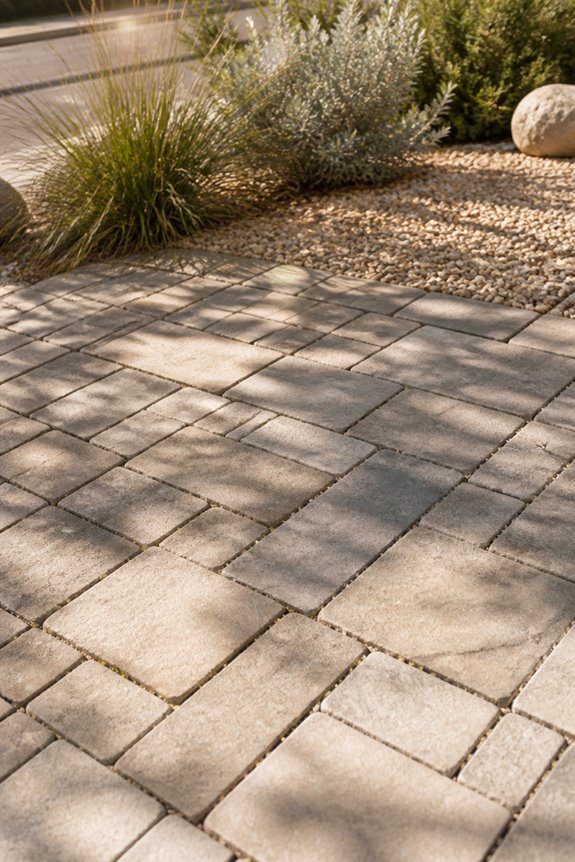
Your front yard patio in January shouldn’t feel like a frying pan by afternoon. Heat-reflective pavers make that possible. They bounce sunlight away instead of soaking it up like dark concrete does.
Permeable pavers are your best friend here. Water drains straight through them. No puddles, no unhappy soil. Look for light colors: cream, gray, tan. They reflect heat instead of radiating it back like an angry oven.
Try mixing textures for extra payoff. Alternate smooth pavers with gravel or decomposed granite. You get visual interest plus a surface you can actually walk on barefoot. No more toe-scorching nightmares.
Smart landscaping gives you comfort that lasts.
Vertical Gardens to Maximize Planting Space
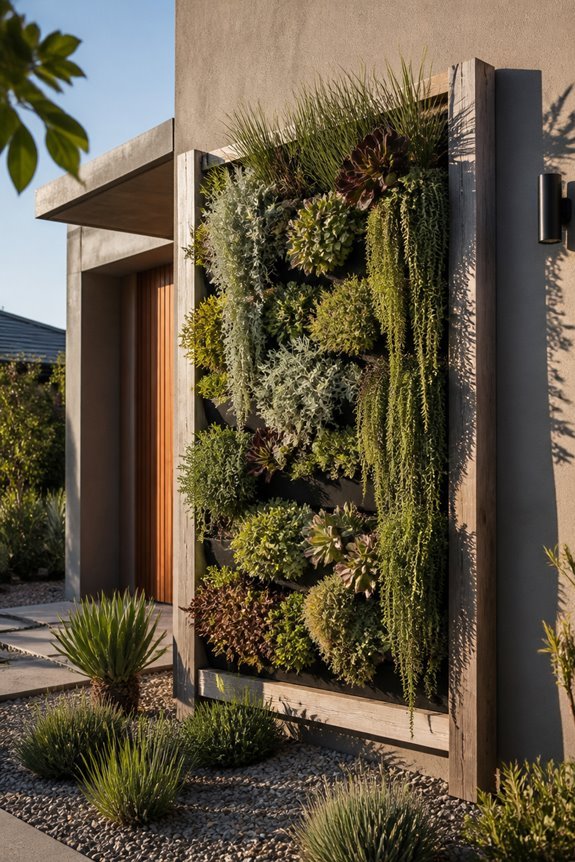
Running out of room in your front yard? Look up. That’s where your next garden lives.
Vertical gardens turn bare walls into living art. You can mount planters, string up trellises, or cluster hanging baskets filled with flowers and herbs. Suddenly that dull fence becomes the star of your street.
A simple trellis against a sunny spot gives jasmine or clematis somewhere to climb. Hanging baskets spill over with color without stealing an inch of ground. Even a modest wall holds dozens of plants in stacked containers.
Here’s a bonus you’ll love. Vertical gardens drain fast, so they need less water than ground beds. That means fewer trips outside when the sun’s blazing. You also get to enjoy your plants at eye level. No more hunching over to check what’s blooming.
Creating Shade Through Multi-Tiered Plant Layers

Ever felt your front yard radiate heat like a car hood at noon? Australian summers do that. But you can fix it with plants at different heights.
Start with tall native eucalypts. Let them hit 20 to 30 feet. They block the worst of the sun and set everything up below.
Next comes your middle layer. Think shrubs around 6 to 10 feet. They catch what the trees miss. Plus they make the space feel tucked in and green.
Finish low. Ground covers and ankle-high flowers settle right in. The tall plants shade the mid ones. The mid ones shield the little guys below.
It works like natural AC. No installation cost. No running bill. Your visitors might actually enjoy the walk to your door.
Low-Maintenance Ornamental Grasses for Texture
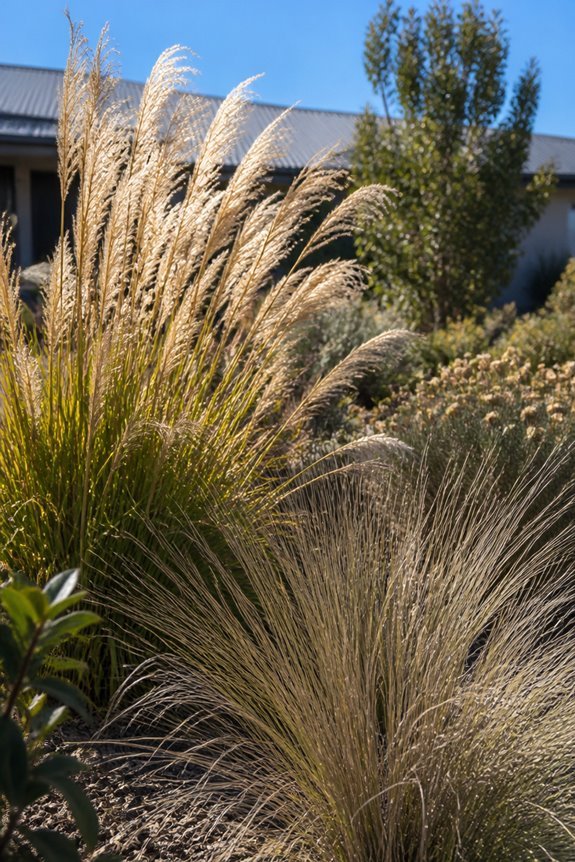
Want a garden that moves with the wind but doesn’t run you ragged? Ornamental grasses are your answer. They sway and shimmer like living sculpture, and they ask almost nothing of you.
Try planting Lomandra or Miscanthus for height up to 1.5 meters. They hit that sweet spot of drama without drama, you know? Go for groupings of three or five. Odd numbers just look right. You’ll get golden tones, burgundy plums, or cool silvery greens depending on your pick. Each one catches the light differently against stone or concrete. No fertilizer needed. No pruning schedule. They handle Australia’s brutal sun like champs, and local birds will thank you with nests and chatter.
Honestly, they’re the plant that keeps giving while you barely give anything back.
Coastal Plants for Salt and Sun Exposure
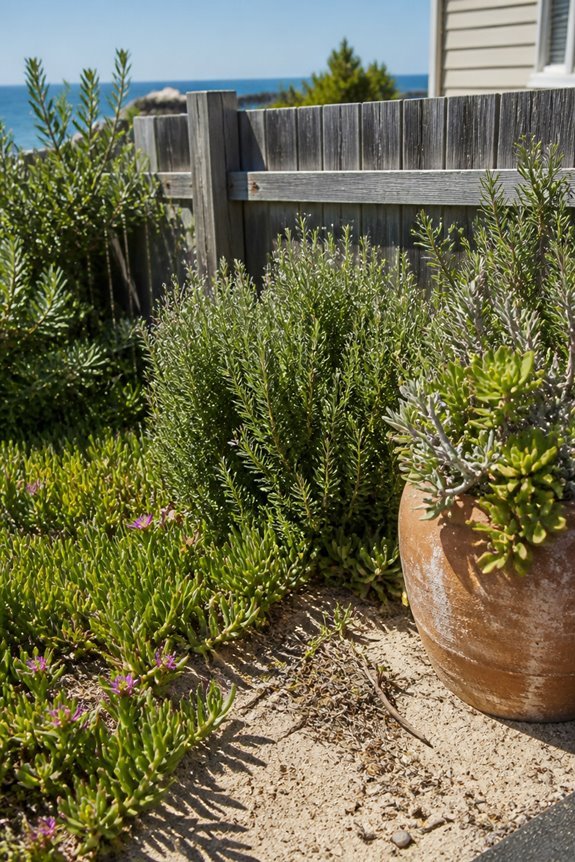
Wondering why your garden keeps giving up near the beach? You’ve got three enemies to outsmart: salt spray, fierce wind, and sun that won’t quit.
Start with pigface. This succulent doesn’t just tolerate salt, it thrives on neglect. You’ll get fat pink flowers all year with barely any water. Coastal rosemary works harder than it looks, too. It grows tough and bushy, topped with purple blooms. Keep it around two to three feet tall for real impact.
Tea trees take the abuse and bounce back with white or pink flowers. Saltbush gives you that silvery-green screen you need against wind gusts.
The best part? These plants don’t need you fussing over them. Plant them right, step back, and let them do their thing. Your coastal front yard will look pulled together without constant work.
Mulch Choices That Keep Soil Cool
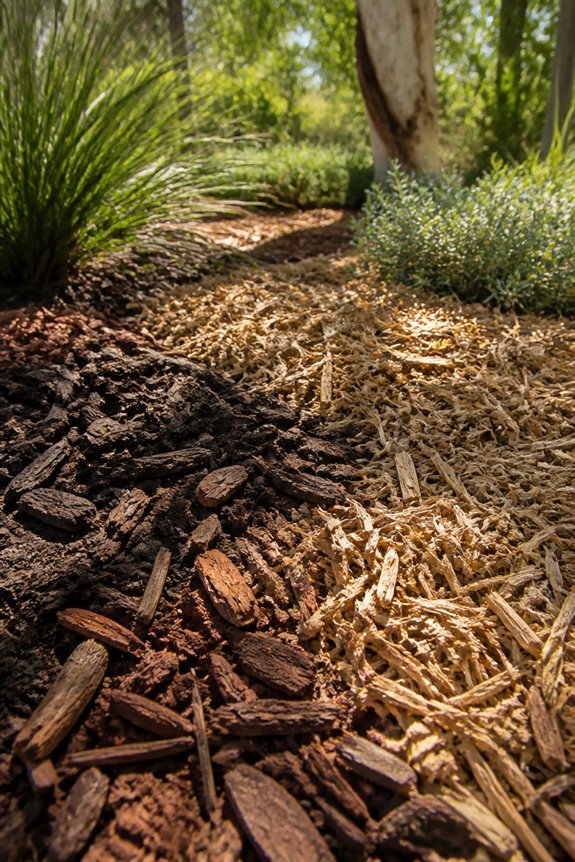
Your front yard doesn’t have to feel like a frying pan every July. You have three solid mulch options to keep things cool down below.
Wood chips break down into rich, dark soil over time. They work hard and look good doing it. Bark mulch lasts longer, so you won’t be hauling bags home every spring. Straw mulch is your lightest choice. It bounces heat away and holds moisture right where roots need it.
Spread your mulch 2 to 3 inches deep around plants. Just don’t pile it against tree trunks. That traps moisture and rots bark faster than you’d think. Good mulch can drop soil temperature by 10 degrees on brutal afternoons. Your plants stay upright and happy instead of wilting by 3 p.m.
Mediterranean-Style Garden Design for Hot Climates
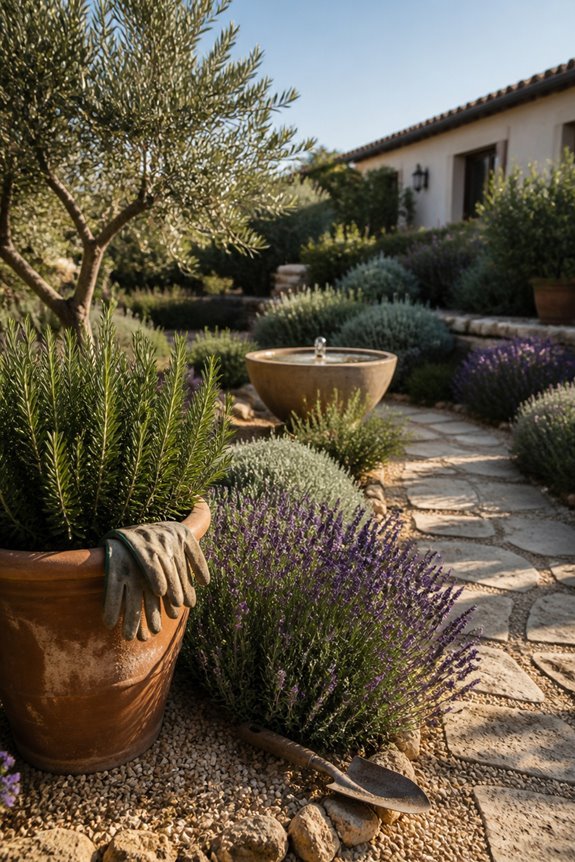
Tired of watching your garden wilt before noon? You can build something that actually loves the heat.
Start with gravel instead of lawn. Light stones bounce sunlight upward and keep roots cool. Add silver-leafed plants like dusty miller. They look crisp even when the mercury climbs.
Position a few small trees on your west side. Two or three meters tall is plenty. They’ll catch that brutal afternoon sun before it hits your patio.
Terracotta pots in warm oranges and browns add instant personality. Cluster your succulents together inside them. Grouping makes watering easier and looks more intentional.
Finish with stepping stone pathways. They cost less than poured concrete and feel more inviting underfoot.
Your garden doesn’t need to fight summer. It can welcome it.
Deciduous Trees for Summer Shade and Winter Sun
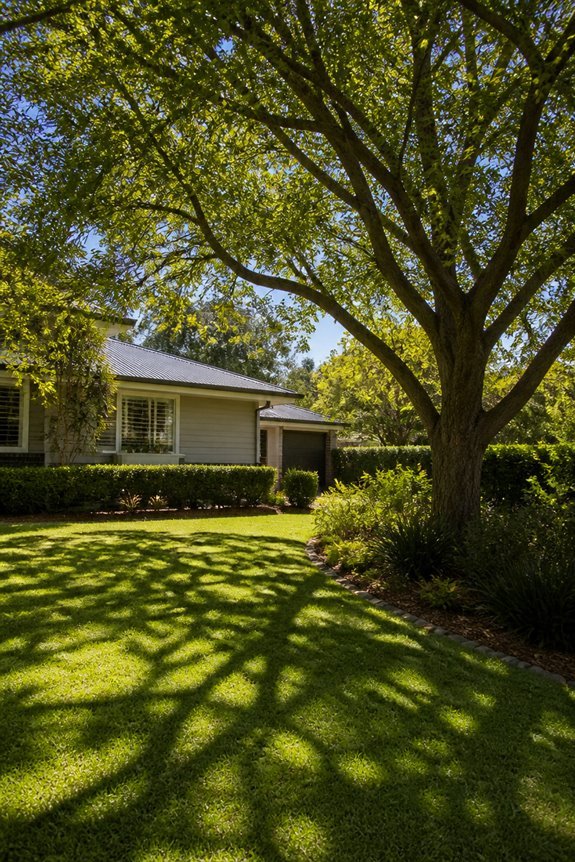
Want a front yard that actually works with the seasons? Deciduous trees might be your answer. They drop their leaves in autumn and let winter sun stream through. Come summer, they turn into natural air conditioning.
Liquidambars and plane trees grow 30 to 50 feet tall. Their broad canopies cast cooling shadows across patios and pathways. They block that harsh afternoon heat when you need relief most. Then June arrives, and they shed completely. Bare branches welcome those low winter rays right into your home.
Your energy bills stay manageable. No sauna in December. No ice box in July. Plant them 15 to 20 feet from your house for the best shade coverage. Smart landscaping pays off. Your electricity meter will notice the difference.
Raised Planters for Better Drainage Control
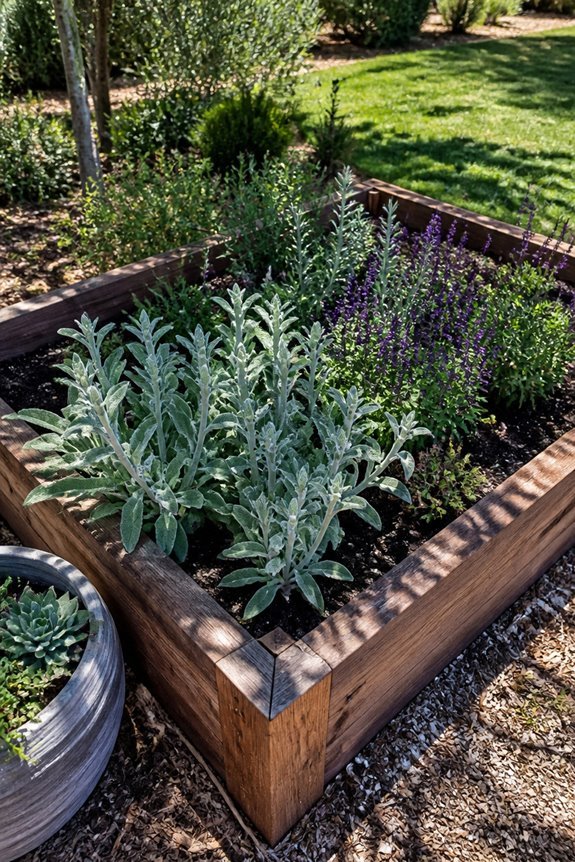
Tired of watching your plants drown in soggy soil? Root rot kills faster than most pests, and you can’t fight what you can’t see.
Raised planters put you back in control. You build a simple box, about twelve inches high, using treated wood. Fill it with quality soil and compost. Water drains quickly now. Your plants breathe easier, and so do you.
The tidy frames look sharp along your front yard. Clean lines make everything feel intentional, not accidental. You bend less when weeding too. Your knees notice the difference immediately.
Problem spots become plant paradises. You just needed to lift things up.
Water Features to Create Cooling Microclimates
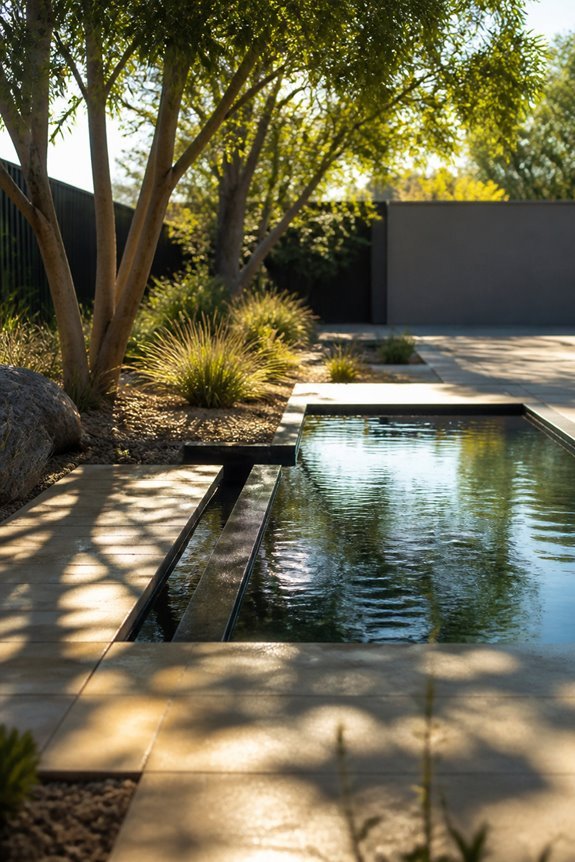
Want a quick way to cool your front yard? Add water. A simple birdbath, fountain, or small pond can drop temperatures by 5 to 10 degrees. That’s not magic. It’s evaporation doing the work for you.
Place your water feature near where you actually sit. You’ll feel the breeze. You’ll hear the trickling sound. It covers up street noise too. Birds will show up for baths. You get free entertainment while staying cooler.
Small ponds with plants become instant focal points. The water reflects light and makes your space feel bigger. Even a basic recirculating fountain needs almost no upkeep. You use minimal water. You get maximum comfort.
Your front yard stops being a heat trap. It becomes somewhere you and local wildlife actually want to spend time.
Designing Your Layout for Maximum Sun Protection
Your front yard takes a beating every afternoon. You know that feeling when you step outside and the heat just slaps you in the face?
Here’s how you fix it. Plant tall trees on your west side. That’s where the afternoon sun turns your yard into a furnace. Go with deciduous trees. They block sun in summer but drop their leaves in winter. You get shade when you need it. Warmth when you don’t.
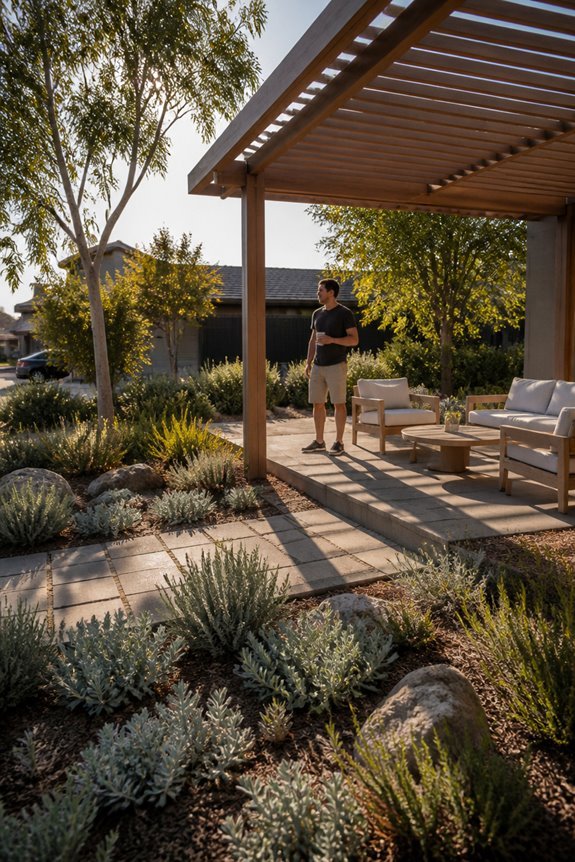
Add a pergola or shade sail facing those harsh afternoon rays. Think of it as sunglasses for your outdoor space. Angle it at forty-five degrees if you can. Tuck shrubs and smaller plants near your windows and walls. They cast cooling shadows right where you need them.
Your hardscaping choices matter more than you think. Light-colored pavers bounce heat away. Dark surfaces soak it up and radiate it back at you. Skip those.
Group your shade strategies together. You’ll actually want to spend time outside again.
Budget-Friendly Sun Solutions for Front Yards
Need shade without draining your savings? You’ve got more options than you think.
Grab some old bed sheets or white tarps. String them between fence posts for instant relief. Twenty bucks, maybe less. It’s like a giant backyard umbrella that stays put. Fast-growing trees work magic too. Desert oaks or acacias cost less than a pizza night. They’ll feed you shade for decades. Bamboo screens double as privacy blockers. Your neighbors can finally stop guessing about your garden experiments.
Look around at what you already own. Park your car strategically. That shadow stretches further than you’d expect. Just don’t forget where you left it. Recycled pallets become shade structures with basic nails and stubbornness. Start small. Add pieces as you go. You’ll get sunburned once or twice. Laugh it off. That’s how you learn what actually works in your yard.
Frequently Asked Questions
What Is the Best Time of Year to Plant Sun-Loving Plants in Australia?
Spring, between September and November, represents the ideal planting window for sun-loving plants in Australia. This period offers warm soil temperatures and adequate moisture, allowing newly established plants to develop robust root systems before the intense summer heat arrives.
How Often Should I Water Drought-Tolerant Ground Covers During Extreme Heat?
One might assume plants bred for drought somehow enjoy dessication. In reality, even hardy ground covers need weekly deep watering during extreme heat waves. Soil moisture monitoring remains essential—these resilient plants survive neglect but thrive with strategic hydration.
Can I Combine Multiple Sun Protection Methods in One Front Yard Design?
Yes, combining multiple sun protection methods is highly effective. Designers can integrate shade structures, strategic plant placement, reflective surfaces, and mulching simultaneously. This layered approach maximizes cooling efficiency while creating visually appealing front yard designs suited to Australia’s harsh climate conditions.
What Permits or Council Approvals Are Needed for Shade Structures Installation?
Most Australian councils require development approval for permanent shade structures exceeding height limits or covering substantial yard areas. Homeowners should contact their local council to verify specific setback requirements, materials restrictions, and whether a building permit is necessary before installation proceeds.
How Long Does It Take for Plants to Establish in Full Sun?
When push comes to shove, most full-sun plants require twelve to eighteen months to establish robust root systems. During this period, consistent watering and mulching remain essential, as newly planted specimens need protection from extreme heat stress and moisture loss.
Conclusion
Creating a sun-blasted front yard doesn’t mean you’re stuck with dead grass and regret. Sure, those native plants might seem pricey upfront, but they’ll laugh at your water bill later. Banksia and Grevillea basically thrive on neglect and sunshine. Add some shade cloth, toss down those reflective pavers, and boom—you’ve got an Australian front yard that’s actually usable. Your neighbors will be green with envy. Well, your plants will be green anyway.