

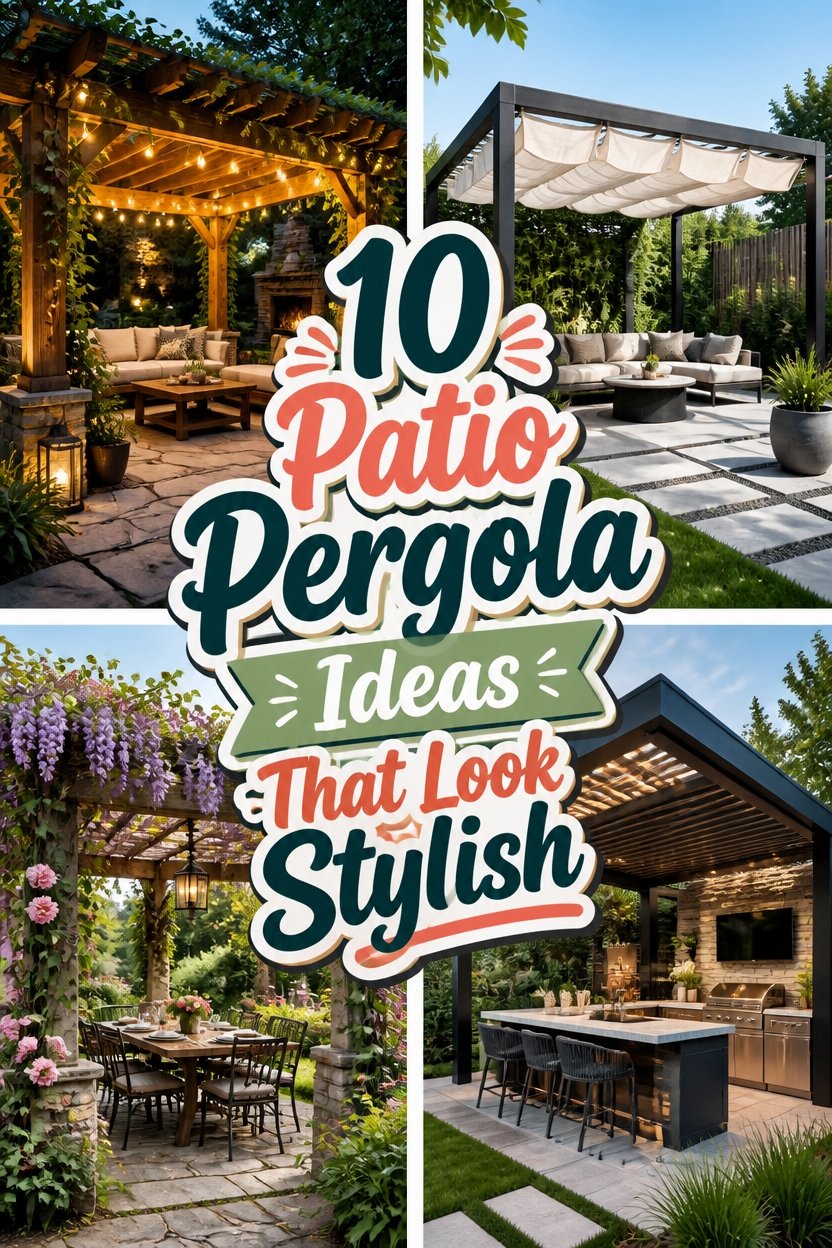
A patio pergola is one of those upgrades that quietly changes how much time you actually spend outside. It shades your morning coffee spot, carves out a real dining area, and gives your whole yard that pulled-together look from the street.
I added an attached pergola off my own patio a few years back, and it turned a space we barely used into where we eat dinner most nights in warmer months.
There’s no single right way to approach this either. Some people lean into rustic cedar beams with vines climbing the posts, while others prefer sleek aluminum with built-in LED lighting for something cleaner and more modern.
Budget rarely locks you out of the look you want, it just steers which materials you end up choosing. What matters more is how you actually plan to use the space once it’s built.
Before You Start Shopping
Think about attached versus freestanding before anything else. An attached pergola extends your living space naturally off the house, while a freestanding one works better as its own destination elsewhere in the yard.
Weather protection deserves real thought too. A covered style with a proper roof handles rain, while open designs keep things airy but leave you exposed when it storms.
Your habits should guide this more than trends do. A pergola built around how you actually use your patio will get used a lot more than one chosen just because it photographed well.
13 Patio Pergola Ideas
A patio pergola can lean rustic, modern, or somewhere comfortably in between, and the right direction really depends on your home’s style and how you use your outdoor space day to day. Some of these ideas focus on structure and material, while others highlight small additions like lighting or vines that change the whole feel.
I’ve included budget-conscious builds alongside more elaborate covered designs, so you can see the full range before settling on your direction.
Have a look through and see which style matches the patio you’re working with.
Budget-Friendly Pergola Designs Without Sacrificing Style
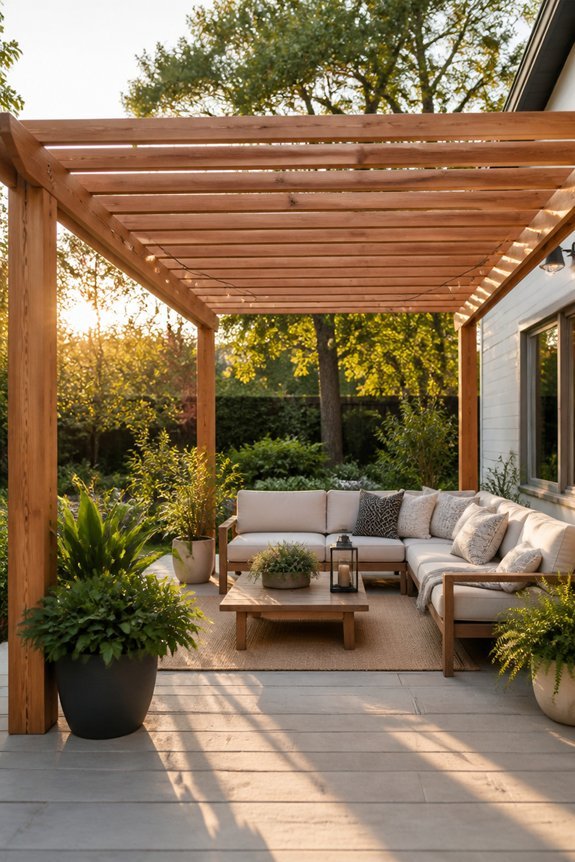
Smart Material Choices
Cost concerns don’t have to limit your outdoor vision. Several practical options deliver real style without draining your wallet.
Simple designs using standard materials cut expenses considerably. Pressure-treated wood, vinyl, and metal frames last for years. They cost far less than premium alternatives.
Right-Sizing Your Structure
A smaller footprint goes a long way. An eight-by-ten-foot structure uses fewer materials. It still provides plenty of shade for relaxing or dining.
Open-roof designs skip the pricey extras. You won’t need lattice work or shade cloth installations. The result feels airy and modern.
Clever Placement and Kits
Installing against existing fences or walls reduces support posts. Fewer posts means lower costs and faster assembly.
Ready-made kits offer another smart path. You get pre-cut components and clear instructions. Property owners achieve attractive outdoor spaces while keeping spending reasonable.
Also read: 10 Patio Pergola Ideas That Look Stylish
Modern Minimalist Pergolas for Contemporary Homes
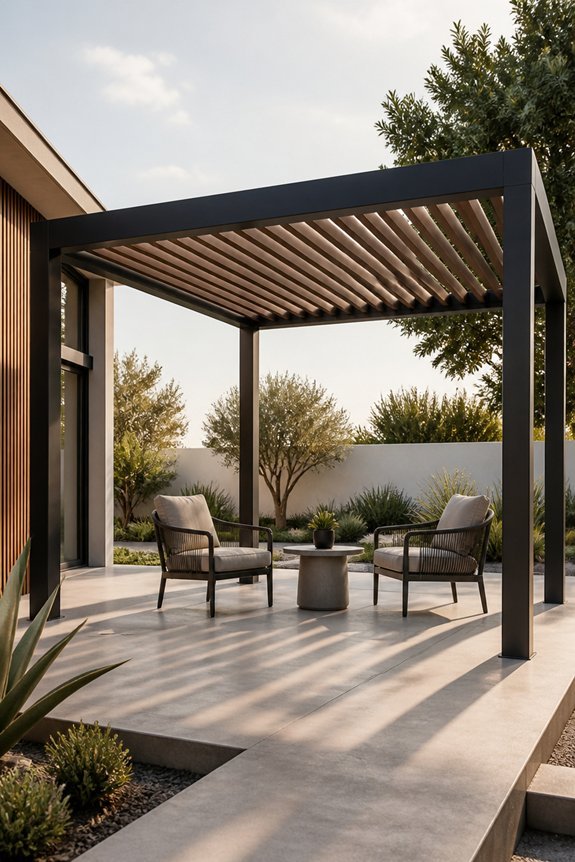
Modern minimalist pergolas follow three simple ideas. Clean lines create visual calm. Simple geometry keeps the structure uncluttered. Every element serves a purpose.
Contemporary homes pair well with flat horizontal beams. Skip the decorative trim. Stick to white, black, or natural wood tones.
Aluminum and steel last for years. They also look sleek and polished.
Open slatted roofs filter sunlight without blocking it completely. A 10 by 12 foot size fits most standard patios nicely.
Built-in shade options add flexibility. Try retractable fabric or polycarbonate panels for coverage when you need it.
Lighting stays subtle with recessed fixtures or simple track systems. Surrounding plants remain architectural too. Ornamental grasses or structured shrubs complement the look better than thick climbing vines.
Classic Wooden Pergolas With Lasting Appeal
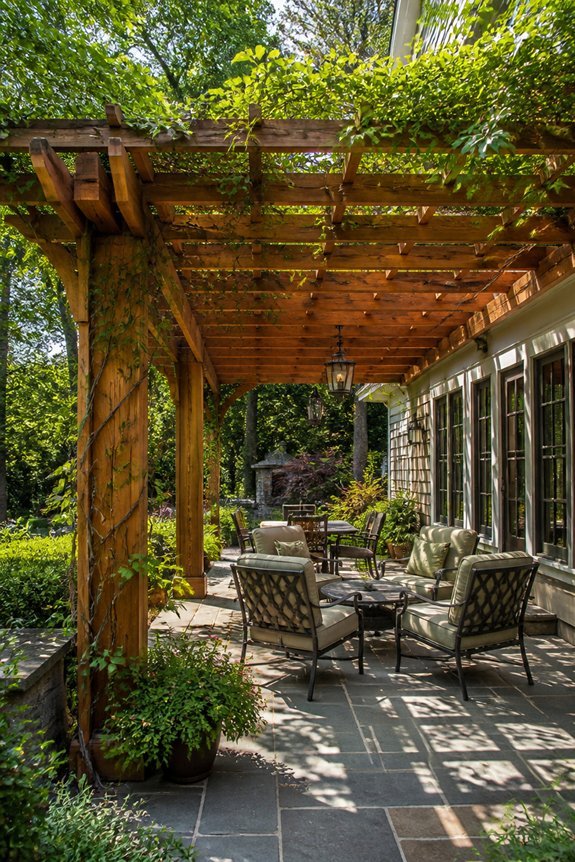
Wooden pergolas bring a different feel than sleek aluminum designs. Cedar, redwood, and pressure-treated lumber create natural beauty and warmth. These materials age well over time. They develop character while staying strong.
Classic styles work beautifully with traditional, rustic, and transitional homes. They blend naturally with gardens and patios. You will need to stain and seal them periodically. Inspection for rot or pests keeps them healthy.
Choose your wood species carefully. Beam thickness and rafter spacing matter too. Cedar fights decay naturally but costs more. Plan for maintenance every two to three years. With proper care, wooden pergolas last fifteen to twenty years.
Attached Pergolas: Extending Your Living Space
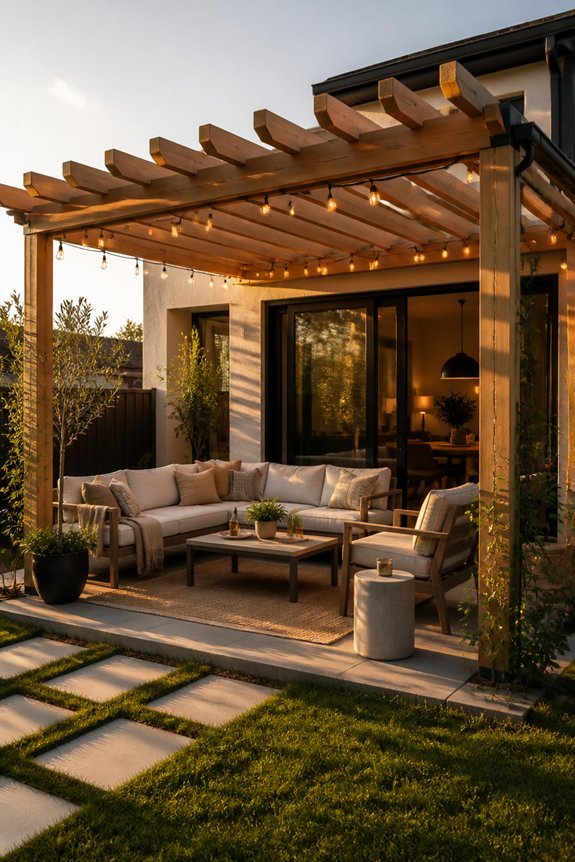
Attached pergolas connect directly to your house. They create extra outdoor living space right next to your home. Many homeowners choose this design for its practical benefits.
You get shade and weather protection with an attached pergola. You also keep a clear visual link to your indoors. These structures blend naturally with your home’s style.
Most attach to exterior walls or roof lines. Common materials include pressure-treated lumber, vinyl, and aluminum. Each option differs in how long it lasts and how much upkeep it needs.
Practical Uses
These pergolas suit many outdoor activities. They work well for covered dining areas. They also make comfortable lounging spots. Some use them to mark the transition between inside and outside.
Design Tips
Match the roof pitch to your home’s existing angles. Keep overhang dimensions consistent with your house. This helps the pergola look like it belongs.
Installation Basics
Secure beams to actual structural parts of your home. Use the right fasteners and supports. Proper installation keeps everything safe and stable.
Freestanding Pergolas as Landscape Focal Points
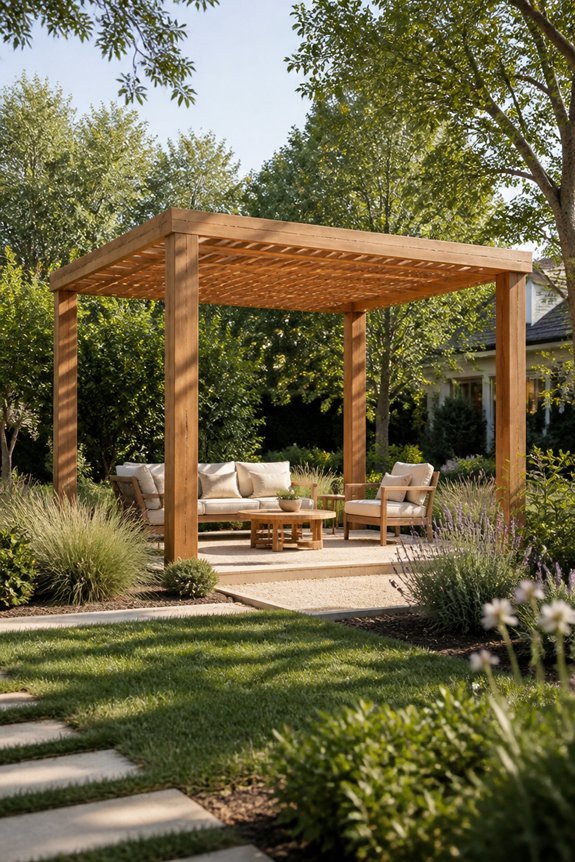
Freestanding pergolas add visual interest to any yard. They also serve practical purposes for outdoor living. These standalone structures work differently from attached designs. They stand independently as true centerpieces in garden layouts.
Homeowners have flexibility with placement options. Position one near a patio or beside garden beds. They also work beautifully at yard entrances. Materials range from classic wood to modern aluminum and low-maintenance vinyl. Each offers its own look and lifespan.
Smart placement makes all the difference. Consider sun patterns throughout the day. Think about sightlines from indoor windows. Factor in how people move through the space.
Personal touches bring these structures to life. Train climbing vines up the posts. Install lighting for evening use. Add comfortable seating underneath. These additions boost both function and charm.
Freestanding pergolas excel at defining outdoor rooms. They establish distinct garden zones naturally. They can frame a favorite view or landscape feature. Adapt the size and style to your specific yard. Match it to existing plants and your personal taste.
Living Wall Pergolas With Climbing Vines
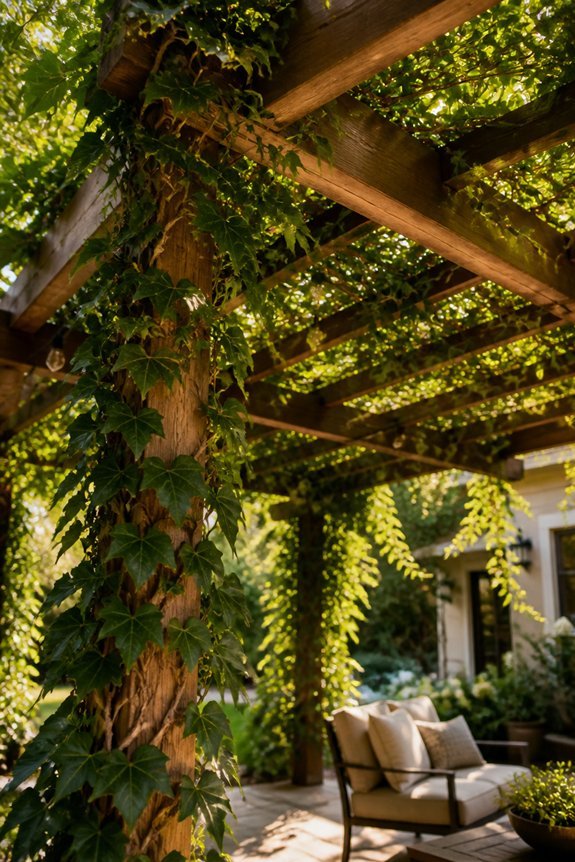
Climbing vines turn pergolas into lush, living structures. They add layers of green, create shade, and give outdoor spaces real visual depth.
Ivy, clematis, and climbing roses form thick foliage. This filters sunlight and creates natural privacy screens. Vines take time to establish. Coverage improves steadily as seasons change.
Choosing Your Vines
Pick vines based on your climate, sun exposure, and how much upkeep you prefer. Fast growers like honeysuckle fill in quickly. Slower varieties offer a more refined, controlled look.
Vines need simple support to thrive. Horizontal wires or lattice panels work well to guide their growth.
Benefits and Care
Living walls block harsh sun and reduce heat buildup. This can lower cooling costs for nearby spaces. The greenery also draws pollinators and birds into your garden.
Regular pruning keeps vines tidy. It also stops them from creeping onto roofs, fences, or other structures.
Covered Pergolas for Weather Protection
Solid Roofing Options
Solid roofing turns pergolas into real shelters. Rain, snow, and harsh sun stay outside where they belong.
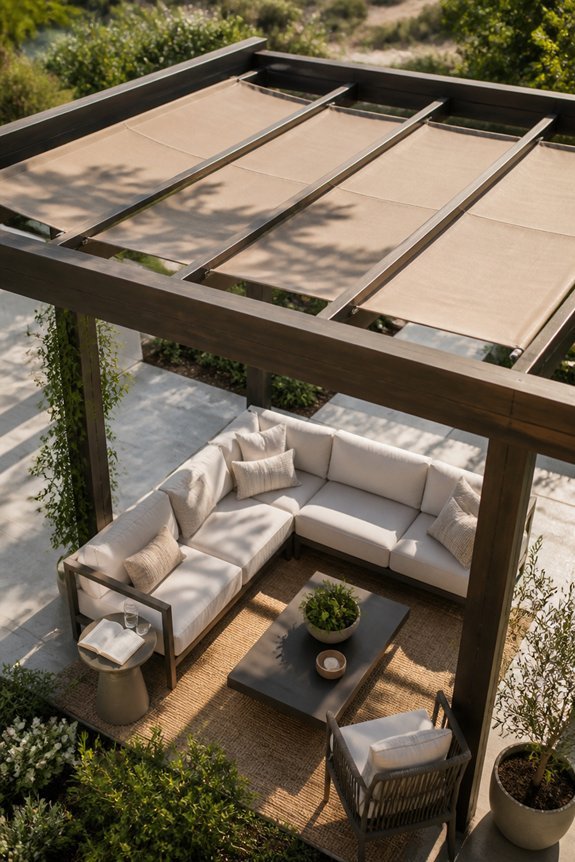
Polycarbonate panels let light in while blocking UV rays. You get brightness without the heat. Metal or asphalt shingles work like traditional roof options. Retractable shade cloths adapt to changing weather. Open them up or pull them shut as needed.
Water Management
Flat surfaces need good drainage. Water pooling damages materials over time.
Sloped designs let gravity do the work. Gutters and downspouts handle the rest. Aluminum resists rust and lasts longer. Your local climate should guide material choices. Heavy snow areas need stronger supports. Coastal homes need extra corrosion protection.
Covered pergolas stretch your outdoor season. They look good while doing the job.
Shade Cloth Pergolas for Sun Control
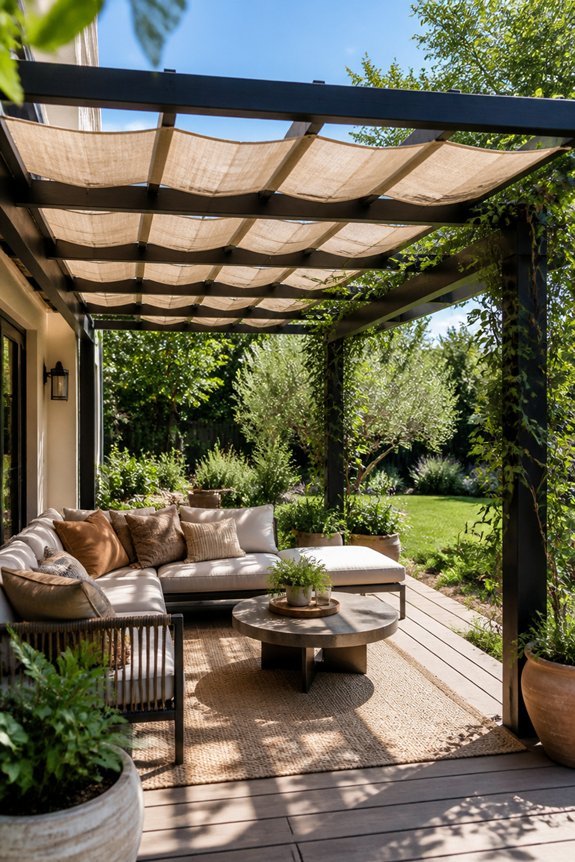
When sunlight gets too intense, shade cloth pergolas provide a flexible fix. They filter harsh rays while letting air move freely. The fabric panels—usually polyester or knitted mesh—cut UV exposure by 30 to 90 percent. Density determines exactly how much protection you get.
Homeowners often pick retractable options. These allow quick adjustments for morning light or afternoon shade. You attach the cloth with clips, grommets, or permanent fasteners. Popular density choices run from 30 to 80 percent. This setup suits patios, decks, and gardens well. It regulates temperature and shields delicate plants. Best of all, it costs less than solid roofs while managing sun effectively.
Metal Frame Pergolas for Industrial Aesthetics
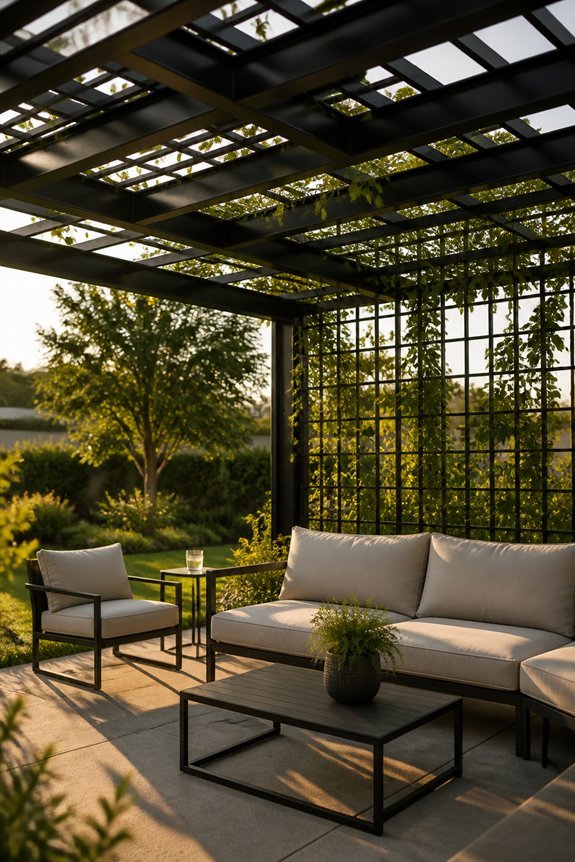
Metal frame pergolas shift the focus from temporary fabric to lasting structure. Steel and aluminum frames bring an industrial edge to modern patios, contemporary homes, and commercial spaces.
Steel delivers serious strength and stands up to harsh weather year after year. Aluminum weighs less, fights rust naturally, and asks for little upkeep. Both materials welcome climbing vines, shade cloth, or polycarbonate panels for extra coverage.
These pergolas fit right into urban yards, minimalist gardens, and spaces still taking shape. Finishes range from powder-coated black to galvanized silver to weathered bronze. They carve out outdoor living areas, frame garden beds, and catch the eye with clean geometry.
Installation calls for concrete footings and bolted joints. The result feels solid and built to last.
Integrated Lighting: Creating Evening Ambiance on Your Pergola
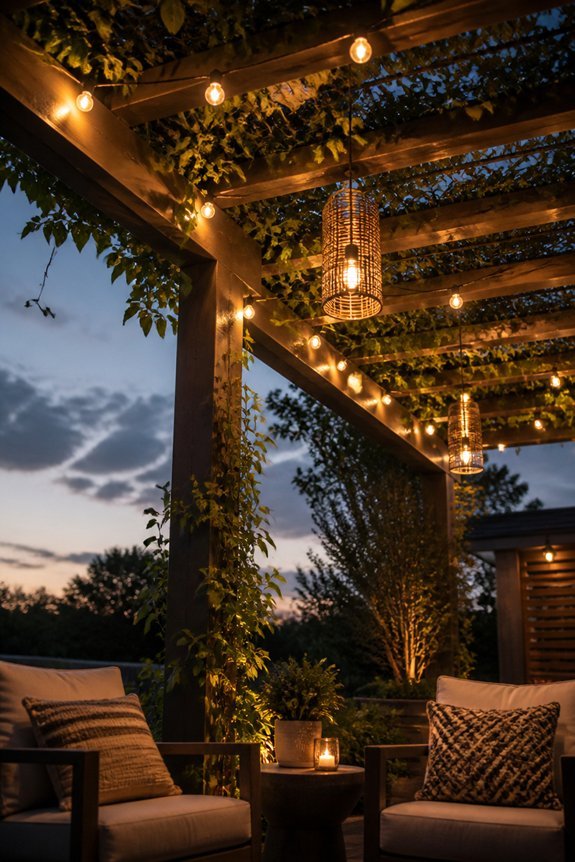
Light Up Your Nights
Your pergola can become a favorite evening spot. The right lighting makes all the difference.
Choose Your Light Style
String lights cast a soft glow across the whole structure. They feel casual and inviting. Pendant lights work better over tables or chairs where you need brighter, focused light. Recessed LEDs hide inside the beams for a sleek, modern look. No visible bulbs, just clean lines.
Power and Control
Solar lights cut down on electric bills. They work best in sunny spots but run dimmer than wired options. LEDs last longer and use less power than old incandescent bulbs. Add dimmers to change the mood from dinner parties to quiet nights.
Smart Placement
Path lights keep everyone safe after dark. Overhead fixtures should angle carefully to avoid harsh shadows on faces. Position lights to highlight what matters most: conversation areas, steps, and the space you actually use.
A well-lit pergola draws you outside. You will find yourself staying longer, relaxing more, and making the most of your evenings.
Frequently Asked Questions
What Permits or Zoning Regulations Do I Need Before Installing a Pergola?
Most areas require a permit once your structure passes a certain height or lot coverage percentage. It’s worth checking your local building codes before you buy any materials.
Setback requirements can affect exactly where you’re allowed to build too. If you’re part of an HOA, it’s smart to check their rules as well, since those can be stricter than your city’s regulations.
How Long Does a Typical Pergola Installation Take From Start to Finish?
Most installations wrap up in one to three days, depending on the complexity of your design. Simple kits often come together in a single day if you’ve got some help.
Custom structures with electrical work or more elaborate designs tend to take the full two to three days. Give yourself a little buffer time in case weather or unexpected issues slow things down.
What Is the Average Cost Range for a Professional Pergola Installation?
Professional installations typically run between $3,000 and $12,000. Where you land in that range depends heavily on size, materials, and how complex the design ends up being.
Simple aluminum or vinyl structures tend to sit toward the lower end, while custom wood builds with added features push the price up. It’s worth getting a few quotes before committing to a final design.
Can I Install a Pergola Myself, or Should I Hire a Professional?
If you’re comfortable with basic carpentry and have the right tools, plenty of homeowners take this on themselves successfully. Simpler kits especially make DIY installation approachable for most skill levels.
Professionals bring real value for anything more complex, though, particularly around structural integrity and making sure permits and codes are handled correctly. It really comes down to your experience level and how elaborate the design is.
How Often Does a Pergola Require Maintenance, and What Does It Involve?
Plan on some kind of maintenance check at least once a year, regardless of material. This keeps small issues from turning into bigger, more expensive ones.
For wood, that means inspecting for rot, repainting or restaining as needed, and treating for pests before they cause real damage. Metal structures need less frequent attention, but tightening hardware and clearing debris still matters.
Staying on top of this small yearly routine goes a long way toward keeping your pergola looking good and structurally sound for years.
CONCLUSION
A patio pergola isn’t just a shade structure, it’s really an invitation to spend more time outside than you probably do right now. That’s been true in my own backyard more than I expected going in.
Adding one off my own patio meant dinner moved outside most nights during the warmer months, something that just didn’t happen before we had a defined, shaded space to sit in.
Whether you go attached or freestanding, wood or aluminum, covered or open, the choice that fits your actual habits will always outperform the one that just looks good in photos. Match the structure to how you live outside, not the other way around.
Small additions like integrated lighting or a few climbing vines can transform a basic frame into something that feels genuinely finished. Don’t underestimate how much those details add once the structural work is done.
Budget shouldn’t scare you away from a good-looking result either. Simple materials and smart placement, like building against an existing fence to cut down on posts, can get you a beautiful pergola without a huge price tag.
I’d love to hear what direction you’re leaning toward, or how your own patio pergola project is coming along. Leave a comment and let me know.