

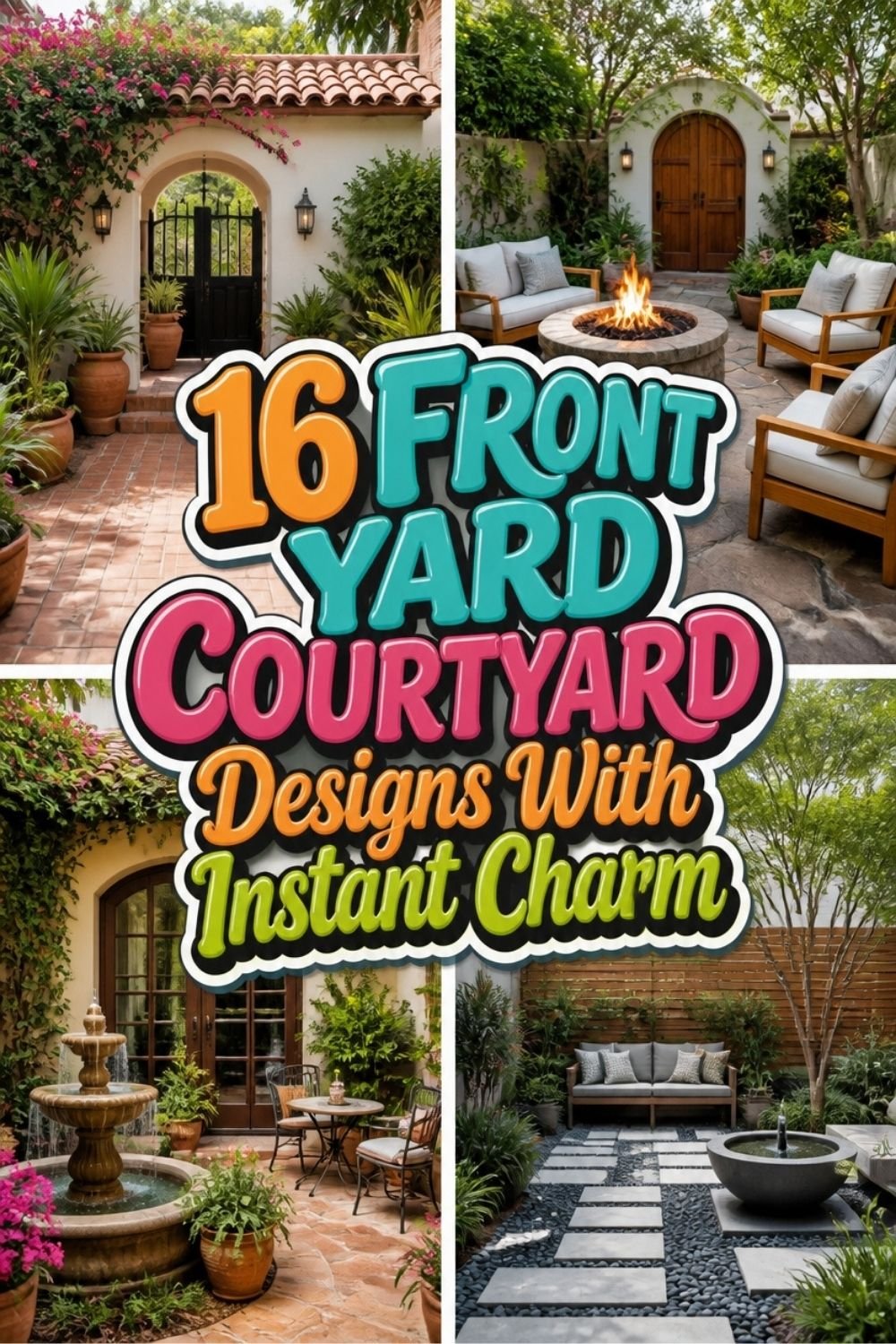
You’ll discover that transforming your front yard into a charming courtyard requires careful consideration of several key factors before you begin any construction or planting. Your success depends on understanding proper space planning, establishing a realistic budget, and maneuvering local permit requirements that govern front yard modifications. These foundational elements, combined with proven design principles, will determine whether your courtyard becomes a stunning focal point or a costly mistake that fails to enhance your home’s curb appeal and overall value.
Planning Your Front Yard Courtyard Space And Layout
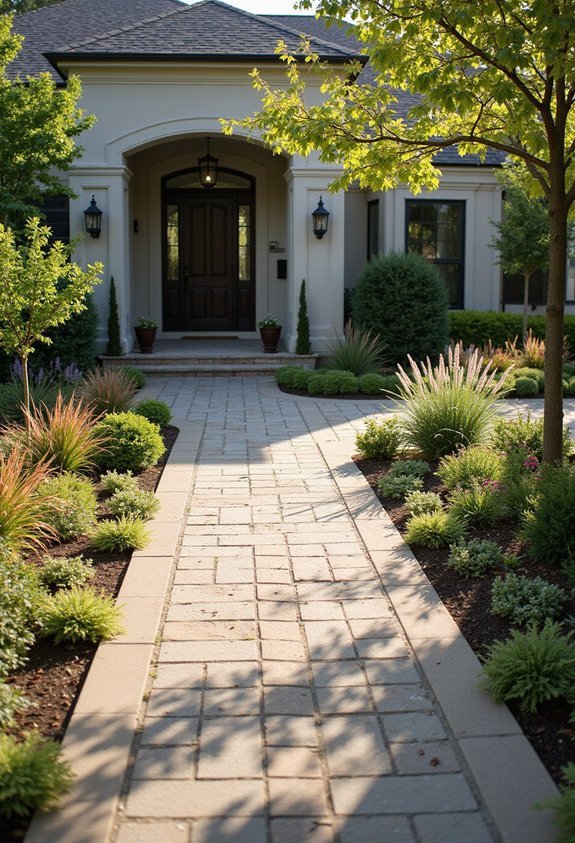
Before you begin selecting plants or choosing decorative elements, you’ll need to carefully assess your front yard’s existing conditions and establish a clear layout plan that maximizes both functionality and visual appeal. Start by measuring your available space, noting the locations of windows, walkways, and utility lines that’ll influence your design. Consider how sunlight moves across the area throughout the day, identifying which sections receive full sun, partial shade, or complete shade. Sketch your proposed courtyard boundaries, marking entry points and seating areas. This systematic approach guarantees your final design works harmoniously with your home’s architecture and surrounding landscape features.
Also read: 24 FRONT YARD FLOWER GARDEN Plans That Stay Pretty!
Setting A Realistic Front Yard Courtyard Budget
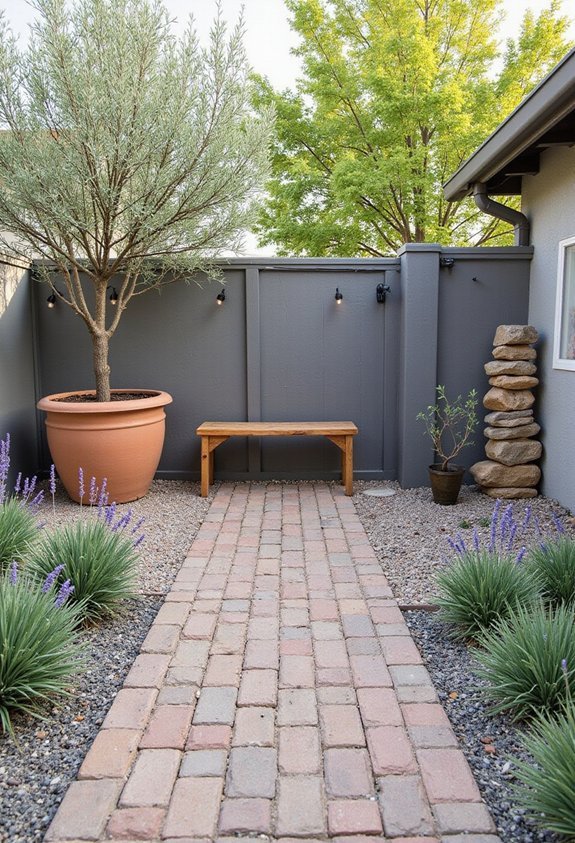
Most front yard courtyard projects require an investment between $2,000 and $15,000, depending on the size, materials, and features you choose to include in your design. You’ll need to allocate funds for hardscaping elements like pavers, stones, or concrete, which typically consume 40-60% of your total budget. Plant materials, including trees, shrubs, and perennials, usually account for 15-25% of costs. Additional features such as lighting, water elements, or seating areas will require separate budget considerations. You should also reserve 10-15% of your total budget for unexpected expenses or design modifications that may arise during construction.
Essential Design Principles For Courtyard Success
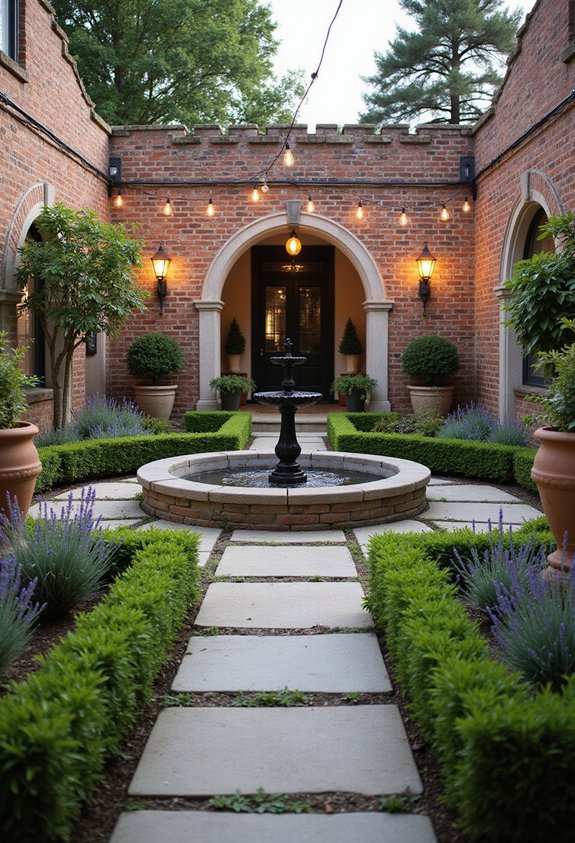
When planning your front yard courtyard, you’ll need to understand five fundamental design principles that determine whether your space becomes a welcoming entrance or a landscape mistake. First, establish clear sight lines from your home’s entrance to the street, guaranteeing visitors can navigate easily. Second, create balanced proportions by matching your courtyard’s scale to your home’s architecture. Third, define boundaries using low walls, hedges, or decorative fencing that provides privacy without blocking natural light. Fourth, incorporate focal points like water features or specimen plants that draw attention. Fifth, secure proper drainage and accessibility for year-round functionality.
Permits And Regulations For Front Yard Changes
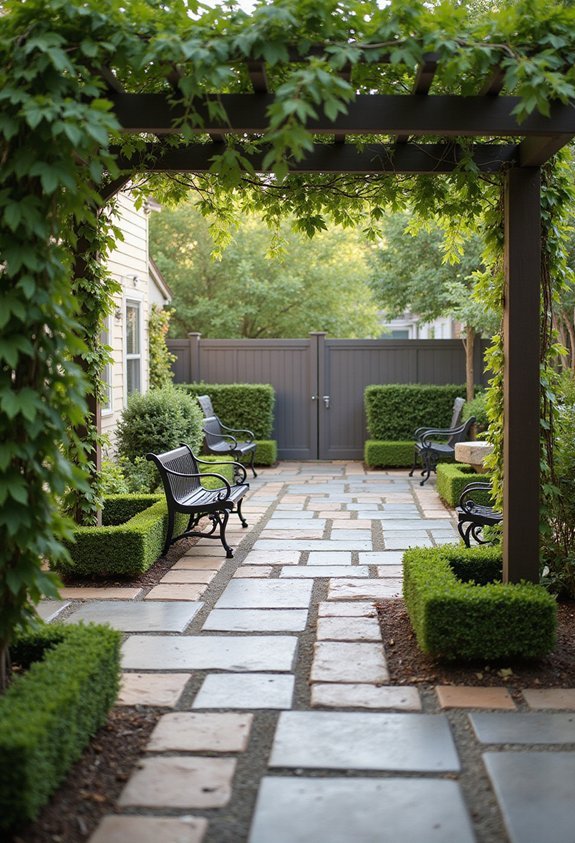
Understanding your local building codes and permit requirements becomes the next step after finalizing your courtyard design plans, since many front yard modifications require official approval before construction begins. You’ll need to contact your city’s planning department to determine which permits you require for fencing, hardscaping, or structural changes. Most municipalities have specific setback requirements, height restrictions for walls or fences, and drainage regulations that affect courtyard construction. Additionally, you should check your homeowner’s association rules if applicable, since they often impose additional design standards and approval processes that complement municipal requirements for front yard renovations.
Mediterranean Front Yard Courtyards With Water Features
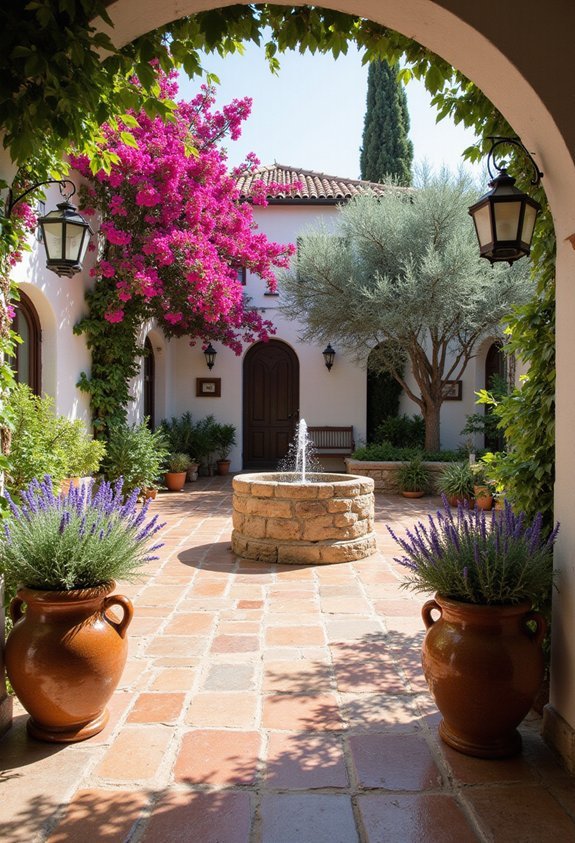
How can you transform your front yard into a Mediterranean oasis that captures the timeless elegance of coastal European estates? You’ll need to incorporate traditional water features that define this classic style. Install a central fountain with terra cotta or natural stone construction, positioning it as your courtyard’s focal point. Add shallow reflecting pools lined with ceramic tiles in blue or earth tones. Consider wall-mounted water spouts that cascade into collection basins below. Surround these features with drought-resistant plants like lavender, rosemary, and olive trees. Use gravel pathways and wrought iron accents to complete the authentic Mediterranean atmosphere.
Modern Minimalist Courtyard Designs
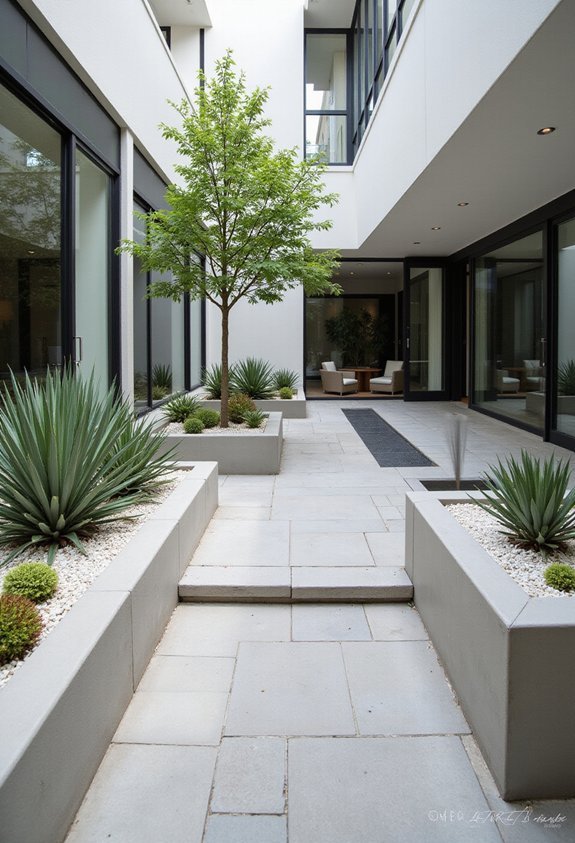
Simplicity defines modern minimalist courtyard designs, where clean lines and uncluttered spaces create a serene front yard environment that emphasizes function over decoration. You’ll achieve this aesthetic by selecting geometric hardscaping materials like concrete pavers, steel planters, and glass panels that maintain visual consistency throughout your space. Choose a limited color palette of whites, grays, and blacks to enhance the streamlined appearance. Install structural plants such as ornamental grasses, succulents, and single-specimen trees that provide texture without overwhelming the design. Strategic lighting placement highlights architectural elements while maintaining the courtyard’s sophisticated, understated elegance during evening hours.
English Garden Courtyards With Lush Plantings
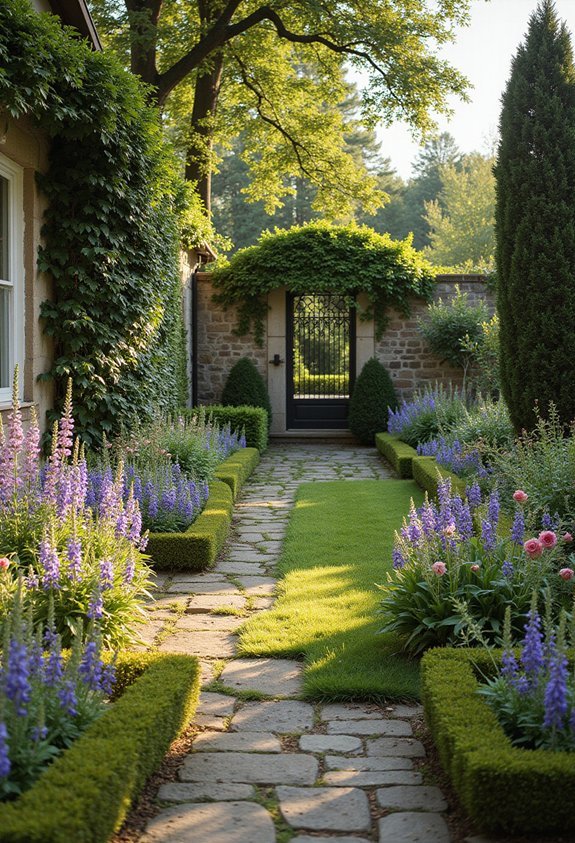
While modern minimalist designs embrace restraint, English garden courtyards celebrate abundance through layered plantings that create a romantic, cottage-style atmosphere in your front yard space. You’ll want to establish height variations by combining climbing roses on trellises, medium-height lavender bushes, and low-growing groundcovers like creeping thyme. Plant densely to achieve that characteristic overflowing look, incorporating traditional English plants such as boxwood hedges, delphiniums, and foxgloves. Add gravel pathways that wind through your plantings, and include weathered stone or brick elements. This approach transforms your front courtyard into a lush, inviting entrance.
Desert Contemporary With Succulents And Stone
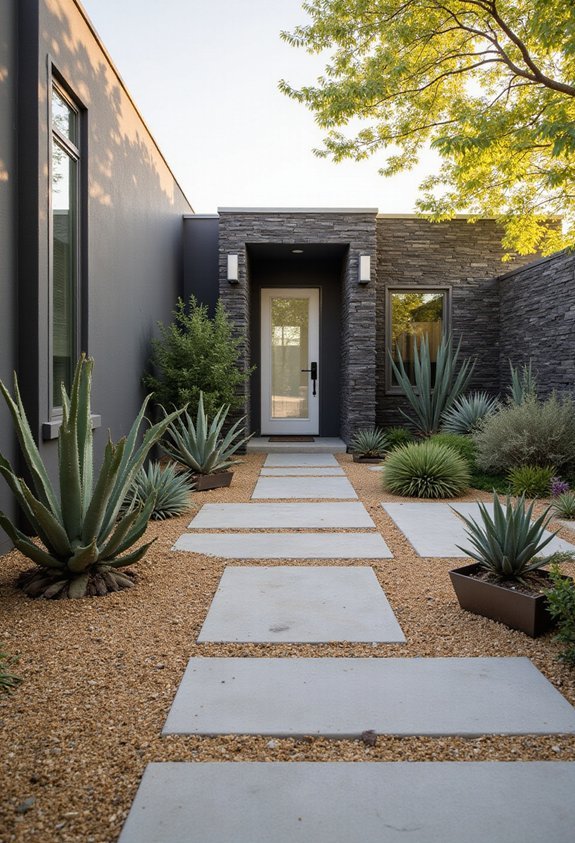
Desert contemporary courtyards blend architectural precision with drought-resistant plants, creating striking front yard spaces that thrive in arid climates while maintaining sophisticated visual appeal. You’ll achieve this aesthetic by combining sculptural succulents like agave, barrel cacti, and paddle plants with clean-lined hardscaping elements such as decomposed granite pathways, concrete planters, and natural stone walls. Install metal screens or wooden slat fencing to define spaces while allowing airflow, and incorporate gravel mulch in varying textures to reduce water needs. Add strategic lighting to highlight plant silhouettes and architectural features, creating dramatic shadows that enhance the courtyard’s geometric composition after sunset.
Japanese-Inspired Zen Courtyard Spaces
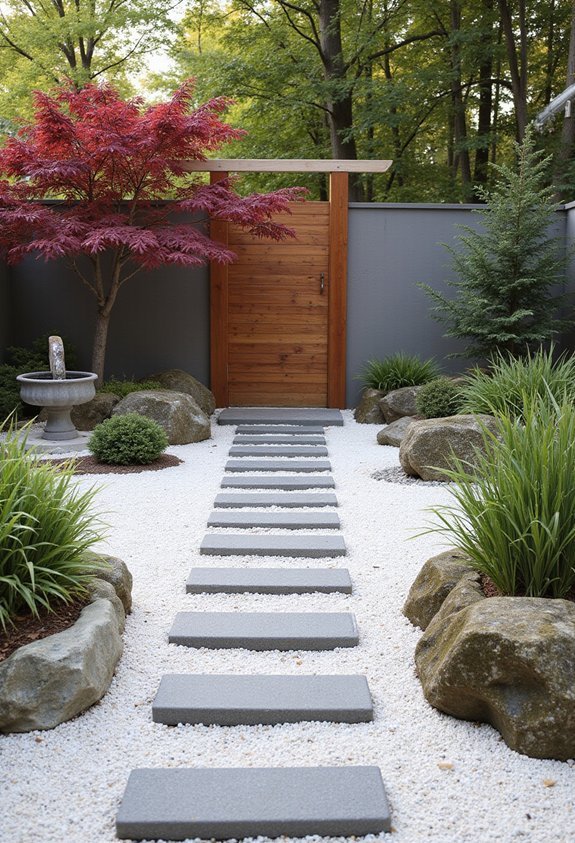
Japanese-inspired zen courtyards transform front yard spaces into tranquil sanctuaries that emphasize balance, natural materials, and mindful design principles rooted in centuries-old traditions. You’ll create serenity by incorporating gravel patterns, bamboo screening, and carefully positioned stones that represent mountains or islands. Install a small water feature, such as a bamboo fountain or shallow reflecting pool, to provide gentle sounds that mask street noise. Select plants like Japanese maples, ornamental grasses, and moss groundcover to maintain year-round visual interest. You’ll establish clear pathways using stepping stones or wooden walkways that guide visitors through your carefully curated landscape meditation space.
Rustic Farmhouse Courtyards With Reclaimed Wood
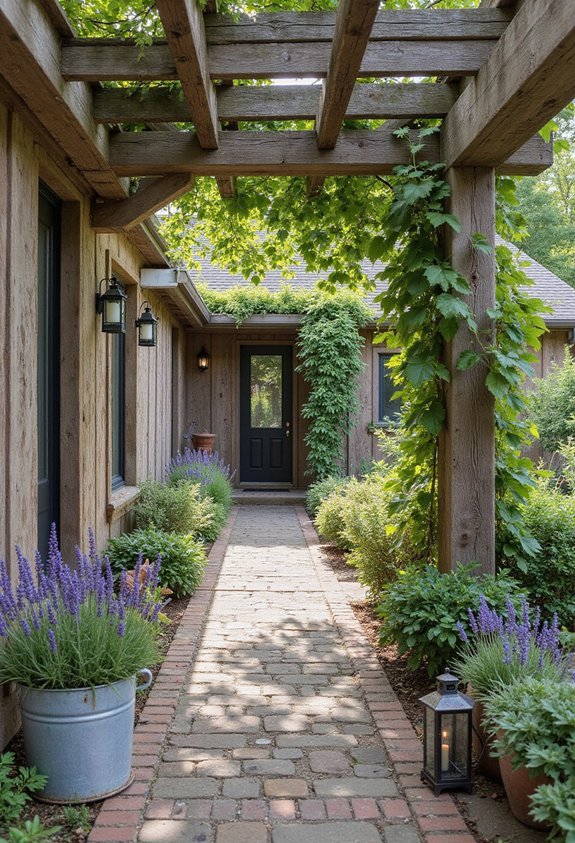
How can you capture the warmth and authenticity of countryside living in your front yard courtyard design? You’ll achieve this rustic farmhouse aesthetic by incorporating weathered reclaimed wood elements throughout your space. Install reclaimed barn wood fencing to create defined boundaries, while adding vintage wooden planters filled with wildflowers and herbs. Construct simple wooden benches using salvaged lumber, positioning them strategically for conversation areas. Include reclaimed wood pergolas or arbors to provide vertical interest and climbing plant support. Complete the design with gravel pathways, mason jar lighting, and galvanized metal accents that complement the aged wood’s natural patina and character.
Tropical Front Yard Paradise Designs
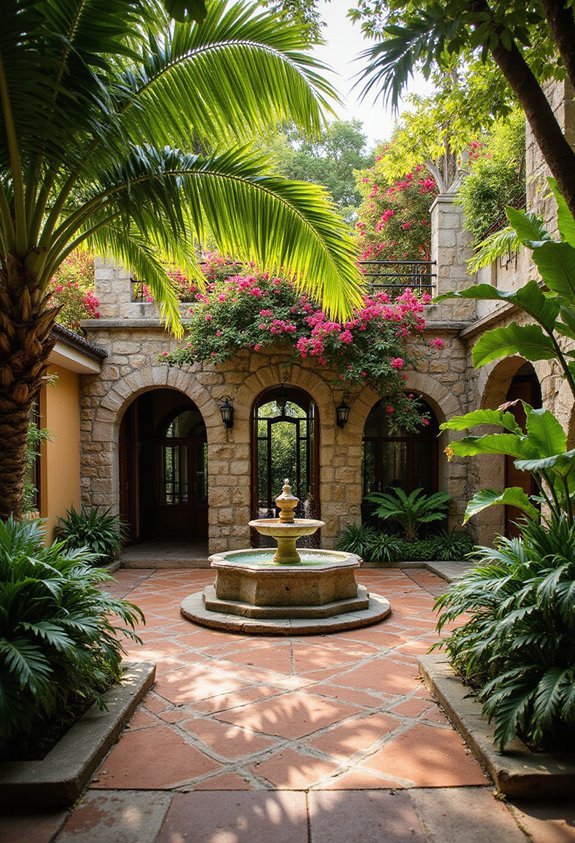
When you want to transform your front yard into a lush tropical retreat, you’ll create an exotic paradise that transports visitors to a warm, humid climate year-round through carefully selected plants and design elements. Install large-leafed plants like elephant ears, bird of paradise, and banana trees as focal points around your courtyard’s perimeter. Add colorful flowering plants such as hibiscus, bougainvillea, and plumeria to create vibrant splashes of tropical color. Incorporate natural stone pathways, bamboo screening, and water features like fountains or small ponds to enhance the authentic tropical atmosphere and complete your paradise design.
Formal French Parterre Courtyards
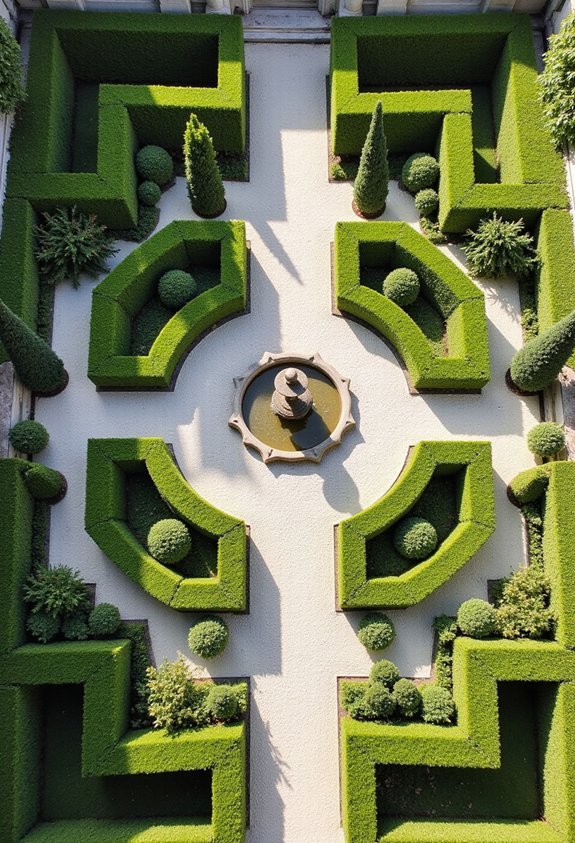
Since French parterre gardens represent the pinnacle of formal landscape design, you’ll create a sophisticated front yard courtyard that showcases geometric precision, mathematical symmetry, and carefully manicured plantings arranged in intricate patterns. You’ll establish structured boxwood hedges as your primary framework, creating diamond, oval, and rectangular compartments that contain colorful annual flowers or ornamental gravel. You’ll incorporate central focal points like fountains, statuary, or topiary specimens to anchor your design’s visual hierarchy. You’ll maintain crisp edges through regular trimming, ensuring your parterre’s geometric integrity remains intact throughout growing seasons while creating an elegant, timeless entrance.
Cottage Garden Courtyard Ideas
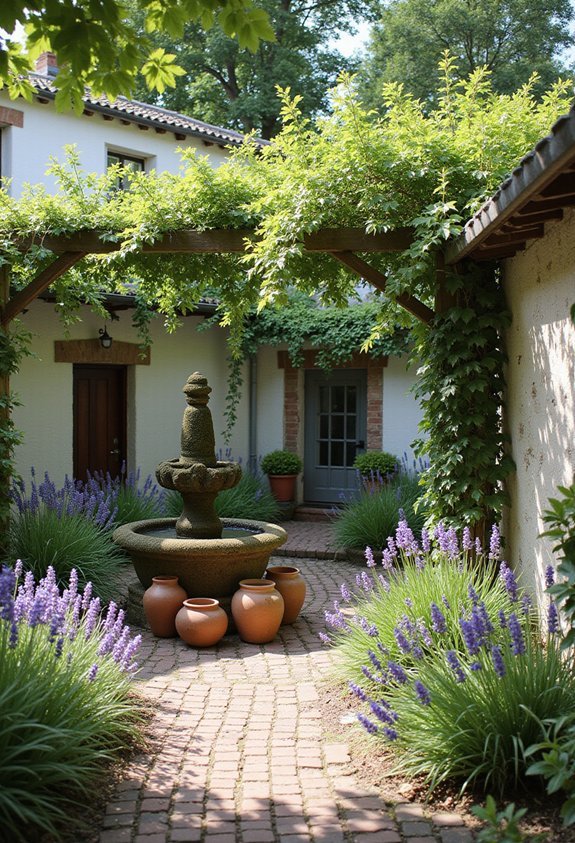
While formal parterre gardens emphasize rigid geometry and mathematical precision, cottage garden courtyards embrace a completely different philosophy that celebrates natural abundance, informal charm, and seemingly spontaneous plant arrangements. You’ll create this relaxed aesthetic by layering flowering perennials, herbs, and climbing vines without strict geometric patterns. Plant hollyhocks, foxgloves, and delphiniums against courtyard walls, then fill gaps with lavender, rosemary, and thyme. Add cottage roses climbing wooden trellises or arbors for vertical interest. Include self-seeding annuals like poppies and cosmos that’ll naturalize throughout your space, creating the carefree, romantic atmosphere that defines authentic cottage garden design.
Industrial Chic With Metal And Concrete
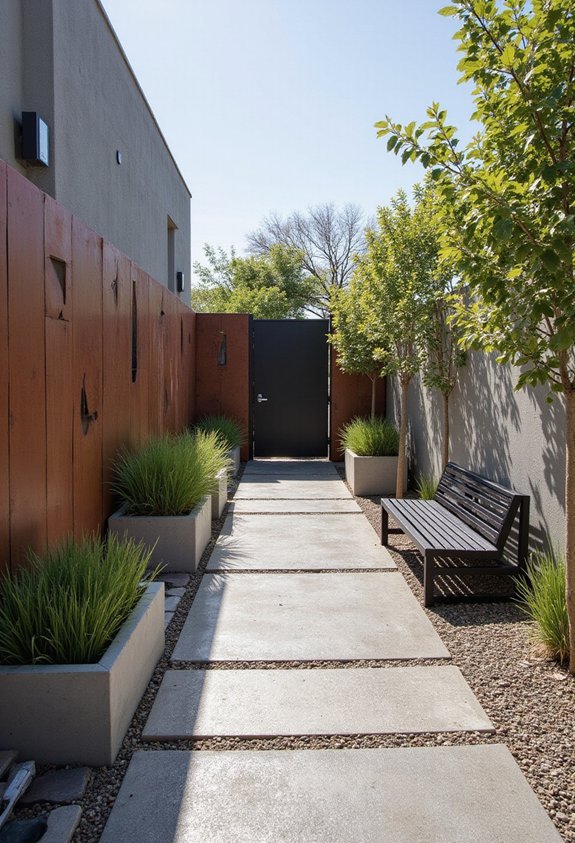
Moving away from the soft, romantic elements of cottage gardens, industrial chic courtyard designs embrace raw materials like weathered steel, exposed concrete, and blackened iron to create bold, contemporary outdoor spaces that celebrate urban aesthetics. You’ll achieve this look by incorporating metal planters with clean geometric shapes, concrete benches with sharp edges, and steel water features that create striking focal points. Consider adding weathered Corten steel panels as privacy screens, concrete pavers in large format layouts, and metal pergolas with minimalist designs. These materials work together to establish sophisticated courtyards that reflect modern architectural principles while maintaining functional outdoor living spaces.
Spanish Colonial Front Yard Courtyards
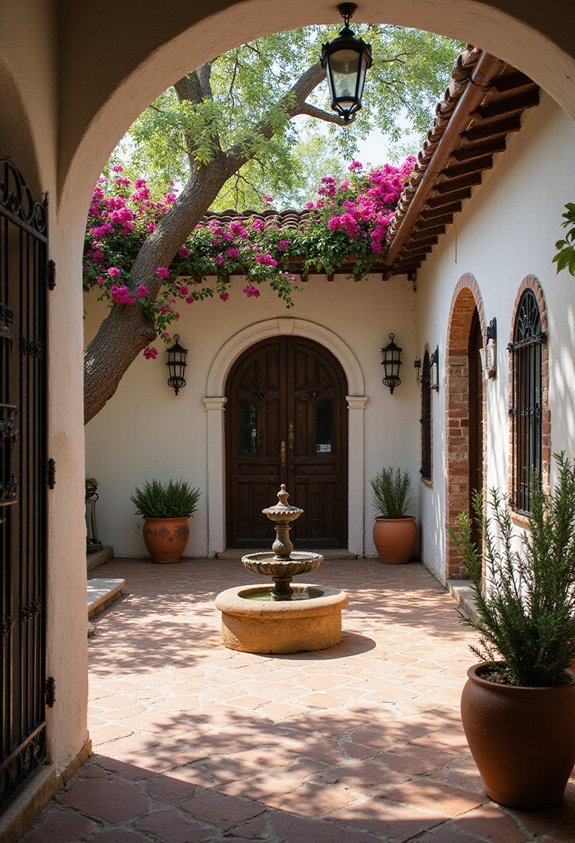
Spanish Colonial front yard courtyards transport you to the sun-drenched landscapes of old California and Mexico through their distinctive architectural elements and carefully curated plant selections that emphasize both beauty and practicality. You’ll create authentic appeal by incorporating terra cotta tiles, wrought iron gates, and stucco walls painted in warm earth tones like ochre, cream, or sage green. Plant drought-tolerant specimens such as bougainvillea, lavender, rosemary, and ornamental grasses that thrive in Mediterranean climates. Add a central fountain or decorative pottery to establish focal points, while wooden pergolas provide shade and architectural interest that completes this timeless design aesthetic.
Prairie Style With Native Grasses
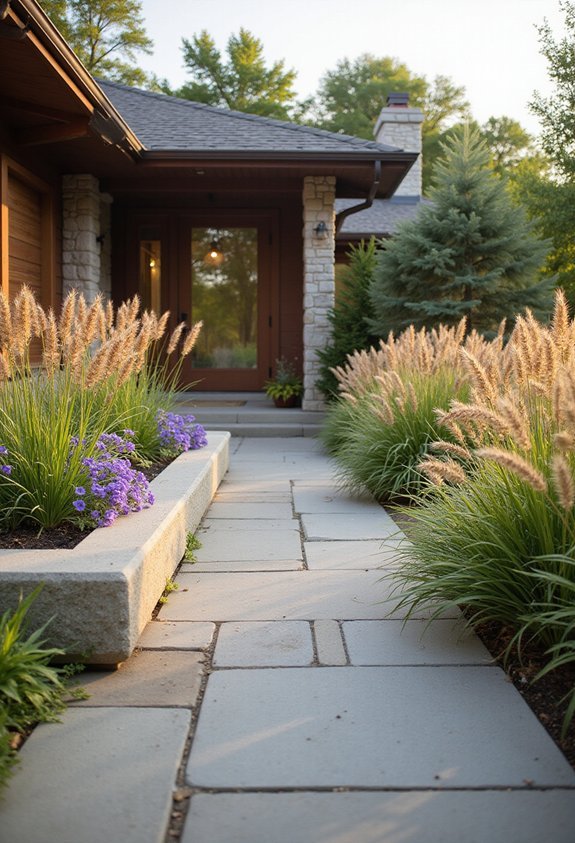
As you embrace the natural beauty of America’s heartland, Prairie Style front yard courtyards celebrate the sweeping grasslands that once covered millions of acres across the Midwest through thoughtful integration of native plant communities and horizontal design principles. You’ll create visual impact by grouping ornamental grasses like little bluestem, buffalo grass, and prairie dropseed in flowing masses that mirror natural prairie patterns. Low stone walls or horizontal wood fencing define your courtyard boundaries while maintaining the characteristic prairie emphasis on horizontal lines. You’ll add seasonal interest with native wildflowers such as purple coneflower, black-eyed Susan, and prairie blazingstar planted throughout your grass groupings.
Conclusion
You’ve explored sixteen distinct front yard courtyard designs that’ll transform your home’s entrance into a welcoming space. Whether you choose Mediterranean water features, cottage gardens, or industrial elements, proper planning and budgeting remain essential for success. Remember to check local permits before starting construction, and select materials that complement your home’s architecture. With careful execution of these design principles, you’ll create a front yard courtyard that enhances both curb appeal and functionality.