
The first cool morning of October always gets me itching to drag out the pumpkins before anyone else on the block. There’s something about that shift in the air that makes a front yard feel incomplete without seasonal flair.
Fall decorating gets treated as an afterthought in so many homes, a quick pumpkin on the step and nothing else, when the season already offers so much natural texture and color to work with.
I’ve tried more fall arrangements than I can count, and the ones that held up were never the most elaborate, just the ones built for real autumn weather. Let’s get into ideas that bring lasting seasonal warmth.
A Few Things I Wish I Had Known Earlier
Before you commit to a big elaborate display, think about which materials will actually survive your climate through the whole season. Some decorations look stunning for a week and then fall apart the first time it rains.
Layering matters here just as much as it does indoors. A single pumpkin on the step reads as an afterthought, while a few coordinated elements working together create a display that feels genuinely intentional.
Plan for maintenance from the start. Fresh produce and dried materials both need occasional attention, so factor that into your choices rather than assuming everything will simply take care of itself.
26 Fall Front Yard Decorations
This list spans everything from simple pumpkin stacks and gourd displays to bigger projects like braided corn husk garlands and amber lights strung through trees. Some ideas take twenty minutes with supplies you can grab on the way home, others are weekend projects worth setting aside real time for.
I tried to include enough range that whether you want one quick focal point or a fully coordinated front yard transformation, there’s something here that fits your effort level and your style.
Pick a handful that speak to your space and start building your own version of fall curb appeal.
Stack Fall Pumpkins on Your Front Steps
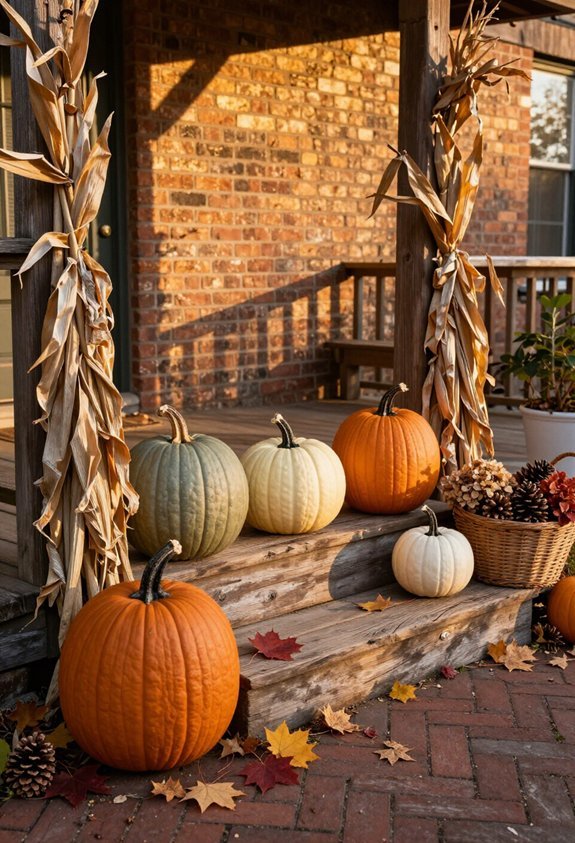
Arranging pumpkins in stacked formations on front steps creates a tiered visual display that draws the eye upward and establishes immediate seasonal curb appeal. The method requires selecting pumpkins of graduated sizes, placing the largest specimens at the base to guarantee structural stability.
Medium-sized pumpkins occupy the middle tier, while smaller varieties crown the arrangement. This descending scale prevents toppling and distributes weight evenly across each step.
Spacing between stacks allows safe passage and prevents visual overcrowding. Odd-numbered groupings, typically three or five per tier, produce balanced asymmetry.
Positioning stacks toward the step edges frames the walkway without obstructing it. The display functions without additional elements, relying solely on form and repetition for impact. Maintenance involves periodic rotation to prevent soft spots from forming against stone or concrete surfaces.
Also read: 18 FRONT YARD PARTY SET UP Ideas For Hosting!
Build a Gourd-Crowned Entry With Heirloom Varieties
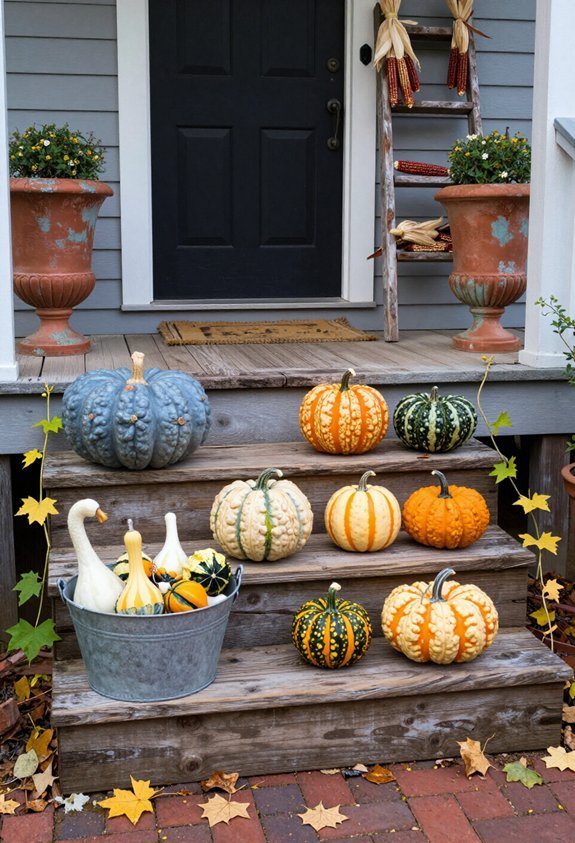
Whether clustered atop a newel post or draped along a porch railing, heirloom gourds establish a distinctive entry focal point through their irregular silhouettes and muted coloration.
Warty Hubbards, pale Turk’s Turbans, and elongated bottle gourds offer dimensional contrast to standard orange pumpkins, creating visual rhythm through their varied heights and surface textures.
Securing these varieties demands sturdy placement, as their hollow shells resist direct stacking and require shallow bowls, weathered crates, or metal urns for stability against autumn winds.
Arranging gourds in odd-numbered groupings, such as threes or fives, produces balanced asymmetry that draws the eye toward doorways without overwhelming structural lines. For prolonged display, selecting specimens with intact stems and firm rinds prevents premature decay, while positioning them under covered eaves shields delicate skin from heavy rainfall and early frost damage.
Hang a Textured Fall Wreath With Dried Grasses
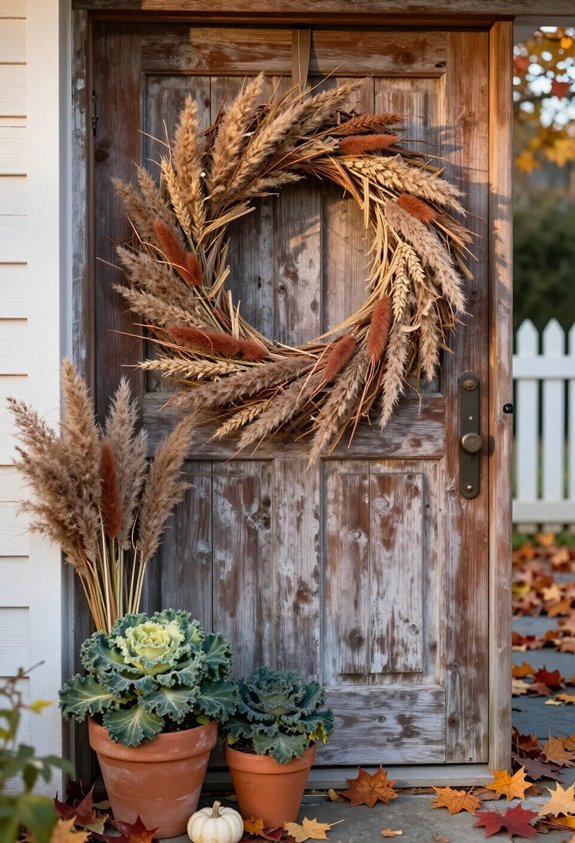
Moving from the grounded weight of gourd displays to vertical door treatments introduces new considerations for material durability and structural support. A wreath constructed from dried grasses, wheat stalks, and preserved foliage offers textural contrast against wooden or metal door surfaces.
The base requires a wire or grapevine frame capable of supporting brittle, lightweight materials without sagging. Grasses such as pampas, fountain grass, or dyed oat grass provide height and movement, though they demand protection from direct precipitation to prevent molding or shedding.
Attachment occurs through floral wire or hot glue applied at stem junctions, ensuring stems point outward for maximum volume. Installation demands a sturdy hook rated for the wreath’s weight, positioned at center height for visual balance. Periodic inspection prevents wind damage, with damaged grasses replaceable through simple rewiring techniques.
Line Your Walkway With Hay Bales and Mums
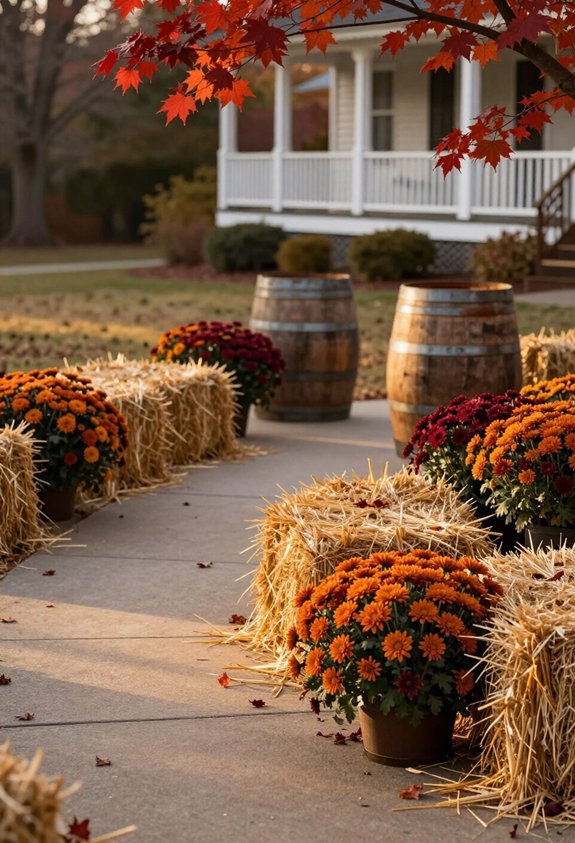
A structured approach to horizontal landscape staging begins with the deliberate placement of rectangular hay bales along paved or gravel walkways, creating elevation platforms that frame pedestrian routes with organic, golden-toned geometry.
These compressed straw formations, typically arranged in alternating or staggered patterns, establish rhythmic visual intervals that guide movement toward entry points while introducing textural contrast against flat surfaces.
Positioning potted chrysanthemums atop these bales introduces stratified color through densely clustered blooms in burgundy, amber, and bronze varieties. The elevated placement maximizes visibility of flower heads, ensuring ideal color saturation at standard sightlines.
This combination of harvested agricultural material and seasonal flowering plants establishes a shift threshold between public street space and private residential domain without requiring permanent structural modification to existing hardscape elements.
Design Frost-Proof Window Boxes With Ornamental Kale
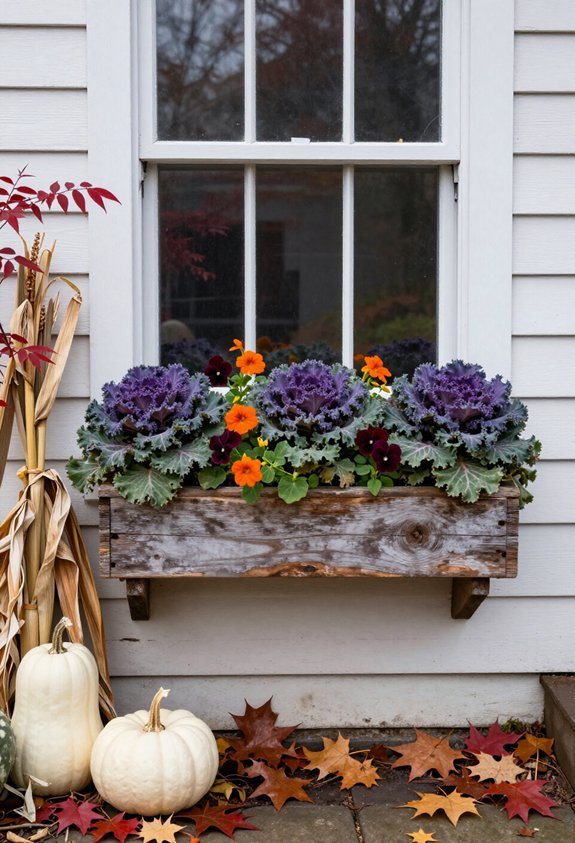
Although frost threatens tender annuals, ornamental kale provides durable structure for window box arrangements that persist through cold autumn nights.
Gardeners select varieties with fringed, ruffled, or feathered leaves in white, pink, purple, or green combinations, positioning central specimens as focal points before filling surrounding spaces with complementary cool-season companions such as pansies, violas, or trailing ivy.
Soil preparation requires standard potting mix amended with slow-release fertilizer, ensuring adequate drainage through container holes to prevent root rot in freezing conditions. Installation occurs six to eight weeks before anticipated hard frost, allowing establishment time that strengthens cellular structure against temperature drops.
Watering continues until soil freezes, maintaining consistent moisture without saturation. Placement against south-facing walls maximizes residual heat absorption, extending visual appeal through multiple freeze-thaw cycles until sustained winter temperatures arrive.
Prop a Vintage Wheelbarrow as a Seasonal Vignette
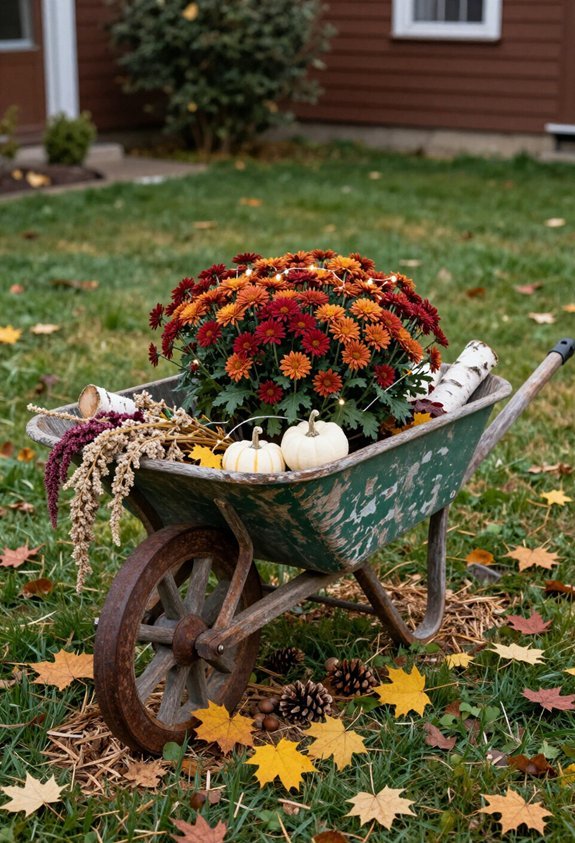
Three weathered wheelbarrows, their wooden frames bearing decades of use, serve as compelling foundations for autumnal displays when positioned strategically within fall landscape designs. These rustic implements, once tools of labor, transform into vessels of seasonal artistry through deliberate arrangement.
Gardeners fill the basin with soil, then layer miniature pumpkins, gourds, and dried corn stalks to create depth and texture. Mums in burnt orange and deep burgundy spill over the edges, their blooms cascading toward the ground. Dried wheat bundles and ornamental grasses add vertical interest, drawing the eye upward.
Placement requires consideration of sight lines, with wheelbarrows angled toward pathways or entry points for maximum visibility. The patinated metal and worn wood complement autumn’s palette without competing for attention. Weathered surfaces need no embellishment; their natural deterioration provides authentic character.
Light Your Walkway With Copper Lanterns
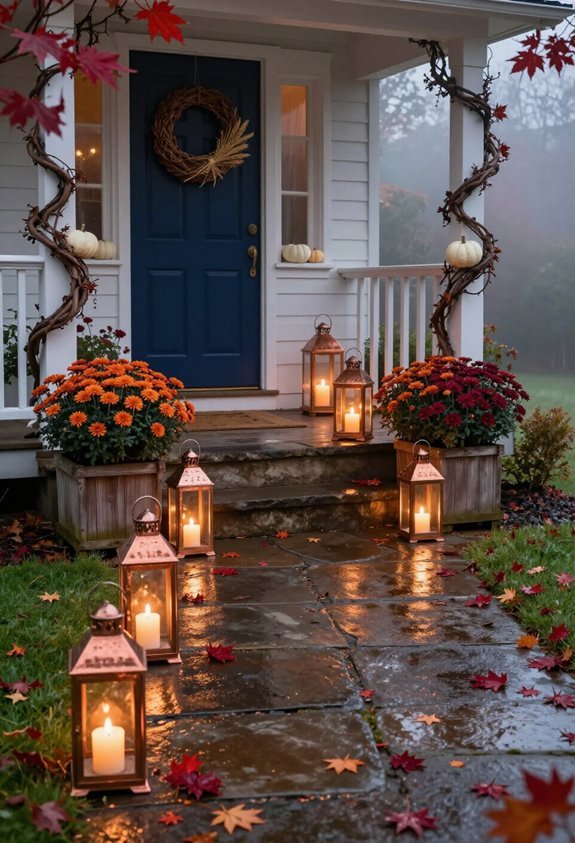
While weathered wheelbarrows anchor daytime displays, copper lanterns extend seasonal ambiance into evening hours through strategic illumination of garden paths.
These fixtures, positioned at calculated intervals along stone walkways or gravel approaches, cast warm amber tones that complement autumnal foliage. Installation requires minimal tools: spiked bases insert directly into softened earth, while hardwired alternatives demand professional electrical connection for permanent placement.
Patinated copper surfaces develop characteristic verdigris through exposure to rain and morning dew, creating visual interest that deepens throughout the season. Hurricane glass enclosures protect candle flames or LED elements from autumn winds, ensuring consistent luminosity.
Cluster heights vary to prevent monotonous sightlines, with taller posts marking turns and shorter versions lining straight sections. Solar-powered options eliminate wiring requirements, storing daylight energy for automatic dusk activation. Maintenance involves occasional polishing of unsealed metal or replacement of burned elements.
Hide Playful Scarecrows Among Your Plants
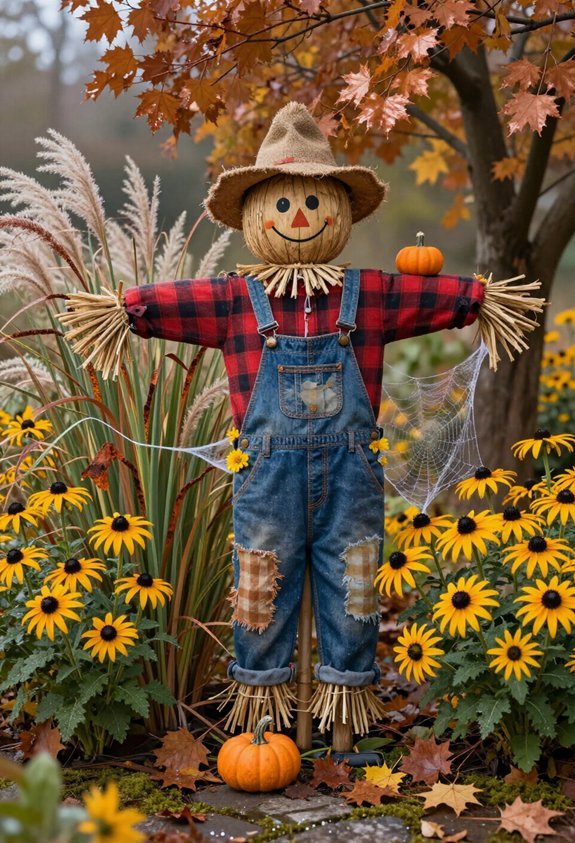
Scattered placement of scarecrow figures among dense plantings creates unexpected focal points that reward close observation throughout the autumn landscape.
Positioning these figures partially behind ornamental grasses, beside mature shrubs, or emerging from clusters of chrysanthemums establishes visual depth and encourages viewers to explore the garden’s full dimensions.
Select scarecrows constructed from weather-resistant materials, including burlap, straw, and treated wood, to guarantee durability through fluctuating temperatures and precipitation.
Vary the scale of figures, incorporating both full-sized forms and smaller companion pieces, to generate proportional interest across different plant heights. Secure each scarecrow with metal ground stakes or weighted bases to prevent displacement from wind.
Angle the figures slightly toward primary viewing paths, such as walkways or driveways, while maintaining sufficient concealment to preserve the element of discovery that distinguishes this approach from overt lawn display.
Drape Plaid Wool Throws Over Porch Railings
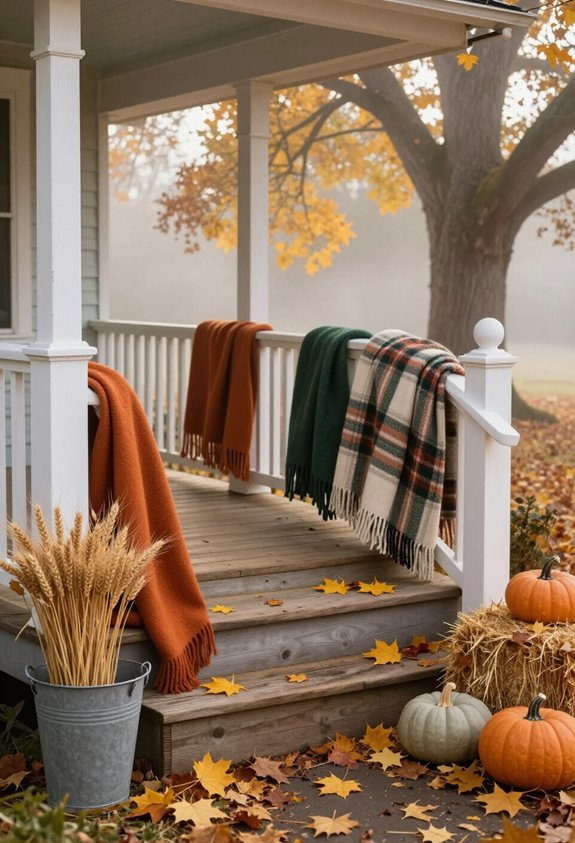
Moving from the hidden corners of garden beds to the architectural edges of the home, plaid wool throws offer a textile-based method for extending autumnal atmosphere across porch perimeters.
Select throws measuring approximately fifty by sixty inches, ensuring sufficient fabric length to cascade naturally without pooling excessively on steps or walkways. Choose patterns incorporating crimson, burnt orange, forest green, or mustard yellow, as these hues create visual continuity with seasonal foliage.
Fold each throw lengthwise, then drape across railings with eight to twelve inches of overhang on the exterior side and the remainder cascading toward the porch interior. Secure loosely with natural jute twine at three-foot intervals to prevent displacement from wind. Wool resists moisture absorption better than cotton, permitting outdoor display throughout October with periodic rotation to prevent prolonged sun exposure on single sections.
Create a Harvest Seating Nook With Layered Pillows
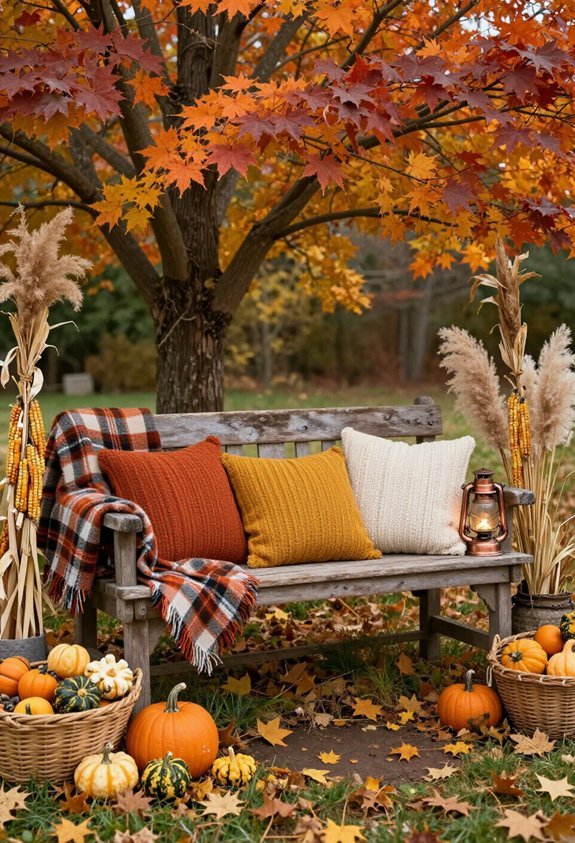
Pillows frequently serve as the defining element when establishing a harvest-themed seating area, transforming ordinary benches or chairs into inviting autumn retreats through strategic layering and textile selection.
To construct such a space, one should begin with a weather-resistant base cushion in a neutral tone, then build upward through progressively smaller accent pieces.
Material selection proves critical for both durability and seasonal authenticity, with corduroy, burlap, and wool providing texture while resisting moisture. Color palettes should incorporate burnt orange, deep burgundy, mustard yellow, and forest green, arranged in odd numbers to maintain visual balance.
Positioning requires attention to accessibility, ensuring sufficient depth for comfortable seating without obstructing pathways. The arrangement must withstand wind exposure through weighted inserts or secure attachment to furniture frames, maintaining its composed appearance throughout the autumn season.
Fill Galvanized Tubs With Overflowing Grasses
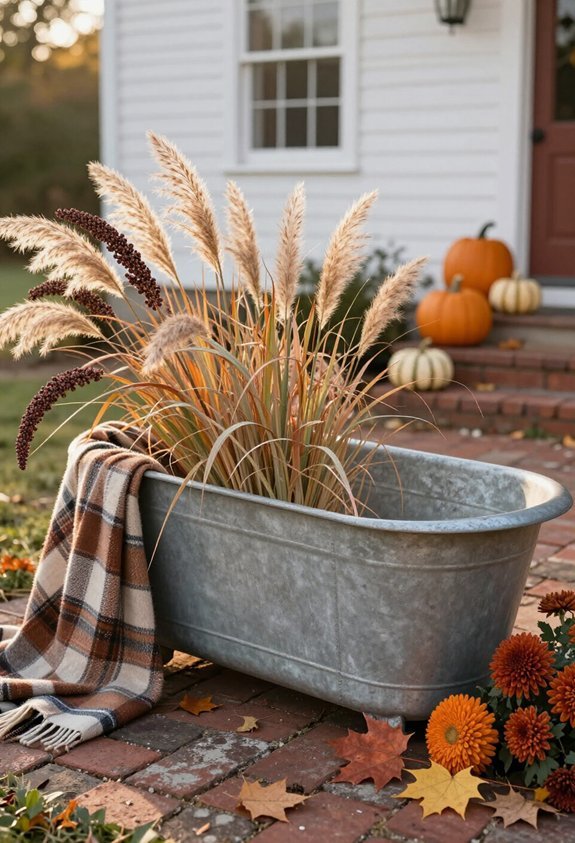
Several galvanized tubs arranged across a front yard create an effective foundation for autumn displays when filled with ornamental grasses that cascade over their edges in deliberate, overflowing formations. The selection of grasses matters, with varieties like feather reed grass, switchgrass, or fountain grass offering height, texture, and movement that responds to wind.
Tubs should vary in dimension, positioned at staggered intervals to establish visual rhythm rather than rigid alignment. Soil depth of twelve to fourteen inches supports root systems adequately, while drainage holes prevent water accumulation that damages plant health.
The metallic surfaces of galvanized containers develop a weathered patina over time, contributing earthy tones that complement russet, gold, and bronze blade colors. Maintenance requires minimal intervention, as grasses tolerate cooler temperatures and reduced watering schedules typical of seasonal change.
Hang Mason Jar Candles From Tree Branches
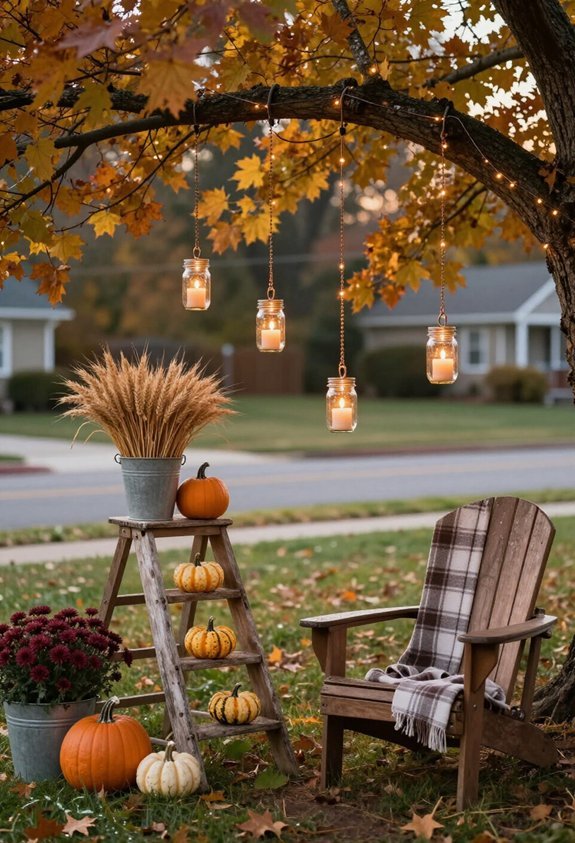
Glass vessels suspended from overhead branches transform ordinary trees into vertical lighting installations that extend evening visibility across front yard spaces. Mason jars, secured with wire or twine at varying heights, create dimensional light distribution that eliminates dark zones beneath the canopy.
Installers fill each container with sand, pebbles, or acorns to anchor tealights or battery-operated candles against autumn winds. The transparent glass amplifies flame output while protecting combustion from gusts. Spacing jars three to four feet apart along horizontal branches guarantees coverage without overcrowding.
Heights between six and ten feet maximize ground illumination while preventing accidental contact. This arrangement requires no electrical infrastructure, functioning independently of household power systems. The resulting glow defines pathways, highlights structural bark texture, and extends functional outdoor hours through seasonal evening darkness.
Lean an Antique Ladder Against Your Siding
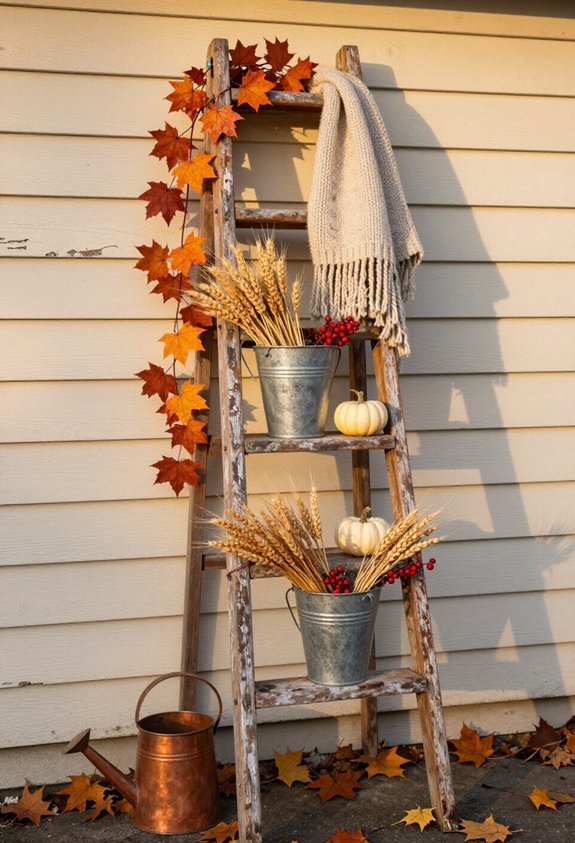
Position an aged wooden ladder against exterior siding to create a vertical framework for displaying autumnal arrangements without permanent attachment to building surfaces. Secure the ladder base with rubber feet or weight to guarantee stability against wind and ground movement.
Drape heirloom quilts or weather-resistant fabric in burnt orange, deep burgundy, or mustard yellow tones across the rungs. Nestle small pumpkins, gourds, and dried corn husks between the steps, varying sizes for visual depth. Attach bundles of dried wheat, millet, or grasses to the side rails using twine or wire.
Place a galvanized bucket filled with ornamental kale or chrysanthemums at the ladder’s base. Add battery-operated lanterns on alternating rungs for evening illumination. Inspect weathered wood for splinters, treat with sealant if needed, and refresh organic materials biweekly.
Stage Wooden Crates With Rainbow Carrot Bunches
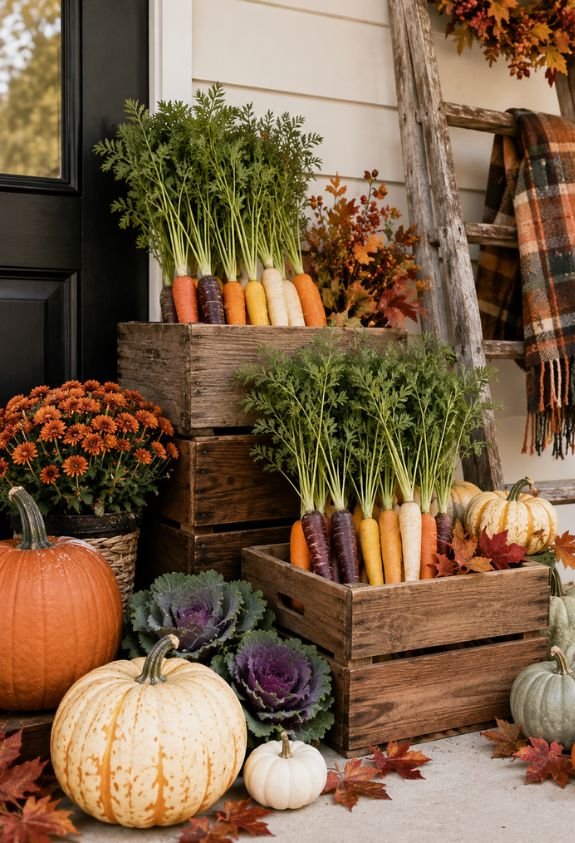
While the vertical display of the antique ladder draws the eye upward, ground-level arrangements anchor the overall composition and invite closer inspection. Wooden crates, positioned at varying heights, create tiered platforms that add dimension to flat surfaces.
Weathered or stained finishes complement autumnal palettes without overwhelming adjacent elements. Rainbow carrot bunches, featuring purple, yellow, white, and orange varieties, introduce unexpected color variation beyond traditional orange selections. These carrots, with leafy tops intact, provide vertical texture that contrasts with the horizontal crate structure.
Arrangement requires placing larger bunches toward the rear of each crate, with smaller clusters positioned forward to establish depth. The combination of rustic wood and vibrant produce creates a harvest-focused vignette that evolves smoothly from early fall through Thanksgiving, requiring minimal maintenance beyond occasional watering of the greens.
Stack Doormats for Instant Depth and Dirt Control
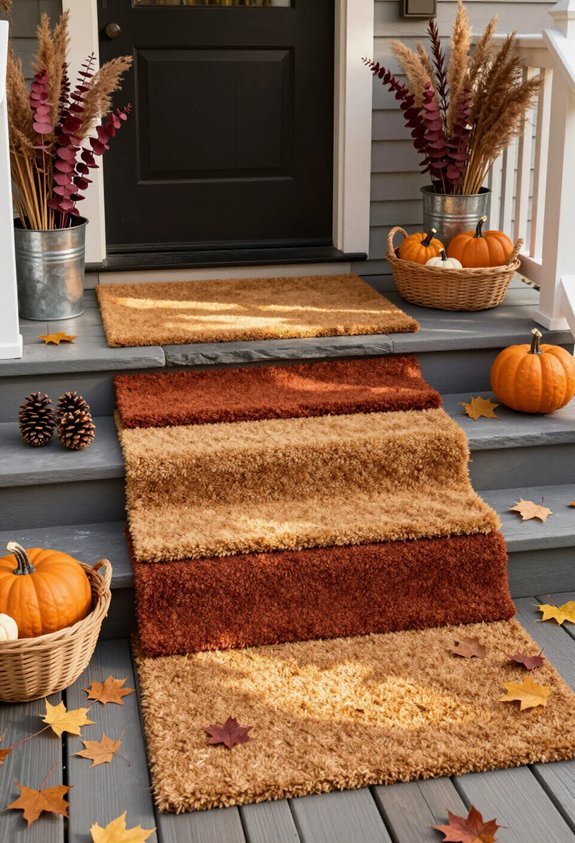
Layering doormats creates immediate visual depth while serving a practical purpose in high-traffic entry areas. This technique involves placing a larger, plain base mat beneath a smaller decorative mat featuring autumn motifs such as leaves, pumpkins, or harvest patterns.
The base mat captures excess moisture and debris scraped from footwear, while the top mat provides aesthetic focus and additional cleaning surface.
Materials such as coir, rubber, and polypropylene offer varying degrees of durability and water resistance appropriate for seasonal weather conditions.
Readers should select contrasting colors and textures to maximize visual separation between layers, ensuring the top mat measures approximately two-thirds the dimensions of its foundation. Regular maintenance, including weekly shaking and monthly brushing, preserves the functionality and appearance of both components throughout the autumn months.
Braid a Corn Husk Garland for Your Door Frame
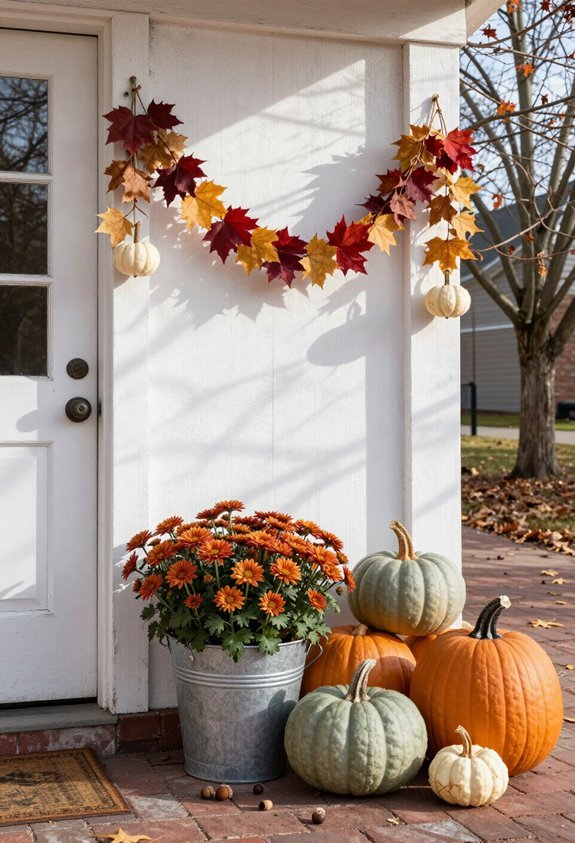
Several dried corn husks, when properly prepared and interlaced, transform into a pliable decorative garland that frames doorways with textural autumnal appeal.
The process requires approximately twenty husks, soaked in warm water for thirty minutes until they become flexible and resistant to tearing.
Each husk splits lengthwise into three equal strips, which are then grouped into sets of three strands for braiding. The braiding technique follows a standard three-strand pattern, with each outer section crossing over the center section in alternating succession.
As the braid extends, additional husk strips splice into the existing strands, creating continuous length without visible joins. Once the desired measurement matches the door frame dimensions, the ends secure with natural twine. The completed garland dries over forty-eight hours, hardening into a rigid, golden-brown arc that withstands outdoor conditions for several weeks.
Paint a Wooden Welcome Sign in Autumn Script
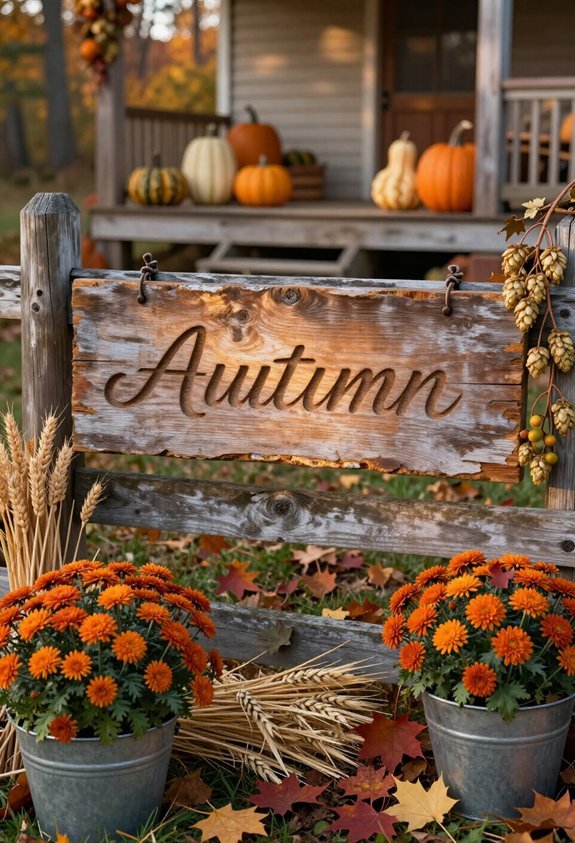
Select a rectangular wooden plank measuring approximately twenty-four by eight inches, ensuring the surface is smooth and free of splinters through light sanding with medium-grit paper.
Apply a base coat of burnt orange or deep burgundy acrylic paint, allowing complete drying for two hours before proceeding. Sketch “Welcome” in flowing cursive using pencil, incorporating elongated tails on letters W and e for decorative flourish.
Trace over pencil lines with ivory or antique white paint using a fine-tipped brush, maintaining consistent stroke width throughout.
Add stylized leaf motifs flanking the text by pressing small stamps dipped in forest green and golden yellow paint. Seal the finished sign with clear polyurethane spray, applying two thin coats for weather protection. Attach galvanized metal hooks to the back, positioning them six inches apart for balanced hanging on exterior walls or porch railings.
Tuck White Mini Pumpkins Into Fall Garden Beds
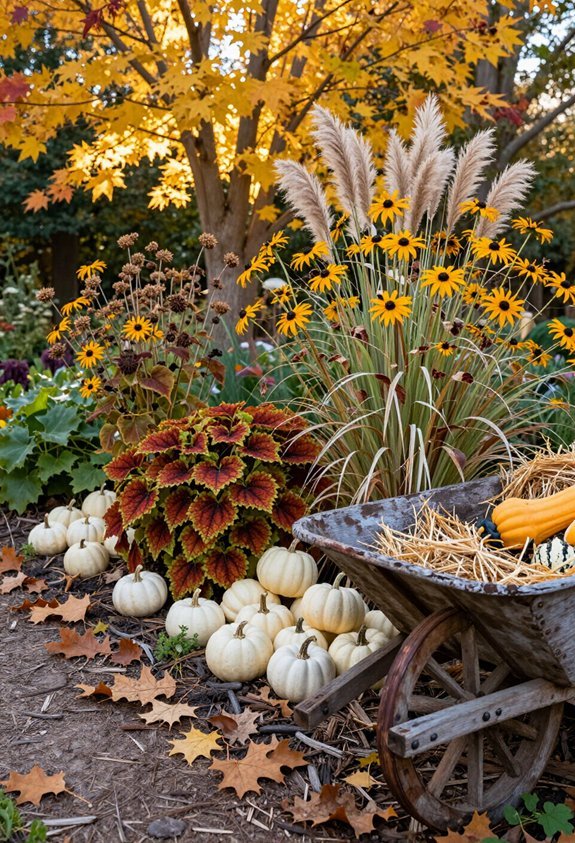
Arrange miniature white pumpkins among existing garden foliage by identifying gaps between established plants where these pale accents will create visual contrast against autumnal reds, oranges, and lingering greens.
Select pumpkins measuring two to four inches in diameter for proportionate scaling within standard garden beds. placement should occur at varying depths to establish dimensional layering from walkway vantage points.
Position individual specimens partially obscured by ornamental grasses or late-blooming perennials to simulate organic growth patterns rather than artificial arrangement. Cluster three to five pumpkins in triangular formations near base plantings of chrysanthemums or sedum for cohesive visual groupings that draw eye movement through the composition.
Inspect specimens weekly for softening or discoloration, replacing deteriorating pumpkins promptly to maintain aesthetic standards throughout the autumn season. Remove all decorative elements following first hard frost to prevent mold proliferation within soil beds.
Twine Maple Branches Up Your Porch Columns
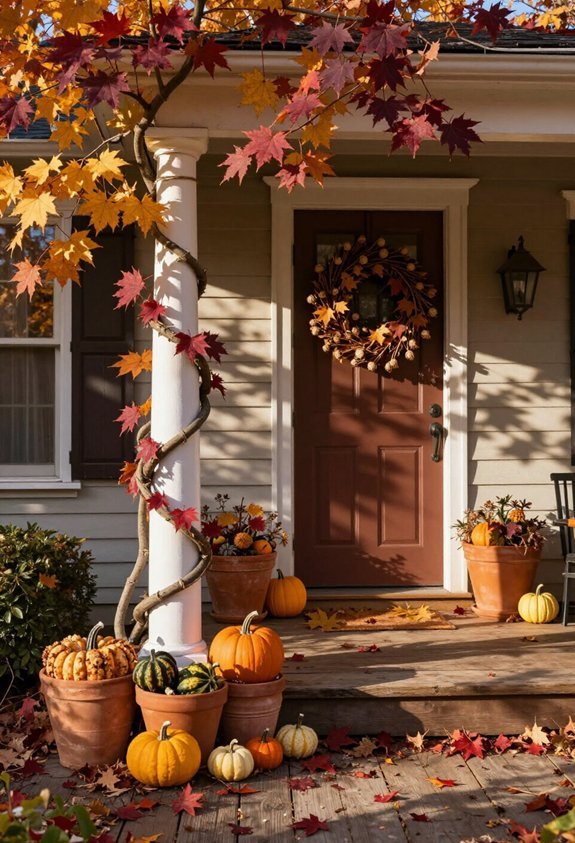
The process of adorning porch columns with maple branches begins with the careful selection of freshly fallen branches displaying intact foliage in vibrant autumn hues of crimson, burnt orange, or golden yellow.
Gather eight to ten branches of varying lengths, approximately four to six feet, ensuring stems remain flexible for wrapping. Position the longest branch at the column base, angling upward diagonally.
Secure the stem with natural jute twine, wrapping tightly twice around both branch and column. Layer additional branches in overlapping fashion, working upward in a spiral pattern that covers the entire column surface.
Tuck shorter branches into gaps to create fullness. Wrap twine horizontally every twelve inches to bind layers together. Trim excess stems with pruning shears. This technique transforms structural elements into seasonal focal points through organic texture and color.
Set a Rustic Farm Table With Lasting Produce
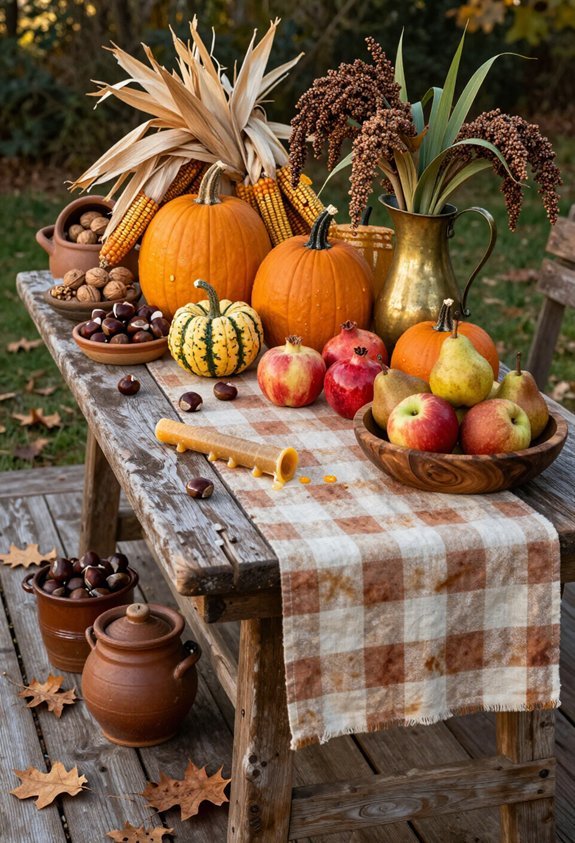
Once porch columns carry autumn’s vertical display, attention turns toward horizontal surfaces that anchor outdoor gathering spaces. A weathered farm table serves as the foundation for arrangements built from produce selected specifically for durability through temperature fluctuations.
Squash varieties, including butternut and acorn, maintain structural integrity for weeks without refrigeration. Miniature pumpkins, positioned at varying heights using wooden crates, create visual interest through dimensional layering.
Indian corn, with its dried kernels and hardened husks, introduces vertical elements when placed in galvanized buckets. Artichokes, pomegranates, and late-season gourds contribute textural contrast through their irregular surfaces.
Eucalyptus branches, inserted between heavier items, provide muted green filler that dries attractively. This approach prioritizes items that resist decay, ensuring the display remains intact throughout the season.
String Amber Lights Through Trees for Harvest Glow
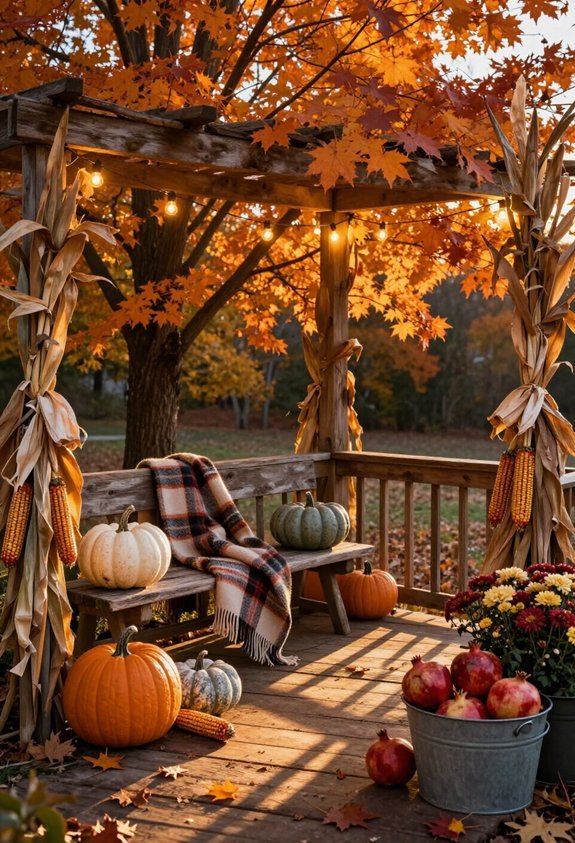
Because horizontal displays on tables and porches eventually surrender daylight to evening, vertical elements in the landscape must assume responsibility for sustaining visual interest after sunset.
Stringing amber lights through trees addresses this need by introducing artificial illumination that mimics the warm, low-angle light characteristic of autumn afternoons.
The installation requires weatherproof LED strands rated for outdoor use, preferably with bulbs measuring between five and seven millimeters in diameter for balanced visibility without overwhelming the branches.
One begins at the trunk, wrapping upward in loose spirals that follow the natural architecture of limbs, securing connections with zip ties at thirty-centimeter intervals. Extension cords should descend the rear of the trunk to preserve visual continuity from the street. Timers set to activate thirty minutes before dusk guarantee consistent presentation throughout the season.
Cluster Dried Sunflowers in Weathered Urns
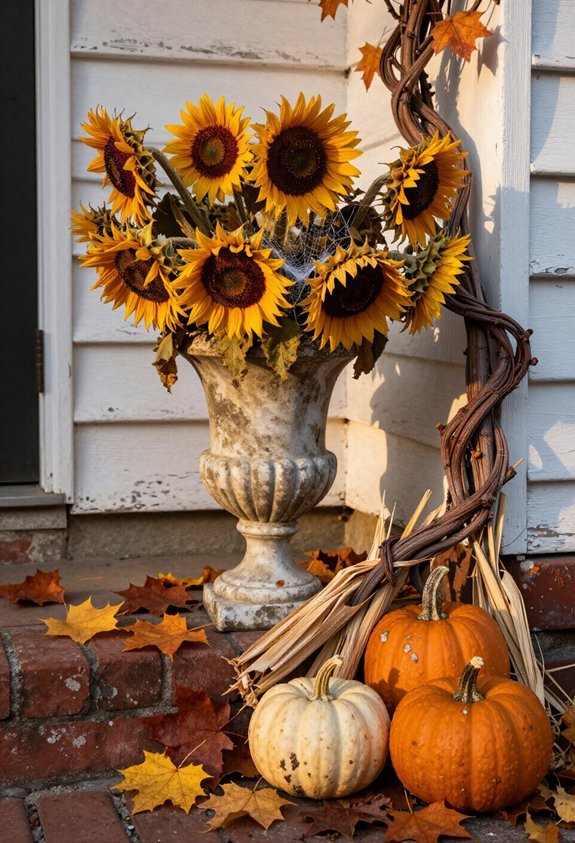
Dried sunflowers provide substantial visual weight and textural complexity when arranged in weathered urns, making them effective anchors for autumn displays that must withstand outdoor conditions.
The thick, woody stems of dried sunflowers resist moisture damage better than fresh botanicals, while their large, seed-heavy heads maintain structural integrity through wind and rain.
Weathered urns, whether cast stone, aged terracotta, or oxidized metal, contribute patina that complements the faded gold and russet tones of the dried blooms.
For maximum stability, floral foam or packed sand secures stems at varying heights, creating dimensional layers that draw the eye upward. Clustering three to five urns of graduated sizes near entry points establishes rhythm and repetition, guiding visitors toward the door without competing with adjacent decorative elements.
Add a Small Brass Fire Bowl to Your Porch
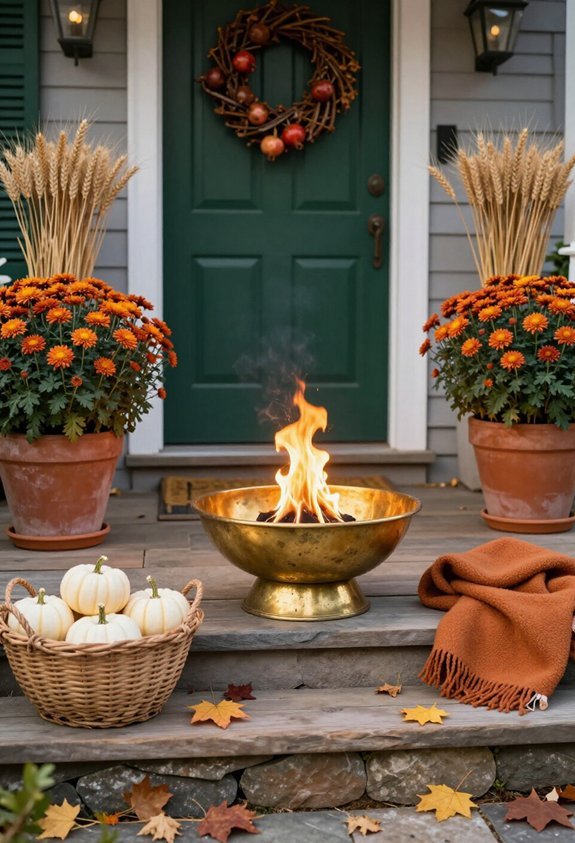
Introduce a small brass fire bowl to your porch as a compact heat source that extends the usability of outdoor spaces into cooler autumn evenings.
Select a bowl with a diameter between twelve to twenty inches, ensuring sufficient burning area without overwhelming limited porch dimensions.
Position the unit upon a nonflammable surface, such as stone pavers or a metal stand, maintaining a minimum clearance of ten feet from wooden railings, overhanging eaves, and dried foliage. Fill the vessel with seasoned hardwood logs, which produce less smoke and more consistent warmth than softwood alternatives.
A brass construction offers durability against temperature fluctuations and develops a muted patina that complements autumnal color palettes. Extinguish flames completely using a fitted metal cover or sand application before retiring indoors.
Hang Copper Weather Vanes or Leaf Sculptures
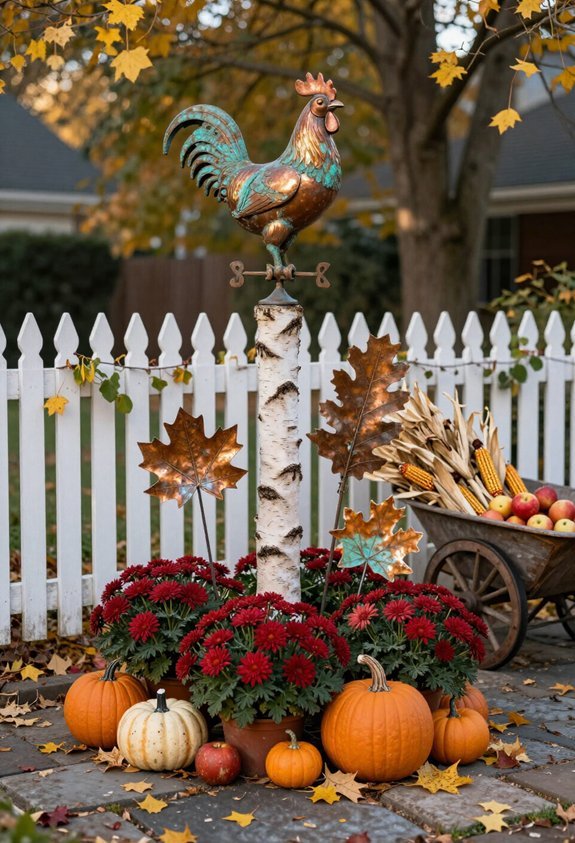
Several copper weather vanes or leaf sculptures, when suspended from porch ceilings, fence posts, or garden stakes, establish vertical interest that draws the eye upward and capitalizes on autumn’s low-angled sunlight.
These metallic accents catch and refract golden hour light, creating shifting patterns across walkways and exterior walls as daylight diminishes. Copper develops a natural patina over seasons, evolving from bright orange-brown to deeper bronze tones that complement fall’s color palette without requiring maintenance or replacement.
Weather vanes function as both decorative and practical elements, indicating wind direction while serving as focal points. Leaf sculptures, whether cast in metal or formed from pressed copper sheets, mirror the actual foliage shedding from nearby trees, creating visual cohesion between artificial and natural elements.
For ideal placement, position these pieces where eastern or western light strikes them directly—typically three to six feet above ground level guarantees visibility without obstructing paths.
Installation requires minimal tools: heavy-gauge wire or metal chains for hanging, sturdy brackets for post mounting, or pointed stakes driven eighteen inches into soil for garden placement.
Secure attachments matter; autumn brings increased wind activity that can dislodge improperly fixed pieces. Consider grouping three varying heights in asymmetrical arrangements rather than linear patterns, which generates movement and prevents static visual presentation.
Material thickness affects longevity. Sixteen-gauge copper withstands outdoor conditions for decades, while thinner materials dent or warp under environmental stress. Verify local ordinances regarding height restrictions before elevating installations near property lines.
Frame Your Door With Matched Topiary Urns
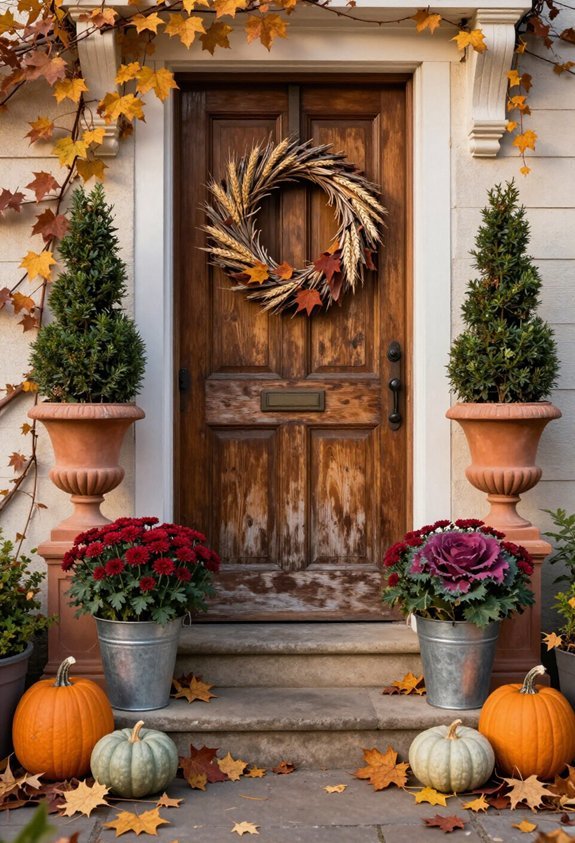
A pair of matched topiary urns, when positioned symmetrically on either side of a front entrance, creates an immediate visual frame that establishes order and welcomes visitors through deliberate, balanced placement.
For fall decoration, urns should contain cone-shaped or spherical topiaries made from preserved boxwood, ornamental kale, or dried grasses in autumnal hues.
The containers themselves ought to coordinate with existing architectural elements, such as terracotta for brick facades or cast iron for colonial-style homes.
Scale matters: urn heights should relate proportionally to door dimensions, typically reaching one-third to one-half of door height. Maintenance requires periodic rotation to guarantee even sun exposure and protection from early frost.
This structured approach yields consistent visual weight that anchors seasonal displays, functioning as a foundational element upon which additional decorations may be arranged without visual confusion.
Replace House Numbers With Painted Slate

Three distinct advantages make painted slate an effective replacement for standard house numbers during autumn months: durability against seasonal weather, customizable aesthetic integration, and straightforward installation that requires minimal specialized tools.
Slate resists rain, frost, and temperature fluctuations without warping or fading, ensuring legibility throughout the season. Its natural stone surface accepts hand-painted numerals in autumnal hues—burnt orange, deep burgundy, or gold leaf—that complement surrounding fall décor.
Installation requires only a masonry drill, appropriate anchors, and a level, allowing homeowners to secure the slate beside or above the doorframe within minutes. For best results, the slate should be sealed with weatherproof polyurethane after painting.
This simple upgrade merges practical address identification with seasonal visual cohesion, transforming a functional element into an intentional decorative feature that withstands October storms and November chills alike.
Frequently Asked Questions
How Long Do Hay Bales Last Outdoors?
Most hay bales hold up for two to three months before they really start to break down outdoors. That timeline shifts quite a bit depending on the weather they’re exposed to throughout the season.
Moisture is the real enemy here. Wet conditions speed up decomposition considerably, while drier stretches help your bales last noticeably longer without falling apart.
Keeping them elevated off the ground and covering them during heavy rain goes a long way toward extending their life. A little protection from the elements makes a real difference in how long your display stays looking good.
Are Copper Lanterns Safe in Rain?
Generally yes, as long as they’re properly sealed and actually rated for outdoor use in the first place. Not every lantern marketed as decorative is built to handle real weather exposure.
Copper itself develops a natural patina over time that actually helps protect it against corrosion. That weathered look is part of the appeal rather than a sign of damage.
Electrical components are where you need to pay closer attention. Make sure anything wired is properly weatherproofed to prevent moisture damage and keep things operating safely throughout the season.
What Glue Works on Dried Corn Husks?
Hot glue gives you the strongest hold for dried corn husks, bonding quickly to their naturally fibrous texture. It’s the go to choice when you need something to stay put through wind and handling.
Tacky glue works fine as a backup option for less demanding parts of your project. Just expect it to need a longer drying time before it sets fully.
Whichever you choose, working with husks that have been properly softened first makes the gluing process go much more smoothly. Dry, brittle husks tend to crack rather than bond well.
How Do I Protect Vintage Wheelbarrows From Rot?
Applying a marine grade sealant to all the wooden surfaces gives your wheelbarrow real protection against moisture over time. This single step makes a significant difference in how long the wood holds up.
Storing it in a covered area during particularly wet stretches of the season helps too. Even a sealed wheelbarrow benefits from a little extra shelter when storms roll through.
Elevating it off the soil with blocks prevents ground moisture from working its way into the wood from below. An annual inspection for cracks lets you patch small problems before they become bigger ones.
Can Mini Pumpkins Survive Early Frost?
They can handle a brief, light frost without much trouble, but sustained freezing temperatures will damage both the flesh and the seeds inside. A short cold snap is usually fine, prolonged exposure is not.
Harvesting them before temperatures drop below 28 degrees Fahrenheit is your safest bet if you’re hoping to keep them looking good. Once temperatures dip lower than that consistently, their condition declines fast.
Covering plants with cloth can extend their viability a little longer if a frost catches you off guard. For storage afterward, dry and cool conditions above freezing will keep them in decent shape the longest.
CONCLUSION
Fall decorating has a way of making a front yard feel like it’s actually paying attention to the season, rather than just enduring it. That small shift changes how the whole house feels walking up to it.
I still think about the year my elaborate dried grass wreath disintegrated after one unexpected downpour, and how much that taught me about choosing materials that actually belong outdoors. Pretty doesn’t always mean practical, especially with fall weather being as unpredictable as it is.
You don’t need every idea on this list to create something that feels cohesive and festive. A few well chosen elements, layered thoughtfully, will do more than a yard crammed with every seasonal item available.
Durability deserves real consideration before you commit to anything elaborate. The best displays are the ones still looking good in November, not just the first week of October.
Whatever combination you land on, your front yard has the potential to feel genuinely welcoming through the whole season rather than just for a few photogenic days. A little planning goes a long way toward making that happen.
I’d love to hear which idea you’re most excited to try, or what’s already working in your own fall display. Leave a comment below and tell me how your front yard is coming together.