

Cars pull up, and faces press against windows. That’s the moment you realize your front yard has become a destination. Palm trees make that happen.
Some mornings, you just want to step outside and feel something different. Queen palms deliver that vertical drama—tall, slender, impossibly green against the sky. They don’t ask for much. They give back that sigh of relief you didn’t know you needed.
Smaller palms nestle into corners where bigger trees won’t fit. They soften edges. They catch the light in ways that make coffee on the porch feel like a mini vacation. Neighbors slow down. They try to figure out what changed.
Not every patch of dirt is ready, though.
Drainage matters. Sunlight matters. Your soil might need a conversation first. The good news? Most yards can get there with a little patience.
That resort feeling isn’t reserved for postcards. It can start at your curb.
Queen Palms: Tall Statement Trees for High-Impact Curb Appeal
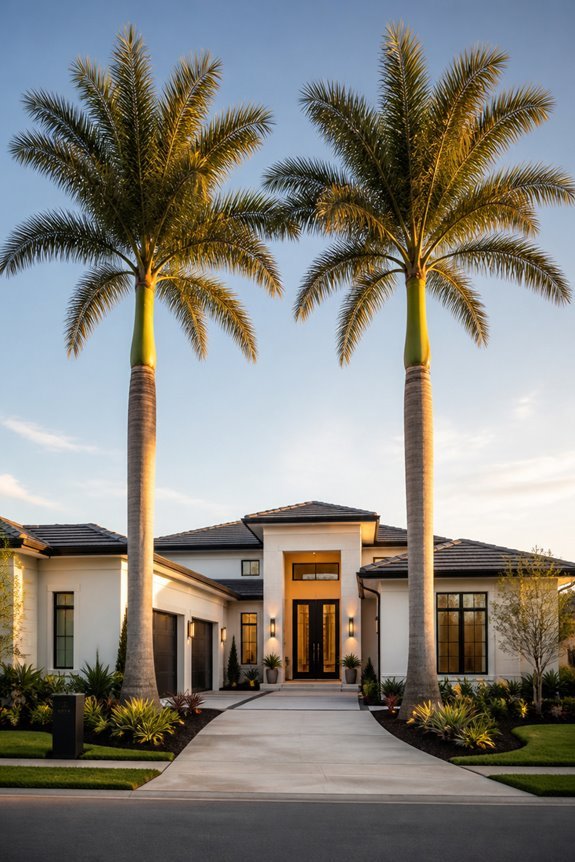
Want instant curb appeal that towers over everything else? You need Queen palms. These trees hit 40 to 50 feet. They catch attention fast.
Your neighbors will look up. They’ll forget their phones. The skinny trunks and feathery fronds deliver serious drama without waiting years.
You live in a warm climate? You’re in luck. Queen palms don’t need babied. Plant three together for bold impact. Or use one solo by your front door. Instant resort vibes. No plane ticket required.
Give them full sun and well-draining soil. Watch them sway when the breeze hits. Your yard transforms from plain to stunning. That’s curb appeal with real height.
Also read: 24+ FRONT YARD FLOWER GARDEN Plans That Stay Pretty!
Fan Palms: Architectural Drama Without Sprawl
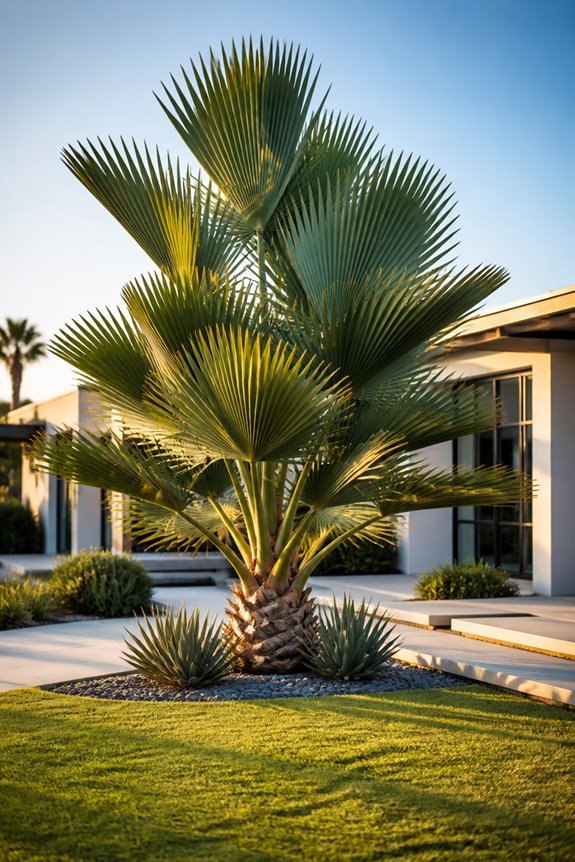
Got a narrow front yard that feels more hallway than garden? You’re not stuck with skinny, boring trees. Fan palms give you that wow factor without eating up your whole lot.
They grow 20 to 40 feet tall but stay slim. Their fronds spread like open hands in gorgeous greens and silvers. Light hits them just right. You get serious tropical style on a regular-sized plot. Think of them as the cool neighbor who looks amazing but never hogs the sidewalk.
Plant one as a solo showstopper. Or use a pair to frame your front door. Either way, you’ll get that architectural drama your yard has been missing.
Clustered Palms: Depth and Layered Texture
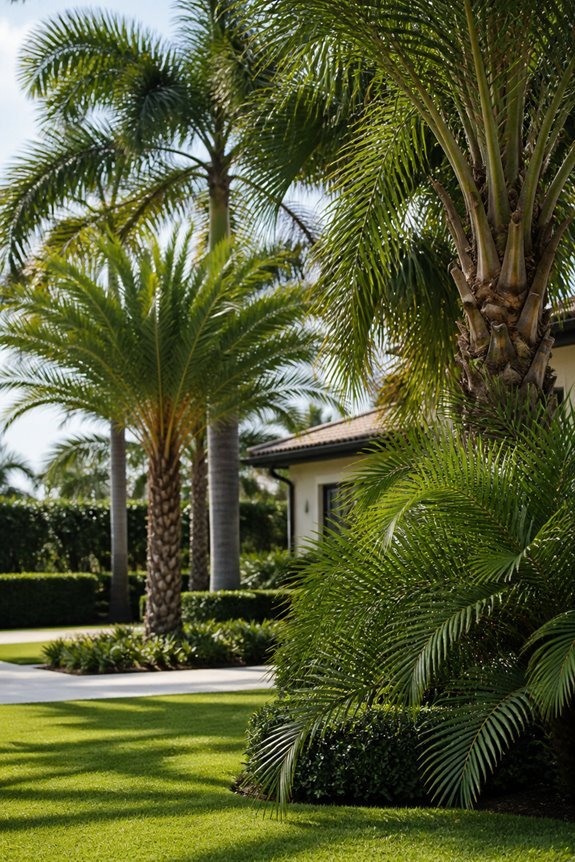
One palm can feel a bit bare, can’t it? You look at it and something just feels off.
Try clustering three to five palms instead. Different heights work best. Think 8, 12, and 15 feet. The shorter ones hide the taller ones’ skinny trunks. Those trunks look awkward solo. But grouped? Suddenly you have real depth.
Green fronds overlap and dance together. Sunlight filters through. You get dappled shadows on your lawn and seating areas. It becomes nature’s own privacy screen.
Plant them close enough to feel grouped. Leave space so they don’t fight over water like siblings with snacks. The result whispers resort life. It never screams. Your front yard feels intentional now. Sophisticated, even.
Does Your Climate Support Palms?
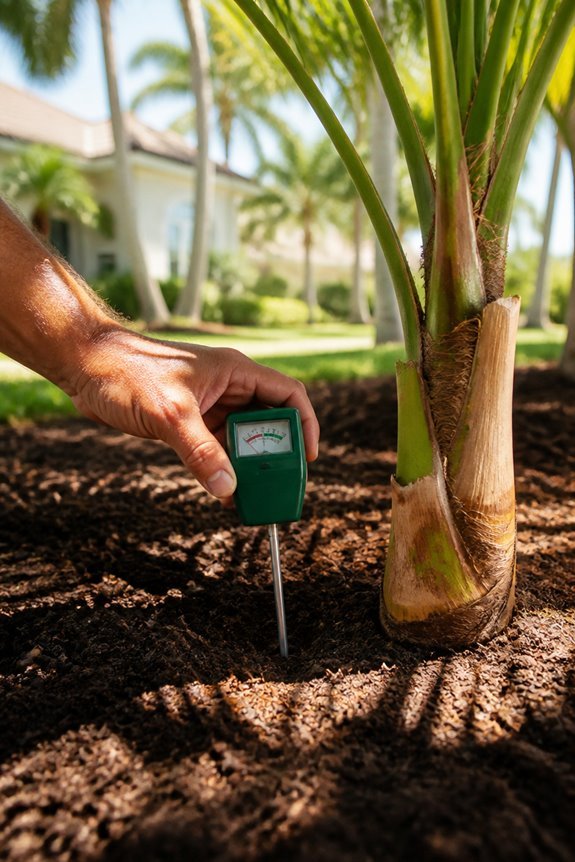
Before you grab five palms for your yard, pause. Does your climate actually want them there?
Not all palms handle cold the same way. Tropical types start sulking below 50 degrees. Hardy varieties? They shrug off frost like it’s nothing. Check your hardiness zone first. Look up your local rainfall and humidity too. A palm in Arizona needs totally different care than one in Florida. Plant the wrong type, and you’ll watch it struggle. Know before you grow. Your yard will reward you with that lush, resort look you’re after.
Budget-Friendly Palm Landscaping Ideas
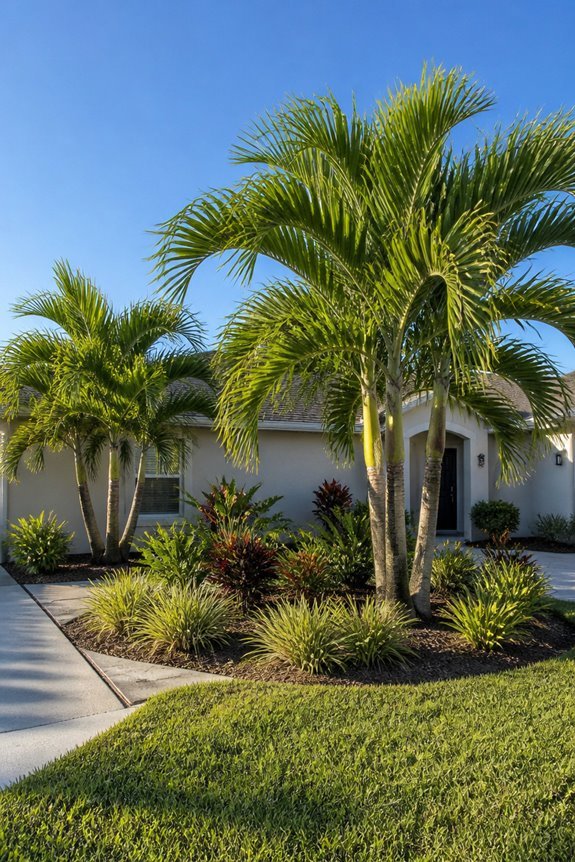
Want that tropical getaway look without draining your savings? You can absolutely make it happen. Smaller palms like Areca and Parlor varieties cost a fraction of what the giants do. Plant them in groups of three or five. You’ll get that lush, full look for way less cash.
Skip the pricey mulch at the garden center. Call local tree services and ask about free wood chips instead. Rocks work beautifully too. They stay put in wind and add a clean, modern touch. Mix your palms with easy plants like ornamental grasses and succulents. They barely need attention and they keep your costs down. Tuck in some driftwood or reclaimed materials for texture. String white lights overhead when the sun goes down. You’ve just built your own little resort. No kidney sales required.
Lighting Design for Palms: Evening Ambiance
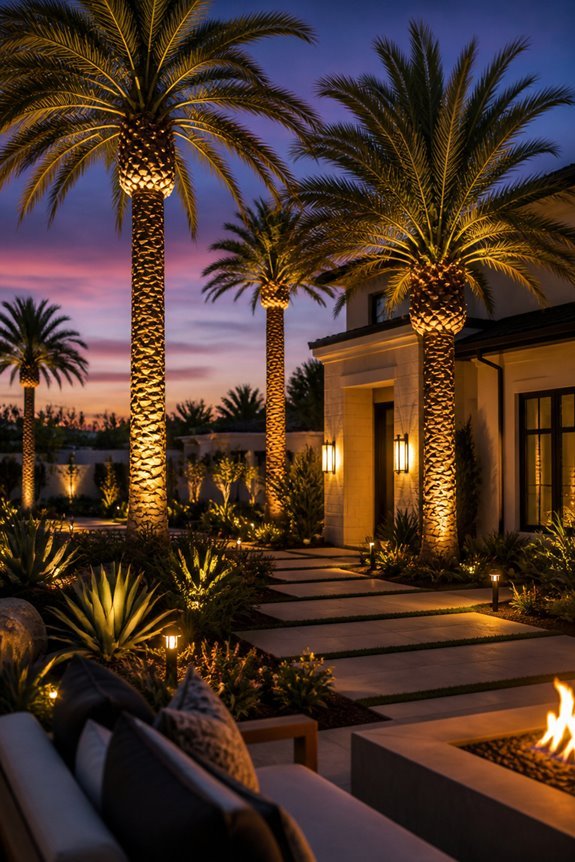
You know that magical moment when your palms stop looking like daytime landscaping and start feeling like a vacation spot?
Start with uplights at ground level. Place them 3 to 4 feet from the trunk. Angle them upward. Watch how shadows stretch across the fronds like slow-moving art.
Warm white bulbs work best here. Think 2700K. That cozy glow reads “resort” instead of “stadium parking lot.”
String lights suit shorter palms perfectly. Wrap them loosely. No electrician needed. Just you, a ladder, and maybe a patient friend.
Spotlights can highlight bark texture. Use them sparingly. One well-placed beam beats three competing ones.
Smart bulbs let you dial brightness up or down from your phone. Change the mood for dinner parties. Dim things for late nights.
Avoid the overlighting trap. Your yard should invite relaxation, not interrogation. Layer soft light sources instead of blasting one harsh beam.
The result? Ordinary palms become nighttime focal points. Your evening space finally matches how you actually want to feel outdoors.
Water Features: Adding Movement and Tranquility
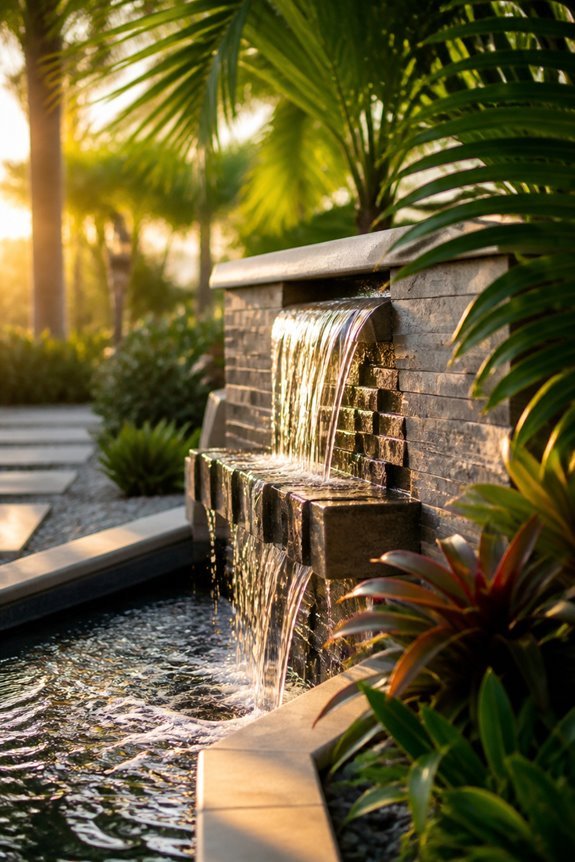
Water does something lights alone can’t match. It moves. It sounds. It lives.
A simple fountain becomes your front yard’s heartbeat. Homeowners who install a 3-foot bubbler fountain report instant calm. Neighbors stop asking for directions. They’re too busy listening. Position a small pond near your entryway. You get resort energy without the resort budget. The gentle splashing masks traffic noise. It also makes the neighbors slightly jealous.
Even a tiny recirculating stream bed works. Two feet wide is enough. Suddenly your landscaping feels intentional. It feels designed by someone who knows what they’re doing. Add palms to your water feature. You just created vacation mode. Your front yard becomes free therapy. Add some river rocks. Tranquility follows.
Ground-Level Plantings: Shade-Tolerant Companions for Layered Texture
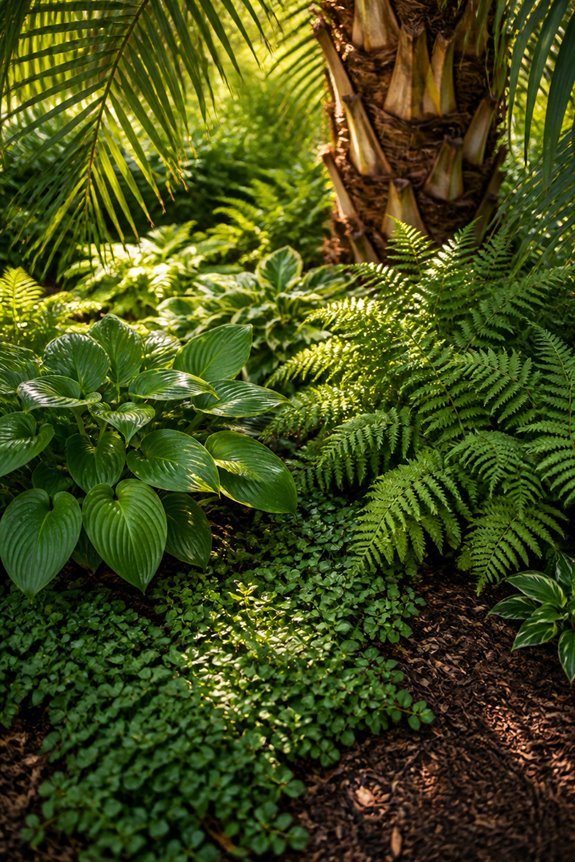
You’ve got that fountain working hard for you. Now look down. The ground needs attention too.
Shade-tolerant plants are your quiet allies here. They thrive where tall palms block the sun. Try hostas with leaves that spread like wide green plates. Ferns bring soft, feathery texture and forgive neglect in dark corners. Carex sedges sway gently and ask little of you.
Space these plants 12 to 18 inches apart. You’ll get that thick, layered look. Mix deep burgundy with lime green and silvery-gray. Your eye catches the contrast. These ground layers add depth. They soften edges and paths. Your yard stops looking empty and starts feeling designed. Best part? You plant them and move on.
Pathways: Navigating Your Palm Landscaping
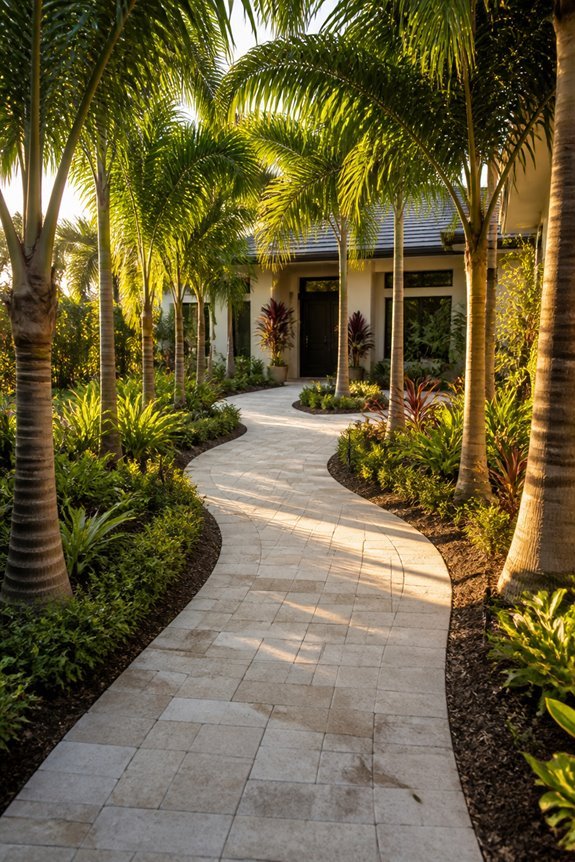
You just planted all that lush greenery. Now how do people actually get through it? Nobody wants to fight through your front yard like it’s a jungle out there.
Curved pathways beat straight lines every time. They pull visitors into your tropical space without that grocery store aisle feel. Try mulch, gravel, or pavers. Pick whatever matches your style. Three feet wide lets two people walk side by side. No awkward hip bumping required.
Solar stake lights line the edges beautifully. They look expensive but barely cost a thing. Add low plants or rocks along the sides. This keeps everyone upright and away from your palm trunks.
Your front yard should feel like a resort, not an obstacle course. Make the walk something people actually enjoy.
Mixed Tropical Plants: Understory Companions for Palms
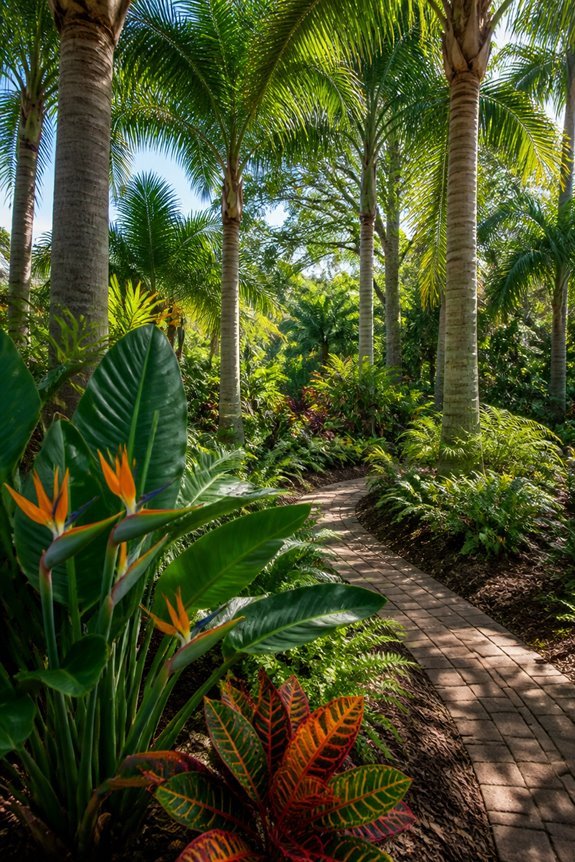
Palms steal the show, sure. But a solo palm can feel like that one person standing alone at a party. You know the look.
Color solves this fast. Tuck bright crotons around your palms. Their red and orange leaves hit about 3 to 4 feet tall, adding layers right where you need them. Unfurl some ferns at the base too. They soften those hard edges where trunk meets ground. Want something unexpected? Persian shield brings purple drama without demanding much care. These plants play off each other naturally. One goes big and leafy. Others pop with shorter bursts of color. Your yard stops looking unfinished and starts feeling like that resort lobby you loved in Belize.
Gravel and Mulch: Ground Covers That Tie Your Landscape Together
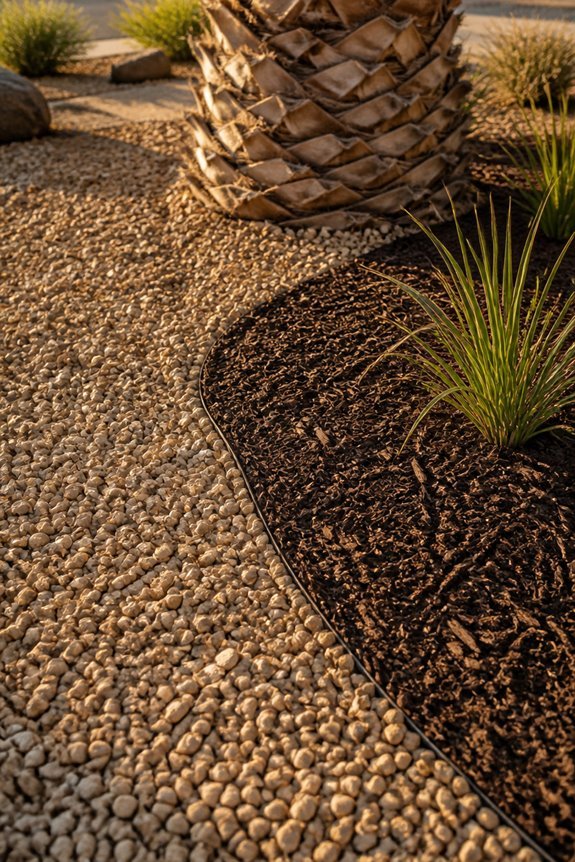
The ground beneath your plants needs love too. Gravel and mulch are the quiet workhorses that pull your whole look together.
Mulch acts like a cozy blanket for your soil. It keeps roots cool and locks in moisture so you water less. Grab shredded bark and spread it 2 to 3 inches deep around your palms. You’ll love how natural and tidy it looks.
Gravel plays a different role. It drains fast and stops mud from splashing onto your patio (or your white shorts). Try mixing light crushed stone with darker mulch. The contrast makes your plants stand out like a resort landscape.
Top up your mulch yearly. It breaks down over time, which means it’s doing its job. This one simple step takes your yard from messy to polished. No magic required.
Potted Palms: Front-Yard Solutions for Small Spaces
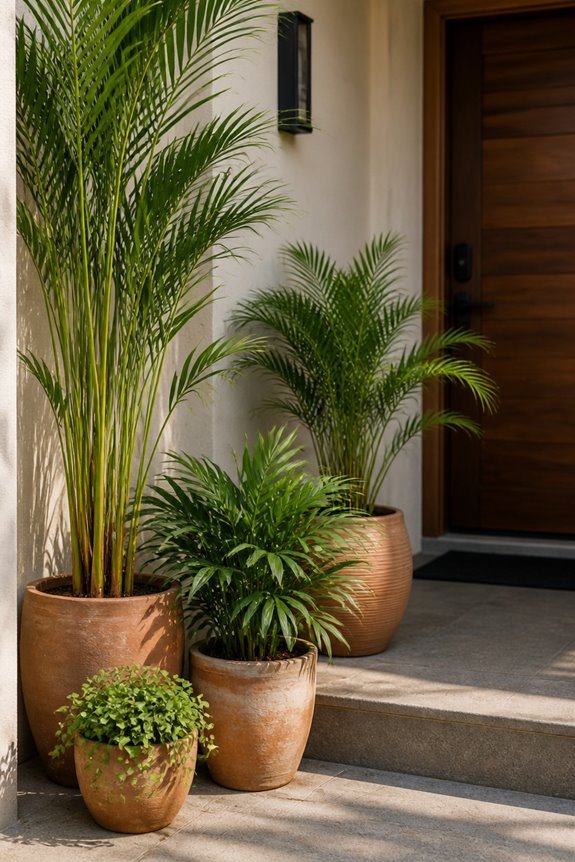
You’ve got a tiny front yard. That doesn’t mean you can’t go big on style.
A single 4-foot Areca palm in a sleek terracotta pot works magic on a cramped porch. No sprawling roots. No endless maintenance. Just instant resort vibes in a container you can shift around.
Stack your pots at different heights. It creates dimension and fools the eye into seeing more space than you actually own. Lighter-colored containers help too. That 20-by-10-foot yard suddenly feels tropical and put-together.
Bored with the layout? Move the palm. Relocate it to a new corner. No digging. No mess. Just portable paradise that keeps your neighbors guessing without exhausting your weekends.
Privacy Screening: Drama and Seclusion
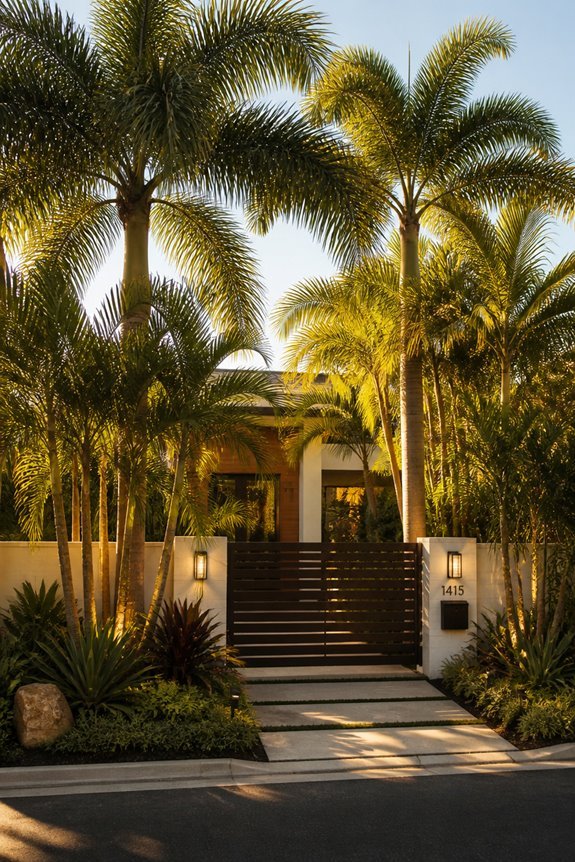
Tired of neighbors peeking at your business? You don’t need a fence. You need palms.
Plant Areca palms 6 to 8 feet apart in a staggered line. They hit 7 feet fast and look sharp doing it. Bamboo palms work too. They grow thick and tight, like a green wall with attitude. Mix heights for extra impact. Keep shorter palms up front. Taller ones go behind. This layered trick blocks views without boxing you in.
Your garbage cans stay hidden. That weird lawn chair disappears. Palms don’t judge your mess. They just do their job and look good.
Year-Round Palm Care: The Essential Maintenance Guide
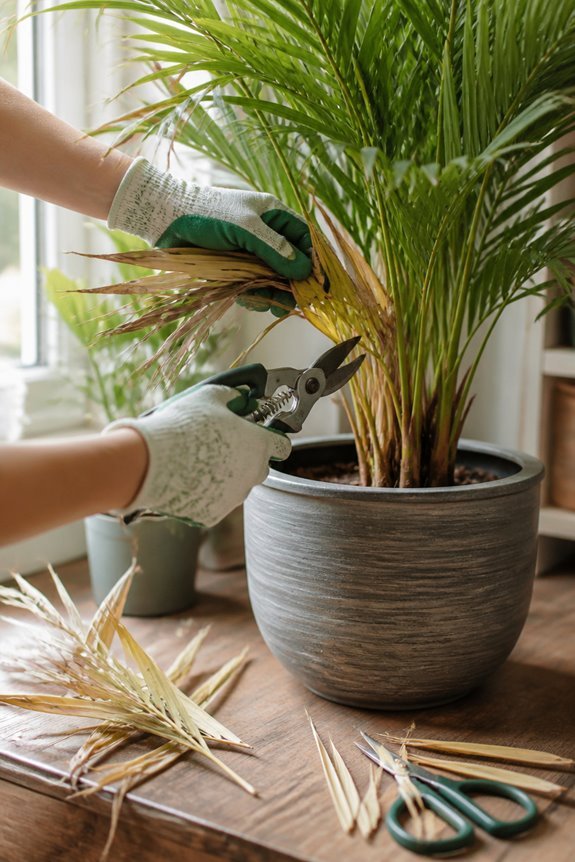
Keeping a palm alive sounds easy, right? It’s not. Ignore it for too long, and you’ll have a sad, brown reminder of your good intentions.
You need to get the watering just right. Palms hate soggy roots. Give them a deep soak once a week, then let the soil dry out completely. Think of it like this: they want a good drink, not a swim.
Light matters too. Your palm craves bright, indirect sun. Place it where it can bask in gentle, golden light without the harsh afternoon burn. A spot near an east-facing window usually works perfectly.
Feed your palm monthly during spring and summer with a balanced fertilizer made just for palms. When fronds turn brown, trim them off cleanly. It’s like a quick trim at the salon. Keeps everything neat.
Watch for tiny pests. Spider mites and scale insects will drain the life from your palm if you let them. Spot any? A firm spray of water knocks them right off. Your palm will thank you with fresh, green growth.
Adjust with the seasons. Less water in winter, more attention in summer. Stay consistent. Your tropical oasis depends on it.
Before You Plant: Final Feasibility Checklist
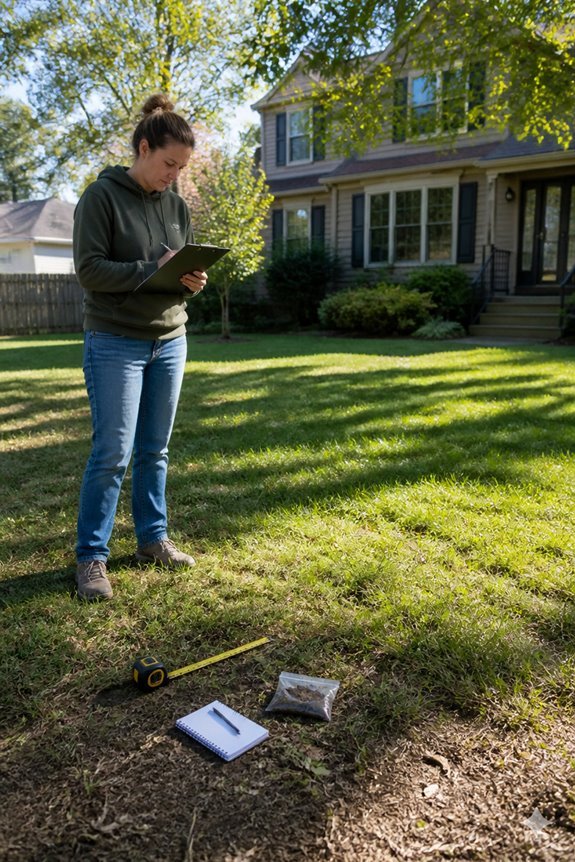
You want that gorgeous palm in your front yard. But first? Take a breath. Really think this through.
Does your spot get six to eight hours of sun? Check now, not later. Measure the mature height too. We’re talking 20 to 40 feet. That’s higher than your roofline.
Now poke around your soil. Does water disappear after rain, or does it sit there like a puddle? Palms hate wet feet. Poor drainage will kill your tree faster than plain old neglect.
Test your hardiness zone while you’re at it. Temperatures dipping below 50°F? Pick something else. This palm won’t make it.
Wind and structures matter too. Fronds fall. Roots heave. Sidewalks crack. Picture your palm fully grown. Still look good there?
Think now. Dig later.
Frequently Asked Questions
How Much Does Professional Palm Tree Installation Typically Cost?
Professional palm tree installation typically costs between $200 and $1,500 per tree, depending on the species, size, and location. Larger specimens and specialized varieties command higher prices. Additional expenses may include site preparation, soil amendments, and ongoing maintenance services.
Can Palm Trees Damage My Home’s Foundation or Plumbing System?
Palm trees can potentially damage foundations and plumbing if planted too close to structures. Their root systems, while not aggressive like some trees, may seek moisture sources and crack pipes. Professional placement at appropriate distances minimizes these risks considerably.
What Is the Best Time of Year to Plant Palms?
Spring and early summer represent the ideal planting seasons for palm trees. During these warmer months, palms establish stronger root systems before winter arrives. This timing guarantees better survival rates and more vigorous growth throughout the establishment period.
How Long Does It Take for Palms to Reach Full Maturity?
Like watching paint dry in slow motion, palm trees demand patience—most species require 3 to 12 years to reach full maturity, depending on variety and growing conditions. Some slower-growing species may take even longer to achieve their complete, majestic form.
Are There Palm Varieties That Tolerate Freezing Temperatures Well?
Several palm varieties tolerate freezing temperatures well. Windmill palms, needle palms, and saw palmettos thrive in cold climates, withstanding temperatures below freezing. Cabbage palms and sabal palms also demonstrate cold hardiness, making them suitable choices for cooler regions.
Conclusion
Transforming a front yard into a resort-like paradise isn’t rocket science—it just takes some planning and elbow grease. As the saying goes, “Rome wasn’t built in a day,” and neither is your tropical oasis. But here’s the good news: with the right palms, smart design choices, and a little maintenance know-how, anyone can create a stunning escape. Your neighbors will wonder if you secretly installed a teleporter to the Caribbean!