

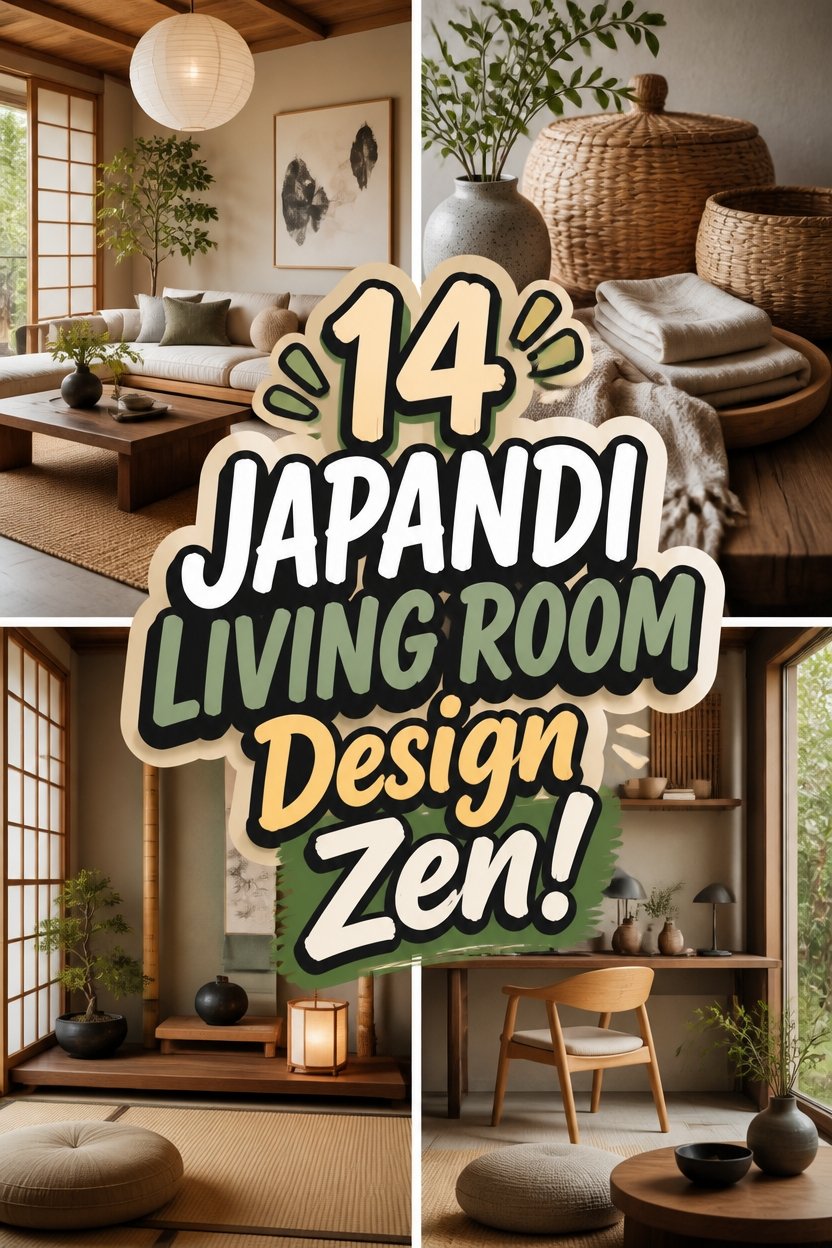
A quiet cup of tea sits on a low wooden table. The afternoon light filters through sheer curtains onto bare floors. This is the feeling Japandi design captures.
Someone finally noticed that Japanese minimalism and Scandinavian coziness speak the same language. Both crave simplicity. Both find beauty in restraint. Together, they create spaces that breathe without feeling cold.
The palette stays soft. Whites warm with cream. Oak and ash take center stage. Every piece earns its place through function first, form second. A stool stores blankets. A bench conceals clutter. Nothing lives here just to decorate.
But it’s easy to miss the mark. A jute rug alone won’t carry the weight. The balance is delicate. Warmth needs restraint, or the room grows busy. Simplicity needs soul, or the space turns sterile.
The best Japandi rooms feel lived-in, not staged.
Understand What Makes Japandi Design Work
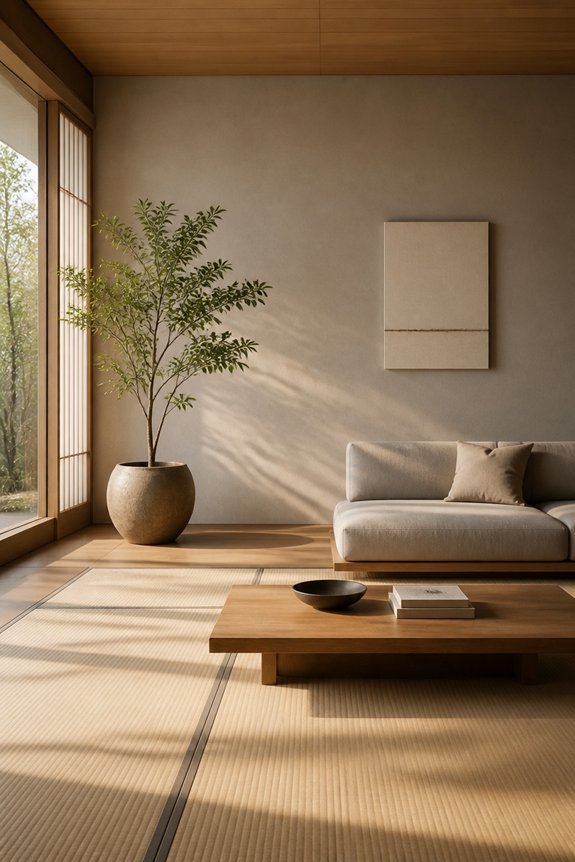
Ever feel torn between wanting a clean space and craving something that actually feels like home? That’s exactly where Japandi steps in.
You get the best of two worlds here. Japanese design pushes you to let go of excess. Scandinavian style hands you warmth in return. Think of it as decluttering with a soft landing.
Start with your foundation. Light oak or walnut furniture keeps things grounded. Then layer in chunky knits and linen pillows. You keep the breathing room. You gain the comfort.
Every piece needs a purpose. That decorative bowl you never use? Let it go. The woven basket that actually stores your blankets? That’s the keeper.
Natural materials do the heavy lifting here. Wood, stone, cotton, wool. Nothing pretending to be something it’s not.
The result feels efficient but human. Clean but never cold. You walk in and exhale.
Also read: 18 LIVING ROOM DESIGNS Modern & Stunning!
Choose a Japandi Color Palette
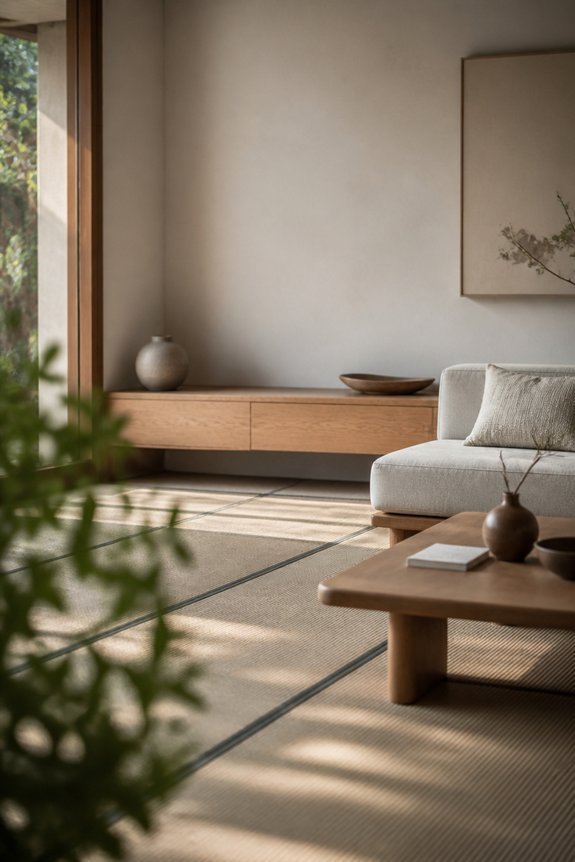
Ever walked into a room and felt your shoulders drop instantly? That’s the power of a Japandi palette working on you.
Start with soft whites. Add warm beiges. Layer in gentle grays. These are your foundation colors. They calm your mind without you even noticing.
Need contrast? Reach for muted blacks and deep charcoals. They ground the space. They add depth without drama.
Natural wood tones tie everything together. Think oak, ash, or walnut. They bring warmth that paint alone can’t match.
Want a hint of color? Try sage green. Or dusty blue. Use them sparingly. A throw pillow. A ceramic vase. That’s enough.
Leave plenty of breathing room. White space isn’t empty. It’s intentional. It lets each color do its job without fighting for attention.
The result feels quiet. Peaceful. Like a deep exhale you didn’t know you needed.
Pick Minimalist Furniture That Works Harder
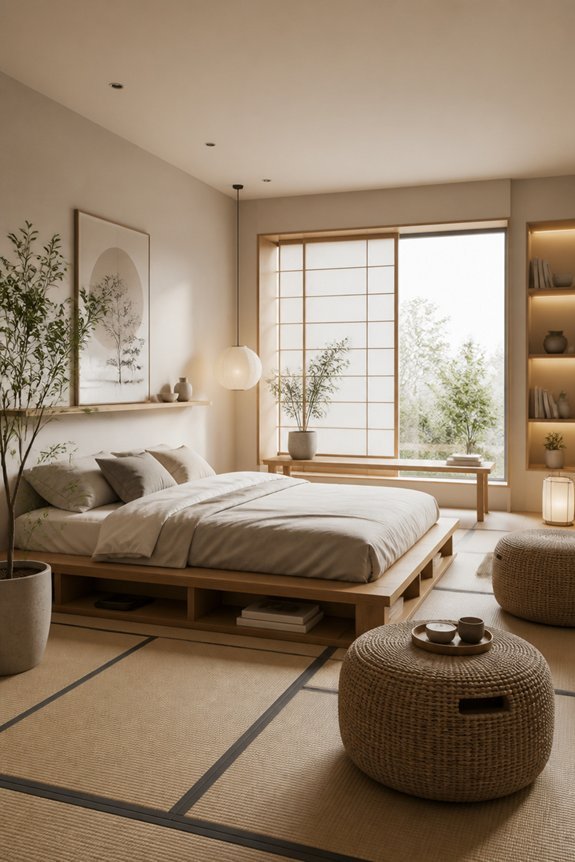
Most living rooms are stuffed couches and tables that just sit there. They look fine. They do nothing.
Japandi says no to that.
Pick furniture that actually works. Try a low wooden coffee table with hidden storage. It holds your stuff. It stays calm. One piece, two jobs.
Need a guest bed? Get a sleek sofa that transforms. You save space. You save your sanity. Floating shelves work too. They show off your books and plants. They never touch your floor.
Every item must earn its keep. Skip the decorative chair that collects dust. Skip the side table that holds nothing but regrets.
Japandi furniture is honest. It is beautiful. It is useful. Think gym membership energy—strong, capable, ready for real life.
Layer Natural Materials Throughout Your Space
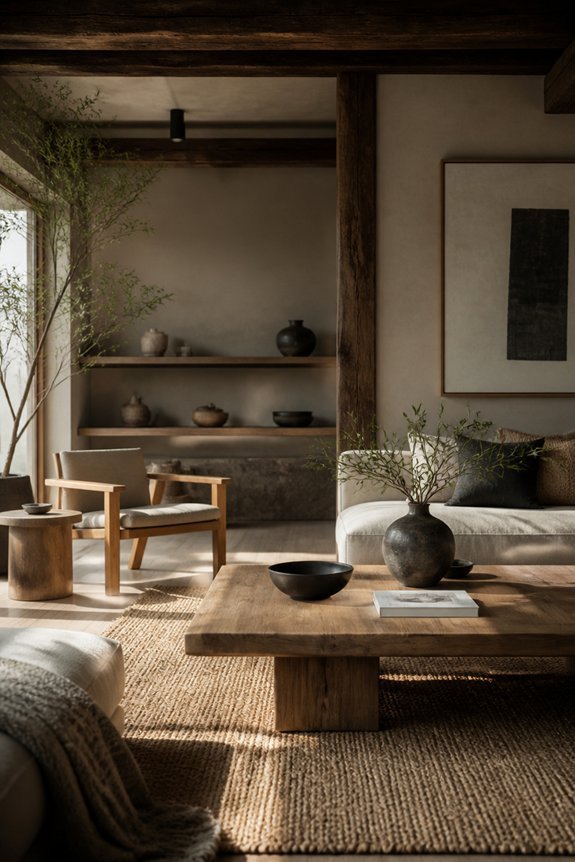
Have you ever walked into a room that felt flat, even with nice furniture? That’s usually what’s missing.
Natural materials fix this. They add life.
Start with a rug. Something chunky works best. Jute is perfect—about 8×10 feet under your seating area. You’ll feel the difference immediately.
Add wood next. Side tables with visible grain show character. No two pieces match. That’s the point.
Woven baskets hide your clutter. You need storage that doesn’t look like storage.
Try linen curtains. They soften light coming through your windows. No plastic shine. No harsh glare.
Small touches help too. Stone coasters. Bamboo frames. Dried pampas grass in that empty corner you’ve been ignoring.
Each piece adds texture. Together they build warmth.
Your room stops feeling decorated. It starts feeling settled.
Use Negative Space Strategically: Placement Over Abundance
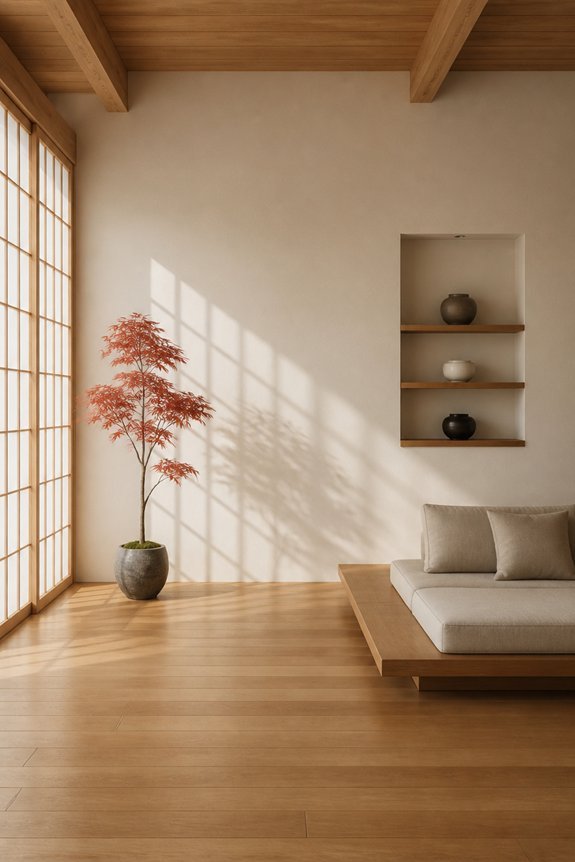
You know that feeling when you walk into a room and instantly exhale? That’s negative space at work.
Japandi design gets this. It doesn’t shout. It whispers. And the empty spots? They’re doing the talking.
Try this. Look at your living room right now. Count the pieces that truly earn their keep. Three? Four? Now imagine stripping away the rest. One low wooden table. A single sofa with room to breathe. Your eyes stop scrambling. They land. They rest.
That blank wall you were itching to fill? It’s not a problem. It’s a feature. A single plant in the corner outshines five fighting for attention. The space between things is where the calm lives. And your brain notices. Less visual noise means less urge to buy more stuff you don’t need.
Design Lighting That Shifts With Your Mood
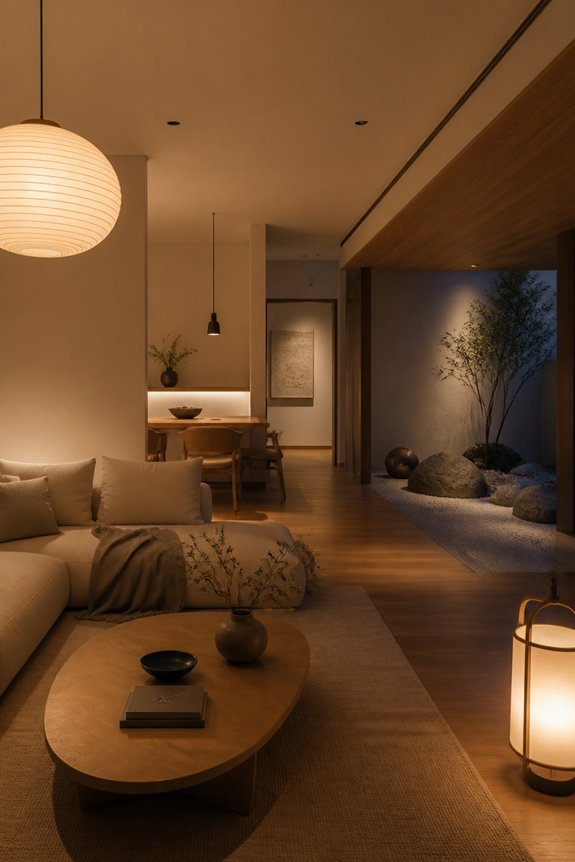
You walk into your home after a long day. The lights are blasting at full strength. Suddenly you’re caffeinated again. Not what you wanted.
Dimmers fix this. Install them on your overhead fixtures. Bright light keeps you sharp for morning tasks. Dial it down to 30% when you’re ready to unwind. Your brain gets the signal. Time to relax.
Layer matters too. Add warm-toned lamps around seating areas. Soft amber beats harsh overhead every time. Try a wooden lamp with a linen shade. Japandi style, natural materials, instant calm. Place it where you actually sit. Not where the layout says you should sit.
Your mood shifts without you trying. From “let’s do this” to “let’s do absolutely nothing.” The light does the work.
Layer Soft Furnishings to Build Hygge Warmth
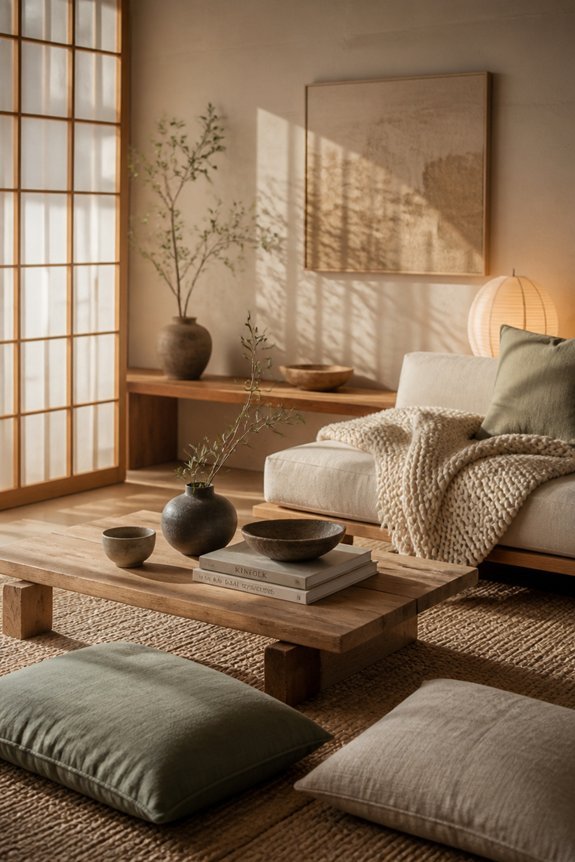
Lighting sets the mood. But soft furnishings make people want to stay. You know that feeling when you sink into a chair and suddenly can’t move? That’s the goal.
Start with a chunky knit throw. Drape it over your sofa arm. Let it look slightly messy. Add pillows in warm creams and soft grays. Mix up the sizes. Put some closer, some farther back. Your feet need a soft rug to land on. Choose linen curtains that filter light like a gentle filter. Your windows will glow like warm marshmallows.
The magic happens when textures layer together. Warm colors blend. Nothing feels staged. Your living room stops looking like a showroom. It starts feeling like a hug. And yes, your guests might overstay their welcome. That’s how you know it worked.
Add Plants That Thrive in Low Light
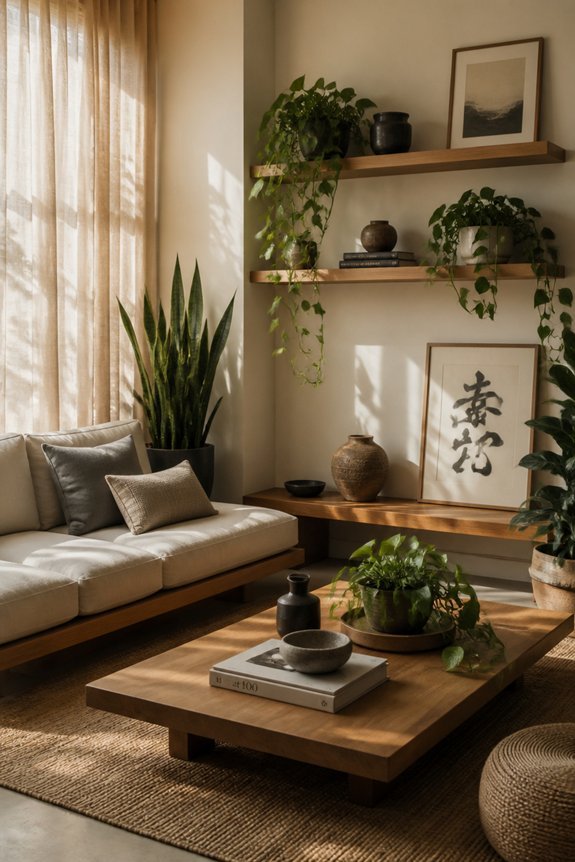
You want that Japandi calm. But your living room has corners where light barely reaches.
No problem. Some plants actually prefer the shade.
Pothos and snake plants are your new best friends. They forgive forgotten waterings. They thrive in dim corners. A 2-foot pothos on a dark shelf will cascade down like a living waterfall.
ZZ plants work too. They practically care for themselves.
Your space gets instant life. Zero drama required.
Choose Art That Says Something, Quietly
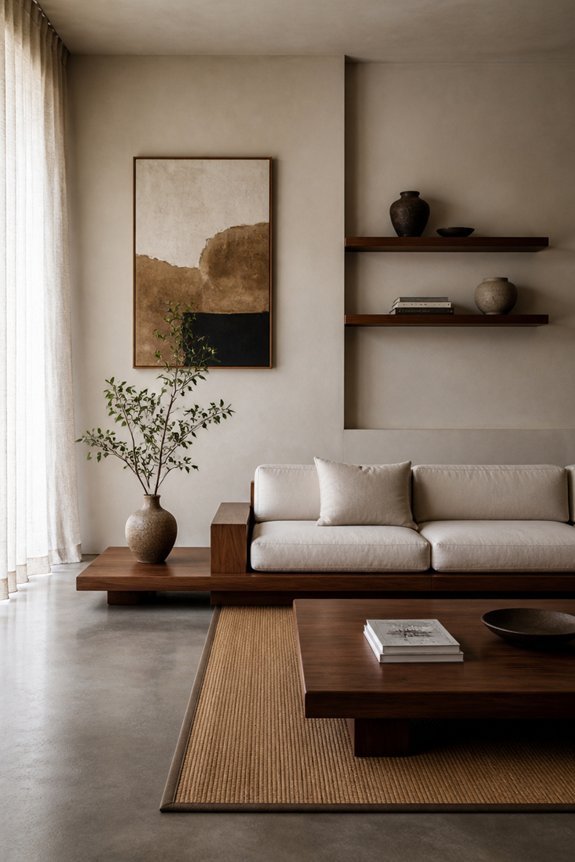
Choose Art That Says Something, Quietly
You probably own something that shouts too loud. That poster from college. That gift you feel guilty ditching.
Now look at your corners. Those plants get it. They just exist. They don’t.perform.
Your art should do the same.
Try a black ink drawing on soft cream paper. Nothing flashy. A small landscape works too—think 16 by 20 inches above a low shelf. Eye level when you’re sitting down.
Feeling braver? Go abstract. But mute the colors. Soft grays. Deep blues. Greens that feel like morning light.
Here’s the test: does it make you smile when you *accidentally* notice it? Or does it grab your collar and demand attention?
Art works best like a good friend. It hangs there. It doesn’t lecture. It doesn’t beg for compliments.
Let it breathe. Let it wait. Let it be the thing you see when you need to see something gentle.
Position Furniture to Encourage Movement and Conversation
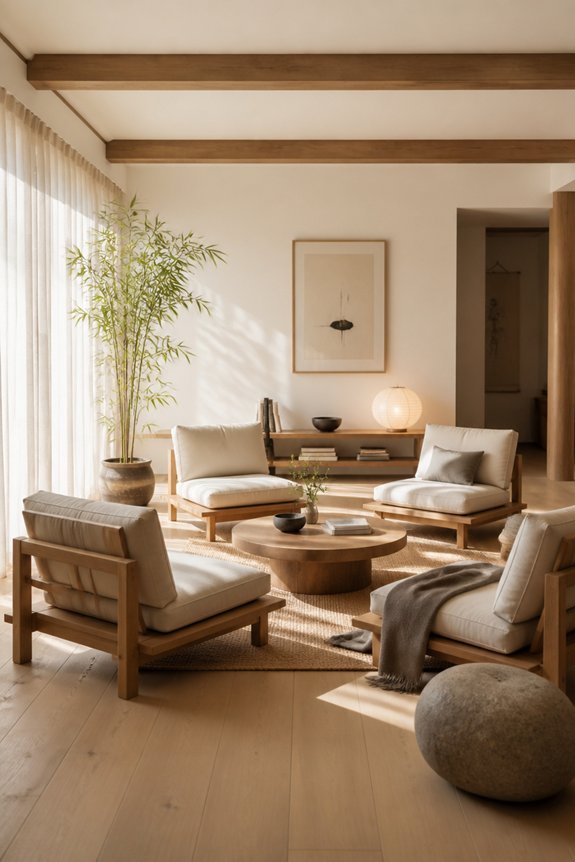
Ever walked into a room and immediately felt stuck? That’s bad furniture talking.
You want people to move. You want them to talk. Your layout makes that happen.
Start with your sofa and chairs. Face them toward each other. Keep them about 8 feet apart. Close enough to hear whispers. Far enough to breathe.
Add a coffee table in the middle. Drinks need landing spots. Feet need resting places.
Leave clear paths between pieces. Nobody enjoys the sideways shuffle. Angle your chairs slightly inward. Think of it as opening your arms to guests.
Resist the wall hug. Pushed-back furniture feels like a doctor’s office. Pulled-in pieces feel like home.
Watch what happens. People linger. They lean in. They actually talk.
Blend Japanese Minimalism With Scandinavian Warmth
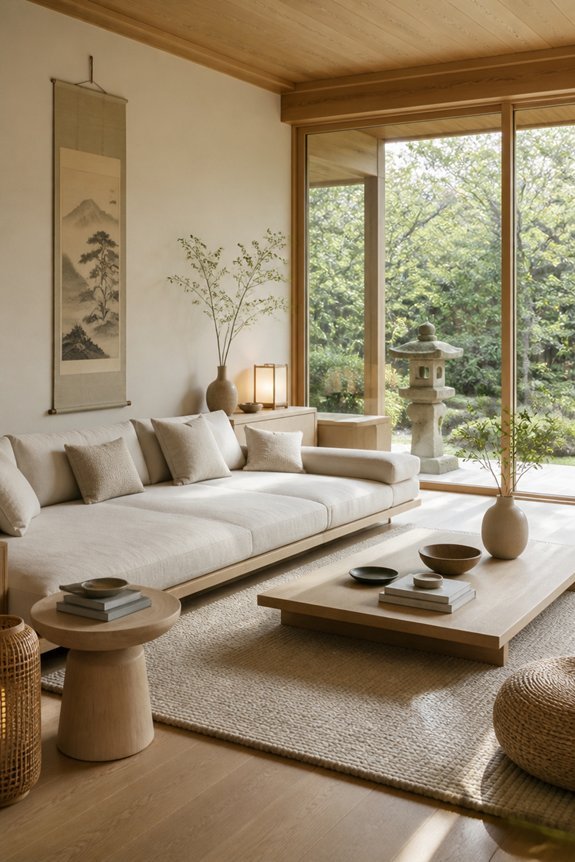
Tired of rooms that feel too bare or too cluttered? You’ve probably seen spaces that try to be calm but end up feeling cold. That’s where this blend saves you.
Start with light wood—think honey tones, not pale Scandinavian blonde. Pair it with clean lines that calm your eye. Add cream linen cushions and one sculptural plant in a rough ceramic pot. Keep your coffee table low, around 16 inches. This opens your sightlines and creates that zen flow.
Now layer in warmth. Drape a chunky knit throw within reach. Swap harsh overhead lights for soft, glowing lamps. Suddenly the space feels organized but lived-in. Peaceful, not sterile. It’s for people who want quiet minds without boring rooms.
Clear Out What Doesn’t Serve You First
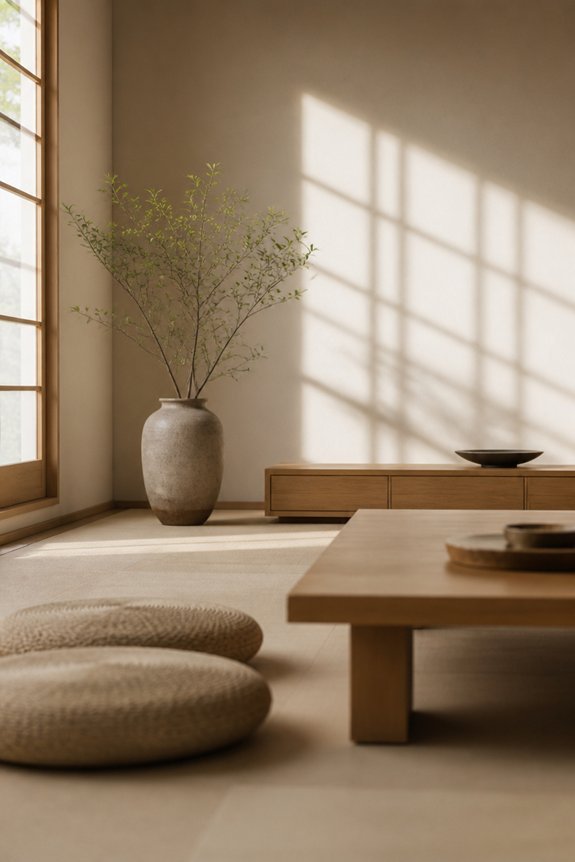
You walk into your living room. Something feels off. Heavy. Stuck.
Look around. That beige couch from 2005? It’s tired. Those magazines stacked in the corner? They’re not a skyscraper. They’re just clutter.
Japandi style needs air. Space to breathe. You can’t add beauty to a crowded room.
Try this. Pick up one item. Ask it: “Do you spark joy or just dust?” Be honest. That lumpy ottoman nobody sits on? Let it go. Those decorative plates gathering grime? Thank them. Then say goodbye.
The purge feels like relief. Suddenly your walls expand. Light moves differently. You haven’t bought a single new thing, yet everything feels new. It’s what happens when Marie Kondo and a Scandinavian walk into your home—and actually help.
Hide Storage so Nothing Shows
Here’s your Storage Hiding rewrite:
—
Your stuff called. It wants to disappear.
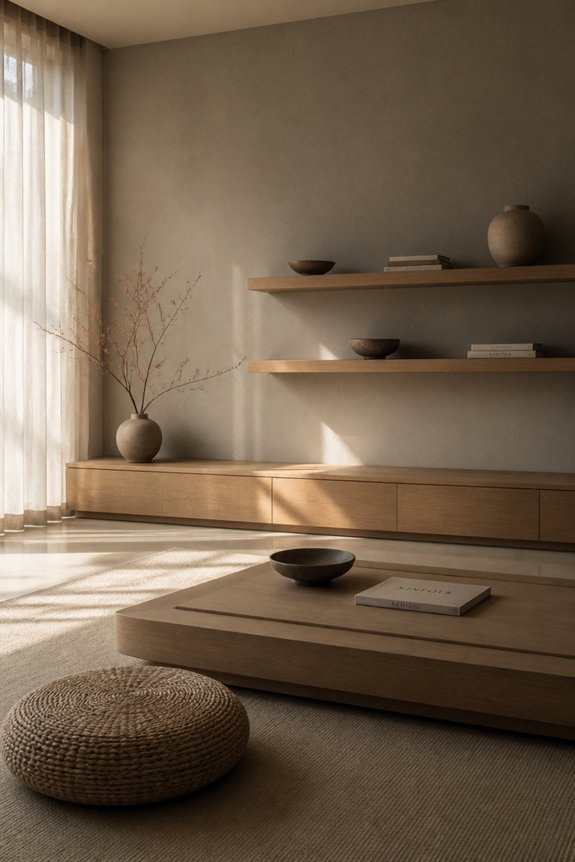
Where does the mess actually live? In cabinets that look like walls. In benches that swallow blankets whole. Low credenzas with clean fronts—no knobs, no drama. You touch them; they open. You leave; they forget.
Closed backs are secret weapons.
Wall-mounted units hide router lights, cable nests, that router you’ve hated since 2019. Woven bins slide under side tables like they were born there. Junk still exists—it just stopped asking for attention. Think Japanese hotel room meets your laziest Sunday: everything accessible, nothing visible. Marie Kondo’d, but realistic.
—
Want the next section?
Where to Shop for Japandi Pieces
You want the Japandi look. Your wallet disagrees. Good news: you don’t need one magical store.
West Elm gets the minimalist thing right. Clean sofas. Natural wood tables. Done.
Article and CB2 hit that sweet mid-range spot. Quality exists here. Your bank account survives.
IKEA surprises people. Light oak shelving. Neutral textiles. Shockingly decent for the price.
Etsy holds the real Japanese treasures. Hand-thrown ceramics. Vintage tansu chests. Actual character.
Wayfair works for budget hunts. Check reviews first. Quality swings hard there.
Thrift stores require patience. Wooden stools appear. Woven baskets hide in corners. Antique shops too.
Facebook Marketplace rewards scrollers. Barely-used pieces surface daily. Someone else’s impulse buy becomes your find.
Mix everything. High and low. New and old. Your zen sanctuary builds slowly.
Frequently Asked Questions
How Much Budget Do I Need to Redesign My Living Room in Japandi Style?
Redesigning a living room in Japandi style typically requires $3,000 to $10,000, depending on room size and quality preferences. Budget allocation includes minimalist furniture, natural materials, lighting fixtures, and decor elements that balance Japanese simplicity with Scandinavian functionality.
Can I Mix Japandi Design With Other Interior Design Styles Successfully?
Yes, japandi successfully blends with other styles. Minimalist spaces pair well with industrial elements or scandinavian touches. The key involves maintaining clean lines, natural materials, and functional aesthetics while carefully introducing complementary design elements without overwhelming the serene atmosphere.
What’s the Ideal Room Size for Implementing Authentic Japandi Design Principles?
Japandi principles work effectively in any room size. Small spaces benefit from minimalist furniture and clean lines, while larger areas accommodate more substantial pieces. The design philosophy prioritizes functionality and intentional spacing over square footage.
How Do I Transition My Existing Furniture Collection Into a Japandi Aesthetic?
One converts existing furniture by evaluating pieces for clean lines and minimal ornamentation. Furniture should be retained if it embodies natural materials, neutral tones, and functional simplicity. Items lacking these qualities are replaced systematically with authentic japandi selections.
Are There Cultural Considerations or Etiquette Rules When Adopting Japanese Design Elements?
One should respect the philosophical origins of Japanese aesthetics, understanding concepts like wabi-sabi and ma (negative space). Avoiding sacred symbols, appreciating craftsmanship, and supporting authentic artisans demonstrates cultural sensitivity when incorporating these elements.
Conclusion
Creating a Japandi living room means ditching the clutter and embracing the “less is more” life. Soft colors, natural wood, and hidden storage do the heavy lifting. Your space becomes a calm sanctuary where everything has a purpose and nothing’s randomly scattered around like dirty laundry. It’s basically your living room’s glow-up—minus the drama. Now go forth and zen out!