

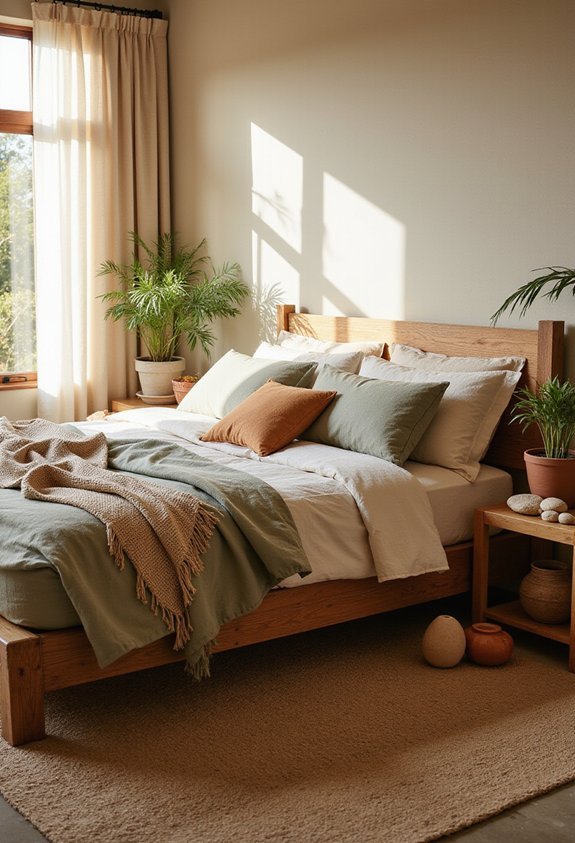
Your bedroom became quieter the moment you brought in natural materials. Wood that had been somewhere else before, linen that softened with washing, stone that stayed cool under your palm. You weren’t thinking about design when you made these choices. You were thinking about what felt right against your skin, what your body wanted to touch when you woke up disoriented in the dark. Natural materials don’t announce themselves. They just work.
Living with natural textures changed how your bedroom felt during different times of day. Morning light landed differently on raw wood. Your cotton sheets breathed in a way synthetic ones never did. The room stopped feeling constructed and started feeling grown into. You noticed you moved more slowly through the space, that your shoulders relaxed without you asking them to. Nothing was trying too hard. Everything just was what it was.
What you learn with natural materials is that simplicity isn’t boring when it’s honest. Your bedroom doesn’t need bright colors or patterns to feel alive. It needs textures that remind you that you’re part of something older than trends, something that’s always worked because it actually belongs in a room where humans sleep and dream. That’s when decoration stops mattering and living well starts.
Warm Wood Tones: Your Bedroom’s Natural Foundation
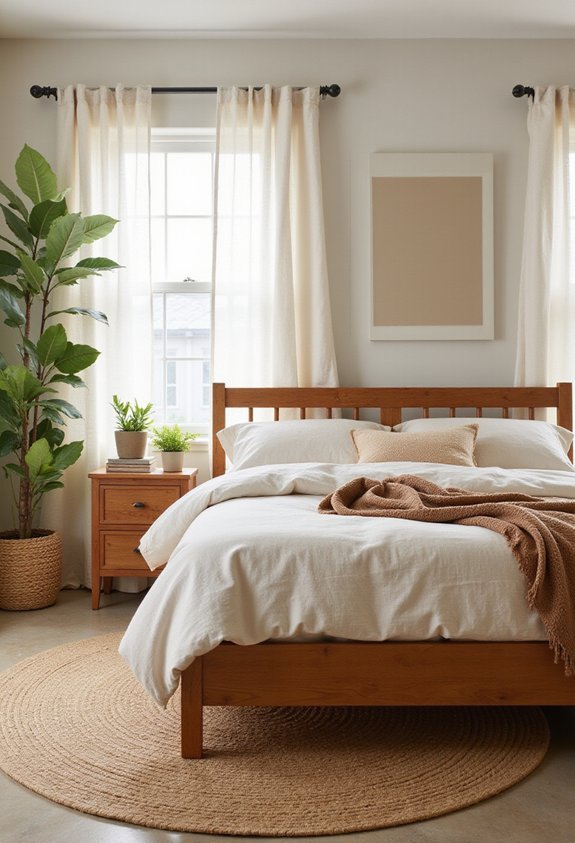
When you’re designing a bedroom that feels grounded and inviting, warm wood tones provide the perfect starting point. They establish a natural foundation that connects you to organic materials while creating a cohesive, calming environment.
Consider incorporating wood through your bed frame, nightstands, and dresser. These pieces anchor the room and establish a consistent aesthetic. Lighter woods like pine or ash offer airiness, while deeper tones like walnut or cherry add richness and sophistication.
Don’t overlook wooden flooring or area rugs with wood-inspired patterns. You can also introduce wood through ceiling beams or wall paneling for architectural interest.
The key’s balancing wood elements with other natural materials—stone, linen, and plants—so your space doesn’t feel monotonous. This layering creates visual depth and enhances the organic atmosphere you’re cultivating.
Also read: 38 Funky Bedroom Decor Ideas That Break All the Design Rules
Earth-Toned Paint Finishes That Promote Sleep
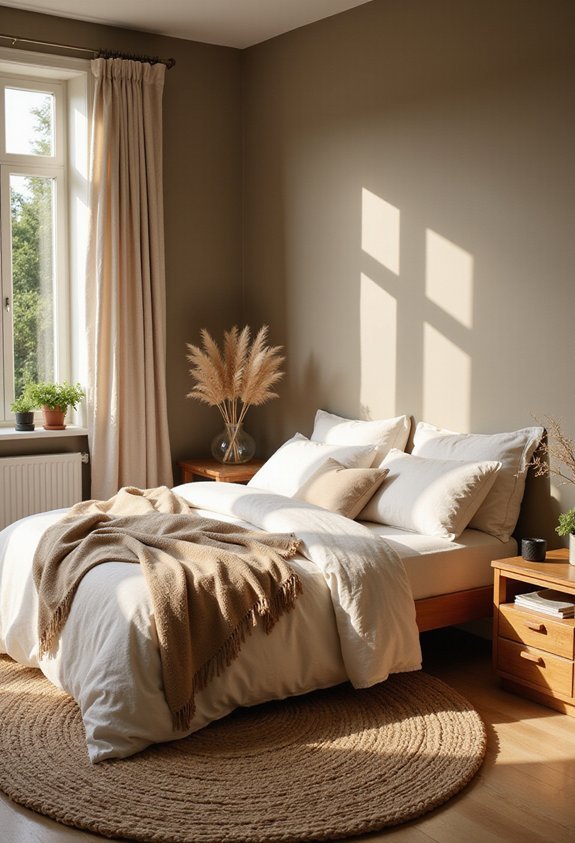
Because color directly influences your mood and sleep quality, choosing the right paint finish matters as much as selecting the shade itself. Matte finishes are your best choice—they absorb light rather than reflect it, creating a calming environment that won’t overstimulate your senses before bed.
Earth tones like soft taupe, warm beige, and muted sage work beautifully with matte finishes. These colors naturally reduce stress and promote relaxation by mimicking nature’s palette.
Avoid glossy finishes, which bounce light around your room and can disrupt sleep patterns. Eggshell finishes offer a subtle compromise if you prefer easier cleaning.
You’ll notice how matte earth-toned walls create visual softness that encourages your body to wind down. This foundational choice sets the tone for your entire bedroom’s restful atmosphere.
Neutral Color Palettes: Which Combinations Work Best
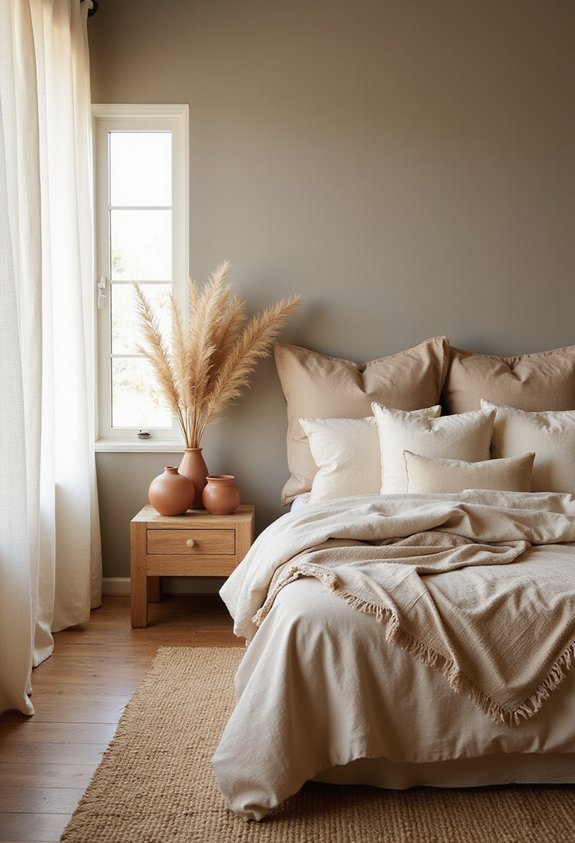
Once you’ve selected your matte earth-toned walls, the next step involves choosing complementary colors that work together to guarantee your room’s restful quality. Pair warm beiges with soft grays for a sophisticated balance, or combine warm whites with taupe accents for subtle depth. You might layer cream with muted sage green—this pairing brings nature indoors while maintaining calm. Warm grays work beautifully with soft browns, creating a cohesive, grounding palette. Avoid stark contrasts; instead, opt for colors within the same value range. This approach prevents visual clutter and promotes the relaxation you’re seeking. Consider your undertones carefully—warm versus cool—to confirm your selections harmonize throughout the space. These thoughtful combinations establish the foundation for a naturally serene bedroom environment.
Reclaimed Wood Bed Frames
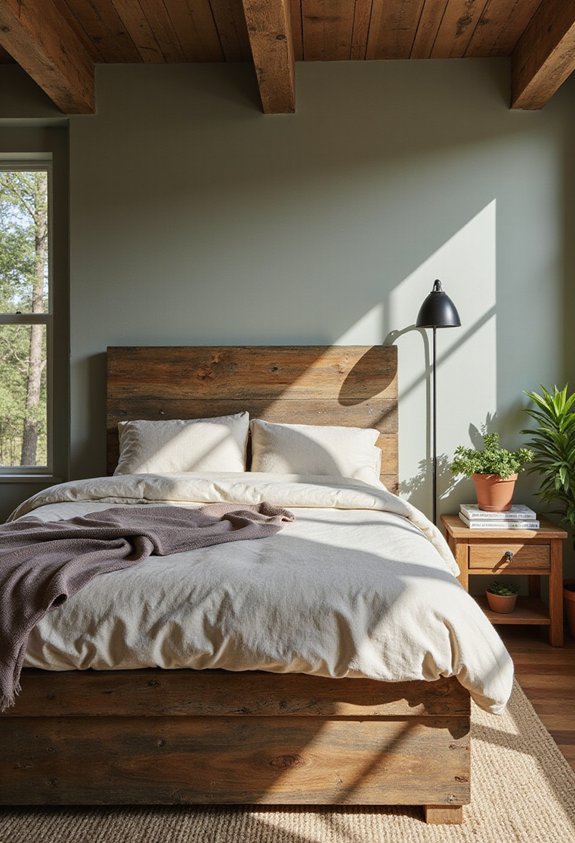
A reclaimed wood bed frame grounds your naturally styled bedroom while adding authentic character that new furniture simply can’t replicate. When you choose reclaimed materials, you’re incorporating genuine history into your space—weathered textures and unique grain patterns tell stories old wood possesses.
You’ll appreciate how these frames complement neutral color palettes beautifully. The warm, earthy tones of aged wood harmonize with soft beiges, warm grays, and creams you’ve already established. Their substantial presence anchors your bedroom without overwhelming the calming aesthetic you’re cultivating.
Beyond aesthetics, reclaimed wood bed frames support sustainable design choices. You’re reducing demand for new timber while preventing usable materials from landfills. This eco-conscious decision aligns perfectly with natural bedroom philosophy. Look for frames from architectural salvage companies or artisan craftspeople who specialize in reclaimed materials for quality pieces that’ll enhance your organic sanctuary.
Live Edge Wood Shelves
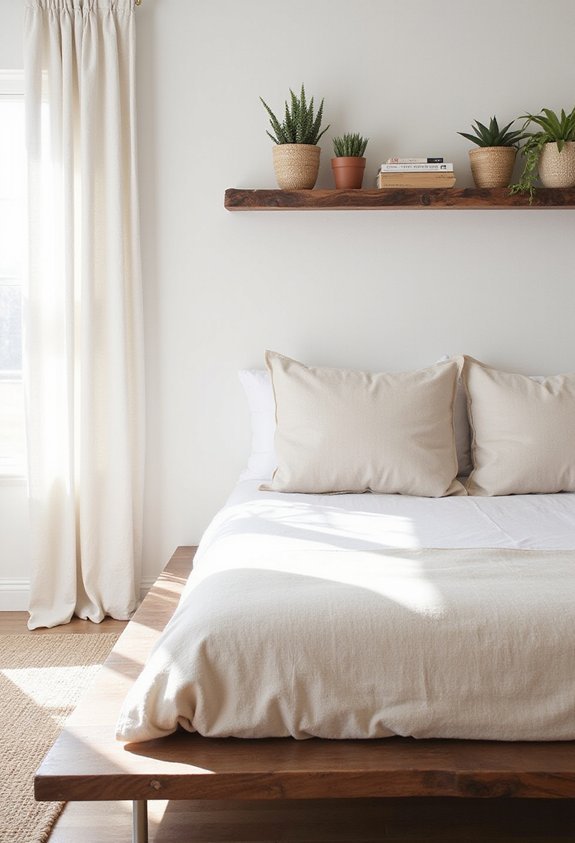
While reclaimed wood bed frames establish your bedroom’s foundation, live edge wood shelves extend that organic aesthetic vertically, bringing natural raw-edged beauty to your walls. You’ll love how these shelves showcase the wood’s authentic character—irregular edges and natural grain patterns create visual interest that manufactured alternatives can’t match.
Install them above your nightstand to display potted plants, crystals, or books. The unfinished edges complement earthy elements like woven baskets and natural fiber décor. You can arrange your belongings without sacrificing style, as live edge wood’s rustic charm enhances whatever you place on it.
These shelves work beautifully in corners or spanning entire walls, adapting to your space’s dimensions. Pair them with warm lighting to emphasize texture and depth. They’re durable investments that’ll deepen your bedroom’s connection to nature for years.
Linen Bedding for Breathable Comfort
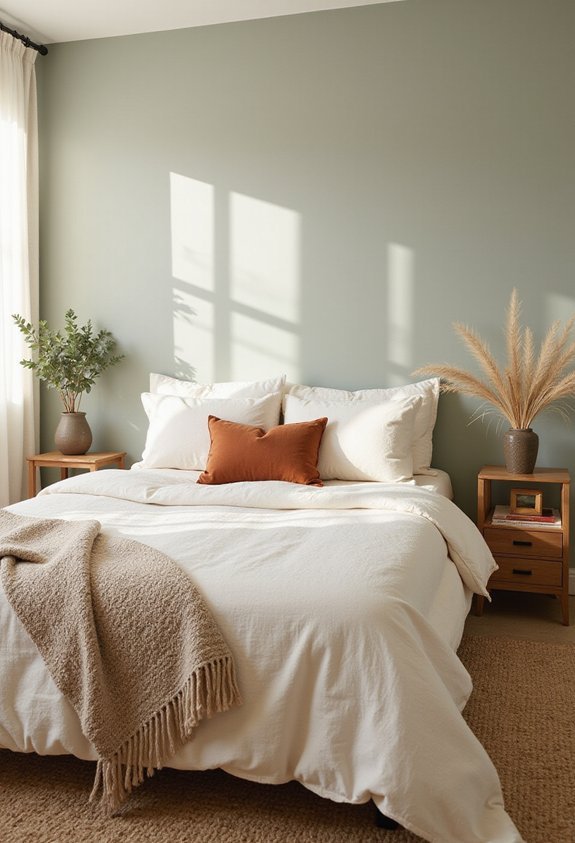
Natural linen bedding transforms your sleep experience by regulating temperature and moisture throughout the night. You’ll appreciate how linen’s breathable fibers keep you cool in summer and warm in winter, eliminating the need for constant sheet adjustments.
Unlike synthetic alternatives, linen becomes softer with every wash, improving its comfort over time. You’re investing in bedding that lasts years while maintaining its quality. Linen’s hypoallergenic properties benefit you if you have sensitive skin, reducing irritation and allergic reactions.
Choose neutral tones like cream, beige, or gray to complement your natural bedroom aesthetic. These colors reflect light subtly and create a calming atmosphere conducive to restful sleep. Pairing linen bedding with your live edge wood shelves establishes a cohesive, organic bedroom environment that feels intentional and serene.
Linen Duvet Covers: Care and Quality
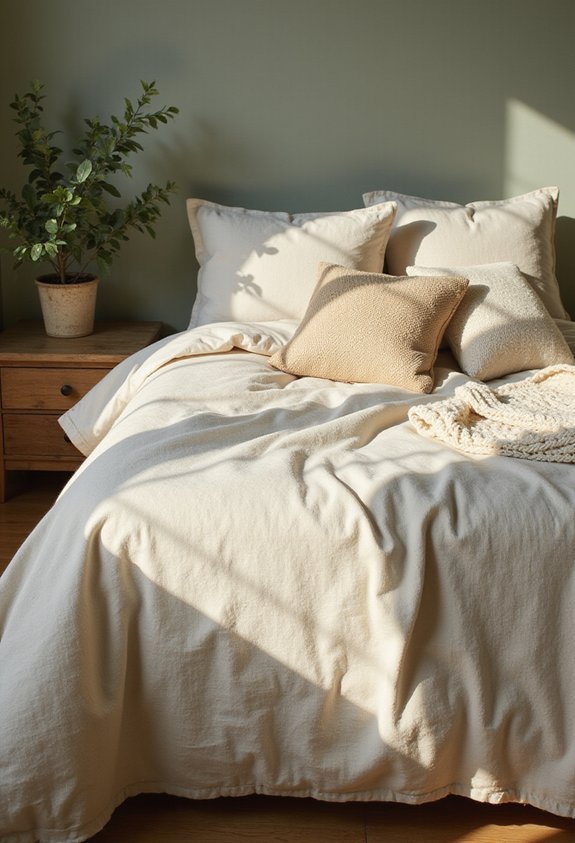
Since you’ve chosen linen bedding for your bedroom, safeguarding that investment means understanding how to care for your duvet cover properly. Quality linen duvet covers feature a tight weave and substantial weight, indicating durability and longevity. You’ll want to wash yours in cool water on a gentle cycle, using mild detergent to preserve the fabric’s integrity. Avoid bleach and fabric softeners, which can damage linen fibers. Air-drying is ideal, though you can tumble-dry on low heat if needed. High-quality linen actually improves with age, becoming softer and more comfortable after repeated washing. Look for covers with reinforced seams and deep pockets that accommodate thicker duvets. Investing in premium linen guarantees your duvet cover withstands years of use while maintaining its natural texture and breathability.
Wool Blankets for Sustainable Warmth
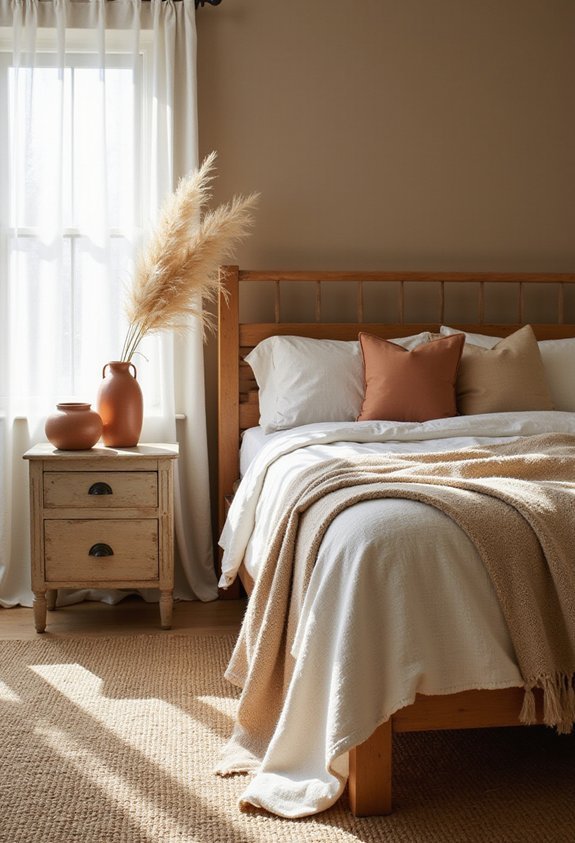
As you layer your bedroom with natural materials, wool blankets offer an excellent complement to your linen bedding while providing exceptional thermal regulation. Wool’s natural crimp traps air, creating insulation that adapts to your body temperature—keeping you warm without overheating.
Choose blankets made from merino or lambswool for superior softness and breathability. These fibers resist moisture, preventing dampness while absorbing perspiration away from your skin. Wool’s inherent flame resistance eliminates the need for chemical treatments, making it ideal for health-conscious sleepers.
Sustainable wool sourcing matters greatly. Look for certifications like Responsible Wool Standard, which guarantees ethical animal treatment and environmental stewardship. Properly maintained wool blankets last decades, reducing replacement frequency and waste.
Drape your wool blanket across your bed’s foot or layered with your duvet for adjustable comfort throughout seasonal changes.
Organic Wool Mattress Toppers
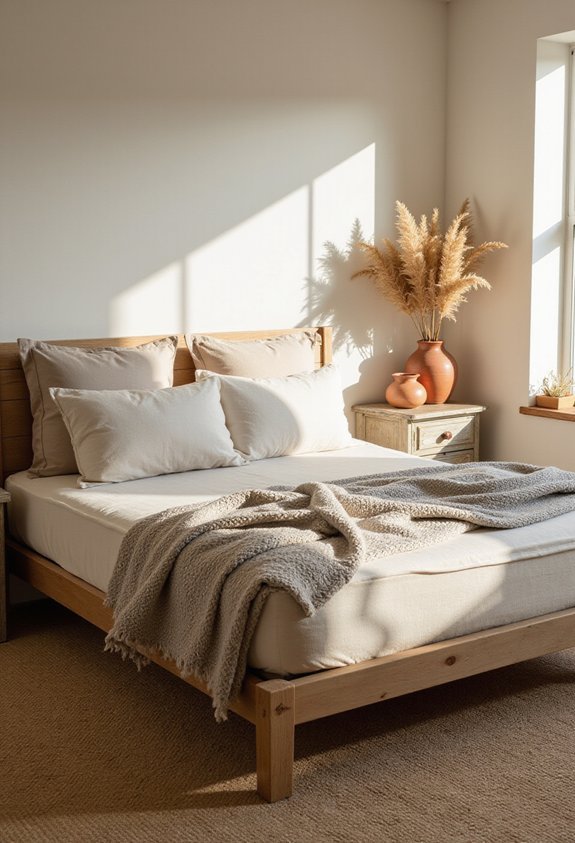
Wool mattress toppers transform your sleep surface by adding a cushioning layer that regulates temperature and moisture while you rest. You’ll find that organic wool naturally wicks away sweat, keeping you cool in summer and warm in winter without synthetic chemicals or treatments.
Quality toppers add 1-3 inches of support, extending your mattress’s lifespan while improving comfort. You can easily remove and wash them, maintaining hygiene effortlessly. They’re hypoallergenic, making them ideal if you’re sensitive to dust mites or allergens.
When selecting a topper, you’ll want to verify it’s certified organic and sourced ethically. Consider thickness based on your preferred firmness level. Pairing a wool topper with your sustainable bedding creates an eco-friendly sleep foundation that aligns perfectly with your natural bedroom aesthetic.
Natural Latex Mattresses
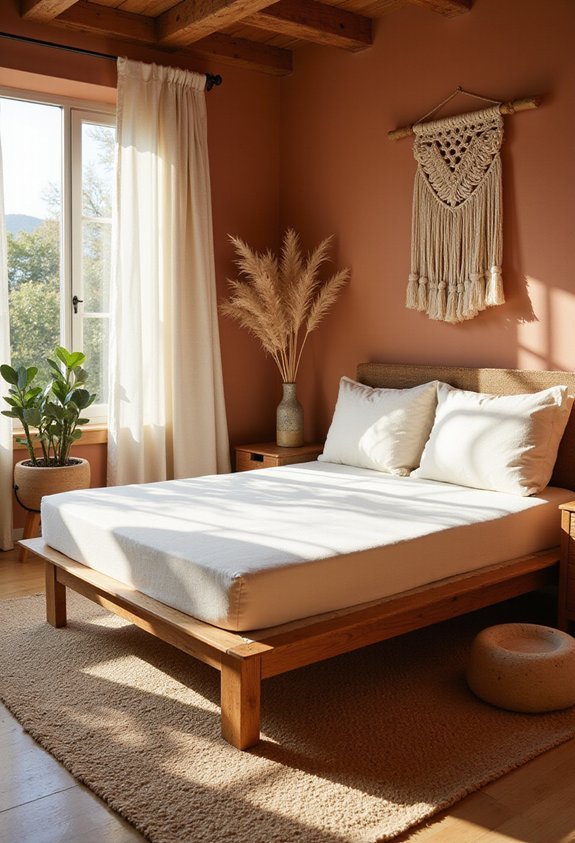
Natural latex mattresses offer a sustainable alternative to synthetic foam, providing responsive support that contours to your body without off-gassing or chemical odors. You’ll appreciate how this renewable material regulates temperature naturally, keeping you cool throughout the night while maintaining ideal comfort.
When you invest in a natural latex mattress, you’re choosing durability that typically lasts 15-20 years. The material resists dust mites and mold, making it perfect for allergy sufferers. You can feel confident knowing you’re sleeping on a product free from harmful flame retardants and volatile organic compounds.
Your bedroom becomes genuinely organic when you pair natural latex with your wool topper. Together, they create a sleep surface that’s both luxurious and environmentally responsible, supporting better rest while reducing your ecological footprint.
Natural Fiber Throw Pillows
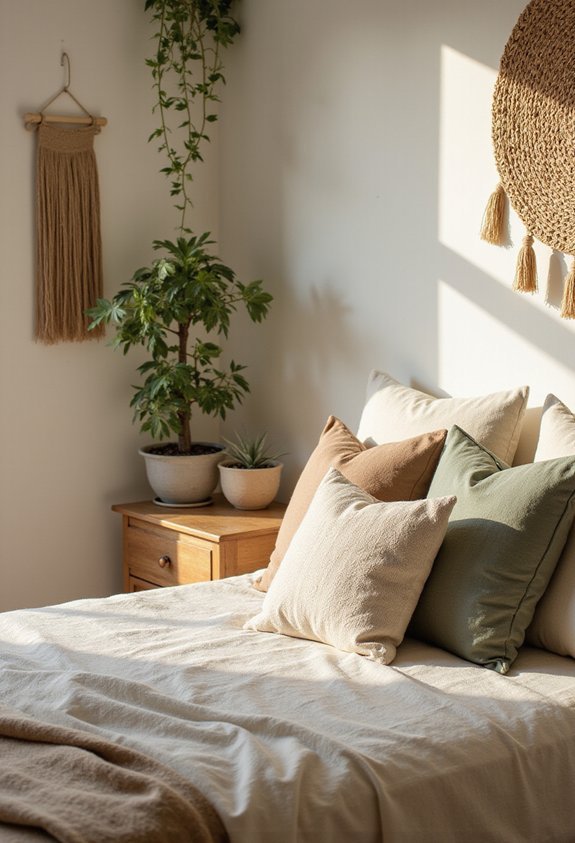
To complement your natural latex mattress, throw pillows crafted from organic fibers like linen, cotton, and jute add both texture and sustainability to your bedroom. These materials breathe naturally, regulating temperature while you sleep and rest against them during the day.
Linen pillows offer a relaxed, lived-in aesthetic with inherent wrinkles that enhance their organic appeal. Cotton provides softness and durability, making it ideal for frequent use. Jute introduces earthy tones and a rustic quality that grounds your space.
You’ll appreciate how natural fibers resist synthetic chemicals and off-gassing, supporting healthier indoor air quality. Mix and match different textures to create visual interest without overwhelming your restful environment. Layer them strategically across your bed to achieve that effortlessly curated, nature-inspired look you’re seeking.
Handwoven Blankets and Throws
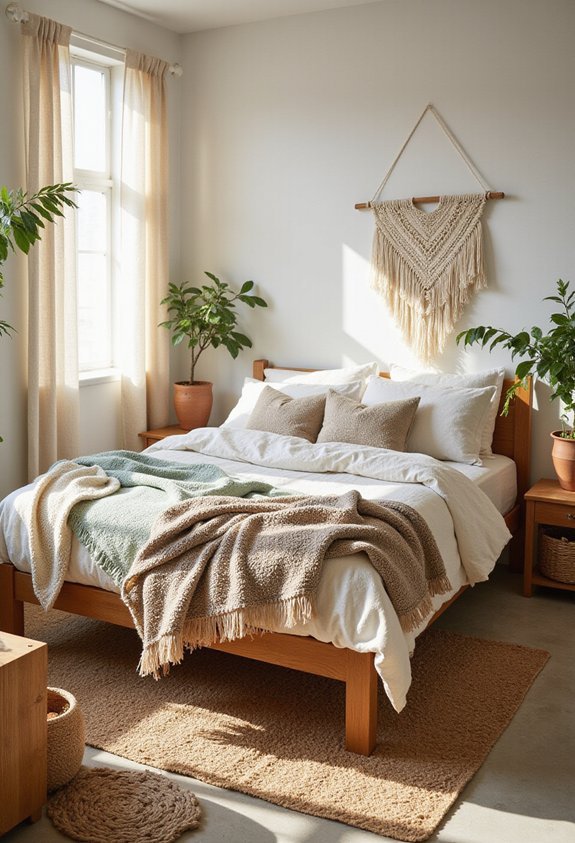
Layering handwoven blankets and throws across your bed amplifies the textural richness you’ve started with throw pillows. You’ll want to select pieces crafted from natural fibers like cotton, linen, or wool that breathe well and age beautifully.
Position a lightweight throw across the foot of your bed for casual draping, then add a heavier woven blanket for genuine warmth during cooler months. You can mix weave patterns—combining tight knits with looser textures—to create visual interest without overwhelming your space.
Handwoven pieces often feature subtle variations in color and pattern that reflect their artisanal origins. These imperfections actually enhance your bedroom’s organic aesthetic, making the space feel intentional rather than mass-produced. You’ll appreciate how these tactile layers invite you to relax and settle in.
Natural Pigment Textiles
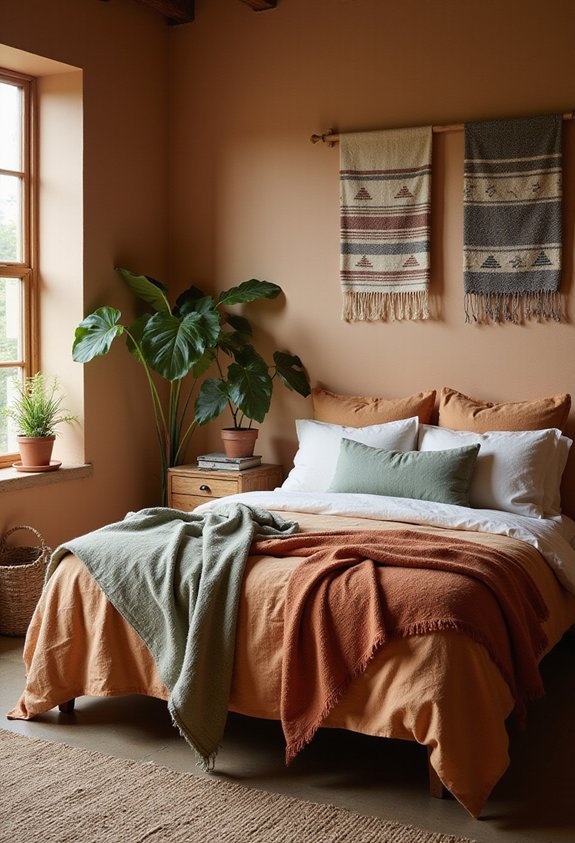
How do you infuse your bedroom with color that won’t fade or harm the environment? Natural pigment textiles offer the answer. These fabrics use dyes derived from plants, minerals, and insects rather than synthetic chemicals, making them safer for your skin and the planet.
You’ll find natural pigment options in bedding, curtains, and decorative pillows. Indigo creates deep blues, while madder root produces warm reds and oranges. Turmeric yields golden yellows, and walnut husks deliver rich browns.
These textiles develop character over time, with colors subtly shifting as they age. They’re often softer than chemically dyed fabrics and breathe better, promoting comfortable sleep. By choosing natural pigment textiles, you’re creating an authentic, eco-conscious bedroom sanctuary that aligns with your values.
Mud Cloth Wall Hangings
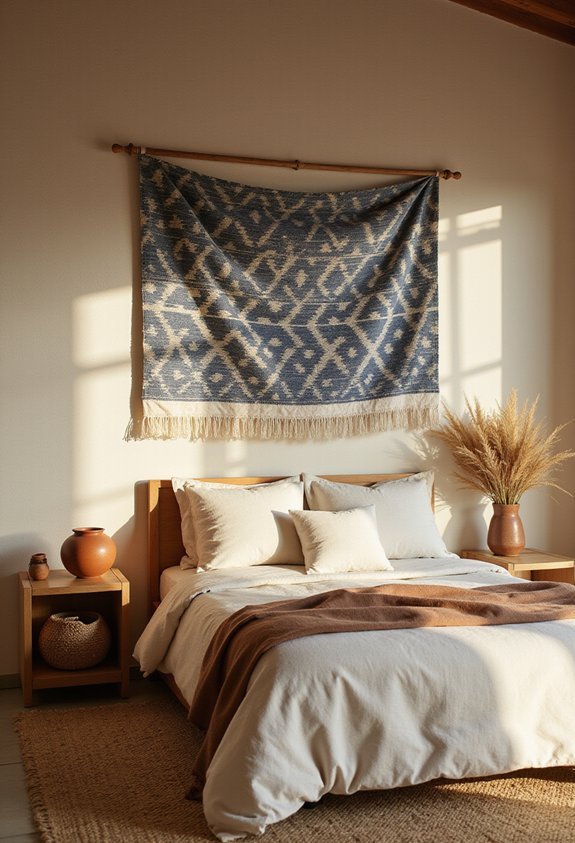
Where can you find textiles that combine centuries-old craftsmanship with striking geometric patterns? Mud cloth wall hangings offer exactly that blend. Originating from Mali, these handmade textiles feature bold, asymmetrical designs created through natural fermentation and mud-dyeing processes.
You’ll appreciate how mud cloth transforms your bedroom walls. The earth-toned palettes—deep browns, creams, and blacks—complement any organic aesthetic naturally. Each piece displays unique variations, ensuring your space feels authentically curated rather than mass-produced.
Hang a mud cloth tapestry as a focal point above your bed or alongside a window. The textured surface adds visual depth and tactile interest to plain walls. You’re not just decorating; you’re supporting traditional artisans and introducing cultural heritage into your personal sanctuary. This investment elevates your bedroom’s natural appeal considerably.
Natural Light Through Sheer Curtains
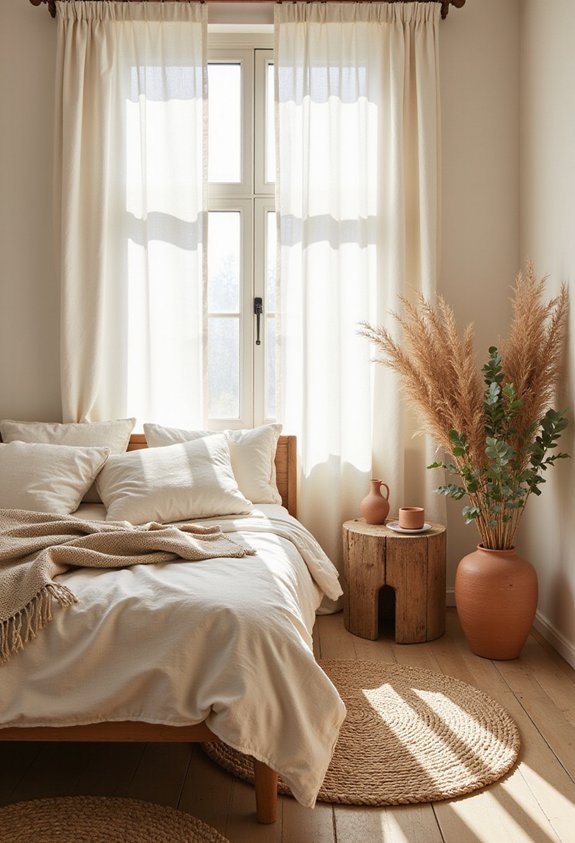
Why does natural light matter so much in bedroom design? Natural light creates an inviting atmosphere that enhances your space’s organic feel while boosting your mood and energy levels. Sheer curtains offer the perfect solution, allowing sunlight to filter through while maintaining privacy.
You’ll appreciate how sheer fabrics soften harsh rays, creating gentle, diffused illumination throughout your room. This approach works especially well in bedrooms since it prevents overstimulation while still connecting you to natural rhythms. Choose neutral-toned sheers in linen or cotton to complement your earthy aesthetic.
Layer them with heavier drapes if you need blackout capabilities at night. This combination gives you flexibility to control light intensity based on your needs. You’re fundamentally creating a spa-like sanctuary that respects both natural cycles and personal comfort.
Linen or Cotton Curtains for Filtered Light
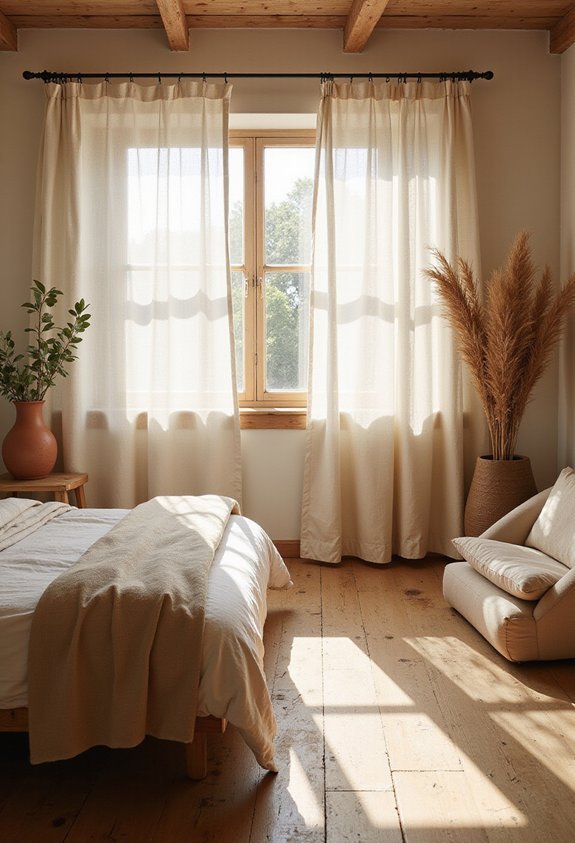
When you’re selecting materials for filtered light, linen and cotton curtains emerge as the ideal choices for a natural bedroom aesthetic. These breathable fabrics allow soft, diffused sunlight to penetrate your space while maintaining privacy and reducing glare. Linen offers a relaxed, organic texture that complements earthy decor styles beautifully. Cotton provides similar benefits with added durability and easier maintenance. Both materials regulate temperature naturally, keeping your bedroom cooler during summer months. You’ll appreciate how they drape gracefully, creating elegant folds that enhance your room’s visual appeal. Choose neutral tones like cream, beige, or soft gray to amplify the natural feel. These fabrics work harmoniously with wooden furniture and stone accents, reinforcing your organic bedroom design while filtering harsh sunlight effectively.
Natural Fiber Window Treatments
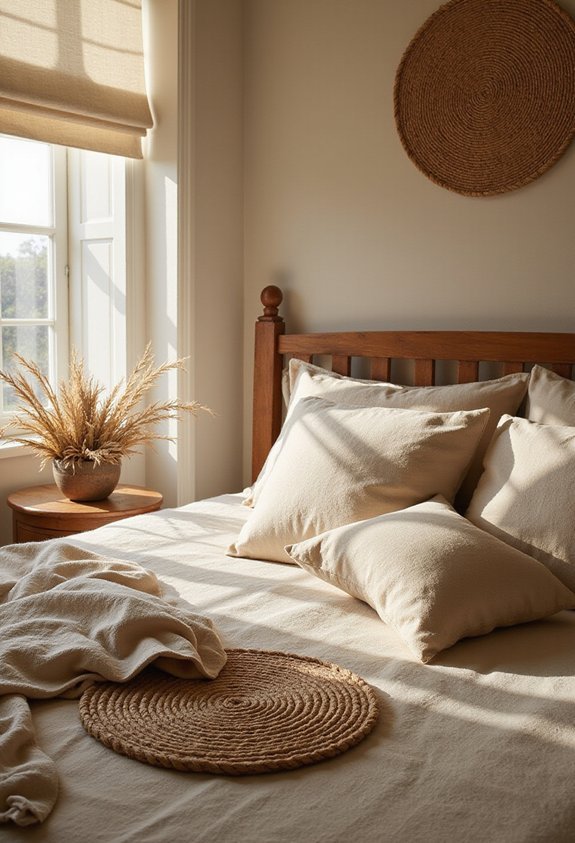
Beyond curtain fabric selection, you’ll want to explore other natural fiber options that complement your filtered light solutions. Bamboo blinds offer durability and a warm aesthetic while controlling sunlight effectively. Woven wood shades bring texture and organic charm to your windows, creating subtle shadows that enhance your bedroom’s earthy atmosphere. Jute or sisal roman shades provide another excellent choice, combining functionality with natural appeal. Hemp window treatments deliver a rustic quality while remaining environmentally responsible. Rattan screens work beautifully as alternative coverings, adding visual interest and natural patterns. These materials work harmoniously together or independently, allowing you to customize your window treatments based on your specific lighting needs and design preferences while maintaining your bedroom’s organic, grounded aesthetic throughout the space.
Beeswax Candles for Ambient Glow
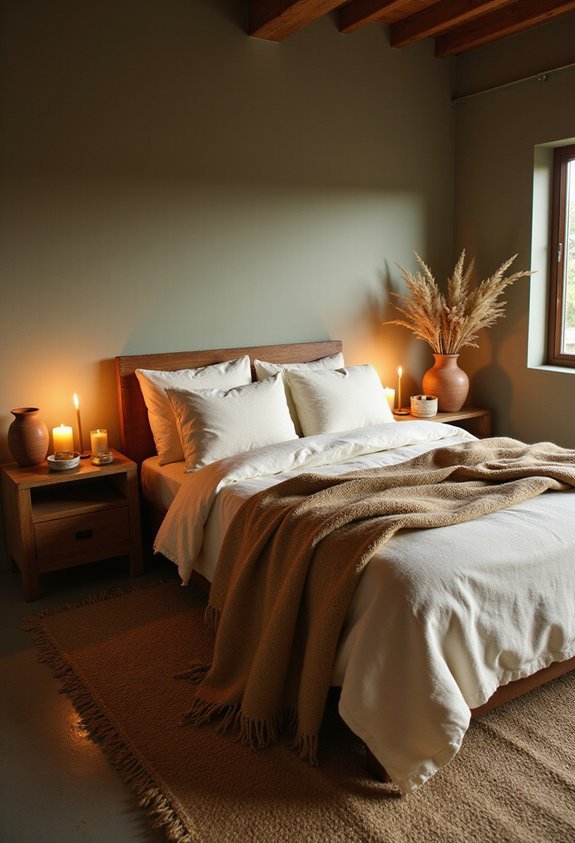
Warmth and authenticity transform your bedroom atmosphere when you introduce beeswax candles into your natural decor scheme. Unlike paraffin candles, beeswax burns cleaner and longer, releasing a subtle honey fragrance that doesn’t overwhelm your space. You’ll appreciate how these candles produce a warm, golden glow that mimics natural light and promotes relaxation before bedtime.
Beeswax candles emit negative ions that purify your air while you sleep, eliminating odors and allergens. They’re sustainable too—bees produce beeswax naturally, making these candles an eco-friendly choice that aligns with your organic bedroom aesthetic.
Position several beeswax candles on your nightstand, dresser, or windowsill to create layered lighting. You’ll notice how their gentle illumination encourages better sleep quality while adding an earthy, sophisticated touch to your bedroom environment.
Indoor Plants That Thrive in Bedrooms
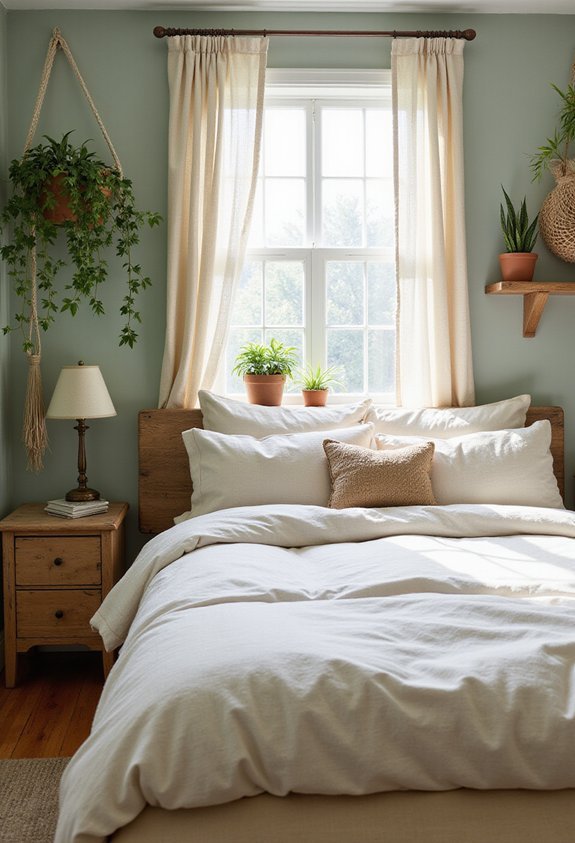
Indoor plants bring life and natural purification to your bedroom while requiring minimal maintenance. You’ll find that pothos thrives in low-light conditions and filters toxins effectively. Snake plants are incredibly hardy, needing water only monthly, making them perfect for forgetful plant parents. Peace lilies add elegance while improving air quality and blooming indoors. Spider plants produce trailing foliage that looks stunning on shelves or hanging planters. Rubber plants offer bold architectural interest with their large, glossy leaves. Monstera deliciosa grows beautifully in moderate light and becomes a striking focal point. ZZ plants tolerate neglect exceptionally well, requiring minimal watering and light. Each of these options improves your sleep environment while enhancing your room’s natural aesthetic without demanding constant attention or specialized care knowledge.
Macramé Plant Hangers
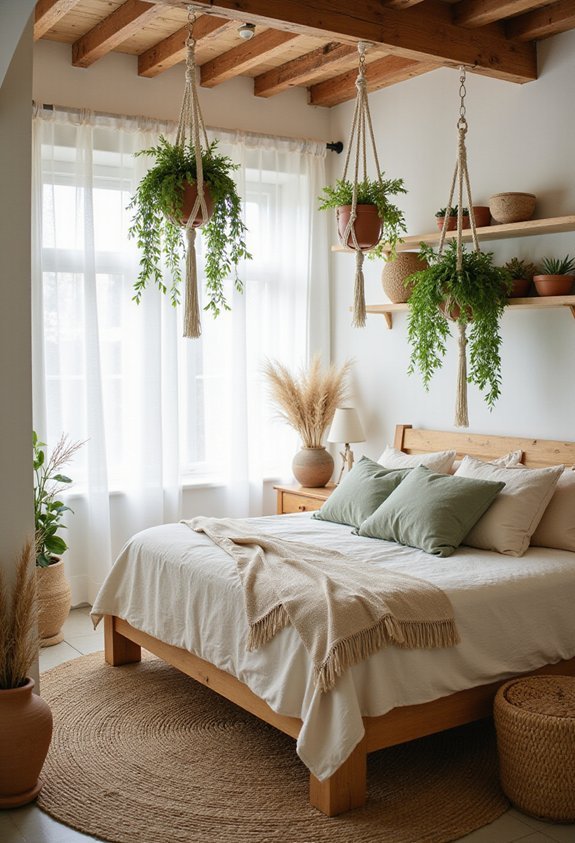
Once you’ve selected your bedroom plants, displaying them at varying heights creates visual interest and maximizes your space. Macramé plant hangers offer an ideal solution for achieving this layered aesthetic while maintaining your natural bedroom theme.
These knotted fabric holders add texture and warmth to your walls without requiring permanent installation. You’ll find macramé hangers in various sizes, from delicate designs for small succulents to sturdy options supporting larger pothos or philodendrons.
Choose neutral tones like cream, beige, or natural cotton to complement your organic decor scheme. Position hangers near windows where your plants receive adequate light. The intricate knots create visual appeal while promoting air circulation around your foliage, supporting healthier plant growth and enhancing your serene bedroom environment.
Moss Poles for Climbing Plants
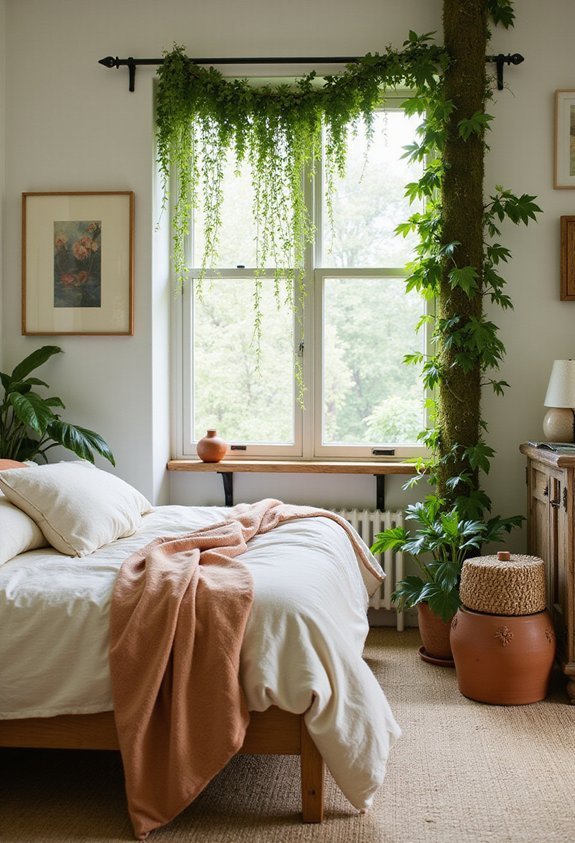
As your bedroom plant collection grows, you’ll want to incorporate climbing varieties that add vertical dimension to your space. Moss poles are an excellent solution for supporting these plants while creating a natural, organic aesthetic.
You’ll install moss poles by inserting them into potting soil, then train climbing plants like Monsteras or Philodendrons to wrap around them. The moss covering mimics their natural rainforest habitat, encouraging aerial roots to develop and promoting healthier growth.
These poles work beautifully in corners or against walls, drawing the eye upward and making your bedroom feel more spacious. You can purchase ready-made moss poles or create your own using coconut fiber and wooden stakes for a budget-friendly option.
Terracotta Planters and Vessels
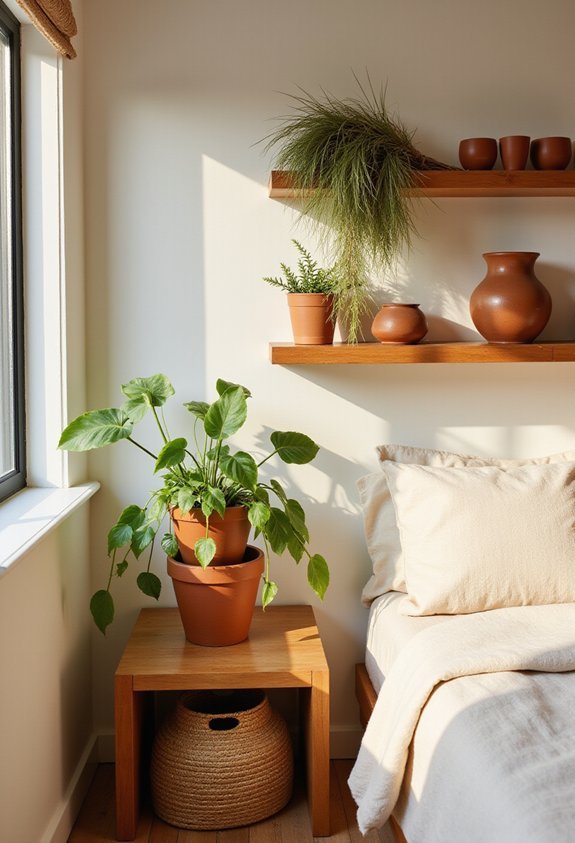
While moss poles support your climbing plants vertically, terracotta planters provide the perfect foundation for your entire bedroom garden. You’ll appreciate how these clay vessels breathe naturally, allowing soil to dry between waterings and promoting healthier roots. Their warm, earthy tones complement any natural bedroom aesthetic seamlessly. Terracotta’s porous nature prevents waterlogging, making it ideal for succulents and trailing plants that thrive in your space. You can arrange planters of varying sizes across shelves, windowsills, or nightstands to create visual interest. The rustic texture adds organic appeal without requiring refinishing or maintenance. Whether you choose classic cylindrical pots or decorative vessels with subtle patterns, terracotta brings authentic, grounding elements to your bedroom while serving your plants’ practical needs beautifully.
Potted Succulents on Shelves
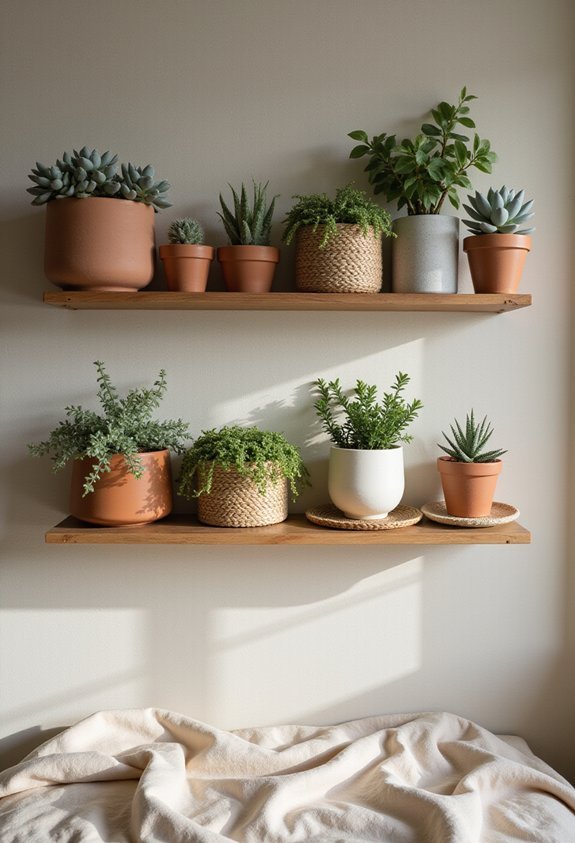
Succulents thrive on shelves because they need minimal watering and tolerate the indirect light that most bedrooms offer. You’ll appreciate their low-maintenance nature, which means you won’t stress about constant care routines.
Choose varieties like jade plants, echeveria, or string of pearls to add visual interest at different heights. Arrange them in terracotta or ceramic pots that complement your bedroom’s color palette. Clustering several small pots together creates a more impactful display than scattering them individually.
Position your succulent collection on floating shelves, nightstands, or windowsills to maximize their exposure to available light. Rotate them occasionally to guarantee even growth. Their fleshy leaves and geometric forms bring organic texture to your space while requiring just occasional watering, making them ideal for creating that effortless, earthy bedroom aesthetic you’re after.
Dried Pampas Grass Arrangements
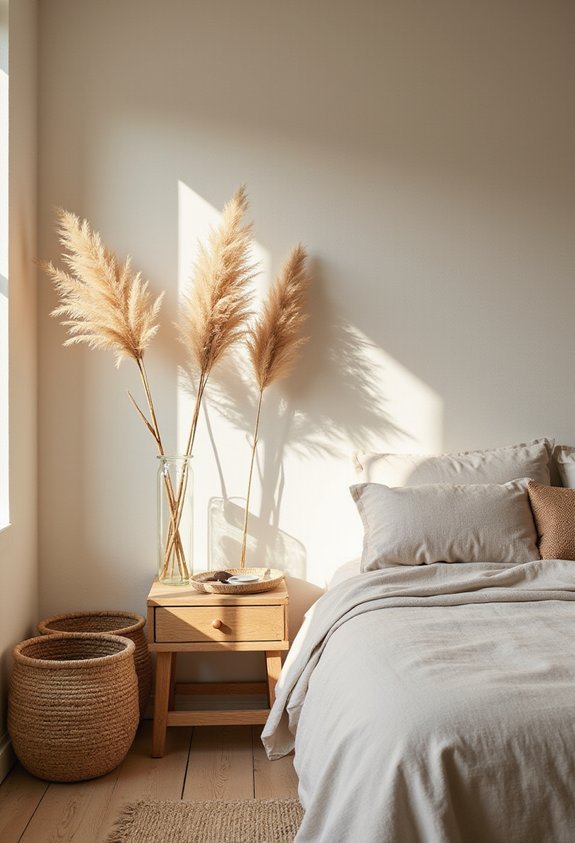
Dried pampas grass brings an elegant, bohemian touch to your bedroom without demanding any maintenance. You’ll appreciate how these feathery plumes add height and texture to corners, creating visual interest without cluttering your space. Position tall stems in a floor vase beside your nightstand or in the corner near a window. Their neutral, creamy tones complement earthy palettes effortlessly and won’t fade quickly if you keep them away from direct sunlight. You can arrange them alone for minimalist appeal or combine them with dried branches and eucalyptus for a fuller, more dynamic display. Unlike fresh flowers, pampas grass requires no watering, making it an ideal choice for maintaining your naturally styled sanctuary.
Botanical Prints and Artwork
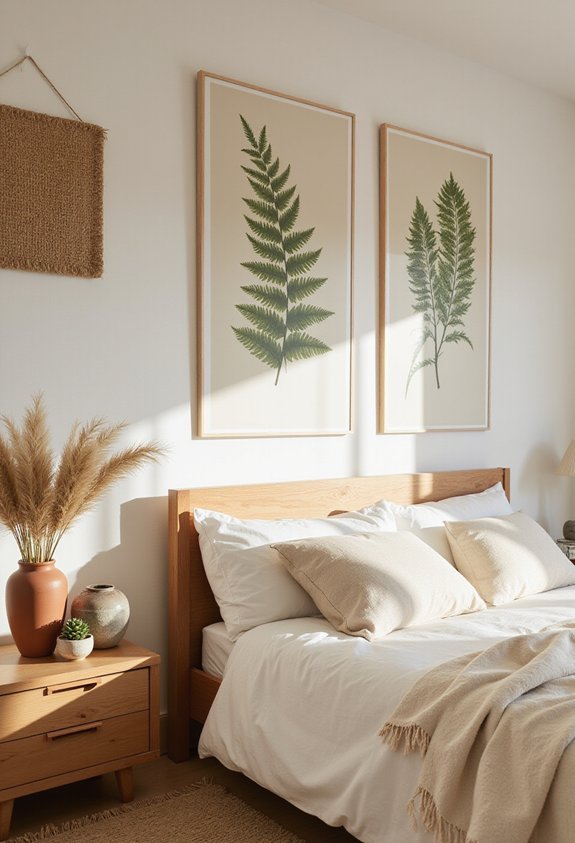
Botanical illustrations bring nature’s intricate beauty directly to your bedroom walls, anchoring your natural aesthetic with timeless elegance. You’ll find that vintage-style prints of ferns, pressed flowers, and leaf studies create focal points without overwhelming your space.
Consider framing botanical artwork in natural materials like wood or metal to complement your organic theme. You can layer different sizes and styles for visual interest, or keep it minimal with a single statement piece above your nightstand.
Watercolor botanicals offer softness, while detailed engravings provide sophistication. Shop for prints at galleries, antique markets, or online retailers specializing in natural artwork. You might even frame pressed specimens you’ve collected yourself for deeply personal touches that strengthen your connection to nature’s calm, restorative qualities.
Branch and Twig Wall Installations
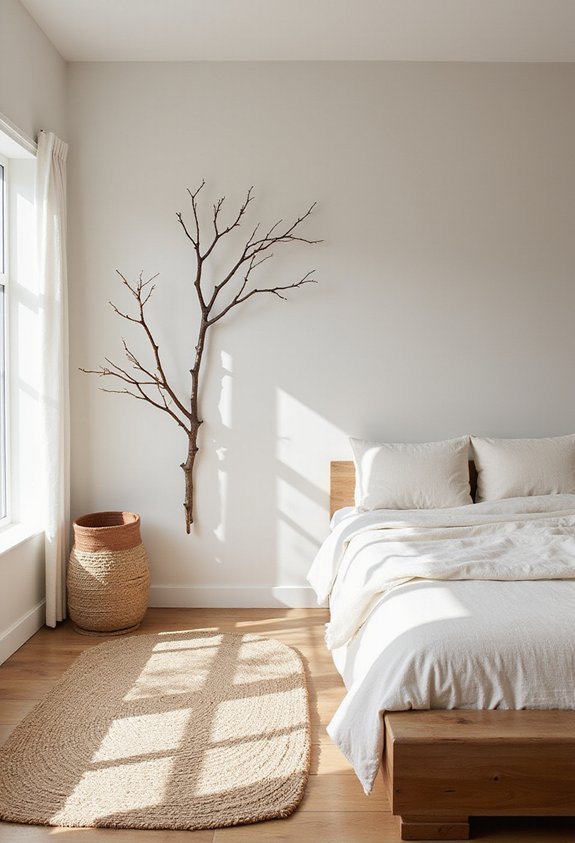
Moving beyond framed botanicals, you can create three-dimensional natural elements that add texture and depth to your bedroom walls. Branch and twig installations offer an organic alternative to conventional wall art while maintaining your bedroom’s earthy aesthetic.
You’ll find dried branches at local parks or purchase them from craft stores. Arrange them horizontally above your headboard or create a vertical feature wall by bundling twigs together. You can secure pieces using adhesive strips, wire, or small nails depending on your wall type and desired permanence.
Consider painting some branches white or leaving them natural for contrast. Layer branches at varying heights to generate visual interest. This approach works particularly well in corners or above nightstands, where the installations catch natural light beautifully throughout the day.
Bamboo Flooring as a Sustainable Alternative
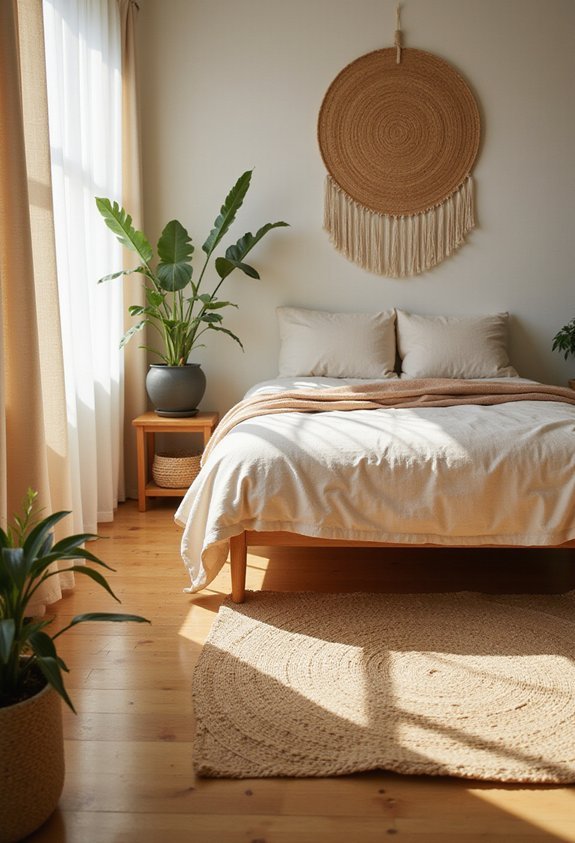
While traditional hardwood flooring depletes forests, bamboo offers an eco-friendly option that doesn’t compromise on style or durability. You’ll appreciate how bamboo regenerates in just three to five years, making it one of nature’s most renewable resources. The material’s natural warmth complements earthy bedroom aesthetics beautifully, creating that organic atmosphere you’re seeking.
You can choose from various finishes—strand-woven for maximum durability or solid bamboo for a lighter appearance. Installation is straightforward, and maintenance requires only regular sweeping and occasional mopping. Bamboo’s strength rivals hardwood, resisting scratches and moisture better than many alternatives.
Jute Rugs for Organic Texture
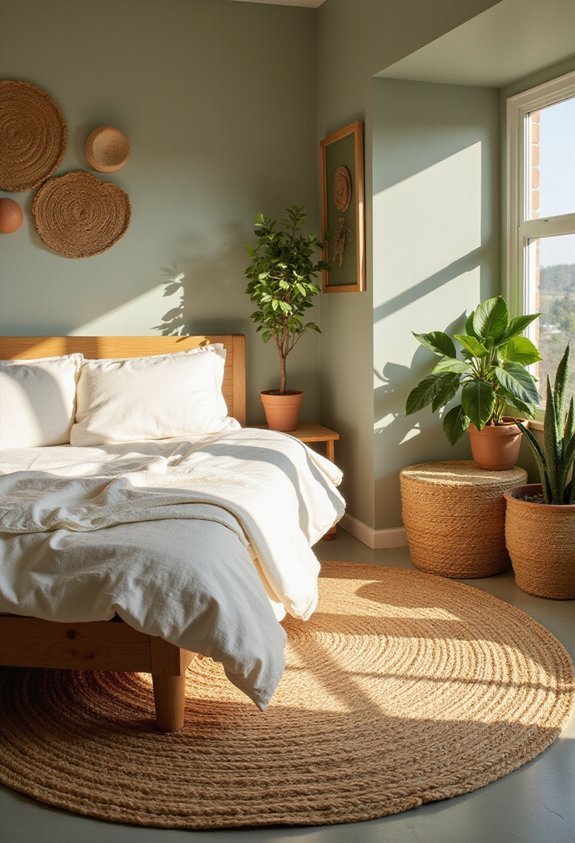
Jute rugs bring natural warmth and tactile richness to your bedroom floor, complementing the bamboo flooring you’ve chosen. This plant-based fiber creates an inviting foundation that enhances your organic aesthetic while adding comfort underfoot.
Jute’s neutral tones—ranging from sandy beige to warm brown—blend seamlessly with earthy color palettes. You’ll appreciate how the material’s subtle texture introduces visual interest without overwhelming your space.
When selecting a jute rug, consider layering it over your bamboo floor to define your sleeping area. The fibers naturally resist dust, making maintenance straightforward. Position a rug beside your bed or beneath a reading nook to maximize comfort and style.
Jute’s robustness guarantees your investment lasts for years, supporting both sustainability and practicality in your bedroom sanctuary.
Wool Area Rugs
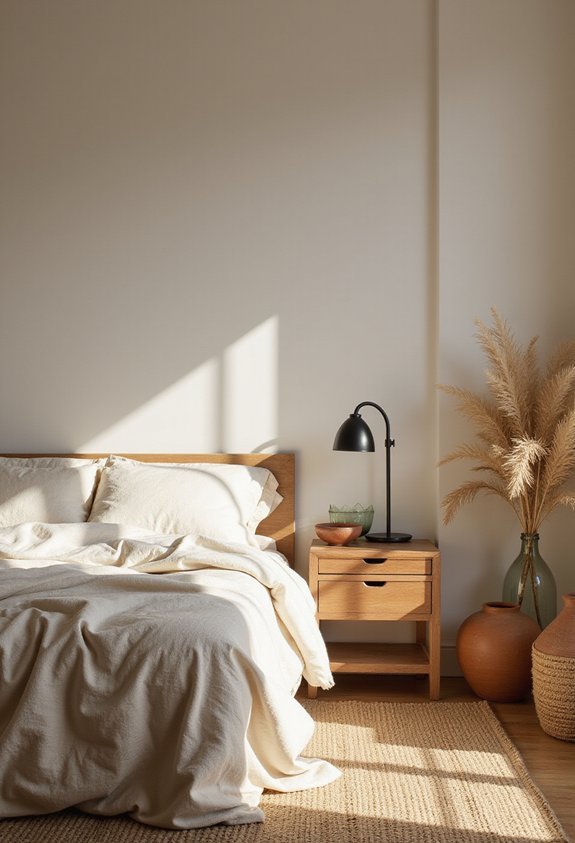
For a bedroom rug that combines durability with luxurious softness, wool area rugs offer an excellent alternative to jute. You’ll appreciate wool’s natural resilience, which means your rug withstands foot traffic and maintains its shape for years. The fiber naturally resists staining and repels dust, making maintenance straightforward.
Wool area rugs provide superior comfort underfoot compared to synthetic options. They’re naturally temperature-regulating, keeping your feet warm during winter while remaining breathable in summer. The material’s inherent properties also make it hypoallergenic, reducing allergens in your bedroom environment.
You can find wool rugs in various neutral tones—cream, gray, taupe, and brown—that complement organic bedroom aesthetics perfectly. Opt for natural undyed wool to maximize the earthy vibe you’re cultivating in your sleeping space.
Seagrass Baskets for Organization
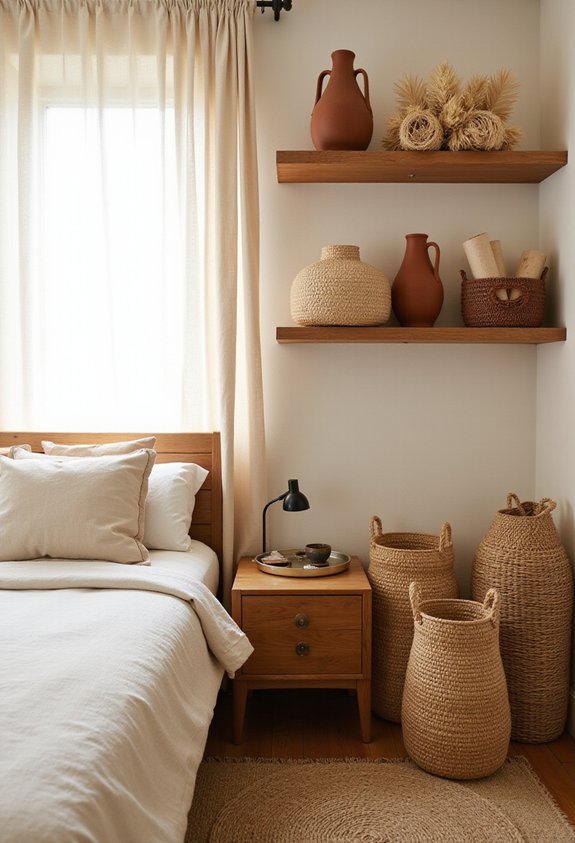
How can you maintain a clutter-free bedroom while keeping your essentials within arm’s reach? Seagrass baskets offer the perfect solution. These woven organizers blend seamlessly with natural décor while providing functional storage for blankets, pillows, books, and clothing.
Position baskets under your bed, in closet corners, or alongside your nightstand to maximize space efficiently. Their neutral tones complement any color palette, from soft whites to warm earth tones. The breathable weave allows air circulation, protecting stored items from moisture and mustiness.
Seagrass baskets are durable and lightweight, making them easy to relocate as your needs change. Unlike plastic alternatives, they’re eco-friendly and biodegradable. Their organic texture adds visual interest while maintaining the serene, minimalist aesthetic you’re cultivating. Choose various sizes to accommodate different storage needs throughout your bedroom.
Cork Accent Walls or Panels
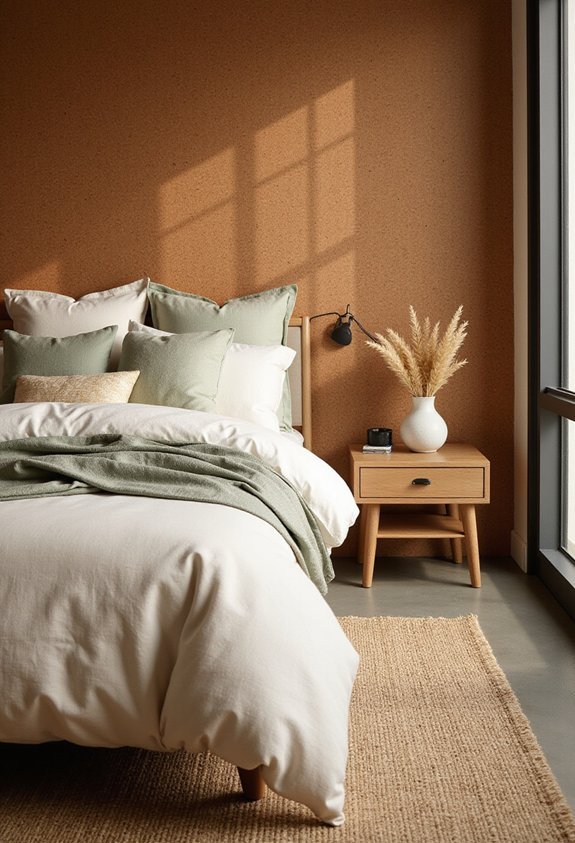
While seagrass baskets handle your storage needs, cork accent walls and panels elevate your bedroom’s natural aesthetic to new heights. Cork’s warm, textured surface instantly transforms any space into an organic sanctuary. You’ll appreciate how it absorbs sound, creating a quieter, more peaceful environment—ideal for restful sleep.
Installation is straightforward. You can apply cork tiles to an entire wall or create a smaller accent panel behind your bed. The natural variations in color and texture add visual interest without overwhelming your room’s design.
Cork is remarkably durable and ages beautifully, developing character over time. It’s sustainable, sourced from tree bark that regenerates naturally. You’ll find it pairs perfectly with wood furnishings, linen bedding, and earth-tone accents, completing your naturally inspired bedroom sanctuary.
Reclaimed Brick Accent Walls
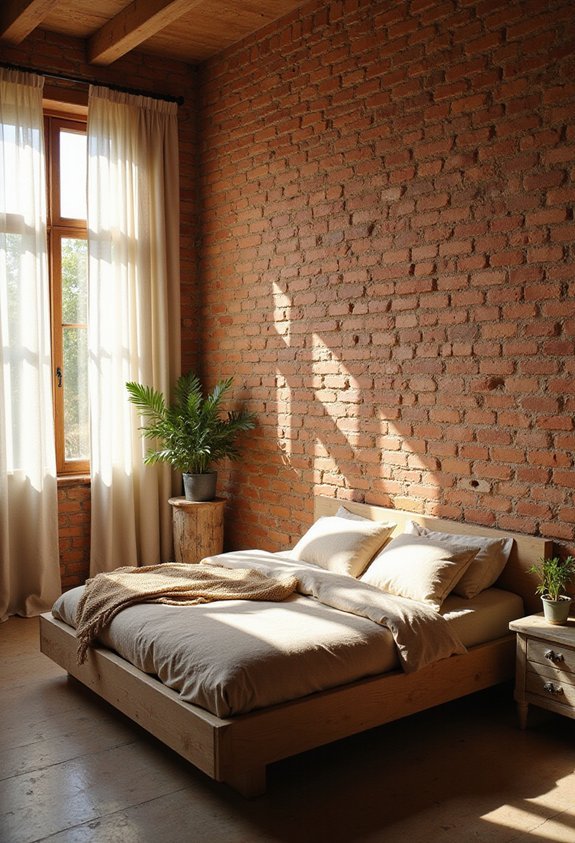
Reclaimed brick accent walls bring authentic character and warmth to your bedroom in ways that new materials simply can’t replicate. You’ll appreciate the rich texture and earthy tones that aged brick naturally provides, creating an inviting focal point without requiring paint or heavy styling.
Installing reclaimed brick is straightforward—you can apply thin veneer panels over drywall or existing walls, making renovation accessible even in rental spaces. The material’s thermal properties help regulate temperature, enhancing your bedroom’s comfort.
You’ll find reclaimed brick pairs beautifully with natural wood furniture and linen bedding, amplifying that organic aesthetic. The weathered patina tells a story, adding depth that manufactured alternatives can’t match. Consider featuring one wall behind your bed for maximum visual impact while keeping installation costs reasonable.
Woven Wall Hangings and Tapestries
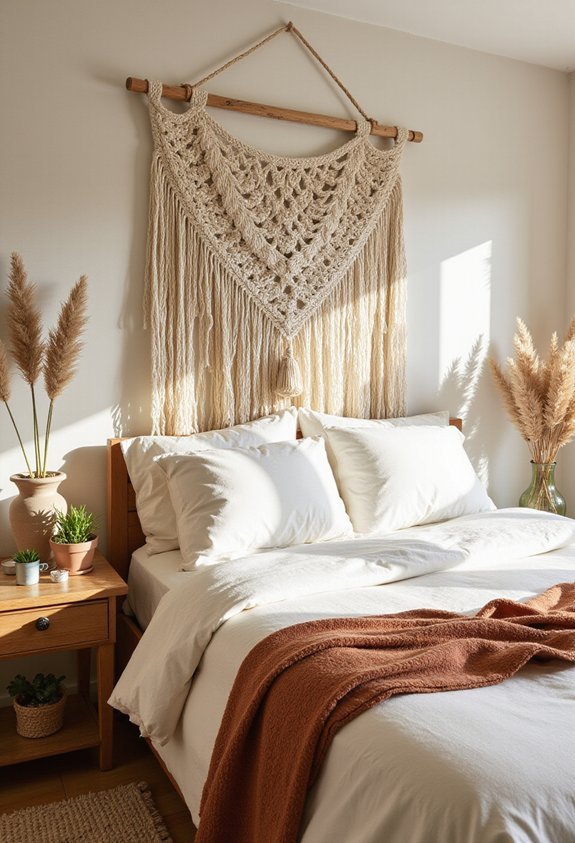
Woven wall hangings and tapestries bring softness and texture to your bedroom while complementing natural materials like reclaimed brick and wood. You’ll find that macramé pieces, jute wall hangings, and vintage textiles add warmth without overwhelming your space.
Consider choosing neutral tones—creams, taupes, and warm browns—that echo earthy aesthetics. Alternatively, you can opt for weavings featuring subtle patterns inspired by nature, such as botanical motifs or geometric designs reminiscent of traditional craftsmanship.
When selecting pieces, prioritize quality construction and natural fibers like cotton, wool, or linen. Hang your tapestry as a focal point above your bed or beside a window to enhance natural light reflection.
These textiles soften hard surfaces, regulate sound, and create an inviting atmosphere that encourages relaxation and connection to organic design principles.
Wooden Geometric Wall Art
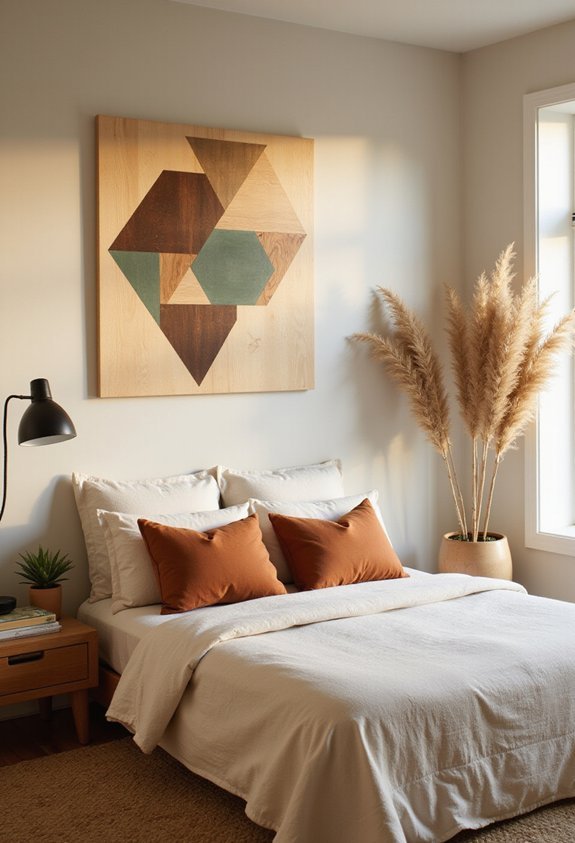
How can you add visual interest to your bedroom without relying on color or pattern? Wooden geometric wall art offers the answer. These pieces combine natural wood tones with clean lines and shapes, creating striking visual appeal through form alone.
You can choose from various designs—triangles, hexagons, or abstract patterns—that complement your space’s aesthetic. The wood grain adds warmth and texture, while geometric shapes introduce contemporary sophistication. Install a single large piece as a focal point above your bed, or arrange multiple smaller pieces for dynamic impact.
Wooden geometric art works particularly well in minimalist or modern natural bedrooms. The subtle variations in wood finish catch light differently throughout the day, keeping your walls engaging without overwhelming the senses. This approach brings depth and dimension to your sleeping space effortlessly.
Stone or Slate Feature Walls
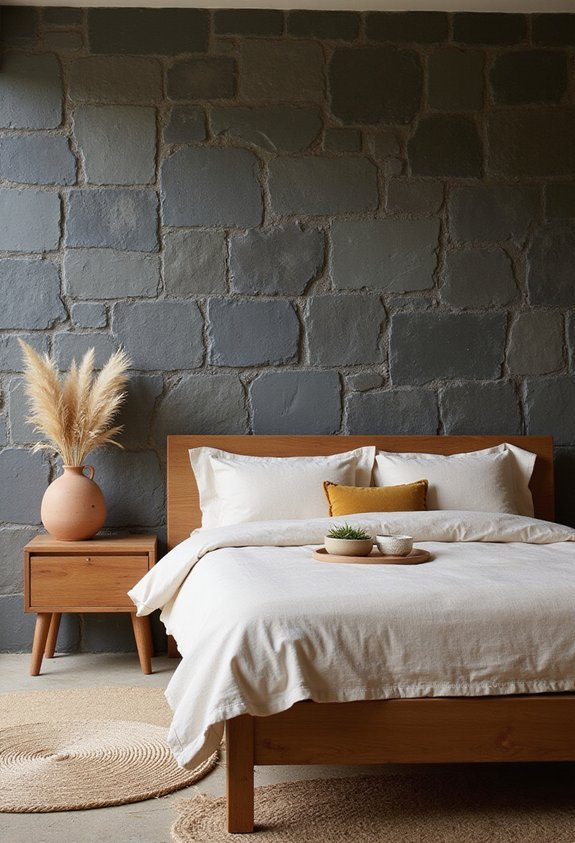
While wooden geometric art brings visual interest through form, stone or slate feature walls introduce raw, elemental beauty to your bedroom. You’ll create a dramatic focal point that grounds your space in nature’s authenticity. Stone’s textured surface catches light beautifully, adding depth and dimension without requiring additional décor.
You can opt for stacked stone, which offers a modern aesthetic, or irregular slate for a more rustic appeal. Both materials age gracefully, developing character over time. Installation behind your bed creates an instant statement, while partial walls work well in smaller rooms.
These features naturally complement earth-tone bedding and wooden furniture. They’re durable, low-maintenance, and won’t fade or deteriorate quickly. The cool, solid presence of stone or slate anchors your bedroom design, transforming it into a serene, grounded sanctuary.
Raw Wood Ceiling Beams
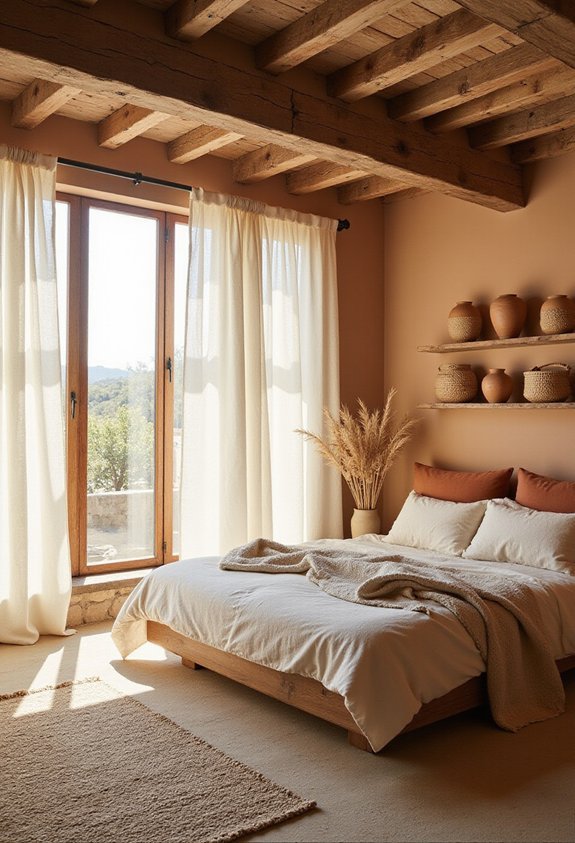
Raw wood ceiling beams draw the eye upward, transforming an often-overlooked architectural element into a striking natural feature. You’ll create visual interest while establishing the earthy aesthetic you’re after. Exposed beams add warmth and character that smooth drywall simply can’t match.
Consider reclaimed timber for authentic patina and history, or opt for newer wood stained to complement your palette. The beams work particularly well in vaulted or cathedral ceilings, where they become architectural focal points.
You can enhance the effect by pairing beams with neutral walls and natural textiles. This approach prevents your bedroom from feeling heavy or cramped. Whether you’re retrofitting existing beams or installing new ones, this design choice anchors your natural bedroom aesthetic beautifully.
Rattan or Wicker Storage Solutions
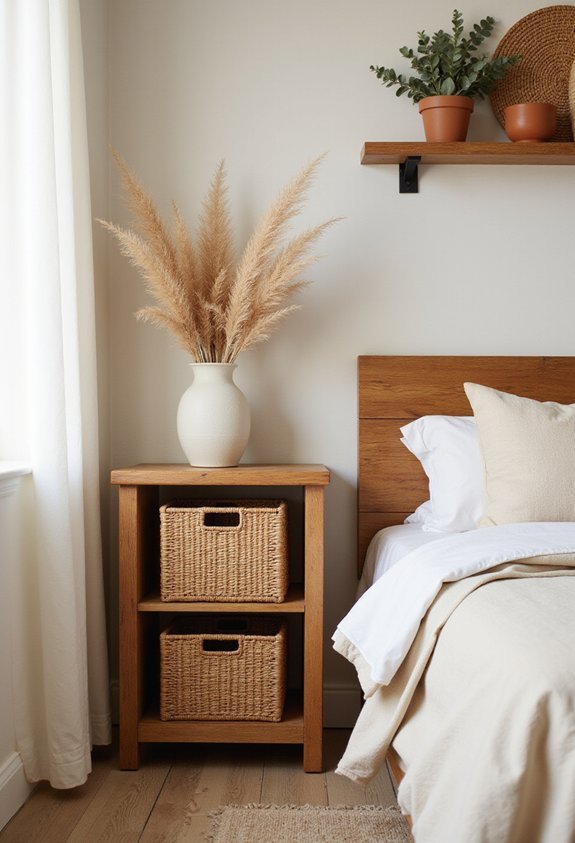
Beyond architectural elements, you’ll want to address storage with pieces that reinforce your natural aesthetic. Rattan and wicker storage solutions offer both functionality and organic charm to your bedroom. These materials blend seamlessly with earthy décor while keeping clutter at bay.
Consider placing wicker baskets under your bed or in closet corners to corral blankets, pillows, and seasonal items. Wall-mounted rattan shelves provide display space for books and plants without requiring floor area. A wicker dresser or storage trunk serves as a striking focal point while offering practical organization.
These natural materials develop a beautiful patina over time, adding character and authenticity to your space. Choose pieces in light, medium, or dark tones to complement your existing palette. Rattan and wicker storage transforms necessity into design.
Wooden Ladder Shelving Units
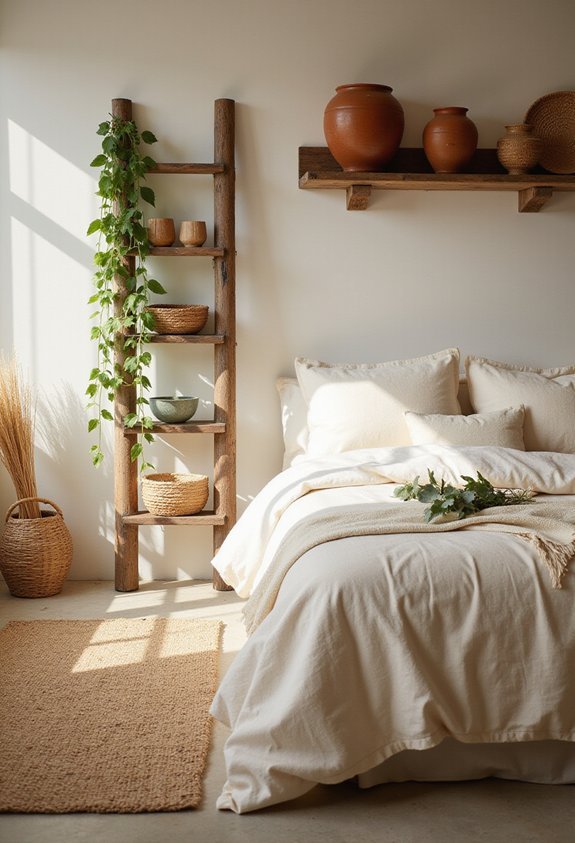
Wooden ladder shelving units offer a versatile alternative that combines rustic appeal with modern functionality. You’ll appreciate how these pieces lean against your walls, creating an organic aesthetic without requiring permanent installation. They’re ideal for displaying plants, books, or decorative items that enhance your natural bedroom theme.
You can position ladder shelves in corners or against accent walls to maximize vertical space efficiently. The open design maintains an airy feel while keeping essentials within reach. Choose units crafted from reclaimed wood or sustainably sourced materials to reinforce your eco-conscious style.
These shelves work particularly well when you layer them with woven baskets, ceramic pieces, or natural fiber containers. You’ll find that wooden ladder shelving units adapt seamlessly to your evolving decor needs while maintaining that authentic, earthy atmosphere you’re cultivating.
Stone or Slate Nightstands
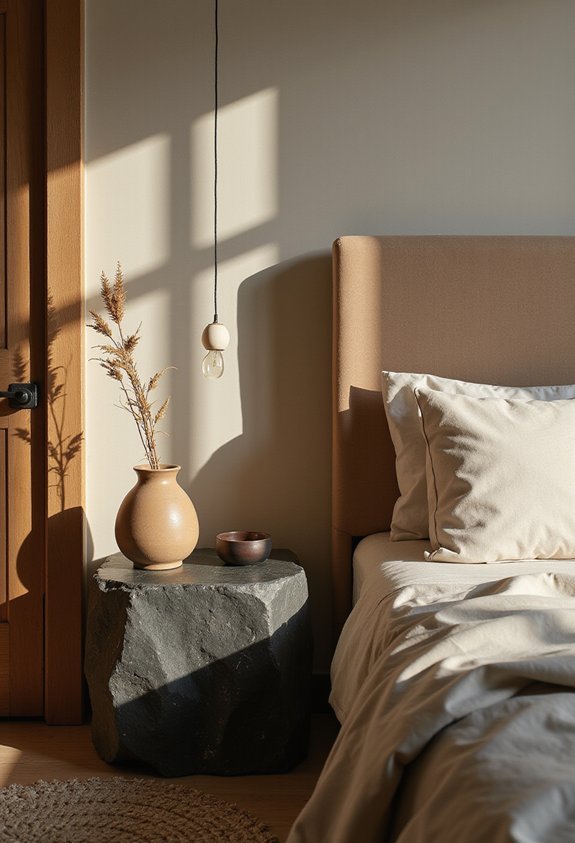
When you’re seeking durability and natural elegance, stone or slate nightstands deliver both in spades. These pieces bring raw, earthy authenticity to your bedroom while requiring minimal maintenance. Stone’s cool surface naturally resists heat and moisture, making it ideal for bedside tables where you’ll place water glasses and personal items.
You’ll appreciate how slate’s deep gray and charcoal tones complement neutral bedroom palettes. The material’s smooth finish adds sophistication without sacrificing that organic feel you’re cultivating. Stone nightstands work exceptionally well paired with wooden bed frames or metal accents, creating visual interest through texture contrast.
Invest in sturdy iron or wooden legs to elevate the slab, ensuring your nightstand becomes a statement piece. These durable surfaces will outlast trends, grounding your bedroom’s natural aesthetic for years to come.
Stone and Crystal Decor Accents
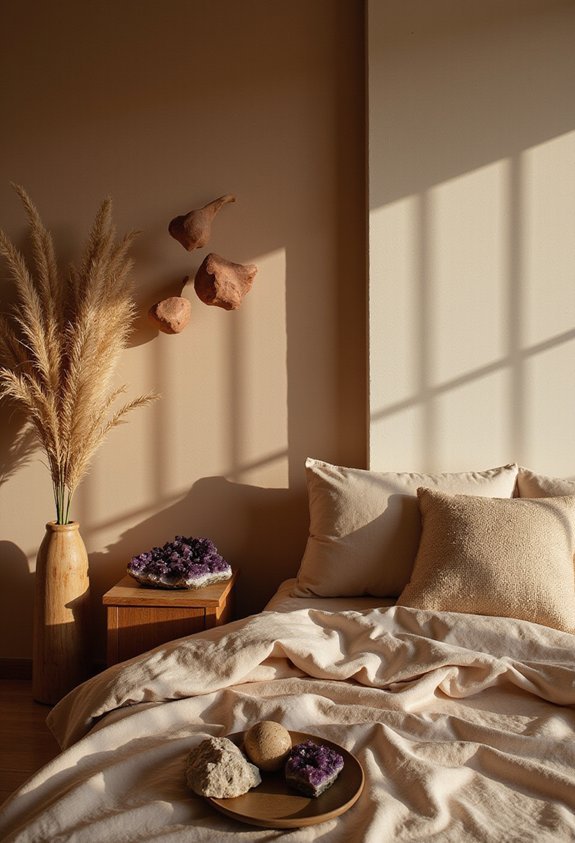
Stone and crystal accents elevate your bedroom’s natural aesthetic by introducing light-catching brilliance and earthy grounding simultaneously. You’ll find that raw crystals like amethyst, citrine, or clear quartz add visual interest to shelves and dressers while promoting tranquility through their natural energy. Smooth river stones work beautifully as decorative bowls or stacked sculptures on nightstands.
Consider placing geode bookends on floating shelves or positioning crystal clusters near windows where sunlight streams through, casting prismatic shadows across your walls. You can arrange small stones in glass vases for understated elegance, or display polished agate slices as wall art. These accents complement your stone nightstands perfectly, creating a cohesive, grounded environment that feels both luxurious and authentically organic.
Driftwood Decorative Pieces
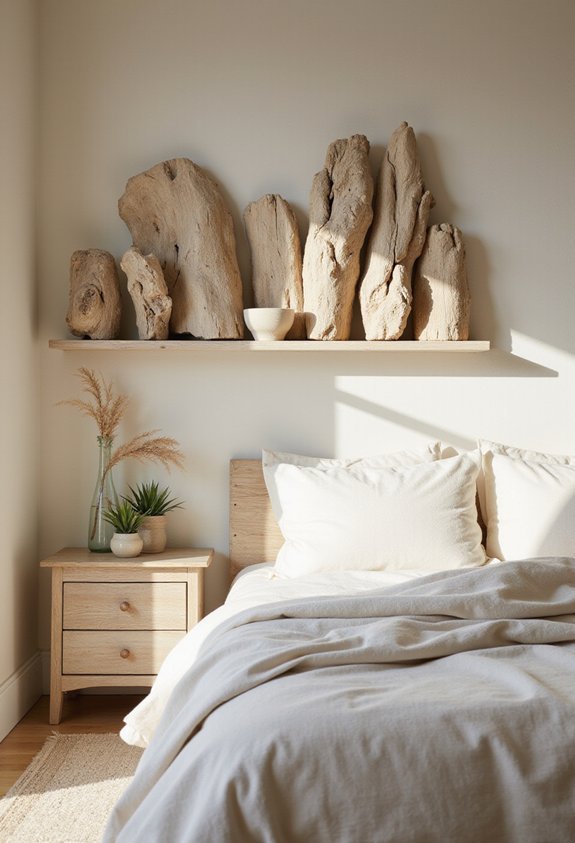
Driftwood pieces bring weathered coastal charm into your bedroom while maintaining the natural aesthetic you’ve established with stone and crystal accents. You can incorporate driftwood through various forms: lean branches against walls, arrange them in tall vases, or hang them as wall art. These organic elements add texture and visual interest without overwhelming your space.
Consider using driftwood for functional pieces like headboards or shelving. You might also create a driftwood mirror frame or display it alongside potted plants for a cohesive look. The pale, silvery tones complement both warm and cool color palettes, making driftwood versatile for any bedroom scheme.
Source driftwood responsibly from beaches or purchase sustainably harvested pieces. This approach guarantees your natural décor aligns with environmental consciousness while creating an authentic, serene retreat.
Bamboo and Wooden Bed Slats
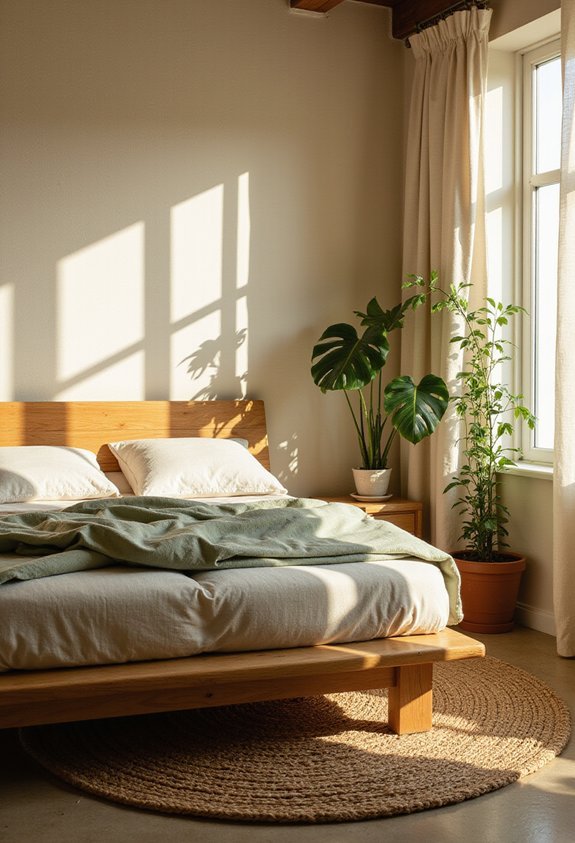
While driftwood adds textural appeal to bedroom walls and shelves, your bed’s foundation deserves equally thoughtful natural materials. Bamboo and wooden bed slats offer both aesthetic and functional benefits that transform your sleep space.
Bamboo slats provide superior support while maintaining an eco-friendly profile. They’re naturally antimicrobial, moisture-resistant, and incredibly durable. Wood slats, whether pine, oak, or walnut, deliver warmth and character while promoting healthy airflow beneath your mattress.
You’ll appreciate how these materials enhance your bedroom’s organic atmosphere. The natural grain patterns and warm tones complement earthy color schemes effortlessly. Unlike metal frames, wooden slats create a cohesive, nature-inspired environment.
Installation remains straightforward, and both options require minimal maintenance. Your investment in quality slats supports better sleep quality while reinforcing your commitment to sustainable, natural bedroom design.
Conclusion
You’re crafting more than a bedroom—you’re building a sanctuary where earth’s wisdom settles into every corner. Like tree roots anchoring themselves into soil, your natural choices ground you in tranquility. The wood, stone, and fibers you’ve chosen aren’t merely décor; they’re silent witnesses to nature’s cycles, reminding you nightly that you’re part of something timeless and whole. Your retreat becomes a refuge where the outside world’s chaos dissolves into peaceful slumber.