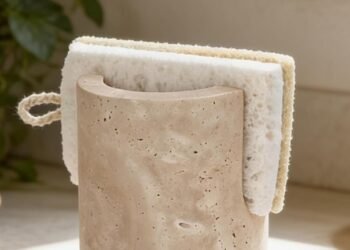

Create beautifully designed kitchen sofas that complement your overall aesthetic through coordinated styling. Upholstered seating matching cabinetry, cohesive color palettes, and refined designs integrate sofas as intentional focal points. Your elegant sofa becomes a sophisticated addition elevating kitchen design while providing genuine comfort and functionality.
Stylish sofa selections feature quality upholstery, coordinated finishes, and thoughtful placement within your layout. Neutral tones complement modern kitchens, jewel tones add richness, patterned fabrics introduce visual interest intentionally. These design-forward choices demonstrate kitchen sofas become genuine décor elements rather than afterthoughts when selected thoughtfully.
Your beautifully integrated kitchen sofa radiates sophistication through coordinated design and quality materials. Select upholstery complementing your kitchen’s aesthetic, position as intentional focal points, and maintain visual harmony. This refined approach proves sofas enhance kitchen design when chosen with attention to overall aesthetic cohesion genuinely.
Sectional Sofas in Breakfast Nooks
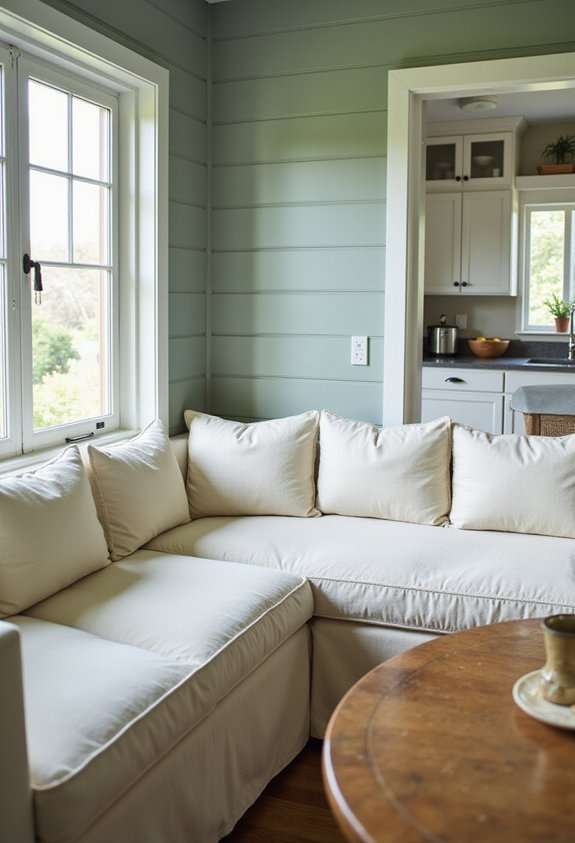
When you’re looking to maximize your kitchen’s seating capacity, a sectional sofa can transform an underutilized breakfast nook into a stylish gathering spot. You’ll appreciate how these pieces fit snugly into corner spaces, offering ample seating for family and friends without consuming additional floor area.
Choose fabrics that withstand kitchen spills and splatters—performance textiles work exceptionally well here. You can anchor your sectional with a coordinating table, creating an inviting dining zone that encourages lingering conversations over coffee and meals.
Consider the scale carefully; you’ll want enough depth for comfort while maintaining clear pathways through your kitchen. Light colors brighten smaller nooks, while darker fabrics hide inevitable wear. This configuration merges functionality with comfort, transforming your breakfast nook into a social hub that serves multiple purposes throughout your day.
Also read: 13 Kitchen Paint Color Ideas
Sleeper Sofas That Work Double Duty
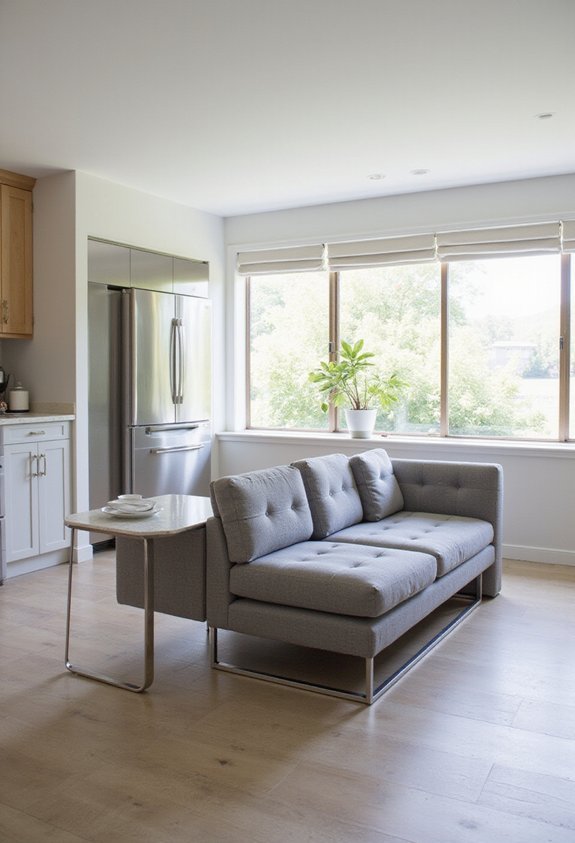
If you’re tight on space, a sleeper sofa can transform your kitchen area into a multi-functional room that accommodates both dining and guest sleeping arrangements. You’ll maximize your square footage by combining seating and a bed in one piece.
Modern sleeper sofas feature quality mattresses that don’t compromise comfort. You can choose from pull-out mechanisms, futon-style conversions, or hidden bed designs that maintain your kitchen’s aesthetic when closed.
Position your sleeper sofa against a wall or in a breakfast nook to preserve traffic flow. Pair it with a compact dining table that you can move when needed.
This solution works perfectly for small apartments, studios, or homes where guest rooms aren’t feasible. You’re investing in versatility without sacrificing style or functionality.
Window-Side Couches for Natural Light
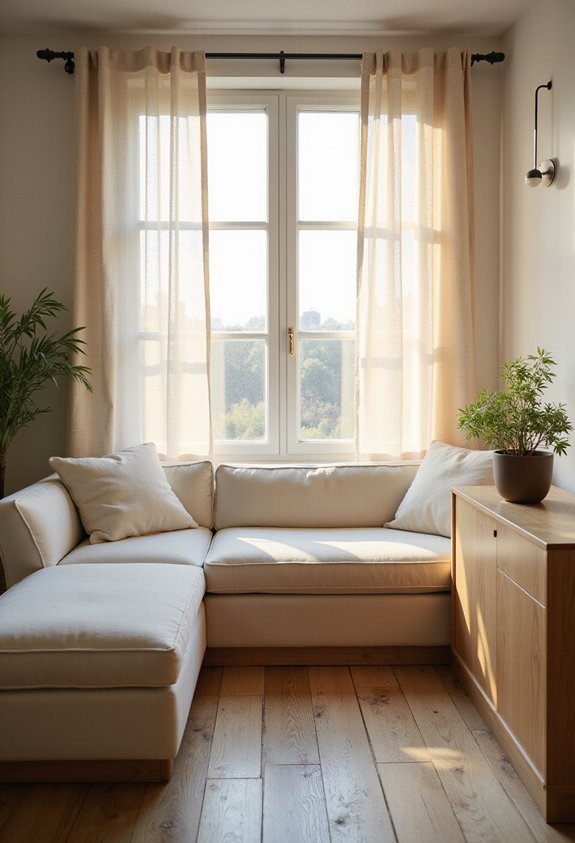
Positioning your sofa near a window brightens your kitchen while creating a naturally lit lounging area. You’ll maximize daylight exposure throughout the day, reducing your reliance on artificial lighting and creating an inviting atmosphere.
When selecting a window-side couch, choose one with a compact footprint so it won’t obstruct your workspace or traffic flow. Consider placing it perpendicular to the window to capture light without causing glare on screens or reflective surfaces.
Light-colored upholstery amplifies natural illumination and keeps your space feeling airy. You can also add sheer curtains to diffuse harsh afternoon sun while maintaining brightness.
This setup transforms your kitchen into a dual-purpose space where you can relax, work, or entertain while enjoying constant natural light and an enhanced connection to your outdoor environment.
Modular Sofas for Open-Concept Layouts
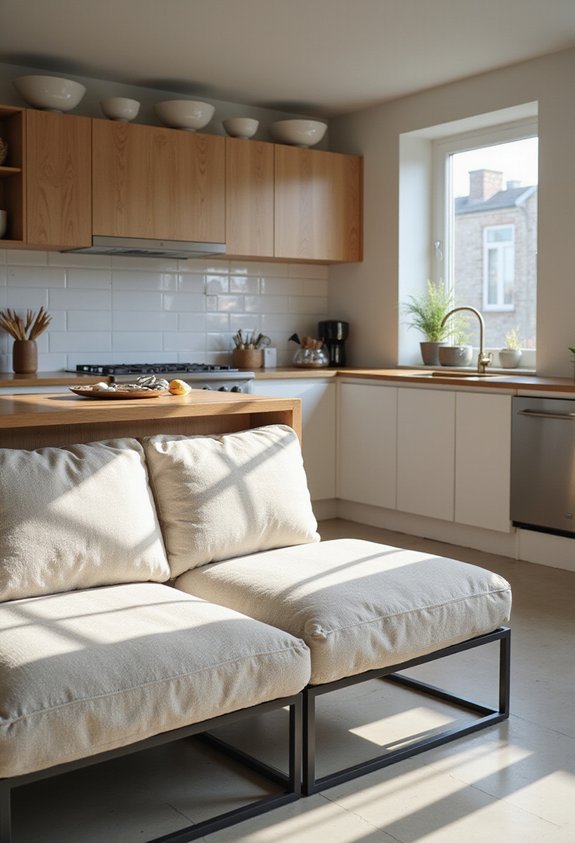
Since open-concept kitchens demand flexible furniture solutions, modular sofas offer the adaptability you need to define zones without sacrificing flow. You can reconfigure individual sections to match your space’s unique dimensions and your lifestyle’s evolving needs.
Choose L-shaped or U-shaped configurations to create natural boundaries between your kitchen and living areas. Neutral colors like gray or beige complement most décor while maintaining visual continuity. Consider sofas with removable cushions and washable covers—kitchen proximity means spills happen.
Low-profile designs prevent blocking sightlines across your open space, keeping the area feeling expansive. Select pieces with legs rather than skirted bases to enhance this sense of openness.
Modular sofas transform your kitchen-adjacent seating from awkward to intentional, turning layout challenges into design opportunities.
Compact Loveseats for Smaller Kitchens
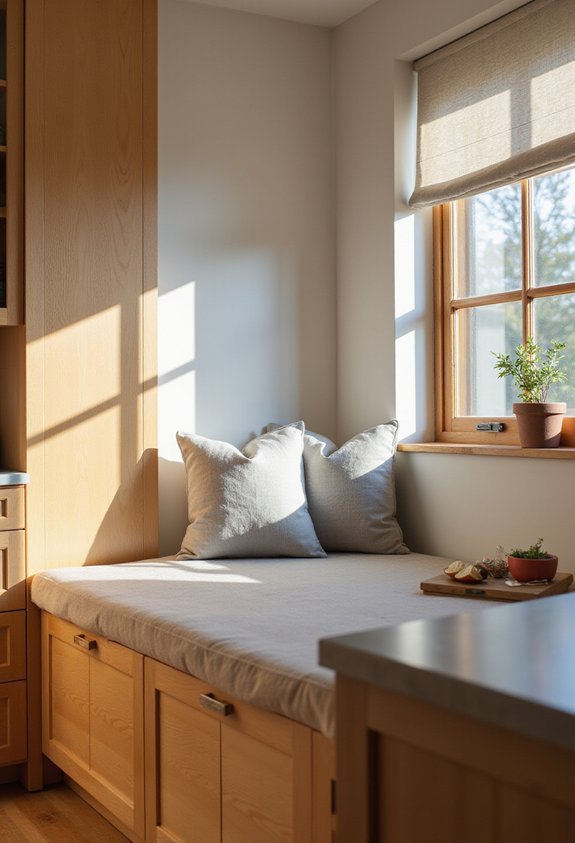
When you’re working with limited square footage, a loveseat delivers the perfect balance of comfort and spatial efficiency. These two-seater sofas fit snugly into corner nooks or along kitchen islands without overwhelming your space.
You’ll appreciate how loveseats don’t sacrifice functionality for size. They’re ideal for creating an intimate seating area where you can enjoy coffee or casual meals. Choose armless designs to maximize legroom, or opt for low-profile frames that maintain sightlines throughout your kitchen.
Fabric selection matters too. You’ll want durable, stain-resistant upholstery that withstands kitchen activity. Look for light colors that reflect natural light and make your space feel airier.
Modern loveseats come in various styles—from minimalist to mid-century—allowing you to match your kitchen’s aesthetic while keeping seating practical and comfortable.
Sofa Placement That Keeps Your Kitchen Functional
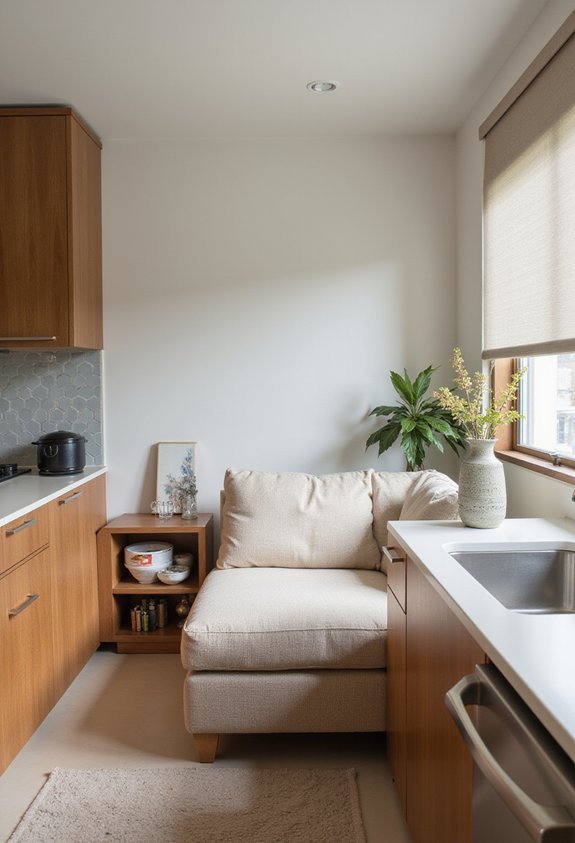
The key to successful kitchen seating lies in thoughtful placement that doesn’t disrupt your workflow. You’ll want to position your sofa away from high-traffic paths between the refrigerator, stove, and sink. Consider placing it along a perimeter wall or in a corner to maximize open floor space.
Ensure your sofa doesn’t block cabinet doors, appliance access, or natural sightlines. If your kitchen’s compact, orient the piece perpendicular to work zones rather than parallel. You should also maintain clearance for opening doors and drawers without obstruction.
Lighting matters too—place your sofa where it won’t cast shadows on cooking surfaces. Test your layout before committing. Walk through your typical kitchen tasks to confirm the sofa doesn’t impede movement or safety.
Choose Fabrics and Colors That Work in a Kitchen
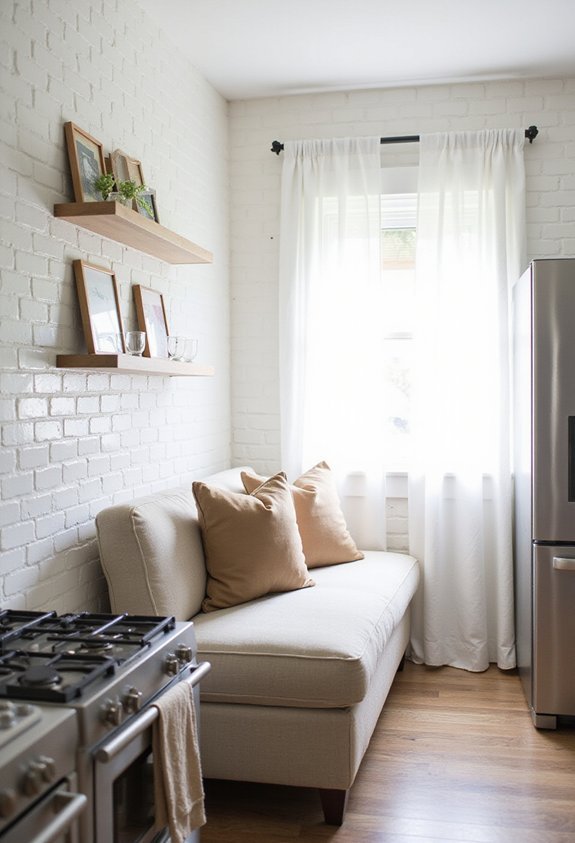
Once you’ve positioned your sofa for ideal kitchen flow, you’ll need to choose fabrics and colors that can withstand the unique demands of a cooking environment. Select performance fabrics like microfiber or leather that resist staining and wipe clean easily. Avoid delicate materials such as linen or velvet that trap grease and odors.
Choose neutral or dark colors that hide spills and splatters better than light hues. Grays, charcoals, and deep blues work beautifully while maintaining sophistication. Consider patterns that camouflage minor marks between cleanings.
Ensure your fabric has protective treatments like Scotchgard to repel liquids. Check manufacturer care instructions carefully—you’ll want machine-washable cushion covers for convenience. Prioritize durability and maintainability so your kitchen sofa stays fresh and inviting for years.
Frequently Asked Questions
How Do I Prevent Kitchen Odors and Grease From Damaging My Sofa?
You’ll protect your sofa by positioning it away from the stove, using a quality fabric protectant spray, installing a range hood, and regularly vacuuming. You should also place a decorative barrier between your sofa and cooking areas to shield it from grease splatters and odors.
What’s the Best Way to Anchor a Sofa Safely in a Kitchen Space?
You’ll want to secure your sofa using heavy-duty L-brackets anchored into wall studs, ensuring it won’t tip or shift. You should also place non-slip pads underneath the legs to prevent sliding on kitchen flooring while protecting your floor surface.
Can I Use a Sofa in a Kitchen With Young Children and Pets?
Yes, you can use a sofa in your kitchen with young children and pets. You’ll want to choose durable, stain-resistant fabrics, secure it properly to prevent tipping, and keep it away from cooking areas for safety.
How Often Should I Clean a Kitchen Sofa Compared to Living Room Furniture?
You’ll need to clean your kitchen sofa weekly or bi-weekly, compared to living room furniture which you can clean monthly. Kitchen sofas accumulate more spills, grease, and food debris, so they require frequent vacuuming and spot-cleaning to stay fresh.
What Electrical Outlet Requirements Exist for Kitchen Sofas With Built-In Features?
You’ll need dedicated outlets near your kitchen sofa if it’s got built-in features like USB ports, heating, or massage functions. Install outlets at least 12 inches above countertops, and you’re smart to hire an electrician for proper installation and safety compliance.
Conclusion
You’ve got plenty of options when you’re thinking about adding a sofa to your kitchen. Whether you’re drawn to a sectional for maximum seating, a sleeper for versatility, or a compact loveseat for tight spaces, you’ll find a solution that fits your lifestyle. The key’s balancing comfort with functionality—pick durable fabrics, consider your layout carefully, and you’ll transform your kitchen into a welcoming, multi-purpose living space.