

Kitchen dividers define spaces in open layouts while maintaining visual flow and functional connectivity. Partial walls, sliding panels, and strategic furniture placement create subtle separation without closing off areas completely. Installing practical dividers improves open kitchen functionality while preserving the spacious, connected feel open layouts provide.
Functional divider designs feature movable screens, partial walls, and strategic furniture positioning purposefully. Sliding barn doors divide spaces flexibly, half-height walls maintain sightlines while separating zones, strategic islands create natural boundaries. These practical solutions prove dividers work beautifully when designed maintaining open-concept benefits while improving functional organization.
Your well-designed open kitchen becomes genuinely functional through strategic dividers and purposeful space definition. Choose flexible solutions, maintain visual connectivity, and position dividers strategically throughout your layout. This practical approach proves open kitchens benefit from subtle space division when dividers enhance rather than diminish spacious, connected feeling.
Sliding Glass Dividers: Modern Privacy Solutions
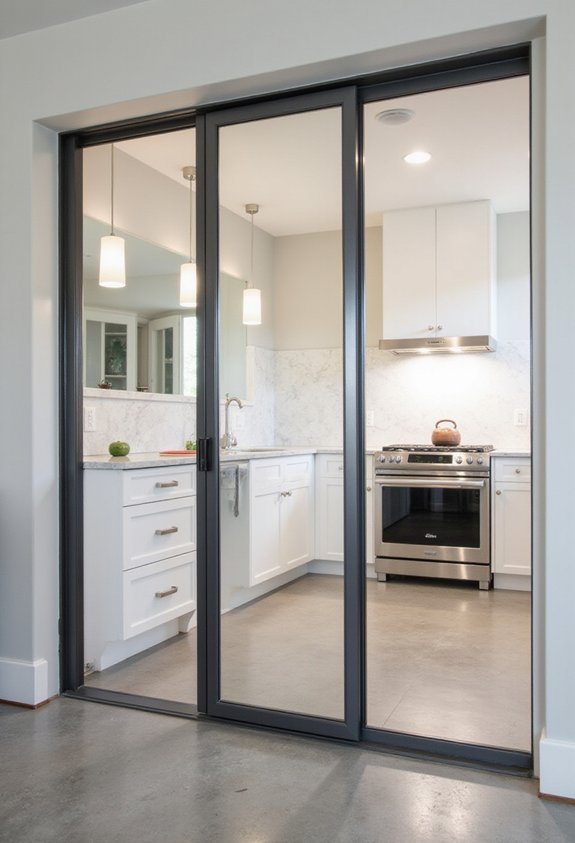
Whether you’re juggling an open-concept kitchen or craving flexible space management, sliding glass dividers offer a sleek solution that doesn’t compromise natural light. You’ll appreciate how these partitions create distinct zones while maintaining visual connectivity throughout your space.
Installing sliding glass dividers gives you control over your kitchen’s openness. You can fully close them when cooking odors spread or partially slide them for subtle separation. They’re perfect for containing mess during meal prep without isolating your kitchen from living areas.
These dividers come in various styles: frosted for privacy, clear for transparency, or framed for contemporary aesthetics. You’ll find them durable, easy to clean, and capable of handling frequent use. Installation typically requires minimal structural changes, making them ideal for renters and homeowners alike.
Also read: 11 Kitchen Herb Garden Ideas
Half-Walls: Permanent Definition Without Full Closure
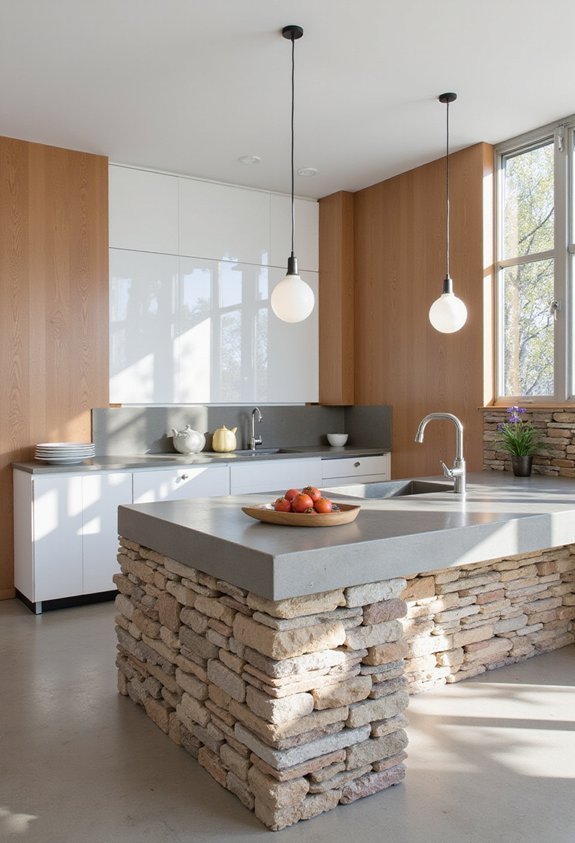
If you’re seeking a more substantial kitchen division than sliding glass, half-walls deliver permanent architectural definition while preserving sightlines across your space. These structures effectively separate your cooking zone from living areas without creating a closed-off feel.
You’ll appreciate how half-walls hide kitchen clutter while maintaining visual connection to the rest of your home. They’re ideal for masking workspace mess from guests without sacrificing the open-concept aesthetic you value.
Consider installing your half-wall with a countertop extension that serves double duty as extra workspace or casual dining. You can customize the height, materials, and finishes to match your kitchen’s style perfectly.
Half-walls also provide structural support for upper cabinets or shelving, adding functional storage you’d otherwise lack. They’re a smart investment for permanent, practical kitchen organization.
Decorative Room Dividers: Style Meets Function
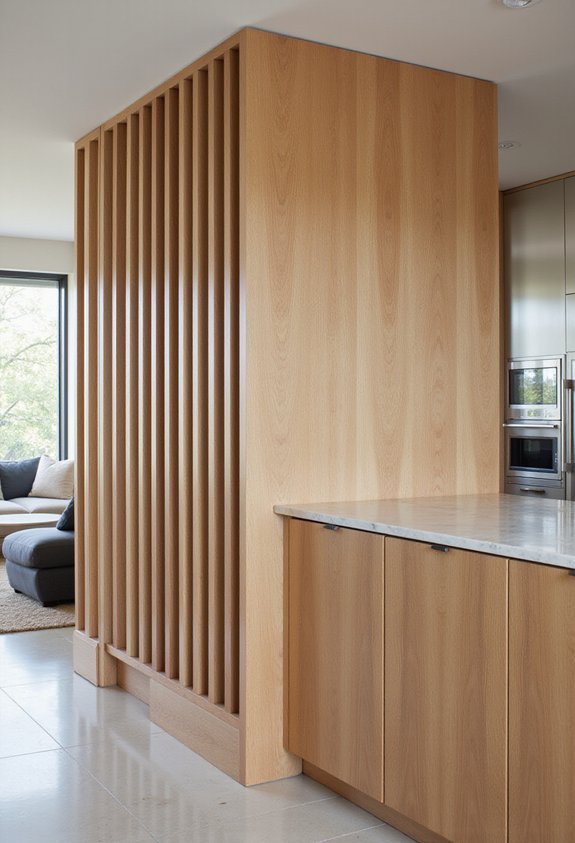
While half-walls offer permanent architectural solutions, decorative room dividers give you flexibility without the commitment of construction. You can easily reposition them as your needs change, making them ideal for renters or those who like redesigning their spaces frequently.
Decorative dividers come in countless styles—from sleek modern screens to ornate wooden panels—so you’ll find options matching your kitchen’s aesthetic. They effectively separate cooking zones from living areas while maintaining visual interest. Shoji screens, metal lattice dividers, and fabric panels each create distinct atmospheres.
Beyond functionality, these dividers serve as statement pieces. They add texture, color, and dimension to your kitchen layout. You can choose transparent or opaque styles depending on whether you want subtle separation or complete visual blocking, giving you complete control over your space’s openness and design.
Open Shelving Units: Dividing Space While Keeping Sightlines Open
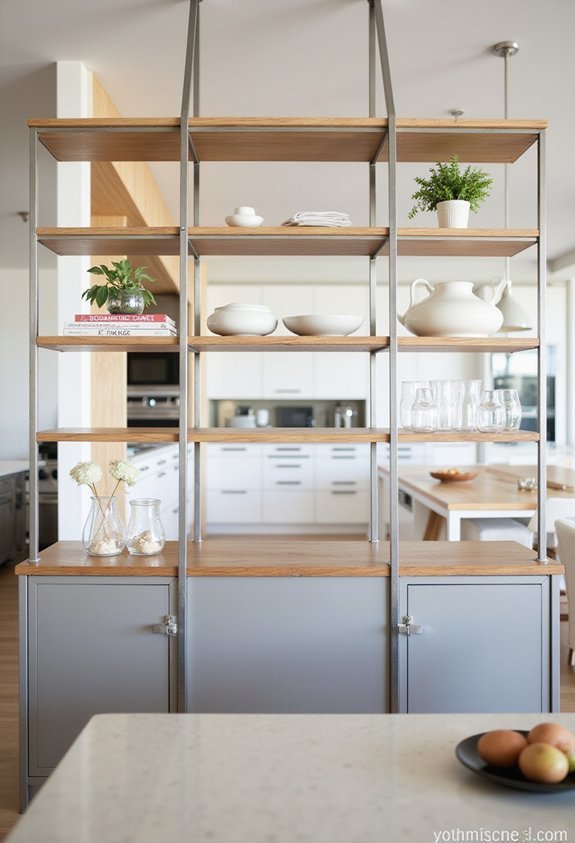
As you seek alternatives to solid dividers, open shelving units offer a smart compromise between separation and connectivity. These structures create visual boundaries without blocking light or sightlines, making your kitchen feel spacious while still defining distinct zones.
You can display cookbooks, decorative pieces, and everyday items on the shelves, turning functional dividers into design statements. Floating shelves work particularly well in modern kitchens, while ladder-style units complement farmhouse aesthetics. The open design encourages air circulation and maintains the airy feel essential to open-concept living.
When selecting shelving, consider your kitchen’s weight capacity and material preferences. Wood, metal, and glass options each offer different visual impacts. Strategic placement between your cooking and dining areas maximizes functionality while preserving the open, connected atmosphere you desire.
Pocket Doors: Flexible Barriers You Control
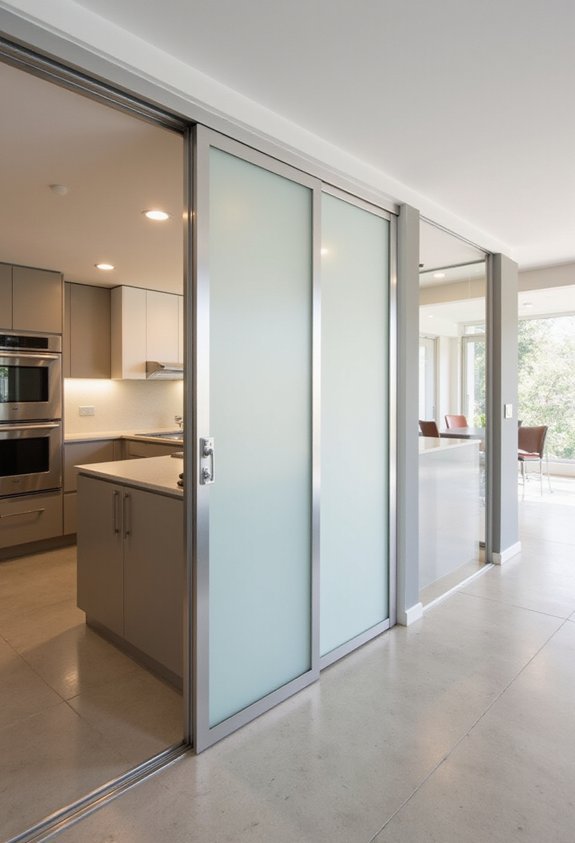
When you need separation without permanent commitment, pocket doors deliver the flexibility that open shelving can’t. These sliding doors glide into wall cavities, vanishing when you want openness and appearing when you need privacy or to contain cooking odors and noise.
You’ll appreciate their space-saving design—unlike swing doors, they don’t require clearance to operate. Installation works best during construction or major renovations, as you’ll need to modify your wall structure. Once installed, they’re remarkably low-maintenance and operate smoothly for years.
Pocket doors work exceptionally well between kitchens and dining areas or living spaces. You can close them during meal prep to isolate mess, then open them immediately for entertaining. This on-demand control makes them ideal for homes where you want both connection and separation.
Kitchen Islands: Natural Zone Anchors
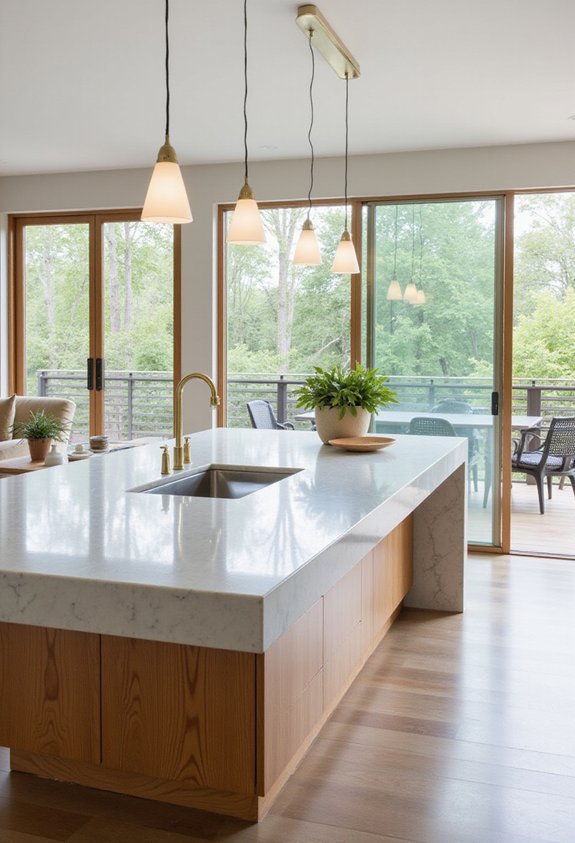
If you’re looking for a permanent solution that doesn’t require wall modification, kitchen islands offer a more substantial approach to creating zones in open layouts. You’ll define separate cooking and dining areas naturally, as islands establish clear physical boundaries without closing off your space.
Islands work exceptionally well because you can customize them to your needs. You might add seating on one side, creating a casual dining zone that faces your living area. Storage underneath maximizes functionality while keeping clutter hidden. Consider incorporating different countertop heights or materials to further distinguish zones.
The beauty of islands lies in their versatility. You’re not locked into a permanent wall structure, yet they provide the visual and functional separation that open kitchens often lack. This solution delivers both style and practicality.
Breakfast Bars and Counters: Understated Zone Markers
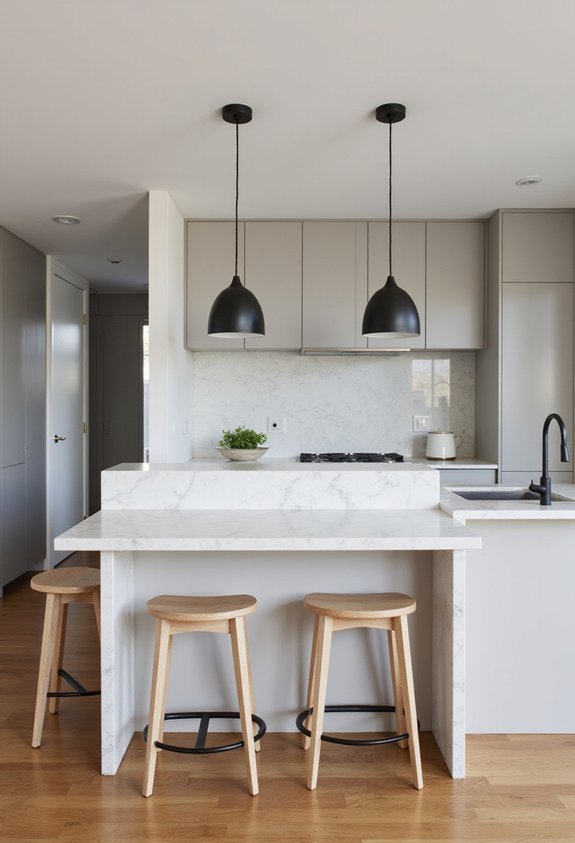
While breakfast bars don’t command the visual presence of islands, they’re excellent subtle dividers that won’t overwhelm compact kitchens. You can position a bar perpendicular to your counter to naturally separate cooking and dining zones without blocking sightlines.
Consider installing a raised counter with seating on one side. This creates a casual eating area while establishing a clear boundary between your kitchen workspace and living space. The bar’s height—typically 36 to 42 inches—discourages foot traffic through your prep area.
You’ll appreciate breakfast bars for their flexibility. They’re easier to retrofit into existing layouts than islands and require minimal plumbing or electrical modifications. Choose a sleek design with clean lines to maintain an open, airy feel while still providing functional zone definition.
Pendant Lighting: Visual Separation With Function
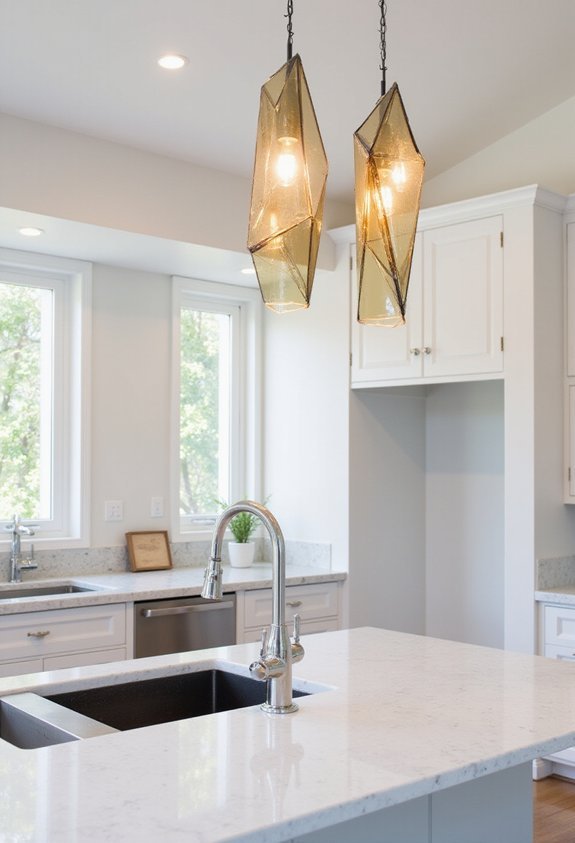
Beyond physical barriers like breakfast bars, you can define kitchen zones through strategic lighting design. Pendant lights serve dual purposes: they visually separate spaces while providing functional task lighting where you need it most.
Install pendant lights above your kitchen island or dining area to create distinct zones without walls. The fixtures draw the eye downward, establishing clear boundaries between cooking and entertaining areas. Choose designs that complement your décor while casting focused light for meal prep and dining.
Vary the height and spacing of pendants to enhance visual separation. Group three lights over an island or use a single statement piece over a dining table. This approach transforms your open layout into purposefully defined spaces that feel intentional and well-organized.
Sliding Barn Doors: Rustic Charm With Control
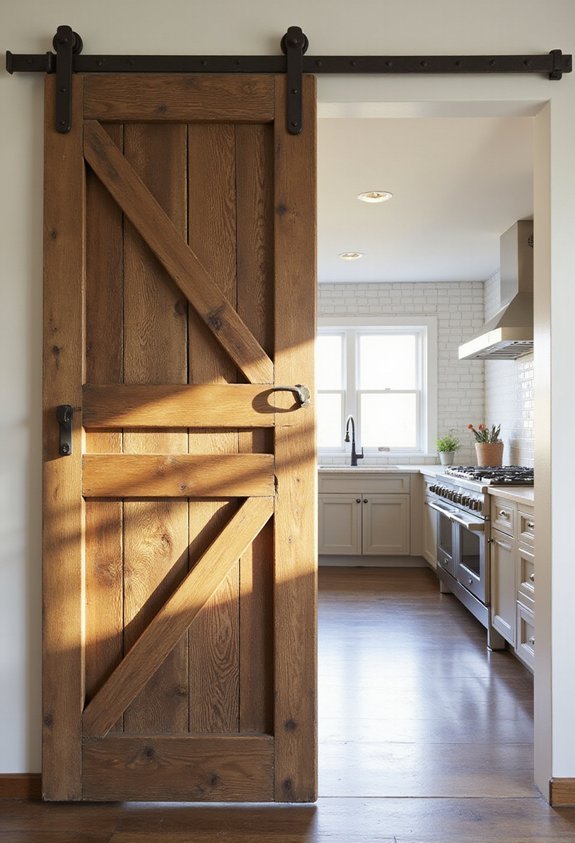
When you’re seeking a divider that combines aesthetic appeal with practical functionality, sliding barn doors offer an ideal solution for kitchen spaces. You’ll appreciate how these doors deliver rustic charm while maintaining complete control over your kitchen’s openness.
You can slide them partially or fully closed to conceal cooking messes, contain cooking odors, or create privacy during meal prep. When open, they recede along the wall, preserving your layout’s spaciousness. The hardware itself becomes a design statement—exposed tracks and handles add character that complements farmhouse, industrial, or contemporary décor.
You’ll find various materials available, from reclaimed wood to modern metal finishes. Installation requires minimal wall space, making barn doors practical for tight layouts. They’re durable, require minimal maintenance, and offer longevity that justifies their investment.
Folding Screen Dividers: Portable Room Separation
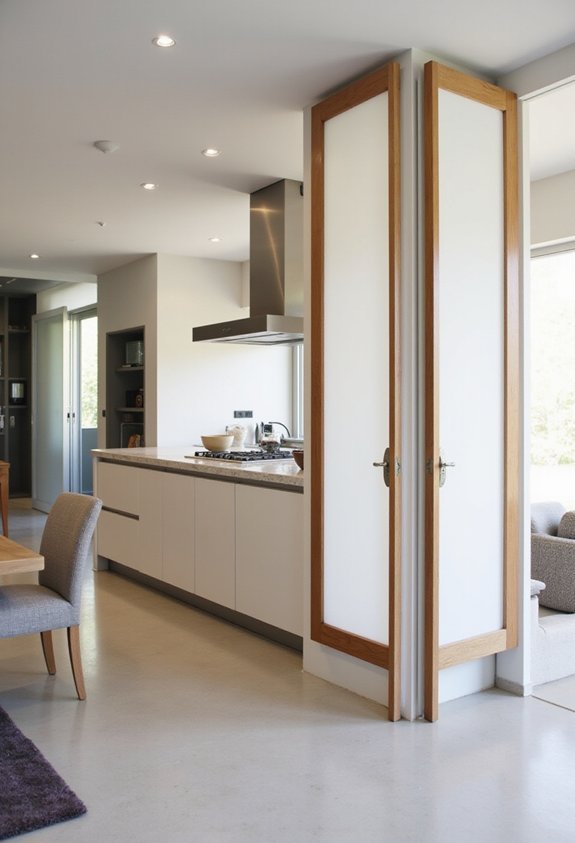
If you’re looking for flexibility that barn doors can’t provide, folding screen dividers offer a lightweight alternative that you can easily move, adjust, or store away. You’ll appreciate their versatility in open kitchens where you need temporary separation without permanent installation.
These dividers come in various styles—from minimalist modern designs to ornate panels—allowing you to match your kitchen aesthetic. You can position them strategically to block cooking odors, contain mess, or create a distinct dining zone. Unlike fixed solutions, you’re not committed; rearrange them whenever your layout needs change.
The affordability factor makes them ideal for renters or those experimenting with kitchen configurations. Quality folding screens are durable and stable, preventing wobbling during daily use. Simply fold them up and tuck them into a closet when you want an open space again.
Strategic Paint and Flooring: Zone Definition Through Color
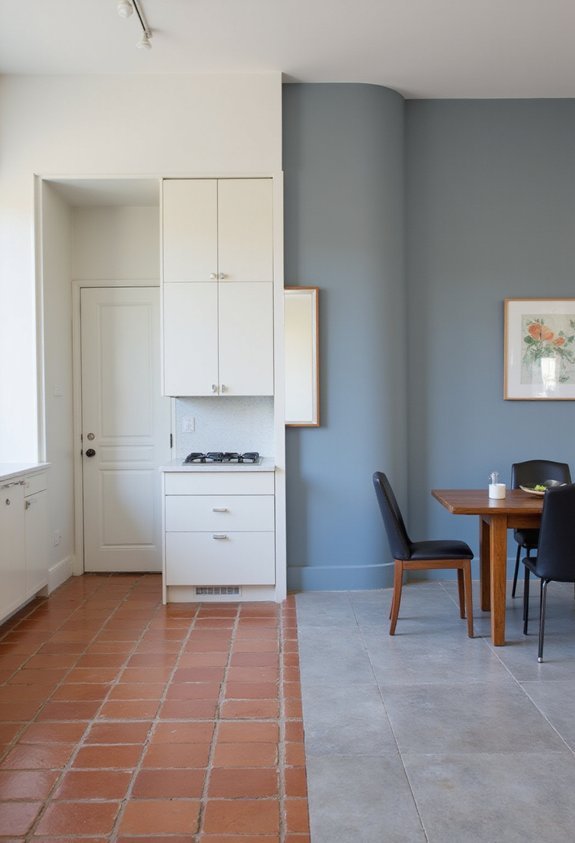
While physical dividers create immediate separation, you can define kitchen zones more subtly through strategic use of paint and flooring. Paint different wall sections in complementary colors to visually distinguish your cooking area from your dining space. You might use warm tones in the kitchen and cooler hues in the adjacent seating area.
Flooring changes are equally effective. Install durable tile or stone in your kitchen workspace, then shift to wood or laminate in the dining zone. This material change naturally establishes boundaries without blocking sightlines or movement.
You can also combine both approaches—different paint colors paired with flooring shifts create stronger zone definition. These methods maintain your open layout’s spaciousness while providing clear functional separation that enhances both aesthetics and practicality.
Frequently Asked Questions
What’s the Average Cost of Installing Different Kitchen Divider Solutions?
You’ll spend $500–$3,000 installing kitchen dividers, depending on your choice. Sliding glass doors cost $1,500–$3,000, while partial walls run $1,000–$2,500. Budget-friendly options like room dividers or curtain rods cost $100–$500 installed.
How Do Kitchen Dividers Affect Heating and Cooling Efficiency in Open Layouts?
You’ll find that kitchen dividers can improve your heating and cooling efficiency by reducing the space you’re conditioning. They help contain temperature zones, lowering your energy costs. However, you’ll need proper airflow management to prevent hot or cold spots in separated areas.
Which Divider Options Work Best for Small Kitchens With Limited Square Footage?
You’ll find that glass partitions and sliding barn doors work best for small kitchens since they don’t consume floor space. Vertical dividers like open shelving or half-walls also maximize your square footage while creating distinct cooking zones without overwhelming cramped areas.
Can Kitchen Dividers Be Easily Removed or Modified During Future Renovations?
You can easily remove or modify most kitchen dividers during future renovations. Removable options like sliding panels, curtains, and freestanding shelving units don’t require permanent installation, giving you flexibility to adapt your space as your needs change.
How Do Building Codes and Permits Apply to Various Kitchen Divider Installations?
You’ll need permits for permanent dividers that affect load-bearing walls, electrical systems, or plumbing. Check local building codes—they’ll specify structural requirements, ventilation standards, and safety regulations. Temporary dividers usually don’t require permits, but you shouldn’t skip inspections for major installations.
Conclusion
You’ve got plenty of options to customize your open kitchen layout. Whether you’re drawn to sliding glass panels for modern aesthetics, half-walls for permanent structure, or flexible solutions like folding screens and pocket doors, there’s a divider idea that’ll work for your space. Mix and match these techniques to create the perfect balance between openness and defined zones that suit your lifestyle and design vision.