

Design unique kitchen herb gardens celebrating individual expression through creative containers and personalized touches. Repurposed vintage containers, hand-painted pots, unconventional planters, and artistic arrangements add character authentically. Your distinctive herb garden becomes conversation starter reflecting creativity and personal horticultural vision genuinely.
Creative herb garden options embrace unconventional containers, artistic designs, and personalized modifications boldly. Repurpose vintage teacups as planters, hand-paint ceramic pots creatively, create custom vertical gardens artistically. These imaginative approaches prove herb gardens become opportunities for creative expression while providing genuinely useful fresh ingredients throughout.
Your one-of-a-kind herb garden reflects creativity, personality, and fearless design choices through unconventional selections. Incorporate meaningful containers, embrace artistic touches, and create displays celebrating your personal gardening style. This spirited approach proves kitchen herb gardens needn’t be uniform, celebrating how creative selections transform functional growing into characterful, genuinely interesting kitchen features.
Starting Small: Windowsill Herb Gardens
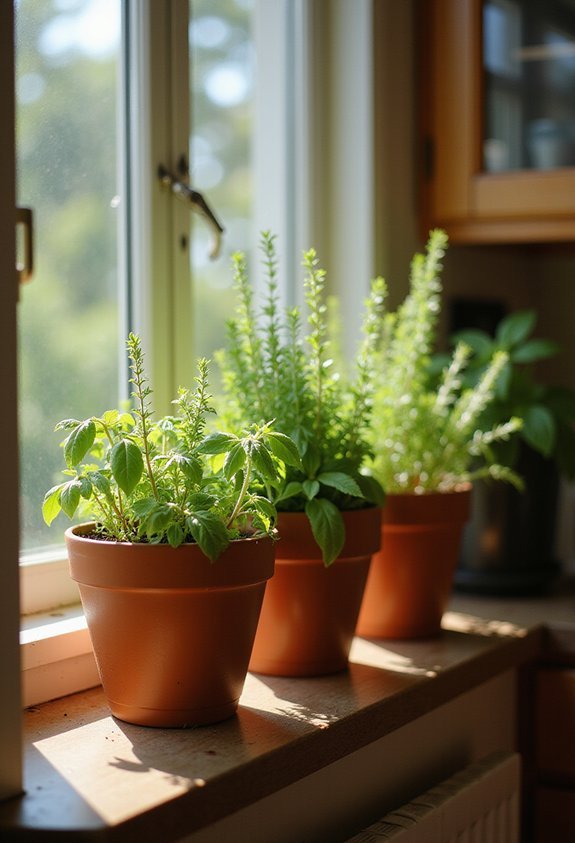
If you’re new to gardening or short on space, a windowsill herb garden is your ideal entry point. You’ll need minimal supplies: small pots, potting soil, and seeds or seedlings. Position your garden on a south-facing windowsill where plants receive at least six hours of sunlight daily.
Start with hardy, low-maintenance herbs like basil, parsley, and thyme. These varieties thrive indoors and tolerate inconsistent watering better than delicate plants. Water when the soil feels dry to the touch, but don’t oversaturate.
Rotate your pots occasionally to guarantee even growth. Harvest leaves regularly by pinching off the top growth, which encourages bushier plants. Within weeks, you’ll have fresh herbs for cooking, saving money while reducing your grocery trips and enhancing your culinary creations.
Also read: 7 Sofa-in-Kitchen Ideas
Container Gardens on Balconies and Patios
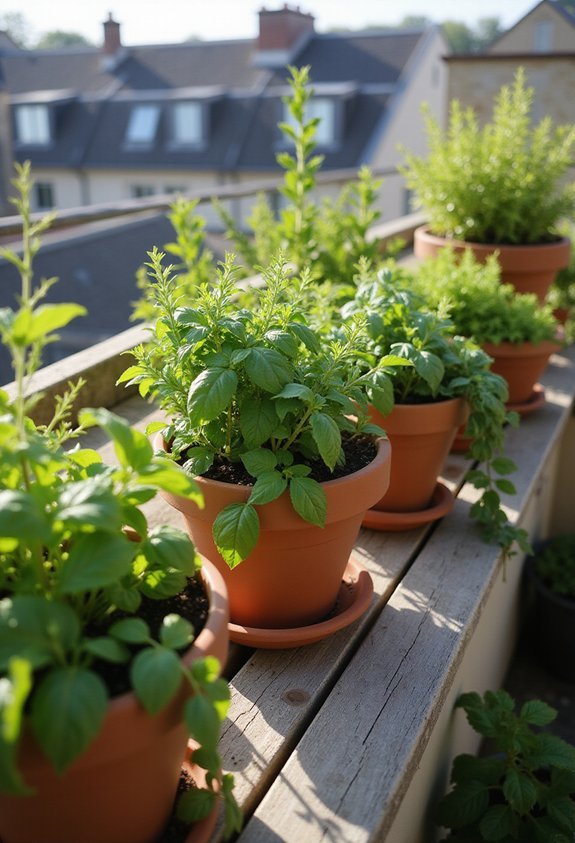
Once you’ve mastered the basics of indoor herb gardening, you’re ready to expand your growing space outdoors. Container gardens on balconies and patios offer you flexibility and accessibility without requiring extensive yard space.
Choose containers with drainage holes to prevent waterlogging. You’ll want pots at least six inches deep for most herbs, though larger varieties like rosemary need eight inches or more. Position your containers where they’ll receive six to eight hours of sunlight daily.
Group herbs with similar water and sunlight needs together. This strategy simplifies your maintenance routine and guarantees each plant thrives. Use quality potting soil rather than garden soil, which compacts in containers and restricts root growth.
Water regularly, checking soil moisture daily during warm months. Your balcony or patio garden provides fresh herbs steps away from your kitchen.
In-Ground Kitchen Herb Beds
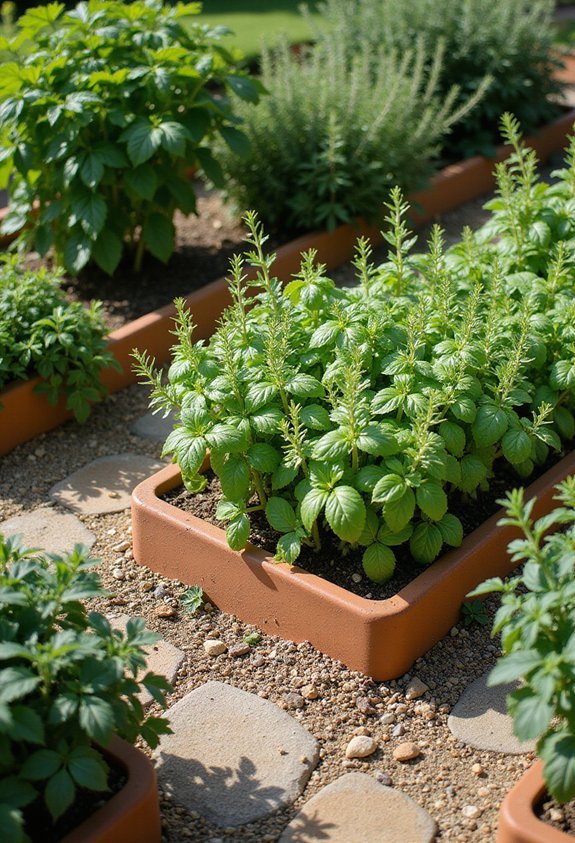
While container gardens offer flexibility, in-ground herb beds provide superior growing conditions and long-term productivity. You’ll benefit from deeper root systems, improved soil structure, and consistent moisture retention that potted plants can’t match.
When establishing your bed, choose a location receiving at least six hours of sunlight daily. Prepare the soil by amending it with compost or organic matter to enhance drainage and nutrient content. Space your herbs according to their mature size—basil needs less room than rosemary or oregano.
In-ground beds require minimal maintenance once established. You’ll spend less time watering and fertilizing compared to containers. Over seasons, your herbs strengthen, producing more robust growth and flavor. This permanent garden investment pays dividends through years of reliable harvests.
Herbs That Grow Well Together
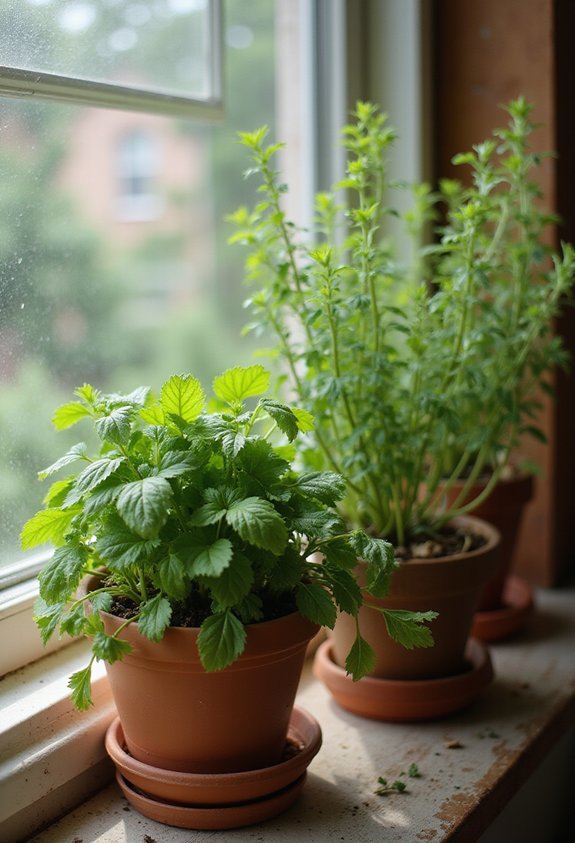
Now that you’ve established your in-ground bed, you’ll want to strategically plant herbs that complement each other. Basil and tomatoes thrive together, with basil enhancing tomato flavor while repelling harmful insects. Parsley, chives, and tarragon grow well alongside each other, sharing similar water and sunlight needs. Plant rosemary with sage and thyme—these Mediterranean herbs prefer drier soil and full sun, making them ideal companions.
Keep mint separate or contained, as it’ll aggressively spread and overtake neighboring plants. Cilantro grows nicely with parsley and chives, though it prefers cooler temperatures. Dill pairs well with basil and fennel but can inhibit bean growth.
Group plants by their growing requirements: combine herbs needing consistent moisture together, and cluster drought-tolerant varieties separately. This strategic arrangement maximizes your garden’s productivity while minimizing plant competition.
The Best Herbs for Busy Gardeners
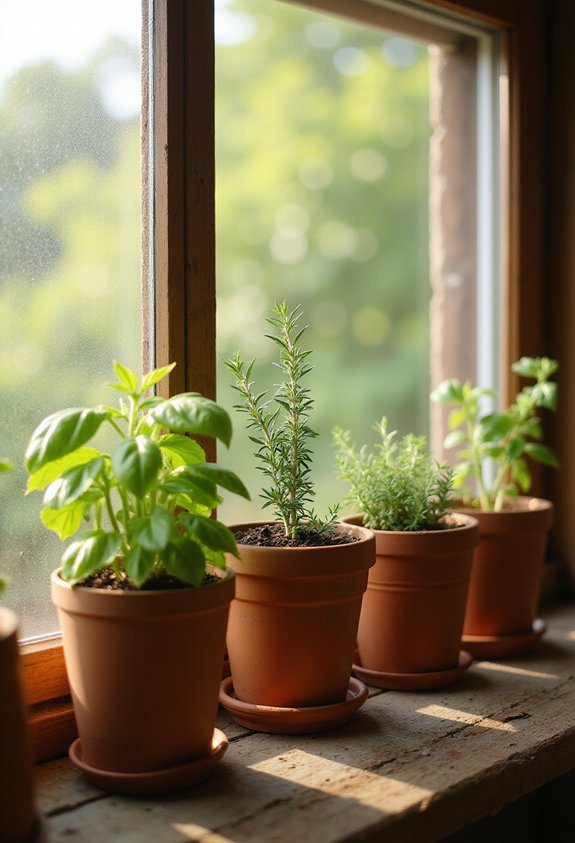
If you’re juggling multiple responsibilities, you’ll appreciate herbs that thrive with minimal attention. Rosemary, thyme, and oregano are incredibly forgiving plants that tolerate neglect and irregular watering. They’re Mediterranean natives adapted to dry conditions, so they won’t wilt if you forget them for a few days.
Mint and chives also demand little care. They’ll actually spread aggressively if you give them half a chance, making them virtually impossible to kill. Sage and marjoram similarly require infrequent attention once established.
Plant these herbs in well-draining soil and position them in sunny spots. Water sparingly—they prefer drier conditions to soggy roots. You’ll harvest fresh flavors without spending hours tending your garden. These low-maintenance herbs deliver maximum yield for minimal effort.
Growing Multiple Herbs on Shelves
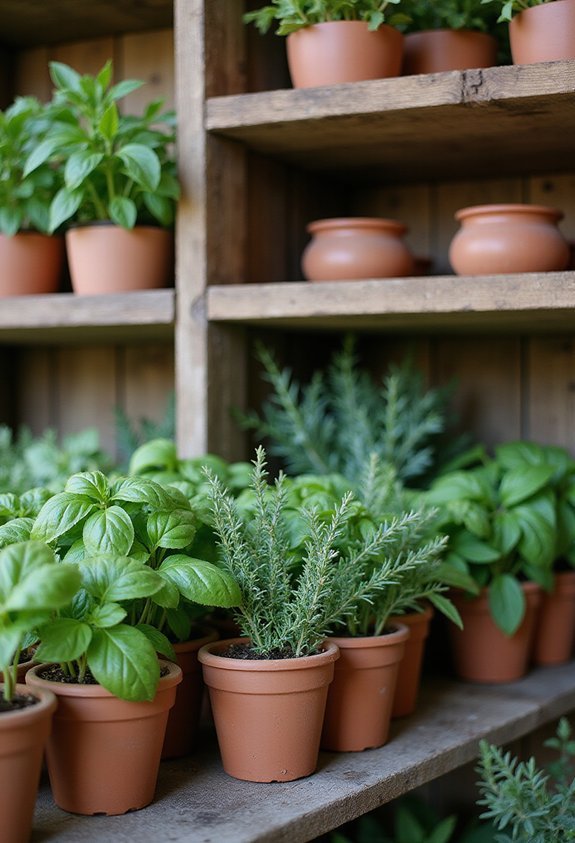
Once you’ve chosen your low-maintenance herbs, vertical shelving offers an efficient way to maximize your growing space. By stacking shelves, you’ll transform limited counter or wall space into a productive growing area.
Position your shelves where they’ll receive adequate sunlight—ideally near a south-facing window. Guarantee each shelf has proper drainage by placing trays or waterproof liners beneath your pots. This protects your surfaces while preventing water damage.
Arrange herbs strategically on each level. Place taller varieties on lower shelves so they won’t shade smaller plants above. Group herbs with similar watering needs together for easier maintenance.
Install a small grow light above the top shelf if natural light proves insufficient. Rotate your pots weekly to promote even growth, and you’ll enjoy a thriving, space-saving herb garden year-round.
Hanging Planters for Trailing Herbs
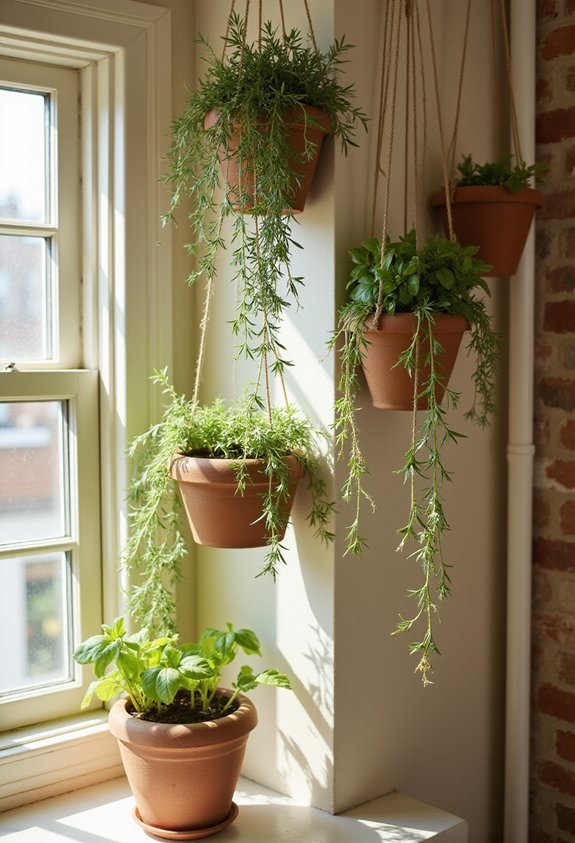
Hanging planters offer a stunning vertical solution that’ll let trailing herbs cascade gracefully while freeing up valuable counter and shelf space. You can cultivate varieties like oregano, thyme, and creeping rosemary in these suspended containers.
Position your hanging planters near a sunny window where they’ll receive at least six hours of direct light daily. Choose planters with drainage holes to prevent waterlogging, and use lightweight potting soil to reduce strain on hooks or brackets.
Water your trailing herbs regularly, checking soil moisture frequently since hanging planters dry faster than traditional containers. You’ll appreciate the accessibility—harvesting becomes easier when herbs dangle at eye level. This arrangement also creates an attractive, layered garden aesthetic while maximizing your kitchen’s vertical growing potential.
Growing Herb Cuttings in Mason Jars
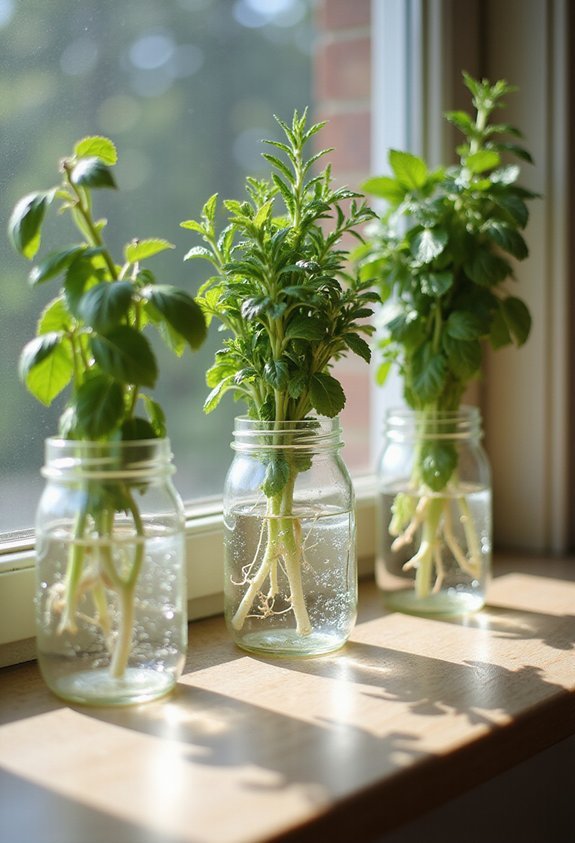
While hanging planters showcase mature trailing herbs, you’ll find mason jars offer an even simpler starting point for propagating fresh cuttings. You can start new plants from stems of basil, mint, rosemary, or oregano by placing them in water-filled jars on your windowsill.
Change the water every two to three days to prevent bacterial growth. Within one to three weeks, roots’ll develop, and you’ll see white nodules emerging from the stem bases. Once roots reach half an inch long, transplant your cuttings into soil.
Mason jars cost virtually nothing, making this method incredibly economical. You’ll enjoy watching root development, which teaches you how plants propagate naturally. This approach provides an endless supply of herbs for cooking while requiring minimal effort and investment.
Year-Round Growing With Grow Lights
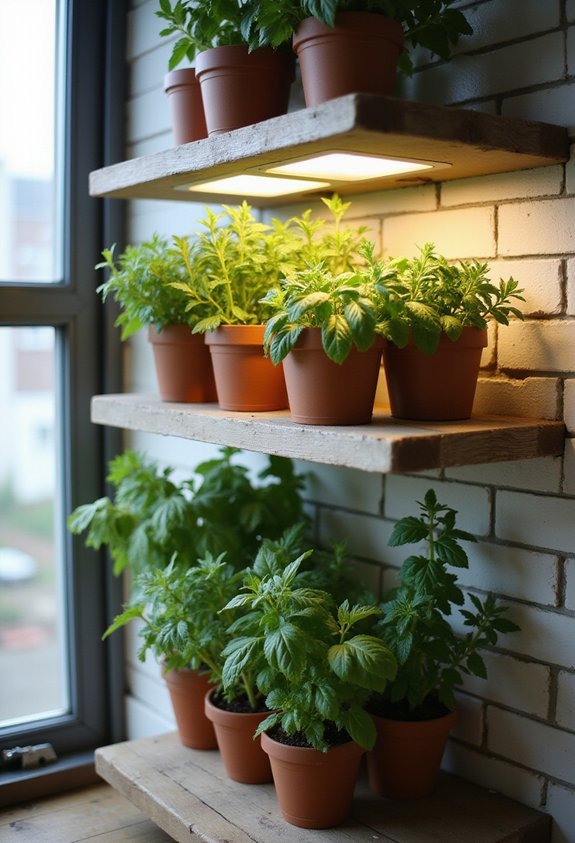
If you’ve mastered propagating herbs in mason jars, you’re ready to extend your harvest beyond seasonal limitations with grow lights. These systems let you cultivate fresh basil, parsley, cilantro, and mint year-round, regardless of outdoor conditions.
LED grow lights are your best option—they’re energy-efficient and emit the correct light spectrum for photosynthesis. Position lights 6-12 inches above your plants, adjusting height as they grow. Most herbs need 12-16 hours of daily light exposure.
Set up a timer for consistency and guarantee proper air circulation with a small fan. Monitor soil moisture carefully, as indoor environments dry out differently than outdoor gardens. With grow lights, you’ll enjoy continuous harvests without waiting for spring or summer.
Hydroponic Growing for Home Gardeners
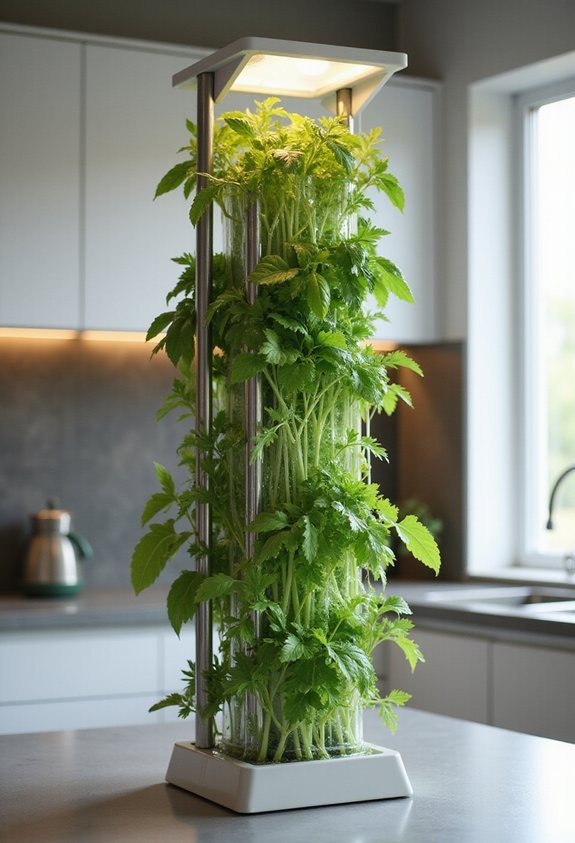
Hydroponics takes indoor herb gardening to the next level by eliminating soil entirely and delivering nutrients directly to plant roots through water. You’ll find this method incredibly efficient since plants absorb nutrients faster without soil barriers, resulting in quicker growth cycles.
You don’t need expensive equipment to start. Simple systems like deep water culture or nutrient film technique work well for home gardeners. You’ll monitor pH levels and nutrient concentrations regularly to keep your herbs thriving.
Popular hydroponic herbs include basil, mint, cilantro, and parsley. They’ll flourish in this controlled environment year-round, regardless of outdoor conditions.
While hydroponics requires initial setup investment and attention to water quality, you’ll enjoy abundant harvests and minimal pest problems. It’s ideal if you’re serious about maximizing your kitchen herb production.
Designing Your Herb Garden Layout
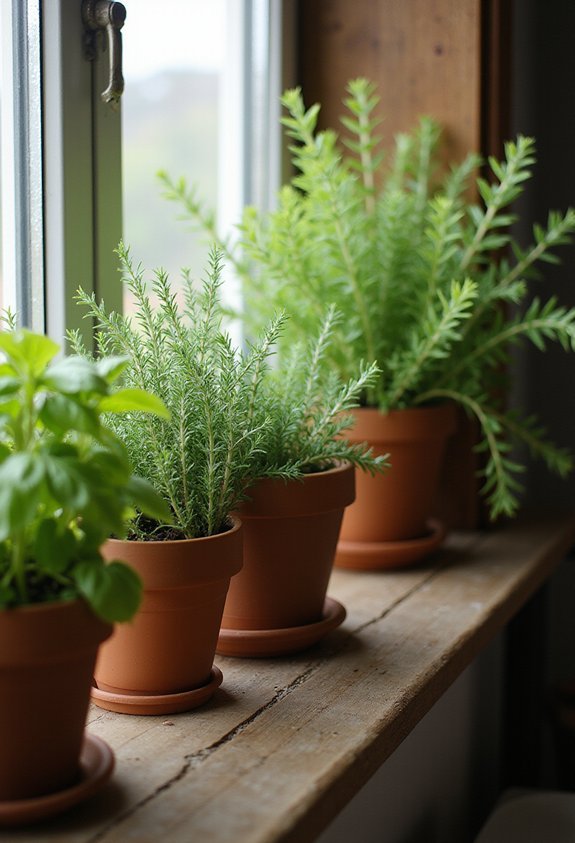
Whether you’re working with a sunny windowsill or a dedicated indoor space, your herb garden’s layout determines how well your plants’ll thrive. Start by evaluating your light conditions—most culinary herbs need six to eight hours of direct sunlight daily. Position taller herbs like basil in back and shorter varieties like thyme in front to prevent shading. Consider your watering patterns when arranging containers; group herbs with similar moisture needs together. Leave adequate spacing between pots for air circulation, which prevents disease and pest problems. Think about accessibility too—place frequently harvested herbs like oregano and rosemary within easy reach. Your layout should balance aesthetics with functionality, creating a workspace where you’ll actually use your fresh herbs regularly.
Frequently Asked Questions
How Do I Preserve Fresh Herbs for Long-Term Storage and Use?
You can preserve fresh herbs by freezing them in ice cube trays with water or oil, drying them in a warm, dark place, or storing them in airtight containers. You’ll extend their shelf life considerably using these methods for year-round cooking.
What Pests Commonly Affect Kitchen Herb Gardens and How Do I Prevent Them?
You’ll commonly encounter spider mites, aphids, and whiteflies in your herb garden. You can prevent them by regularly inspecting plants, spraying with neem oil, ensuring proper air circulation, and removing affected leaves promptly.
How Often Should I Water My Herbs and What’s the Ideal Soil pH?
You’ll water your herbs when the soil’s top inch feels dry, typically every 2-3 days. They’ll thrive in soil with a pH between 6.0-7.0. You should adjust your soil accordingly to guarantee efficient nutrient assimilation and robust development.
Can I Grow Herbs Indoors Without Natural Sunlight or Grow Lights?
You can’t successfully grow herbs indoors without natural sunlight or grow lights. Herbs require adequate light to photosynthesize and develop properly. You’ll need to provide at least 6-8 hours of quality light daily for healthy growth.
When Is the Best Time to Harvest Herbs for Maximum Flavor and Growth?
You’ll get maximum flavor when you harvest herbs in the morning after the dew dries but before the sun’s heat peaks. Pinch off the top leaves regularly—you’ll encourage bushier growth and prevent flowering, which keeps your herbs tender and flavorful longer.
Conclusion
You’ve got plenty of options to create your perfect kitchen herb garden, whether you’re working with a tiny windowsill or a sprawling outdoor space. Start with whatever setup fits your lifestyle and skill level—you can always expand later. By choosing the right herbs for your situation and experimenting with different growing methods, you’ll soon enjoy fresh, homegrown flavors that’ll transform your cooking.