


That awkward gap beneath a front door canopy gets walked through without a second thought more often than not.
A chunky woven doormat anchors the space almost instantly, giving that stretch of concrete an actual sense of purpose.
Pairing it with a slim bench for shoe-tugging moments turns the entrance into something functional as well as inviting.
Warm brass hardware catches evening light beautifully, and a weathered terracotta pot with something trailing softens the whole facade in a way few other details can match.
These are small shifts in the grand scheme of a renovation, but the kind guests actually notice the moment they step under the canopy.
A Few Things Worth Knowing First
Scale should guide every decision made in this space. A narrow canopy calls for a doormat and maybe one small planter, while a wider overhang can comfortably fit seating and multiple accessories.
Hardware finish matters more than people expect. Mixing brushed brass with matte black across the door, house numbers, and light fixtures creates a subtle sense of disorganization that’s easy to fix with a bit of consistency.
Shade tolerance deserves real thought when choosing greenery. A canopy blocks enough sunlight that shade-loving plants like ferns and hostas will consistently outlast anything that needs full sun.
Start With a Doormat That Suits Your Front Door Canopy Style
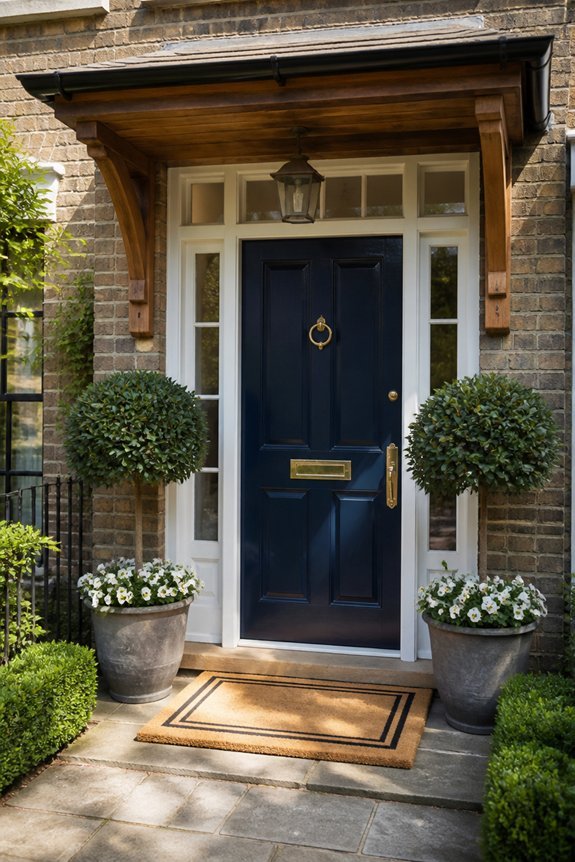
A doormat is often the first decorative element visitors notice beneath a front door canopy. Choosing one that matches the canopy’s style helps create a cohesive, polished look.
A modern canopy with clean lines pairs well with a low-profile, monochrome mat, such as a ribbed rubber or coir style. A cottage-style canopy suits a woven jute mat or one with a simple botanical print. Traditional canopies work with bordered mats in navy, black, or deep green.
Size matters as well. The mat should fit within the covered area without extending into rain or sun exposure. Standard sizes like 18 by 30 inches or 24 by 36 inches work for most single doors.
Proportion, material durability, and color coordination are the key factors to contemplate first.
Also read: How to Decorate a Party Canopy on a Budget
How Much Space Do You Have to Work With?
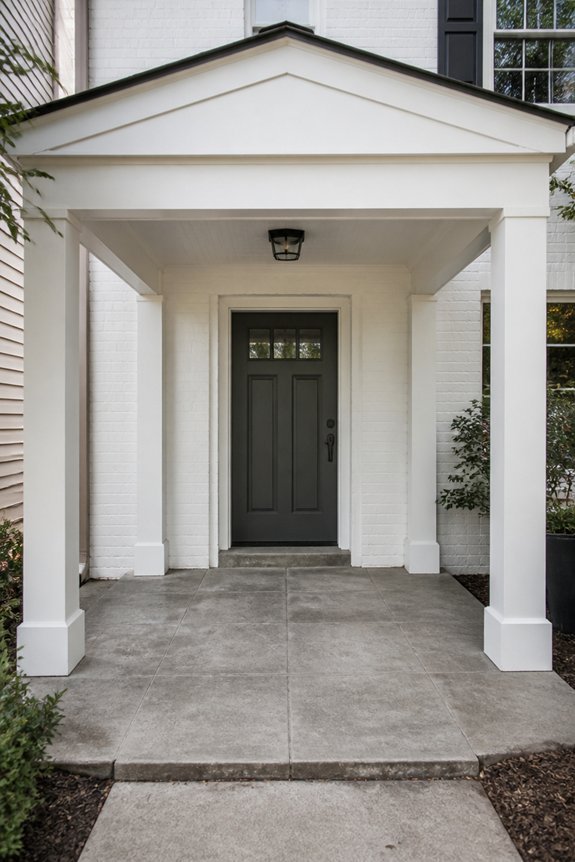
Once the doormat is chosen, the next step is understanding the actual dimensions of the space beneath the canopy. Measuring the width, depth, and overhead clearance gives a clear picture of what will fit comfortably.
A narrow canopy covering a 3-foot entry may only allow a doormat and a single small planter. A wider canopy spanning 6 feet or more opens room for seating, multiple planters, or a small side table.
Key measurements to note include the width of the covered area from edge to edge, depth from the door to the outer canopy line, and clearance height, which affects tall lanterns or hanging elements.
These numbers determine scale, preventing overcrowding and ensuring each chosen piece fits the space appropriately.
Add House Numbers and Door Hardware That Earn a Second Look
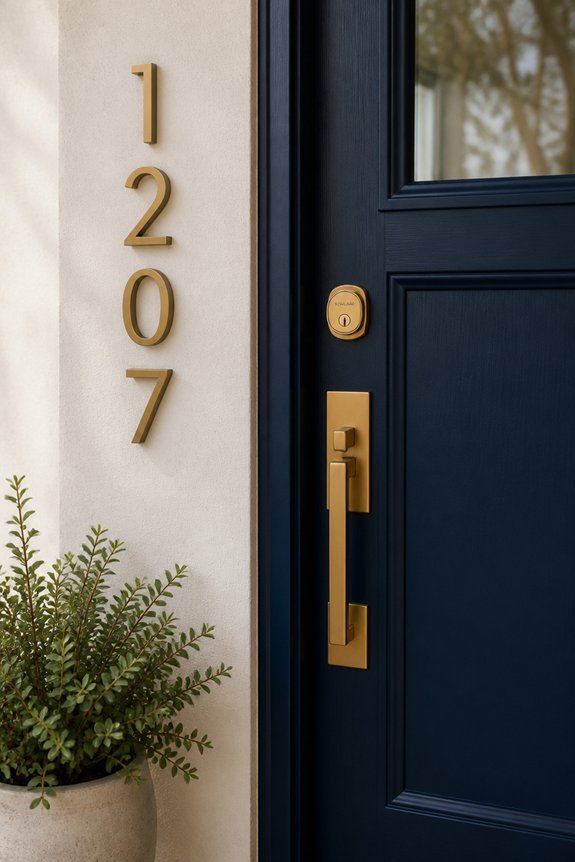
House numbers and door hardware are small details that carry visual weight in a front entry. A mismatched knocker, an outdated kick plate, or tiny house numbers can quietly weaken an otherwise strong entryway.
Replacing worn hardware with a cohesive finish, such as matte black, brushed brass, or satin nickel, creates a more deliberate look. House numbers should be large enough to read from the street, ideally mounted at eye level on a contrasting surface. Door hardware, including the handle set, deadbolt, and door knocker, should share the same metal finish for consistency.
Under a canopy, these details are framed closely by the overhead structure, making them more visible than they might be on an open façade. Cohesion in these elements signals intentional design.
Pick a Chair or Bench That Actually Fits the Spot
Beyond hardware and house numbers, seating is another layer of the entryway that shapes how the space feels and functions. A chair or bench placed under a canopy adds visual weight and a sense of welcome, but size matters most here. A standard canopy covering a 4-foot stoop fits one narrow bench or a single armchair, not a loveseat or oversized rocker.
Teak benches, wrought iron chairs, and slatted wood settees all hold up well in covered outdoor conditions. The seat should leave at least 18 inches of clearance on each side for comfortable movement. Cushions are optional but add color and softness when the rest of the entry feels minimal. Scale, material durability, and clearance determine whether seating improves the space or clutters it.
Where to Sneak in Storage Without Ruining the Look
Storage is easy to overlook when styling a front entry, but a few well-chosen pieces can handle clutter without crowding the space. A slim storage bench with a hinged lid holds shoes, umbrellas, or seasonal items while doubling as seating. Wicker baskets tucked beneath a bench or chair keep loose items contained and add texture.
Wall-mounted hooks installed beside the door hold bags, leashes, and jackets without taking up floor space. A small cabinet with closed doors conceals clutter entirely, keeping the entry looking clean. Choosing pieces in neutral tones or natural materials helps them blend with the overall look rather than compete with it. Storage works best when it serves a clear purpose and fits the scale of the covered area.
Light Your Front Door Canopy So It Feels Welcoming at Night
Once the practical needs of a front entry are handled, lighting becomes the next consideration for making the space feel finished and inviting after dark. A wall-mounted lantern on either side of the door provides balanced light and suits most canopy styles. Flush ceiling fixtures work well under low canopies where clearance is limited.
Warm white bulbs, typically around 2700K to 3000K, create a softer glow than cool white alternatives. Solar-powered path lights can extend illumination beyond the canopy edge without requiring wiring. Motion-sensor fixtures add security while reducing energy use.
For a layered effect, combining overhead lighting with a low-voltage ground fixture near steps improves both safety and visual depth. Consistent fixture finishes, such as matte black or brushed nickel, keep the look cohesive.
Choose Planters and Greenery That Thrive in the Shade
A front door canopy creates shade that limits which plants will survive in containers nearby. Choosing the right greenery keeps the entrance looking tidy and avoids constant replanting. Shade-tolerant plants such as ferns, hostas, impatiens, and caladiums perform well in low-light container settings. Trailing ivy adds visual interest and fills space around taller plants.
Evergreen options like boxwood and dwarf mondo grass maintain structure through colder months. Planters should have drainage holes to prevent waterlogging, since shaded soil dries slowly. Matching planter materials to the door hardware or house finish, such as black iron or terracotta, creates a cohesive look. Grouping containers in odd numbers, typically three or five, adds balance without crowding the entry space.
Colour Schemes That Pull Your Front Door Canopy Together
Colour choices around a front door canopy can either unify or fragment the overall look of an entrance. A cohesive scheme typically involves two or three colours that repeat across the door, planters, and any hardware.
Neutral bases, such as slate grey, charcoal, or warm white, work well as anchors. Accent colours can then appear in planter tones, cushion covers, or door paint. A navy door paired with black lanterns and green foliage creates a classic, grounded palette. Terracotta pots alongside a sage or muted green door suit warmer, earthy schemes.
Avoiding too many competing colours prevents visual clutter. Matte finishes on doors and canopy frames tend to hold colour schemes together more effectively than mixed finishes across the same space.
How to Restyle Your Front Door Canopy for Every Season
Settled colour schemes give a front door canopy a consistent identity, but the same space benefits from being refreshed as the year moves through its seasons. Swapping out accessories by season keeps the entrance relevant and visually balanced throughout the year.
Spring suits pale planters, small flowering bulbs, and light-toned doormats in neutral or pastel shades. Summer allows bolder colour through hanging baskets, terracotta pots, and striped outdoor rugs.
Autumn calls for dried wreaths, lanterns, and earth-toned arrangements using foliage, seed heads, or gourds. Winter works well with evergreen garlands, simple white lighting, and a dark or charcoal doormat.
Keeping a small storage box nearby makes seasonal swaps practical. Replacing two or three key pieces is enough to shift the overall look noticeably.
Front Door Canopy Styling Mistakes That Kill Curb Appeal
Small styling errors under a front door canopy can quietly damage the overall impression a home makes from the street. Overcrowding the space with too many planters, lanterns, or decorative objects creates visual clutter that feels disorganized. Mismatched materials, such as a modern metal door paired with rustic wooden accessories, send conflicting signals about the home’s style.
Neglecting scale is another common problem, as oversized urns or undersized doormats both look out of place. Poor lighting choices, including dim bulbs or exposed wiring, reduce both safety and appeal. Dead or dying plants communicate neglect immediately.
Ignoring weather damage on the canopy itself, such as peeling paint or sagging edges, draws negative attention before any styling detail is noticed.
Frequently Asked Questions
Can I Hang a Windchime or Decorative Item From My Canopy?
Yes, hanging a wind chime or other decorative item from a canopy is a simple way to add a bit of personality to the space.
Weather-resistant hardware matters here, since regular outdoor exposure will wear down anything not built to handle it over time.
Making sure the item is securely fastened and fits the home’s overall aesthetic rounds out the last consideration before hanging anything overhead.
How Do I Stop Spiders and Insects Nesting Under My Canopy?
Regular sweeping to clear cobwebs is one of the simplest habits that keeps spiders from settling into a canopy’s corners.
Peppermint oil or citrus sprays act as a natural deterrent, and cedar repellents offer another layer of protection without relying on harsh chemicals.
Adequate lighting helps too, since most insects prefer darker, undisturbed spaces, and a well-lit entryway naturally discourages them from nesting there in the first place.
Will a Front Door Canopy Affect My Home Insurance Policy?
A front door canopy could potentially affect a home insurance policy, so it’s worth notifying the insurer before installation begins.
Some policies require updates specifically for structural additions like this one, and skipping that step could risk invalidating coverage under certain circumstances.
A quick call to confirm the details ahead of time is a small step that avoids a much bigger headache later.
Does a Canopy Void My Door Manufacturer’s Warranty Over Time?
It’s possible for a canopy to affect a door’s manufacturer warranty, particularly if it restricts ventilation or traps moisture around the door frame.
Reviewing the warranty documentation closely before installation helps clarify whether this is a genuine concern for the specific door in question.
Reaching out to the manufacturer directly is the safest way to confirm compatibility and avoid any unexpected complications down the road.
How Do I Clean and Maintain the Canopy Structure Itself?
Wiping down the canopy frame regularly with mild soapy water keeps grime from building up and makes small issues easier to spot early.
Checking for rust or cracks during that same routine catches problems before they turn into bigger structural concerns.
Clearing debris from drainage points, tightening any loose hardware, and treating metal surfaces with a protective sealant once a year rounds out a maintenance routine that keeps the whole structure holding up well.
Conclusion
A front door canopy works a lot like the cover of a book, signaling what lies inside before anyone actually turns the page.
A well-chosen mat, a properly fitted bench, matching hardware, and greenery suited to the shade all act like sentences in that story, each one adding to the overall impression.
When these elements work together, the entrance reads clearly and confidently the moment someone walks up.
When they conflict, whether through mismatched finishes or overcrowded planters, the message tends to blur and the space feels less intentional than it could.
Thoughtful choices, applied consistently across the whole entryway, make sure the space communicates exactly what it should every time a visitor arrives.
Have questions about styling your own front door canopy space? Share the details in the comments below.