

There’s nothing quite like stepping under a pergola canopy on a warm afternoon.
My covered patio saved family game night more times than I can count.
A well built canopy turns any outdoor space into your favorite hangout, rain or shine.
Fabric drapes bring soft romance. Polycarbonate panels bring hard working durability. Climbing vines bring something in between.
Budget and climate matter, sure, but so does the mood you are chasing.
These twenty ideas cover every style and every price point you could want.
A Few Things Worth Knowing First
Think about how you actually use your patio before picking a material. A once a week reading nook needs less durability than a space you live in all summer.
Climate matters more than looks. If your yard gets serious wind or heavy rain, skip the delicate fabrics and lean toward canvas, polycarbonate, or a solid roof.
Set your budget first, then let it guide the material. Vines and shade cloth cost far less than motorized louvered systems, and both still deliver real shade.
20 Budget Pergola Canopy Ideas
Every canopy style here solves a different problem, whether that’s blocking harsh sun, handling rain, or just making your patio feel finished.
Some of these ideas take a weekend and a trip to the hardware store. Others call in a professional crew and a bigger budget.
Scroll through and see which one matches how you actually want to spend your evenings outside.
Budget-Friendly DIY Pergola Canopy Solutions
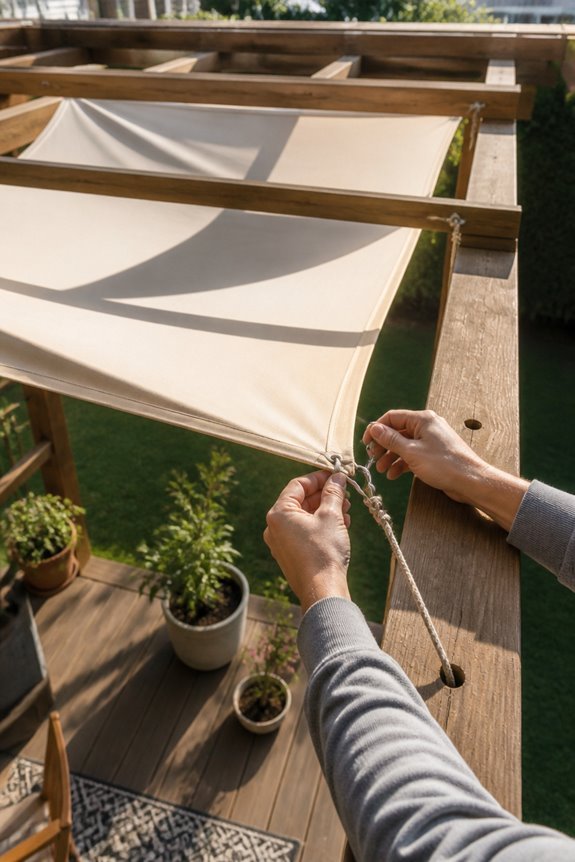
Building a pergola canopy on a limited budget requires selecting affordable materials and simple construction methods. Homeowners can use pressure-treated lumber, PVC pipes, or metal tubing for the frame structure. Fabric options like canvas, burlap, or outdoor cloth provide shade at lower costs than polycarbonate panels. Recycled materials, including old bedsheets, tarps, or reclaimed wood, reduce expenses considerably.
Installing a basic pergola involves horizontal beams supported by vertical posts, requiring minimal tools. Vines and climbing plants offer natural canopy coverage without added expense. Hardware cloth or bamboo panels create budget-friendly shade solutions. Local building supply stores often offer discounted materials or seasonal sales. DIY builders save substantially by avoiding professional installation fees, though permits may apply depending on local regulations and structure size.
Also read: 25 Dreamy Canopy Bed Ideas for a Cozy Bedroom
Fabric Drapes for Classic Elegance
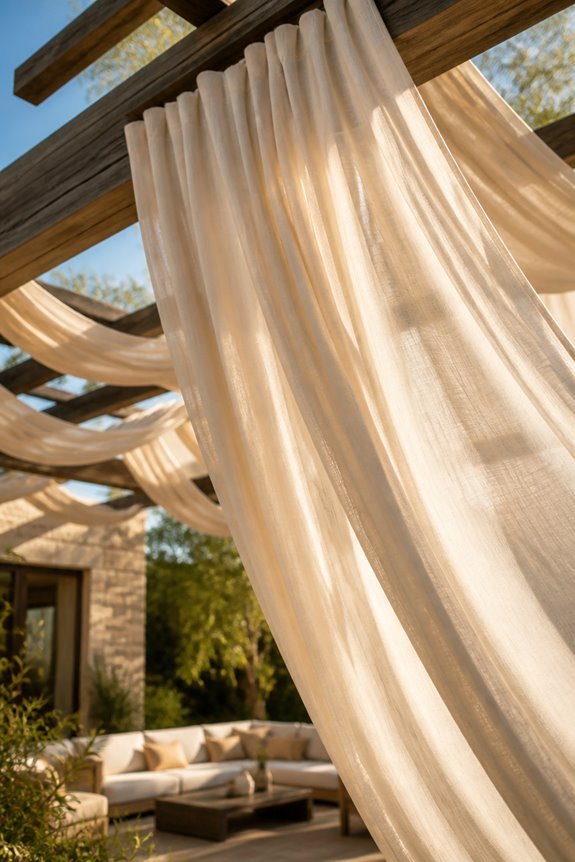
Fabric drapes transform a pergola into an elegant outdoor space by providing a classic aesthetic while offering practical benefits like shade and privacy. Sheer materials, such as lightweight linen or polyester blends, filter sunlight without blocking views completely. Heavy fabrics, including canvas or outdoor-grade cotton, deliver maximum coverage and durability.
Installation involves attaching drapes to pergola beams using hooks, rods, or rings, allowing adjustment based on weather and preference. Popular color choices include whites, creams, and neutral tones that complement most outdoor settings.
Drapes create defined spaces, reduce glare, and soften hard pergola lines. Maintenance requires occasional cleaning and seasonal storage in harsh climates. Fabric selection depends on local weather conditions, desired light levels, and overall design goals.
Waterproof Canvas: Protection and Style
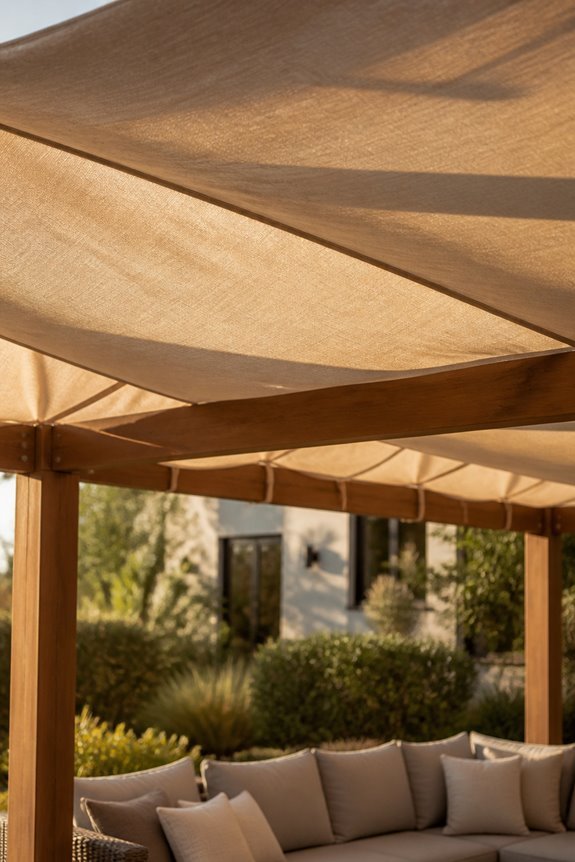
When weather resistance becomes a priority, waterproof canvas offers homeowners a durable canopy material that combines protection with aesthetic appeal. Canvas treated with water-resistant coatings repels rain, prevents mold growth, and withstands UV exposure effectively.
Waterproof canvas comes in neutral colors, including tan, gray, and cream, matching various architectural styles. The material resists fading and maintains its appearance through seasons of outdoor exposure.
Installation involves attaching panels to pergola frames using grommets, clips, or tie-downs for security. Maintenance requires occasional cleaning with mild soap and water to remove debris and dirt. Canvas can be removed seasonally for storage, extending its lifespan considerably. This option suits areas with moderate to heavy rainfall, providing reliable coverage while maintaining the pergola’s open structure aesthetic.
Polycarbonate Canopies for Year-Round Durability
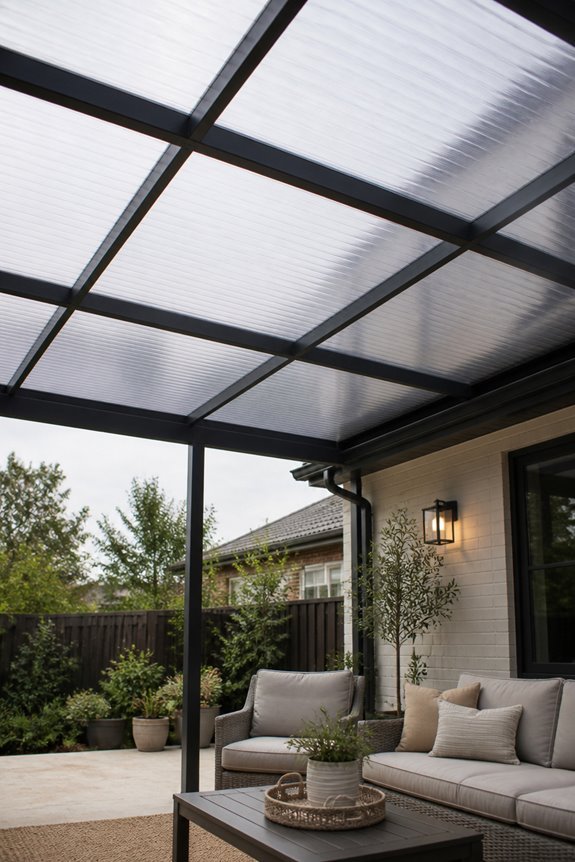
Polycarbonate panels represent a practical choice for pergola canopies, offering superior durability across seasons and weather conditions. These rigid plastic sheets withstand UV rays, heavy rain, and temperature fluctuations without degrading or warping. Unlike fabric options, polycarbonate requires minimal maintenance, needing only occasional cleaning with water and mild soap.
The material comes in clear, frosted, and tinted varieties, each providing different light transmission levels. Clear panels allow maximum sunlight penetration, while tinted versions reduce glare and heat. Polycarbonate panels typically last 10-15 years, making them a cost-effective long-term investment.
Installation involves securing panels to pergola frames using aluminum tracks or brackets, creating a seamless overhead covering. The lightweight nature of polycarbonate simplifies both installation and structural requirements compared to glass alternatives.
Living Green: Climbing Vines and Plants
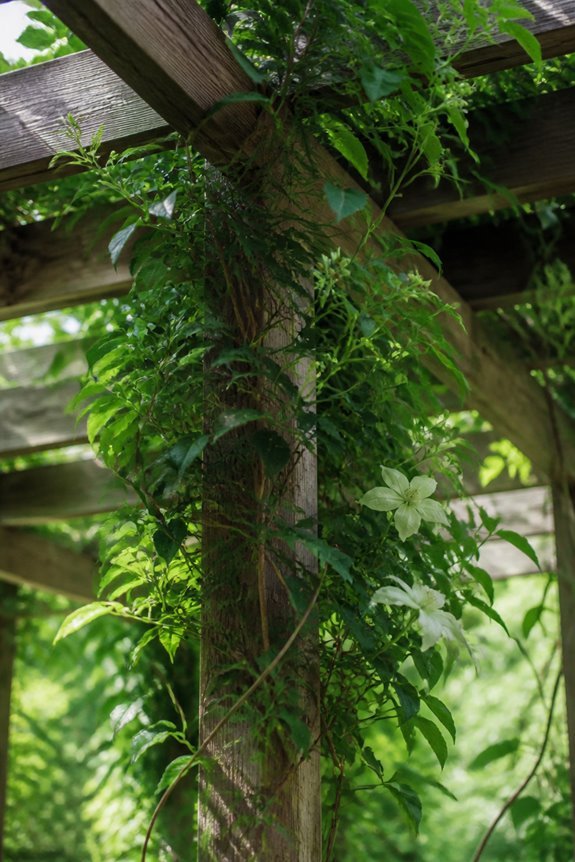
Living vines and plants offer a natural canopy solution that develops over time, creating shade, privacy, and visual interest for pergolas. Popular climbing options include clematis, which produces colorful flowers, and ivy, which provides dense green coverage year-round. Climbing roses add fragrance and blooms, while jasmine offers delicate flowers with pleasant scent. Honeysuckle attracts pollinators and grows quickly, making it practical for rapid coverage.
Gardeners should consider sun exposure when selecting plants. Some varieties prefer full sunlight, while others thrive in partial shade. Soil quality and water needs vary by species, so matching plants to local conditions guarantees better survival rates and growth patterns.
Regular pruning maintains plant health and prevents overgrowth on structures.
Bamboo Pergolas for Natural Aesthetic
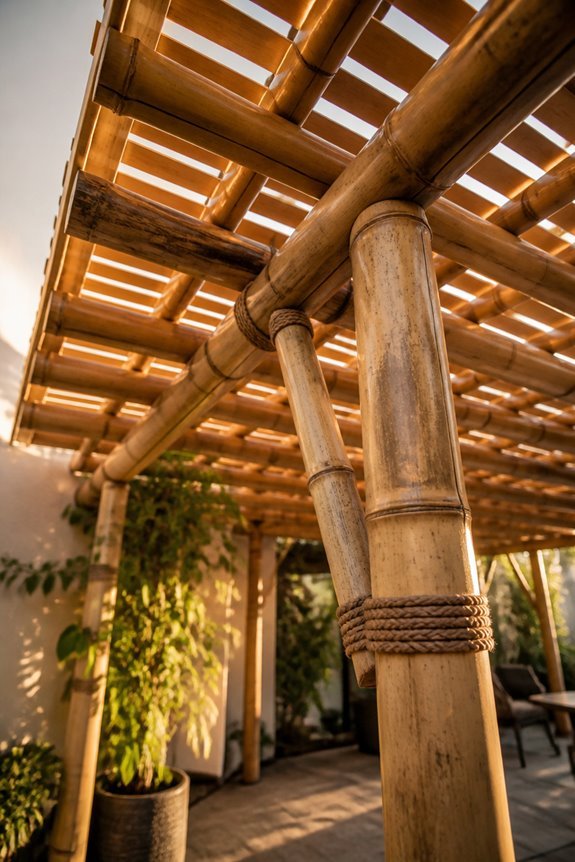
Bamboo represents an alternative material choice for pergola construction, offering distinct visual and environmental characteristics that differ from climbing plant solutions. This natural material provides a warm, organic appearance while delivering practical benefits. Bamboo pergolas require less maintenance than living vines, since they don’t need pruning or seasonal care.
The material offers several advantages: rapid renewability, lightweight structure, and sustainable sourcing from responsibly managed forests. Bamboo naturally resists weather damage, though periodic sealing extends longevity. Installation typically involves securing poles vertically and horizontally, creating a sturdy framework.
Design options include open lattice patterns, solid roof sections, or hybrid combinations. Bamboo pairs effectively with stone foundations, metal hardware, and outdoor furniture.
Colors range from natural light tones to darker stained finishes, accommodating various landscaping styles and preferences.
Shade Cloth Lattice: Lightweight and Affordable
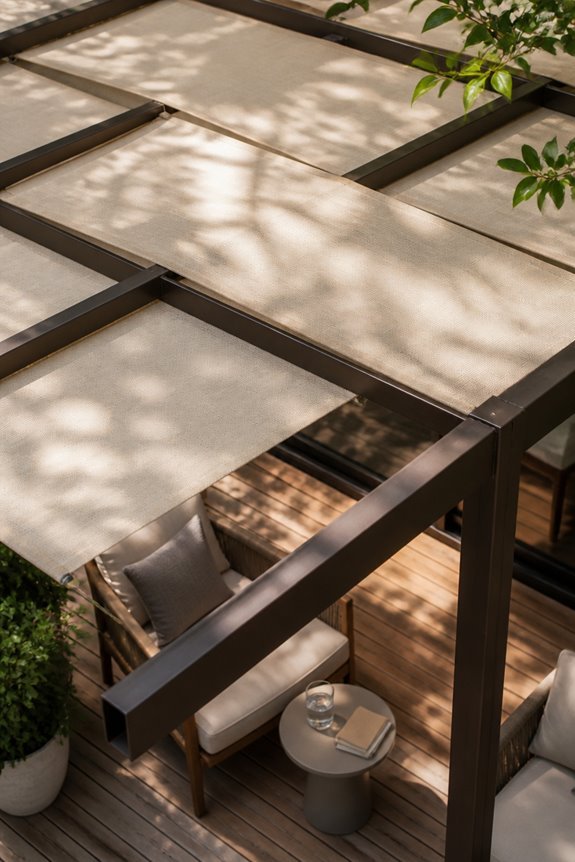
When seeking an economical canopy solution that requires minimal structural support, shade cloth lattice offers practical advantages over heavier materials. This option combines durability with affordability, making it accessible for most budgets.
Shade cloth lattice comes in various densities, typically ranging from 30% to 90% light blockage. Lower densities allow more sunlight penetration, suitable for plants needing partial sun. Higher densities provide greater shade coverage for heat-sensitive areas.
Installation requires basic tools and straightforward attachment methods. The lightweight nature reduces stress on pergola frames, eliminating expensive reinforcement needs. Maintenance involves occasional cleaning and inspection for wear.
Materials like polyethylene and polypropylene resist UV damage and weather exposure. These cloths typically last three to five years before replacement. Cost savings make shade cloth lattice practical for temporary or seasonal canopy needs.
Louvered Roof Systems for Adjustable Shade
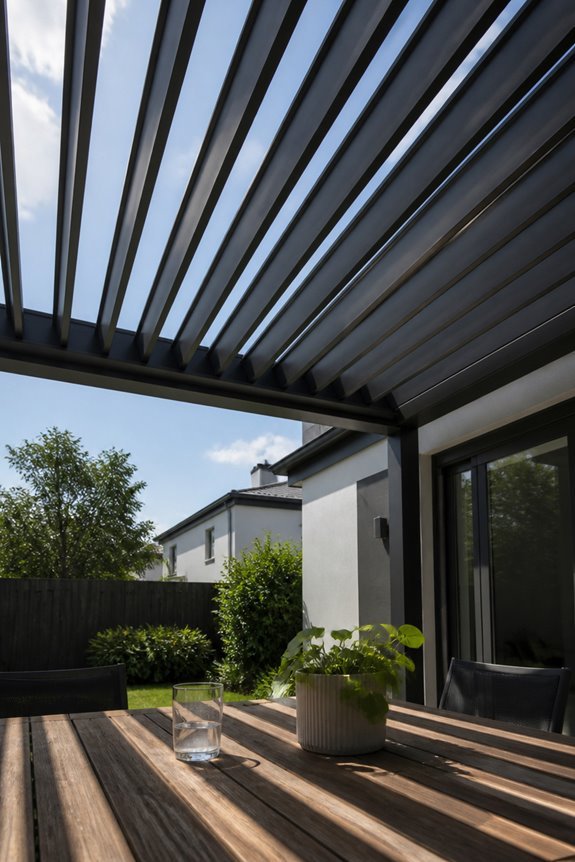
Unlike fixed shade cloth options, louvered roof systems provide adjustable light control through movable slats that pivot open or closed. Homeowners can regulate sunlight and ventilation according to weather conditions and personal preference.
These systems operate through manual cranks, electronic motors, or smartphone controls. Aluminum slats resist rust and require minimal maintenance. The motorized versions, such as those offered by ShadeFX and Sunesta, adjust automatically based on sun position.
Louvered roofs accommodate rainfall by angling slats to direct water away from the seating area. Installation costs range from $3,000 to $8,000 depending on pergola size and automation level. The systems integrate with existing pergola structures or function as standalone additions, making them versatile for various outdoor spaces.
Retractable Canopies for Flexible Coverage
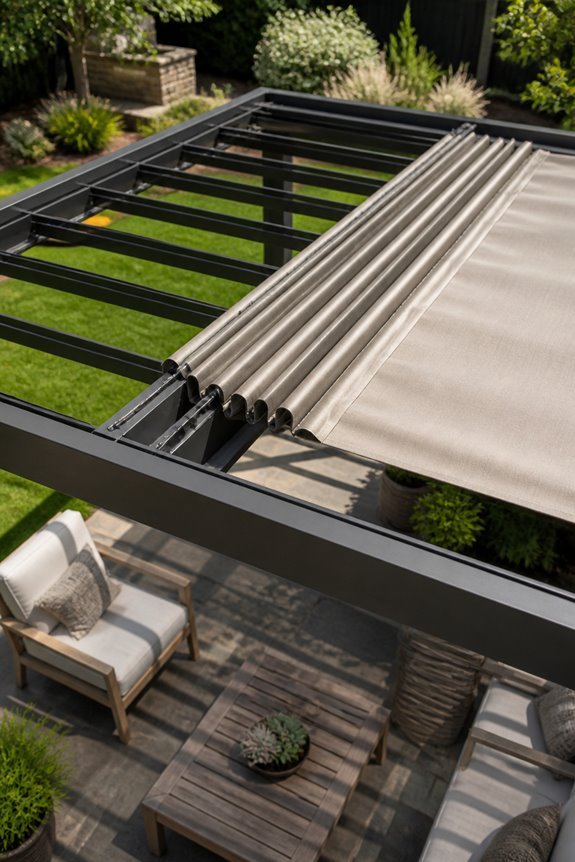
Retractable canopies offer homeowners a practical solution for adjustable outdoor shade that extends and retracts based on need. These systems function through motorized or manual mechanisms, allowing users to deploy coverage during hot afternoons, then retract when weather changes or evening arrives.
Popular options include motorized pergola canopies with remote controls, manual crank systems for smaller structures, and solar-powered variants that operate automatically based on sun position. Materials typically consist of weather-resistant fabrics like Sunbrella or solution-dyed polyester, which resist fading and moisture damage.
Installation requires a sturdy frame structure, proper mounting hardware, and electrical connections for motorized versions. Retractable canopies work well over patios, decks, and dining areas, providing flexibility for varying climate conditions throughout the day or season.
Roll-Down Shade Screens
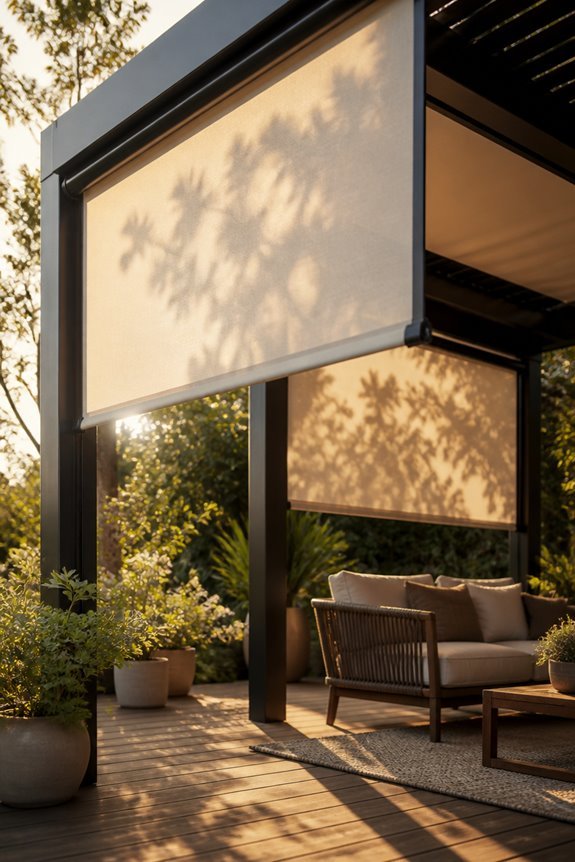
Roll-down shade screens provide practical sun and weather protection through a straightforward mechanical system. These screens attach to pergola frames, rolling down from the top when needed and rolling up when not in use.
Materials like outdoor fabric, mesh, or vinyl serve different purposes. Vinyl offers waterproofing, mesh provides filtered sunlight, and fabric balances both functions. Installation typically involves mounting hardware at the pergola’s top, allowing screens to descend along the sides or roof.
Users control descent manually with handles or straps, or motorized versions offer remote operation. Roll-down screens work well for rectangular pergolas over patios, decks, or dining areas. Maintenance requires occasional cleaning and inspection of the rolling mechanism for smooth operation.
Motorized Opening Roof Systems
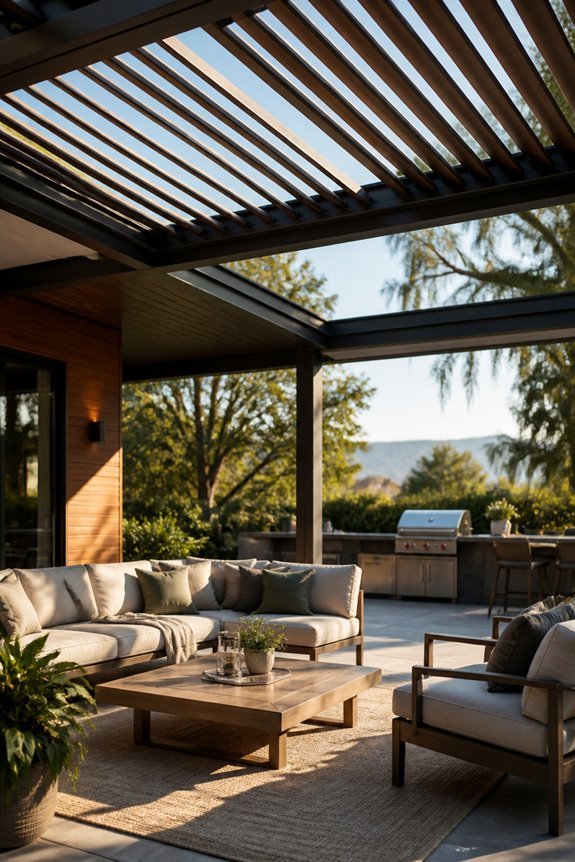
Motorized opening roof systems represent an advanced evolution beyond manual shade controls, employing electric motors and automated mechanisms to open and close pergola coverings. These systems typically feature retractable louvers or panels that adjust via remote control, wall-mounted switches, or smartphone applications.
Popular options include Sunesta and ShadeFX brands, which offer adjustable slat designs that regulate sunlight and ventilation. Installation requires electrical wiring and professional setup, though some units integrate with existing smart home systems.
Benefits include convenience, precise weather responsiveness, and enhanced comfort during temperature fluctuations. Costs range from several thousand to tens of thousands of dollars, depending on pergola size and system complexity. Maintenance involves periodic motor servicing and track cleaning to guarantee reliable operation.
Metal Pergola Frames With Decorative Panels
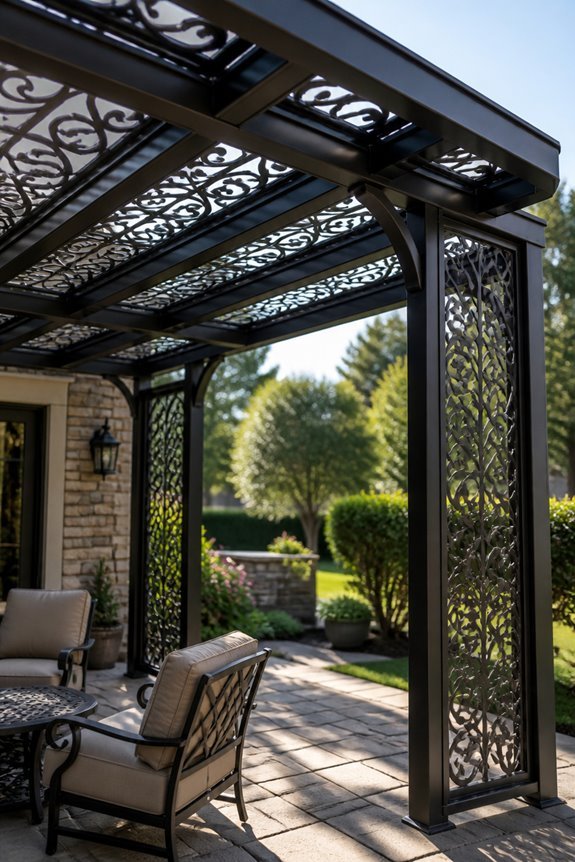
Metal pergola frames with decorative panels offer a durable alternative to traditional wood construction, combining structural strength with aesthetic customization options. Aluminum and steel frames resist rust, rot, and insect damage, requiring minimal maintenance over time.
Decorative panels, including laser-cut metal screens, fabric inserts, and polycarbonate sheets, attach to the frame structure, providing shade and visual interest. Aluminum pergolas weigh less than steel varieties, simplifying installation. Steel frames offer greater load capacity for heavier panel materials.
Panel options include geometric patterns, botanical designs, and solid materials. These systems accommodate various climate conditions without warping or deteriorating. Metal pergolas integrate with existing patios, decks, and garden spaces.
Homeowners select frame finishes in black, bronze, or powder-coated colors. Decorative panels create focal points while maintaining functionality and durability.
Classic Wooden Construction With Open Design
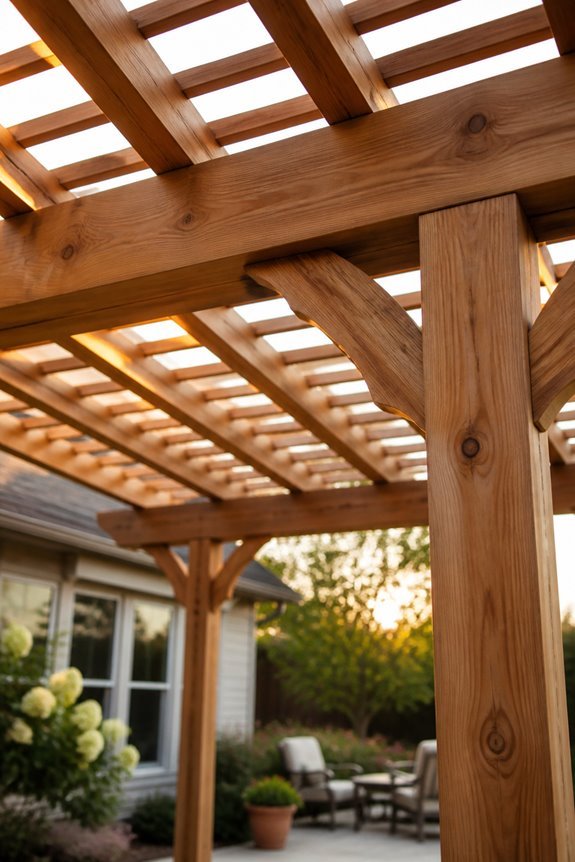
While metal frames provide durability and minimal maintenance, classic wooden pergolas remain a popular choice for homeowners seeking a timeless aesthetic with open design elements. Cedar, redwood, and pressure-treated lumber offer distinct advantages, with cedar and redwood resisting rot naturally, while pressure-treated wood requires less maintenance.
Open designs feature spaced wooden beams and slats, allowing dappled sunlight to filter through while maintaining visibility. These structures work well over patios, decks, and garden pathways. Homeowners can customize beam spacing, post dimensions, and finish treatments to match existing landscapes.
Staining or sealing wood protects against weather damage and extends lifespan. Classic wooden pergolas provide architectural interest, support climbing vines, and create defined outdoor living spaces without complete shade coverage.
Mediterranean Stone Columns and Arches
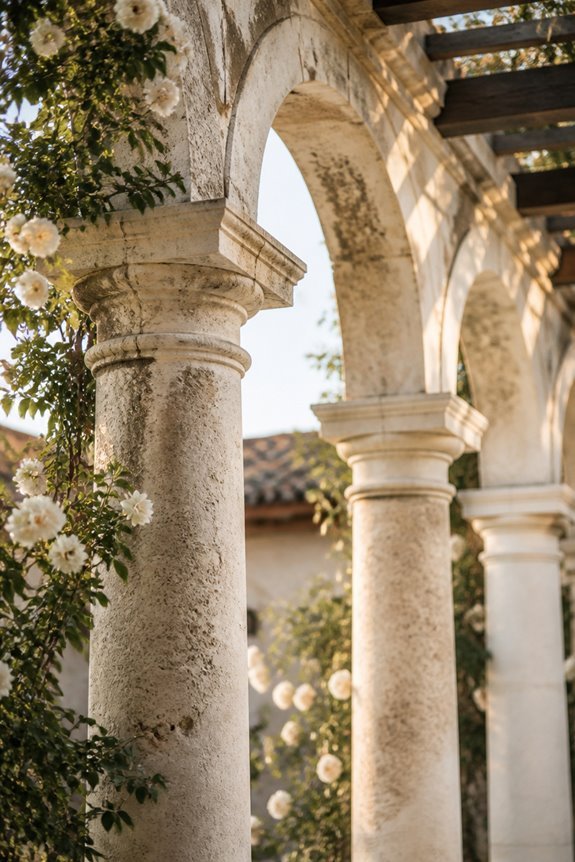
Stone columns and arches offer an alternative aesthetic to wooden pergola designs, drawing inspiration from Mediterranean architecture found in southern Europe and coastal regions. These structures use limestone, marble, or concrete materials to create durable, permanent installations. Stone columns provide vertical support, while arches form curved overhead elements that define the pergola’s framework.
This design approach suits homeowners seeking classical elegance and longevity. Mediterranean pergolas typically feature weathered finishes, rounded archways, and decorative capitals atop columns. The materials withstand harsh weather conditions better than wood alternatives.
Installation requires professional assessment of foundation requirements and structural engineering. Stone pergolas work well with climbing vines like jasmine or bougainvillea, which soften the architectural lines. Maintenance involves occasional cleaning and monitoring for structural settling over time.
Contemporary Glass-Roofed Canopies
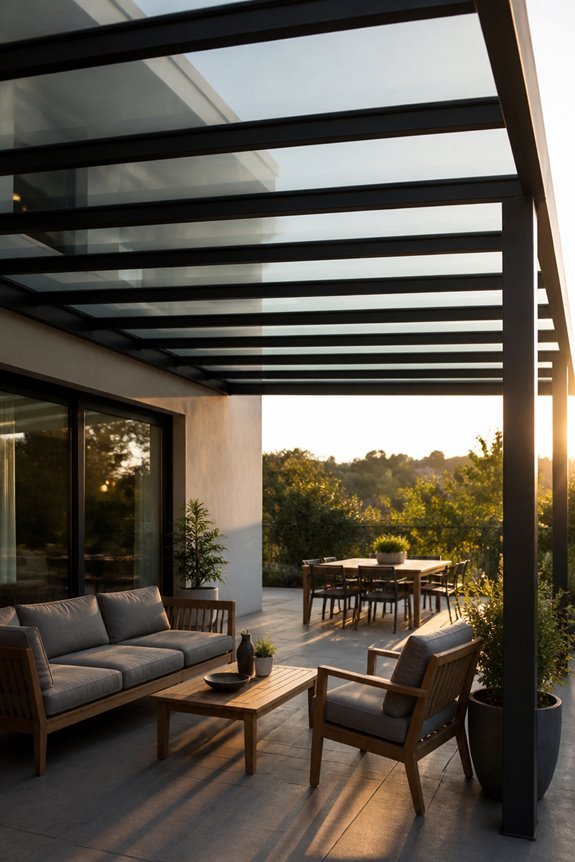
Transparency and modern design define glass-roofed pergola canopies, which offer homeowners an alternative to traditional solid overhead structures. These canopies feature tempered glass panels, aluminum frames, and integrated drainage systems that manage water effectively. Homeowners benefit from natural light exposure, unobstructed views, and weather protection simultaneously.
Glass-roofed pergolas work well in contemporary landscapes, urban patios, and commercial spaces. Popular options include fixed glass panels, retractable glass louvers, and polycarbonate alternatives for cost-conscious buyers. Maintenance involves regular cleaning to prevent algae buildup and occasional frame inspection.
Installation typically requires professional assistance due to structural demands. Energy efficiency varies based on glass type, tinting options, and insulation features. These canopies range from $3,000 to $15,000 depending on size and customization.
Rustic Thatch and Straw Coverings
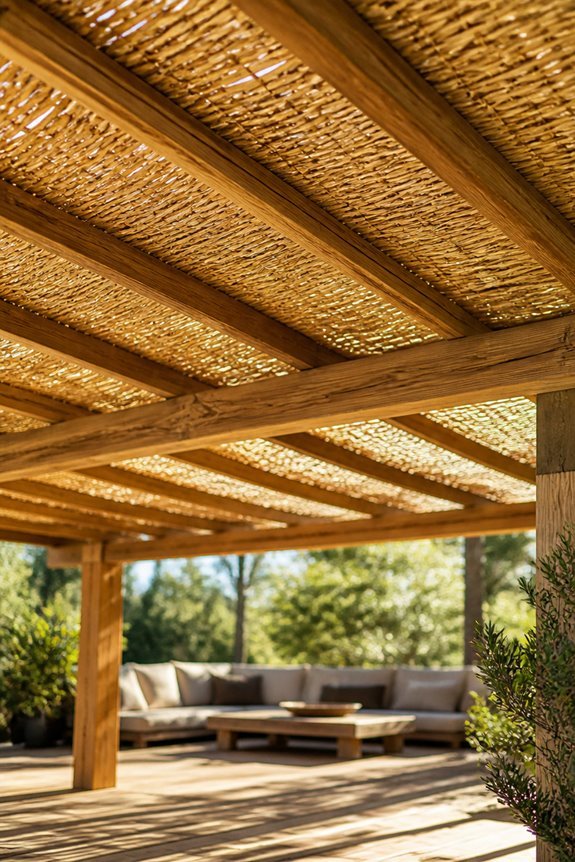
For homeowners seeking natural, organic aesthetics over sleek modern surfaces, rustic thatch and straw coverings present an alternative pergola canopy option. These materials create warm, traditional appearances suitable for cottage-style or farmhouse designs.
Thatch consists of dried reeds, straw, or palm fronds bundled and layered across pergola frameworks. Straw coverings use similar bundling methods with agricultural byproducts. Both require regular maintenance, including annual inspections for deterioration, pest damage, and mold growth. Weather exposure causes gradual material breakdown over three to seven years.
Installation demands specialized knowledge. Professional thatchers possess necessary skills for proper layering and securing. Material costs range from moderate to high depending on regional availability and craftsperson rates.
Climate considerations matter greatly; humid regions experience faster degradation than drier areas. These coverings work best in protected locations away from heavy wind exposure.
Curved Pergolas for Dramatic Appeal
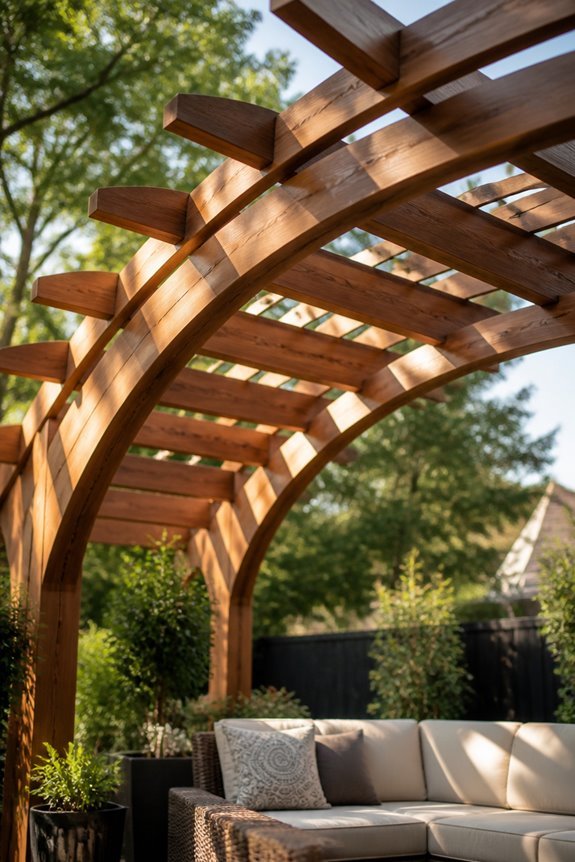
Why do curved pergola designs create more visual interest than traditional straight structures? Curved pergolas offer architectural variation, drawing the eye through flowing lines rather than rigid angles. The arched framework provides aesthetic sophistication while maintaining functional shade coverage.
Curved designs work particularly well in several applications. Rounded pergolas frame garden pathways, creating natural focal points. Dome-shaped structures enhance patio spaces, offering overhead protection with contemporary appeal. Spiral pergola designs add dimension to corner installations.
Material choices include wood, metal, and composite materials. Wood curved pergolas suit traditional landscapes, while metal constructions provide modern aesthetics. Vinyl options require minimal maintenance.
Installation considerations matter greatly. Curved structures demand precise measurements and professional installation expertise. Foundation support must accommodate the distributed weight of curved beams. Site preparation guarantees proper structural integrity and long-term durability.
Add Integrated LED Lighting
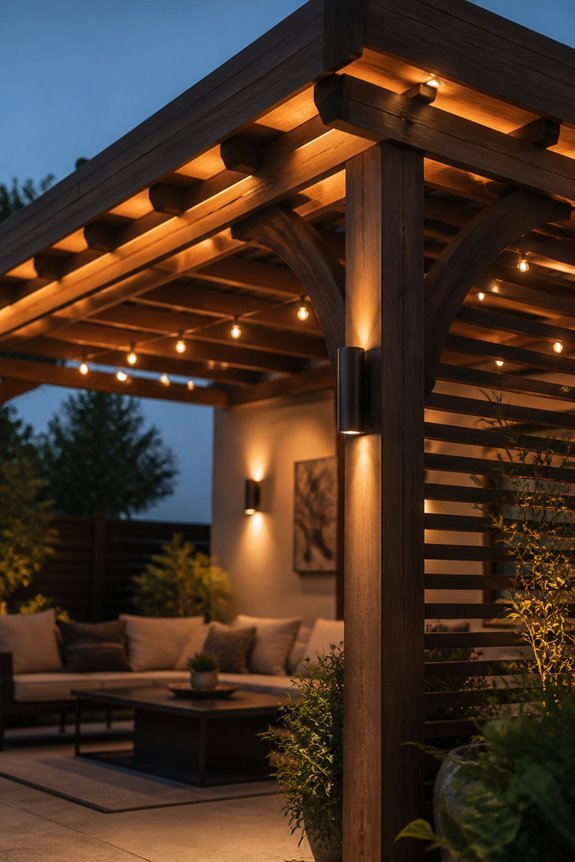
Integrated LED lighting transforms pergolas into functional evening spaces, extending usability beyond daylight hours. Homeowners can install string lights, strip lighting, or recessed fixtures within the pergola structure, creating ambient illumination without excessive brightness.
Solar-powered LED options reduce electricity costs and installation complexity. Warm white lights, typically 2700K color temperature, provide comfortable evening atmospheres for entertaining or relaxing. Cool white lights at 4000K offer task-oriented visibility for dining areas.
Smart lighting systems allow users to adjust brightness and color remotely through smartphone applications. Professional installation guarantees proper wiring, weatherproofing, and safety compliance. LED fixtures consume minimal energy while generating substantial light output, making them practical long-term investments.
Strategic placement around beams, rafters, or perimeter edges produces layered lighting effects.
Install Outdoor Ceiling Fans
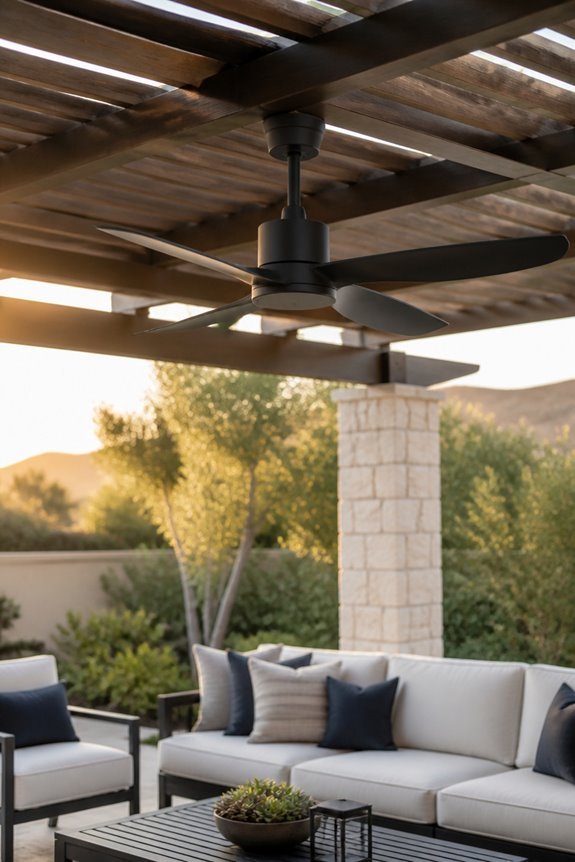
Outdoor ceiling fans complement pergola lighting by improving air circulation and comfort during warm weather. These fixtures mount directly to pergola beams, creating air movement that reduces perceived temperature and distributes cool air evenly across seating areas.
Fans come in various styles, including traditional blades, modern minimalist designs, and rustic wrought iron options that match different pergola aesthetics. Wet-rated models suit covered pergolas near pools or water features, while standard fans work for dry locations. Solar-powered versions eliminate electrical wiring requirements.
Installation requires secure mounting to structural beams that support the fan’s weight and rotation. Most outdoor fans operate on standard electrical circuits or remote controls for convenient speed adjustment during gatherings.
Built-In Heating Elements for Year-Round Use
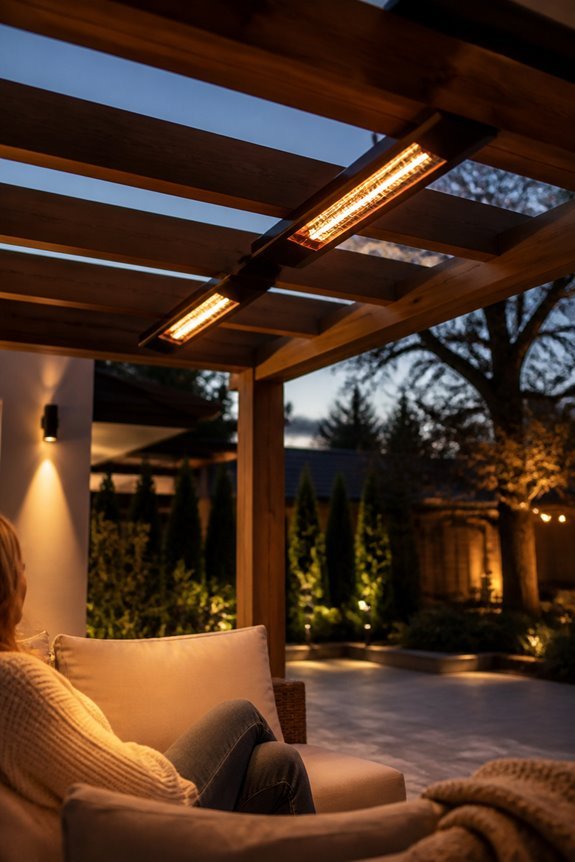
Several heating options extend pergola usability into cooler months and seasons. Infrared heaters, mounted overhead or on posts, emit warmth without heating the surrounding air, making them efficient for outdoor spaces. Propane or natural gas heaters provide consistent warmth through combustion, though they require proper ventilation and safety precautions. Electric heating elements, such as radiant panels or heat lamps, offer controlled temperature regulation and easy installation.
Fire features, including built-in fireplaces or fire tables, serve dual purposes by providing both heat and ambiance. Radiant floor heating systems, installed beneath pergola flooring, warm the ground surface directly. When selecting heating elements, homeowners should consider fuel type, installation requirements, maintenance needs, local building codes, and climate conditions to guarantee year-round comfort and safety.
Frequently Asked Questions
How Long Does a Typical Pergola Canopy Last Before Needing Replacement or Maintenance?
Most pergola canopies hold up well for three to five years before you will want to replace them, though that number swings a lot depending on the material and your climate.
Fabric options fade and wear faster in intense sun or heavy rain, while polycarbonate and metal tend to go the distance.
Regular cleaning and the right protective treatments stretch that lifespan considerably, so a little upkeep now saves you a full replacement later.
What Permits or Homeowner Association Approvals Are Required for Pergola Installation?
Before you break ground, it is worth checking your local building codes, since most areas require a permit for anything beyond a small, freestanding structure.
If you live somewhere with an HOA, add another layer of homework. Approval depends entirely on your community’s bylaws and architectural guidelines, and skipping that step can mean costly changes later.
Your best move is a quick call to your municipal office before you buy a single board.
Can Pergola Canopies Withstand High Winds and Extreme Weather Conditions Safely?
Your pergola canopy can handle moderate wind and weather just fine, especially if you have chosen quality materials and solid anchoring.
Extreme storms are a different story. Steel frames and properly secured coverings hold up better than lightweight fabric, but nothing is completely storm proof.
Seasonal checks and quick maintenance after a rough storm go a long way toward keeping your canopy safe and standing.
What Is the Average Cost to Professionally Install a Pergola Canopy System?
Professional installation typically runs you somewhere between two thousand and eight thousand dollars, depending on size, materials, and how complicated the design gets.
Labor alone usually falls between fifty and one hundred fifty dollars an hour, and most projects take twenty to forty hours from start to finish.
Getting a couple of quotes before you commit helps you see where your money is actually going.
How Do I Choose the Right Pergola Size and Style for My Outdoor Space?
Start by measuring your space honestly, including how people actually move through it and where the sun hits hardest during the day.
Your home’s existing architecture is a good guide for style. A modern house usually calls for cleaner lines, while a traditional one leans toward classic wood and open beams.
There is no wrong answer here as long as the size and style feel right for how you use your yard.
Conclusion
I used to think a bare patio was fine until one particularly brutal August afternoon convinced me otherwise.
A good canopy changes how often you actually use your outdoor space, not just how it looks in photos.
Whether you go with a quick shade cloth setup this weekend or save up for a motorized louvered roof, the goal is the same. More time outside, less time squinting.
Start small if your budget is tight. Vines, shade cloth, and simple fabric drapes cost very little and still make a real difference.
I would love to hear which style caught your eye, so drop a comment and tell me what you’re planning for your own patio.