

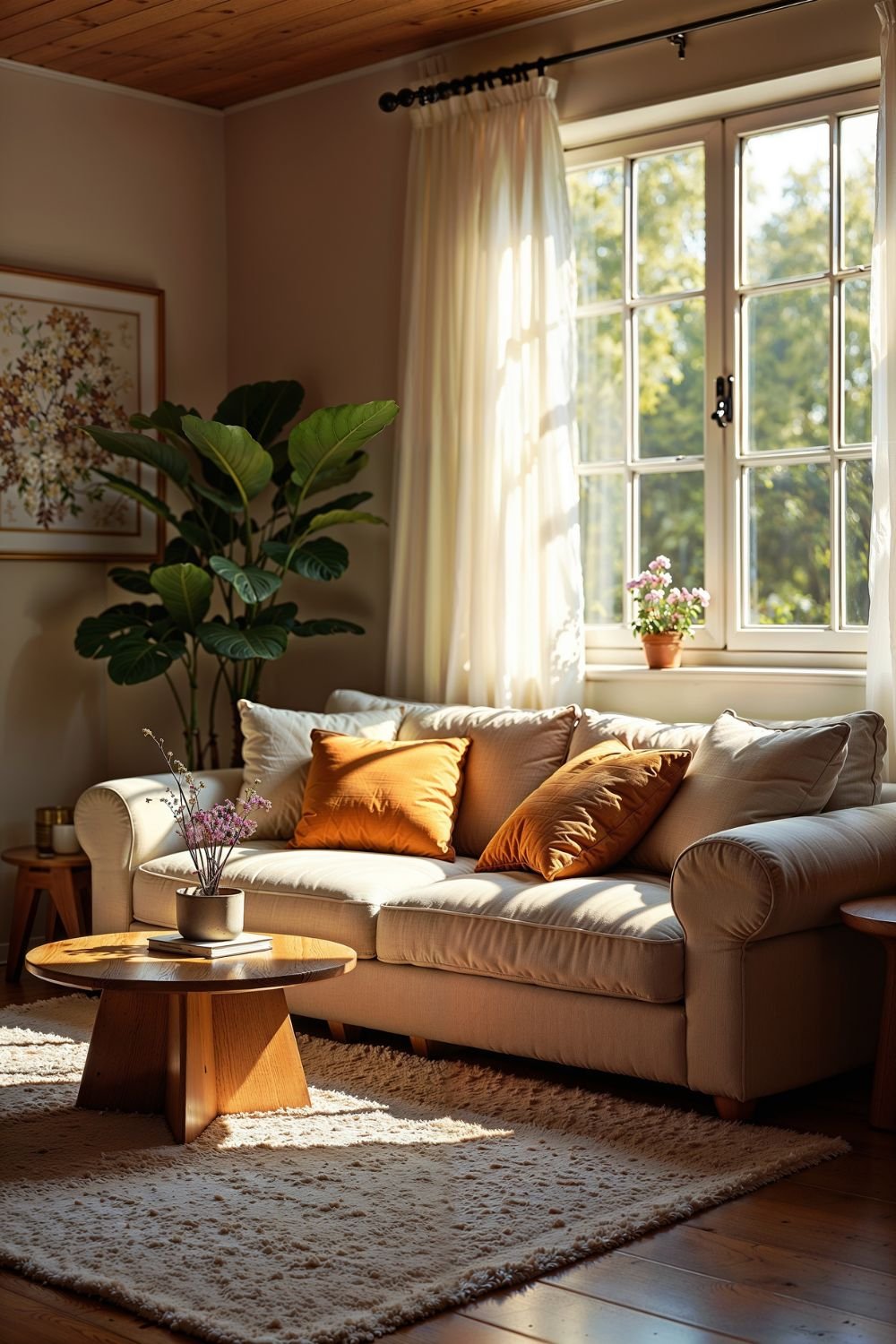
I redid my living room twice before I figured out a rule that actually works for my budget. The first time, I spent big on a coffee table that scratched within a month and skimped on a sofa that started sagging by year two. That backwards spending is what taught me the difference between things that take daily abuse and things that just sit there looking nice.
A living room gets more wear than almost any other room in the house. Kids climb on things, dogs flop on things, guests spill drinks on things. Knowing which pieces absorb that wear tells you exactly where your money needs to go.
The other thing I learned the hard way is that expensive doesn’t always mean better looking. Some of my favorite pieces in my own living room were the cheapest things I bought, and some of the priciest items have been the most forgettable.
This guide walks through the actual reasoning, piece by piece, so you can make the same calls in your own space without wasting money where it does not matter and underspending where it really does.
Getting Your Priorities Sorted First
Before you spend a dollar, you need a rough budget total and a sense of how this room actually gets used day to day. A family room with kids and pets needs a different spending map than a formal sitting room that gets used twice a month.
Walk through your space and list every major piece you need: seating, a rug, a coffee table, lighting, window treatments, and accessories. You do not need exact prices yet, just a sense of what categories exist so you can rank them later.
Set aside about ten percent of your total budget as a buffer. Something always costs more than you think, usually delivery fees or the realization that your old curtains do not fit the new windows.
How to Spend and Save in a Living Room: Step by Step
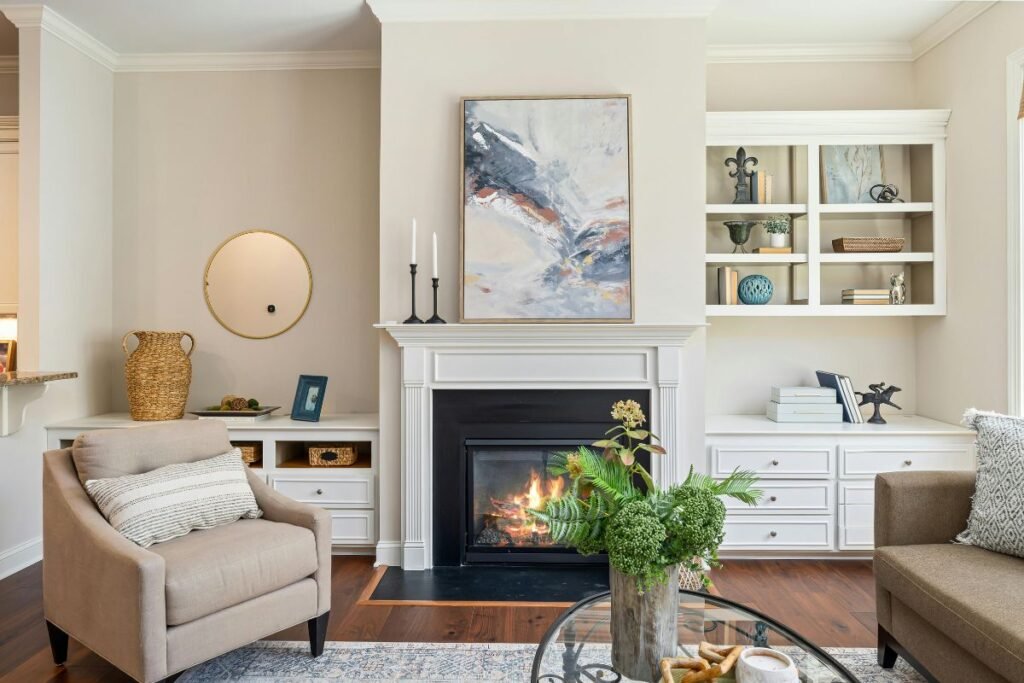
This whole decision process takes most people an afternoon of research once they know their budget, and it does not require any design training, just a willingness to be honest about how the room gets used. Below is the order I actually go through when planning a room, starting with the piece that takes the most punishment and working down to the smallest details.
Follow these in sequence and you will end up with a room that looks pulled together without blowing your budget on the wrong things.
Splurge on the Sofa
Your sofa gets sat on every single day, sometimes by multiple people at once, so this is where quality construction actually matters. Look for a hardwood frame, eight way hand tied springs if you can find them, and a fabric labeled for heavy domestic use with a rub count over 15,000. I learned this lesson after my first cheap sofa lost its shape within a year, while the one I upgraded to is still firm five years later. Budget at least a third of your total room budget here if you can manage it.
Save on the Coffee Table
A coffee table takes scuffs and water rings but rarely needs structural integrity the way seating does. A solid, well finished table from a mid range retailer holds up fine for most households. I have had good luck with budget tables as long as I check the finish is a sealed lacquer rather than a thin veneer that chips.
Splurge on the Rug
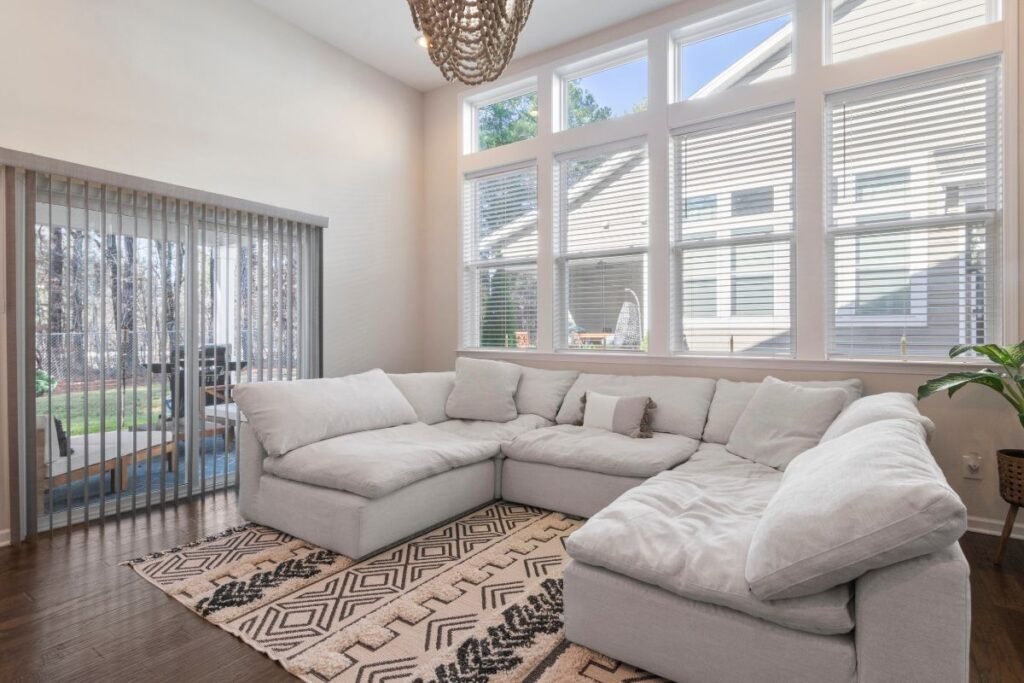
A rug anchors the whole room visually, and cheap rugs tend to flatten, shed, or fade within a year or two under foot traffic. Wool or a wool blend in a dense weave is worth the extra cost because it bounces back after vacuuming and resists stains better than synthetic options. For a standard living room you are usually looking at an 8 by 10 or 9 by 12 depending on your furniture layout.
Save on Throw Pillows and Throws
These get swapped out seasonally anyway, so there is no reason to spend designer prices here. I buy inserts separately and just replace covers when I want a refresh, which keeps the look current without repeat big purchases. A common mistake is buying pillows that are too small for the sofa scale, so measure your cushions before ordering.
Splurge on Lighting Fixtures
A statement light fixture, whether it is a pendant or a floor lamp, gets noticed immediately and tends to last decades if the wiring and materials are solid. Cheap fixtures often use thin metal that dents or finishes that tarnish within a year of normal use. I splurged on a single floor lamp in my own room and it has outlasted three rounds of furniture changes around it.
Save on Accent Tables and Stools
Small side tables and stools are easy to swap and rarely take heavy daily use, so this is a safe place to shop budget retailers or even secondhand. I have picked up several from local marketplace listings for under fifty dollars each and they look just as good as pieces three times the price.
Splurge on Window Treatments
Good curtains affect how light moves through the entire room and how the windows are framed, and cheap fabric tends to look thin and flat once it is hung. Lined panels in a heavier fabric drape better and last longer without fading from sun exposure. This is one area where the difference between budget and mid range is visible from across the room.
Save on Wall Art and Decorative Accessories
Vases, books, candles, and wall art are the easiest things to update over time, so there is no reason to overspend here upfront. Thrift stores, marketplace finds, and budget retailers all work fine for this layer. I rotate mine every season or two and have never spent more than a few dollars per item doing it this way.
Also Read: 16 LIVING ROOM CURTAINS Window & Elegant!
Tips for Best Results
Buy the Sofa Last, Not First
It feels backwards, but waiting until you have chosen your rug and overall color direction means you will not end up locked into a sofa color that fights with everything else in the room.
Watch for End of Season Sales on Big Items
Furniture retailers often discount sofas and rugs heavily during slower sales periods, typically late winter and midsummer, so timing a big purchase around those windows can save a significant amount.
Mix Finishes Instead of Matching Everything
A room where every metal finish matches exactly tends to look like a showroom rather than a home, so let your lighting, hardware, and frames vary slightly in tone.
Test Fabric Durability Before You Buy
Ask for a swatch and rub it firmly between your fingers a few dozen times. If it pills or thins quickly in your hand, it will do the same on the sofa within months.
Reassess the Room After Living With It for a Month
Some pieces that looked right in the store feel wrong once daily life happens around them, so give yourself permission to swap one or two smaller items after the initial setup rather than treating the first pass as final.
Frequently Asked Questions
How much should I budget for a full living room refresh?
It really depends on the size of your room and how much you already have to work with. A modest refresh using some existing pieces might run a few hundred dollars, while a full furniture replacement easily reaches several thousand.
A good way to estimate is to price out your sofa first, since that usually takes the largest share, then work backward from there for the rest.
Can I do this without hiring a designer?
Yes, this kind of spend and save planning is something you can absolutely do yourself with a bit of research. The hardest part is just being honest about how your room actually gets used day to day.
If you want a second opinion, plenty of designers offer paid consultations for a single session rather than a full project, which can be a good middle ground.
How do I adapt this for a small living room?
In a smaller space, you can often save more on the rug since you need less square footage, and put more of that savings toward a higher quality sofa since it will dominate the room visually either way.
Scale down accent pieces too. A few well chosen items look better in a small room than a cluttered collection of cheap finds.
What if my budget is really tight overall?
If your budget is tight, focus your spending entirely on the sofa and treat everything else as save category for now. A single high quality anchor piece can carry a room even when everything else around it is budget friendly.
You can always upgrade the rug or lighting later once your budget allows, but a sofa is not something you want to replace again within a year or two.
Wrapping Up
My own living room is proof that this approach works better than spending evenly across every category. The sofa I splurged on has held up through years of normal family life, while half the accent pieces around it have been swapped out more times than I can count.
I will admit the floor lamp was an impulse splurge that I almost talked myself out of, and it ended up being one of the best purchases in the whole room.
Money spent in the wrong place shows up fast in a living room, since this is the room everyone actually uses. Once you know which pieces take the daily wear, the spending decisions get a lot easier to make.
If you try this approach in your own space, I would love to hear which piece you ended up splurging on. Drop a comment and let me know how it turned out.