

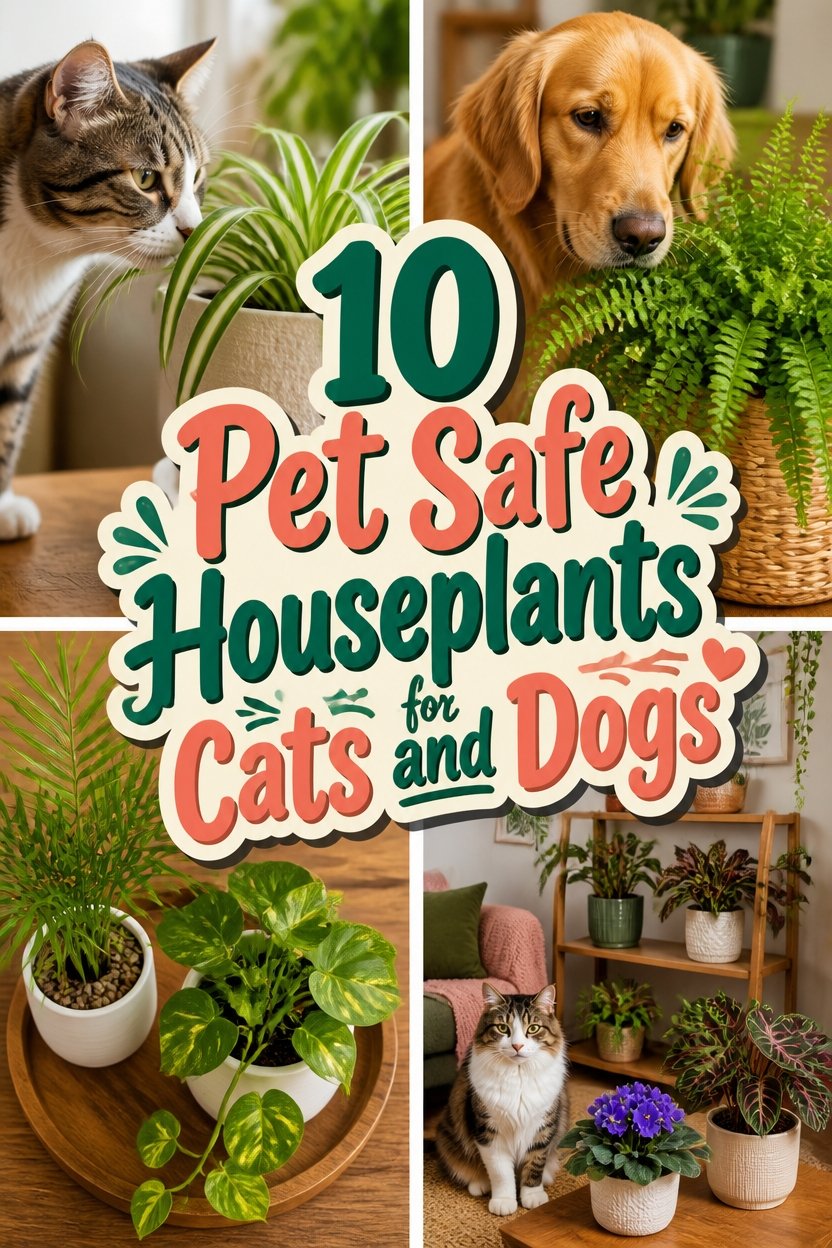
Loving plants and loving pets can feel like a tug of war some days.
I learned that lesson the hard way after my own cat took one curious bite too many out of a plant that turned out to be toxic.
The good news is you don’t have to choose between greenery and a safe home.
Plenty of beautiful houseplants welcome nibbles without any real risk.
Spider plants, Boston ferns, and parlor palms are a great place to start.
How to Choose Pet-Safe Plants: What to Look For
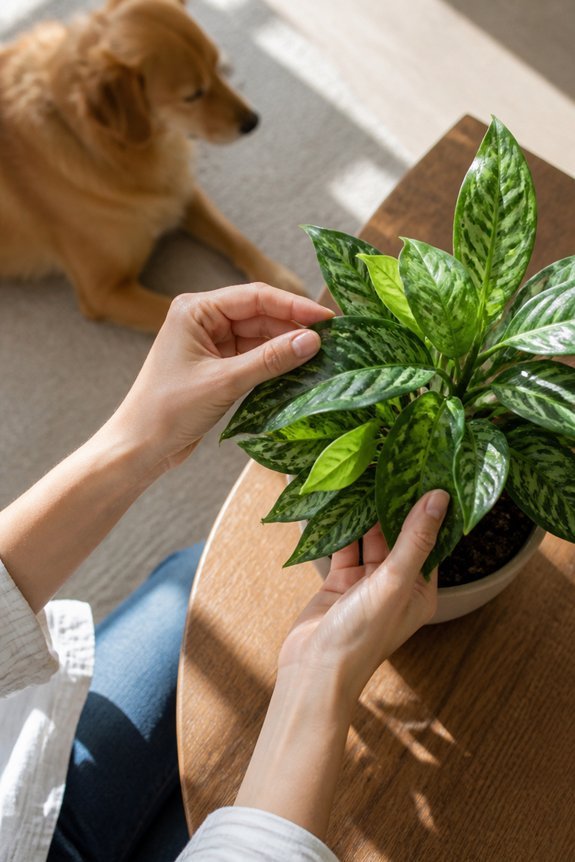
Toxicity Level This is the most important factor to check. First, look up any plant in the ASPCA Animal Poison Control Center database. Many popular houseplants are actually dangerous for pets. Good safe choices include spider plants, Boston ferns, and African violets. These add greenery without the worry.
Think about how your pet interacts with plants. Sturdy, low-growing types hold up better to curious paws. Delicate or tall plants tip over easily. Trailing plants like pothos look tempting to cats who love to bat and nibble. Position matters too. Place fragile specimens out of reach.
Some plants need frequent pesticides or special fertilizers. These chemicals leave residue that harms pets if ingested. Low-maintenance plants like snake plants and ZZ plants solve this problem. They thrive with minimal care and stay non-toxic. Less fuss means fewer risks for your furry friends.
Also read: 9 Signs Your Houseplant Needs Repotting
10 Pet-Safe Houseplant Ideas for Cats and Dogs
Every one of these plants earned its spot because it looks good and won’t send you to the emergency vet clinic at midnight.
Some thrive in bright windows, others are happy tucked into a dim corner, so there’s something here no matter what your home offers.
Take a look and see which ones fit the spots your pets already love to explore.
Spider Plant: Low-Maintenance Trailing Vines Cats Love
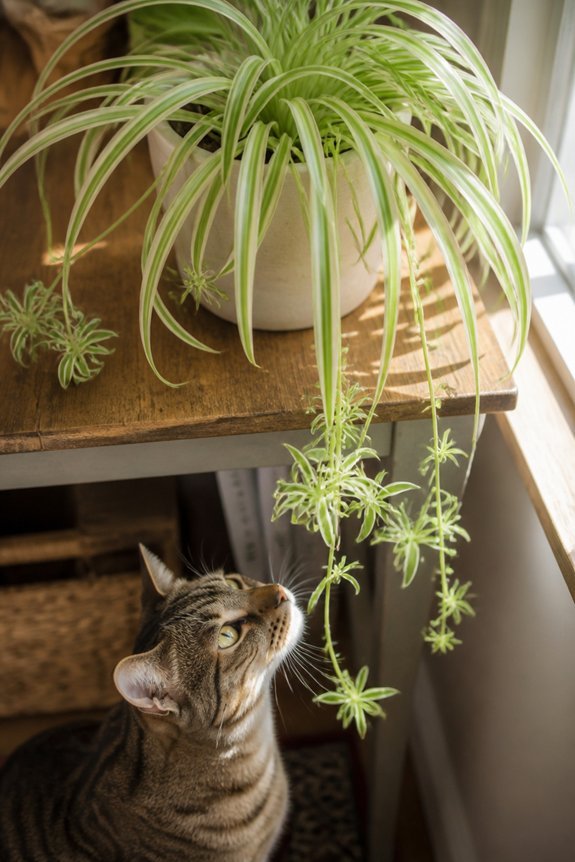
Spider plants are a top choice for pet owners who want greenery without worry. These plants have long, arching leaves and trailing runners that cats love to paw at. They’re completely safe for both cats and dogs, even if nibbled.
Caring for them is simple. They do well in bright, indirect light. Let the soil dry out between waterings. Spider plants adapt easily to most indoor conditions. Small plantlets grow along the runners, so you can propagate new ones.
To keep your plant looking good, hang it high or place it on a shelf. Cats may chew the leaves, which won’t harm them. But too much can cause mild stomach upset. A little planning protects both your plant and your pet.
Boston Fern: Lush, Non-Toxic Greenery for Humid Spaces
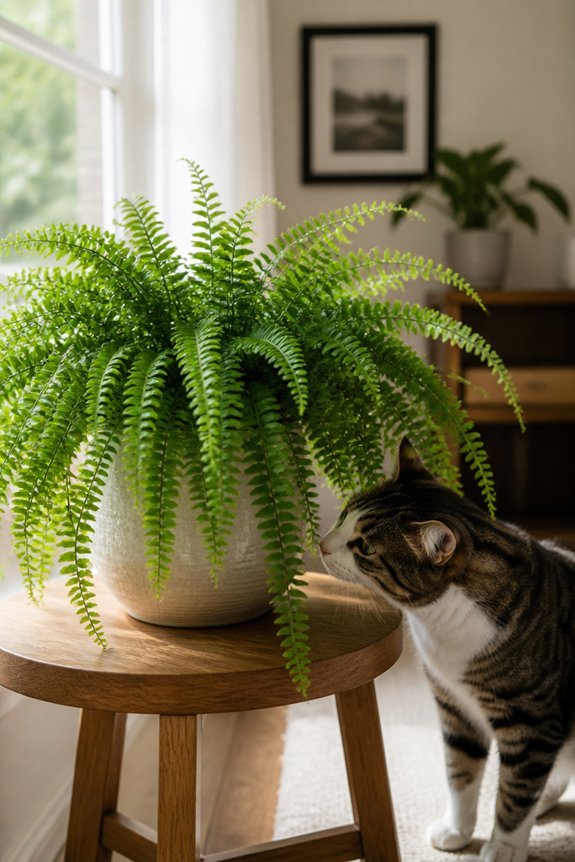
Boston ferns give pet owners a worry-free plant option. They flourish in humid spaces throughout your home.
These plants carry no toxic compounds. Your cats and dogs stay safe around them.
The fronds look delicate and feathery. They cascade downward in beautiful patterns. This adds visual charm to bathrooms, kitchens, or any room with extra moisture.
Boston ferns like indirect light. They prefer soil that stays moist but never soggy. They handle some neglect better than other ferns. Still, regular misting helps them thrive. Humid rooms keep them happiest.
Hanging baskets work perfectly for these plants. Elevated spots also suit them well. Both choices keep curious pets away from the soil.
Accidental nibbling causes no real harm. The plants remain completely non-toxic. Pets might get mild stomach upset only if they eat large amounts.
Boston ferns stand out as a solid pick for pet-friendly indoor gardens.
Parlor Palm: Tropical Vibes Your Pets Can’t Harm
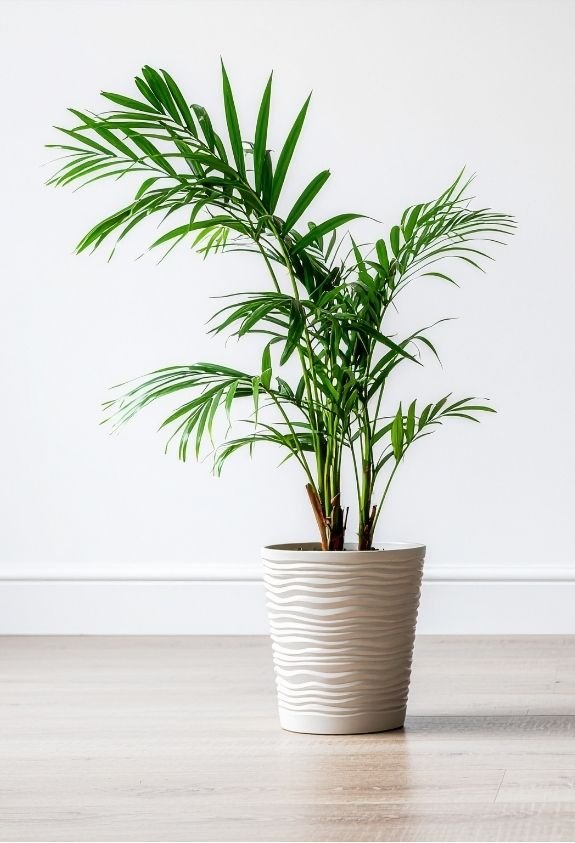
Parlor palms give pet owners a worry-free way to add greenery. These plants bring tropical beauty into your home without any toxic risks.
The long, feathery fronds grow from a central stem. Indoor plants typically reach three to four feet tall. This manageable size fits most spaces easily.
These palms handle low light quite well. You can place them in various rooms around your home. They prefer indirect sunlight for best growth.
Water moderately and keep the soil slightly moist. Avoid soggy conditions that harm the roots. A predictable schedule works better than guesswork.
Parlor palms grow slowly over time. You’ll rarely need to repot them. This low-maintenance quality appeals to busy plant owners.
Cats and dogs face no poisoning risk from these palms. Still, pets might climb or chew the fronds. Place your plant away from busy pet areas. This protects both your plant and your furniture.
African Violet: Delicate Blooms That Stay Pet-Safe
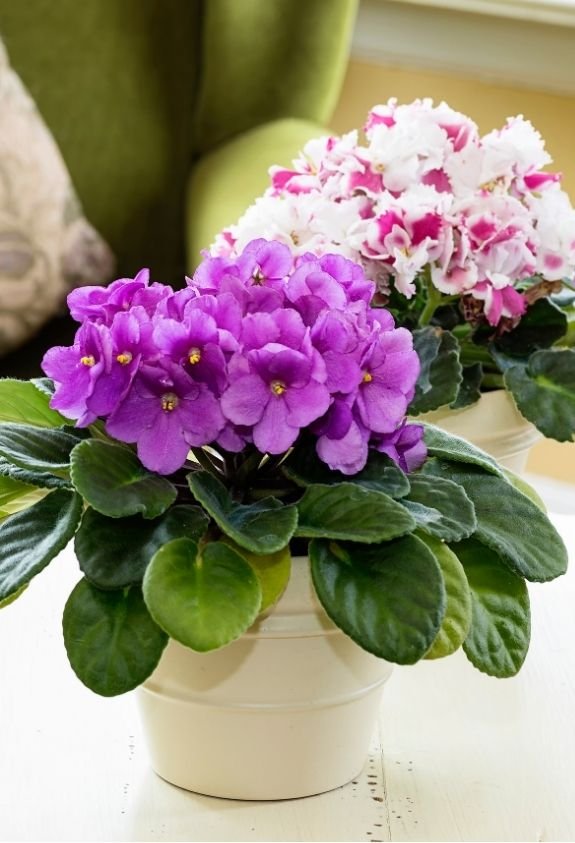
African violets offer pet owners an excellent choice for indoor flowering plants. These plants produce delicate blooms in shades of purple, pink, and white. They pose no toxicity risk to cats or dogs.
African violets thrive in indirect light. They prefer consistent moisture without waterlogging. Well-draining soil works best for these plants. Humidity levels around 50-60 percent help them flourish.
Place them on a shelf or table. This keeps the plants away from pet traffic and potential damage.
Common varieties include ‘Frozen in Time’ and ‘Mac’s Coral Cutie’. Water from below to prevent leaf spots and fungal issues. Regular deadheading of spent flowers encourages continued blooming. These plants remain safe even if pets accidentally ingest foliage or petals.
Bamboo Palm: Tall Statements Without the Toxins
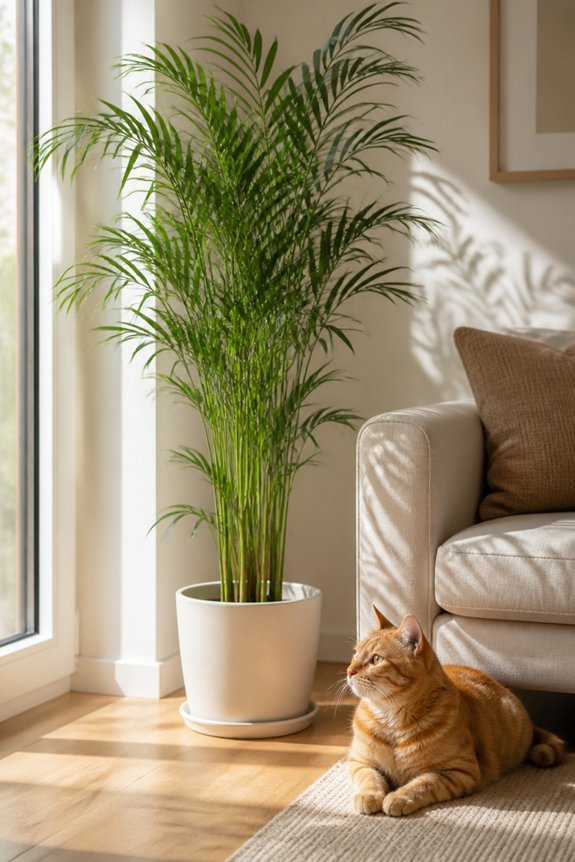
Pet owners can enjoy vertical greenery without worry. The bamboo palm grows 5 to 12 feet tall. It fills corners and bare walls beautifully.
This plant is completely safe for cats and dogs. Your pets can touch or brush against the fronds freely. No toxic compounds means zero risk of poisoning.
Bright, indirect light keeps this palm happy. Water when the soil feels dry to the touch. Aim for humidity around 50 percent, though it adapts to most homes.
Growth is slow and steady. Wipe leaves occasionally to remove dust. That’s all the maintenance it needs.
Watch for spider mites in dry air. A sturdy base prevents tipping if pets bump against it.
Haworthia: Pet-Proof Succulents for Neglectful Waterers
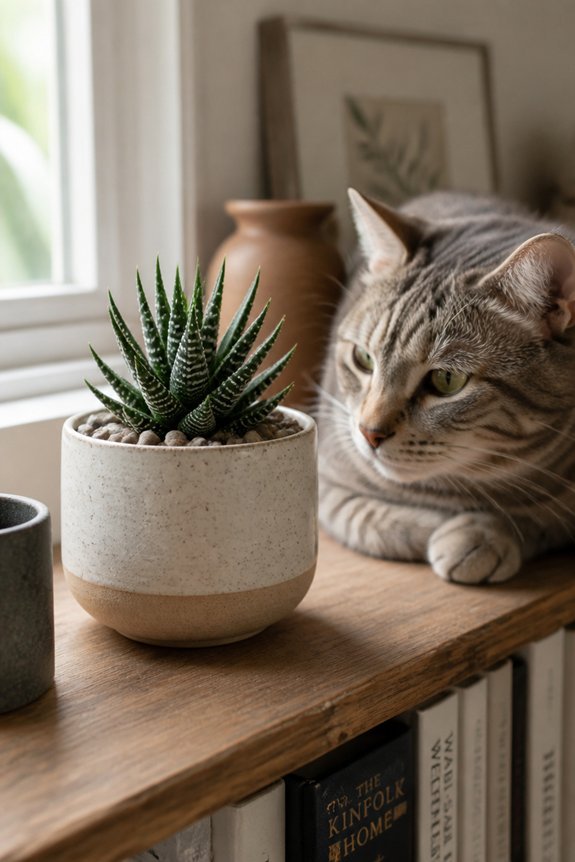
Why choose a plant that needs constant care? Haworthias thrive when you forget about them. These small succulents need little water. This makes them perfect for busy pet owners.
They grow slowly and stay small. Most reach just 3-6 inches tall. You can tuck them onto shelves or desks. Curious pets stay safely out of reach.
Thick leaves store water like a natural reservoir. Monthly watering works fine. Even less often suits them well.
Popular types include H. attenuata and H. fasciata. Both show off cool striped patterns. You get visual appeal without the work.
They grow low to the ground. This means fewer accidents. Pets rarely knock them over or munch the leaves.
Best of all, haworthias pose zero risk to cats and dogs. Eating a leaf causes no harm. Bright, indirect light keeps them happy. Well-draining soil prevents root rot.
These traits add up to one thing: a truly pet-safe plant that forgives neglectful care.
Calathea: Stunning Patterns That Are Completely Non-Toxic
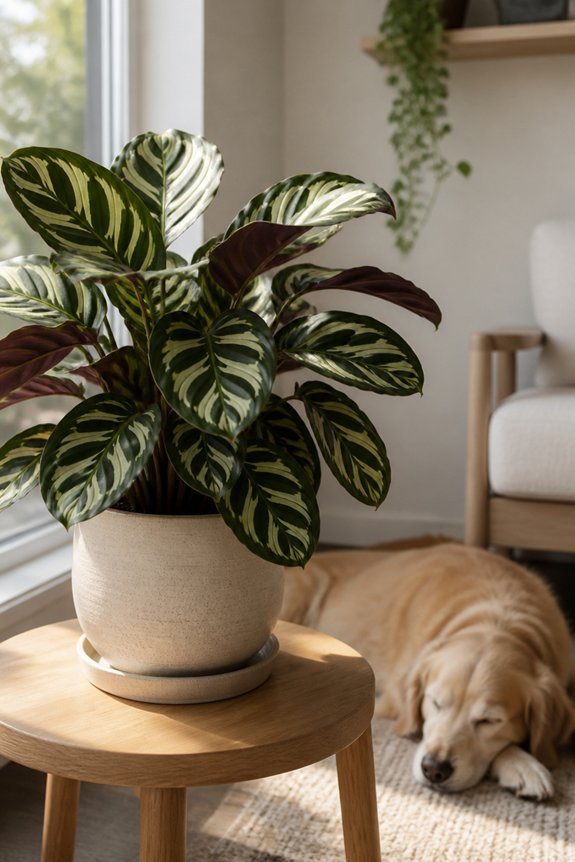
Calatheas bring striking foliage patterns to indoor spaces. They remain completely safe for cats and dogs.
These tropical plants feature bold markings. The Calathea orbifolia shows silver stripes. The Calathea roseopicta has pink undersides.
Calatheas prefer indirect, bright light. They need consistent moisture without waterlogging. These plants thrive in humid environments. Bathrooms often work well as locations.
Water regularly, typically every one to two weeks. Check soil dryness first. Keep temperatures between 65-75°F. Occasional misting helps them stay healthy.
Brown leaf edges signal trouble. Low humidity or mineral buildup in water may be the cause. Use filtered water if needed.
These non-toxic plants add decorative appeal. They pose no ingestion risks to pets. Pet-friendly homes benefit from this practical choice.
Areca Palm: Drama and Height-Safe for Every Pet
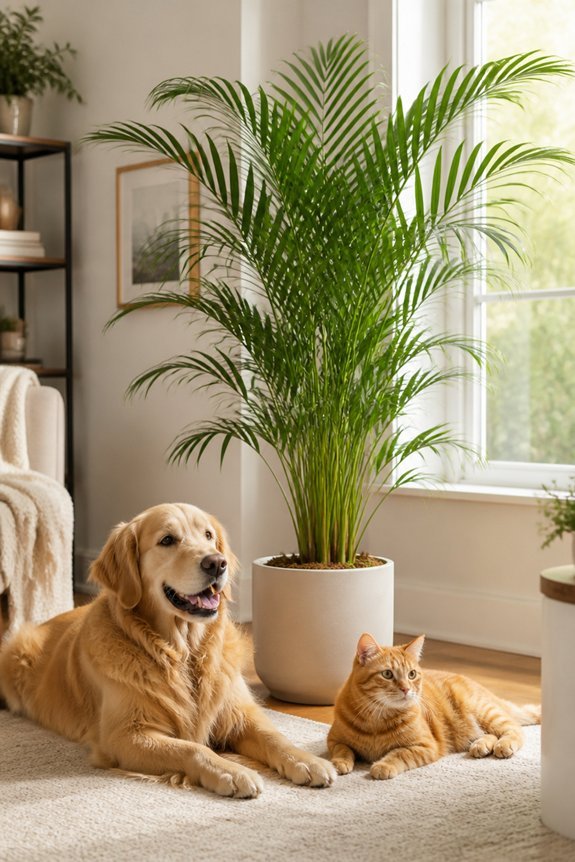
Areca palms bring height and tropical drama to your home without endangering cats or dogs. They stand 6 to 8 feet tall. This makes them perfect statement pieces for living rooms and entryways.
These palms have feathery, yellow-green fronds. The foliage looks full and lush. They thrive in moderate to bright indirect light. Keep the soil consistently moist during growing seasons. Adjust watering based on your home’s humidity and temperature.
Use standard potting mix with good drainage holes. Tall plants can fall if pets bump them. Place yours on a stable surface. Mist regularly to prevent spider mites.
Areca palms deliver tropical beauty. Your animal companions stay safe around them.
Arranging Your Pet-Safe Garden: Light, Water, and Placement
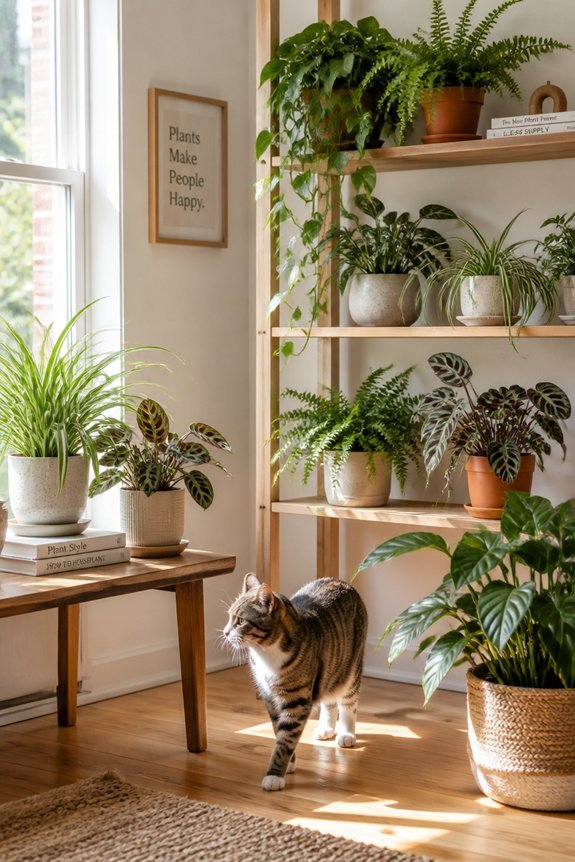
Creating the right space for pet-safe plants comes down to three basics.
Some plants love the shade. Spider plants and pothos do well in low light spots. Others want brighter conditions. Parlor palms thrive near windows with soft, indirect sun. Skip harsh afternoon rays to avoid scorched leaves.
Water carefully for happy roots. Check the top inch of soil with your finger. Dry? Time to water. Wet? Wait a bit. Always pick pots with drainage holes. Root rot creeps in fast when water sits too long.
Keep your pets in mind with every placement choice. Elevated shelves work well for deterring curious chewers. Hanging baskets add safety plus visual interest. Toxic varieties belong far from pet zones entirely. A quick rotation every few months keeps growth even and pests away.
Frequently Asked Questions
What Should I Do if My Pet Ingests a Toxic Plant Accidentally?
Call your vet or an animal poison control line right away. Don’t wait to see if symptoms show up first.
Have the plant name and roughly how much your pet ate ready to share. That detail helps them figure out treatment fast.
Your vet will walk you through next steps based on what your pet is showing.
How Quickly Do Pet-Safe Plants Grow, and When Will They Reach Full Size?
Growth speed really depends on the plant. Spider plants fill out in just a few months, while something like pothos can take six to twelve months to look full.
Most of the plants on this list reach their full size within one to two years if you’re giving them decent light and water.
Patience pays off here, so don’t stress if growth feels slow at first.
Are There Pet-Safe Plants Suitable for Homes With Limited Natural Light?
Yes, and you have more options than you’d think. Pothos, snake plants, and cast iron plants all handle shade really well.
Parlor palms and ZZ plants are also solid picks if your space doesn’t get much sun.
You don’t need a bright window to keep a healthy, pet-safe plant collection going.
Can I Use Fertilizers or Pesticides on Plants Around My Pets Safely?
Not all fertilizers are as harmless as they seem. A lot of standard options contain compounds that aren’t great for curious pets.
Stick to organic, natural fertilizers instead, and skip chemical pesticides altogether.
There are plenty of pet-safe alternatives out there, so you’re not stuck choosing between healthy plants and a safe home.
Which Pet-Safe Plants Are Best for Homes With Multiple Cats and Dogs?
Spider plants, Boston ferns, African violets, and parlor palms all handle busy multi-pet households well.
They can take the occasional nibble without any issue, and none of them are toxic if your pets do decide to taste test.
That combination makes them an easy, low-worry choice when you’ve got more than one furry friend running around.
Conclusion
Building a plant collection your pets can actually be around doesn’t take nearly as much effort as it sounds like.
Once I swapped out the riskier plants in my own place, I stopped worrying every time I caught my cat sniffing around a new pot.
Spider plants, Boston ferns, and parlor palms proved that safe and beautiful aren’t mutually exclusive.
A little attention to placement, light, and watering keeps both your plants and your pets thriving side by side.
Knowing which species are safe takes the guesswork out of decorating with greenery.
Have a favorite pet-safe plant that’s survived your own curious cat or dog? Drop it in the comments, I’d love to hear what’s working in your home.