

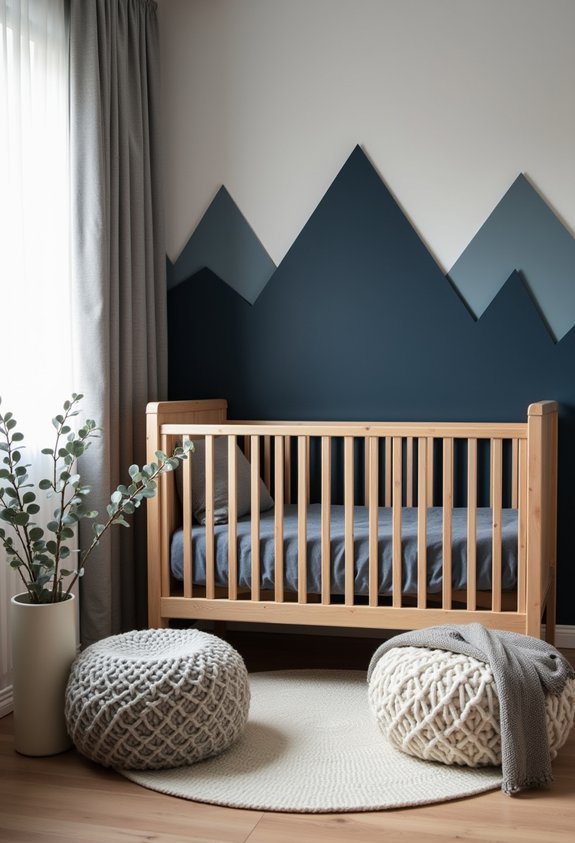
You’re designing a space that’ll shape your little one’s earliest memories, so your nursery’s accent wall deserves careful thought. The right wall treatment transforms a plain room into something special—whether you choose bold navy stripes that draw the eye upward or a serene mountain mural that grows with your child. We’ve rounded up fifteen approaches that balance visual interest with practicality, from geometric patterns to interactive surfaces. Here’s how to pick the perfect backdrop.
Navy and White Striped Statement Wall
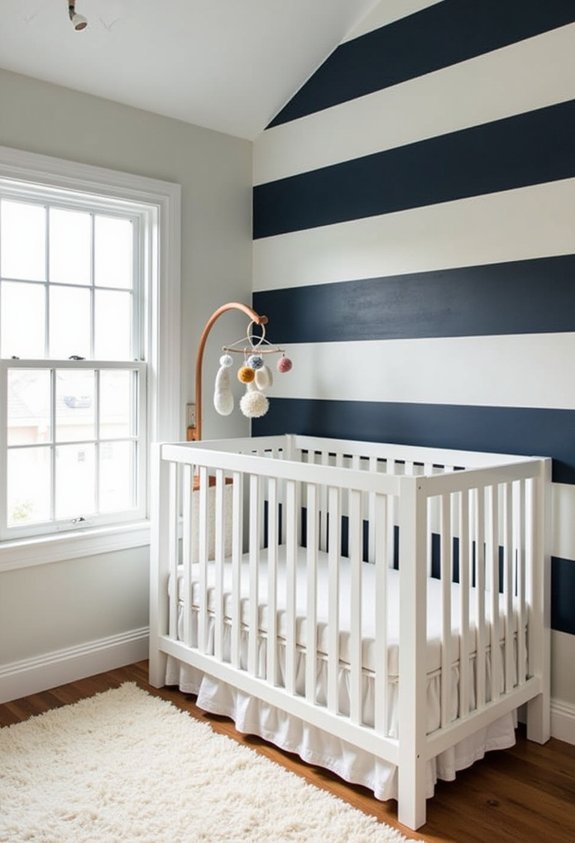
A classic navy and white striped accent wall brings instant sophistication to any baby boy’s nursery. You’ll want to use painter’s tape for crisp, professional lines. We recommend 12-inch stripes for standard 8-foot ceilings, though 8-inch stripes work beautifully in smaller spaces.
Start by painting the entire wall white as your base coat. Mark your stripe intervals with a pencil and level. Apply tape carefully along these marks, then paint your navy stripes using a foam roller for smooth coverage.
Designer Maria Chen notes, “Vertical stripes create the illusion of higher ceilings, which helps nurseries feel more spacious.”
Pair this wall with natural wood furniture and brass accents. The Sherwin-Williams Naval SW 6244 offers excellent depth without appearing too dark.
Also read: 17 Beautiful Fence and Deck Railing Ideas to Transform Your Outdoor Space
Mountain Range Mural in Muted Tones
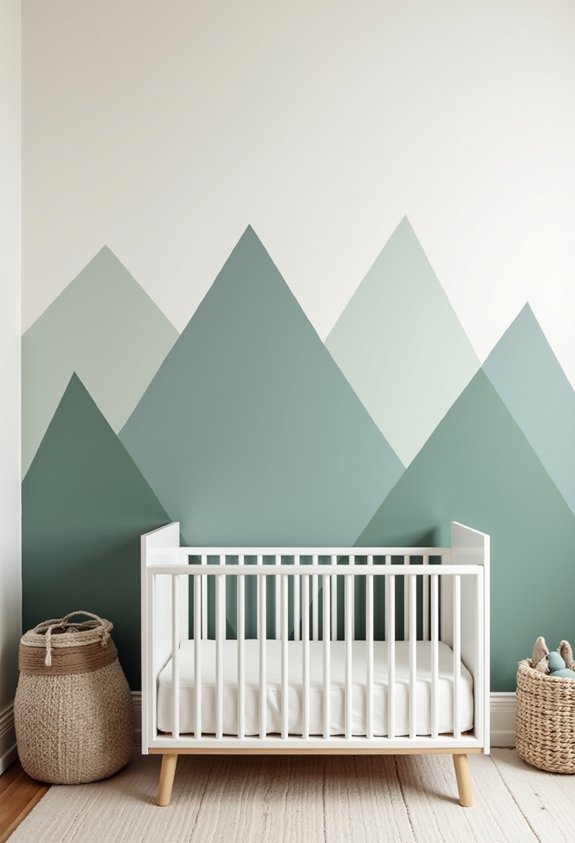
While stripes offer geometric precision, mountain range murals bring organic movement to your nursery walls. You’ll create depth using soft grays, sage greens, and dusty blues that won’t overwhelm your baby’s developing vision.
Start with repositionable wall decals from RoomMates if you’re renting. Peel-and-stick options let you adjust placement until it’s perfect. For permanent installations, consider hand-painting using Benjamin Moore’s “Gray Owl” and “Palladian Blue” for a custom gradient effect.
Interior designer Sarah Mitchell notes, “Muted mountain murals provide visual interest without the stimulation of bright colors, making them ideal for sleep spaces.”
Position your mountain peaks at crib height—roughly 30 inches from the floor. This placement draws your baby’s gaze upward during awake time. We can’t get enough of this nature-inspired trend.
Geometric Triangle Pattern in Blue and Gray
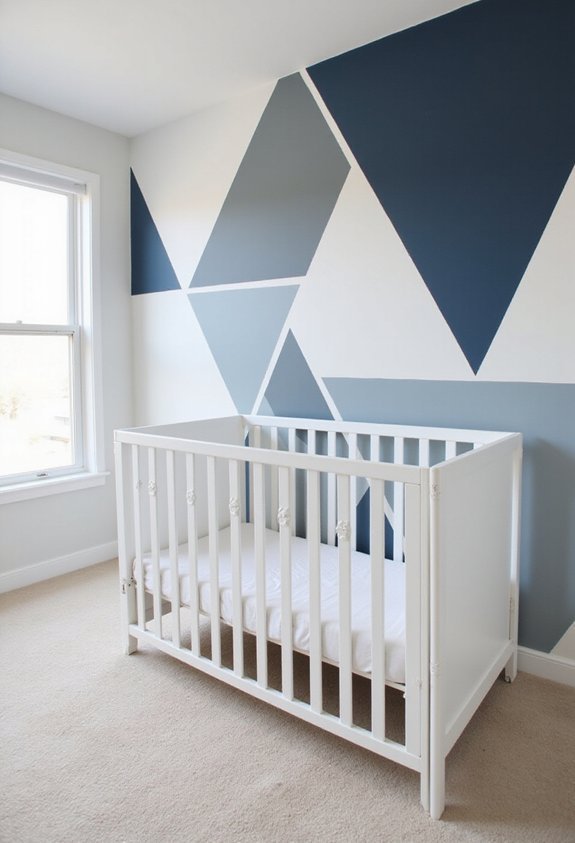
When geometric shapes meet calming colors, you get the perfect modern nursery accent wall that grows with your child. Triangle patterns create visual interest without overwhelming the space. Use painter’s tape to mark crisp lines, alternating between slate blue, charcoal gray, and soft white triangles in 12-inch dimensions.
Peel-and-stick wallpaper from Spoonflower offers removable geometric options if you’re renting. We can’t get enough of their customizable triangle scales. Designer Sarah Richardson notes, “Geometric patterns provide stimulation for developing eyes while maintaining sophistication parents appreciate.”
Consider painting triangles in an ombré gradient from dark to light, moving from floor to ceiling. This technique adds depth and makes standard 8-foot ceilings feel taller. Pair your geometric wall with solid-colored furniture to prevent pattern clash.
Woodland Forest Wall Decal Scene
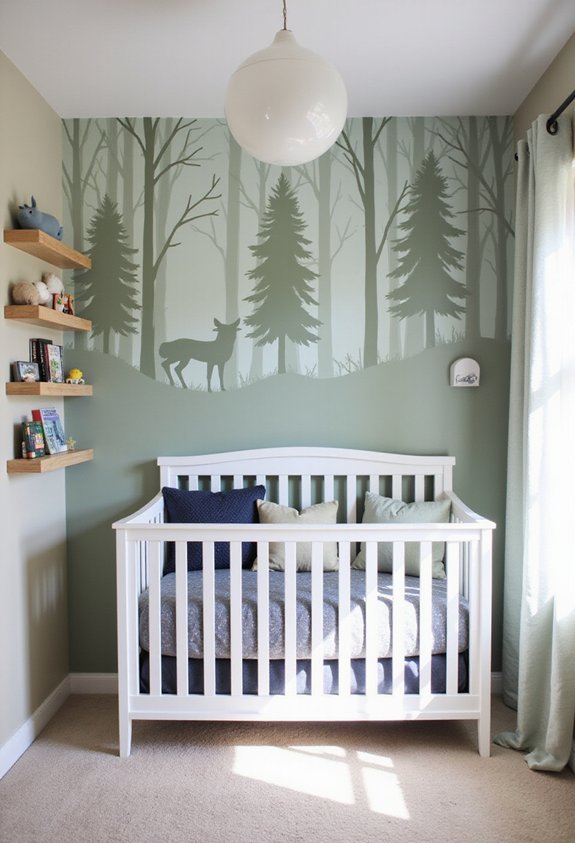
Transform your baby’s nursery into an enchanting forest retreat with carefully positioned wall decals that tell a visual story. Start with a base of birch trees along one wall, spacing them 18-24 inches apart for realistic depth. Layer woodland creatures like foxes, deer, and owls at different heights to create visual interest. RoomMates’ peel-and-stick decals work exceptionally well because they’re repositionable and damage-free.
Position larger elements like pine trees near the ceiling to draw eyes upward, making standard 8-foot walls feel taller. Add smaller mushrooms and ferns at baseboard level for ground coverage. Interior designer Maria Chen notes, “Forest scenes provide calming green tones that promote better sleep patterns in infants.”
Complete your woodlandscape with mountain silhouettes behind the trees. This layering technique adds dimensional sophistication without overwhelming your space.
Chalkboard Paint Wall for Future Creativity
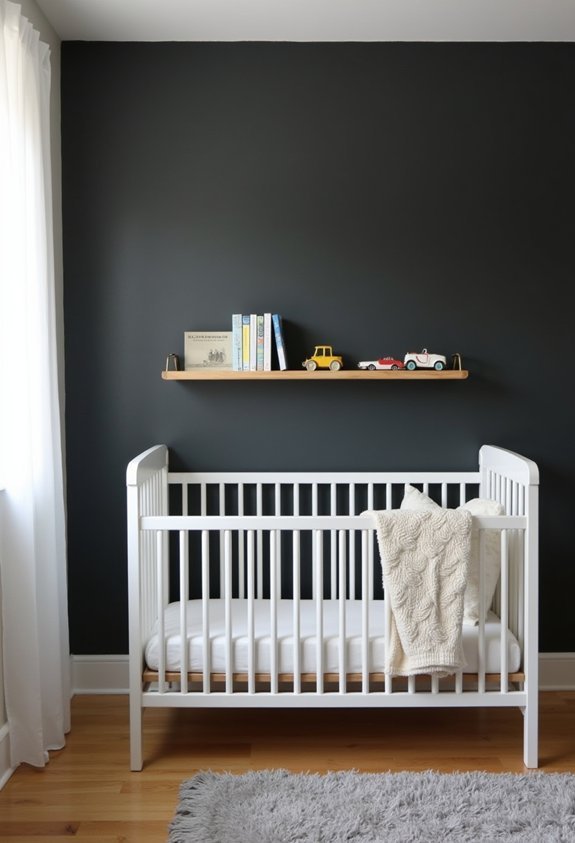
Though your baby won’t pick up chalk for several years, installing a chalkboard accent wall now creates a growth-friendly feature that evolves with your child. Apply two coats of magnetic chalkboard paint across one 8-foot wall. This transforms the space into an interactive canvas for drawing, learning numbers, and displaying artwork with magnets.
Choose low-VOC formulas from brands like Rust-Oleum or Benjamin Moore for nursery safety. Frame the chalkboard section with white trim molding to define the creative zone. Position it opposite the crib where toddlers can safely reach the lower portions.
Interior designer Maria Santos notes, “Chalkboard walls eliminate the need for multiple décor updates as children develop new interests and skills.”
Include a small wall-mounted caddy for storing chalk and erasers within your reach.
Textured Wood Plank Accent Wall
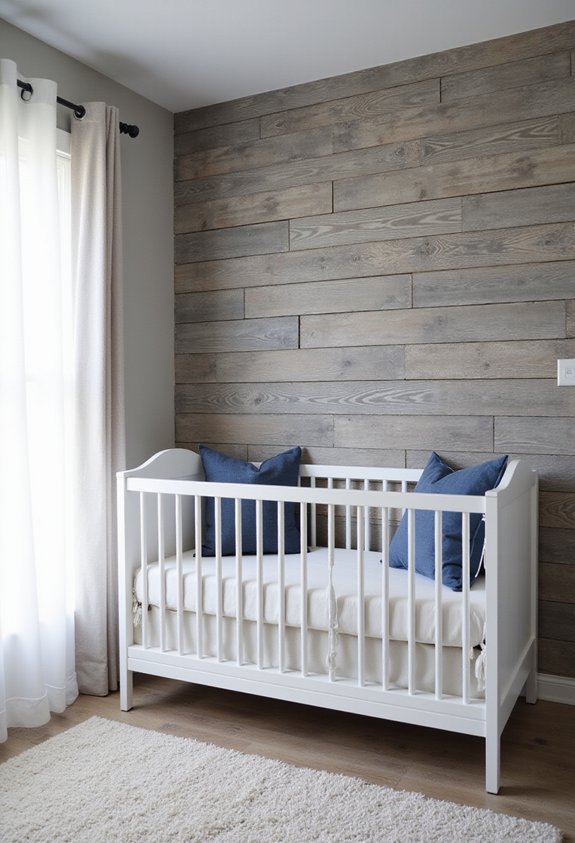
Natural wood planks add warmth and dimension that painted walls simply can’t match. You’ll create instant texture by installing reclaimed barnwood panels or whitewashed shiplap behind the crib. These materials bring an organic, grounded feeling to your nursery design.
Consider Stikwood’s peel-and-stick planks if you’re renting or want easy installation. They come in weathered finishes perfect for a rustic-modern blend. Horizontal placement makes rooms feel wider, while vertical orientation adds height.
Interior designer Sarah Richardson notes, “Wood accent walls introduce natural elements that grow with your child’s evolving taste.“
Mix plank widths for added visual interest. You can pair light oak with medium walnut tones for subtle contrast. Seal the wood properly to prevent splinters and maintain durability through those energetic toddler years.
Celestial Moon and Stars Design
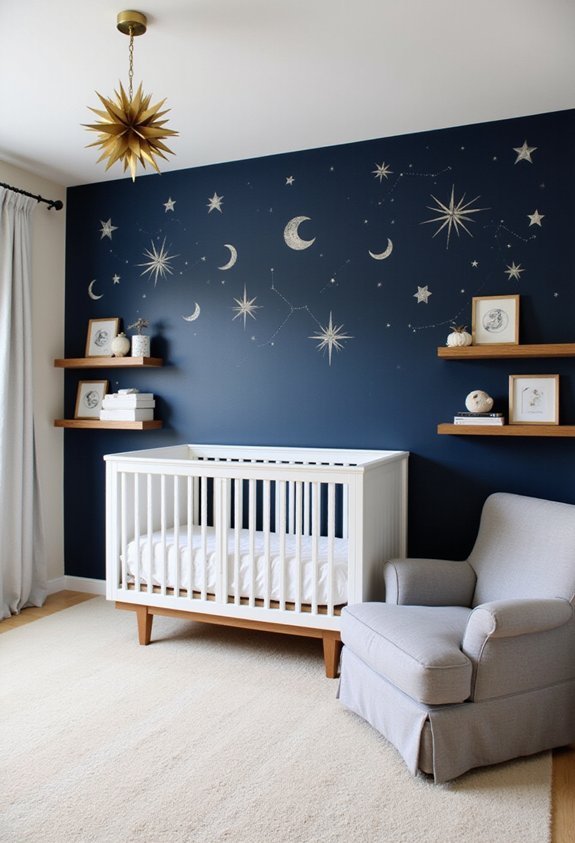
A celestial-themed accent wall creates the perfect backdrop for peaceful sleep while sparking your little one’s imagination. You’ll want to start with a deep navy or midnight blue base color. Hand-painted gold stars in varying sizes add dimension without overwhelming the space.
Consider Pottery Barn Kids’ constellation wall decals ($49) for an easier application. They’re removable and repositionable, perfect for renters. Position a large crescent moon as your focal point, roughly 18-24 inches in diameter.
Interior designer Maria Chen notes, “Metallic gold or silver accents catch morning light beautifully, creating a gentle shimmer that soothes rather than stimulates.”
Layer in glow-in-the-dark stars from Hape ($16) near the ceiling. We can’t get enough of this magical nighttime effect.
Safari Animal Silhouette Wall
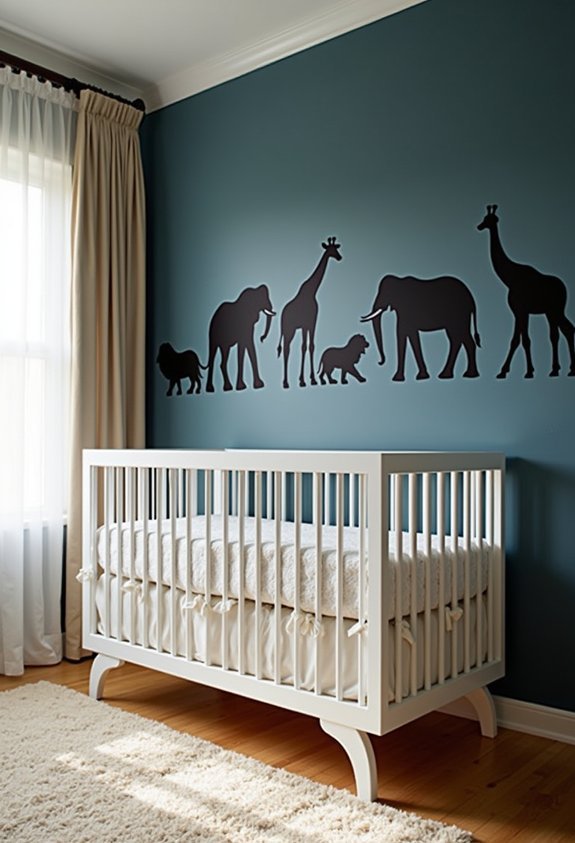
While celestial themes look upward for inspiration, safari designs bring the wonder of the wild kingdom straight to your nursery walls. You’ll create instant impact with oversized animal silhouettes in matte black or deep charcoal against a neutral backdrop.
Start with a giraffe stretching toward the ceiling, paired with an elephant and lion at varying heights to establish visual rhythm. The Oopsy Daisy Safari Silhouette Collection offers pre-cut decals in three size options. Position your largest figure as the focal point, then layer smaller animals around it.
Interior designer Marcus Chen notes, “Silhouettes work beautifully because they’re sophisticated enough to evolve beyond the baby years.”
Add dimension with 3D wooden animal heads from Fiona Walker England. We can’t get enough of their felt safari collection.
Vintage World Map Wallpaper
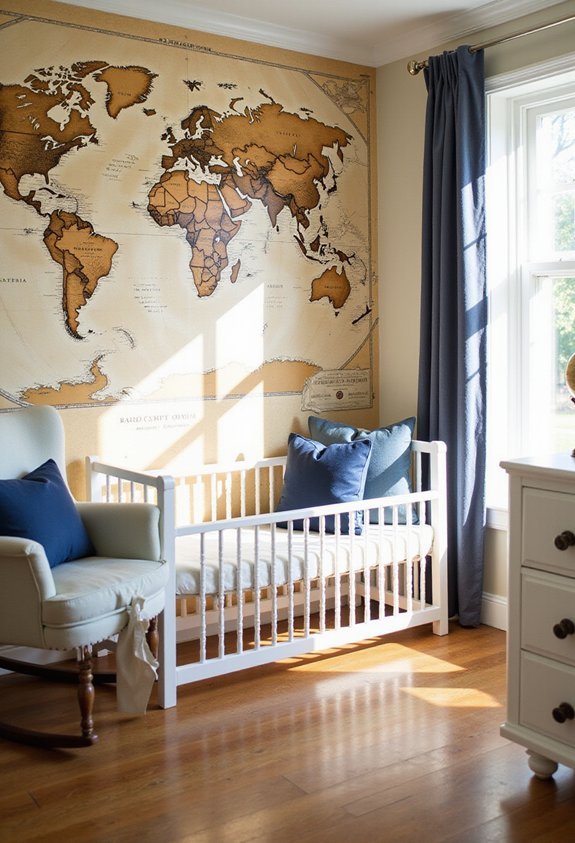
Wanderlust meets timeless elegance when you transform your nursery wall with vintage cartography. Muted beige and seafoam tones create a sophisticated backdrop that’ll grow alongside your little explorer. Install peel-and-stick versions from Tempaper for hassle-free application and future removal.
Consider papered maps showing antique continents with faded compass roses and sailing route illustrations. These pre-aged designs bring instant character without overwhelming tiny spaces. Frame the wall with white wainscoting for architectural definition.
“Vintage map wallpapers introduce educational elements while maintaining nursery softness,” notes interior designer Claire Morrison. Pair this global aesthetic with brass airplane mobiles and leather accents. We can’t get enough of how these geographic patterns spark curiosity from day one, establishing a foundation for future adventures and learning opportunities.
Modern Hexagon Pattern Wall
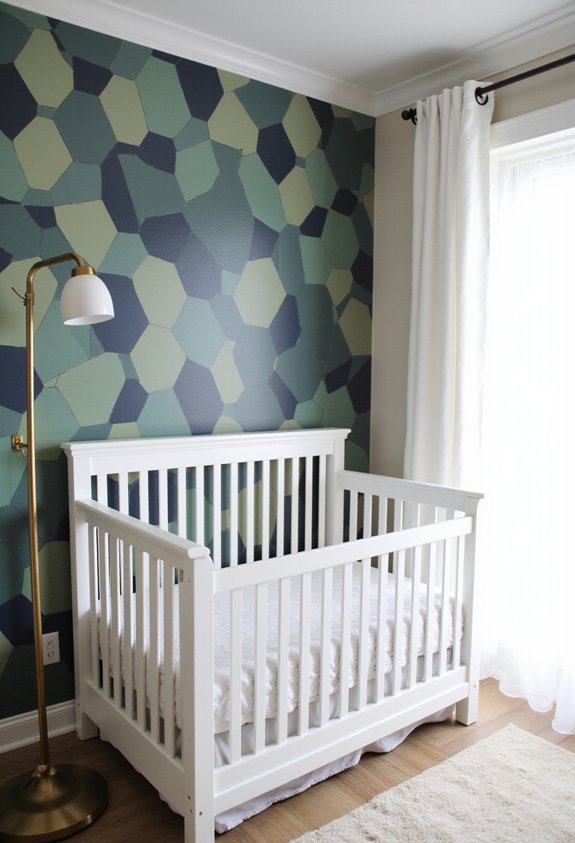
Geometric precision brings contemporary sophistication to your baby boy’s sanctuary through hexagon-patterned accent walls. You’ll find peel-and-stick options like WallPops’ Hexagon Collection particularly nursery-friendly since they’re removable and repositionable. Choose navy and gray combinations for a masculine palette that’ll evolve seamlessly into toddler years.
Paint stencils offer budget-conscious alternatives. The 12-inch Martha Stewart Hexagon Stencil creates impressive dimension when you layer three complementary shades. We can’t get enough of dusty blue, slate, and cream combinations.
Interior designer Rachel Thompson notes, “Hexagonal patterns provide visual interest without overwhelming a small space—they’re mathematically pleasing to the eye.”
Consider wood hexagon tiles for textural depth. Arrange them in ombré gradients or randomized color clusters. Mount them at crib-viewing height, roughly 24-36 inches from the floor, for maximum impact.
Ocean Wave Ombré Paint Effect
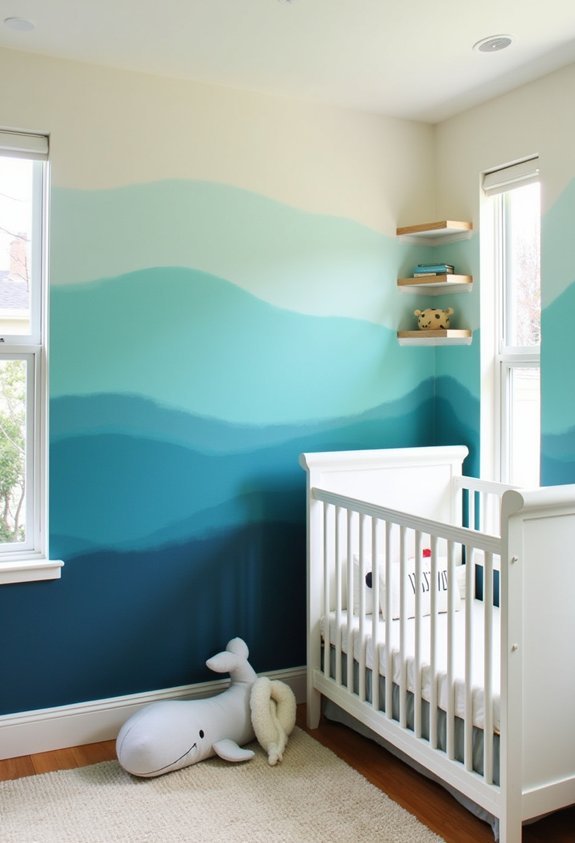
How do you capture the tranquil movement of seaside waves in your nursery? An ocean wave ombré creates depth through gradual color alterations from deep navy to soft sky blue. Start at the bottom with your darkest shade, blending upward in horizontal bands.
You’ll need three to five coordinating paint shades for seamless graduation. Benjamin Moore’s “Hale Navy” modifies beautifully through “Van Deusen Blue” to “Breath of Fresh Air” at the ceiling line.
Interior designer Maria Chen recommends using a large sea sponge and working in two-foot sections while the paint stays wet, ensuring smooth color melding between bands.
Pair this technique with white nautical shelving and rope-wrapped frames to complete the coastal aesthetic. The soft gradient promotes restful sleep while maintaining visual interest throughout the room.
Rustic Brick Exposed Wall Look
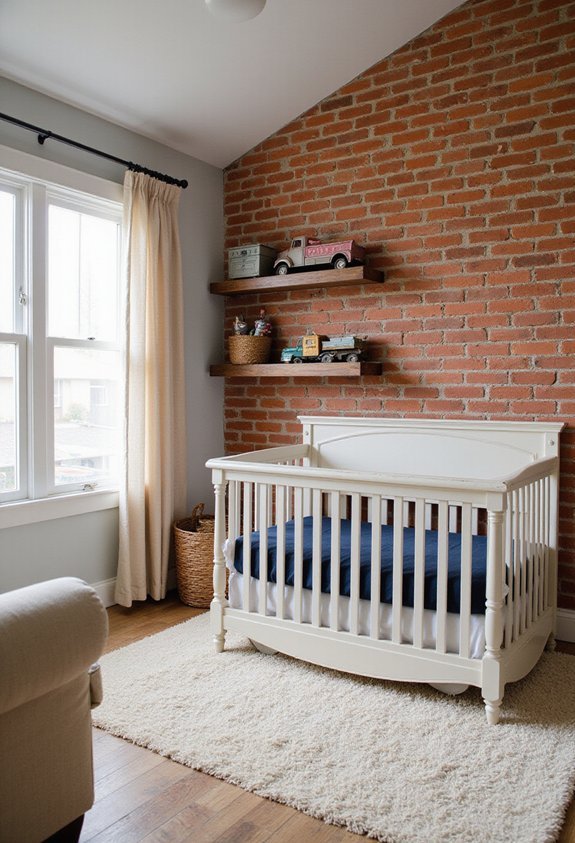
The warmth of weathered brick introduces urban character without overwhelming a baby’s space. You’ll find authentic exposed brick in older homes, but faux alternatives work beautifully too. Peel-and-stick brick panels from NextWall ($35 per 18×20-foot roll) install in minutes without damaging walls beneath.
Real brick requires sealing to prevent dust. Apply Thompson’s WaterSeal Masonry Protector before adding furnishings. Pair the rustic texture with soft elements like cable-knit blankets and leather accents for balance.
“Brick adds instant architecture to flat walls,” notes designer Rebecca Atwood. “It grounds playful nursery elements with grown-up sophistication.”
Consider whitewashing your brick wall for lighter spaces. Mix latex paint with water at a 1:1 ratio, then brush over the surface. This technique softens the industrial edge while preserving texture.
Cloud-Themed Soft Blue Wall
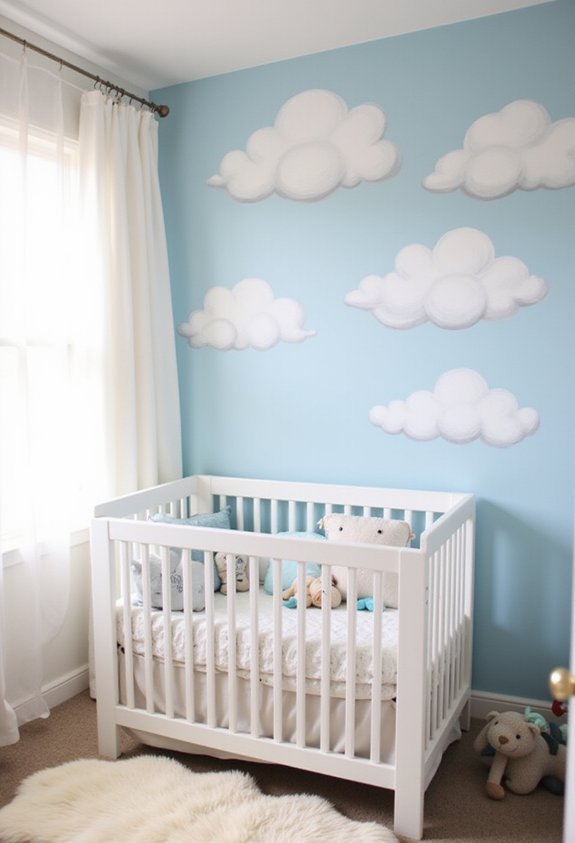
Soft blue walls create an instant sense of calm that benefits both baby and parent during those 2 a.m. feedings. You’ll want to choose a shade like Benjamin Moore’s “Breath of Fresh Air” or Sherwin-Williams “Atmospheric.” These colors work beautifully with white cloud decals scattered across the wall. Position three large clouds near the crib and smaller ones trailing upward.
Interior designer Maria Chen notes, “Cloud motifs tap into that dreamy, peaceful aesthetic parents crave for nurseries.”
Add dimensional elements with 3D foam clouds from RoomMates. They’re removable and won’t damage paint. Consider a subtle gradient effect, shifting from deeper blue at the baseboard to nearly white at the ceiling. This technique mimics a real sky and adds visual interest without overwhelming the space.
Transportation and Vehicle Gallery Wall
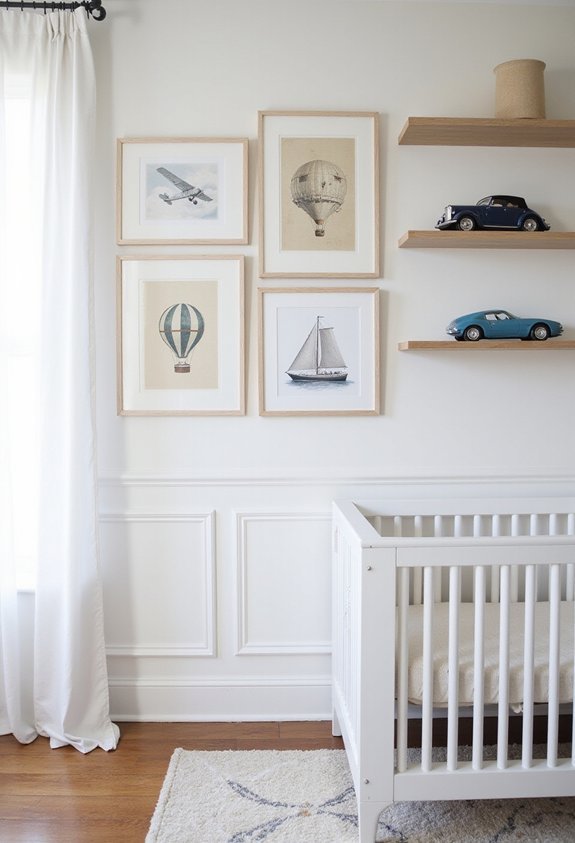
While clouds evoke serenity, many parents want something more dynamic for their little explorer. A transportation gallery wall delivers exactly that energy. Start with a vintage airplane print as your anchor piece, positioned at eye level above the crib. Flank it with smaller train and car illustrations in matching frames.
You’ll want frames in consistent finishes—matte black or natural wood work beautifully. Space them 2-3 inches apart for visual cohesion.
Interior designer Rachel Monroe notes, “Vehicle-themed walls grow with your child, shifting seamlessly from nursery to big-kid room.”
Add dimensional elements like a small wooden propeller or metal road sign. IKEA’s LILLABO wall hooks shaped like vehicles serve double duty as décor and storage. This approach creates movement without overwhelming the space.
Bold Color Block Painted Sections
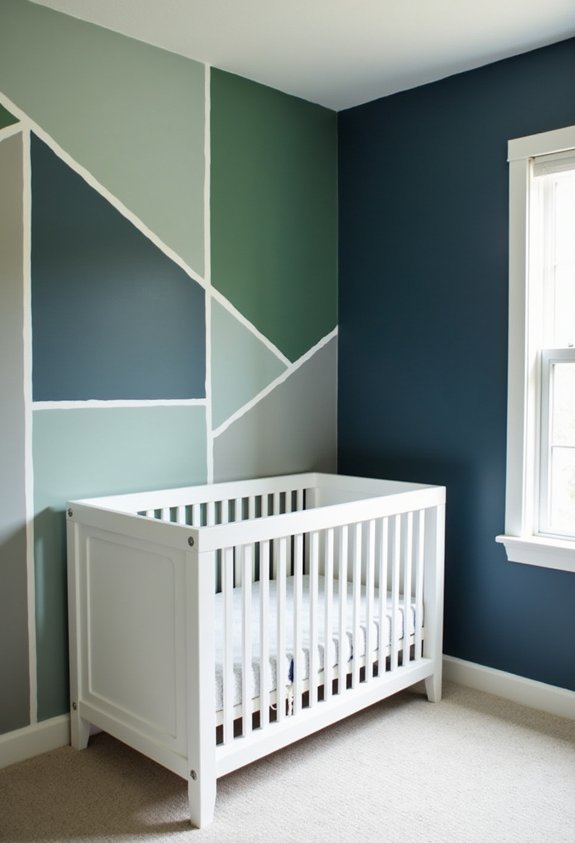
When you’re ready to make a statement without wallpaper or decals, geometric color blocking transforms a nursery wall instantly. Start with painter’s tape to section off two or three bold areas. Navy blue paired with soft gray creates sophisticated contrast, while sage green with cream offers gentler definition.
Consider a horizontal split at chair rail height (36 inches from the floor) to visually expand smaller nurseries. Vertical blocks work beautifully behind the crib, drawing eyes upward and adding perceived height to standard 8-foot ceilings.
Designer Emma Caldwell notes, “Color blocking lets parents experiment with trends without committing entire rooms to saturated hues.”
Try Benjamin Moore’s Van Deusen Blue with Decorator’s White for classic appeal. Behr’s Blueprint and Swiss Coffee combination we can’t get enough of lately.
Frequently Asked Questions
What Type of Paint Finish Is Safest for Baby Nursery Walls?
You’ll want to use low-VOC or zero-VOC paint with a washable finish for your baby’s nursery. Eggshell or satin finishes work best since they’re easy to clean and don’t emit harmful chemicals as they dry.
How Do I Prepare Nursery Walls Before Adding an Accent Design?
Clean your walls thoroughly with mild soap and water, then let them dry completely. Fill any holes or cracks with spackling paste, sand smooth, and wipe away dust. Prime if you’re painting over dark colors.
Can Accent Walls Affect a Baby’s Sleep or Mood Patterns?
Yes, they can. You’ll want to choose calming colors like soft blues or greens rather than bright, stimulating shades. Bold patterns might overstimulate your baby, while gentler designs promote better sleep and relaxation in the nursery.
What’s the Average Cost to Create an Accent Wall in Nursery?
You’ll typically spend between $50 and $500 for a nursery accent wall, depending on your chosen method. Paint’s cheapest at $50-100, while peel-and-stick wallpaper costs $100-300, and traditional wallpaper or wood panels run $300-500.
When Should I Complete the Accent Wall Before Baby’s Arrival?
You’ll want to finish your accent wall at least 4-6 weeks before your baby arrives. This timeline allows paint fumes to dissipate completely and gives you time to assemble furniture without rushing through the final weeks.
Conclusion
You’ve explored nine distinctive accent wall styles that’ll transform your baby boy’s nursery into something special. Now it’s time to choose the design that speaks to you. Consider your existing furniture and lighting when making your selection. Don’t hesitate to combine elements—perhaps pairing geometric patterns with woodland accents. Remember, you’re creating a space that’ll grow alongside your child, so pick what feels right for your family’s unique style.

