

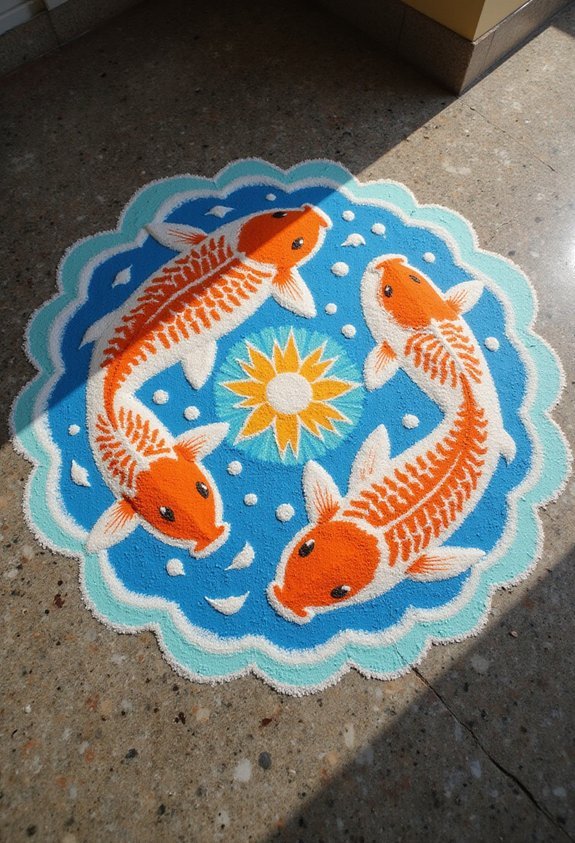
You’ve seen geometric patterns and floral motifs grace entryways for generations, but kolam koi designs bring something entirely different to your floors. These swimming symbols of prosperity and transformation merge traditional Indian floor art with Japanese-inspired aquatic elegance. Whether you’re drawn to minimalist single-fish outlines or intricate pond scenes complete with lotus blooms and lily pads, there’s a koi kolam that matches your skill level and aesthetic vision. The real question is which design will transform your space first.
Classic Single Koi With Lotus Bloom Border
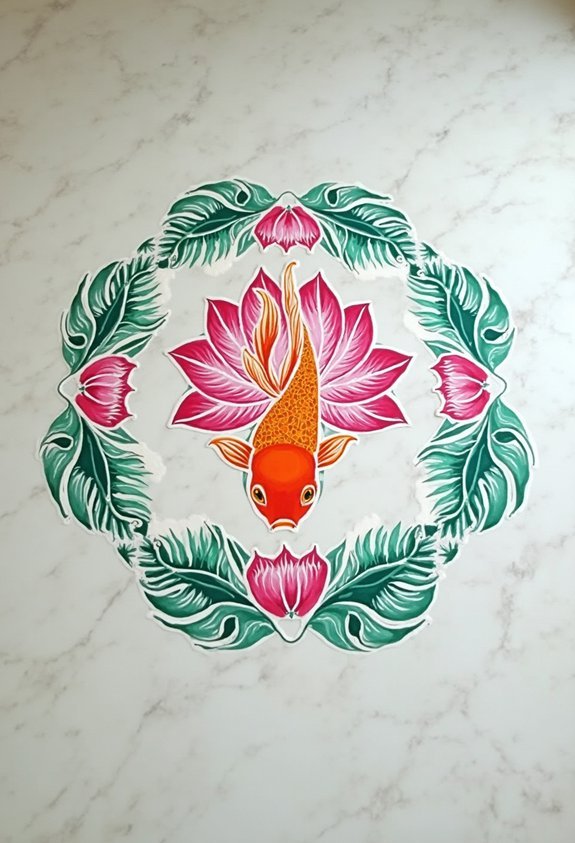
A single koi swimming beneath delicate lotus blooms creates an elegant focal point that never goes out of style. This traditional design works beautifully in entryways measuring 4×6 feet or compact balcony spaces. You’ll want to use white rice flour for the lotus petals and vibrant orange-red powder for your koi’s body.
Start with a central circle approximately 18 inches in diameter. Draw your koi first, then add lotus blooms radiating outward. The contrast between the fish’s curved movement and the flowers’ geometric symmetry creates visual interest that draws the eye naturally.
“The lotus-koi pairing represents prosperity and spiritual growth in many cultures,” notes kolam artist Priya Sundaram. We can’t get enough of how this design balances simplicity with meaningful symbolism, making it perfect for both daily practice and special occasions.
Also read: 25 Elf on the Shelf Marshmallow Moments That Are Too Adorable to Skip
Twin Koi Circle Dance Pattern
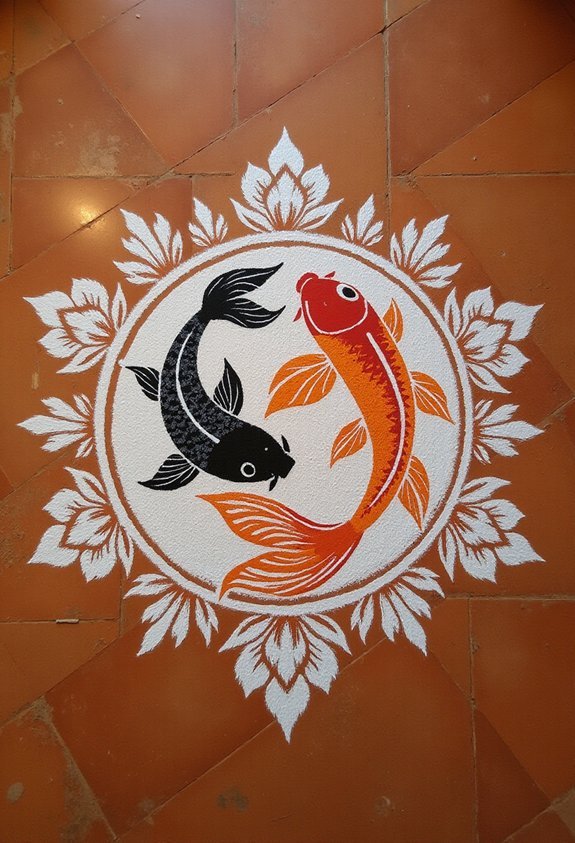
When two koi swim in circular harmony, they’ll transform your kolam into a dynamic meditation on balance and partnership. Position each fish head-to-tail in a 36-inch diameter circle for ideal visual flow. Use contrasting rice flour colors—pristine white against charcoal gray works beautifully for defining individual scales and flowing fins.
Start with the outer circle boundary, then sketch both koi bodies curving counterclockwise. Fill negative space with dots measuring quarter-inch diameter, spacing them half-inch apart for traditional texture. Interior designer Priya Menon notes, “Circular koi patterns create natural eye movement that draws guests into your entryway.”
We can’t get enough of adding small lotus buds between the fish tails. This 90-minute design suits experienced practitioners ready for intermediate symmetry challenges.
Minimalist Koi Outline for Beginners
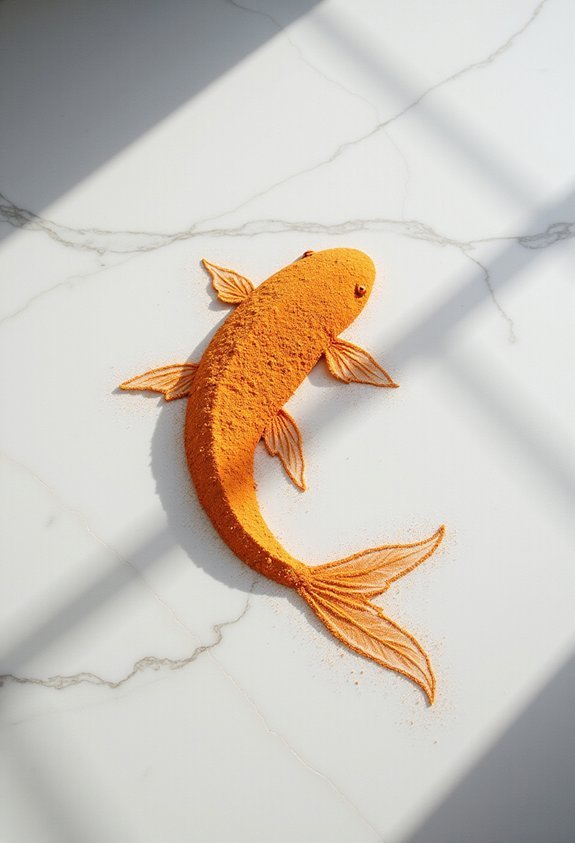
Since complex patterns can overwhelm newcomers, you’ll find this single-stroke koi design perfect for your first kolam attempt. Start with a 2-foot square space near your entrance. You’ll need white rice flour and a steady hand—nothing more.
Draw the fish’s body using one continuous curved line. Think of tracing a gentle S-shape that widens at the center. Add a simple tail with three flowing strokes. Mark the eye with a single dot positioned one-third from the head.
“Beginners should practice the basic outline on paper before transferring it to the floor,” notes kolam artist Priya Sundaram.
This design takes just five minutes to complete. We can’t get enough of its clean, modern aesthetic that complements contemporary entryways.
Elaborate Multi-Koi Pond Scene
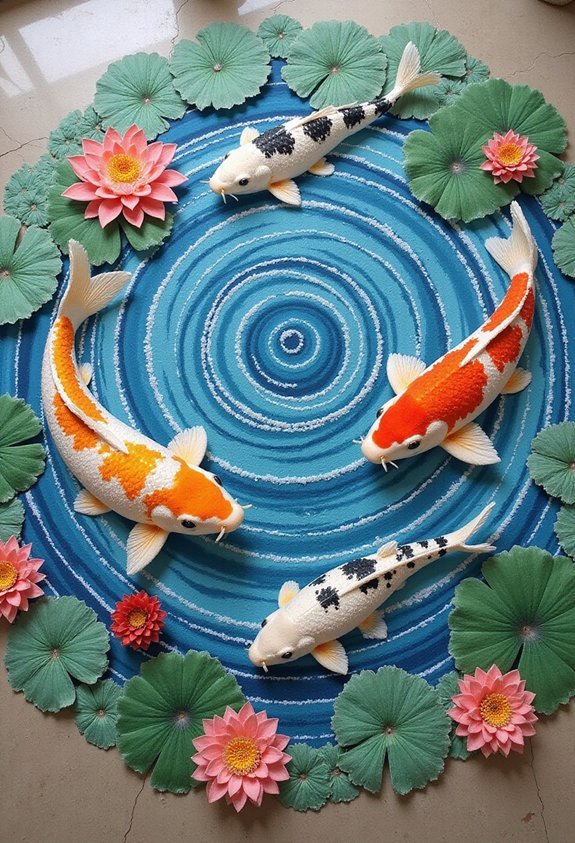
Once you’ve mastered the basic outline, you’re ready to tackle a sprawling pond scene with multiple koi swimming in harmony. Start by sketching three to five fish in varying sizes, each positioned at different angles to create dynamic movement across your 4×6 foot floor space. Layer lotus flowers and lily pads between the koi using traditional kolam dots as connection points. Use white rice flour for the pond’s surface ripples, then add orange and black rangoli powder for authentic koi coloring. Interior designer Priya Malhotra notes, “Depth comes from overlapping elements—place smaller koi behind larger ones.” Consider chalk pastels for blending scales and adding shadow details. This elaborate design typically requires two to three hours but delivers museum-quality results.
Geometric Koi With Mandala Elements
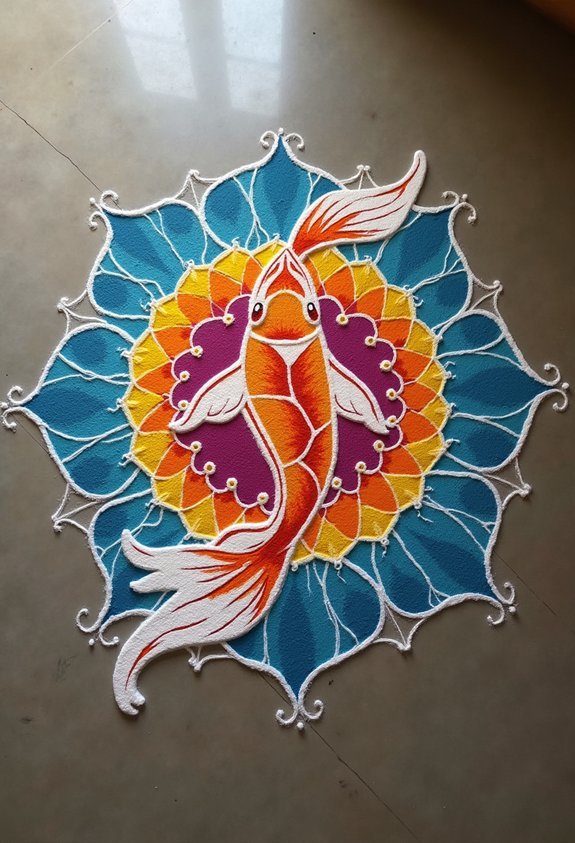
For those who prefer structure over organic flow, geometric koi designs merge traditional kolam symmetry with Japanese fish imagery in unexpected ways. You’ll start with a mandala base—typically 24 to 36 inches in diameter—then integrate angular koi swimming through the circular pattern. We can’t get enough of designs featuring triangular scales and hexagonal water ripples.
Interior designer Priya Mehta notes, “The mathematical precision appeals to modern minimalists while honoring cultural roots beautifully.”
Try outlining your koi with straight edges rather than curves. Use metallic rangoli powders in copper and silver for the geometric elements. Position three koi at 120-degree intervals for balanced composition. The Arteza Premium Rangoli Set works perfectly for these crisp lines. Add dotted mandalas between each fish to fill negative space effectively.
Flowing Koi With Water Ripple Details
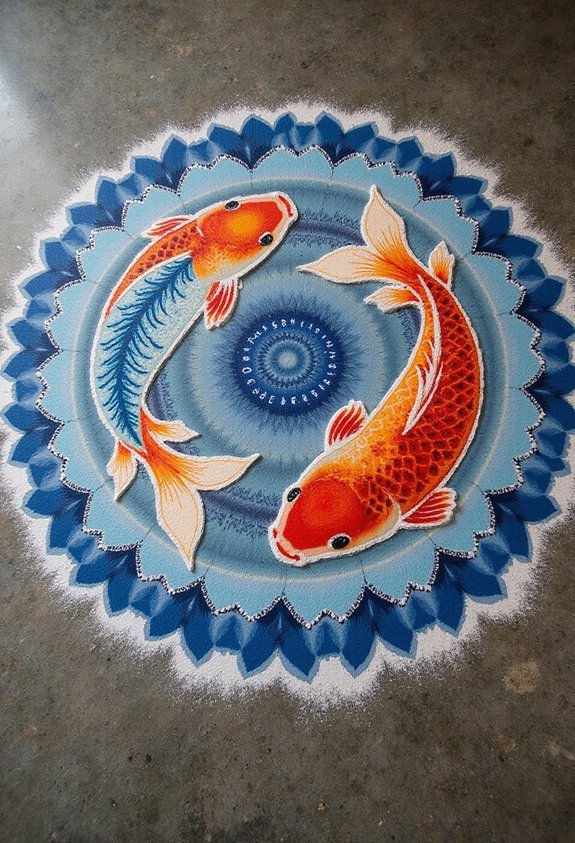
While geometric designs command attention through angles, flowing koi designs capture the graceful movement of fish gliding through water with organic curves and ripple effects. You’ll create these patterns using continuous, sweeping lines that mimic natural swimming motions.
Start with curved fish bodies measuring 18-24 inches long. Add concentric circles around each koi to represent water ripples. Space these circles 2-3 inches apart for visual balance.
The Alpona Kolam Stencil Set ($24) helps maintain consistent curve radii throughout your design. Layer multiple fish at different depths to suggest underwater movement.
Interior designer Priya Sharma notes, “Ripple details add dimensionality that flat patterns can’t achieve.”
Use white rice flour for base outlines, then accent ripples with turmeric yellow or indigo blue for enhanced depth perception.
Colorful Rainbow Koi Festival Design
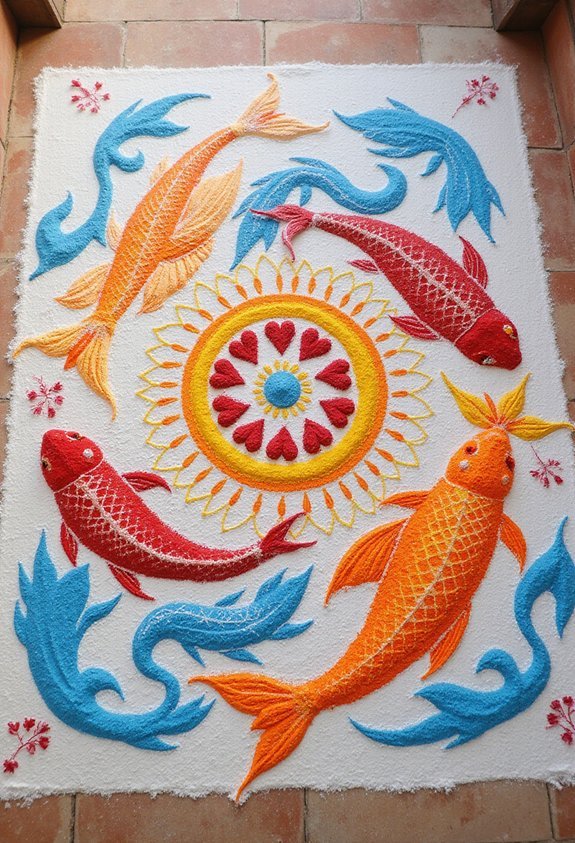
Rainbow koi designs transform traditional kolam art into vibrant celebrations that work beautifully for Diwali, Pongal, or spring festivals. You’ll create a stunning centerpiece by arranging multiple koi in a circular pattern, each fish rendered in different colors—crimson, orange, golden yellow, emerald green, and deep purple. Use Rangoli Natural Color Powder Sets (24-piece collections work best) to achieve smooth color shifts between each fish.
Position your largest koi at 18-20 inches length as focal points. Then surround them with smaller 10-12 inch companions swimming in alternating directions. Interior designer Priya Malhotra notes, “Multi-colored koi kolams photograph exceptionally well and create memorable backdrops for festival gatherings.”
Add white highlights along each fish’s scales to make colors pop. Border your design with lotus flowers in coordinating shades.
Symmetrical Koi Pair With Sacred Dots
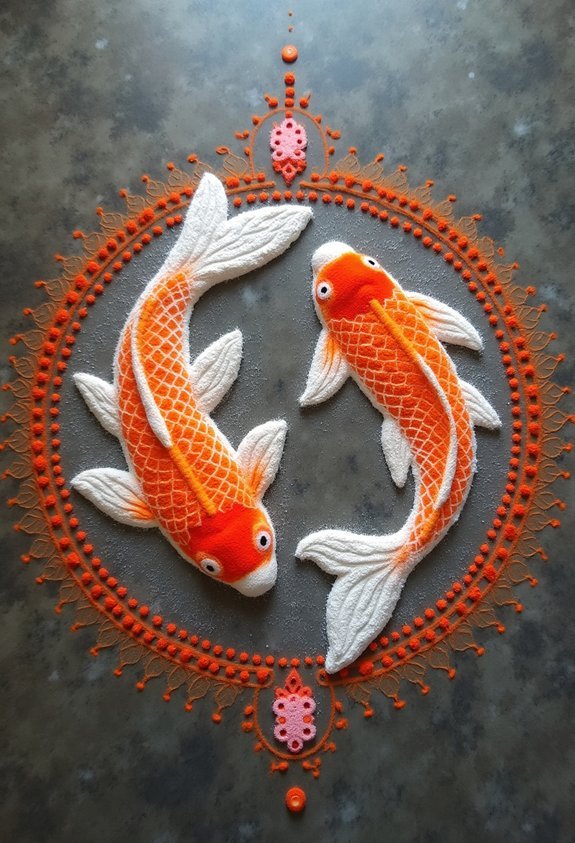
Traditional pulli kolam techniques elevate your koi design when you incorporate sacred dot patterns around a mirror-image fish pair. You’ll place dots in precise geometric grids, typically 9×9 or 11×11 formations, then connect them with flowing koi outlines facing opposite directions. The symmetry creates visual balance that’s perfect for entryways measuring 4-6 feet wide.
Start with white rice flour for your base dots, spacing them two inches apart. Then sketch your koi using vibrant Rangoli Colors powder in orange, black, and metallic gold. Each fish mirrors the other’s curved tail and upward-facing mouth, symbolizing partnership and prosperity.
“Symmetrical designs require patience but deliver stunning results,” notes kolam artist Priya Sundaram. The sacred dot framework guarantees your proportions stay balanced throughout the creative process.
Large-Scale Koi With Lily Pad Accents
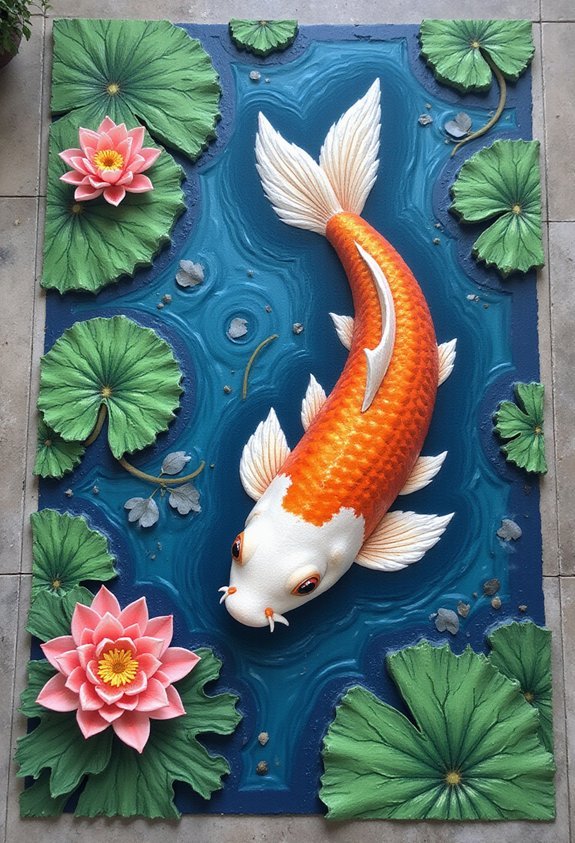
When you’re ready to make a dramatic statement, large-scale koi designs spanning 8-12 feet transform blank courtyards and patio spaces into breathtaking focal points. You’ll need premium rice flour in quantities of 15-20 pounds to execute these ambitious compositions properly.
Start with your koi’s body measuring 6 feet minimum from head to tail. Add lily pad accents in graduated sizes—18, 24, and 30 inches across—positioned strategically around your fish. Interior designer Priya Malhotra notes, “Oversized kolams create architectural impact that rivals permanent installations.”
Layer your lily pads with concentric circles and radiating lines. Place lotus blooms at strategic intervals, each measuring 12-15 inches in diameter. Your negative space becomes equally important at this scale, allowing each element to breathe and command attention.
Contemporary Fusion Koi Kolam
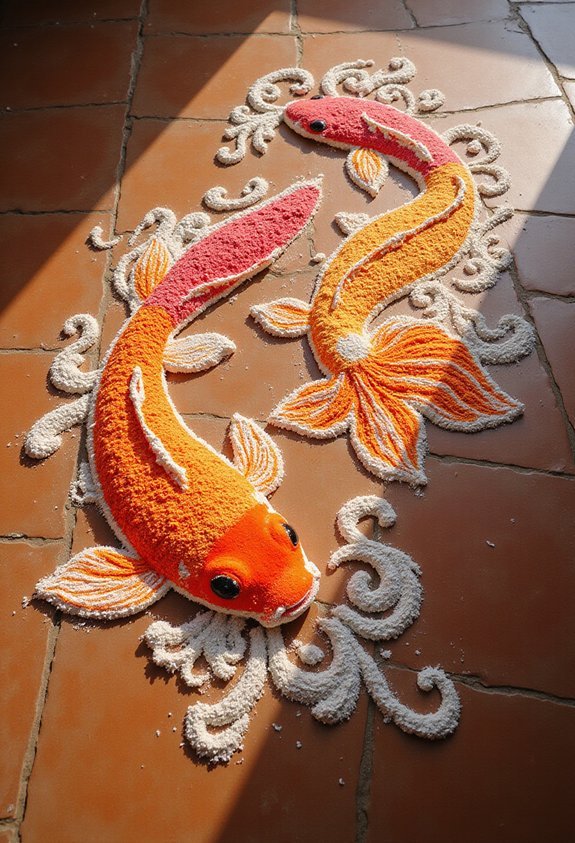
Modern kolam artists now blend traditional koi motifs with geometric patterns, metallic rice flour, and unexpected color palettes that push the art form into fresh territory. You’ll love combining angular chevrons with flowing fish forms. Try mixing gold and copper powders with standard white kolam flour for dimensional shimmer effects.
Hexagonal borders work beautifully around swimming koi pairs. Square grid backgrounds let your fish shapes pop against structured frames, creating visual tension that’s totally worth exploring. We can’t get enough of navy and coral combinations replacing traditional reds.
“Contemporary fusion respects heritage while embracing innovation,” notes kolam instructor Priya Sundaram. “Your floor art can honor ancestors and speak to modern aesthetics simultaneously.”
Consider Rangoli Creations’ metallic powder set ($18) for professional-grade shimmer. Standard 3×3-foot designs translate these fusion concepts perfectly for entryways.
Frequently Asked Questions
What Materials Are Traditionally Used to Create Kolam Designs?
You’ll traditionally use rice flour as your primary material for creating kolam designs. Sometimes you can substitute it with limestone powder, chalk powder, or stone powder. These materials create beautiful white patterns on darker floor surfaces.
How Long Does It Take to Complete a Koi Kolam Design?
You’ll typically spend 30 minutes to 2 hours completing a koi kolam design, depending on its complexity and size. If you’re creating intricate details with multiple colors, you’ll need more time to finish your artwork beautifully.
Can Koi Kolam Designs Be Created on Surfaces Other Than Floors?
Yes, you can create koi kolam designs on various surfaces beyond floors. You’ll find they work beautifully on walls, canvases, paper, wooden boards, and even fabric. They’re versatile art forms that adapt wonderfully to different mediums.
What Is the Cultural Significance of Combining Koi With Kolam Art?
You’re blending Eastern traditions when you combine koi with kolam. You’re merging Japanese symbolism of perseverance and prosperity with Tamil artistic heritage, creating a cross-cultural fusion that honors both traditions while expressing universal themes of fortune and spiritual harmony.
How Do You Preserve or Protect Kolam Designs From Weather Damage?
You’ll need to apply a clear sealant or varnish over your kolam design to protect it from rain and sun. Alternatively, you can cover it with transparent weather-resistant sheets or create it under a sheltered area.
Conclusion
You’ve explored ten kolam koi designs that’ll transform your floor into living art. Start with a simple outline if you’re new to this practice. Work up to elaborate pond scenes as your confidence grows. Remember, each design carries symbolism of prosperity and perseverance. Choose powders in colors that complement your space. Let these patterns inspire your daily ritual of creation and mindfulness at home.

