

You’re tired of staring at your winter dining room, right? That dark, heavy space is giving major hibernation vibes—literally making you want to nap between courses. Here’s the thing: spring’s calling, and your dining room needs a serious glow-up. We’re talking soft pastels, lightweight fabrics, and décor that’ll make your guests actually want to linger. But where do you even start transforming this space into something that screams “brunch season”?
Choose Your Spring Color Palette
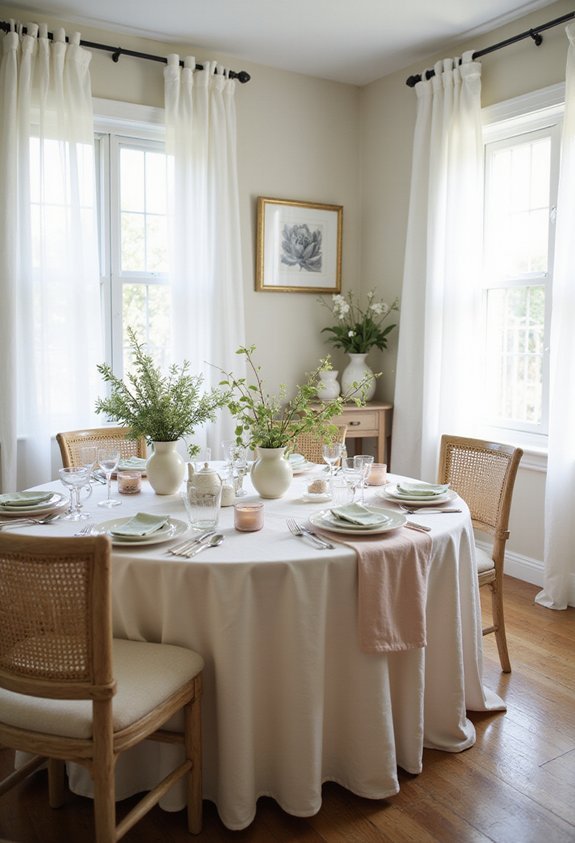
Three things’ll completely transform your dining room, and color’s the heavyweight champion of all of them. You’ve got to pick your spring palette first, so ditch those gloomy grays and browns. Think soft pastels instead—pale yellows, mint greens, and blush pinks’ll make your space feel alive and fresh. Or go bold with warm corals and sunny oranges if you’re feeling brave. Here’s the trick: pick two or three colors maximum, or your room’ll look like a confused Easter basket. Paint an accent wall, swap out your curtains, or just add colorful placemats and napkins. Your dining room’s about to feel like spring exploded in the best possible way. No weird smells required!
Also read: 23 SMALL DINING ROOM DECOR Ideas That Save Space!
Paint an Accent Wall in Soft Hues
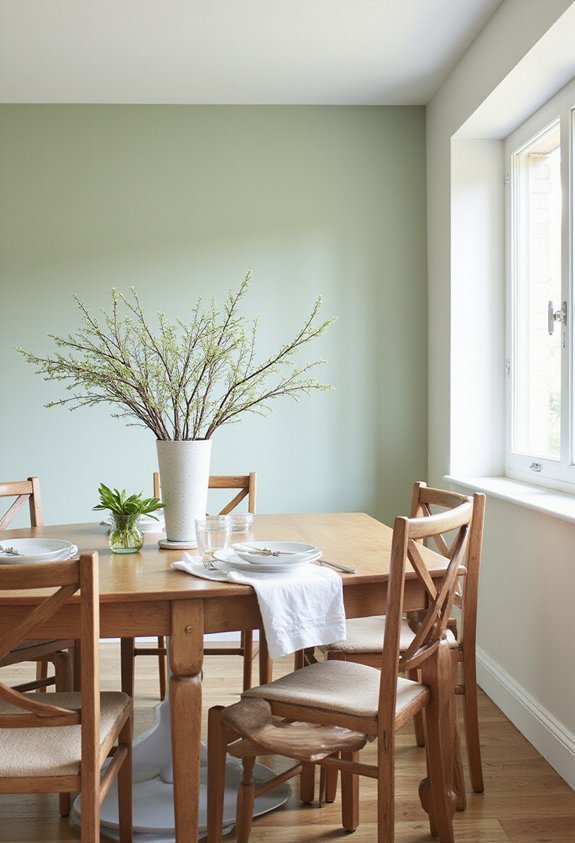
When you’re ready to make a real splash (without actually splashing paint everywhere), an accent wall‘s your best move. Pick one wall—maybe the one behind your dining table—and paint it soft sage green, pale blush, or whisper-soft blue. These gentle hues won’t make your guests lose their appetites or think they’ve entered a nursery. You’ll need just one gallon of paint and a weekend of courage.
The magic happens when that soft color catches afternoon sunlight streaming through your windows. Your dining room suddenly feels bigger, brighter, and way more intentional than it did yesterday. Bonus: an accent wall hides your amateur painting skills better than covering all four walls would. Your secret’s safe with us!
Apply Pastels to Furniture and Accents
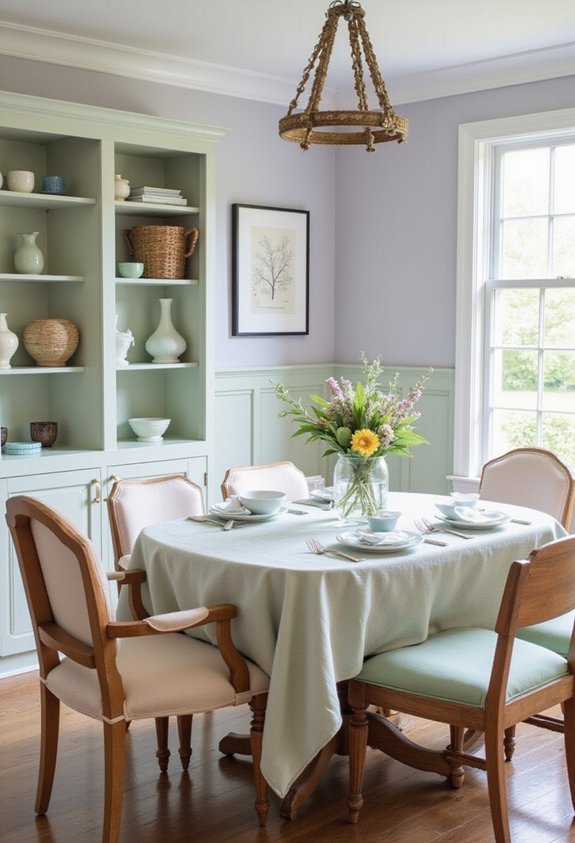
If you’ve fallen head over heels for pastels (and honestly, who hasn’t?), furniture and accents are your playground. Grab a soft pink dining chair or two and watch your space transform. You can paint an old wooden cabinet a dreamy mint green—no furniture-moving explosions required. Add pastel throw pillows in lavender or buttery yellow to existing seats, and suddenly you’re living in a dessert shop (the edible kind, not the sandy kind). Small accents matter too. A pale blue vase, some peachy-toned napkins, or a soft sage picture frame scattered around your table do serious heavy lifting. Mix and match different pastels without fear. Your dining room’ll feel springy, cheerful, and absolutely Instagram-worthy. Trust us—your taste buds and eyeballs will thank you.
Swap Heavy Drapes for Lightweight Linens
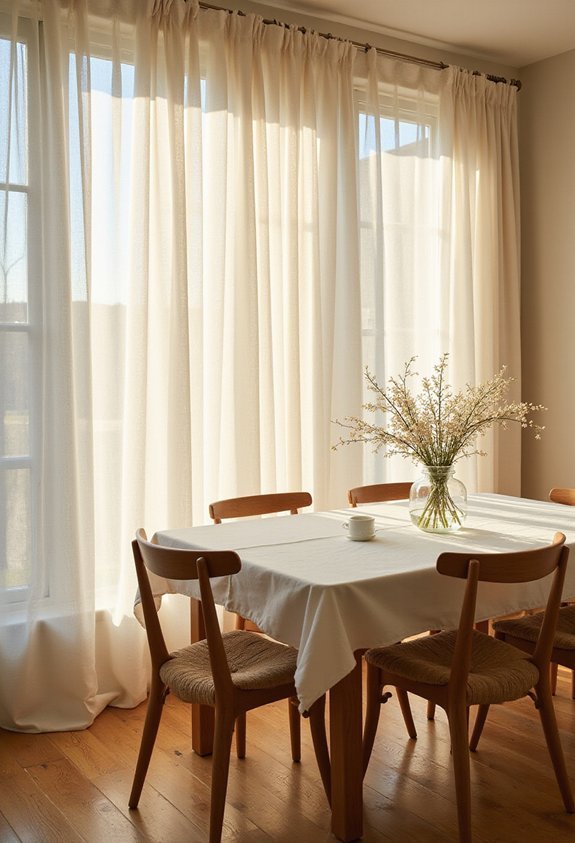
Your dining room’s heavy drapes are basically suffocating your space—and spring’s all about letting it breathe. Swap those thick velvet monsters for lightweight linen curtains instead. You’ll feel the difference immediately, honestly. Lightweight fabrics in cream, soft white, or pale yellow let natural light flood in like your room just woke up from hibernation. Your guests won’t need sunglasses indoors anymore. Hang these breezier panels from your existing rods using simple clips or rings. They’re easy to wash too, which beats dry-cleaning bills that make your wallet cry. The airiness transforms your whole dining vibe instantly. Plus, you’ll actually want to eat there now instead of feeling like you’re dining in a cave. Light fabrics equal light hearts. Spring wins.
Update Window Treatments for Spring Light
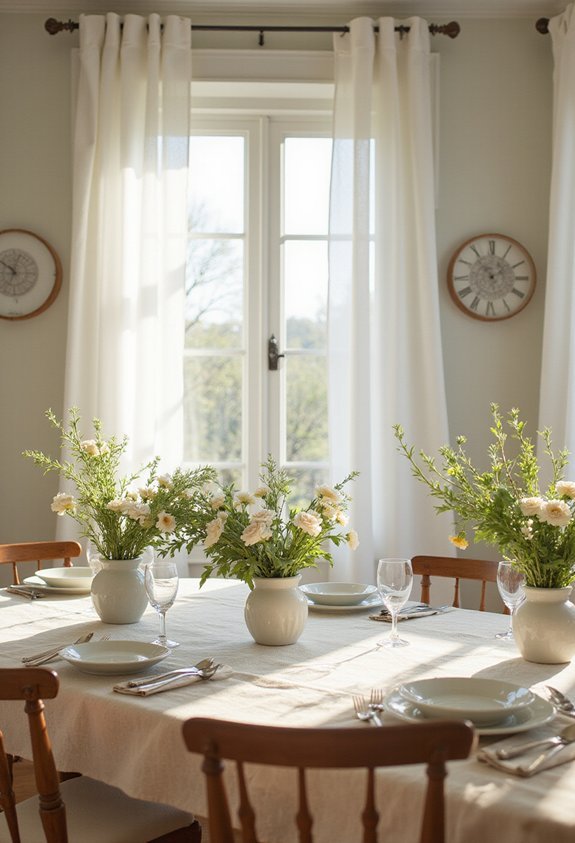
Beyond just swapping out curtains, there’s a whole world of spring window magic waiting for you. Install sheer white or cream panels that let sunlight flood through without turning your dining room into a greenhouse. You’ll actually see your food now—revolutionary, right? Consider bamboo blinds for a natural look that screams “I’ve got my life together.” Add Roman shades in soft pastels like sage green or pale yellow. They’re fancy but not pretentious. Position them so light hits your table around noon, making everything look Instagram-worthy. Mix and match textures—pair linen with bamboo for visual interest. Your windows won’t just frame outdoor spring views; they’ll transform how your entire dining space feels. Light, airy, and ready for fresh dinner parties.
Upgrade Your Dining Room Lighting
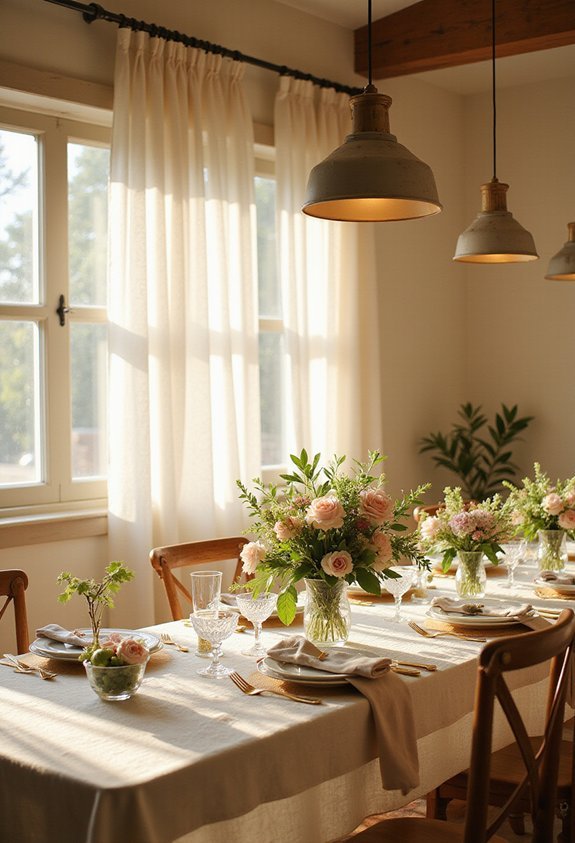
Good lighting’s the difference between “fancy dinner” and “crime scene investigation.” While those sheer curtains let in daytime sunshine, evening’s a whole different ballgame—and you’ll need actual fixtures that don’t make your guests squint like they’re reading a menu in a cave.
Consider swapping out old bulbs for warm LED options. They’re basically the difference between “cozy” and “hospital cafeteria.” A dimmer switch? Total game-changer. You’ll control the vibe without anyone breaking a sweat or getting hangry.
Layer your lighting strategically. Install a statement chandelier or pendant lights above the table—something with spring vibes like brushed gold or soft brass. Add wall sconces on either side for backup glow.
Skip the harsh overhead-only setup. Your dining room deserves better than interrogation lighting. You’ve got this!
Choose the Right Fixture Style for Spring
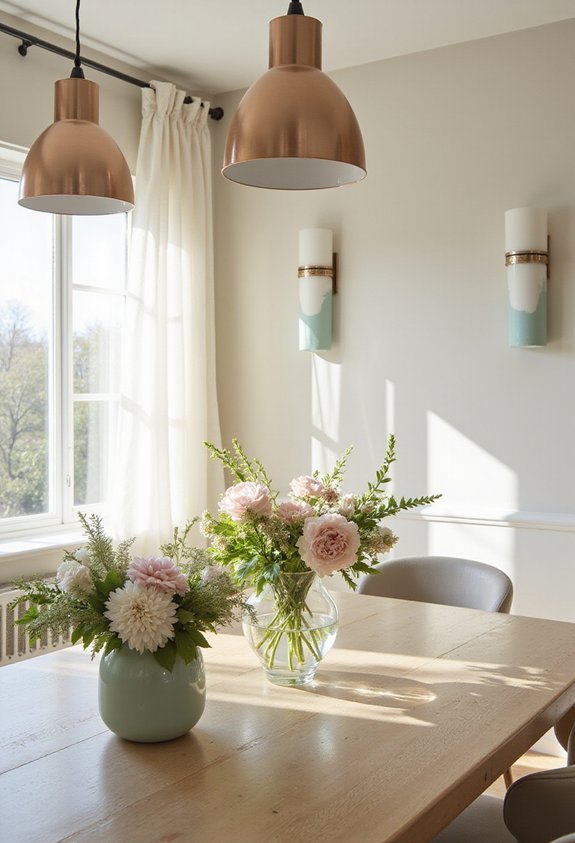
Spring fixtures aren’t just about looking pretty—they’ve gotta match the whole vibe you’re going for. Think airy and light, not heavy and dark. Glass pendants work great because they let sunshine dance through your space. Brass or gold finishes scream spring energy and warmth without feeling stuffy. Avoid those chunky chandeliers that look like they’re suffocating your room—nobody wants that vibe!
Consider fixtures with botanical details or curved lines that echo nature’s feel. A 24-inch pendant hanging 30-36 inches above your table hits the sweet spot. Matte finishes keep things modern and chill, while shiny ones feel fancy.
Pick something that makes you grin when you walk in. Your dining room should feel like spring already arrived, not like it’s stuck in January’s dark mood. Have fun with it!
Hang Mirrors to Amplify Natural Light
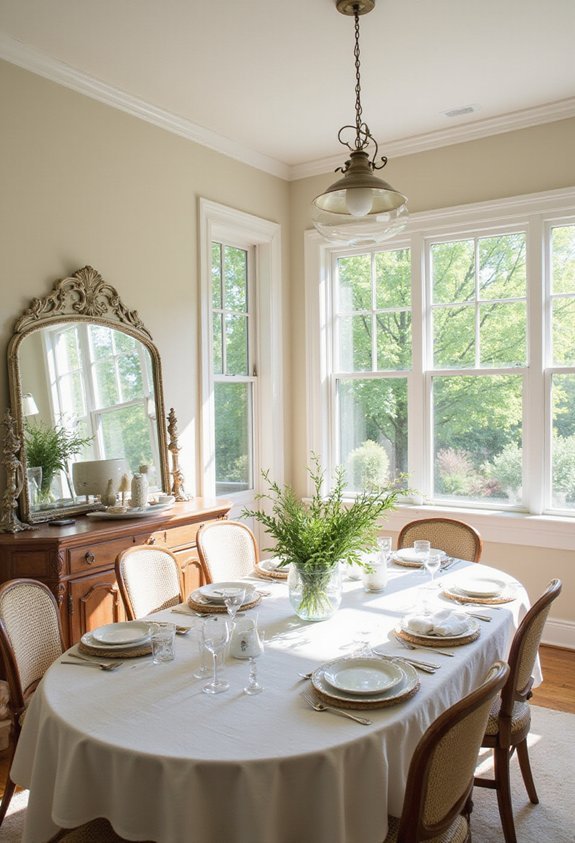
Mirrors are basically nature’s cheat code for making your dining room feel like it’s bathed in sunshine all day long. Hang a large mirror opposite your window, and watch the magic happen. Natural light bounces around like it’s at a disco party, brightening everything up. You’ll want a mirror that’s at least 24 to 36 inches wide for real impact. Gold or silver frames add extra pizzazz without trying too hard. Position your mirror so it reflects your prettiest view—not your messy kitchen counter, obviously. The light multiplies, your room feels bigger, and suddenly you’re not eating dinner in a cave anymore. It’s basically cheating at interior design, and we’re here for it.
Create Fresh Botanical Centerpieces
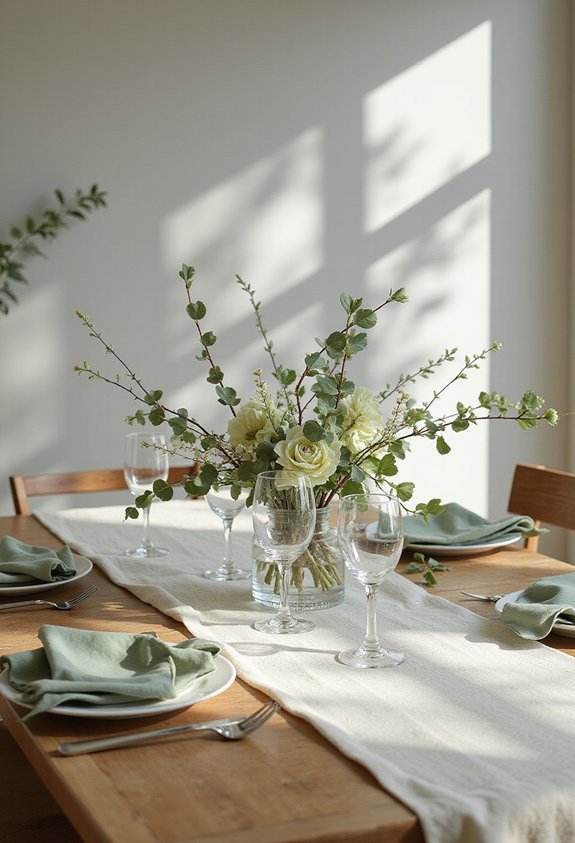
Now that your dining room’s practically glowing like a disco ball, it’s time to give your table something to show off. Grab some fresh greenery and flowers—think eucalyptus, peonies, or tulips in soft pastels. Arrange them in a low centerpiece, about 12 inches tall, so your guests can actually see each other without playing peek-a-boo with foliage. Mix in some ferns for that lush, garden-fresh vibe. Add a few branches with leaves for height and drama. Toss in some white candles or small potted herbs like rosemary (bonus: they won’t offend anyone’s nose). The goal? Make your table look like spring decided to move in permanently. Your guests will think you’ve secretly hired a professional florist.
Style a Spring Flower Arrangement
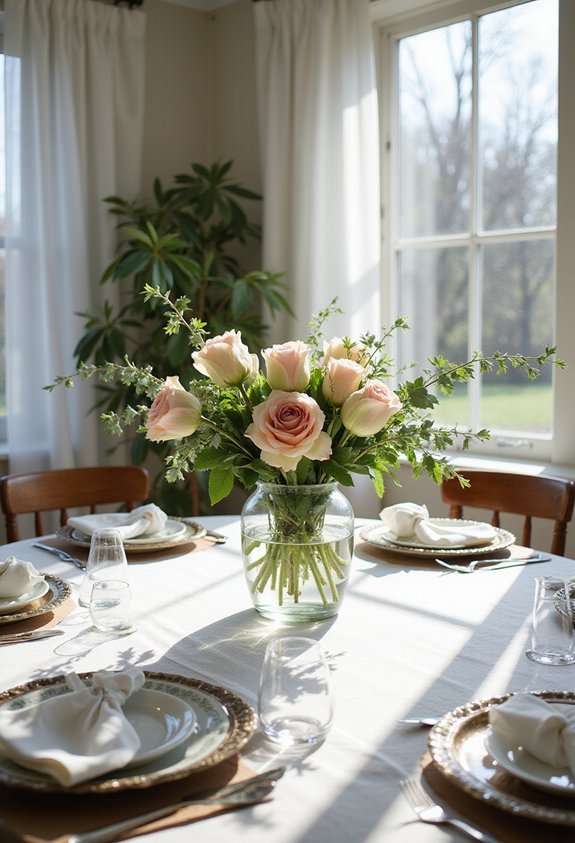
Once you’ve got your greenery and blooms gathered, it’s time to actually arrange them so they don’t look like you just sneezed flowers into a vase. Start by filling your container halfway with water and adding flower food. Cut stems at a 45-degree angle, then place greenery first to create your framework. Now add your tallest blooms—think tulips or branches—toward the back and center. Fill gaps with medium-height flowers like peonies or ranunculus. Tuck shorter blooms around the edges for fullness. Turn your arrangement occasionally so it looks good from all angles. The key? Don’t overthink it. Nature’s already doing most of the heavy lifting with those gorgeous colors and textures you picked.
Add Potted Plants and Greenery
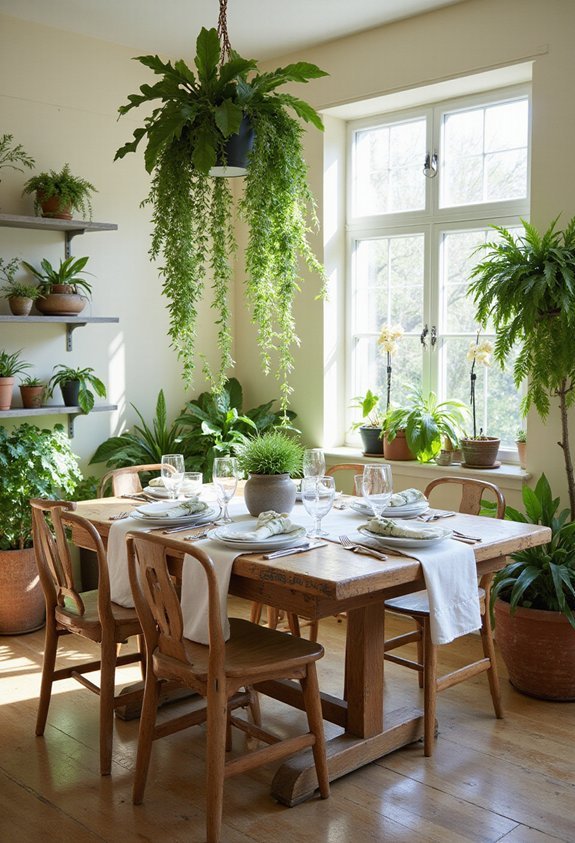
While your flower arrangement’s stealing the show, don’t let your potted plants sit in the wings like forgotten understudy actors. These green buddies deserve spotlight time too! Scatter 6-8 inch potted plants around your dining room’s corners and windowsills. Think pothos, snake plants, or ferns—they’re basically indestructible, which is perfect if you’re forgetful like me. Place taller plants behind chairs and shorter ones on side tables for visual balance. The greenery’ll freshen up your air quality while making your space feel alive and vibrant. Mix in trailing vines that cascade over pot edges for drama. Your dining room will transform into a lush jungle where guests actually want to linger. Plants don’t judge your cooking skills either!
Design a Minimal Centerpiece for an Airy Table
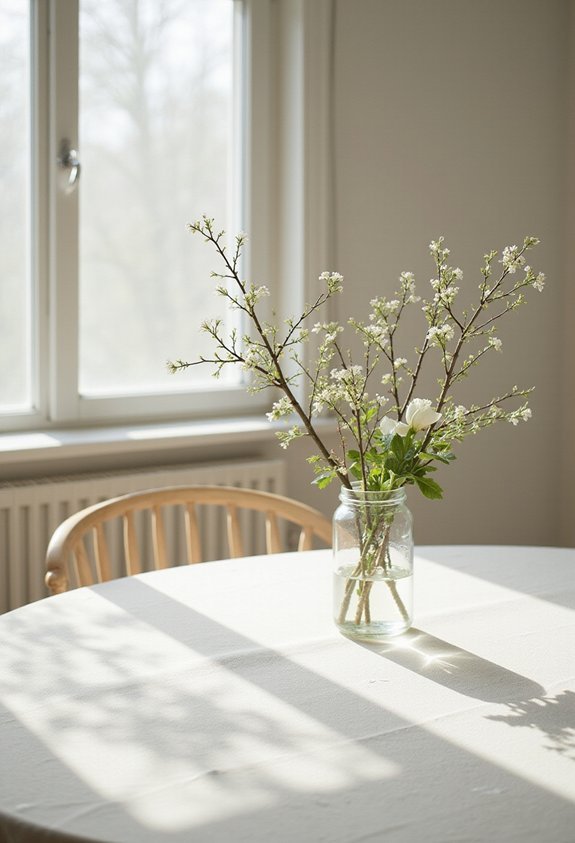
Sometimes less is more, and your dining table’s centerpiece is the perfect place to prove it. Skip the towering flower arrangements that block your guests’ views. Instead, grab a low white bowl—about 6 inches tall—and fill it with water. Toss in three stems of pale pink peonies or white tulips. Done. Your table now looks fancy without screaming “I tried too hard.” Add a few smooth river rocks or floating candles if you’re feeling spicy. Keep everything low so people can actually see each other’s faces during dinner. Nobody wants to peer around a floral fortress just to chat. A minimal centerpiece says “I’m sophisticated” while your guests enjoy their mashed potatoes. That’s the spring vibe you’re after.
Layer Seasonal Tablecloths and Runners
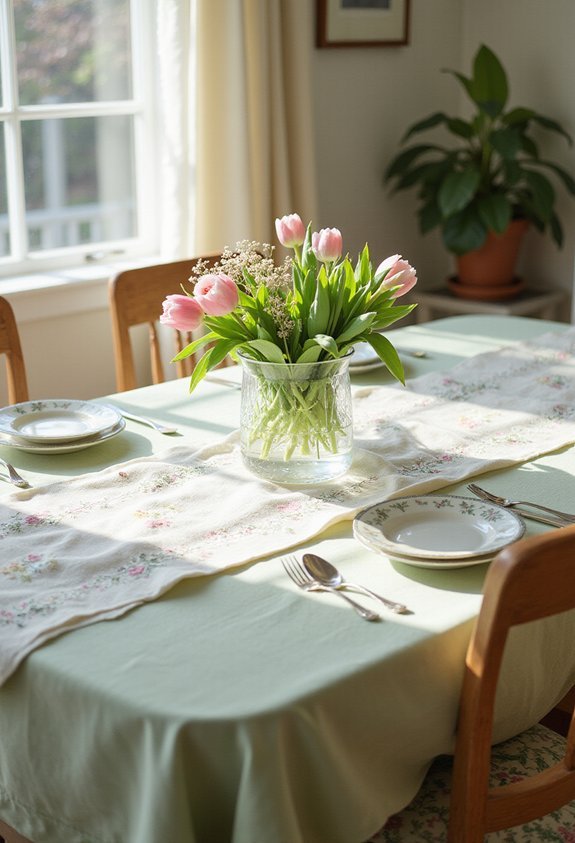
Now that you’ve nailed the centerpiece, it’s time to dress up the actual table. Layer a crisp white or soft pastel tablecloth underneath, then add a runner down the middle in spring colors—think sage green or pale yellow. This combo creates visual interest without looking like you’re preparing for a formal dinner party. The runner should be about 12-14 inches wide and drape elegantly off both ends. It’ll protect your main cloth too, which is basically the unsung hero here. Mix textures by choosing linen over cotton, or vice versa. Your guests won’t notice the difference, but you’ll feel like a design genius. Plus, you can swap runners weekly without rewashing everything. Now that’s what I call lazy elegance!
Invest in Quality Spring Table Linens
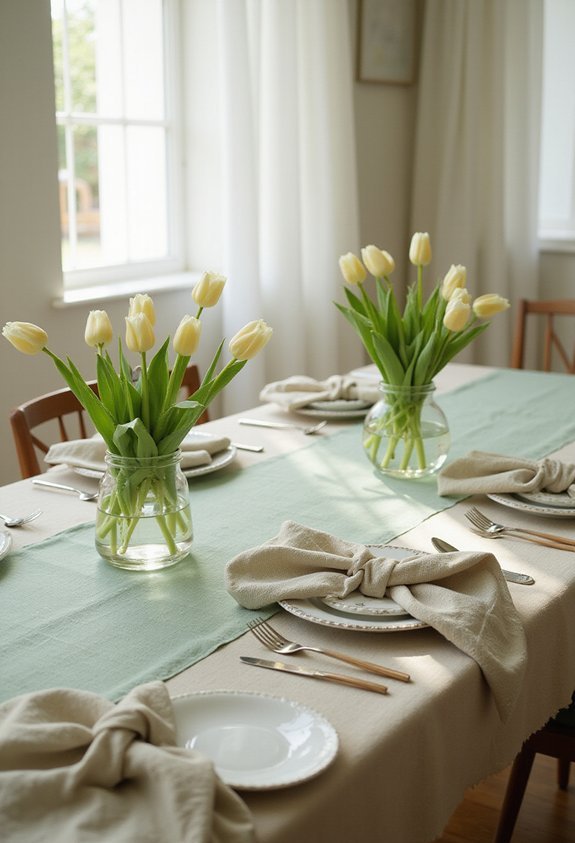
Quality linens are basically the difference between a dining room that looks expensive and one that looks like you grabbed everything from a clearance bin. You’ll want to grab 100% cotton or linen tablecloths in soft spring colors—think pale yellows, soft greens, and dusty blues. These fabrics actually feel nice, not like plastic that sticks to your sweaty arms. A 60×84-inch tablecloth works great for most tables. Pair it with matching napkins in coordinating shades. Good linens wrinkle less, wash beautifully, and genuinely last years instead of falling apart after three dinners. Your guests will notice the difference. They’ll probably wonder if you’ve secretly become fancy, and you can smile mysteriously while serving casserole. Quality linens make everything—even your imperfect cooking—look intentional and put-together.
Use Linen Napkins in Complementary Colors
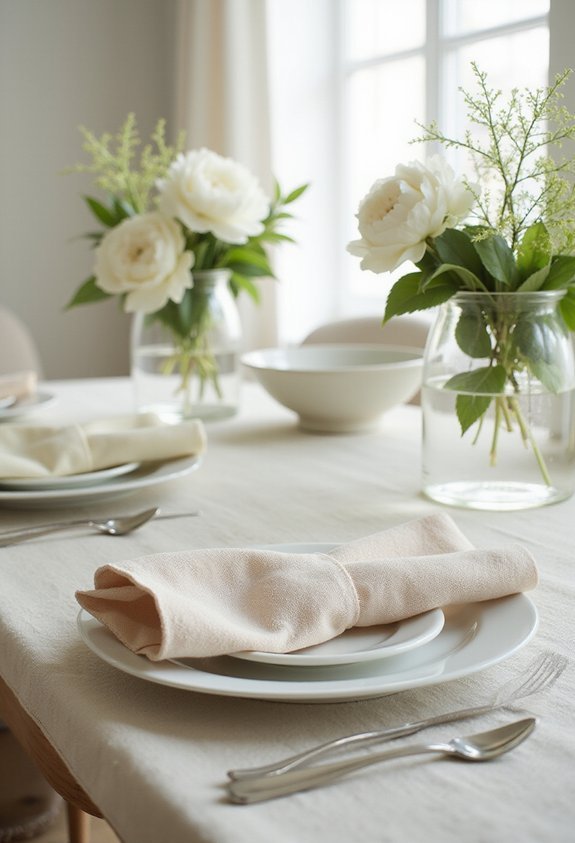
Linen napkins are where you’ll really flex your hosting muscles, and they’re honestly easier than you’d think. Pick colors that play nicely together—think soft pastels or bold jewel tones. If your tablecloth is pale yellow, go with sage green napkins. They’ll make your table pop without clashing like a terrible outfit.
Here’s the fun part: fold them however you want. Triangles, rectangles, fancy swans—nobody’s judging. Just make sure they’re clean and wrinkle-free, unless you’re going for the “I just woke up” vibe intentionally.
The best napkins are 18-by-18 inches, giving your guests plenty of fabric for messiness. Your dining room transforms instantly when quality linens hit the table. Suddenly you’re not just eating—you’re dining like royalty. That’s the magic right there.
Update Your Dining Chairs With Spring Fabrics
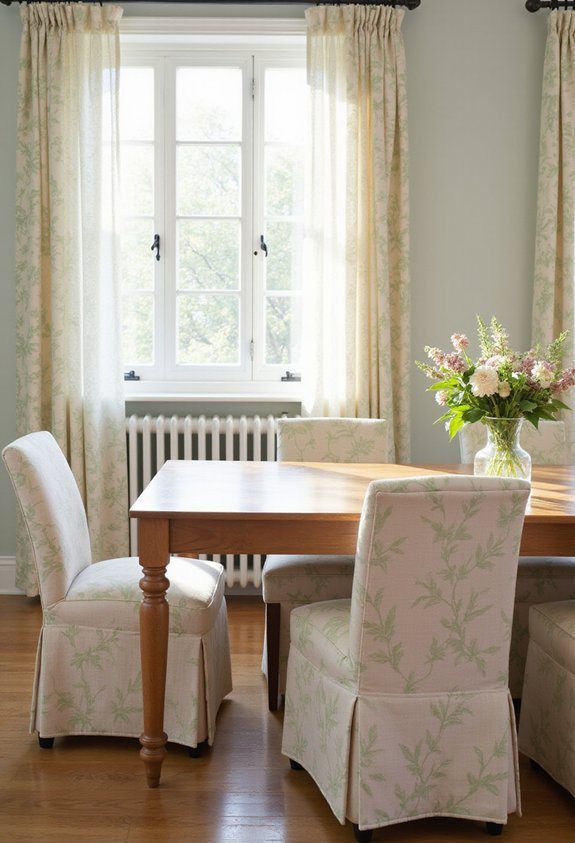
Once you’ve nailed your napkin game, it’s time to tackle your dining chairs—because let’s be honest, nobody wants to sit on furniture that screams “winter is still here.” Spring fabrics are your secret weapon for making those old chairs feel brand new.
Think pastels and florals. Soft pinks, mint greens, and sunny yellows instantly brighten your space. Look for lightweight linens or cotton blends that won’t make you sweat through dinner. Slipcovers are your best friend here—they’re easy to swap out and actually washable when someone inevitably spills wine.
Patterned fabrics add personality without demanding you recover entire chairs. Gingham checks and delicate botanical prints scream springtime fun. Your guests will actually want to linger at the table instead of fleeing the dining room.
Add Warmth With Natural Wood and Woven Pieces
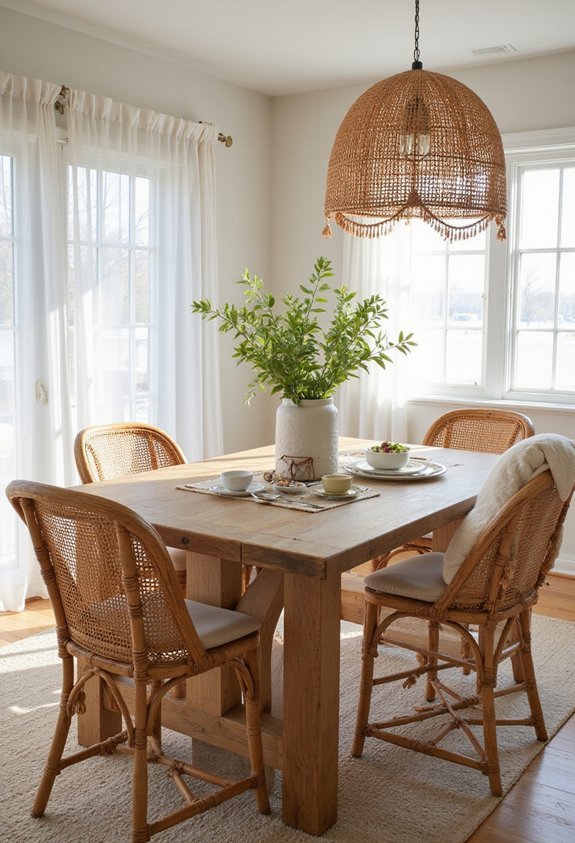
While those spring pastels are gorgeous, you’ll want to ground your dining room with some natural wood and woven textures—because floating in a sea of pink gets old fast. Bring in a wooden table or chairs with warm honey tones. They anchor the space and remind everyone you’re still a grown-up. Add woven placemats, a jute runner, or rattan baskets under the sideboard. These pieces bring cozy texture without screaming “I’m trying too hard.” Mix in a wooden serving tray and some woven wall hangings. The natural materials balance spring’s bright energy perfectly. Your dining room feels fresh and intentional, not like you raided a Easter bunny’s closet. Wood and woven pieces? They’re the real MVP of spring decorating.
Bring in Wicker and Rattan Accents
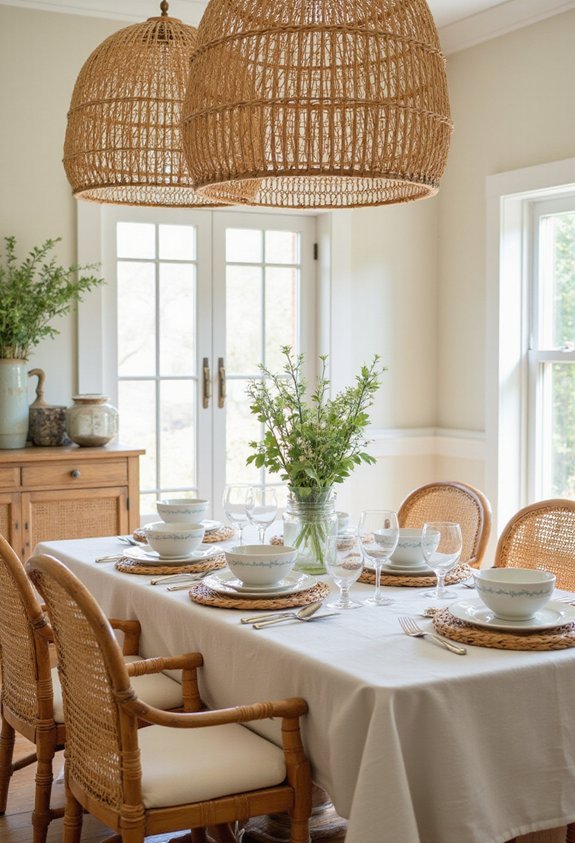
If you’re serious about that natural, lived-in spring vibe, wicker and rattan are your new best friends. These woven wonders breathe life into any dining space without breaking the bank or your back (installing them is conveniently easy).
Drape a wicker chair or two around your table—they’re lightweight and honestly kind of goofy-looking in the best way. Add a rattan pendant light overhead, and suddenly your dining room feels like a breezy café instead of your usual spot. A woven placemat or table runner in cream or honey tones anchors everything beautifully.
Don’t go overboard though. Too much wicker reads “desperate beach house,” not “effortlessly chic.” Sprinkle these pieces strategically, and you’ll nail that fresh, airy spring energy everyone craves.
Go Botanical With a Feature Wallpaper
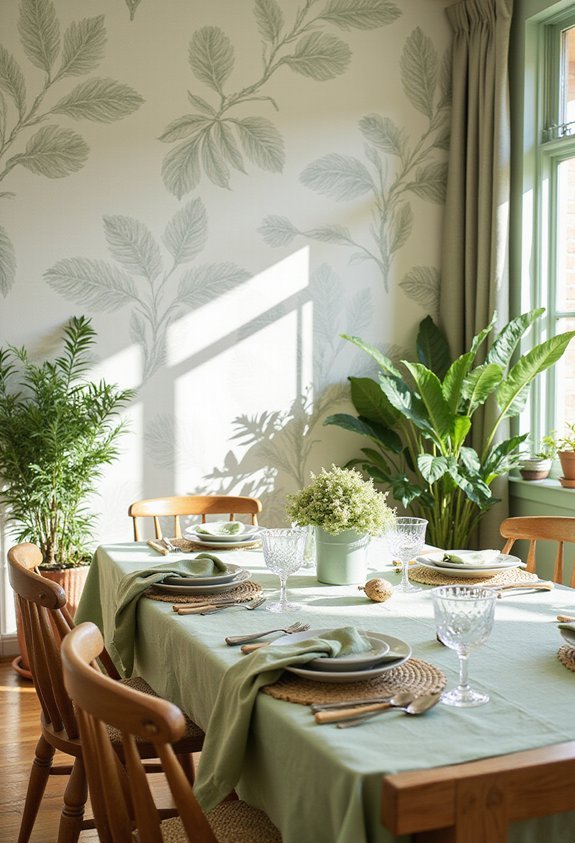
Feature wallpaper is basically a cheat code for making your dining room look like it belongs in a magazine. Pick a botanical design with big leafy patterns or delicate florals, and watch your space transform instantly. You’ll want to cover one wall—usually behind your dining table works best. Go for soft greens, blush pinks, or even bold jewel tones depending on your vibe. The best part? It requires zero actual plants you’ll inevitably kill. Pair your feature wall with simple neutral furniture so the wallpaper steals the show. Add a few real plants in corners to echo the design and complete the botanical fantasy. Your guests will seriously think you hired an interior designer. Spoiler alert: you just bought some really good wallpaper.
Swap Out Hardware for Brighter Finishes
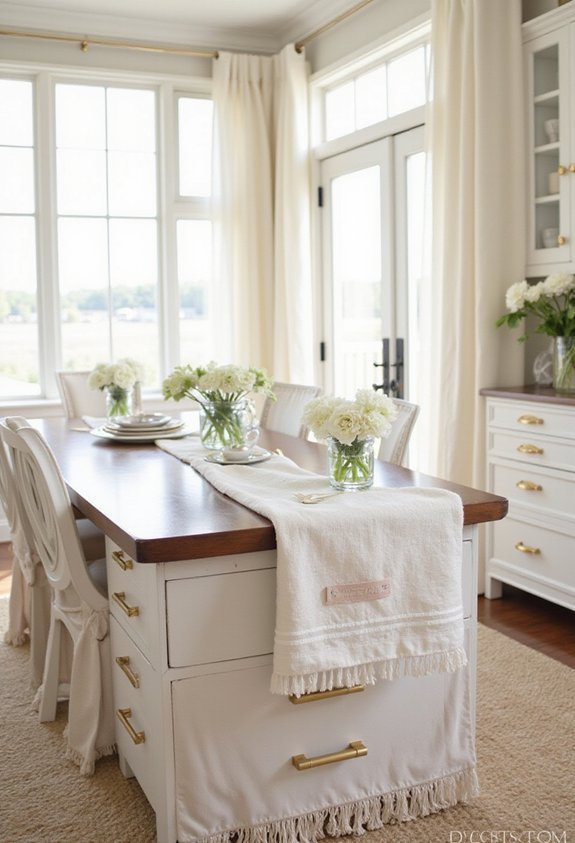
Sometimes the smallest changes pack the biggest punch, and swapping out your dining room hardware is basically the interior design equivalent of a fresh haircut—instant refresh, zero commitment. Those old brass knobs gathering dust? Swap them for sleek chrome or brushed gold handles that actually gleam. Your cabinet doors will suddenly look expensive without emptying your wallet.
Think about it: hardware is like jewelry for furniture. Shiny new pulls and knobs catch light and draw eyes exactly where you want them. Gold finishes feel warm and welcoming. Chrome screams modern and clean. Rose gold? That’s just showing off—in the best way.
Spend an afternoon with a screwdriver and watch your dining room transform. Your guests won’t know what changed, but they’ll definitely notice something’s brighter.
Pair Vintage Finds With Modern Spring Accessories
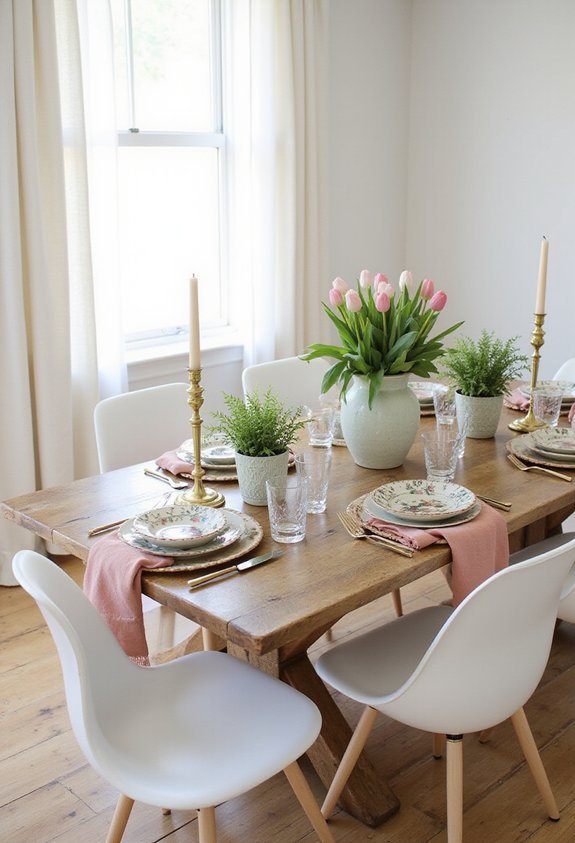
One of the coolest design tricks is mixing old stuff with new stuff, and your dining room’s about to get a major personality boost. Hunt down vintage chairs or a thrifted wooden table, then pair them with fresh spring accessories. Think pastel napkins, modern geometric placemats, and bright floral centerpieces that’ll make your dusty finds look absolutely fabulous. Your grandma’s old chandelier? Suddenly trendy next to sleek metallic candleholders. That antique sideboard becomes Instagram-worthy when you style it with contemporary white vases and soft green branches. The contrast is *chef’s kiss*—literally. Your guests won’t believe you didn’t hire a designer. Mix eras fearlessly. Old and new together create magic, and honestly, it’s way more fun than matching everything perfectly anyway.
Choose Lightweight Furniture That Moves Indoors and Out
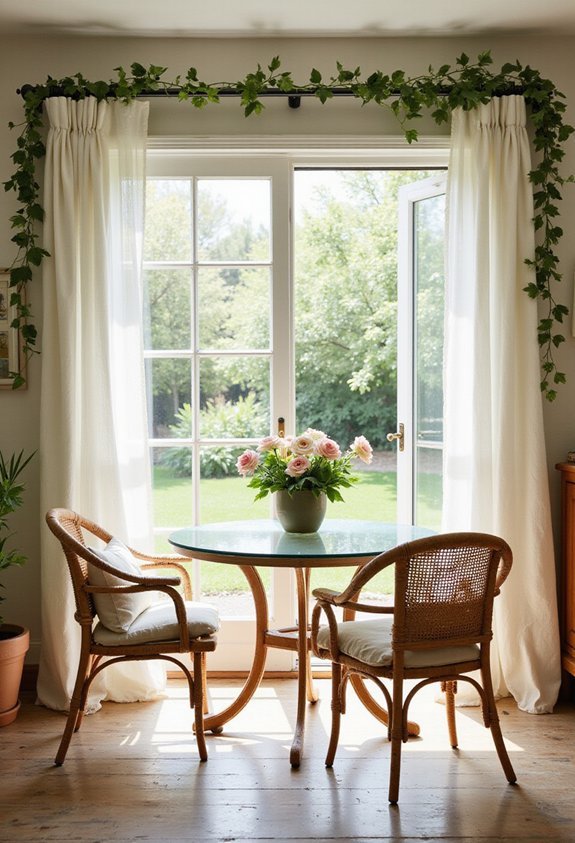
Spring’s the perfect time to shake things up, and lightweight furniture is your secret weapon for a dining room that actually works with your lifestyle. Gone are the days of wrestling a 200-pound table just to sweep underneath it. Instead, grab chairs under 10 pounds each—think woven rattan or aluminum frames in soft whites and pastels. They’re literally featherweight and won’t leave you gasping like you’ve run a marathon. Pair them with a sleek glass or whitewashed wood table you can actually move solo. When warm weather hits, roll everything outside for alfresco dinners without requiring professional movers. Your back will thank you, and your flexibility skyrockets. Easy swaps mean endless possibilities for revitalizing your space.
Layer Scents With Spring Candles and Florals
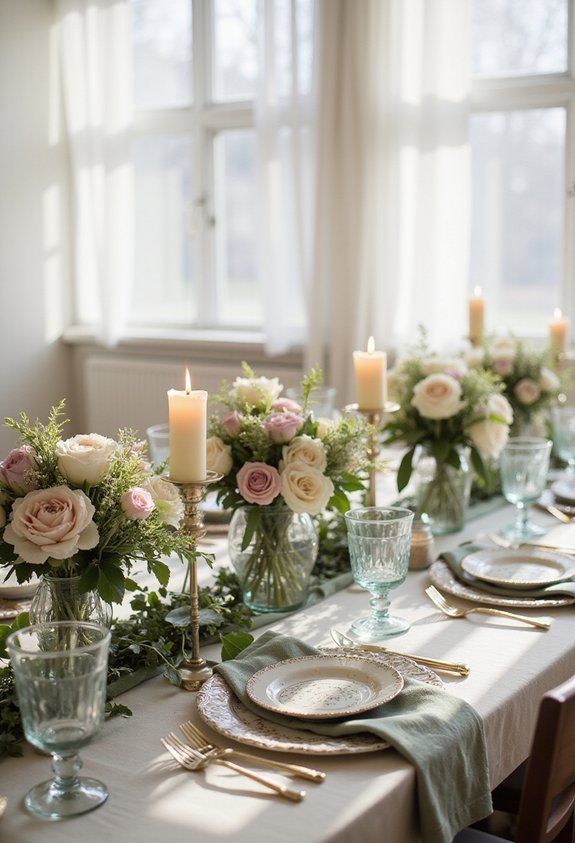
While your lightweight furniture’s doing the heavy lifting, let’s talk about what’ll make your dining room smell absolutely incredible. Spring candles are your secret weapon here. Grab ones that smell like lilacs, peonies, or fresh-cut grass—basically anything that doesn’t remind you of your gym socks.
Place a couple of 3-inch pillar candles on your dining table’s corners, then scatter some dried lavender or fresh tulips nearby. The combo creates a scent situation that’ll have your guests thinking you’re a fancy person. Hint: you’re not, and that’s fine.
Pro tip: light candles about thirty minutes before people arrive. Your nose goes numb to smells pretty quick, but visitors’ noses? Fresh and ready to be impressed. You’ve basically just upgraded your entire vibe without breaking a sweat.
Frequently Asked Questions
How Can I Refresh My Dining Room on a Budget Without Major Renovations?
You can refresh your dining room by swapping out artwork, adding fresh flowers, updating your table linens, and rearranging furniture. Paint an accent wall, incorporate new lighting fixtures, and introduce plants to create an inviting spring atmosphere without breaking your budget.
What’s the Best Way to Store Heavy Winter Decor During Spring Months?
You’ll want to store heavy winter decor in clear, labeled bins stacked in your basement or attic. Use climate-controlled spaces to prevent moisture damage. Wrap fragile items separately, and you’ll keep everything organized for next season’s easy retrieval.
How Do I Prevent Spring Flowers and Plants From Wilting Quickly Indoors?
You’ll keep your spring flowers fresh by placing them in cool spots away from direct sunlight and heat sources. Change the water every two days, trim the stems at an angle, and remove any lower leaves that’d sit in water.
What Dining Room Layout Changes Work Best for Spring Entertaining Seasons?
You’ll maximize your spring entertaining by repositioning your dining table toward natural light sources. Create flexible seating arrangements that you can easily adjust for larger gatherings. Open your space by removing heavy furniture, allowing fresh air and guests to flow freely throughout.
How Can I Maintain Spring Decor While Keeping the Space Functional Year-Round?
You’ll maintain spring decor by choosing versatile pieces you can easily swap seasonally. Invest in neutral furniture, then rotate colorful accents, linens, and centerpieces. This approach keeps your dining room fresh while preserving its functionality throughout the year.
Conclusion
You’ve totally got this! Your dining room’s about to go from “blah” to “wow” faster than you can say pastel perfection. Mix those soft colors, swap the heavy stuff for breezy pieces, and you’ll have guests thinking you’re an interior design genius. Spoiler alert: you’re not, but they don’t need to know that! Spring’s calling, and your dining room’s ready to answer. Now go forth and redecorate!

