

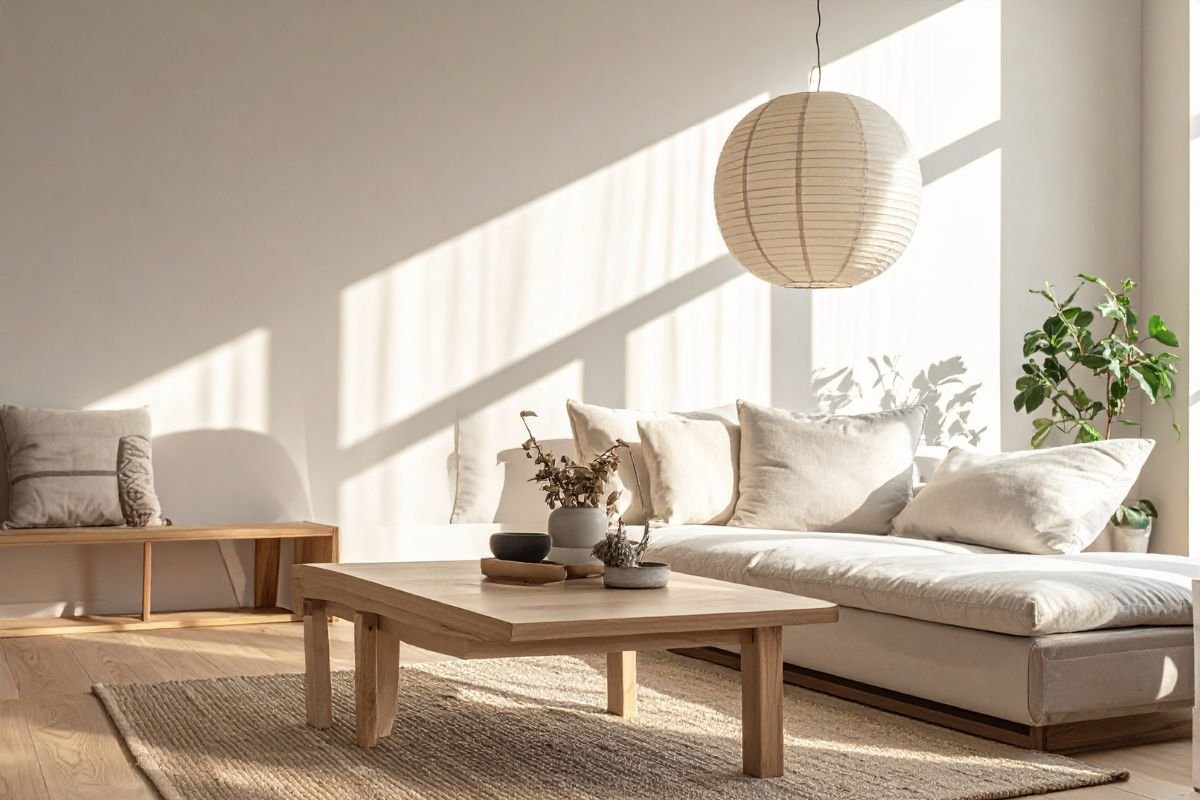
I’ve stopped apologizing to people when they first walk into our living room. It’s small—genuinely small—and for years I treated that like a failing I needed to explain away. But then one afternoon, sunlight came through the window at just the right angle and landed on the chair where I sit with my coffee most mornings, and I realized something: the smallness wasn’t the problem. I just didn’t understand how to live in it yet.
The first thing I learned was that nothing works the same way twice. I’d rearrange the furniture, convinced the new layout would fix everything. A shelf moved six inches left suddenly made the room feel less cramped, or it made it worse. A lamp positioned differently changed not just the light but how I actually moved through the space—whether I felt settled or restless. It took months of small adjustments to understand that a small room isn’t about fitting more in. It’s about understanding every inch matters because you’re in contact with it constantly.
Living here daily means I notice things that photos never show. There’s a corner where the afternoon light hits dust particles floating, and I used to think that was ugly until I started actually sitting there to read. The texture of the rug, the sound of wood creaking under certain floorboards, the way the wall color shifts between morning and evening—these aren’t design problems. They’re the personality of the space. I’d spent so long thinking about what looked right that I forgot to notice what felt right when I was actually living there.
What changed everything was accepting that small doesn’t mean sparse, and it doesn’t mean cluttered either. It means being deliberate, almost ruthless, about what stays and what goes. Not because of rules, but because when you live in a room this size, you feel immediately whether something serves you or just takes up air.
Embrace Relaxed Styling Over Precious Miniatures
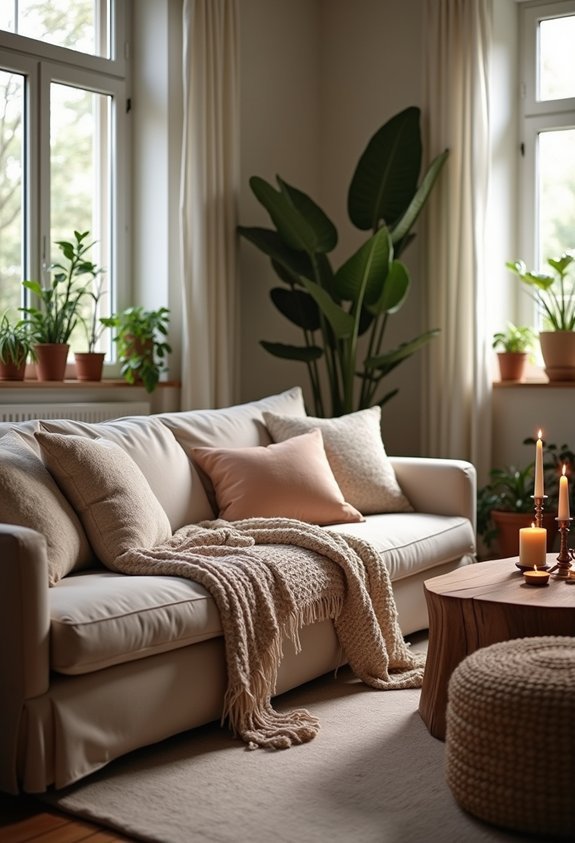
When you’re decorating a small living room, here’s the thing: don’t go full dollhouse on me. I’ve learned that excessive orderliness and tiny pieces make spaces feel cramped and precious, like you’re afraid to actually live there. Instead, embrace relaxed asymmetry and roughness—it saves your small living room feel from feeling suffocating.
Mix things up a bit. Throw that occasional chair at an angle near your log burner. Let your small space design breathe with imperfect placement. Add honeyed accessories that catch firelight without fussing over every detail.
Your cozy living room shouldn’t look like a museum exhibit. It should look lived-in, comfortable, and real. A little messiness? That’s not laziness—that’s intentional design. And honestly, it’s way more inviting than fussy perfection.
Invest in Double-Duty Furniture Pieces
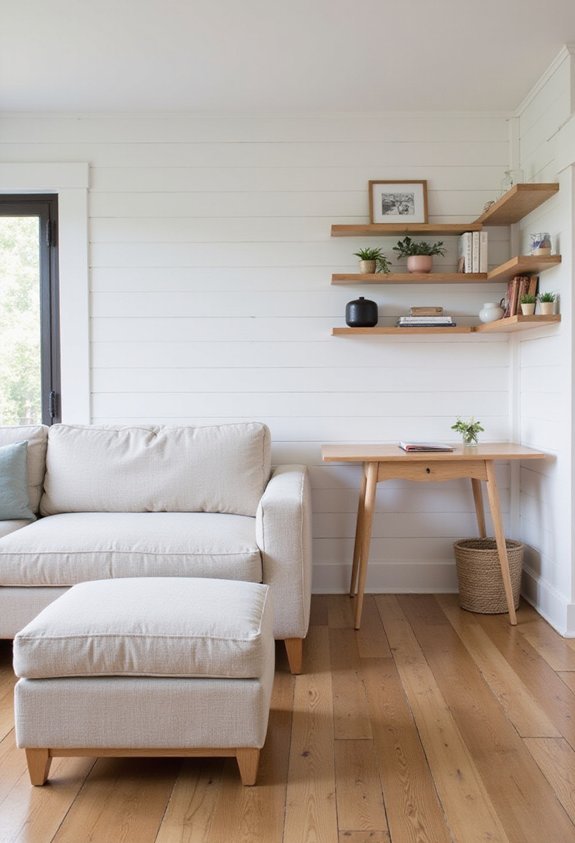
Now that you’ve ditched the precious miniature nonsense, let’s talk about making your small space actually work for you. I’m talking about furniture that pulls double duty—the real MVPs of tiny living rooms.
Coffee tables with hidden storage underneath? They’re game-changers. You stuff blankets, remotes, and magazines inside while keeping your living space looking clean. Ottomans with storage compartments do the same trick and give you a comfy footrest too.
Sofa beds are my personal heroes. Your living room transforms into a guest bedroom when needed—no cramming people into closets required.
Media consoles with cabinets keep electronics organized and hidden. Nesting tables tuck under each other when you’re not using them.
These storage solutions deserve medals. They’re functional, space-saving, and honestly? They make small living actually feel manageable instead of suffocating.
Also read: https: 12 Christmas Decor Ideas for Small Bedrooms That Maximize Space
Maximize Natural Light With Strategic Window Treatments
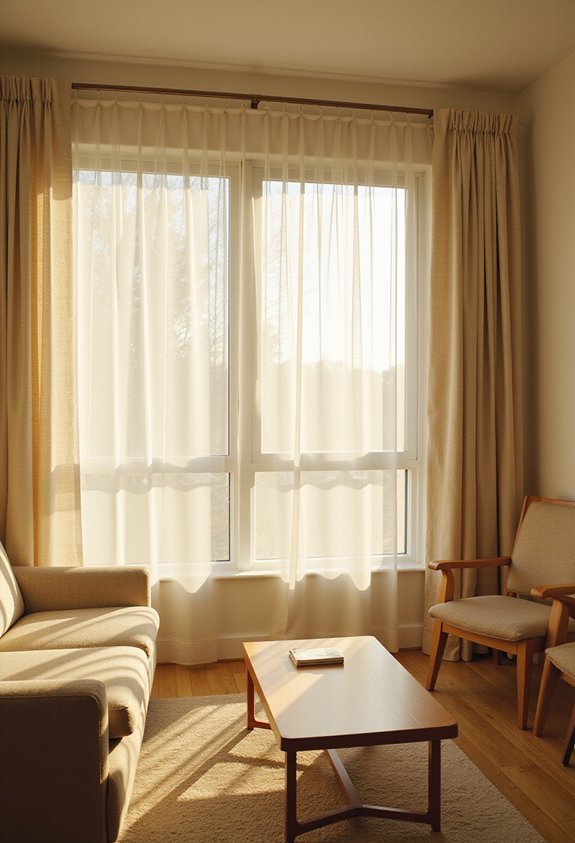
Light’s your secret weapon in a cramped living room, and I’m not just talking about flipping a switch. I ditched heavy curtains for lightweight, sheer ones that let sunshine flood in without blocking anything. Game changer, seriously.
I hung café curtains covering only the lower half of my windows, and suddenly my space felt twice as big. Genius move. Positioning your curtain rod close to the ceiling? It tricks your eyes into thinking your room’s taller. Your brain basically gets fooled, which I’m totally okay with.
Hang light-colored blinds in neutral shades to keep things airy. And here’s my favorite hack: I strategically placed mirrors opposite windows. They bounce natural light everywhere, making my living room glow like I actually cleaned it.
Your small space deserves this treatment.
Play With Proportion and Scale
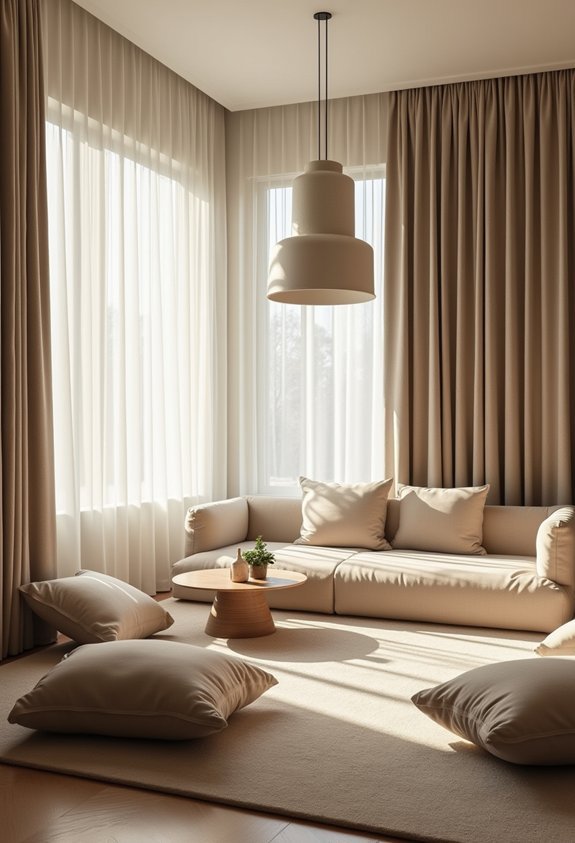
The trick to nailing proportion and scale in a small room? Go big or go home—literally, pick one statement piece instead of cluttering with tiny stuff. I learned this the hard way after cramming my apartment like a sardine can.
One oversized floor lamp or bold artwork creates focus without making your small space feel suffocating. Soft, muted colors help make your small furniture choices feel less aggressive too. Angling your seating toward a shared focal point rather than lining everything up makes the room feel conversational instead of cramped.
Bespoke storage units tucked thoughtfully into corners provide room ideas for compact living without dominating everything. The secret? Choose quality over quantity and watch your space actually breathe.
Create Bespoke Storage Solutions
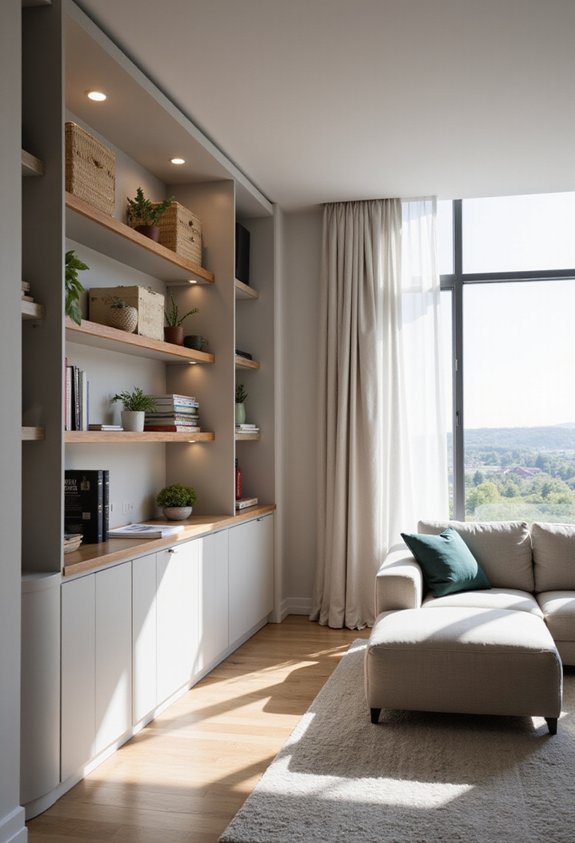
If you’ve ever played Tetris with your stuff, you know small living rooms need serious storage strategy. I’ve learned that dedicated wall shelving and built-in cabinetry are absolute game-changers for maximizing your small space. They eat up wall real estate without stealing precious floor inches—and that’s huge.
I also swear by furniture with hidden storage. A clever ottoman or narrow coffee table helps keep clutter from staging a hostile takeover of your design. These pieces actually make your room feel bigger because they’re doing double duty.
Here’s my favorite trick: I repurpose existing furniture my clients already own. It creates an authentic feel and saves money. Smart storage solutions in small living rooms aren’t just practical—they’re essential for keeping your space breathable and sane.
Opt for a Loveseat Instead of a Full Sofa
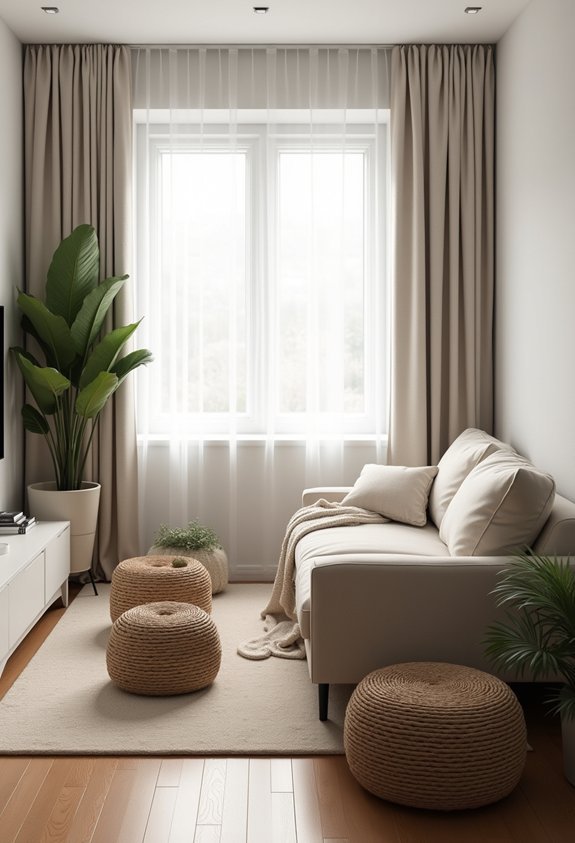
When you’re furnishing a tiny living room, a full-sized sofa is basically the furniture equivalent of trying to fit a whale into a bathtub. I learned this the hard way. Instead, I grabbed a loveseat, and wow, what a game-changer. These two-person champions take up way less space but still give you actual seating. A loveseat’s reduced depth and width help me maximize floor space dramatically. The shallow profile makes my small room feel bigger instantly. I paired mine with nesting tables, and suddenly my small living room ideas actually worked. With low arms and a deep seat, my loveseat creates that cozy, intimate vibe without suffocating the space. It’s the perfect solution to make the room feel spacious yet inviting. Who knew furniture could be this clever?
Build Your Palette Around Soft, Pale Tones
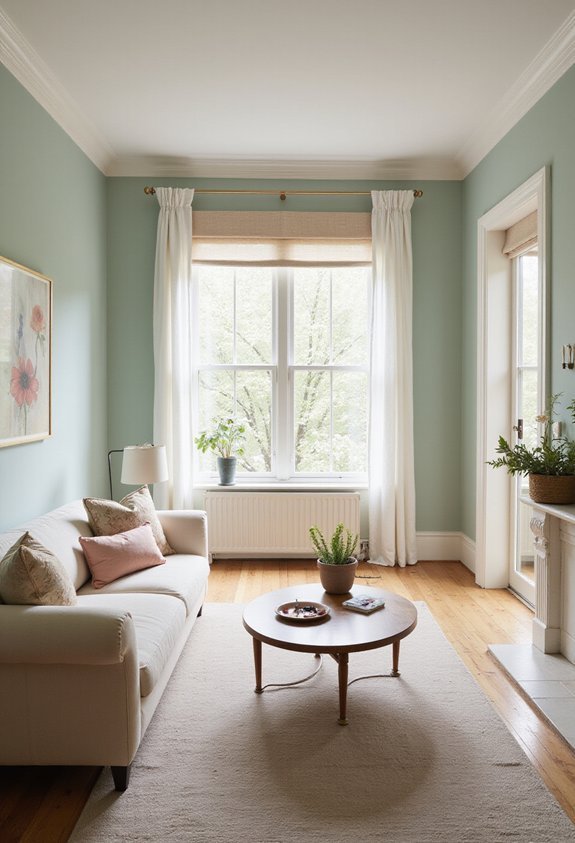
Most small living rooms need all the help they can get, and here’s where pale, soft tones swoop in like a superhero in a pastel cape. I’m telling you, a soft color palette works wonders. Pale tones reflect light like tiny mirrors bouncing around your space, making everything feel bigger and breezier. Think sage green walls paired with cream-colored upholstery and light wood floors. The magic happens when you layer different textures—not just one boring material. Mix that sage green with a chunky knit throw and smooth linen cushions. Your small living room suddenly doesn’t feel so cramped. Vary those pale elements throughout, and you’ll avoid that sterile, one-dimensional vibe. Trust me, this strategy actually makes your space breathe.
Angle Seating Toward a Shared Focal Point
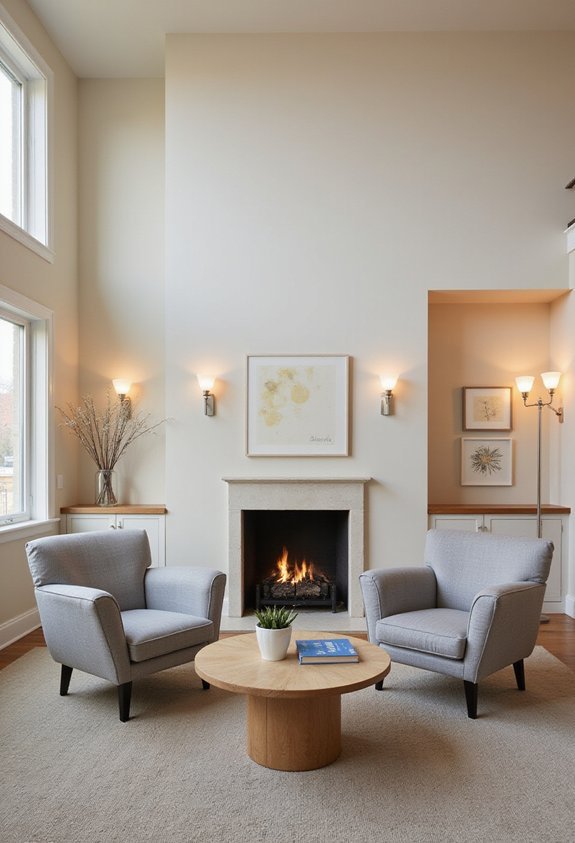
It makes everyone naturally turn toward each other, which means actual conversation happens instead of awkward side-eye exchanges. I arrange my seating in a triangle or circle around a focal point—like a fireplace or artwork—and suddenly my small living room feels way bigger. No more lining furniture against walls like we’re at a concert facing the stage. This angled seating arrangement creates flow and opens up the space visually. I place a statement piece, maybe an oversized mirror or floor lamp, right at that focal point to anchor everything. It’s like magic, honestly. The room breathes better, guests interact more, and my living room transforms from cramped to cozy. That’s the real furniture hack nobody talks about.
Carve Out a Window Seat Nook
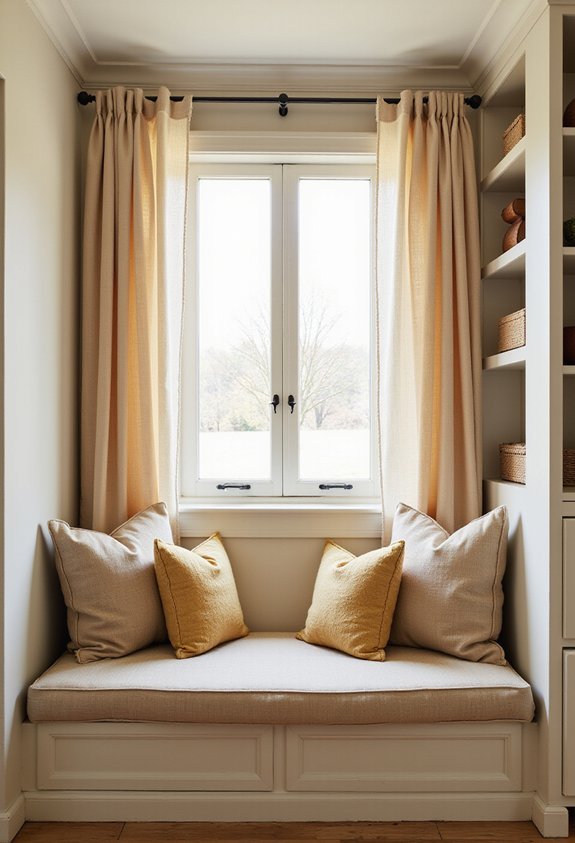
Because windows are basically free real estate in a small living room, I’ve claimed mine for a cozy hideaway that doesn’t eat up floor space. My interior designer friend calls it genius; I call it survival. I’ve built cushioned seating right into my living area and added shelving that holds books, plants, and my embarrassing collection of throw pillows. The storage keeps my small sitting room from looking like a tornado hit it.
Now here’s the magic: I positioned my nook near a fireplace, anchoring the whole space. Soft blankets, lumpy pillows, and warm lighting make the space feel like my personal sanctuary. On rough days, I climb in, close the world out, and pretend I’m literally anywhere else. It’s my favorite investment yet—and it didn’t require moving walls.
Incorporate a Tiny Workspace Seamlessly
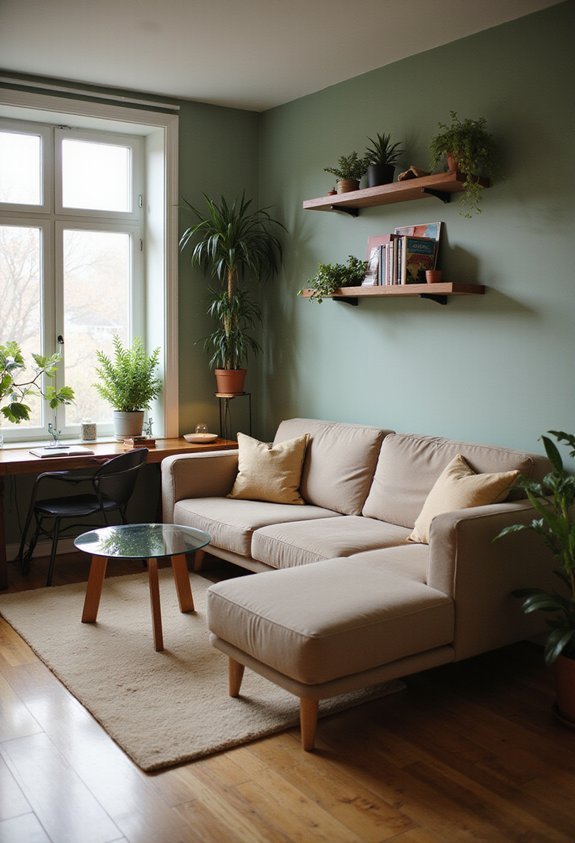
While my window nook’s basically my happy place, I’ve still gotta earn money to pay for all those throw pillows—so I carved out a teeny tiny workspace right in the corner of my living room. I scored a low profile vintage desk that doesn’t scream “office invasion.” Designer Sarah would approve. I paired it with a petite chair and tucked in a narrow bookcase for files and coffee mugs. The paint color is soft gray, so it blends right in. My window sill became a shelf for keepsakes. Honestly? This corner’s now my productive zone without eating my living room alive. Even my cat approves—she supervises my work from the desk’s edge.
Layer Textures and Patterns Thoughtfully
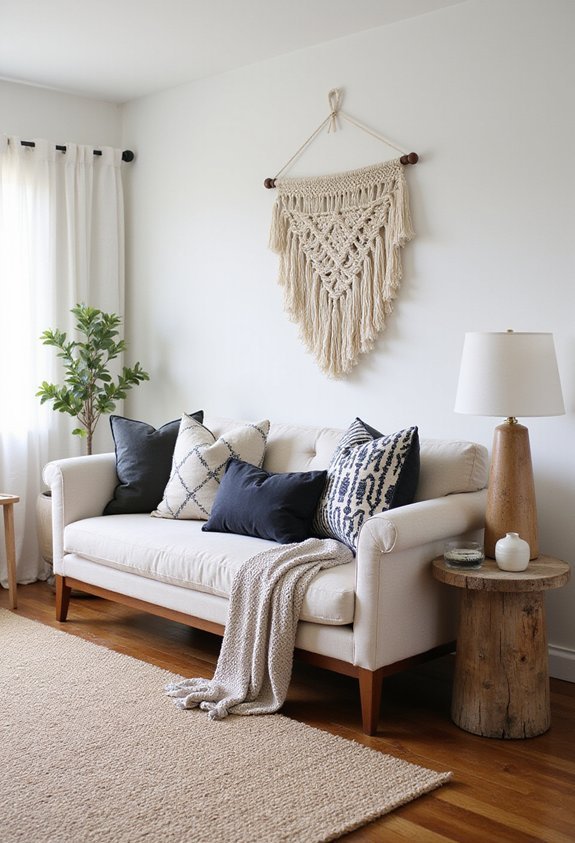
I used to think mixing patterns and textures meant throwing everything at the walls and hoping something stuck—spoiler alert, it didn’t. My living room looked like a confused tornado had decorated it.
Then I learned the magic trick: a solid colour scheme keeps everything from looking bonkers. I paired my curved sofa with a chunky knit throw, smooth velvet pillows, and a woven rug. Every piece talks to the next one instead of yelling over it.
Texture creates a sense of depth that makes small spaces feel bigger. A bumpy wall hanging next to soft curtains? *Chef’s kiss.* Mixing matte and shiny surfaces adds visual interest without screaming for attention.
The secret’s restraint, honestly. I picked three textures max and stuck with them like glue. No more design regrets keeping me up at night.
Utilize What You Already Own
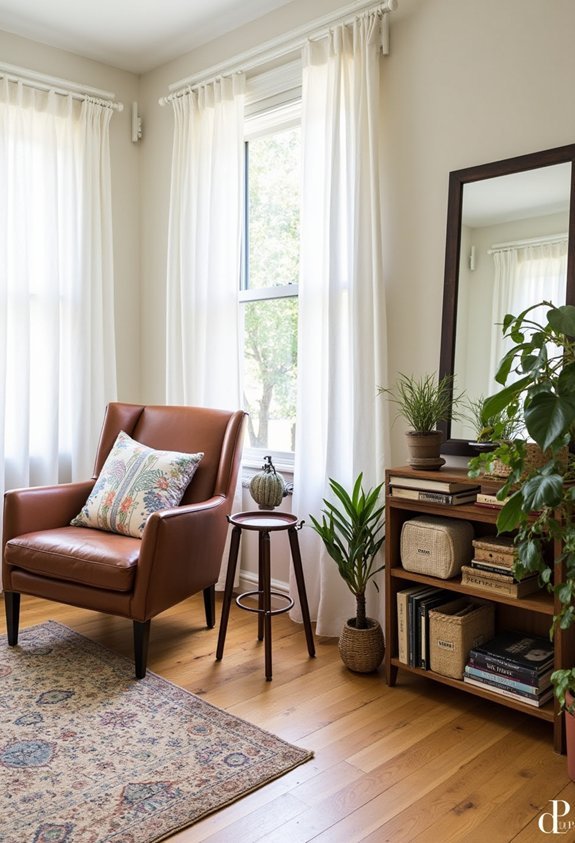
Before you hunt down a bunch of new stuff, take a hard look at what’s already hanging around your place. I’m serious—your hidden treasures are goldmines for small living rooms. Reupholster that old chair gathering dust in your garage. Refinish wobbly tables and bookshelves. Swap out tired hardware and lighting fixtures for fresher ones. These moves feel like magic and make a small room instantly cooler without breaking the bank.
Arrange existing storage creatively to maximize limited space. Tuck your favorite artwork and textiles into corners and niches. This strategy makes a living room feel personal and curated, not cramped. You’ll be amazed how strategically placing what you own transforms everything. Your stuff tells your story—let it shine instead of hiding it away.
Design a Self-Contained Vignette
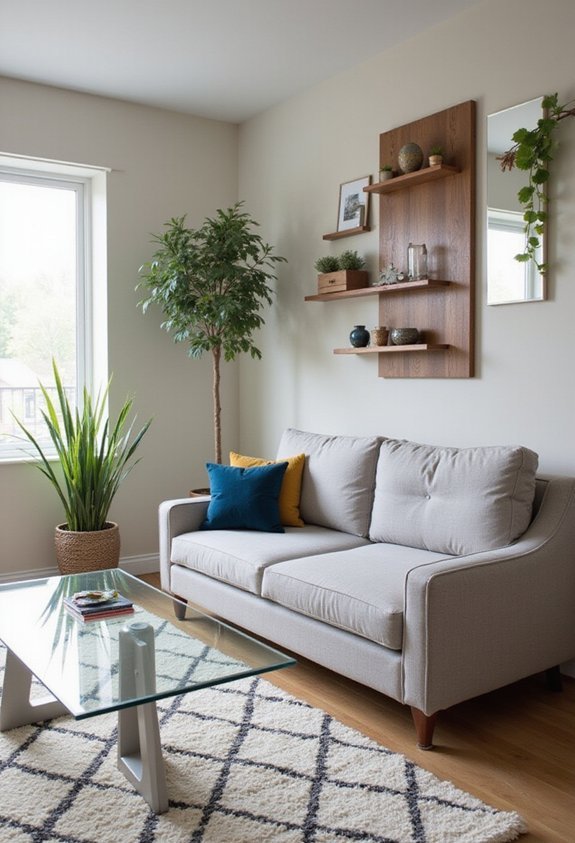
Everything changes when you stop trying to decorate your whole room and focus your energy on one killer corner instead. I’m talking about a self-contained vignette—basically a tiny design zone that packs major visual punch. Pick one spot. Maybe it’s a 3-by-4-foot wall section or a corner shelf. Load it with artwork, accessories, and small furniture pieces that scream “you.” The beauty? This concentrated energy creates the illusion of a thoughtfully designed Home Design space without eating up precious floor space. Your vignette becomes the room’s star player, and the rest stays blissfully uncluttered. Want to continue reading about maximizing small spaces? This strategy is genuinely game-changing. Trust me.
Style Your Sofa With Strategic Accessories
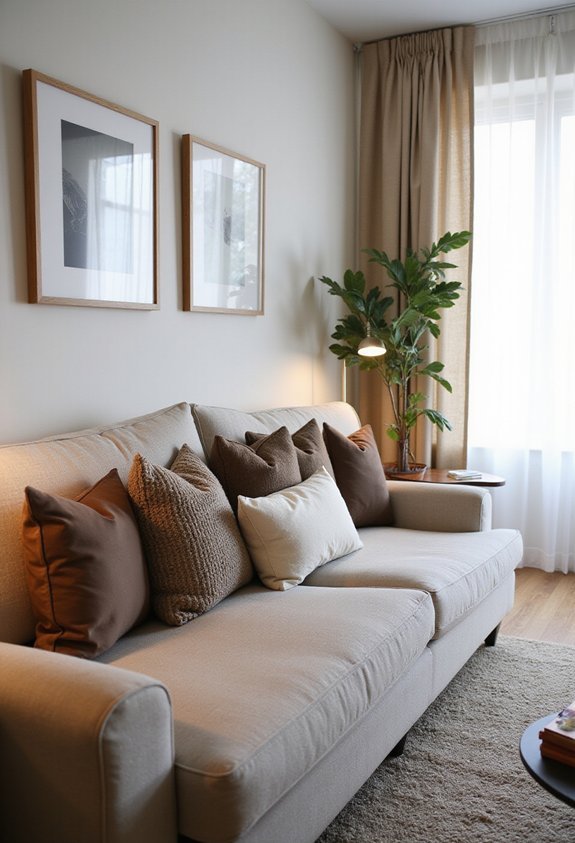
Since your sofa‘s probably the biggest piece in your small living room, it deserves to work overtime as a style superstar. I layer throw pillows in different colors and textures to make this small space feel intentional and fun. Add a cozy blanket draped over the back—it softens everything and screams “curl up here.” I place a tray on the arm to display books and decorative objects, giving your room look instant personality. Hang artwork or mirrors above to draw eyes upward and create dimension. A floor lamp beside the sofa provides perfect reading light and adds height. Mix statement and accent lamps for both task and ambient lighting. These strategic accessories transform your sofa into a design anchor that provides plenty of seating and style without eating up precious floor space.
Choose Open and Flexible Furniture Arrangements
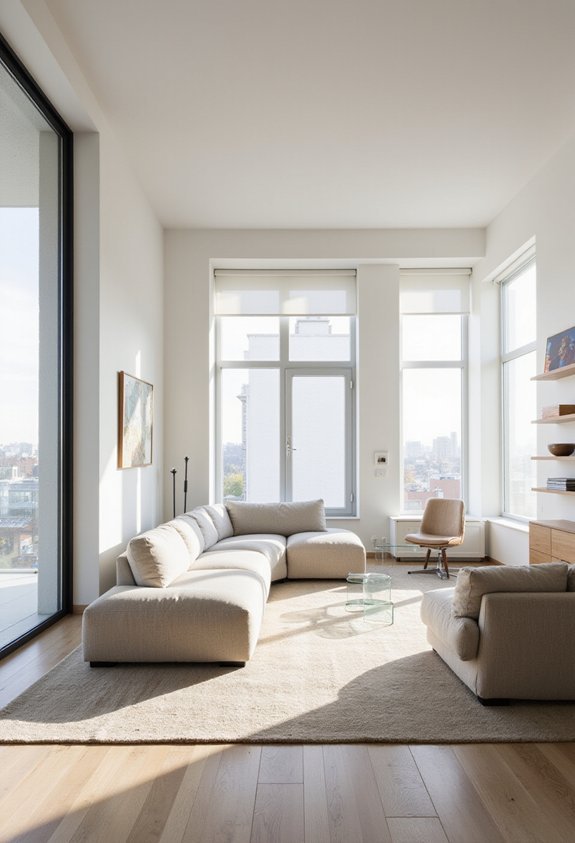
When you’ve got a small living room, heavy furniture that blocks sightlines is basically your enemy. I’ve learned this the hard way after literally bumping my shin on a chunky coffee table in my tiny living space.
Instead, I use a short wooden stool as my side table. It’s barely noticeable! I also float my desk against the wall, which takes up way less square footage than a traditional one. My seating toward the windows helps natural light flow beautifully through the smaller living area.
A daybed-style piece doesn’t block anything either, and a backless stool? Total game-changer. These flexible arrangements let me actually move around without doing an awkward furniture dance. Your square footage will thank you, trust me.
Frequently Asked Questions
What Is the 2/3 Rule for Living Rooms?
I’ll explain the 2/3 rule for you: it’s a design principle where I recommend keeping your room’s length at no more than two-thirds its width. I’ve found this ratio helps me create balanced, harmonious spaces that don’t feel cramped or awkwardly elongated.
What Is the 3-5-7 Rule in Interior Design?
I’ll explain the 3-5-7 rule: you’ll arrange decorative objects in groupings of three, five, or seven pieces. I find odd numbers create visual balance and draw your eye naturally, making your displays feel intentional rather than random or cluttered.
What Is the 3 4 5 Rule in Interior Design?
I’ll explain the 3-4-5 rule: you’ll want your room’s length to be 3 times its width, while the diagonal should measure 5 times the width. This ratio creates visual balance and harmony in your space, making it feel proportional and aesthetically pleasing.
What Is the Best Layout for a Small Living Room?
I’d recommend floating your furniture away from walls to maximize flow, then angling pieces toward a focal point like a fireplace. This approach creates conversation zones while I’ve found it prevents small spaces from feeling cramped or confined.
Conclusion
Your small living room doesn’t have to feel like a shoebox. Smart furniture, clever storage, and strategic styling can transform it into a space that actually breathes. You’ve got this. Mix it up, ditch the fussy stuff, and let your personality shine through. Your living room’s about to become the coolest spot in your home—and yeah, your guests’ll actually want to hang out there now.

