

Open living dining spaces demand thoughtful design creating seamless transitions between functional areas. You establish visual flow through coordinated color palettes and intentional furniture placement. Your combined space becomes genuinely sophisticated when designed with awareness of how different zones interact cohesively.
You create flowing spaces through strategic layout planning and coordinated aesthetics. Select furniture pieces that complement rather than compete, maintain consistent color schemes throughout, incorporate lighting creating visual continuity. Keep your open space organized avoiding cluttered overwhelming appearances. Your flowing living dining room becomes genuinely impressive through committed design and thoughtful arrangement creating beautiful sophisticated spaces that feel intentionally connected.
Choose a Unified Color Palette Across Both Spaces

When you’ve got a living room and dining room hanging out together like best friends, they’d better be dressed in the same color scheme—or things get awkward fast.
Pick two or three colors you absolutely love. Maybe it’s soft gray walls with warm white trim and pops of navy blue. Stick with those colors in both rooms through your furniture, pillows, and art. Your couch and dining chairs don’t need to match exactly, but they should vibe together.
Think of it like outfits. You wouldn’t wear neon green with hot pink stripes, right? Same rule applies here. When colors flow from one space into the next, your whole place feels intentional and put-together instead of like you just grabbed whatever was on sale.
Pick Furniture That Works in Both Rooms
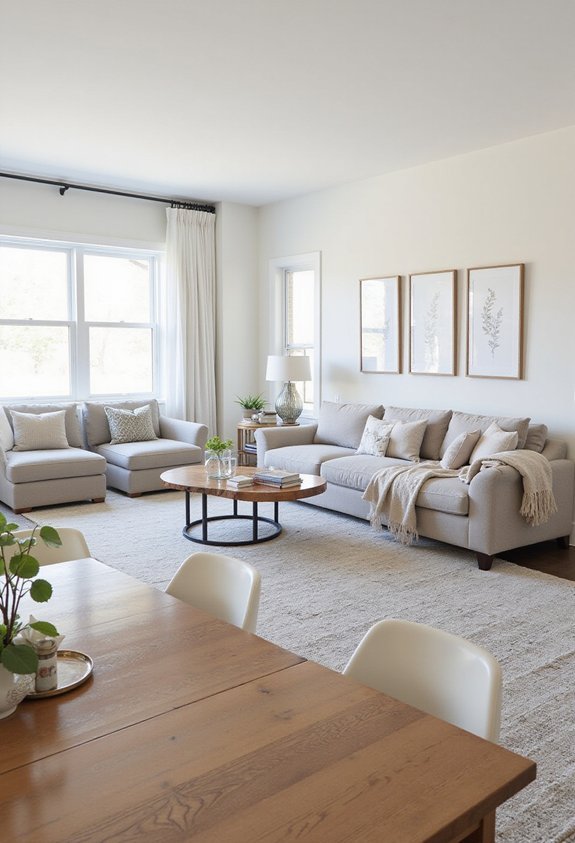
Your furniture should be flexible enough to hang out in either room without looking totally lost. Think about pieces that don’t scream “I belong only here!” A sleek wooden console table works great between both spaces and won’t make you feel awkward. Skip massive sectionals that hog space like they own the place. Instead, grab smaller chairs or ottomans you can shuffle around when you’re rearranging for the millionth time. Neutral colors like cream, gray, or soft beige are your friends—they won’t clash with your unified palette. Go for furniture with clean lines and simple designs. They’ll blend in smoothly, whether you’re eating spaghetti or watching Netflix. Your rooms’ll flow together like they were always meant to be best friends.
Choose Flooring for Your Living Dining Room

Since your living and dining spaces are basically roommates now, they’ve gotta wear matching shoes—and that means flooring that doesn’t freak out when you spill spaghetti sauce on it.
Hardwood looks fancy, but it’s basically a drama queen about water. Laminate and vinyl are your chill friends—they laugh at spills and cost way less. Tile works great too, especially in warmer climates.
Pick one flooring type for both rooms so your space feels connected, not like you accidentally decorated two different houses. Light-colored floors make everything feel bigger and brighter. Dark floors hide crumbs better, which is honestly the only advantage of being a slob.
Whatever you choose, make sure it can handle foot traffic and the occasional pasta explosion.
Use Area Rugs to Define and Connect Zones
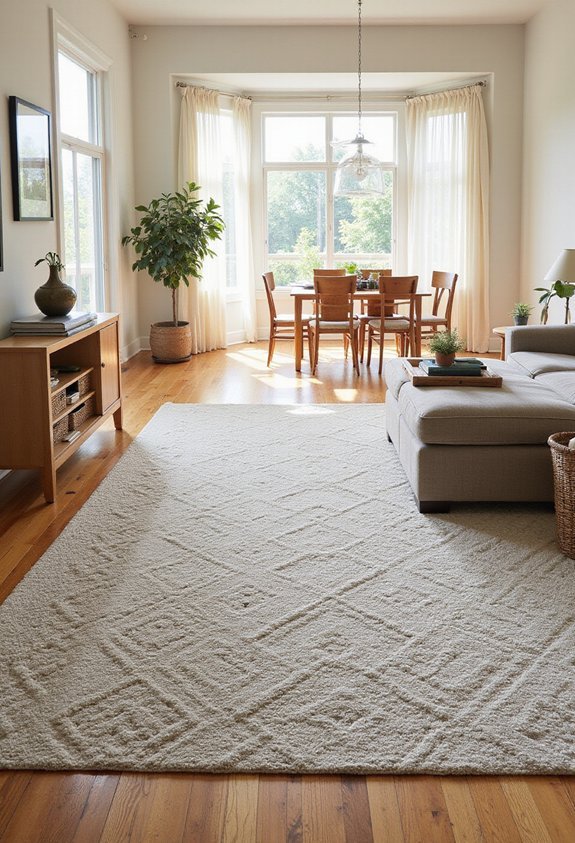
Area rugs are like the ultimate peacemakers in your living-dining combo—they’ll rope off your zones without building an actual wall. You’ll want a 5×8 rug anchoring your living room seating, and another 8×10 under your dining table. This setup tells your brain, “Hey, these are different neighborhoods!” Pick complementary colors so they chat with each other instead of arguing. A warm gray living rug paired with a rich navy dining rug? *Chef’s kiss.* Your guests won’t trip over the invisible boundary line, but they’ll totally feel it. Plus, rugs muffle noise when someone inevitably drops their fork during dinner. They’re basically furniture’s humble sidekicks, making your space look intentional and pulled-together without requiring architectural skills.
Design a Lighting Strategy for Both Areas
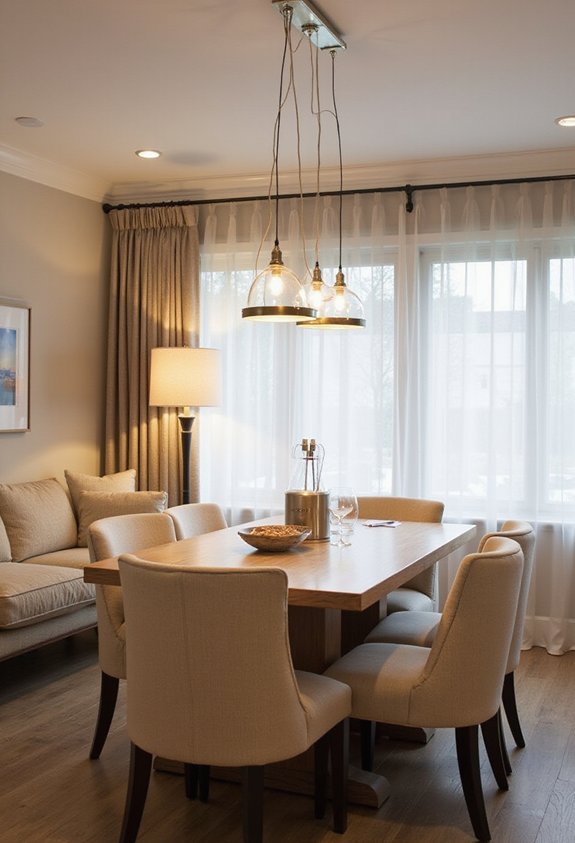
Two totally different lighting vibes are what’ll make your living-dining combo actually work, and here’s why: your living room wants to be cozy and chill, while your dining table needs to be bright enough that you can actually see what you’re eating (and make sure it’s not moving).
Use dimmers in the living area. They’re basically magic wands for mood-setting. Install a chandelier or pendant lights directly above your dining table—aim for 30-36 inches above the surface. This prevents squinting and weird shadows on your face.
Layer your lighting with floor lamps and table lamps in the living zone. Warm white bulbs feel inviting. Cool white works better for dining because it actually shows food colors accurately.
Different zones, different rules. Your future dinner guests will appreciate not eating mystery meat.
Paint Walls the Same Color Across Both Spaces

When you’re staring at a wall that suddenly changes color halfway through your room, it’s like your eyes are playing ping-pong. Stop that madness! Pick one beautiful color and paint both your living and dining spaces the same shade. Your brain won’t get confused, and your rooms’ll feel connected like they’re actually friends. Choose a neutral like warm beige or soft gray, and watch the magic happen. Same color means the spaces flow together naturally. Your furniture and decor become the real stars now, not some weird color boundary line. Plus, you’ll save money on paint and won’t need a degree in color theory. One color choice. Two happy rooms. Done.
Repeat Accent Pieces Across Both Spaces
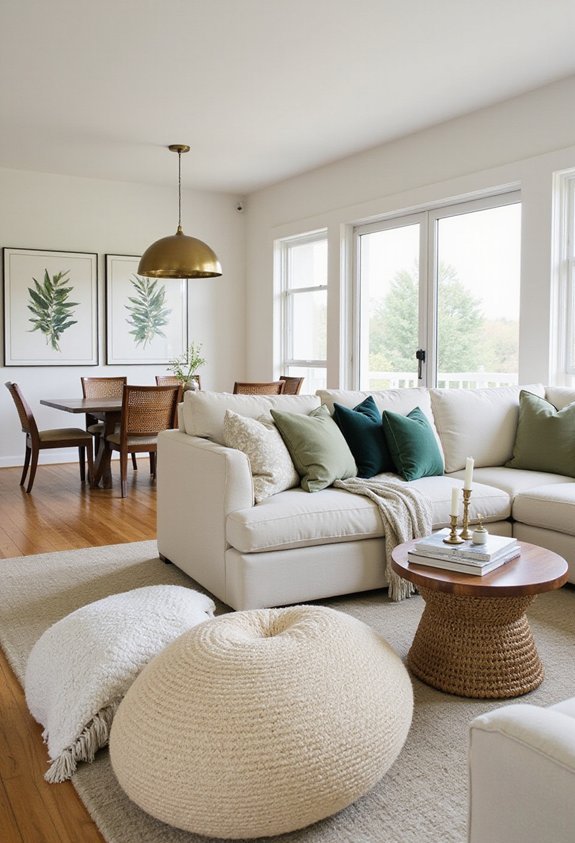
Now that your walls are singing the same tune, it’s time to add some personality without making things look like a scattered mess. Pick three or four accent pieces you absolutely love, and repeat them strategically across both rooms. Maybe it’s navy throw pillows, brass lamps, or wooden frames. Place matching items on opposite ends of the space—a 18-inch mirror above the living room console and another in the dining room creates visual unity without screaming “twin situation.” Your eyes travel smoothly between rooms instead of experiencing décor whiplash. This repetition ties everything together like a delicious sauce binding ingredients. Think of it as your rooms holding hands across the imaginary line separating them. The result? Spaces that feel intentionally designed, not accidentally coordinated.
Arrange Living Dining Room Furniture for Flow
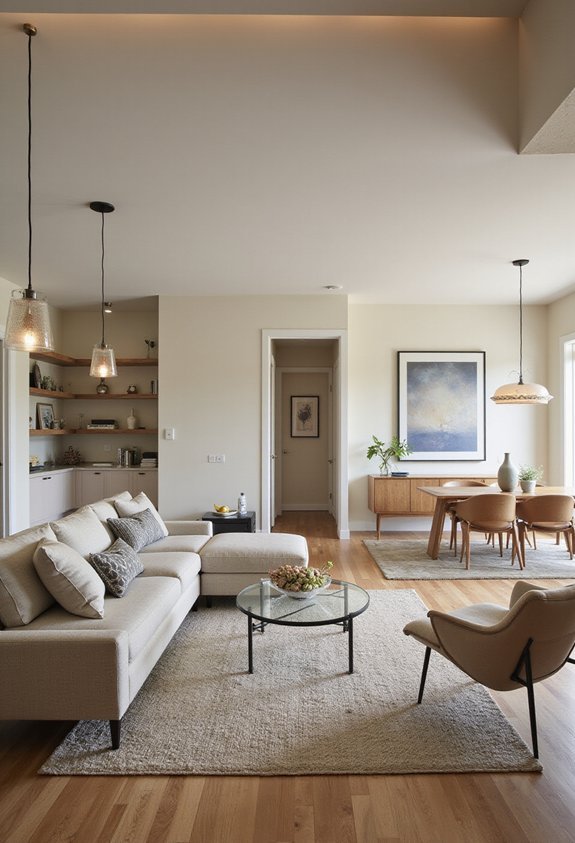
Before you shove your couch against the wall and call it a day, think about how people actually move through your space. Nobody wants to play furniture Twister just to grab dinner. Leave at least 18 inches between your sofa and dining table—your knees’ll thank you. Create a clear pathway from the kitchen to both rooms so you’re not doing the awkward shuffle past your guests. Position your coffee table so it doesn’t block sightlines between seating areas. Angle pieces slightly rather than lining them up like a showroom. This trick makes everything feel intentional and cozy, not like you’re furnishing a waiting room. Pro tip: walk through your layout before committing. Your shins are valuable real estate.
Layer Complementary Textures Throughout
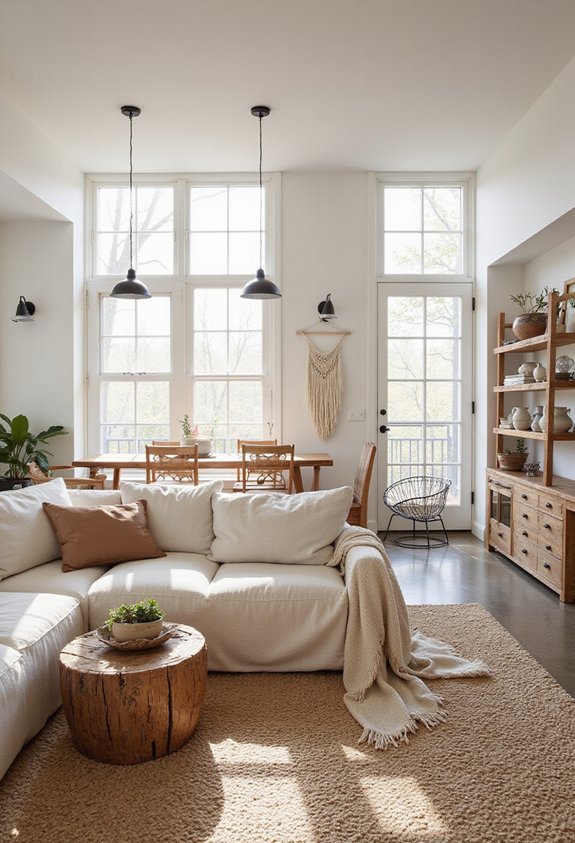
If you’ve got a living-dining room that feels about as inviting as a hospital waiting room, textures are your secret weapon. Grab a chunky knit throw blanket and drape it over your sofa. Add a plush area rug—think 8×10 feet—that makes bare feet actually happy. Layer in a velvet dining chair or two. Mix smooth glass tables with rough wood accents. Toss some linen pillows next to leather ones. Don’t forget woven baskets tucked beside furniture. These different textures make your space feel alive and touchable, not stiff and scary. Your guests will actually want to sit down instead of nervously standing by the doorway. Comfort and personality? Now that’s a combo worth texturizing for.
Choose Window Treatments That Match
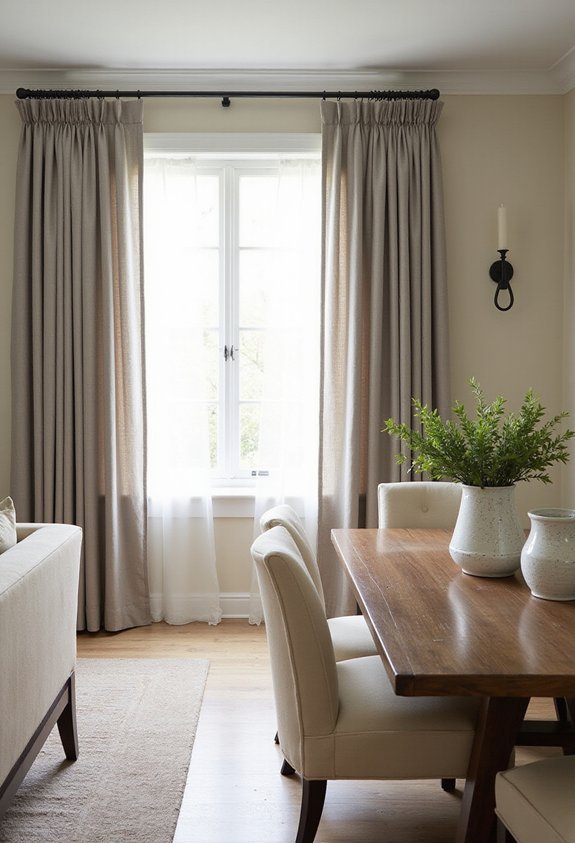
Window treatments aren’t just fabric you slap up there and hope for the best. They’re basically the sunglasses for your living-dining combo. Pick curtains or blinds that actually match your color scheme, not just whatever’s on sale at the discount bin. If you’ve got warm beige walls, go for cream or taupe panels. Cool gray? Try soft blue or charcoal. Your windows take up serious real estate, so don’t let them clash like a fashion disaster. Floor-to-ceiling curtains make rooms feel taller and fancier than they actually are. Bonus: they hide mysterious stains nobody talks about. Match your window vibe to your furniture and throw pillows. Consistency doesn’t kill creativity. It just makes your space look intentional instead of “I grabbed whatever fit.”
Mix Metallics and Hardware for Consistency
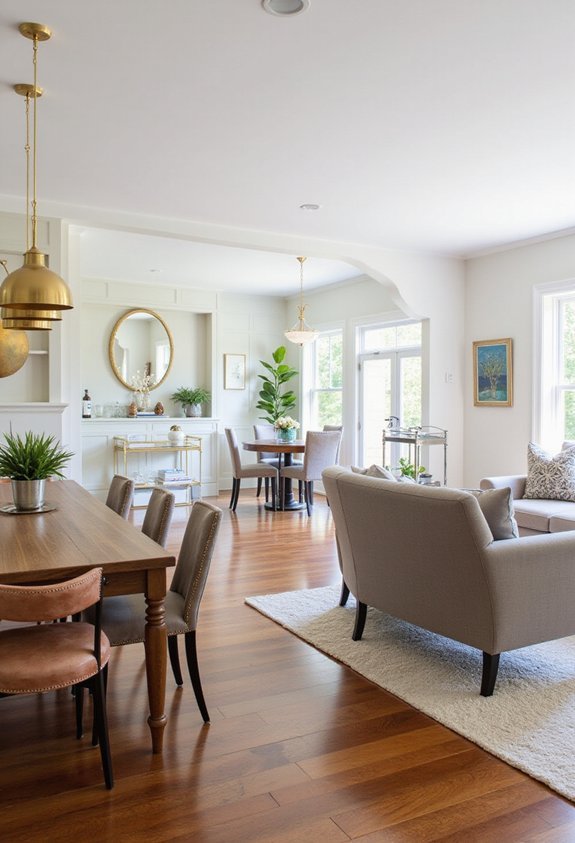
Just like you wouldn’t wear a gold watch with silver earrings and a bronze belt (okay, maybe you would, but your outfit’s gonna look confused), your living-dining room needs consistent metallics and hardware throughout. Pick one metal family and stick with it like glue. Gold feels warm and fancy. Silver reads modern and sleek. Bronze brings cozy, earthy vibes. Once you’ve chosen, apply it everywhere—cabinet handles, light fixtures, doorknobs, and picture frames. Aim for at least 70% consistency across your space. Your brain loves patterns, even if you don’t realize it. Mismatched metals make rooms feel chaotic and jumbled. Trust me, your guests won’t consciously notice matching hardware, but they’ll definitely feel the calm, put-together vibe you’ve created. That’s the real magic happening here.
Use Artwork to Connect Your Living Dining Room
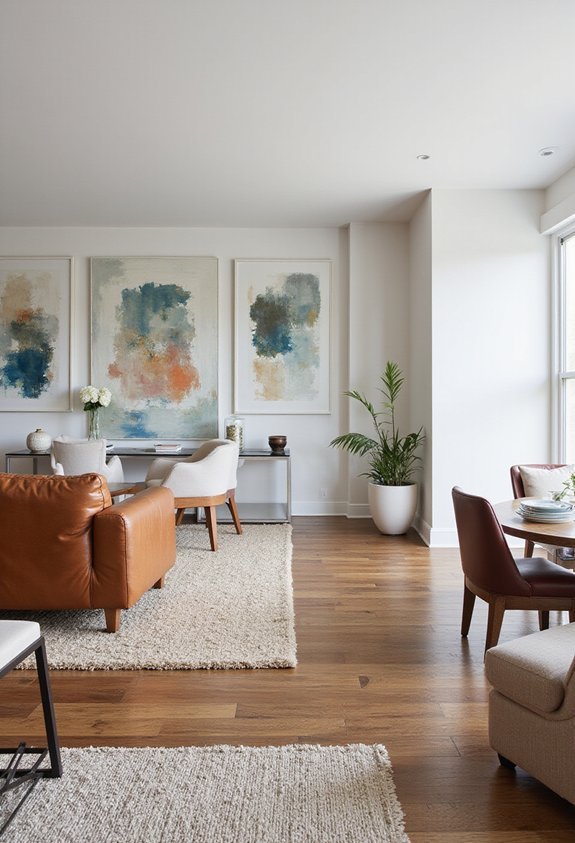
Artwork’s your secret weapon for tying your living and dining areas together like they’re best friends who finish each other’s sentences. Pick pieces that echo colors from both rooms—maybe a vibrant abstract with blues and golds that match your couch and dining chairs. Hang a gallery wall featuring 3-5 frames along the hallway connecting these spaces. This creates visual flow that makes your home feel intentional, not accidental. You could choose a large statement piece above a console table between rooms, or scatter smaller prints that reference similar themes. The trick? Repeat colors and styles. If you’re into modern art, stick with modern art. Don’t randomly throw in a Renaissance painting—that’s decorating chaos. Your artwork shouldn’t confuse guests into thinking they’ve entered different dimensions.
Add Built-in Storage in Your Living Dining Room
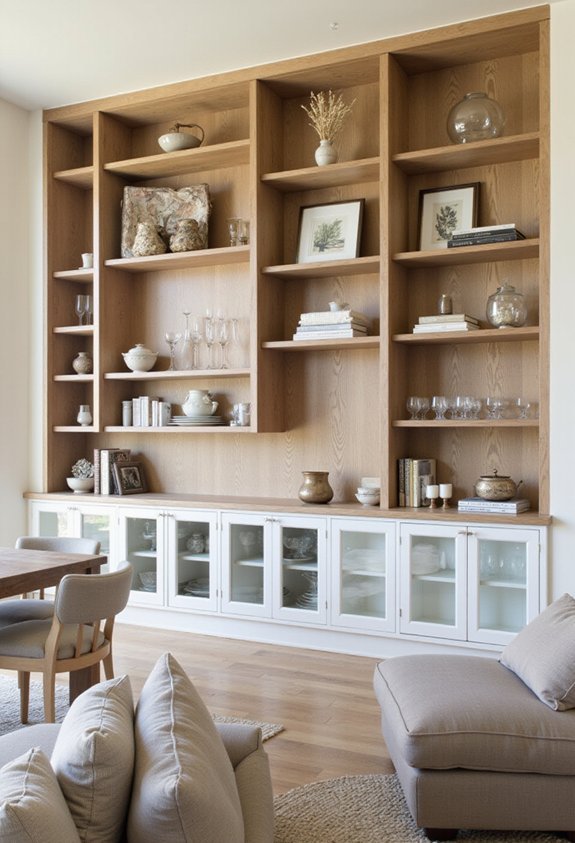
When you’ve got a living dining room combo, clutter’s basically inevitable—unless you’re a robot who doesn’t own stuff. Built-in storage is your secret weapon against chaos. Consider installing sleek shelving units along one wall to display books, plants, and decorative pieces. They’re functional AND pretty. Wall-mounted cabinets work magic too, hiding the stuff you’d rather not show guests (we’ve all got that pile). A bench with hidden storage tucked under your dining table doubles as seating and a sneaky storage spot. Paint these built-ins white or match your walls to keep things looking intentional and clean. You’ll breathe easier when everything has a home, and your space actually feels livable again.
Anchor Both Rooms With a Design Theme
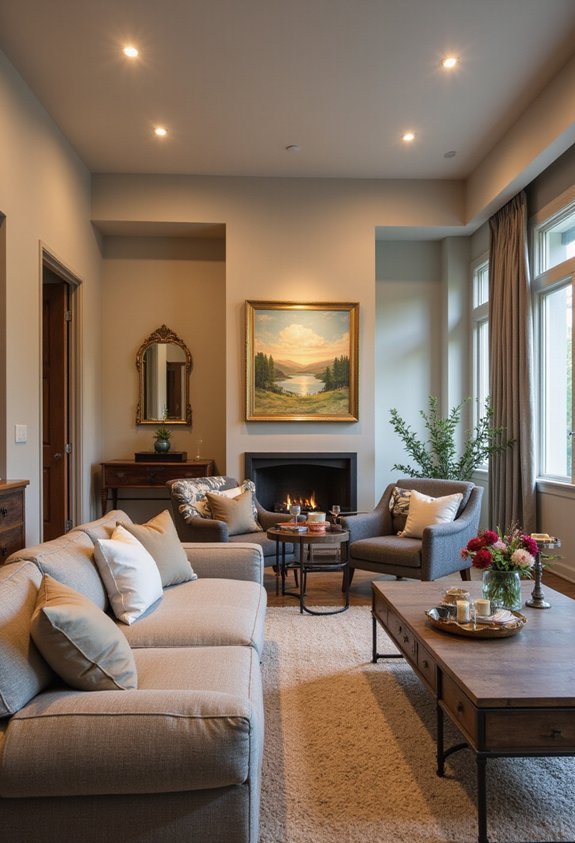
Because your living and dining rooms are basically roommates now, they’ve got to get along—and that means picking a design theme that works for both spaces. You can’t have your living room screaming “coastal vibes” while your dining room’s throwing a Victorian tantrum. Pick one vibe and stick with it like glue.
Maybe you’re into modern minimalism with clean lines and neutral grays. Or perhaps farmhouse charm with warm woods and cozy textures makes your heart sing. Whatever you choose, repeat it across both rooms through color, furniture style, and decorative pieces. A cohesive theme creates flow, making your combined space feel intentional rather than accidentally thrown together. Your guests won’t wonder if they’ve walked into two different apartments!
Place Transitional Pieces at Room Boundaries
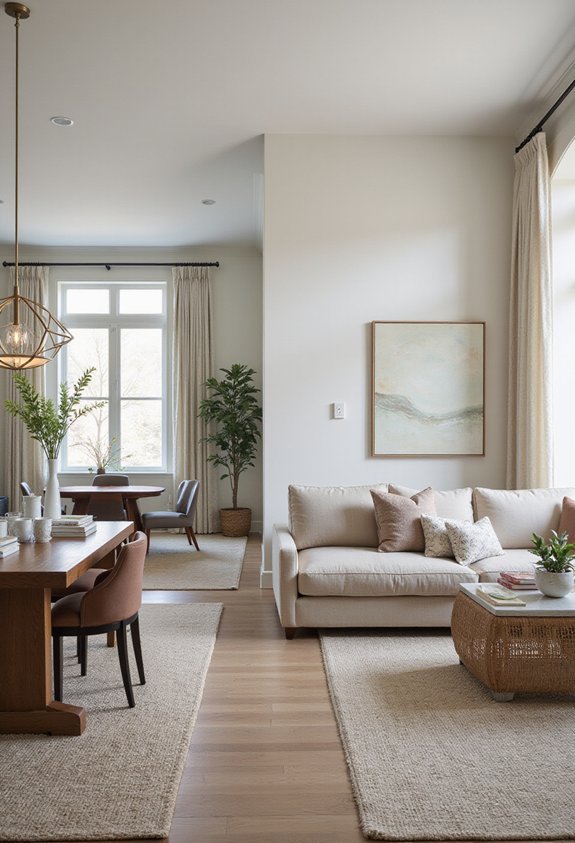
The magic happens right where your living room shakes hands with your dining room. You’ll want to place transitional elements in this boundary zone. Think about a sleek console table, roughly 36 inches wide, positioned between both spaces. It’s like the diplomatic ambassador of your home. Add a gorgeous area rug that spans about 5-by-8 feet, anchoring the conversation. A tall bookshelf works too—it doesn’t block sightlines but whispers, “Hey, something’s changing here.” Plants are your friends too. They’re basically furniture that doesn’t complain about rearrangement. These pieces act as gentle dividers without screaming, “Stay out!” Your spaces’ll feel connected yet distinct, like best friends who respect personal boundaries. That’s the sweet spot you’re hunting for.
Balance Open Space With Purposeful Placement
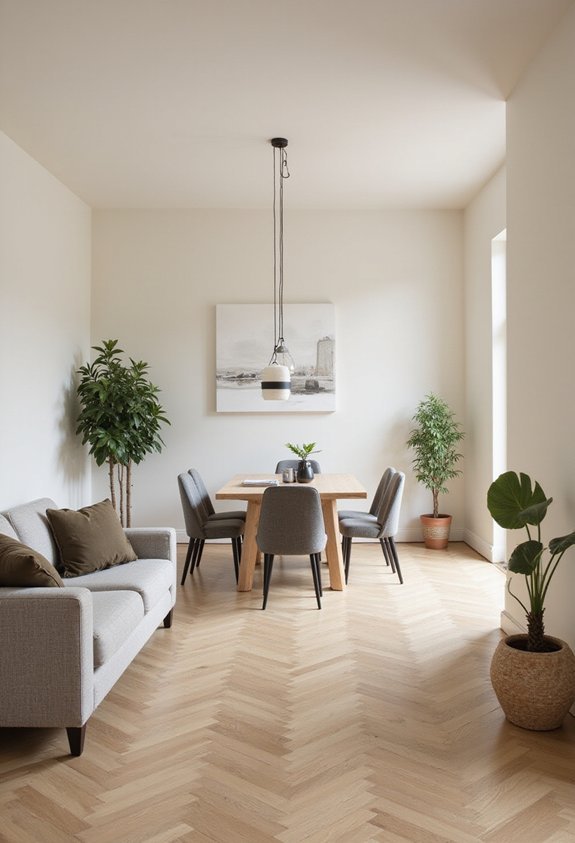
While your connective elements do the heavy lifting, you’ve still gotta resist the urge to furniture-bomb your space like you’re setting up a showroom. Leave breathing room between pieces. Your living-dining combo isn’t a game of tetris where everything must touch. Instead, anchor furniture strategically. A sofa here, a dining table there—give them purpose and space to exist. Think of it like seating at a concert; you don’t cram everyone into one tiny section. Leave at least two feet of walking space between major pieces. Your shins’ll thank you. Plants, lamps, and decorative objects fill gaps without creating clutter. This balance prevents your room from feeling like a furniture warehouse exploded indoors. Intentional placement beats cramming every inch. Your space’ll breathe, and honestly, so will you.
Create a Focal Point Both Rooms Can Share
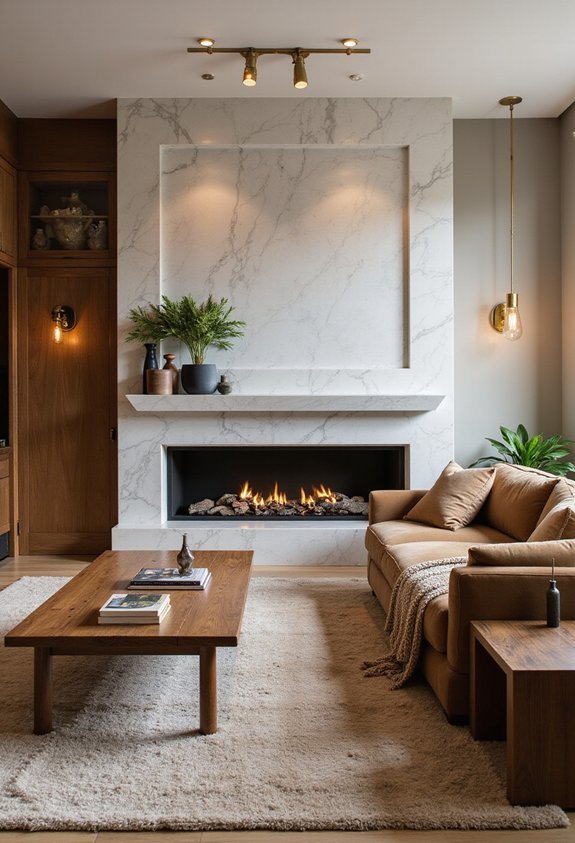
If you’re gonna nail the living-dining combo, you need one show-stopping focal point that both rooms can’t stop staring at. Think a statement fireplace, bold gallery wall, or that gorgeous chandelier you’ve been eyeing. Position it where both spaces can admire it without neck strain. A 6-foot-tall artwork or a stunning accent wall in deep emerald or warm terracotta works magic. Your focal point becomes the conversation starter, literally. People gather around it like moths to a flame, and suddenly your layout feels intentional, not accidental. It’s the glue holding your open concept together. Skip the focal point, and your rooms feel like strangers at a party. Nobody knows where to look or belong.
Add Plants to Your Living Dining Room Decor
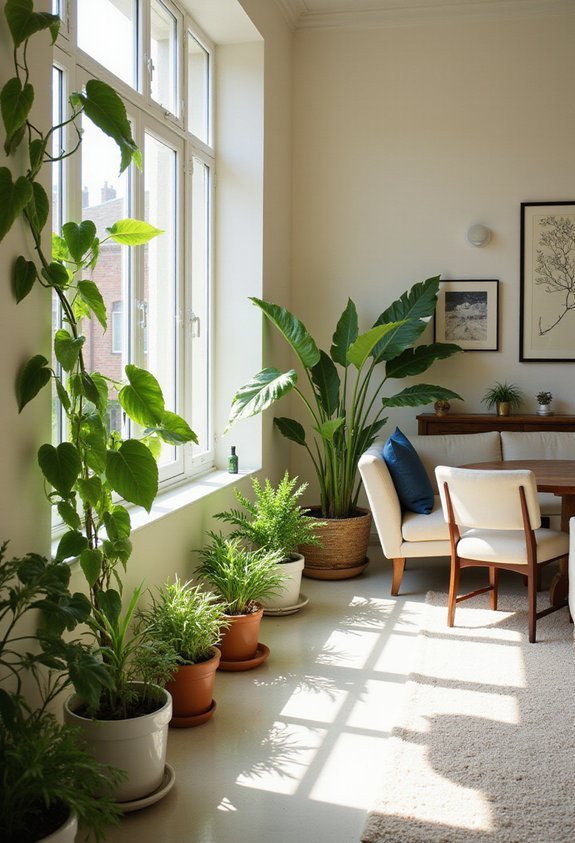
Once you’ve nailed that killer focal point, it’s time to bring some life into your space—literally. Plants are basically nature’s air fresheners, and they’ll make your living dining room feel way less like a furniture showroom. Stick a fiddle leaf fig in the corner—those things are practically six-foot mood-boosters. Smaller succulents work great on shelves between your dining table and couch. They’re hard to kill, which is perfect if you’re plant-challenged. Hanging pothos vines from corners add vertical interest without taking up floor space. Green really does make spaces feel bigger and fresher. Plus, you’ll finally have something to blame when people ask if you’re okay. “Nope, my plants are depressed today.”
Style Bookshelves and Collections as Decor
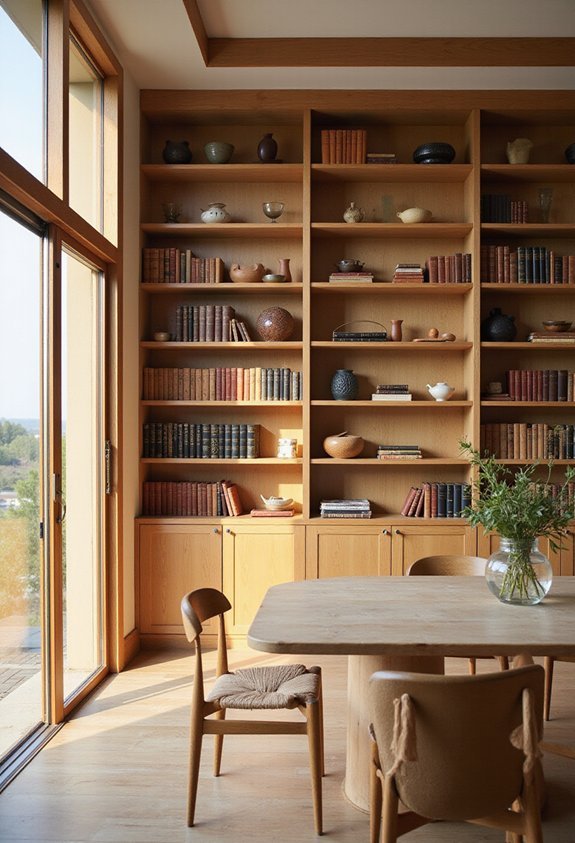
Your bookshelves aren’t just for books—they’re basically free real estate for showing off your personality. Mix your novels with decorative objects like small plants, framed photos, and quirky collectibles. Alternate vertical and horizontal book stacking to create visual interest. Tuck a mini succulent between cookbooks, or lean a framed print against the back wall. Add pops of color with book spines and colorful vases. Leave some breathing room—overstuffed shelves feel chaotic, not curated. Group similar items together in threes or fives for balance. A tiny sculpture next to travel guides tells your story without boring everyone. Your shelves should make people smile and ask questions. That’s the sweet spot between “I’m fancy” and “I’m actually cool.”
Incorporate Personal Touches That Reflect Your Style
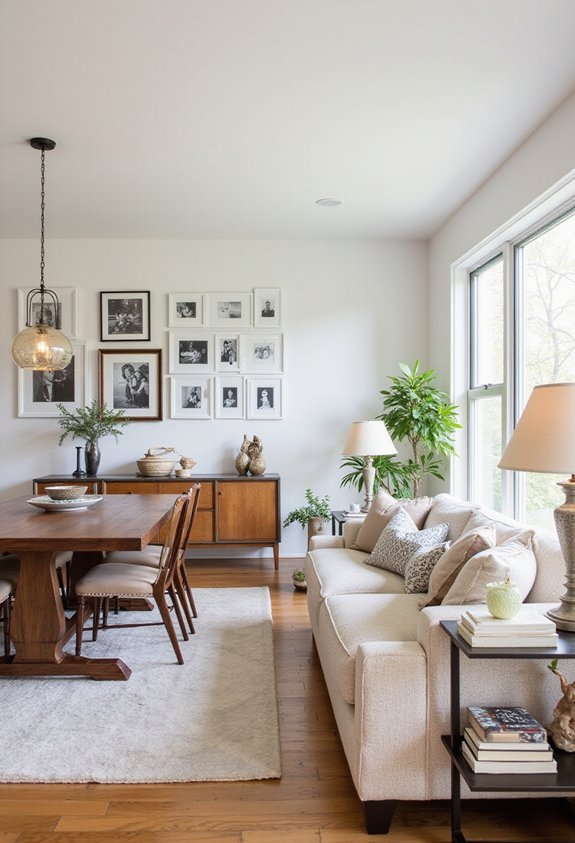
Beyond those gorgeous bookshelves, it’s time to make your living-dining space actually feel like *you* live there. Hang that weird art you secretly love, not what you think you *should* display. Scatter family photos on floating shelves or that dusty console table. Your grandmother’s quirky lamp? Perfect. That vintage record player you actually use? Display it proudly. Mix in objects that make you smile—your collection of ceramic cats, those travel souvenirs gathering dust, or that embarrassing concert poster. These touches transform a generic room into your personal museum. Don’t overthink it. Your space shouldn’t look like a magazine spread if magazines don’t reflect your messy, beautiful reality. Authenticity beats perfection every single time.
Also read: 23 SPRING DINING ROOM DECOR Ideas That Feel Fresh!
Connect the Rooms With Transitional Doorways and Passages
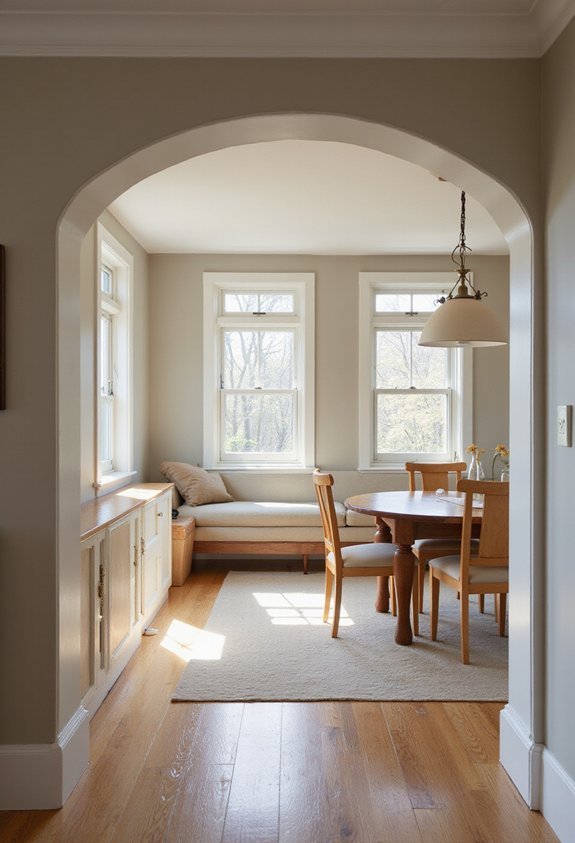
While your living room’s got personality for days, that doorway between the living and dining areas? It’s basically the hallway’s chance to shine. You’ve gotta make it work hard, not just stand there looking awkward. Try hanging a statement mirror about 36 inches wide to bounce light around and make everything feel connected. Add matching throw pillows on both sides—seriously, it’s like giving the rooms a secret handshake. Paint your doorframe a bold color. Cream or soft gray works too if you’re feeling shy. Position a small console table nearby and you’ve basically created a friendship bridge between spaces. Your rooms will finally stop ignoring each other at parties. The magic? Making them feel like they belong together.
Mix Statement Pieces Without Overwhelming the Flow
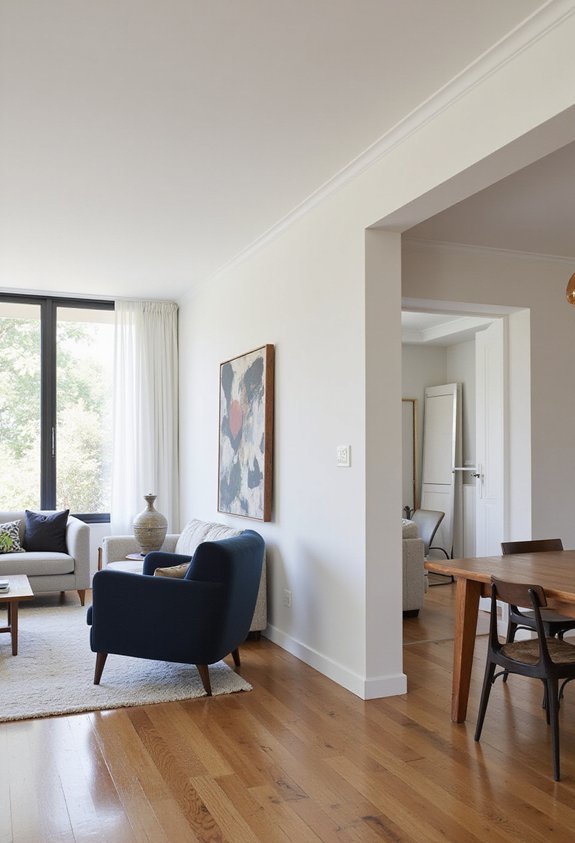
Here’s the thing about statement pieces—they’re like hot sauce, and nobody wants their whole meal to be hot sauce. You’ve gotta balance that bold velvet sofa or oversized art with breathing room. Pick one showstopper per room. Maybe it’s a jewel-toned accent chair in your living area or a dramatic chandelier in your dining space. Then dial it back everywhere else. Neutral walls, simple side tables, and understated rugs let your star player shine without competing for attention. Think of it like a band—you need the lead singer, but the rhythm section keeps things steady. Too many statement pieces? Your rooms’ll look chaotic and exhausted, like they just ran a marathon. One fabulous focal point keeps your open floor plan feeling intentional and gorgeously balanced.
Frequently Asked Questions
How Do I Maintain Privacy Between Living and Dining Areas Without Walls?
You can maintain privacy by using room dividers, curtains, or sliding screens that you’ll position between spaces. You’ll also benefit from strategic furniture placement, tall bookcases, or plants that naturally separate your living and dining areas without permanent walls.
What’s the Best Way to Hide Clutter in an Open Living-Dining Space?
You’ll effectively hide clutter by investing in stylish storage ottomans, floating shelves, and decorative baskets that blend seamlessly into your décor. You can also use room dividers strategically and employ closed cabinetry to contain items while maintaining your space’s open aesthetic.
How Can I Improve Acoustics in an Open-Concept Living Dining Room?
You’ll improve acoustics by adding soft furnishings like area rugs, curtains, and upholstered furniture that absorb sound. You can also install acoustic panels, use bookshelves strategically, and hang wall tapestries to reduce echo and create better sound quality.
Should I Use Different Ceiling Heights to Define the Two Spaces?
Yes, you should consider varying ceiling heights to define your spaces. You’ll create visual separation between living and dining areas while improving acoustics. You can drop the dining ceiling lower, which helps contain sound and establishes distinct zones effectively.
How Do I Prevent Cooking Smells From Affecting the Living Room Area?
You’ll prevent cooking smells from drifting into your living room by installing a powerful range hood, keeping kitchen doors closed during cooking, maintaining good ventilation, and using odor-absorbing materials like activated charcoal or baking soda strategically throughout both spaces.
Conclusion
You’ve got this! Pick your colors, grab flexible furniture, and let those rugs do the heavy lifting. Your living and dining room’ll flow like peanut butter and jelly—no awkward zones ruining the vibe. Throw in some statement pieces, nail your lighting, and boom: one seriously cohesive space that actually makes sense. Your guests won’t know where one room ends and the other begins. That’s the dream, right?

