

Kitchen appliances require smart storage solutions that maximize space and maintain easy accessibility. Dedicated cabinets, pull-out shelves, and vertical organization systems keep appliances functional and organized. Planning effective appliance storage transforms your kitchen into an efficient, clutter-free cooking environment.
Appliance garages, deep drawers, and specialized shelving accommodate various sizes and weights effectively. Open shelving displays frequently used items while closed storage keeps seasonal appliances out of sight. These practical solutions maintain visual order while ensuring your appliances remain easily accessible and functional.
An organized kitchen appliance storage system streamlines your cooking workflow and saves valuable counter space. Group similar items together, use labeled containers, and establish designated zones for different appliances. Your well-organized kitchen becomes a functional sanctuary where everything has its proper place and purpose.
Install Open Shelving for Appliance Storage
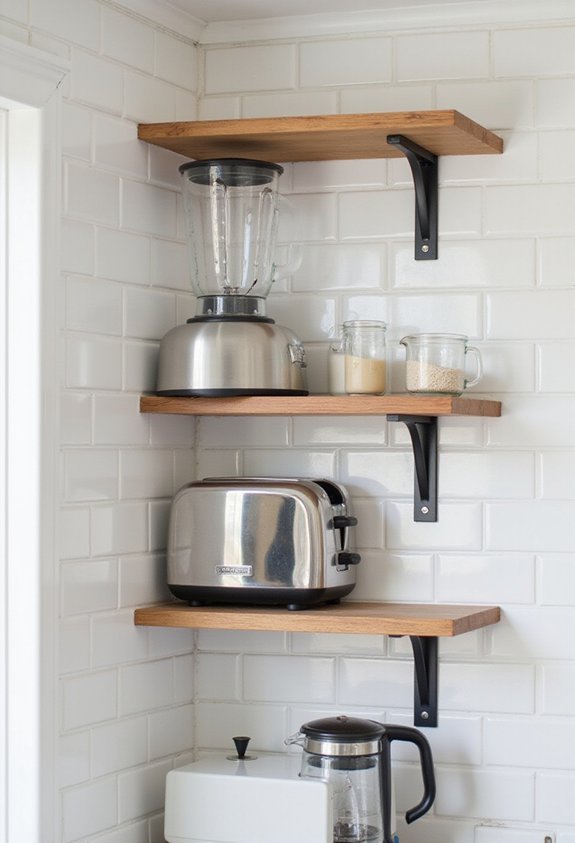
If you’re looking to maximize your kitchen’s functionality and visual appeal, open shelving offers an excellent solution for storing frequently used appliances. You’ll gain instant access to items like your coffee maker, blender, or stand mixer without opening cabinets.
Open shelving encourages you to keep your countertops organized and clutter-free. You’ll naturally maintain order since your appliances are visible to guests. Choose shelves that complement your kitchen’s design—wood, metal, or glass options work well.
Install shelves at convenient heights for your most-used items. Position heavier appliances on lower shelves for safety and stability. Use shelf dividers or risers to maximize vertical space and create distinct zones for different appliances.
This storage method works particularly well in modern, farmhouse, or industrial kitchen styles.
Also read: 12 Elegant Kitchen Ideas
Use Vertical Wall Racks to Store Appliances
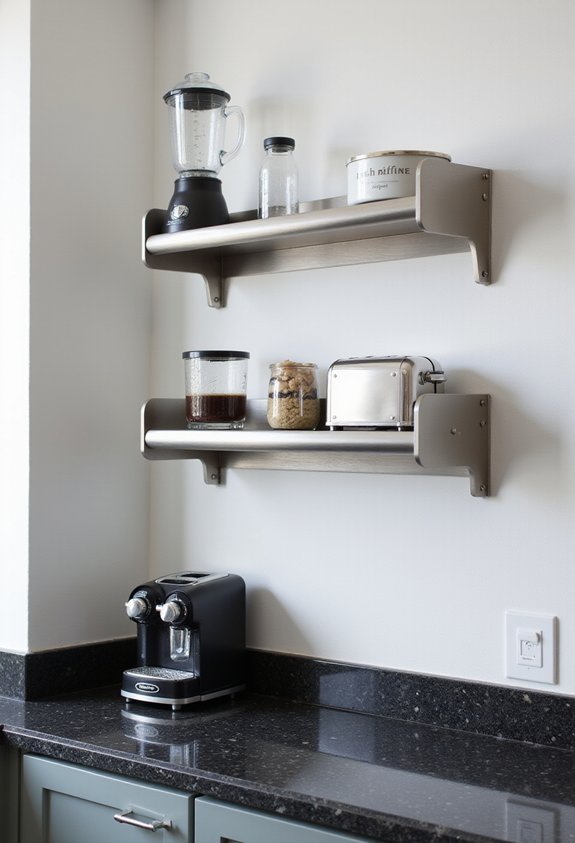
While open shelving demands significant wall space, vertical wall racks offer a more compact alternative for organizing your kitchen appliances. These racks maximize your storage potential by utilizing unused wall real estate efficiently.
You can install magnetic strips to hold metal appliances like knives or graters, freeing up cabinet space. Hanging hooks work well for small gadgets such as whisks, measuring cups, and hand mixers. Pegboard systems provide customizable options, allowing you to adjust hook placements as your needs change.
When selecting wall racks, guarantee they’re securely anchored to wall studs to support your appliances’ weight. Consider your kitchen’s layout and choose locations near where you’ll actually use these tools. This approach keeps frequently used items accessible while maintaining a clutter-free countertop.
Add Deep Drawers With Dividers
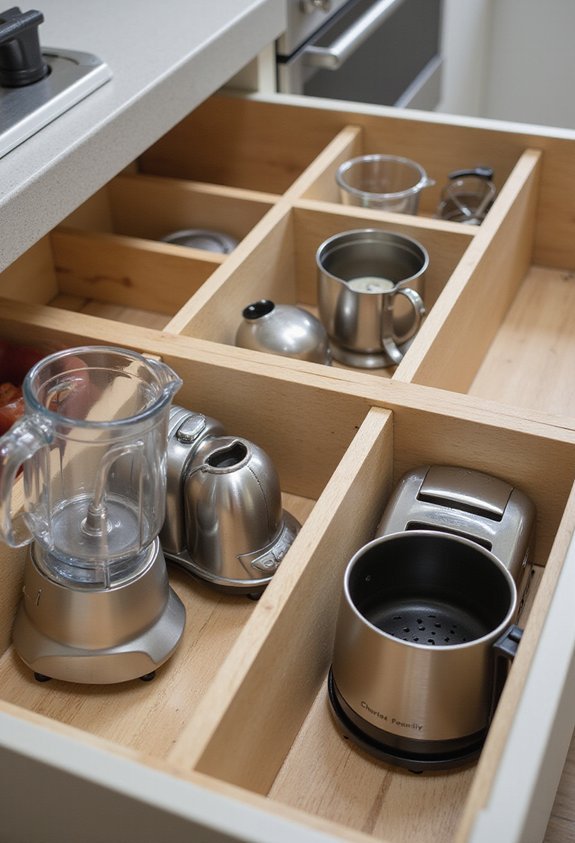
Deep drawers with dividers’ll transform how you organize smaller appliances and gadgets that don’t fit neatly on shelves or wall racks. You can customize compartments to match your specific items, whether you’re storing blenders, coffee makers, or specialty kitchen tools. This approach keeps everything accessible while protecting appliances from dust and damage. Install adjustable dividers so you can reconfigure the layout as your needs change. Label each section clearly to help family members locate items quickly. Consider drawer depth carefully—aim for drawers deep enough to accommodate your tallest appliances while remaining easy to access. This storage solution maximizes your cabinet space efficiently and maintains a clutter-free kitchen appearance while keeping frequently used items within arm’s reach.
Use Cabinet Sliding Shelves for Heavy Appliances
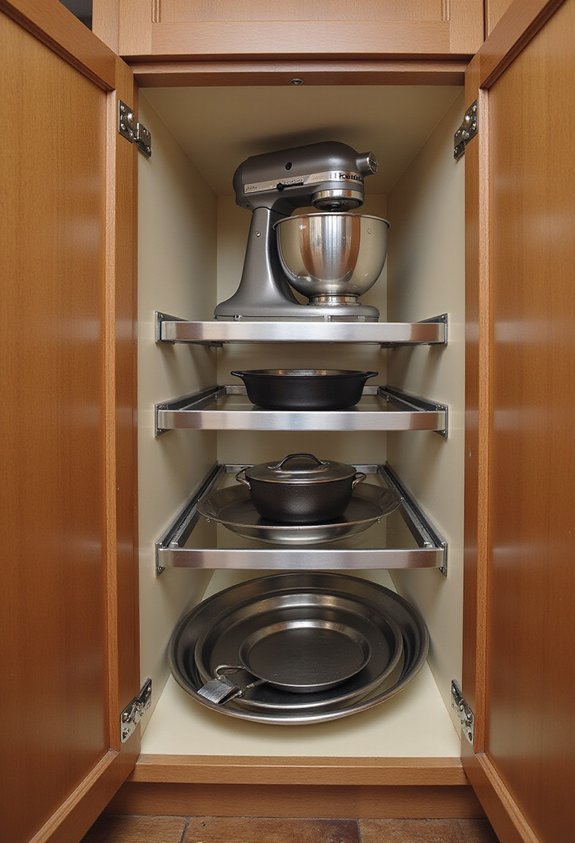
For larger, heavier appliances that won’t fit in drawers, cabinet sliding shelves offer the ideal storage solution. You’ll appreciate how these shelves maximize your cabinet space while keeping bulky items easily accessible.
Sliding shelves let you pull out your stand mixer, food processor, or blender without straining your back or reaching deep into dark corners. They’re particularly useful for appliances you use regularly but don’t want cluttering your countertops.
When installing sliding shelves, guarantee they’re rated for the weight of your appliances. Position frequently used items at eye level or slightly below for comfortable access. Group similar appliances together to maintain organization and streamline your kitchen workflow.
This setup transforms your cabinets into functional storage that protects your investments while keeping everything within reach.
Create a Dedicated Appliance Garage
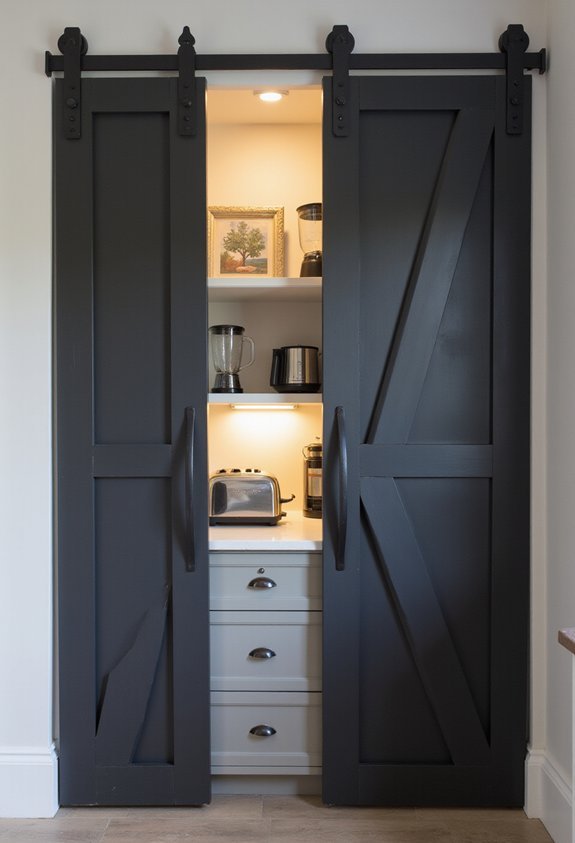
An appliance garage—a dedicated cabinet with a tambour or pocket door—keeps your countertop essentials hidden yet accessible. You’ll maintain a clutter-free kitchen while storing frequently used items like toasters, coffee makers, and blenders within arm’s reach.
Install the garage in a corner or along your backsplash for ideal space utilization. Choose a cabinet depth that accommodates your largest appliance, and add adjustable shelves to customize storage for different heights and sizes. Consider incorporating a power strip inside so you can keep appliances plugged in without visible cords.
This solution works especially well for small kitchens where counter space is premium. You’ll enjoy a streamlined appearance while keeping your daily-use appliances organized and convenient.
Organize Appliance Cords and Tools on Pegboards
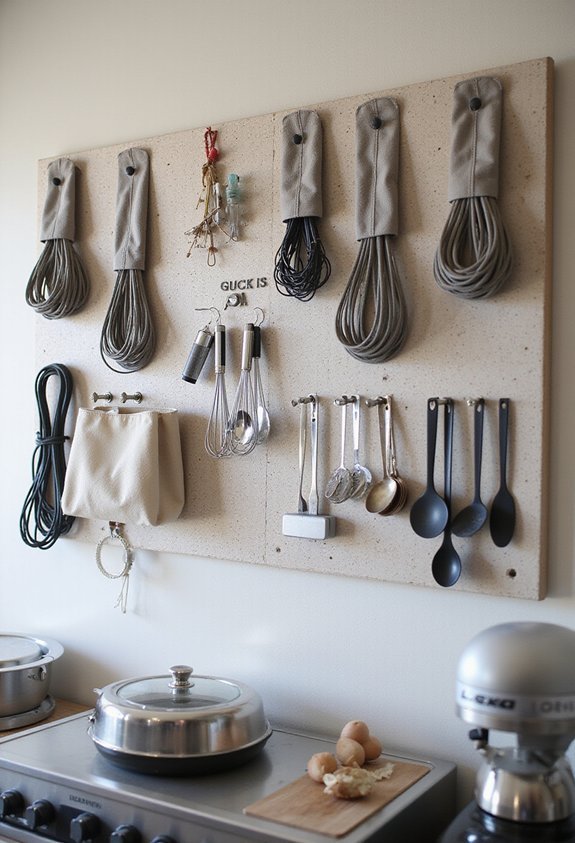
While an appliance garage keeps your countertop tidy, you’ll still need to organize the cords, attachments, and tools that come with your appliances. Pegboards are your solution. Mount one inside your appliance garage or on an adjacent wall to create a functional storage system.
Use hooks of various sizes to hang cords, keeping them untangled and accessible. Install small baskets to corral small attachments like blender blades or food processor parts. Label each hook and basket so you know exactly where everything belongs.
This visual organization system saves you time when you need specific items. You’ll avoid digging through drawers searching for that one attachment. Pegboards also make it easy to maintain order since you immediately see what’s missing or misplaced.
Store Small Appliances Above Cabinet Doors
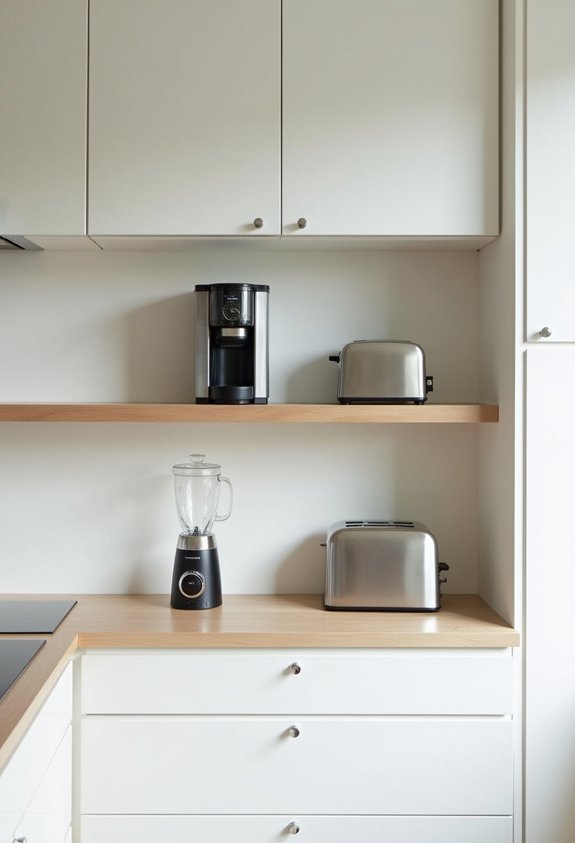
You’ve likely overlooked the space sitting right above your kitchen cabinet doors. This prime real estate offers excellent storage for small appliances you don’t use daily. Install a sturdy shelf or tension rod system to support items like toasters, blenders, or coffee makers. Guarantee whatever method you choose can handle the weight without compromising cabinet stability.
This approach keeps frequently used appliances within arm’s reach while freeing up valuable counter and cabinet space. You’ll maintain easy access without cluttering your work surfaces. Consider the appliances’ heights to avoid blocking light fixtures or creating an awkward appearance.
Make sure the area remains cool and dry, away from direct heat sources. Label shelves if you’re storing multiple items, so everyone in your household knows what’s available.
Keep Frequently Used Items in Pull-Out Baskets
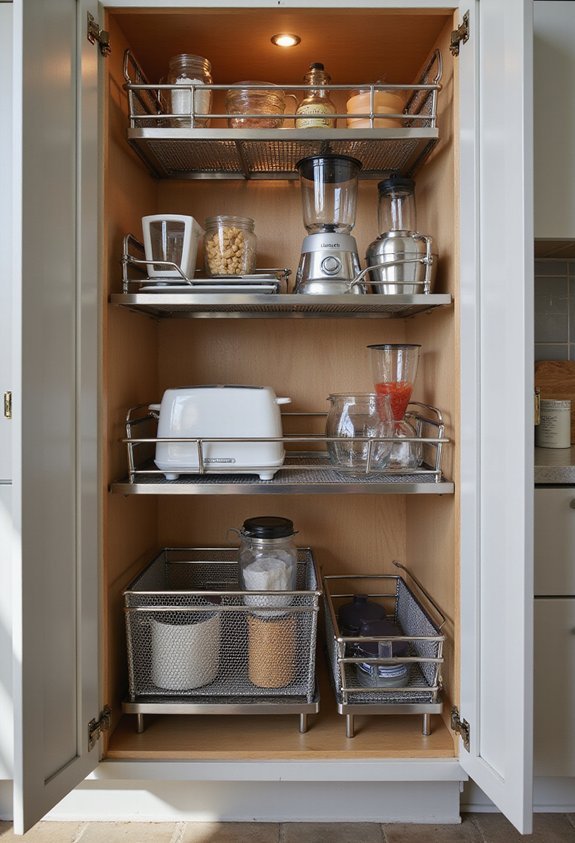
Beyond overhead storage, pull-out baskets offer another smart solution for organizing appliances and kitchen items you reach for regularly. You’ll appreciate how these baskets slide out smoothly, giving you easy access without reaching into the back of deep cabinets. Install them on cabinet shelves or drawer bottoms to create dedicated spaces for your most-used appliances like blenders, coffee makers, or toasters. Label each basket clearly so you and your family know exactly where everything belongs. Pull-out baskets maximize your cabinet’s usable space while keeping frequently accessed items at eye level and within arm’s reach. This system reduces clutter on countertops and speeds up your morning routine. You’ll spend less time searching and more time enjoying your kitchen’s improved functionality and organization.
Stack Compact Appliances in Corner Nooks
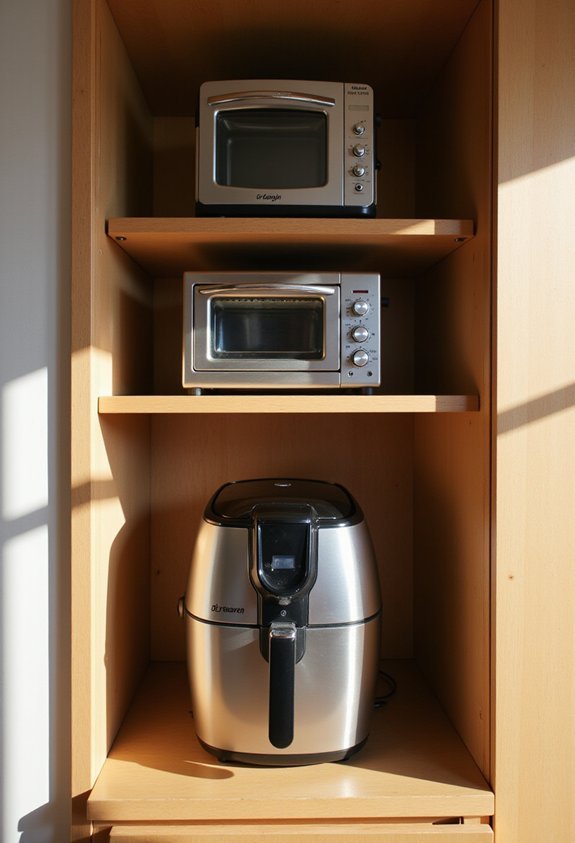
Corner nooks are often wasted kitchen real estate, but they’re perfect for stacking compact appliances vertically. You’ll maximize otherwise unused space by positioning toasters, coffee makers, and blenders in these tight areas.
Install adjustable shelving to accommodate appliances of varying heights. This approach keeps your countertops clear while keeping essentials within arm’s reach. Consider using a rolling cart if your corner lacks built-in shelving—it’s movable and adaptable to your needs.
Group similar appliances together for efficient organization. Stack smaller items on top of larger ones to create a stable tower. Guarantee you maintain adequate ventilation around heat-producing appliances like coffee makers and toasters.
Label shelves or use clear containers to identify contents quickly. This system eliminates clutter while transforming an overlooked corner into functional storage.
Use Clear Bins to Store Small Appliances Together
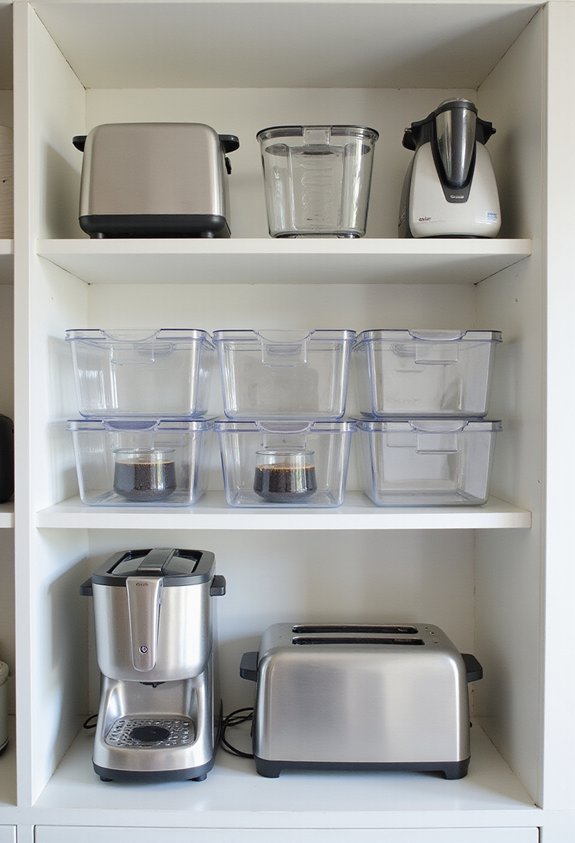
While corner nooks work well for vertical stacking, grouping small appliances in clear bins offers another powerful organizational advantage. You’ll instantly see what you’ve got without opening cabinets or drawers, saving you time when searching for specific items.
Categorize your appliances by function—one bin for coffee makers and tea kettles, another for blenders and food processors. This system prevents you from buying duplicate appliances you’ve forgotten about. Clear bins also protect your devices from dust and moisture, extending their lifespan.
Label each container for quick identification, and stack bins vertically to maximize your cabinet space. You’ll maintain an organized kitchen while keeping frequently used appliances easily accessible and your less-used items neatly tucked away.
Match Appliances to Your Available Kitchen Space
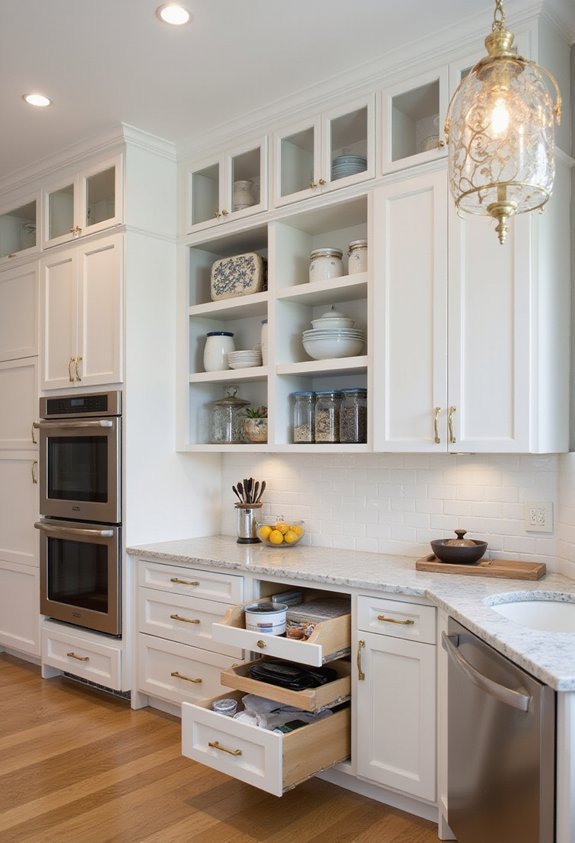
Before you purchase any appliance, measure your available storage space and honestly assess your kitchen layout. You’ll avoid costly mistakes by knowing your cabinet dimensions, countertop real estate, and pantry capacity before buying.
Consider your cooking habits when selecting appliance sizes. If you rarely bake, a full-sized stand mixer isn’t practical. Conversely, if you frequently entertain, a compact blender won’t meet your needs.
Think vertically to maximize storage. Wall-mounted shelves, over-the-door organizers, and stackable containers help you fit more appliances without cluttering your workspace.
Don’t let trendy gadgets tempt you into purchases that won’t fit your space. Be ruthless about what you actually use daily. Oversized appliances in cramped kitchens create frustration and waste valuable real estate.
Match your appliance collection to your kitchen’s actual dimensions and your lifestyle, not aspirational versions of yourself.
Keep Seasonal Appliances in a Pantry Section
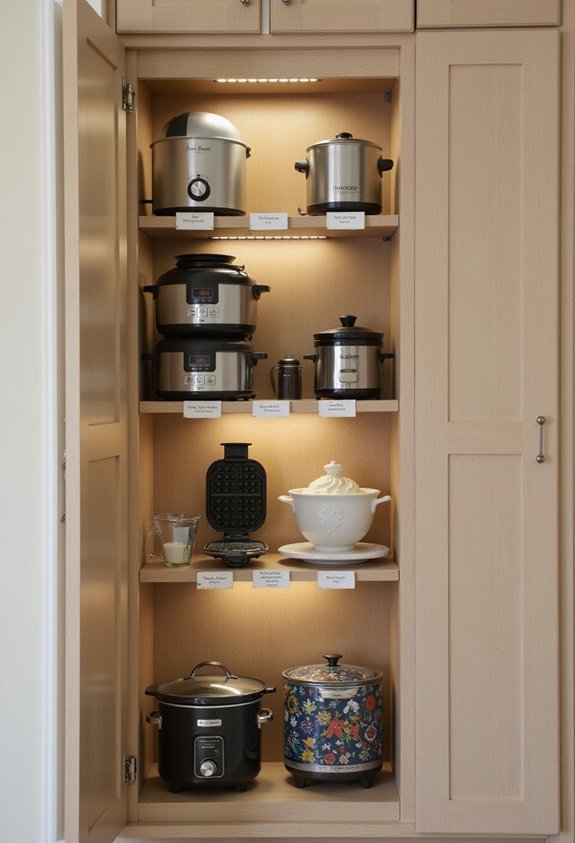
Once you’ve determined which appliances truly fit your kitchen and lifestyle, you’ll need a smart storage plan for the ones you don’t use year-round. Your pantry offers an ideal solution for seasonal appliances like waffle makers, slow cookers, and ice cream makers.
Dedicate a specific shelf or cabinet section in your pantry to these occasional-use items. Keep them in their original boxes or clear plastic containers so you can easily identify what you’ve stored. Label each container with the appliance name and any included accessories.
This approach keeps your countertops and primary cabinets clutter-free while keeping seasonal appliances accessible. When the season arrives, you’ll know exactly where to find what you need, and your pantry storage maximizes unused vertical space efficiently.
Frequently Asked Questions
How Do I Prevent Dust Accumulation on Stored Appliances?
You’ll prevent dust accumulation by covering your appliances with cloth covers or plastic bags before storing them. You should also keep them in a dry, closed cabinet or closet. You’ll want to check periodically and wipe them down occasionally to maintain cleanliness.
What’s the Best Way to Store Appliances Safely With Children?
You’ll want to store appliances on high shelves or locked cabinets that children can’t reach. Use childproof locks on lower storage areas, keep cords secured and out of sight, and guarantee heavy appliances sit securely so they won’t tip over if your kids try accessing them.
How Can I Organize Appliances by Frequency of Use Effectively?
You’ll want to place your most-used appliances at eye level and within arm’s reach. Store occasionally-used items on higher shelves, and keep rarely-used appliances in deep cabinets or the pantry. This system saves you time and keeps your counters uncluttered.
What Temperature and Humidity Conditions Suit Long-Term Appliance Storage?
You’ll want to store appliances in cool, dry spaces between 50-85°F with humidity below 60%. You should avoid basements and attics where temperature fluctuates dramatically. You’ll protect your appliances best by maintaining stable conditions and keeping them away from moisture exposure.
How Do I Maintain and Clean Appliances Before Storing Them?
You’ll want to clean your appliances thoroughly, dry them completely, and remove any food residue. Then you should apply protective coatings, check for damage, and store them in their original boxes when possible for maximum protection.
Conclusion
You’ve got plenty of options to transform your kitchen storage. By implementing these strategies—from open shelving to appliance garages—you’ll maximize your space and improve functionality. Choose solutions that fit your kitchen’s layout and your lifestyle. You’ll enjoy easier access to your appliances, a cleaner aesthetic, and a more efficient cooking space. Start organizing today and watch your kitchen become truly yours.