

Design inviting large kitchens celebrating community, gathering, and genuine hospitality through intentional planning. Multiple seating areas, open layouts, and welcoming aesthetics transform spacious kitchens into gathering hubs. Your warm, expansive kitchen becomes the genuine heart of your home where people naturally congregate and connect.
Gathering-focused layouts feature comfortable seating zones, open sightlines, and welcoming atmospheres throughout intentionally. Large islands become natural gathering spots, multiple seating areas accommodate guests comfortably, open layouts encourage connection. These thoughtful designs prove huge kitchens become genuine community spaces when designed prioritizing warmth and hospitality genuinely.
Your welcoming spacious kitchen radiates warmth, comfort, and genuine hospitality through intentional design choices. Create gathering zones, maintain open layouts, and design spaces celebrating connection and togetherness. This heartfelt approach proves large kitchens become beloved family hubs when designed celebrating genuine human connection above all else.
The Galley Kitchen: Maximize Efficiency in Tight Spaces
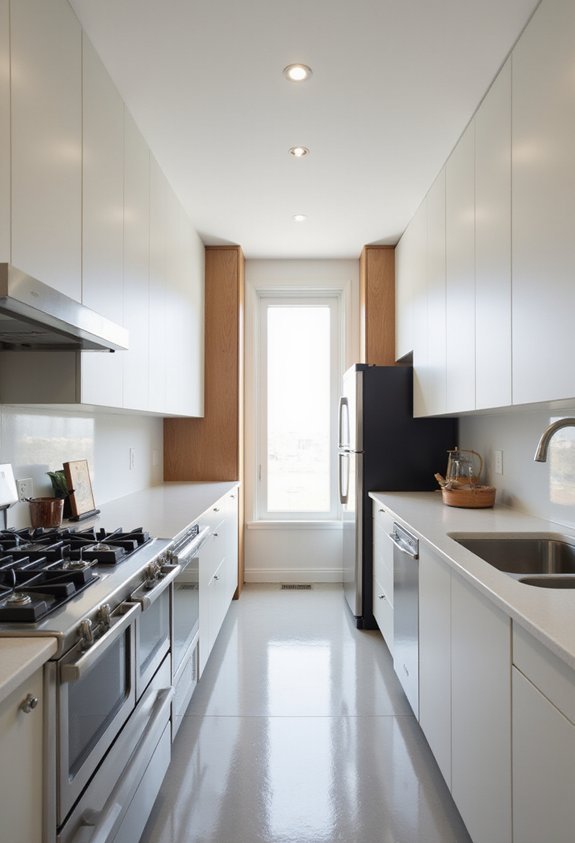
A galley kitchen’s narrow, corridor-like design doesn’t limit functionality—it actually streamlines your workflow. You’ll appreciate how everything sits within arm’s reach, eliminating wasted steps between appliances. The layout naturally creates an efficient work triangle connecting your sink, stove, and refrigerator.
To maximize your space, you should utilize vertical storage by installing shelves above countertops and cabinets. Pull-out drawers and organizers help you access items easily without rummaging. Consider under-cabinet lighting to brighten your workspace and make the area feel larger.
Keep your galley kitchen uncluttered by storing seldom-used items elsewhere. Install a narrow island if space allows—it’ll provide additional counter space and storage. Choose light colors and reflective surfaces to enhance brightness. You’ll find this compact layout perfect for efficient cooking and meal preparation.
Also read: 12 American Kitchen Ideas
The L-Shaped Kitchen: Versatile Corner Design for Most Homes
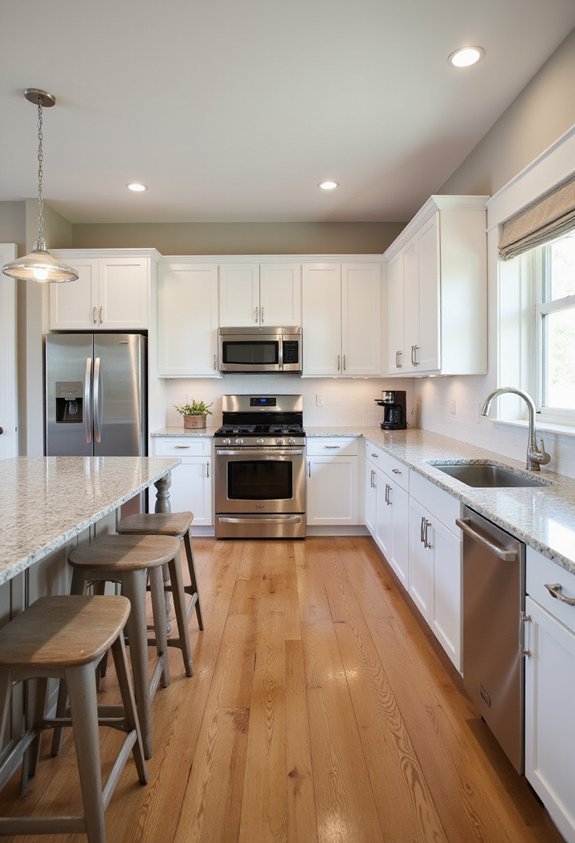
Because it adapts to various room configurations, the L-shaped kitchen’s become one of the most popular layouts for modern homes. You’ll appreciate how this design maximizes corner space while creating distinct work zones along two perpendicular walls.
Your workflow improves dramatically with this setup. You can position your sink, stove, and refrigerator in a natural triangle, minimizing unnecessary steps during meal preparation. The open end of the L provides flexibility—you can add an island for extra counter space and seating, or leave it open for easier movement through your kitchen.
This layout works exceptionally well in apartments and smaller homes where space constraints matter. You’ll find that corners become functional assets rather than wasted areas. The L-shaped design also allows you to keep your kitchen separate from living spaces while maintaining an efficient, practical work environment.
The U-Shaped Kitchen: Complete Workflow and Maximum Storage
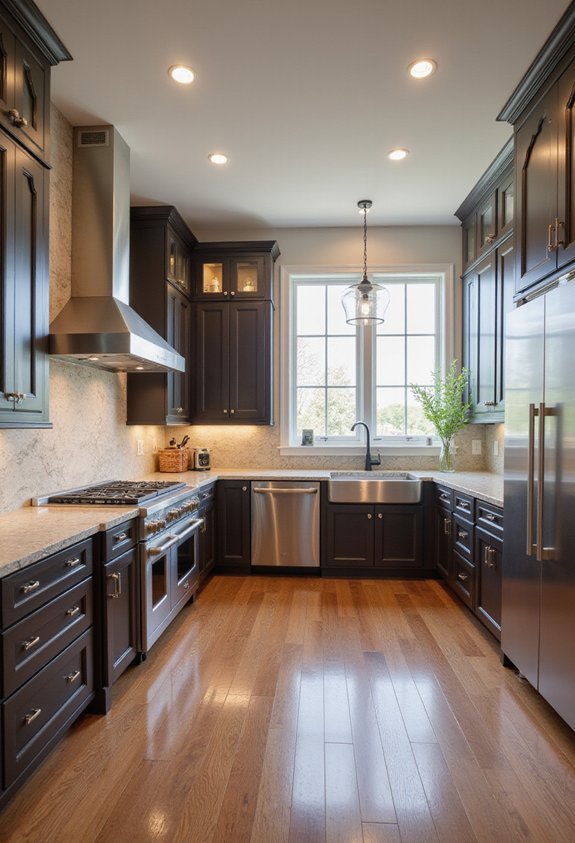
The U-shaped kitchen takes the L-shaped design’s efficiency and wraps it around three walls, giving you an enclosed workspace that rivals any professional kitchen. This layout maximizes your workflow by positioning the sink, stove, and refrigerator within easy reach, creating an efficient triangle. You’ll appreciate the abundant counter space for meal preparation and the extensive cabinetry that accommodates all your cookware and pantry items. The U-shape keeps you contained, minimizing unnecessary movement and reducing traffic through your workspace. However, you’ll need adequate square footage—typically at least 100 square feet—for this design to function comfortably. If your kitchen’s tight, a U-shape might feel cramped. Otherwise, you’re investing in serious storage and professional-grade efficiency.
The One-Wall Kitchen: Smart Layout for Compact, Open Rooms
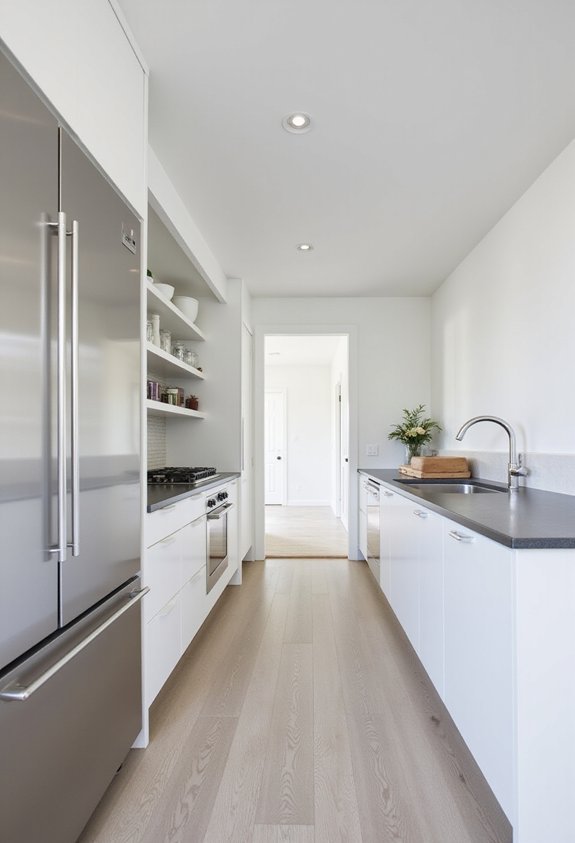
If you’re working with limited square footage or an open-concept space, the one-wall kitchen delivers practical efficiency without demanding much room. You’ll arrange your sink, stove, and refrigerator in a single linear configuration, creating a streamlined workflow that minimizes wasted steps.
This layout works exceptionally well in apartments, studios, and homes with open floor plans because it doesn’t interrupt your living space. You’ll maximize your counter workspace by installing shelving above and utilizing under-counter storage strategically. Consider positioning your refrigerator at one end and your stove at the other, with the sink centered between them.
One-wall kitchens aren’t just space-savers—they’re smart investments for modern living. You’ll appreciate the functionality and clean aesthetic they bring to compact homes.
The Island Kitchen: Prep Space Meets Social Seating
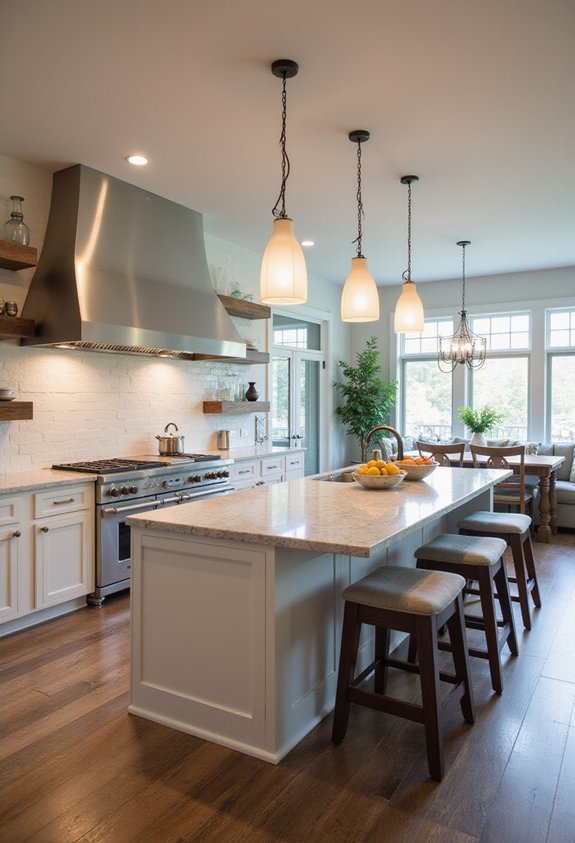
Adding an island transforms your kitchen into a multifunctional hub where you’ll prep meals, entertain guests, and create natural gathering points. You’ll maximize workspace by positioning your island with ample countertop for chopping, mixing, and plating. Incorporate storage underneath to keep frequently used tools and ingredients within arm’s reach.
Install bar seating on one side so guests can chat while you cook, breaking down the barrier between kitchen and living space. Consider adding a cooktop or sink to your island for increased efficiency. Guarantee adequate clearance—at least three feet on all sides—for comfortable movement.
Lighting matters too. Hang pendant lights above your island to define the space and provide task lighting for food prep. This layout works beautifully in open-concept homes, making your kitchen the heart of your living area.
The Peninsula Kitchen: Island-Style Without the Footprint
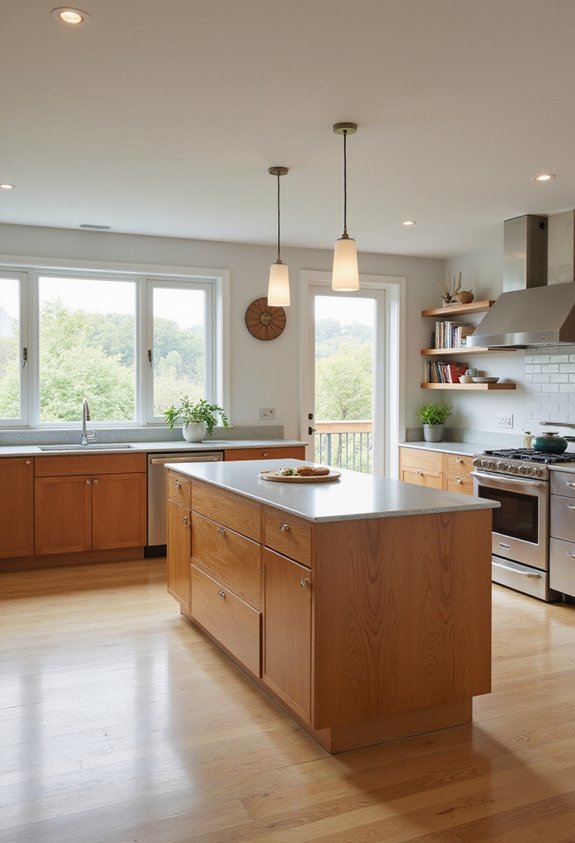
Want island functionality without sacrificing floor space? A peninsula kitchen offers the perfect solution. You’ll extend a counter from your existing cabinetry, creating an additional work surface that doesn’t require a freestanding island.
This layout maximizes your prep area while maintaining an open floor plan. You can install bar seating on one side, converting your peninsula into a casual dining spot. Storage cabinets underneath provide the same organizational benefits as a traditional island.
Peninsulas work especially well in smaller kitchens or awkwardly shaped spaces where a full island won’t fit. You’ll enjoy improved traffic flow since there’s no central obstruction. The extended counter also accommodates additional appliances or a cooktop.
This configuration gives you island convenience with superior flexibility and footprint efficiency.
Open-Concept Kitchens: When to Break Down the Walls
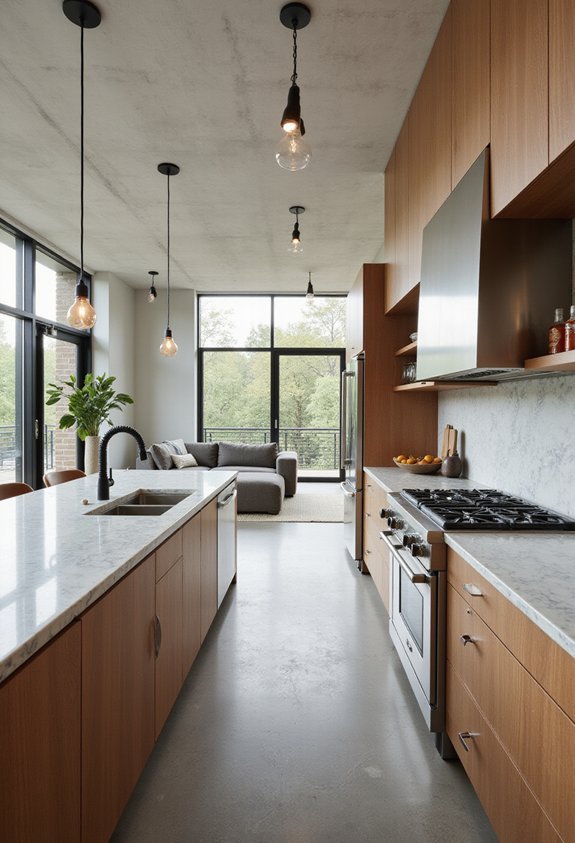
Three key factors’ll determine whether removing walls between your kitchen and adjoining spaces makes sense for your home. First, identify load-bearing walls—you’ll need structural engineers and permits before touching these. Second, evaluate your lifestyle. Open layouts work best if you enjoy entertaining and want sightlines while cooking. They’re less ideal if you prefer containing cooking odors or need visual separation from living areas.
Third, consider ventilation. Without walls, cooking smells and steam spread throughout your home. Install powerful range hoods and guarantee adequate air circulation.
Open-concept kitchens maximize natural light and create spacious feels. However, they eliminate acoustic privacy and require strategic furniture placement to define zones. Weigh these trade-offs carefully before committing to this significant renovation.
The Butler’s Pantry Kitchen: Hide Mess, Reveal Elegance

If you’re drawn to polished entertaining spaces but dreading the thought of guests glimpsing your cluttered countertops, a butler’s pantry offers an elegant solution. This intermediary space sits between your kitchen and dining area, functioning as a hidden prep zone and storage buffer.
You’ll appreciate how it shields messy cooking operations from view while maintaining your home’s sophisticated appearance. Install cabinetry, countertops, and appliances specifically for entertaining tasks—plating, beverage chilling, and serving. This dedicated area keeps everyday clutter behind closed doors.
The butler’s pantry also streamlines your workflow during gatherings. You’re steps away from guests without exposing active meal preparation. It’s particularly valuable for those who love hosting but prefer keeping their main kitchen private and organized. This layout merges functionality with the polished aesthetic you desire.
Hybrid Layouts: Combining Two Styles for Your Space
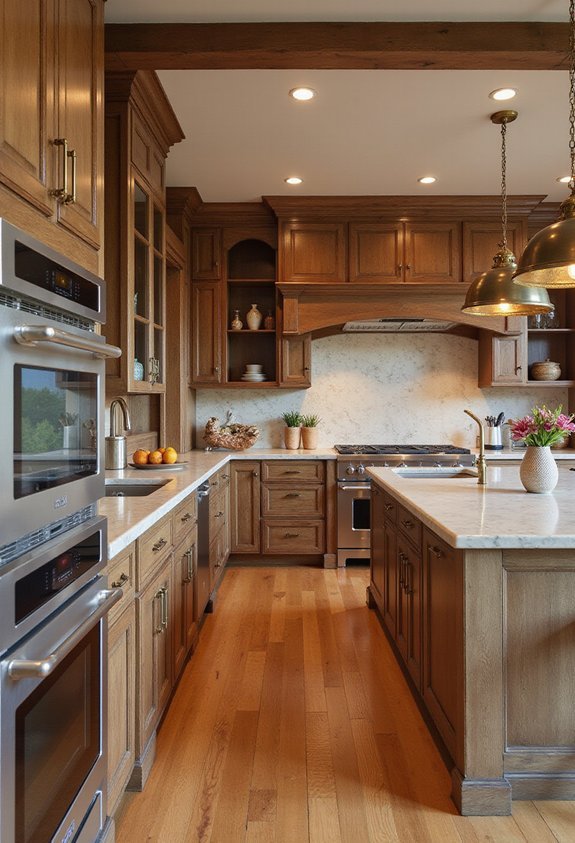
Many homeowners find that a single kitchen layout doesn’t fully address their needs, which is where hybrid approaches shine. You can combine the efficiency of a galley kitchen with the social appeal of an open-concept design by using strategic placement of islands or peninsulas. Alternatively, you might merge a U-shaped layout’s storage capacity with an L-shaped kitchen’s accessibility. Hybrid kitchens work especially well in homes with unconventional spaces or multiple functional requirements. You’ll benefit from increased flexibility when entertaining while maintaining dedicated prep zones for cooking. The key is identifying which layout elements serve your lifestyle best, then blending them seamlessly. This customized approach guarantees your kitchen supports both daily routines and entertaining goals without compromising either.
Frequently Asked Questions
What Is the Ideal Kitchen Size for Each Layout Type?
You’ll want at least 70 square feet for a galley kitchen, 100 square feet for an L-shaped layout, 150 square feet for a U-shaped design, and 200+ square feet for an island kitchen. Your space determines which layout works best for your needs.
How Much Does It Cost to Renovate a Kitchen With a New Layout?
You’ll typically spend $75,000 to $150,000 renovating your kitchen with a new layout. Your costs depend on materials you choose, labor expenses in your area, and how extensively you’re reconfiguring your space and plumbing.
Which Kitchen Layout Works Best for Families With Children?
You’ll find the galley or L-shaped layout works best for families with children. These designs keep you close to your kids while cooking, minimize traffic hazards, and provide efficient workspace without sacrificing safety or supervision.
How Do I Choose Between These Layouts Based on My Home’s Architecture?
You’ll want to assess your home’s existing walls, doorways, and traffic flow first. Match layouts that complement your architecture’s structural limitations. Consider your space’s dimensions, natural light sources, and plumbing locations when deciding which design works best for you.
What Lighting Solutions Work Best for Different Kitchen Layouts?
You’ll want to install pendant lights over islands, recessed lighting for general illumination, and task lighting under cabinets. For galley kitchens, you’d benefit from linear fixtures down the center. L-shaped layouts work well with lights positioned at corner areas and work zones.
Conclusion
You’ve explored nine distinct kitchen layouts, each offering unique advantages for your specific needs and space. Whether you’re drawn to the efficient galley design, the sociable island layout, or a hybrid approach, you’ll find options that balance functionality with style. By carefully considering your workflow, storage requirements, and entertaining preferences, you’re equipped to choose a layout that’ll transform your kitchen into a space you’ll genuinely love using daily.