

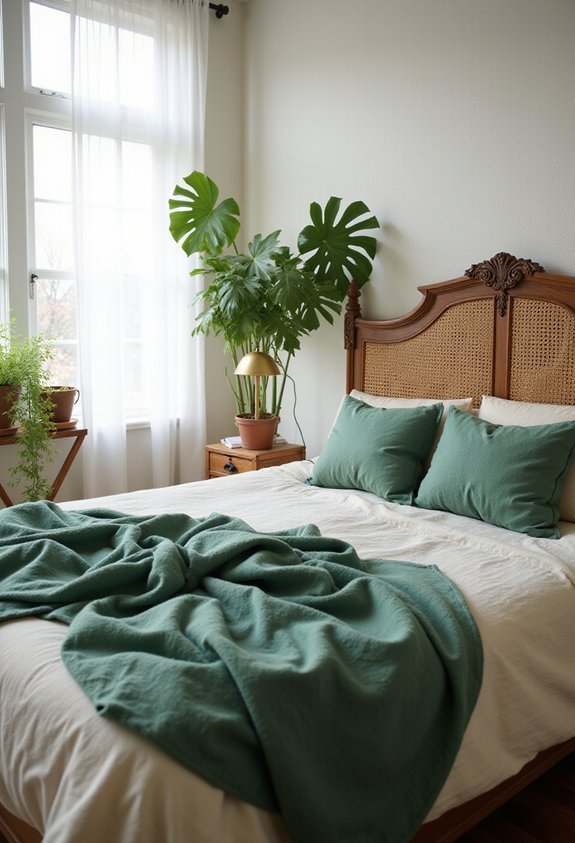
I brought one green plant into my bedroom without much thought, just something to fill an empty corner. Within weeks I found myself standing at my window longer in the mornings, watching how light moved through the leaves. The room felt calmer. My breathing slowed when I walked through the door. I realized it wasn’t just the plant. It was the color, the life, the way green made everything soften around it.
Adding more green happened naturally after that. A painted accent wall. Bedding in soft sage tones. Fabric that reminded me of moss. My bedroom stopped feeling designed for sleep and started feeling restorative. The color worked with my body instead of against it. I slept differently, woke differently, moved through mornings without the usual rush.
What green bedroom decor does is create permission to breathe. It connects me to something that’s been calming people for generations. I don’t need crowded plants or intense shades. Just enough green to remind me that growth is happening, that I’m allowed to slow down here. That’s when my bedroom becomes genuinely restorative.
Sage Green Accent Walls for Timeless Calm
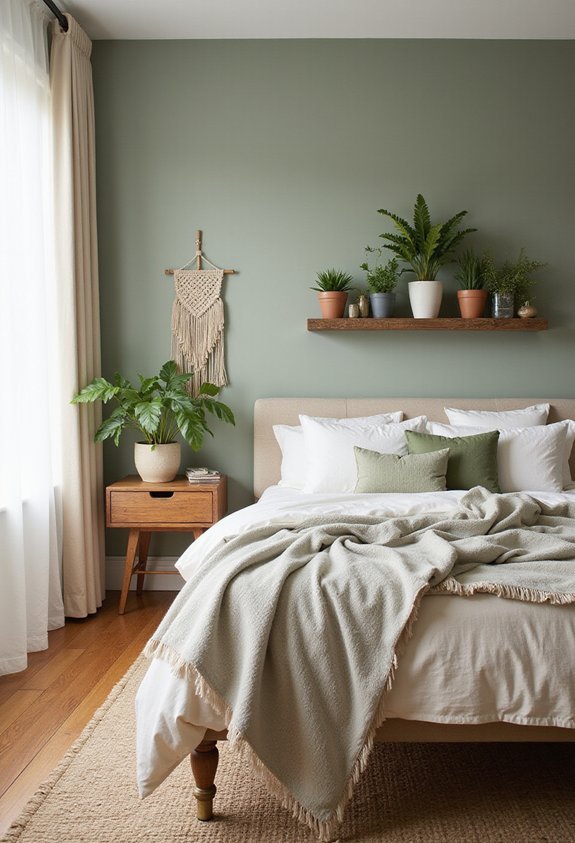
A sage green accent wall can transform your bedroom into a sanctuary of calm without overwhelming the space. This soft, muted tone creates visual interest while maintaining a serene atmosphere that promotes relaxation.
You’ll find that sage green complements various design styles, from contemporary to traditional. It pairs beautifully with natural materials like wood and linen, enhancing your nature-inspired retreat aesthetic. The color works exceptionally well behind your bed, drawing focus to your room’s focal point.
When selecting paint, choose high-quality finishes that resist moisture and fading. Consider the lighting in your bedroom—sage green shifts subtly throughout the day, revealing different depths and warmth.
You can balance a sage accent wall with neutral furnishings or add deeper forest tones through bedding and accessories. This approach creates a cohesive, sophisticated bedroom environment that feels both grounded and invigorating.
Also read: 50 Small Bedroom Decor Ideas That Maximize Every Inch
Deep Forest Green for Dramatic Bedroom Transformation
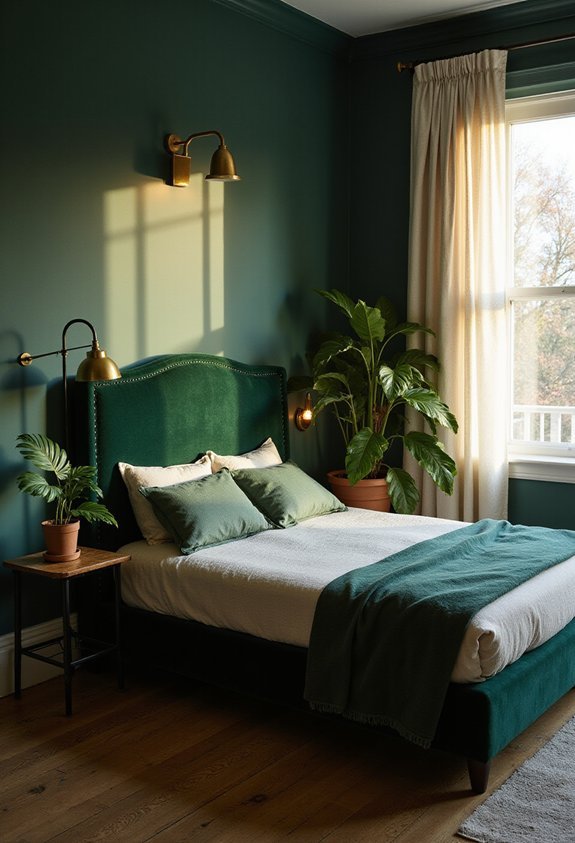
While sage green brings understated tranquility, deep forest green delivers bold sophistication and dramatic visual impact. You’ll create an intimate sanctuary that feels luxurious and grounded when you embrace this rich hue.
Deep forest green works beautifully on all four walls, enveloping you in a cocoon-like atmosphere. Alternatively, you can feature it on a single accent wall to make a statement without overwhelming the space.
Pair this moody shade with warm metallics like gold or brass for elegance. Incorporate natural wood furniture and soft textures—plush bedding, wool rugs, or linen curtains—to balance the intensity.
Layer in warm lighting with table lamps and sconces to prevent the room from feeling too dark. Plants amplify the nature-inspired aesthetic, creating a cohesive retreat that feels both dramatic and deeply restful.
Soft Pistachio Walls That Brighten Small Spaces
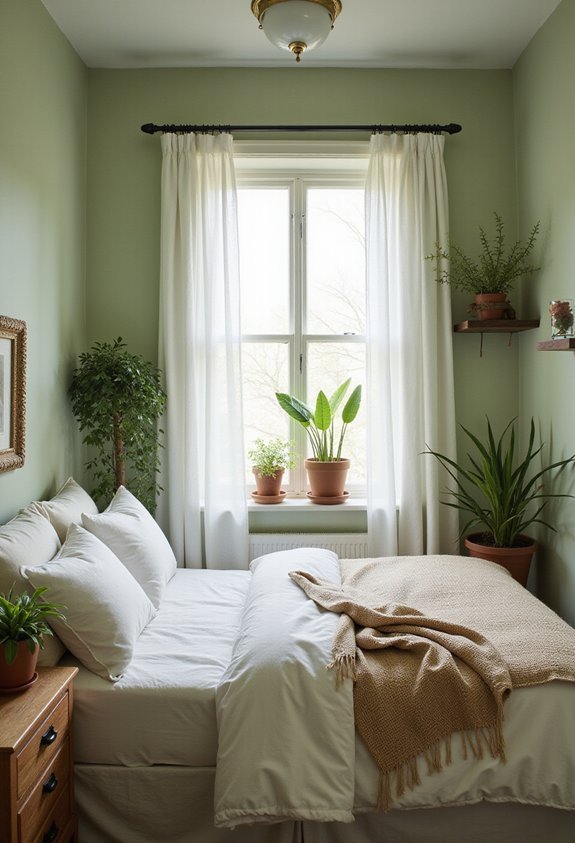
If you’re working with limited square footage, soft pistachio offers the dramatic appeal of deep forest green without the visual weight that can make small rooms feel cramped. This delicate shade reflects light beautifully, creating an airy atmosphere while maintaining that nature-inspired aesthetic you’re seeking.
Pair pistachio walls with white or cream trim to amplify the brightening effect. Light-colored bedding and sheer curtains further enhance the spacious feeling. You’ll find that this muted green tone works exceptionally well with natural wood furniture, creating warmth without overwhelming your bedroom.
The versatility of soft pistachio makes it ideal for various design styles—from minimalist to eclectic. You can easily accessorize with plants, artwork, or textiles to personalize your space. This shade proves that you don’t need dramatic colors to create visual interest; subtle sophistication accomplishes the same goal.
Paint Your Ceiling Olive Green for Unexpected Interest
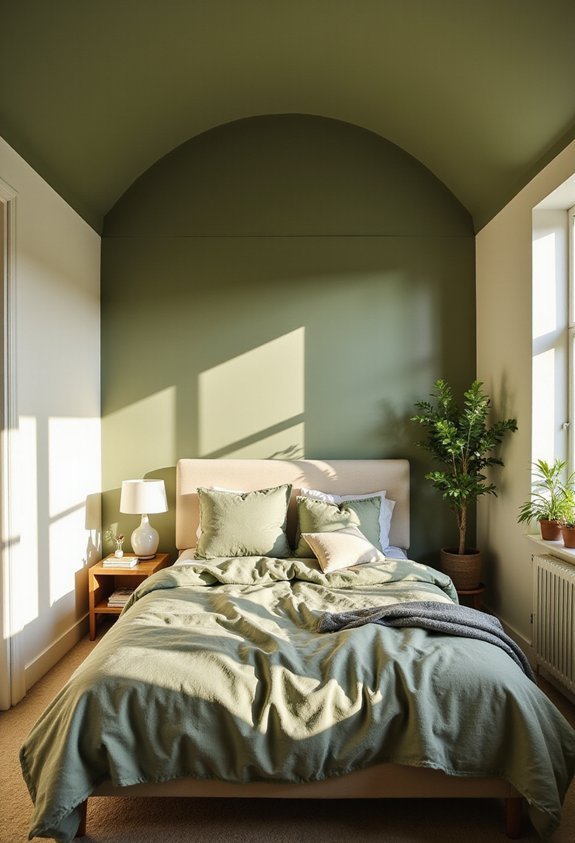
Most people reserve bold colors for walls, but painting your ceiling olive green creates a sophisticated focal point that transforms your entire bedroom. This unexpected choice draws your eye upward, making the space feel more expansive and intentional.
Olive green pairs beautifully with neutral walls, allowing the ceiling to command attention without overwhelming the room. You’ll find it complements natural wood furniture and earthy textiles perfectly, enhancing the nature-inspired atmosphere you’re cultivating.
The key to success is choosing the right shade—deeper olives work well in larger bedrooms, while lighter sage-toned olives suit compact spaces better. Proper lighting matters too; guarantees your room receives adequate natural or artificial light to showcase the ceiling’s richness.
This bold move demonstrates your design confidence while maintaining the serene, grounding quality that makes green bedrooms so restorative.
Two-Tone Green Walls With Horizontal Color Blocking
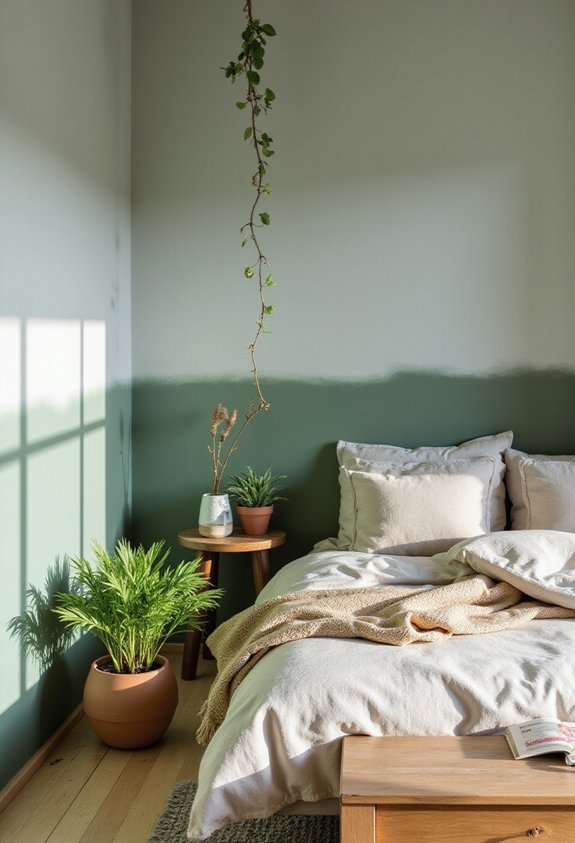
You don’t need to limit green to just your ceiling—horizontal color blocking on your walls offers a dynamic alternative that’s equally striking. This technique involves painting your walls in two complementary green shades, divided by a horizontal line.
Consider pairing a lighter sage green on top with a deeper forest green below, or reverse the combination for a modern twist. The dividing line typically sits at chair rail height, creating visual interest and making your bedroom feel more intentional.
This approach works particularly well in smaller spaces, as it can make rooms feel wider and more structured. You’ll enhance depth and dimension while maintaining that serene, nature-inspired aesthetic. The contrast between shades adds sophistication without overwhelming your sanctuary.
Green Wallpaper With Botanical Prints and Leaf Patterns
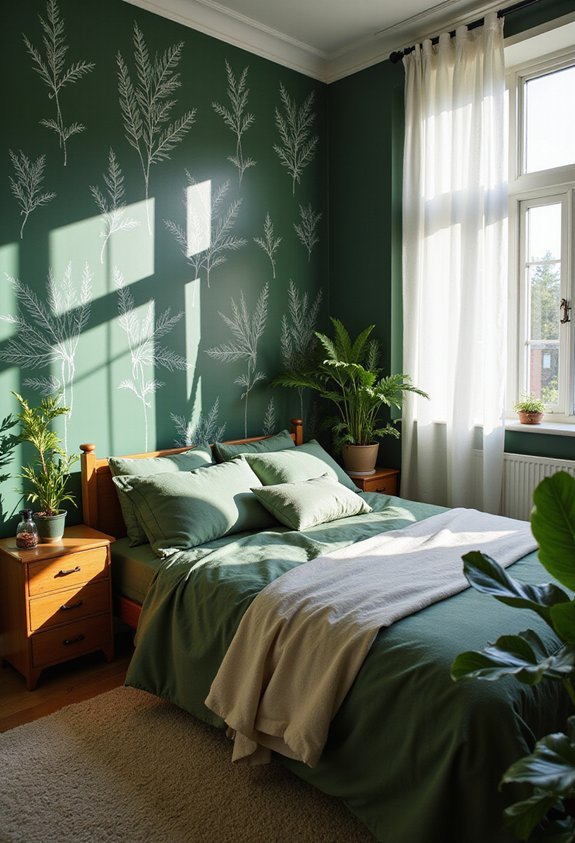
While two-tone walls offer structural sophistication, wallpaper with botanical prints brings nature’s intricate details directly into your bedroom. You’ll find that leafy patterns create depth and visual interest without overwhelming the space. Opt for wallpapers featuring ferns, monstera leaves, or delicate vine designs that complement your existing furniture.
The beauty of botanical wallpaper lies in its versatility. You can select subtle, muted tones for a calming atmosphere or choose vibrant greens for a bold statement. Consider applying it to a single accent wall to guarantee your walls remain the focal point.
Pair botanical wallpaper with simple furnishings and natural materials like wood and linen. This approach confirms your walls remain the focal point while maintaining a cohesive, nature-inspired aesthetic that promotes relaxation and rejuvenation.
Emerald Green Feature Wall Behind Your Bed
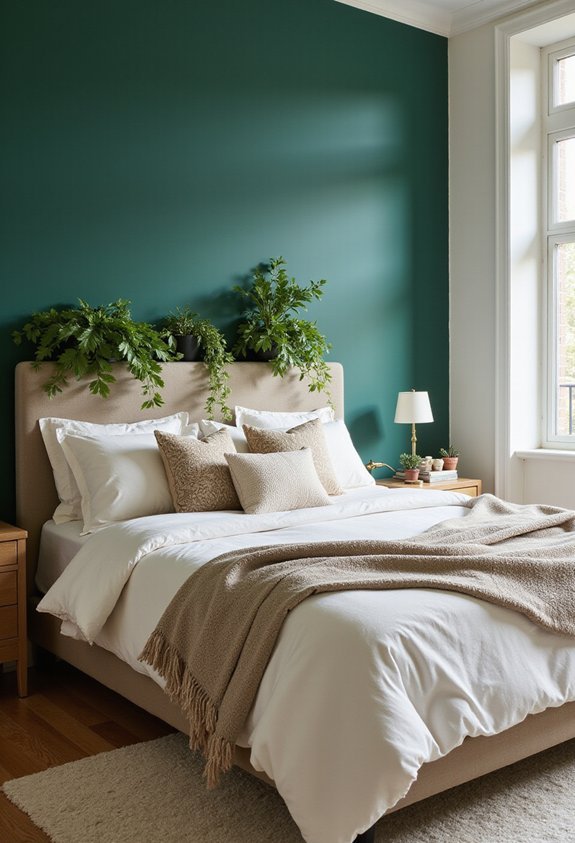
For a more dramatic approach than botanical prints, an emerald green feature wall delivers luxurious depth and instant sophistication. By positioning this bold color directly behind your bed, you create a striking focal point that grounds your entire bedroom design.
Emerald’s richness complements both modern and traditional aesthetics. You’ll find it pairs beautifully with gold accents, brass fixtures, and marble surfaces. Consider matte finishes for a velvety, calming effect, or opt for subtle sheen to enhance light reflection.
To balance the intensity, keep adjacent walls neutral or soft white. Layer your bedding in creams, whites, or soft grays to prevent visual overwhelm. Add plants and natural wood elements to reinforce the nature-inspired theme, creating a cohesive retreat that feels both elegant and serene.
Celadon Green for a Coastal Bedroom Aesthetic
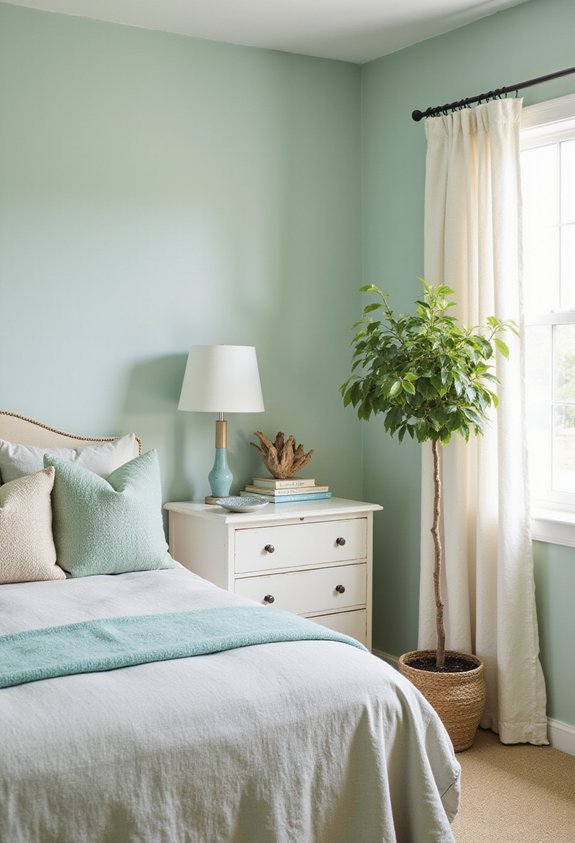
Celadon green—a soft, muted blue-green inspired by ancient Chinese porcelain—brings a serene coastal charm to your bedroom without the boldness of emerald. This sophisticated hue evokes sandy beaches, calm waters, and seaside tranquility, making it perfect for creating a relaxing retreat.
You’ll find celadon works beautifully on accent walls, complementing natural materials like rattan, driftwood, and linen. Pair it with crisp whites and soft neutrals to enhance the coastal aesthetic. Layer in woven textures, vintage nautical decor, and coastal artwork to complete the theme.
This gentle green-gray tone is forgiving and versatile, adapting well to various lighting conditions. Unlike bolder greens, celadon won’t overwhelm your space, instead creating an understated, peaceful atmosphere that invites genuine relaxation and restful sleep.
Moss Green Walls Paired With Warm Wood Tones
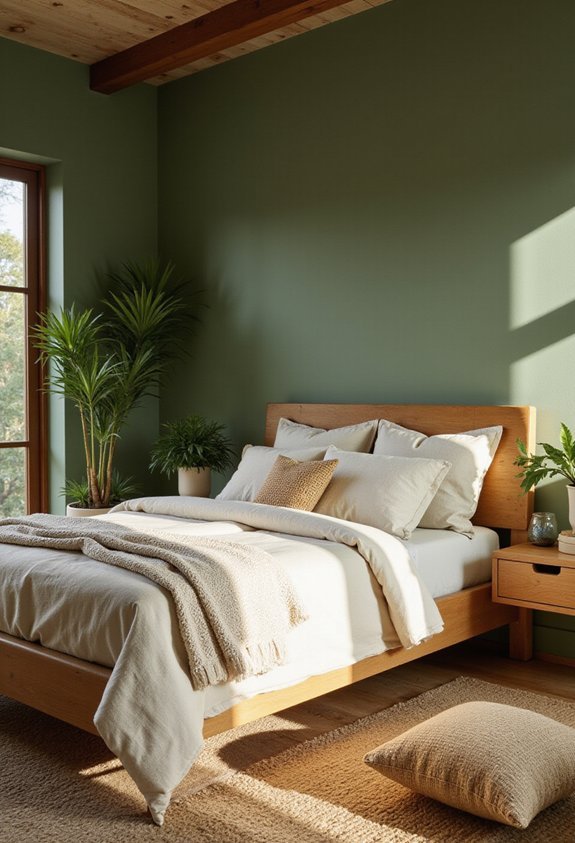
Moss green brings together earthiness and sophistication, creating a grounded aesthetic that naturally complements warm wood tones. You’ll find that this color pairing establishes a cohesive, forest-like environment that feels both calming and inviting.
When you paint your walls moss green, pair them with honey-toned oak, walnut, or cherry wood furniture and flooring. The warm undertones in these woods echo the depth of moss green, creating visual harmony throughout your space. You can enhance this combination by incorporating wooden bed frames, nightstands, and shelving that showcase natural grain patterns.
Layer in soft linens and natural textiles to soften the palette further. This approach transforms your bedroom into a serene sanctuary that celebrates nature’s warmth and authenticity without feeling heavy or overdone.
Mint Green Accents Without Overwhelming the Space
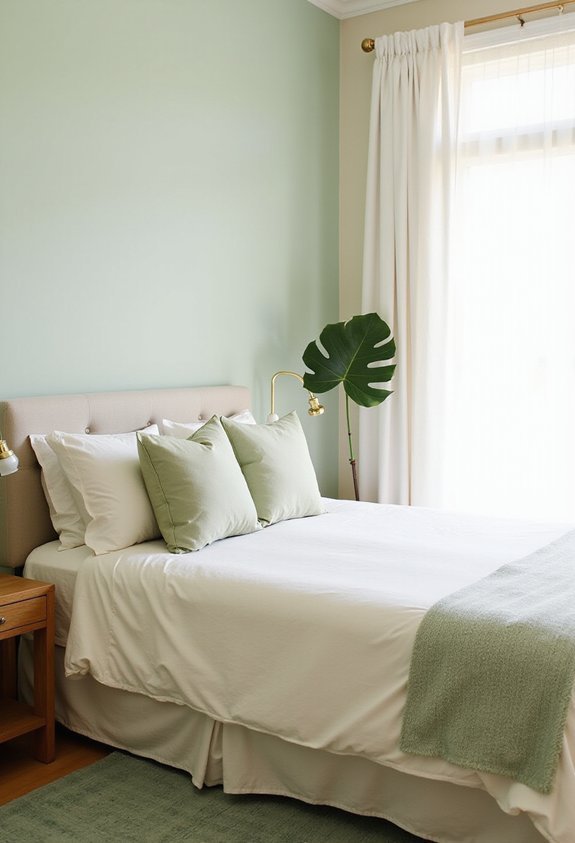
While moss green establishes a bold foundation, you might prefer a lighter touch that maintains green’s calming influence without dominating your bedroom. Mint green offers the perfect solution, delivering freshness through subtle accents rather than all-encompassing walls.
You can introduce mint through bedding, throw pillows, or a single accent chair that anchors the space without overwhelming it. Layering mint with neutrals like white, cream, or soft gray creates visual balance and prevents the color from feeling too dominant. Consider incorporating mint through artwork, a decorative throw blanket, or window treatments that complement your existing palette.
This approach lets you harness green’s restorative properties while maintaining flexibility in your design. You’ll create a serene, nature-inspired retreat that feels intentional and harmonious.
Green Linen Bedding for Natural Texture and Breathability
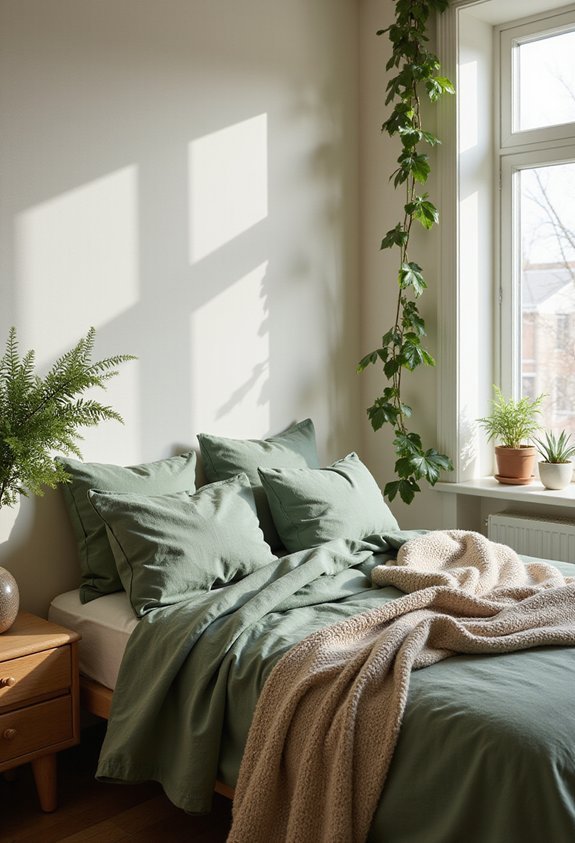
Green linen bedding transforms your bedroom into a sanctuary of natural comfort and style. Linen’s breathable fibers regulate temperature effectively, keeping you cool in summer and warm in winter. Unlike cotton, linen becomes softer with every wash, improving over time rather than deteriorating.
You’ll appreciate linen’s moisture-wicking properties, which prevent sweat buildup and enhance sleep quality. The fabric’s natural texture adds visual interest while maintaining a calming aesthetic that complements your green bedroom theme.
When selecting green linen bedding, choose shades that coordinate with existing décor—sage, forest, or seafoam work beautifully. Linen’s slight wrinkled appearance enhances the natural, relaxed vibe you’re cultivating. Invest in quality pieces; premium linen lasts years longer and justifies the initial expense through durability and comfort.
Mix Green Bedding Shades for Depth Without Pattern
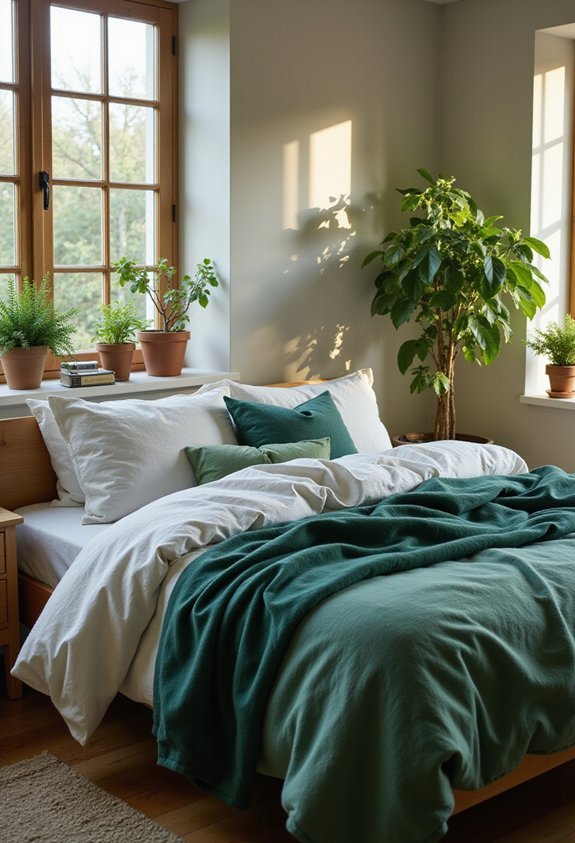
Building on linen’s natural texture, you can create visual richness by layering multiple green tones across your bedding. Start with a deeper forest green for your duvet cover, then add sage green sheets underneath. Layer a lighter pistachio throw blanket across the foot of your bed for dimension. This monochromatic approach creates depth without relying on busy patterns that can feel overwhelming in a bedroom.
You’ll find that mixing warm and cool green undertones adds sophistication. Pair muted olive with crisp mint, or combine emerald with celadon. The subtle variations keep your eye moving across the bed while maintaining a cohesive, calming aesthetic. This strategy works particularly well with natural fabrics like linen and cotton, which showcase color nuances beautifully without competing patterns distracting from the soothing effect you’re creating.
Velvet Green Headboard as a Focal Point
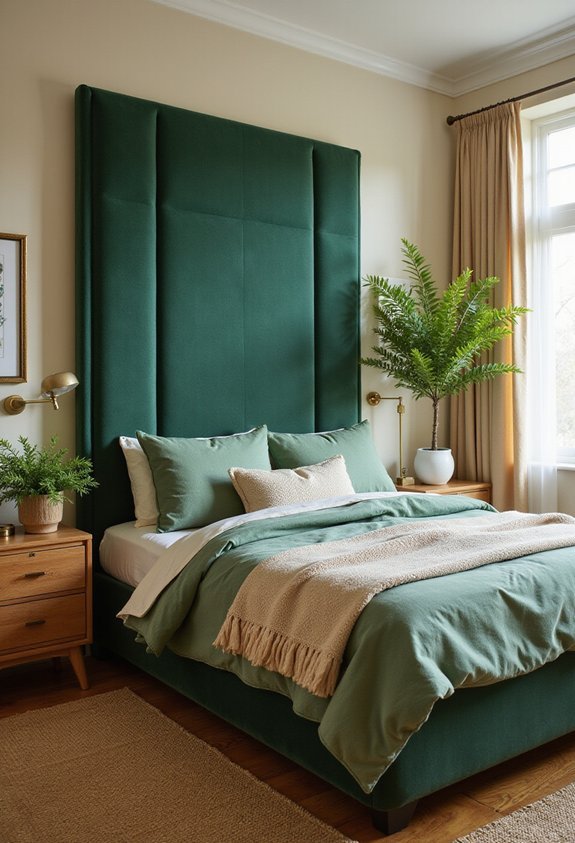
How can you instantly anchor your bedroom’s design? A velvet green headboard does exactly that. This luxurious statement piece draws the eye the moment you enter the room, establishing your space’s personality immediately.
Velvet’s rich texture catches light beautifully, creating depth and visual interest that flat fabrics can’t match. You’ll find that deeper greens like emerald or forest tones project sophistication, while softer sage or pistachio shades feel calming and restful.
A velvet headboard pairs exceptionally well with neutral bedding, allowing it to command attention without overwhelming the space. You can layer pillows in complementary colors—cream, soft gray, or muted gold—to enhance the focal point.
This investment piece transforms your entire bedroom aesthetic, making it feel intentional and polished while maintaining that nature-inspired tranquility you’re seeking.
Green Duvet Cover With Subtle Pattern Details
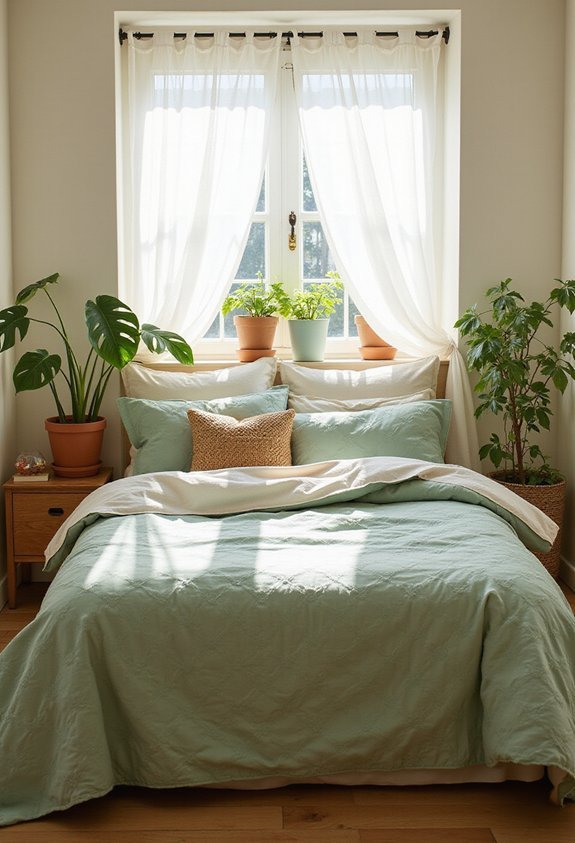
While your velvet headboard commands attention as the room’s anchor, a green duvet cover with subtle pattern details becomes the foundation that ties everything together. You’ll want to select patterns that complement rather than compete—think delicate geometric lines, soft botanical prints, or understated textures that catch light without overwhelming the space.
These nuanced designs add visual interest while maintaining the serene atmosphere you’re cultivating. A sage green base with cream-colored patterns creates sophisticated contrast, or you might choose forest green with darker tonal variations for depth. The beauty of subtle detailing lies in its versatility; it works harmoniously with your headboard and other bedroom elements without demanding sole focus. This layered approach transforms your duvet into a cohesive design element that enhances your nature-inspired retreat.
Botanical Print Bedding That Brings Nature Indoors
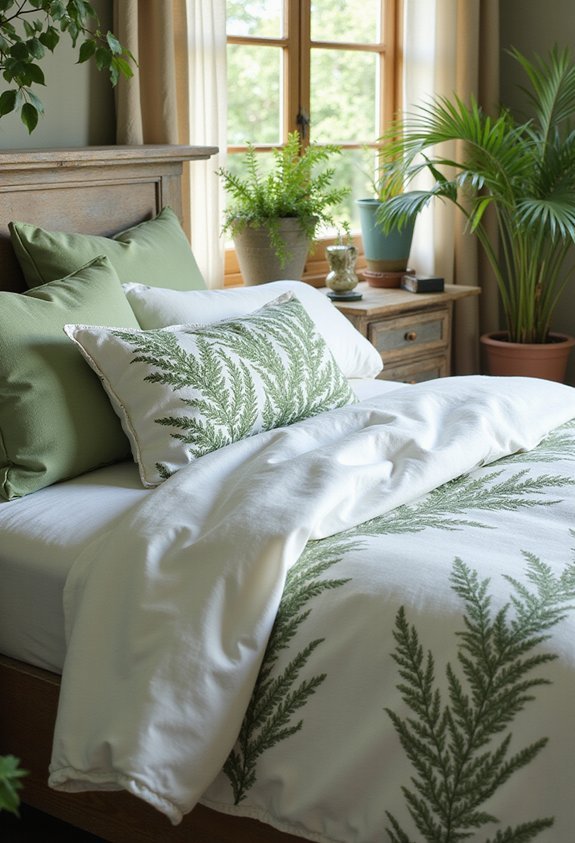
Leafy ferns, wildflowers, and trailing vines transform your bedding into a living landscape that doesn’t require watering or maintenance. Botanical print bedding brings the outdoors directly into your sanctuary, creating a serene atmosphere that promotes relaxation and better sleep.
You’ll find countless design options, from delicate wildflower illustrations to bold jungle-inspired patterns featuring oversized leaves and exotic blooms. These prints work beautifully with various green tones, from soft sage to deep forest hues, enhancing your nature-inspired theme.
Quality botanical bedding features durable fabrics that withstand regular washing while maintaining vibrant colors. Layer your printed duvet cover with solid green pillowcases and accent pillows to balance the visual interest.
Botanical prints instantly elevate your bedroom’s aesthetic while creating a tranquil retreat that reconnects you with nature’s beauty daily.
Green Throw Blankets Draped Across Bed Corners
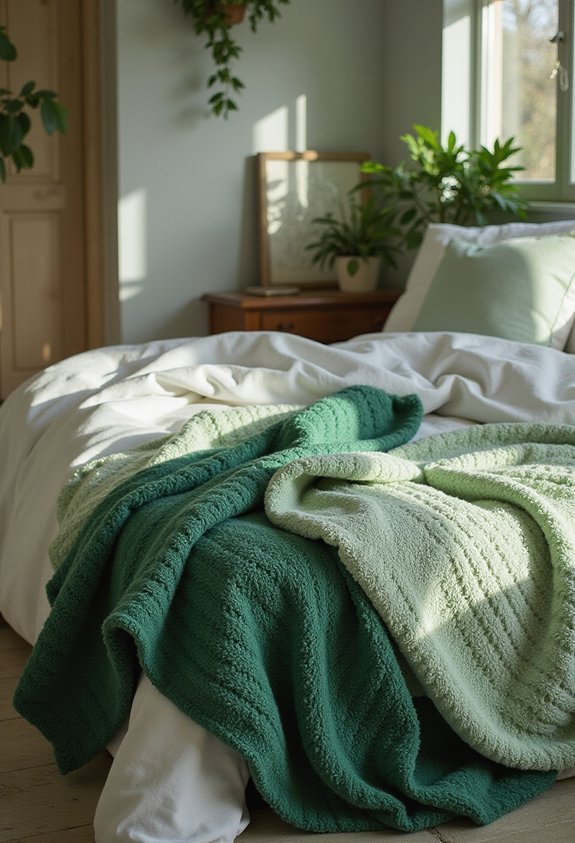
A strategically placed throw blanket adds texture, warmth, and visual depth to your green bedroom while softening hard edges. You’ll appreciate how draping a throw across bed corners creates an inviting, layered aesthetic that complements botanical prints beautifully.
Choose throws in complementary shades—sage, forest, or olive green—to enhance your nature-inspired palette. Lightweight linen or cotton blends work well for warmer months, while chunky knits provide cozy comfort during cooler seasons.
Drape your throw casually over one or both top corners for an effortless look, or fold it neatly across the foot of your bed for a more polished appearance. This simple styling technique transforms your bed into a focal point while providing functional warmth. The textural contrast between your bedding and throw blanket elevates your entire room’s design.
Patterned Green Pillows for Visual Interest
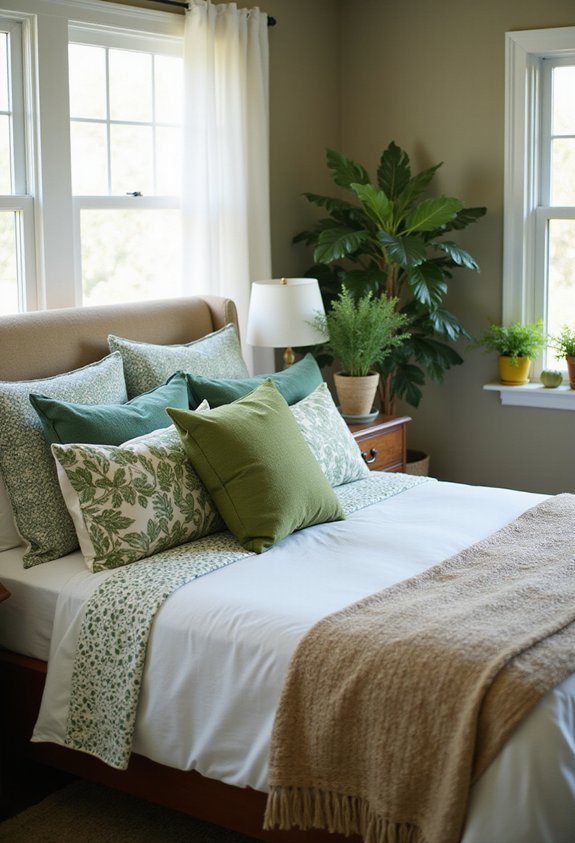
Patterned green pillows inject personality and visual intrigue into your bedroom while anchoring your nature-inspired design scheme. You’ll find countless options to complement your aesthetic—botanical prints featuring ferns and leaves, geometric patterns that add modern sophistication, or subtle textures like quilting and embroidery.
Mix and match various shades of green with complementary neutrals like cream, gray, or white to create depth on your bed. Layer pillows of different sizes and patterns for a curated, intentional look. Consider incorporating natural materials such as linen or cotton for texture and sustainability.
Position patterned pillows against plain throw blankets to prevent visual overwhelm. This strategic pairing balances your décor, drawing focus to your thoughtfully selected pieces while maintaining the serene atmosphere you’re cultivating in your retreat space.
Combine Cotton and Linen Bedding for Year-Round Comfort
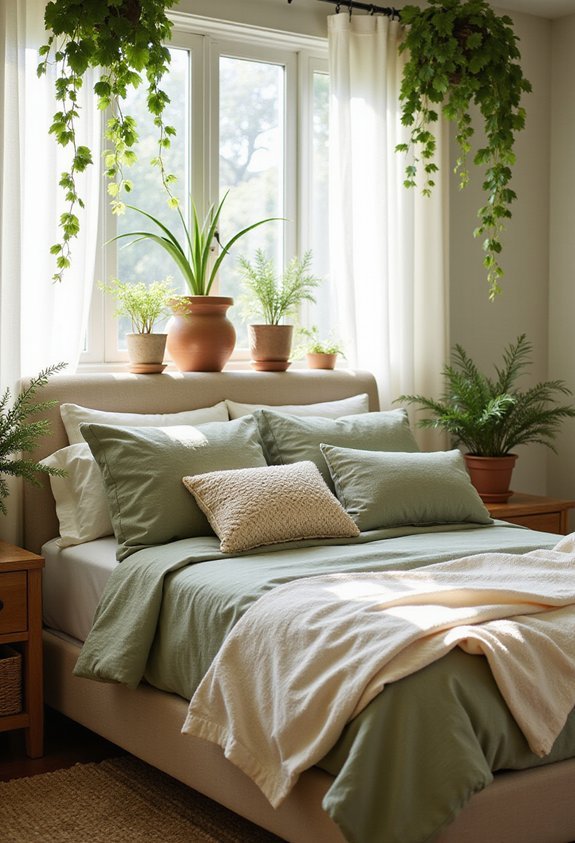
When you layer cotton and linen together, you’re creating bedding that adapts to every season while maintaining your green bedroom’s natural aesthetic. Cotton provides softness and breathability, while linen adds durability and temperature regulation. During summer, linen’s moisture-wicking properties keep you cool, whereas cotton’s insulating qualities offer warmth in winter. This combination resists wrinkles and pilling, ensuring your bedding stays fresh-looking longer. Look for organic options in sage, olive, or forest green tones that complement your room’s color palette. The natural fibers develop a beautiful patina over time, becoming softer with each wash. You’ll appreciate how this bedding investment supports your eco-conscious lifestyle while delivering practical comfort year-round.
Green Roman Shades for Clean, Tailored Look
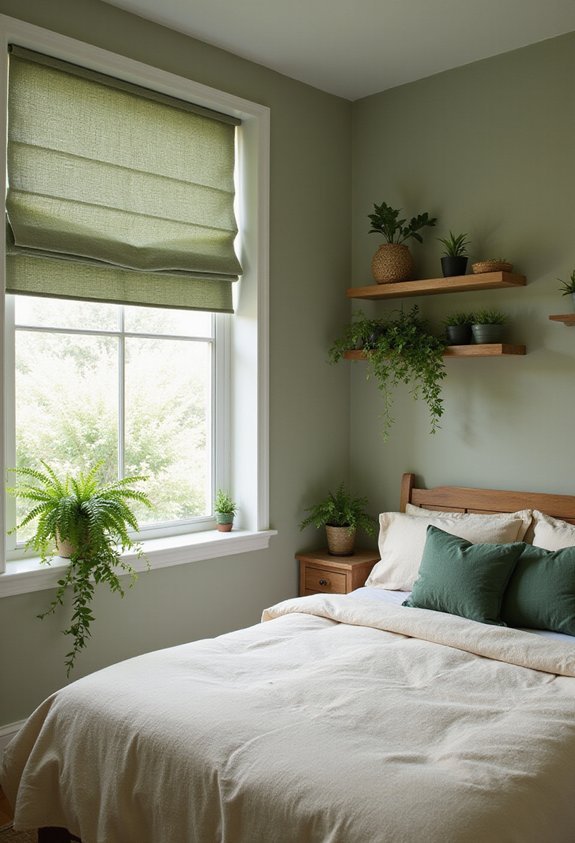
Roman shades deliver the architectural sophistication your green bedroom deserves, offering clean lines that frame your windows with understated elegance. You’ll appreciate how these tailored window treatments create a streamlined aesthetic that complements both modern and traditional décor styles.
Choose shades in sage, forest, or olive tones to enhance your nature-inspired palette. The structured folds add visual interest without overwhelming your space, while the fabric filters natural light beautifully. You can select light-filtering or blackout materials depending on your privacy and sleep preferences.
Installation is straightforward, and you’ll find that roman shades coordinate effortlessly with your bedding and accessories. Their versatility means you can update your green bedroom’s look simply by swapping in different fabrics or patterns. This functional elegance makes them an ideal choice for creating that polished, cohesive retreat you’re envisioning.
Linen Curtains in Soft Green or Cream
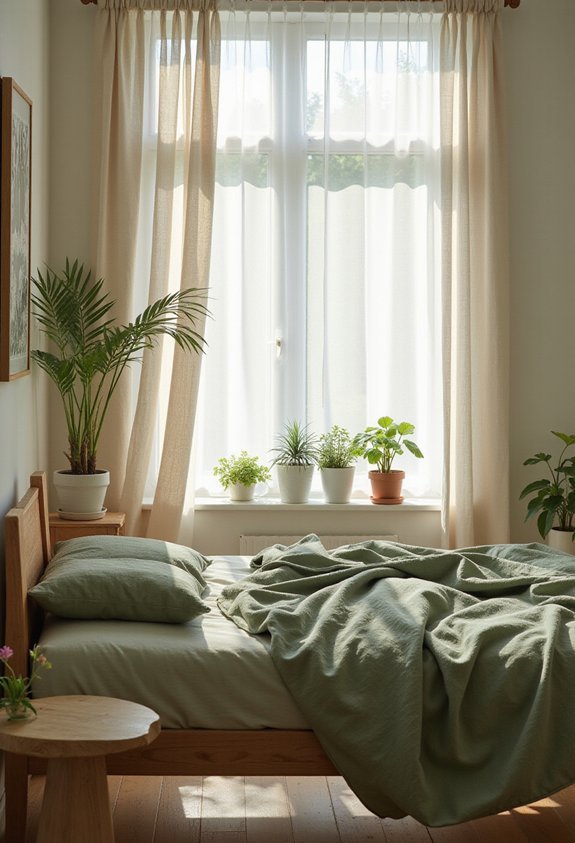
Linen curtains bring an effortless, relaxed elegance to your green bedroom while maintaining the sophisticated aesthetic you’ve established with roman shades. You’ll appreciate how linen’s natural texture complements your nature-inspired theme beautifully.
Choose soft green linen to deepen your room’s cohesive color palette, or opt for cream to create a serene, airy contrast. Either option allows natural light to filter through subtly, casting a warm glow throughout your space. Linen’s inherent wrinkles add authentic character without requiring excessive ironing, perfectly aligning with your relaxed retreat aesthetic.
The fabric’s breathability keeps your bedroom cool and comfortable year-round. You’ll find that linen curtains drape gracefully from floor to ceiling, elongating your windows and adding architectural interest. Layer them with your roman shades for maximum light control and visual depth.
Create a Floor-to-Ceiling Plant Corner
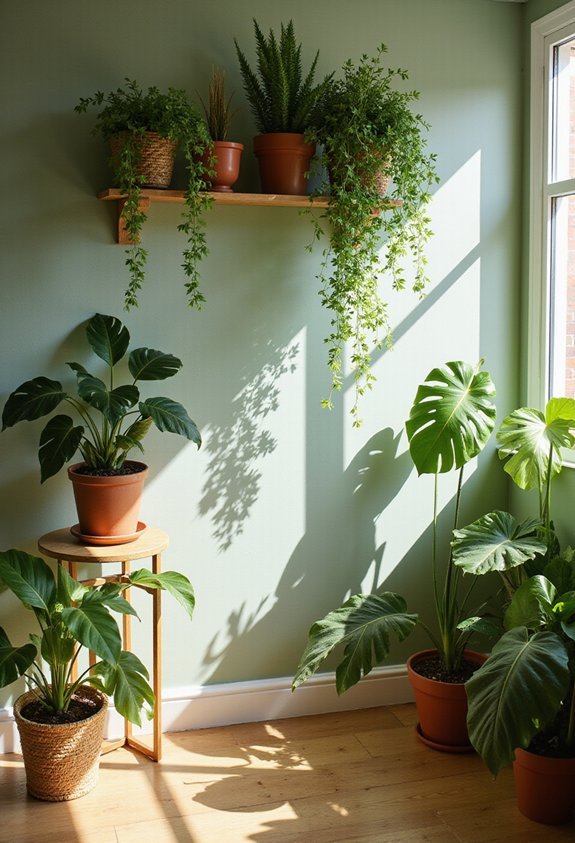
As you’ve established a serene foundation with soft textures and natural light, a floor-to-ceiling plant corner transforms your green bedroom into a living, breathing sanctuary. You’ll maximize vertical space by installing floating shelves at varying heights, creating an ideal display for trailing pothos, climbing ivy, and cascading philodendrons. Position a tall fiddle leaf fig or snake plant in the corner’s base to anchor the arrangement. Incorporate a plant stand to elevate mid-level specimens, ensuring each plant receives adequate light exposure. Add a small water station nearby for convenient watering and maintenance. This verdant corner purifies your air naturally while establishing a focal point that deepens your connection to nature. The layered greenery creates visual interest and reinforces your bedroom’s peaceful, organic aesthetic.
Display Fiddle Leaf Figs and Snake Plants as Accents
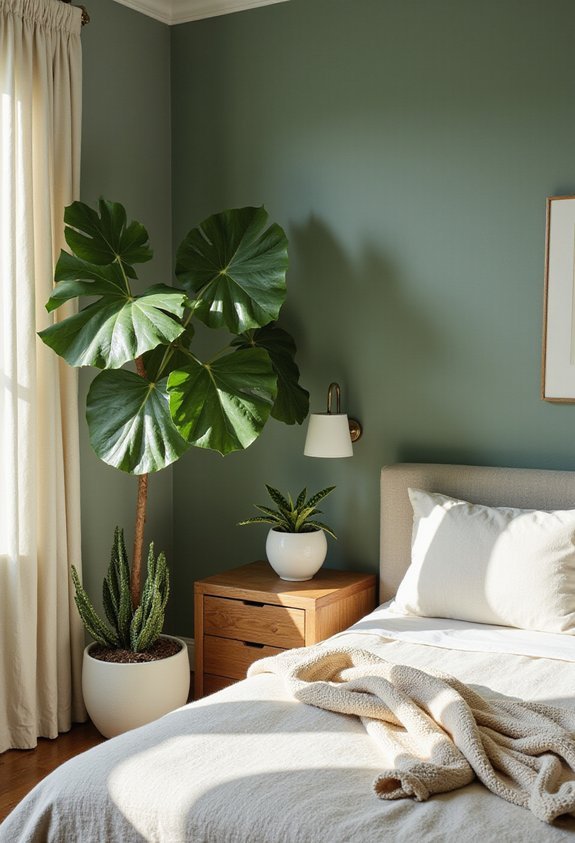
While fiddle leaf figs and snake plants serve as anchors in your plant corner, they’re equally powerful as standalone accents throughout your bedroom. Position a fiddle leaf fig near your window to create a striking focal point that draws natural light into the space. Snake plants work beautifully on nightstands or dressers, offering vertical interest without demanding much attention.
You’ll appreciate how these plants complement your existing décor while requiring minimal maintenance. Their architectural leaves add texture and depth to any corner. Consider pairing them with simple ceramic pots that match your bedroom’s color palette. This strategic placement transforms isolated areas into cohesive green zones, reinforcing your nature-inspired aesthetic while maintaining the serene atmosphere you’re cultivating.
Hang Macramé Planters With Trailing Vines
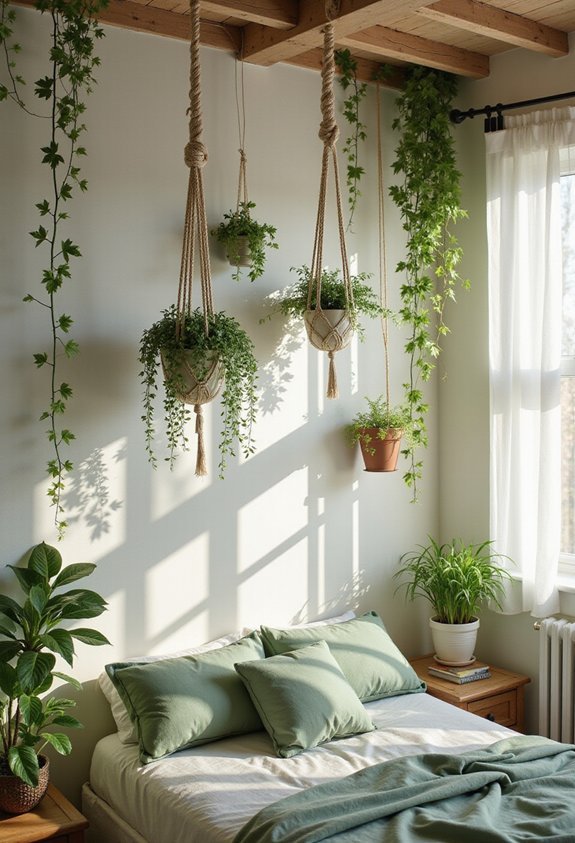
Macramé planters bring softness and movement to your bedroom walls while you cultivate trailing vines like pothos or string of pearls. These handwoven holders add texture and bohemian charm without overwhelming your space.
You can hang planters at varying heights to create visual interest and draw the eye upward. Choose lightweight vines that won’t strain the macramé or wall anchors. As your plants grow, they’ll cascade gracefully, softening hard edges and adding organic flow to your room.
The neutral tones of macramé complement green foliage beautifully, creating a cohesive, calming aesthetic. Position planters near windows where trailing vines receive adequate light. This layered approach to greenery maximizes your vertical space while maintaining the serene, nature-inspired atmosphere you’re cultivating throughout your bedroom retreat.
Design a Living Green Wall as an Alternative to Artwork
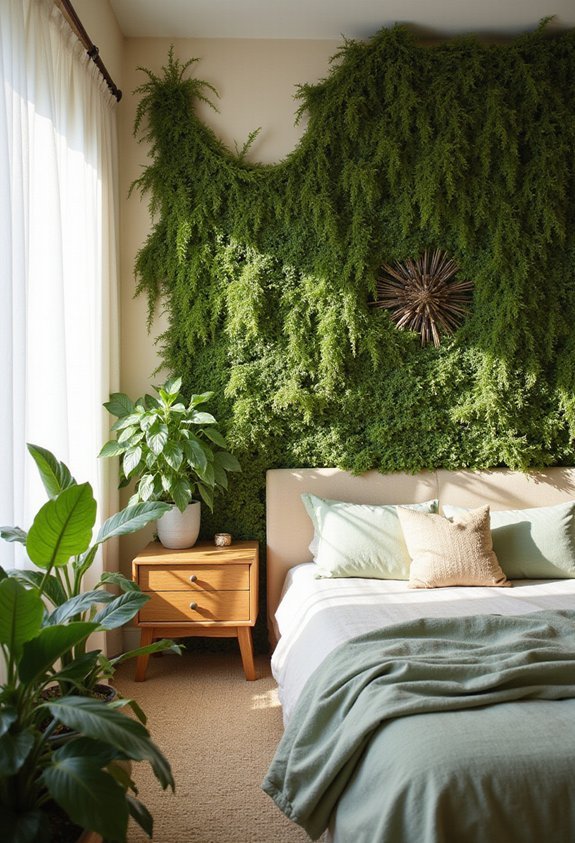
If you’re seeking a dramatic focal point that surpasses traditional wall art, consider creating a living green wall in your bedroom. This living installation transforms an ordinary wall into a vibrant, breathing ecosystem that cleanses your air while adding visual depth.
You’ll need to install a vertical garden system with integrated irrigation to keep plants hydrated efficiently. Select shade-tolerant varieties like pothos, philodendron, or ferns that thrive indoors without requiring direct sunlight.
A living wall doesn’t just enhance aesthetics—it actively improves your bedroom’s air quality by filtering toxins and increasing oxygen levels. The natural texture and color variations create visual interest that static artwork can’t match. Your green wall becomes a dynamic element that evolves seasonally, offering year-round natural beauty and wellness benefits.
Arrange Shelf-Mounted Plants Around Your Bedroom Window
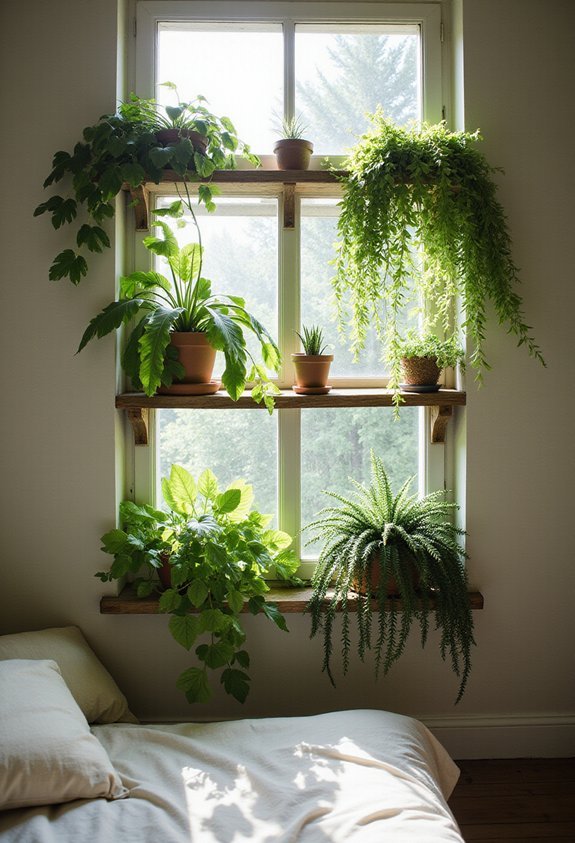
For a more flexible and accessible approach to bedroom greenery, shelf-mounted plants around your window offer an excellent solution. You’ll benefit from natural light exposure that keeps your plants thriving while brightening your space. Position shallow shelves at varying heights to create visual interest and accommodate different plant varieties.
Choose low-maintenance options like pothos, snake plants, or succulents that tolerate indoor conditions well. You can easily rearrange them seasonally or rotate plants for propagation without committing to permanent placements like living walls require.
The window setting provides ideal airflow and humidity regulation, reducing disease risk. You’ll also control watering schedules more precisely than wall-mounted installations. This arrangement maximizes your bedroom’s natural light while adding layered greenery that transforms your window into a verdant focal point.
Display Air Plants on Floating Wood Shelves
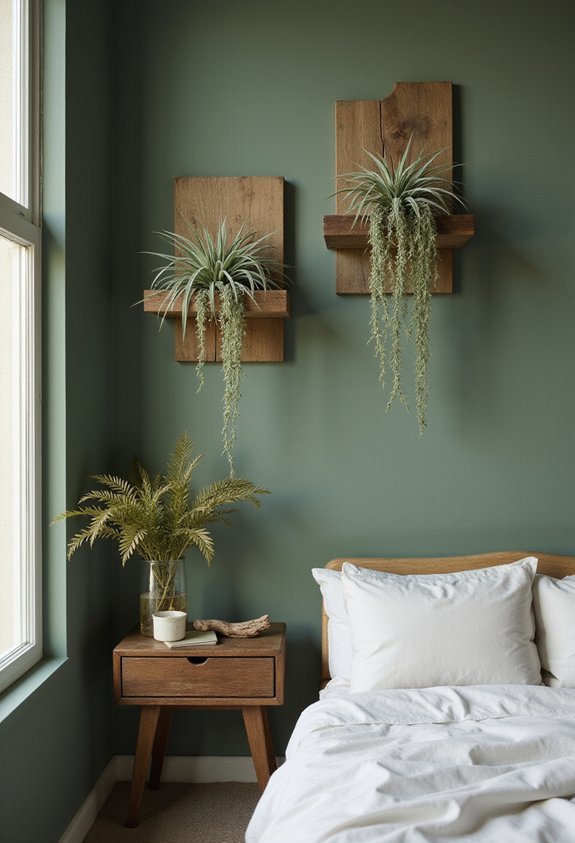
Air plants offer a striking alternative to traditional potted greenery, requiring no soil and minimal maintenance while you enjoy their sculptural forms on floating wood shelves. You can arrange these unique plants at varying heights to create visual interest and depth across your bedroom wall. Their architectural shapes complement modern and minimalist aesthetics beautifully.
When installing floating shelves, guarantee they’re securely anchored to support the weight. You’ll want to position air plants where they receive bright, indirect light. Mist them weekly or soak them in water for 20-30 minutes monthly to keep them hydrated.
Pair air plants with small decorative objects—smooth stones, driftwood, or metallic accents—to enhance the display. This approach transforms your bedroom into a gallery-like space celebrating nature’s geometry and your personal style.
Add Green Artwork and Botanical Illustrations
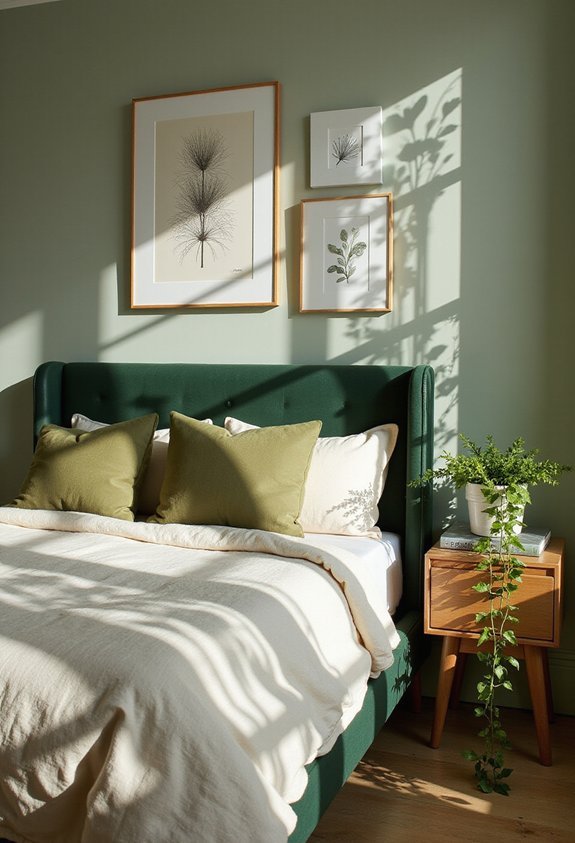
While floating shelves showcase living greenery, botanical artwork brings nature’s beauty to your walls in permanent, curated forms. You’ll find framed botanical illustrations that capture intricate details of leaves, flowers, and ferns—perfect for creating visual interest without maintenance demands.
Consider gallery walls combining various prints in complementary frames to establish a cohesive aesthetic. Watercolor paintings of succulents or wildflowers add softness, while detailed line drawings provide modern sophistication. You can choose black-and-white sketches for minimalist bedrooms or vibrant nature photographs for bolder statements.
Position artwork strategically above your nightstand, dresser, or accent wall to draw the eye. Mix botanical prints with landscapes featuring green forests and meadows. This layered approach transforms your bedroom into a nature-inspired sanctuary, complementing your living plants while adding personality and depth to your space.
Hang Nature Photography Prints in Minimalist Frames
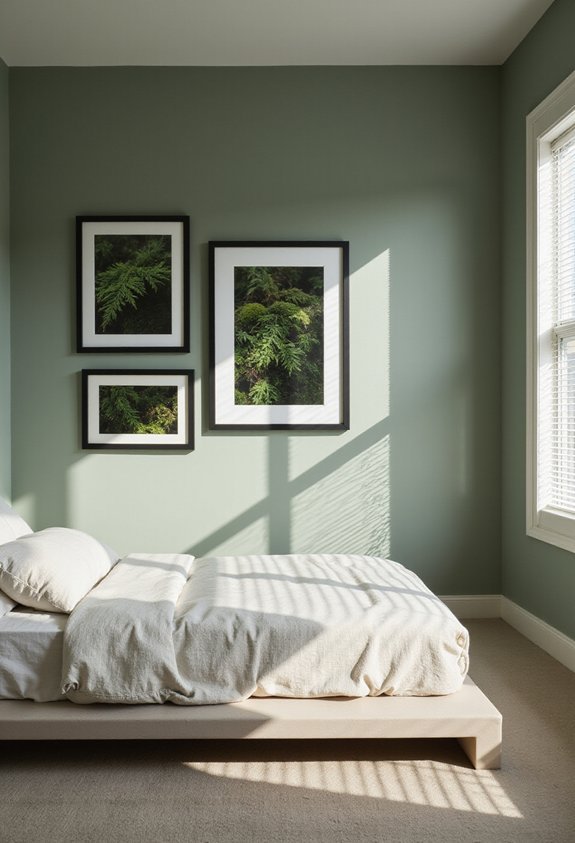
Nature photography prints offer a more photorealistic alternative to botanical illustrations, capturing authentic landscapes and wildlife moments that ground your bedroom in the natural world. You’ll want to select frames that don’t compete with your images—sleek black, white, or natural wood frames work best for a minimalist aesthetic.
Consider creating a gallery wall featuring varied nature scenes: misty forests, serene water bodies, or mountain vistas. These prints draw your eye without overwhelming your space. You’re choosing photography that reflects your personal connection to nature, whether that’s desert landscapes or coastal scenes.
Hang your prints at eye level for ideal viewing. The minimalist framing keeps focus on the imagery itself, reinforcing your bedroom’s calming atmosphere while celebrating the natural world’s beauty through authentic, unfiltered moments.
Choose Abstract Green Paintings for Modern Style
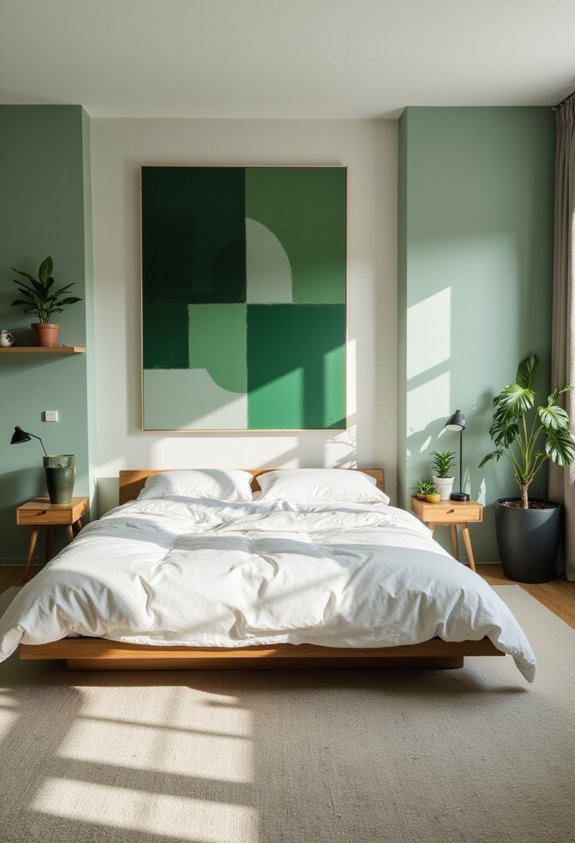
Abstract green paintings offer a contemporary alternative to realistic nature imagery, bringing sophistication and artistic expression directly into your bedroom. These pieces let you embrace green’s calming properties while adding visual interest and modern flair to your walls.
When selecting abstract green paintings, consider various shades—from deep forest tones to pale mint hues—that complement your existing décor. You’ll find that larger canvases create bold focal points above your bed or dresser, while smaller pieces work well in gallery-style arrangements.
Look for artworks featuring geometric patterns, fluid brushstrokes, or mixed textures. These elements add depth and personality without overwhelming your serene sanctuary. Abstract paintings also pair beautifully with minimalist frames from your previous design choice, creating a cohesive, intentional aesthetic that feels both calming and distinctly curated.
Display a Forest Landscape Canvas Above Your Nightstand
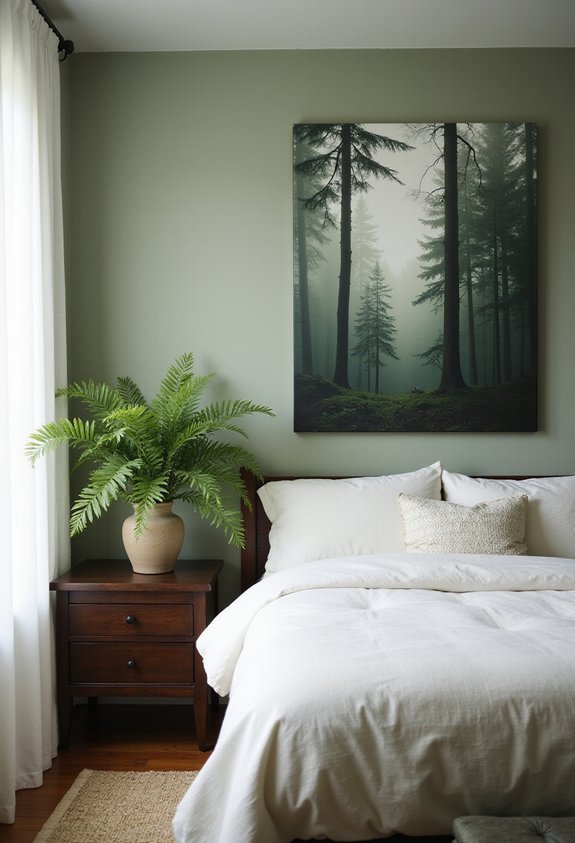
If you’re seeking a serene focal point that’ll greet you each morning and night, a forest landscape canvas above your nightstand delivers exactly that. This placement transforms your bedroom into a peaceful sanctuary by positioning nature’s tranquility right where you wake and drift to sleep.
Choose a canvas featuring dense trees, misty woodland scenes, or sunlit forest paths. These images create visual depth and encourage relaxation before bedtime. The vertical orientation above your nightstand draws your eye upward, making the space feel larger and more open.
Ensure the artwork complements your existing green palette while maintaining visual balance. The canvas becomes your personal nature retreat, accessible without leaving bed. This simple addition substantially enhances your bedroom’s calming atmosphere and reinforces your nature-inspired design theme.
Drape a Macramé Wall Hanging as a Textile Accent
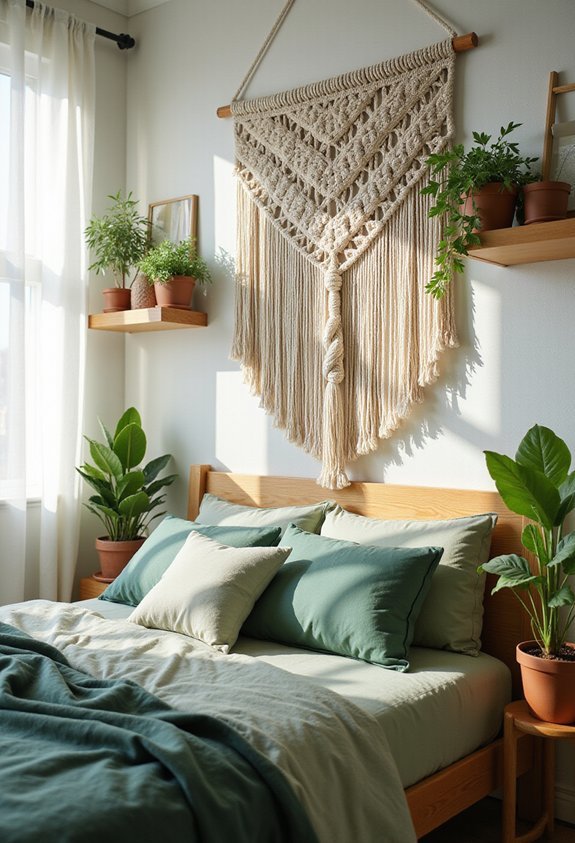
Macramé wall hangings bring organic texture and warmth to your green bedroom while introducing a tactile element that canvas alone can’t achieve. You’ll find that knotted rope creates visual interest and complements natural wood furniture beautifully.
Choose a macramé piece in cream, ivory, or natural jute tones to contrast with your green walls. Position it beside your forest landscape canvas or as a standalone focal point above your dresser. The intricate patterns catch light differently throughout the day, adding dimension to your space.
You can hang macramé using a simple wooden dowel or brass rod for a polished look. This textile accent softens your bedroom’s aesthetic while reinforcing your nature-inspired theme without overwhelming the calming atmosphere you’ve cultivated.
Install Green Pendant Lights With Natural Material Shades
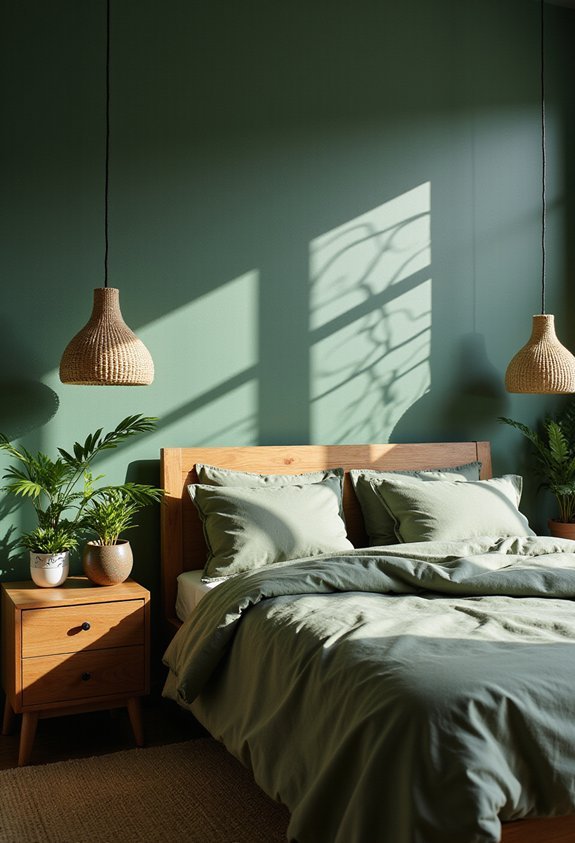
While textile accents like macramé bring warmth through texture, your bedroom’s lighting deserves equal attention to complete the nature-inspired aesthetic. Install green pendant lights with natural material shades to elevate your space authentically.
Consider fixtures crafted from rattan, woven seagrass, or bamboo paired with soft green tones. These combinations filter light beautifully, creating a calming ambiance that enhances relaxation. Position pendant lights over your nightstands or at the foot of your bed for functional elegance.
Natural material shades diffuse harsh glare while maintaining the organic feel you’re cultivating. The green hues harmonize with your existing decor, reinforcing the nature-inspired theme throughout your retreat.
This lighting choice merges sustainability with style, transforming your bedroom into a serene sanctuary that feels genuinely connected to the natural world.
Add a Fabric Lampshade in Muted Green Tones
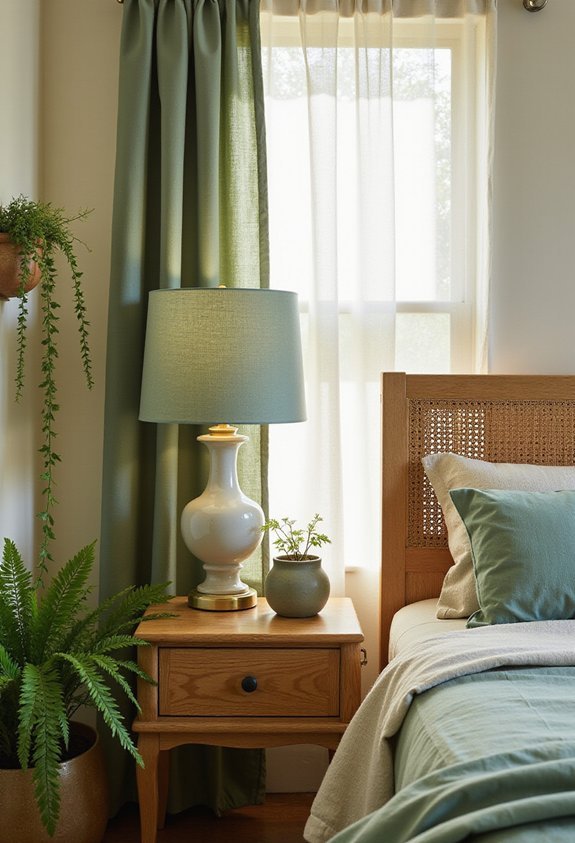
Fabric lampshades in muted green tones soften harsh lighting while adding subtle sophistication to your bedroom. You’ll appreciate how these shades create a calming ambiance that complements nature-inspired décor perfectly.
Choose lampshades in sage, celadon, or soft moss tones to maintain visual harmony with your existing color palette. Linen and cotton blends offer durability while diffusing light evenly throughout the space. You can pair these shades with bedside table lamps or floor lamps positioned in reading corners.
The muted green fabric filters overhead light beautifully, reducing eye strain during evening hours. You’ll find that this subtle touch enhances relaxation without overwhelming your bedroom’s aesthetic. Consider layering different lighting sources with various muted green shades to create depth and flexibility in your space.
Choose Rattan or Woven Light Fixtures for Organic Feel
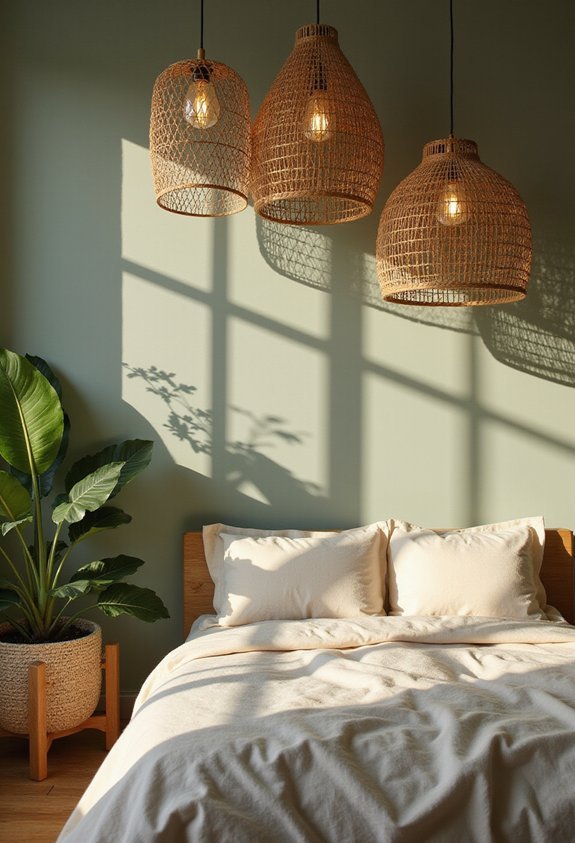
Texture and warmth infuse your bedroom when you incorporate rattan or woven light fixtures into your design scheme. These natural materials complement green walls beautifully, creating a cohesive, organic aesthetic that enhances your nature-inspired retreat.
Rattan pendant lights work wonderfully above nightstands or in corners, casting soft, dappled shadows that establish a calming atmosphere. Woven fixtures add visual interest without overwhelming your space, as their open construction allows light to diffuse gently throughout the room.
You’ll find these fixtures in various styles—from minimalist designs to intricate patterns—making them versatile for any bedroom layout. They’re also sustainable choices, often crafted from eco-friendly materials that align perfectly with your green bedroom philosophy.
Layer these fixtures with your muted green lampshade for a harmonious lighting scheme that feels both sophisticated and grounded.
Place Bamboo Bedside Lamps to Complement Green Walls
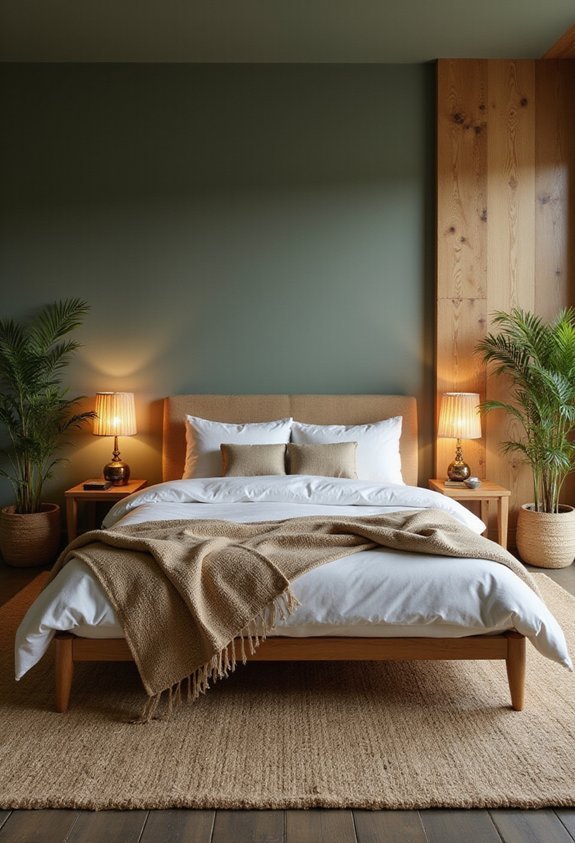
Because bamboo naturally echoes the organic qualities of green walls, bedside lamps crafted from this material create a seamless visual flow in your bedroom. The warm, natural tones of bamboo complement various green shades, from soft sage to deep forest hues, enhancing your nature-inspired aesthetic.
You’ll appreciate how bamboo lamps diffuse light softly, creating an inviting ambiance while reducing harsh shadows. Their lightweight structure makes them easy to position on nightstands without overwhelming your space.
When selecting bamboo bedside lamps, choose designs that incorporate fabric shades in neutral colors—cream, white, or light gray work beautifully. This combination maintains visual balance and prevents your bedroom from feeling too dark or monochromatic.
The natural bamboo finish also coordinates effortlessly with other organic materials you’ve already incorporated, like rattan fixtures and wooden furniture pieces.
Select Natural Wood Furniture to Ground Green Color Palette
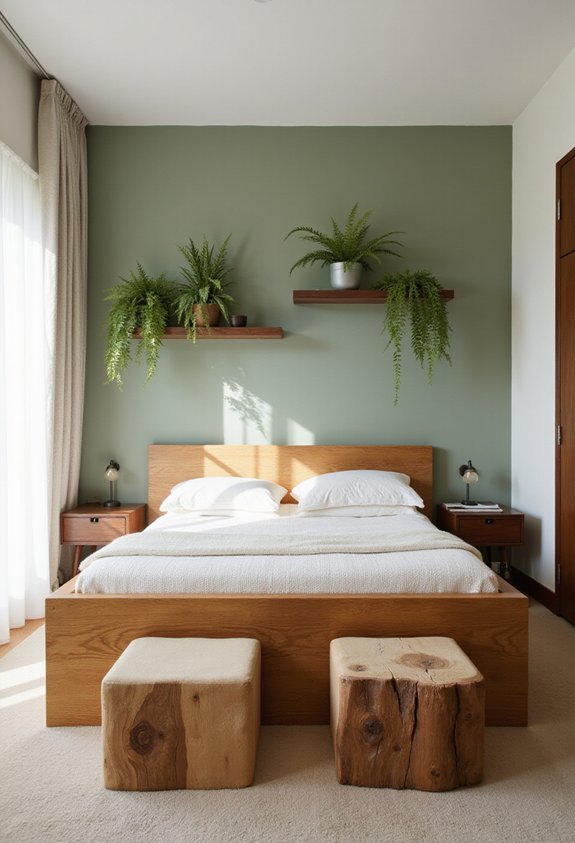
How can you anchor a green bedroom’s color palette? Natural wood furniture grounds your space with warmth and earthy authenticity. Wood tones—whether rich walnut, honey oak, or light pine—create visual balance against vibrant or soft green walls.
Choose a wooden bed frame as your room’s foundation. It’ll establish a natural focal point that complements green without competing for attention. Add a wood nightstand, dresser, or desk to reinforce the organic aesthetic. These pieces create cohesion throughout your bedroom.
The beauty of natural wood lies in its versatility. It harmonizes with virtually any green shade, from sage to emerald to seafoam. Wood’s grain patterns and warm undertones soften intense greens while enhancing subtle ones.
Avoid overly processed or artificial finishes. Opt for genuine hardwoods or quality wood veneers that develop character over time, deepening your bedroom’s connection to nature.
Add a Rattan Headboard for Texture and Visual Warmth
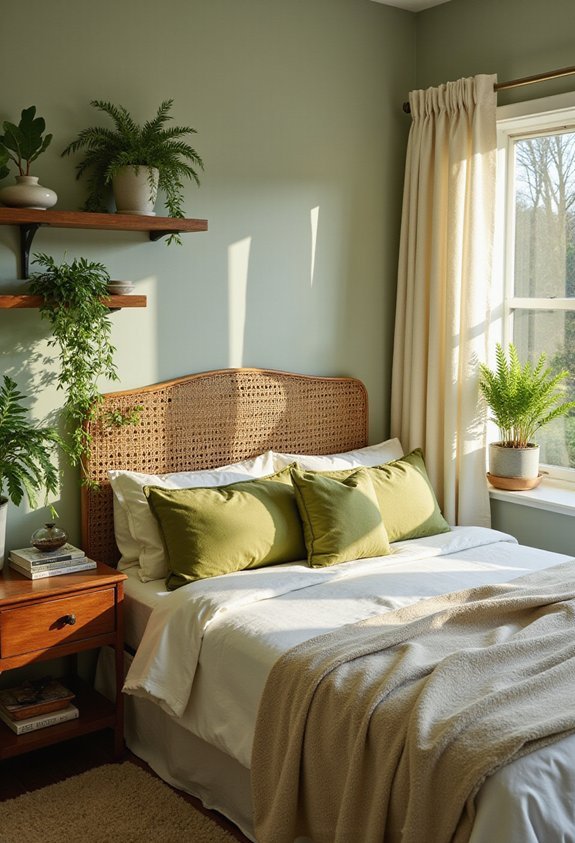
A rattan headboard transforms your green bedroom by introducing organic texture that complements natural wood furniture. This natural material adds warmth and visual interest while maintaining the nature-inspired aesthetic you’ve established.
Rattan’s woven pattern creates depth against your green walls, breaking up flat color while enhancing the room’s earthy feel. The light tan tones provide contrast that prevents your space from feeling monotonous. You’ll find rattan headboards in various styles—from simple woven panels to intricate geometric patterns.
Installing a rattan headboard requires minimal effort. Most designs mount directly to your wall or bed frame, making it a practical choice even for renters. Pair it with soft linens in cream or sage green to amplify the cozy, natural atmosphere. This addition elevates your bedroom’s design while staying true to your green color scheme.
Choose a Reclaimed Wood Bed Frame With Green Bedding
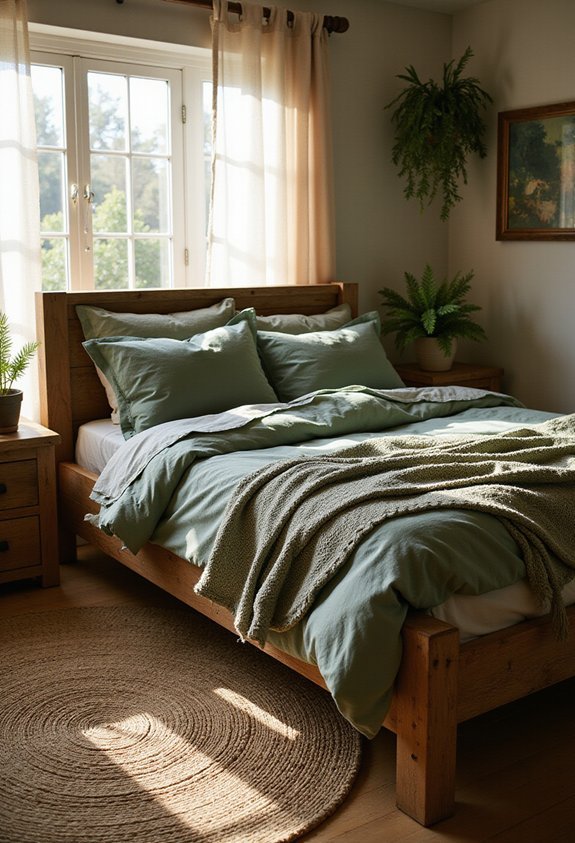
While rattan brings textural warmth to your bedroom’s visual foundation, the bed frame itself deserves equal attention as your room’s centerpiece. Opting for a reclaimed wood bed frame combines sustainability with authentic character, featuring unique grain patterns and weathered finishes that no new furniture can replicate.
Pair your reclaimed wood frame with green bedding in soft sage, forest, or moss tones to create a cohesive nature-inspired aesthetic. The organic texture of aged wood complements muted green linens beautifully, establishing visual harmony throughout your space.
Reclaimed wood’s earthy warmth balances cool green hues perfectly, preventing your bedroom from feeling cold or sterile. This combination anchors your room while maintaining that fresh, natural atmosphere you’re cultivating. You’ll create an inviting focal point that’s both environmentally conscious and visually stunning.
Place a Woven Seating Bench at Foot of Bed
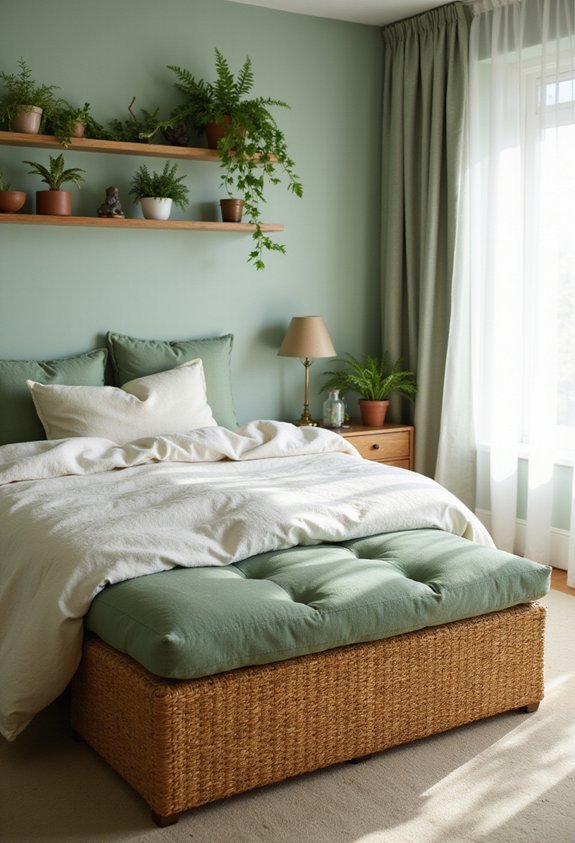
Completing your green bedroom’s natural aesthetic requires one more essential element: a woven seating bench positioned at your bed’s foot. This piece combines functionality with organic charm, offering a perfect spot to sit while dressing or removing your shoes. Woven benches crafted from rattan, wicker, or seagrass complement reclaimed wood frames beautifully, reinforcing your nature-inspired theme.
Choose a bench in neutral tones like tan or light brown to maintain visual harmony with your green palette. The texture adds depth and visual interest to your space without overwhelming it. Beyond aesthetics, this seating solution provides practical storage if you select a design with an open shelf underneath.
Position your bench parallel to your bed’s foot to create balance. This thoughtful addition anchors your room’s design while enhancing comfort and accessibility.
Add a Sustainable Cork or Jute Area Rug
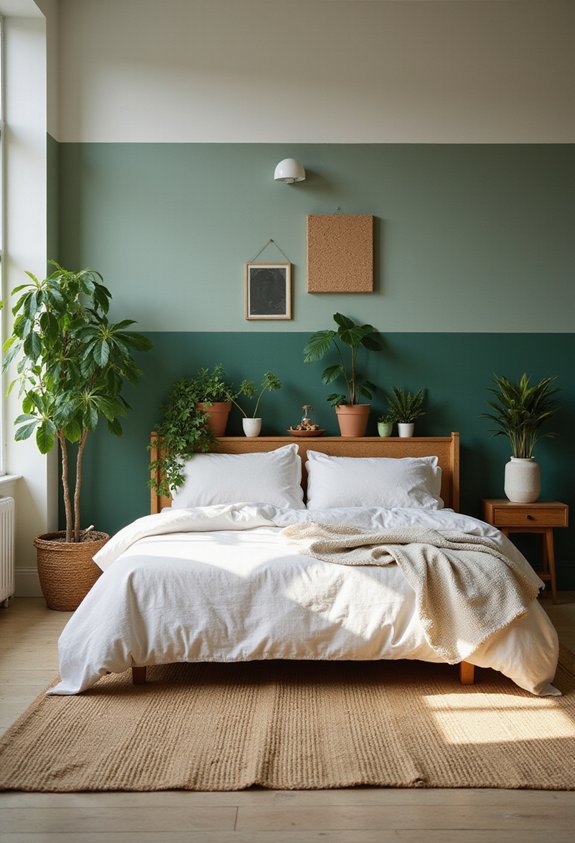
With your woven bench anchoring the room’s foundation, you’ll want to ground the space further with an eco-friendly area rug. Cork and jute are excellent sustainable choices that complement your nature-inspired aesthetic.
Cork rugs offer natural insulation and durability while maintaining a warm, organic texture underfoot. They’re hypoallergenic and resist moisture, making them practical for bedrooms. Jute rugs provide a softer feel and add earthy appeal with their neutral tones that work seamlessly with green walls and natural wood furniture.
Both materials are biodegradable and sourced responsibly, aligning with your environmental values. Choose a rug size that defines your sleeping area without overwhelming the space. Layer it under your bed or position it beside the woven bench to create cohesive zones while enhancing your room’s sustainable design.
Layer Sheer and Blackout Green Curtains
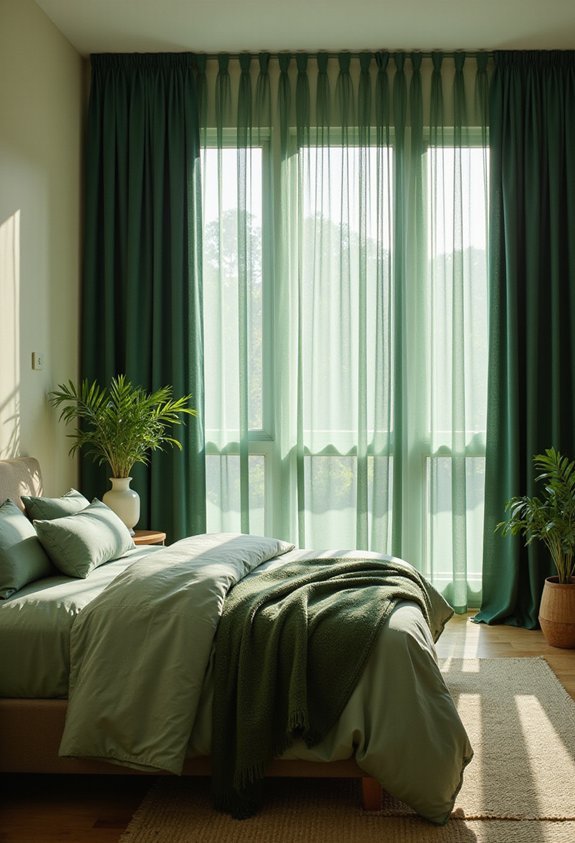
Your bedroom’s window treatment deserves the same thoughtful approach you’ve applied to flooring and furnishings. Layering sheer and blackout green curtains creates functional elegance while enhancing your nature-inspired aesthetic.
Sheer curtains in soft sage or pale green allow diffused natural light to filter through, maintaining privacy without sacrificing brightness. They add airiness and a delicate visual layer that complements your sustainable design scheme.
Pair these with blackout curtains in deeper forest or hunter green for light control and insulation. This combination regulates temperature, reducing energy consumption while blocking unwanted light during sleep hours.
The layered approach offers flexibility—you’ll control ambiance throughout the day while supporting your bedroom’s eco-conscious vision. Choose organic cotton or linen options to maintain sustainability standards across all décor elements.
Add Woven Green Baskets for Storage and Texture
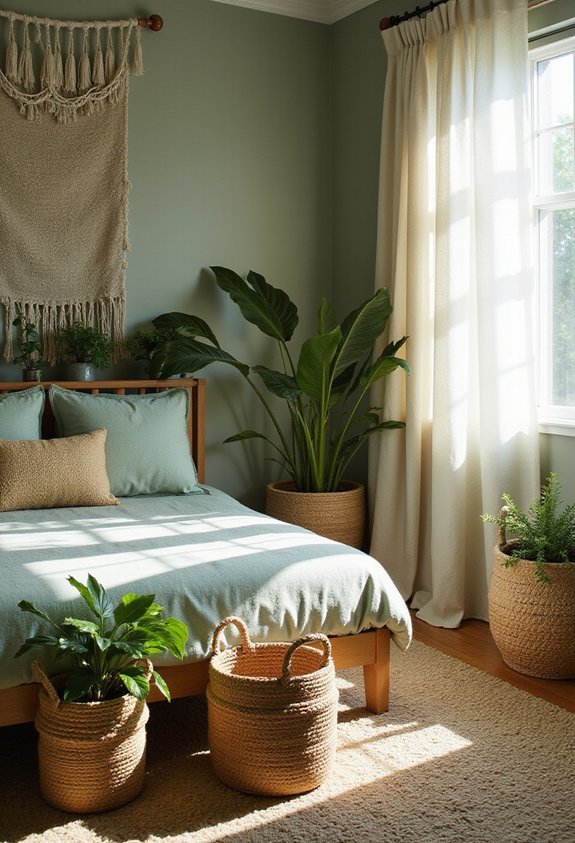
Beyond window treatments, you’ll want to address storage solutions that reinforce your green bedroom’s natural aesthetic. Woven green baskets offer the perfect combination of functionality and visual appeal. You can place them on shelves, under your bed, or in corner spaces to corral blankets, pillows, and seasonal items while maintaining an organized appearance.
These baskets introduce natural textures that complement your nature-inspired theme. Rattan, seagrass, and wicker materials in various green tones add depth and warmth to your bedroom. You’ll appreciate how they soften hard furniture lines and create visual interest without cluttering your space.
Choose baskets in coordinating green shades—sage, moss, or forest—to create a cohesive look. This layering of textures and tones transforms your bedroom into a serene sanctuary while keeping essentials accessible and concealed.
Choose a Wool Area Rug in Cream or Neutral Green Blend
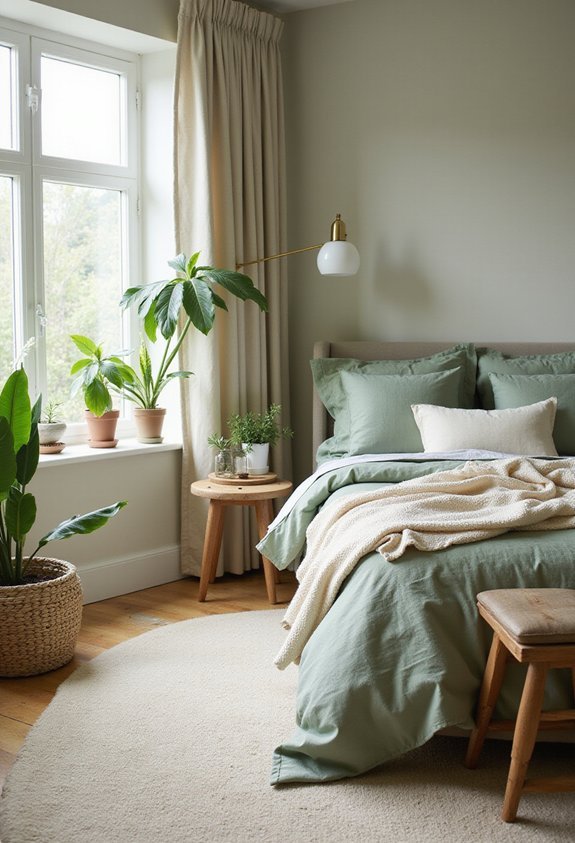
As you layer textures throughout your green bedroom, a wool area rug grounds the space while softening the shift between furniture pieces. A cream or neutral green blend works beautifully with existing decor without overwhelming the room’s visual balance.
Wool rugs offer durability and natural insulation, keeping your feet warm during colder months. They’re also naturally stain-resistant and easy to maintain with regular vacuuming. The neutral palette you’ve chosen complements the green walls and woven baskets you’ve already incorporated, creating cohesion throughout the space.
Position your rug under the bed’s foot or in a seating area to define zones within your bedroom. The soft fibers add comfort underfoot while their muted tones anchor your nature-inspired retreat, allowing other decorative elements to shine.
Incorporate Layered Window Treatments for Light and Privacy
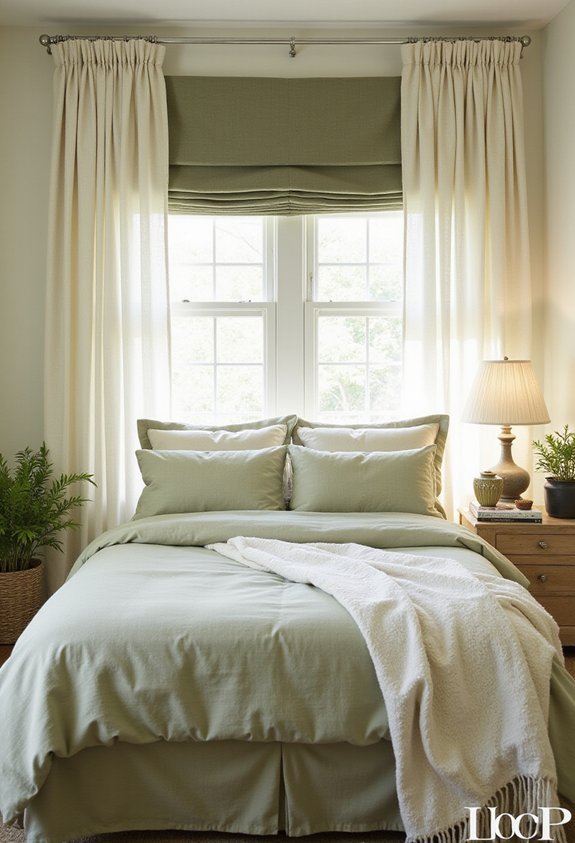
Layered window treatments give you complete control over natural light while maintaining privacy in your green bedroom. Combine sheer curtains with blackout drapes to create flexibility for different times of day. Sheers filter sunlight gently, reducing glare while allowing visibility outside. Blackout panels block light completely when you need restful darkness for sleep.
Add roman shades or cellular blinds as your middle layer for additional light diffusion and insulation. These options complement green walls beautifully while providing practical temperature regulation.
Choose neutral colors like cream, white, or soft gray for your layers to keep focus on your green color palette. Install a sturdy curtain rod that accommodates multiple panels easily. This layered approach maximizes both functionality and aesthetic appeal throughout your bedroom.
Grow Fiddle Leaf Figs and Snake Plants for Green Height
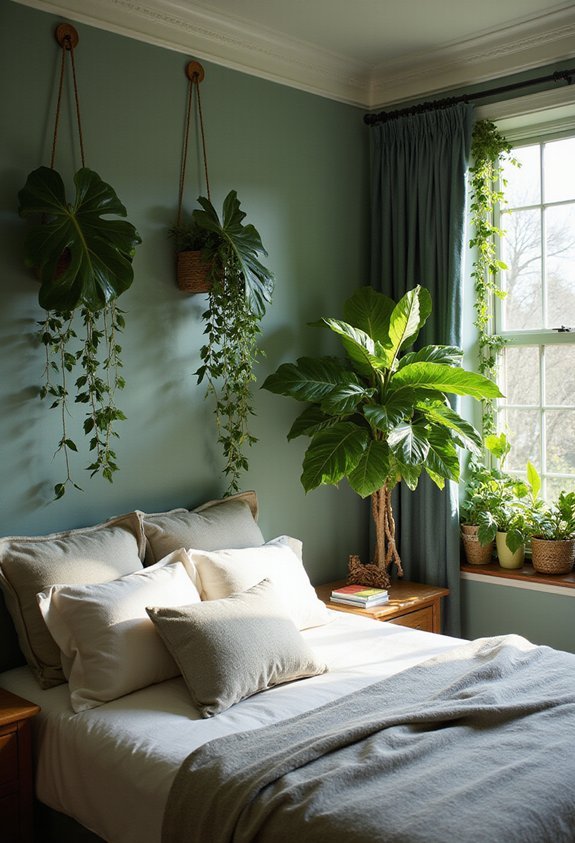
While your layered window treatments create the perfect light environment for plants, you’ll want to maximize vertical space with tall, statement-making greenery. Fiddle leaf figs and snake plants are ideal choices for bedroom corners and empty wall spaces.
Fiddle leaf figs deliver dramatic height with their large, violin-shaped leaves, instantly drawing the eye upward. They thrive in bright, indirect light and require moderate watering. Snake plants, conversely, tolerate lower light conditions and irregular watering schedules, making them perfect for busy lifestyles.
Both plants purify your air while adding architectural interest to your room. Position them strategically near windows or in corners to create visual balance. Their substantial size fills dead space without cluttering surfaces, keeping your bedroom serene and organized while infusing it with natural vigor.
Conclusion
You’ve probably heard that green promotes better sleep—and there’s actually science backing this up. When you surround yourself with green walls, plants, and natural textures, you’re triggering your brain’s relaxation response. You’re not just decorating; you’re creating a sanctuary that’ll genuinely help you unwind. Whether you’re going bold with forest green or soft with sage, you’re investing in better rest and a calmer mind.