

Farmhouse front yard design requires careful attention to balance, texture, and warm visual elements that invite rather than overwhelm. Selecting appropriate materials, such as weathered wood and natural stone, establishes foundational character while resisting harsh weather conditions. Strategic placement of flowering perennials alongside structural features like arbors or winding pathways creates intentional flow. Yet, the true challenge lies in layering these components without clutter, ensuring each element serves both aesthetic and functional purposes in the final composition.
Start Here: Assess Your Space and Set Your Priorities
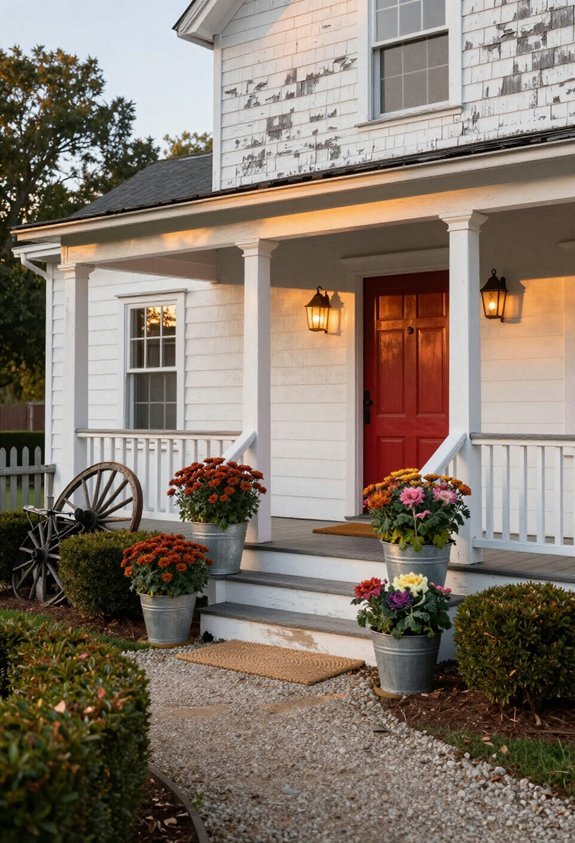
Several key factors must be examined before any physical work begins on a farmhouse front yard, as proper assessment prevents costly mistakes and guarantees the final design serves its intended purpose. The homeowner must first measure the total available space, noting existing features such as mature trees, slopes, drainage patterns, and utility lines that cannot be relocated. Soil composition and sunlight exposure require evaluation, since these conditions determine which plants will thrive without excessive maintenance. Budget constraints must be established early, separating essential hardscaping from optional decorative elements. Functional priorities, including parking needs, pathways, and gathering areas, should rank above purely aesthetic concerns. Climate zone and local building codes further restrict material and plant selections. Documenting these observations in writing creates a reference framework for subsequent decisions, ensuring each choice aligns with the property’s practical requirements and long-term vision.
Also read: 20 FARMHOUSE FRONT YARD Ideas With Warm Curb Appeal!
Frame Your Entryway With a Weathered Wood Arbor
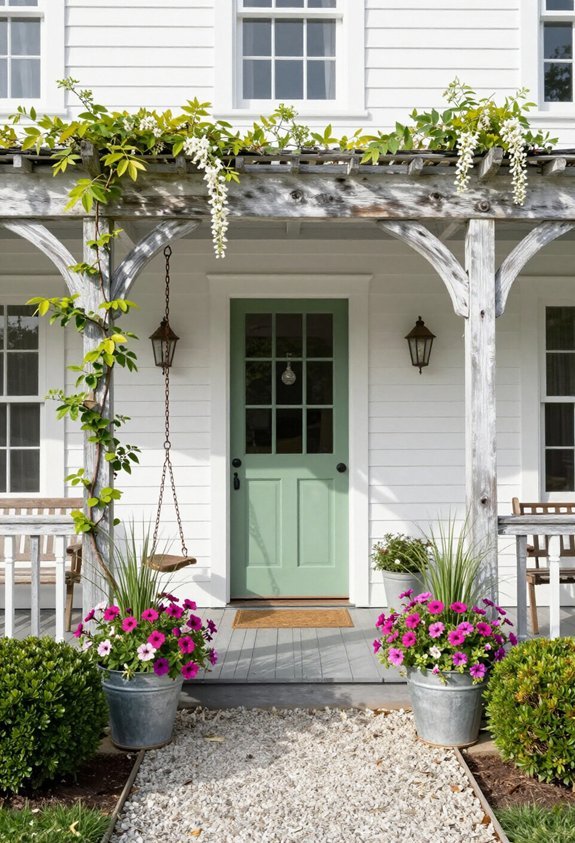
A weathered wood arbor serves as a defining architectural element that establishes the farmhouse aesthetic while creating a clear boundary between public and private outdoor spaces. Positioned at the walkway entrance or front door, this structure marks the shift from street to home with visual weight and purpose.
Construction typically involves rough-hewn posts, crossbeams, and a simple lattice top, left untreated to develop natural gray patina over time. Cedar, redwood, or reclaimed barn wood withstands outdoor exposure while acquiring character through weathering. The scale should suit the home’s proportions, generally spanning four to six feet wide and eight feet tall.
Installation requires concrete footings set below frost line for stability. Climbing plants, such as clematis or native grapes, may eventually veil the frame, though the arbor remains architecturally complete without vegetation. Properly built, it endures decades with minimal maintenance.
Plant Overflowing Window Boxes With Herbs and Blooms
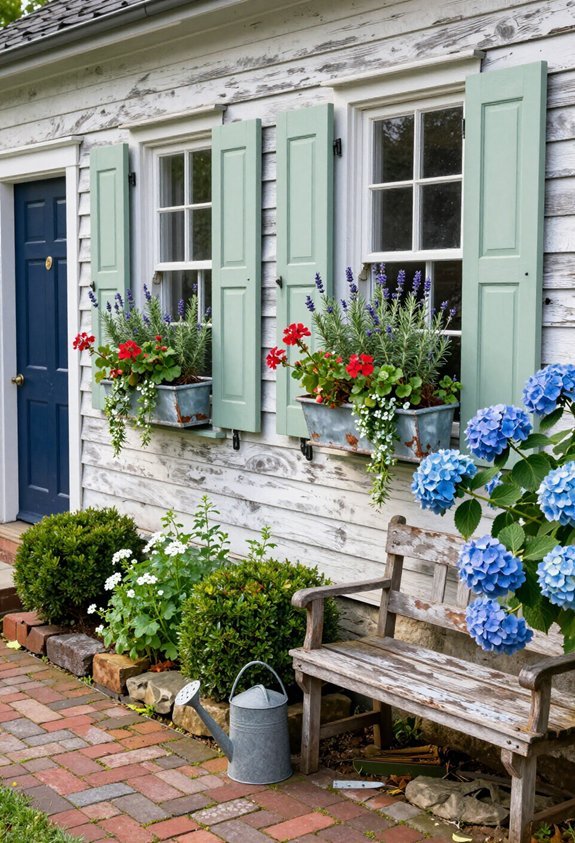
Window boxes brimming with herbs and flowers extend the farmhouse garden upward, transforming bare walls into vertical growing spaces that soften architectural lines and draw the eye toward the home’s upper stories. These containers create layered displays when planted with trailing rosemary, cascading petunias, and upright lavender, each species selected for complementary growth habits and staggered bloom times. Proper installation requires sturdy brackets anchored to structural framing, not merely siding, with boxes constructed from rot-resistant cedar or modern composite materials that withstand constant soil moisture. Drainage holes prevent root drowning, while a lightweight potting mix reduces load stress on mounting hardware. Watering demands increase in exposed locations, demanding daily attention during summer peaks. Harvesting basil or thyme from kitchen windows reinforces the practical, self-sufficient character central to farmhouse aesthetics.
Lay a Winding Gravel Path to Your Door
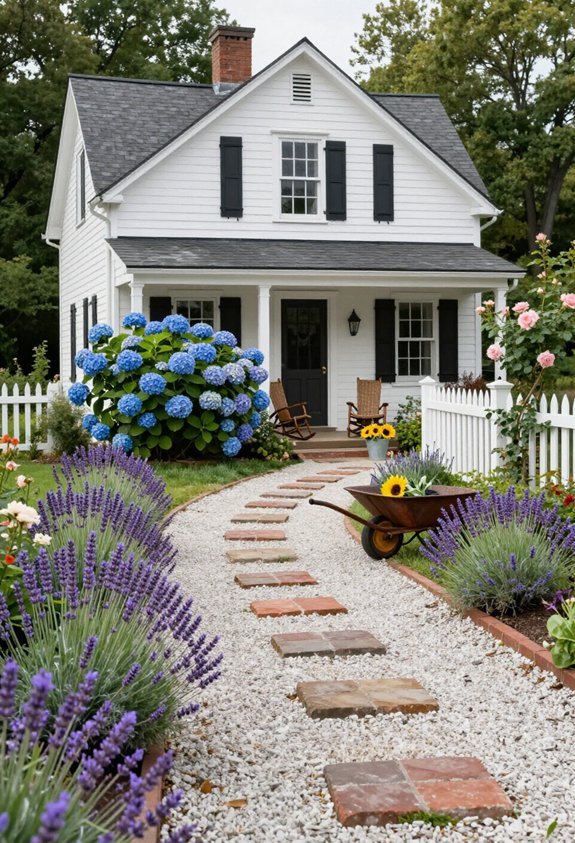
Curve a gravel pathway from the street to your entrance, establishing a walkway that guides visitors through your front yard while preserving the informal, welcoming atmosphere characteristic of farmhouse design. Select locally sourced pea gravel or crushed stone, which provides satisfying crunch underfoot and excellent drainage during heavy rains. Excavate the route four to six inches deep, lining the trench with landscape fabric to suppress weed growth and maintain structural integrity. Stabilize the edges with fieldstone, weathered brick, or pressure-treated lumber to contain the gravel and define the path’s organic silhouette. Incorporate gentle curves rather than straight lines, allowing the walkway to meander around established trees, fragrant lavender clusters, or rustic wooden planters. This deliberate irregularity softens the approach to your home, creating visual interest while preventing erosion and reducing maintenance demands compared to paved alternatives.
Hang a Classic Porch Swing for Instant Warmth
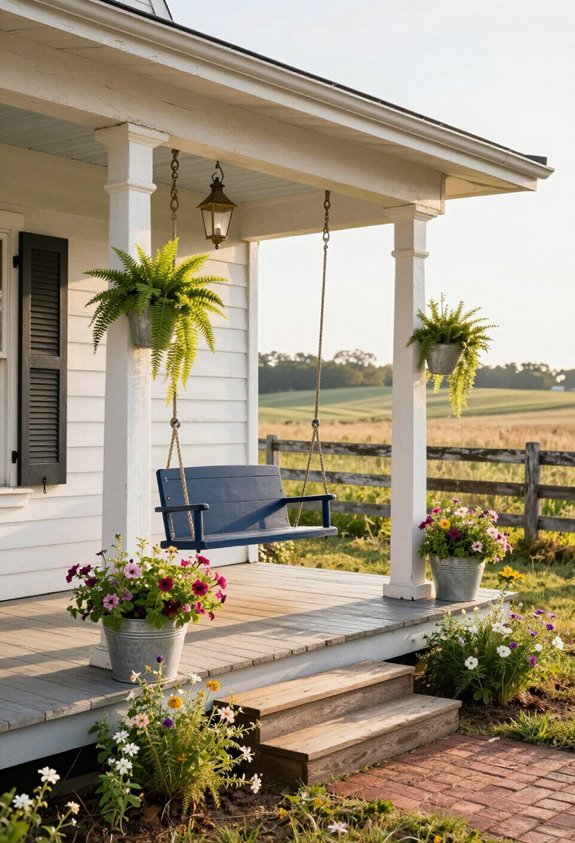
Once the winding gravel path draws guests toward the entrance, attention naturally shifts upward to the porch itself, where a classic swing suspended from sturdy ceiling beams offers immediate visual and functional appeal. The installation requires proper hardware, including heavy-duty chains or ropes rated for substantial weight, ensuring safety for multiple occupants over years of use. Wood selection matters considerably; cedar, teak, or painted pine withstand outdoor conditions while maintaining structural integrity through seasonal temperature fluctuations. Placement demands careful consideration of swing arc clearance, typically requiring four feet of forward and backward space to prevent collision with porch railings or walls. Cushions in weather-resistant fabrics add comfort without compromising durability. The gentle motion creates subtle movement that animates the facade, drawing the eye and suggesting hospitality through implied invitation to rest and observe the surrounding landscape.
Add a Split-Rail Fence for Classic Country Charm
While a welcoming porch invites visitors to pause, defining the property’s boundaries with a split-rail fence establishes the farmhouse aesthetic from the roadside, creating an immediate sense of pastoral heritage without obstructing views of the home or landscape. These simple wooden barriers, constructed from rough-hewn posts and parallel rails, originated centuries ago as practical solutions for containing livestock and marking territory.
Homeowners seeking authentic rural character select cedar or locust for natural rot resistance, though pressure-treated pine offers a budget-friendly alternative with proper maintenance. Installation requires minimal excavation, as posts stand in shallow holes stabilized by packed earth rather than concrete, allowing for seasonal adjustment as soil shifts. Typically spaced ten to twelve feet apart, the open construction permits airflow and uninterrupted sightlines across meadows or gardens. Weathered gray or stained dark to match outbuildings, the fence ages gracefully, its simplicity complementing rather than competing with architectural details. Strategic placement along property lines or partial enclosure of front yards maintains neighborly connection while delineating space with understated historical reference.
Build Raised Beds With Vintage Brick Edging
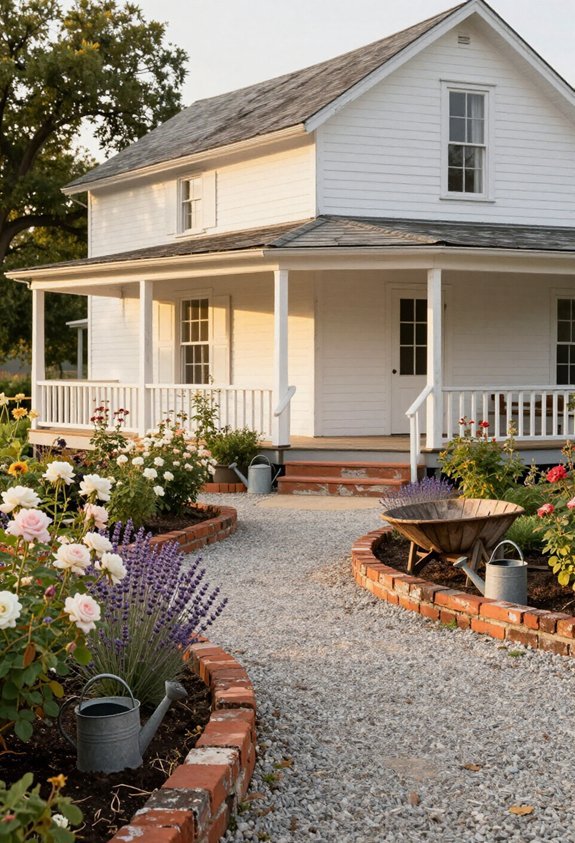
Establish orderly boundaries for planting areas using aged brick to create raised beds that merge practical cultivation with timeless visual appeal. Weathered bricks, sourced from demolished structures or reclaimed suppliers, provide instant character through their chipped edges and varied patina. Installation requires excavating a shallow trench, laying a gravel base for drainage, and stacking bricks in a running bond pattern two to three courses high. Mortar remains optional; dry-stacked construction allows for seasonal adjustments and root expansion. The thermal mass of brick warms soil earlier in spring, extending growing seasons for vegetables and cutting flowers. Soil depth of twelve to eighteen inches accommodates most root systems while reducing compaction from foot traffic. Spacing beds three feet apart permits wheelbarrow access and maintenance without disturbing plantings.
Cluster Galvanized Planters for Industrial Charm
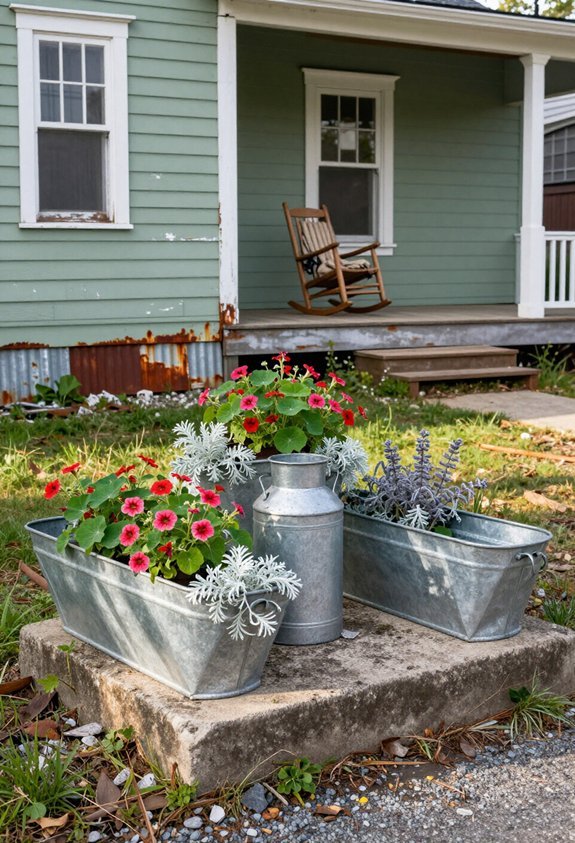
Moving from permanent brick structures to more flexible container arrangements offers gardeners an alternative approach to organizing growing space. Galvanized planters, constructed from zinc-coated steel, provide weather-resistant vessels that develop a muted, industrial patina over time, complementing farmhouse architecture without competing for attention. Clustering containers of varying heights creates visual layering, drawing the eye upward while maximizing limited square footage. Groupings of three to five planters establish rhythm, with taller vessels positioned toward the rear and shorter ones forward, ensuring each plant receives adequate light and remains visible from the street. Drainage holes must exist or be drilled to prevent root rot, as standing water accelerates corrosion despite the protective zinc barrier. Filling these planters with herbs, succulents, or seasonal annuals allows for quick reconfiguration, adapting the front yard’s appearance throughout the growing season without committing to permanent ground installation.
Swap Your Lawn for a Wildflower Meadow Border
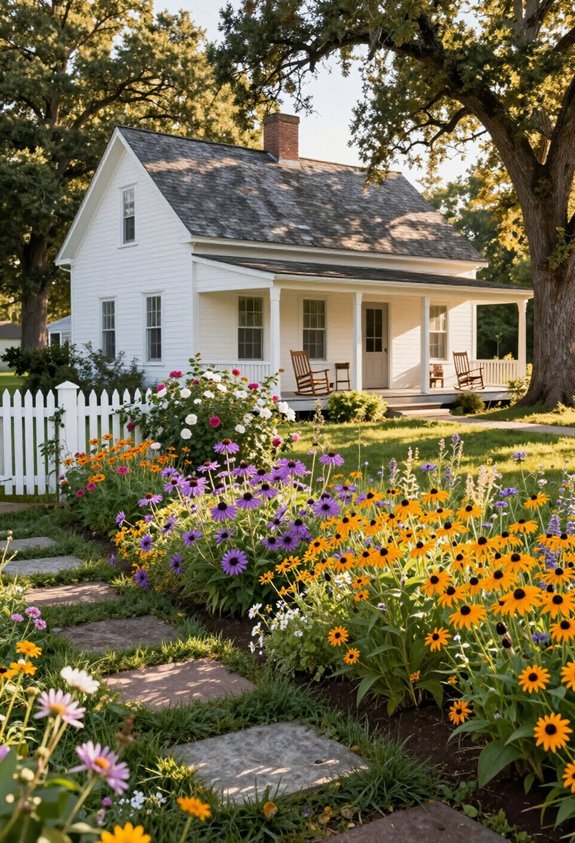
Several thousand square feet of traditional turf grass can be replaced with a wildflower meadow border that reduces maintenance demands while supporting local pollinator populations. This conversion begins with removing existing sod through solarization or manual digging, followed by soil preparation that includes light tilling and the removal of weed roots. Native seed mixtures selected for regional climate conditions establish more readily than non-native alternatives, requiring less irrigation once established. Annual and perennial combinations provide staggered blooming periods from early spring through late autumn. Mowing occurs once annually in late winter to disperse seeds and clear debris, eliminating weekly cutting schedules entirely. Drought-tolerant species develop deep root systems that prevent erosion on sloped terrain. Property owners observe increased butterfly, bee, and bird activity as the meadow matures across multiple growing seasons.
Lean an Antique Ladder Against the Porch Rail
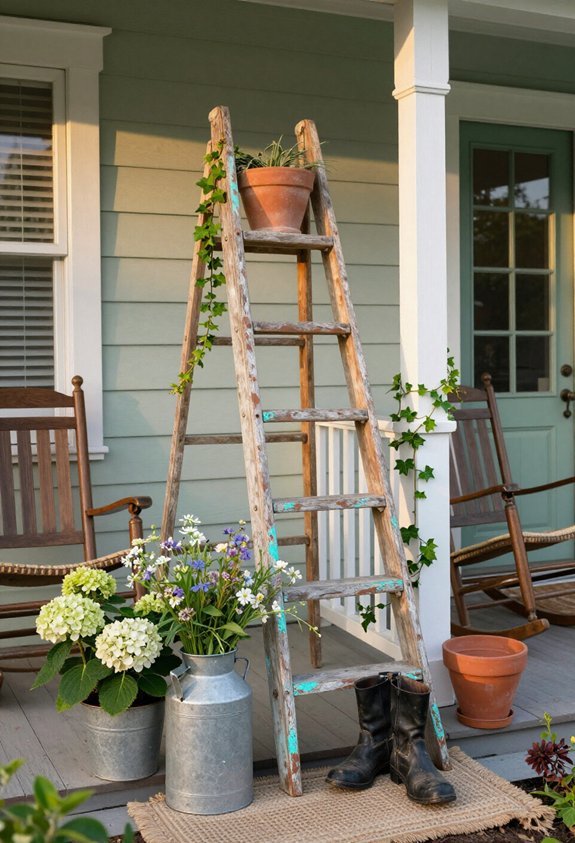
While broad landscape changes reshape the ground plane, vertical elements draw the eye upward and create focal points near the home’s entrance. An antique ladder, positioned against the porch rail, serves this purpose with minimal effort and expense. The weathered wood introduces texture and history, contrasting with smooth siding or painted trim. Placement requires attention to stability; the ladder should rest at an angle that prevents slipping, with the base set on firm, level ground. Seasonal decorations transform the piece throughout the year: dried gourds and corn husks in autumn, potted herbs in spring, or strands of lights during winter months. The rungs function as ready-made shelves, displaying items at varying heights for visual interest. This approach repurposes existing objects rather than purchasing new materials, aligning with farmhouse principles of practicality and resourcefulness.
Stack Weathered Stone for Natural Garden Walls
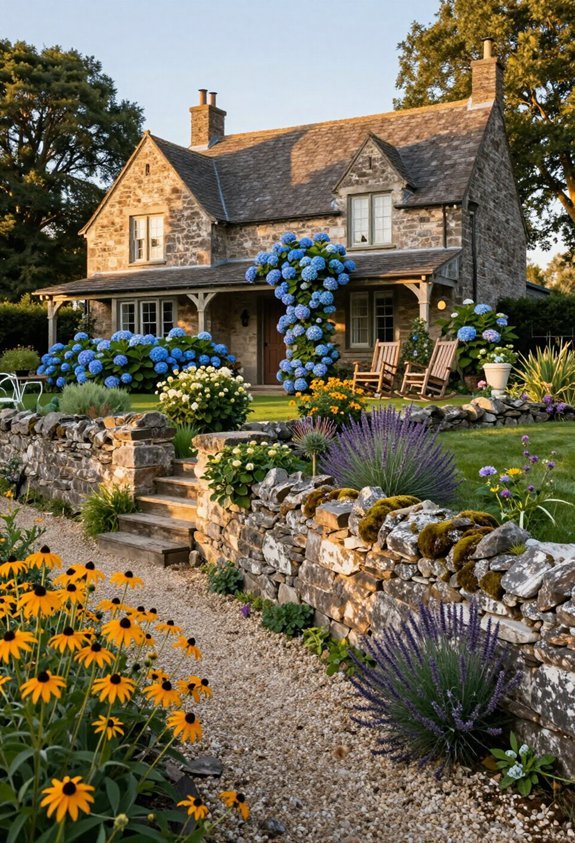
Stack weathered stone to create natural garden walls that define spaces, retain soil, and introduce organic texture to the farmhouse landscape. Select flat, irregular stones in varying sizes, ranging from six inches to two feet in diameter, ensuring each piece possesses sufficient surface area for stable stacking. Begin excavating a trench six inches deep and twice as wide as the broadest stone, then fill with compacted gravel to establish drainage and prevent frost heave. Place the largest, flattest stones at the base, angling each layer slightly toward the hillside to improve structural integrity. Fill gaps between stones with small, broken fragments and coarse soil, which permits water passage while discouraging weed growth. Cap the wall with broad, flat stones to shed rainfall and protect underlying layers from erosion.
Line Your Walkway With Mason Jar Lanterns
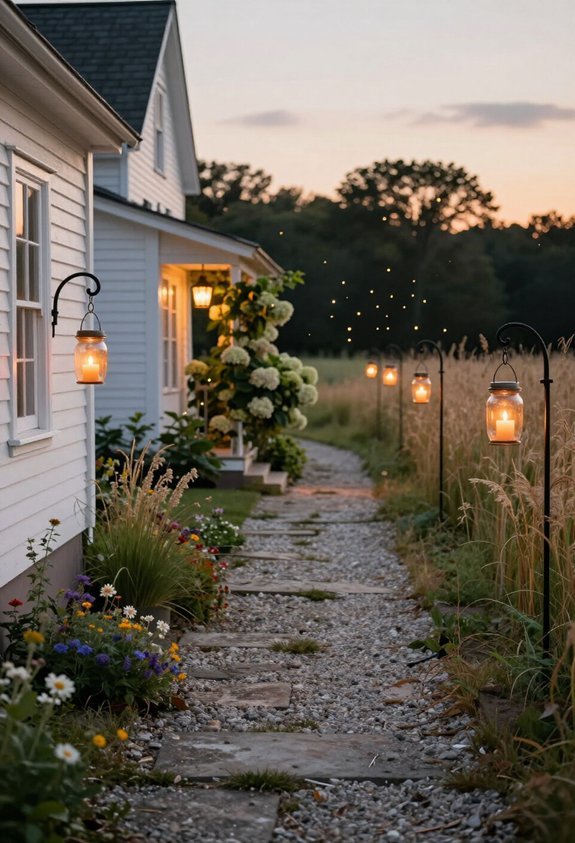
Glass-and-metal luminaries transform an ordinary farmhouse walkway into a gently illuminated path, guiding visitors with soft, flickering light while reinforcing rustic charm. Placing mason jar lanterns at regular intervals creates visual rhythm while ensuring adequate illumination for safe passage. Each lantern requires proper assembly, including metal hanging hardware and either tea light candles or battery-operated LED alternatives that eliminate fire hazards near dried vegetation. Gardeners suspend jars from shepherd’s hooks driven into the ground beside the walkway, or they set them atop wooden posts secured with exterior screws for stability. Wiring with twine or galvanized wire through the jar lid creates secure attachment points resistant to wind displacement. Frosted glass or amber-tinted jars diffuse light more evenly than clear glass, reducing harsh glare. Maintenance involves periodic cleaning of soot residue and replacement of spent light sources to preserve consistent brightness throughout evening hours.
Paint Your Front Door a Deep Farmhouse Red
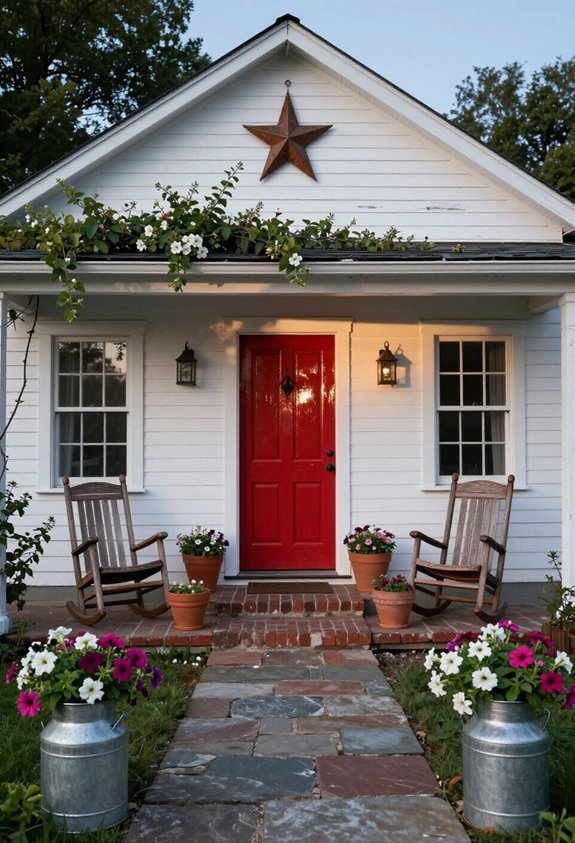
Although neutral exterior colors have dominated residential design for decades, a deeply saturated farmhouse red front door remains one of the most effective methods for anchoring a home’s facade with immediate visual impact and historical authenticity. This specific shade, often resembling barn red or brick red, references rural American agricultural architecture where such colors protected wood and signaled welcome to travelers. When selecting paint, homeowners should choose exterior-grade formulations with UV resistance and mildew inhibitors to guarantee longevity against weather exposure. Proper surface preparation requires sanding existing finishes, applying quality primer, and executing two coats of color for uniform coverage. Hardware selection complements this choice, with matte black or oil-rubbed bronze finishes creating appropriate contrast. The resulting entrance establishes clear focal hierarchy while connecting contemporary residences to traditional farmhouse lineage.
Group Vintage Milk Cans Near Your Steps
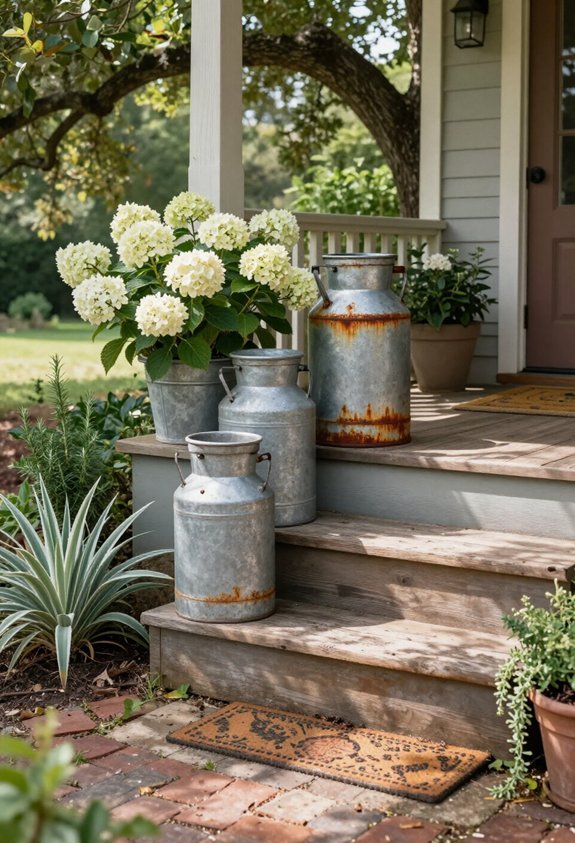
Vintage milk cans, cylindrical vessels once essential to rural dairy operations, now serve as authentic decorative anchors when arranged in small clusters near entrance steps. These galvanized metal containers, often featuring embossed dairy names or faded painted labels, create immediate visual interest through their weathered surfaces and utilitarian silhouettes. Placement requires strategic consideration, with odd-numbered groupings of three or five cans producing balanced asymmetry against step railings or porch corners. Heights should vary, achieved by inverting some cans atop wooden crates or stacked stones, generating dimensional layers without obstructing pathways. Corrosion patterns and dented deformities should remain untouched, as these imperfections authenticate agricultural heritage. Seasonal additions, such as dried cornstalks inserted into open mouths or early spring branches forced into bud, transform static metal forms into evolving display elements that acknowledge temporal change.
Grow Old-Fashioned Roses on a Rustic Trellis
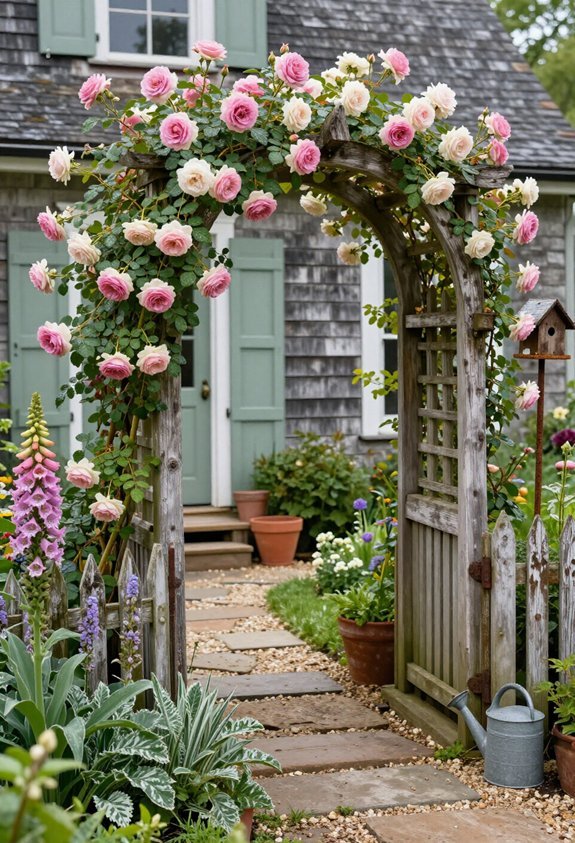
Few floral elements evoke pastoral authenticity as immediately as old-fashioned roses trained against weathered wooden trellises. Climbing varieties such as Cecile Brunner, Zephirine Drouhin, or New Dawn establish themselves against vertical supports, creating vertical interest without consuming horizontal space. Installation requires positioning the trellis approximately six to eighteen inches from exterior walls to permit adequate air circulation, reducing moisture retention and subsequent fungal issues. Bare-root specimens establish most successfully when planted in early spring with roots soaked two hours prior to placement. Horizontal training of canes, rather than vertical, stimulates lateral bud break and increased floral production. Annual pruning removes dead wood and shapes the structure, while mulching with compost maintains consistent soil moisture. The combination of weathered timber and abundant, fragrant blooms signals established, intentional cultivation.
Add a Wooden Bench With Cozy Throw Pillows
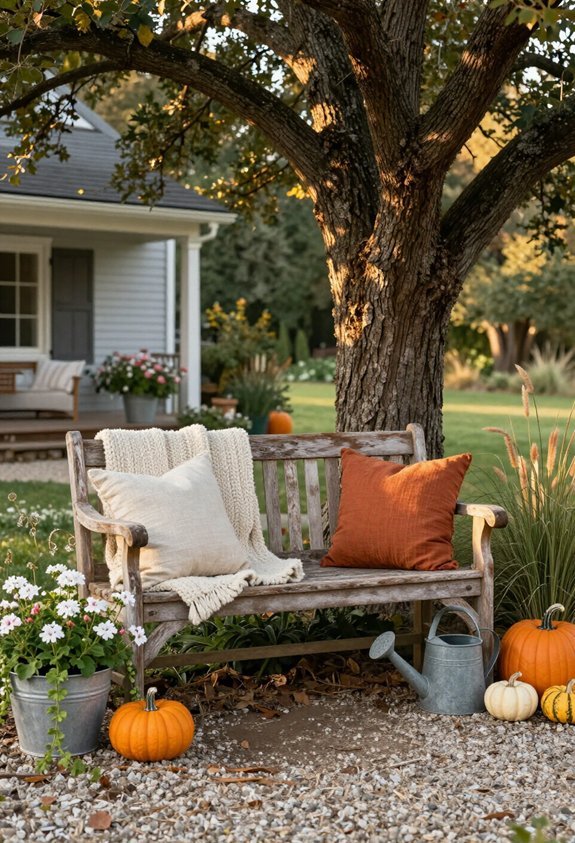
A single wooden bench, positioned beneath a shade tree or along a garden path, transforms an ordinary front yard into a deliberate resting place that invites pause and observation. Weathered cedar or teak withstands outdoor exposure while developing a silvery patina that complements farmhouse aesthetics.
Plush throw pillows in gingham, ticking stripe, or floral calico add visual softness and physical comfort. Select outdoor-rated fabrics with removable, washable covers to maintain cleanliness through seasonal use. Layer two or three pillows in varying sizes, with larger square forms against the backrest and smaller lumbar shapes in front.
Position the bench where it frames a desirable view, such as a blooming border or architectural detail, encouraging visitors to sit and absorb the surroundings. This strategic placement extends functional living space into the landscape without requiring structural alteration.
Line Garden Beds With Reclaimed Barn Wood
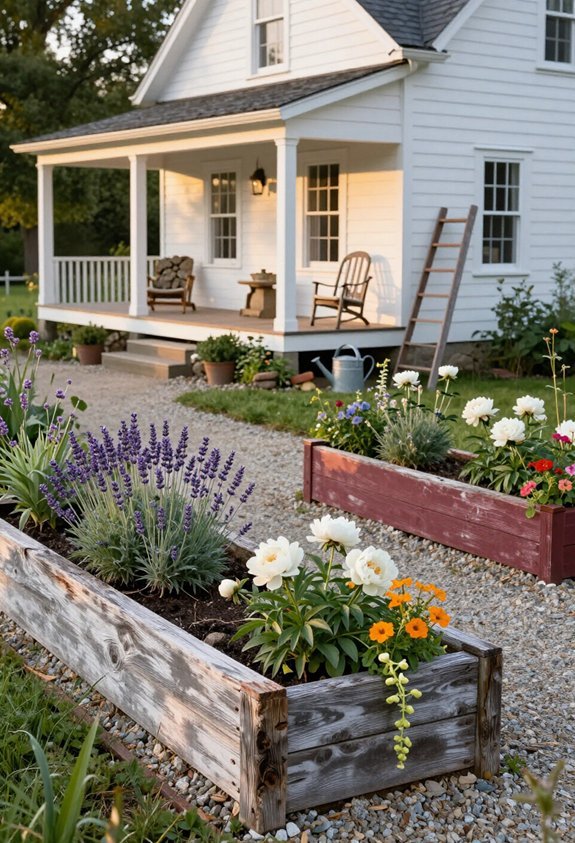
Reclaimed barn wood creates a natural boundary between cultivated plantings and surrounding lawn or gravel, its weathered surface and irregular grain patterns establishing immediate visual continuity with farmhouse architectural traditions. The material, salvaged from agricultural structures with decades of exposure to the elements, requires minimal additional processing before installation, retaining its authentic gray patina and softened edges. Horizontal boards, typically six to eight inches in width, stack to form retaining walls of twelve to eighteen inches in height, containing soil and mulch while allowing drainage. Builders secure layers with galvanized screws or wooden stakes driven at intervals, backfilling with gravel to prevent pressure-related bowing. Cedar and pine varieties resist decay without chemical treatment. Installation proceeds during dry conditions to prevent warping. Annual inspection addresses loosened fasteners or rot at ground contact points, ensuring structural longevity across multiple growing seasons.
Plant Dwarf Fruit Trees for an Orchard Feel
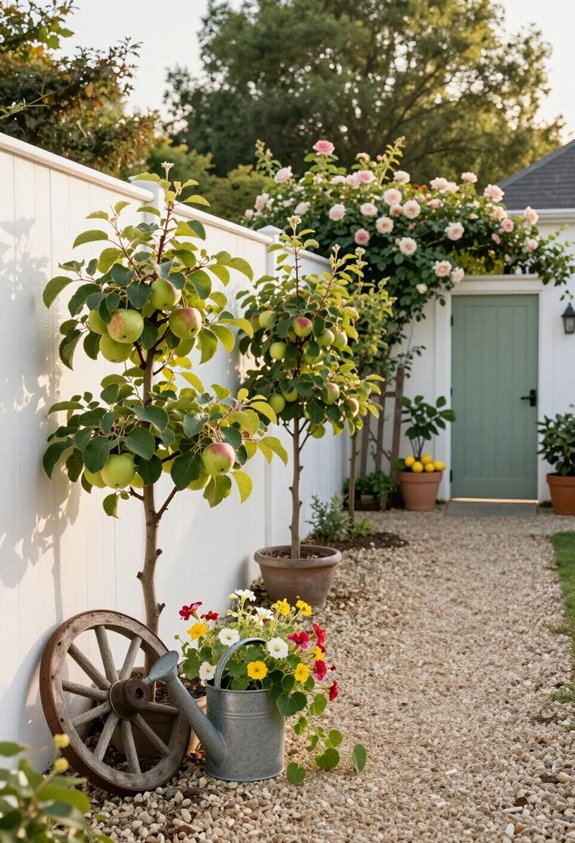
Dwarf fruit trees transform limited front yard spaces into productive miniature orchards, their compact rootstocks and reduced canopy spreads allowing multiple varieties to occupy areas where standard trees would overwhelm. These trees typically reach heights of eight to ten feet, making pruning, harvesting, and maintenance manageable without ladders or specialized equipment.
Homeowners should select varieties suited to their specific hardiness zones, guaranteeing adequate chill hours and disease resistance for reliable fruit production. Popular choices include dwarf apple, pear, cherry, and peach cultivars, each offering seasonal blossoms and edible harvests. Placement requires full sun exposure, approximately six to eight hours daily, along with well-draining soil amended with organic matter.
Spacing between trees ranges from eight to ten feet, permitting proper air circulation and reducing fungal issues. Regular watering during establishment, combined with annual pruning to maintain shape and productivity, guarantees these diminutive orchards remain both functional and visually cohesive within farmhouse landscapes.
Paint Your House Number on Weathered Wood
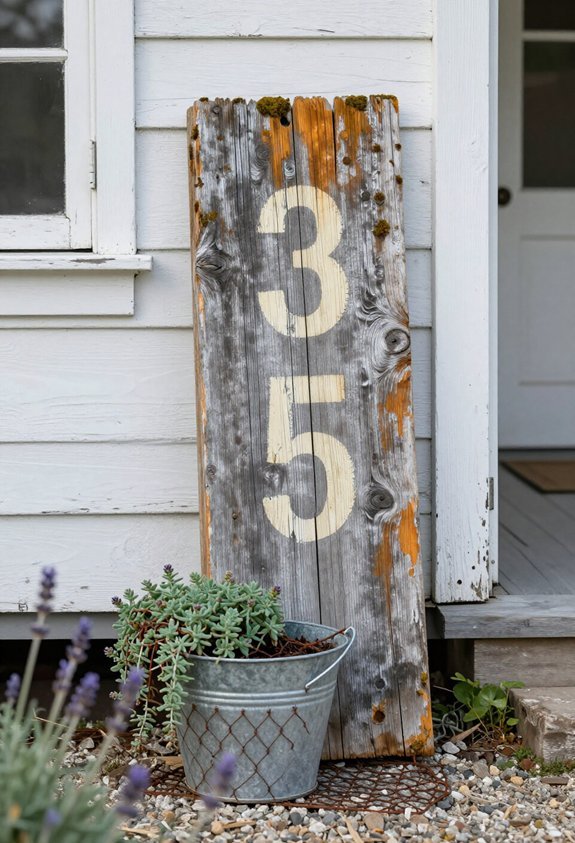
Several weathered wood surfaces throughout farmhouse properties present ideal canvases for displaying house numbers with rustic character and visual distinction. Reclaimed barn boards, old fence panels, or salvaged timber pieces provide textured backgrounds that contrast sharply with freshly painted numerals. Property owners should select boards with natural graying, knots, and grain patterns that suggest age and authenticity. Preparation involves light sanding to remove splinters while preserving the patina, followed by application of exterior-grade primer if the wood remains porous. Stencils or careful freehand painting with weather-resistant enamel guarantees legibility from the roadside. Mounting options include leaning the finished piece against porch posts, attaching it to mailbox supports, or suspending it from iron brackets near the driveway entrance. This approach eliminates the need for manufactured plaques while reinforcing the farmhouse aesthetic through handmade, functional art.
Mix Rugs and Plants for an Eclectic Porch
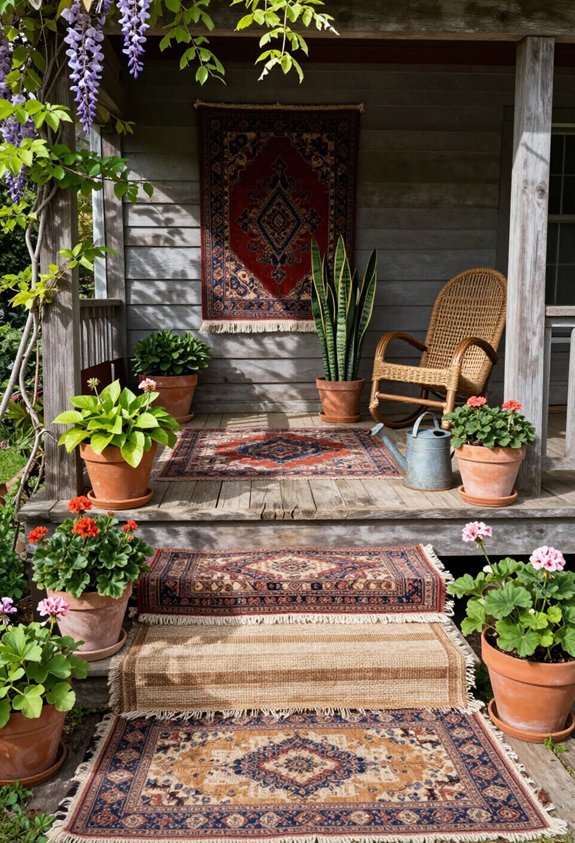
Layered textiles and living greenery transform a simple porch into a visually dynamic outdoor room where pattern and nature coexist in deliberate arrangement. Multiple rugs of varying sizes and textures anchor distinct zones across the floor surface, while potted plants of different heights create vertical interest that draws the eye upward and outward.
Strategic placement matters. Larger specimens occupy floor corners, medium containers rest on stands, and trailing varieties spill from hanging brackets above. Patterns on textiles may reflect leaf shapes or bloom colors without matching exactly, establishing cohesion through careful selection rather than repetition. Natural fiber rugs withstand foot traffic and moisture while complementing terracotta, concrete, or glazed ceramic vessels. This layering technique maximizes limited square footage, permitting flexible rearrangement as seasons shift or plant growth demands spatial adjustment.
Frequently Asked Questions
What’s the Best Mulch for Farmhouse Flower Beds?
Shredded cedar mulch best suits farmhouse flower beds, offering natural color harmony, weed suppression, and moisture retention. Pine straw serves as an economical alternative, while cocoa hulls provide rich aesthetics where pet safety permits application.
How Do I Keep Gravel Paths Weed-Free?
Landscape fabric beneath gravel suppresses most weeds effectively. Regular raking disrupts seedling growth. Salt or vinegar solutions treat persistent growth between stones. Deep edging prevents grass encroachment from surrounding lawn areas.
Are Galvanized Planters Safe for Edible Plants?
Galvanized planters are generally safe for edible plants. Zinc coating prevents rust and leaches minimally into soil. Acidic conditions increase metal transfer; lining containers with plastic or using barrier fabric reduces exposure further.
What Height Should a Split-Rail Fence Be?
Split-rail fences typically stand 36 to 48 inches tall. Two-rail configurations measure approximately 36 inches, while three-rail styles reach roughly 48 inches. Local zoning ordinances may impose specific height restrictions requiring verification prior to installation.
How Often Should Wildflower Meadows Be Mowed?
Wildflower meadows require mowing once annually, typically in late autumn after seed dispersal. Alternatively, some practitioners mow every two to three years to preserve habitat diversity. Timing guarantees regeneration and prevents woody encroachment.
Conclusion
Creating a farmhouse front yard requires careful planning, consistent effort, and attention to practical details that blend function with aesthetics. Homeowners should begin by evaluating their available space, setting clear priorities, and selecting elements like weathered wood arbors, gravel pathways, and native plantings that suit their climate and maintenance capacity. Success depends on layering textures, mixing vintage and natural materials, and building gradually rather than attempting complete transformation at once. Regular upkeep guarantees lasting curb appeal.

