

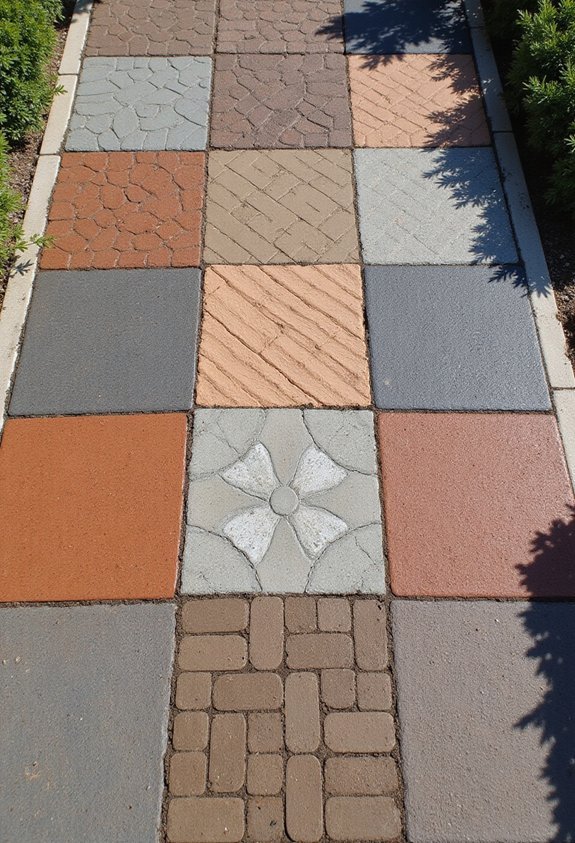
You’re probably considering stamped concrete for your patio, but a raised design takes this versatile material to another level. Elevation changes create distinct outdoor rooms while adding architectural depth to flat yards. Whether you’re drawn to Mediterranean travertine textures or prefer the clean lines of contemporary wood planks, raised stamped concrete delivers both visual impact and practical benefits. From integrated seating walls to strategic lighting placement, these nine designs prove that function and style work best together.
Elevated Mediterranean Terrace With Travertine Stamped Pattern

When you’re seeking Old World charm with modern durability, a travertine-stamped concrete patio delivers both elegance and practicality. This elevated design mimics natural stone’s weathered texture without the hefty price tag. You’ll want to specify a warm beige or sandy tan base color for authenticity.
Raise your patio 8-12 inches above grade to create defined outdoor zones while improving drainage in your Mediterranean-inspired space. We can’t get enough of the irregular travertine pattern that replicates centuries-old Italian villa courtyards with convincing depth and variation.
Pair it with terracotta planters and wrought-iron furniture for cohesive styling. Seal the surface every two years with Behr Premium Concrete Sealer to maintain its sun-kissed appearance and protect against moisture penetration in any climate.
Also read: 3 Quick Elf on the Shelf Ideas You Can Set Up in 5 Minutes
Multi-Level Slate Stone Impression for Modern Entertaining

Modern entertaining spaces demand architectural drama, and multi-level slate-stamped concrete delivers exactly that visual punch. You’ll create distinct zones by elevating your upper level 8-12 inches above the lower entertaining area. The slate impression pattern works beautifully in charcoal or pewter tones from Brickform’s Color Hardener line.
Designer Patricia Hernandez notes, “Multi-level patios naturally guide traffic flow while adding sophisticated dimension to outdoor spaces.”
Install LED strip lighting between levels for safety and ambiance. You can incorporate built-in seating along the elevated edge, maximizing square footage without cluttering your layout. The textured slate finish provides slip resistance on both levels—essential for poolside installations. We can’t get enough of how these tiered designs transform standard backyards into resort-worthy destinations perfect for hosting gatherings year-round.
Rustic Cobblestone Raised Patio With Fire Pit Integration
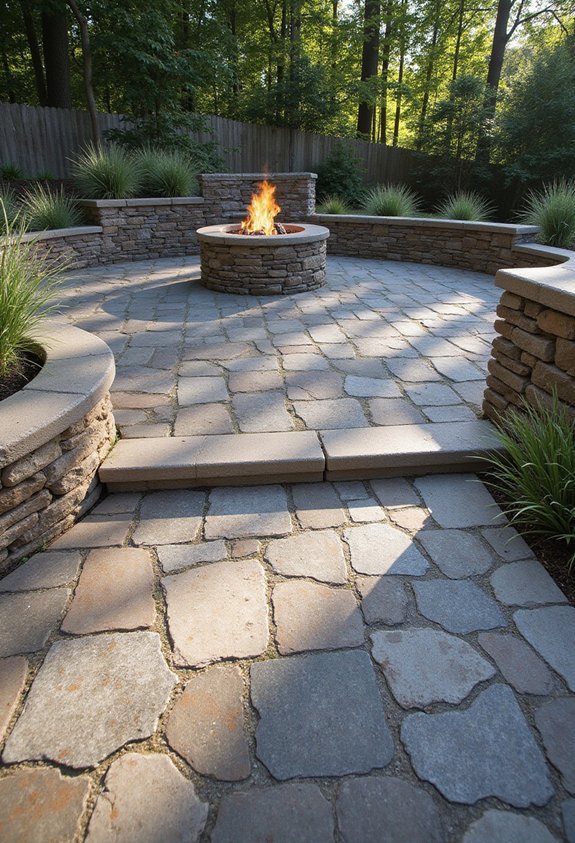
Because nothing anchors an outdoor living space like the warmth of flickering flames, a raised cobblestone-stamped patio with integrated fire pit creates instant gathering appeal. You’ll want to position your 48-inch diameter fire feature at the patio’s center, surrounded by European cobblestone texture in warm gray tones. The raised platform (typically 8-12 inches) naturally defines seating zones while improving drainage around the fire area.
Consider Cambridge Pavingstones’ Cobble texture paired with built-in stone veneer seating walls at 18-inch height. “The cobblestone pattern’s irregular surface beautifully disguises ash and weather wear,” notes landscape architect Maria Chen. Add a soldier course border in contrasting amber to frame the space. We can’t get enough of gas fire pit inserts like those from Elementi, which eliminate wood storage concerns while maintaining authentic ambiance.
Contemporary Geometric Wood Plank Stamped Design

While fire pits command attention through primal appeal, stamped concrete that mimics precision-cut wood planks delivers a sophisticated alternative for homeowners seeking sleek, architectural outdoor spaces. You’ll achieve modern elegance by selecting linear patterns with 8-inch plank widths arranged in running bond formations.
The Brickform Wood Plank system offers realistic grain textures without wood’s maintenance headaches. Stain your surface in contrasting gray tones—charcoal paired with lighter ash creates dimensional interest that photographs beautifully. We can’t get enough of herringbone installations for compact patios under 200 square feet.
Landscape architect Maria Cortez notes, “Geometric wood stamps work brilliantly when bordered by steel edging and minimalist plantings like ornamental grasses.”
Consider raising your patio 18-24 inches above grade for dramatic visual separation from surrounding lawns.
Raised Ashlar Slate Pattern With Built-In Seating Walls
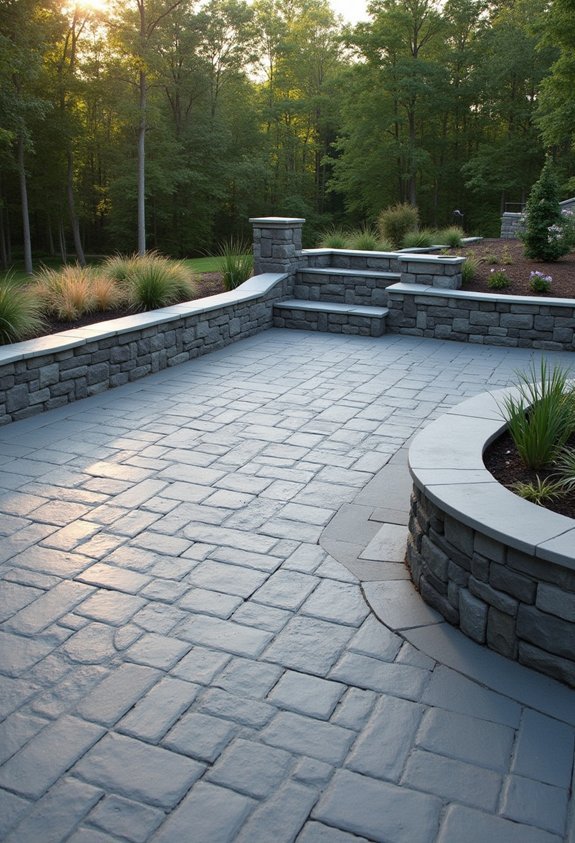
When architectural elegance meets practical functionality, raised ashlar slate stamped concrete creates outdoor living spaces that justify their premium installation costs. You’ll transform your backyard with this irregular rectangular pattern that mimics natural stone perfectly. The raised platform typically measures 12-18 inches above ground level, creating distinct zones for dining and conversation areas.
Built-in seating walls double as planters and serving surfaces. They’re usually 18 inches tall and 16 inches deep—perfect seating dimensions. According to landscape designer Maria Santos, “Integrating seating walls during the initial pour eliminates awkward shifts and reduces overall project costs by 15-20%.”
Consider Sherwin-Williams’ H&C Concrete Stain in Brownstone or Charcoal for authentic slate coloring. Cap your seating walls with contrasting smooth concrete or natural stone for visual interest and comfortable sitting surfaces.
Herringbone Brick Stamped Patio for Traditional Charm

The timeless herringbone brick pattern elevates your raised patio from basic to mesmerizing with its distinctive 45-degree zigzag arrangement. You’ll want stamped concrete in warm terracotta or clay tones to capture authentic brick character. Border your 12×16-foot raised patio with soldier-course edges for traditional definition.
Choose Brickform’s Buff Release or Solomon Colors’ Red Iron Oxide for dimensional depth between “mortar” lines. The pattern works beautifully at heights of 18-24 inches above ground level. We can’t get enough of pairing herringbone with wrought iron railings and vintage-style Edison bulb string lights.
“Herringbone patterns demand precise stamping alignment,” notes concrete artisan Maria Chen. “Even slight misalignment disrupts the visual flow that makes this design so spellbinding for traditional homes.”
Apply two coats of solvent-based sealer for lasting protection.
Elevated Flagstone Texture With Integrated Landscape Lighting

Flagstone’s irregular beauty transforms into pure magic once you elevate the surface and weave LED lighting between its weathered edges. You’ll want to position 3-inch warm white strip lights along the grout lines for dramatic after-dark definition. The raised platform (typically 8-12 inches) creates natural boundaries while the stamped texture mimics authentic Arizona sandstone or Pennsylvania bluestone.
Consider Belgard’s Techo-Bloc finish paired with low-voltage Kichler fixtures for professional results. The lighting highlights every textured ridge and shadow, turning your patio into an evening destination. According to landscape designer Maria Torres, “Strategic uplighting transforms stamped concrete from decorative to architectural.” Install copper pathway lights at corners to mark changes. This combination delivers year-round visual interest without the maintenance headaches of real stone.
Stacked Stone Border With Seamless Tile Center Pattern

Borders create visual discipline while your stamped center pattern tells the real story. You’ll frame your 12×16 patio with 8-inch stacked stone borders in Ashlar slate texture, then fill the interior with seamless Mediterranean tile stamps. The contrast works because rough stone edges make smooth centers pop.
Choose Butterfield Color’s Antiquing Release in Saddle Brown for authentic depth. Your border should rise 2 inches above the center for dimensional interest. Landscape architect Maria Chen notes, “Raised borders function as natural edging that eliminates the need for additional hardscape materials.”
We can’t get enough of contrasting grout lines—wide on borders, tight on centers. Apply Brickform’s Gem-Seal topcoat for UV protection. Your layout pattern should radiate from the patio’s center point outward, creating movement that guides foot traffic naturally.
Curved Raised Patio With Natural Fieldstone Stamped Finish
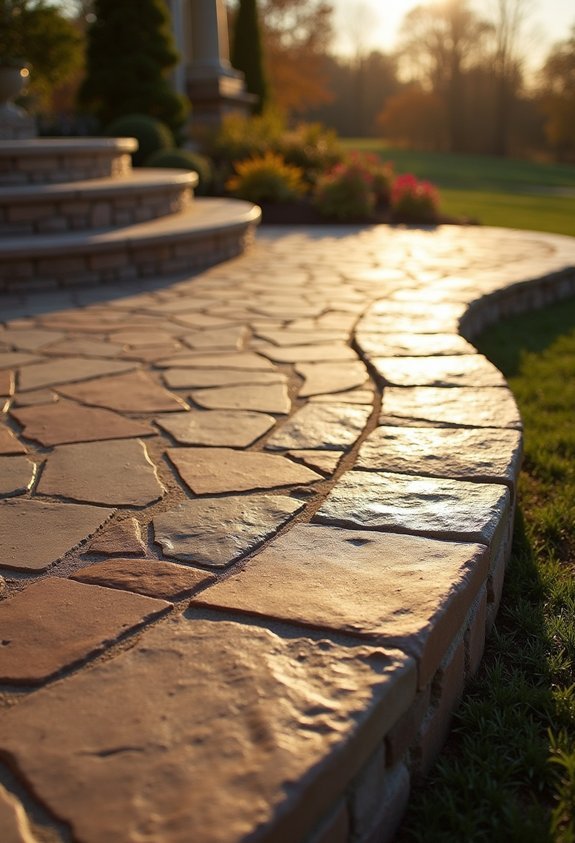
When organic shapes meet elevation changes, your outdoor space transforms from basic slab to sculptural statement. A curved raised patio with natural fieldstone stamping delivers that architectural wow factor you’re after.
The fieldstone pattern mimics irregular stones found in nature, creating authentic texture. You’ll want stamps that replicate 8-12 inch stone variations with weathered edges and depth. Raise your patio 12-18 inches to define the entertaining zone while maintaining visual flow.
Choose earth-toned integral colors—we can’t get enough of sandstone beige and slate gray combinations. These hues complement the organic pattern beautifully. Curve your patio edges to follow garden beds or pool contours for seamless integration.
Install step-down passages at key entry points for accessibility and visual interest.
Frequently Asked Questions
How Much Does Stamped Concrete Cost Compared to Natural Stone Pavers?
You’ll spend considerably less on stamped concrete, typically $8-18 per square foot, compared to natural stone pavers at $15-30 per square foot. That’s nearly half the cost while achieving a similar high-end appearance.
Can Stamped Concrete Crack and How Do You Prevent It?
Yes, stamped concrete can crack over time. You’ll prevent cracking by ensuring proper ground preparation, using control joints, adding reinforcement like wire mesh, maintaining adequate concrete thickness, and applying quality sealant regularly to protect against moisture and weather damage.
How Long Does Stamped Concrete Last Before Needing Resurfacing?
You’ll typically get 15-25 years from stamped concrete before needing resurfacing. However, with proper sealing every 2-3 years and regular maintenance, you can extend its lifespan and keep it looking fresh for decades.
Is Stamped Concrete Slippery When Wet or During Winter?
Stamped concrete can be slippery when wet or icy. You’ll want to choose textured patterns and add non-slip sealers to improve traction. You can also apply sand additives during sealing for better grip in winter conditions.
Do I Need Special Permits for Building a Raised Concrete Patio?
You’ll likely need permits if your raised patio exceeds a certain height (typically 30 inches) or requires structural support. Check your local building codes, as requirements vary by municipality. It’s best to consult your city’s building department beforehand.
Conclusion
Your raised stamped concrete patio can transform your backyard into an architectural showpiece. Choose patterns and textures that complement your home’s existing style while meeting your entertaining needs. Don’t forget to evaluate elevation changes, integrated seating, and lighting for maximum functionality. Work with experienced concrete contractors who’ll help you select the perfect stamp pattern, color palette, and finishing details. You’ll create an outdoor living space that’s both beautiful and built to last.

