


Successful camping kitchens require meticulous planning, comprehensive equipment lists, and systematic organization preventing chaos. Categorize supplies by meal type, pre-portion dry ingredients, and organize coolers strategically maintaining food safety. Creating detailed camping kitchen inventories ensures nothing gets forgotten while preventing unnecessary weight and excess supplies consuming valuable space.
Develop standardized systems: color-code storage containers by meal category, maintain master lists preventing duplication, and establish nightly routines organizing next day’s meals. Store frequently used items accessibly, position coolers strategically preventing contamination, and maintain detailed records tracking inventory consumption. These systematic approaches prove camping kitchen organization determines overall trip success, affecting meal quality, food safety, and general camp morale significantly.
Implement comprehensive camping kitchen protocols ensuring consistent functionality throughout trips. Create detailed equipment checklists preventing forgotten items, establish cleaning routines maintaining sanitation standards, and document lessons learned improving future trips. Your methodical approach proves wilderness cooking succeeds through preparation, planning, and systematic organization rather than improvisation alone—proving adventure thrives when grounded in practical organization.
The Two-Burner Portable Stove Setup
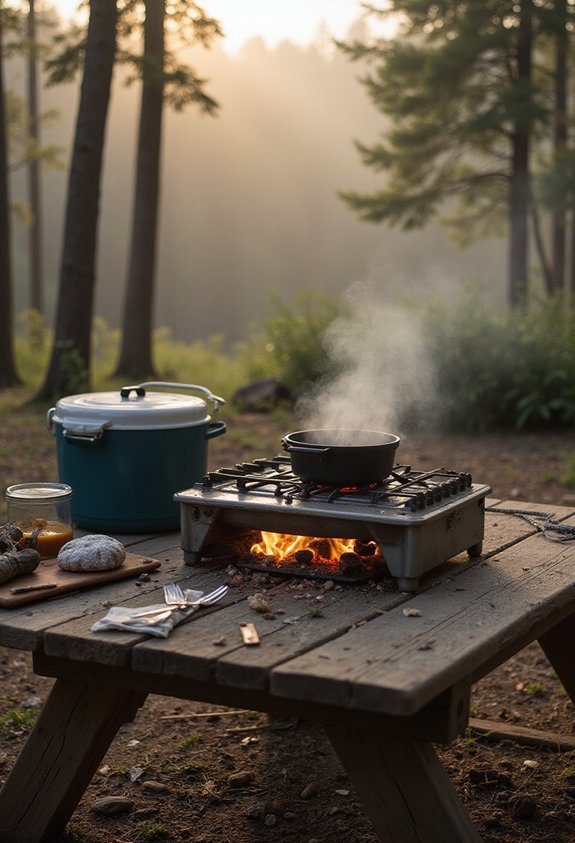
Whether you’re cooking for a small group or just want reliable meal prep at camp, a two-burner portable stove is one of the most practical investments you’ll make. You’ll appreciate the flexibility of cooking multiple dishes simultaneously—boiling water for pasta while sautéing vegetables, for instance.
When selecting your stove, consider fuel type. Propane models offer consistent heat and easy ignition, while butane canisters work well in moderate temperatures. Guarantee your stove has sturdy legs and a windscreen to protect flames and improve efficiency.
Position your stove on level ground away from your tent. Keep a fire extinguisher nearby for safety. Pair your stove with a sturdy camping table to create an organized cooking station. This setup transforms meal preparation and elevates your entire camping experience.
Also read: 10 Outdoor Kitchen Bar Ideas
Cooler Setup for Maximum Freshness
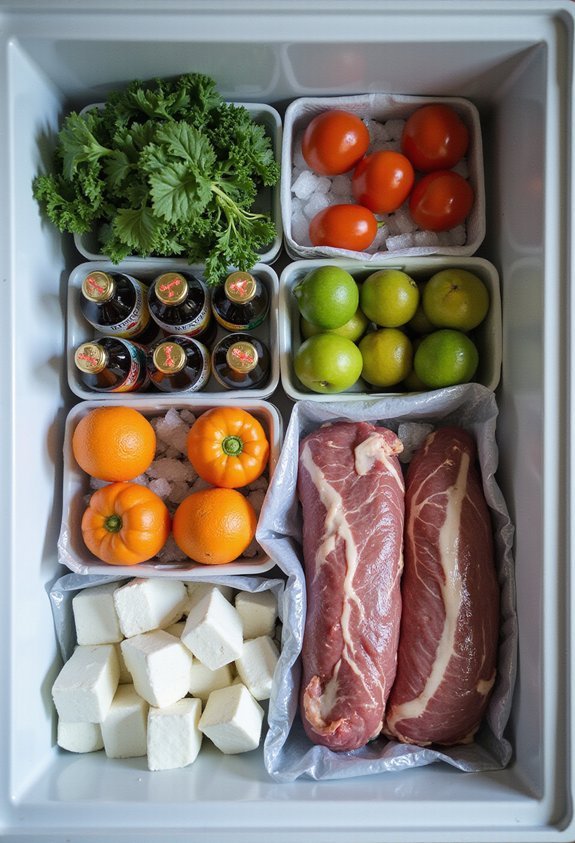
A well-organized cooler is just as essential as your stove for a successful camping trip. You’ll want to invest in a high-quality cooler with excellent insulation to keep your food and beverages cold throughout your adventure.
Start by pre-cooling your cooler the night before you leave. Layer ice packs on the bottom, then add your perishables in order of use—items you’ll need first go on top. Keep raw meats separated from ready-to-eat foods to prevent cross-contamination.
Pack drinks in a separate cooler if possible, since you’ll open it frequently. Fill any empty spaces with ice or frozen water bottles to maintain consistent temperatures. Drain meltwater daily, and avoid placing your cooler in direct sunlight whenever you’re at camp.
Fire Cooking Setup
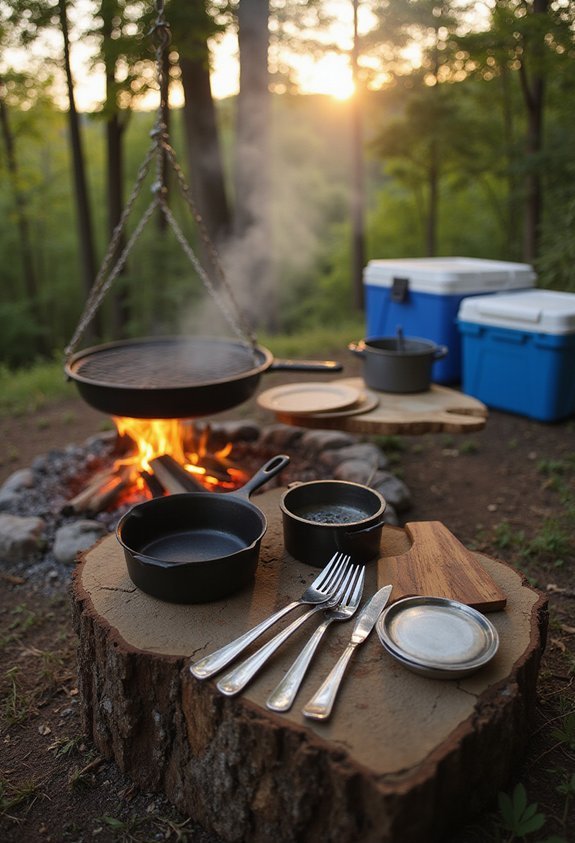
While keeping your cooler organized handles food storage, cooking over an open fire brings a whole new dimension to campsite meals. You’ll want to invest in a sturdy grill grate that sits securely over your fire pit. Cast iron cookware distributes heat evenly and develops seasoning with repeated use, making it ideal for camping. Position your cooking setup at a safe distance from your tent and sleeping area. Keep long-handled utensils within reach so you’re not burned while flipping food or stirring pots. A tripod with adjustable chains lets you control cooking temperatures by raising or lowering cookware. Store all cooking equipment in a dedicated container to keep it organized and protected from the elements.
Compact Camp Sink and Dishwashing Station
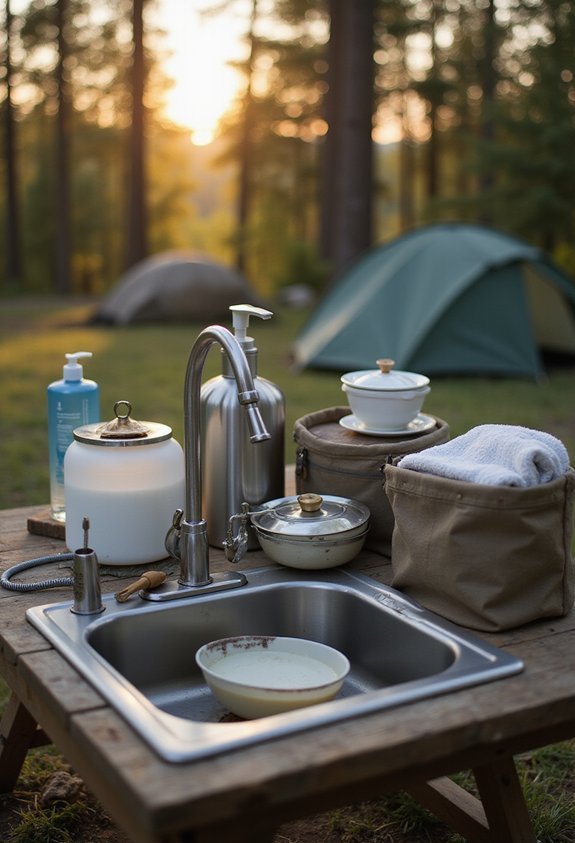
How do you keep your campsite clean without access to running water? A compact camp sink and dishwashing station solves this challenge efficiently.
Start with a collapsible basin or plastic washtub that you’ll fill with water heated on your camp stove. Position it on a stable surface near your cooking area for convenient access. Add biodegradable dish soap designed for camping to minimize environmental impact.
You’ll need a dish brush, sponge, and clean towels for drying. Consider a greywater disposal system—either a designated basin for used water or biodegradable options that break down naturally.
Organize supplies in a compact caddy or mesh bag that stores everything together. This setup lets you wash dishes promptly after meals, preventing food debris from attracting wildlife and keeping your campsite hygienic throughout your trip.
Full-Size Car Camping Kitchen
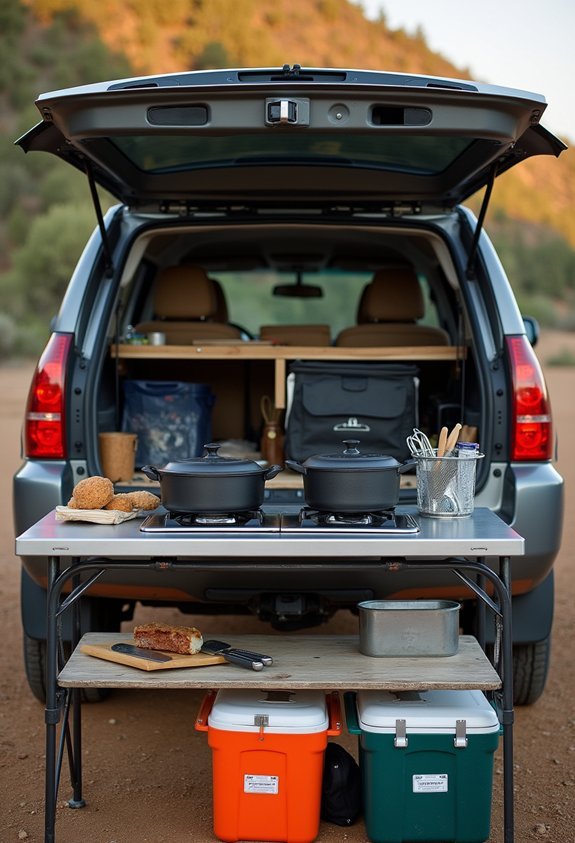
If you’re willing to trade mobility for comfort, a full-size car camping kitchen transforms your outdoor cooking experience. You’ll set up a dedicated cooking area with a propane stove, grill, and oven near your campsite. Install a sturdy table as your work surface and add shelving for organized storage of cooking tools, dishes, and ingredients. A reliable cooler keeps food fresh, while a water system—either gravity-fed or pump-operated—supplies washing stations. Consider adding weatherproof cabinets for protection from elements and pests. This setup requires substantial vehicle space and more preparation time, but you’ll enjoy restaurant-quality meals outdoors. It’s ideal for extended trips or base-camp camping where you won’t relocate frequently, making cooking convenient and enjoyable for groups.
Ultralight Backpacking Kitchen
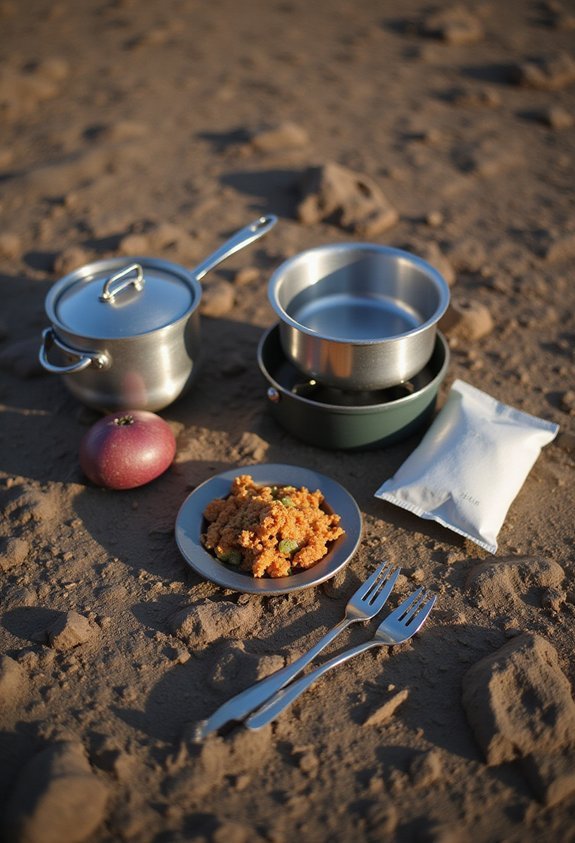
At the opposite end of the spectrum lies the ultralight backpacking kitchen, where you’ll prioritize weight and packability over elaborate cooking amenities. You’ll want a lightweight titanium pot, a compact stove, and a spork that combines fork and spoon functionality. A collapsible water container saves space, while a single insulated mug serves multiple purposes. You’ll skip the table and chairs entirely, eating directly from your cookware. Dehydrated meals require minimal preparation—just add hot water. Consider a lightweight cutting board made from silicone instead of wood. Store everything in a stuff sack that weighs nearly nothing. This stripped-down approach keeps your total cooking kit under two pounds, allowing you to cover more miles comfortably while still enjoying hot meals on the trail.
Gear Storage Setup for Tight Spaces
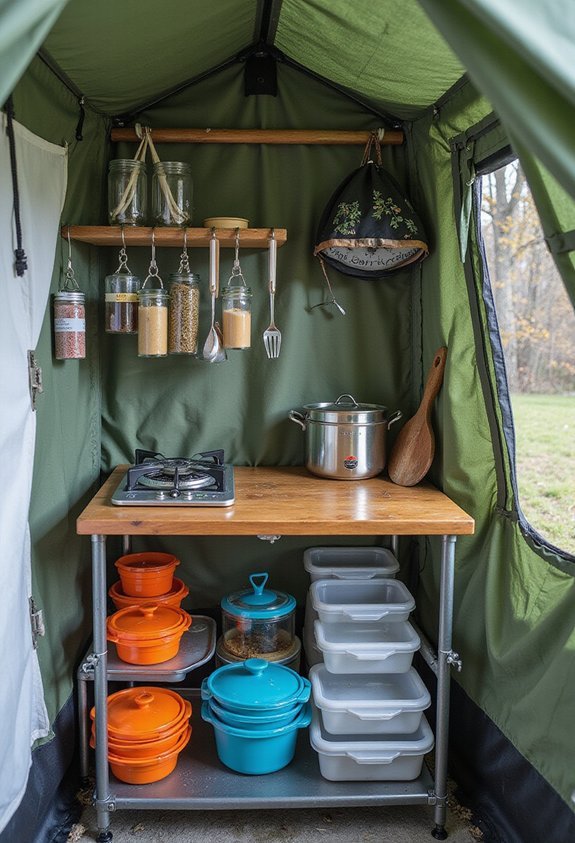
Whether you’re working with a compact car, a small tent, or limited counter space at your campsite, you’ll need smart storage solutions that maximize every inch. Vertical storage is your best friend—use hanging organizers, wall-mounted racks, and overhead nets to keep gear accessible without consuming floor space. Stackable containers work wonders for organizing utensils, spices, and ingredients efficiently. Nesting cookware eliminates wasted space by fitting pieces inside one another. Consider collapsible items like water jugs and silicone bowls that flatten when empty. Assign specific zones for different categories: cooking, cleaning, and dry goods. Label everything clearly so you’ll find items quickly. Use vacuum-seal bags for non-perishables. Drawer dividers and small baskets prevent items from shifting during transport, keeping your camping kitchen functional and tidy.
Food Safety and Fire Management
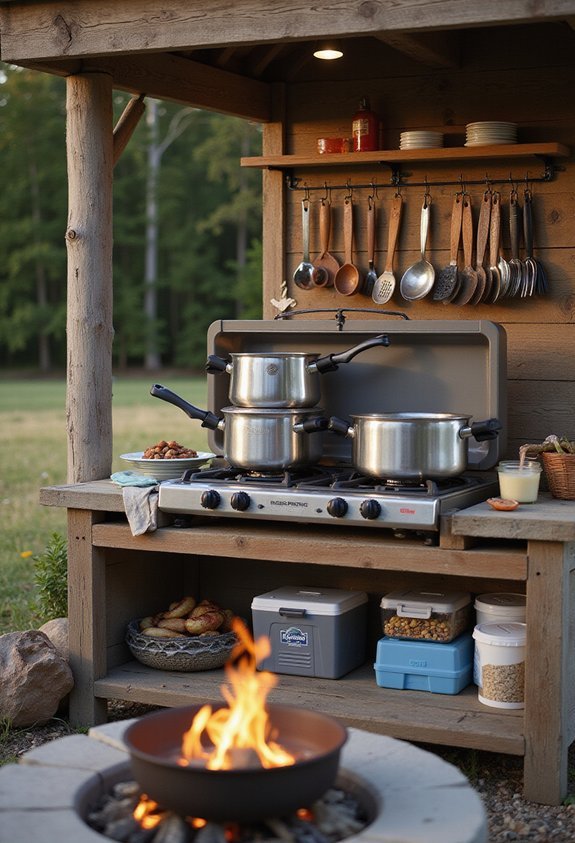
Once you’ve organized your gear efficiently, keeping food safe and managing your campfire become your top priorities. Store perishables in a cooler with plenty of ice, positioning it away from your tent to avoid attracting wildlife. Keep raw and cooked foods separated, and always wash your hands before eating. Use a dedicated cutting board and utensils to prevent cross-contamination.
For fire management, establish a safe cooking area at least fifteen feet from your tent and sleeping quarters. Clear away debris and dead branches surrounding your fire pit. Never leave flames unattended, and fully extinguish your fire before sleeping—drown it with water, stir the ashes, then drown it again. Always check local fire regulations before starting any campfire.
Hanging Pantry Setup for Tight Spaces
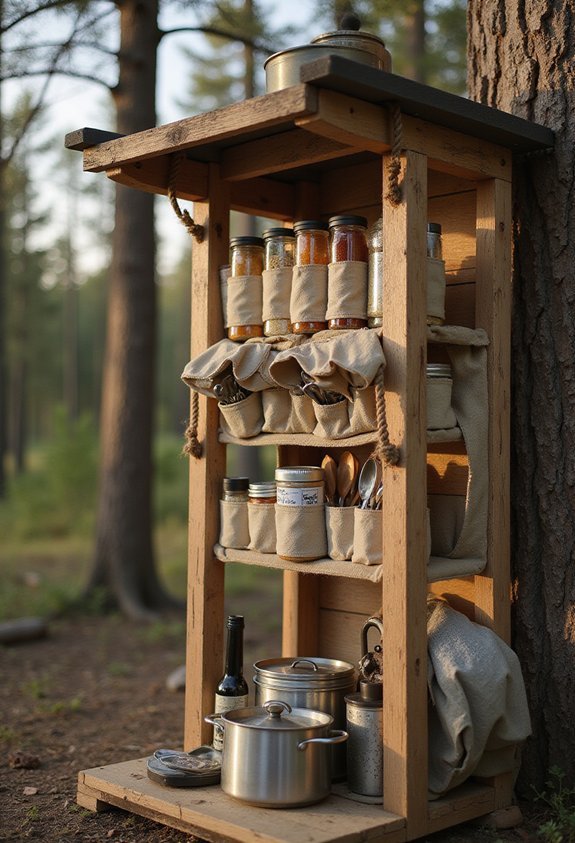
Beyond maintaining food safety at ground level, you’ll want to maximize your vertical space by installing a hanging pantry system. This setup keeps food organized and protected from ground-dwelling pests while freeing up valuable table space.
Use carabiners to attach mesh bags or small baskets to a rope strung between two trees or tent posts. This approach works especially well for lightweight items like crackers, dried fruits, and spice packets. Guarantee everything’s secure and weight-balanced to prevent tipping.
Clearly label each bag so you can quickly locate ingredients without rummaging. Keep frequently used items at eye level for easy access. Remember to check connections regularly—vibrations and wind can loosen carabiners. This vertical pantry solution transforms cramped campsites into organized, efficient cooking spaces.
Camping Kitchen Packing Checklist
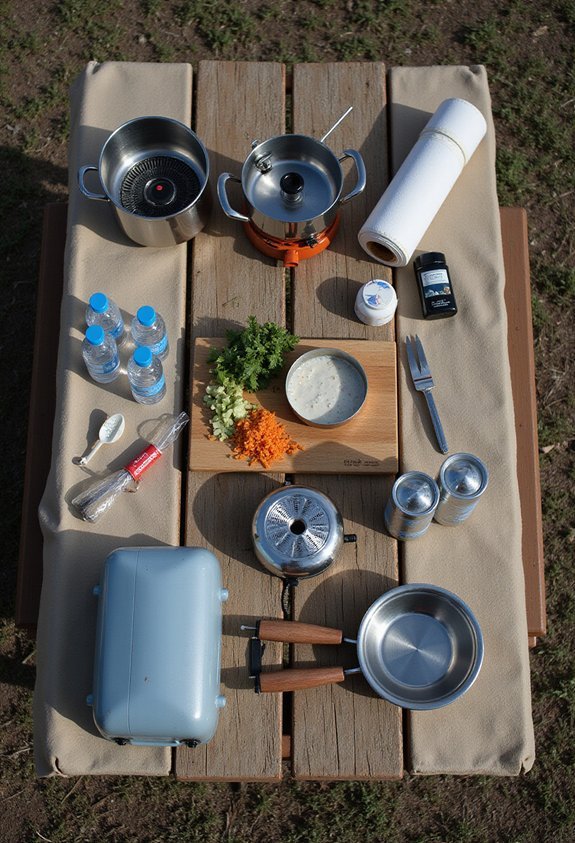
Before you hit the campsite, you’ll need a thorough packing checklist to guarantee you don’t forget essential cooking gear. Start with cookware: a skillet, pot, and cooking utensils. Pack a cutting board, sharp knife, and can opener for food prep. Don’t overlook plates, bowls, cups, and utensils for eating. Bring biodegradable soap, a sponge, and a dish towel for cleaning. Include a cooler with ice or ice packs to keep perishables fresh. Stock basic seasonings, oil, and salt to enhance meals. Add a headlamp or lantern since you’ll be cooking in low light. Finally, bring a fire starter, matches, and a grill grate if you’re cooking over open flames. Check your list twice before departing.
Frequently Asked Questions
What Are the Best Budget-Friendly Alternatives to Expensive Camping Cooking Equipment?
You’ll save money by using cast iron skillets, portable camp stoves, and basic utensils you already own. You can substitute expensive gear with aluminum foil, mason jars, and coolers filled with ice. You’ll cook delicious meals without breaking your budget.
How Do I Prevent Wildlife From Accessing My Camping Kitchen Food Supplies?
You’ll prevent wildlife from accessing your food by storing supplies in bear canisters or hanging them from trees at least twelve feet high. You should also keep your cooking area clean, dispose of waste properly, and never leave food unattended.
Can I Use Camping Kitchen Equipment at Home for Everyday Cooking Purposes?
Yes, you can absolutely use camping kitchen equipment at home for everyday cooking. You’ll find portable stoves, coolers, and cookware work great for regular meals, outdoor entertaining, or backup cooking during power outages.
What Cooking Techniques Work Best at High Altitude Camping Locations?
You’ll find that boiling, simmering, and slow cooking work best at high altitude since they’re forgiving with longer cooking times. You should avoid techniques requiring precise temperatures, like frying or baking, since water boils at lower temperatures up there.
How Do I Clean Cast Iron Cookware While Camping Without Modern Facilities?
You’ll scrub your cast iron with hot water and a stiff brush or steel wool right after cooking. Dry it completely with a cloth, then rub a thin oil layer over the surface to prevent rust while camping.
Conclusion
You’ll transform your camping trips by implementing these kitchen setups that prioritize efficiency and organization. You don’t need fancy equipment—you just need smart planning and versatile gear. You’ll spend less time managing your campsite kitchen and more time enjoying the outdoors. You’ve got the tools now to create memorable meals in nature while keeping everything organized, safe, and sustainable throughout your adventure.