

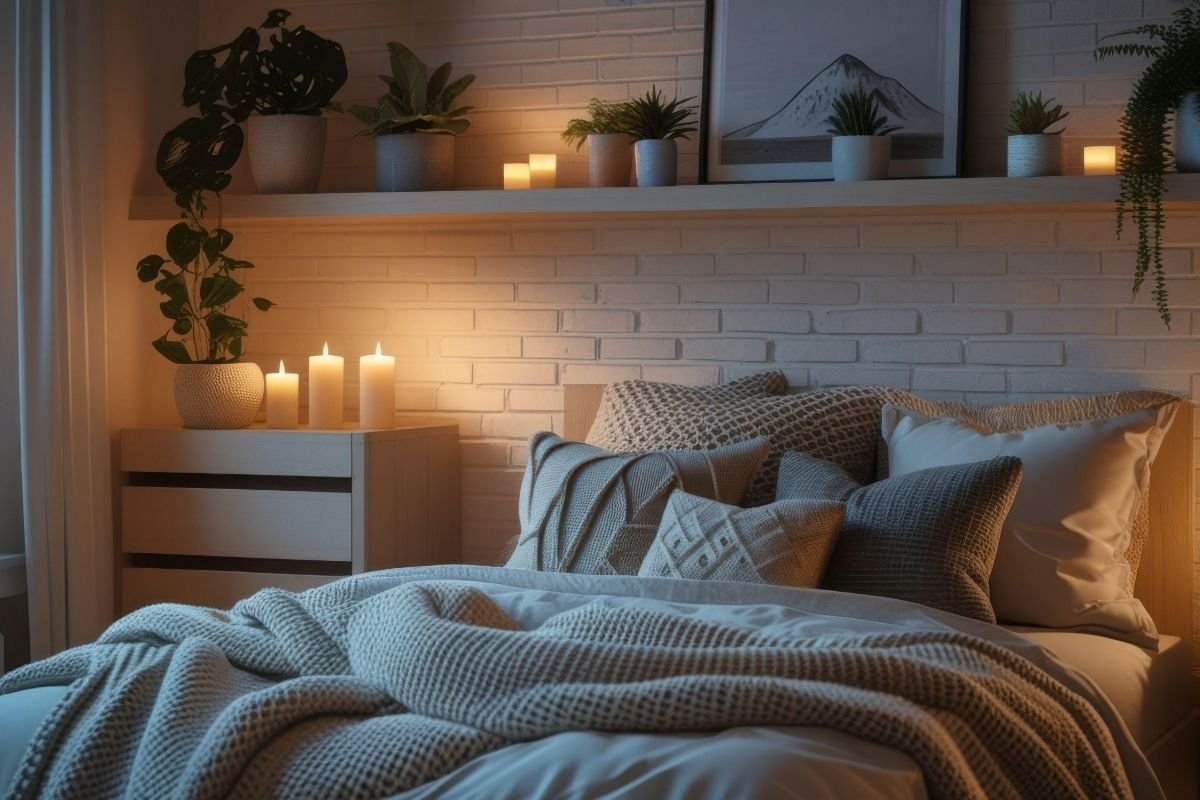
I’ve learned that a bedroom shelf becomes honest only after you’ve lived with it for a few months. At first, I arranged everything according to what looked balanced. Books standing upright, a candle here, a small plant there. The way I imagined it should look. But then I actually started using the shelf. A water glass found its way there one evening and stayed. A pile of library books accumulated on the corner. The bookends I’d carefully positioned became obstacles rather than décor.
The shift happened gradually. One morning, I noticed how the early light caught the spine of a worn novel I’d been rereading, and I didn’t move it. Instead, I built around it. A mug from someone I care about went next to it. A photograph that had been in a drawer for two years found a spot. I stopped thinking about what the shelf should communicate and started noticing what it actually held, which turned out to be more revealing.
What strikes me now is how a shelf can either fight against your daily life or work with it. Mine sits at eye level when I’m lying in bed, so I see it first thing before my eyes fully open. If something feels cluttered or out of place, I notice immediately. If something’s missing light or air around it, I feel the cramped tension in the room itself. The shelf isn’t separate from how I move through the bedroom. It’s part of the rhythm.
There’s something quieter about this than I expected. It’s not about filling space or creating an image. It’s about letting a shelf hold what actually matters to you and arranging it so you want to look at it, without apology or performance. That’s when a bedroom shelf stops being a surface to decorate and becomes a small archive of how you actually live.
Mix Books With Decorative Objects
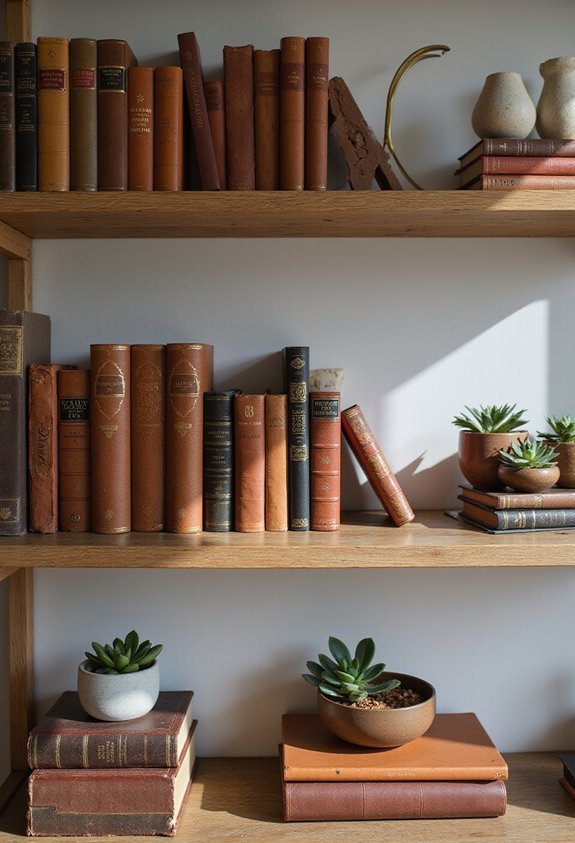
If you’ve been stacking your shelves like they’re a library having an identity crisis, it’s time to shake things up. I learned this the hard way when my bookshelf looked like a filing cabinet’s boring cousin. Mix those novels with cute stuff—think little plants, framed photos, or vintage candles. I tuck a small 6-inch succulent between stacks of thick hardcovers, then add a ceramic mug I love next to them. The trick? Alternate between three books standing up and one decorative object lying flat. This creates rhythm and keeps things from looking like a book graveyard. Your shelf suddenly breathes. It’s got personality now, not just paper. Your room finally stops looking like you’re running a used bookstore.
Also read: 15 Small Living Room Ideas for Homes That Refuse to Feel Tight
2. Create a Color-Coordinated Display
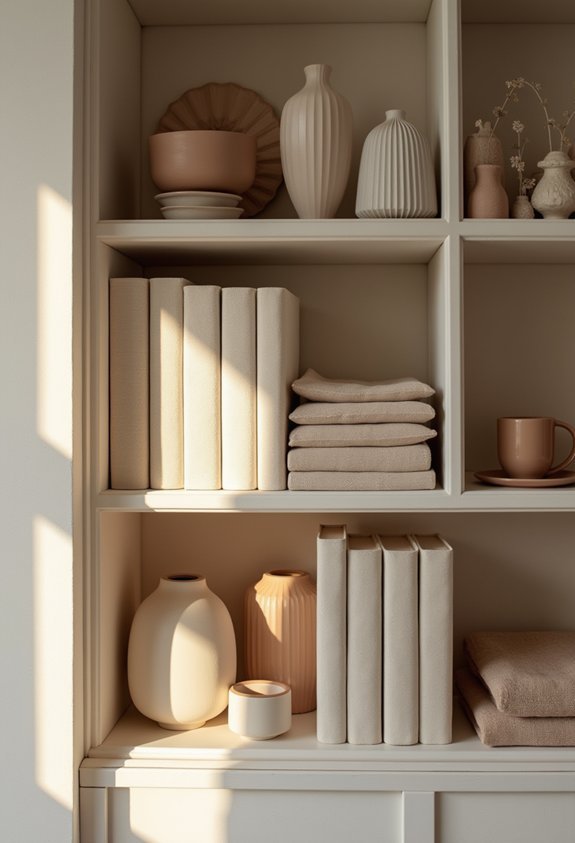
Once you’ve got the mixing thing down, it’s time to think about color—and I mean really think about it. I’m talking serious color coordination here, folks. Pick two or three colors you actually love, then stick to them like they’re your favorite snack. My shelves feature soft whites, dusty blues, and touches of blush pink. It’s not boring—promise! Arrange your books with spines facing out so those colors pop. Tuck in matching plants, candles, or small frames between the books. Even your dust bunnies will look intentional now. The magic happens when everything talks to each other visually. Your eyes travel smoothly across the shelf instead of getting confused. That’s when you know you’ve nailed it. Color harmony isn’t pretentious—it just feels *right*.
3. Incorporate Plants and Greenery
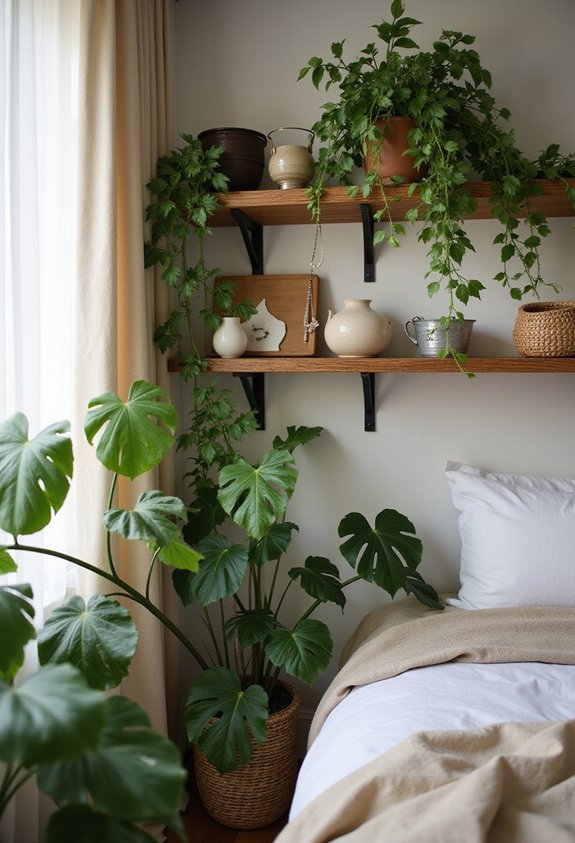
Plants are basically the shelf-styling cheat code I wish I’d known about sooner. I’m talking small pothos, succulents, and trailing string-of-pearls that cascade down like green waterfalls. They hide dust and instantly make your bedroom look alive—literally. Position a 6-inch pothos in the corner, and suddenly your whole shelf feels less like a dorm room and more like a boutique hotel. Mix in some terra cotta pots for warmth, then add white ceramic ones for balance. The best part? Plants don’t judge your life choices and actually improve your air quality while you sleep. Win-win. I’ve discovered that greenery makes even the messiest shelves look intentional and fresh. Your room will thank you, and honestly, so will your lungs.
4. Display Meaningful Keepsakes and Memories
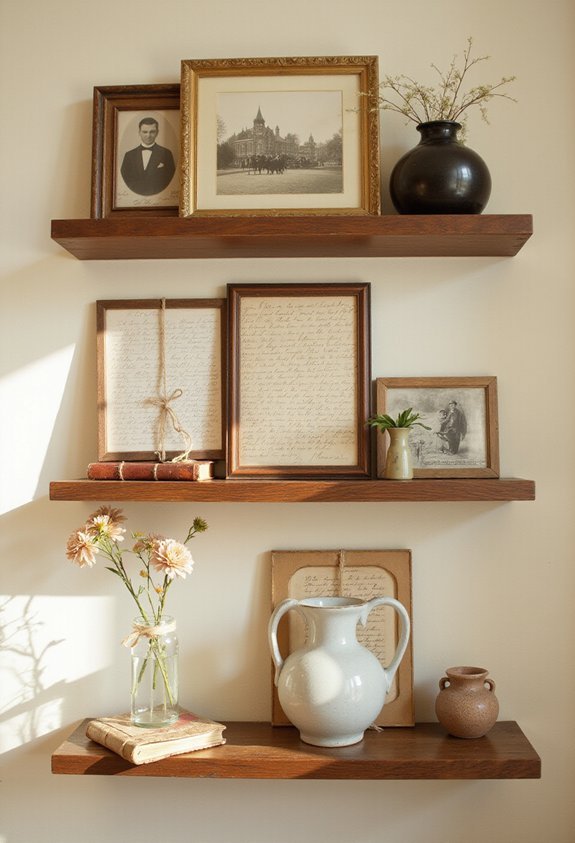
While plants do the heavy lifting for making your shelves look alive, your keepsakes are what actually make them tell your story. I’ve got my ticket stubs from concerts I actually stayed awake through, and they’re comedy gold next to my dusty old journals. Position these treasures strategically—not crammed like sardines, but spread out so each one gets its moment. A 4-by-6 framed photo of you looking ridiculous with friends? Perfect. That ceramic mug your kid made in third grade, even if it looks slightly unhinged? Absolutely. Mix sizes and heights to keep things interesting. Your shelves shouldn’t look like a museum, but like a scrapbook of who you actually are. That’s the real magic.
5. Use Baskets for Hidden Storage
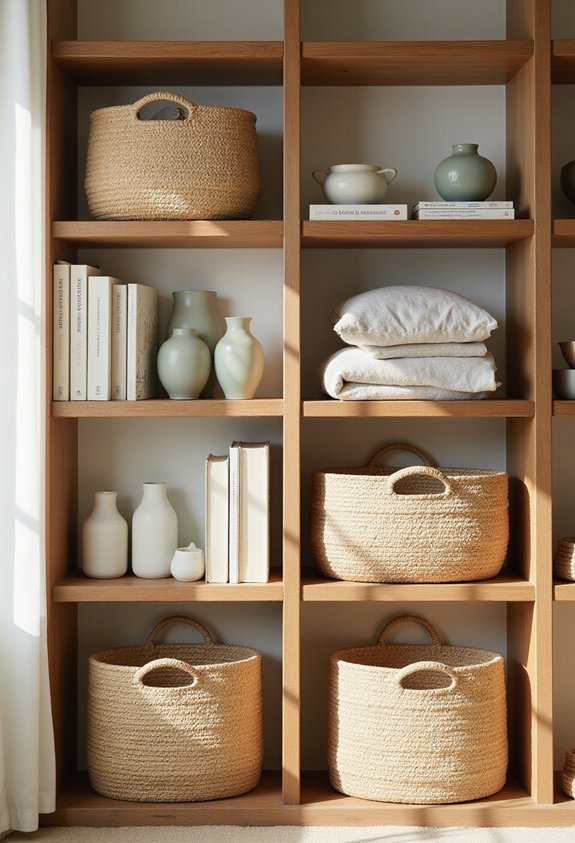
Three things I’ve learned about bedroom shelves: they’re great for showing off your stuff, they’re terrible at hiding your junk, and baskets are basically magic.
I’m talking about those woven beauties that hold all your embarrassing things—tangled phone chargers, dried-up lotion bottles, mystery socks. I use cream-colored baskets on my shelves, and they’re total lifesavers. They’re like little storage ninjas, tucking away clutter while looking adorable doing it.
Here’s the trick: pick baskets that match your shelf width. I set mine about twelve inches apart for balance. They don’t just hide chaos—they actually make everything look intentional and organized.
My shelves went from disaster zone to totally Instagram-worthy. Your clutter gets a cozy home, and your bedroom finally stops judging you.
6. Layer Artwork and Prints
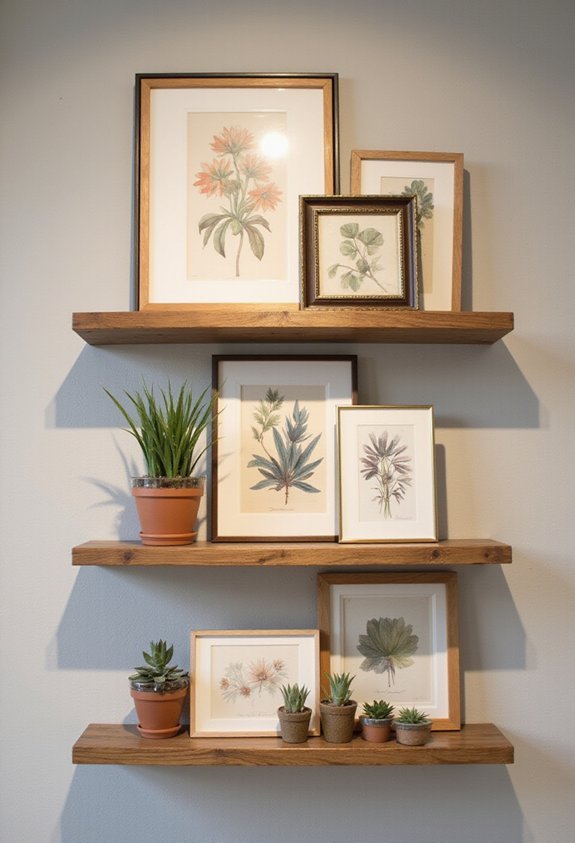
Now that your shelves aren’t buried under a mountain of tangled chargers and mystery items, it’s time to make them actually look good. I layer my artwork and prints at different angles—some standing up, some leaning back—and honestly, it’s like a tiny gallery up there. I mix frame sizes, maybe a 5×7 with an 8×10, and toss in some unframed prints for variety. The trick’s positioning them so they don’t all look like they’re running away from each other. I add small plants or books between pieces to break things up. It’s basically visual breathing room. Your shelves’ll go from “meh” to magazine-worthy without requiring a design degree or your firstborn. Trust me—your walls will be jealous.
7. Balance Symmetry With Asymmetry
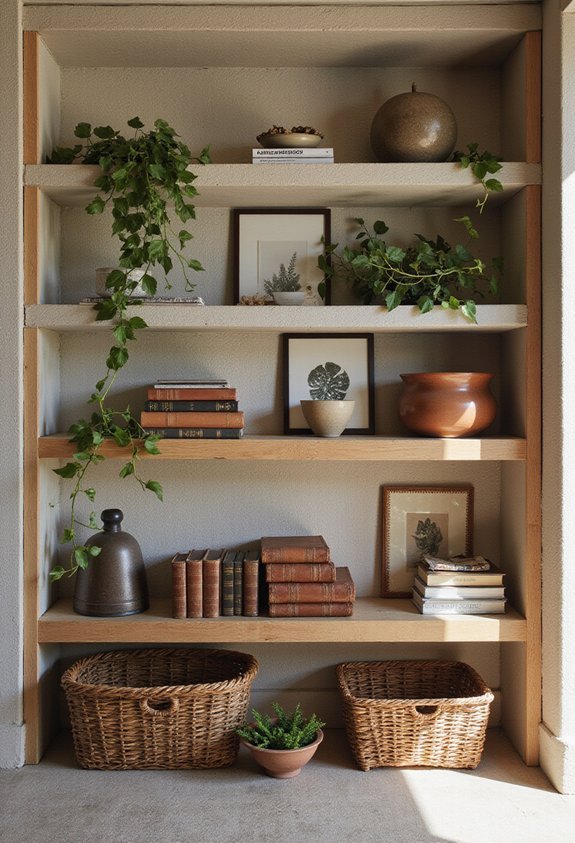
I put a tall stack of books on the left, then balanced it with a cluster of smaller plants on the right. This combo stops shelves from looking like boring museum displays. My brain feels happier when things aren’t perfectly matched—it’s less stiff and way more interesting to look at.
I mixed a chunky ceramic vase with skinny glass bottles. I added a wood box next to a metal frame. Uneven heights work magic too. A tall candle near short trinkets creates visual rhythm without feeling forced.
The trick? Don’t mirror everything perfectly. Mix sizes, textures, and shapes like you’re throwing a tiny party for your shelf. Symmetry’s boring cousin finally showed up, and asymmetry’s way more fun at the dance.
8. Add Lighting for Ambiance
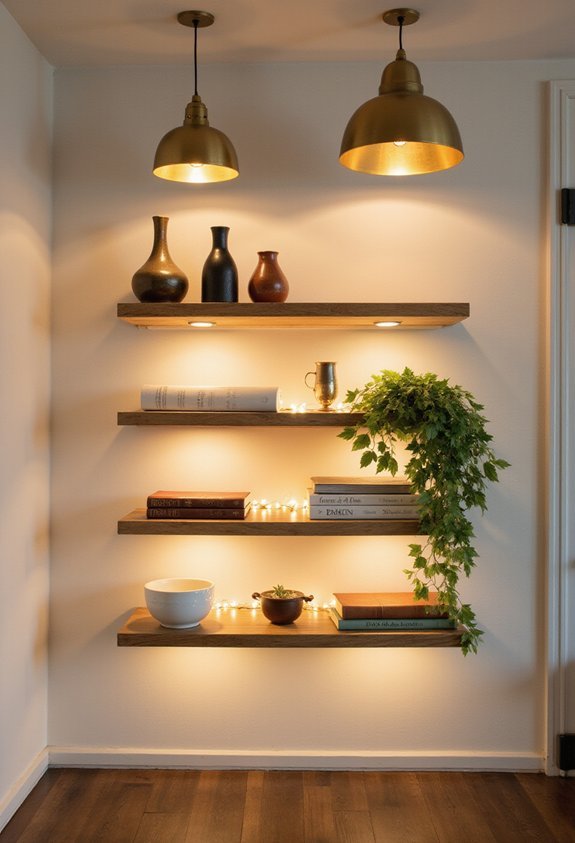
Why does lighting matter so much on a shelf? Because dark shelves are basically black holes—nothing good happens there! I’ve learned that adding small LED strip lights or tiny string lights totally transforms everything. They’re like shelf magic, honestly.
I place warm-white lights behind my books and plants, and suddenly my bedroom doesn’t look like a dungeon anymore. It’s genuinely hilarious how much difference a few battery-powered lights make. You don’t need anything fancy—just some affordable strips from any store.
The glow highlights your favorite items and creates this cozy vibe that makes people go “wow” when they walk in. I position mine about six inches from the shelf edge, which keeps things from looking too theatrical.
Trust me, your shelf’s personality will finally shine through.
9. Showcase Collections That Tell Your Story
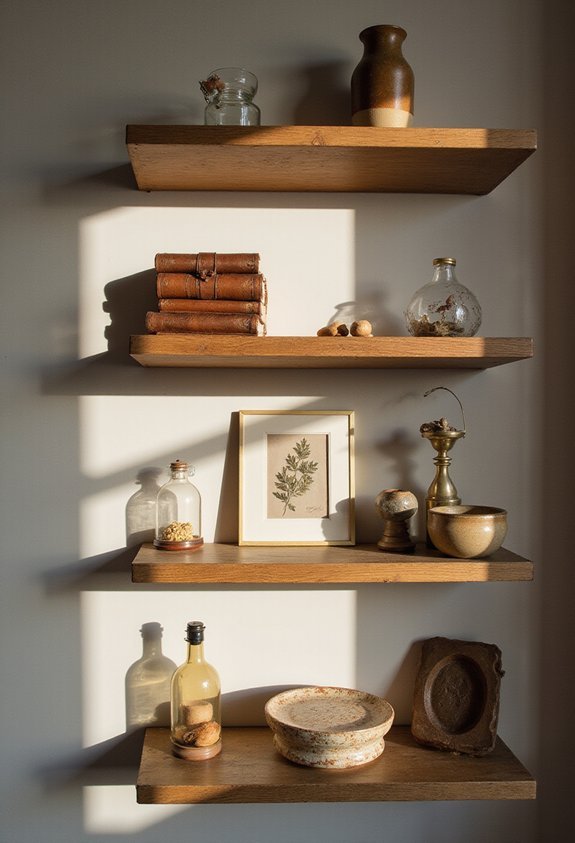
Once your shelf’s got that gorgeous glow, you’ve got the perfect stage for the really fun part—showing off the stuff that makes you, well, *you*. I’m talking about your collections here. Maybe you’ve got vintage books with faded spines, tiny ceramic cats, or shells from that beach trip you can’t stop thinking about. Group similar items together—it just looks cooler that way. I like arranging my collection of small succulents in a little cluster, then tucking a framed photo next to them. The key is mixing heights and textures so your shelf doesn’t look boring or flat. These pieces tell your story without saying a word. Your shelf basically becomes a visual diary, and honestly, that’s pretty awesome.
10. Incorporate Mirrors to Expand the Space
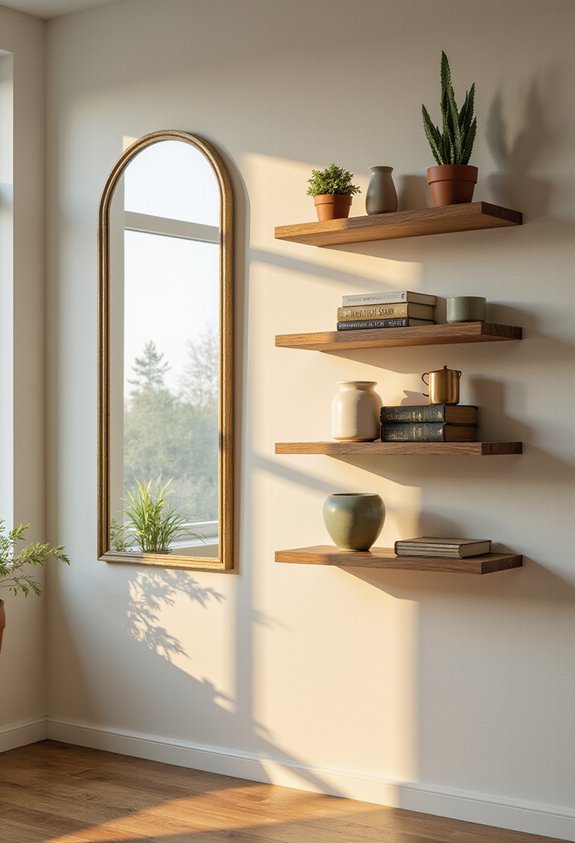
don’t position one facing your bed unless you enjoy midnight scares. Your shelf suddenly feels spacious and bright. It’s the easiest trick in the styling playbook, and honestly, I’m shocked more people don’t do this.
11. Use Bookends as Design Elements
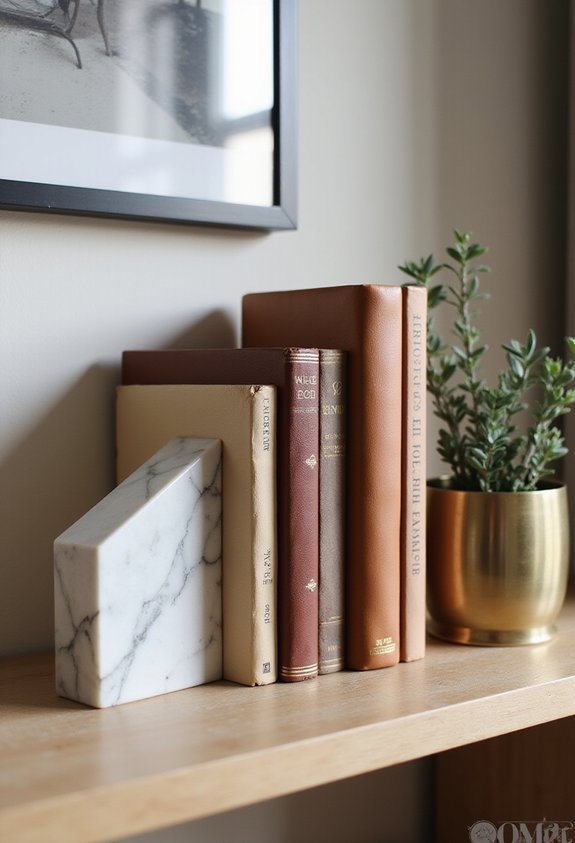
If you’ve ever watched a stack of books slowly lean like the Tower of Pisa, you’ll understand why bookends are basically shelf superheroes. I’ve discovered that beautiful bookends do double duty—they prop up your books AND look absolutely gorgeous doing it. I’m talking marble cubes, brass triangles, or ceramic animals that make your shelves instantly fancier. The trick is mixing heights and textures. I paired rose gold bookends with cream-colored spines, and honestly, it changed my entire shelf game. They’re not just functional; they’re tiny art pieces that anchor your display. Plus, they stop that embarrassing book avalanche that happened last Tuesday. Choose bookends that match your bedroom’s vibe, and watch your shelves transform from chaotic to chef’s kiss.
12. Style With Height Variation
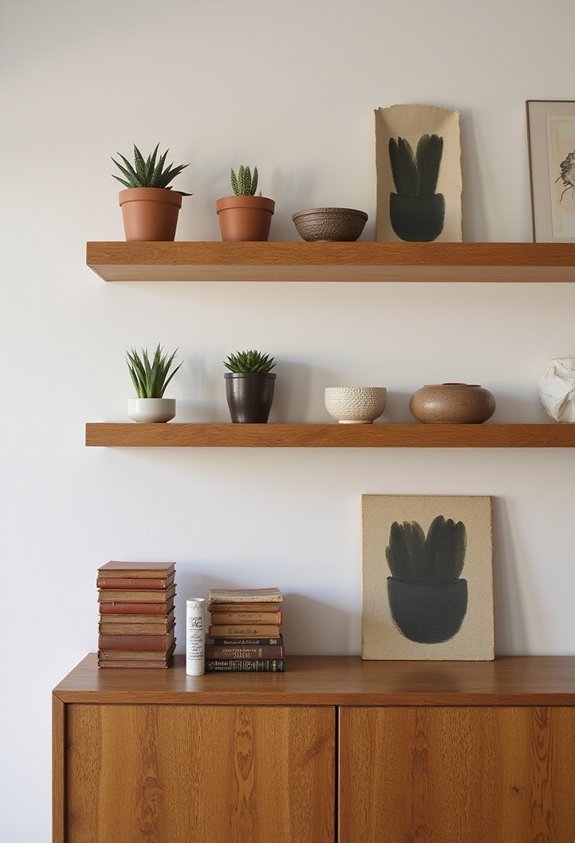
Your shelves will look way more interesting when you mix up the heights of what you’re displaying. I learned this the hard way—my first attempt looked like a flat pancake. Now I stack books horizontally, stand others upright, and lean a few at angles. This creates visual movement that actually makes people look twice instead of falling asleep.
I place taller items like vases or framed photos toward the back and shorter treasures up front. It’s like creating a little mountain range of memories. A 12-inch candle next to a 4-inch figurine next to stacked paperbacks? Chef’s kiss. Your eye travels around naturally instead of getting bored. Trust me, height variation transforms boring shelves into display magic.
13. Incorporate Textiles and Soft Furnishings
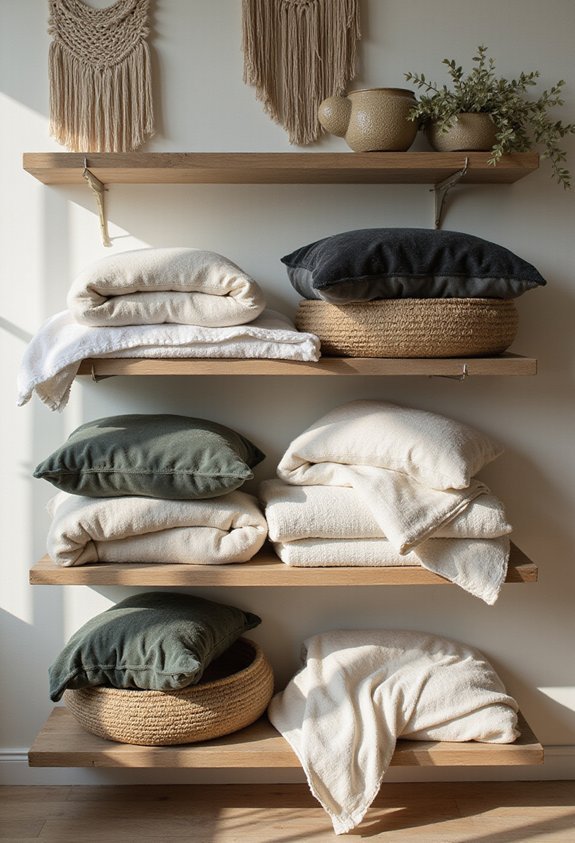
Soft fabrics totally bring bedroom shelves to life, and I can’t stress this enough—they’re like the cozy sweater your shelves didn’t know they needed. I drape a chunky cream linen runner across my middle shelf, and honestly, it changes everything. Small woven baskets (about 8 inches wide) hold my mess while looking intentional. I tuck a folded linen blanket in soft gray next to some books, adding texture that makes people actually want to touch things. Macramé plant hangers dangle from shelf edges, bringing movement and that bohemian vibe. Fuzzy bookends in blush pink keep stacks from toppling over like a game of literary Jenga. These soft touches transform boring wood into something that whispers, “Come rest here.”
14. Maintain Breathing Room and Negative Space
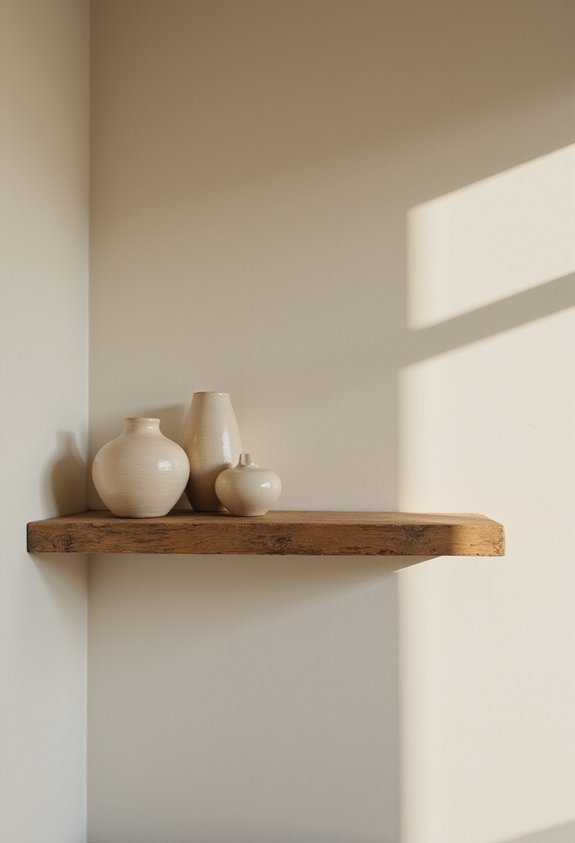
Because I’ve crammed so much onto my shelves, I’ve learned the hard way that empty space is actually your friend—not the enemy. Seriously, breathing room prevents your bedroom from looking like a yard sale exploded. I leave about 30% of each shelf bare, and it’s honestly a game-changer. Your eyes need somewhere to rest. Too much stuff packed together makes everything blur together into visual chaos. I strategically space out my books, plants, and photos so each item gets its moment to shine. It’s like giving your decor personal space—everyone’s happier that way. Plus, empty space makes cleaning easier. No tiny dust-collecting crevices everywhere. Trust me, less really is more here.
Frequently Asked Questions
How Do I Prevent Bedroom Shelf Items From Collecting Dust and Requiring Constant Cleaning?
I’d recommend using glass display cases or closed shelving units to shield your items from dust. You can also apply furniture polish regularly and choose fewer, larger pieces instead of many small objects. This reduces surfaces where dust settles and makes cleaning quicker.
What’s the Best Way to Secure Heavy Decorative Objects to Shelves for Safety?
I’d recommend using museum putty or clear adhesive strips designed for shelves—they’re invisible and won’t damage finishes. For larger pieces, I install L-brackets underneath or use wall anchors. I always test stability first by gently pushing items to ascertain they won’t tip.
How Often Should I Rearrange My Bedroom Shelf Styling to Keep It Fresh?
I’d recommend rearranging your bedroom shelf every 3-6 months to keep it feeling fresh and exciting. You’ll prevent visual fatigue and rediscover pieces you’d forgotten about. Seasonal changes work great too—they’ll help your space feel renewed without requiring major overhauls.
Can I Use Bedroom Shelves for Storing Personal Documents or Important Papers?
Yes, I’d recommend using bedroom shelves for important documents, but I’d suggest storing them in closed boxes or filing organizers to keep them dust-free and protected. I’ve found this approach maintains both functionality and your shelf’s aesthetic appeal.
What’s the Ideal Shelf Depth and Spacing for Optimal Styling and Functionality?
I’d recommend 10-12 inches of depth for most bedroom shelves—it’s deep enough for books and décor while keeping items accessible. Space shelves 12-15 inches apart vertically so you’ll have flexibility styling without cramping your display.
Conclusion
Your shelves don’t have to look like a sad library anymore. Mix in some plants, throw colors together that make you smile, and toss in stuff that actually matters to you. Leave some empty space so your eyes can rest. Stack books sideways, add little trinkets, and boom—you’ve got a shelf that screams “I’ve got my life together,” even if you’re still figuring it out. Your bedroom will finally look Instagram-worthy, and that’s what counts.

