

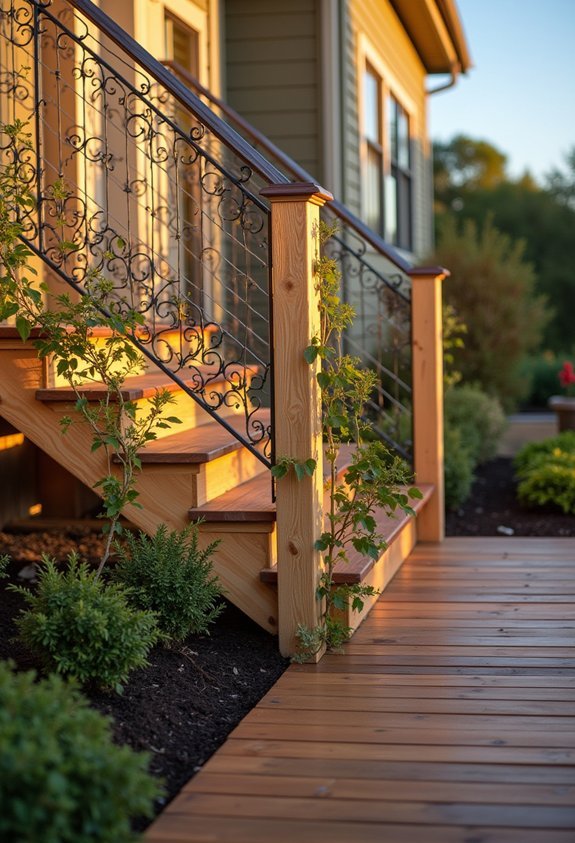
Your outdoor railing does more than keep people safe—it defines your entire deck’s personality. Whether you’re drawn to sleek cable systems that showcase mountain views or rustic wood designs that create backyard privacy, the right railing transforms ordinary spaces into showstoppers. We’ve rounded up 17 stunning options that balance style with function, from budget-friendly aluminum to statement-making glass panels. Here’s how to choose a design that’ll make your neighbors stop and stare.
Classic Horizontal Wood Slat Railings for Modern Minimalism
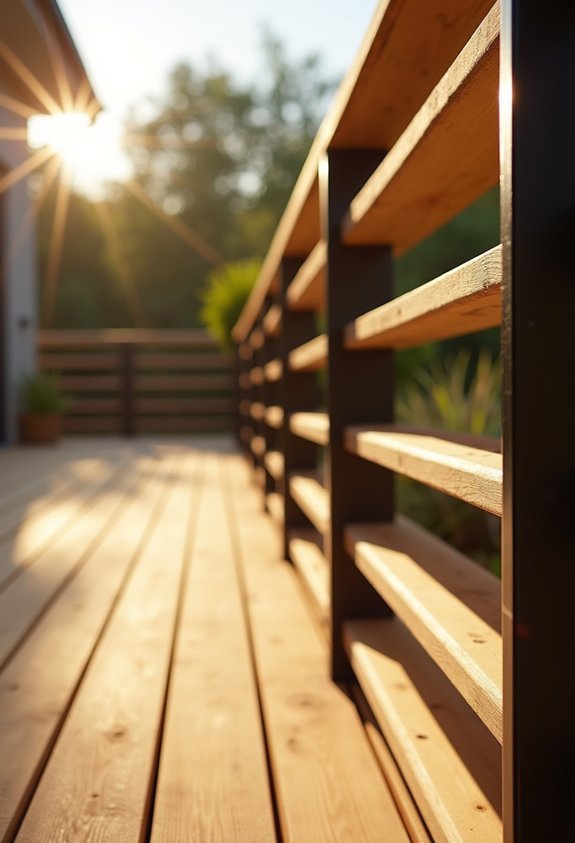
When you’re aiming for that sleek, contemporary look, horizontal wood slat railings deliver clean lines without sacrificing warmth. You’ll want spacing between slats around 3-4 inches for ideal visual flow while maintaining safety codes. Cedar and ipe wood offer excellent durability for exterior applications, resisting weather damage naturally.
Consider pairing these railings with metal posts for an industrial edge. TimberTech’s Terrain Collection provides low-maintenance composite options that mimic real wood grain beautifully. “Horizontal orientations create the illusion of expanded space, making smaller decks feel more generous,” notes landscape architect Maria Chen.
For installation, mount slats to sturdy 4×4 posts spaced no more than 6 feet apart. We can’t get enough of the charcoal-stained finishes trending this season.
Also read: 3 Quick Elf on the Shelf Ideas You Can Set Up in 5 Minutes
Black Metal Cable Railings for Unobstructed Views
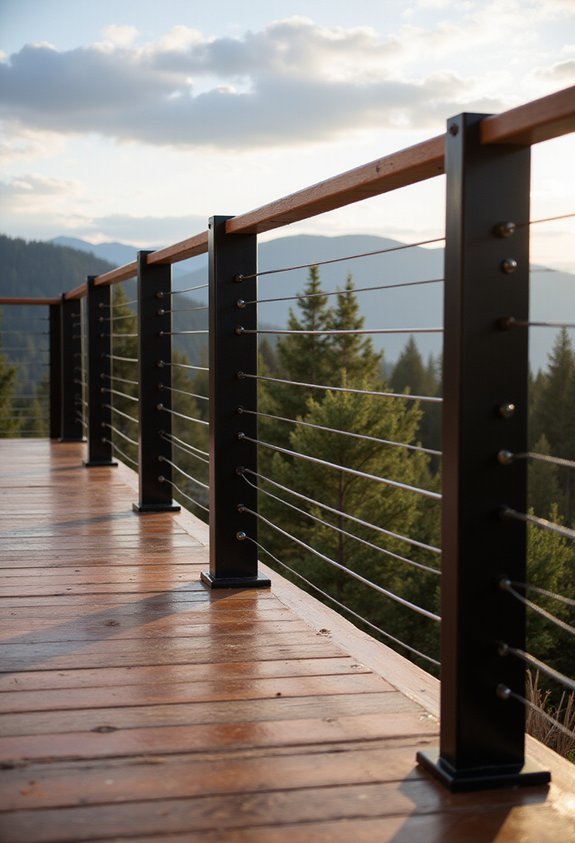
Cable railings strip away visual barriers your deck views deserve. Black metal posts paired with thin steel cables create nearly invisible boundaries that showcase your landscape. You’ll maintain safety without sacrificing sightlines.
The cables typically span 36 to 42 inches in height, with three-inch spacing between each horizontal line. This configuration meets most building codes while preserving your panoramic vista. Black powder-coated aluminum posts resist rust and complement both contemporary and traditional home exteriors.
“Cable systems work exceptionally well on hillside properties where views are the primary design driver,” notes landscape architect Maria Chen.
Consider the Feeney CableRail system or RailFX offerings for reliable hardware. Installation requires tensioning tools to achieve proper tautness—loose cables compromise both aesthetics and safety. We can’t get enough of how these railings disappear into wooded backgrounds.
Traditional White Picket Fence Style for Timeless Charm
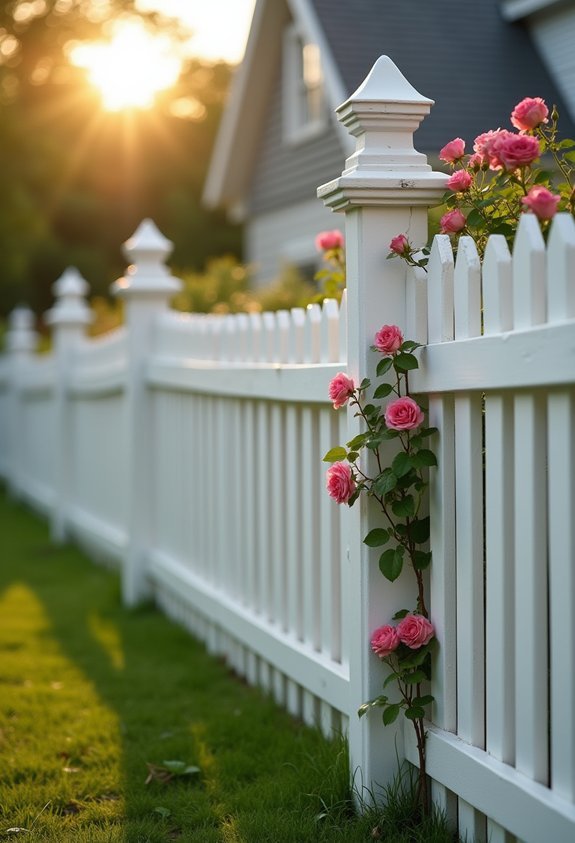
White picket fences deliver instant curb appeal that never goes out of style. You’ll want traditional spacing of 1.5 to 3 inches between pickets for a classic look that defines boundaries without blocking views. Consider 3 to 4-foot heights for front yards, perfect for framing flower beds and creating welcoming entryways.
Modern variations include vinyl options that eliminate painting maintenance while preserving authentic charm. We can’t get enough of scalloped tops that add architectural interest to standard designs. Cedar remains the premium wood choice, naturally resisting rot and insects for decades.
Paint your fence bright white or opt for cream undertones to complement your home’s exterior. Add decorative post caps and finials to elevate the traditional design. This timeless style works beautifully in cottage gardens and colonial-style properties.
Glass Panel Railings for Contemporary Elegance
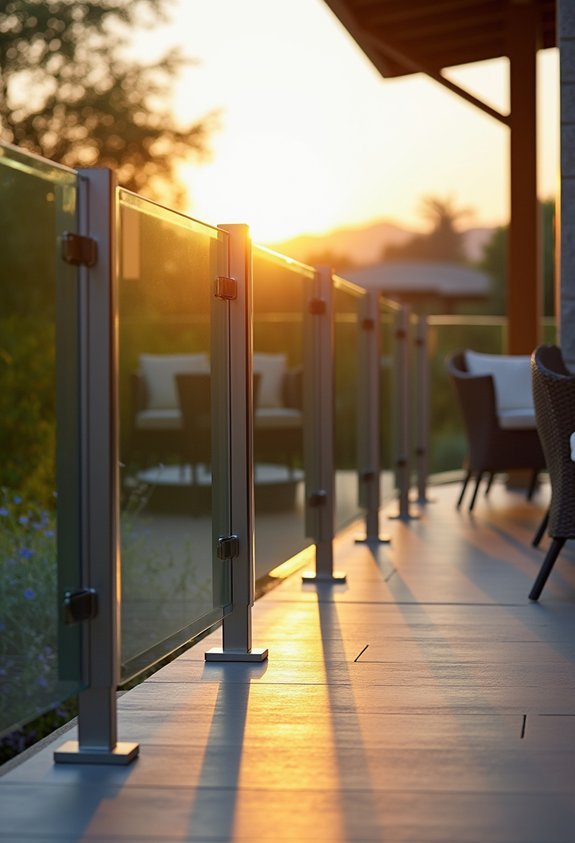
Glass panel railings transform ordinary decks and balconies into sleek showcases with unobstructed sightlines. You’ll appreciate how tempered glass panels, typically ½-inch thick, create modern barriers without blocking your views. These systems work beautifully on elevated decks overlooking water, mountains, or cityscapes.
Choose frameless glass for ultimate minimalism. The panels attach directly to posts with specialized clamps and hardware. Framed options use aluminum or stainless steel channels for added structure and contemporary contrast.
“Glass railings amplify natural light while maintaining safety standards,” notes architect Sarah Chen. “They’re particularly effective in smaller yards where traditional rails might feel confining.”
You’ll find semi-frameless designs that balance both approaches. We can’t get enough of bronze-tinted glass paired with black aluminum—it’s stunning against natural wood decking.
Rustic Cedar Log Railings for Mountain Retreats

Natural cedar logs bring authentic mountain charm to your outdoor spaces with their rugged texture and organic appeal. You’ll create an inviting retreat by installing horizontal log rails between sturdy 6×6 posts. The natural wood grain adds warmth that complements stone fireplaces and timber-frame architecture beautifully.
Choose logs ranging from 3 to 5 inches in diameter for ideal visual impact. We can’t get enough of the way weathered cedar develops a silvery patina over time, though you can apply clear sealant to preserve the original honey tones.
According to landscape designer Maria Chen, “Cedar’s natural oils resist rot and insects, making it perfect for elevated deck applications.”
Space your horizontal rails 4 to 6 inches apart for safety compliance. Mix log diameters throughout your railing design to enhance that organic, forest-gathered aesthetic.
Decorative Wrought Iron Scrollwork for Victorian Homes
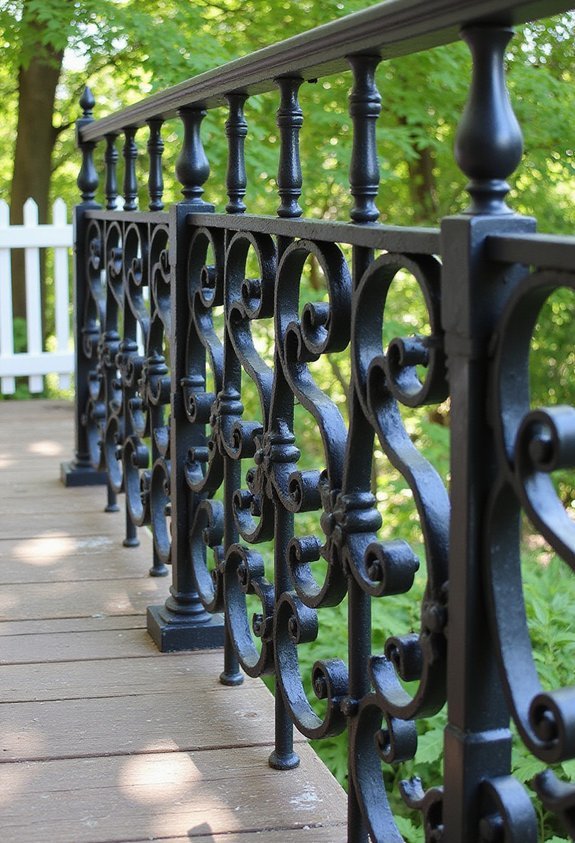
While rustic wood embraces organic simplicity, ornate wrought iron transforms your porch and deck into an elegant Victorian showcase. You’ll find intricate scrollwork patterns featuring curves, spirals, and botanical motifs that capture authentic period aesthetics. Consider the Westminster Series from Iron Artisans, which offers 42-inch panels with hand-forged acanthus leaves and rosette details.
Designer Maria Chen notes, “Authentic Victorian ironwork balances delicate scrolls with structural integrity—aim for 5/8-inch diameter pickets spaced at 4-inch intervals.”
We can’t get enough of powder-coated finishes in matte black or bronze that resist rust while maintaining historical accuracy. The Bordeaux Collection provides pre-assembled sections that mount directly to existing posts. Pair wrought iron railings with wooden handrails in mahogany or walnut for enhanced grip and warmth.
Composite Material Railings for Low-Maintenance Living
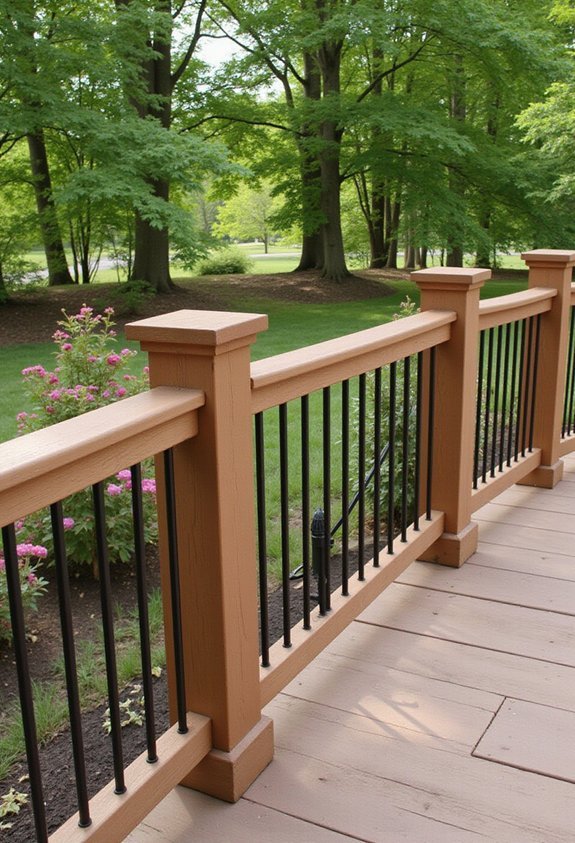
If you’re tired of sanding, staining, and constant upkeep, composite railings deliver the wood-look aesthetic without the weekend labor. These engineered materials resist fading, splintering, and warping for decades. You’ll find options like Trex Transcend in rich browns and grays that mimic natural hardwood grain patterns perfectly.
TimberTech AZEK offers white and black profiles for modern homes. The hollow-core construction keeps installation lightweight while maintaining structural integrity. Most systems include matching post sleeves and caps for seamless integration.
“Composite railings typically last 25-30 years with minimal maintenance,” notes deck builder Marcus Chen. “Just occasional soap-and-water cleaning.”
Consider pairing composite top rails with aluminum balusters for contemporary contrast. Standard 36-inch heights work for most decks, though you can customize spacing. The initial investment pays off through eliminated refinishing costs.
Bamboo Railings for Tropical and Eco-Friendly Spaces
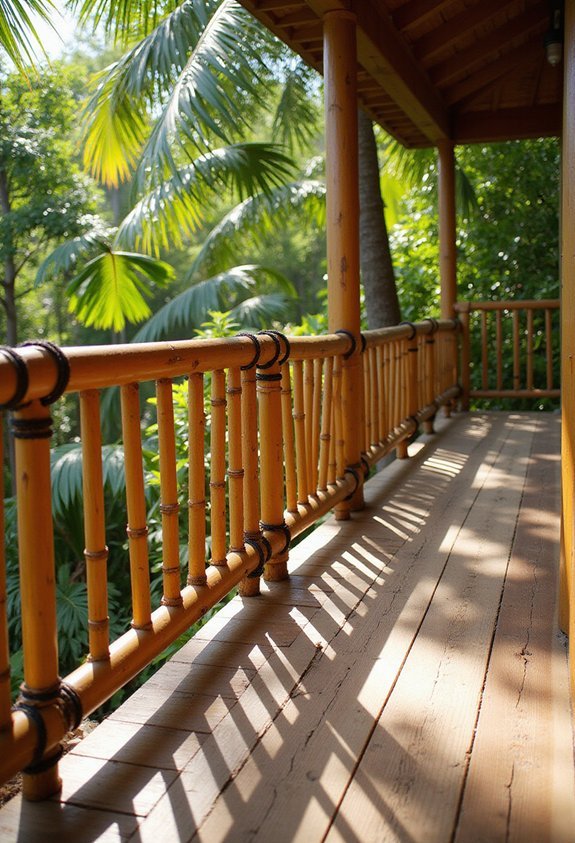
Bamboo’s rapid growth cycle—mature in just 3-5 years versus decades for hardwood—makes it the sustainable choice for environmentally conscious homeowners. You’ll find bamboo railings naturally resist moisture and insects without chemical treatments. Install 2-inch diameter poles vertically for a clean tropical aesthetic, or weave 1-inch splits horizontally between posts for texture.
Pair bamboo with stainless steel cable for modern contrast, especially on second-story decks. The warm honey tones complement teak furniture and stone pavers beautifully. We can’t get enough of the beach-house vibe it creates.
“Bamboo’s tensile strength actually exceeds steel pound-for-pound,” notes sustainable builder Maria Chen, “making it surprisingly durable for coastal applications.”
Seal your bamboo annually with UV-protective oil to prevent graying and maintain that golden glow.
Crisscross Wire Mesh Panels for Industrial Style
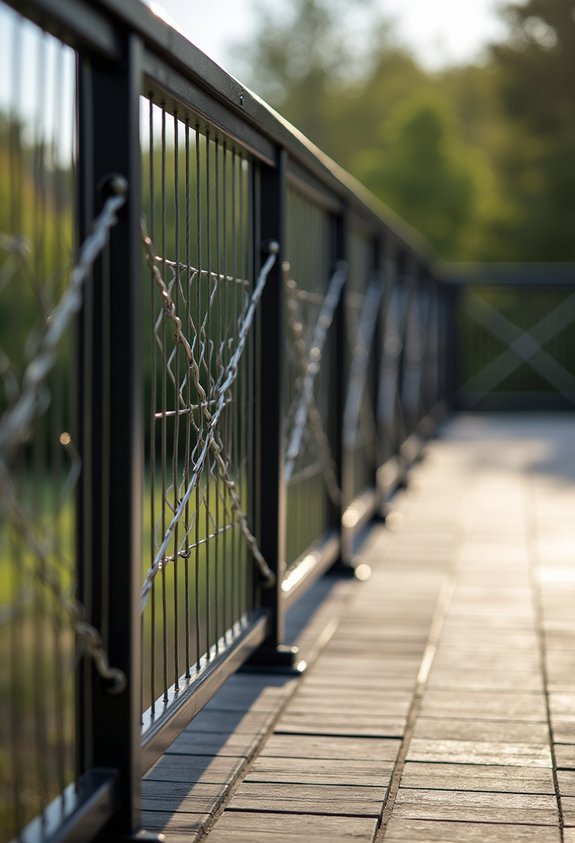
Although wire mesh originated in factory settings, it’s now transforming residential decks into architectural showpieces. You’ll find these panels work exceptionally well with modern farmhouse and loft-inspired exteriors.
The crisscross pattern creates visual interest while maintaining sightlines to your yard. Install 4×8-foot galvanized steel mesh panels between metal posts for authentic industrial appeal. Powder-coated options in matte black or charcoal gray resist weathering beautifully.
We can’t get enough of the airy transparency these railings provide. They’re surprisingly affordable at $45-$85 per panel, depending on wire gauge and finish quality.
Welded mesh offers superior durability compared to woven alternatives. Consider pairing wire panels with horizontal wood cap rails to soften the industrial aesthetic. The contrast between metal and natural materials adds sophisticated dimension to contemporary deck designs.
Mixed Material Designs Combining Wood and Metal
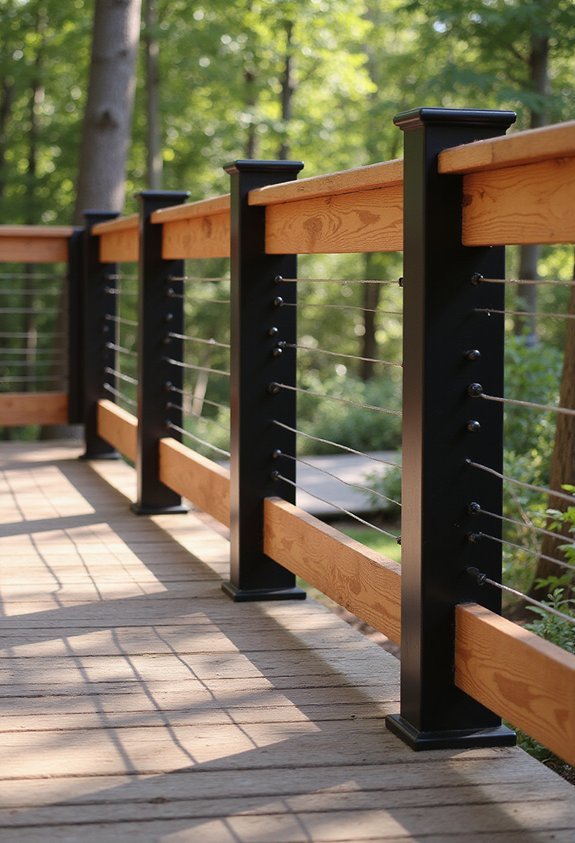
Combining wood and metal creates the perfect balance between warmth and contemporary edge in your railing design. You’ll find cedar or redwood posts paired with horizontal steel cables work exceptionally well for modern homes. The wood provides natural texture while metal adds sleek definition.
Try installing 2×4 wood top rails with vertical metal balusters spaced 4 inches apart for code compliance. Black powder-coated steel against light oak creates stunning contrast we can’t get enough of. Interior designer Maria Chen notes, “Mixed materials let homeowners express both rustic and industrial aesthetics simultaneously.”
Consider bronze metal inserts between wooden pickets for a craftsman-style upgrade. Stainless steel corner brackets with pressure-treated pine rails offer durability and visual interest. This combination typically costs $45-75 per linear foot installed.
Vertical Board and Batten Railings for Privacy
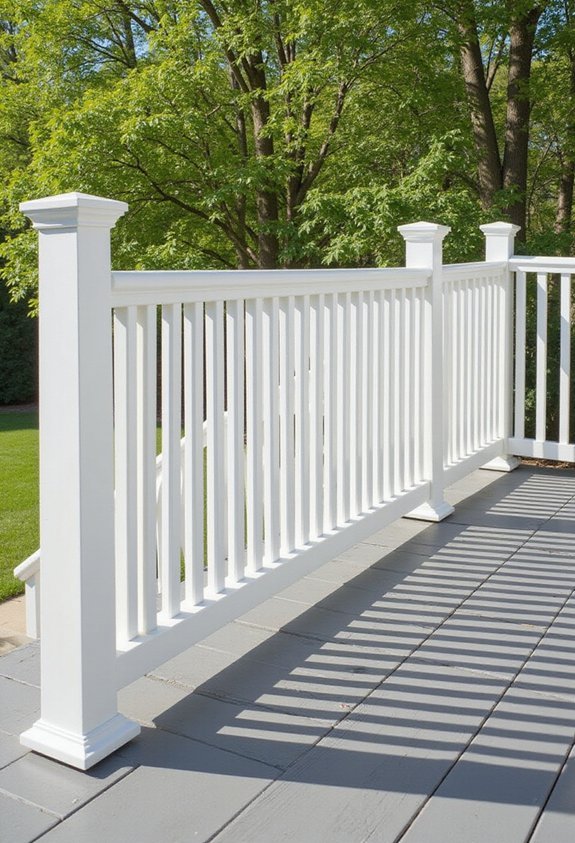
When you need full screening from neighbors without sacrificing style, vertical board and batten railings deliver both function and architectural charm. The alternating wide-narrow board pattern creates visual interest while blocking sightlines completely. Install 1×6 boards with 1×2 battens spaced every 8-10 inches for classic proportion.
Paint everything in coordinating deck colors, or stain the wood to match your home’s exterior trim for a cohesive look. We can’t get enough of crisp white board and batten against dark composite decking—it’s timeless.
“Board and batten transforms basic privacy screening into an architectural feature that enhances property value,” notes deck designer Maria Thornton.
Consider cedar or pressure-treated pine for weather resistance. Top rails should measure 36-42 inches high to meet most building codes while providing adequate privacy.
Nautical Rope Railings for Coastal Properties
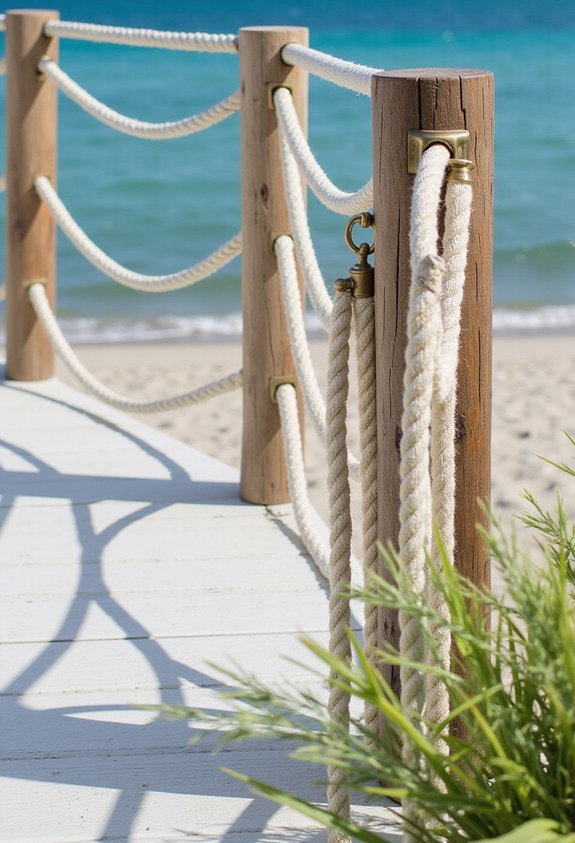
If you’re decorating a beachfront deck or waterfront property, nautical rope railings bring authentic maritime character that complements coastal architecture perfectly. These systems use marine-grade rope (typically 1.5 to 2 inches in diameter) threaded through stainless steel posts spaced 4 feet apart for code compliance.
You’ll find options like three-strand manila rope for traditional aesthetics or synthetic polyester for weather resistance. The Deck Store’s Marine Rope Railing Kit includes galvanized steel hardware that won’t corrode in salt air.
Interior designer Claire Thompson notes, “Rope railings create visual flow between outdoor spaces and ocean views without blocking sightlines.”
Install horizontal rope runs with 4-inch spacing between lines. We can’t get enough of the casual elegance these railings provide while maintaining durability through coastal storms.
Lattice Top Fence Panels for Decorative Privacy
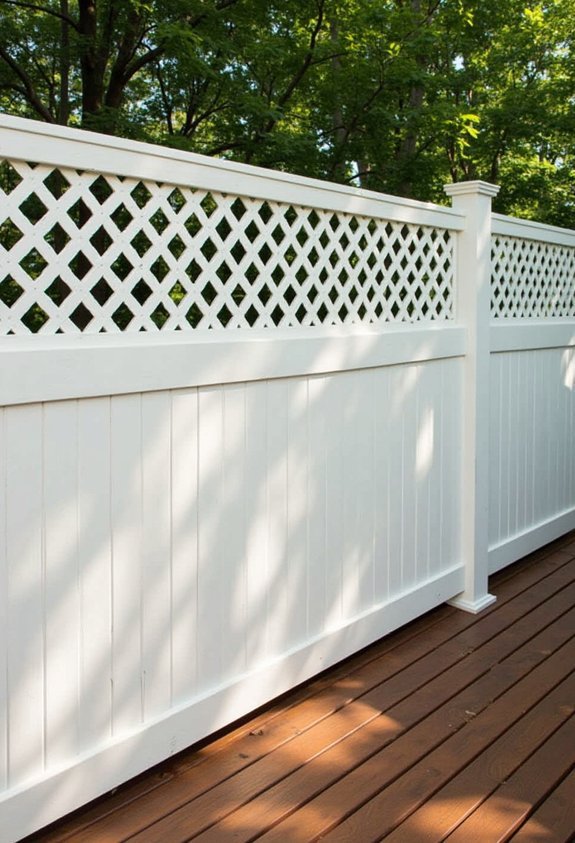
Lattice top fence panels add architectural interest to standard privacy fences without sacrificing security or enclosure. You’ll maintain full coverage at ground level while introducing decorative openness above. This design works beautifully when you want to block sightlines without creating a fortress-like appearance in your yard.
Consider pairing 6-foot solid panels with 12-18 inch lattice toppers for ideal privacy and style. The diamond or square patterns soften harsh fence lines while allowing light and air circulation. We can’t get enough of white lattice against dark-stained wood.
Install these panels along property boundaries where neighbors appreciate both privacy and visual breathing room. The lattice section supports climbing roses, clematis, or jasmine vines that’ll create living artwork. You’re transforming functional fencing into landscape architecture.
Aluminum Railings With Powder-Coated Color Options
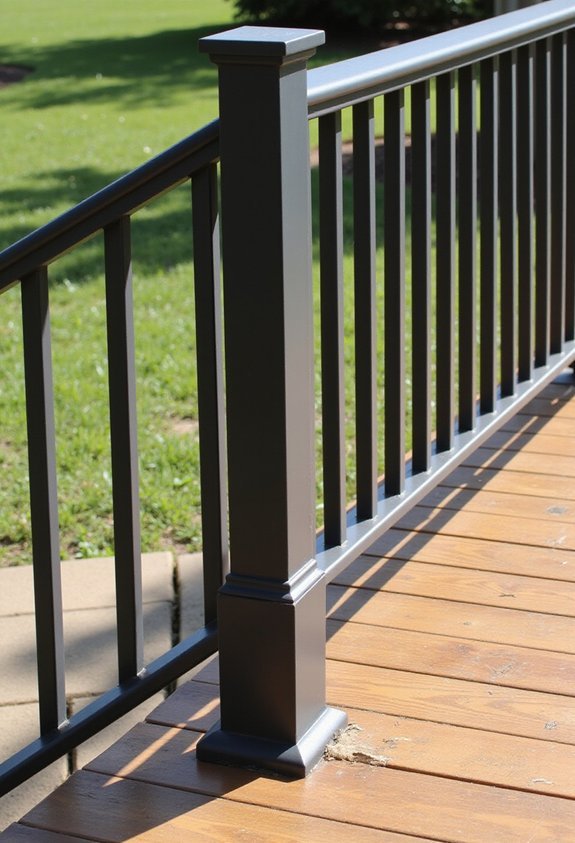
Aluminum railings with powder-coated finishes deliver decades of maintenance-free performance while matching any architectural style you’re working with. The factory-applied coating bonds to the metal through an electrostatic process, creating a durable surface that won’t chip, peel, or fade. You’ll find options in classic black, bronze, and white, plus contemporary shades like graphite and clay.
Most systems feature 36-inch standard heights with horizontal or vertical picket configurations. TimberTech’s RadianceRail comes in eight colors with matching posts and brackets. Trex Signature offers sleek cable infill options if you’re after modern aesthetics. The powder coating resists saltwater corrosion in coastal areas too.
According to deck designer Sarah Mitchell, “Aluminum railings typically cost 40% less than stainless steel while providing similar longevity in most climates.”
Branch and Twig Railings for Organic Woodland Appeal
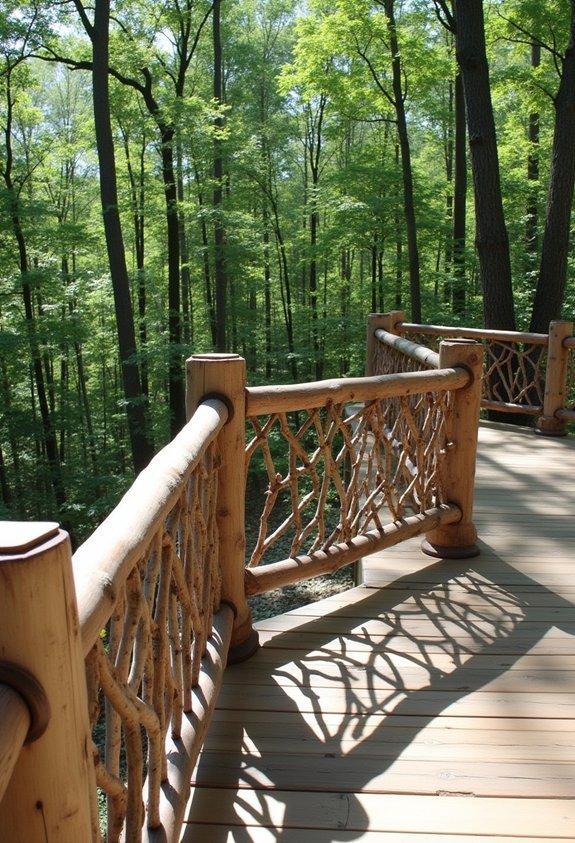
While modern materials dominate the railing market, branch and twig designs bring rustic character that mass-produced options can’t replicate. You’ll find these organic railings crafted from mountain laurel, willow, or responsibly harvested saplings arranged in unique configurations that transform standard deck perimeters into woodland artwork. Each installation becomes one-of-a-kind since natural materials vary in thickness and curve.
Mountain Laurel Railings offers pre-assembled panels measuring 36 to 42 inches high, perfect for both deck and porch applications. The twisted branches create intricate patterns while meeting building codes. Willow designs work beautifully for garden fence sections too.
“Natural branch railings age gracefully, developing silver-gray patinas that enhance their organic appeal,” notes landscape designer Martha Hendricks.
Consider sealing treatments every two years to extend longevity and prevent excessive weathering in harsh climates.
Tempered Steel Rod Railings for Sleek Lines
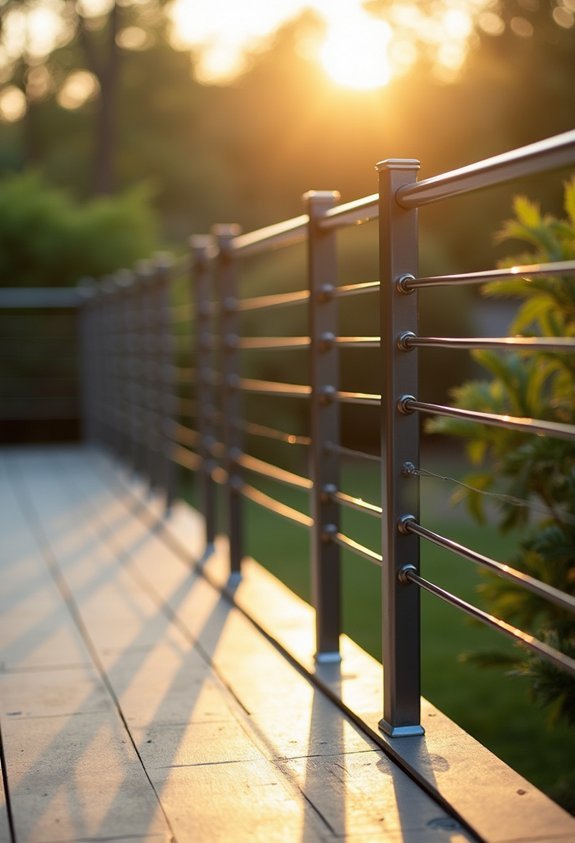
Steel rod railings strip away visual clutter to showcase your deck’s architecture and surrounding views. These minimalist systems use slender tempered steel rods, typically 3/8-inch to 1/2-inch diameter, spaced 3-4 inches apart for code compliance.
You’ll create clean horizontal or vertical lines that practically disappear from a distance. The powder-coated finish resists rust while maintaining that industrial-chic aesthetic we can’t get enough of in modern outdoor design.
Install them with stainless steel cable fittings for a cohesive look. They’re particularly stunning on elevated decks where unobstructed sightlines matter most.
“Tempered steel offers superior strength-to-profile ratio, allowing maximum visibility without compromising safety,” notes structural engineer Maria Castellanos.
Pair black rods with light wood decking for striking contrast. Maintenance involves occasional tightening and annual cleaning—nothing excessive.
Built-In Planter Box Railings for Functional Beauty
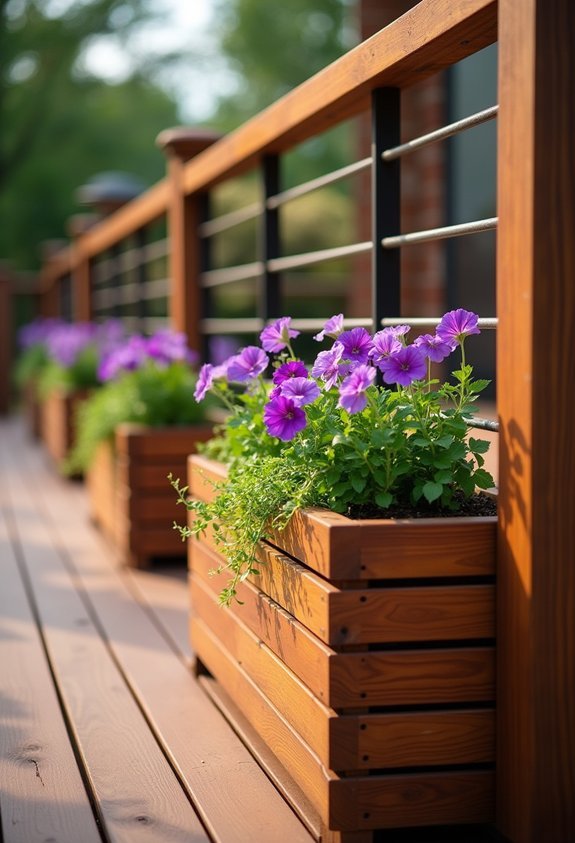
Built-in planter box railings transform your deck’s perimeter into a thriving garden space while maintaining essential safety barriers. You’ll maximize square footage by combining structure with greenery. Install 8-inch-deep boxes along railing tops for herbs, flowers, or trailing succulents.
Consider cedar or composite materials that’ll withstand constant moisture exposure. Trex’s planter rail system offers integrated drainage and UV protection. You can customize widths from 6 to 12 inches based on plant requirements.
Design expert Maria Killam notes, “Planter railings create living architecture that changes with seasons while defining outdoor rooms.”
Mount boxes at 36 to 42 inches high for comfortable access. We can’t get enough of cascading petunias paired with upright ornamental grasses. Add drip irrigation systems for low-maintenance watering throughout summer months.
Frequently Asked Questions
What Are the Typical Costs for Installing Different Railing Materials?
You’ll spend $20-$60 per linear foot for wood railings, $50-$120 for vinyl, $60-$200 for aluminum, and $150-$300 for glass or stainless steel. Labor costs typically add another $25-$75 per foot depending on complexity.
Do Fence and Deck Railings Require Building Permits or Inspections?
Yes, you’ll typically need building permits for deck railings, especially if they’re over 30 inches high. Fence permits vary by location. You should contact your local building department to confirm specific requirements and schedule required inspections.
How Do I Maintain and Clean Various Railing Types?
You’ll need different maintenance approaches for each material. Clean vinyl with soap and water, wash wood annually and reseal it, wipe metal railings with mild detergent, and rinse composite materials regularly to prevent buildup.
What Are Standard Height Requirements for Deck and Fence Railings?
You’ll need deck railings at 36-42 inches high for most residential codes, while fence railings typically range from 42-48 inches. Always check your local building codes, as they can vary by location and specific application.
Can I Install Railings Myself or Should I Hire Professionals?
You can install railings yourself if you’re handy and understand building codes, but hiring professionals guarantees proper installation, code compliance, and safety. Consider your skill level, time availability, and local permit requirements before deciding.
Conclusion
Your railing choice shapes your outdoor space’s entire aesthetic. Whether you’re drawn to sleek cable systems or warm wood slats, there’s a design that matches your vision. Consider your home’s architecture and your lifestyle needs before deciding. Don’t forget practical factors like maintenance requirements and local building codes. With the right railing, you’ll create an outdoor retreat that’s both beautiful and functional for years to come.

