

Asian Zen design creates peaceful, balanced spaces rooted in mindfulness and simplicity. Natural materials, muted colors, and uncluttered layouts form the foundation of this philosophy. Incorporating Zen principles transforms your home into a serene sanctuary promoting calm and tranquility.
Minimalist furniture, natural wood elements, and water features embody authentic Asian Zen aesthetics. Stone accents, bamboo, and indoor plants establish harmony with nature throughout your space. These essential components cultivate a meditative atmosphere that soothes the mind and spirit.
Building a Zen-inspired environment requires intentionality, restraint, and deep respect for balance. Each element serves a purpose, eliminating unnecessary clutter and visual noise from your rooms. Your peaceful Asian Zen space becomes a personal haven reflecting harmony, nature, and inner calm.
Start by Decluttering: A Clear Space = A Clear Mind

Before you can create a zen room that actually feels zen, you’ve gotta face the truth: your bedroom probably looks like a tornado mixed with a yard sale. Seriously, it’s time to declutter.
Start by yanking everything off your floor. Those mystery socks? Gone. That broken lamp? Goodbye. You’re not keeping it for a rainy day—you’re just keeping clutter.
Next, tackle your surfaces. Clear your nightstand completely. Remove those seventeen half-empty water glasses and that book you’ll never finish. Your dresser shouldn’t look like a junk drawer exploded on it.
Here’s the magic part: with less stuff around, your brain actually relaxes. No visual chaos means no mental chaos. It’s science-ish.
Donate, trash, or sell what you don’t love. Your room will breathe. And so will you.
Also read: 34 Classy Bedroom Decor Ideas for Timeless, Refined Style
Embrace Minimalism: Less Furniture, More Calm

Once you’ve cleared out the junk, it’s time to look at your actual furniture—because here’s the thing: you don’t need as much as you think you do. Seriously, that extra dresser? It’s just collecting dust and stealing your peace. A minimalist room breathes easier, and so do you.
Consider what you actually use:
- Your bed (obviously), a nightstand, and maybe a small desk
- One chair that doesn’t scream “I have nowhere to sit”
- Storage that’s smart, not stuffed like a overstuffed burrito
Keep pieces low and simple. Light wood or white furniture makes spaces feel bigger and calmer. Push everything against walls to maximize open floor space. Your room isn’t a furniture showroom—it’s your chill zone. Less stuff means less stress, and your mind will thank you big time.
Choose a Soothing Color Palette of Neutrals and Pastels

Now that you’ve got your furniture situation under control, let’s talk colors—because the wrong shade will mess with your zen faster than a car alarm at 3 a.m. Skip the bold reds and electric blues. Instead, embrace soft neutrals like warm beige, creamy white, and soft gray. These colors won’t assault your eyeballs when you’re trying to relax. Add gentle pastels too—think pale sage green, dusty blue, or barely-there lavender. They’re like visual comfort food for your brain. Paint your walls these calming shades, and watch stress literally fade into the background. Your nervous system will thank you. Keep about 70% neutral and 30% pastel accent colors. This balance keeps things interesting without triggering your fight-or-flight response.
Incorporate Natural Wood Elements Throughout Your Space

Your calming color palette‘s doing the heavy lifting, but here’s the thing—soft colors alone won’t give you that zen spa feeling you’re craving. You need wood. Natural wood basically screams “I’m peaceful and didn’t rush this,” and it totally works.
Add these wooden touches to your space:
- A low wooden bed frame (think 12-18 inches off the ground) that makes you feel grounded, not floating like you’re in some weird space station
- Wooden shelves holding plants and small decorative pieces instead of your collection of seventeen half-empty coffee mugs
- A simple wood nightstand where you can actually find your phone without excavating through junk
Light oak or bamboo tones work best. They’re warm without being aggressive. Your room’ll feel like a forest cabin, minus the bears and questionable plumbing.
Add Low-Light Indoor Plants for Air-Purifying Energy
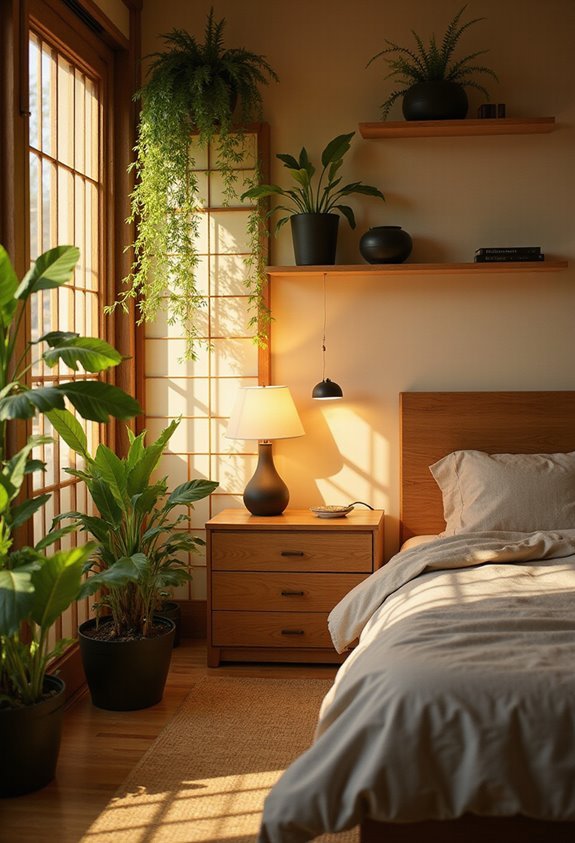
While you’re busy arranging your wooden nightstand, let’s talk about the real MVPs of zen rooms—plants. These green buddies don’t need much light, and they’ll literally clean your air. Try pothos or snake plants. They’re practically indestructible, which is perfect if you’ve killed every succulent you’ve ever owned. Place a 12-inch pothos on a shelf or let it cascade down your wall. Snake plants look sharp standing tall in corners. Your room will smell fresher, and you’ll feel calmer just looking at them. Plus, plants won’t judge your messy habits. They’re just vibing quietly, soaking up your bad energy and stale air, turning it into oxygen. That’s pretty zen if you ask me.
Use Soft, Layered Lighting Instead of Bright Overhead Lights

Bright overhead lights are basically the enemy of zen, and they’ll blast your eyeballs like you’re standing on a movie set. Nobody feels calm under those fluorescent torture devices. Instead, you’ll want to layer your lighting like you’re building the ultimate cozy fort.
Here’s your lighting game plan:
- String lights or fairy lights scattered around create a warm, golden glow that makes everything look Instagram-worthy
- Desk lamps with warm bulbs positioned low give you focused light without the harsh assault
- Candles or salt lamps tucked in corners add that mystical vibe and smell amazing
Mix these together and you’ve got yourself a room that actually whispers instead of screams. Your eyes will thank you, and your stress levels will plummet faster than your motivation on Monday mornings. That’s the zen magic right there.
Choose Dimmable Warm Lighting Over Harsh Fixtures

Once you’ve layered in those cozy lights, it’s time to get serious about one game-changing feature: dimmable bulbs. Harsh overhead lights? They’re basically kryptonite for zen vibes. Instead, grab warm white bulbs (around 2700K color temperature) that won’t make you look like a vampire at a comedy show.
Dimmable switches let you control the mood like a concert lighting director. Bright when you’re cleaning, soft when you’re chilling. It’s honestly genius. Your eyes won’t feel attacked, and your brain’ll actually relax.
Skip those cheap fixtures that flicker like they’re possessed. Invest in quality dimmable lamps or install dimmer switches on existing lights. Trust me, your future zen self will thank you for this choice.
Position Your Bed for Feng Shui Balance

Now that your lighting’s got that zen director vibe going, let’s talk about where you’re actually gonna rest your weary head. Bed placement matters big time in feng shui. You’re not just plopping it anywhere like a tired zombie.
Here’s what you need to know:
- Command position: Position your bed so you can see the door but aren’t directly in line with it. This prevents bad energy from sneaking up on you while you’re drooling on your pillow.
- Solid headboard: Use a sturdy headboard. It’s like giving your head a cozy hug and keeps stability vibes flowing.
- Keep it centered: Avoid cramming your bed into corners. Give it breathing room, about 2-3 feet on each side.
Your sleep space deserves respect. Position intentionally, and you’ll feel the difference.
Arrange Furniture to Promote Smooth, Unobstructed Flow

Furniture placement isn’t just about making your room look pretty—it’s about creating pathways that don’t make you trip over your own feet like a clumsy giraffe. You’ll want at least three feet between your bed and dresser. Leave walkways clear so chi (that’s fancy air energy) can actually move around. Push your nightstand against the wall, not into the middle of everything like some kind of obstacle course. Your desk? Angle it near a corner, not blocking your door. Think of your room like a dance floor—furniture should let you glide through smoothly without doing an accidental splits. Wide-open spaces feel calmer and less stressful on your brain. Trust me, your shins will thank you. Plus, you’ll actually feel more zen when you’re not constantly bruising yourself.
Create Symmetry in Your Layout for Visual Balance

While you’re busy creating those smooth pathways and avoiding furniture-induced bruises, there’s another secret weapon hiding in plain sight: symmetry. Your eyes actually love balance. It’s like your brain gets a happy little massage when things match up nicely.
Here’s the thing: you don’t need to be a math genius to nail this. Just mirror your setup on both sides of a centerline. Place matching nightstands by your bed. Put identical lamps on each side. Even your throw pillows can be buddies.
Why’s this so awesome?
- Your room feels calm and organized. No weird, lopsided vibes bothering you.
- You’ll sleep better. Balanced spaces equal peaceful minds.
- It’s super easy. Seriously, even your pet could do it.
Symmetry isn’t boring. It’s your zen shortcut.
Build a Dedicated Meditation Nook With Cushion and Focus

Because your brain’s been doing gymnastics all day, it’s time to give it a cozy corner where it can actually chill out. Grab a meditation cushion (called a zafu) and plop it in a quiet spot. A corner works great. Face a blank wall or window—somewhere boring enough that your brain stops trying to solve mysteries. Soft colors like pale blue, sage green, or cream help your eyes relax instead of vibrating like a hummingbird. Add a small plant nearby and maybe one candle. Nothing fancy. Just you, your cushion, and silence that isn’t awkward. Even fifteen minutes here resets your entire system. Your stress levels will drop faster than you can say “namaste.”
Hang Flowing Curtains in Lightweight, Natural Fabrics

Your windows are basically portals to the outside world, so why’d you block them with heavy, depressing curtains that look like they’re suffocating?
Lightweight, natural fabrics like linen and cotton let light flow through without drama. They’ll breathe better than you do after climbing stairs, and your room’ll instantly feel airier.
Here’s what makes them zen-approved:
- Soft, neutral colors like cream, beige, or pale gray that won’t assault your eyeballs
- Billowing movement when breezes hit them, creating calm, peaceful vibes
- Easy maintenance since they’re machine-washable and won’t collect dust like a museum
Hang them from ceiling to floor—this stretches your space visually. You’ll wake up to gentle, diffused sunlight instead of darkness. Your room transforms into a serene sanctuary where stress can’t hide anymore.
Add a Water Feature for Gentle, Continuous Sound
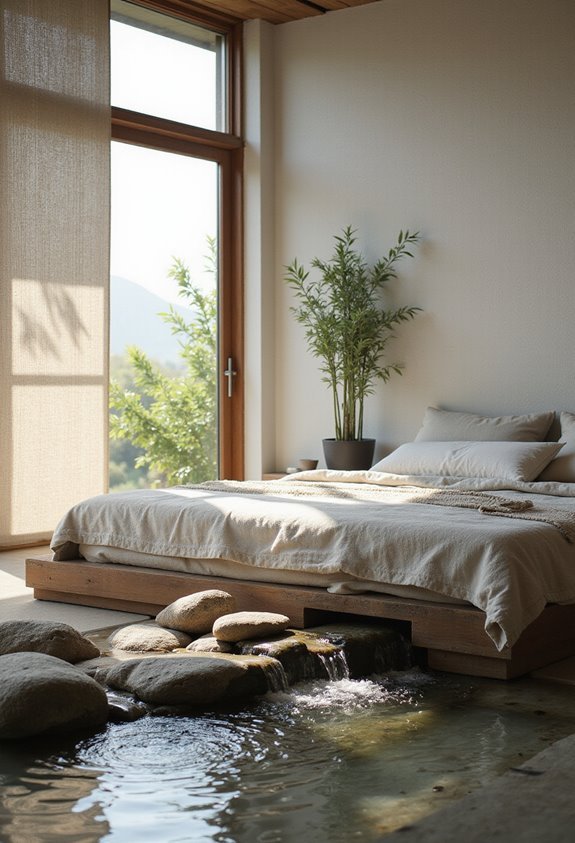
If you’ve ever noticed how your brain turns into mush the moment silence hits too hard, you’re not alone—and that’s where a water feature swoops in like a zen superhero. A small tabletop fountain works magic in corners. Place it near your bed or desk. The gentle trickling sound masks annoying noises and calms your nervous system. Your brain basically goes “ahhhh” and stops obsessing about everything. Look for fountains with adjustable flow rates so you control the vibe. Ceramic or stone designs blend perfectly with calm aesthetics. The water reflects light softly, adding visual calmness too. Running water also humidifies your space naturally. Your skin and sinuses will thank you. Honestly, it’s like having a tiny meditation buddy that costs less than fancy coffee. Your room becomes instantly more peaceful.
Use Bamboo Accents for Strength and Flexibility
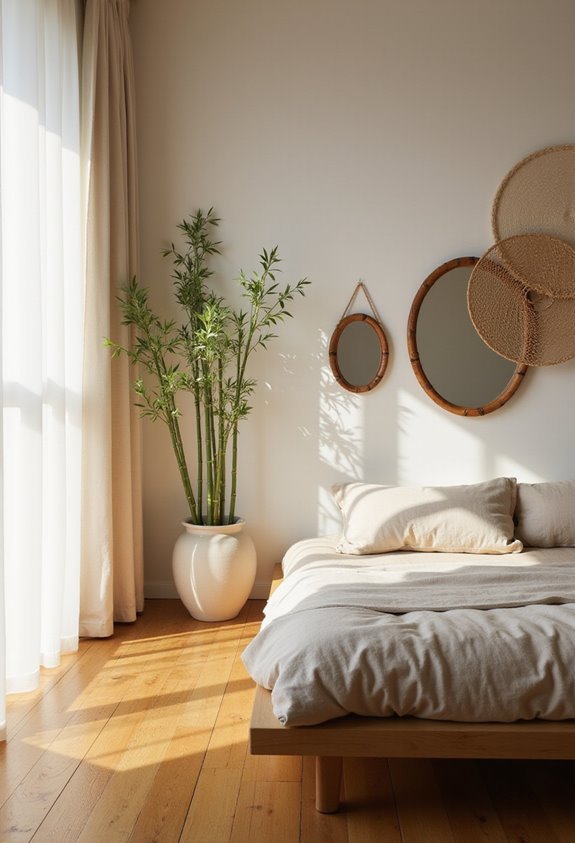
While you’re settling your water feature into its forever home, let’s talk about another zen superstar: bamboo. This stuff’s incredibly flexible—kind of like yoga instructors, but without the annoying downward dogs. You can bend bamboo without breaking it, which is honestly life goals. Pop a 3-foot bamboo plant in your corner, and watch it bring serious zen energy. Bamboo’s naturally green and calming, making your space feel like a peaceful forest retreat. You can also use bamboo mats, small decorative stalks, or even bamboo furniture. The best part? It’s sturdy yet graceful, strong but never aggressive. Your room will feel instantly more balanced and tranquil. Plus, bamboo grows super fast, so nature’s basically cheering you on.
Layer Grounding Stone Elements: Pebbles and Rocks

Stones and pebbles are nature’s way of saying, “Hey, you’ve got this,” and they’re basically the underachievers of zen design—totally humble but weirdly powerful. You’ll want to scatter them around your room like you’re creating tiny meditation monuments.
Here’s what makes stones rock (pun intended):
- Gray and white pebbles in shallow bowls create calm focal points without demanding attention
- Stacked rocks by your window add height and visual interest while looking effortlessly cool
- River stones under your bed frame ground the space and literally support your sleep sanctuary
You can arrange 5-7 stones in corners or along shelves. They’re like tiny zen bodyguards protecting your peaceful vibes. Plus, they won’t judge you for staying in bed all day. Stones just *get* you, honestly.
Create a Zen Garden or Sand Tray for Tactile Calm

Ever wish you could rake something without actually having to do yard work?
A zen garden or sand tray is your answer. Grab a shallow wooden box (12 by 16 inches works great) and fill it with fine white or tan sand. Add a few smooth rocks and a tiny wooden rake. Now here’s the magic: raking those miniature patterns actually calms your brain down. It’s meditation you can hold in your hands.
Position your sand tray on a shelf or desk where you’ll actually use it. The repetitive raking motions quiet racing thoughts better than any app. Plus, you get to feel like a tiny landscape architect without leaving your room. Your stress doesn’t stand a chance against tiny rake lines.
Choose Low-Profile Furniture to Reduce Visual Weight
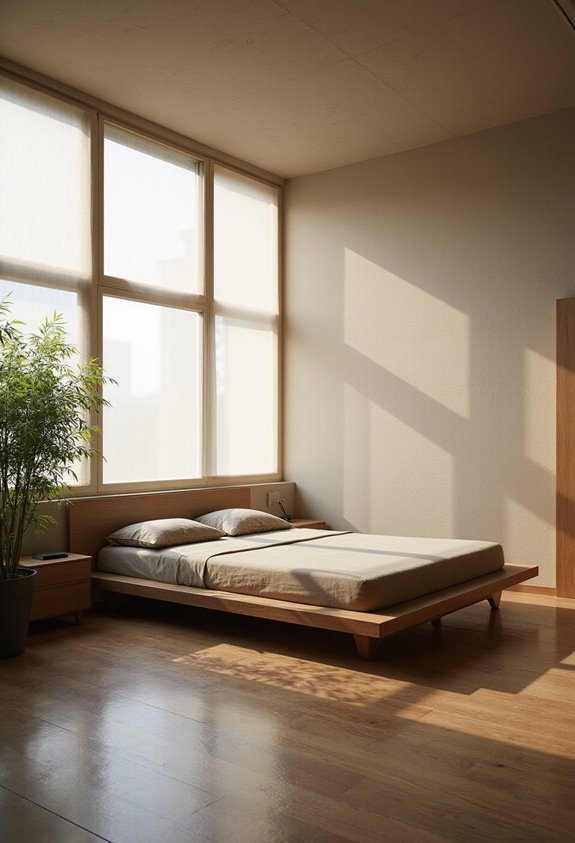
If you’ve ever felt like your room’s furniture is plotting against you from every angle, it’s time to go low-profile. Bulky pieces make spaces feel cramped and suffocating. Your room should breathe, not wheeze!
Low furniture creates openness and calm. Here’s what you’re after:
- Platform beds sitting just 12-18 inches high instead of towering monsters
- Sleek tables with exposed legs so you can actually see your floor
- Shallow shelves that don’t jut out like aggressive elbows
The magic happens when your eye travels freely across your room. You’ll feel less boxed in and more zen. Furniture that hovers near the ground makes everything feel lighter and airier. Your anxiety will literally have less furniture to worry about. That’s the whole point!
Invest in Natural Fiber Rugs for Grounding Energy
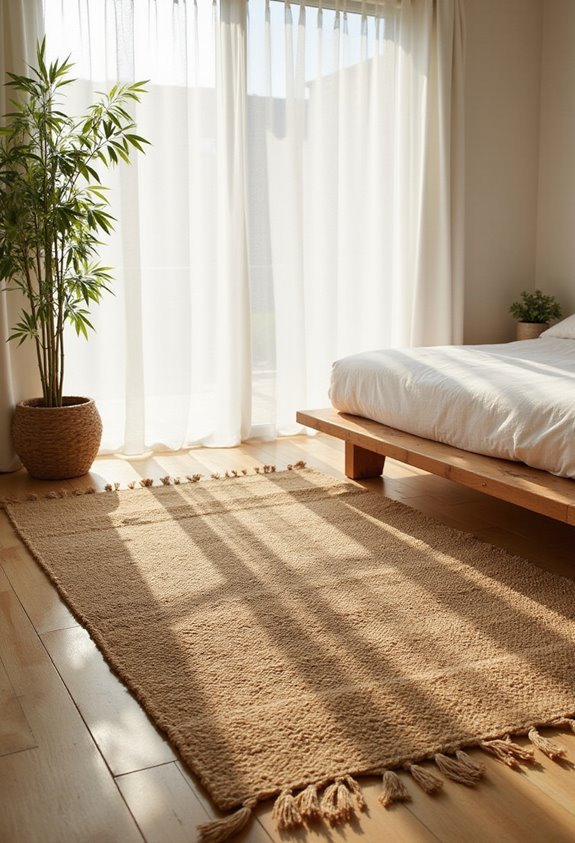
Your bare floor’s been calling out for help, and a natural fiber rug is exactly what it needs. Jute, sisal, and wool rugs aren’t just pretty—they’re basically grounding cables for your room’s energy. These materials connect you physically and spiritually to the earth. Pick a 5-by-8-foot rug as your room’s anchor. The neutral beiges and warm tans won’t compete with your minimalist vibe. Position it under your bed or in your meditation corner. Natural fibers absorb sound too, making your space feel quieter and calmer. Plus, they’re way less likely to trap dust than synthetic options. Your lungs will literally thank you. These rugs age beautifully, developing character like a fine wine. Invest in natural fiber now, and your zen sanctuary becomes genuinely grounded.
Display Scroll Paintings and Calligraphy Art

Scroll paintings and calligraphy art are the finishing touches that’ll make your room actually look intentional instead of accidentally minimalist. You’re basically telling visitors, “Yeah, I planned this,” instead of them wondering if you just forgot to unpack.
Here’s what you need to know:
- Hang scrolls at eye level (around 57 inches from the floor) so they don’t feel like they’re judging you from above
- Mix black ink with colored pieces to keep things visually interesting without going full chaos mode
- Lean smaller frames on shelves rather than hanging them everywhere like you’re decorating a museum on a budget
These pieces bring serious calm energy. A simple landscape scroll or Japanese characters instantly make your space feel sophisticated. Your room’ll transform from “meh” to “wow, they’ve got taste.” That’s the real magic right there.
Layer Calming Scents: Incense, Essential Oils, Aromatherapy

Scents are basically the secret weapon nobody talks about when they’re trying to chill out. Your nose is basically a direct hotline to your brain’s chill-out center, and you’d be silly not to use it.
Grab some incense sticks and light one up near your window. The smoke curls around like it’s doing yoga, and suddenly your room smells like a peaceful forest instead of your gym socks. Essential oils work too—just three to five drops in a diffuser and you’re golden.
Lavender? Classic move. Sandalwood? Super fancy and actually works. Peppermint? Great for when you need to stop being a zombie.
Layer different scents throughout your space. Try incense in one corner and oils in another. Your brain’ll feel like it’s taking a vacation, and your room becomes your personal spa without the awkward bathrobe situation.
Add Woven Baskets for Hidden Storage and Texture
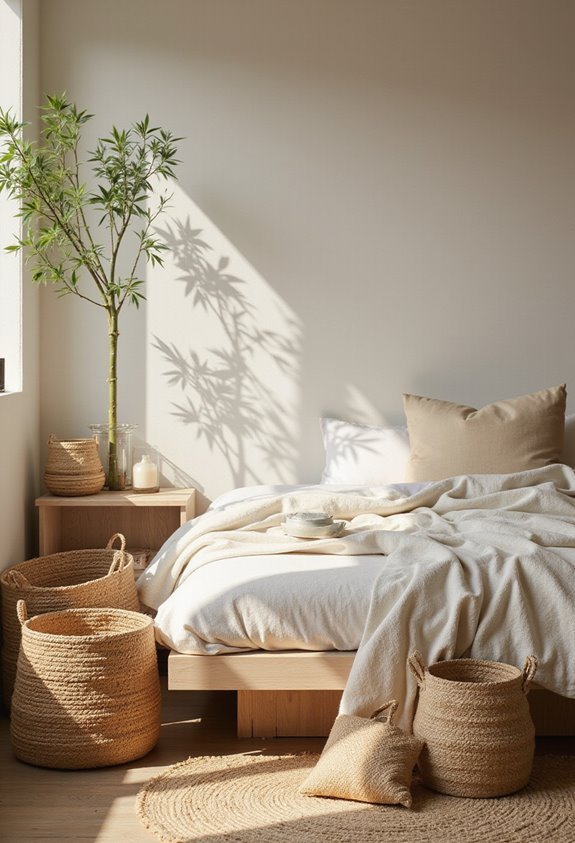
While you’re busy making your room smell like a spa, let’s talk about hiding all the stuff that doesn’t belong there.
Woven baskets are basically magic disguises for clutter. They’re like ninjas for your junk. You’ll toss in those random socks, tangled chargers, and mysterious items you forgot about. Nobody needs to know what’s lurking inside.
Here’s why baskets rock your zen vibe:
- They look naturally cool – Woven textures add warmth and visual interest without screaming “storage.”
- They’re actually functional – Grab one, haul stuff away, problem solved.
- They come in tons of sizes – Small 8-inch ones for shelves, large 18-inch ones for corners.
Arrange them around your room in neutral tans and creams. Stack them strategically. Your space becomes calmer instantly, and nobody judges your hidden mess. That’s the zen way.
Layer Soft Textiles Like Linen and Cotton Bedding

Your bed’s about to become the coziest cloud you’ve ever sunk into. Grab some linen and cotton bedding in soft whites, creams, or pale blues. These natural fabrics breathe like they’re doing yoga, keeping you cool and comfy all night long. Layer a fitted sheet, flat sheet, and two pillowcases for ultimate softness. Add a lightweight cotton duvet or quilt on top. The texture combo feels amazing against your skin, honestly. Cotton and linen wrinkle a bit, but that’s the zen aesthetic—nothing’s gotta be perfect here. Toss on some throw pillows in matching tones. Your bedroom instantly transforms into a peaceful retreat where you’ll actually want to spend time. Sweet dreams, friend.
Incorporate Sliding Doors or Shoji Screens for Visual Softness

If you want to dial up the zen vibes even more, sliding doors and shoji screens are your secret weapons. These beauties aren’t just fancy room dividers—they’re basically meditation tools you can walk through.
Here’s why they’re so good:
- They soften everything. No harsh corners or solid walls staring you down. Instead, you get gentle, translucent panels that let light drift through like it’s whispering a secret.
- They save space. Sliding doors don’t swing open and smack you in the face (trust me, I’d know). They glide smoothly along tracks.
- They look incredibly calm. That minimalist vibe? Chef’s kiss. Cream, white, or light wood frames just hit different.
Your room’ll feel like a peaceful sanctuary instead of a chaotic closet.
Frequently Asked Questions
How Do I Maintain a Zen Room’s Calm Atmosphere With a Busy Family Schedule?
You’ll maintain your zen room’s calm by establishing strict boundaries with family members. Set designated quiet hours, use “do not disturb” signs, and keep the space minimal and clutter-free. You’ll preserve serenity by limiting screen time and regularly decluttering your sanctuary.
What Is the Ideal Room Temperature for Optimal Relaxation and Sleep Quality?
You’ll find your slumber sanctuary most inviting when you maintain a gentle coolness between 60-67°F. You’re creating the perfect nest by lowering your body temperature naturally, which deepens your restorative sleep and enhances your relaxation profoundly.
Can I Combine Zen Design With Modern Technology Without Disrupting the Peaceful Aesthetic?
Yes, you can seamlessly blend zen aesthetics with technology. You’ll want to hide devices behind wooden panels, use neutral-colored tech, and integrate smart systems that you control discreetly. You’ll maintain tranquility by prioritizing minimalism and purposeful placement.
How Often Should I Refresh or Rotate Zen Room Elements to Prevent Monotony?
You’ll ironically find that constantly rejuvenating your zen space defeats its peaceful purpose. Instead, rotate elements seasonally—swap artwork, rearrange plants, or change accent colors every three to four months. This subtle approach maintains novelty while preserving your room’s serene foundation.
What Budget-Friendly Alternatives Exist for Expensive Natural Materials and Zen Accessories?
You’ll save money by using bamboo blinds, pebbles from nature walks, and DIY water features. Thrift stores offer affordable pottery and sculptures. Paint wooden furniture white or natural tones. Create your own wall art with botanical prints instead of buying expensive pieces.
Conclusion
You’ve just spent all this time making your room zen and calm, but here’s the funny part—you’re gonna mess it up the second you stub your toe on that low bed frame. Your room’s now so peaceful you’ll actually fall asleep doing homework. That tiny fountain? It’ll have you running to the bathroom constantly. But hey, at least you’ll look chill while frantically searching for your phone under those minimalist pillows. Mission accomplished!

