

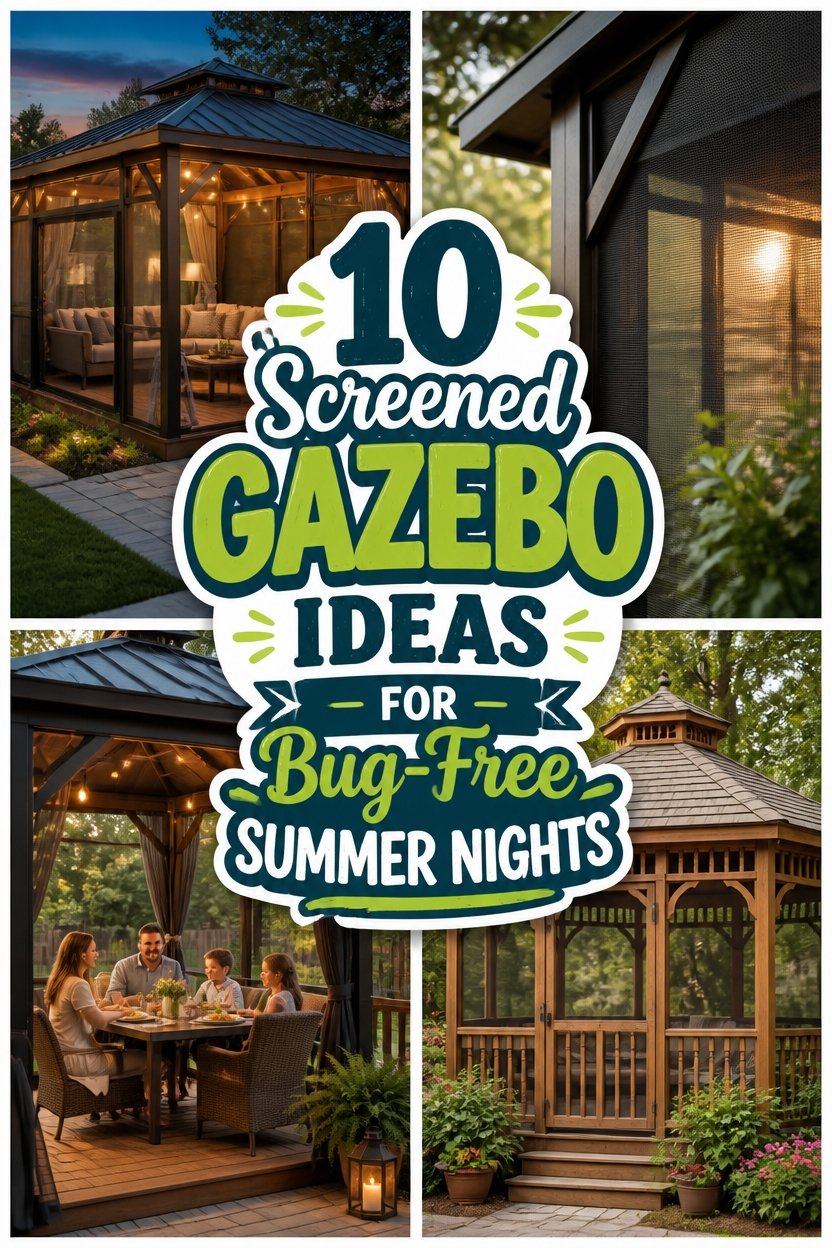
There’s a specific kind of summer evening ruined by mosquitoes, the one where you finally sit down outside with a glass of wine and get chased back in within ten minutes.
A screened gazebo fixes that completely, and once I had one, I stopped dreading dusk in my own backyard.
The style options run wide. Classic peaked roofs bring timeless charm, sleek steel frames suit modern yards, and rustic wood feels like a forest retreat.
Shape and function matter too. Hexagonal designs catch breezes from every side, while retractable screens flex with the weather as it shifts.
Some attach right to your house for easy indoor-outdoor flow, others stand alone as their own little destination.
A Few Things I Wish I Had Known Earlier
How permanent you want this structure to be should shape your decision more than style does. A pop-up model suits a renter just fine, but a permanent masonry build is a different commitment entirely.
Maintenance comfort matters too. Wood looks beautiful but asks for yearly staining, while steel and aluminum basically take care of themselves.
Think honestly about how often you’ll actually use the space before you invest in the fanciest option on the list.
10 Screened Gazebo Ideas That Keep the Bugs Out
These builds range from a quick weekend pop-up to a permanent masonry structure meant to last decades, so there’s a fit here for almost any yard or budget.
Some focus on airflow and ventilation, while others lean into style, with vintage wood details or sleek modern steel framing.
Scroll through and find the one that matches how you actually want to spend your evenings outside.
Classic Peaked Roof Screened Gazebo for Timeless Appeal
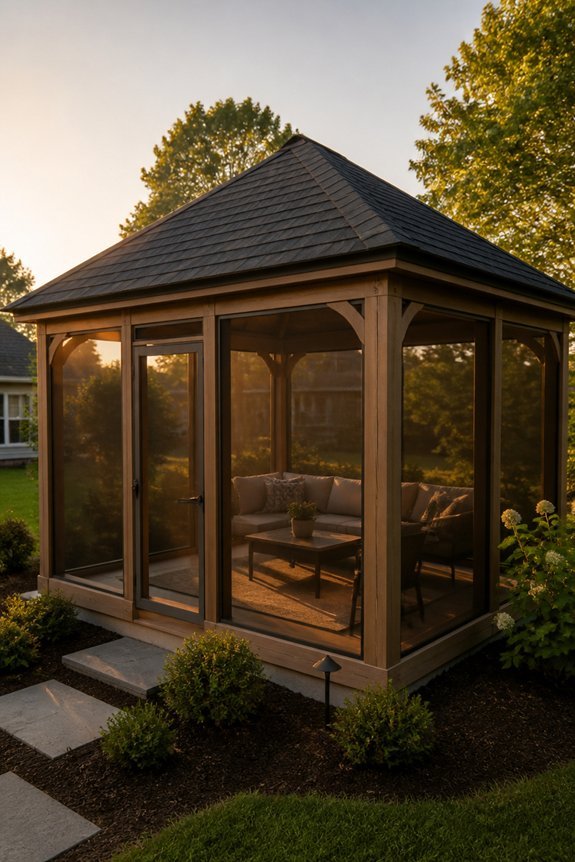
The classic peaked roof screened gazebo remains a favorite for good reason. Its straightforward design delivers reliable bug protection without fuss. You get a practical outdoor space that simply works.
The triangular roof peak serves a clear purpose. Rain and debris drain away naturally, so water never pools on top. This prevents damage and extends the life of your structure. The angled design also moves air better than flat roofs. Your gazebo stays cooler on hot summer days.
Most models use aluminum frames with fiberglass mesh. This pairing resists rust and needs little upkeep. Sizes typically run from 10 by 12 feet up to 12 by 16 feet. You will find an option that fits your yard. The clean look blends with traditional or contemporary homes alike.
Plan for a solid base during installation. Concrete pads or anchored posts provide the stability you need. Take this step seriously, and your gazebo will stand strong for years.
Also read: 11 Gazebo Dining Ideas for Outdoor Family Gatherings
Modern Minimalist Screened Gazebo With Steel Framing
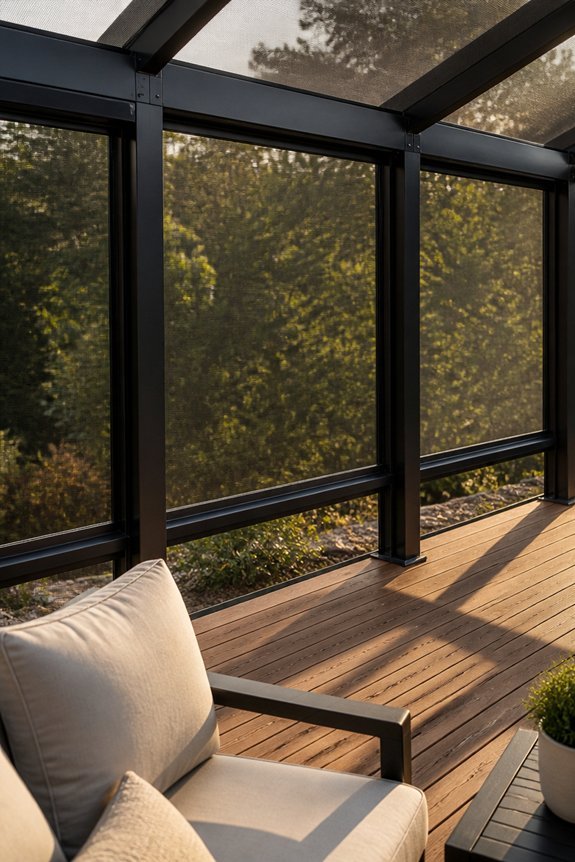
Steel-framed gazebos bring a fresh, contemporary look to outdoor spaces. Clean lines and slim supports create open sightlines without visual clutter. The minimalist aesthetic appeals to homeowners who prefer modern styling over traditional designs.
Steel offers practical advantages beyond its looks. It resists warping and rotting, so it needs little upkeep compared to wood. The material handles weather changes without splintering or deteriorating. Screens attach directly to the frame, keeping insects out while preserving your view. Common sizes like 10-by-12 feet work well for dining or lounging areas. Some models include adjustable louver panels alongside fixed screens.
Assembly stays straightforward with bolt-together frame sections. Once built, the structure holds outdoor furniture with ease. Steel framing suits anyone seeking a low-maintenance, modern retreat.
Rustic Wooden Screened Gazebo With Vintage Character
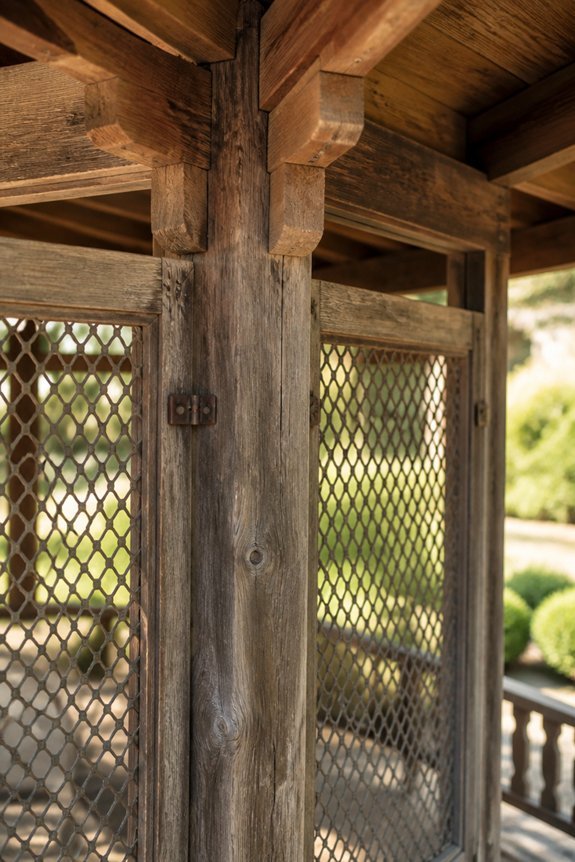
A wooden gazebo brings warmth to established gardens and period homes. Cedar, redwood, and pressure-treated pine stand strong against weather and insects. Regular upkeep keeps them looking their best.
Vintage details make these structures special. Look for decorative brackets, lattice panels, and peaked roofs with wooden shingles. These touches create genuine old-fashioned charm.
Blending Protection With Beauty
Screens attach securely to wooden frames using classic techniques or modern fasteners. You’ll keep bugs away without sacrificing traditional style. Weathered stains or aged paint finishes deepen that nostalgic feel.
Furnishing Your Retreat
Fill your gazebo with period pieces like wicker seating, wooden tables, and antique lanterns. Let climbing vines such as clematis or roses weave around the posts. This softens the edges and adds authentic character.
Plan for yearly staining and sealing. This simple routine prevents rot and extends your gazebo’s life for decades.
Hexagonal Screened Gazebo for Visual Interest
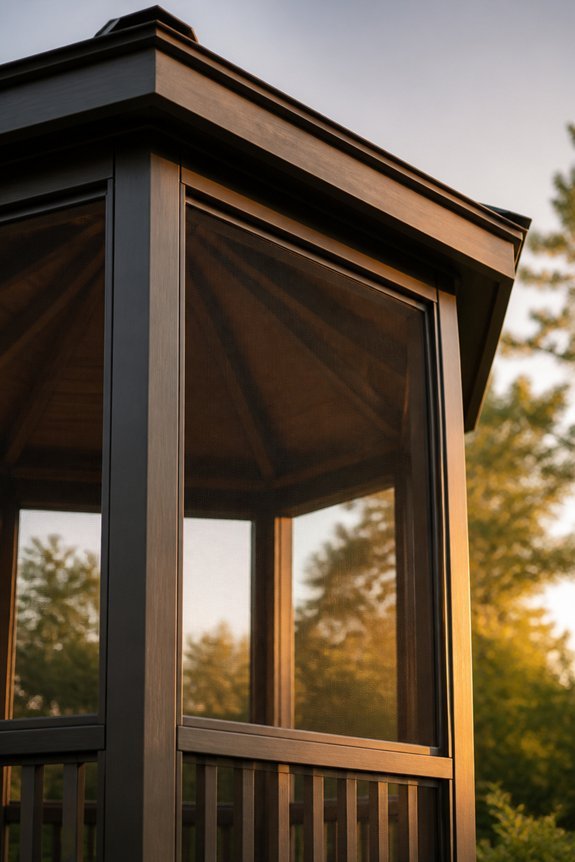
Hexagonal gazebos break away from ordinary rectangles and octagons. Their six-sided geometry catches the eye from every direction. Your outdoor space gains a clear focal point.
Smart Design Benefits
The angled sides hold screened panels with ease. Each panel fits individually or links into larger sections. Inside, you get roughly 40 to 50 square feet of room. Small gatherings feel cozy here.
Corners form naturally around the six sides. These spots work well for seating, tables, or walking paths. You can arrange furniture without awkward gaps.
Materials and Setup
Treated wood, vinyl, and aluminum options come prefabricated from most manufacturers. Installation stays straightforward with these ready-made kits. You skip complex construction headaches.
The shape stands out while still delivering practical perks. Bugs stay out. Summer weather won’t ruin your plans. You entertain comfortably with distinct style.
Budget-Friendly Pop-Up Screened Gazebo for Quick Setup
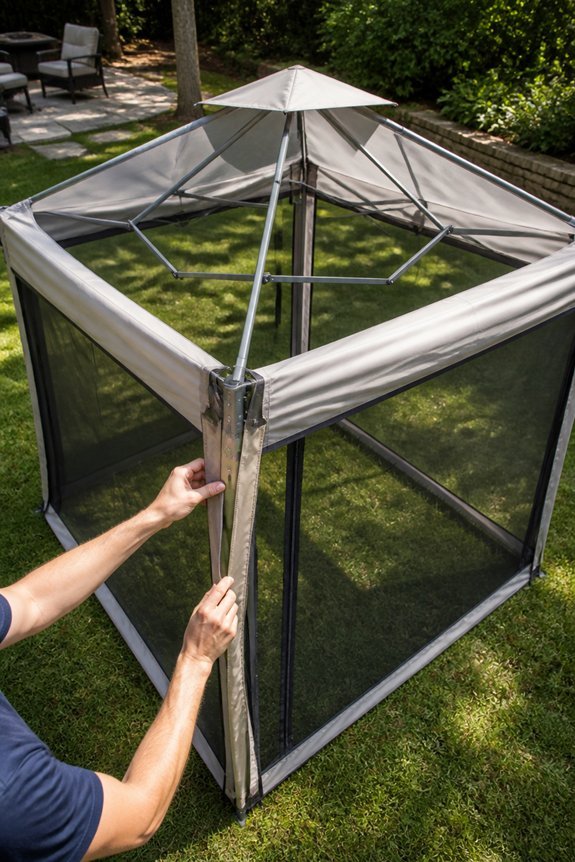
Most pop-up screened gazebos fold flat for storage. They set up in minutes without tools. Prices range from $150 to $400 based on size and materials.
Sizes typically run 8×8 feet or 10×10 feet. This works well for small gatherings. Frames use lightweight aluminum or steel. Screens attach with velcro or magnetic strips. Popular options come from Coleman, Screened Canopy Pop Up, and Eurmax.
Pop-up models need patios or level ground. Stakes help secure the base. They shine during peak mosquito season because of their portability.
Expect one to three seasons of regular use. Screens may wear around seams and corners over time. Watch those spots for potential insect entry points.
Permanent Masonry Screened Gazebo for Long-Term Durability
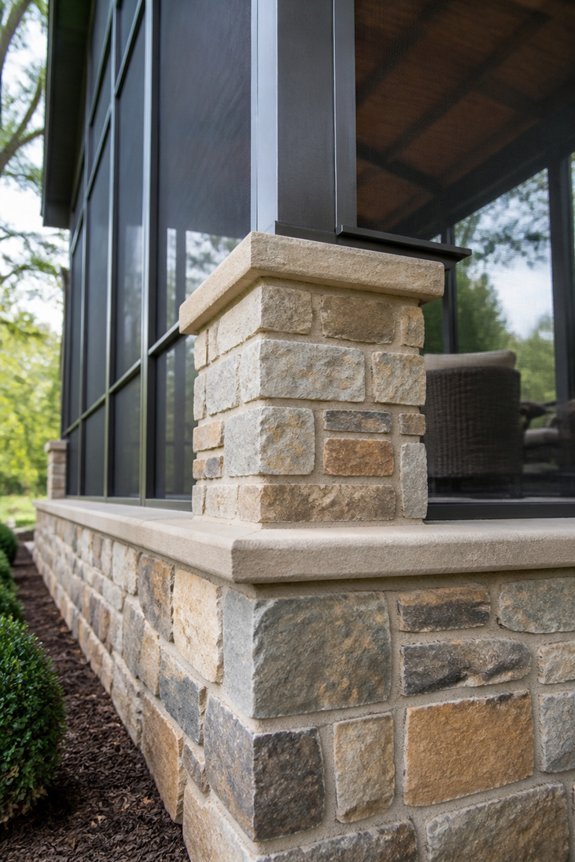
Permanent masonry screened gazebos provide a fixed outdoor structure built to last. They resist weathering, insects, and seasonal wear better than temporary options.
Built to Endure
These structures use brick, stone, or concrete foundations. They last decades with little upkeep. The screens keep mosquitoes and flies outside where they belong.
Smart Installation
Hire professionals for proper construction. They will install drainage systems and concrete footings. This prevents settling and future problems.
Real Benefits
Enjoy your gazebo year-round. It boosts property value and blocks harmful UV rays through the screening. Masonry gazebos stand up to high winds, heavy snow, and intense sun.
Costs and Savings
Expect to spend $5,000 to $15,000 initially. Size and materials affect the final price. You will save money long-term with fewer repairs and more outdoor months to enjoy.
Retractable Screen Screened Gazebo for Flexible Open-Air Options
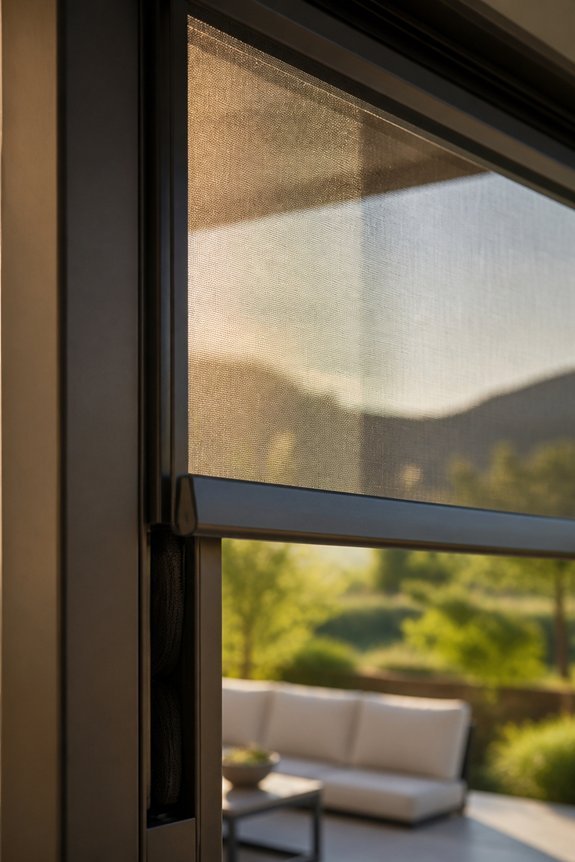
Retractable screen gazebos give you the freedom to change your space on demand. You can open things up for sunshine and breezes. You can close them off when bugs arrive.
These gazebos use motorized or manual systems. Screens roll neatly into the frame when not needed. This leaves your views completely clear.
Popular brands include Sunesta and Betterliving. Their models use tough mesh and sturdy aluminum frames. The materials hold up well over time.
You get protection from insects without losing airflow. Natural light still fills the space. Comfort stays high even on warm days.
Sizes range from compact eight-by-ten-foot designs to large fifteen-by-twenty-foot setups. Most spaces can accommodate one.
Maintenance stays simple. Clean the mesh panels now and then. Lubricate moving parts as needed.
These systems cost more than fixed screens. The tradeoff is year-round flexibility. You adapt to seasons and activities without building anything permanent.
Double-Roof Screened Gazebo for Superior Ventilation and Shade
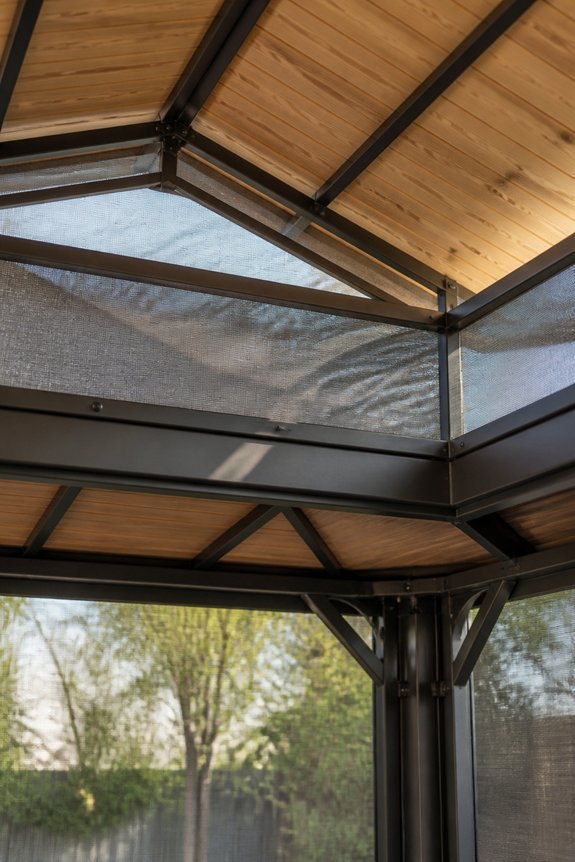
Double-roof screened gazebos take outdoor comfort to the next level. They focus on smart airflow and temperature control rather than just flexibility.
The dual-roof design creates a helpful air gap between layers. Hot air escapes through the top while cool shade stays below. You’ll notice a big temperature drop compared to single-roof models.
Popular options like the Sunjoy Arkadia and Paragon Outdoor include louvered vents or adjustable panels. Keep the upper roof slightly open for best results. The lower roof handles sun and rain protection. It blocks harsh UV rays while you relax underneath.
Screen panels wrap all sides of the structure. Bugs stay out. Fresh breezes flow right through. You get natural ventilation without the annoying bites.
Attached Screened Gazebo: Connect to Your House
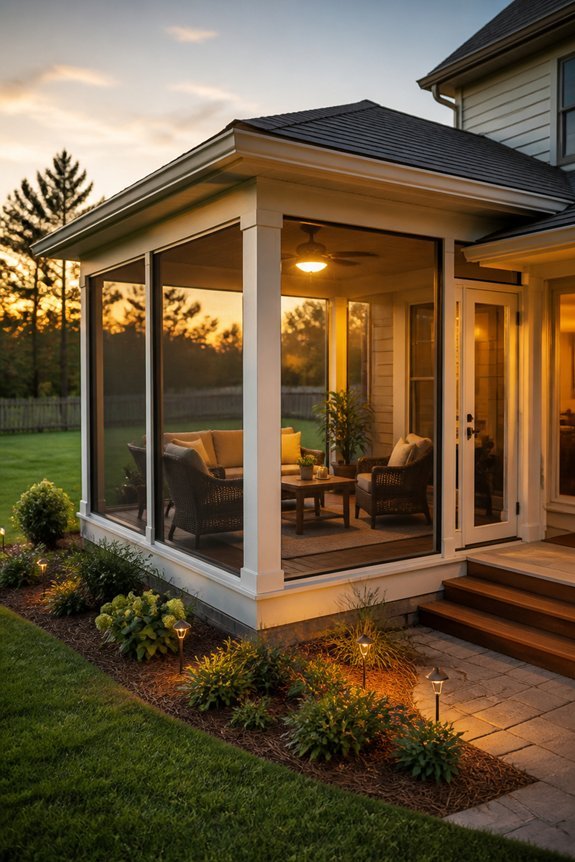
A screened gazebo attached to your house extends your living space. You get bug protection and weather control without stepping outside. Moving between indoor and outdoor areas feels natural during parties or quiet evenings.
Practical Benefits
Attached models share walls with your home. This cuts material costs and simplifies installation. Most include a doorway or sliding glass door for easy access.
You can run electrical lines through the house wall. This powers ceiling fans, lights, and outlets in the screened space. The gazebo also blocks direct sun from hitting your home’s exterior. Your cooling costs may drop as a result.
Corner placements and deck connections work especially well for this design.
DIY Screened Gazebo Kit: Build It Yourself
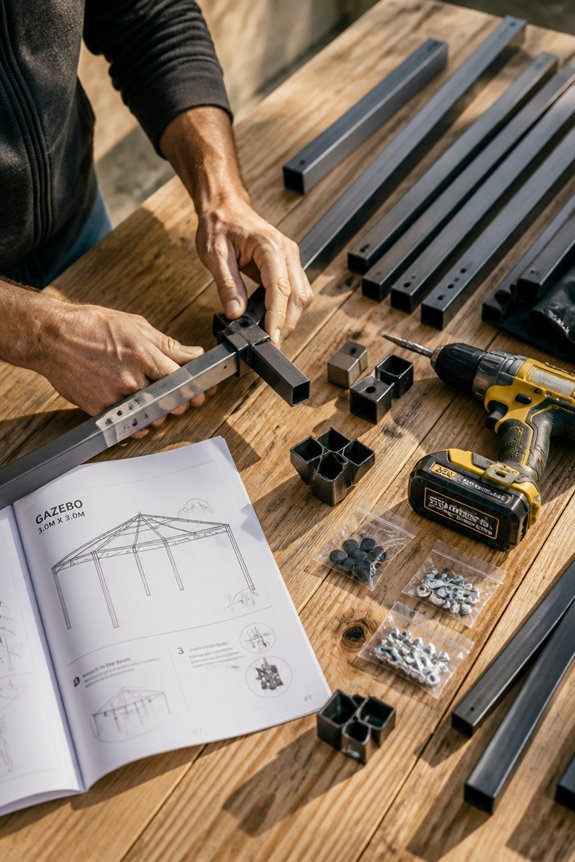
DIY screened gazebo kits sit between attached structures and standalone models. Each kit arrives with pre-cut pieces, hardware, and step-by-step instructions. Most homeowners can handle the assembly without professional help.
Sunjoy and Backyard Discovery are popular choices. Their kits range from compact 10×10 foot designs up to spacious 12×16 foot layouts. You will need two or three people for the build. Most projects wrap up in eight to twelve hours.
These kits typically use aluminum framing with polycarbonate or metal roofing. The screening comes pre-measured and ready to install.
Saving Money on Your Build
Kits cost less than hiring contractors. You skip the design fees and labor charges entirely. Still, measure your yard carefully before ordering. Check that you have enough space for the footprint and foundation.
Your base can be concrete, compacted gravel, or an existing deck. A solid foundation keeps your gazebo stable through the years. It also protects your investment from wind and weather damage.
Frequently Asked Questions
How Often Should I Replace or Repair Screened Gazebo Screens for Optimal Protection?
Give your screens a good look twice a year, once in spring and again toward the end of summer. Catching small tears early keeps them from turning into bigger problems.
Full replacement usually isn’t necessary for five to ten years, though that timeline shifts depending on your weather and the quality of the material.
If you’re in an area with harsh sun or heavy storms, expect to be on the shorter end of that range.
What Is the Average Cost Difference Between Renting Versus Buying a Screened Gazebo?
Renting typically runs $300 to $500 a year, which sounds cheap until you add it up over time.
Buying costs more upfront, usually somewhere between $1,500 and $3,000, but it starts paying for itself after three to five years of use.
If you know you’ll want a screened space every summer, buying is usually the better long-term move.
Can Screened Gazebos Withstand Extreme Weather Conditions Like Heavy Winds or Snow?
It depends a lot on how the structure is built. Standard models handle moderate wind and light snow just fine.
Heavy-duty designs with reinforced metal frames hold up much better when conditions get more extreme.
If you live somewhere with rough winters or frequent storms, it’s worth spending a bit more on a sturdier frame from the start.
Which Insects Are Most Effectively Blocked by Standard Screening Materials in Gazebos?
Standard mesh does a great job keeping out mosquitoes, flies, gnats, and wasps, which covers most of what ruins an evening outside.
Smaller pests like no-see-ums are trickier, since they can slip through regular screening.
If those are a problem where you live, look for a finer mesh option specifically designed to block them.
Do Screened Gazebos Require Permits or Special Installation Considerations in Residential Areas?
Most residential areas do require a permit, so it’s worth checking before you order anything.
Setback requirements, height restrictions, and foundation specifications can all come into play depending on where you live.
If you’re part of an HOA, add that to your checklist too, since approval requirements vary a lot by neighborhood.
CONCLUSION
A screened gazebo changes how many evenings you actually spend outside, not just how your backyard looks.
I used to write off half the summer because of bugs, and adding a screened space turned those months into some of my favorite ones to be outdoors.
Classic peaked roofs offer that dependable, timeless look, while modern steel frames suit a more contemporary yard. DIY kits and pop-up models make the whole thing approachable even if you’re not particularly handy.
Permanent masonry builds are there if you’re ready to commit to something that lasts for decades.
Whatever you choose, the goal is the same, more evenings outside without the itching.
Which style fits your yard best? Share it in the comments, I’d love to hear what you’re planning.