

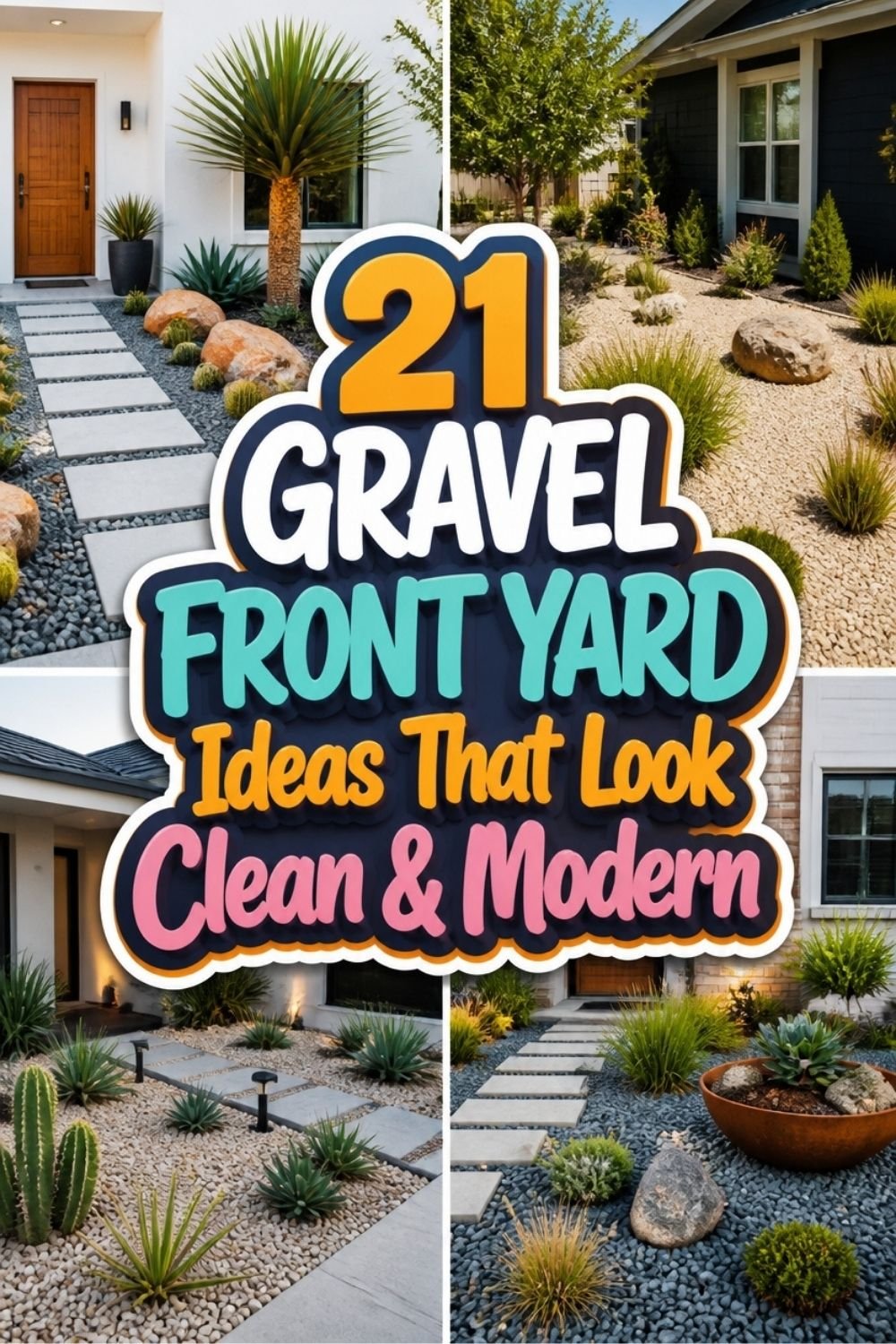
A contractor friend once told me gravel is the most underrated material in residential landscaping, and after redoing my own front yard, I finally understood what he meant. It’s quiet, versatile, and always looks intentional.
Lawns demand ongoing commitment, and grass struggles in plenty of climates regardless of effort. Gravel sidesteps that problem while looking polished rather than barren.
The variety surprised me once I started researching, pea gravel, river rock, crushed stone, each creating a different feel. I went with gray granite and a few boulders, and the compliments from neighbors caught me off guard.
Getting the Foundation Right
Before you order a single yard of gravel, understand the difference between the main types available, since pea gravel, river rock, and crushed stone all behave and look completely different once installed. Matching the right type to the right use matters more than picking based on looks alone.
Drainage planning deserves attention before installation day arrives. Gravel handles water well on its own, but skipping proper grading or a fabric barrier underneath leads to problems with weeds and shifting stones down the line.
Color coordination with your home’s exterior makes a bigger visual difference than people expect. A gravel shade that clashes with your siding or trim can undercut an otherwise well designed yard.
21 Gravel Front Yard Ideas
This list runs through gravel types, color choices, and design styles ranging from minimalist single statement plantings to full Mediterranean courtyards and tiered terraces for sloped lots. Some of these projects are weekend sized, others involve real planning and possibly some professional help depending on your yard’s terrain.
I tried to include enough range that whether you’re working with a flat suburban lot or a tricky hillside, there’s a gravel approach here that fits your specific situation.
Find the style that matches your home’s architecture and start mapping out your own clean, modern front yard.
Understanding Gravel Types: Pea Gravel Vs River Rock Vs Crushed Stone
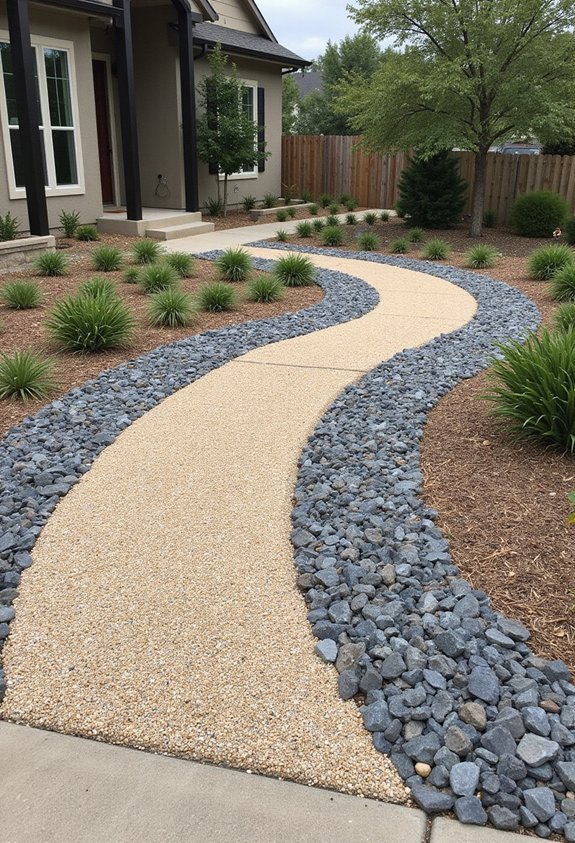
When you’re planning a gravel front yard, selecting the right type of gravel becomes one of your most important decisions because each variety offers distinct characteristics that affect both appearance and functionality.
Pea gravel features small, rounded stones measuring three-eighths inch in diameter, creating smooth surfaces that feel comfortable underfoot while providing excellent drainage for walkways and decorative areas.
River rock consists of larger, naturally tumbled stones ranging from one to three inches, offering bold visual texture and superior weed suppression capabilities. Crushed stone delivers angular fragments that lock together tightly, forming stable surfaces ideal for driveways and high-traffic zones.
Also read: 19 FRONT YARD WATER FEATURE Styles That Feel Luxurious!
Calculating Gravel Amounts And Installation Costs For Front Yards
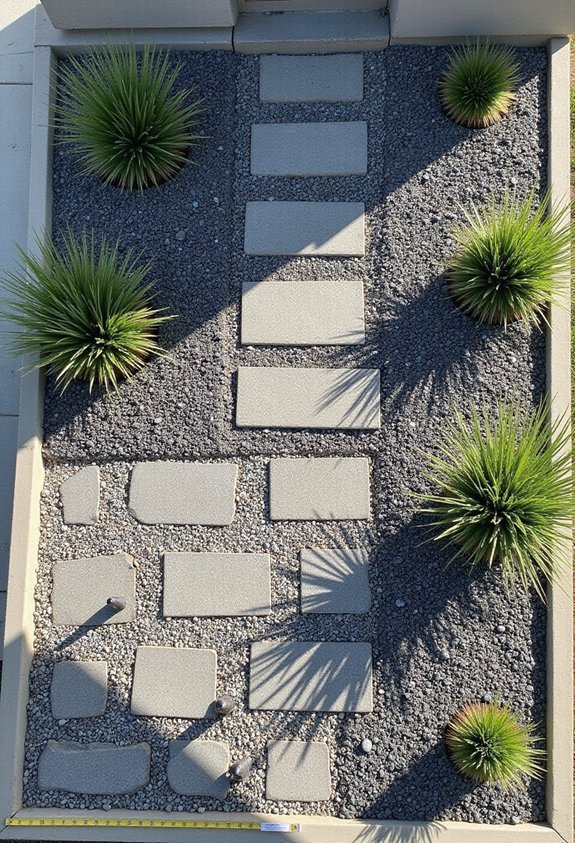
Before you purchase materials for your gravel front yard project, you’ll need to calculate precise quantities and understand associated costs to avoid expensive mistakes and project delays.
Measure your yard’s length and width in feet, then multiply these numbers to determine square footage. For standard coverage, you’ll need approximately 1.5 to 2 inches of gravel depth, which translates to one cubic yard covering roughly 160 square feet.
Gravel costs range from $30 to $60 per cubic yard, depending on type and location. Professional installation adds $40 to $80 per cubic yard for labor expenses.
Gravel Color Selection: White Marble Vs Gray Granite Vs Earth Tones
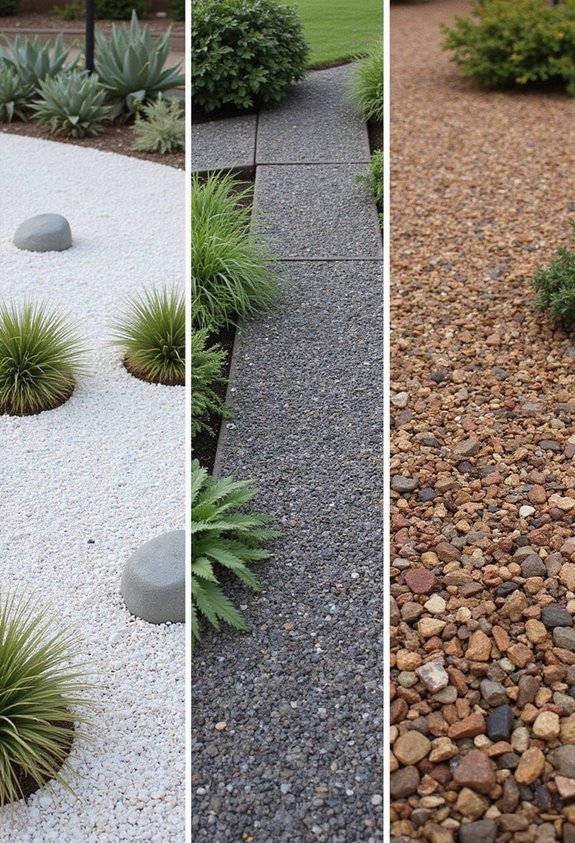
Since gravel color dramatically influences your front yard’s visual impact and compatibility with your home’s exterior, you’ll need to evaluate three primary color categories that offer distinct aesthetic advantages and practical considerations.
White marble gravel creates striking contrast against dark facades, reflects sunlight to reduce heat buildup, but shows dirt and debris more readily than darker alternatives.
Gray granite provides neutral versatility that complements most architectural styles, maintains cleaner appearance longer, and offers moderate heat reflection properties. Earth-tone gravels, including browns and tans, blend naturally with surrounding landscapes, camouflage fallen leaves effectively, and create warm, welcoming appearances.
Creating Gravel Pathways That Connect To Your Front Door
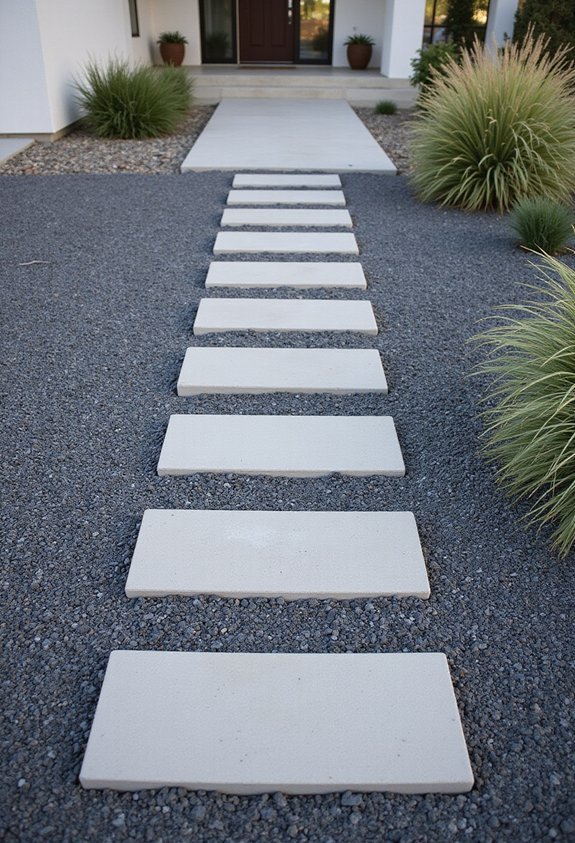
Although gravel pathways serve as functional routes to your front door, they require strategic planning to achieve proper width, drainage, and visual flow that enhances your home’s curb appeal.
You’ll want to create pathways that measure 36 to 48 inches wide, allowing comfortable two-person walking space while maintaining proportional balance with your home’s architecture. Install landscape edging along pathway borders using metal, stone, or concrete strips to prevent gravel migration into surrounding areas.
Design gentle curves rather than sharp angles to create natural movement toward your entrance, and guarantee proper grading with a slight slope for effective water drainage.
Minimalist Gravel Gardens With Single Statement Plants
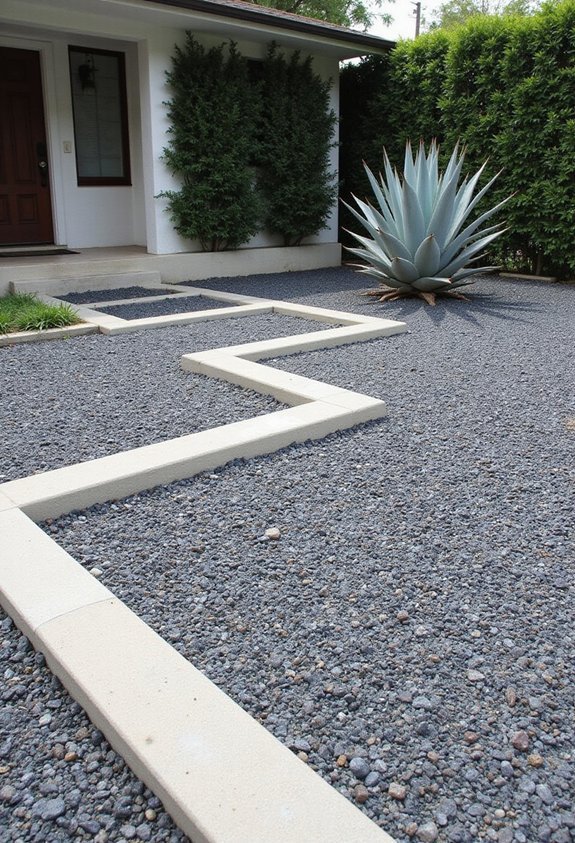
While elaborate garden designs often overwhelm front yard spaces, minimalist gravel gardens create striking visual impact through the strategic placement of single statement plants that serve as natural focal points.
You’ll achieve maximum impact by selecting one sculptural plant, such as a Japanese maple, ornamental grass, or architectural succulent, then positioning it within a sea of uniform gravel.
This approach eliminates visual clutter while drawing attention to your chosen specimen’s unique form, texture, and seasonal changes. You can enhance the design by creating subtle elevation changes in your gravel bed, which adds depth without compromising the clean, modern aesthetic.
Japanese Zen Gravel Gardens With Raked Patterns And Boulders
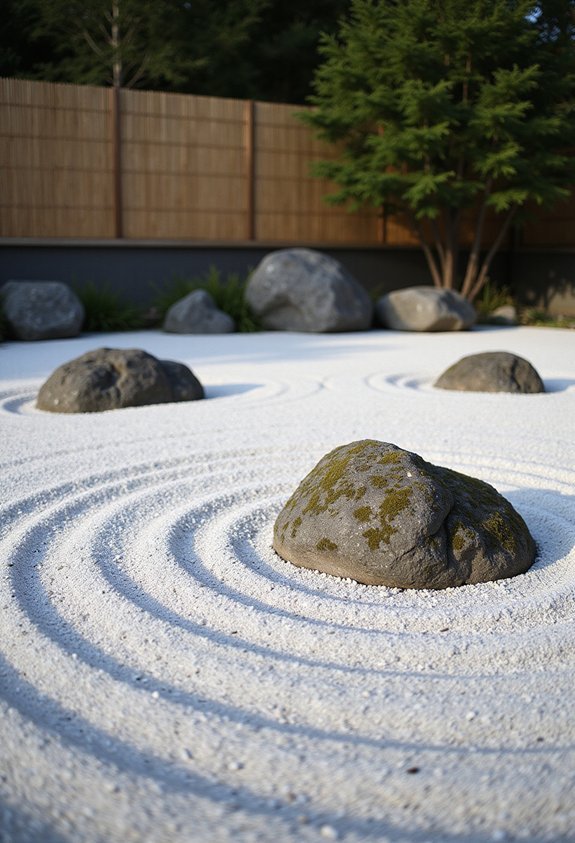
Japanese zen gardens transform ordinary gravel into meditative landscapes that combine ancient design principles with modern front yard practicality.
You’ll create flowing patterns by raking fine gravel in circular, linear, or wave-like designs around carefully positioned boulders that serve as focal points. Select smooth, rounded stones in varying sizes to represent mountains or islands within your raked “water” patterns.
You can maintain these gardens easily by re-raking weekly to preserve clean lines and removing debris that disrupts the visual flow. This approach delivers maximum impact through minimal elements while providing year-round beauty.
Mediterranean Gravel Courtyards With Olive Trees And Lavender
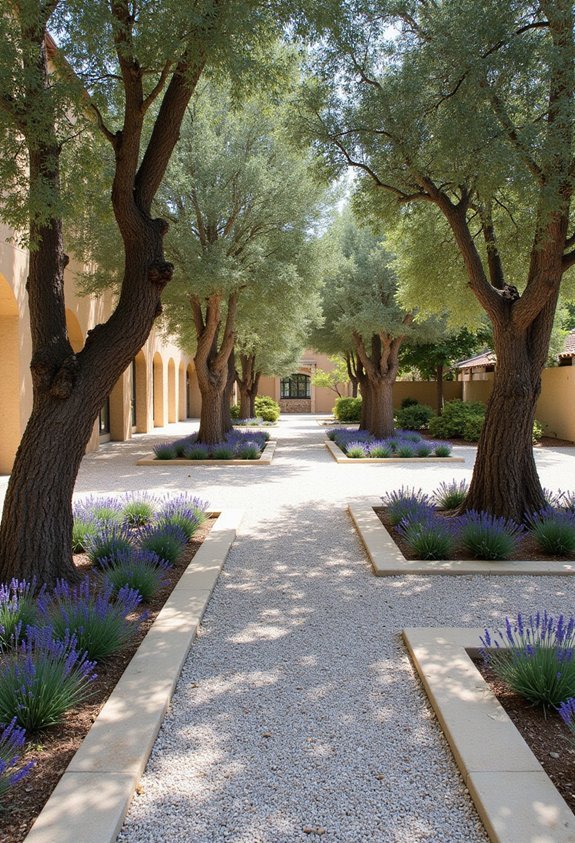
Mediterranean gravel courtyards bring the sun-soaked elegance of southern Europe to your front yard through drought-tolerant plantings and warm-toned stone surfaces that require minimal water and maintenance.
You’ll create authentic Mediterranean atmosphere by selecting cream, beige, or terra cotta colored gravel that complements olive trees’ silvery foliage and lavender’s purple blooms.
Plant olive trees as focal points, spacing them twelve to fifteen feet apart, then fill surrounding areas with lavender bushes placed three feet apart for proper air circulation. Add rosemary, sage, and ornamental grasses to complete the design while maintaining the region’s characteristic low-water, high-impact aesthetic.
Modern Gravel Landscapes With Steel Edging And Geometric Shapes

Contemporary gravel landscaping embraces clean lines and industrial materials to create striking front yards that contrast sharply with the rustic charm of Mediterranean designs.
You’ll achieve this modern aesthetic by installing steel or aluminum edging that defines precise geometric shapes like rectangles, squares, and triangular patterns.
Choose uniform gravel sizes in neutral colors such as gray, white, or charcoal to maintain visual consistency. You can incorporate rectangular concrete pavers or steel planters filled with architectural plants like ornamental grasses or succulents. This approach creates sophisticated outdoor spaces that complement contemporary home architecture while requiring minimal maintenance and water.
Desert Gravel Gardens Featuring Cacti And Drought-Resistant Plants
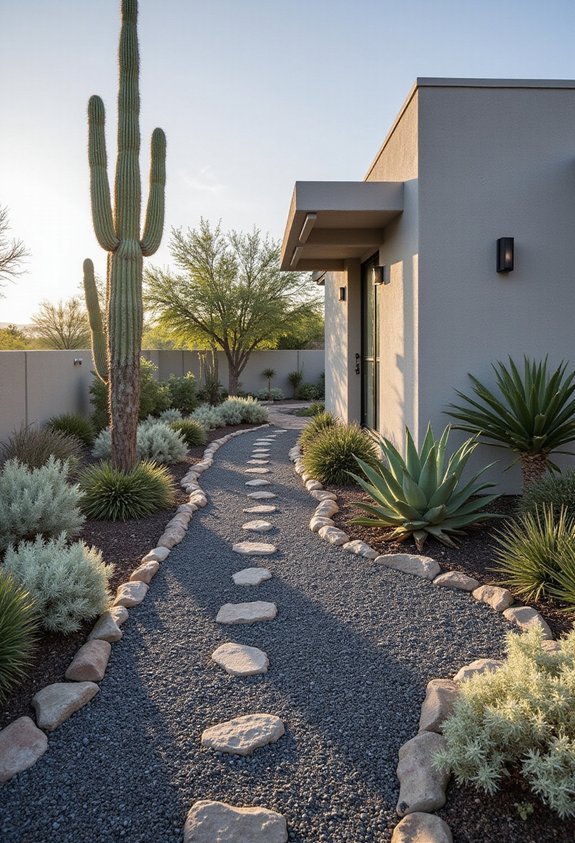
Desert gravel gardens transform your front yard into a water-wise landscape that thrives in hot, dry conditions while showcasing the dramatic beauty of cacti and drought-resistant plants.
You’ll create striking visual contrast by combining various gravel colors with spiky succulents, barrel cacti, and agave plants. Choose decomposed granite or crushed stone in warm tones like tan, rust, or gray to complement your plant selections.
Plant groupings work best when you arrange them in odd numbers, spacing larger specimens like prickly pear cacti as focal points. Add smaller sedums and aloe varieties to fill gaps between rocks and create textural interest.
Gravel And Native Plant Combinations For Regional Climates
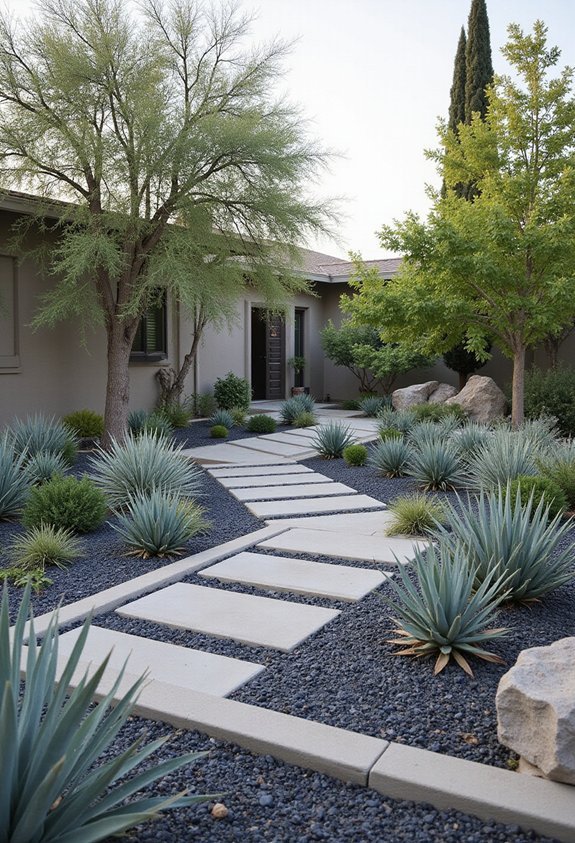
Beyond xerophytic landscapes, gravel gardens paired with native plants create sustainable front yards that naturally complement your specific regional climate while reducing maintenance requirements and supporting local wildlife.
You’ll achieve ideal results by selecting indigenous species that thrive in your area’s natural rainfall patterns, soil conditions, and temperature ranges.
In temperate regions, combine fine gravel with native grasses, wildflowers, and small shrubs that provide seasonal interest through varying textures and colors. Mediterranean climates work well with decomposed granite paired with lavender, sage, and ornamental grasses, while woodland areas benefit from river rock combined with ferns, hostas, and shade-tolerant perennials.
Tiered Gravel Terraces For Sloped And Hillside Front Yards
When your front yard sits on a slope or hillside, tiered gravel terraces transform challenging terrain into an attractive, functional landscape that prevents erosion while creating distinct planting zones at different elevations.
You’ll need to install retaining walls using stone, concrete blocks, or timber to create level platforms at varying heights. Each terrace should slope slightly backward toward the hillside for proper drainage, and you’ll want to use landscape fabric beneath the gravel to prevent weeds while allowing water penetration.
Different gravel sizes work well for each level, with larger stones providing better stability on steeper grades.
Gravel Driveway Extensions That Flow Into Landscape Design
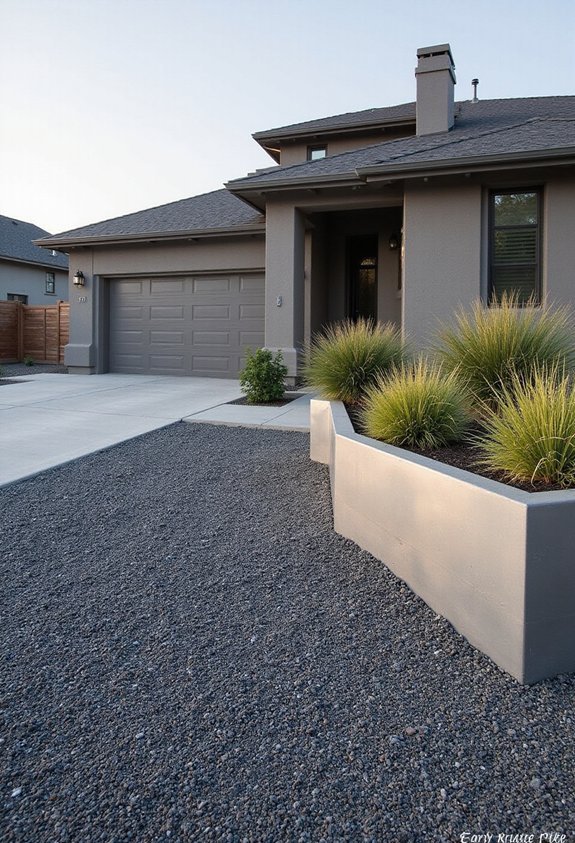
Several homeowners discover that extending their gravel driveway into surrounding landscape areas creates a cohesive design that eliminates awkward shifts between hardscaping and planted spaces.
You’ll achieve this seamless shift by gradually widening your gravel surface beyond the vehicle path, allowing it to curve naturally around planted beds and architectural features. Select gravel that matches your driveway’s color and size for visual consistency, then use steel or concrete edging to define clean boundaries between gravel zones and soil areas.
This approach transforms disconnected elements into unified landscape composition while reducing maintenance requirements and creating additional parking space when needed.
Mixed Gravel Textures: Combining Large Stones With Fine Materials
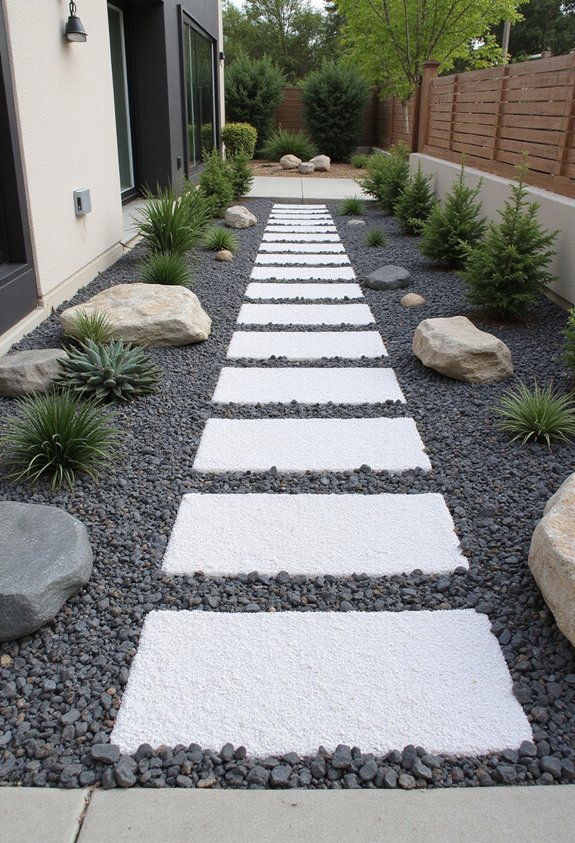
Although single-sized gravel creates uniformity, combining different stone textures adds visual depth and practical benefits that shift ordinary front yard surfaces into dynamic landscape features.
You’ll achieve better drainage by layering coarse stones beneath fine gravel, preventing water pooling while creating natural filtration. Mix river rock with decomposed granite for smooth changes, or combine angular crushed stone with rounded pea gravel for contrasting textures.
Place larger stones strategically as borders or accent features, then fill spaces with smaller materials. This layered approach reduces maintenance since fine particles settle between larger stones, creating stable, long-lasting surfaces that resist shifting and erosion.
Gravel Borders Around Traditional Grass And Flower Beds
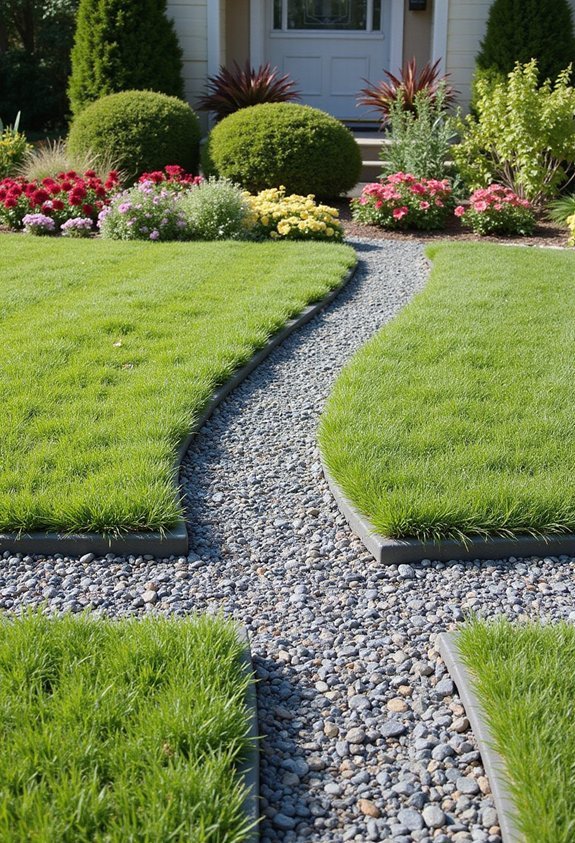
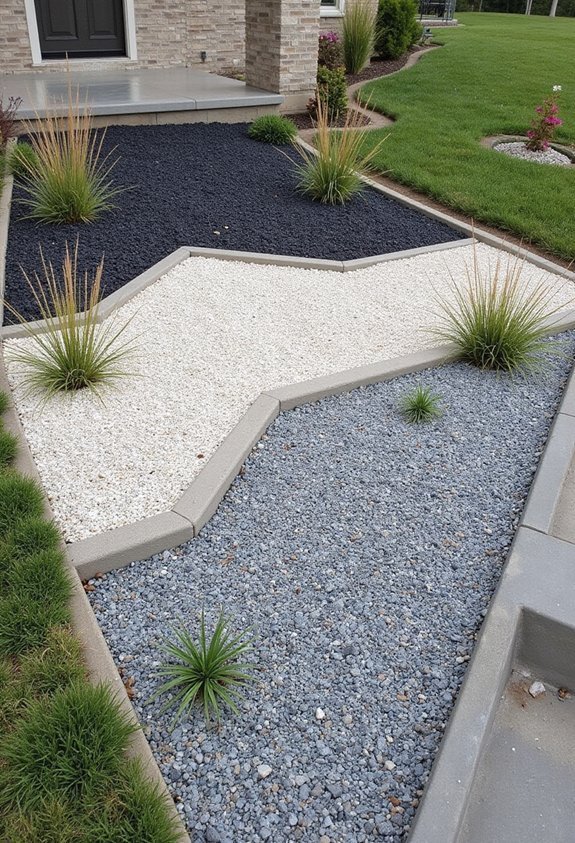
Gravel borders create clean definition lines between your lawn areas and flower beds while offering practical advantages that enhance both maintenance and visual appeal.
You’ll establish clear boundaries that prevent grass from spreading into planted areas, reducing the need for constant edging and trimming. The gravel acts as a natural weed barrier when you install landscape fabric underneath, minimizing maintenance requirements throughout the growing season.
Choose complementary gravel colors that coordinate with your home’s exterior and existing hardscape elements. Install borders three to four inches wide for ideal visual impact and functional effectiveness in containing both grass and mulch materials.
Black Lava Rock Gravel For Dramatic High-Contrast Designs
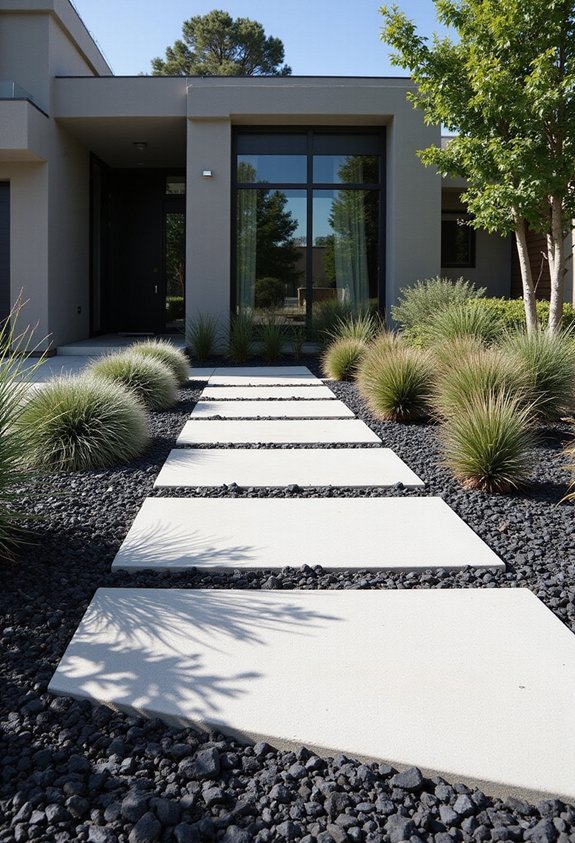
Black lava rock gravel transforms your front yard into a striking landscape feature that commands attention through its deep, rich color and distinctive volcanic texture.
You’ll create dramatic contrast by pairing this dark material with light-colored plants, white concrete pathways, or bright flowering specimens. The angular, porous surface provides excellent drainage while suppressing weeds effectively.
You can use black lava rock around modern architectural elements, contemporary sculptures, or geometric planters to enhance your home’s sleek aesthetic. This premium gravel works particularly well in minimalist designs where you want to emphasize clean lines and bold visual impact.
Water Features Integrated With Surrounding Gravel Elements
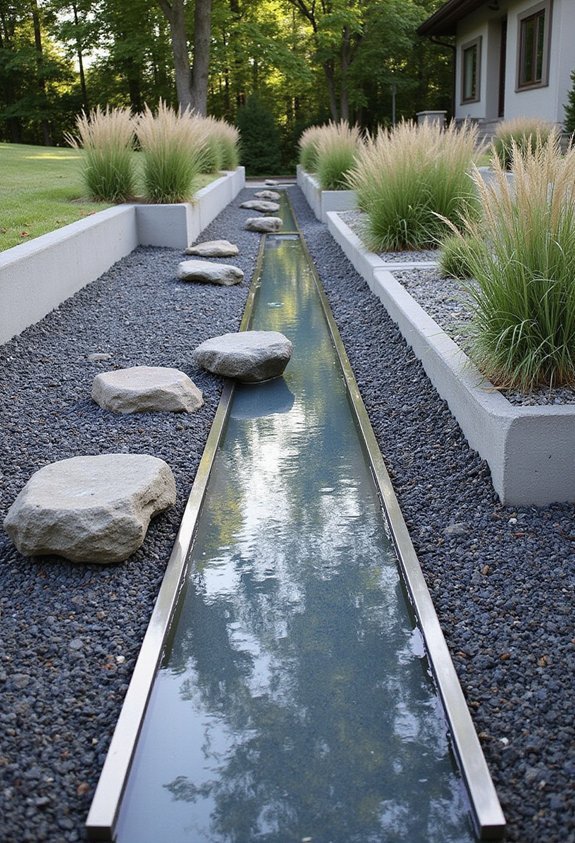
When you combine water features with gravel landscaping, you’ll create a cohesive outdoor environment that maximizes both visual appeal and practical functionality.
Position fountains or small ponds as focal points within your gravel beds, allowing the stones to act as natural borders that define water boundaries. Choose river rock or smooth pea gravel around water elements to complement flowing movements, while angular crushed granite works better for geometric fountain designs.
Install proper drainage beneath gravel areas to prevent water accumulation, and select gravel colors that enhance your water feature’s materials, creating seamless shifts between wet and dry landscape zones.
Gravel Garden Lighting: Uplighting Trees And Accent Features
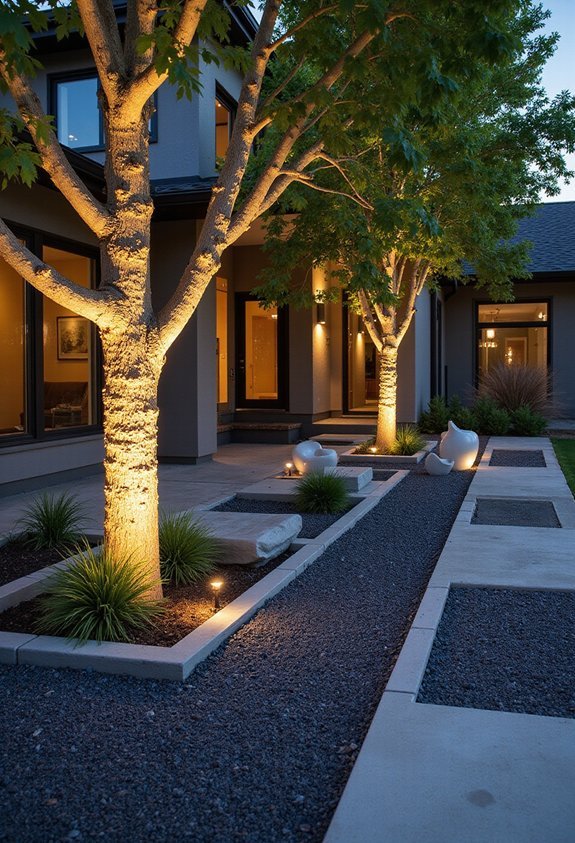
Effective lighting transforms your gravel garden from a daytime landscape into a stunning nighttime showcase, highlighting architectural plants and decorative elements while extending your outdoor enjoyment well past sunset.
Install LED uplights at the base of specimen trees to create dramatic silhouettes against walls or fencing, positioning fixtures eighteen to twenty-four inches from trunk centers. Use adjustable spotlights to illuminate sculptural plants, water features, or decorative boulders, angling beams at thirty to forty-five degrees for ideal shadow effects.
Choose warm white bulbs between 2700K and 3000K to complement gravel’s natural tones while avoiding harsh blue-white lighting that creates unwelcoming atmospheres.
Container Plant Displays Anchored In Gravel Foundations
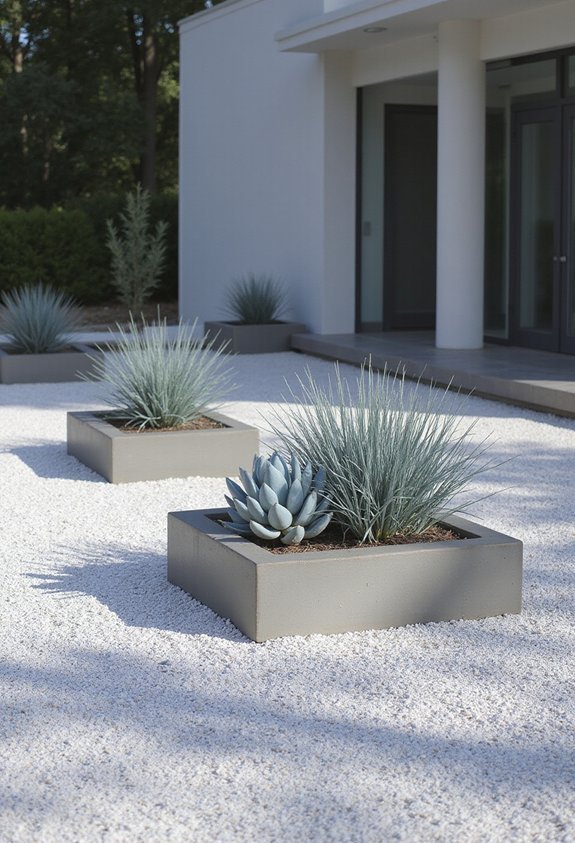
Container displays create dynamic focal points in gravel landscapes, offering you the flexibility to change seasonal colors, experiment with plant combinations, and establish vertical interest without permanent ground commitments.
You’ll want to select large, heavy containers that won’t tip over in wind, then partially bury them in gravel for stability and visual integration. Choose drought-tolerant plants like ornamental grasses, succulents, or small shrubs that complement gravel’s modern aesthetic.
Position containers at varying heights using buried pedestals or grouped arrangements, ensuring proper drainage by adding gravel layers beneath each pot to prevent water accumulation and root rot issues.
Ornamental Grass Accents Rising From Gravel Base Layers
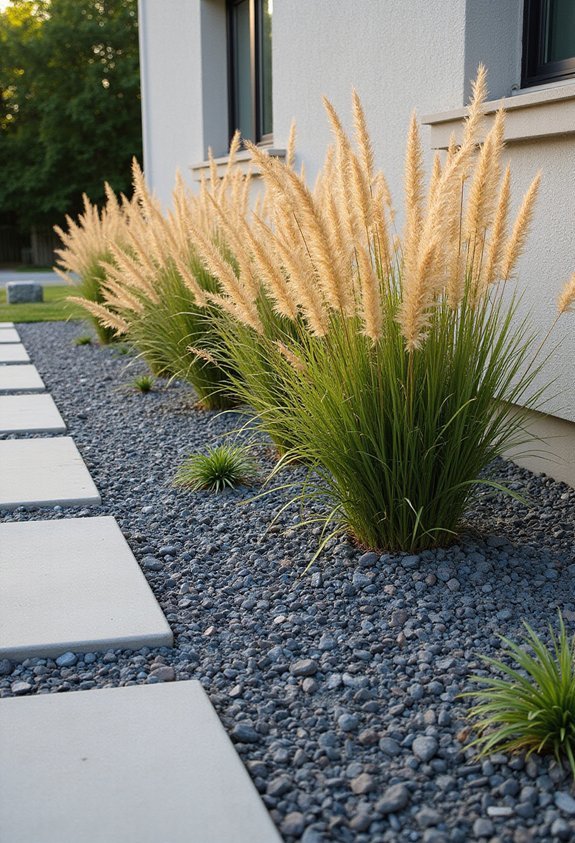
Ornamental grasses transform gravel landscapes into textured, movement-filled environments that provide year-round visual interest through their natural swaying motion and seasonal color changes.
You’ll create dramatic focal points by planting tall varieties like fountain grass, pampas grass, or feather reed grass directly through your gravel base layers.
These grasses establish strong vertical elements that contrast beautifully against the horizontal gravel surface, while their root systems naturally stabilize the surrounding stones. You can achieve layered depth by combining different grass heights and textures, positioning shorter varieties like blue fescue or mondo grass near pathways for accessible maintenance.
Garden Art And Sculpture Placement In Gravel Settings
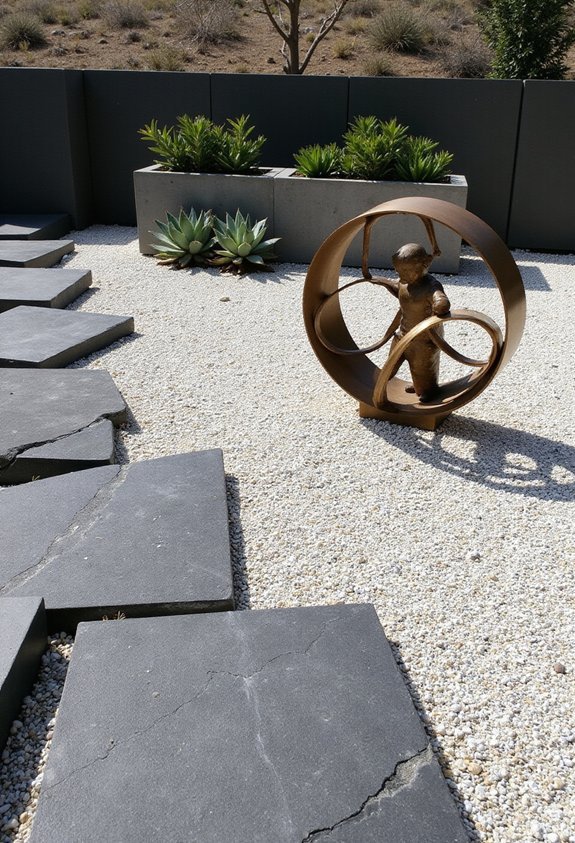
When you place garden art and sculptures in gravel settings, you’ll create striking focal points that draw the eye while benefiting from the clean, neutral backdrop that gravel naturally provides.
Position larger sculptures at least three feet from walkways to maintain visual balance, and choose pieces with contrasting textures like smooth metal against rough stone.
You’ll achieve ideal impact by clustering smaller art pieces in odd numbers, spacing them eighteen to twenty-four inches apart. Select weather-resistant materials including bronze, aluminum, or treated stone that complement your gravel’s color palette while maintaining structural integrity.
Seasonal Gravel Garden Maintenance And Weed Prevention
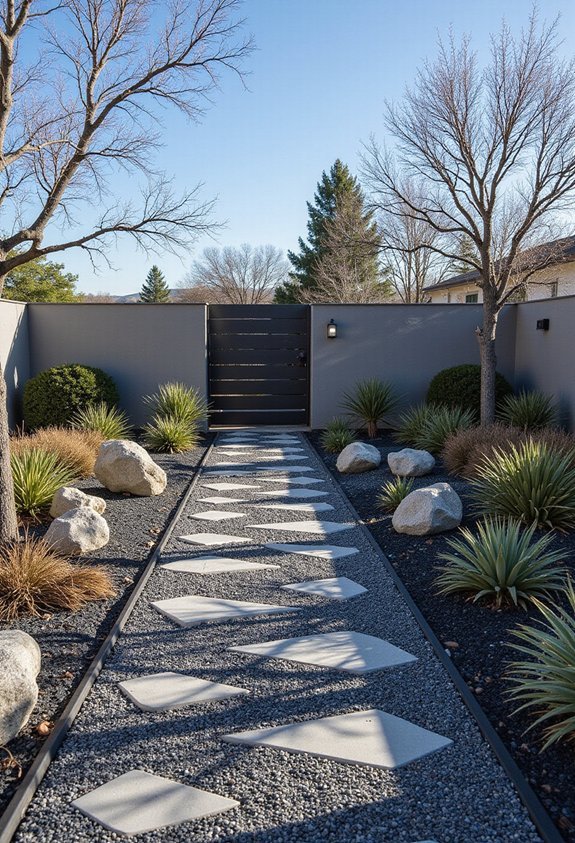
Four distinct seasons bring unique maintenance challenges to your gravel garden, requiring targeted strategies that address weed prevention, debris removal, and surface restoration throughout the year. Spring demands pre-emergent herbicide application before weeds germinate, followed by thorough raking to redistribute gravel and remove winter debris.
Summer requires regular inspection for breakthrough weeds, spot-treating with post-emergent herbicides, and adding fresh gravel to thin areas. Fall maintenance involves leaf removal using rakes or leaf blowers, preventing organic matter accumulation that creates weed-friendly conditions. Winter preparation includes final debris clearing and planning next year’s preventive treatments for ideal gravel garden health.
Conclusion
Gravel taught me that low maintenance and good looking aren’t mutually exclusive, even though I spent years assuming otherwise. My own front yard proved that point faster than I expected once I finally committed to the project.
Choosing the right type and color for your specific home makes more difference than any other single decision in this process. Get that part right and almost everything else falls into place more easily.
Whether you lean toward a stark, modern geometric design or something warmer like a Mediterranean courtyard with lavender and olive trees, gravel adapts to nearly any aesthetic you’re chasing. That flexibility is part of what makes it so appealing.
Maintenance still exists, just far less of it than a traditional lawn demands. A little seasonal weeding and an occasional gravel top up keeps things looking sharp without consuming your weekends.
Your front yard has more potential locked into a simple material like gravel than most people realize until they actually try it. The transformation tends to surprise even skeptical neighbors.
I’d love to hear which style you’re drawn to, or what’s already working in your own gravel front yard. Leave a comment below and tell me how your project is coming together.