

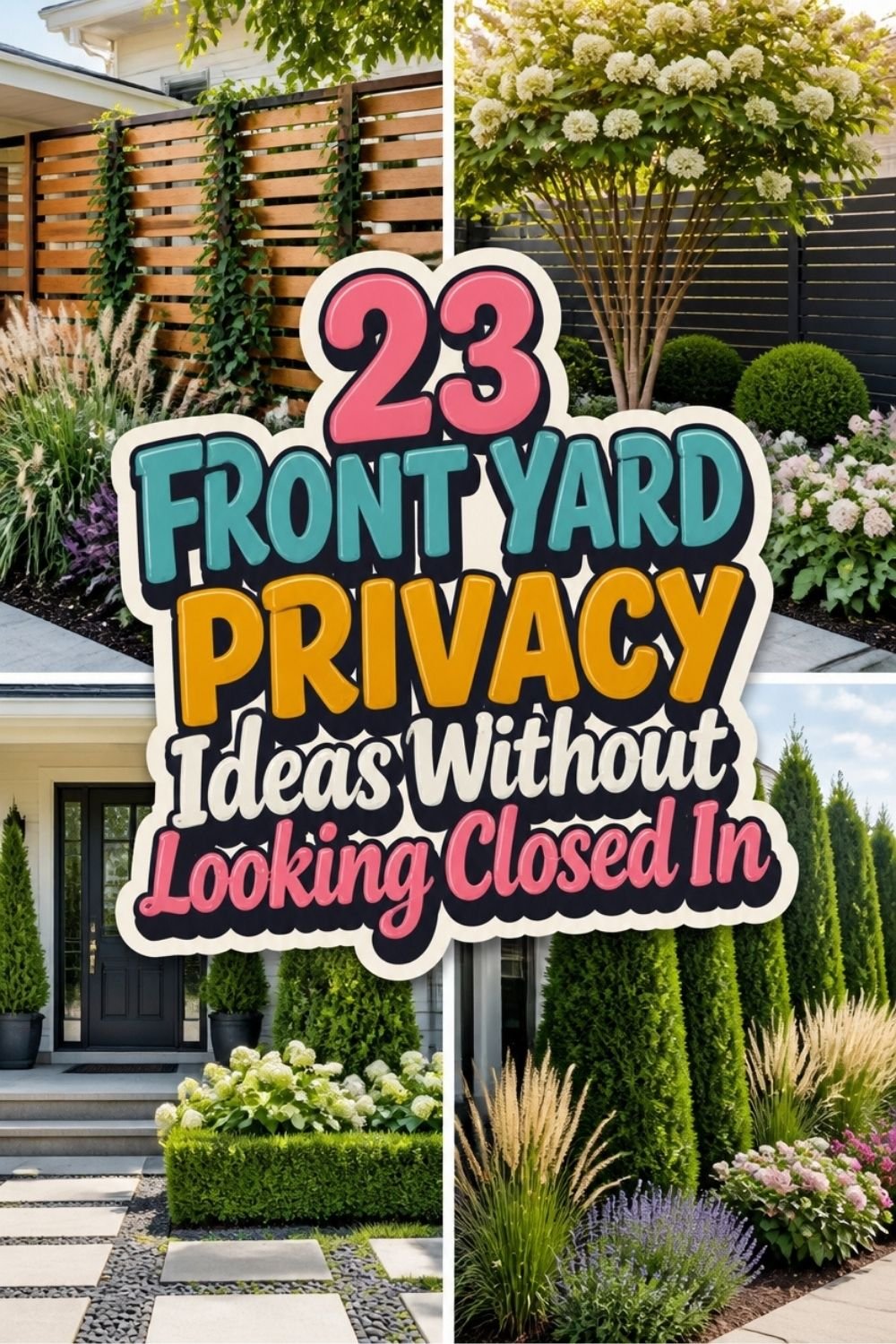
Front yard privacy requires careful balance. Homeowners must block unwanted views while maintaining openness. The challenge involves selecting elements that shield without isolating. Proper planning determines which spaces need coverage and which sight lines should remain clear. Numerous techniques exist, from strategic plantings to structural additions, each offering distinct advantages depending on the property’s layout and the neighborhood’s character. Several solutions prove particularly effective.
Audit Your Yard First: Map What’s Exposed
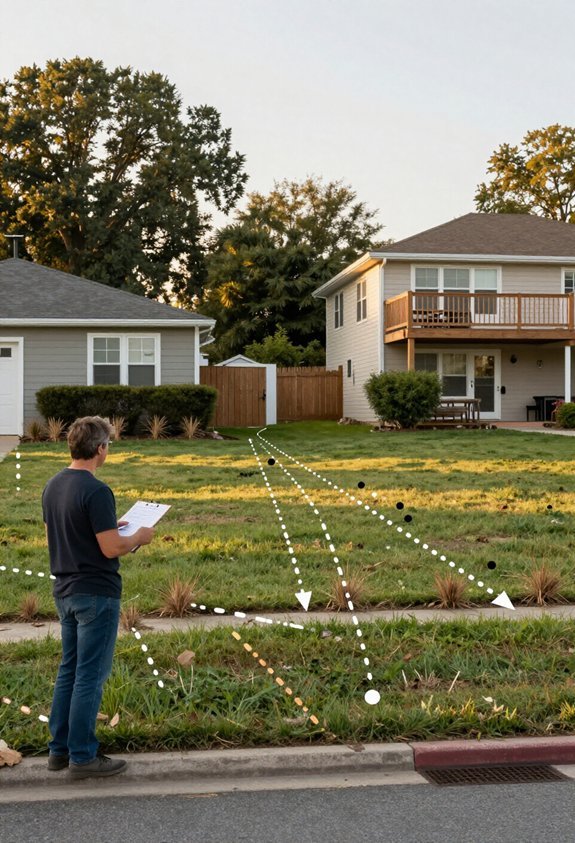
Assessment of a front yard’s privacy vulnerabilities begins with systematic observation of sightlines from every accessible angle, including sidewalks, neighbor windows, passing vehicles, and adjacent properties. The observer should document specific zones where exposure occurs, noting which areas remain visible during different times of day as sunlight shifts shadows and sightlines accordingly.
A written map proves essential for this process, marking property boundaries and indicating each exposed section with precise measurements. The mapper records elevation differences, since higher vantage points from upstairs windows or slight inclines create overlooked sightlines that ground-level observation misses. Existing structures require evaluation: gaps in fencing, transparent gate panels, or sparse hedgerows that fail to block views.
This documented assessment establishes priority zones demanding intervention, ensuring subsequent privacy measures address actual rather than perceived vulnerabilities through data-driven placement strategies.
Also read: 19 FRONT YARD WATER FEATURE Styles That Feel Luxurious!
Layer Tall Plants for Instant Front Yard Privacy
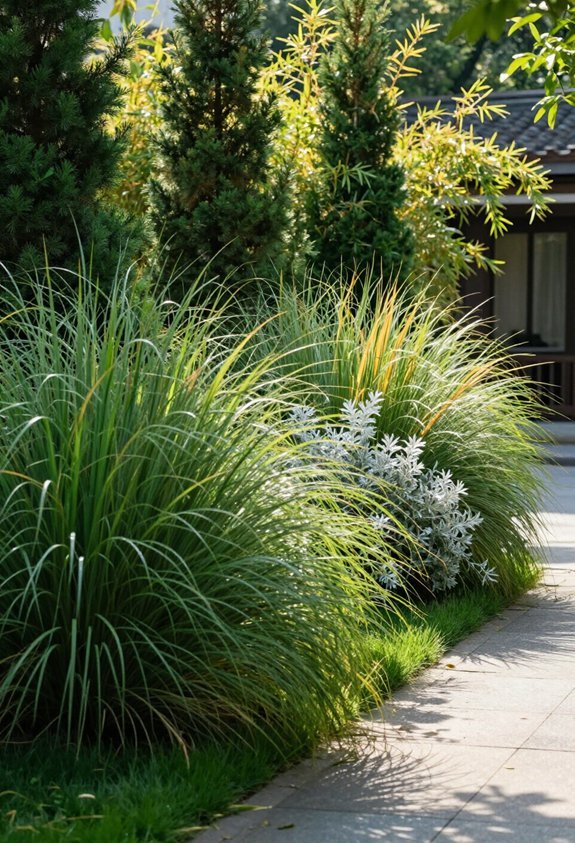
Several strategic approaches exist for establishing immediate visual barriers through vegetation, with layered planting configurations offering the most rapid and adaptable solution for residential front yards. This method involves arranging plants of varying heights in staggered rows, creating a dense, natural screen that obscures sightlines effectively without appearing monolithic or restrictive.
Tall ornamental grasses, such as Miscanthus or Calamagrostis, serve as the backbone layer, reaching six to eight feet within a single growing season while maintaining slender profiles that filter light rather than block it entirely. Behind these, medium shrubs like Viburnum or privet add structural depth, while lower ground covers at the front edge prevent visual gaps and create graduated shifts. This tiered arrangement permits air circulation and dappled light penetration, avoiding the fortress-like quality of solid fencing. For immediate results, mature specimens in large containers can supplement newly planted stock, filling vertical space while permanent installations establish root systems. Width between layers should measure approximately one-third of mature plant height to guarantee adequate overlap without overcrowding.
Choose Columnar Trees That Maximize Height, Minimize Width
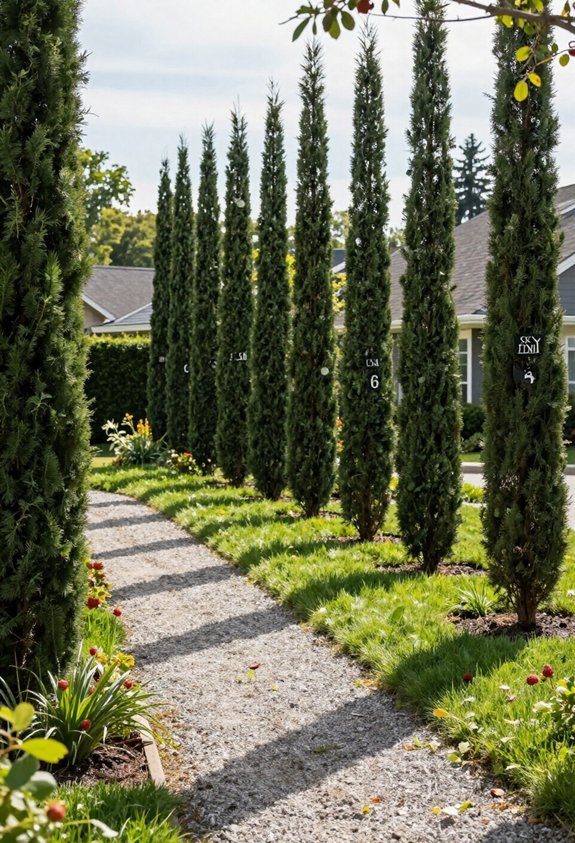
When horizontal space is limited but vertical screening remains essential, columnar tree varieties offer an efficient solution that occupies minimal ground area while achieving substantial height. These naturally narrow trees grow upward rather than outward, forming tight vertical silhouettes that fit narrow planting strips between sidewalks and foundations without encroaching on walkways or blocking sightlines across the yard. Species such as columnar European hornbeam, upright juniper, and fastigiate arborvitae develop dense evergreen foliage that shields windows from street-level observation while maintaining air circulation and filtered light penetration. Placement requires attention to mature dimensions, as even narrow trees need adequate vertical clearance from overhead utilities and building eaves. Spacing multiple specimens fifteen to twenty feet apart creates rhythmic vertical accents that define property edges without the heavy mass of conventional hedgerows, preserving visual openness at eye level while securing elevated privacy.
Soften Boundaries With Ornamental Grasses
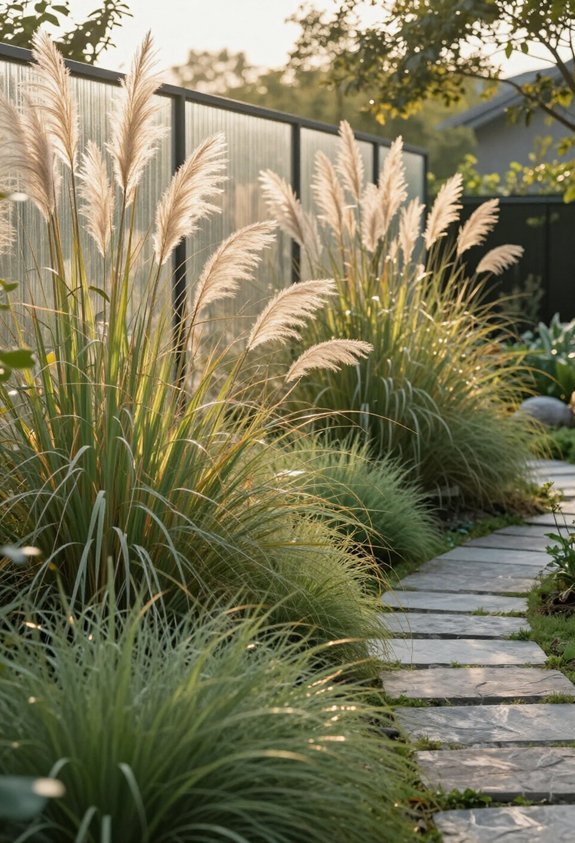
Because rigid borders can appear harsh and unwelcoming, ornamental grasses offer a flexible alternative that blurs the line between public and private space with gentle, flowing movement. These plants sway with breezes, creating living screens that shift density throughout seasons while maintaining an open, airy quality.
Tall varieties like feather reed grass or switchgrass establish effective visual barriers at heights between four and seven feet. Planting them in staggered rows increases coverage without forming solid walls. Their narrow footprints suit tight spaces between walkways and property lines.
Grasses require minimal maintenance, thriving in poor soil with little watering once established. Their seasonal changes provide interest: summer green gives way to autumn bronze, with seed heads catching winter light. This progression prevents monotony while preserving essential screening function.
Mix Evergreens and Deciduous Shrubs for Year-Round Cover
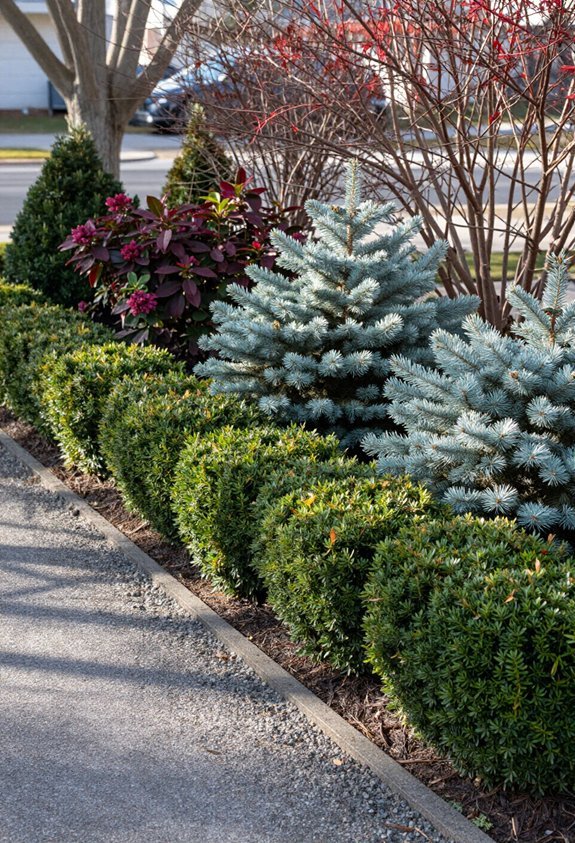
While seasonal plants provide temporary privacy, combining evergreen and deciduous shrubs creates a layered defense that persists through all twelve months. Evergreens, such as boxwood or holly, maintain dense foliage throughout winter, blocking sightlines when deciduous varieties drop their leaves. Position these behind deciduous options like viburnum or hydrangea, which contribute seasonal flowers and changing leaf color before their autumn dormancy. This arrangement guarantees visual interest across seasons without creating solid, monotonous walls that feel imposing.
Select shrubs of varying mature heights to construct depth and prevent the uniform appearance of hedgerows. Low evergreen groundcovers anchor the base, while medium deciduous shrubs occupy the middle tier, and taller evergreen specimens complete the upper structure. Space plantings according to each variety’s eventual spread, allowing adequate air circulation and growth room. Water requirements and soil preferences must align within groupings to sustain health. This method delivers continuous screening while preserving an open, structured aesthetic appropriate for front yard exposure.
Train Fruit Trees Flat Against Walls to Save Space
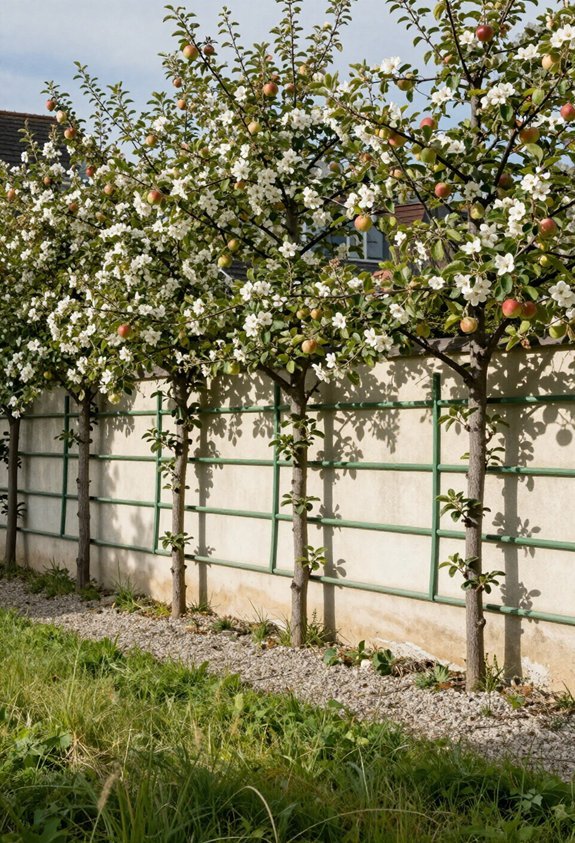
Vertical gardening techniques offer an alternative approach for properties where horizontal space remains limited, and espaliered fruit trees demonstrate this principle with particular elegance. The practice involves training branches to grow horizontally along flat surfaces, creating structured, two-dimensional forms that occupy minimal ground area while producing substantial vertical coverage. Gardeners secure young trees to walls or fences using sturdy wire frameworks, carefully bending and tying flexible branches into horizontal tiers that develop over several growing seasons. Common candidates include apple, pear, and fig varieties, selected for their pliable wood and reliable fruit production. This method yields multiple benefits: fresh harvests within arm’s reach, improved air circulation reducing disease pressure, and accelerated ripening from retained wall heat. The geometric patterns serve functional screening purposes without overwhelming compact front yards, maintaining openness while establishing clear property lines through living architecture.
Grow a Living Fence: Climbing Vines on Wire Supports
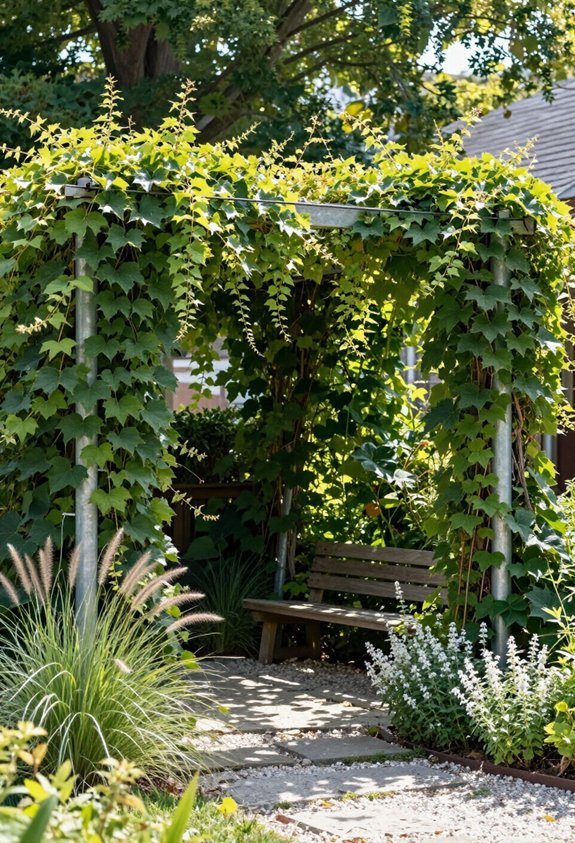
Several climbing vine species transform ordinary wire frameworks into dense, functional barriers capable of replacing conventional fencing materials. Clematis, trumpet vine, and climbing hydrangea attach readily to wire supports, weaving themselves into thick green screens within two to three growing seasons.
Install galvanized wire or cable in vertical rows spaced twelve to eighteen inches apart, anchored to sturdy metal or wooden posts set two feet deep in concrete. Orient the structure to receive adequate sunlight based on species requirements. Position fast-growing varieties at intervals of four to six feet, allowing slower species twice that spacing.
Maintenance requires seasonal pruning to direct growth and prevent encroachment on adjacent spaces. Dormant-season trimming maintains desired dimensions without sacrificing blooming potential. This approach yields approximately sixty percent privacy coverage during establishment, reaching full density once root systems mature.
Filter Light Through Lattice Privacy Panels
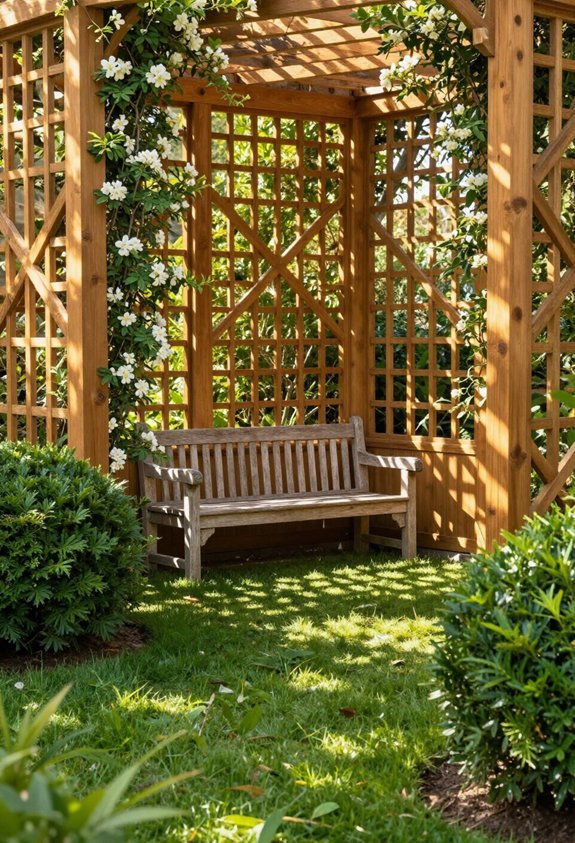
Lattice panels create partial privacy barriers that block direct sightlines while permitting filtered sunlight and air circulation, making them suitable for front yards where complete enclosure may appear unwelcoming or violate local ordinances. These structures consist of crossed strips arranged in diagonal or square patterns, forming open grids that diffuse daylight without plunging spaces into shadow. Installers mount panels atop low walls or between posts to define boundaries while maintaining neighborly openness. Western red cedar and pressure-treated pine resist moisture damage, extending service life in exterior applications. The geometric voids cast shifting shadow patterns throughout daylight hours, adding visual texture to patios and pathways. For increased opacity, homeowners train jasmine or clematis through lattice openings, combining structural screening with seasonal blossoms. Heights between four and six feet accommodate most municipal setback requirements.
Add Patterned Metal Screens for Artistic Screening
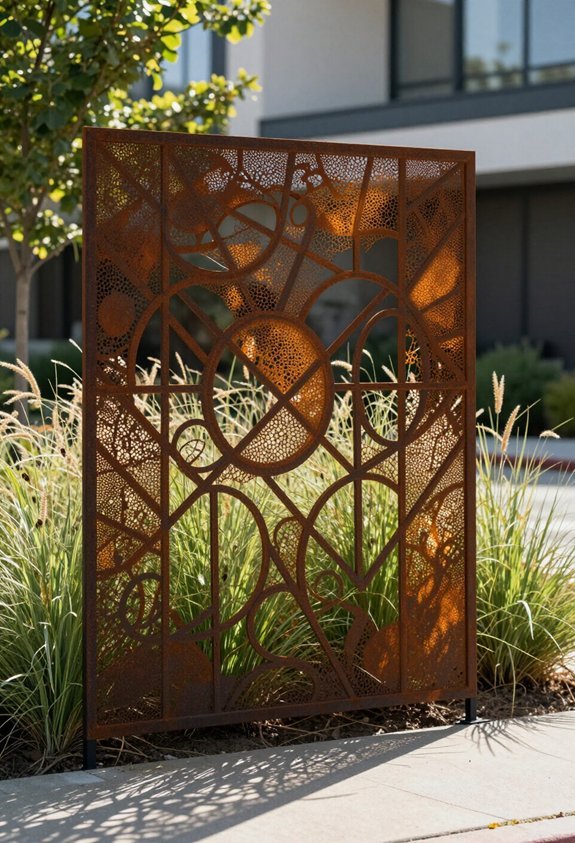
Patterned metal screens transform functional privacy barriers into sculptural garden elements through precise cutouts that manipulate light and shadow while blocking unwanted views. These screens, typically fabricated from aluminum, corten steel, or powder-coated iron, feature geometric, botanical, or abstract motifs that cast intricate shadow patterns across pathways and plantings as sunlight passes through. Installation requires sturdy metal posts set in concrete footings, with panels secured using concealed fasteners or welded brackets to maintain clean sight lines. Spacing between the screen and property line allows airflow and prevents heat buildup while preserving the open feeling essential to front yard design. Maintenance involves periodic washing to remove debris from cutout areas and inspection for corrosion, particularly in coastal environments. Unlike solid barriers, these screens permit filtered glimpses of the landscape beyond, creating depth without sacrificing seclusion.
Build a Slatted Wood Fence for Partial Privacy Views
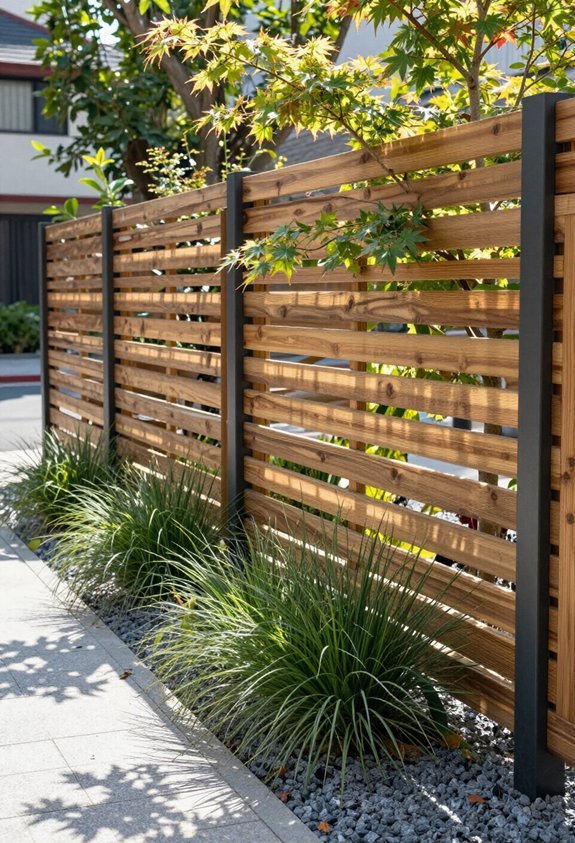
A slatted wood fence creates a graduated privacy solution that filters sightlines while allowing air and light to pass through evenly spaced horizontal or vertical boards. Homeowners adjust the gap width between slats to control visibility levels, with narrower spaces offering more screening and wider openings maintaining openness. Cedar, redwood, and pressure-treated pine resist decay and weathering, extending the structure’s functional lifespan without frequent replacement. Builders mount slats between vertical posts set in concrete footings, ensuring stability against wind loads and ground shifts. Horizontal orientations elongate small yards visually, while vertical arrangements emphasize height and formal boundaries. Staining or sealing the wood preserves its natural grain and prevents graying from sun exposure. This fence type permits casual observation of street activity while obscuring direct views into windows and seating areas, balancing seclusion with neighborhood connection.
Construct Gabion Walls With Local Stone
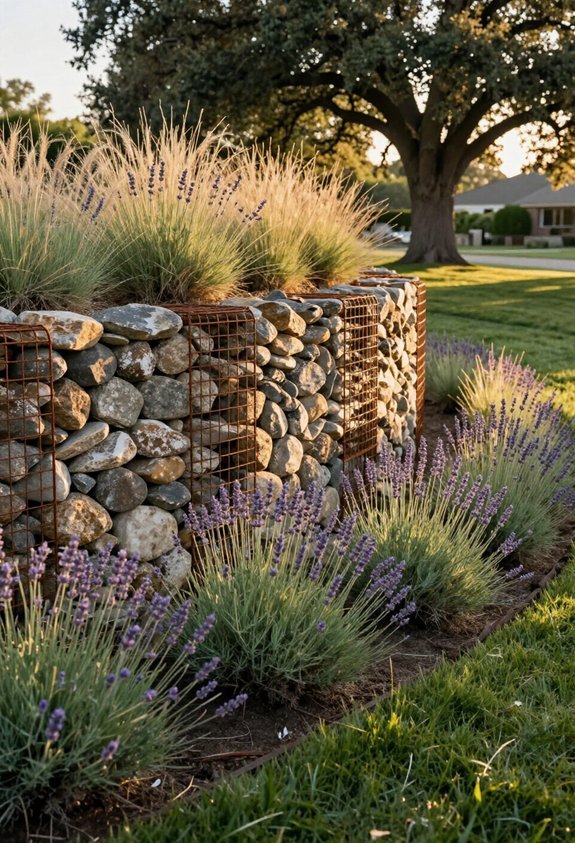
Stack wire mesh cages in staggered rows and fill them with stones gathered from nearby quarries, riverbeds, or construction sites to build gabion walls that block sightlines with substantial mass and natural texture. Weld mesh or chicken wire forms rectangular containers, typically two to three feet wide, which workers lift into place with mechanical assistance before securing adjacent units with spiral wire connectors or metal rings. Stone sizes vary from four to eight inches, creating stable interlock within each cage while allowing small gaps that permit air circulation and prevent water buildup behind the structure. Unlike solid masonry, these permeable barriers reduce wind load and foundation requirements, making them suitable for sloped terrain where rigid walls would crack or fail. Local sourcing minimizes transportation costs and embeds regional geological character into the finished installation.
Insert Planting Gaps Into Low Stone Walls
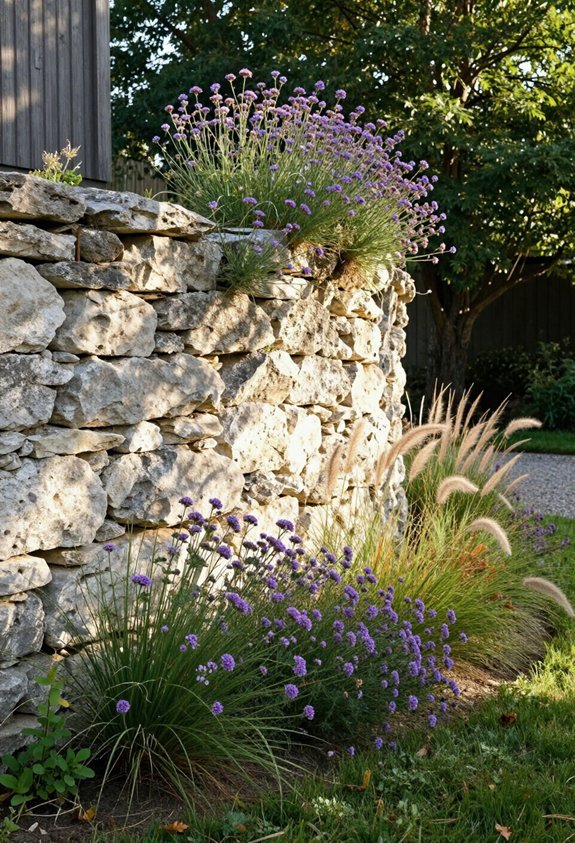
While gabion walls rely on continuous mass for their screening effect, low stone walls can achieve privacy through a different approach by incorporating deliberate gaps that host vegetation. These openings, spaced at regular intervals, allow shrubs, ornamental grasses, or climbing vines to establish themselves directly within the wall structure. Plants soften the stone’s hard edges, creating layered screening that filters sightlines without forming solid barriers. Builders construct these gaps during assembly by omitting stones periodically or using wider mortar joints at designated points. Root space requires minimum eight inches of soil depth, adequate drainage holes, and occasionally supplemental irrigation lines integrated during construction. Species selection depends on gap dimensions, with compact varieties suited to narrow openings and larger specimens fitting broader cavities. Maintenance involves seasonal pruning to prevent root damage while preserving the wall’s structural integrity.
Position Large Planters for Flexible Privacy Screens
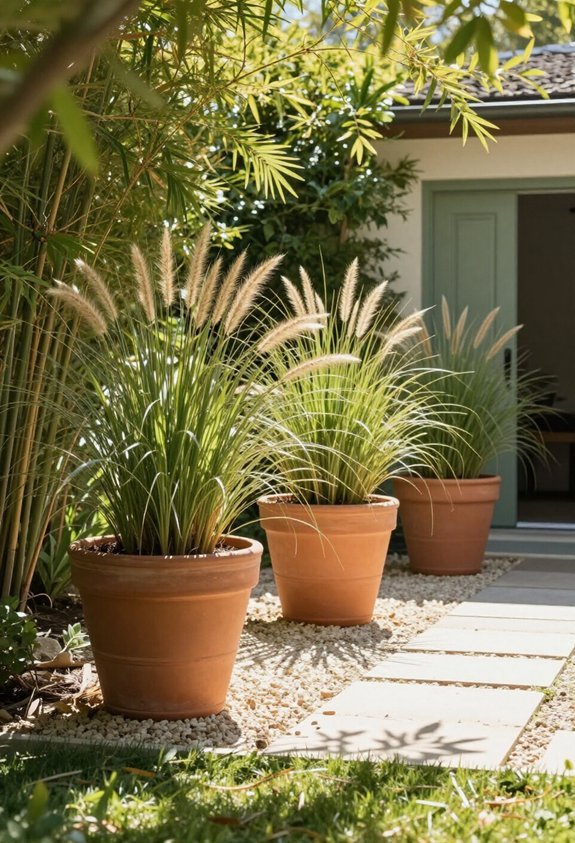
Several strategic placements of substantial planters transform open front yards into adaptable private spaces without permanent construction. Large containers, measuring at least twenty-four inches in diameter, accommodate mature shrubs or ornamental grasses that reach heights of four to six feet. Homeowners position these planters along property lines, driveways, or seating areas to block sightlines from sidewalks and streets. The mobility of container plantings permits seasonal repositioning, allowing residents to adjust privacy levels as foliage grows or social needs change. Materials such as cast stone, glazed ceramic, or weathered metal provide visual weight that anchors the arrangement. Drainage holes and quality potting soil guarantee plant health, while grouping planters in staggered formations creates denser screening than single-file placement. This approach requires no digging permits or structural modifications, preserving rental agreements and future landscaping options. Regular watering and occasional fertilization maintain the living screen‘s effectiveness throughout growing seasons.
Build a Planted Berm for Elevated Natural Screening
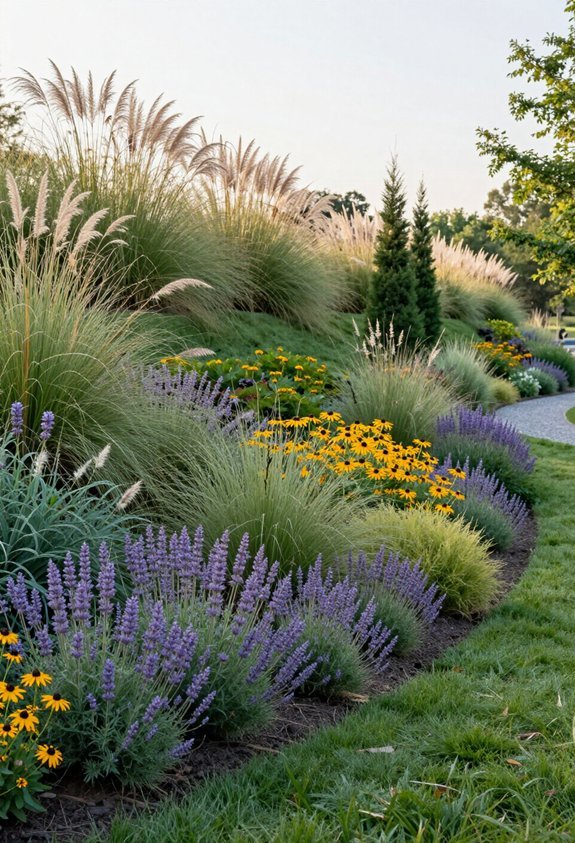
A constructed earth mound, commonly called a berm, offers homeowners an effective method for establishing elevated privacy barriers that integrate seamlessly with existing landscapes. Proper construction begins with calculating dimensions, typically reaching heights between eighteen and thirty-six inches, with gradual side slopes of one unit vertical to three units horizontal for stability and maintenance access. Soil composition requires adequate compaction in six-inch lifts, with incorporated organic material improving drainage and root establishment. Strategic placement along property lines or near windows maximizes visual obstruction without perimeter fencing. Plant selection emphasizes native shrubs and ornamental grasses positioned at varying heights, with lower specimens near edges and taller varieties centered on the crest, creating layered density. Drip irrigation installation during construction prevents erosion and establishes vegetation efficiently. Final grading guarantees surface water diverts away from structures, protecting foundation integrity while maintaining the berm’s functional form.
Install a Pergola With Draping Vines Over Entry Paths
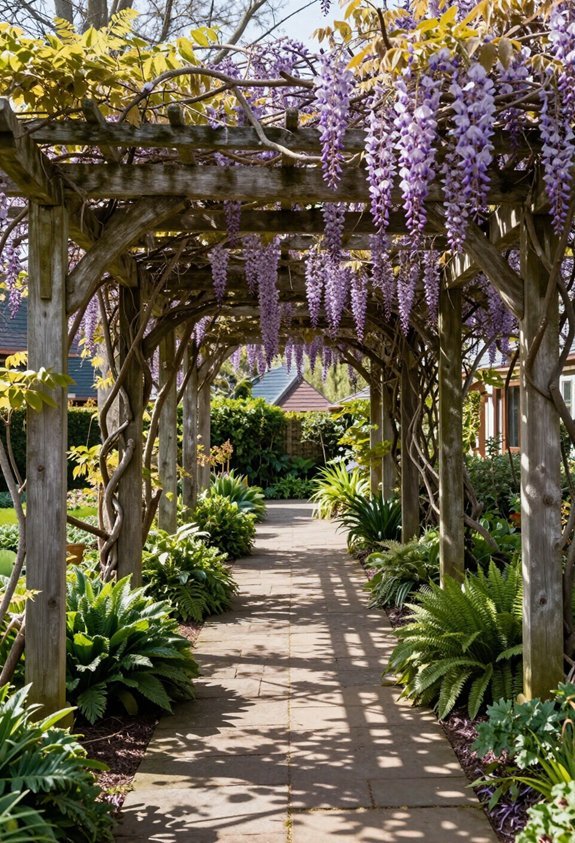
How does a homeowner transform an exposed entry path into a secluded corridor without constructing solid walls? A pergola supporting draping vines creates an overhead canopy that filters sightlines from above while maintaining an open, breathable atmosphere. The structure consists of vertical posts paired with horizontal beams or lattice panels, which provide anchoring points for climbing plants such as wisteria, clematis, or grape vines. Over time, these plants intertwine through the framework, generating a living roof that obscures direct views into the property. This method preserves air circulation and natural light, avoiding the confined sensation of solid enclosures. Installation requires secure footings for posts, typically set eighteen to twenty-four inches deep, with beams spaced twelve to sixteen inches apart to accommodate mature growth. Regular pruning maintains desired density without overwhelming the structure.
Hang Outdoor Curtains on Covered Porches
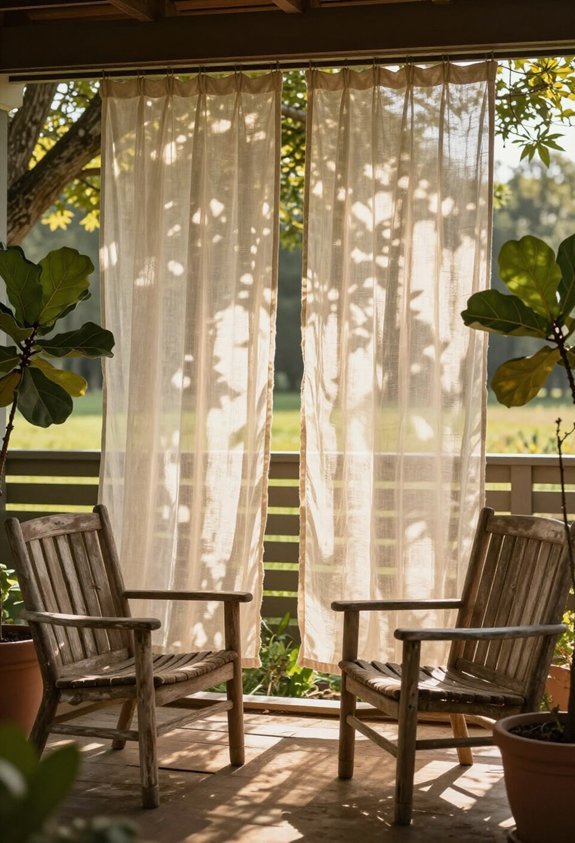
While overhead plantings soften vertical sightlines, ground-level exposure along covered porches demands a different approach to privacy. Outdoor curtains provide a flexible, movable barrier that filters sightlines without permanent structural changes, making them ideal for rented properties or evolving needs. Installation requires weather-resistant fabric, typically solution-dyed acrylic or polyester, mounted on corrosion-resistant rods secured to ceiling joists or exposed beams. Curtains should fall to floor level, with weighted hems to prevent wind displacement, and should extend several inches beyond the porch edge for adequate coverage. Light-colored fabrics diffuse harsh sunlight while maintaining outward visibility from inside, preserving the open feeling this article emphasizes. For maximum adaptability, caregivers can install draw pulls or tie-back hooks, allowing curtains to be secured during pleasant weather and drawn during intimate gatherings or peak foot-traffic hours.
Stack Window Boxes for Eye-Level Privacy Shielding
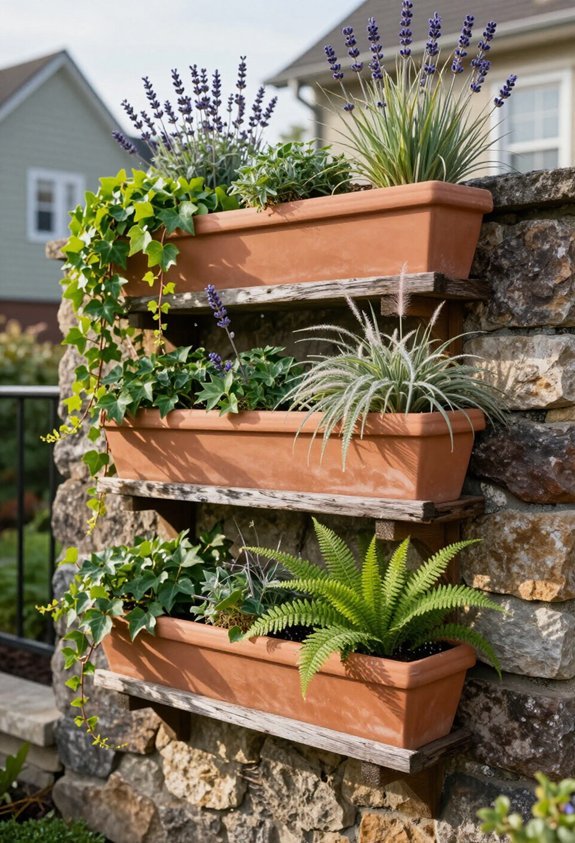
Elevation offers a strategic advantage in privacy design, and window boxes stacked at multiple heights transform ordinary walls, railings, or fence lines into living screens that block sightlines precisely where pedestrians and neighbors would otherwise look directly into a space. Arranging containers in vertical tiers, with lower boxes holding trailing vines and upper levels supporting medium-height shrubs or ornamental grasses, establishes dense foliage precisely at eye level. This method permits light and air to pass through upper and lower zones, preventing the enclosed sensation of solid barriers. Selecting plants with varying textures and growth habits guarantees year-round coverage, as evergreen specimens maintain screening during dormant seasons. Mounting brackets securely to existing structures eliminates ground footprint concerns, making this approach practical for narrow strips between walkways and foundations.
Place a Bench or Water Feature to Redirect Attention
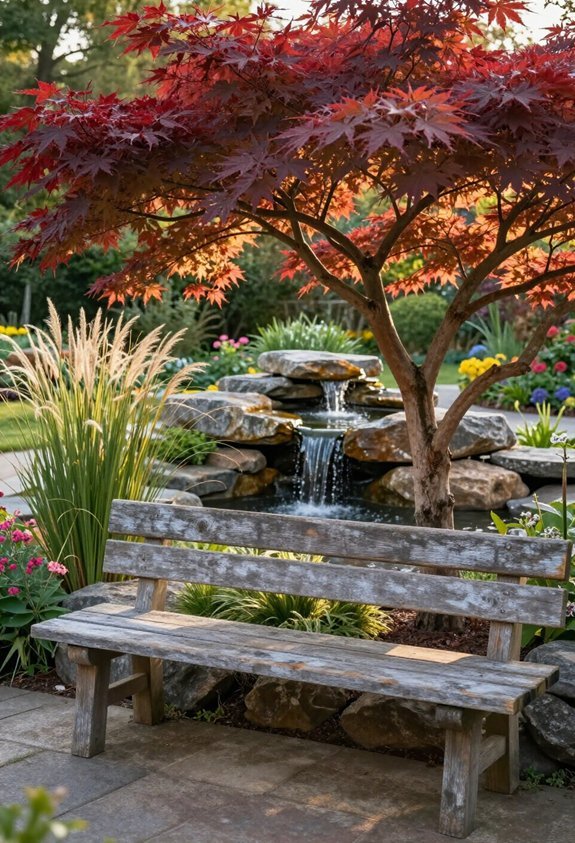
Because the eye naturally seeks points of interest, positioning a bench or water feature along sightlines from sidewalks or neighboring properties draws attention away from private areas rather than blocking them with physical barriers. A curved wooden bench placed at an angle toward the street invites passersby to focus on its form and function, while a small bubbling fountain creates movement and sound that captures attention effectively. These elements work best when situated between the public sidewalk and the home’s windows or entry points, establishing a middle ground that satisfies curiosity without exposing private spaces. Water features prove particularly effective, as the sound of flowing water masks conversations and the reflective surface adds visual depth. Maintenance requirements remain minimal for most options, with solar-powered pumps eliminating electrical concerns.
Paint Your Front Door Bold to Shift Focus Inward
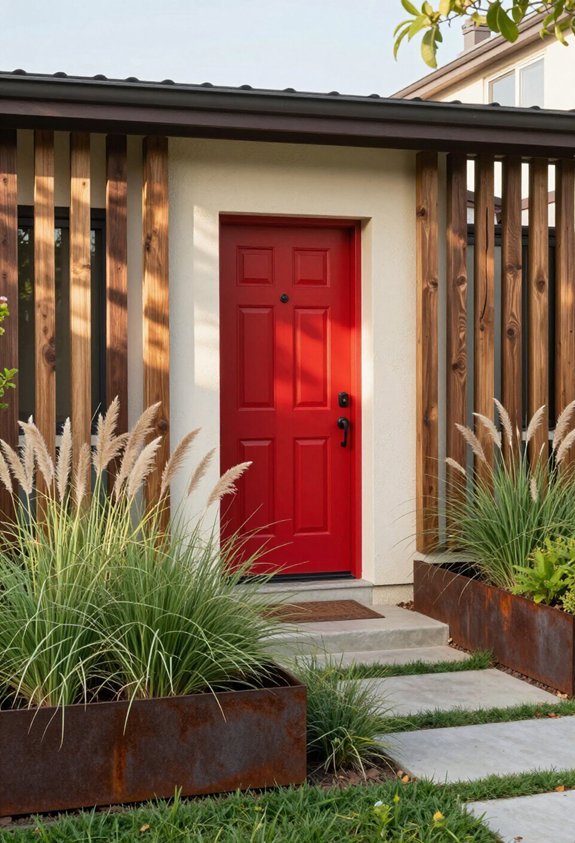
A vividly colored front door operates as a psychological anchor, drawing the eye immediately toward the home’s center and away from peripheral windows or exposed areas. The strategic application of saturated hues, such as deep crimson, navy blue, or emerald green, creates a focal point that dominates visual perception, effectively minimizing attention on adjacent spaces that lack privacy screening.
When selecting a paint color, homeowners should consider the existing exterior palette to guarantee sufficient contrast without visual discord. A door painted three to five shades darker or more saturated than surrounding walls generates maximum pull without appearing jarring. This technique proves especially valuable for properties with limited front setbacks, where the entrance sits close to public sightlines. The color concentration redirects observer engagement inward, establishing perceived boundaries through attention management rather than physical barriers.
Use Downward Lighting to Hide Private Seating Areas
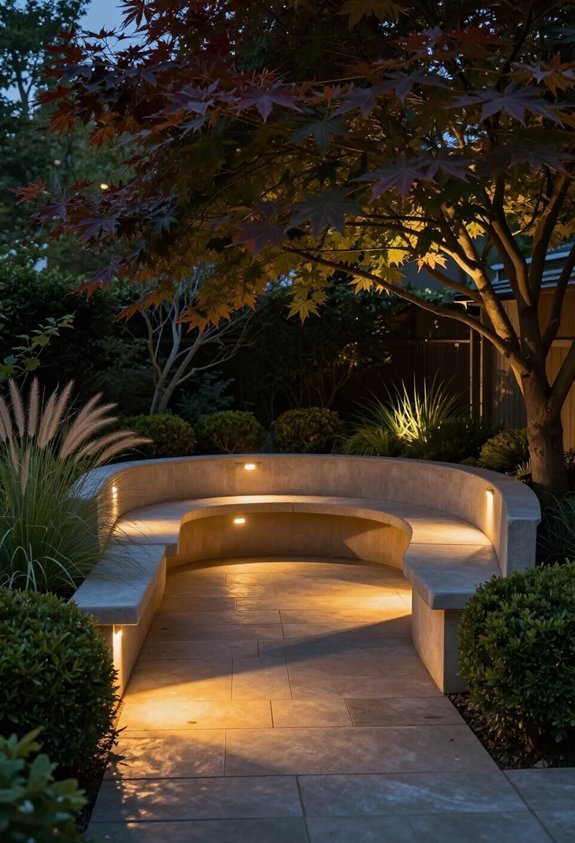
While bold color draws the eye toward a single point, strategic lighting can make entire areas disappear from view. Downward-facing fixtures, mounted on pergolas, fence posts, or trees, cast illumination pools that remain contained and localized. Light pools draw attention only to their immediate surfaces, leaving adjacent shadowed zones unnoticed by passersby.
Seating arrangements positioned within these unlit pockets become functionally invisible after dusk. Path lighting or uplighting on ornamental elements reinforces the visual boundary, channeling attention elsewhere while darkened corners maintain their concealment.
Warm-temperature bulbs, measuring 2700 to 3000 Kelvin, minimize glare and atmospheric scattering that might reveal hidden shapes. Motion sensors may activate safety lighting when occupants approach, though static low-level washing of perimeter plantings sustains the effect during idle periods. The technique preserves openness by day while manufacturing selective blindness at night.
Add a Gate or Arbor That Signals Privacy Zones
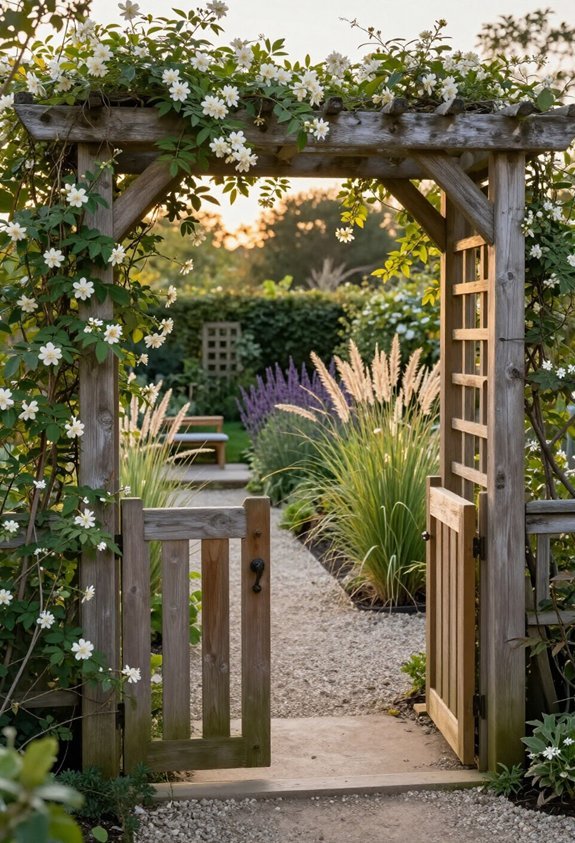
Change marks the boundary where public space yields to private domain, and physical structures that frame this threshold serve as readable signals to observers. A gate or arbor functions as this demarcation marker, communicating that the space beyond carries different permissions than the sidewalk it faces.
These installations need not block sightlines entirely to establish privacy zones. A waist-high gate suggests invitation while discouraging casual entry, and an overhead arbor, even without side walls, defines territory through vertical emphasis. Materials such as weathered wood, powder-coated metal, or woven branches reinforce intention through texture and permanence.
Placement determines effectiveness: positioning these structures at property lines, path intersections, or before seating areas creates sequential revelation. The resulting experience guides visitors gradually, allowing homeowners to maintain openness without sacrificing psychological separation from public scrutiny.
Combine Stone and Plants for Structured Natural Boundaries
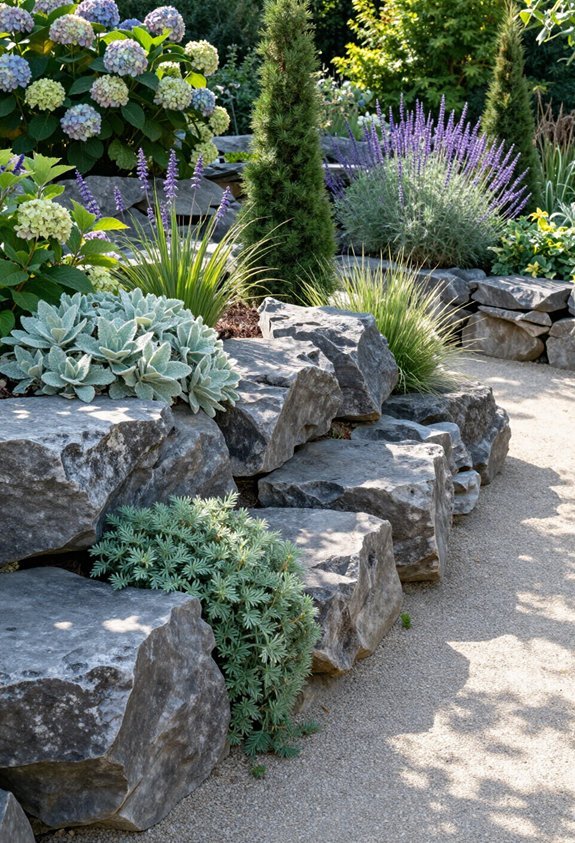
Stone walls and planted borders together create boundaries that feel established without appearing forbidding, blending permanence with growth to mark where one space ends and another begins. Low stone walls, roughly eighteen to twenty-four inches tall, provide visual weight while remaining open to light and air. These walls support cascading plants like thyme or sedum that soften edges and add seasonal variation.
Perennials planted directly against stone benefit from retained heat, extending bloom periods in cooler months. Evergreen shrubs positioned at intervals create rhythm and year-round structure, while deciduous plants fill gaps with temporary color. The combination allows partial screening without full enclosure, maintaining connections to the surrounding neighborhood. Proper spacing guarantees plants mature without overgrowing their stone framework, preserving the intended balance between built and natural elements.
Keep Street Sight Lines for Safety and Connection
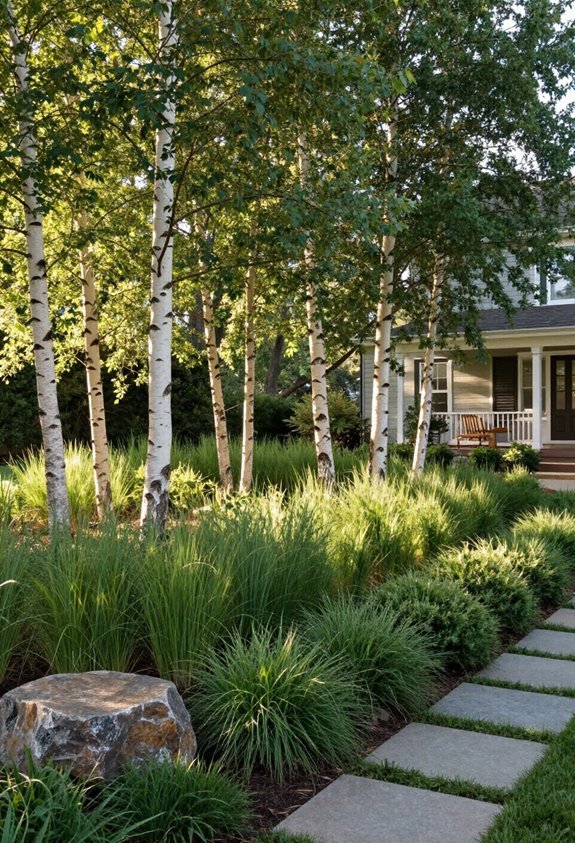
Privacy in the front yard must balance personal space with the practical need to see and be seen. Maintaining clear sight lines toward the street guarantees pedestrian and vehicular safety, allowing residents to observe approaching traffic, watch children at play, and detect unexpected visitors before they reach the door. Unobstructed views also foster neighborhood connection, enabling casual eye contact with passersby and reinforcing the community’s informal social network. To achieve this, homeowners should position taller plantings and solid fences along side property lines while keeping the area nearest walkways and driveways relatively open. Low-growing shrubs, ground covers, or ornamental grasses near the curb preserve visual access without eliminating green space. Transparent fencing materials, such as wrought iron or spaced pickets, further support visibility. Strategic placement of these elements protects privacy from adjacent lots while sustaining the watchful, welcoming front yard essential to safe, cohesive neighborhoods.
Frequently Asked Questions
Will These Ideas Work for Corner Lots?
Corner lots present unique challenges for privacy solutions. Strategic placement of low hedges, ornamental grasses, or partial fencing along exposed sides maintains openness while defining boundaries. Angled plantings and tiered landscaping soften sightlines without enclosure.
What’s the Cheapest Option for Immediate Privacy?
Tall ornamental grasses or fast-growing bamboo in containers provide instant screening at minimal cost. Temporary fabric screens or repurposed pallets with climbing vines offer budget solutions. None require permanent installation or exceed fifty dollars.
Do I Need Permits for Front Yard Fences?
Permit requirements vary by municipality. One must contact local zoning offices or building departments to verify height restrictions, setback rules, and permit needs before installation. Ignoring regulations risks fines or mandatory removal.
How Do I Maintain Privacy in Winter?
Evergreen hedges, dense conifers, or broadleaf shrubs retain foliage year-round. Structural elements like stone walls, wooden screens, or pergolas with climbing vines provide consistent barriers regardless of season, ensuring continuous seclusion without seasonal gaps.
Can I Combine Multiple Screening Methods Together?
Multiple screening methods may be combined effectively. Layering hedges with decorative fencing, or mixing trellises with ornamental grasses, creates depth and seasonal interest while maintaining openness. Strategic placement guarantees privacy without visual heaviness.
Conclusion
By combining layered plantings, strategic hardscaping, and thoughtful lighting, homeowners can achieve meaningful privacy without sacrificing openness. The key lies in balancing natural barriers with transparent sight lines that maintain safety and neighborhood connection. Whether through columnar trees, ornamental grasses, or structured stone borders, each element should serve both functional and aesthetic purposes. Successful front yard design requires careful planning, proper plant selection, and attention to how spaces feel during different times of day and seasons.