

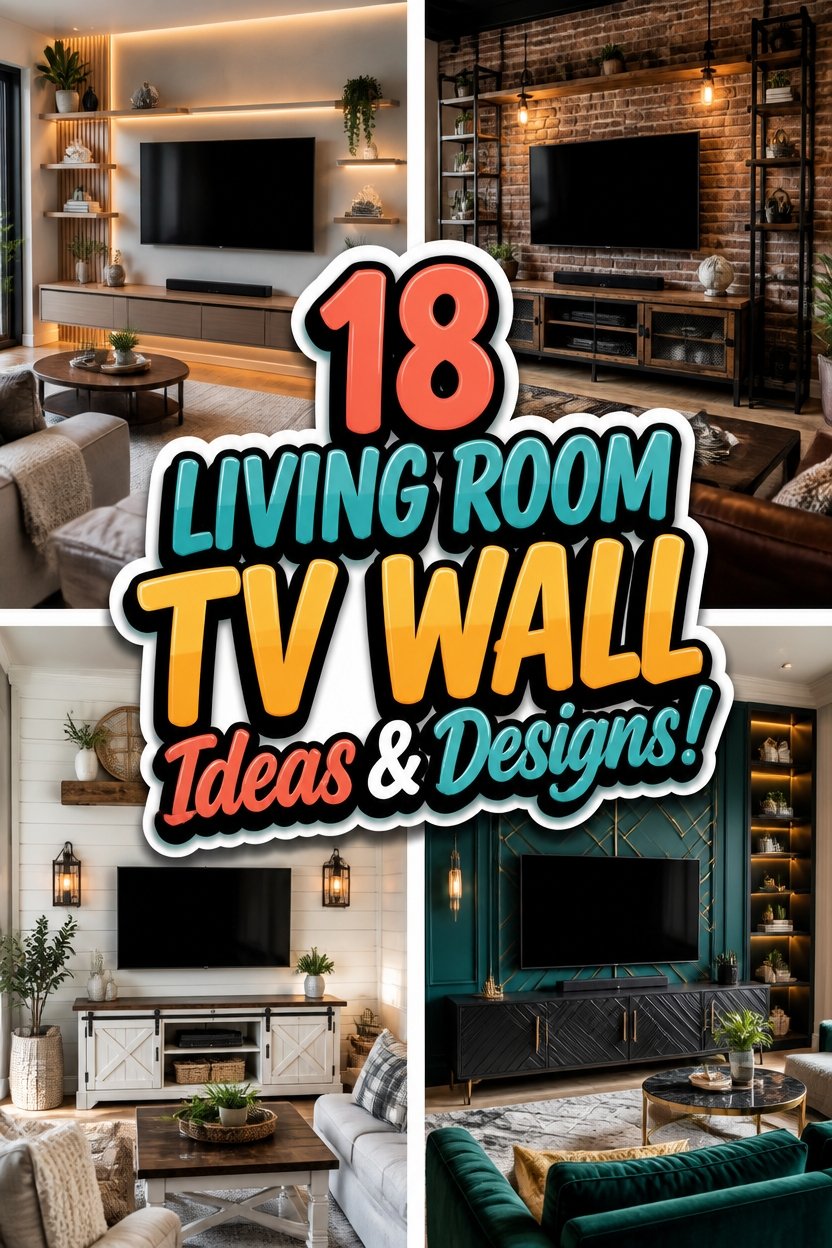
Picture the same blank wall behind your couch, year after year, with nothing but a TV mounted dead center and a tangle of cords nobody bothered to hide. That was my living room for longer than I care to admit.
A TV wall gets treated as an afterthought in so many homes, as if the screen were the only design decision needed. It rarely is.
Fixing it doesn’t require a renovation, sometimes just paint, floating shelves, or finally dealing with those cables. I tackled mine in a weekend, and the difference genuinely surprised me.
Small Changes That Make the Biggest Difference
Before you commit to a big structural project like a recessed niche, think about whether a simpler fix might solve the problem just as well. Paint, lighting, and shelving can transform a wall dramatically without any construction involved.
Cable management deserves more attention than most people give it. A wall full of clever design choices still looks unfinished if cords are dangling visibly across the bottom of the screen.
Consider how the wall looks both when the TV is on and when it’s off. The best designs make that transition feel intentional rather than leaving you staring at a black rectangle for half the evening.
18 Living Room TV Wall Ideas
This list runs from simple paint and lighting tricks all the way up to built-in cabinetry and recessed niches for anyone ready for a bigger project. Some of these you could tackle this weekend, others are worth planning carefully if you’re working with a contractor.
I tried to include enough range that whether you rent or own, whether you’ve got a big budget or just a free Saturday, there’s something here that fits your situation.
Pick the idea that matches your energy level right now and give your wall the attention it’s been missing.
Floating TV With Minimalist Shelving
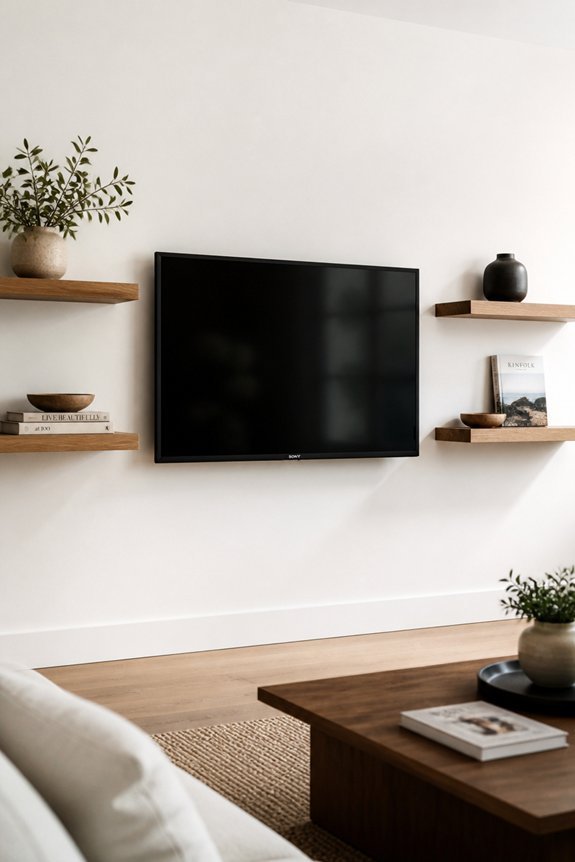
Ready to make your TV look like it’s floating in mid-air? A wall-mounted setup saves floor space instantly. No more bulky stands eating up your room.
Keep your shelves simple. White or natural wood works best. They hold your plants and books without stealing attention. Hide those cables in the wall if you can. Your space stays clean. Your TV becomes the star. Just check your wall strength first.
Also read: 16 LIVING ROOM CURTAINS Window & Elegant!
Floating Shelves With Sleek Decor Display
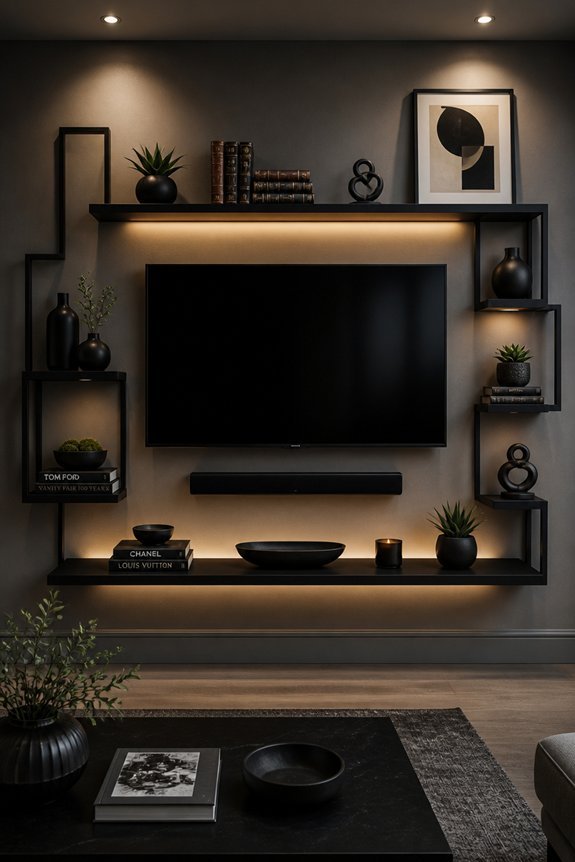
Floating shelves aren’t just storage. They’re your chance to show off.
Install sleek shelves above or beside your TV. Aim for 24 to 36 inches wide. Space them about 12 inches apart. Your wall needs room to breathe.
Now, what goes on them? Pick items that actually spark joy. Try gold-framed photos. Add white ceramic vases. Tuck in small plants with green leaves. Stack a few coffee table books horizontally. They look fancy. They also hide your guilty-pleasure paperbacks.
Stick to a tight color palette. White, gray, and natural wood work wonders. Pop in one accent color through a plant or artwork. Just one.
Here’s the real secret: don’t cram. Less is more. A half-empty shelf looks intentional. A stuffed shelf looks like a garage sale.
Dark Paint Colors For Theater-Style Viewing
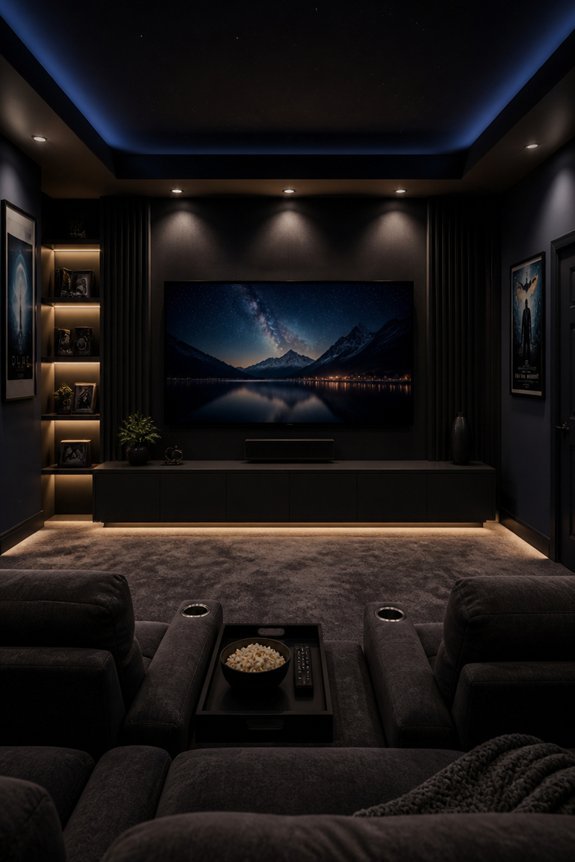
Want that cinema magic at home? Start with your walls. Dark colors like charcoal, navy, or deep burgundy soak up light. Your screen stays glare-free and looks brighter by contrast.
Pick three walls for the dark treatment. Keep one lighter if full cave mode feels too intense. You’ll still get the movie-theater vibe without losing your mind.
Here’s a bonus nobody talks about: dark paint hides popcorn grease and drink rings. Your eyes stay comfy during long marathons. The sound even improves—less echo, more immersion.
Your couch deserves better than white walls.
Lighting Integration For Ambiance And Function
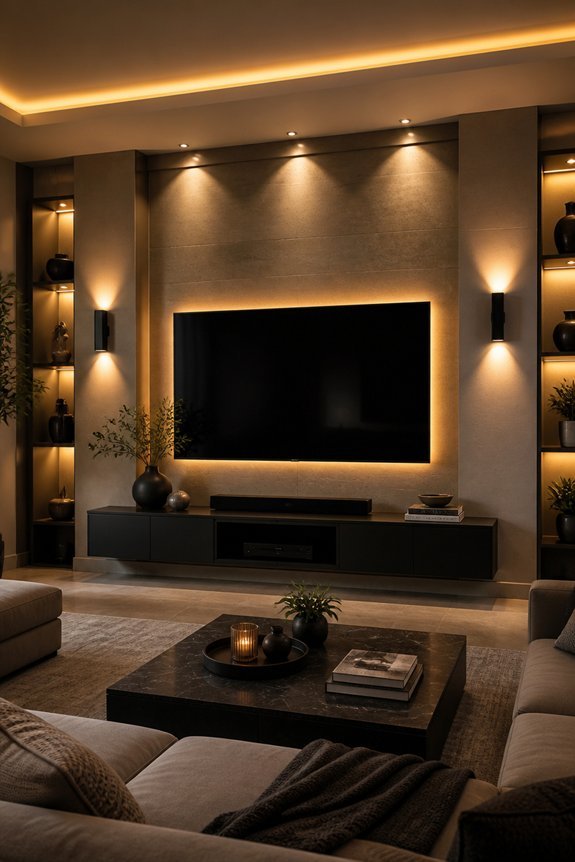
Ever notice how dark walls can swallow a room whole? The trick isn’t fighting the darkness. It’s making it work for you.
Start with ambient lighting behind your TV. LED strips in warm white or soft amber create a gentle glow. Place them 2-3 inches behind the screen. Your eyes will thank you.
Now layer in accent lights on your shelves. They add character. They also help you spot the remote without stubbing your toe on the coffee table.
Dimmable overhead lights are your secret weapon. One moment you’re in movie theater mode. The next, you can actually see your snacks.
Don’t forget wall sconces flanking the TV. They add polish. They stop the room from feeling like a cave.
The goal? Lighting that teams up, not competes. Your dark walls will look deliberate. Elegant. Not like someone forgot to flip the switch.
Shiplap Accent Wall With Modern Farmhouse Charm
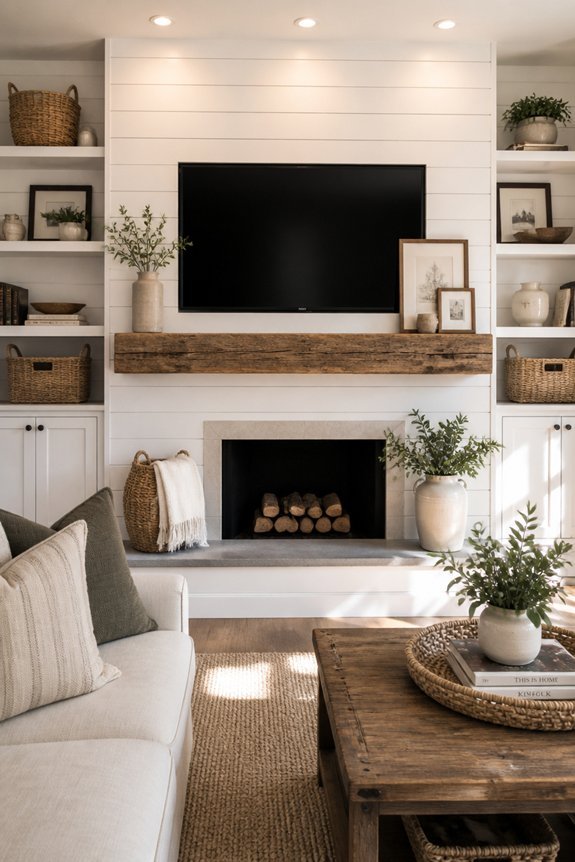
Tired of staring at a blank TV wall? Shiplap might be your answer.
These horizontal wood planks bring instant personality to any space. You install 6-inch boards across your wall. Paint them white or soft cream. That’s it. You’ve got that cozy farmhouse look everyone’s after.
Your TV suddenly feels less like technology and more like décor.
Here’s the best part: shiplap does the heavy lifting for you. Add a rustic wooden stand underneath. Hang a few vintage frames nearby. Maybe prop a chunky rope mirror in the corner. Warm lighting completes the picture.
The texture naturally pulls attention away from the black screen. Even during commercials, your wall stays interesting.
Want a modern twist? Throw in some black metal brackets. Swap your bulbs for Edison style. You hit that sweet spot between farmhouse charm and industrial edge.
Stone Or Brick Feature Wall For Rustic Appeal
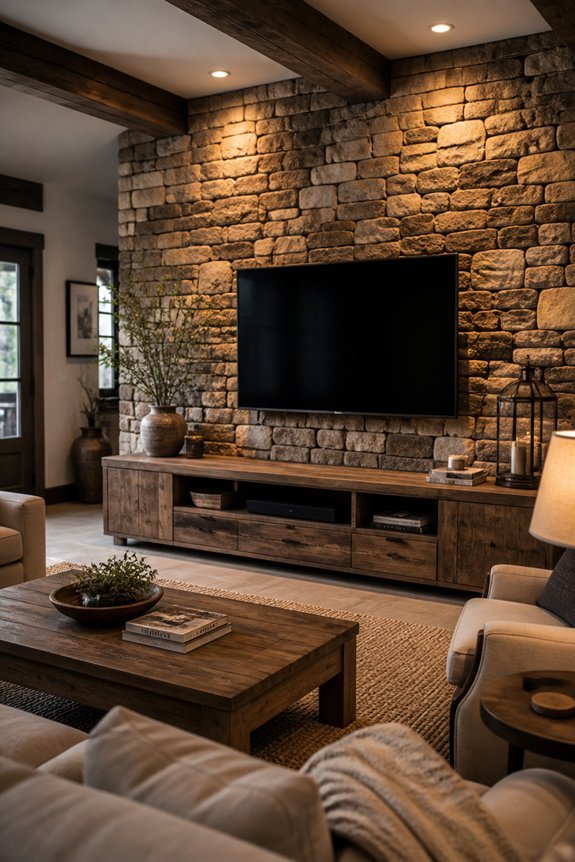
Tired of walls that feel a little too perfect?
Stone and brick bring soul to your living room. Real brick gives you warm reds and cozy oranges. Stacked stone adds texture your fingers will want to explore.
These materials work hard for you. They hide dust. They hide fingerprints. They look better as they age.
Pair your rugged wall with a wooden TV stand. Add some vintage finds. Install accent lighting above or beside the stone. Watch the shadows move. Your TV suddenly belongs in a mountain lodge.
And isn’t that the vibe you want?
Wood Paneling And Natural Material Warmth
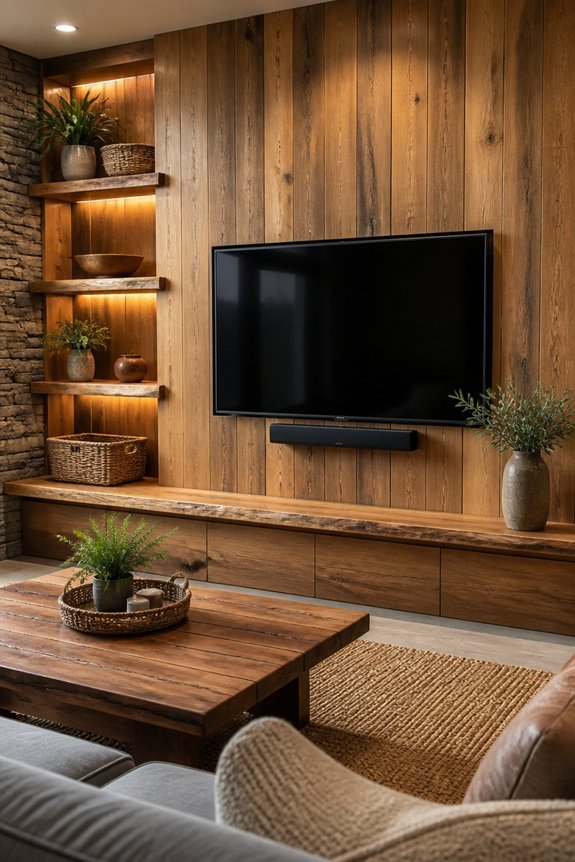
You’ve felt it, right? That cold, flat feeling of staring at blank drywall. Wood paneling fixes this instantly. Real oak, pine, or reclaimed boards wrap a room in warmth no paint can fake.
The tones do the work. Rich browns. Honey glows. Your eyes relax just looking at them.
Pick your direction. Go vertical to stretch the ceiling higher. Go horizontal to settle into calm. Most panels hit 8 feet anyway. No weird gaps. No fuss.
Let the wood speak. Add a simple TV mount. Float a shelf or two. The grain carries the whole look.
Warm it up more. Soft brass fixtures do the trick. Suddenly your wall invites people in.
Your living room breathes again.
Green Walls And Earth-Tone Paint For Natural Warmth
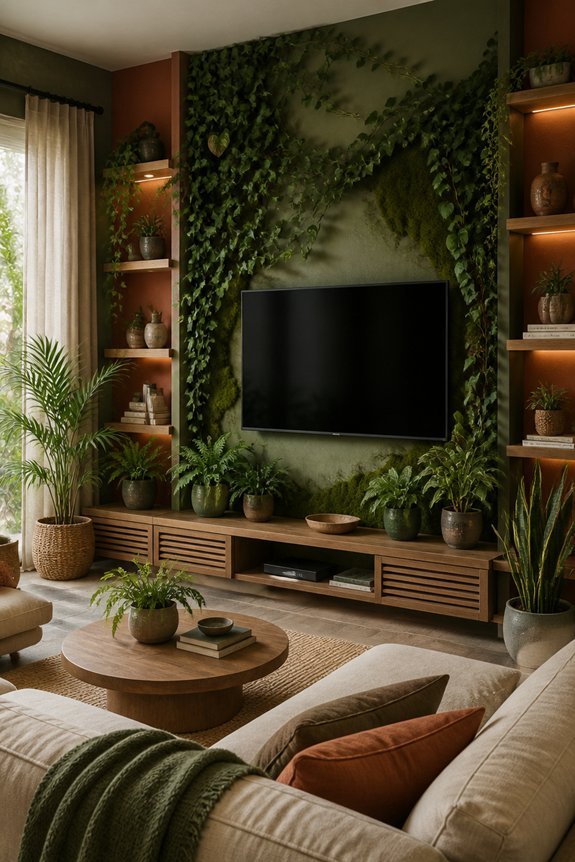
Ever stared at a blank wall and felt your soul leave your body? We’ve all been there. Paint fixes that fast.
Green walls are everywhere right now. Sage feels like a deep breath. Olive wraps around you like a blanket. You don’t need fancy art. The color *is* the mood. Try it behind your TV. The screen pops. The room stays warm. No cave vibes here.
Earth tones play nice too. Warm taupe? Instant hug. Terracotta? Like a sunset you can touch. These shades cost less than one decent chair. They make your space feel pulled together without trying too hard.
Wood gives splinters. Paint gives possibilities. Grab a brush. Your walls have been waiting.
Wallpapered TV Wall With Bold Pattern Or Texture
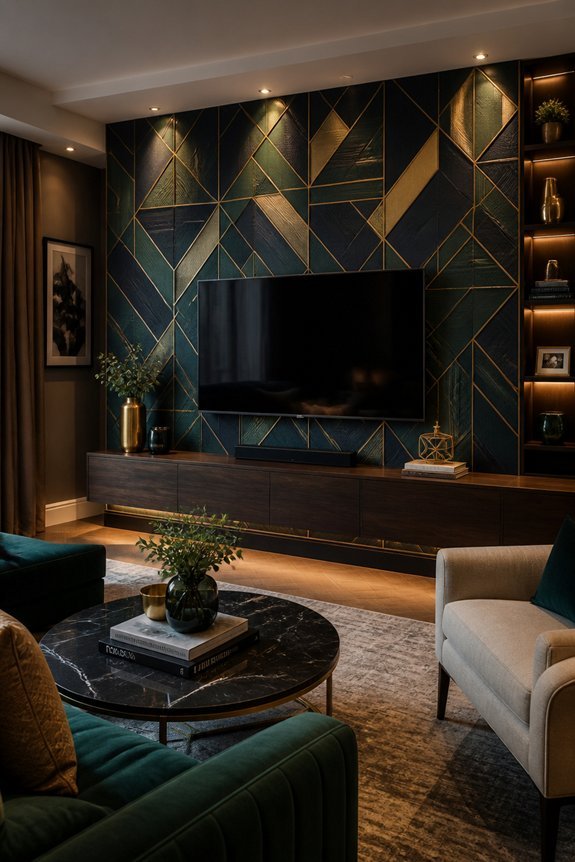
Tired of staring at a blank wall while you binge your favorite shows? You’re not alone.
Bold wallpaper fixes that in a weekend. Think oversized florals, textured grasscloth, or geometric prints that grab attention. Pick something with contrast so your TV doesn’t disappear into the background. Dark moody papers work beautifully behind screens. They hide glare and make colors pop.
Installation is simpler than painting. Prep your wall, line up the pattern, and smooth as you go. Most peel-and-stick options forgive small mistakes. The pattern distracts from any bumps underneath. Your room instantly looks finished, like you hired help. You didn’t. But let guests wonder.
Two-Tone Paint For Visual Interest And Dimension
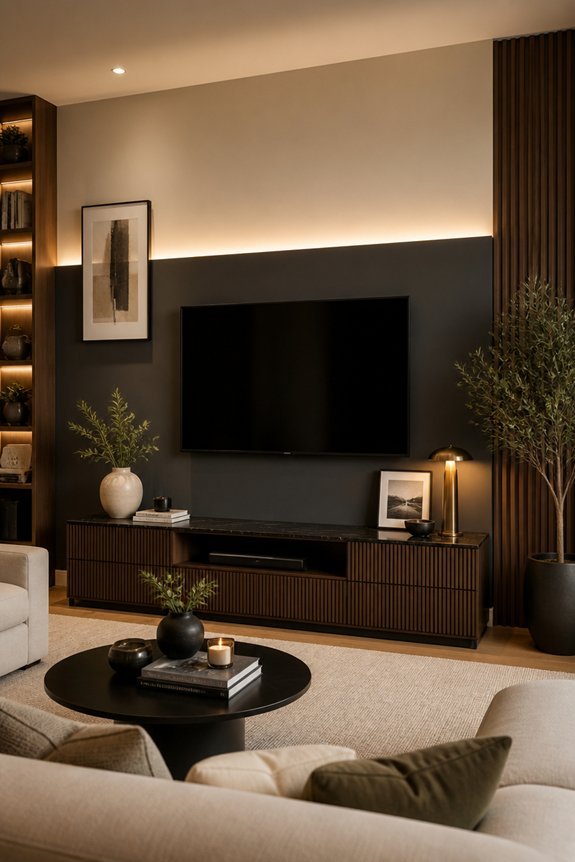
One color feels safe. But two? That’s where the magic happens.
Split your wall horizontally and watch the room transform. Paint the bottom third a warm beige. Go moody up top with charcoal or forest green. Suddenly your ceiling feels higher. Your TV wall stops looking like a blank slate.
Try the three-foot rule. Measure up from the floor. Switch colors there. It’s like a belt for your wall—it breaks things up and draws the eye. No wallpaper paste. No matching seams. Just tape, paint, and done.
Geometric Tile And Concrete Finishes For Industrial Style
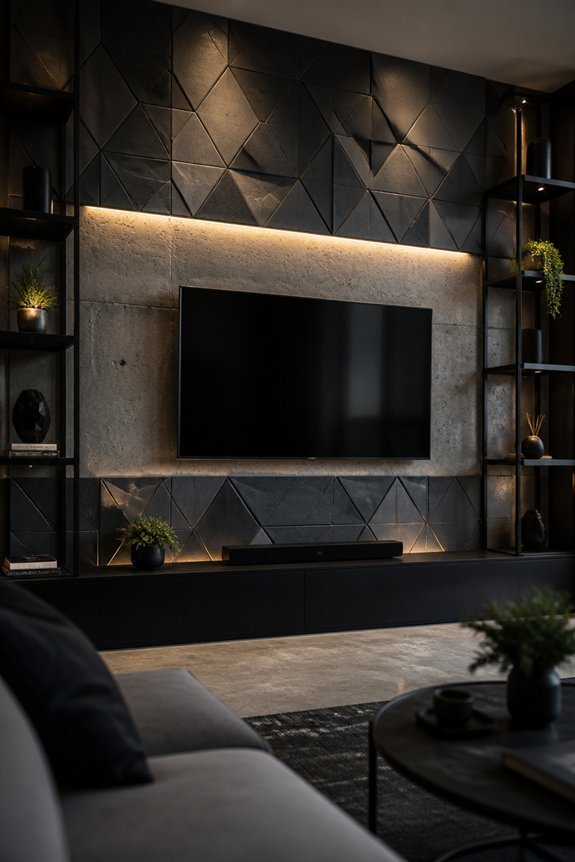
You love that raw, warehouse look? Geometric tile and concrete will get you there.
Picture this. Bold hexagons or sharp chevrons in black, gray, and white. Your eyes can’t help but follow the pattern. Concrete brings the grit. It feels unfinished in the best way. No drafts, though. Your heating bill stays happy.
These materials forgive your mistakes. Coffee spills? Scuffs? They shrug it off. Try exposed concrete as your base. Add geometric tiles around the TV frame. The contrast hits different. Mount your TV dead center. Let the textures do the talking. Industrial style works best when it looks effortless. Yours will.
Soft Texture: Velvet And Fabric Wall Upholstery
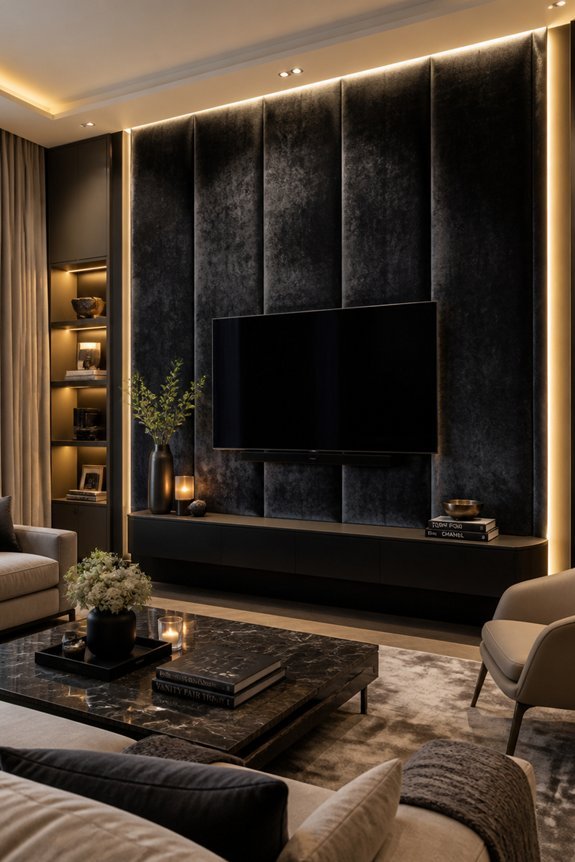
Sharp corners can make a room feel cold. You deserve something softer.
Velvet and fabric upholstery turns your TV wall into a cozy retreat. The material practically invites you in. Rich jewel tones—think emerald green or deep sapphire—create instant drama. Prefer something quieter? Cream or gray keeps things elegant without shouting.
Most installations span 8 to 10 feet. That’s enough to frame your screen and soak up echo beautifully. Your movie nights just got quieter.
The process is straightforward: batting plus fabric, stapled tight to wooden frames mounted on your wall. It’s comfort you can build. Guests will reach out to touch it. Let them. The fabric forgives fingerprints, popcorn dust, and everyday life.
Curved TV Walls And Arched Accent Designs
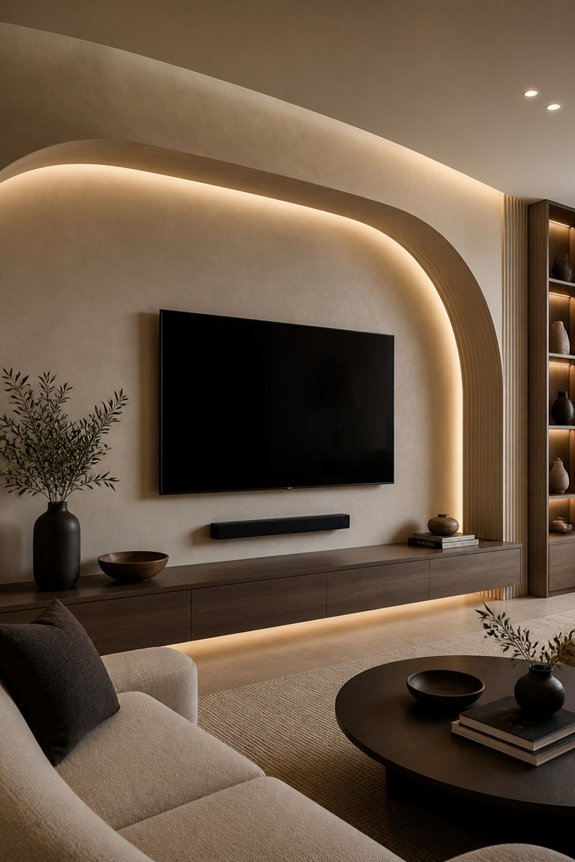
Tired of flat walls that feel like a blank stare? You’re not alone. Curved TV walls break that monotony completely.
An 8-12 foot arc changes everything. It wraps the room around you. Center your TV in that curve. The effect stops people mid-step. Add soft lighting that traces the arch. Now your space feels designed, not decorated.
Stone or shiplap finishes love these curves. Hard edges disappear. Furniture slides into place more naturally than you’d expect. Your guests will ask about your architect. You’ll smile and pour more wine.
Gallery Wall Display Mixed With TV Mount
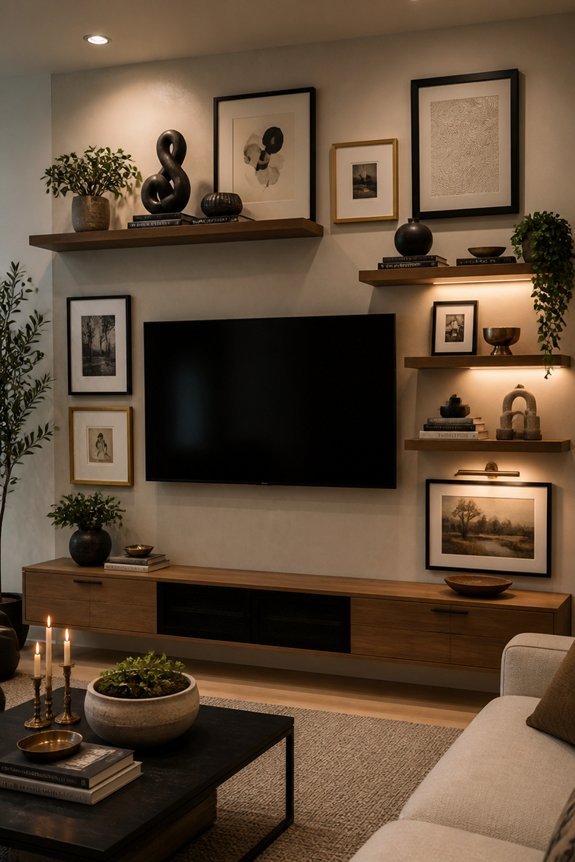
Your TV doesn’t have to stand alone. It shouldn’t look like a black void on your wall.
Gather frames in different sizes. Mix 8x10s with smaller 4x6s. Scatter them around your screen like a puzzle. Use black, white, and wood tones together. This creates layers your eye wants to explore.
Push the TV slightly off-center. Break the rules on purpose. Add tiny shelves. Tuck in small plants or weird little objects you love.
Your screen becomes art. Your wall tells a story. The room finally feels like yours.
Floor-to-Ceiling Built-In Entertainment Center
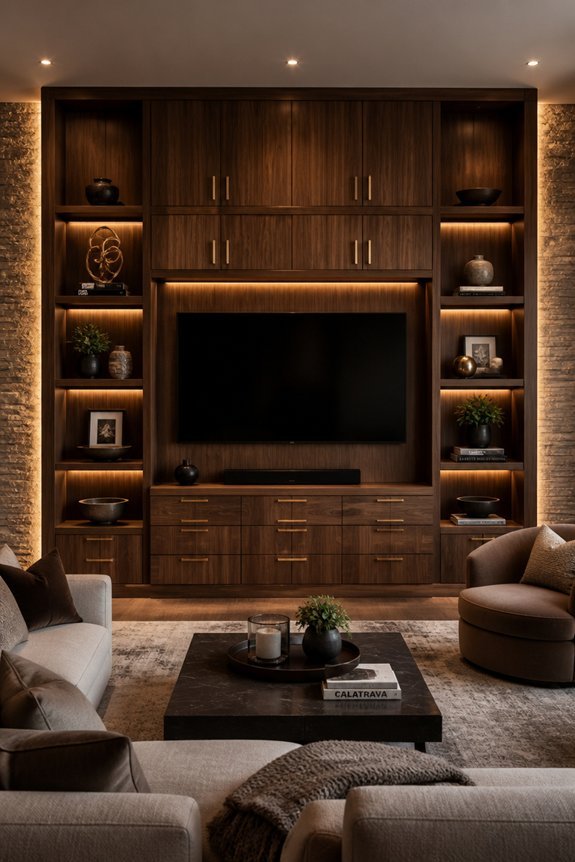
Tired of your TV looking like an afterthought? This wall-to-wall unit solves that instantly.
You get floor-to-ceiling storage that demands attention. Shelves run the full height. Cabinets swallow clutter whole. Position your screen dead center. Flank it with open shelves for books and treasures. Hide the mess behind closed doors. Try warm wood tones or crisp white paint. Add soft backlighting for that boutique hotel vibe. You’ll need 8 to 10 feet of vertical space. The result looks expensive and organized. Your secret junk drawer stays safe.
Recessed TV Niches For Seamless Built-Ins
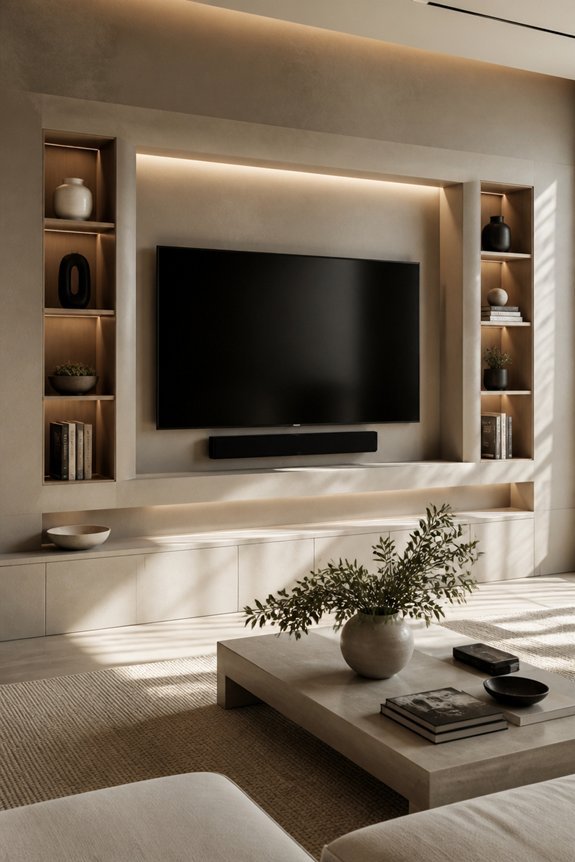
Look at your living room wall. See that flat screen hanging there? It’s taking up space it doesn’t need to.
A recessed TV niche changes everything. Your TV sits inside the wall itself. The result looks built-in. Expensive. Intentional.
Standard niches run about 50 inches wide and 30 inches tall. That fits most flat screens comfortably. You lose the “floating box” look that makes rooms feel temporary.
Want the cleanest setup? Run all cables through the wall cavity beforehand. Zero visible cords. Zero clutter. Installers can handle this during construction or a careful retrofit.
Paint the niche interior deep gray or soft black. The screen disappears when off. Add thin LED strips behind the TV for gentle backlighting. Movie nights feel different instantly.
You didn’t buy a sleek TV just to let it float awkwardly in space. Give it a proper home.
Hidden TV Behind Motorized Cabinet Or Sliding Doors
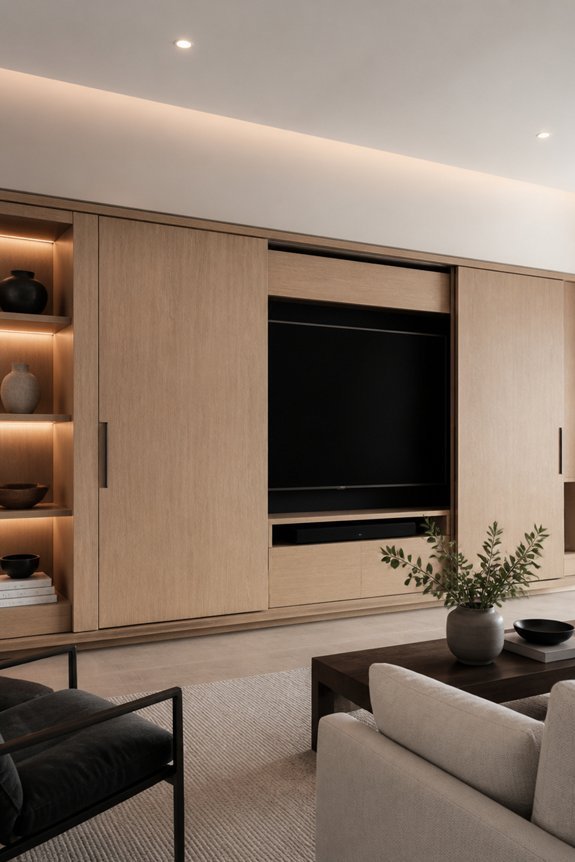
Do you hate staring at a black rectangle when your TV’s off? You’re not alone.
Motorized cabinets solve this completely. Your screen hides behind smooth-sliding panels that open with a button press. No wrestling with doors. No angry yanking. You get your living room back. It actually looks like a room again—not a Best Buy showroom.
Most units fit 55 to 75 inch TVs. Width runs about 36 to 48 inches. Pick your finish—warm wood grain, crisp white, matte black. Whatever matches your walls. The motor costs extra. But that “wow” moment when guests watch your wall transform? Worth it. Your TV stays dust-free too. Bonus: judgmental relatives will never know you own one.
Built-In Seating, Storage, And TV Integration
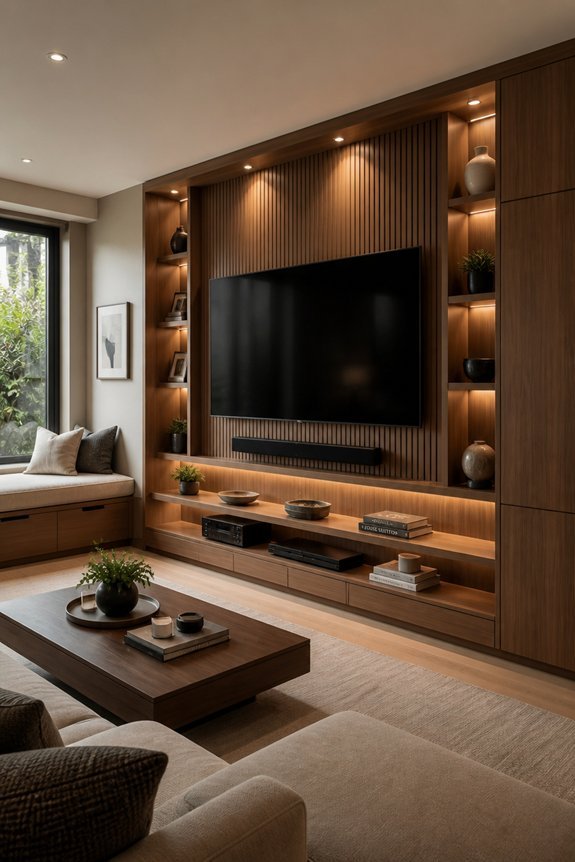
Why stop at a TV wall? You deserve more.
Built-in seating wraps your screen like a cozy hug. Storage cubbies swallow snacks, remotes, and those mystery cables everyone ignores. Shelving actually holds your stuff instead of gathering dust. Your TV finally gets the stage it deserves.
Try this: Mount a 48-inch screen at eye level. Add a bench below for marathon viewing. Flank it with open shelves for books and speakers. Tuck hidden drawers underneath for blankets and controllers. Choose gray, navy, or warm wood tones. Everything clicks together. Your living room stops looking like random furniture had a fight.
Frequently Asked Questions
What Is the Ideal TV Wall Height for Comfortable Viewing From Standard Seating Positions?
Eye level is really the goal here, with the center of your screen lining up roughly where your eyes land when you’re seated comfortably on the couch. That usually puts the screen’s center around 42 inches from the floor.
This height accounts for standard furniture and typical viewing distances, so most living rooms fall comfortably within that range. Mounting too high is one of the most common mistakes people make, and it leads to neck strain during long viewing sessions.
If your seating is unusually low or high, adjust slightly from that baseline to match your actual setup rather than following the number exactly.
How Do I Hide Unsightly Cables and Wires Behind My TV Wall Installation?
In wall conduit systems are the cleanest solution if you’re willing to do a bit of construction work. They route cables completely out of sight, leaving nothing visible from the front of your wall at all.
Wall mounted raceways are a good middle ground if you don’t want to cut into drywall. They sit flush against the wall and can be painted to match, so they blend in rather than stand out.
Running cables behind the TV mount itself or using adhesive clips along the wall’s edge works well for a quick, low effort fix. It won’t be quite as invisible, but it beats a tangled mess hanging in plain sight.
What Size TV Should I Choose for My Specific Living Room Dimensions?
Start by measuring the distance from your seating to the wall where the TV will hang. Dividing that number by 1.5 gives you a solid estimate for the ideal screen size in inches.
A room with about eight feet of viewing distance typically suits a forty five inch television comfortably. That ratio scales up as your room gets bigger, so don’t assume bigger is automatically better if your seating is close.
Larger spaces with more distance between the couch and the wall can comfortably handle screens in the fifty five to sixty five inch range. Getting this ratio right makes a real difference in how comfortable your viewing experience actually feels.
How Much Does a Professional TV Wall Installation Typically Cost on Average?
Most professional installations land somewhere between 500 and 2,000 dollars, with the final number depending heavily on a few key factors. Wall type and cable management complexity tend to drive the price up or down the most.
Mount quality matters too, since a sturdier mount built for a larger TV costs more than a basic option. Regional labor rates also play a role, so the same job can vary in price depending on where you live.
More intricate installations that require structural work, like building a recessed niche, can exceed that range considerably. It’s worth getting a few quotes if your project involves anything beyond a standard wall mount.
Can I Mount a TV on Drywall, or Do I Need Studs?
You can mount a TV on drywall using specialized anchors designed to handle the weight, and this works fine for lighter televisions. Drywall anchors are a reasonable option if studs simply aren’t available in the spot you want.
Studs provide noticeably better support though, especially for heavier models. Mounting directly into a stud gives you the most stability and removes any worry about the mount pulling away from the wall over time.
For larger displays, finding a stud is really the safer choice. The extra effort to locate one is worth it compared to the risk of a heavy TV coming loose from drywall alone.
Conclusion
A TV wall is one of those features that quietly shapes how a whole room feels, even though it rarely gets the design attention it deserves. Mine went unnoticed for years before I finally did something about it.
Whether you’re drawn to something dramatic like a stone feature wall or something simpler like a fresh coat of paint and a few floating shelves, the goal stays the same. You want a wall that feels intentional rather than accidental.
I still remember the first time a friend actually commented on my wall instead of just sitting down and turning on the TV without a second glance. That small moment made the whole project feel worth it.
Lighting and cable management matter more than people expect going in. Get those two details right and even a simple design ends up looking considerably more polished.
Your TV wall has more potential than that blank stretch of drywall might suggest right now. A little attention turns it from background noise into something that actually pulls the room together.
I’d love to hear which idea you’re drawn to, or what’s already working on your own TV wall. Leave a comment below and tell me how your space is coming together.