

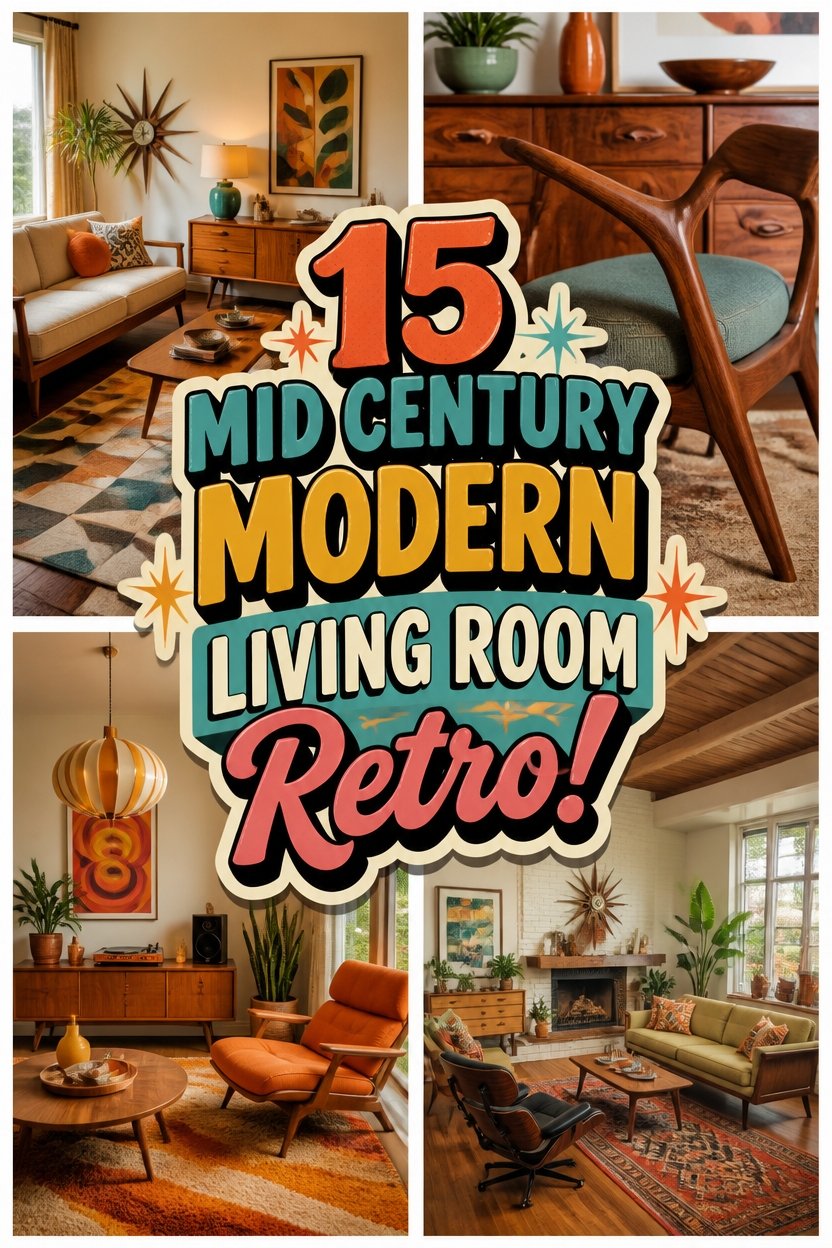
The light hits differently in a room that knows its own mind. Mid Century Modern spaces have that quality. They don’t try too hard. They just are.
So what’s the secret? It’s movement. Furniture that floats. Pieces breathe when they’re not shoved against walls. A sofa sits proud in the middle of the room. A credenza stands alone. Space becomes part of the design.
Color plays differently here too. That mustard yellow everyone’s afraid of? It works. Teal joins the party. Warm woods ground everything. But the real hero is lighting. Not the sad ceiling blob from your rental apartment. Arc lamps that curve like questions. Sputnik chandeliers that throw starbursts across walls. This is lighting that sculpts the evening.
Most people get one thing wrong. They collect the right pieces. Then they clutter every surface. The magic lives in restraint. One sculptural vase. A single geometric textile. Room to actually see what you chose.
Start there. The rest follows.
The Essential Elements of Mid Century Modern Style
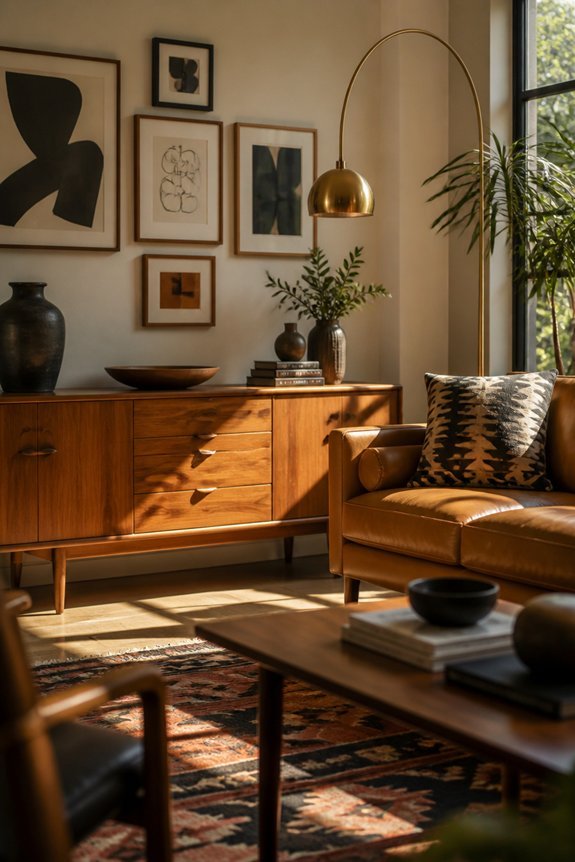
So you’ve walked into a space that feels effortlessly cool. The lines are crisp. The colors pop without trying too hard. That’s mid century modern doing its thing.
You can spot this style in seconds. Look for tapered wooden legs. Notice the mustard yellows and teals. Check out those boomerang coffee tables. The Eames chair needs no introduction—it just sits there looking iconic.
Your own space can borrow from this era without feeling like a museum. Try floating your furniture away from walls. Let big windows do the heavy lifting on lighting. Mix wood, leather, and metal without overthinking it.
The best part? This style cuts the clutter. It believes in fewer pieces with better stories. That mindset alone will change how you see your home.
Also read: 16 LIVING ROOM CURTAINS Window & Elegant!
Statement Lighting: Why It Anchors the Room
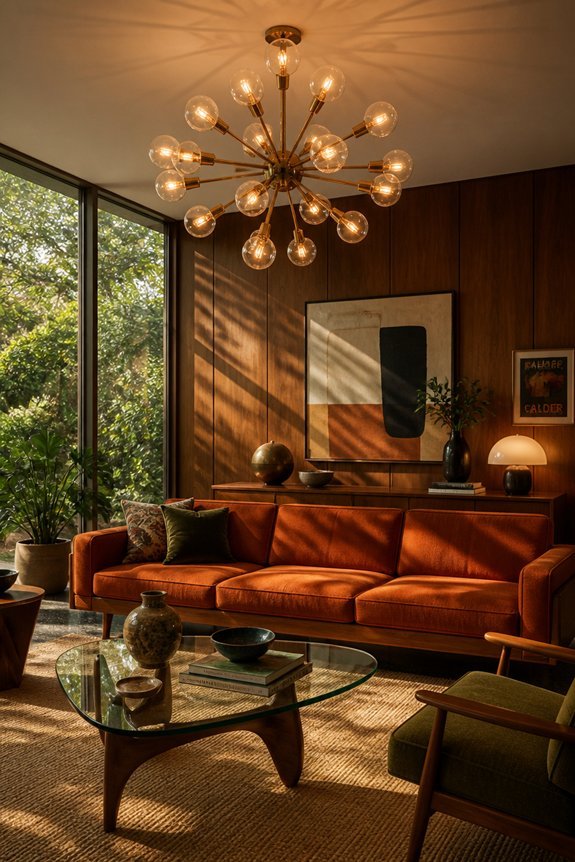
You know that feeling when you walk into a room and something just clicks? Often, it’s the lighting doing the heavy lifting.
A single pendant light isn’t just practical. It’s jewelry for your space. It pulls eyes upward. It makes everything feel intentional—like you actually planned this, rather than inheriting a random lamp collection.
Mid-century designs work especially well here. Think brass fixtures with sculptural shapes. Warm bulbs that flatter your skin instead of draining it. A 24-inch sputnik above your coffee table makes a statement without shouting. Even a simple cone pendant does the trick.
The right fixture quietly tells guests you’ve got taste. No neon signs required.
Sofas and Seating: The MCM Statement Piece
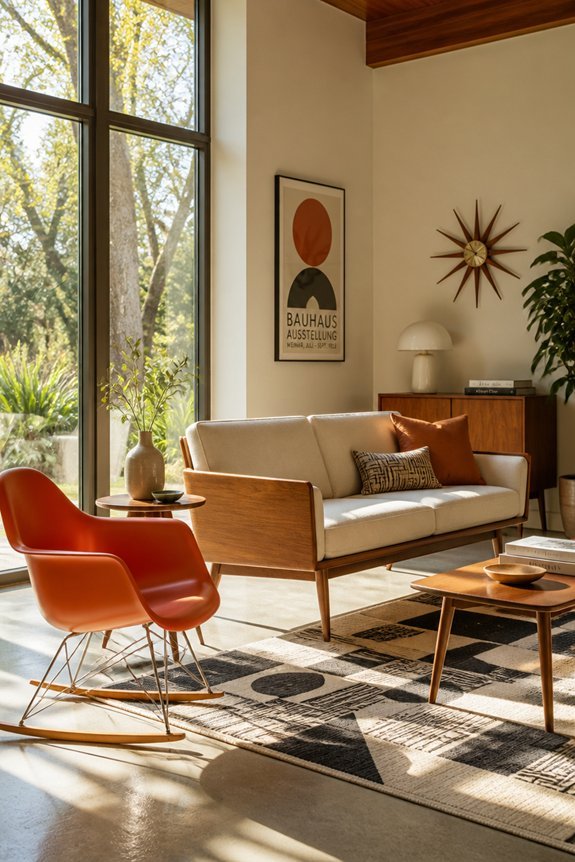
Your sofa makes or breaks your living room. It’s that simple.
Mid-century modern sofas sit low. Look for 16-inch legs. The frame stretches 80 to 90 inches across. That’s your anchor point.
Mustard yellow turns heads. Teal calms the space. Burnt orange adds warmth. Pick one and own it. Tapered wooden legs are non-negotiable. They elevate the piece—literally.
Position your sofa first. Everything else follows. Coffee table sits 18 inches away. Side tables flank within easy reach. Get this layout wrong, and the room collapses. Get it right, and the rest falls into place.
Wood and Natural Materials: The Backbone of Warmth
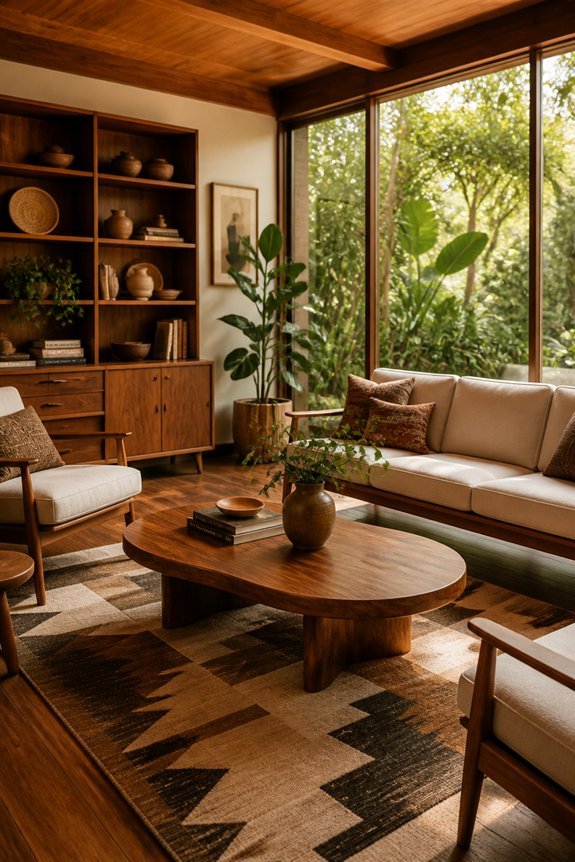
You want warmth in your living room. Wood delivers it instantly.
Teak, walnut, and oak are your go-to choices here. Run your hand across a 48-inch coffee table. Feel that grain? That’s the good stuff. Pick furniture with exposed legs. Your floor needs to breathe too.
Natural materials complete the picture. Leather ages beautifully. Linen softens the edges. Wool invites you to curl up. Add a woven basket for blankets. Tuck a plant in the corner. Suddenly people linger longer. That’s your MCM magic right there.
Bold Colors and Geometric Patterns: How to Apply Them
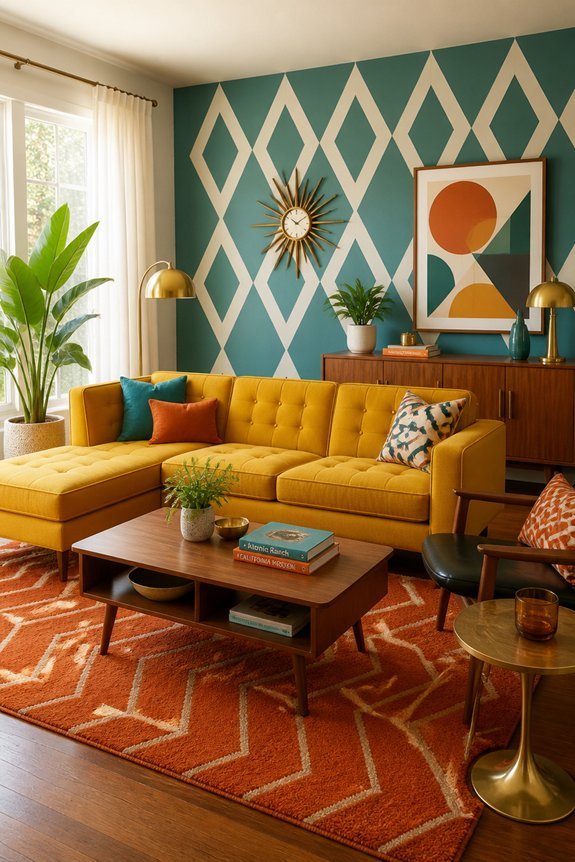
Tired of bland spaces that feel like they forgot to have fun? That’s exactly where mid-century modern steps in.
You need bold colors. Think mustard yellow. Burnt orange. Teal blue. Pick one for an accent wall and watch the room wake up instantly. Pair it with solid furniture and let that wall do the talking. Add two patterned throw pillows—three max, or you’ll lose your couch to the pillow pile.
Geometric patterns bring the energy too. You have chevrons. Sunbursts. Abstract shapes that catch the eye without overwhelming it. Ground everything with a geometric area rug. It ties the room together and gives your feet something interesting to look at.
Keep one rule in mind: one wild pattern, plenty of solids. Balance is everything here. You want guests to smile when they walk in, not reach for their sunglasses. Retro fun beats sensory overload every single time.
Accent Walls: Color and Pattern in Practice
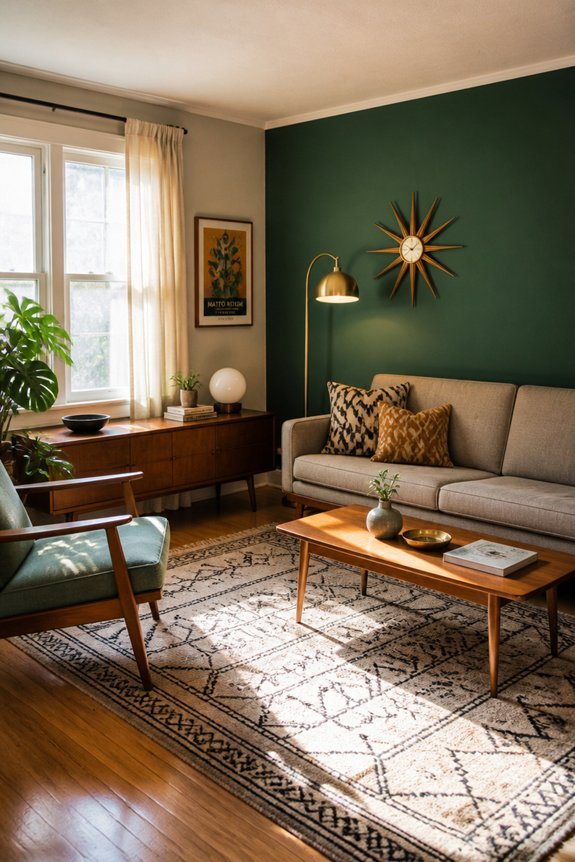
You’ve probably stared at a blank room before, wondering where to start. An accent wall solves that problem fast. It gives your space a focal point without overwhelming everything else.
Pick one wall. Just one. Paint it deep teal or burnt orange—something that makes you look twice. The best spot? Behind your sofa or directly across from the door. Your eye lands there naturally. Want more impact? Try a pattern instead. Chevrons, sunbursts, and mid-century triangles all work beautifully here. You can paint it yourself. Yes, there will be splatters. Yes, you’ll still feel proud. One bold wall carries the whole room. The others can stay quiet and creamy. That’s the secret.
Furniture as Sculpture: Why Function Is Beautiful
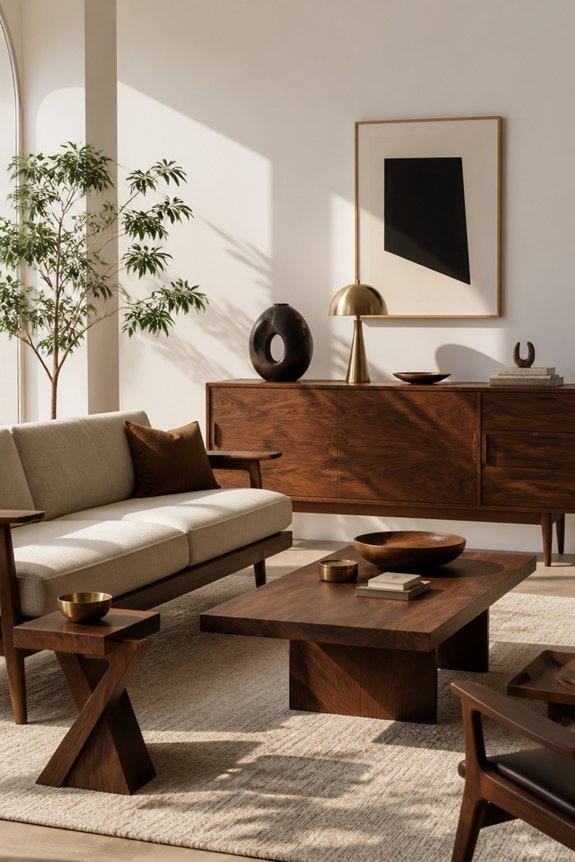
You’ve probably walked past a mid-century chair without realizing it was art.
Pick up a classic Eames lounge. Those curved plywood shells didn’t happen by accident. Designers spent years perfecting the angle that cradles your spine. The result? You sit better. And the chair becomes beautiful *because* it works.
Look at a Hans Wegner wishbone chair. The Y-back isn’t decoration. It distributes your weight so the thing won’t snap. The tapered legs splay outward for balance. Every choice solves a problem first. The elegance follows.
Want to spot this yourself? Check where the wood grain runs. Notice how drawers glide without metal hardware. Run your hand along a joint. Good design invites touch.
Your teak coffee table holds tonight’s wine glass. It also holds your gaze. That’s the trick: useful objects earn our affection through repetition. We fall in love with what serves us well.
Start here. Notice one piece in your home that works *and* delights you. That’s sculpture in disguise.
Coffee Tables and Side Tables That Define the Era
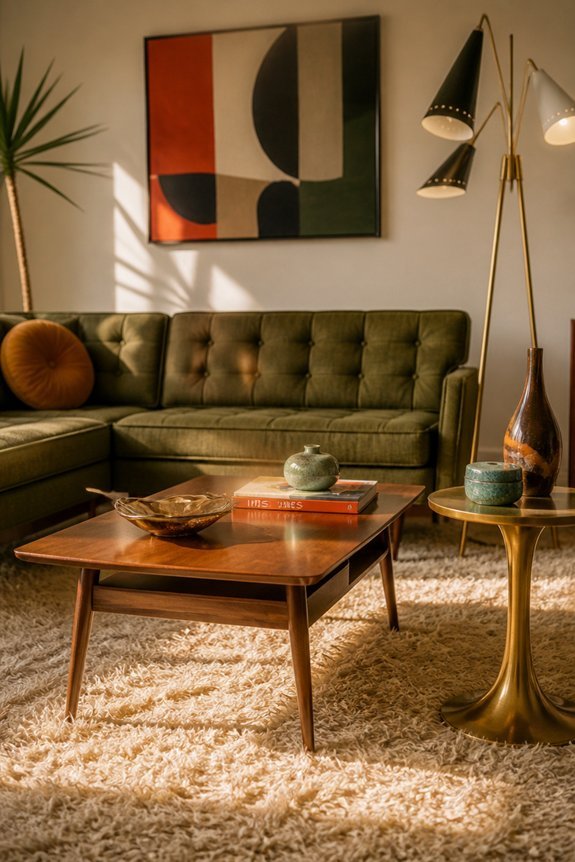
Picture your living room right now. Does it feel pulled together? Or like furniture just landed there by accident?
A mid-century coffee table fixes that instantly. Look for clean lines and tapered wooden legs. Teak or walnut finishes work best. These pieces do real work. They hold your coffee, your books, your feet after a long day. But they also tell guests you made actual choices.
Your side tables matter too. Keep them around 24 inches tall. They flank your sofa like quiet helpers. One holds your lamp. The other keeps your phone close. Match them to your main table, or don’t. Either way, your room suddenly feels intentional. That’s the mid-century trick.
Window Treatments: Fabric and Minimalism
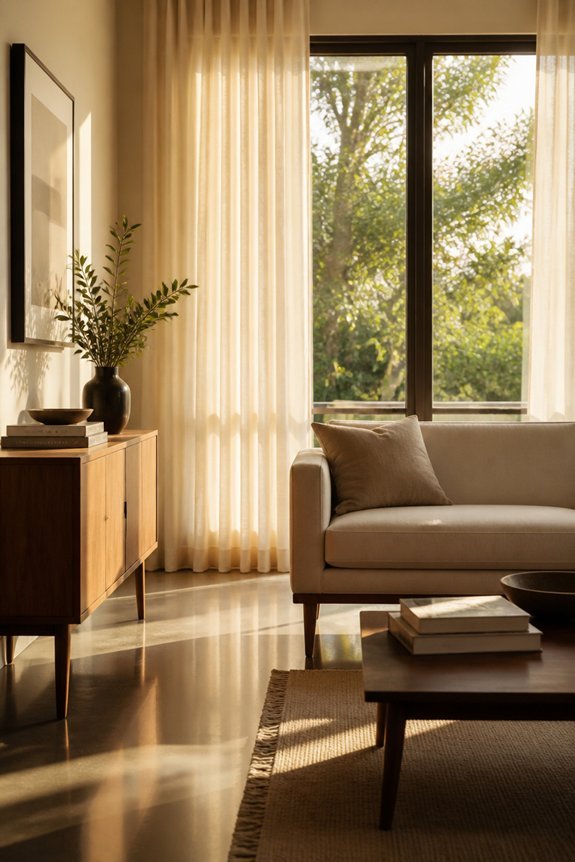
Windows are your room’s eyes. What are you dressing them in?
Heavy velvet curtains kill the vibe. They block light. They feel stuffy. You don’t want that.
Mid-century design keeps it simple. You want linen or cotton panels. Try warm white, soft gray, or a punchy orange. Hang them on slim metal rods. Skip the patterns. Skip the poofy valances. Let the fabric breathe.
Horizontal blinds work too. Wood or aluminum both look sharp. They stay quiet. They stay functional.
Your furniture deserves the attention anyway.
Sourcing Authentic Vintage Pieces: Where to Shop and What to Avoid

So you want real mid-century pieces. Not the sad stuff gathering dust in garages.
Estate sales are your best friend. Auctions too. Show up early. Bring cash. Ask questions.
Reputable vintage dealers know wood from particle board. They’ll show you joinery details. Maker’s marks. The real weight of solid construction.
Online works if you’re careful. Craigslist and Facebook Marketplace have gems. But photos lie. Always see pieces in person. Shake that table. Does it wobble? Pass.
Thrift stores surprise you sometimes. Rarely. Mostly you find regrets from 2003.
Check the underside. Real dovetails. Solid wood grain. Screws that look handmade.
Trust your gut. Cheap feels cheap. Authentic pieces have heft. History. Soul.
Wall Art and Accessories That Feel Like They Belong
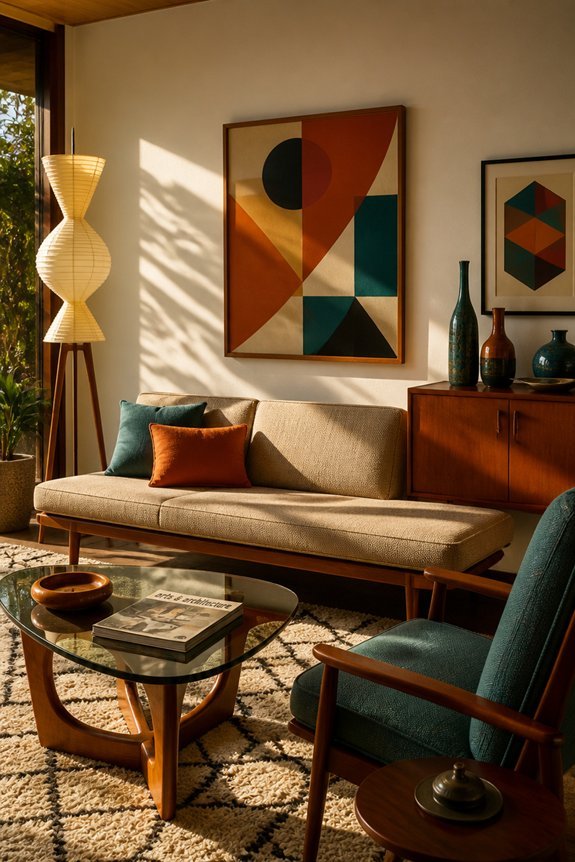
So you’ve got your furniture sorted. Now your walls feel naked. What now?
Start with abstract prints from the 1950s and 60s. Geometric shapes in mustard yellow, teal, or burnt orange work wonders. These colors talk to your other pieces. They finish the room.
Wooden shelves at eye level save you from drilling holes everywhere. Add a ceramic pot. A chunky clock. Maybe a brass figurine you found thrifting. Small stuff makes a big difference.
Try a thin-framed mirror opposite your window. Light bounces around. The room wakes up. No disco ball required.
Skip what’s trending on Instagram. Hunt for pieces that look like they grew there. Like they’ve waited for you since 1962.
Balancing Minimalism: Adding Warmth Without Clutter
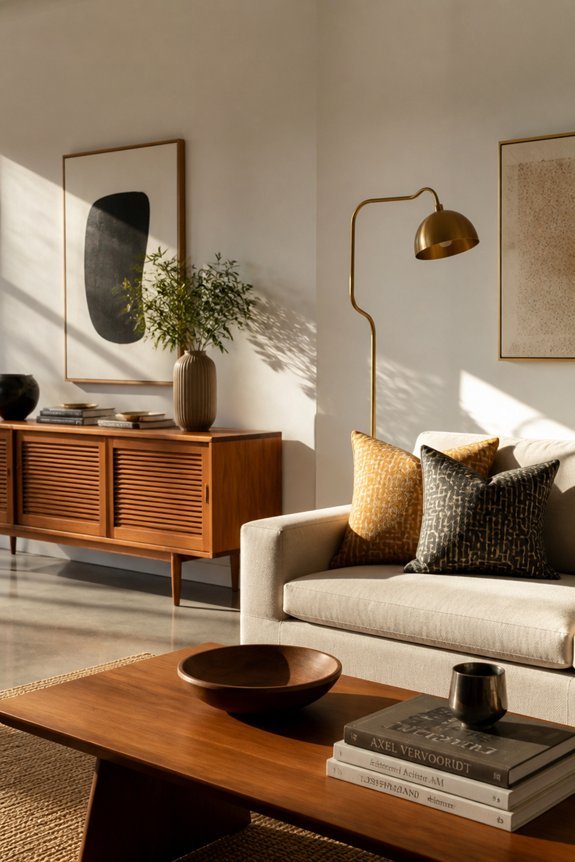
Ever walked into a room so perfect you were scared to sit down? That’s the trap. Mid-century modern can feel cold fast. You need to know when to stop.
Test your space. Can you flop on the sofa without moving something? Good. Now add one burnt orange throw. Just one. Drape it messy. Perfect. A single plant helps too. Two feet tall works. Tuck it in a corner. Suddenly the room breathes.
Look at your surfaces. Three books on a wooden side table? Lovely. A mug beside them? Even better. Thirty mugs? You’re hoarding. Buried coffee tables kill the vibe. You want “lived-in chic.” Not “please don’t touch.” Let your floor lamp do soft lighting. Shadows warm up clean lines. Space isn’t empty. It’s breathing room. Warmth needs room to land.
Creating Coziness in Spare, Modern Interiors
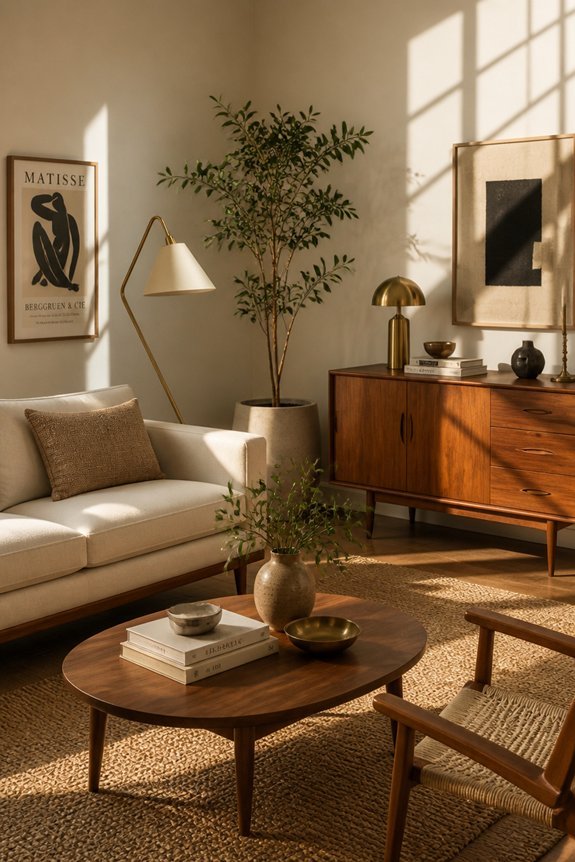
Does your living room feel more like a showroom than a home? You’re not alone.
Mid-century modern can seem cold at first. But you can fix that fast. Start with texture. Toss a chunky wool throw over your sofa. Your hands will reach for it instinctively. Add a shag rug. Your feet will notice immediately. These small touches change everything.
Warm wood works wonders too. Try a coffee table with visible grain. Don’t stop there. Layer in cream pillows. Switch to amber lighting. Watch the room soften before your eyes. Plants add life without clutter—just pick ones you’ll actually water. Finish with a few pieces you love. A small bookshelf. One painting that means something. You want intention, not emptiness. Let every item earn its place.
Budget-Friendly Ways to Achieve the Look
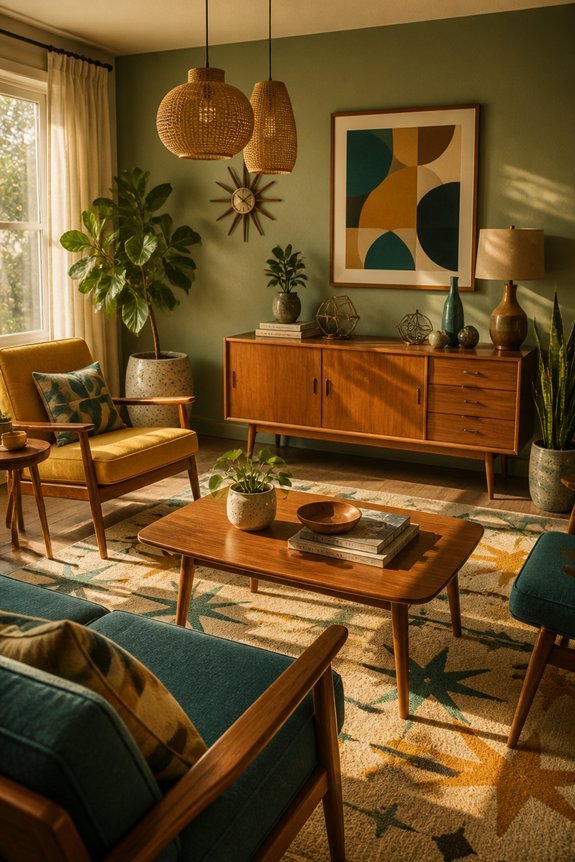
You think mid-century modern means draining your bank account? Think again.
Thrift stores are gold mines. Teak side tables hide under dust for twenty bucks, not two hundred. Secondhand websites list gems at garage sale prices. Paint chunky legs on an old piece. Suddenly it’s retro magic. Mix discount store finds with rescued vintage. A burnt orange throw on a thrifted sofa nails the look without the debt.
Hit garage sales hard. Befriend estate sales. Swap pieces with style-obsessed friends. Your sparse room becomes a cozy mid-century haven. Your savings account stays intact.
Room Layouts That Make MCM Work in Any Space
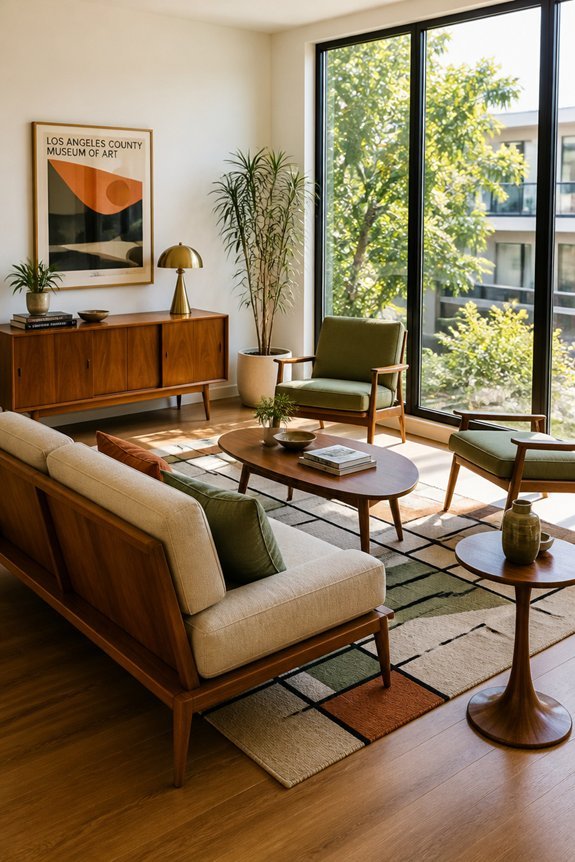
You found the perfect teak side table. Now where does it actually go?
Small spaces suffocate when you push everything against the walls. Float your sofa in the center instead. Leave room to breathe. A 10×12 foot space handles exactly three pieces: one sofa, one accent chair, one slim coffee table. That’s it. Resist the urge to add more.
Your legs will thank you for clear pathways. Hang shelves high. Store upward, not outward. Group pieces by color so the eye rests easy. Empty walls aren’t mistakes. They’re intentional pauses. Less clutter means more impact. Every piece earns its spot.
Frequently Asked Questions
How Can I Incorporate Mid-Century Modern Style Into a Small Apartment Space?
One can maximize limited space by selecting streamlined furniture with tapered legs, choosing a neutral color palette with accent pops, incorporating geometric patterns, and utilizing vertical storage solutions. Vintage-inspired lighting fixtures and plants further enhance the aesthetic without consuming floor space.
What’s the Best Way to Mix Vintage MCM Pieces With Contemporary Furniture Safely?
One should blend vintage MCM pieces with contemporary furniture by maintaining a balanced color palette, choosing modern items with clean lines that complement mid-century silhouettes, and avoiding overcrowding. This approach creates cohesive interiors where both styles enhance rather than compete.
How Do I Maintain and Care for Authentic Mid-Century Wooden Furniture Long-Term?
One should dust authentic pieces regularly with soft cloths, avoid direct sunlight to prevent fading, maintain consistent humidity levels, and use quality wood conditioners sparingly. Professional restoration by specialists preserves original finishes and structural integrity effectively.
Can Mid-Century Modern Work in Homes With Different Architectural Styles or Periods?
Yes, mid-century modern furnishings successfully blend with various architectural styles. Their clean lines and functional aesthetic complement traditional, contemporary, and eclectic homes. Designers often mix periods by balancing bold mid-century pieces with complementary elements from other eras, creating cohesive, layered interiors.
What Are Common Mistakes People Make When Decorating With Mid-Century Modern Style?
Common mistakes include overcrowding spaces with too many pieces, neglecting proper scale and proportion, mixing incompatible design periods without intention, using poor-quality reproductions, and ignoring functional needs. Successful mid-century modern design requires restraint and authenticity.
Conclusion
Mid Century Modern style isn’t just about looking cool—it’s about feeling awesome in your space. Mix those mustard yellows and teals with floating furniture and brass lighting, and boom, you’ve got a retro paradise. The best part? You don’t need to sell a kidney. Budget-friendly finds work great. So grab an Eames-style chair, throw down a geometric rug, and congratulate yourself. Your living room just got seriously groovy.