

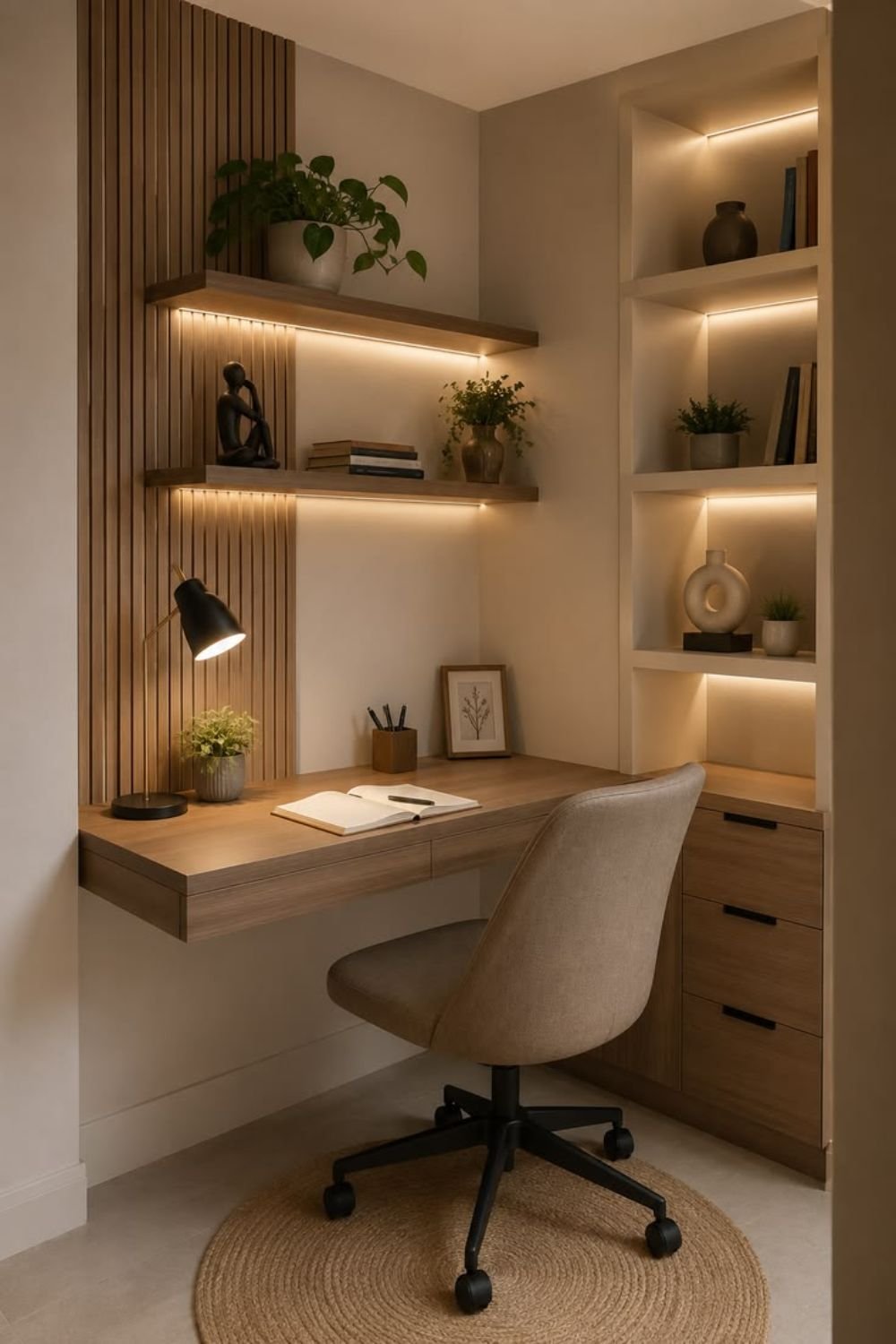
Home office shelves can either make your workspace feel calm or quietly stress you out every time you sit down. If yours sit somewhere between “organised chaos” and “what even is this,” you are in the right place.
I stared at my own shelves wondering why they never looked right, until I realized I was thinking about what to add instead of how to arrange what I already had.
Styling is mostly about editing and grouping, whether your shelves are floating, built-in, or borrowed from another room.
Small Changes That Make the Biggest Difference
Before you move a single thing, pull everything off your shelves and start with a blank slate. It sounds like extra work but it is actually the fastest way to figure out what you actually want to keep on display versus what has just been sitting there out of habit.
Editing is more important than adding. Most cluttered shelves got that way not because someone put too many wrong things on them but because nothing was ever taken off. Be honest about what is earning its spot and what is just taking up space.
Pay attention to how your shelves look during video calls. If you work from home and your shelves are in frame, they are functioning as a backdrop whether you think of them that way or not. That framing can actually be a helpful guide for what deserves to be there.
20 Home Office Shelf Decor Ideas
Shelf styling sits in that interesting space between decoration and organisation, which is part of what makes it tricky. You want your shelves to look good, but they also need to actually work for you day to day.
Every idea on this list can be adapted to your specific shelf situation, whether you have two narrow floating shelves or a full floor-to-ceiling bookcase. Some of these are about specific pieces to add, and some are about styling approaches that change how everything already on your shelf is arranged.
Start with the idea that feels most immediately relevant to your space and go from there.
Start With a Clear Organizing Principle
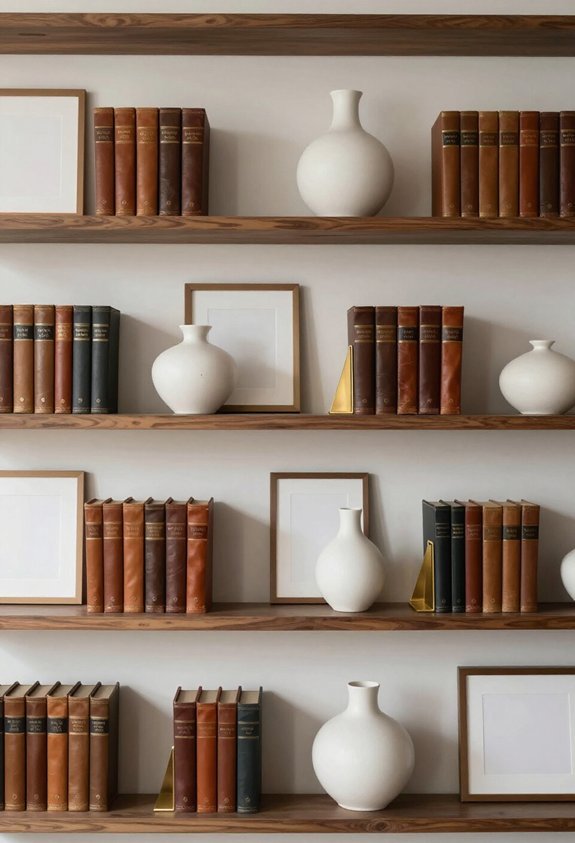
Before you start cramming stuff onto your shelf like you’re playing Tetris at midnight, you’ve gotta decide *how* you’ll actually organize it. Are you going alphabetical? By color?
By how much you secretly love each item? Pick one method and stick with it—seriously, your future self will thank you. Maybe you’ll go rainbow mode with those colorful books standing tall. Or stack everything by size, smallest to largest. The key is having a *reason* for where things go.
Without a plan, your shelf becomes a cluttered hot mess express. And nobody wants that eyesore staring them down during Zoom calls. A clear system keeps your space looking intentional and styled, not like a tornado hit a thrift store.
Float Plants to Add Life Without Clutter
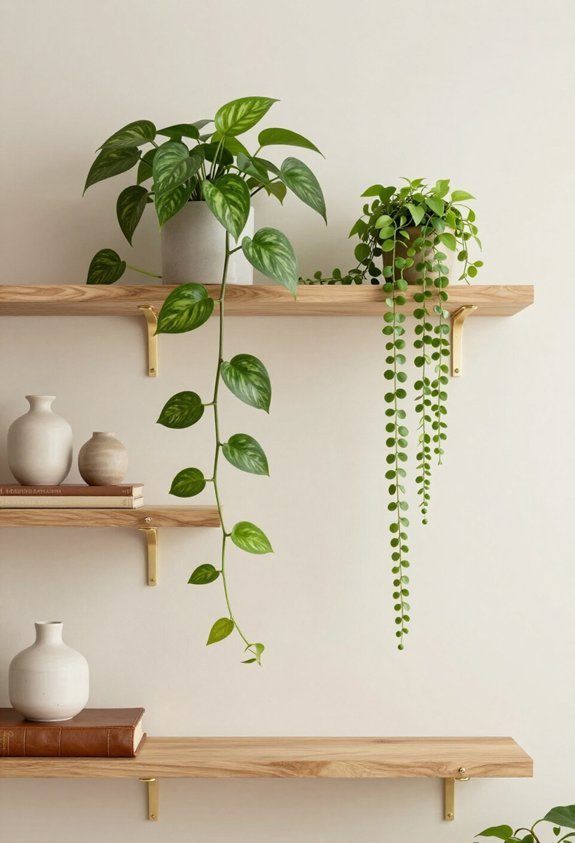
Floating plants on your shelves adds greenery without eating up precious space. Pothos or string of pearls drape beautifully over edges, creating movement and visual interest. Pick small pots in white or terracotta to match your vibe. Position them toward the back or corners so they don’t block your workspace sightline.
Here’s the real magic: plants make your home office look intentional and alive. They’re basically proof you’ve got your life together. Even if you’re secretly surviving on cold coffee and optimism. Plus, they actually clean your air while looking gorgeous.
Stack Books Vertically for Visual Interest
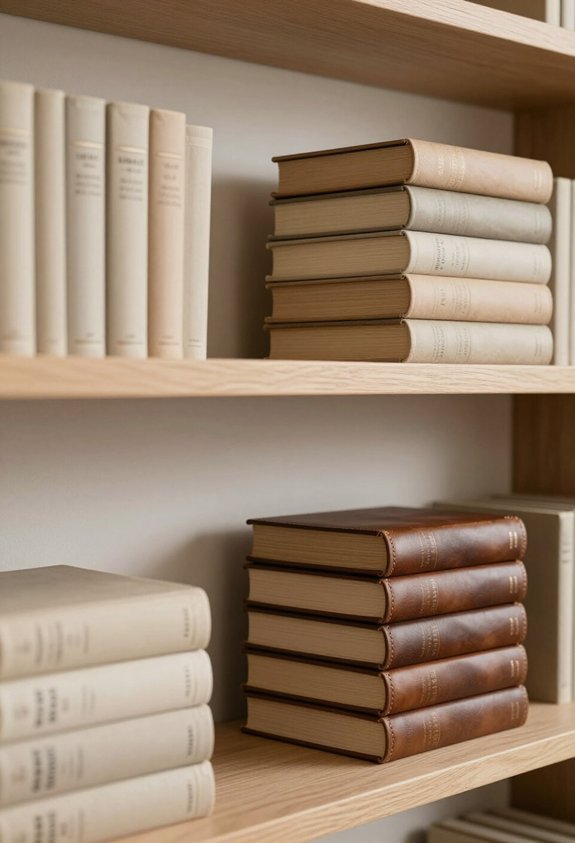
Three stacked books on your shelf aren’t just decoration—they’re basically tiny towers of pure cool. You’ll create height and depth without taking up much space. Stack books with colorful spines facing out. Mix hardcovers and paperbacks for texture. Lean them slightly, or keep them perfectly straight—your shelf, your rules.
Add a small succulent on top or tuck a bookmark between pages for personality. Vary your stack heights. Some books standing tall at eight inches, others shorter at four. This uneven arrangement looks intentional and interesting, not lazy.
Group stacks in odd numbers like three or five. It just works. Your eyes’ll thank you. Books aren’t boring anymore. They’re stylish little sculptures that actually make you smarter while looking fantastic.
Layer Woven Baskets and Wood for Warmth
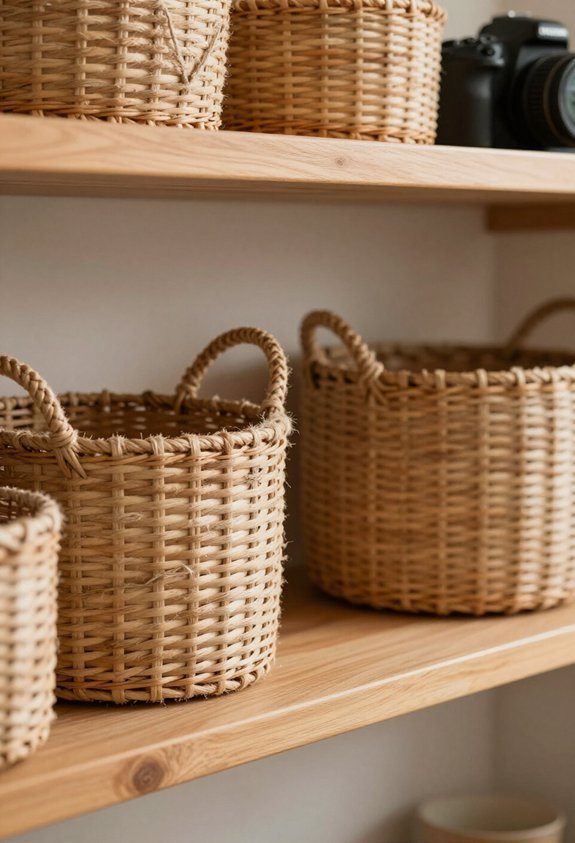
When you’re tired of looking at cold, sterile shelves, it’s time to bring in some serious coziness. Grab woven baskets in natural tan and cream tones. They’re not just pretty, they actually hide your mess. Stack them at different heights and angles for that “I totally meant to do this” vibe.
Toss in some warm wood pieces, like a small cutting board or wooden box. Position them next to the baskets to create a cozy cabin feel. Your shelves’ll go from “yikes” to “yes!” faster than you can say “interior design.”
The combo of woven textures and wood grain makes everything feel inviting and intentional. Plus, you’ve got bonus storage without looking like a hoarder.
Embrace Empty Space as Part of Your Design
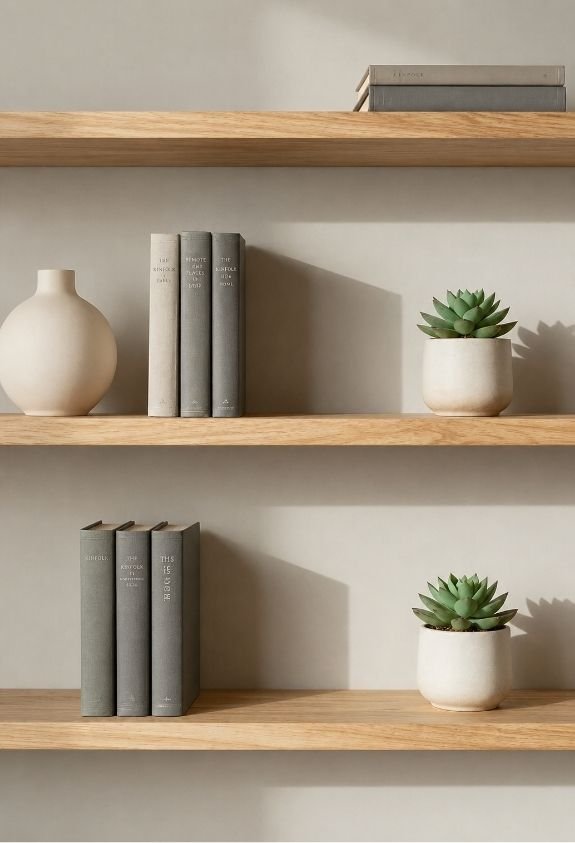
Now here’s the plot twist: you don’t actually have to fill every single inch of your shelves. Seriously! Empty space is your secret weapon. It lets your favorite items breathe and actually get noticed instead of disappearing into shelf clutter chaos.
Think of it like giving your eyes a vacation spot. Leave 8-12 inches of breathing room between styled vignettes. Mix one styled section with one empty section.
Your brain actually prefers this rhythm, it’s way less exhausting than visual overload. Plus, empty shelves are easier to dust, which means less sneezing fits during video calls. Go wild with your restraint! That blank spot isn’t laziness; it’s intentional design genius.
Layer Artwork Behind Your Shelves
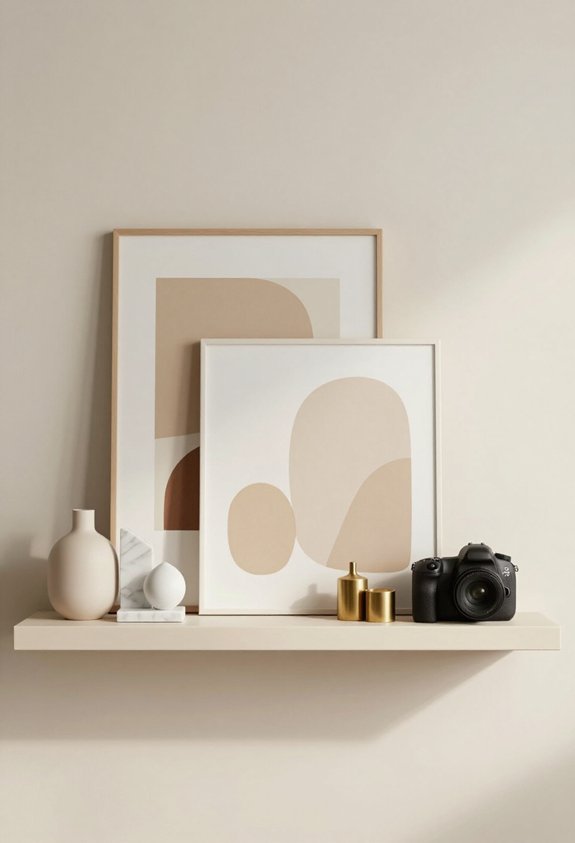
If you’ve got empty wall space behind your shelves, you’re sitting on a goldmine of design real estate. Layer artwork back there and watch your shelves transform into an actual designed space. Hang a bold abstract print or watercolor painting directly on the wall.
The art creates depth and keeps your shelves from looking naked and awkward. Lean smaller pieces against the wall too. Mix frame sizes for visual interest. A 16×20 print paired with smaller 8×10 frames works beautifully. The artwork becomes your shelves’ backbone.
Your eye travels deeper into the wall instead of stopping at clutter. Suddenly, your modest shelf styling looks intentional and professional. Even that lopsided vase you bought on vacation seems charming now. Your shelves finally look like they belong in a magazine instead of a garage sale.
Unify Personal Photos With Consistent Frames
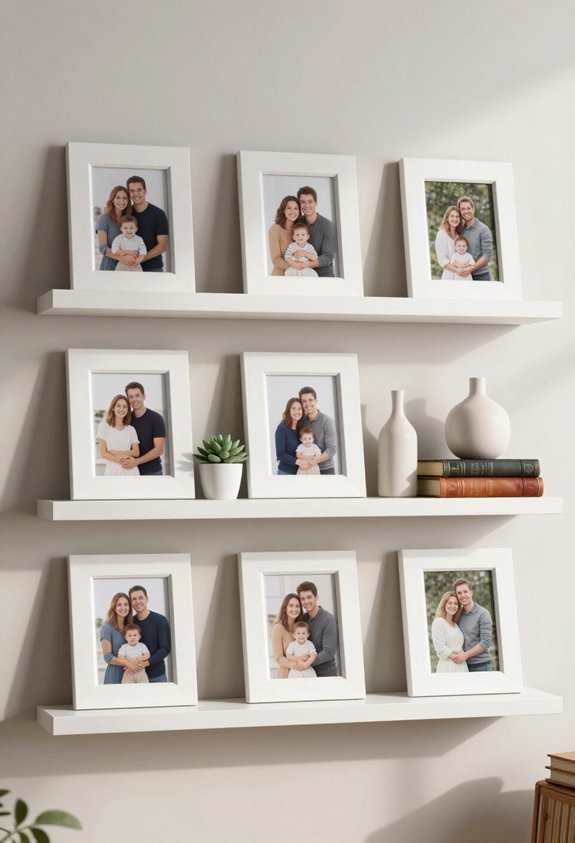
Personal photos are the real stars of your shelf game, and they deserve way better than a mishmash of random frames that look like you raided three different stores. Seriously, nothing screams “I’ve got my life together” like five different frame styles competing for attention.
Pick one frame style—wood, metal, or white—and stick with it like glue. Your 4×6 photos will actually look intentional now instead of accidentally themed. Arrange them in a neat row or clustered group, and suddenly your shelf doesn’t look like a garage sale anymore.
Matching frames create visual harmony. They’re like a coordinated outfit for your memories. Your brain loves consistency, and your guests will notice how put-together everything appears. Plus, you’ll finally stop explaining why that neon pink frame from 2003 is still hanging around.
Use Color Blocking to Define Zones

Your shelf’s real estate deserves zones, and color blocking is the secret weapon that makes it happen. Think of it like organizing your life but actually fun. Group books by color—all your blues together, then greens, then warm oranges.
This creates visual breaks that make your shelf look intentional, not like you just sneezed items onto it. Add a coral plant here, a navy vase there. These pops of color act like little boundaries between zones. Your eye travels smoothly across the shelf instead of getting confused.
Suddenly your workspace looks curated and professional, not chaotic. You’ll feel like an actual interior designer, minus the steep prices and judgment about your furniture choices.
Let Vines Trail Down From Shelf Edges
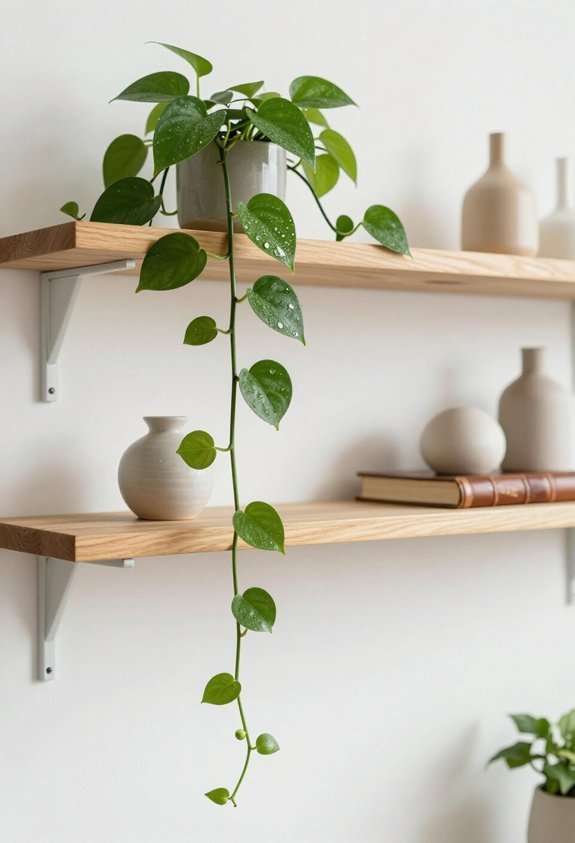
Nothing says “I’ve got my life together” like a cascading plant pretending to do the work for you. Draping vines from your shelf edges instantly makes everything look intentional and lush.
Pick a trailing plant like pothos or string of pearls—they’re practically indestructible, which matches your organizational skills perfectly. Position the pot on your top shelf and let those green strands cascade down 12 to 18 inches.
Your shelves suddenly transform from “office supplies explosion” to “magazine-worthy workspace.” The vines soften harsh lines and add movement without requiring you to do much.
Water occasionally, pretend you’re a plant parent, and watch your shelf go from boring to boasting genuine botanical vibes. Your coworkers will wonder if you actually have a life now.
Apply the Rule of Threes for Balance
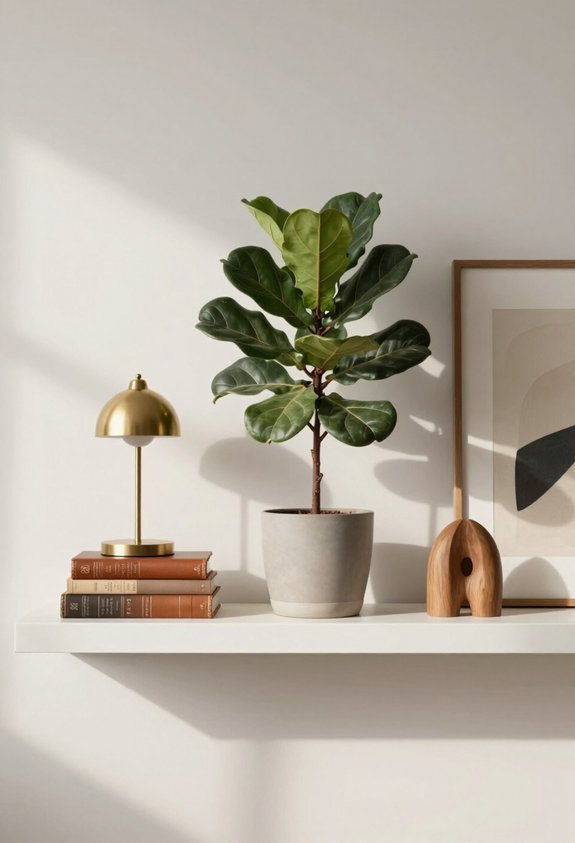
Designers aren’t lying when they swear by the rule of threes—it’s basically visual magic that makes your brain go “yes, that looks right.” Group items in sets of three across your shelf, and suddenly everything feels balanced instead of looking like you just shoved stuff wherever it fit.
Try clustering a plant, a book, and a small frame together. Space them about 4-6 inches apart. Your eye naturally loves odd numbers. Three creates rhythm. Two feels lonely. Four feels cluttered.
Mix heights and textures too. Stack a tall vase next to a short candle next to a chunky succulent. Vary your colors—maybe gold, green, and white. This trick works on every shelf, and honestly, your guests will think you’re an interior design genius. You’re welcome.
Arrange Pieces by Height for Depth
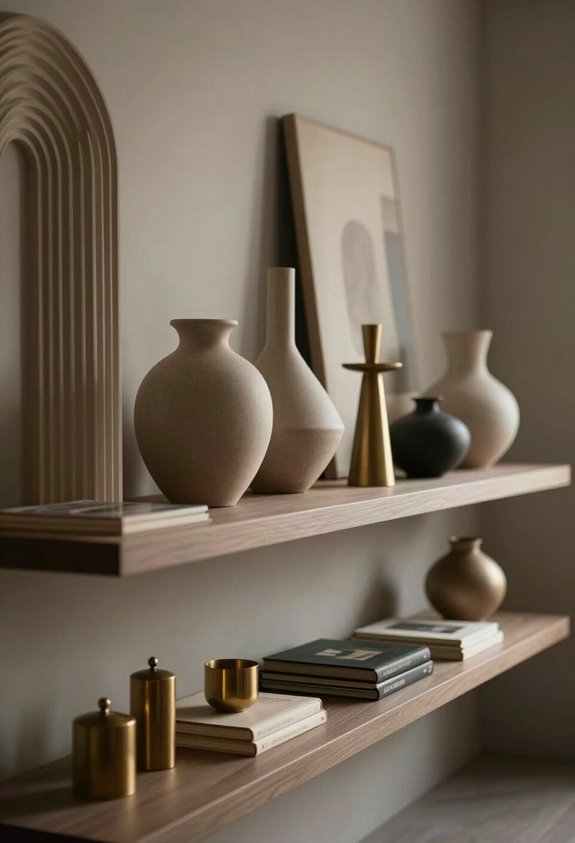
The magic happens when you stop lining everything up like soldiers at attention. Varying heights creates visual interest and keeps your eyes dancing across the shelf instead of falling asleep mid-scan.
Place taller items like books or plants toward the back, and shorter pieces like frames or succulents in front. This creates depth that makes your shelf look three-dimensional rather than flat and boring.
Try staggering heights in a staircase pattern: tall, short, medium, tall, short. It’s oddly satisfying, honestly. Mix in a few different widths too. A chunky candle next to a slim vase next to a wide photo frame? *Chef’s kiss.* Your shelf suddenly looks intentional and designed, not like you just grabbed whatever was closest during your caffeine-fueled organizing spree.
Hide Supplies in Stylish Storage Boxes
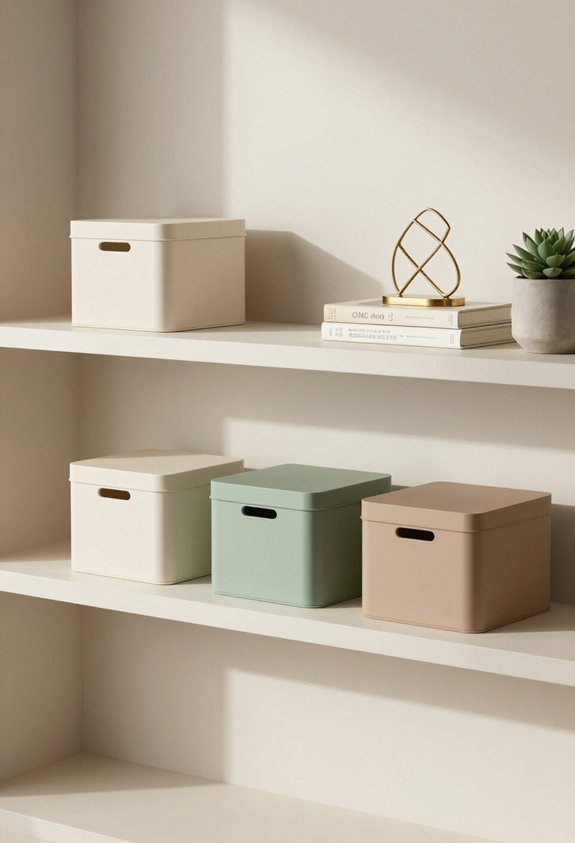
Why do office supplies always look like they’re staging a rebellion on your shelf? Grab some stylish storage boxes and end the chaos! You’ll hide pens, paper clips, and sticky notes that’d otherwise multiply like rabbits.
Pick boxes in neutral tones—white, gray, or natural wood—so they blend beautifully with your décor. Stack them horizontally or vertically, depending on your shelf space.
Label each box clearly (nobody wants a mystery container surprise). Small 6×4-inch boxes work great for tiny supplies, while larger 12×8-inch ones hold bigger items. Your shelves won’t just look neater—they’ll actually function like grown-up furniture. Plus, visitors won’t see your embarrassing rubber duck collection hidden inside. Storage boxes transform chaotic shelves into calm, curated spaces that make you proud.
Mix Metallic Finishes for an Elevated Look
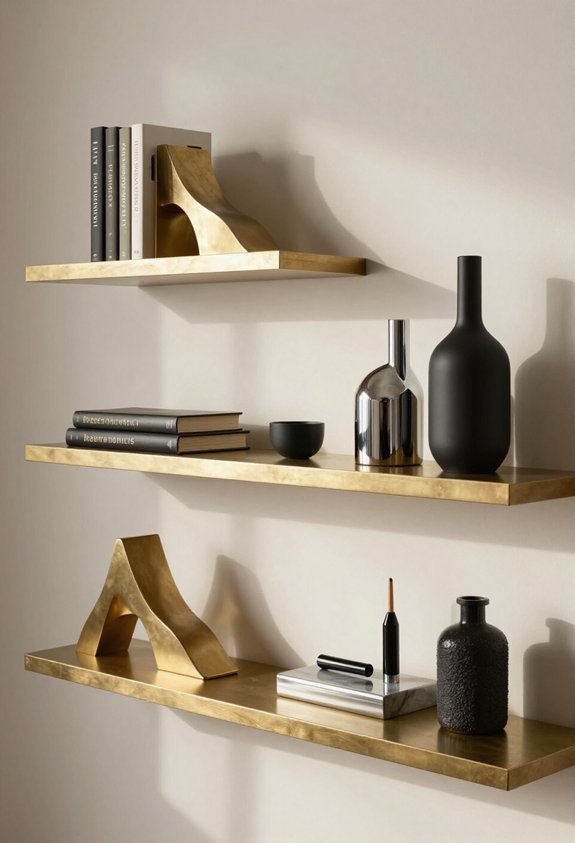
Once you’ve tucked away those messy supplies, it’s time to make your shelf actually shimmer. Mix different metallic finishes and watch your decor go from “meh” to magnificent. Gold, silver, and rose gold work together beautifully. Place a gold picture frame next to a silver vase, then add a rose gold pen holder. They’ll catch light and make your shelf look expensive—even if you got them on sale.
Add a brass desk lamp for extra pizzazz. The variety keeps things interesting and prevents that boring “all-matching” look that screams “I gave up.” Stack a few metallic bookends at different heights too. Your shelf will gleam so bright, you might need sunglasses. Your coworkers will wonder if you’ve struck gold, and honestly? You kind of have.
Choose Statement Bookends as Anchors
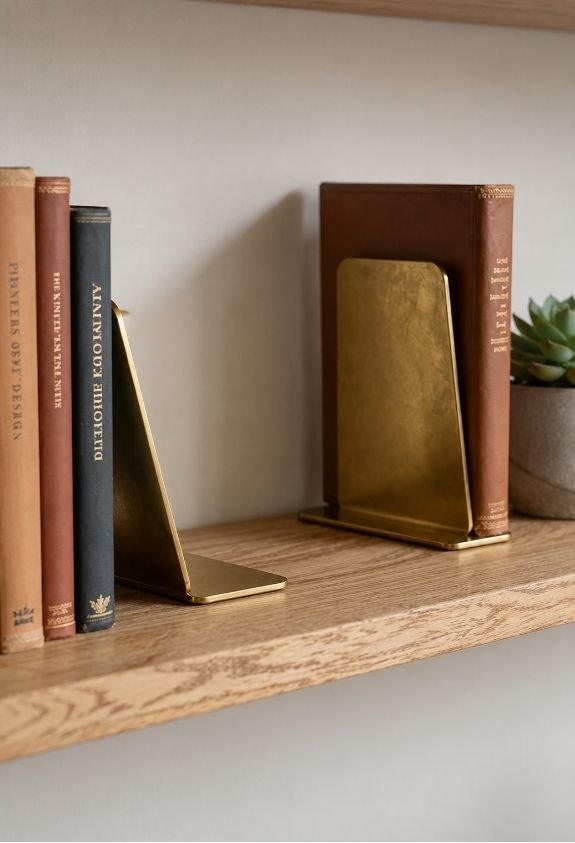
Bookends aren’t just boring book-holders that prevent your library from doing the literary equivalent of a face-plant. They’re your shelf’s stylish anchors. Pick statement bookends that match your vibe—think marble, brass, or colorful ceramic.
A pair of 6-8 inch bookends frames your books beautifully and keeps them standing tall. Position them at shelf ends or create mini zones throughout.
Gold geometric bookends add instant sophistication. Marble ones scream elegance. Quirky animal-shaped ones bring personality and laughs. Your bookends deserve attention, not hiding duty.
They’re conversation starters. Mix textures and colors with your books. Dark wood bookends ground lighter shelves. Light metallic ones elevate darker arrangements. These anchors make your space look intentionally styled, not like you threw books around hoping they’d magically organize themselves.
Add Ambient Glow With Shelf Clip Lights
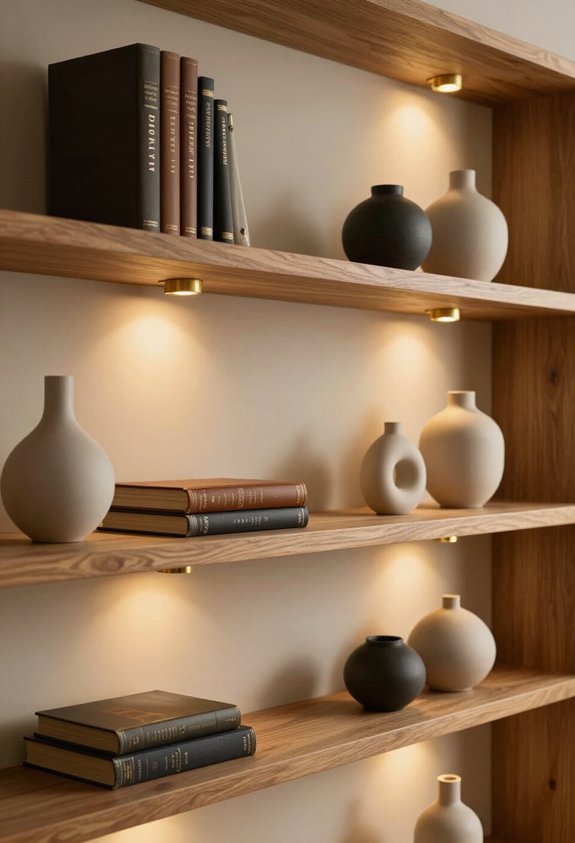
Lighting’s the secret ingredient that transforms a sad, shadowy shelf into Instagram gold. You’ll want clip lights—those little workhorses that attach right to your shelf edges.
They’re seriously game-changers. Position them at the back or sides to create a warm glow without blinding your eyeballs. Warm white bulbs look cozier than harsh bright ones, trust me.
The soft light hits your books and plants, making everything look professionally styled (even if you’re still in yesterday’s pajamas). You can find affordable options online that won’t empty your wallet. Your shelf instantly gets that fancy boutique-hotel vibe. Plus, visitors won’t trip over your stuff in the dark anymore. That’s a win for everyone’s shins.
Display Collections That Reveal Your Personality
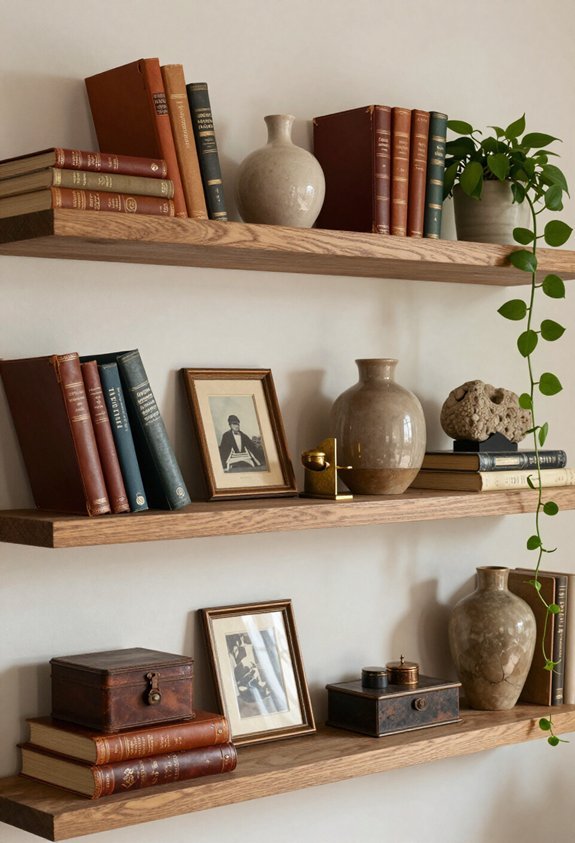
Your shelves shouldn’t look like a department store display—they should scream *you*. Got a vintage action figure collection? Display it proudly. Love succulents? Stack those green babies everywhere. Mix in books you’ve actually read, not just ones that match your wall color.
Arrange items at different heights. A tall vase here, a short photo frame there. Your eye should travel around like it’s on a mini vacation. Add personal photos in mismatched frames—the messier, the better. Include that weird souvenir from your cousin’s road trip. That strange rock you found? Put it out there.
Your collection tells your story. It says you’re quirky, interesting, and definitely not boring. That’s way better than looking like you hired a professional organizer with way too much time on their hands.
Mix Eye-Catching Décor With Everyday Items
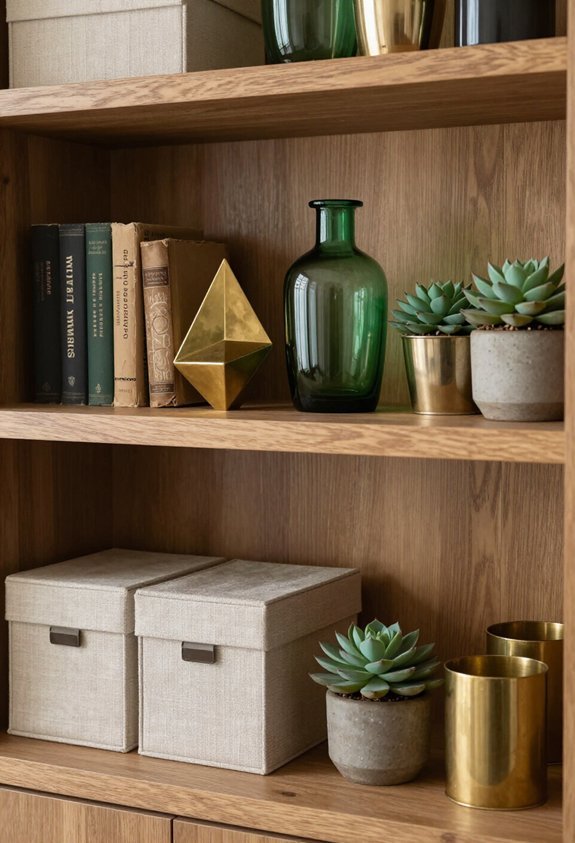
The magic happens when you stop treating your shelves like a museum and start mixing stuff up. Seriously, your books don’t need a VIP section away from your coffee mug. Plop that ceramic cup right next to your fancy decorative box. Stack three books horizontally, then stand one vertically.
Add a small plant (real or fake—no judgment). Toss in a quirky figurine. Your eye needs variety to stay interested, kind of like how your stomach needs different foods or things get boring. The best shelves look lived-in and real, not like a showroom where nothing’s ever been touched. Mix heights and textures.
Group warm colors together, then surprise everyone with a cool blue vase. Your shelves should tell your story, complete with all the weird, wonderful stuff that makes you, well, you.
Add Texture With Ceramics and Woven Pieces
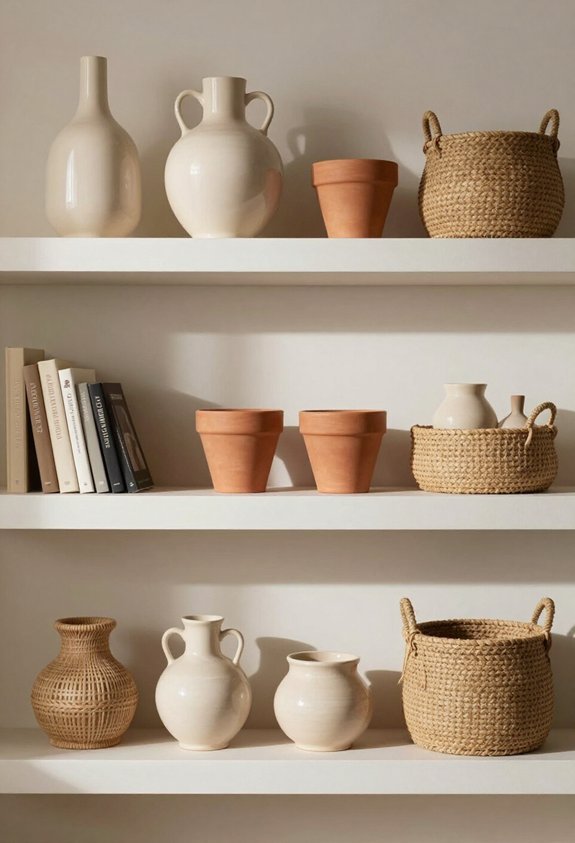
Texture’s where things get really fun, and ceramics and woven pieces are basically the MVPs of shelf decorating. You’ll want to grab a few ceramic vases or bowls—maybe 6 to 10 inches tall—and scatter them around.
They’re basically shelf gold. Mix in some woven baskets or placemats (seriously, they don’t need to hold anything), and suddenly your shelf stops looking like a furniture showroom.
The cream and terracotta tones play nicely together. Position a chunky ceramic piece on the left side, then tuck a woven element behind it. This creates visual interest without making things look cluttered. Your shelves won’t be boring anymore. I promise your eyes will actually want to land there instead of drifting away in search of literally anything else.
Keep One Shelf Intentionally Minimal
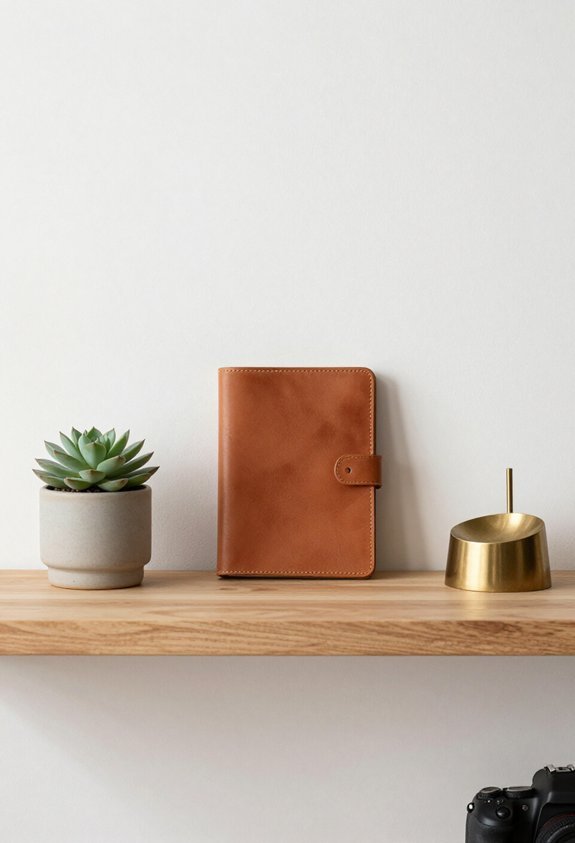
Now here’s where you’ll want to pump the brakes a little, because cramming every shelf with stuff can actually work against you. One bare shelf gives your eyes a place to rest, like a refreshing change in a stuffy room.
Pick your top or bottom shelf and leave it mostly empty—maybe just one beautiful book standing upright or a single small plant. This open space actually makes your styled shelves look more intentional, not less.
It’s like wearing a bold outfit with a plain white shirt underneath. The emptiness creates balance and prevents that cluttered, chaotic vibe that screams “I panic-bought decorations.” Your brain’ll thank you for the visual break, and honestly, your shelves’ll look way more sophisticated and put-together.
Create Depth With Layered, Open-Backed Shelving
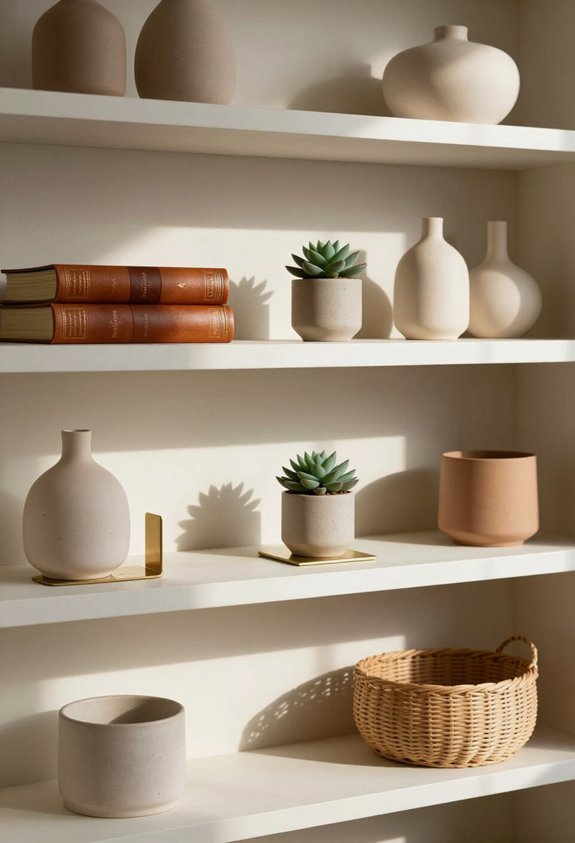
If you’ve got shelves that are see-through (aka open-backed), you’re basically sitting on a goldmine of decorating potential. Layer your stuff strategically, and suddenly you’ve got serious depth happening.
Place taller books or plants toward the back, then bring smaller items forward—think tiny succulents, framed photos, or quirky figurines. This creates visual interest that doesn’t scream “I raided a thrift store” (even if you did).
Mix textures like wood, metal, and ceramic for extra pizzazz. Alternate between filled spots and breathing room so your shelf doesn’t look constipated with clutter. Rotate items seasonally to keep things fresh and prevent that “I’ve seen this since 2019” fatigue. Open-backed shelving means people see *through* them, so make that backspace work for you too.
Frequently Asked Questions
How Do I Prevent My Home Office Shelves From Collecting Dust and Allergens?
Regular wiping with a microfiber cloth is your most effective tool here. Microfiber traps dust rather than just pushing it around, and doing a quick wipe every week or two stops buildup from becoming a real problem.
Reducing the number of items on display also helps significantly. The more small objects and irregular surfaces you have on a shelf, the more places dust has to settle and the harder it becomes to clean properly.
If dust is a persistent issue in your office, a small air purifier nearby makes a genuine difference. For shelves with valuable or delicate items, glass-fronted cases are worth considering.
What’s the Best Way to Secure Floating Shelves Safely for Heavy Items?
Always anchor into wall studs rather than drywall alone when you are mounting shelves that will hold any significant weight. A stud finder is a worthwhile investment if you do not already own one, and it takes the guesswork out of installation.
Use brackets that are rated for more weight than you actually plan to put on the shelf. Manufacturers list weight limits, and staying well under that limit gives you a real safety margin rather than operating right at the edge.
Spacing your brackets closer together adds stability, especially on longer shelves. If you are ever unsure about a mounting situation, it is worth having someone with installation experience take a look before you load the shelf up.
How Often Should I Rotate or Refresh My Shelf Decor for Visual Interest?
Doing a light refresh every three to six months keeps your shelves from becoming invisible to you, which is what happens when nothing ever changes. You stop seeing the space and it stops feeling like yours.
Seasonal rotations are an easy way to build this into your routine without it feeling like a big project. Swapping in one or two different items per season is usually enough to shift the feel of the whole shelf.
You will also sometimes find things you had completely forgotten about, which is one of the genuinely satisfying parts of going through your own shelves with fresh eyes.
Can I Mix Modern and Traditional Décor Styles on the Same Shelves?
Mixing works really well when you give each style enough representation that it feels intentional rather than accidental. One traditional piece among many modern ones just looks out of place, but a genuine mix of both reads as collected and considered.
A consistent colour palette is what ties different styles together most effectively. When pieces share tones even if they differ in style, the eye reads them as belonging together.
Grouping similar styles in the same section of the shelf, rather than scattering them randomly, also helps. It creates small cohesive moments within the overall arrangement rather than a scattered feeling across the whole thing.
What Lighting Is Best for Displaying Shelf Décor Without Creating Glare?
Soft, warm-toned lighting works best for shelves. LED strip lights mounted underneath each shelf level cast light downward onto your items without creating the harsh reflections that overhead lighting tends to produce.
Clip-on picture lights or small adjustable spotlights give you more control over exactly where the light lands. Angling the light slightly away from direct eye level eliminates most glare issues.
Avoid cool white or daylight-temperature bulbs on display shelves. They tend to flatten colours and create a clinical look that works against the warmth you are probably going for in a home office.
Conclusion
Shelf styling is one of those projects that looks intimidating from the outside but becomes genuinely enjoyable once you start. Most of the work is just making decisions, and each one gets easier than the last.
Something I have noticed is that the shelves that always look the best are never the ones with the most stuff on them. They are the ones where someone clearly thought about each item and gave the arrangement room to breathe. Less tends to win almost every time.
If your shelves are currently overwhelming you, start by taking half of what is on them off rather than trying to style what is already there. Live with the reduced version for a few days and see how it feels before adding anything back. You might be surprised how much you like it.
The other thing worth saying is that your shelves do not have to be finished. You are allowed to have one shelf fully styled and another still in progress, and you are allowed to change your mind about arrangements as many times as you need to. There is no deadline on this.
I rearranged the shelves in my home office three times before I landed on something that felt right, and even now I swap things out when I get tired of looking at them. That kind of ongoing tinkering is actually part of what makes a space feel lived-in and real.
If you try any of the ideas in this list, I would love to hear what worked for you. Leave a comment below and tell me what your shelves look like now, or share the one change that made the biggest difference.