

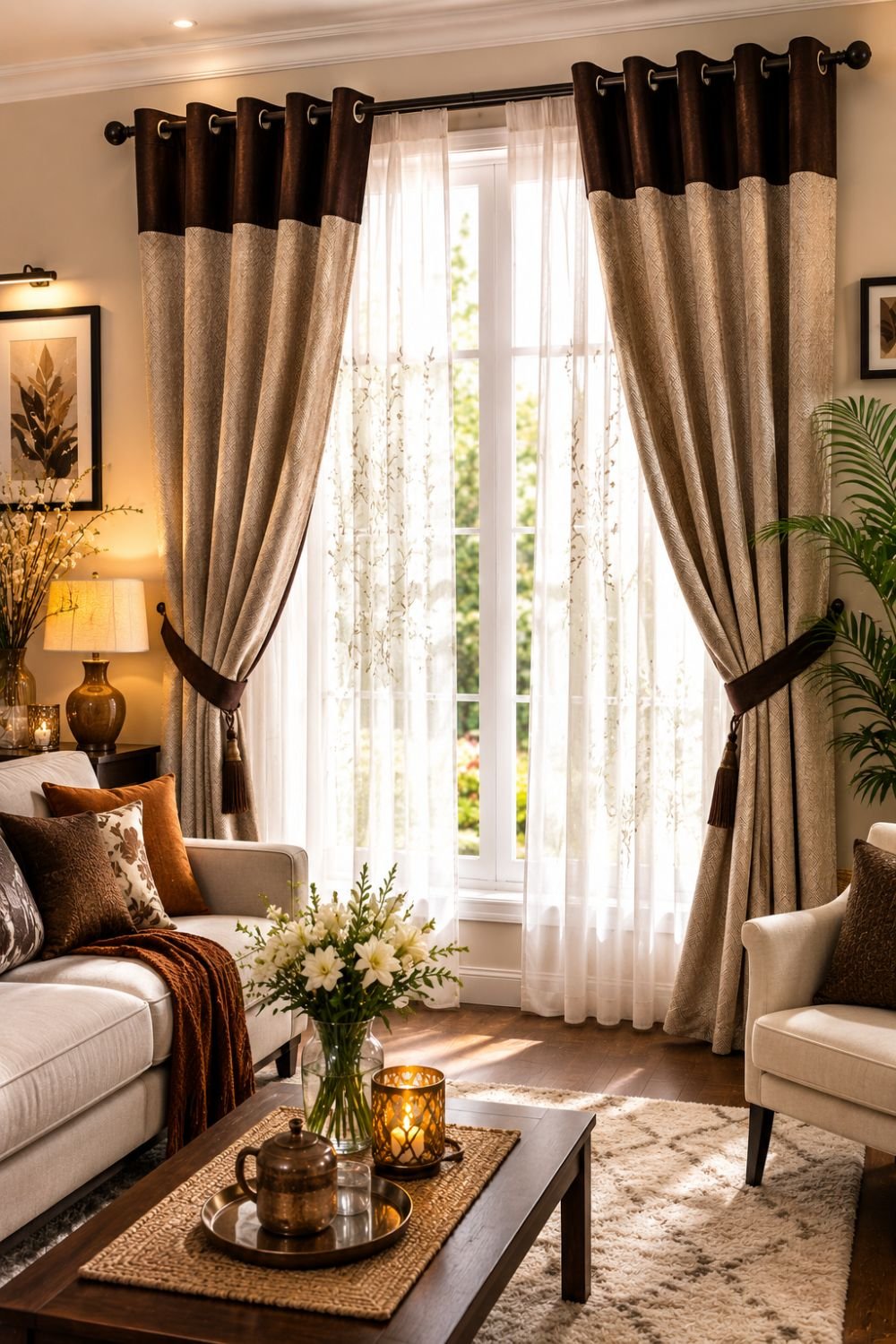
I once lived with curtains I genuinely hated for three years, simply because changing them felt like a minor task on a long list of bigger plans.
Windows do more design work in a living room than people realize. The right curtains anchor a color palette and soften hard lines without touching a single piece of furniture.
Fabric matters more than expected, heavy velvet reads completely different from breezy linen in the same spot.
When I finally swapped mine, the difference felt embarrassingly obvious. Let’s look at what’s actually worth hanging in your room.
Getting the Foundation Right
Before you fall for a print or a color, think about how much light you actually want filtering into the room throughout the day. A north facing living room has very different needs than one that gets blasted with afternoon sun.
Fabric weight matters just as much as color. Heavier fabrics like velvet add warmth and block light, while lighter options like linen or sheer keep a room feeling open and breezy.
Measure carefully before you buy anything. Curtains that are too short or hung too low can undercut an otherwise great choice, so get your numbers right from the start.
16 Living Room Curtains Ideas
This list moves through fabric types, colors, and styling details, from rich velvet and silk to practical thermal blackout options and clever layering tricks. Some of these ideas focus purely on aesthetics, others solve real functional problems like light control and energy efficiency.
I tried to cover enough ground that whatever your living room’s personality happens to be, there’s a curtain style here that actually fits rather than something you’re settling for out of convenience.
Take a look through and see which fabric and style speaks to the room you’re working with.
Living Room Velvet Curtains: Luxurious and Timeless
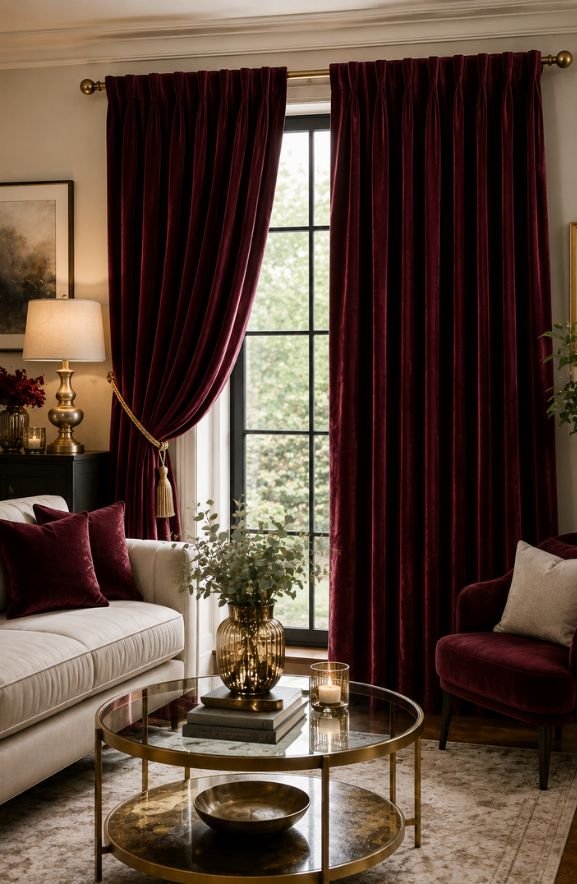
When you’re tired of looking at boring fabric that feels like burlap, velvet curtains are basically your living room’s fancy makeover. These luxurious panels feel soft as a puppy’s ear and drape like they’re showing off.
You’ll want to touch them constantly—fair warning, your guests will too. Rich jewel tones like deep burgundy, emerald, and sapphire make your space look like you’ve got serious style. Velvet absorbs light beautifully, creating cozy vibes that make everything feel warm and sophisticated.
They’re not going anywhere either. These timeless beauties outlast trends faster than you can say “fashion disaster.” Pair them with gold accents or sleek modern furniture for instant elegance. Your living room will finally look like you actually have your life together. It’s basically a cheat code for classy.
Also read: 15 SMALL LIVING ROOM DECOR Compact & Smart!
Living Room Sheer Curtains: Bright and Airy
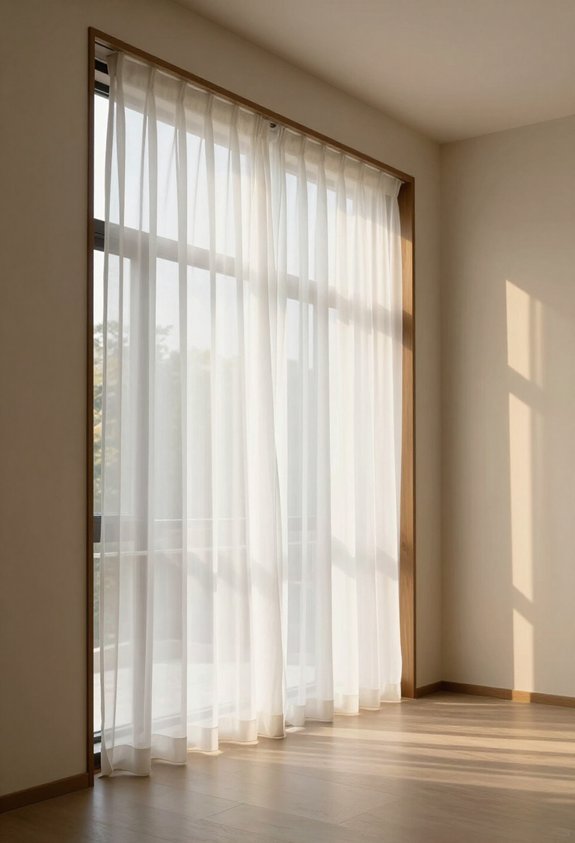
If velvet’s got you feeling like royalty but you’re also worried your living room’s turning into a dark cave, sheer curtains are the welcome change you need. These lightweight beauties let natural light flood in like you’ve just opened the curtains on happiness itself. You’ll actually see your furniture now—revolutionary, right?
Sheer curtains come in soft whites, creams, and pale pastels that practically glow during daytime. They’re perfect for rooms that need brightness without sacrificing privacy completely. Hang them from ceiling to floor, and your space instantly feels bigger and airier. They’re also super affordable compared to velvet options, so your wallet won’t need to take a breath.
The best part? They pair beautifully with heavier curtains for layered elegance.
Jewel Tone Drapes: Bold Colors That Demand Attention
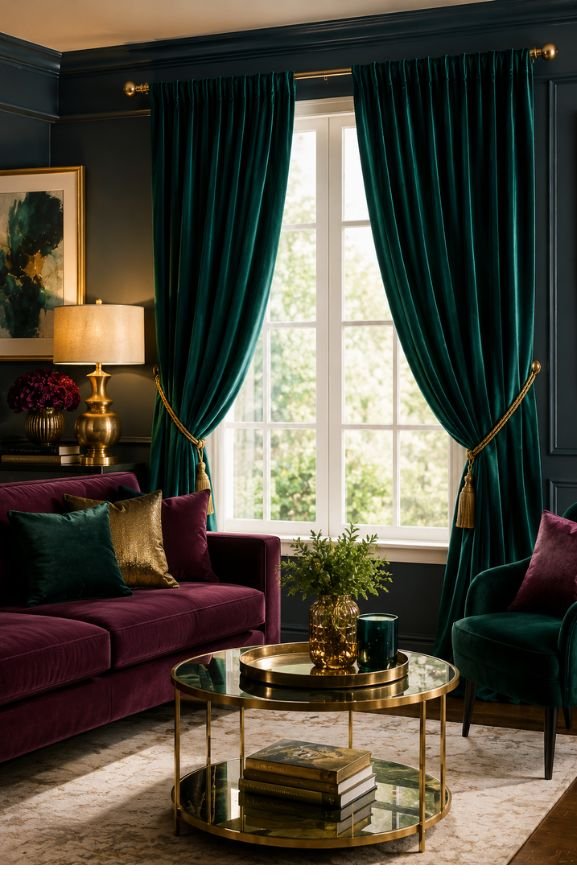
Emerald, sapphire, and amethyst—these aren’t just fancy names for your grandmother’s jewelry box anymore. They’re your living room’s new best friends.
Jewel tone drapes transform any space into something downright luxurious. Think deep purples, rich blues, and stunning emerald greens draped floor-to-ceiling. These bold beauties demand attention like a peacock at a party. Your guests won’t be able to ignore them, and honestly, that’s the whole point.
They pair wonderfully with neutral walls and warm lighting. Hang them high—around 84 inches tall—to elongate your windows and make your room feel fancy-pants fancy. Yes, they’re bolder than playing it safe with beige. But aren’t you tired of boring? Jewel tones say you’ve got taste and aren’t afraid to show it.
Living Room Linen Blend Curtains: Natural Fabric With Effortless Style
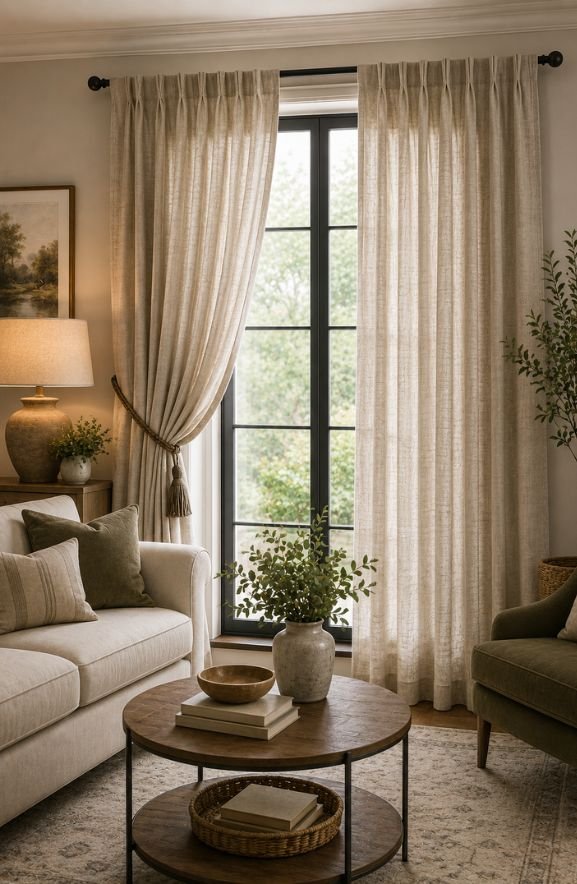
While jewel tones scream “look at me,” linen blend curtains whisper something way cooler—”I’ve got my life together.” These natural fabric beauties give your living room that effortless, breezy vibe without making you work for it.
You’ll love how they let soft light filter through without turning your space into a fishbowl. Linen blends breathe like they’re doing yoga, keeping your room fresh and airy.
Hang them in neutral creams, soft grays, or warm taupes for maximum sophistication. They’re wrinkled on purpose, so you don’t need to stress ironing perfection. Plus, they age beautifully—getting softer and better-looking over time. Your curtains basically improve themselves while you nap on the couch. That’s the dream, right?
Thermal Blackout Curtains: Style Plus Efficiency
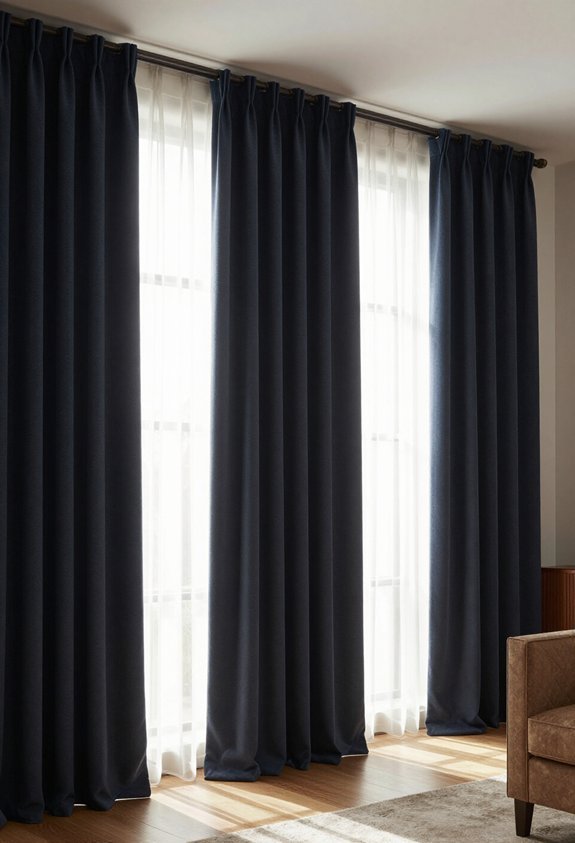
Now here’s where things get real—thermal blackout curtains are basically linen blends’ cooler older sibling who actually pays the bills. These bad boys block out light like they’re guarding state secrets. You’ll love how they keep your room dark at 3 p.m. when you’re napping without shame.
They’re thick, usually around 100% polyester or poly-cotton blends, and they insulate your windows like tiny fabric bodyguards. Your energy bills? They’ll drop faster than you on the couch.
Available in neutral tones like charcoal and cream, they look sleek while working overtime. Hang them floor-to-ceiling for maximum efficiency. You get style, privacy, and temperature control all wrapped up. Basically, thermal blackouts are the responsible friend who also happens to be fun.
Geometric Patterned Curtains: Modern and Bold
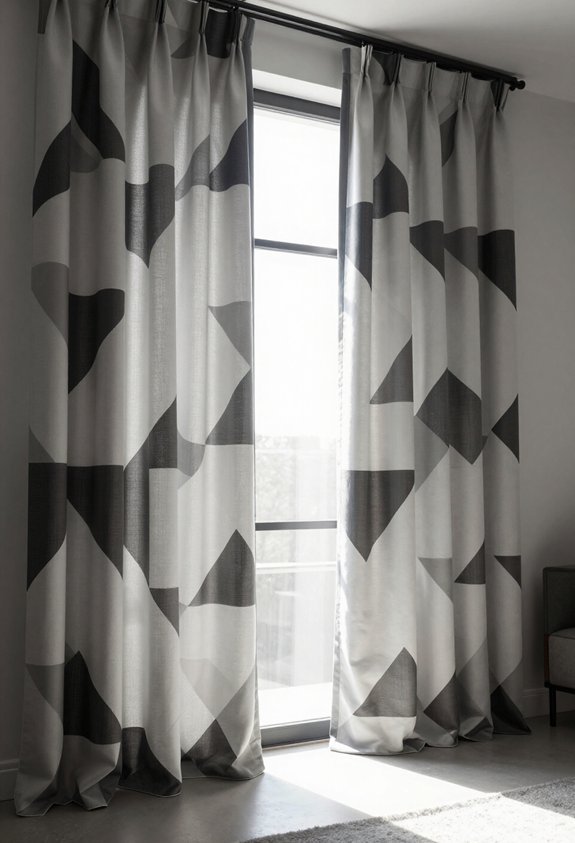
If you’re tired of looking at plain fabric all day, geometric patterned curtains are here to shake things up. These bold beauties feature triangles, squares, and zigzags that’ll make your living room actually interesting. Seriously, your walls won’t know what hit them.
You can find geometric curtains in tons of color combos: navy and white, gray and gold, or even hot pink and black if you’re feeling spicy. They’re typically 84 to 96 inches long, so they’ll actually cover your windows properly. No more awkward gaps that scream “I gave up.”
The best part? They instantly modernize any space without requiring you to repaint everything. Your living room goes from “meh” to “wow” faster than you can say drapes. That’s some serious bang for your buck right there.
Floor-to-Ceiling Drapes: Drama and Height
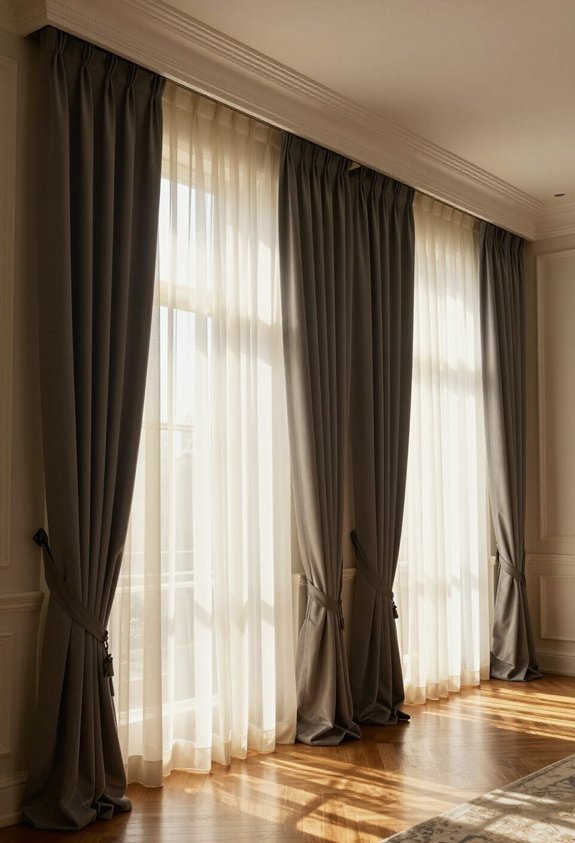
Floor-to-ceiling drapes are where geometric patterns go to grow up. You’re talking about curtains that stretch from your ceiling down to the floor—basically the supermodels of the window world. These bad boys create instant drama and make your living room feel taller than it actually is. It’s like magic, but with fabric.
Install them about 12 inches above your window frame and let them puddle slightly on the floor. This trick makes your space scream elegance. You’ll want sturdy hardware because these drapes aren’t lightweight complainers. Pair them with geometric patterns in bold blues and whites, and suddenly your room’s got personality for days. Your guests won’t stop staring. Your cat might judge you, though. That’s normal.
Layered Textures: Mixing Sheer and Heavy Fabrics
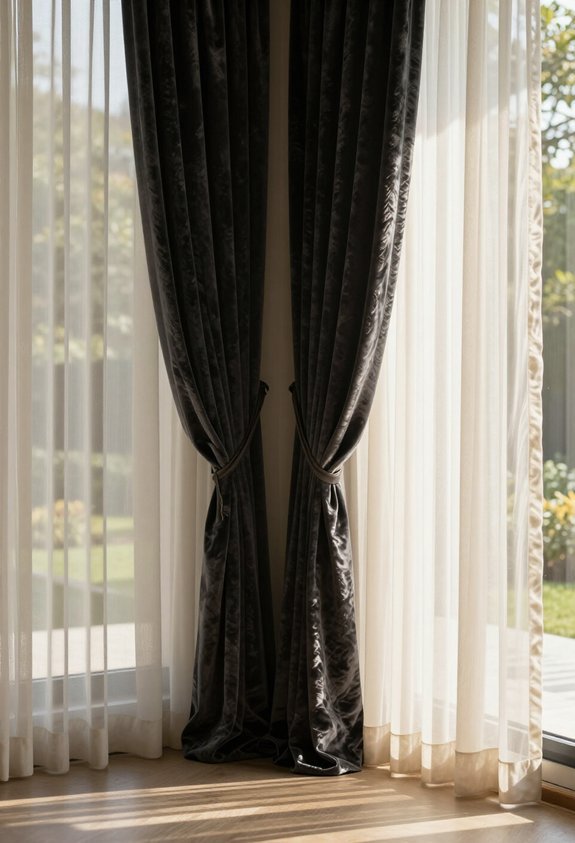
While floor-to-ceiling drapes are stunning solo acts, they’re even better when you give them a sheer sidekick. Imagine this: heavy velvet curtains in deep navy paired with lightweight linen sheers in cream. You’re basically creating a curtain sandwich, and honestly, it’s delicious for your windows.
The sheer layers let soft light filter through during the day. Your heavy fabrics then swoop in like bodyguards when you need privacy and darkness. It’s the ultimate tag-team combo. Layer a 48-inch sheer panel behind your 54-inch solid drapes for maximum flexibility.
You control the mood like a dimmer switch. Want brightness? Keep sheers visible and drapes open. Need total blackout? Close everything and laugh at the daylight outside. Your living room becomes whatever you want it to be.
Neutral Beige Curtains: The Versatile Backdrop
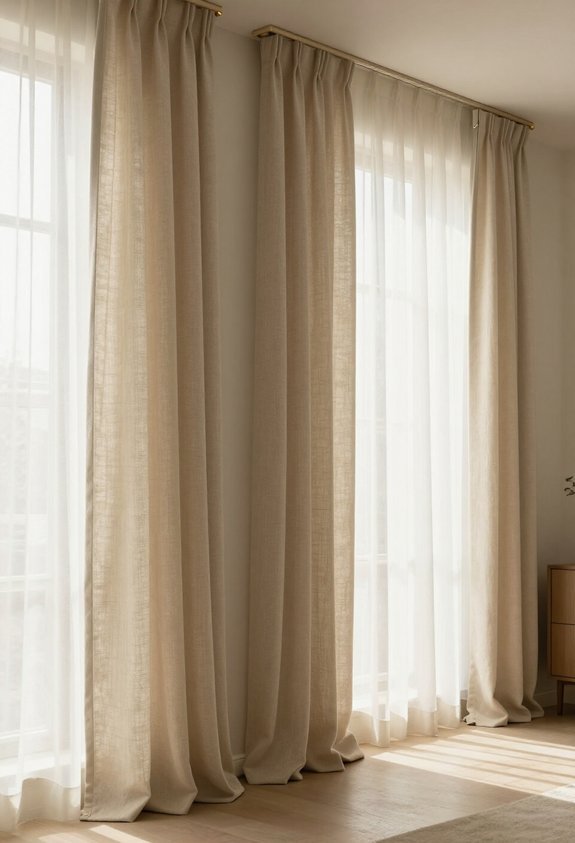
Beige curtains are basically the Switzerland of window treatments—they’re neutral, peaceful, and they don’t pick sides with your furniture. You’ll love how they work with literally everything. Got bold red pillows? Beige’s got your back. Prefer minimalist vibes? Still perfect. These curtains won’t argue with your design choices or throw a fit if you rearrange things.
The best part? They’re basically invisible friends that actually do their job. Sunlight filters through them beautifully without making your room look like a cave or a disco ball exploded.
They’re also forgiving, dust shows up less obviously than on darker fabrics. Your living room gets breathing room without demanding attention. Honestly, neutral beige curtains are the reliable friend who shows up, does the work, and doesn’t need applause.
Silk Curtains: Subtle Sheen and Premium Elegance
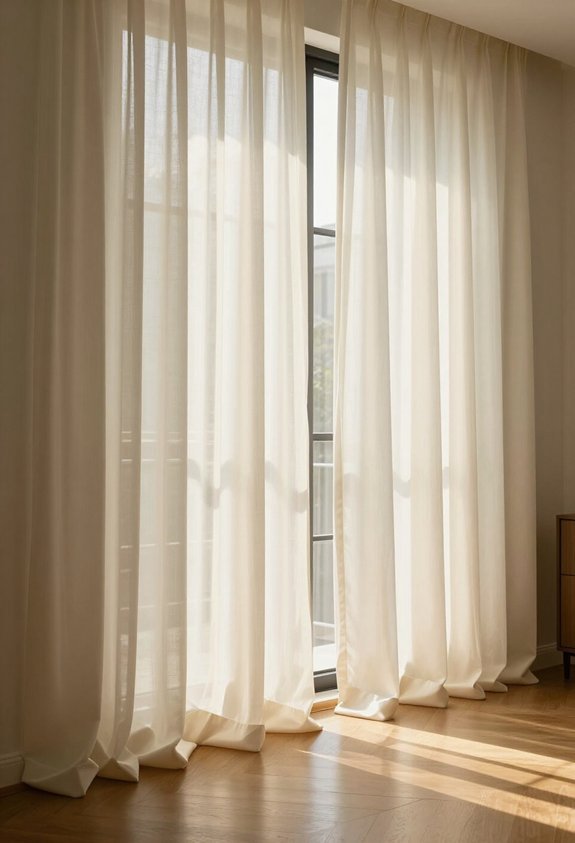
Now, if you’re ready to kick your living room up a notch, silk curtains are calling your name. These beauties shimmer like you just won the lottery, catching light and making your space look seriously fancy.
Silk’s got that subtle sheen that screams elegance without being obnoxious about it. Your living room will feel like a five-star hotel, except you can wear pajamas.
Drape these 84-inch panels from your curtain rod, and watch them flow like they’re made of actual dreams. Sure, they’re pricier than regular fabric, but your guests will think you inherited money. Silk won’t wrinkle like your forehead after a long day, and it’s softer than a cloud had a baby with a pillow. Pure luxury.
Botanical Print Curtains: Nature Indoors
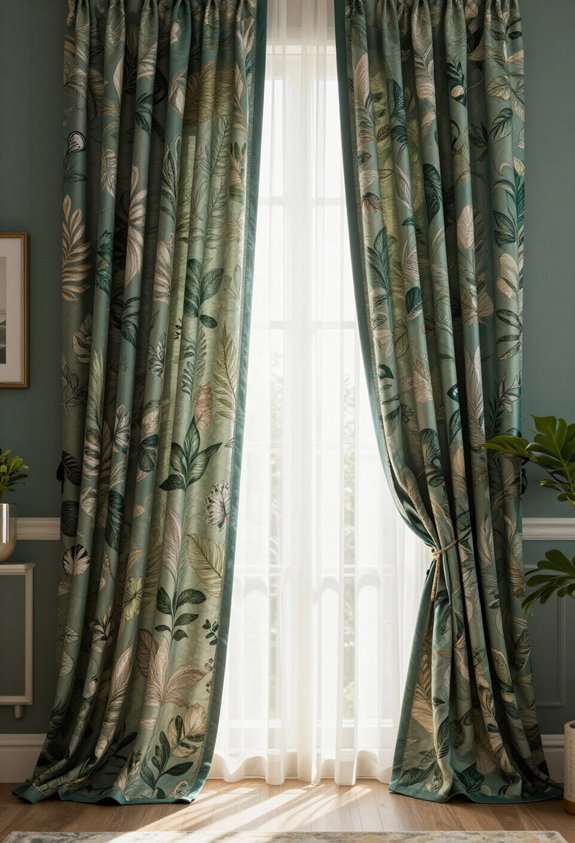
If you’re tired of staring at boring walls, botanical print curtains are about to become your new best friend. These beauties bring the outdoors inside without the bugs or dirt. You’ll find leafy greens, vibrant flowers, and jungle vibes splashed across 84-inch panels that’ll make your living room feel like a tropical paradise.
Seriously, your walls will stop looking like they’re holding their breath. The prints range from delicate ferns to bold monstera leaves in shades of emerald, sage, and cream.
Hang them from your existing rod and watch your space transform instantly. Your guests will ask if you’ve secretly moved to a rainforest. You haven’t. But your living room sure feels like it has. Nature never looked so convenient.
Curtain Rod Pockets vs. Grommets: Which Installation Works Best?
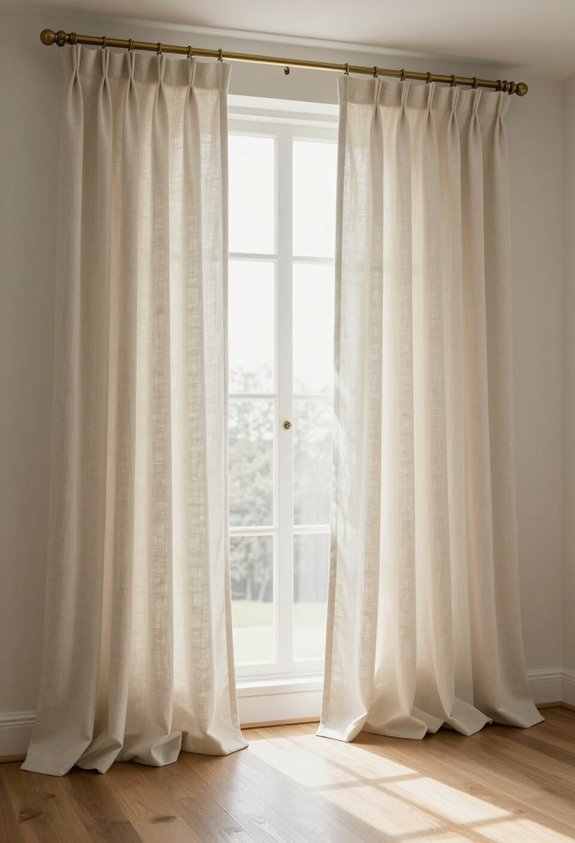
Ever hung curtains and felt like you needed an engineering degree? Let’s break down your two main options: pockets and grommets.
Rod pockets are fabric sleeves sewn into the curtain’s top. You slide your rod right through. They’re budget-friendly and look super elegant, especially in traditional rooms. The downside? Hanging them requires more arm strength than you’d think.
Grommets are metal rings punched into the fabric. Your rod threads through these holes. They’re sleek, modern, and honestly way easier to hang. Plus, you can open and close them smoothly without wrestling fabric.
Here’s the real talk: pockets win for style points, but grommets win for effort. Choose pockets if you love that fancy look. Pick grommets if your shoulders need a break.
Color Psychology: What Your Curtains Communicate
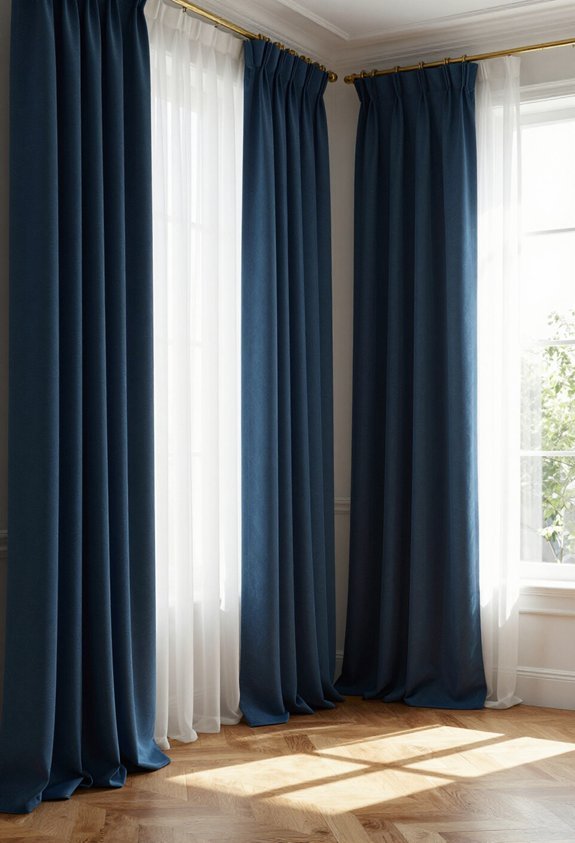
Your curtains are basically having a conversation with anyone who walks into your living room—and they’re doing it without saying a single word. Bold reds and oranges scream “I’m energetic and fun!” while soft blues whisper “come relax here.” Deep purples say you’ve got sophisticated taste (or you’re planning a villain’s lair).
Neutrals like beige and gray are the diplomatic friends who get along with everyone. Bright yellows practically yell jokes at your guests.
Dark colors absorb light and make spaces feel cozy, almost like a hug. Lighter shades open things up and feel airy. Your color choice tells people whether you’re adventurous, calm, dramatic, or boring. Choose wisely—your walls aren’t judging, but your curtains definitely are.
Length and Proportion: Getting the Fit Right
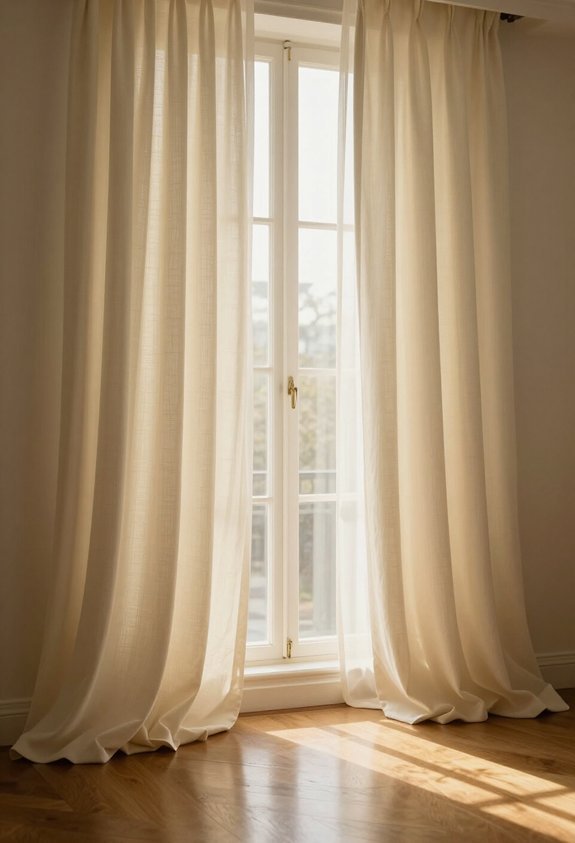
Once you’ve picked your curtain color, it’s time to tackle the next big decision: how long should these fabric friends actually be? Length matters way more than you’d think. Floor-length curtains (hitting around 12 inches from the floor) scream elegance and sophistication.
They make your room feel taller too, which is basically free interior design magic. Puddle length adds drama but collects dust like a fuzzy magnet. Avoid that awkward mid-shin situation, it’s nobody’s friend. Measure your windows carefully from rod to floor. Proportions should match your space’s vibe.
High ceilings? Go dramatic and long. Smaller rooms? Shorter curtains prevent that cramped-closet feeling. Get this right, and you’re golden. Mess it up, and your living room just looks confused.
Mixing Prints and Solids: Break the Rules
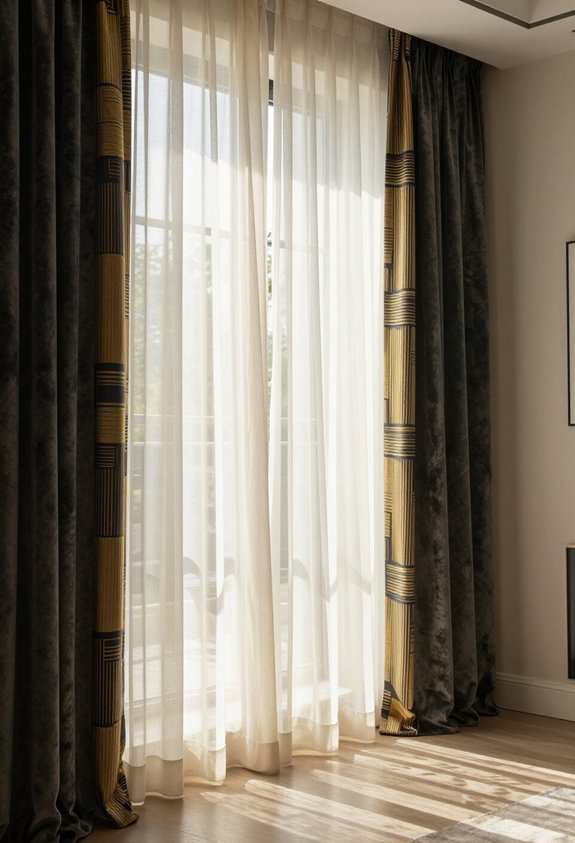
The rules of interior design aren’t written in stone—they’re written in fabric, and fabric can be rewritten. You can totally mix that floral print curtain with solid-colored panels. Seriously! Pair a bold botanical print with crisp white or soft gray solids, and watch your living room transform.
The secret? Balance. If your print screams loud, let your solids whisper quietly nearby. Try a 60-40 ratio—more solid, less print—so things don’t look like your curtains got into a fight. Hang the printed panels in the center and flank them with solid-colored ones for visual harmony.
This combo adds personality without making guests wonder if you got dressed in the dark. Break those boring rules and have genuine fun decorating!
Maintenance Tips: Keep Your Curtains Fresh
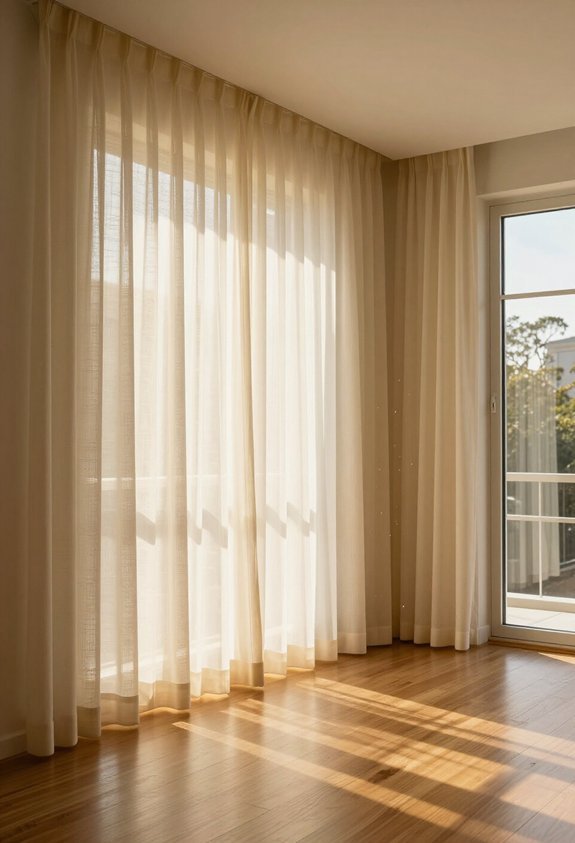
After you’ve hung those gorgeous curtains, don’t just abandon them like yesterday’s socks—they need love and attention! Dust them monthly with a soft brush or vacuum attachment.
Your curtains collect more dust bunnies than your actual bed. Seriously. Check the manufacturer’s label before washing. Some fabrics are drama queens and’ll shrink if you sneeze on them wrong.
Gentle cycles and cool water are your friends. Hang them damp to avoid wrinkles—ironing heavy curtains is basically a workout. For spot-cleaning, use mild soap and cool water.
And hey, sunlight fades fabric faster than your tan in winter. Close them during peak afternoon hours. Your burgundy drapes shouldn’t turn into sad pink ghosts. Fresh curtains mean a fresh living room. You’ve got this!
Frequently Asked Questions
How Do I Measure My Windows Correctly Before Ordering Living Room Curtains?
Start by measuring your window’s width in three spots, at the top, middle, and bottom. Record the smallest of those three numbers, since that’s the measurement you’ll actually want to work from.
Height comes next, measured from wherever you plan to mount your rod down to your desired curtain length. Whether you want them grazing the floor or puddling slightly changes this number quite a bit.
Measuring twice before you order anything saves you from the headache of curtains that don’t quite fit once they arrive. It’s a small extra step that prevents a frustrating return process.
What Is the Best Way to Hang Curtains for a Small Living Room?
Hanging your curtains high and wide is the simplest trick for making a small room feel bigger. Mounting the rod closer to the ceiling rather than right above the window frame creates the illusion of taller windows.
Extending the rod beyond the actual window frame on both sides adds to that effect. It tricks the eye into seeing a wider window than what’s actually there.
Together these two adjustments make a real difference in how open and airy a small living room feels, without changing anything about the room’s actual square footage.
Can I Use the Same Curtains in Multiple Rooms Throughout My Home?
Yes, and plenty of people do this successfully, especially when they find a fabric and color they really love. Just be sure to measure each window individually, since dimensions rarely match perfectly from room to room.
Natural light differs quite a bit between spaces too, and that affects how the same curtains will actually look and perform. A fabric that looks stunning in bright afternoon light might read completely different in a dimmer room.
Keep those variables in mind rather than assuming one size or style will translate identically everywhere. A little adjustment per room usually gets you the best result.
How Often Should I Wash or Dry Clean My Curtains?
Most curtains benefit from a wash or dry clean every three to six months, depending on how much dust and sunlight your space sees. Rooms with more foot traffic or pets might need it on the more frequent end of that range.
Always check the fabric care label before doing anything, since some delicate materials genuinely require professional cleaning rather than a regular wash cycle. Skipping this step can damage fabric that took a real investment to buy.
Staying on top of this schedule keeps your curtains looking fresh and extends how long they last overall.
What Curtain Weight Works Best for Different Climate Conditions and Seasons?
Lightweight fabrics like linen are your best bet for warm climates and summer months, since they maximize airflow and keep a room from feeling stuffy. They let a breeze move through more easily than heavier alternatives would.
Heavier materials earn their place during colder months instead. Velvet or thermal lined curtains trap heat effectively and block cold drafts that sneak in around windows during winter.
If your climate swings dramatically between seasons, having two sets to rotate is worth considering. It’s a small investment that pays off in both comfort and energy savings.
Conclusion
Curtains get overlooked far more than they should, considering how much influence they actually have over a room’s whole personality. I learned that lesson slower than I’d like to admit.
Whether you gravitate toward something dramatic like floor to ceiling velvet or something quieter like neutral linen, the right choice should feel like an extension of how you actually want your living room to feel. There’s no universal right answer here.
I still think about how different my own living room felt the week after I finally replaced curtains I’d been ignoring for years. Sometimes the smallest swaps carry the biggest visual weight.
Take your measurements seriously and don’t rush the fabric decision. These two factors alone determine whether your new curtains feel intentional or like an afterthought.
Your windows deserve the same attention you’d give any other major design choice in the room. They’re doing more work than most people realize.
I’d love to hear which style caught your eye, or what’s already hanging in your own living room. Leave a comment below and let me know how it’s working for your space.