

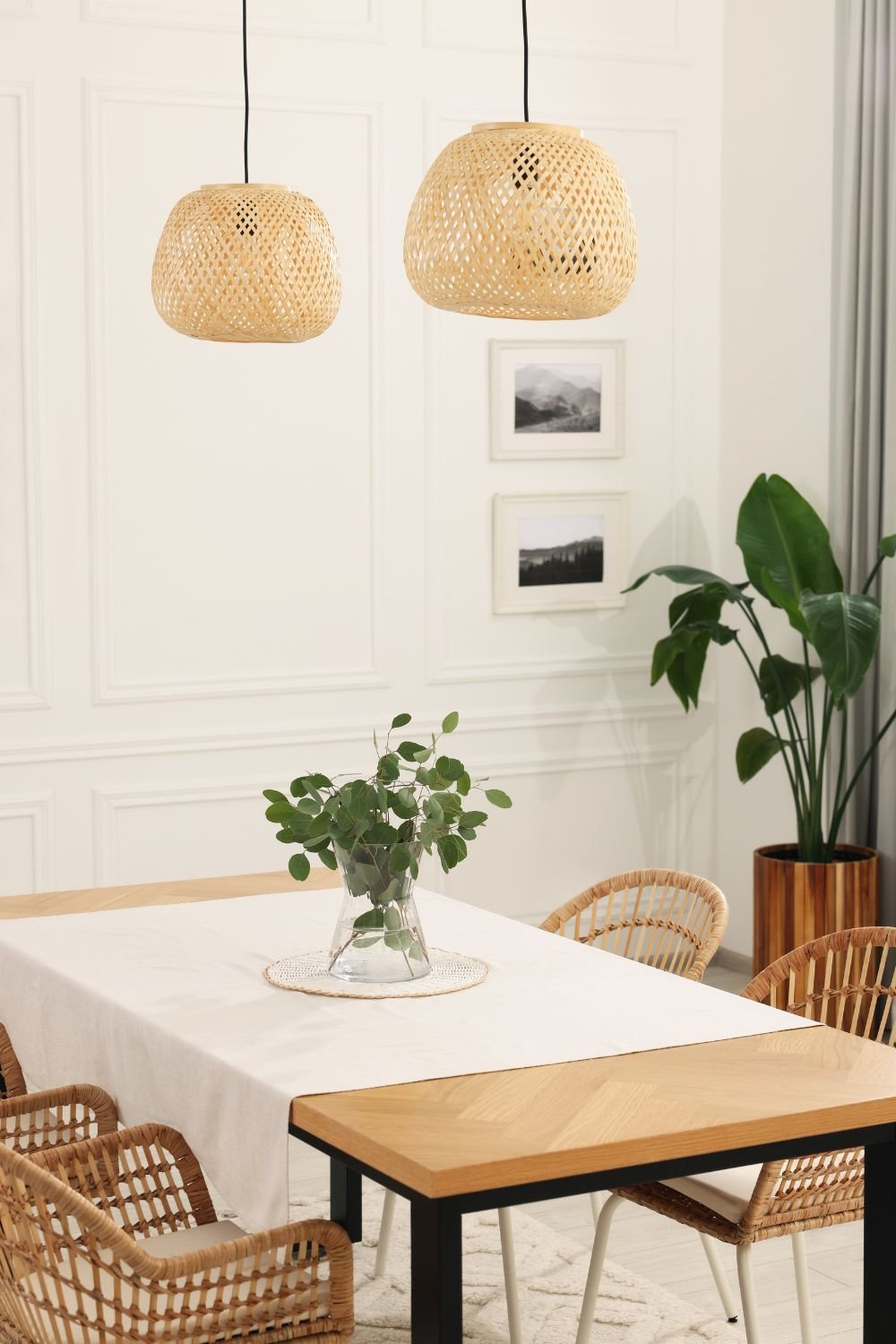
My dining room sat empty and lifeless for almost two years before I admitted the problem wasn’t the paint color or the table. It was missing anything alive in it.
Plants bring movement and personality into a space that can otherwise feel stiff and formal. You don’t need a green thumb either, some of the toughest, most forgiving plants look the most impressive once settled in.
I killed my fair share of plants before learning what actually thrives indoors. Let’s get your dining room looking lived in.
Getting the Foundation Right
Before you load up your cart with every plant that catches your eye, think about the light your dining room actually gets. A north facing room and a sunroom need completely different plant choices, and skipping this step is the fastest way to a sad, droopy collection.
Consider how the room gets used too. A plant that needs daily attention isn’t going to thrive somewhere you only sit down for dinner once a day.
Start with one or two plants instead of filling every surface at once. It’s a lot easier to learn what a room needs gradually than to overcommit and end up overwhelmed.
19 Dining Room Plants Decor Ideas
This list pulls together everything from low maintenance floor plants to delicate trailing vines, so there’s something here whether you’re a total beginner or you’ve got a windowsill full of thriving greenery already. Some ideas work in tiny apartments, others need a bit more square footage to shine.
I tried to mix in plants for every light situation and every level of effort you’re willing to put in, because not everyone wants to fuss over something daily.
Pick one or two that match your space and your energy level, and build from there.
Where Most People Go Wrong
Most people buy a plant they love and then figure out placement later, which is how you end up with a beautiful fiddle leaf fig slowly dying in a dark corner because it looked good in that spot on paper. Light is the thing to figure out first, before you fall in love with any particular plant.
Think about where your dining room actually gets light throughout the day, not just in the morning when you are doing a quick walk-through. A spot that seems bright at 9am might be quite dim by midday, and that will affect which plants genuinely thrive there versus which ones just survive.
Your planter choice matters more than people expect, too. A gorgeous plant in the wrong pot will always look slightly off, and it takes a while to figure out why. Matching your planter material and finish to your existing dining room palette pulls the whole thing together in a way that feels intentional rather than accidental.
19 Dining Room Plants Decor Ideas
Adding plants to a dining room works best when you think about variety rather than just picking one and hoping it carries the whole space. A mix of heights, textures, and placement spots creates a layered look that feels genuinely considered rather than like you just dropped a single pot in a corner.
Some of these ideas work for a dedicated plant lover who wants to go full botanical, and some are perfect if you just want one good plant in the right spot to anchor the room. There is no commitment required here.
Take a look through all nineteen and pick the one that fits your room, your light situation, and honestly, your energy for plant maintenance.
Hanging Pothos for Elegant Cascading Greenery
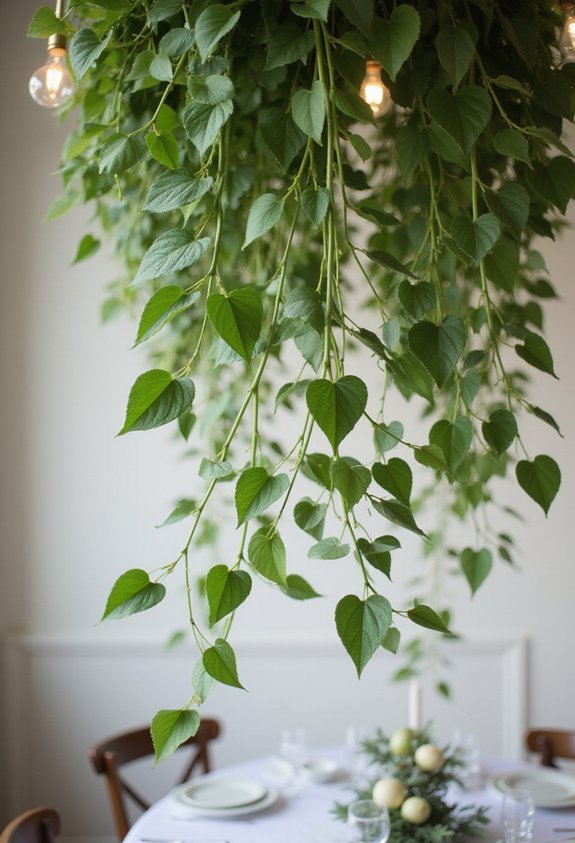
If you’re looking to add some serious green vibes to your dining room without breaking a sweat, hanging pothos is your new best friend. These trailing beauties literally grow themselves, which is perfect for us non-plant-whisperers. You’ll drape them from shelves or ceiling hooks, and they’ll cascade down like leafy waterfalls.
The heart-shaped leaves come in gorgeous green or variegated cream-and-green varieties that’ll make your dinner guests ask questions. Pothos vines stretch 3-6 feet easily, so they’re basically the overachievers of the plant world.
Water them weekly, stick them near indirect light, and they’re happier than a squirrel at a nut convention. Your dining room transforms instantly from boring to botanical. Plus, they’re practically impossible to kill, so even your brown thumb won’t ruin this one.
Also read: 22 BLACK DINING ROOM DECOR Ideas That Feel Moody!
Trailing String of Pearls Above Shelving
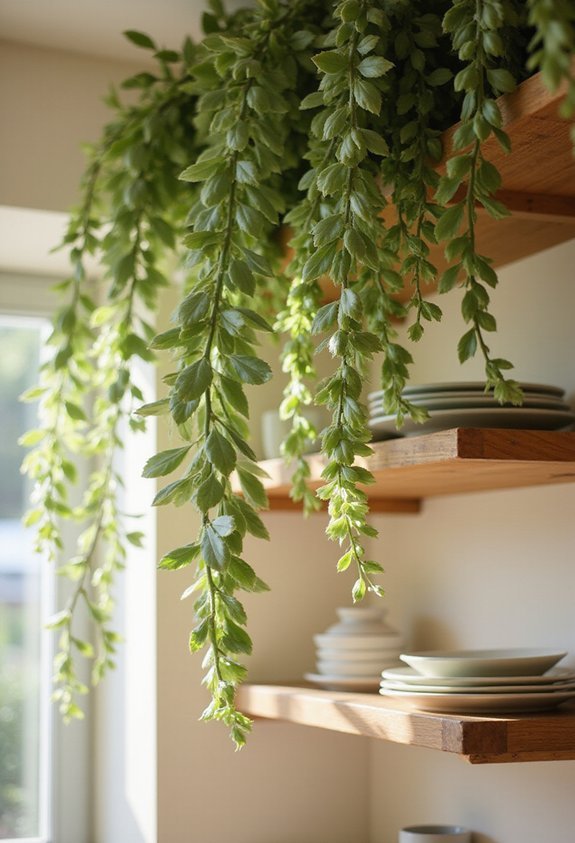
While pothos vines are basically the reliable friend who shows up to every party, string of pearls takes a totally different approach to dining room drama. These delicate strands drape beautifully over open shelving, creating an Instagram-worthy moment without you trying too hard.
The tiny, bead-like leaves catch light gorgeously and won’t make your dining room feel like a jungle gym. Position your 12-18 inch trailing stems above shelves at eye level where guests can admire them during dinner. They’ll cascade down elegantly, framing your fancy plates and decorative bowls perfectly.
Water sparingly—these babies prefer drier soil or they’ll throw a fit. You’ll love how this plant adds sophistication while still feeling totally approachable and quirky.
Pothos in Macramé Hangers Above the Table
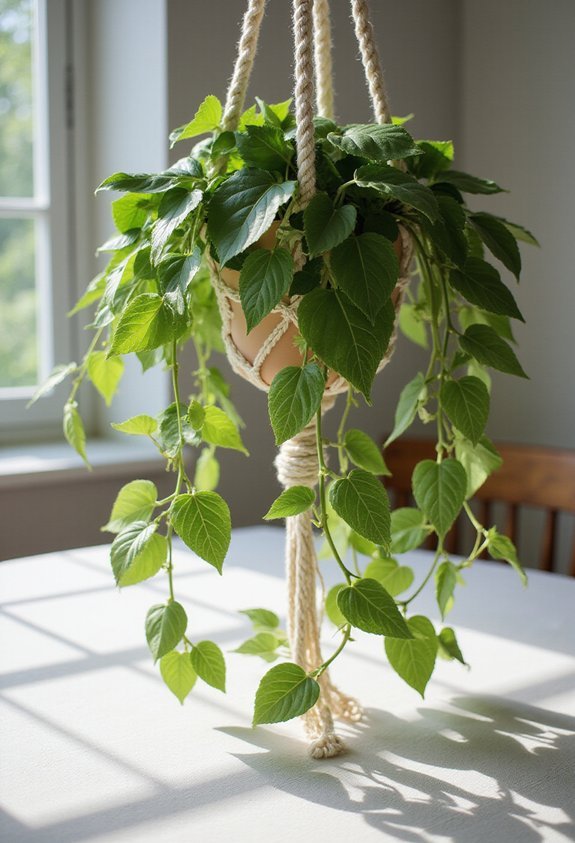
Now that string of pearls has stolen the spotlight, it’s time to bring pothos back into the conversation—because this plant deserves its moment too. Hang these trailing vines in macramé hangers directly above your dining table, and you’ve got yourself a living chandelier. Seriously, it’s that good.
The heart-shaped leaves cascade down 2-3 feet, creating this gorgeous green curtain that makes your dinner guests actually look up from their phones. Pothos is basically the overachiever of houseplants—it thrives in medium light and doesn’t throw a tantrum if you forget to water it for a week.
Just position the hangers at least 18 inches above your head so nobody gets whacked by foliage mid-bite. Your salad’s never looked so Instagram-worthy.
Philodendron Vines Along Dining Room Walls
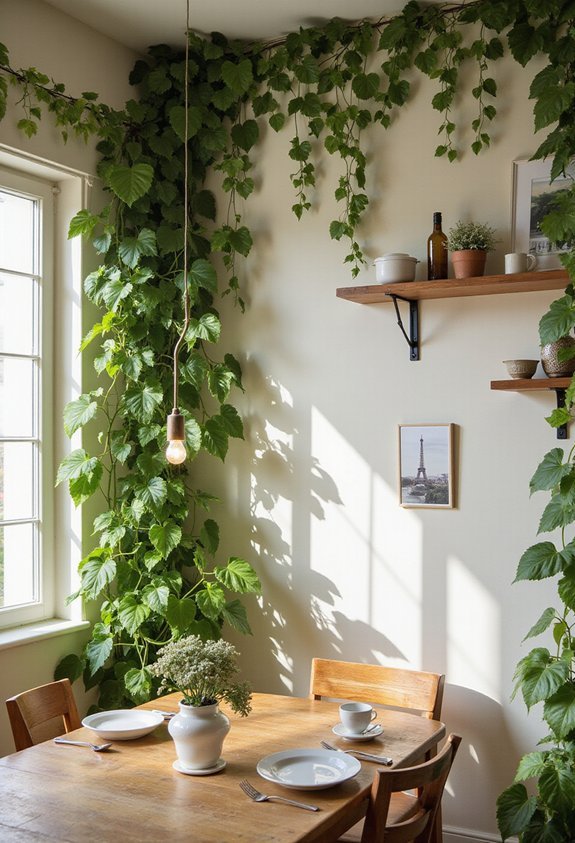
Philodendron vines are like pothos’s cooler older sibling—they’ve got the same easy-going attitude, but they’re ready to climb the walls and make a real statement. You’ll love how they creep along your dining room walls like botanical highways. Train them up a trellis or let them meander across your wall space naturally.
The heart-shaped leaves in deep green look seriously fancy without you breaking a sweat. Install some small hooks about every 12-18 inches and gently guide those vines upward.
They’re basically the wall art that grows itself. Your dinner guests will be totally jealous. Plus, philodendrons actually clean your air while they’re busy looking gorgeous. It’s like having a decorator who also does your housekeeping duties. Win-win situation right there.
Climbing Ivy in Decorative Wall Planters
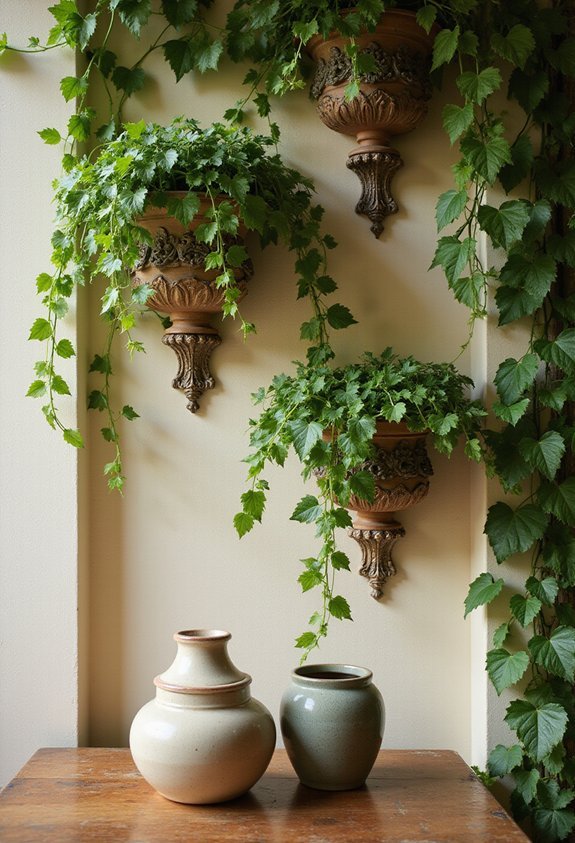
If you’re ready to level up from vines that just hang around, climbing ivy in decorative wall planters is where the magic happens. Visualize this: lush green ivy cascading down your dining room wall in a gorgeous ceramic planter mounted at eye level. It’s basically nature’s wallpaper, and way cooler than paint.
You’ll want planters with drainage holes because nobody wants a moldy situation ruining dinner vibes. Mount them 18-24 inches from the ceiling and let those babies climb downward like they’re training for an ivy Olympics. The deep green leaves against white or cream walls? Chef’s kiss.
Your guests will think you’ve got a secret green thumb, even if you’re mostly just watering and pretending you knew what you’re doing. That’s the real magic.
Fiddle Leaf Fig as a Statement Floor Plant
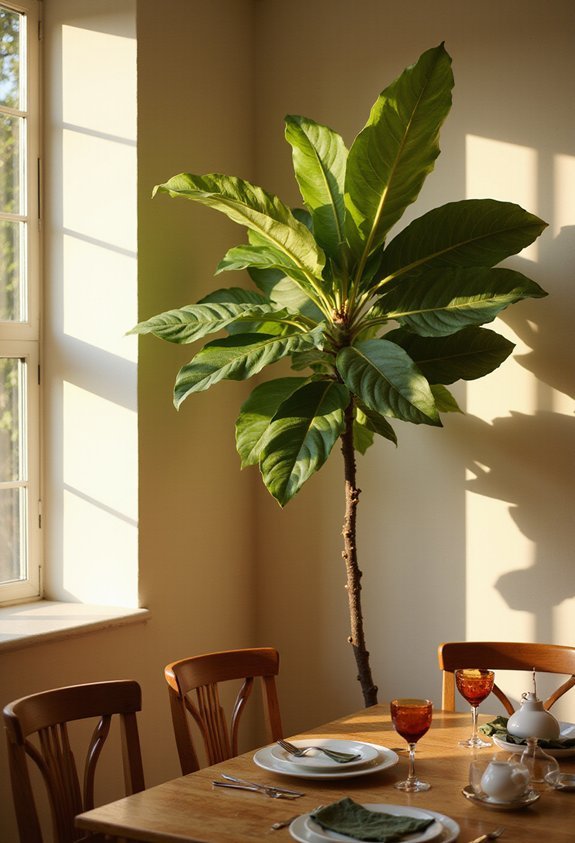
While climbing ivy’s cool and all, the fiddle leaf fig is basically the superhero of dining room plants. You’ll want to grab one that’s at least three to four feet tall. Position it in a corner near your window where light streams in. The fig’s huge, violin-shaped leaves are seriously gorgeous—think deep green perfection.
They’ll basically photosynthesis their hearts out and make your whole room look fancy without you breaking a sweat. Water it weekly, but don’t drown the poor thing. Your dinner guests will absolutely lose their minds over how sophisticated your space looks. Plus, you’ll finally have something that grows faster than your dad jokes. That’s what we call a win-win situation, my friend.
Monstera Deliciosa for Tropical Drama
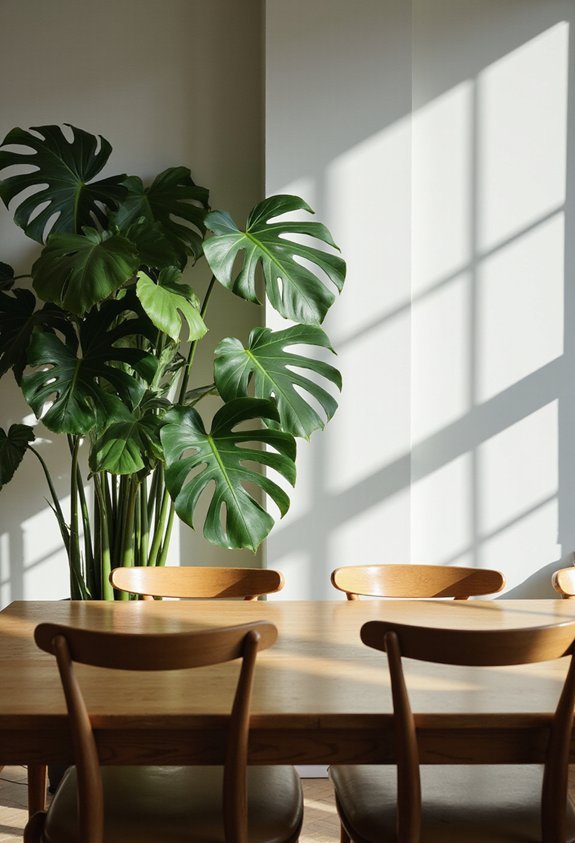
Now that you’ve got your fiddle leaf fig looking all sophisticated in the corner, it’s time to bring some seriously wild energy to your dining room with a Monstera Deliciosa.
This plant’s got huge, gorgeous green leaves with those famous holes that’ll make your guests ask a million questions. You’ll love how it grows fast and fills empty wall space like nobody’s business. Position it near bright, indirect light and watch it thrive.
The Monstera doesn’t demand constant attention either—it’s basically the cool, low-maintenance friend everyone wants. Its tropical vibes instantly transform your dining room into a jungle hideaway. Plus, those dramatic split leaves photograph incredibly well. Your dinner table just became the coolest spot in your entire house.
Rubber Plant in a Corner for Instant Height
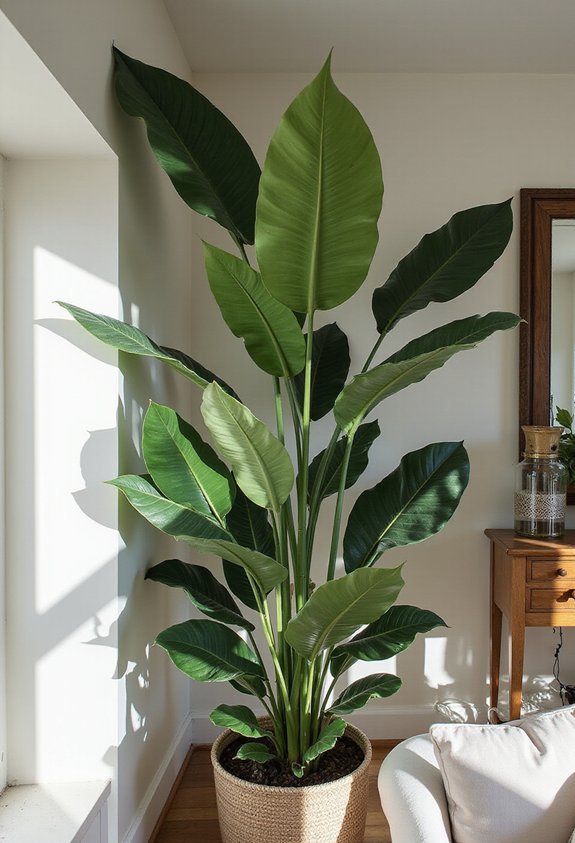
After you’ve filled your dining room with tropical drama, it’s time to go vertical with a Rubber Plant. This leafy giant shoots up to six feet tall, and it’s basically a skyscraper for your corner.
The deep green leaves are thick and shiny—like someone polished them with furniture wax. Stick it in that awkward empty corner next to your dining chair, and suddenly your space feels complete.
Rubber Plants don’t ask for much: indirect light and occasional watering. They’re basically the introverts of the plant world—happy sitting alone and minding their business. Your ceilings will thank you for the vertical interest, and your guests will wonder if you hired an interior designer. Spoiler alert: you didn’t. You just grabbed a plant and nailed it.
Peace Lily for Soft, Elegant Foliage
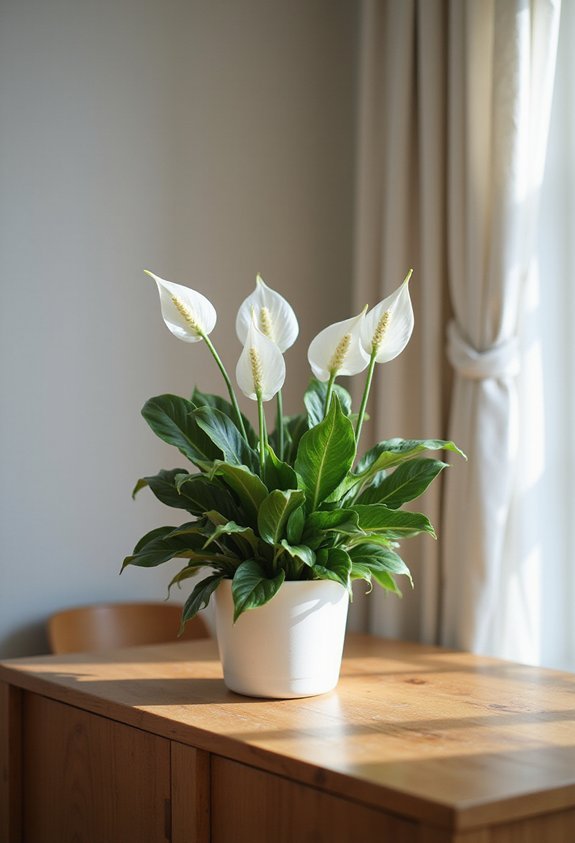
If you’ve been eyeing your dining room and thinking it needs something a little softer and more elegant, the Peace Lily’s got your back. This plant’s got seriously gorgeous dark green leaves that’ll make your space feel fancy without trying too hard. The best part? You don’t need to be a plant whisperer to keep it alive.
Peace Lilies actually droop dramatically when thirsty, basically throwing a tantrum until you water them. It’s like having a needy friend who’s honest about their feelings. Position one near a window with indirect light, and watch it thrive.
Its white flowers bloom periodically too, adding unexpected elegance to your dinner parties. Your guests will think you’re mysteriously sophisticated.
Orchids for Sophisticated Dining Ambiance
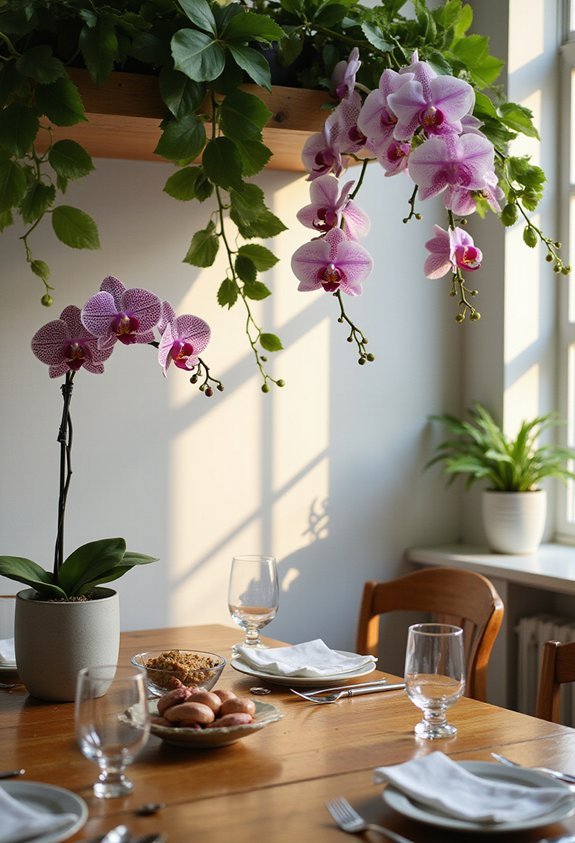
When you’re ready to upgrade your dining room’s vibe from “nice” to “wow, you’ve got taste,” orchids are your secret weapon. These fancy flowers come in purples, pinks, and whites that’ll make your guests think you’re basically a plant wizard.
Stick a 12-inch orchid on your sideboard or center it on your table, and suddenly you’re living in a magazine spread. They’re not needy like some plants—orchids actually prefer you ignore them a bit.
Water once a week and they’re happy. Position them where they catch indirect light, and they’ll bloom for months like they’re showing off just for you. Your dining room doesn’t just look sophisticated now. It smells like success.
Compact Succulents for Tabletop Arrangements
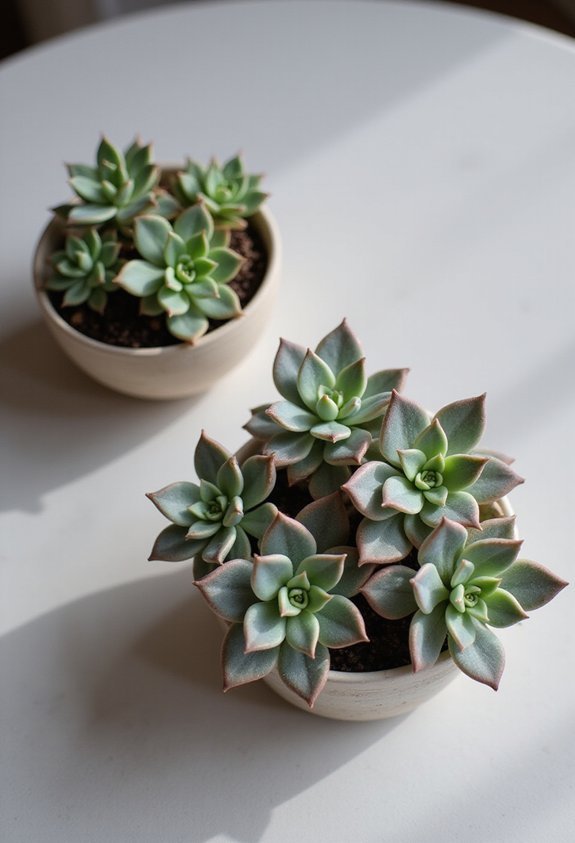
Every dining room’s got room for succulents—these stubby little plants are basically the couch potatoes of the plant world, and honestly, that’s their superpower. You can plop them on your table without guilt, and they’ll just sit there looking adorable. Grab some tiny 4-inch pots and arrange three or four of them together.
Mix colors like dusty pink echeveria with silvery jade plants. They’re basically indestructible, which means you won’t kill them even if you forget they exist for weeks. Water them once monthly, and they’ll reward you with zero drama. Your dinner guests will think you’re some kind of plant genius when really you’ve just discovered the laziest decorating hack ever.
Pilea Peperomioides for a Unique Talking Point
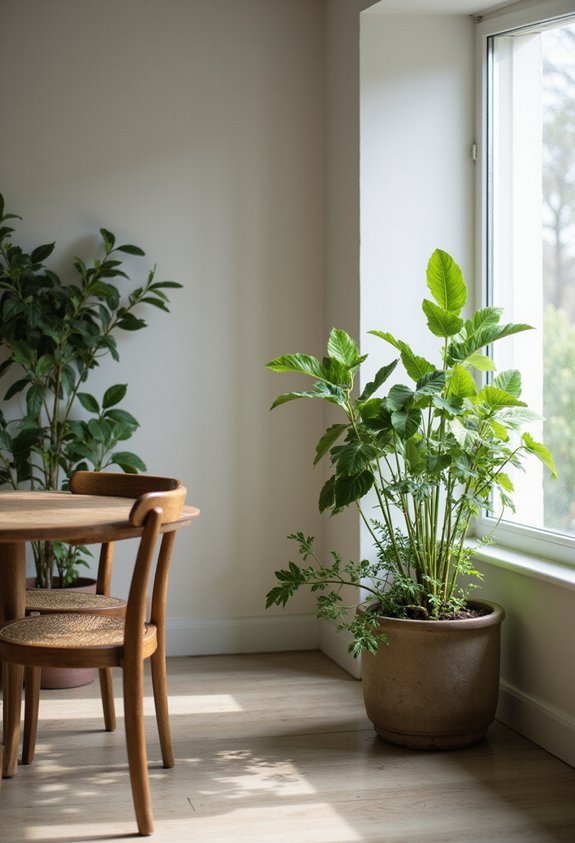
Here’s a plant that’ll actually get your dinner guests talking—the Pilea Peperomioides, or as cool people call it, the Chinese money plant. This compact beauty grows coin-shaped leaves on tall stems and reaches about twelve inches high.
You’ll love how it leans toward light like it’s trying to escape your dining room. Position it on a side table near a window, and watch people ask what it is constantly.
The real magic? Its leaves grow in a perfect circular pattern that’ll make your friends think you’re secretly a plant genius. Water it when the soil feels dry, and it’ll reward you with steady growth. Plus, it’s nearly impossible to kill, which is perfect for us forgetful types.
Snake Plants for Low-Maintenance Air Purification
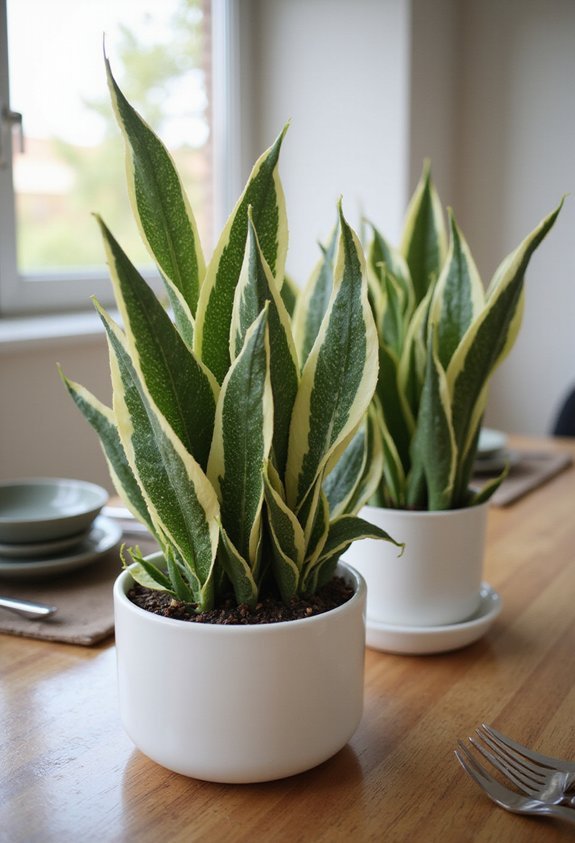
If you’ve ever worried that your dining room air might be secretly plotting against you, snake plants have got your back. These tall, striped beauties actually purify your air while you’re eating spaghetti. They’re basically silent ninjas working overtime.
You’ll love snake plants because they’re practically indestructible. Forget to water them for weeks? They don’t care. Your dining room corner looking dim? They’ll thrive anyway. Just plop a 2-3 foot specimen near your window or darker wall, and you’re golden.
Their sword-like green leaves with cream edges look ridiculously elegant too. Plus, they’re conversation starters when guests ask, “Wait, plants actually clean air?” You’ll feel like a genius explaining how they absorb toxins while you digest dinner.
ZZ Plant for a Sleek, Low-Fuss Look
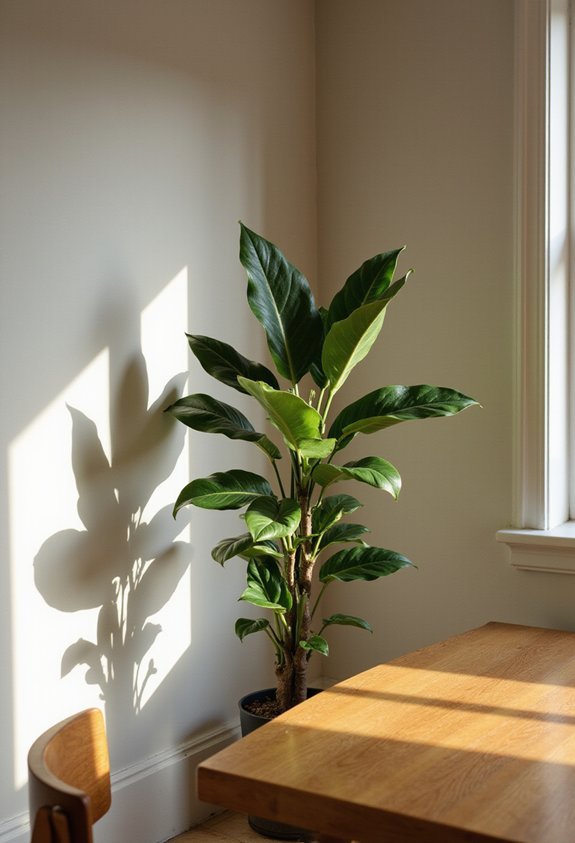
Most plant parents absolutely swoon over ZZ plants, and honestly, you’ll see why in about five seconds. These glossy-leafed beauties boast deep green, waxy foliage that screams elegance without any drama. You literally can’t kill them—they’re basically the cockroaches of the plant world, but way prettier.
ZZ plants grow 2 to 3 feet tall, making them perfect for tucking beside your dining room buffet or corner nook. Their sleek appearance pairs gorgeously with modern décor. Water them every three weeks, and they’re thriving. Seriously, neglect is their love language.
Bright indirect light? Check. Low humidity? Perfect. They don’t demand constant attention like needy houseguests. Your ZZ plant’ll happily sit there looking fabulous while you ignore it completely. That’s not laziness—that’s smart decorating.
Calathea Plants for Patterned, Textured Leaves
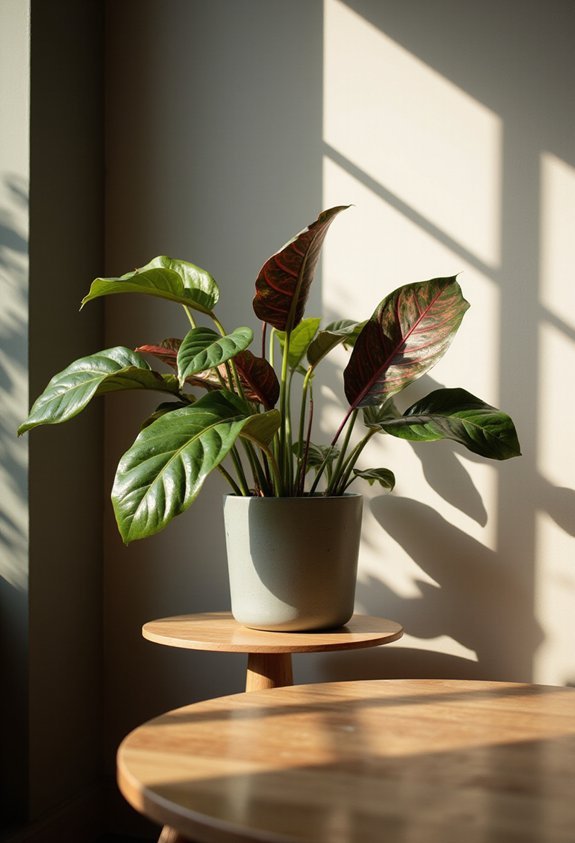
Now, if you’re tired of plain green leaves and want your dining room to look like it has actual personality, Calatheas are your new best friend. These plants rock seriously fancy leaves with bold patterns and textures. We’re talking deep greens mixed with pink, white, or cream stripes that’d make any interior designer jealous.
Calatheas love humidity, so your bathroom’s basically their dream vacation spot. But here’s the thing—they’ll totally thrive in your dining room too. Just mist them regularly or set them on a pebble tray with water.
Position your Calathea near indirect light. Direct sun actually burns their leaves, which is honestly rude. These plants get dramatic sometimes, but stick with them. Their patterned foliage seriously transforms boring walls into living artwork.
Herbs in Window Boxes for Functional Beauty
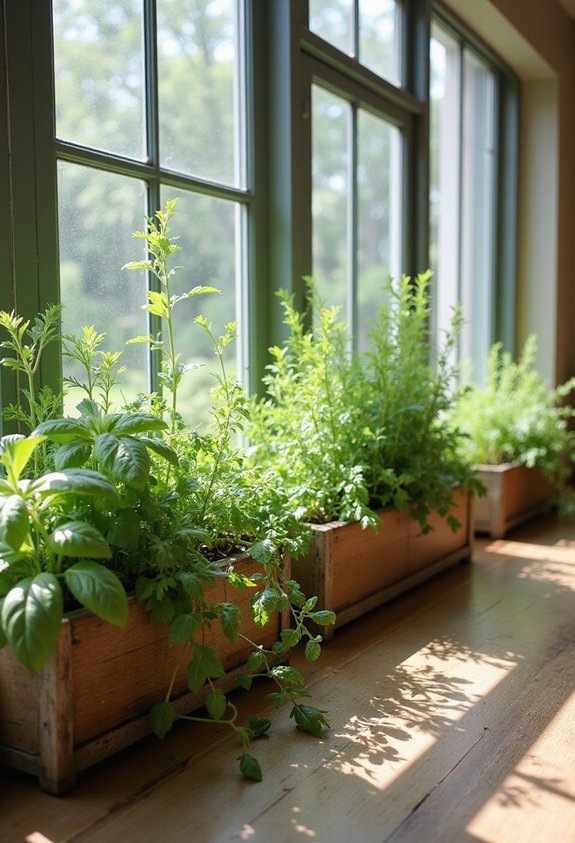
While your dining room’s looking gorgeous with all that patterned foliage, why not add something that actually smells amazing and tastes even better? Herb window boxes are basically free flavor factories. You’ll grow basil, mint, and parsley right where you can snatch them mid-meal.
Install a shallow 24-inch box on your dining room windowsill and watch the magic happen. Those green leaves catch afternoon light beautifully and fill your space with incredible aromas. Your guests will ask what smells so good. You’ll just smile and casually mention your personal herb garden. Plus, you’ll finally stop paying five bucks for a tiny basil bunch at the grocery store. Your wallet and your taste buds will thank you.
Layer Plants by Height to Create Focal Points
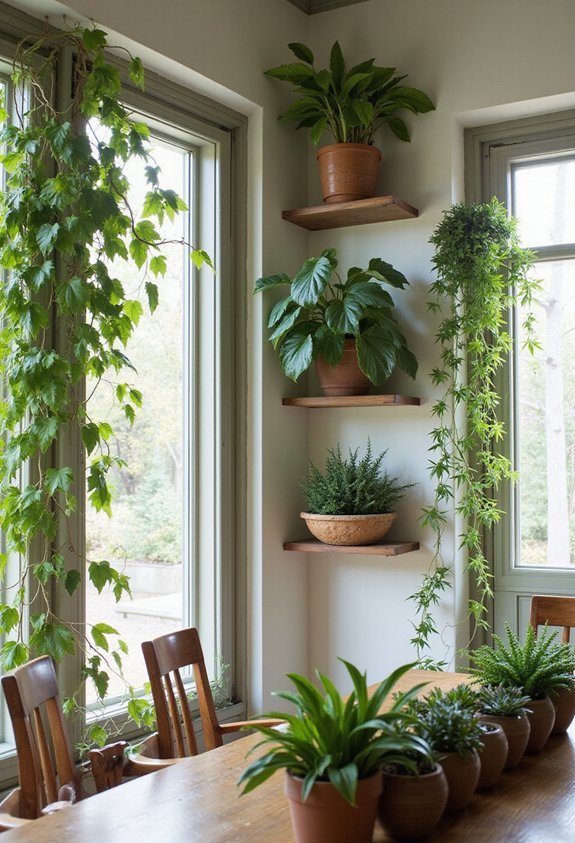
Three’s the magic number when you’re stacking plants like you’re building a delicious green lasagna. Put your shortest plants in front: think 8-inch pothos or succulents. Then add medium-height plants behind them, like a 2-foot snake plant.
Finally, crown your arrangement with a tall fiddle leaf fig or monstera reaching 4 feet upward. This layering trick makes your dining room eye contact go up, up, and away! Your guests’ gazes’ll naturally follow the height progression. You’re basically creating a green staircase that doesn’t cause anyone to trip.
Mix leaf colors, dark green, silvery, and chartreuse, and suddenly you’ve got a focal point that’ll make people forget about their lukewarm soup. That’s the real dinner party glow-up right there.
Use Plant Stands to Maximize Limited Space
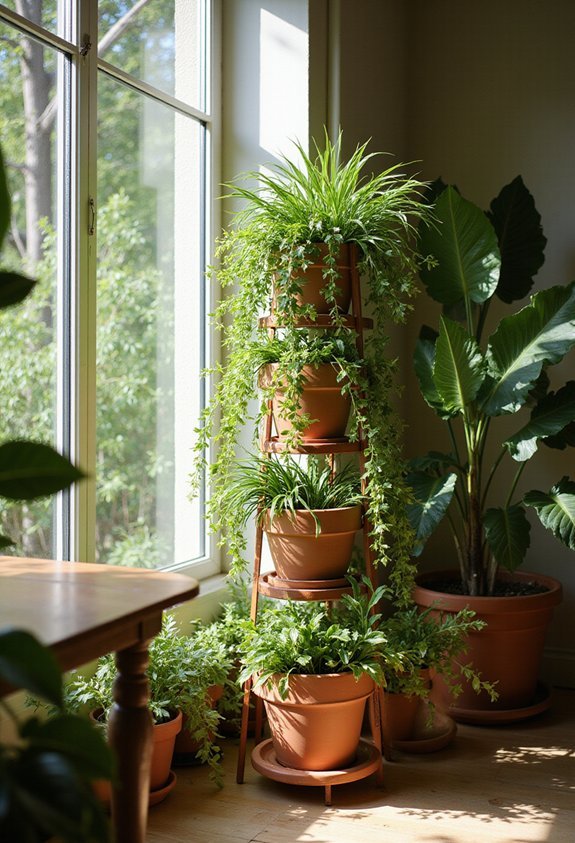
Plant stands are your secret weapon when your dining room’s tighter than a sardine can. These vertical heroes let you stack plants upward instead of sprawling them everywhere like you’re running a jungle gym. A tiered stand holds three or four plants in the same footprint as one lonely potted friend sitting on the floor.
You’ve got options here. Tall wooden stands look fancy. Metal ones feel modern. Bamboo screams “I’m chill.” Pick one that matches your dining room’s vibe and watch the magic happen.
Position your stand in a corner or near a window. Voilà! Suddenly you’re not tripping over ferns during dinner. Your guests notice the greenery without wondering if you’re secretly growing a forest inside your walls. Space solved, plants thriving, everyone happy.
Match Planters to Your Dining Room Aesthetic
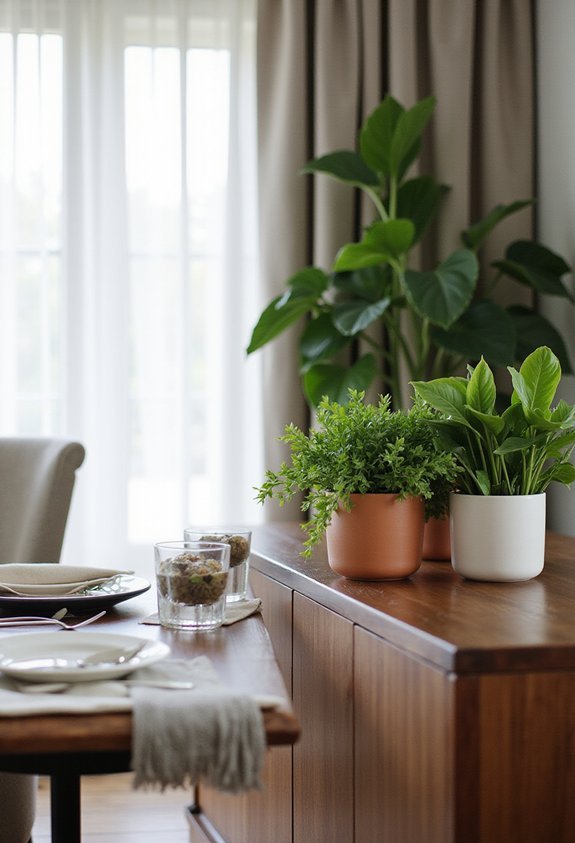
Your planters are basically the outfit your plants wear to dinner, and trust me, they’ve gotta match your vibe or the whole look falls apart. If your dining room screams modern, grab sleek ceramic pots in white or gray. Love that rustic farmhouse feel? Terracotta and woven baskets are your friends. Got a boho aesthetic happening? Go wild with patterned, colorful containers that make you smile every time you sit down to eat.
Here’s the thing: your planters should vibe with your chairs, table, and wall colors. A 10-inch pot in deep blue looks incredible next to navy dining chairs.
Mismatched styles will make your space feel chaotic and honestly, kinda depressing. Think of your planters as part of your dining room’s personality. They’re not just plant homes—they’re decoration stars that deserve respect.
Frequently Asked Questions
How Often Should I Water Dining Room Plants Without Overwatering Them?
Check the soil before you reach for the watering can. If the top inch feels dry when you press your finger in, it’s time. If it still feels damp, give it another day or two.
Watering thoroughly until you see drainage works better than giving your plants frequent little sips. Most overwatering problems come from good intentions and too much frequency, not too little care.
This simple touch test will save you from root rot more often than any watering schedule ever could.
What’s the Best Lighting Condition for Plants in Dining Rooms With Limited Windows?
Position whatever plants you have as close to your existing windows as you can manage. Indirect light is what most dining room plants are looking for anyway, so even a modest window can do a lot of work.
If your space is genuinely short on natural light, LED grow lights are a simple fix. Placing one six to twelve inches above your plant’s foliage gives it what it’s missing without changing your whole setup.
Reach for low light lovers like pothos or snake plants if your dining room just doesn’t get much sun. They’ll thrive where other plants would sulk.
Can Dining Room Plants Be Toxic to Pets or Small Children?
Yes, and it’s worth taking seriously if you’ve got curious toddlers or pets that like to nibble on things. Plenty of popular houseplants fall into that toxic category without most people realizing it.
Spider plants, Boston ferns, and African violets are all solid non-toxic choices that still look great on a table or shelf. They give you the greenery without the worry.
Always do a quick check before bringing a new plant home, especially if little hands or curious paws are part of your household.
How Do I Prevent Plant Pests From Infesting My Dining Room Greenery?
Regular inspection is your best defense here. A quick glance at the undersides of leaves every week or so catches problems before they spiral.
New plants deserve a quarantine period. Keep them away from your existing collection for about two weeks just to be safe, since pests love hitching a ride on fresh purchases.
Wiping leaves down monthly helps too, and so does avoiding overwatering, since soggy soil tends to attract more trouble than dry soil does. If something does get infested, separate it immediately so it doesn’t spread.
What’s the Ideal Humidity Level for Tropical Dining Room Plants to Thrive?
Tropical plants are happiest somewhere between 50 and 80 percent humidity, which is higher than most homes naturally sit at. That gap is usually why tropical plants struggle indoors more than other varieties.
Misting your plants regularly helps close that gap, and so does grouping several plants together. They create their own little humid microclimate when they’re clustered.
A humidifier is the most reliable fix if you want consistent results. You’ll notice the difference in how full and healthy your leaves look within a few weeks.
Conclusion
Bringing plants into a dining room changes the whole feel of the space in a way that new dishware or a fresh tablecloth never quite manages. There’s something about having something alive in the room that makes meals feel less rushed.
I remember the first time a dinner guest asked about my fiddle leaf fig instead of commenting on the food, and I realized the plant had officially become the star of the room. I wasn’t even mad about it.
You don’t need a dozen plants to make an impact. Even one well placed piece, whether it’s trailing from a shelf or anchoring a corner, can completely shift how the room feels.
Start small if you’re nervous about killing something expensive. A pothos or a snake plant is about as forgiving as houseplants get, and they’ll teach you plenty before you move on to something fussier.
Your dining room deserves to feel like somewhere people want to linger a little longer after the plates are cleared. Plants are one of the easiest ways to get there.
I’d love to know which plant you’re trying first, or if you’ve already got a dining room full of greenery you’re proud of. Leave a comment and tell me what’s working in your space.