

Attic bedrooms offer unique architectural charm and cozy, intimate living spaces. Sloped ceilings, exposed beams, and quirky layouts create distinctive character and personality. Transforming an attic into a bedroom maximizes unused space while celebrating its special architectural features.
Strategic furniture placement and creative storage solutions work with sloped ceilings effectively. Low-profile beds, built-in shelving, and compact furniture adapt perfectly to attic dimensions. Proper lighting and light colors brighten darker corners, creating a warm, inviting bedroom retreat.
An attic bedroom becomes a personal sanctuary showcasing unique architectural appeal and charm. Embrace the space’s quirks, add cozy textures, and create functional layouts within constraints. Your attic bedroom transforms into a beloved hideaway reflecting comfort, character, and creative design solutions.
Maximize Attic Floor Space With Low-Profile Furniture
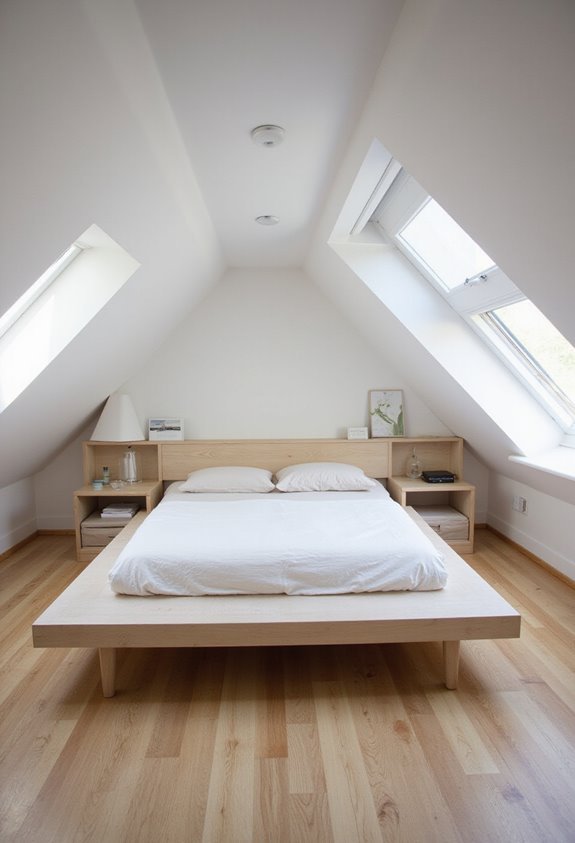
When you’re dealing with sloped ceilings and tight quarters, your furniture’s gotta be short—like your uncle who insists he’s “still growing.” Low-profile pieces are your secret weapon for making an attic bedroom feel less like a cave and more like an actual place where humans sleep.
Skip the towering dressers and bulky bed frames. Instead, grab platform beds sitting just 12-18 inches high. They’re basically fancy floor mattresses for grown-ups. Add a low nightstand—24 inches max—and you won’t bonk your head during midnight bathroom emergencies.
Wall-mounted shelves work magic too. They’re floating storage without eating floor space. Throw in some under-bed storage containers for clothes and winter gear.
Your attic’ll feel roomy, not like sardine territory.
Also read: Bedroom Chest of Drawers Decor | Styling & Design Ideas
Position Your Bed Against the Longest Wall
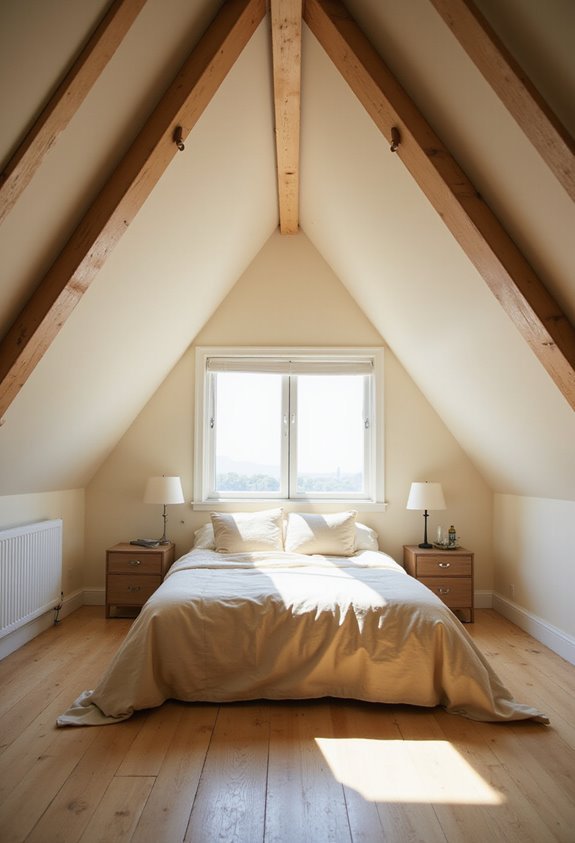
Now that you’ve got your furniture shrunk down to hobbit-friendly sizes, it’s time to figure out where to actually plop that bed.
Here’s the real deal about positioning your sleeping throne:
- Find your longest wall – Measure twice, place once. Your longest wall is your best friend here.
- Push that bed flush against it – No floating beds pretending they’re fancy. You’re maximizing every inch, remember?
- Leave walking space on the other side – Nobody wants to squeeze past the bed frame like they’re training for an obstacle course.
- Consider the sloped ceiling – Stick your headboard where the roof’s highest. Your head won’t bonk during midnight bathroom emergencies.
This simple move transforms your cramped attic into an actual functional bedroom. You’ll actually sleep better knowing you’ve outsmarted your space.
Install Recessed Lighting to Avoid Ceiling Clashes
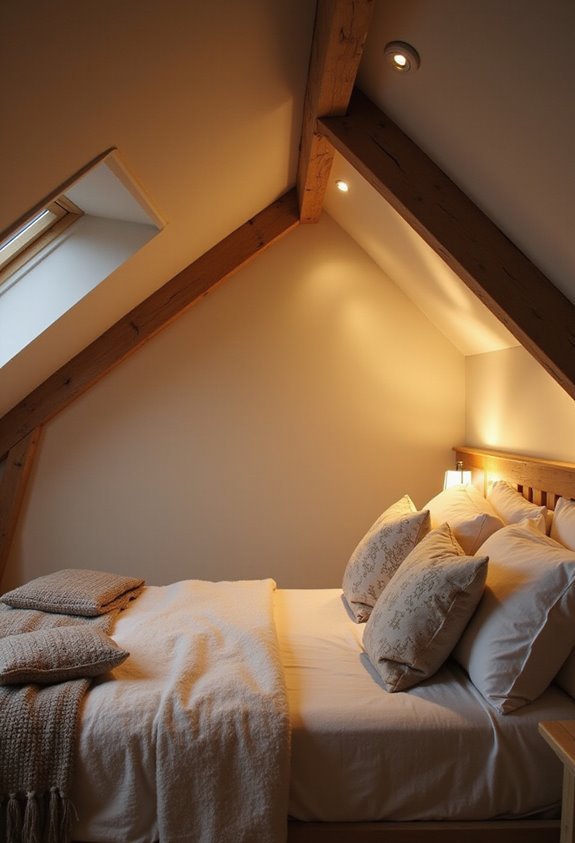
Most standard ceiling fixtures are basically head magnets in an attic bedroom—you’ll bonk your skull within the first week, guaranteed. Recessed lighting is your secret weapon here. These fixtures sit flush inside the ceiling, so they won’t ambush you during midnight bathroom trips. You’ll install them directly into the sloped areas where headroom gets sketchy. The 4-inch or 6-inch trim rings look sleek and modern too. They’re practically invisible but super functional. You can position several recessed lights across the room for even brightness without the painful encounters. Install dimmers and you’ve got mood lighting that won’t assault your forehead. Your skull will thank you, and your bedroom finally feels intentional instead of like an obstacle course.
Turn Sloped Ceilings Into Built-In Storage
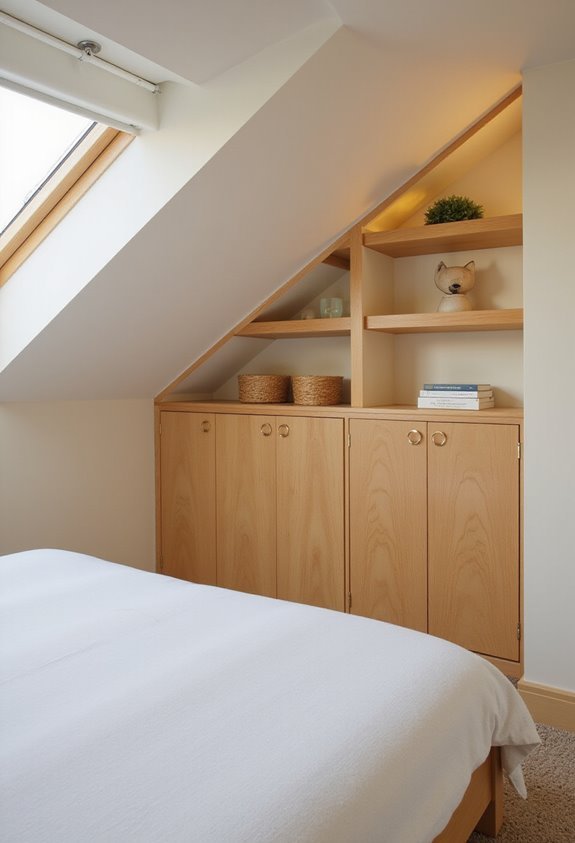
Since those sloped ceilings are basically useless for standing up straight, you might as well make them work for you—literally. Why waste that awkward space?
- Build shallow shelves along the slopes for books, plants, and decorative stuff you actually like.
- Add pull-out drawers under 3-foot heights to store seasonal clothes, extra bedding, and mystery boxes.
- Install low-profile cabinets with soft-close doors so you won’t bonk your head opening them.
- Use colorful baskets on shelves to corral clutter and add visual interest without screaming “storage unit.”
These built-ins transform dead space into functional real estate. You’re basically getting free square footage without renovation headaches. Your attic bedroom suddenly feels purposeful and organized. Plus, guests won’t wonder where you’re hiding things anymore.
Go Light on Colors to Make the Space Feel Bigger
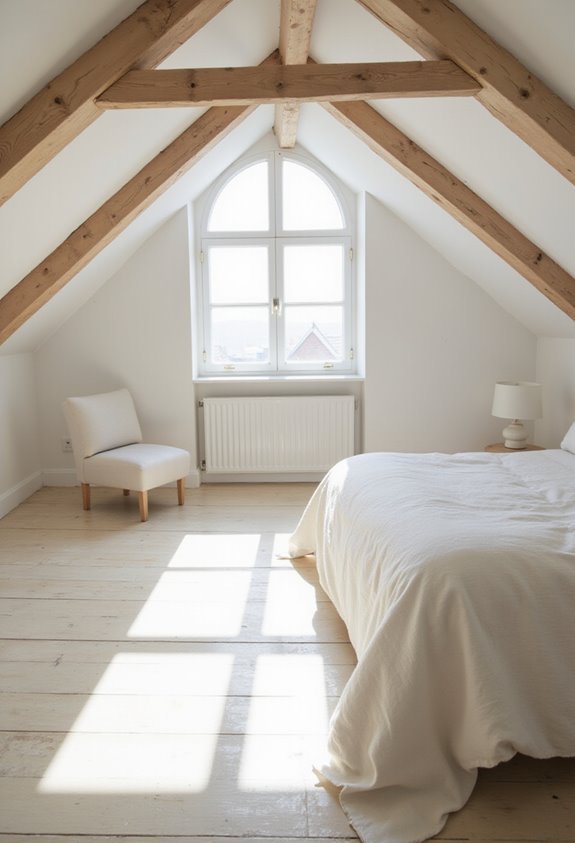
When you’ve got sloped ceilings squeezing in on you from all sides, dark colors aren’t your friend—they’ll make your bedroom feel like a cave you’re trapped in. Instead, go light and bright. Paint those walls soft white, pale cream, or gentle gray and suddenly your attic doesn’t feel so claustrophobic anymore. Light colors bounce sunlight around, making everything feel airier and bigger than it actually is. Your furniture should follow suit too. Choose light wood nightstands or white dressers instead of heavy dark pieces. Even your bedding matters—crisp white or pale blue sheets make a huge difference. The result? Your sloped bedroom transforms into a cozy retreat instead of a dungeon. Your head won’t hit the ceiling, but at least your mood will soar.
Create Zones for Multiple Functions
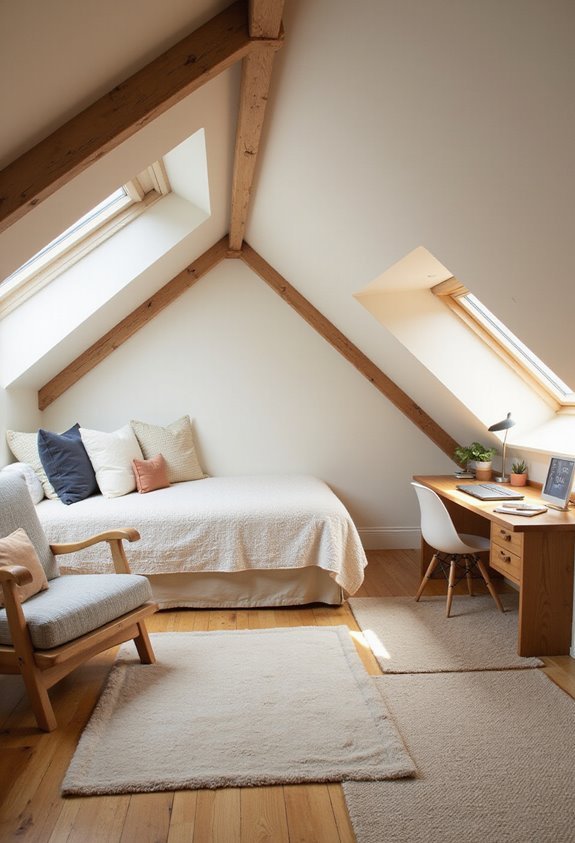
Your attic bedroom‘s got to pull double duty—it’s your sleeping spot, your work zone, and maybe your chill-out corner all rolled into one tiny space. You’ll want to carve out distinct areas so you’re not literally working in bed (we all know how that ends—productivity naps).
Here’s how to zone like a pro:
- Position your bed against the longest wall, creating a sleep sanctuary
- Stick a desk in the corner near natural light for focused work
- Plop a cozy chair with a small table for reading and relaxing
- Use area rugs to visually separate each zone without walls
These invisible boundaries trick your brain into thinking you’ve got more space. Your attic becomes a multi-purpose powerhouse instead of chaos central.
Evaluate Adding a Skylight or Dormer for Natural Light
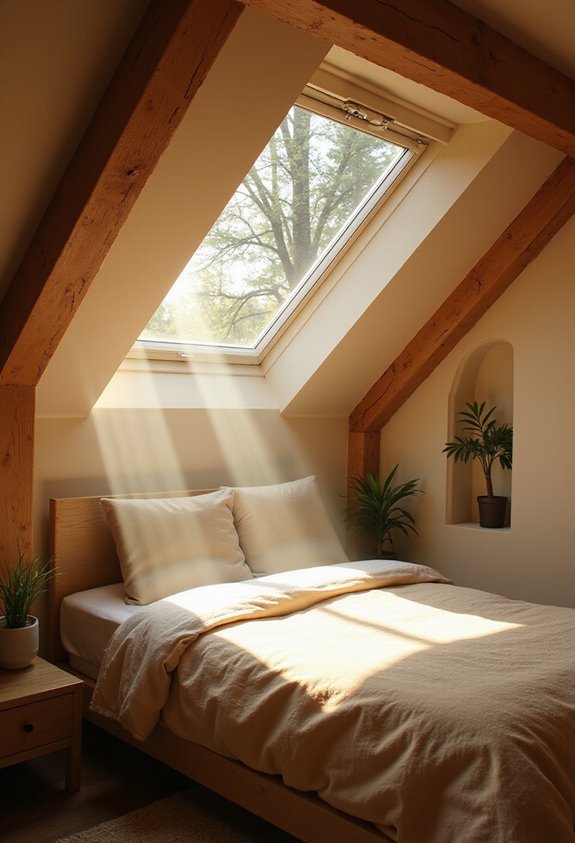
Natural light’s the secret sauce that transforms your attic from a dungeon into a livable space. You’ll actually want to spend time up there instead of just storing boxes and forgotten memories.
Skylights are your best friend here. They’re basically windows in the ceiling that flood your room with sunshine and make you forget you’re basically living in the roof. A standard 2-by-4-foot skylight costs around $500-$1,500 installed, and trust me, it’s worth every penny.
Dormers are the fancier option. They stick out from your roof and create extra wall space plus serious headroom. Your future self will thank you when you’re not constantly ducking like you’re dodging invisible ceiling beams.
Either choice beats relying on lamps alone. Natural light just hits different.
Install Floating Shelves on Angled Walls
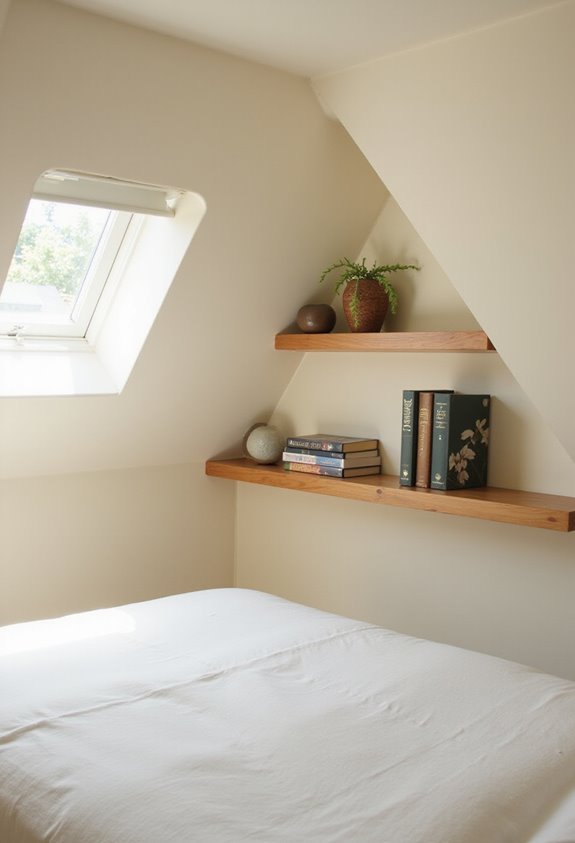
Most attic bedrooms have walls that slope like a ski run, and that’s actually perfect for floating shelves. You won’t bump your head as much, we promise.
- Mount shelves at varying heights – this creates visual interest and maximizes your oddly-shaped space
- Use 12-inch deep shelves – deep enough for books and plants without blocking your escape route
- Paint shelves white or soft gray – they’ll blend with sloped walls instead of screaming “look at me”
- Load them strategically – lighter items up high, heavier ones lower, so nothing crashes on your face at night
Floating shelves turn those awkward angles into your secret advantage. You’re basically creating storage that doesn’t eat floor space. Your attic bedroom suddenly feels organized, stylish, and intentional instead of like a storage closet where you sleep.
Use Vertical Storage to Compensate for Floor Space
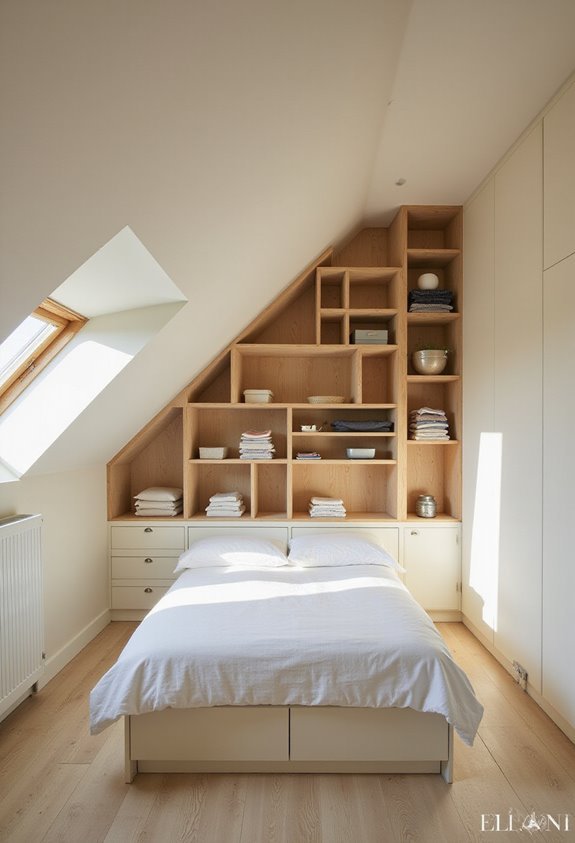
Attic bedrooms aren’t exactly swimming in floor space, and that’s where vertical storage becomes your best friend. You’ll want to stack shelves from floor to ceiling, basically turning your walls into storage superheroes. Tall, narrow bookcases work great and won’t make you feel like you’re living in a shoebox. Mount wall-mounted cabinets up high—seriously, utilize every inch above your head. Hanging organizers on the back of your door? Game changer. They hold clothes, shoes, and random stuff you forgot you owned. Use clear plastic bins so you can actually see what’s inside without playing treasure hunt. Your attic bedroom might be cozy, but with smart vertical storage, it’ll feel spacious and organized. No more tripping over piles of junk!
Select a Low-Pile or Flat Weave Rug
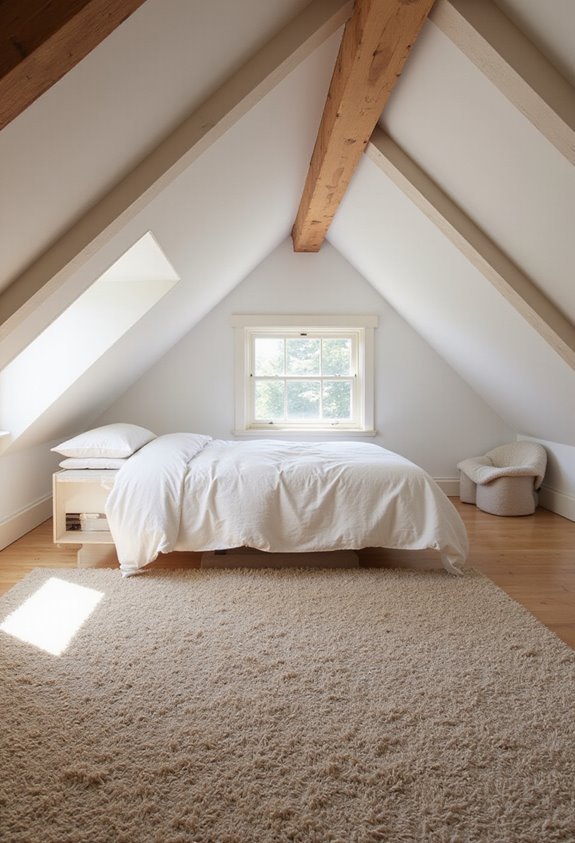
You’ve tackled the walls with storage—nice work! Now let’s talk about your feet, because attic bedrooms need rugs that won’t trip you up or make you bump your head harder.
Here’s why low-pile or flat weave rugs rock:
- They’re short and sneaky – Low-pile carpets sit flat, so you won’t stub your toes or stumble like you’ve had one too many root beers.
- Easy to vacuum – No weird fibers hiding dust bunnies the size of actual bunnies underneath.
- Perfect for sloped ceilings – They won’t add bulk when you’re already fighting tight spaces.
- Won’t wrinkle – Flat weaves stay put, even when you’re running around like you forgot to wear pants.
Choose neutral colors or soft patterns. They’ll make your cozy corner feel bigger and won’t clash with your storage walls.
Mount a Wall-Mounted Desk Under Eaves
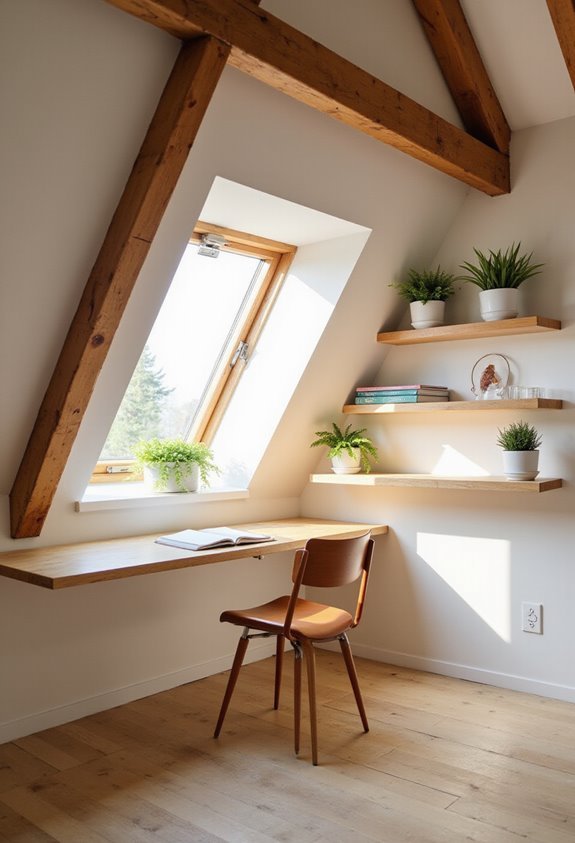
When you’ve got sloped ceilings cramping your style, a wall-mounted desk is your secret weapon. You’ll free up precious floor space and actually use that awkward under-eave real estate. Mount a sleek 36-by-18-inch desk at a comfortable height—around 30 inches from the floor works great. This setup keeps your workspace tucked away without eating your bedroom’s already-limited square footage.
Pick a desk in white, natural wood, or soft gray to match your aesthetic. Add a small task light above it, and you’re golden. You’ll have a dedicated spot for homework, work, or hobbies without sacrificing room to move around. Plus, you won’t bang your head every time you stand up. Your future self’ll thank you for this smart move.
Turn Unused Corners Into a Cozy Reading Spot
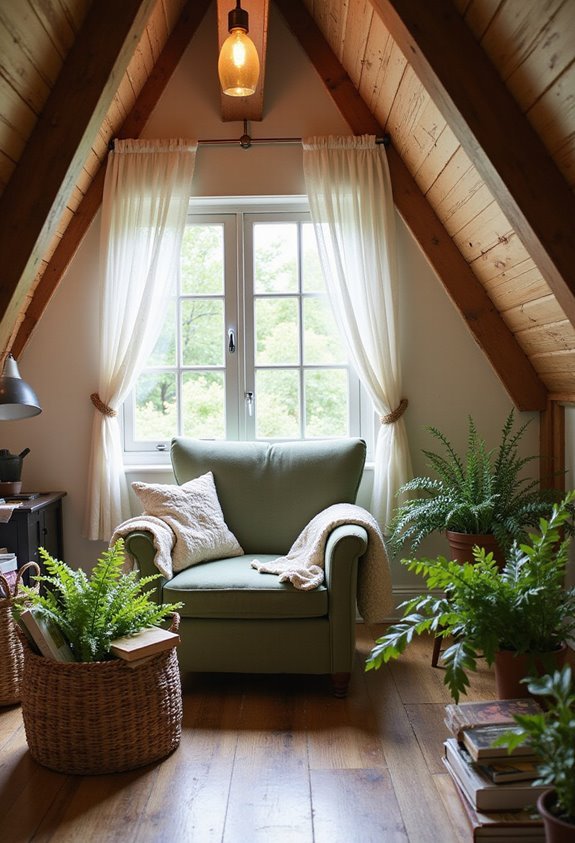
Now that you’ve tackled that awkward under-eave workspace, let’s talk about the corners that’re still just sitting there looking lonely. Those weird angled spaces? They’re actually perfect for creating your own cozy hideaway.
Here’s how to transform those forgotten spots:
- Snag a low-profile armchair or cushioned seat that fits snugly in your corner
- Add soft lighting with a small lamp or string lights to banish the shadows
- Pile up some throw pillows and a chunky blanket for maximum comfort
- Install floating shelves above for your books and a hot chocolate mug
Suddenly you’ve got the ultimate reading nook. Your attic corners went from “eyesore” to “eye-winning.” You’ll disappear into that spot and forget the real world exists. Plus, your bookshelves finally have a purpose besides collecting dust.
Use Paint to Highlight Your Ceiling’s Best Features
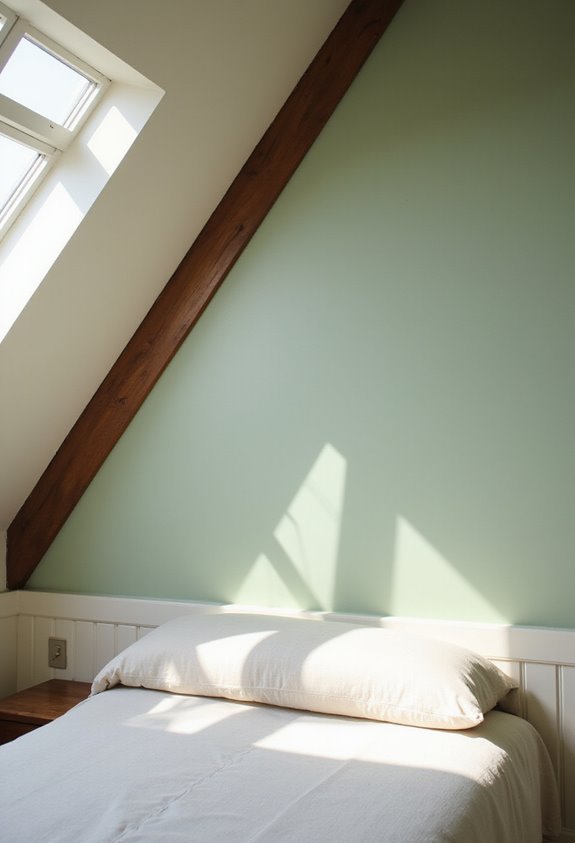
Your attic’s got some seriously cool ceiling features hiding under all that boring beige—exposed beams, angles, peaks, the whole dramatic setup. Paint those babies a deep navy or charcoal, and suddenly your room transforms. The darker colors make architectural elements pop like they’re celebrities at a party. Try painting beams one shade and the sloped ceiling another. This creates visual interest without making you dizzy. Light colors work too if you want an airy vibe. A soft gray or cream keeps things bright but still highlights those angles. You’re basically giving your ceiling a makeover that costs less than fancy furniture. Strategic paint choices turn boring architecture into a design statement. Your attic bedroom’ll look intentional, not accidental. That’s the real peak of decorating success.
Use Mirrors Strategically for Depth and Brightness
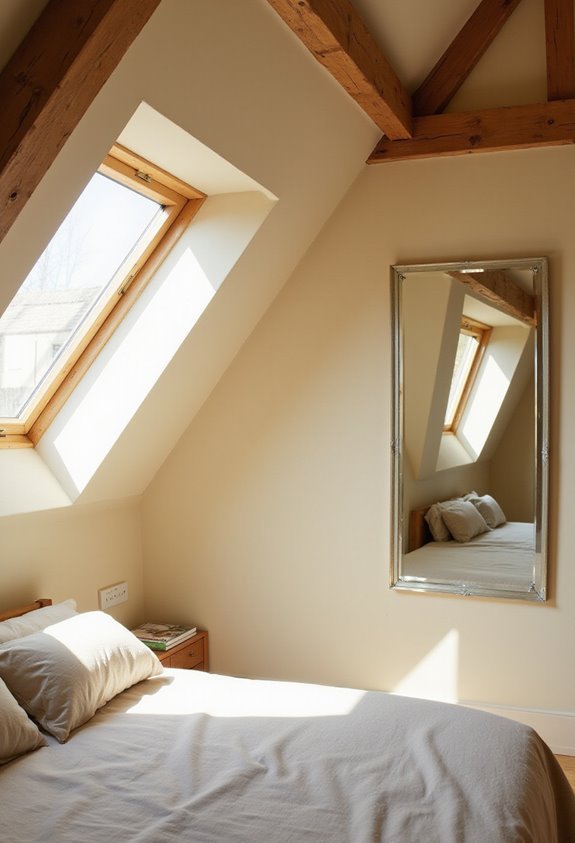
Mirrors are basically magic wands for cramped attic bedrooms, and they’re way cheaper than knocking down walls. You’ll be amazed at what happens when you use them right.
- Place a large mirror opposite your window to bounce natural light around the room like a disco ball (minus the embarrassing dancing).
- Lean tall mirrors against sloped walls to create the illusion your ceiling isn’t plotting against you.
- Mount smaller mirrors on angled surfaces to reflect light into dark corners that’ve been holding grudges.
- Group mirrors in gold or silver frames for visual interest and extra brightness without installing actual sunshine.
Your attic suddenly feels twice as big and way less like a dungeon. That’s the mirror magic right there!
Select a Neutral Headboard as Your Visual Anchor
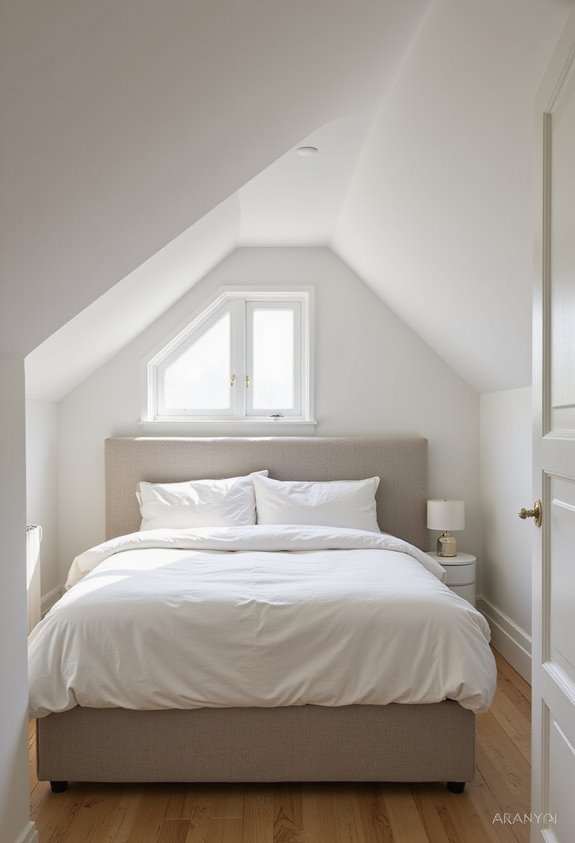
While mirrors bounce light around like tiny suns, your headboard’s doing the real heavy lifting—it’s the first thing your eyes land on when you wake up, and it sets the whole vibe for your space. Pick a neutral color like soft gray, warm beige, or creamy white. These shades won’t fight with your sloped ceilings or make your room feel cramped. A 48-inch-wide upholstered headboard works great for most attic bedrooms. You’ll want something simple and calming because, honestly, mornings are hard enough without your headboard screaming at you. Neutral tones also let other elements shine—your funky lamp, colorful pillows, or that quirky art piece you love. Your headboard becomes the quiet friend everyone trusts.
Add Adjustable Lights for Reading, Working, and Relaxing
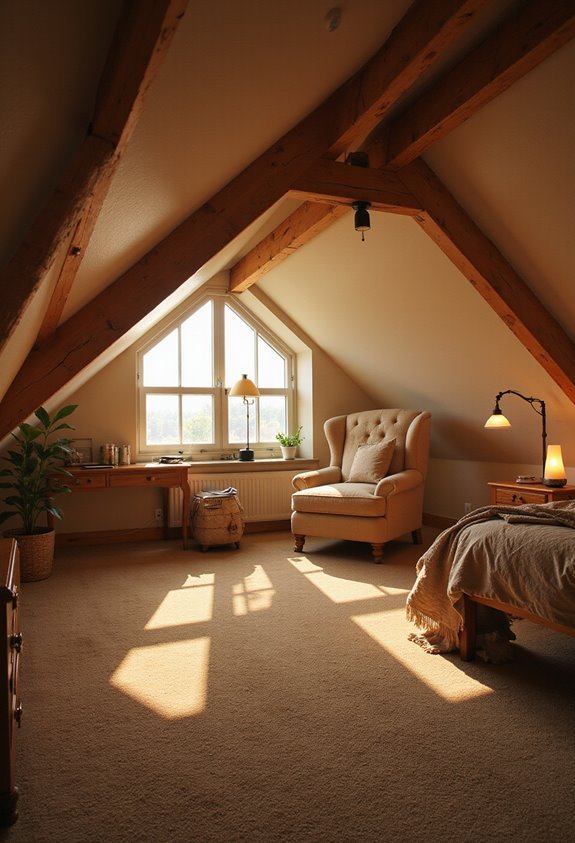
Because attic bedrooms are basically caves with skylights, you’ll need lights that actually work for you. Your eyes will thank you, and your neck won’t hate you for squinting anymore.
- Install bedside task lights with dimmer switches so you can read without blinding yourself at midnight
- Add a desk lamp if you work from home, positioning it 15 inches above your surface
- Use warm-toned bulbs (2700K) that won’t keep you wired when you’re trying to sleep
- Mount wall sconces on either side of your headboard for balanced, flattering light
Adjustable lighting transforms your attic from dungeon vibes to actually functional space. You’re basically installing a personal lighting designer without the hefty price tag. Your future self will be genuinely grateful every single night.
Hide Extra Storage Under Your Bed
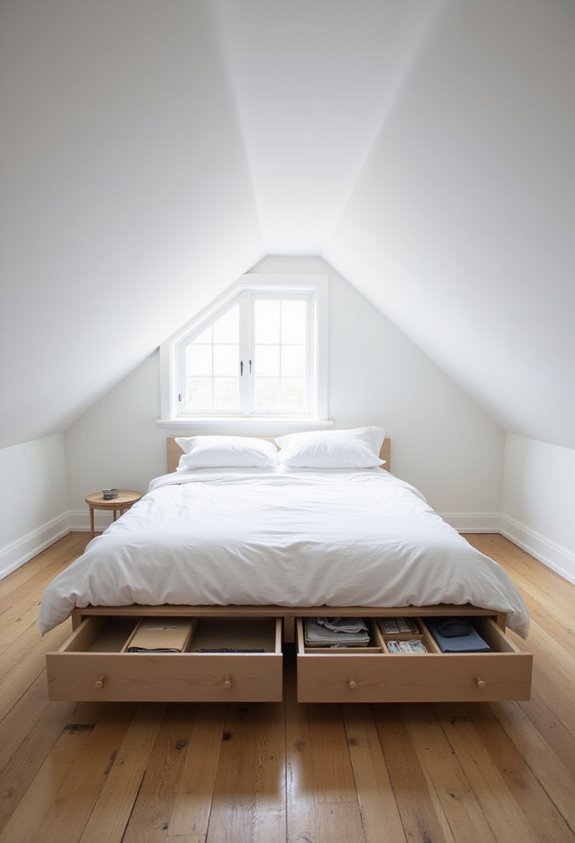
How much stuff are you hoarding under there already? Probably enough to start your own museum of forgotten socks and mystery items. But here’s the thing—that wasted space is basically free real estate begging for organization.
Grab some flat storage containers that slide smoothly under your bed frame. Clear plastic bins work great because you’ll actually remember what’s inside them. Measure your space first—most beds fit containers about 12 inches tall and 3 feet long underneath.
Store off-season clothes, extra blankets, or holiday decorations down there. Label everything with a permanent marker so future-you doesn’t play archaeological dig through dusty boxes.
Just don’t create a dust monster apartment under there. Your lungs’ll thank you. This hack transforms that dark void into smart, hidden storage that keeps your attic bedroom clutter-free and surprisingly functional.
Add Textiles and Layers for Cozy Warmth
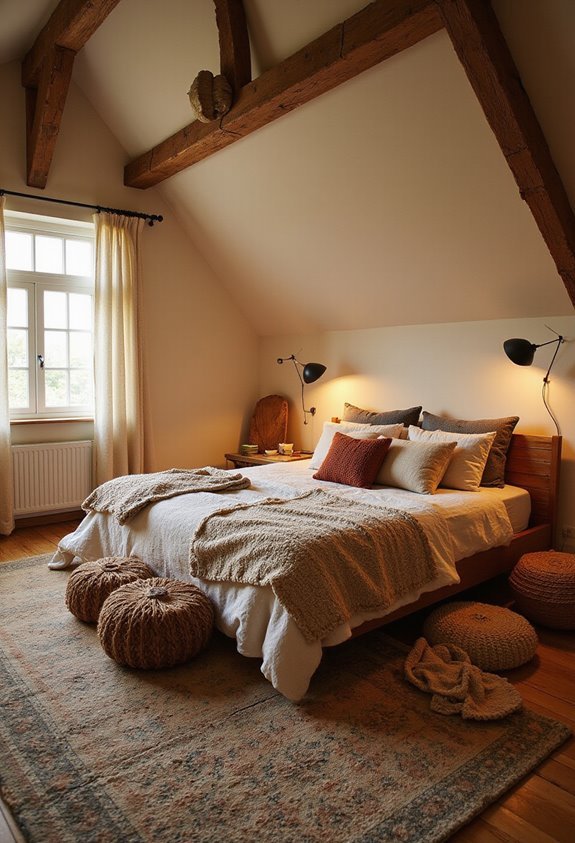
Unless you’re a penguin, your attic bedroom’s probably chilly, and that’s where textiles come in as your new best friend. Seriously, layers are your secret weapon against turning into a human popsicle at night.
Here’s what’ll transform your space:
- Throw blankets in cozy colors like cream or burgundy—drape them over your bed or chair for instant warmth and style
- Plush rugs under your feet so you’re not freezing when you stumble to the bathroom at 2 AM
- Quality bedding with multiple layers—sheets, comforter, duvet cover—creating a cocoon you’ll never want to leave
- Window curtains in thick fabrics that trap heat and block drafts sneaking through cracks
You’re basically building a fort for adults. Your future self will thank you when you’re not shivering like a wet dog all winter long.
Keep Your Bedroom Minimal to Prevent Visual Clutter
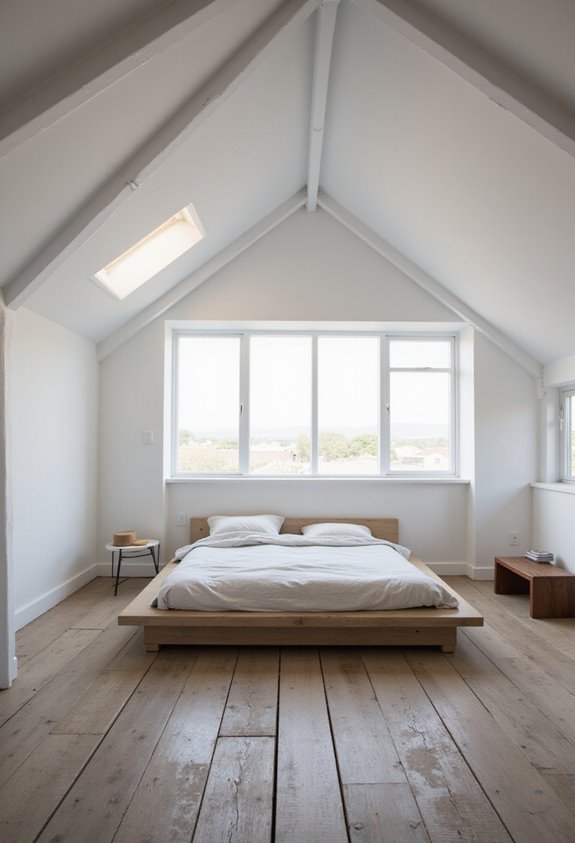
While you’re piling on all those gorgeous blankets and rugs, here’s the plot twist: too much stuff crammed into your attic bedroom will make it feel like a claustrophobic closet instead of a cozy retreat. So here’s the deal—less is actually more up there.
Pick your favorite pieces and ditch the rest. That wonky lamp from 2005? Gone. Extra pillows collecting dust? Donate them. Keep only what you truly love and actually use.
Stick to a simple color scheme—maybe soft whites and warm grays with one accent color. This makes your space breathe instead of suffocate you.
Leave floor space open. You’ll thank yourself when you’re not stubbing your toes on random furniture at 2 a.m. A minimal room feels bigger, calmer, and honestly, way less haunted.
Choose Adjustable Window Treatments for Light Control
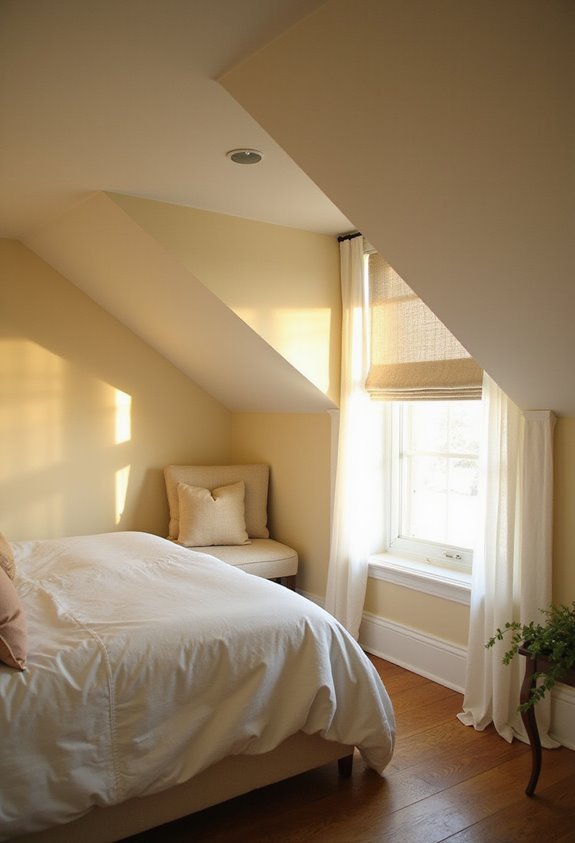
Attic bedrooms and windows are basically a love-hate relationship—you’ve got slanted ceilings blocking half your natural light, but then the sun decides to blast through at 5 a.m. like it’s got a personal vendetta against your sleep schedule. That’s where adjustable window treatments come in clutch.
- Blackout roller shades block 99% of light and heat, keeping your room dark and cool
- Cellular shades trap air and insulate your space, saving money on energy bills
- Plantation shutters let you control exactly how much light sneaks in through those awkward angles
- Layered curtains plus sheer panels give you flexibility for mood and privacy
Mix and match these options based on your attic’s weird window shapes. You’ll actually sleep past sunrise now.
Frequently Asked Questions
What Is the Best Way to Improve Air Circulation and Ventilation in an Attic Bedroom?
You’ll improve airflow by installing ceiling fans, opening windows strategically, and adding roof vents. You should also seal air leaks, use portable fans, and guarantee your HVAC system reaches the space. You can’t overlook insulation gaps—they’ll compromise ventilation and temperature control immensely.
How Can I Soundproof an Attic Bedroom to Reduce Noise From Outside?
You’ll effectively soundproof your attic bedroom by installing acoustic panels on walls, adding weatherstripping around windows and doors, laying thick carpeting, and hanging heavy curtains. You can also seal air gaps with caulk to block outside noise.
What Temperature Control Solutions Work Best for Attic Bedrooms?
You’ll love turning your attic into an easy-bake oven! Seriously though, you’ll want proper insulation, a ceiling fan, and a mini-split AC unit. You can also install roof vents and thermal curtains to regulate temperatures effectively year-round.
How Do I Prevent Moisture and Condensation Problems in Attic Spaces?
You’ll prevent moisture and condensation by installing proper ventilation, using vapor barriers, and maintaining adequate insulation. You should also guarantee your gutters drain correctly and consider a dehumidifier to control humidity levels in your attic bedroom.
What Building Codes or Permits Are Required for Attic Bedroom Conversions?
You’ll need to navigate a maze of building codes before converting your attic into a bedroom. Check local permits requiring proper egress windows, ceiling height minimums, ventilation standards, and fire safety measures. You shouldn’t skip these regulations—they’re your home’s safety foundation.
Conclusion
You’ve now got the blueprint to transform your cramped attic into a peaceful sanctuary. Think of your space like a blank canvas waiting for your personal masterpiece. Low furniture, smart lighting, and clever storage turn awkward angles into your secret advantage. You’ll create a cozy retreat that doesn’t feel like you’re sleeping in a coffin. Your attic bedroom’s about to become your favorite room—no more bumping your head on dreams.