

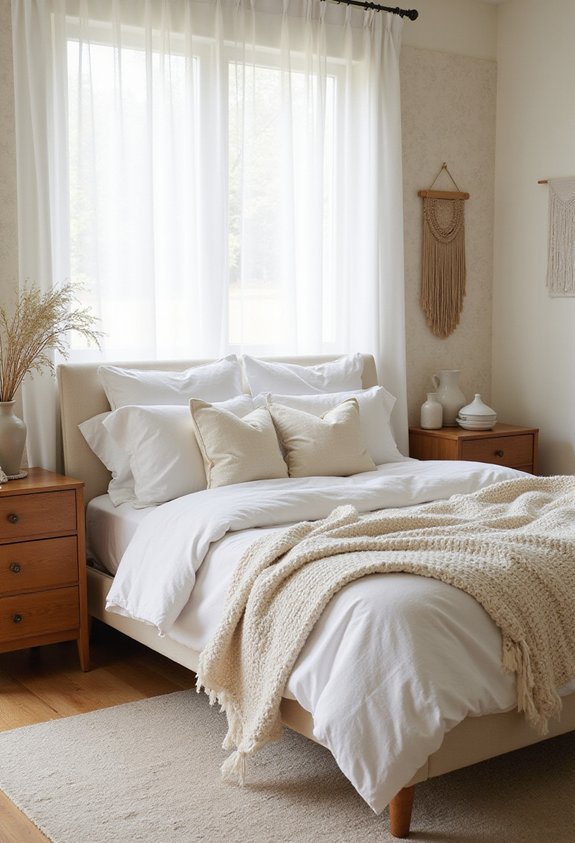
White walls seemed like the safest choice when you first painted your bedroom. Nothing to regret, nothing too bold, nothing that would demand too much attention. But living with white taught you something unexpected. It’s not blank at all. It’s honest. Every shadow shows. Every object matters more because there’s nothing else competing for attention. White doesn’t hide anything. It just lets you see clearly.
When you stop treating white as neutral and start seeing it as a choice, your bedroom transforms. The texture of your bedding becomes visible. Natural light moves across the walls in ways you never noticed before. Objects you thought were ordinary suddenly look intentional. White gives everything else permission to be itself without apology or decoration hiding what’s real underneath.
What you realize living with white is that simplicity isn’t about having less. It’s about creating space for what actually matters. Your bedroom becomes calmer. Your mind settles faster. Nothing feels cluttered because nothing is fighting for your eye. White creates room to breathe, to think, to simply exist without distraction or noise filling every corner.
Layer Varying Shades of White and Cream
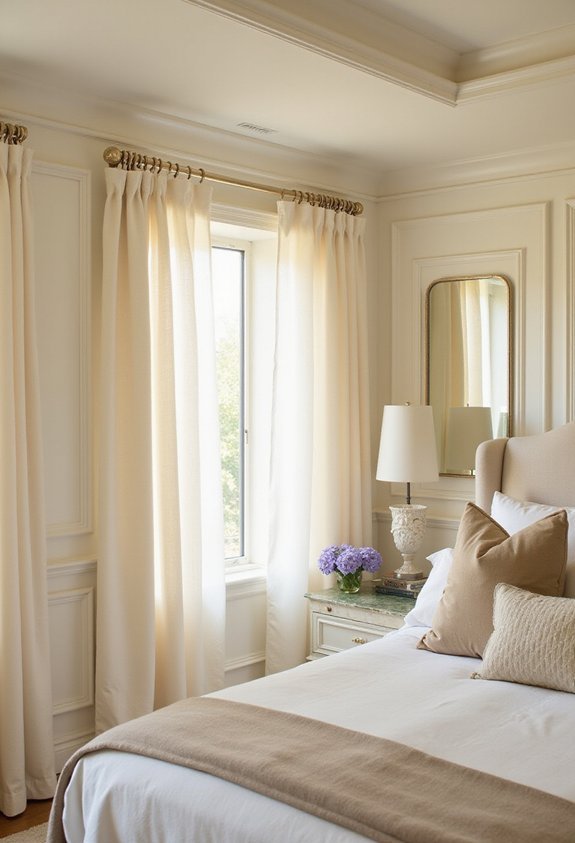
While an all-white bedroom might seem monotonous, layering different shades of white and cream actually creates depth and visual interest. You’ll find that ivory, ecru, and off-white work beautifully together when combined strategically.
Start by painting your walls a soft white base, then introduce cream-toned bedding and accessories. Mix in textured elements like a chunky knit throw or linen curtains to break up solid surfaces. Add white furniture pieces in varying finishes—matte, glossy, or weathered—to catch light differently.
Don’t overlook the power of subtle color variations in your artwork, pillows, and rugs. These nuanced shifts prevent your space from feeling flat or cold. The layered approach transforms your white bedroom into a sophisticated, inviting sanctuary that’s anything but bland.
Also read: 42 Natural Bedroom Decor Ideas for an Organic, Earthy Vibe
Mix Matte and Glossy Finishes for Visual Interest
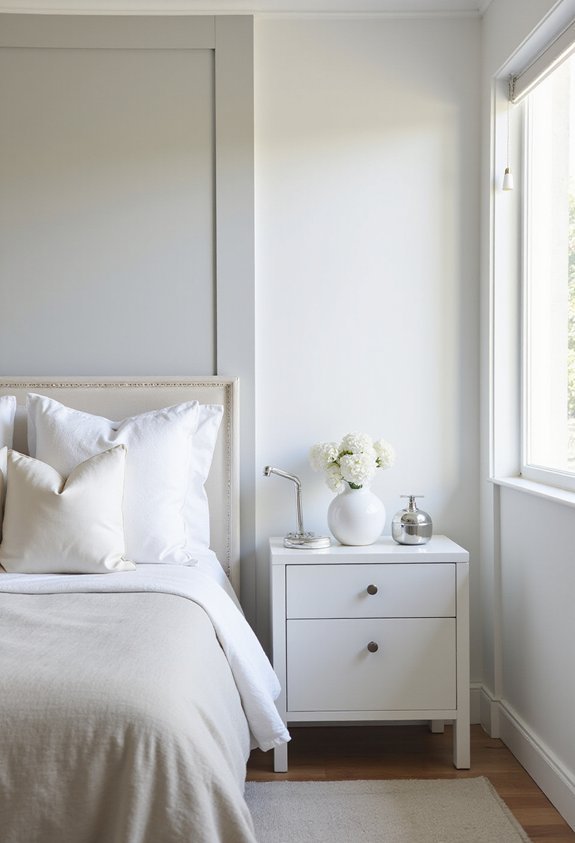
Beyond layering different shades, you’ll want to play with surface finishes to amplify that visual depth. Combining matte and glossy textures creates dynamic contrast that prevents your white bedroom from feeling flat or monotonous.
Consider pairing a matte white wall with glossy white trim or a shiny white headboard. Incorporate satin-finish bedding alongside matte upholstered furniture. These textural variations catch light differently, adding dimension and movement throughout the space.
Experiment with various finishes on accessories too: a high-gloss nightstand, matte ceramic lamps, or a polished metal mirror. This mix draws the eye around the room naturally, making your monochromatic scheme feel intentional and sophisticated rather than stark or sterile.
Add Texture Through Bedding and Throws
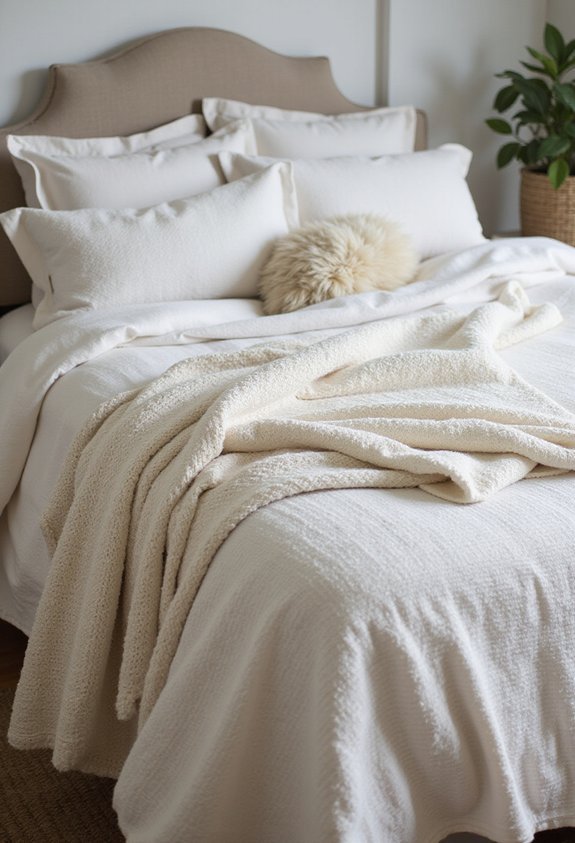
Since surface finishes alone can’t fully transform your white bedroom, layering different fabric textures becomes your next essential tool. You’ll create depth by combining crisp cotton sheets with chunky knit blankets, linen duvet covers, and velvet throw pillows. Each fabric catches light differently, adding visual complexity to your monochromatic palette.
Consider layering a quilted bedspread over your base bedding, then drape a textured throw across the foot of your bed. Mix smooth silk pillowcases with rougher linen accents. This tactile variety keeps your white bedroom from feeling flat or sterile.
You’re not limited to traditional textures either. Incorporate faux fur, macramé, or cable-knit elements strategically. These unexpected additions elevate your space while maintaining the clean, cohesive white aesthetic you’re cultivating throughout the room.
Incorporate Natural Wood Accents
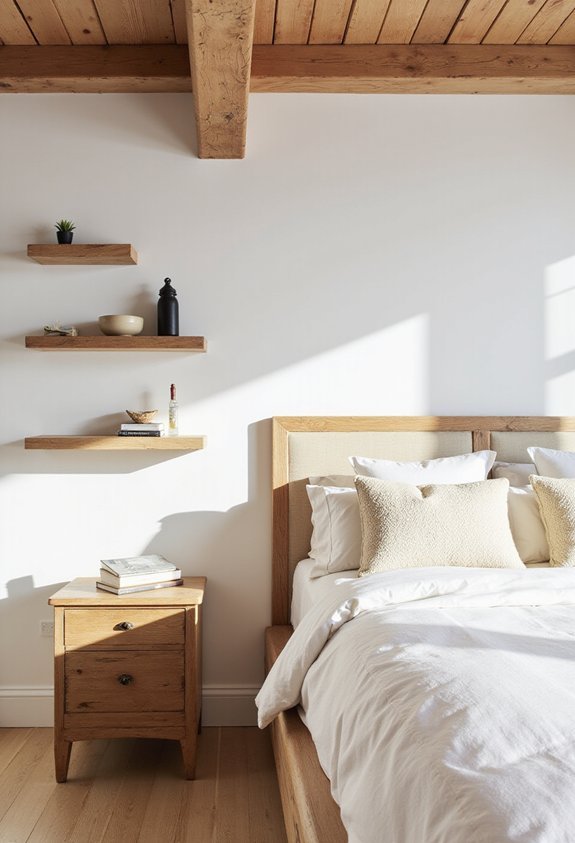
To prevent your white bedroom from feeling cold or impersonal, you’ll want to introduce natural wood accents that warm up the space and ground your design scheme. Wood elements create contrast and add visual interest against crisp white walls and furnishings.
Consider incorporating a wooden bed frame, nightstands, or a statement headboard. These pieces serve as focal points while maintaining the room’s serene aesthetic. Wooden dressers, shelving units, or accent chairs work equally well for adding warmth.
Don’t overlook smaller touches: wooden picture frames, decorative boxes, or a carved mirror can subtly enhance your design. Reclaimed or weathered wood introduces character and authenticity to your space.
The natural grain and organic texture of wood create a balanced, inviting bedroom that feels both sophisticated and comfortable.
Choose White Furniture With Statement Silhouettes
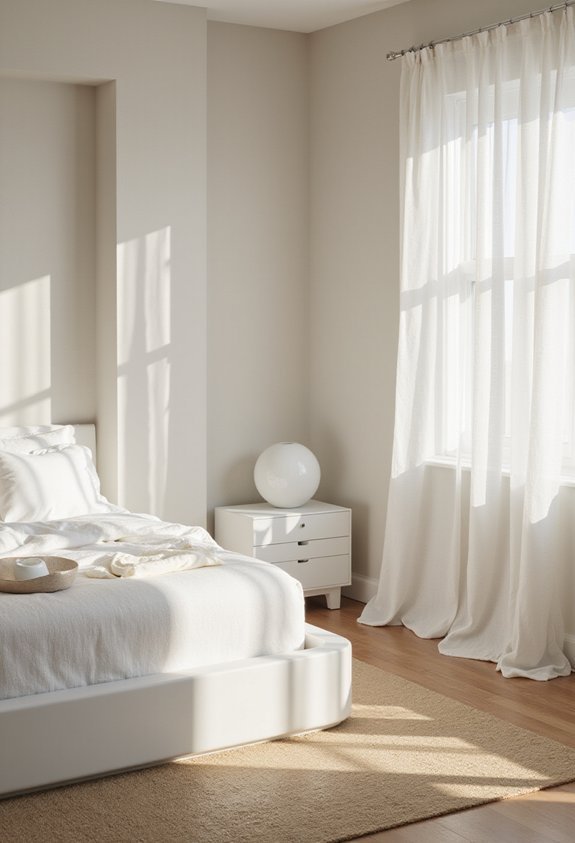
White furniture with distinctive shapes and silhouettes can elevate your bedroom’s design while maintaining the color scheme’s calm sophistication. Rather than selecting basic, boxy pieces, you’ll want to opt for furniture that commands attention through its unique form.
Consider a white upholstered bed with curved headboard details or a dresser featuring geometric cutouts. An ornate white nightstand or a sculptural white accent chair introduces visual interest without introducing competing colors.
These statement pieces create focal points that anchor your room’s layout and prevent the all-white palette from feeling monotonous. The interplay between the furniture’s bold silhouettes and the neutral color palette generates dynamic contrast.
When you choose furniture with personality, you’re transforming white from simply a color choice into a sophisticated design strategy.
Layer Throw Pillows in Complementary Textures

While white furniture creates a sophisticated foundation, you’ll need layered throw pillows to add depth and tactile interest to your bed or seating areas. Mix varied textures like linen, velvet, faux fur, and chunky knit to create visual and sensory contrast. Combine smooth cotton with nubby wool, or pair silky satin against woven linen for compelling juxtaposition.
Arrange pillows in odd numbers—three, five, or seven—for a naturally balanced look. Layer smaller decorative pillows in front of larger supportive ones. Incorporate subtle color variations: ivory, cream, off-white, and warm beige create sophisticated dimension without abandoning your monochromatic scheme.
This textural approach transforms white bedding from plain to polished, inviting you to sink in while maintaining the serene aesthetic you’re cultivating.
Use Linen and Cotton Bedding for Breathable Comfort
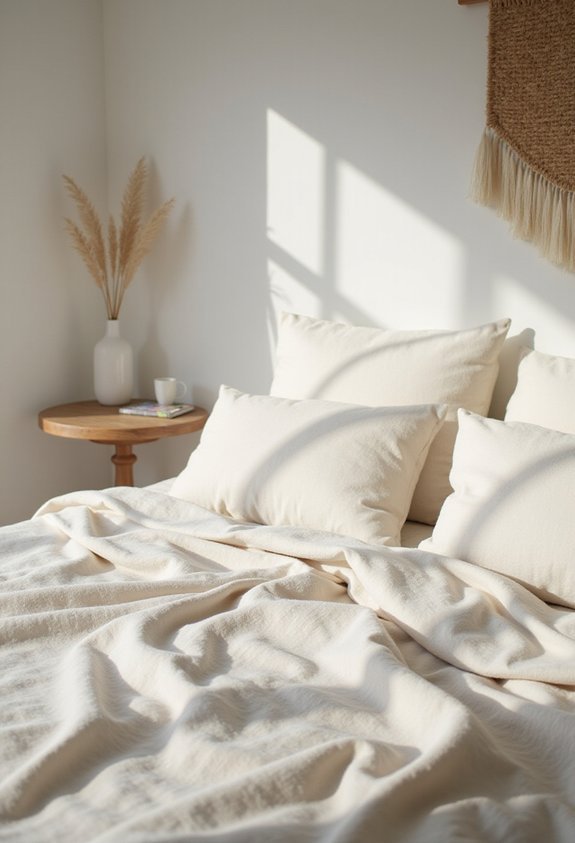
Since you’ve established a sophisticated aesthetic with layered textures, you’ll want bedding that complements your design while prioritizing comfort and functionality. Linen and cotton are your ideal choices for a white bedroom.
Linen offers natural breathability and develops a beautifully relaxed texture over time, enhancing your room’s effortless elegance. Cotton provides softness and durability, making it practical for everyday use. Consider high-thread-count options to guarantee a luxurious feel without sacrificing breathability.
These natural fibers regulate temperature effectively, keeping you cool in summer and warm in winter. They’re also hypoallergenic, making them suitable for sensitive skin. Look for quality blends combining linen and cotton to maximize both comfort and longevity.
Investing in quality bedding secures your white bedroom remains both inviting and comfortable while maintaining its sophisticated aesthetic.
Layer Woven Natural Fibers for Organic Texture
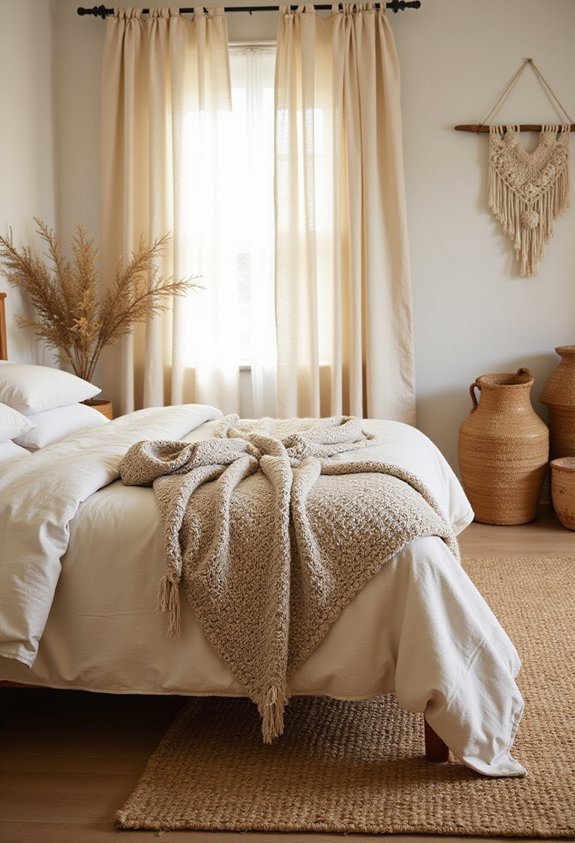
To elevate your white bedroom’s visual interest, layer woven natural fibers that introduce depth and tactile appeal. Consider combining linen sheets with a chunky knit throw blanket across your bed’s foot. Add a jute area rug beneath your nightstand or at the room’s center to ground the space.
Incorporate woven wall hangings or macramé accents above your headboard for vertical texture. These organic materials catch light differently, creating subtle visual movement that prevents your all-white room from feeling flat.
Mix varying weave densities—rough sisal alongside soft cotton, smooth linen beside nubby wool. This contrast keeps your aesthetic dynamic while maintaining the cohesive white palette. Natural fibers also breathe better than synthetics, enhancing both comfort and air circulation throughout your sanctuary.
Incorporate Vintage or Antique Finds
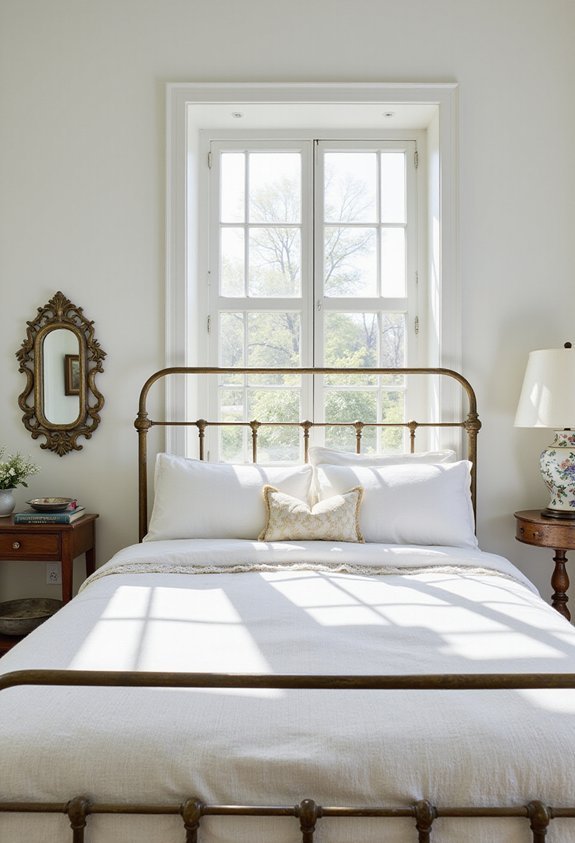
Vintage and antique pieces add character and history to your white bedroom, breaking up the minimalism with curated charm. You’ll find that a weathered wooden dresser or ornate brass mirror creates visual interest without compromising your serene aesthetic.
Hunt for pieces at local thrift stores, estate sales, or antique markets. Look for items with unique patina—distressed frames, vintage linens, or old glass bottles work beautifully alongside white walls.
Mix eras intentionally. Pair a mid-century nightstand with a Victorian-era mirror, or display antique books on floating shelves. These layered selections tell your story and prevent your room from feeling sterile or impersonal.
The key is selecting pieces you genuinely love, ensuring authenticity shines through your design choices.
Add Marble or Stone Elements

Marble and stone bring natural elegance and a touch of luxury to your white bedroom without disrupting the calm atmosphere you’ve cultivated. Consider incorporating a marble nightstand, dresser, or accent table that catches light beautifully and adds visual interest. You can also install a stone feature wall behind your bed for dramatic impact, or introduce marble through smaller accessories like picture frames, lamps, or decorative objects.
Stone elements work particularly well in bathrooms adjoining bedrooms, creating a cohesive spa-like aesthetic. Their cool, smooth surfaces contrast pleasingly with soft textiles, while their neutral tones complement white perfectly. These materials age gracefully, developing unique patinas that enhance character over time. The natural variations in veining and texture guarantee your bedroom remains visually engaging while maintaining the serene quality you’re after.
Display Collections to Tell Your Story
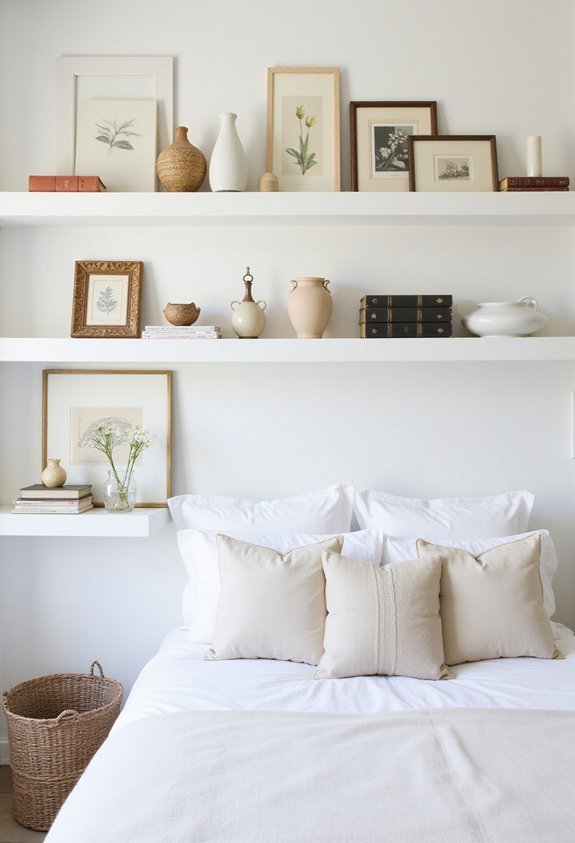
While marble and stone add visual sophistication, your personal collections transform a white bedroom into a gallery of meaningful moments. Display items that genuinely reflect your interests—vintage books, art prints, travel souvenirs, or collectible figurines. Arrange them on floating shelves, in glass cabinets, or on your nightstand to create visual interest without cluttering your serene space.
Curate thoughtfully. Choose pieces that spark joy and tell your story rather than accumulating randomly. Group similar items together for cohesion. Mix heights and textures to maintain visual balance against your white backdrop.
Your collections humanize the room, transforming it from sterile to intimate. Each displayed item becomes a conversation starter and a personal touchstone that reminds you why you love your sanctuary.
Use Wallpaper With Subtle Patterns
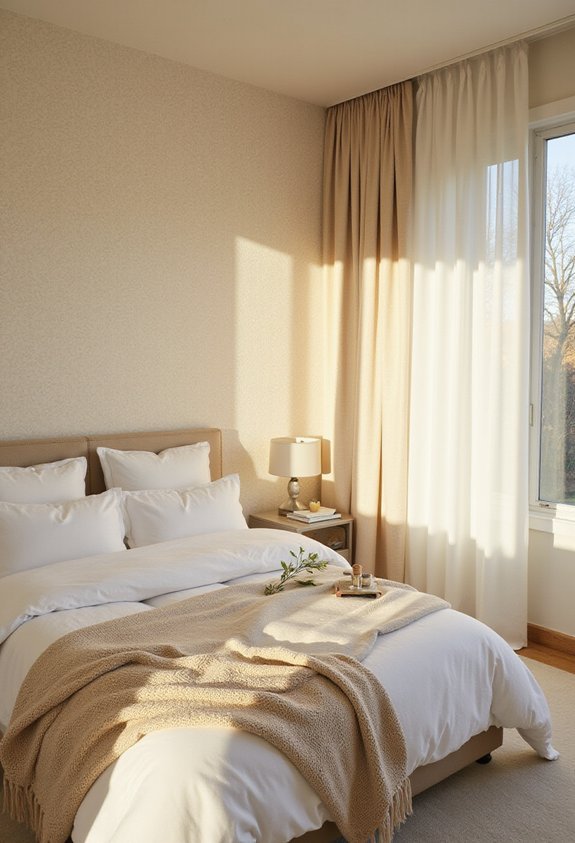
If you’re seeking depth without abandoning your white color scheme, subtle patterned wallpaper offers the perfect solution. Delicate geometric designs, soft florals, or understated textures add visual interest while maintaining the serene atmosphere you’ve cultivated.
Consider wallpapers featuring embossed surfaces that catch light beautifully, creating dimension through shadow and shine. Damask patterns in off-white tones provide sophistication without overwhelming the space. Alternatively, choose papers with thin stripes, tiny dots, or minimalist line drawings for understated elegance.
Apply patterned wallpaper to a single accent wall behind your bed to draw focus without saturating the room. You’ll anchor your bedroom design while preserving the tranquility that makes white bedrooms so appealing. This approach transforms your space from plain to polished effortlessly.
Install Shiplap or Paneled Walls

Shiplap and paneled walls add architectural character to your white bedroom while maintaining its clean aesthetic. You’ll create visual interest through texture and dimension without introducing color clutter.
Consider installing shiplap horizontally across one accent wall to draw the eye upward and expand the space visually. Alternatively, you can panel the entire room for a cohesive, sophisticated look that feels timeless.
Both options work beautifully in white, providing subtle shadows and depth that prevent your bedroom from feeling flat or sterile. You might also paint your shiplap or paneling in off-white or cream tones to add warmth while preserving the monochromatic scheme.
These architectural elements pair excellently with your patterned wallpaper, creating a layered design that’s engaging yet serene—the perfect balance for a bedroom sanctuary.
Add a Feature Headboard With Texture
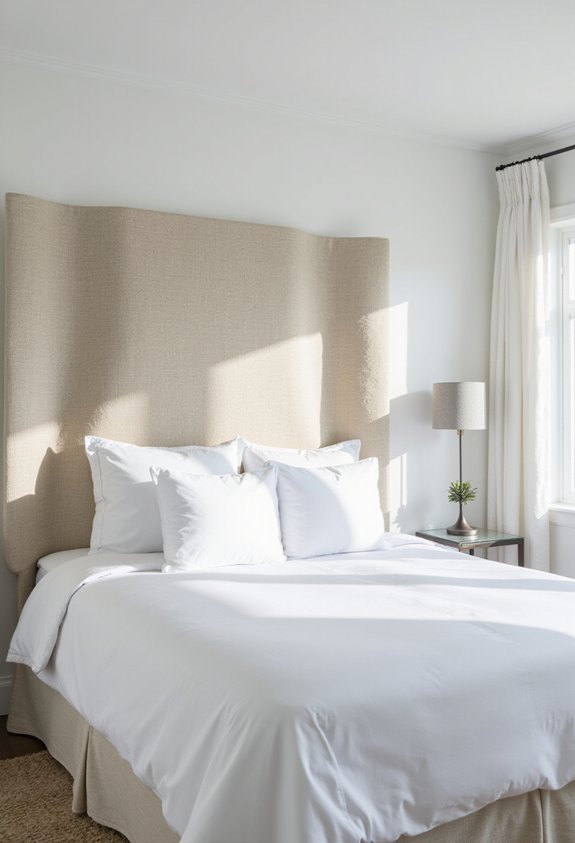
Since your walls already feature architectural depth, a textured headboard becomes the natural focal point of your white bedroom. You’ll want to choose materials that add visual interest without overwhelming the space. Consider upholstered headboards in linen, velvet, or quilted fabric for subtle sophistication. Alternatively, you can install wooden slat designs, woven rattan, or shiplap panels for organic texture. These options create dimension while maintaining the serene aesthetic you’re cultivating.
A textured headboard draws the eye upward and anchors your bed as the room’s centerpiece. You can further enhance this focal point by layering decorative pillows in complementary textures—think knitted poufs or macramé accents. This approach guarantees your white bedroom feels curated and intentional rather than sterile, giving the space warmth and personality.
Install Crown Molding for Visual Depth
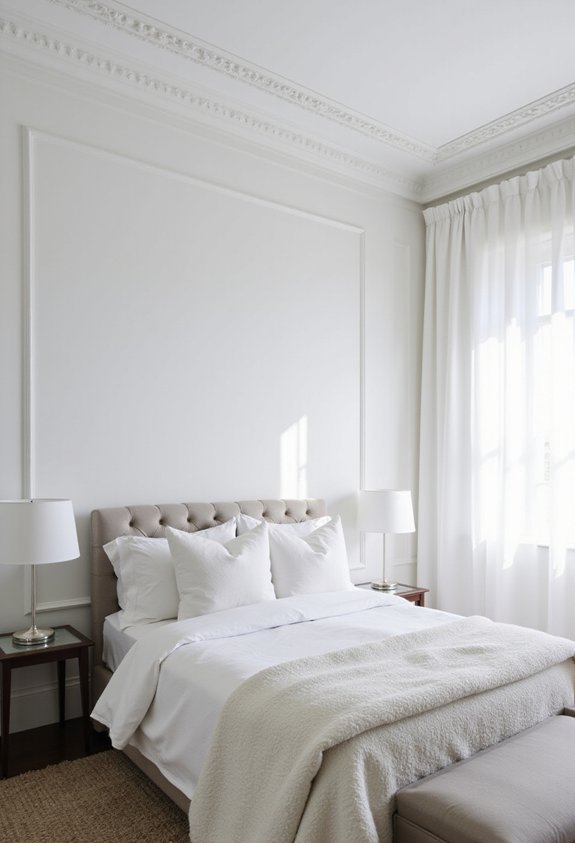
While a textured headboard anchors your bedroom’s focal point, crown molding elevates the entire space by drawing attention upward to your ceiling. This architectural detail creates visual depth and adds sophistication to even the simplest white bedrooms.
You’ll find crown molding works beautifully in various styles—from ornate Victorian designs to sleek modern profiles. Choose a finish that complements your existing trim and baseboards for cohesion. If you’re renting, consider peel-and-stick options that deliver the same impact without permanent installation.
The contrast between white molding and white walls might seem monotonous, but it’s precisely this subtle variation that creates dimension. Proper lighting highlights the molding’s contours, emphasizing architectural interest. This strategic addition transforms your bedroom from flat and plain into a thoughtfully designed retreat with genuine character.
Paint Your Ceiling in Soft White Tones
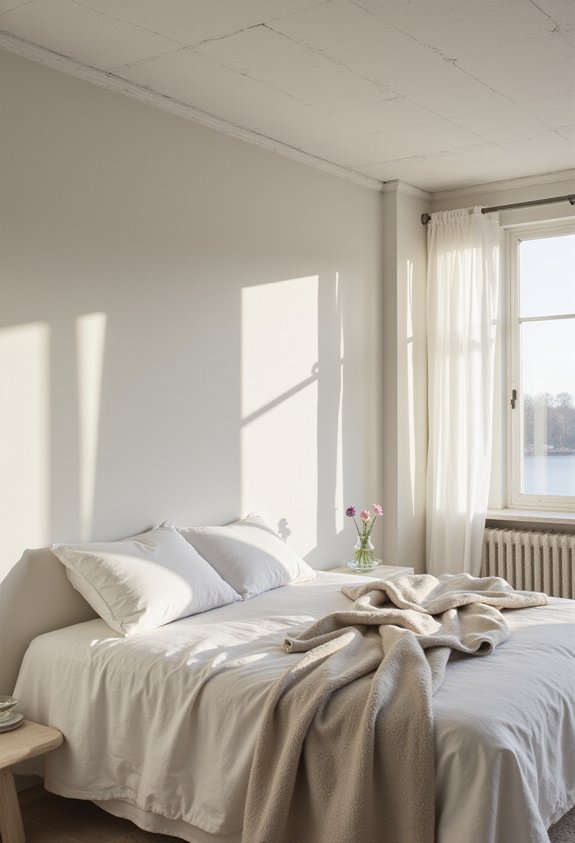
Don’t overlook your ceiling—it’s a fifth wall that deserves thoughtful consideration in your white bedroom design. While you might assume all white ceilings look identical, they don’t. Soft white tones like ivory, cream, or warm white create depth and visual interest that flat bright white can’t achieve.
Painting your ceiling in these subtle shades makes the room feel more refined and intentional. You’ll notice how soft whites reflect light differently, adding dimension without overwhelming the space. This approach pairs beautifully with your crown molding, enhancing the architectural details you’ve already installed.
The key is selecting a white with slight warmth or undertones rather than sterile, clinical whites. You’ll transform your ceiling from an overlooked afterthought into a cohesive design element that anchors your entire white bedroom aesthetic.
Create Dimension With Layered Curtains
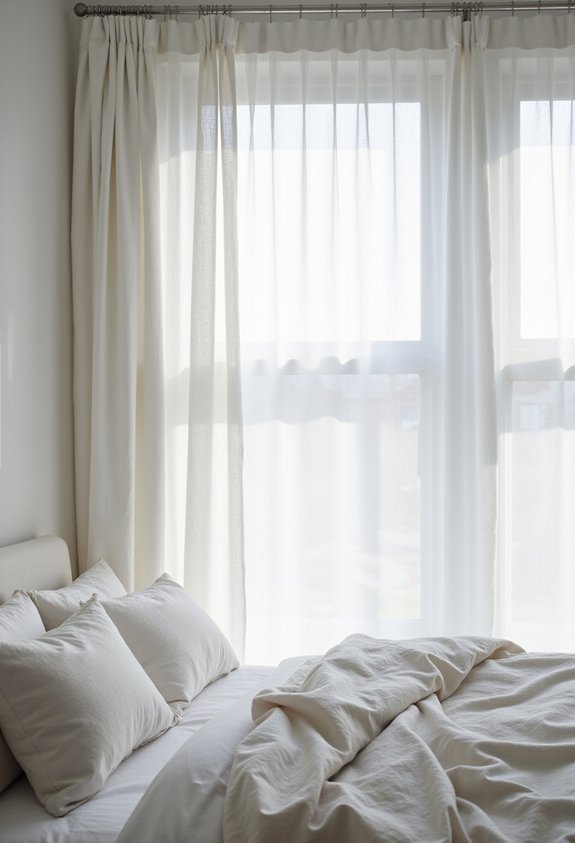
Windows deserve the same thoughtful treatment you’ve given your ceiling and walls. Layered curtains add visual depth and sophistication to your white bedroom without introducing color chaos.
Start with a sheer white curtain panel that diffuses natural light softly throughout your room. Behind it, hang a heavier white or cream-colored drape that you can close for privacy and light control. This combination creates interesting texture variations that keep your space visually engaging.
Consider mixing fabric weights—perhaps pairing gauzy linen with structured linen blends. The interplay between translucent and opaque materials adds dimension that solid panels can’t achieve.
You can further enhance this layering by incorporating white curtain rods in brushed gold or matte black finishes. These subtle metallic accents provide just enough contrast to prevent your window treatment from disappearing into the background.
Soften Edges With Sheer Curtains
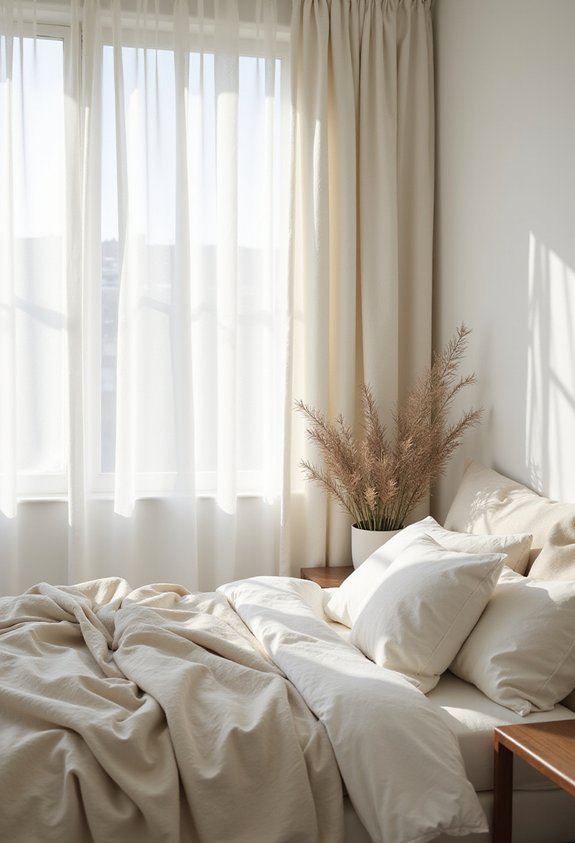
Sheer curtains soften the hard lines of your bedroom architecture, creating visual continuity that rigid window treatments can’t match. They’ll filter sunlight beautifully while maintaining privacy, allowing you to enjoy natural light without harsh shadows on your walls and furniture.
Layer sheer curtains with heavier drapes for versatility. You’ll gain the ability to control brightness throughout the day while keeping that airy, sophisticated aesthetic. White or cream sheers work wonderfully in monochromatic schemes, adding depth without introducing competing colors.
Consider sheer curtains that extend from ceiling to floor—they’ll elongate your windows and make your bedroom feel more expansive. The flowing fabric creates movement and softness, counterbalancing any angular furniture pieces you’ve chosen. This simple addition transforms your space into a serene retreat.
Install Window Treatments With Texture
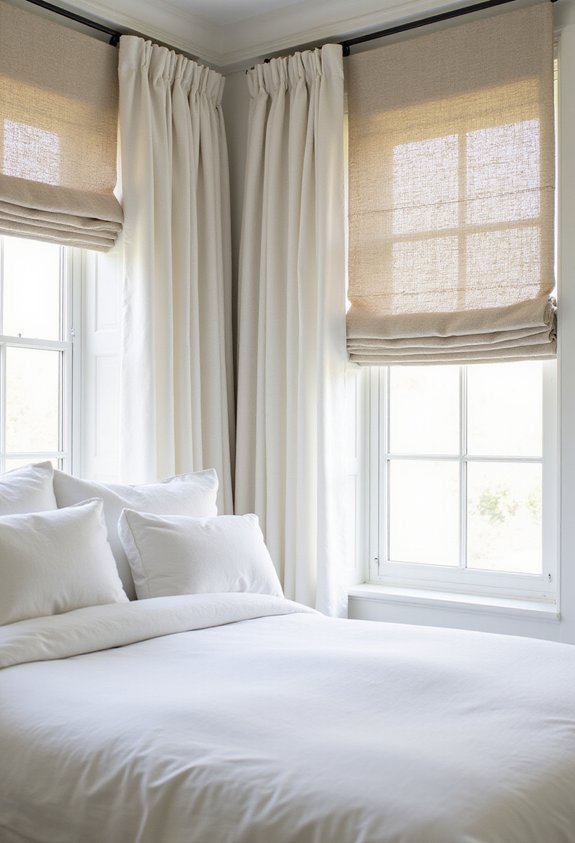
How can you elevate your white bedroom beyond flat, plain fabrics? Install window treatments with texture. Woven roman shades add visual interest while maintaining your room’s serene aesthetic. Consider linen curtains that feature subtle patterns or natural weave variations. Layering textured sheers over heavier white drapes creates depth and dimension.
Textured treatments serve a practical purpose too—they filter light differently than smooth fabrics, casting intriguing shadows throughout your space. Macramé accents on curtain rods or woven wood blinds introduce artisanal elements that prevent your bedroom from feeling sterile.
These tactile details engage the eye and invite touch, transforming your windows into design focal points. You’ll discover that texture, even in monochromatic schemes, creates warmth and sophistication that plain white walls alone cannot achieve.
Maximize Natural Light Through Smart Placement
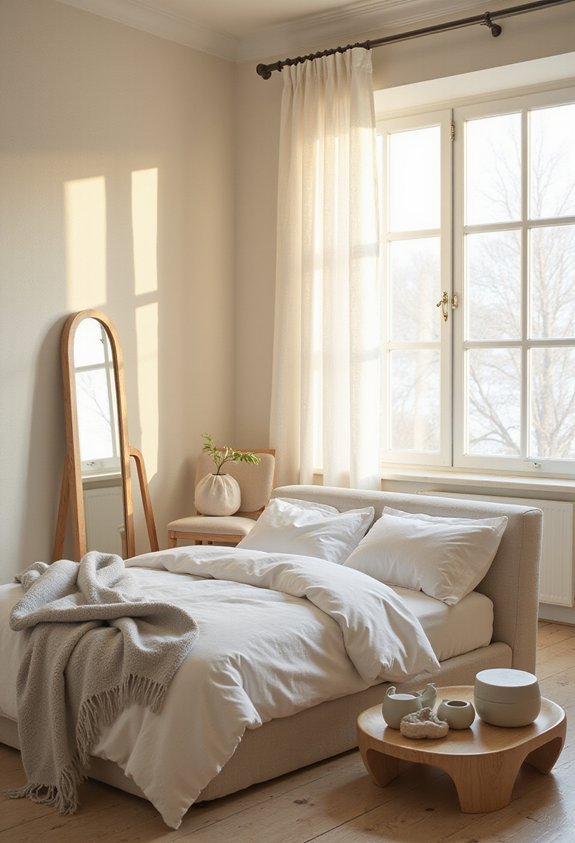
To amplify brightness in your white bedroom, you’ll want to strategically position furniture away from windows so light can flood freely across your space. Place your bed perpendicular to windows rather than directly blocking them, allowing natural light to stream unobstructed throughout the room.
Consider mounting shelving and storage units on walls opposite windows to bounce light deeper into the space. Mirrors strategically placed near windows reflect sunlight and create the illusion of expanded space while enhancing brightness.
Avoid heavy curtains or dark furniture that absorbs light. Instead, opt for minimal window coverings that maintain transparency during daylight hours.
This thoughtful arrangement transforms your white bedroom into a luminous sanctuary that maximizes natural illumination while maintaining functional furniture placement.
Install Statement Lighting That Commands Attention
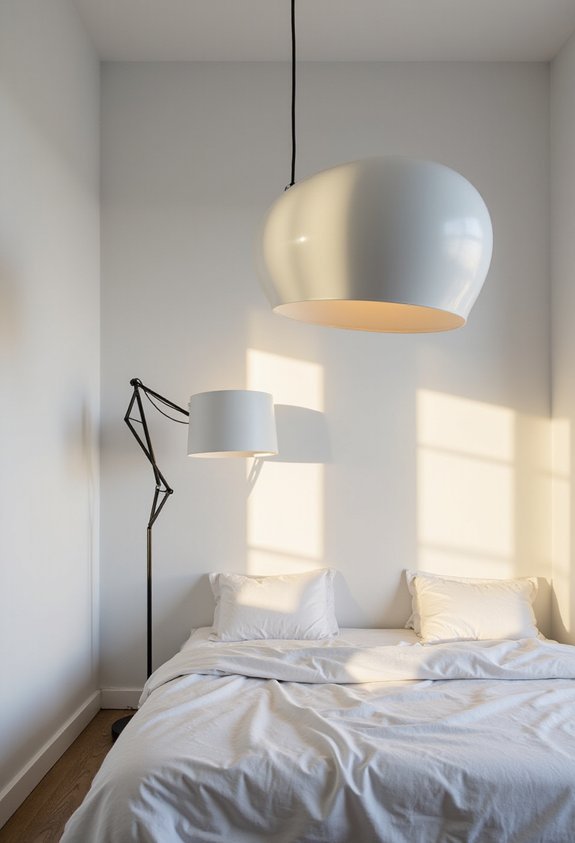
While natural light forms your bedroom’s foundation, statement lighting fixtures create visual interest and set the mood during evening hours. You’ll want to invest in a distinctive chandelier, oversized pendant light, or sculptural floor lamp that doubles as artwork. Choose fixtures with interesting shapes, materials, or finishes—perhaps a modern geometric design or vintage-inspired brass piece—that complement your white palette without disappearing into it.
Position your statement light as a focal point above your bed or in a corner where it catches the eye immediately. Layer this dramatic fixture with ambient and task lighting to create versatility. Dimmer switches let you adjust brightness to match your desired atmosphere, whether you’re winding down or getting ready for the day ahead. The right lighting transforms your white bedroom from bland to sophisticated.
Layer Lighting at Multiple Heights
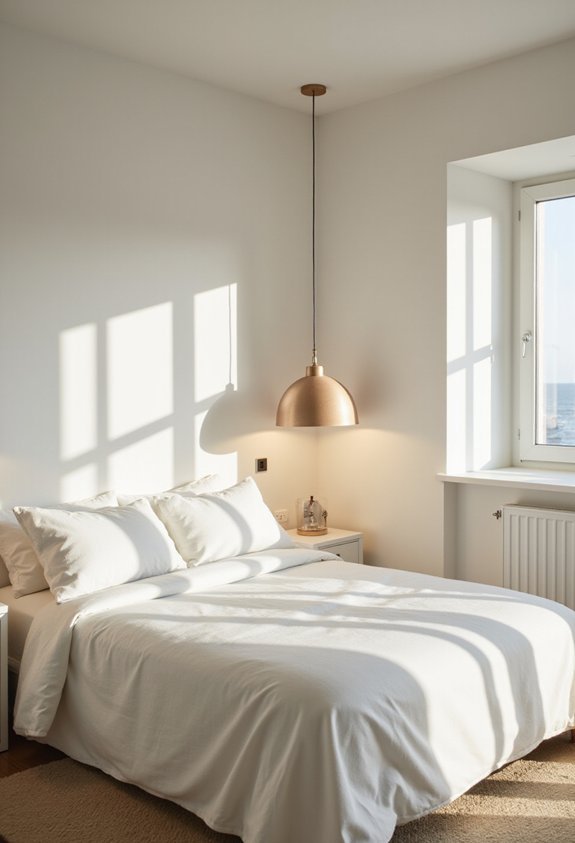
Because a single statement fixture can’t illuminate your entire bedroom effectively, you’ll need to create depth by incorporating lights at varying heights. Start with overhead lighting as your foundation, then add bedside lamps on nightstands for task lighting. Wall sconces flanking your bed provide focused illumination while maintaining aesthetic balance. Consider floor lamps in corners to brighten dark spaces and create ambient pools of light. Dimmer switches are essential—they’ll let you adjust intensity based on your mood and time of day. This layered approach prevents harsh shadows and prevents your white bedroom from feeling flat or clinical. The combination of multiple light sources at different levels transforms your space into a sophisticated, functional sanctuary.
Install Recessed or Hidden Lighting
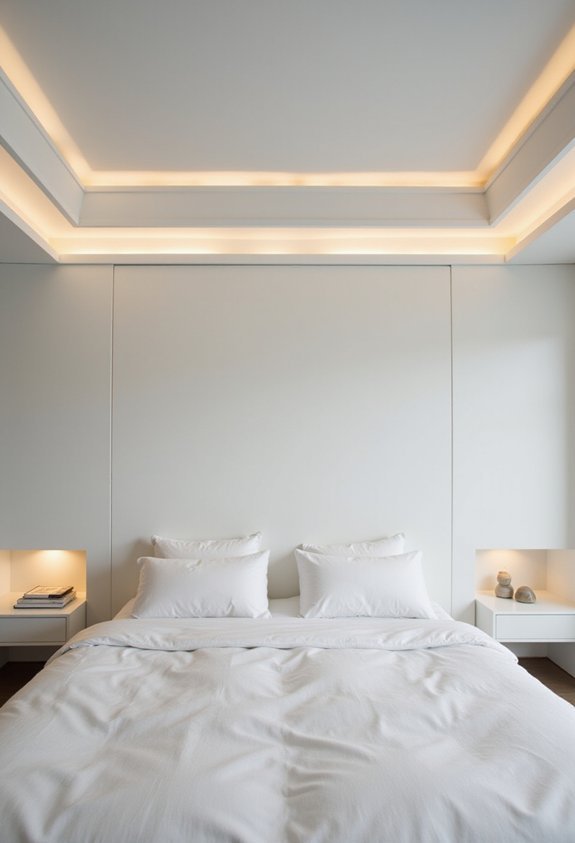
Once you’ve layered your primary light sources, recessed and hidden lighting elevates your white bedroom’s sophistication by providing seamless illumination without visible fixtures cluttering your aesthetic. Consider installing recessed lights in your ceiling for ambient glow that doesn’t interrupt your minimalist design. Alternatively, conceal LED strips behind your headboard, underneath floating shelves, or within crown molding to create subtle accent lighting that adds depth and visual interest. Hidden lighting works particularly well in white spaces because it bounces off the pale surfaces, amplifying brightness while maintaining a clean, uncluttered appearance. You can control these fixtures with dimmer switches to adjust mood and intensity throughout the day. This strategic approach creates an elegant, hotel-like atmosphere that feels both calm and polished.
Install Ambient Mood Lighting
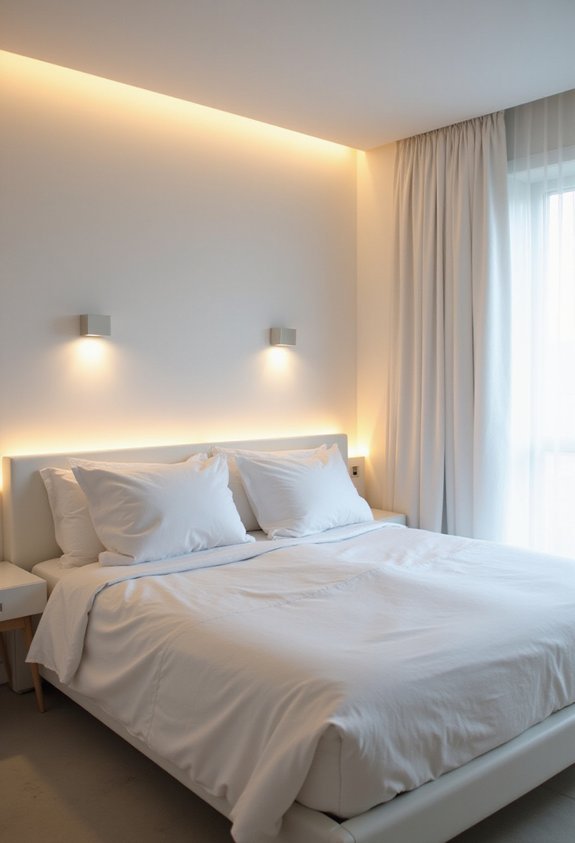
Beyond the foundational lighting layers, ambient mood lighting transforms your white bedroom into a customizable sanctuary that shifts with your emotional and practical needs. You can install dimmer switches on existing fixtures to adjust brightness instantly, creating intimate atmospheres for relaxation or energizing settings for mornings. Consider adding LED strip lights behind your headboard or along wall edges for soft, directional illumination that enhances your room’s depth without overwhelming the space. Smart bulbs let you control color temperature remotely, shifting from warm tones at night to cooler whites during the day. Wall sconces flanking your bed provide focused yet gentle light for reading, while minimizing harsh shadows that disrupt your serene white palette.
Add String Lights for Ambient Warmth
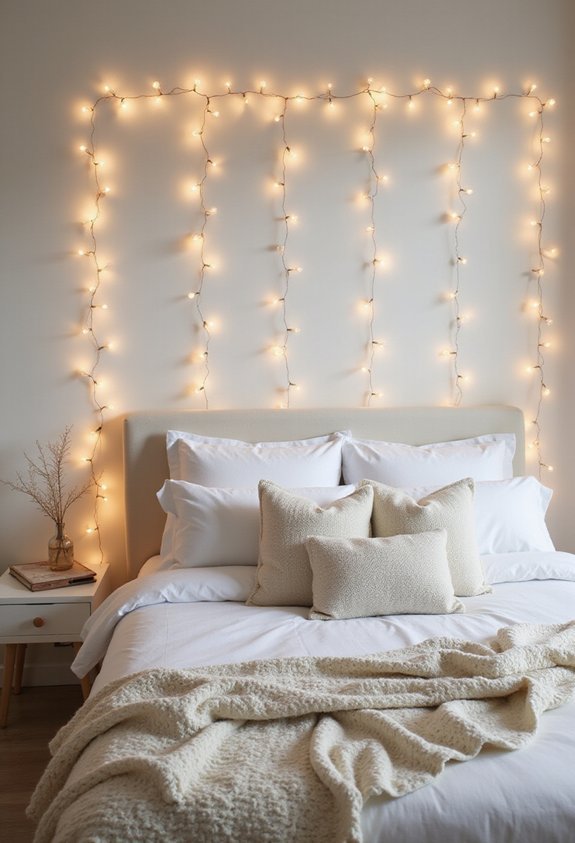
While dimmer switches and smart bulbs offer sophisticated control, string lights bring an effortless warmth that complements your white bedroom’s serene aesthetic. You can drape them along your headboard, around a mirror frame, or across a corner to create soft focal points without overwhelming the space.
Warm white Edison bulbs work beautifully in minimalist settings, casting a gentle glow that enhances relaxation. Fairy lights offer a more delicate option, perfect for smaller bedrooms or accent walls. You’ll appreciate how these lights eliminate harsh shadows while maintaining your room’s clean, uncluttered feel.
Position string lights strategically to avoid creating visual clutter. Consider battery-operated options for flexibility, allowing you to adjust placement as your design preferences evolve. This layered lighting approach transforms your white sanctuary into an inviting retreat.
Display Bold Artwork Against White Walls
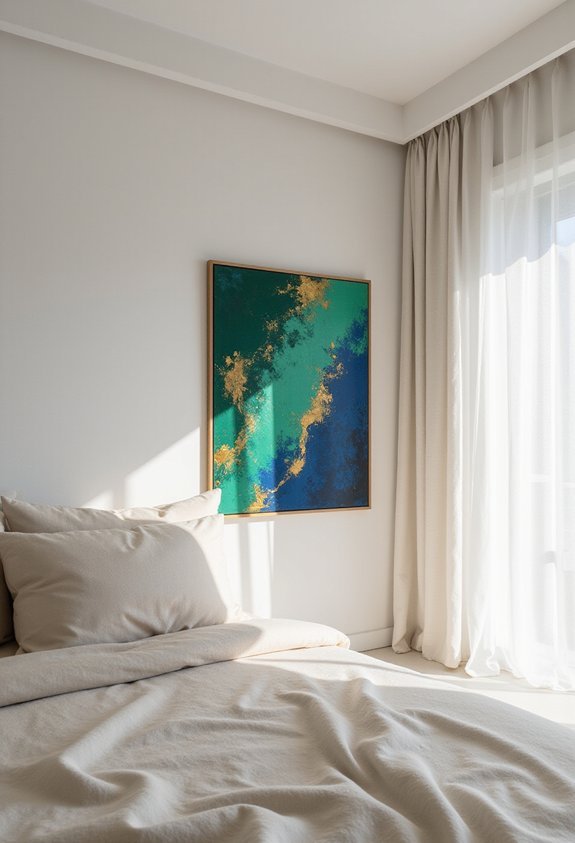
White walls don’t demand subtlety—they’re the perfect canvas for striking artwork that commands attention. You can hang oversized abstract paintings, vibrant photography, or modern prints that become instant focal points in your bedroom.
Consider positioning a single large piece above your nightstand or dresser, or create a gallery wall with varied frames and sizes. Bold colors—deep blues, rich reds, or sunny yellows—pop dramatically against white backgrounds, energizing the space without overwhelming it.
You’re not limited to traditional paintings either. Tapestries, textile art, or sculptural wall pieces add depth and personality. The key is choosing pieces that genuinely excite you, since white walls amplify whatever you display, making your artwork the undeniable star of the room.
Add Botanical or Nature-Inspired Art
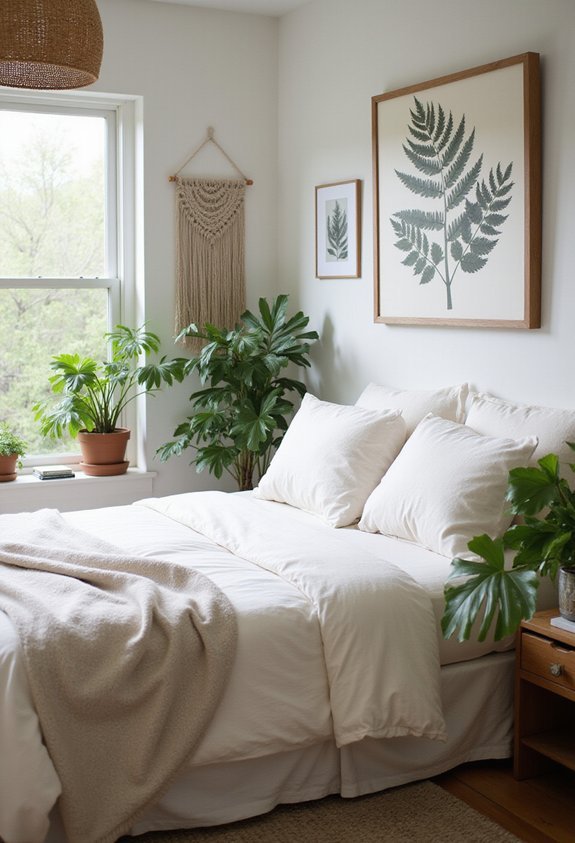
Nature-inspired art brings organic beauty and calming energy to your white bedroom without sacrificing the minimalist aesthetic. You can hang framed botanical prints, pressed flower collections, or landscape photography to add visual interest and depth. Consider black-and-white nature photography for a cohesive look, or introduce subtle color through watercolor paintings of plants and flowers. Wooden frames complement the natural theme while maintaining warmth against white walls. You might also display oversized canvas prints of leaves, branches, or mountain scenes to create a focal point above your bed. These pieces ground your space in nature’s tranquility, preventing your all-white bedroom from feeling sterile or cold. The result? A serene sanctuary that feels thoughtfully designed and authentically personal.
Introduce Metallic Accents in Gold or Silver
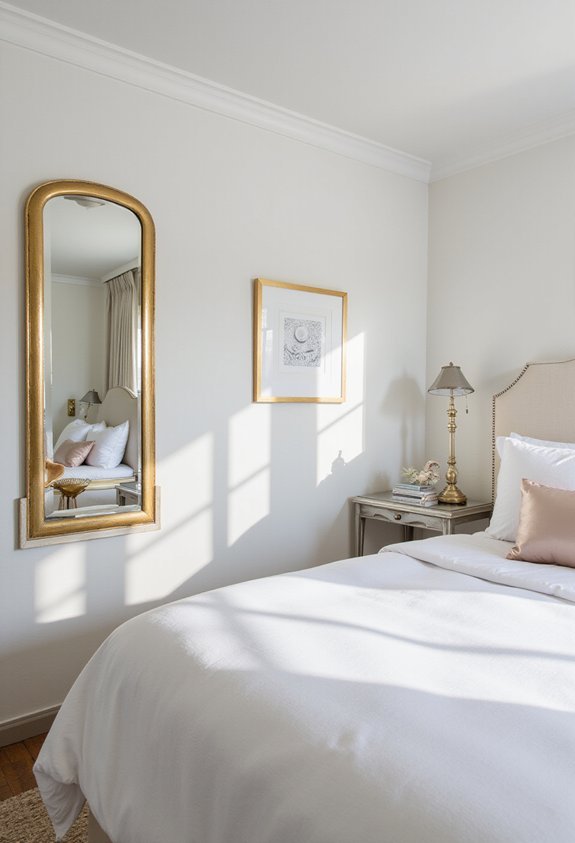
Elegance enters your white bedroom through strategically placed metallic accents that catch light and add sophistication without overwhelming your minimalist space. Gold frames around botanical prints create warmth and visual interest against crisp white walls. Silver drawer pulls on nightstands offer understated glamour while serving a practical purpose. You can layer metallics by combining a gold-trimmed mirror with silver bedside lamps for dynamic contrast. Consider metallic throw pillows or a delicate gold headboard to anchor your bed as a focal point. Wall sconces with brushed gold finishes provide ambient lighting that complements your neutral palette. These accents reflect natural and artificial light, making your room feel larger and more luminous. The key is restraint—select three to four metallic pieces maximum to maintain your bedroom’s serene, uncluttered aesthetic.
Add Decorative Mirrors to Expand Space
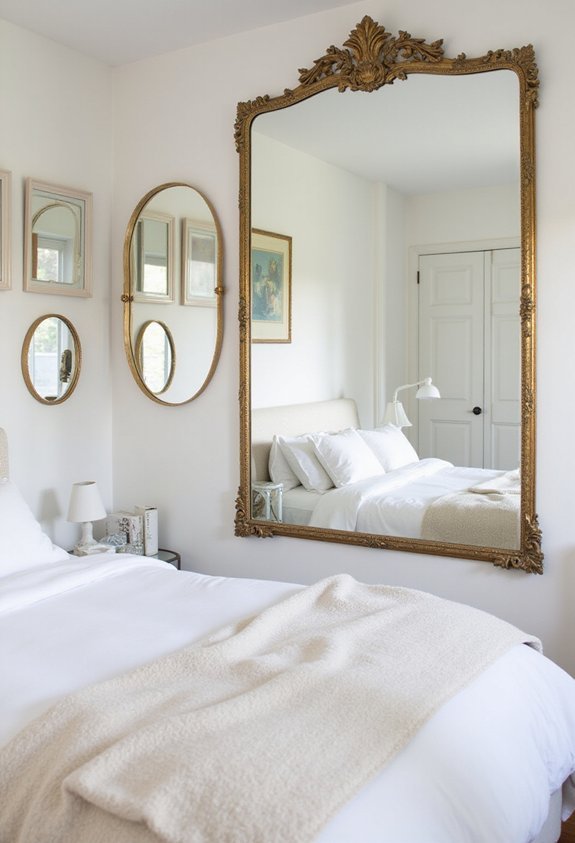
How can you instantly make your white bedroom feel twice its size? Strategic mirror placement is your answer. When you position mirrors opposite windows, they’ll reflect natural light throughout the room, creating an airy, expansive atmosphere that counteracts any cramped feeling.
Consider placing a large decorative mirror above your dresser or on an accent wall. Ornate frames add visual interest while maintaining your white aesthetic. Leaning mirrors against walls offer flexibility and a modern touch.
You’ll notice that mirrors don’t just expand space—they amplify brightness, making your room feel more inviting. Position them to reflect your best views, whether that’s outdoor scenery or your metallic accents from the previous section.
This simple addition transforms your bedroom into a luminous sanctuary that feels open and unrestricted.
Use Glass and Clear Acrylic to Maintain Airiness
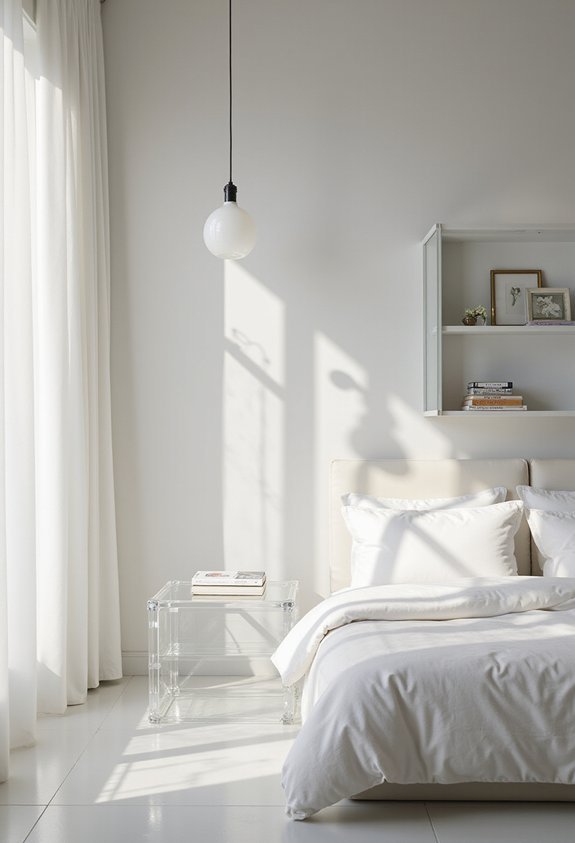
Building on the reflective power of mirrors, glass and clear acrylic furniture pieces amplify that airy feeling even further. You’ll appreciate how transparent materials let light flow throughout your space without creating visual barriers.
Consider incorporating a glass nightstand, acrylic desk chair, or lucite shelving units. These pieces provide practical storage and surface area while maintaining sight lines across your room. Glass tabletops and acrylic drawer fronts keep your bedroom feeling open and uncluttered.
Pair these transparent elements with your white palette to maximize the effect. The combination creates depth and dimension without darkening your space. You’re fundamentally creating invisible furniture that serves functional purposes while preserving the clean, minimalist aesthetic you’ve established. This approach transforms your bedroom into an expansive sanctuary.
Incorporate Indoor Plants for Life and Color
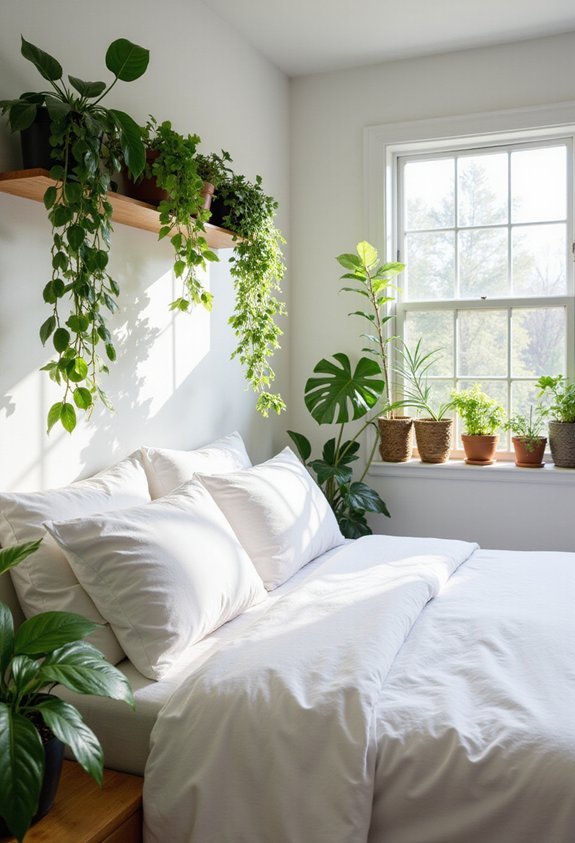
While white bedrooms offer a serene, cohesive aesthetic, they can sometimes feel sterile without strategic layering. Indoor plants inject life and organic texture into your space, breaking up monotony while maintaining your minimalist palette. You’ll find that greenery naturally complements white walls, creating visual interest without overwhelming the room.
Position plants of varying heights on nightstands, shelves, or corners to establish dimension. Consider low-maintenance options like pothos, snake plants, or monstera if you’re new to plant care. You can also incorporate dried pampas grass or eucalyptus for year-round appeal without watering requirements.
The interplay between white surfaces and leafy greens creates sophisticated contrast. Plants also improve air quality, making your sanctuary feel fresher and more rejuvenating while maintaining the calm atmosphere you’ve established.
Best Plants for Low-Light Bedrooms
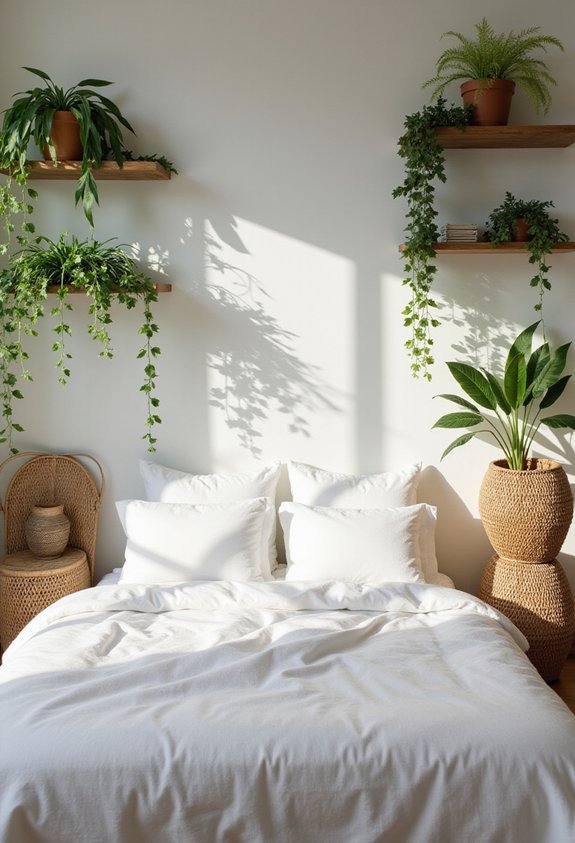
If your bedroom doesn’t receive abundant natural light, you’ll need to select plants that thrive in shadowy conditions. Pothos vines are excellent choices—they’re nearly indestructible and cascade beautifully from shelves or nightstands. Snake plants tolerate neglect and low light remarkably well, requiring minimal watering. ZZ plants add architectural interest while thriving in dim corners. Philodendrons adapt effortlessly to various light levels and grow steadily. Peace lilies actually prefer indirect light and signal when they need water by drooping slightly.
You can also consider cast iron plants, which live up to their name’s durability. Dracaenas provide height and structure without demanding bright conditions. These hardy varieties won’t wilt or disappoint you, making them perfect for bedrooms where natural light is limited. They’ll infuse your white sanctuary with greenery and liveliness.
Create a Reading Nook With Cozy Seating
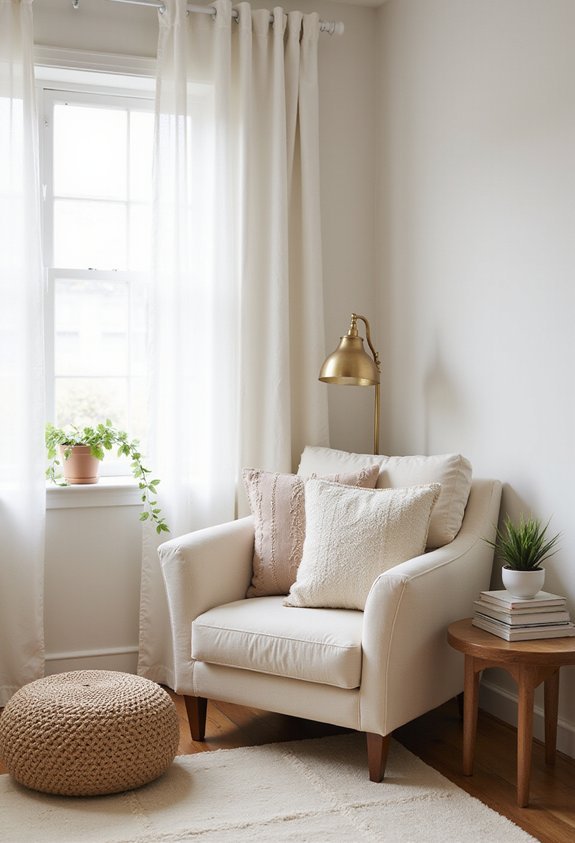
Transform a corner of your white bedroom into a personal retreat by layering soft textures and comfortable furniture. Start with a quality armchair or chaise lounge upholstered in cream, ivory, or soft gray. Add a chunky knit throw blanket for warmth and tactile appeal. Position a small side table nearby to hold your current read and a warm beverage.
Incorporate layered lighting with a floor lamp and wall sconce to eliminate shadows while reading. A plush area rug defines the space and adds comfort underfoot. Hang floating shelves above to display your favorite books and decorative objects. This dedicated reading space invites you to slow down and unwind without leaving your bedroom.
Choose Sculptural Decor Pieces
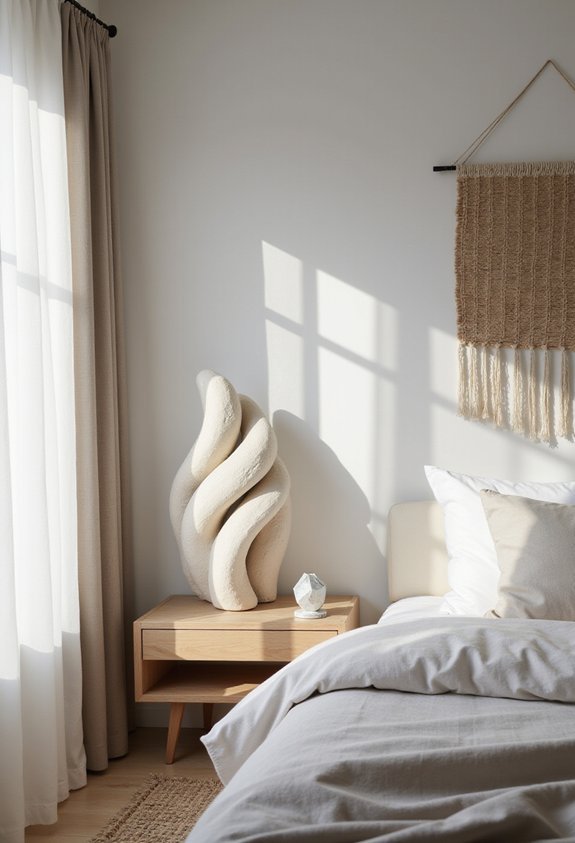
Beyond furnishings and textiles, sculptural decor pieces elevate your white bedroom’s visual interest and sophistication. You’ll find that abstract sculptures, ceramic forms, or marble figurines add dimension without overwhelming the space. Consider placing a striking piece on your nightstand, dresser, or floating shelf to create a focal point that draws the eye.
White sculptural elements maintain visual cohesion while their three-dimensional shapes introduce texture and movement. You can mix materials—combining smooth marble with rough-hewn wood or polished metal—to create contrast that keeps your bedroom dynamic.
Don’t shy away from scale either. A larger sculptural statement piece commands attention and anchors your room’s design narrative, transforming what could feel sterile into an intentional, curated sanctuary that reflects your personal aesthetic.
Add Sculptural Nightstands or Tables
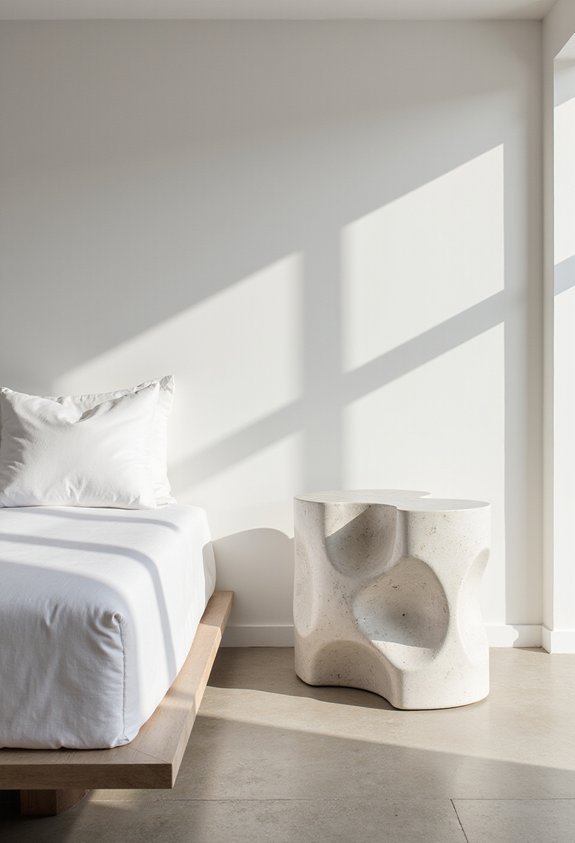
Your nightstands and bedside tables offer prime real estate for introducing sculptural forms into your bedroom design. Rather than settling for basic rectangular pieces, you’ll want to seek out tables with curved edges, geometric bases, or pedestal supports that command visual interest. Consider marble-topped nightstands with brass or gold legs, or look for pieces featuring organic shapes that echo natural forms. These sculptural elements create striking focal points flanking your bed while remaining functional. You can layer in complementary décor—a sculptural lamp, ceramic vessels, or a minimalist clock—that reinforces the artistic aesthetic. This approach transforms utilitarian furniture into design statements, ensuring your white bedroom feels intentional and curated rather than sterile or impersonal.
Select Statement Hardware for Drawers and Doors
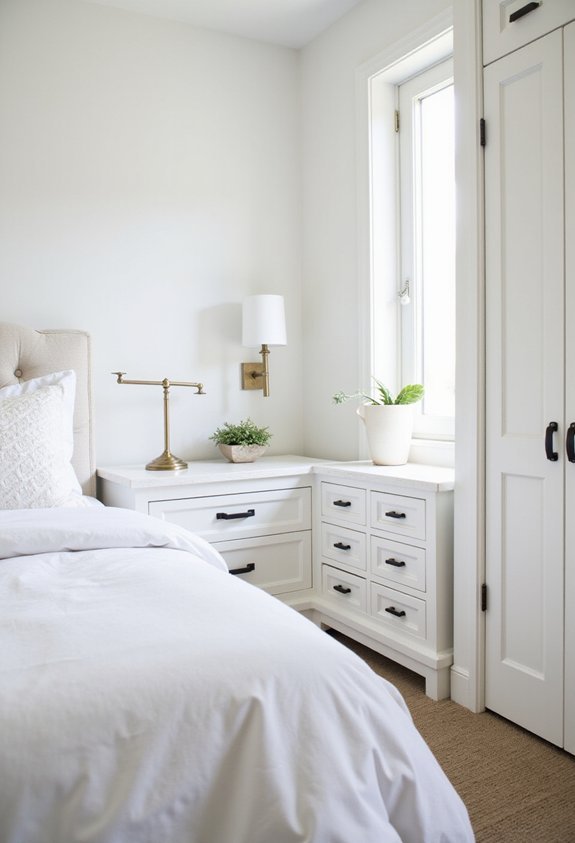
While sculptural nightstands anchor your bedroom’s visual design, hardware details like drawer pulls and door knobs deserve equal attention. You can transform ordinary furniture into standout pieces by selecting bold, distinctive hardware that complements your white palette.
Consider brass, brushed gold, or matte black pulls that add warmth and sophistication. Geometric designs, leather-wrapped handles, or vintage-inspired knobs inject personality without overwhelming the space. Mix metals strategically—pairing brass pulls on your dresser with black knobs on your wardrobe creates visual interest through intentional contrast.
Don’t underestimate hardware’s impact. These small details catch light, draw the eye, and establish your bedroom’s aesthetic direction. By choosing statement hardware thoughtfully, you elevate your white bedroom from simple to curated, proving that sophistication lives in the details.
Add Soft Area Rugs in Neutral Tones

After perfecting your hardware choices, grounding your bedroom with a soft area rug in neutral tones completes the foundational design. You’ll want to choose textures like jute, wool, or plush cotton that invite barefoot comfort. Soft grays, warm beiges, and creams anchor your white furniture without competing for visual attention. A larger rug positioned under your bed creates coziness while defining the sleeping area. Layer smaller accent rugs alongside your nightstands for added warmth and dimension. The right rug softens hard flooring, reduces noise, and enhances the serene atmosphere you’re cultivating. Consider your room’s natural light when selecting tone—cooler neutrals work well in bright spaces, while warmer shades complement rooms with limited sunlight. This foundational element ties your entire design scheme together effortlessly.
Incorporate Cozy Textured Rugs
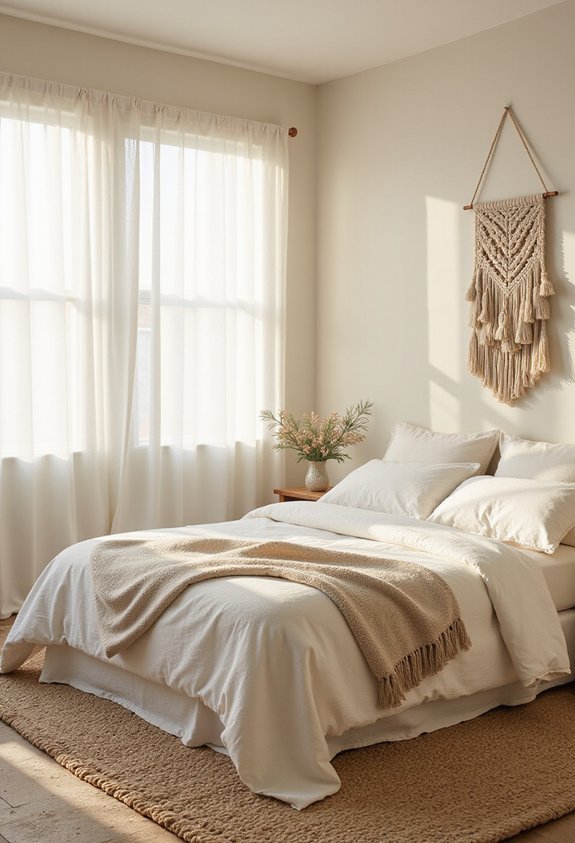
Building on the neutral foundation you’ve established, texture becomes your next design opportunity to elevate the bedroom’s tactile appeal. You’ll want to layer rugs with varied textures—think jute, wool, or chunky knit—to create visual interest without disrupting your white color scheme.
A textured rug anchors your space while adding warmth underfoot. You can layer a smaller textured rug over a larger neutral one to define your sleeping area and add dimension. Natural fibers like sisal or seagrass introduce organic elements that complement minimalist aesthetics.
Don’t shy away from mixing patterns either—geometric weaves or subtle stripes in cream and ivory add sophistication. These textured elements catch light differently throughout the day, creating dynamic visual appeal. Your bedroom becomes inviting and tactilely engaging, proving that white spaces possess genuine character and comfort.
Build Monochromatic Interest Through Color Blocking
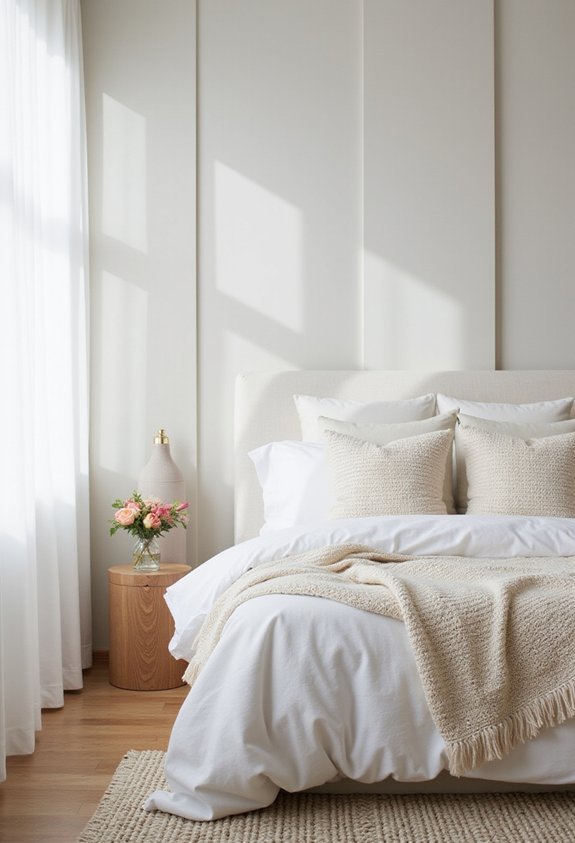
Though white serves as your palette’s foundation, strategic color blocking within the monochromatic spectrum transforms a flat bedroom into one with visual depth and sophistication. You’ll create visual interest by layering different shades of white, cream, ivory, and soft gray across distinct zones.
Consider painting an accent wall in warm ivory while keeping others crisp white. Layer your bedding with varying textures in complementary neutrals—a cream duvet paired with gray pillows and white throws creates dimension without jarring contrast.
Use furniture placement to define color blocks. Position a light gray upholstered headboard against white walls, then anchor the space with a cream area rug. This approach maintains the serene, cohesive aesthetic while preventing monotony through intentional tonal variation and strategic contrast.
Add Colorful Accents Through Accessories
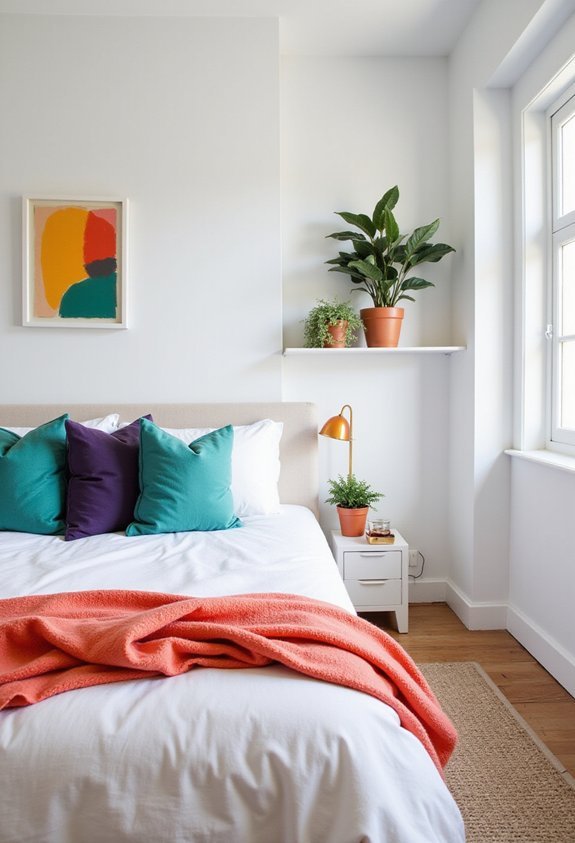
While your monochromatic foundation creates a serene backdrop, you’ll infuse personality and visual dynamism through strategically placed colorful accessories. Start with accent pillows in jewel tones or pastels that complement your white bedding without overwhelming the space. Layer in a vibrant throw blanket across your bed’s foot or drape a colorful runner along its side. Incorporate artwork featuring bold hues to anchor a focal wall. Consider a statement area rug that grounds the room while introducing color. Add decorative objects like ceramic vases, plants, or books that reflect your taste. Select lighting fixtures with colored shades or metallic finishes. These thoughtful touches transform your white bedroom from stark to sophisticated, allowing you to update your aesthetic easily by swapping accessories seasonally.
Choose Upholstered Furniture for Softness
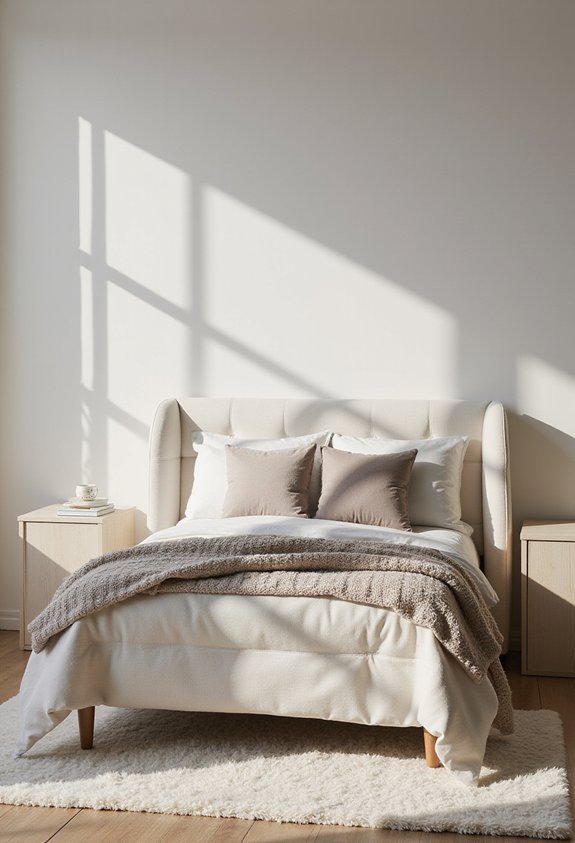
To elevate your white bedroom’s comfort and tactile appeal, you’ll want to incorporate upholstered pieces that soften the room’s aesthetic. Consider a tufted headboard in cream or ivory linen, which adds visual interest while maintaining your monochromatic scheme. An upholstered bench at the foot of your bed provides both functionality and texture. Layer in a plush ottoman or poufs in complementary fabrics like velvet or boucé for additional seating and warmth.
These soft furnishings break up the starkness of all-white walls and flooring, creating a more inviting atmosphere. Choose fabrics with subtle variations—natural weaves, quilted patterns, or raised textures—to add dimension without introducing color. This approach transforms your white bedroom from minimalist to genuinely luxurious and lived-in.
Install Floating Shelves for Display
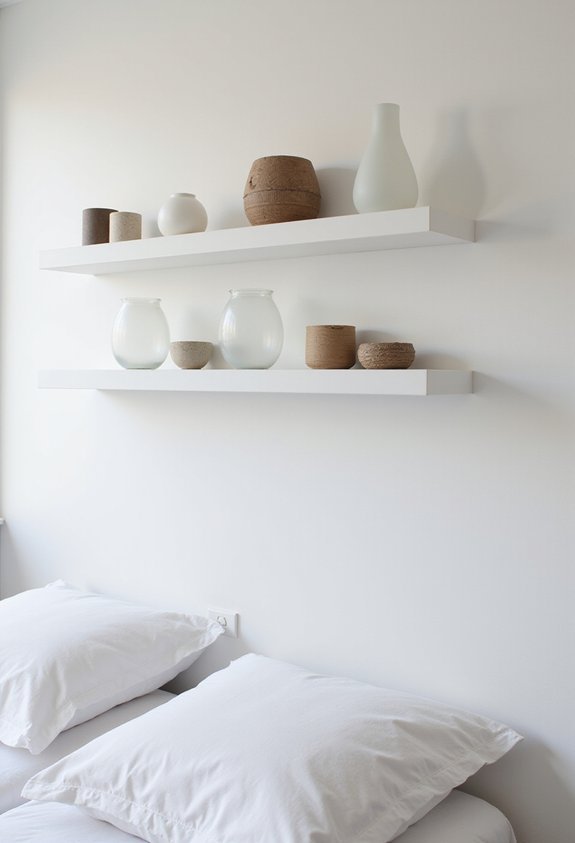
Floating shelves offer a stylish way to showcase décor while maintaining your white bedroom’s clean lines. You’ll create visual interest without cluttering your space by selecting a few meaningful pieces to display. Consider arranging books, framed photos, or small plants on your shelves for a personalized touch.
Install shelves at varying heights to add dimension and draw the eye upward. You can paint them white to blend seamlessly with your walls, or choose natural wood for subtle contrast. This approach lets you rotate décor seasonally without commitment.
Floating shelves also provide practical storage solutions. You’ll keep nighttime essentials within reach while maintaining your room’s serene aesthetic. Avoid overcrowding—negative space is just as important as your displayed items in creating that peaceful, uncluttered feel you’re aiming for.
Avoid These White Bedroom Mistakes
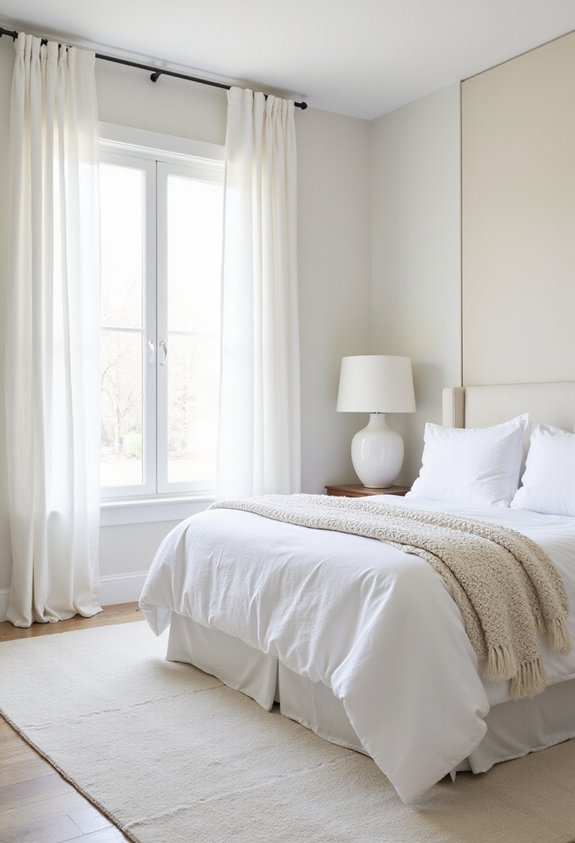
Because white’s versatility can tempt you to overuse it, you’ll want to be intentional about how you apply this neutral shade throughout your space. Don’t paint every surface white—walls, ceiling, furniture, and bedding create a sterile, hospital-like environment that feels cold and uninviting. Instead, incorporate varying shades of white, cream, and ivory to add subtle depth and visual interest.
Avoid neglecting texture entirely. Smooth white walls paired with sleek white furniture lack dimension. Layer in woven blankets, plush rugs, and upholstered pieces to create warmth and tactile appeal.
Skip all-white bedding without considering contrast. Your bed needs definition against white walls. Add patterned pillows, a colored throw, or a contrasting headboard to anchor the room and prevent it from feeling flat and monotonous.
Plan Your Layout Before Adding Decor
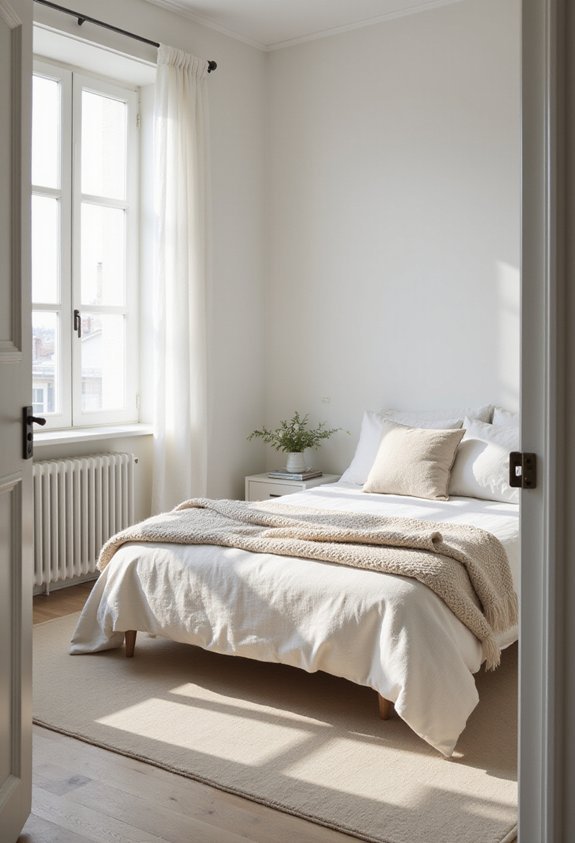
You’ll want to map out your bedroom’s layout before you start decorating, as furniture placement sets the foundation for everything else. Consider traffic flow and how you naturally move through the space. Position your bed as a focal point—typically against the largest wall—then arrange nightstands and dressers accordingly.
Think about lighting needs and place lamps where you’ll actually use them. Identify wall space for art or mirrors, and plan shelving around windows and doorways. Measure twice to guarantee pieces fit proportionally without overcrowding.
Create Visual Interest With Ceiling Details
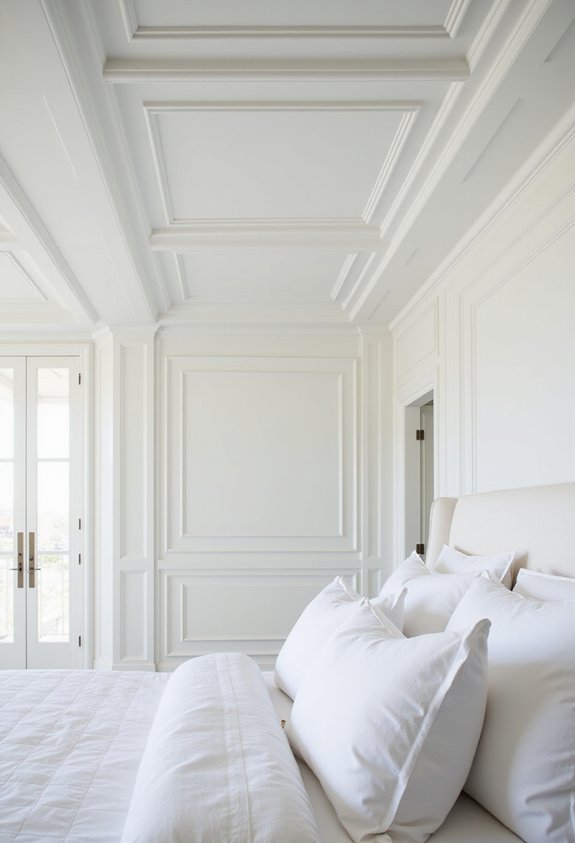
While walls and floors often capture most of our decorating attention, ceilings shouldn’t be overlooked in a white bedroom scheme. You can transform your overhead space into a striking focal point that elevates the entire room’s aesthetic.
Consider installing exposed wooden beams for warmth and texture against your white palette. Alternatively, you might add crown molding or decorative trim that creates architectural interest without overwhelming the space. A coffered ceiling introduces geometric sophistication, while a tray ceiling adds depth and dimension.
You could also paint your ceiling a soft gray or cream shade to create subtle contrast. For something bolder, incorporate wallpaper with delicate patterns or install shiplap for rustic charm. These ceiling details prevent your white bedroom from feeling flat or monotonous, infusing character and visual appeal.
Mix in Vintage or Antique Finds
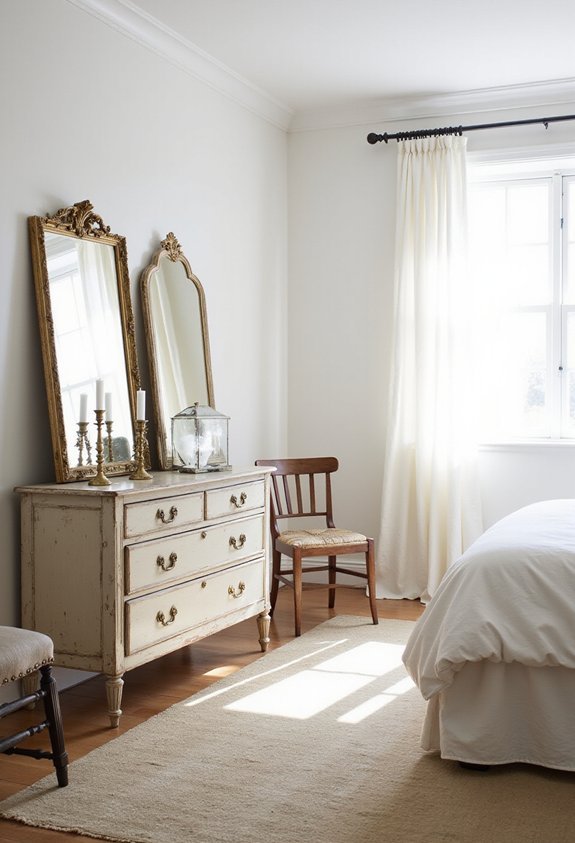
Adding vintage or antique pieces to your white bedroom infuses character and tells a story that mass-produced furniture can’t replicate. You’ll discover that an ornate brass mirror, weathered wooden nightstand, or delicate wrought-iron bed frame instantly elevates your space’s sophistication.
Hunt for these treasures at estate sales, flea markets, and antique shops. Look for pieces with interesting patina or unique architectural details that contrast beautifully against your white walls and furnishings.
Mix eras strategically—pair a Victorian-era chair with mid-century modern accessories, or combine farmhouse elements with industrial accents. This eclectic approach prevents your room from feeling sterile or one-dimensional.
Vintage textiles work wonderfully too. Layer an antique quilt or lace throw across your bed for warmth and visual texture. These curated finds transform your white bedroom into a personalized sanctuary reflecting your taste and history.
Layer Different White Paint Finishes on Walls
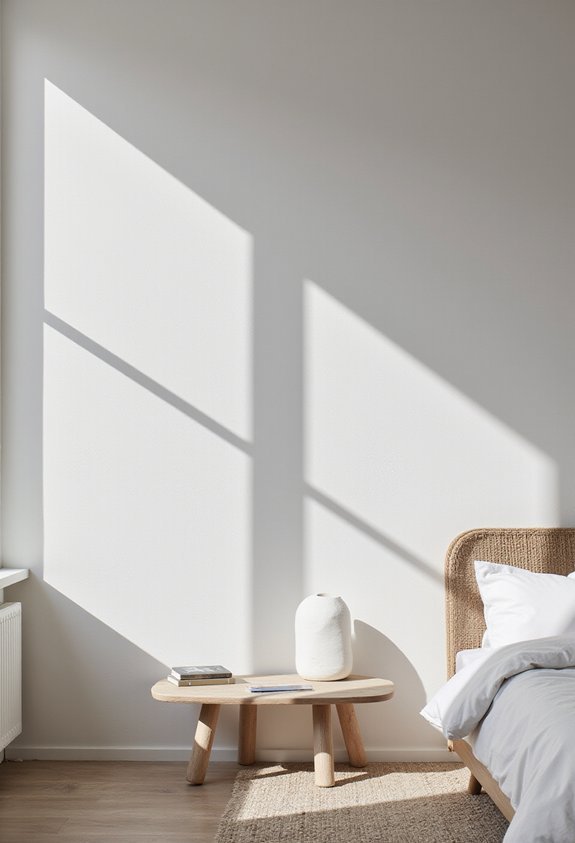
Beyond sourcing individual pieces, the walls themselves can become a design element that enhances your vintage finds. You can create depth and visual interest by combining different white paint finishes—matte, eggshell, and satin—across your bedroom walls.
Consider painting an accent wall in glossy white to reflect light and add subtle dimension. Pair it with matte white on surrounding walls for a sophisticated contrast. This technique prevents your room from feeling flat or one-dimensional, even when using a monochromatic palette.
The varying finishes catch light differently throughout the day, creating dynamic shadows and highlights. You’ll discover that layering finishes transforms your white walls from merely blank backdrops into textured architectural features. This approach complements vintage furnishings beautifully, allowing your curated pieces to shine without competing with the walls.
Design Your White Bedroom With Confidence
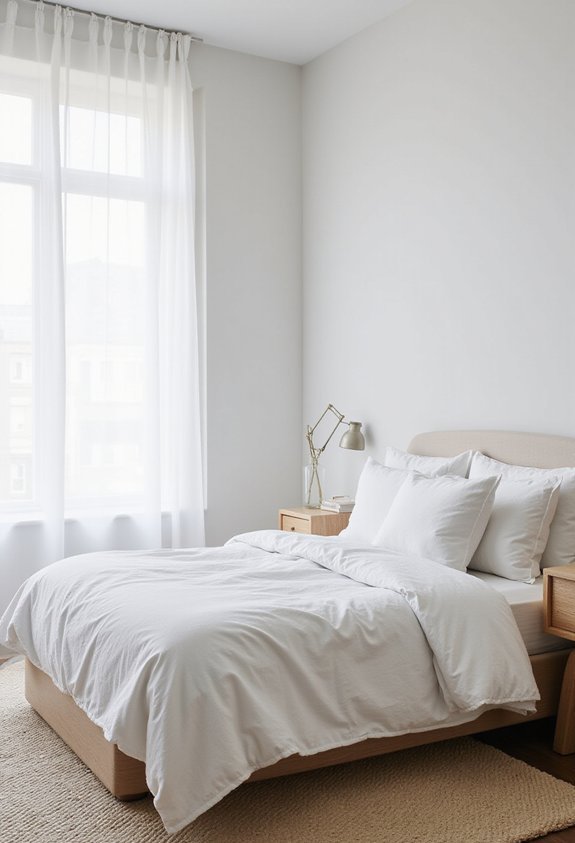
Now that you’ve mastered the foundational techniques of white bedroom design—from selecting vintage pieces to layering paint finishes—you’re ready to trust your instincts and create a space that truly reflects your vision.
Don’t second-guess yourself when combining textures, tones, and accessories. White bedrooms thrive on personal touches that reveal your personality. Mix crisp linens with soft throws, sleek furniture with rustic accents, or modern lighting with antique finds. Your confidence transforms these elements into a cohesive sanctuary.
Remember that white isn’t monotonous—it’s versatile. Embrace subtle variations in cream, ivory, and off-white throughout your space. Layer intentionally, edit ruthlessly, and trust your eye. You’ve got this. Your white bedroom will feel fresh, sophisticated, and unmistakably yours.
Conclusion
You’ve now discovered that white bedrooms aren’t for minimalists who own three pillows and call it “curated.” You’re ready to layer, mix, and accessorize like you’re decorating a luxury hotel suite in your own home. Congratulations—you’ve transformed bland beige boredom into sophisticated monochromatic bliss. Your all-white sanctuary now screams “I’m effortlessly elegant,” even if you’ve stressed about every throw pillow placement.

