

Lakehouse kitchens needn’t sacrifice elegance, embracing refined aesthetics celebrating upscale waterfront living beautifully. Premium finishes, quality appliances, and intentional design establish sophisticated gathering spaces. Your elegant lakehouse kitchen becomes impressive entertaining venue proving waterfront properties deserve design excellence and refined aesthetic standards.
Refined lakehouse design incorporates quality materials, coordinated finishes, and architectural details establishing sophistication. Stainless steel appliances, marble countertops, and designer hardware create upscale ambiance, open layouts support entertaining, strategic lighting establishes elegance. These elevated choices prove lakehouse kitchens become impressive spaces when designed celebrating both waterfront charm and genuine design excellence authentically.
Your sophisticated lakehouse kitchen radiates elegance through quality materials and refined styling. Select premium finishes, incorporate intentional details, and design spaces celebrating both location and aesthetic excellence. This refined approach proves lakehouse kitchens become genuinely beautiful when designed honoring waterfront setting and sophisticated entertaining standards authentically.
Why Lakehouse Kitchens Demand Moisture-Resistant Design
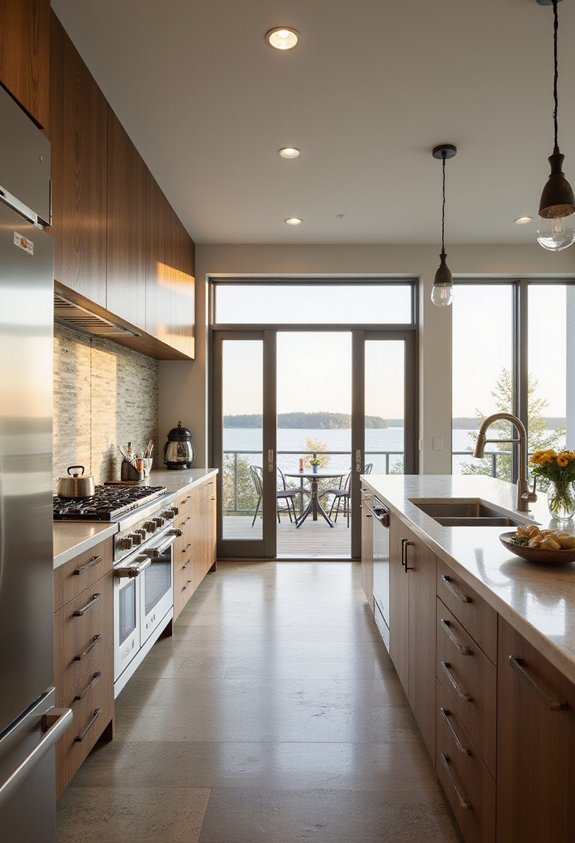
Humidity isn’t just an inconvenience in lakehouse kitchens—it’s a persistent threat that’ll damage traditional materials faster than you’d expect. Wood cabinets swell and warp, drywall deteriorates, and standard finishes peel or blister within months of exposure to lakeside moisture.
You’ll need moisture-resistant alternatives to protect your investment. Marine-grade plywood, sealed hardwoods, and moisture-barrier paints actively combat humidity damage. Stainless steel fixtures and tile backsplashes resist moisture better than conventional materials.
Proper ventilation systems are essential too. Install exhaust fans rated for high humidity and guarantee they vent outside completely. Consider a dehumidifier as backup insurance during peak seasons.
Your lakehouse kitchen demands these upgrades not for luxury, but for durability and longevity.
Also read: 10 Outdoor Kitchen Bar Ideas
Weatherproof Your Materials: Countertops, Cabinetry, and Hardware
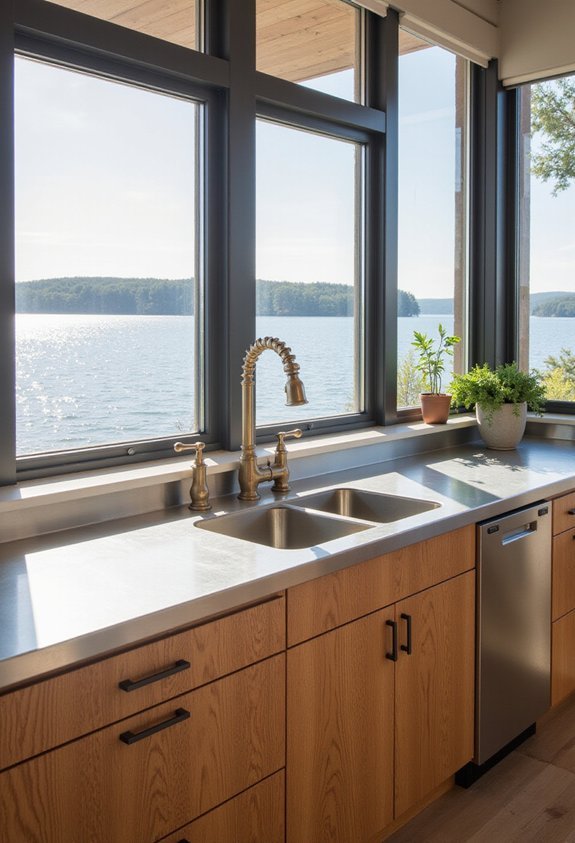
Since you’re investing in moisture-resistant design, you’ll want to extend that protection to every surface in your lakehouse kitchen. Choose quartz or granite countertops, which resist moisture far better than laminate. They won’t warp or stain when exposed to humidity and spills.
For cabinetry, opt for marine-grade plywood or solid wood treated with water-resistant finishes. Avoid particleboard, which deteriorates quickly in damp environments. Install proper ventilation behind cabinets to prevent moisture buildup.
Hardware matters too. Select stainless steel hinges, handles, and fasteners that won’t rust or corrode. Avoid standard steel, which oxidizes in lakehouse humidity.
Don’t overlook your flooring junctions and seals. Waterproof all joints and edges where materials meet. These small details prevent water infiltration that damages your investment and creates mold hazards.
Install Proper Ventilation to Combat Humidity and Cooking Odors
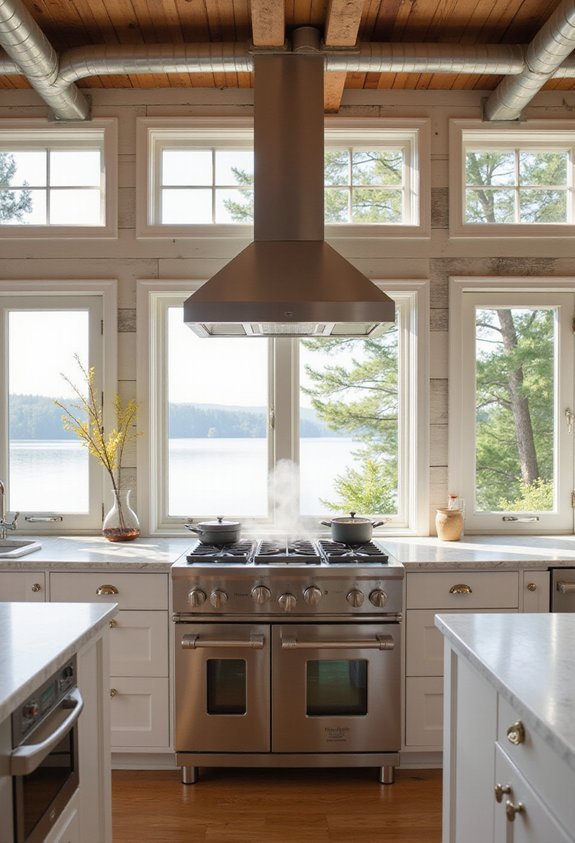
While you’ve protected your surfaces from moisture damage, you’ll also need to manage the moisture-laden air itself. Install a high-capacity range hood that vents directly outside—not into your attic or crawl space. Choose one rated for your kitchen’s square footage, typically 600+ CFM for lakehouse cooking areas.
Consider adding a separate dehumidifier to control ambient moisture levels, especially during humid seasons. Maintain relative humidity between 30-50% to prevent mold and structural damage.
Ensure adequate makeup air enters your kitchen when the hood operates. Without proper air replacement, your ventilation system won’t function efficiently.
Clean or replace hood filters monthly since lakeside air often carries salt particles and humidity that clog filters faster than typical kitchens. Regular maintenance keeps your system performing at its best.
Large Windows and Glass Doors Framed for Water Views
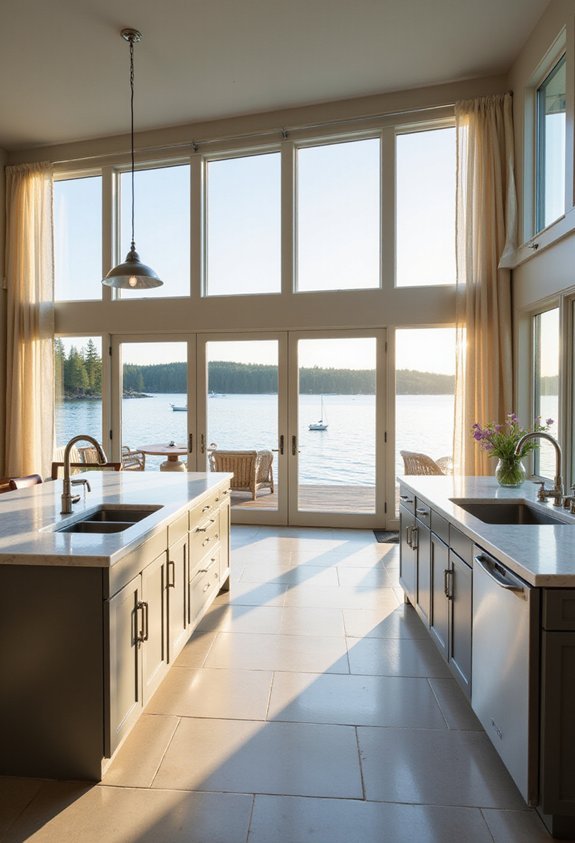
One of a lakehouse kitchen‘s greatest assets is the opportunity to showcase waterfront views through strategically placed windows and glass doors. You’ll want to position large windows above your sink and countertops so you can enjoy the scenery while washing dishes or preparing meals. Consider installing sliding glass doors that open onto a deck or patio, creating seamless flow between your indoor and outdoor spaces.
Frame your windows with minimal trim to maximize the view and allow natural light to flood your kitchen. Choose high-performance glass that reduces glare and UV damage while maintaining energy efficiency. Bi-fold or pocket doors work exceptionally well in lakehouse kitchens, as they don’t obstruct sightlines when opened. Your windows and doors become architectural features that connect you to the water’s beauty throughout your day.
Natural Wood Cabinetry and Open Shelving for Lakehouse Appeal
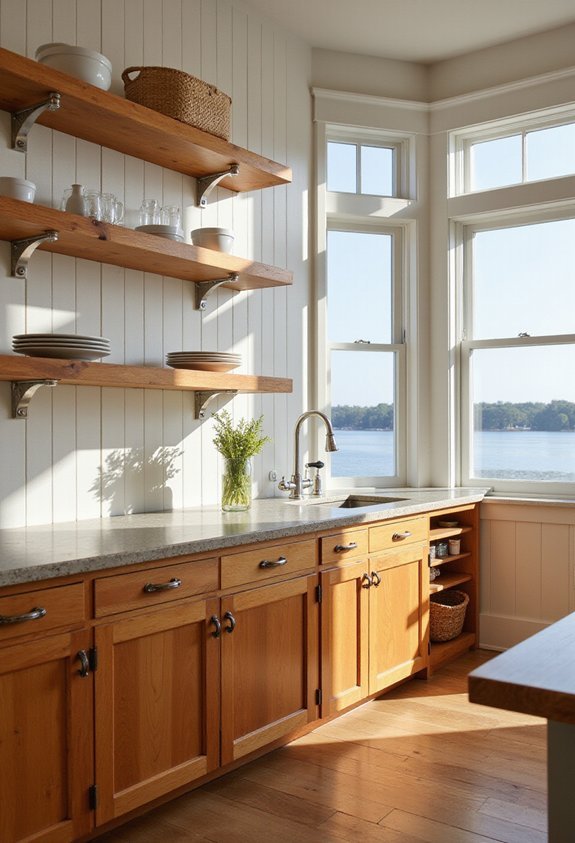
To enhance your lakehouse kitchen’s natural aesthetic, you’ll want to embrace natural wood cabinetry that complements the surrounding landscape. Choose warm wood tones like cedar, pine, or reclaimed barn wood that echo the rustic charm of waterfront living.
Open shelving showcases your dishware and glassware while maintaining an airy, uncluttered feel. This design choice keeps your kitchen visually connected to the water views you’ve framed with large windows and glass doors.
Pair wooden cabinetry with simple hardware—brushed metal or rope pulls work beautifully—to avoid visual clutter. Consider mixing closed storage with open shelving to balance functionality and display.
The natural wood absorbs and reflects light differently throughout the day, creating dynamic ambiance that shifts with the lake’s changing moods and seasons.
Design an Island That Works as Your Entertainment Hub
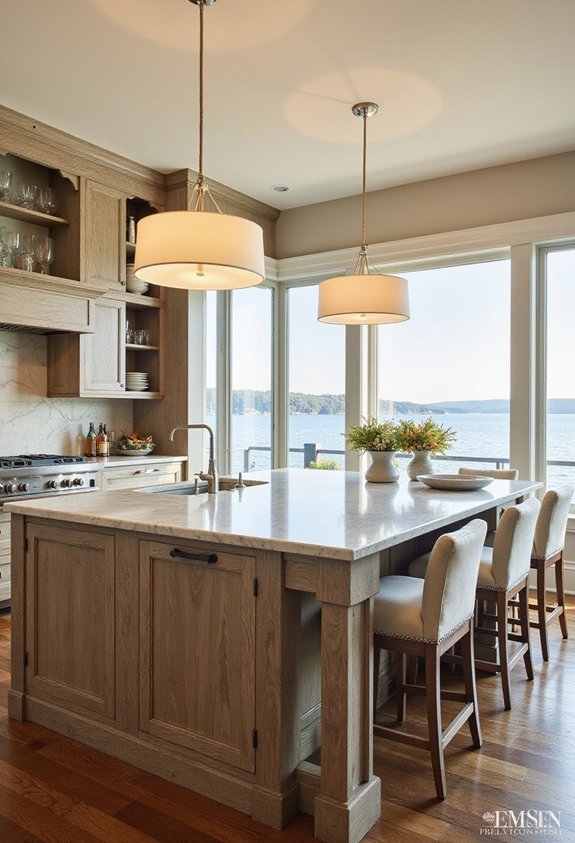
Your lakehouse island should serve as the natural gathering spot where cooking and entertaining seamlessly blend. Consider installing a generous countertop that accommodates both food prep and guest seating. Add a built-in beverage cooler or wine fridge to keep refreshments accessible without constant trips to the main refrigerator. Incorporate bar-height seating on one side, allowing friends and family to interact while you cook. Install pendant lighting overhead to create ambiance and improve functionality during evening gatherings. Choose durable, water-resistant materials that withstand lakeside humidity and frequent use. Include a sink on the island for convenient cleanup, and guarantee adequate electrical outlets for blenders, coffee makers, and other entertaining essentials. This multipurpose design transforms your island into the kitchen’s social centerpiece.
Stone Backsplashes and Textured Finishes for Coastal Character
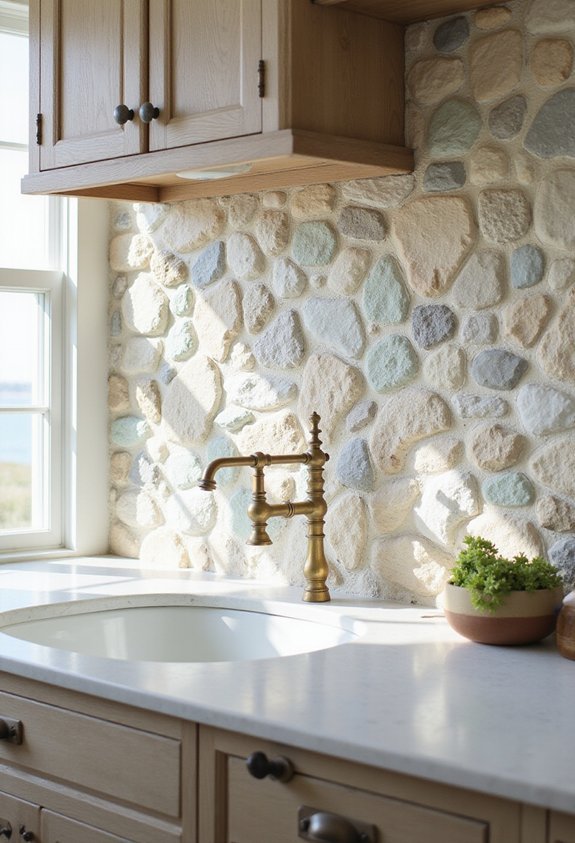
While your island creates the perfect social hub, the surfaces surrounding it deserve equal attention to establish authentic coastal character. Stone backsplashes transform your kitchen’s visual appeal while delivering durability and easy maintenance. Consider natural slate, limestone, or stacked stone options that echo seaside landscapes. These materials develop rich patinas over time, enhancing their weathered charm.
Textured finishes work beautifully with coastal aesthetics. Rough-hewn surfaces catch light differently than polished tiles, creating depth and movement. You’ll appreciate how stone’s organic variations eliminate the monotony of uniform designs.
Pairing stone with complementary elements amplifies coastal vibes. Combine your backsplash with whitewashed cabinetry, brushed metal fixtures, or driftwood accents. This layering of textures creates a cohesive, naturally inspired space that feels authentically connected to waterfront living without appearing contrived or overly designed.
Strategic Lighting for Morning Sun and Evening Ambiance
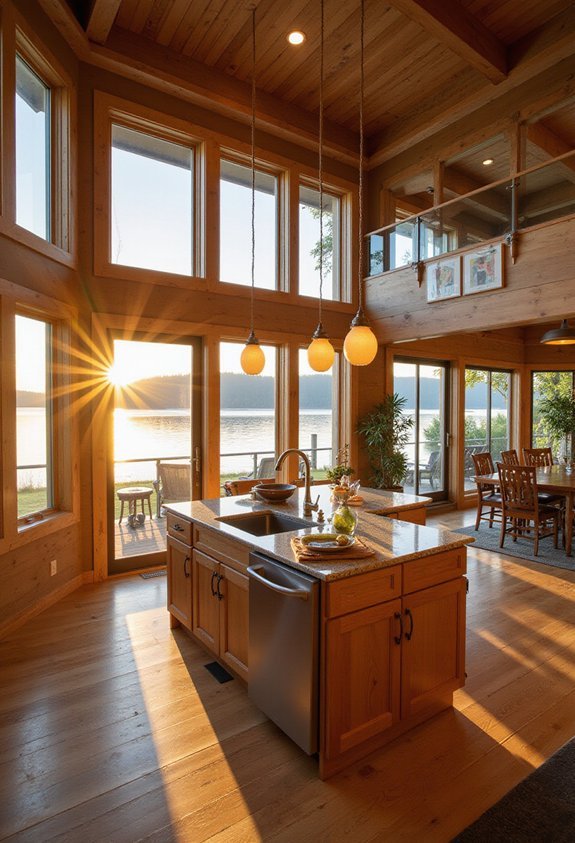
How does light transform a lakehouse kitchen throughout the day? Strategic lighting design captures both natural and artificial illumination to guarantee your space’s potential.
During morning hours, you’ll want expansive windows positioned to flood your kitchen with sunlight, energizing the space and highlighting water views. Install skylights above work areas to brighten countertops and reduce shadows while you prepare meals.
As evening approaches, layered lighting becomes essential. Incorporate dimmer switches on overhead fixtures, under-cabinet lighting for task work, and pendant lights above islands for ambient warmth. Consider warm-toned bulbs that complement your coastal aesthetic.
Recessed lighting provides flexibility, adapting to different moods and activities. Position fixtures strategically to avoid glare on water-view windows while creating inviting focal points. This thoughtful approach guarantees your lakehouse kitchen remains functional and visually stunning throughout every hour.
Smart Storage Solutions for Open Shelving Without Clutter
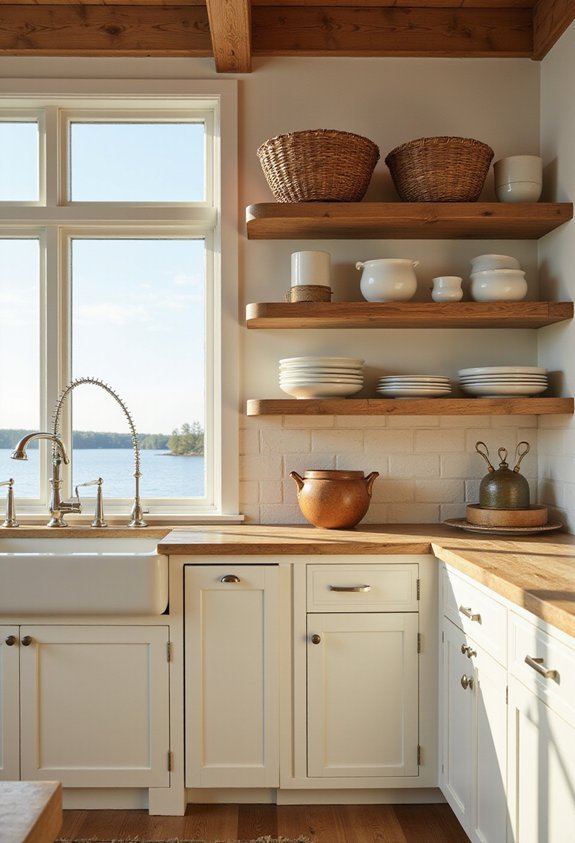
Open shelving can either elevate or overwhelm your lakehouse kitchen, depending on how you organize it. You’ll want to display only essentials and items that complement your décor. Group similar pieces together—stack plates by size, arrange glassware by type, and use matching containers for dry goods. Incorporate vertical dividers to maximize space and prevent items from toppling. Install hooks beneath shelves for hanging mugs or utensils, freeing up valuable surface area. Choose a consistent color palette for dishware and storage containers to create visual cohesion. Rotate seasonal items and keep rarely-used pieces elsewhere. By being intentional about what you display, you’ll achieve that coveted balance between functionality and aesthetic appeal that makes your lakehouse kitchen feel both inviting and organized.
Built-In Beverage Station for Entertaining Guests
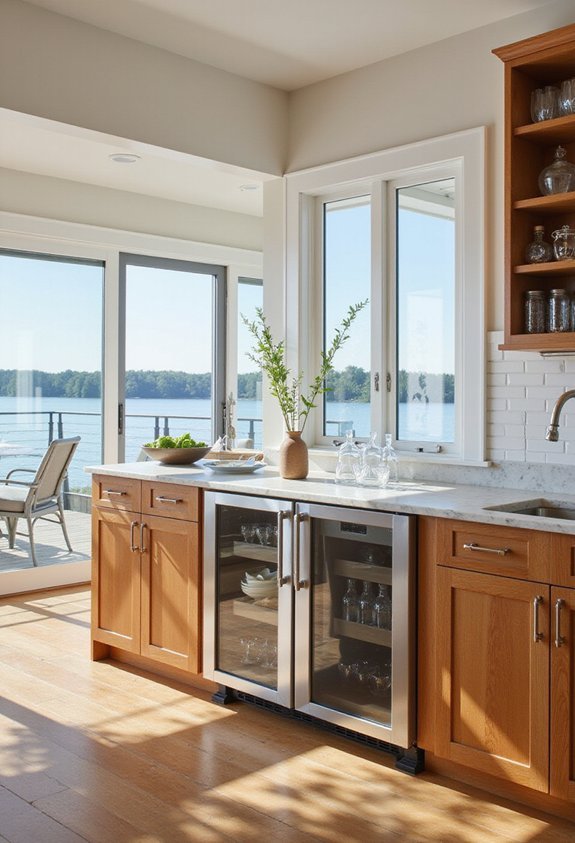
Since you’re hosting guests at your lakehouse, a dedicated beverage station keeps drinks accessible without monopolizing your main kitchen workspace. You’ll want to position it near your entertaining area, ideally close to seating and outdoor spaces.
Install a compact sink or beverage cooler as your station’s centerpiece. Stock shelving with glasses, mugs, and drinkware within easy reach. Keep frequently used beverages—wine, beer, water, and sodas—chilled and visible. Add a small counter surface for mixing drinks or serving.
Consider built-in wine racks, under-counter refrigeration, or open shelving for glassware. Include ice storage and a drain system for convenience. This setup encourages guests to help themselves, freeing you to focus on food preparation and socializing rather than constantly restocking drinks throughout your gathering.
Weathered and Reclaimed Materials for Authentic Appeal
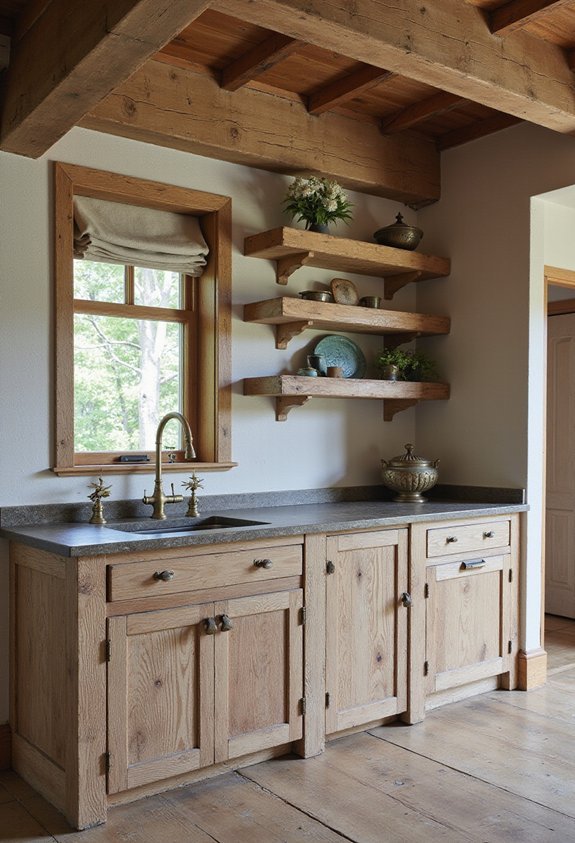
Weathered wood, reclaimed brick, and salvaged materials bring authentic character to your lakehouse kitchen while honoring the home’s rustic heritage. You’ll create warmth and history by incorporating vintage elements that tell stories of their past lives.
Consider installing reclaimed wood shelving, barn doors, or flooring to establish visual interest and durability. You can repurpose antique hardware, vintage light fixtures, and old architectural elements as functional décor. Stone from old foundations or reclaimed subway tiles for backsplashes add texture and authenticity.
These materials aren’t just aesthetically appealing—they’re sustainable choices that reduce waste. Patina and imperfections become design features rather than flaws. Your kitchen gains a lived-in, inviting quality that new materials simply can’t replicate, making it feel like a true lakehouse retreat.
Add a Dining Nook With Sightlines to the Water
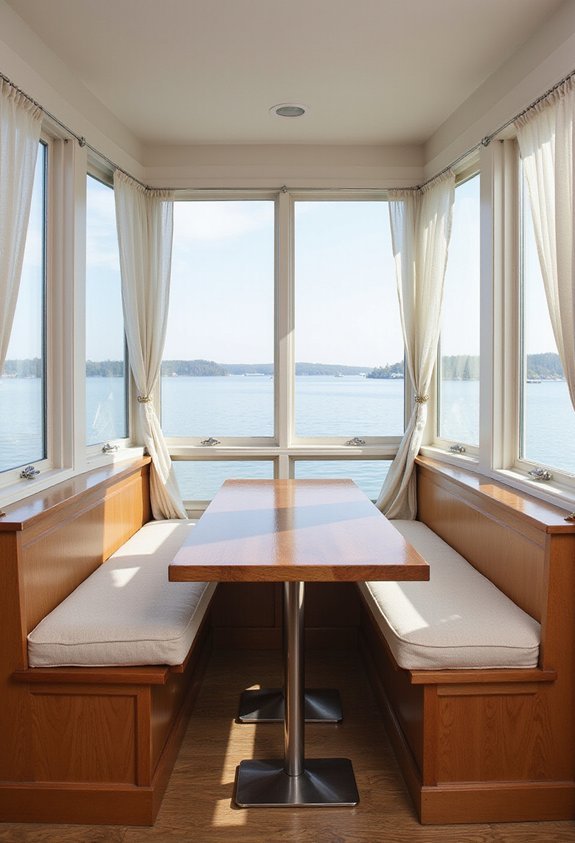
One of the best ways to capitalize on your lakehouse’s waterfront location is by positioning a dining nook where you can savor meals while gazing at the view. Orient your seating to face large windows or glass doors that frame the water directly. Install a built-in bench along a window wall for both space efficiency and optimal sightlines. Choose lightweight, movable chairs that won’t obstruct your view and allow flexibility in your layout. Guarantee adequate natural lighting during the day, then add warm pendant lights overhead for evening dining. Consider waterproof, easy-to-clean upholstery that withstands humidity and splashes. This dedicated dining space transforms everyday meals into memorable experiences while strengthening your connection to the lakefront landscape.
Frequently Asked Questions
What’s the Ideal Kitchen Layout for a Lakehouse With Limited Square Footage?
You’ll maximize your compact lakehouse kitchen by using an efficient galley or L-shaped layout. Install open shelving, vertical storage, and multi-functional appliances. Keep countertops clear and position your sink near windows to blend indoor-outdoor living while you’re cooking.
How Do I Budget for a Lakehouse Kitchen Renovation With Quality Materials?
You’ll want to allocate 40-50% of your budget for cabinetry and countertops since they’re visible and durable. Prioritize quality appliances, then invest in flooring that resists moisture. Shop sales, get multiple quotes, and consider refurbished fixtures to maximize your budget.
Can I Install a Lakehouse Kitchen in a Rental Property?
You’ll need your landlord’s written permission before installing a lakehouse kitchen in a rental property. Most landlords won’t allow permanent renovations, but you might negotiate temporary upgrades or removable improvements that don’t damage the space.
What Appliances Work Best in Humid, Moisture-Prone Lakehouse Environments?
You’ll want stainless steel appliances that resist corrosion and moisture damage. Choose models with sealed components and excellent ventilation features. Consider frost-free refrigerators, convection ovens, and range hoods that effectively manage humidity in your lakehouse kitchen environment.
How Often Should Lakehouse Kitchen Materials Be Sealed or Maintained?
You should seal your lakehouse kitchen materials every 1-2 years, depending on humidity levels and material type. You’ll want to inspect countertops, wood, and grout quarterly for moisture damage. You can extend material life by maintaining proper ventilation and promptly addressing any water exposure.
Conclusion
You’ll create a stunning lakehouse kitchen by prioritizing moisture-resistant materials and proper ventilation. Don’t overlook the importance of strategic window placement—you’ll want those water views front and center. By blending weathered wood elements with functional features like built-in beverage stations and dining nooks, you’re crafting a space that’s both beautiful and practical. You’ve got everything you need to design a kitchen that’ll withstand lakeside conditions while capturing that authentic coastal charm.