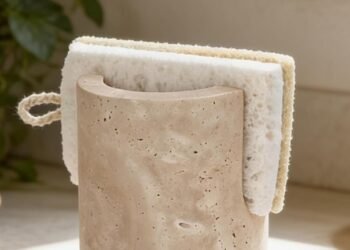

Create sophisticated kitchen wreaths showcasing elegant design and refined aesthetic sensibilities beautifully. Luxurious materials, coordinated finishes, and gallery-quality presentation elevate simple wreaths into statement pieces. Your elegant kitchen wreath becomes a distinguished focal point reflecting taste, style, and design awareness throughout.
Refined wreath designs feature premium materials, cohesive color palettes, and artistic composition intentionally. Silk flowers in coordinating hues, metallic accents, and carefully arranged elements create polished, sophisticated pieces. These elevated designs prove kitchen wreaths become genuine art when executed with attention to detail and aesthetic excellence.
Your beautiful kitchen wreath radiates sophistication and refined taste through thoughtful design and quality materials. Select premium components, maintain color harmony, and display prominently as intentional focal points. This elegant approach demonstrates kitchen wreaths needn’t be casual, proving they become refined décor celebrating artistry and design awareness.
Herb Garden Wreaths for Fresh Culinary Style
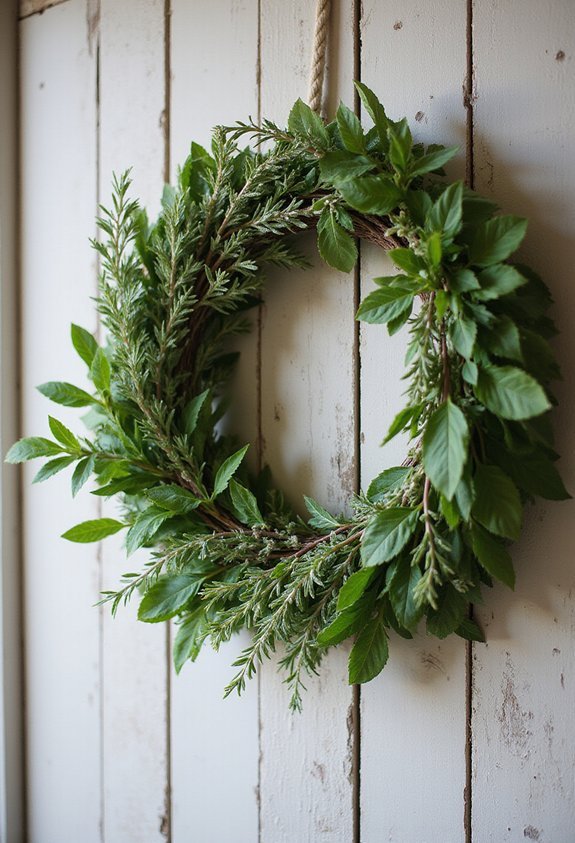
Whether you’re looking to brighten your kitchen while adding functional ingredients to your cooking, herb garden wreaths offer the perfect solution. You can craft these living decorations by securing fresh herbs like basil, rosemary, thyme, and oregano onto a circular frame using floral wire or twine.
Position your wreath near a sunny window where herbs’ll receive adequate light. Water them regularly to keep them thriving and vibrant. The beauty of this approach is its dual purpose—you’re decorating your space while maintaining a ready supply of culinary herbs.
You can harvest sprigs whenever you need them for cooking, making meal preparation more convenient. As seasons change, swap out herbs to match what’s currently growing. This dynamic wreath becomes a functional, ever-evolving kitchen centerpiece that reflects your culinary style.
Also read: 9 Magnolia-Style Kitchen Ideas
Rustic Farmhouse Wreaths With Reclaimed Details
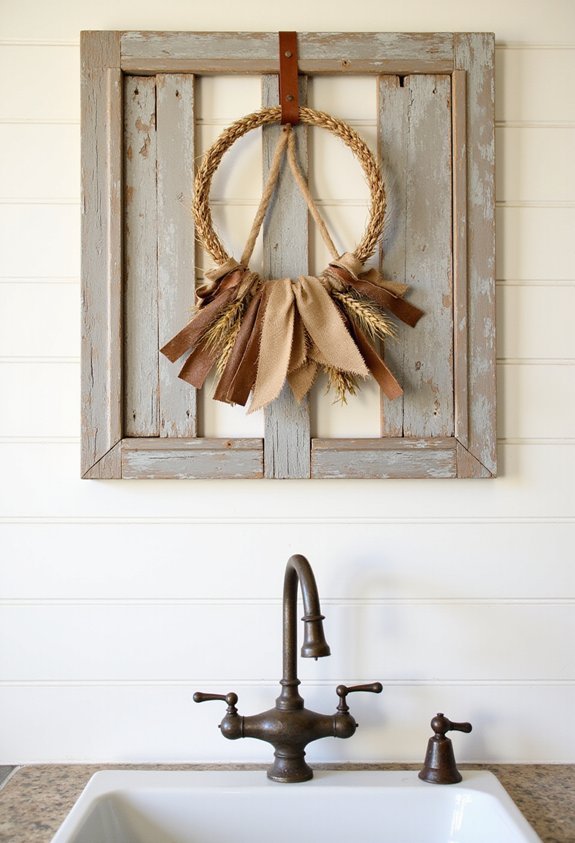
If you’re drawn to vintage aesthetics, rustic farmhouse wreaths let you showcase reclaimed materials that tell a story. You can incorporate weathered wood pieces, salvaged metal accents, and distressed finishes that evoke country charm.
Start by gathering authentic materials—old barn wood, rusty horseshoes, vintage signs, or reclaimed door hardware. You’ll create visual interest by layering these textures on a simple base. Consider adding dried branches, burlap ribbon, or faded fabric strips for softness.
The beauty of farmhouse wreaths lies in their imperfect character. You’re not aiming for polished precision; instead, embrace worn edges and patina. Mix materials freely—combine wood with metal, add touches of greenery, and let asymmetrical placement enhance the casual elegance.
Hang your wreath where it’ll become a conversation starter, celebrating both sustainability and timeless design.
Modern Minimalist Wreaths for Sleek Kitchens
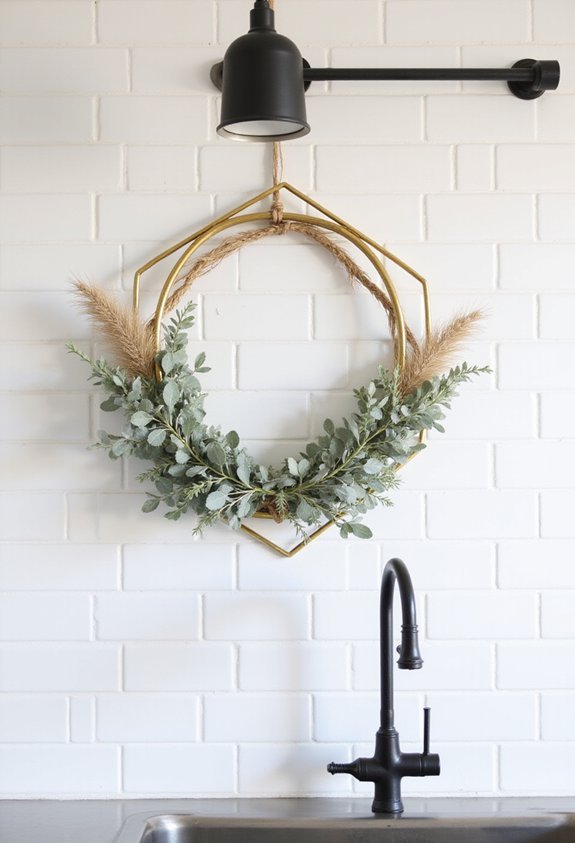
As you move from farmhouse charm to contemporary design, modern minimalist wreaths offer clean lines and intentional simplicity that’ll complement your streamlined kitchen aesthetic. You’ll find these pieces work beautifully with sleek cabinetry and minimalist décor.
Consider geometric designs featuring single-color botanicals or metallic accents. You can opt for circular frames in matte black, brushed gold, or stainless steel that echo your kitchen hardware. Eucalyptus branches, air plants, or dried grasses create understated visual interest without overwhelming your space.
These wreaths thrive when you keep embellishments sparse. A few strategically placed elements—perhaps three stems or a single accent—maintain the clean aesthetic you’re after. You’ll appreciate how minimalist wreaths serve as functional art, adding sophistication without demanding attention in your contemporary kitchen.
Dried Citrus and Fruit Wreaths for Warmth
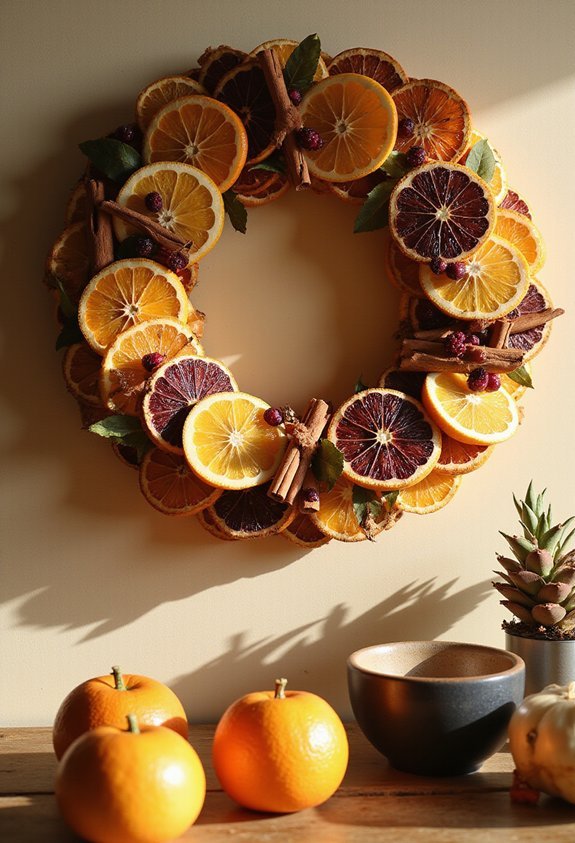
While minimalist designs prioritize restraint, dried citrus and fruit wreaths celebrate abundance and sensory richness. You’ll create natural warmth by layering dried orange slices, lemon wheels, and pomegranate halves onto a base. These wreaths infuse your kitchen with inviting aromatics—citrus oils release subtle fragrance over weeks, making your space feel lived-in and welcoming.
You can enhance the design by incorporating cinnamon sticks, star anise, and dried cranberries for visual depth and complementary scents. The warm color palette—oranges, reds, and deep browns—naturally coordinates with most kitchen styles while evoking seasonal comfort.
These wreaths work beautifully above farmhouse sinks or on pantry doors. You’ll appreciate their longevity; properly dried fruits maintain their appearance for months. They’re also budget-friendly since you can dry fruits at home using your oven, making them both economical and personally meaningful.
Vintage Kitchen Utensil Wreaths as Functional Art
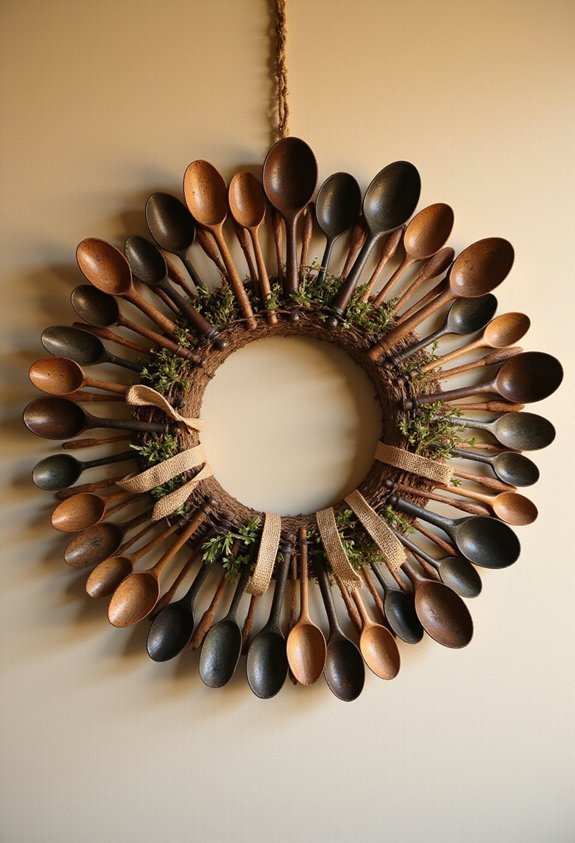
Vintage kitchen utensil wreaths transform functional tools into striking wall art that celebrates culinary heritage. You’ll create a conversation piece by arranging old wooden spoons, vintage whisks, measuring cups, and antique ladles in circular patterns. These pieces work beautifully because they’re already designed for visual interest—each tool has unique shapes and patinas that catch the eye.
Start by selecting utensils that complement your kitchen’s color scheme. You can paint some pieces or leave them naturally weathered for authentic charm. Attach items to a sturdy base using wire, hot glue, or fishing line, depending on weight and durability.
This approach gives you functional décor that honors culinary traditions while adding character. Your guests will appreciate the nostalgic appeal and resourcefulness of repurposing beloved kitchen tools into meaningful wall art.
Monochromatic Wreaths for Design Consistency
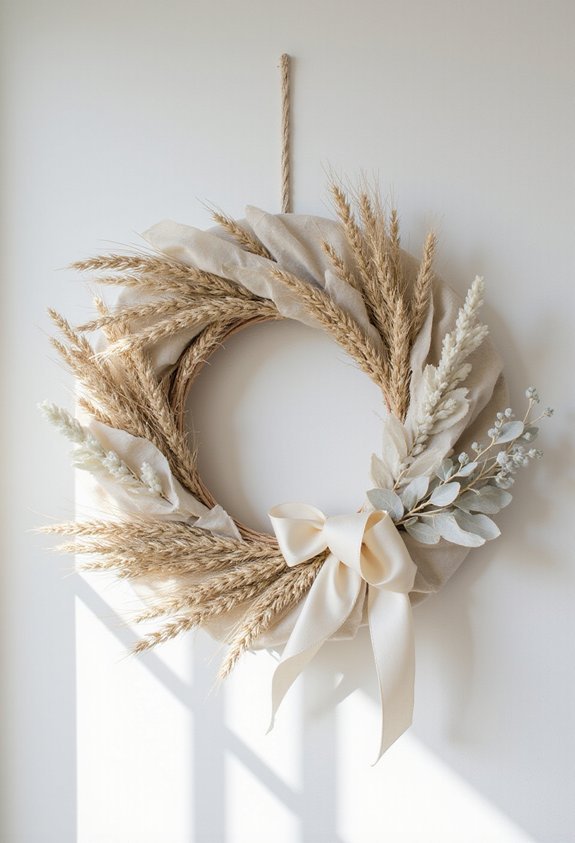
If you’re seeking a more streamlined aesthetic than eclectic vintage collections, monochromatic wreaths offer a sophisticated alternative that strengthens your kitchen’s visual cohesion. By selecting materials in a single color family—whites, grays, or blacks—you’ll create a unified look that complements modern or minimalist design schemes.
Consider combining different textures within your chosen palette: dried wheat with frosted berries, metallic accents with matte finishes, or various fabric tones. This approach adds depth without introducing conflicting colors that might clash with your cabinetry or backsplash.
Monochromatic wreaths work particularly well in kitchens with bold accent walls or statement appliances, allowing other elements to shine. You’ll find this strategy especially effective for maintaining a cohesive design narrative throughout your space.
Budget-Friendly Wreaths Using Everyday Materials
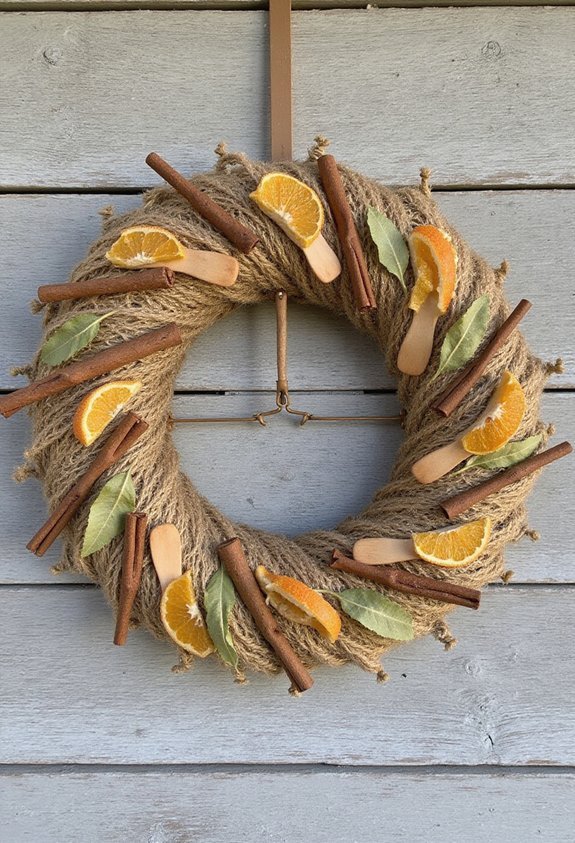
You don’t need to spend a fortune to create an attractive kitchen wreath. Gather items you already have at home: dried pasta, cinnamon sticks, bay leaves, and burlap scraps. These materials cost little to nothing and offer authentic kitchen charm.
Start with a wire or foam base from a dollar store. Layer your everyday items using hot glue or floral wire. Dried herbs like rosemary and thyme add both visual interest and subtle fragrance. Incorporate ribbon scraps, twine, or fabric strips for texture and color.
Don’t overlook kitchen linens—old dish towels and aprons provide excellent material. You can also use vintage wooden spoons, cookie cutters, or kitchen utensils. This approach transforms household items into a personalized, budget-conscious wreath that reflects your kitchen’s personality while keeping your wallet happy.
Seasonal Wreaths That Rotate With Your Calendar
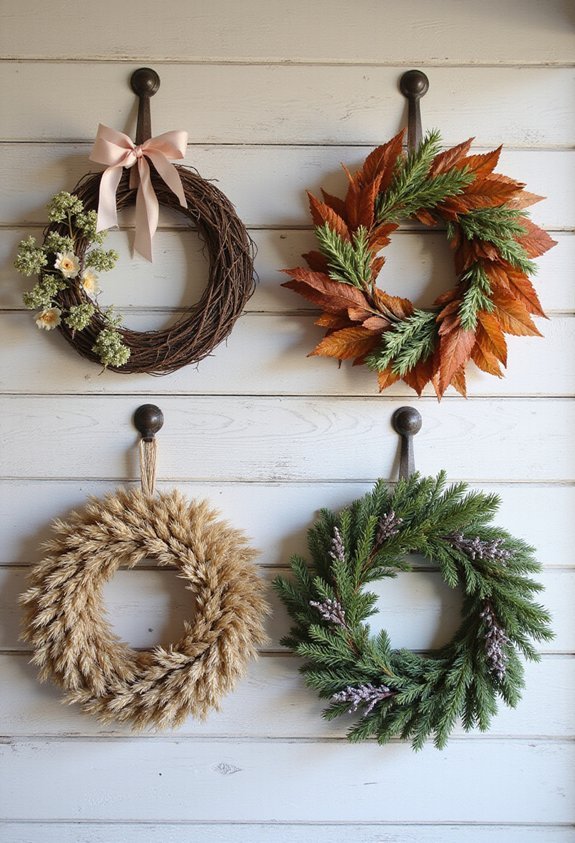
Once you’ve mastered budget-friendly basics, you can expand your wreath collection by creating seasonal versions that evolve with the year. Spring wreaths feature fresh florals, pastel ribbons, and new growth elements. Summer versions incorporate bright colors, dried grasses, and lightweight materials that withstand heat. Fall wreaths showcase deep oranges, burgundies, wheat bundles, and miniature gourds. Winter designs utilize evergreen branches, berries, metallic accents, and frosted elements.
Rotating your wreaths keeps your kitchen décor fresh without requiring constant purchases. Store off-season wreaths in labeled boxes to protect them and simplify changes. Consider creating a base wreath structure you can swap decorative elements in and out of seasonally. This approach maximizes your investment while maintaining visual interest throughout the year.
Herb Wreaths You Can Cook With
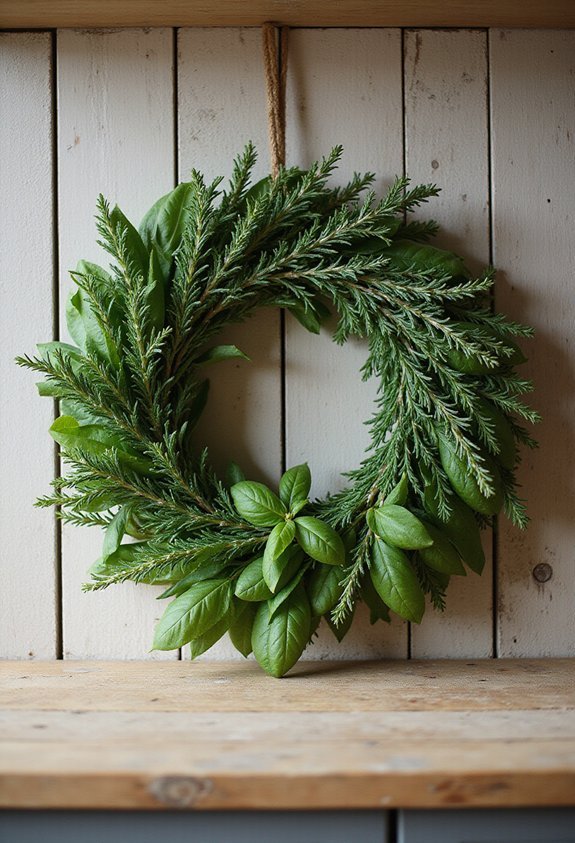
Beyond purely decorative pieces, functional herb wreaths merge kitchen aesthetics with culinary utility. You can create a living wreath using fresh herbs like rosemary, thyme, oregano, and basil that you’ll actually use in your cooking. Start with a wire or foam base, then secure herb bundles tightly with floral wire or twine.
Position your wreath near your stove or kitchen window where herbs receive adequate light. Water regularly to keep herbs vibrant and fresh. As you cook, simply snip sprigs directly from the wreath for soups, roasted vegetables, and marinades.
This approach eliminates waste while keeping your most-used ingredients within arm’s reach. Replace herbs seasonally as they dry out or lose significance. You’re combining decoration with practical functionality in one elegant piece.
Frequently Asked Questions
How Do I Prevent Kitchen Wreaths From Collecting Dust and Grease Buildup?
You’ll prevent dust and grease buildup by regularly dusting your kitchen wreath with a soft cloth weekly. You should also spray it monthly with a gentle cleaning solution, then let it air dry completely before hanging it back up.
What’s the Best Way to Hang a Wreath Safely on Kitchen Walls?
You’ll want to use heavy-duty adhesive hooks or secure wall anchors that support your wreath’s weight. Install them at eye level, ensuring they’re firmly attached to studs when possible. Test the hold before fully hanging your wreath to prevent accidents.
How Long Do Homemade Kitchen Wreaths Typically Last Before Needing Replacement?
Your homemade kitchen wreaths typically last 6-12 months before you’ll need replacement. You can extend their lifespan by keeping them away from heat sources and moisture. You’ll notice fading or wilting as signs they’re ready for revitalizing.
Can Kitchen Wreaths Withstand Humidity and Temperature Changes Near Cooking Areas?
You’ll find that kitchen wreaths can withstand humidity and temperature changes, but they’ll last longer if you choose moisture-resistant materials like artificial flowers, preserved botanicals, or sealed wood. You should position yours away from direct steam sources for ideal durability.
Are There Any Safety Concerns With Flammable Wreath Materials in Kitchens?
You should avoid flammable materials like dried flowers, straw, and certain ribbons near cooking areas. Keep your wreath at least three feet from stovetops and open flames. Choose fire-resistant alternatives such as artificial greenery, metal accents, or non-flammable decorations instead.
Conclusion
You’ve explored nine creative kitchen wreath ideas that’ll transform your cooking space into something special. Whether you’re drawn to fresh herbs, rustic farmhouse vibes, or sleek modern designs, you’ll find an option that matches your style and budget. By rotating seasonal wreaths or mixing practical elements with decorative touches, you’re creating functional art that enhances your kitchen’s appeal while adding personality to your home.