

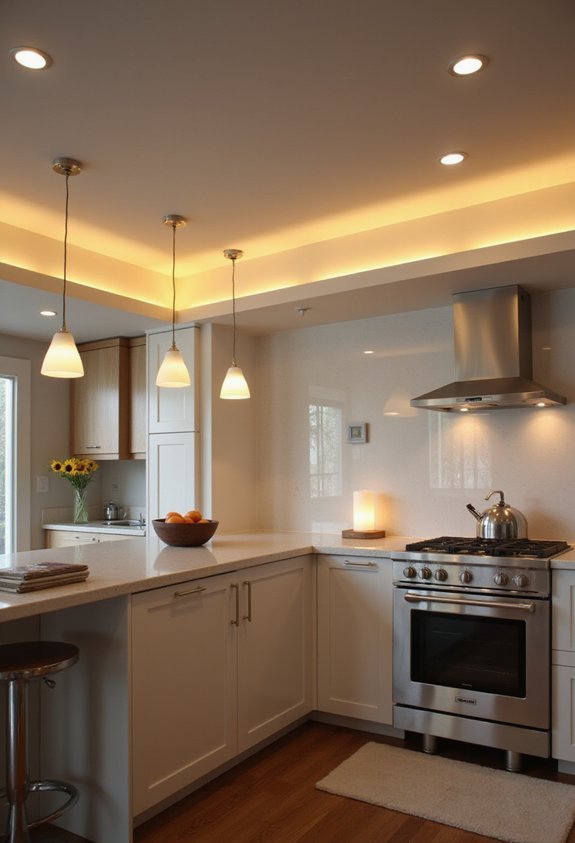
Modern kitchen lighting should work hard supporting actual cooking tasks while looking genuinely beautiful doing so. Bright task lighting above work surfaces enables confident food preparation, softer ambient lighting creates welcoming atmosphere for gatherings. Combining different light sources lets you adjust brightness matching activities from intense cooking to relaxed entertaining effortlessly.
Start with practical essentials: under-cabinet lighting illuminates countertops eliminating shadows, pendant lights over islands provide focused brightness, ceiling fixtures distribute general illumination evenly. Add dimmable switches allowing mood adjustment, incorporate warm-toned LEDs creating inviting atmosphere, and position fixtures avoiding glare and harsh shadows. These straightforward solutions prove modern lighting succeeds through practical functionality supporting genuine daily cooking needs.
Your functional modern kitchen lighting transforms cooking experience through thoughtful fixture selection and strategic placement. Prioritize adequate task lighting, incorporate dimming capability for ambiance adjustment, and choose fixtures matching your aesthetic preference. This practical approach proves modern lighting enhances both cooking effectiveness and gathering comfort when designed acknowledging actual household needs.
Why Layering Beats Single-Source Lighting
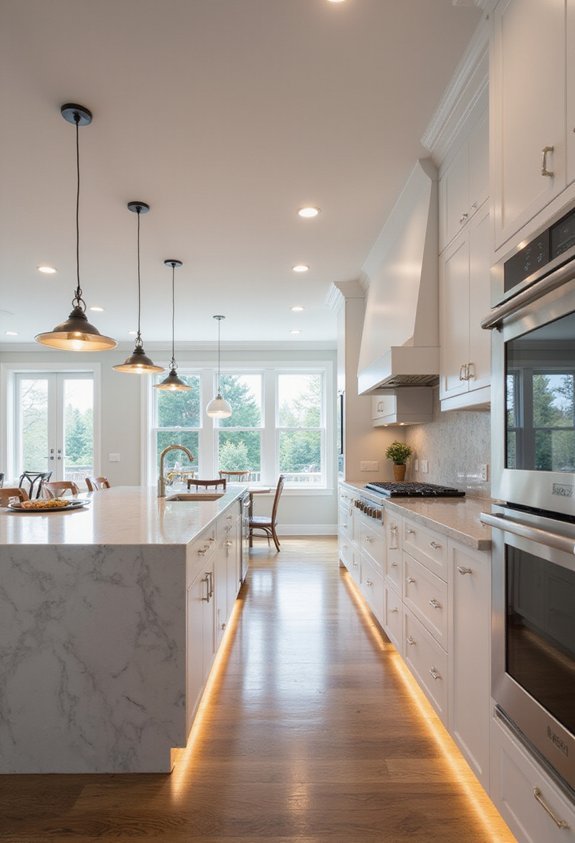
While a single overhead fixture might seem practical, it’ll cast harsh shadows and leave your kitchen looking flat and uninviting. Layered lighting transforms your space by combining multiple light sources at different heights and intensities.
You’ll want to blend three essential layers: ambient lighting for overall brightness, task lighting for work surfaces, and accent lighting for visual interest. This approach lets you adjust brightness based on your needs—bright illumination for cooking, softer tones for dining.
Layered lighting also eliminates dark corners and creates depth, making your kitchen feel more spacious and welcoming. You’ll notice shadows disappear, colors appear more vibrant, and the space gains dimension. By strategically placing lights above islands, under cabinets, and in ceiling fixtures, you’ll achieve professional-quality lighting that’s both functional and aesthetically pleasing.
Also read: 11 Open Cabinet Kitchen Ideas
Task Lighting: Brighten Where You Cook and Prep
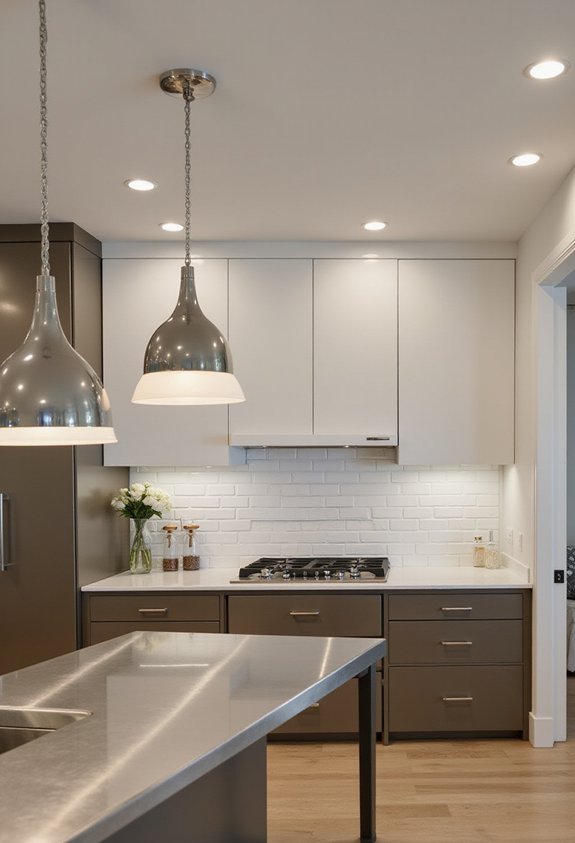
Because you’ll spend most of your kitchen time at the stove, countertops, and prep areas, task lighting is essential for safety and precision. You’ll want to install focused lights directly above these zones to eliminate shadows and reduce eye strain while chopping, mixing, or cooking.
Under-cabinet lighting works exceptionally well for counter tasks, casting bright illumination on your workspace without glare. Pendant lights suspended over islands provide concentrated light for meal prep and dining. For your stovetop, consider range hoods with built-in lights that target cooking surfaces effectively.
You shouldn’t rely solely on overhead fixtures, as they cast shadows where you need visibility most. By strategically placing task lights, you’ll enhance functionality, improve safety, and make kitchen work more enjoyable and efficient.
Ambient Lighting: Set the Overall Mood
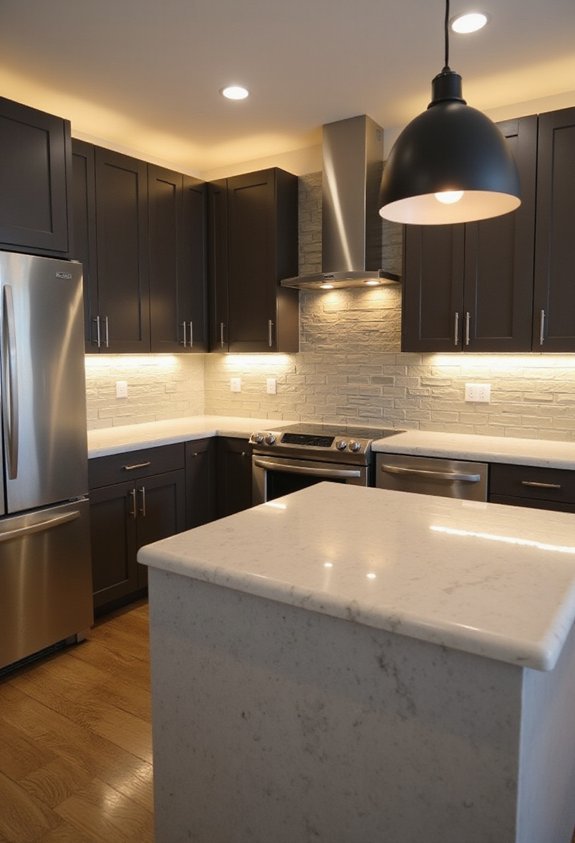
Once you’ve established task lighting for functionality, ambient lighting becomes your foundation for creating a welcoming kitchen atmosphere. This gentle, diffused light fills your entire space, eliminating harsh shadows and setting the tone for the room.
You’ll want to layer your ambient lighting with options like recessed ceiling fixtures, flush-mount lights, or pendant lights positioned strategically around your kitchen. Dimmers prove invaluable—they let you adjust brightness based on the time of day and occasion, transforming your kitchen from a practical workspace into an inviting gathering place.
Consider warm color temperatures (2700K-3000K) for ambient lighting, as they promote relaxation and comfort. This foundational layer works alongside your task lighting to create a balanced, functional, and aesthetically pleasing kitchen environment that feels both modern and lived-in.
Accent Lighting: Highlight Your Best Features
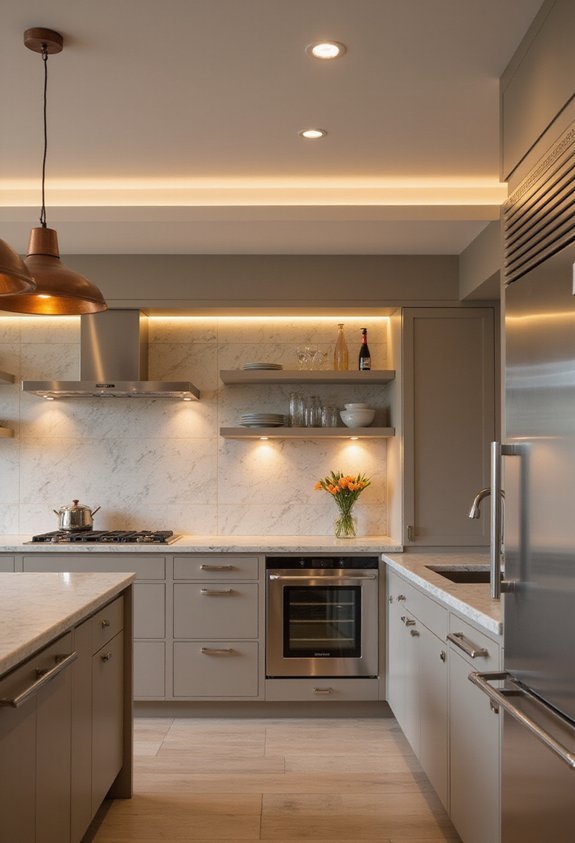
With your ambient and task lighting in place, accent lighting lets you draw attention to the architectural details and design elements that make your kitchen uniquely yours. You’ll want to strategically place these lights to illuminate what you love most—whether that’s open shelving, a striking backsplash, or exposed beams.
Consider installing LED strip lights under cabinets or along crown molding to create visual depth. Recessed spotlights work beautifully for highlighting artwork or architectural features. You might also use picture lights above floating shelves to showcase decorative items or cookbooks.
The key is subtlety. Your accent lighting shouldn’t overpower the space but rather enhance it. Keep these lights dimmable so you can adjust intensity based on your mood and the time of day. This layered approach creates dimension and personality in your modern kitchen.
Modern Pendant Lights: Statement Fixtures Over Islands
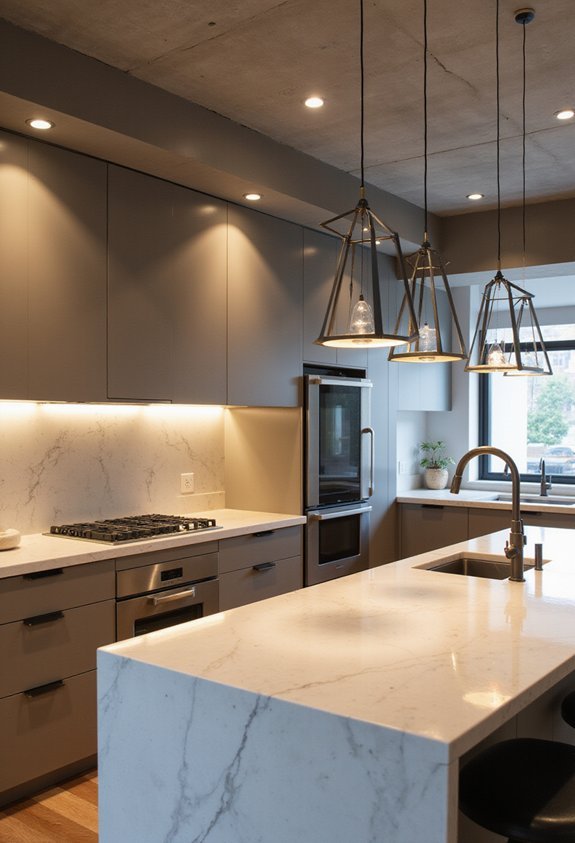
Island pendant lights serve as both functional task lighting and a bold design statement in your kitchen. You’ll find that modern styles range from sleek geometric shapes to industrial-inspired fixtures that command attention above your workspace.
When selecting pendant lights, consider your kitchen’s aesthetic. Minimalist designs work well in contemporary spaces, while vintage Edison bulbs suit farmhouse themes. Aim for fixtures that complement your cabinetry and countertop materials.
Spacing matters greatly. You should install pendant lights approximately 30 to 36 inches above your island surface, positioning them 24 to 30 inches apart for balanced illumination. This height guarantees adequate task lighting without obstructing sightlines across your kitchen.
Quality materials like brushed metal, concrete, or hand-blown glass certify durability. Dimmable options give you flexibility, allowing you to adjust ambiance for entertaining or everyday tasks.
Under-Cabinet LED Strips: Illuminate Work Surfaces
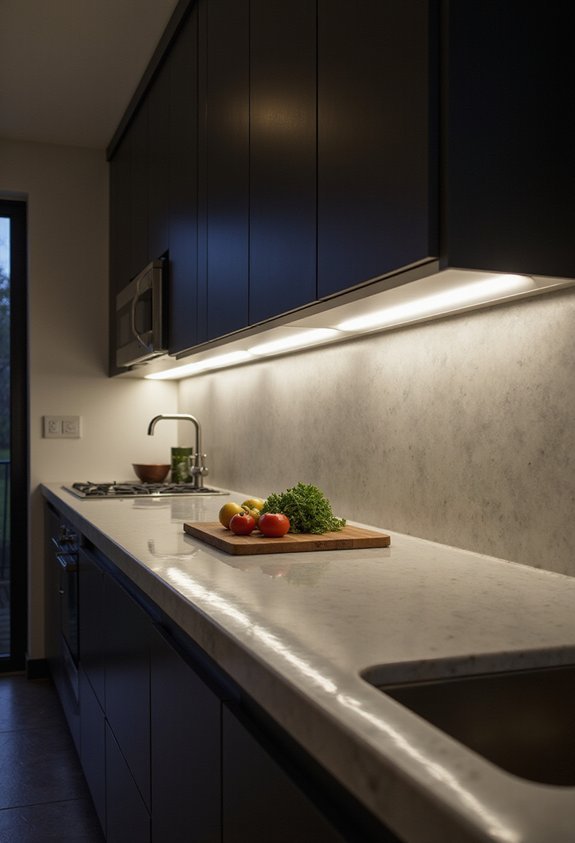
While overhead pendant lights establish visual impact, you’ll want to layer in practical illumination directly where you’re prepping food and cooking. Under-cabinet LED strips are your solution for task lighting that eliminates shadows on countertops.
These slim fixtures mount seamlessly beneath your cabinets, casting bright light exactly where you need it. LED technology keeps heat minimal and energy costs low while delivering consistent brightness for years. You’ll appreciate the flexibility—choose warm white for ambiance or cool white for precision work.
Installation is straightforward, requiring just basic adhesive or screws. Many strips include dimming capabilities, letting you adjust intensity based on your activity. They’re also perfect for accent lighting, subtly highlighting backsplashes or creating nighttime navigation. Under-cabinet LEDs transform your workspace into a functional, well-lit cooking environment.
Recessed Lighting: A Clean, Minimalist Foundation
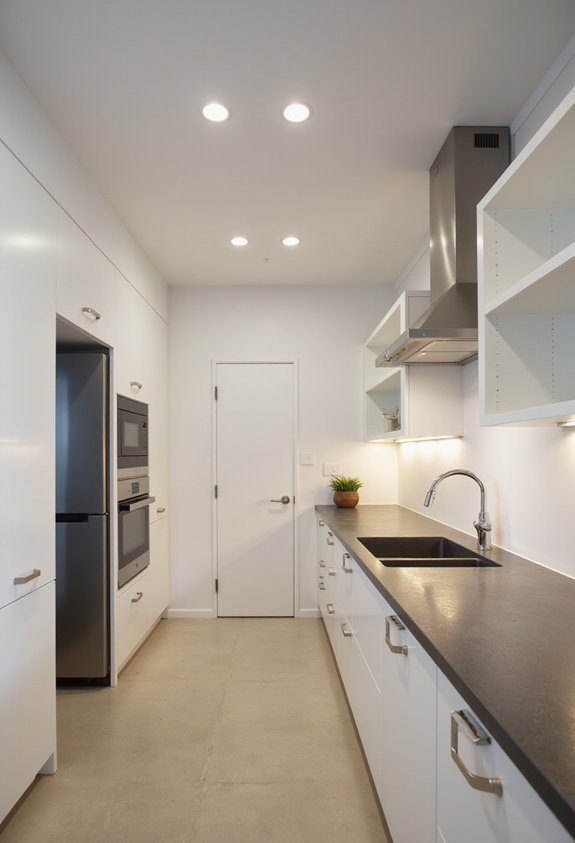
When you’re seeking a streamlined aesthetic that doesn’t compromise on functionality, recessed lighting delivers the modern kitchen foundation you’re after. These flush-mounted fixtures disappear into your ceiling, creating clean lines that enhance minimalist design while providing consistent, ambient illumination throughout your space.
You’ll appreciate how recessed lights work seamlessly with other lighting layers. They establish your baseline brightness without visual clutter, allowing under-cabinet and pendant fixtures to shine as focal points. Position them strategically across your ceiling in a grid pattern for even coverage, spacing them roughly 4-6 feet apart depending on ceiling height.
Modern recessed options include dimmable LEDs and adjustable color temperatures, giving you flexibility to shift ambiance from energizing task lighting to relaxing evening settings. You’re investing in versatile, timeless functionality.
Track Lighting: Flexible Illumination for Every Zone
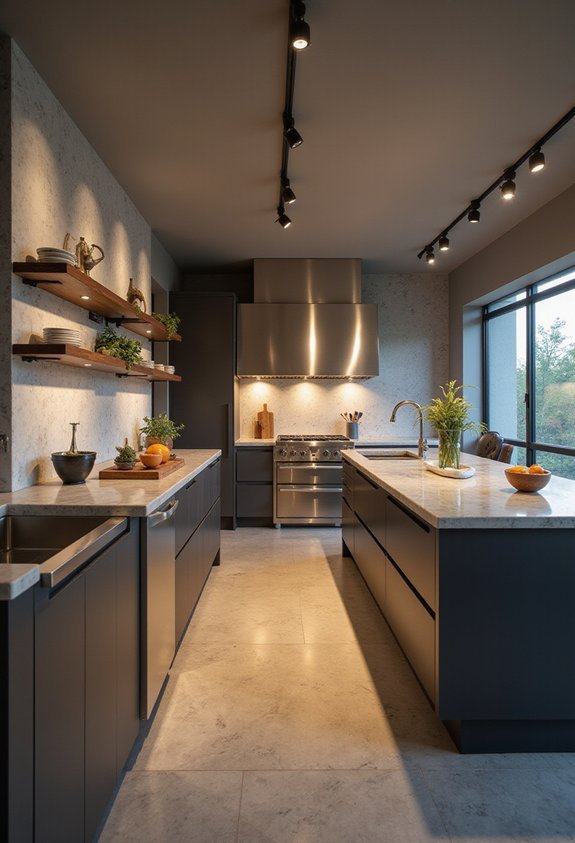
Track lighting builds on the foundational brightness that recessed fixtures provide, but it’s where you gain dynamic control over illumination direction and intensity. You can position individual heads to spotlight your countertops, island, or dining area—adjusting them as your needs evolve.
Modern track systems come in sleek finishes like matte black, brushed nickel, and white, seamlessly integrating with contemporary kitchen aesthetics. LED track heads are energy-efficient and generate minimal heat, making them ideal for task lighting above work zones.
You’ll appreciate the flexibility track lighting offers. Unlike fixed recessed lights, you can reposition heads without reopening ceilings. This adaptability makes track lighting perfect for highlighting artwork, directing light precisely where you cook or prep, and creating ambiance during entertaining.
Modern Wall Sconces: Ambient Light Without Overhead Fixtures
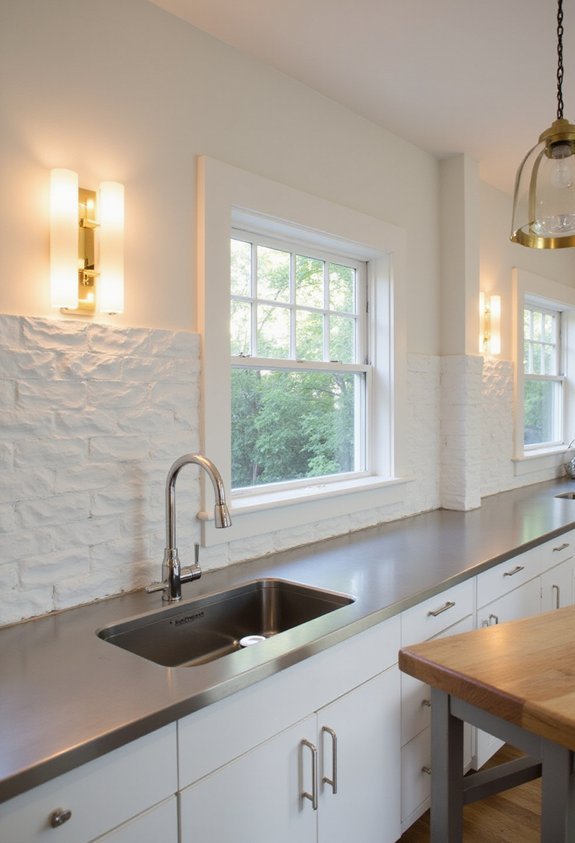
How do you add layered lighting without relying on ceiling fixtures? Modern wall sconces offer an excellent solution. You can install them at strategic points around your kitchen to create ambient illumination that’s both functional and stylish.
Wall sconces work beautifully flanking your kitchen island, highlighting your backsplash, or positioned beside doorways. They eliminate harsh overhead shadows while providing warm, inviting light for everyday tasks and entertaining. Choose sconces with adjustable brightness or directional designs to control where light falls.
Contemporary styles range from minimalist geometric shapes to sculptural pieces that double as décor. Pairing sconces with dimmers gives you flexibility to adjust the mood throughout the day. This approach reduces your dependency on bright ceiling lights, creating a more sophisticated kitchen atmosphere that’s energy-efficient and visually appealing.
Industrial Pendant Lights: Raw Materials and Bold Design
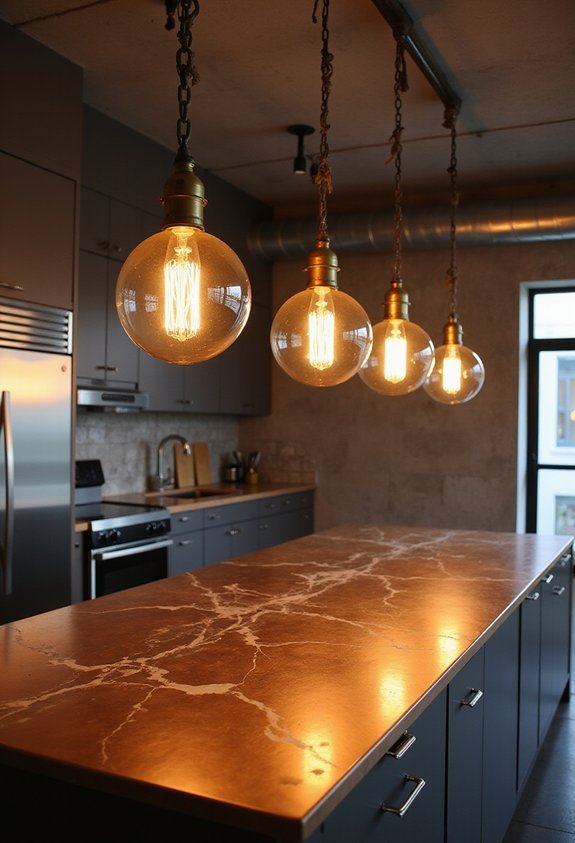
If you’re drawn to exposed brick, concrete, and metal finishes, industrial pendant lights are your ideal choice for kitchen lighting. These fixtures showcase raw materials like iron, steel, and reclaimed wood, creating striking visual statements above your island or countertops.
You’ll appreciate how industrial pendants blend functionality with bold aesthetics. They typically feature cage designs, Edison bulbs, or geometric frames that complement contemporary and shifting kitchens alike. The exposed hardware and minimalist construction demand attention while maintaining practical illumination.
Installation flexibility makes them versatile for various ceiling heights and kitchen layouts. You can cluster multiple pendants for dramatic impact or position them individually for focused task lighting. Their industrial character works exceptionally well in loft-style spaces, modern farmhouses, and urban kitchens where you want personality and edge.
Linear Suspension Lights: Sleek Lines Over Long Counters
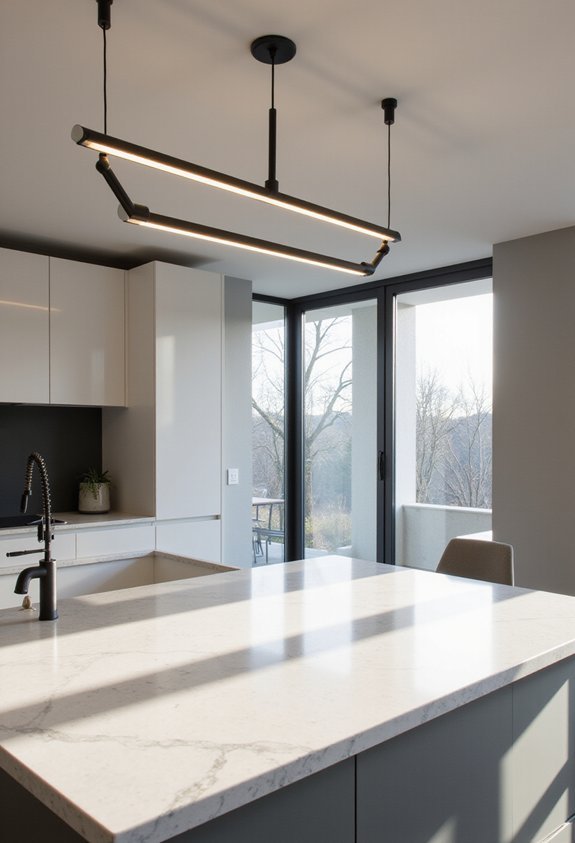
While industrial pendants deliver drama through raw materials and bold geometry, linear suspension lights offer a refined alternative that prioritizes clean lines and seamless coverage. You’ll appreciate how these fixtures stretch elegantly across extended countertops, eliminating shadowy gaps that single pendants create.
Linear lights work exceptionally well in contemporary kitchens where minimalist aesthetics reign. You can adjust their length to match your counter dimensions precisely, ensuring balanced illumination throughout your workspace. They’re ideal for kitchen islands where you need consistent task lighting without visual clutter.
Choose aluminum or brushed metal finishes to complement modern cabinetry. Dimmable LED options let you control ambiance for cooking and entertaining. You’ll find these fixtures adaptable enough to fit both transitional and industrial spaces, making them a smart investment for sophisticated kitchen design.
Hidden Cove Lighting: The Secret Glow Behind Your Cabinets
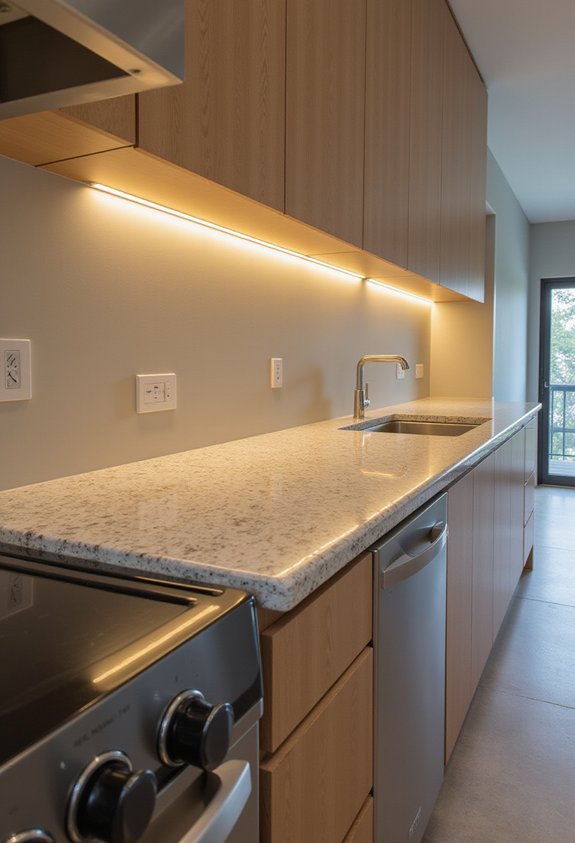
Beyond task lighting, you can transform your kitchen’s ambiance with hidden cove lighting tucked discreetly behind upper cabinets. This indirect illumination creates a soft, warm glow that makes your space feel inviting without casting harsh shadows.
You’ll want to install LED strip lights along the underside of your cabinets, directing light downward onto countertops and backsplashes. This setup serves dual purposes: it enhances visibility while adding sophisticated mood lighting for evening entertaining.
The beauty of cove lighting lies in its subtlety. You’re not drawing attention to the light source itself—instead, you’re creating depth and dimension throughout your kitchen. Consider warm white LEDs for a cozy atmosphere or cool white for a contemporary feel. Installation is straightforward, and the result dramatically elevates your kitchen’s overall design aesthetic.
Smart Dimmers and LED Technology: Lower Bills, Longer Lifespan
Once you’ve invested in quality LED lighting, smart dimmers activate their full potential by letting you control brightness, color temperature, and energy consumption from your smartphone or voice assistant. You’ll dramatically reduce your electricity bills since LEDs consume 75% less energy than incandescent bulbs and last 25 times longer—meaning fewer replacements and lower maintenance costs.
Smart dimmers learn your preferences and automatically adjust lighting throughout the day, optimizing both comfort and efficiency. You can create customized scenes for cooking, dining, or entertaining with a single tap. Integration with voice commands like Alexa or Google Assistant adds convenience to your daily routine.
The initial investment pays dividends quickly through energy savings and extended bulb lifespan, making smart LED dimming systems a practical upgrade for any modern kitchen.
Frequently Asked Questions
How Much Does It Cost to Install Modern Kitchen Lighting Fixtures Professionally?
You’ll typically spend $500 to $2,500 for professional kitchen lighting installation, depending on fixture complexity and your electrician’s rates. Labor costs usually run $75 to $150 per hour, while you’re looking at additional expenses for permits and rewiring work.
What Is the Ideal Color Temperature for Kitchen Lighting in Kelvin?
You’ll want to use 2700K-3000K for warm ambient lighting and 4000K-5000K for task areas. You’ll find that cooler temperatures help you see details better when you’re cooking, while warmer tones create a comfortable atmosphere for dining.
How Do I Choose the Right Brightness Level for My Kitchen Size?
You’ll want to calculate lumens based on your kitchen’s square footage—aim for 30-40 lumens per square foot. Measure your space, multiply by this range, then select fixtures that deliver those brightness levels. You can always layer lights for flexibility.
Can I Install Modern Kitchen Lighting Myself or Do I Need an Electrician?
You can install some modern kitchen lighting yourself if you’re handy, but you’ll need an electrician for hardwired fixtures involving electrical rewiring. DIY installation works best for plug-in pendant lights and under-cabinet LED strips.
What Is the Energy Consumption Difference Between LED and Traditional Bulbs Annually?
You’ll save approximately 75-80% on energy costs annually by switching to LED bulbs instead of traditional incandescent ones. LEDs consume roughly 10 watts compared to incandescent bulbs’ 60 watts, making them considerably more efficient for your kitchen lighting.
Conclusion
You’ll transform your kitchen by layering different lighting types that work together seamlessly. Task lighting keeps you safe while cooking, ambient lighting sets your desired atmosphere, and accent lighting showcases your kitchen’s best features. When you combine modern pendant lights, smart dimmers, and strategic fixture placement, you’re creating a space that’s both functional and visually stunning. You’ve got everything you need to achieve professional-quality kitchen lighting.