


A dry balcony is a lifesaver for storage, but let’s be honest—it becomes a dumping ground fast.
I’ve learned that going vertical changes everything. Wall-mounted shelves and pegboards keep the floor clear and my sanity intact.
Weather-resistant cabinets became my best friend after ruined gardening supplies.
Pair them with labeled bins, and suddenly finding that one screwdriver takes seconds, not an hour.
Mobile carts are the unsung heroes here. I wheel mine wherever needed, then tuck it away.
Clear containers let me spot seasonal gear instantly.
Small balcony, big potential—it just takes smart placement.
Make Every Inch Earn Its Place
Start by deciding what actually needs to live on your balcony. Keeping tools, cleaning supplies, and seasonal items in separate zones makes everything easier to find and stops clutter from spreading.
Use your walls before filling the floor. Shelves, hooks, pegboards, and door organizers can give you valuable storage while leaving enough room to move around comfortably.
Choose containers that suit the conditions too. Even on a dry balcony, sealed bins and durable cabinets help protect your belongings from dust, humidity, and temperature changes.
15 Dry Balcony Storage Ideas
Good dry balcony storage ideas make a small outdoor area work much harder without turning it into an overcrowded utility closet. Vertical storage, labeled containers, and compact organizers can give almost every item a proper place.
You can also combine permanent-looking organization with flexible pieces such as stackable bins and wheeled carts. That makes it easier to adjust your setup as your storage needs change.
Use the ideas below to create a balcony that stays organized, accessible, and genuinely useful.
Install Vertical Shelving to Maximize Balcony Wall Space
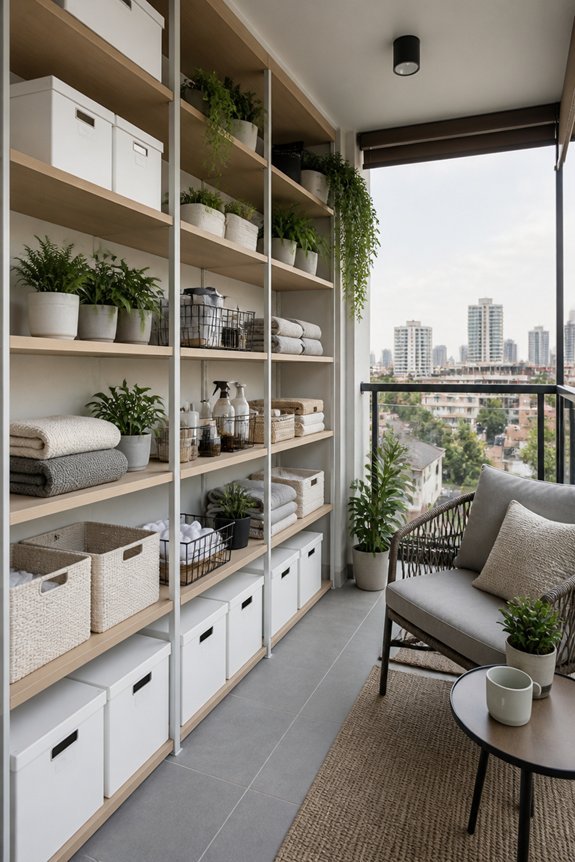
Many homeowners overlook the vertical potential of their balcony walls, missing valuable storage and display opportunities. Installing vertical shelving maximizes limited space effectively, organizing items like potted plants, gardening supplies, and outdoor decorations.
Wall-mounted shelves, ranging from metal to wood materials, accommodate various weight capacities and aesthetic preferences. Floating shelves work well for lightweight items, while heavy-duty bracket systems support substantial loads. Proper installation requires secure wall anchors, ensuring stability and safety.
Shelving units create organized zones, separating frequently used tools from seasonal items. This approach transforms cluttered balconies into functional, tidy spaces while maintaining accessibility and visual organization.
Use Clear Storage Containers for Quick Item Visibility
Because balcony clutter obscures what items are actually stored, clear storage containers offer a straightforward solution for maintaining visibility and organization. Transparent plastic bins, acrylic boxes, and glass containers allow residents to identify contents without opening each unit.
Labels on containers further enhance accessibility by noting specific items: gardening tools, seasonal decorations, cleaning supplies, or outdoor equipment. Clear containers also prevent duplicate purchases and reduce time spent searching for particular objects. Stackable designs maximize vertical space on shelves, while uniform sizing creates neater arrangements. This method works particularly well for frequently accessed items requiring quick identification.
Divide Your Space by Item Type (Tools, Chemicals, Seasonal Gear)

A balcony’s storage efficiency depends on grouping similar items into distinct zones throughout the space.
Tools such as hammers, screwdrivers, and wrenches belong in one designated area, preferably mounted on pegboards or stored in toolboxes. Chemicals including fertilizers, pesticides, and cleaning solutions require a separate section with proper ventilation and safety labeling. Seasonal gear like holiday decorations, winter equipment, and garden supplies occupies another zone.
This categorization prevents mixing incompatible items, reduces search time, and minimizes safety hazards. Each zone should have clear boundaries, established through shelving units, labeled bins, or color-coded sections, enabling household members to locate and return items efficiently.
Add a Pegboard Wall for Tools and Supplies
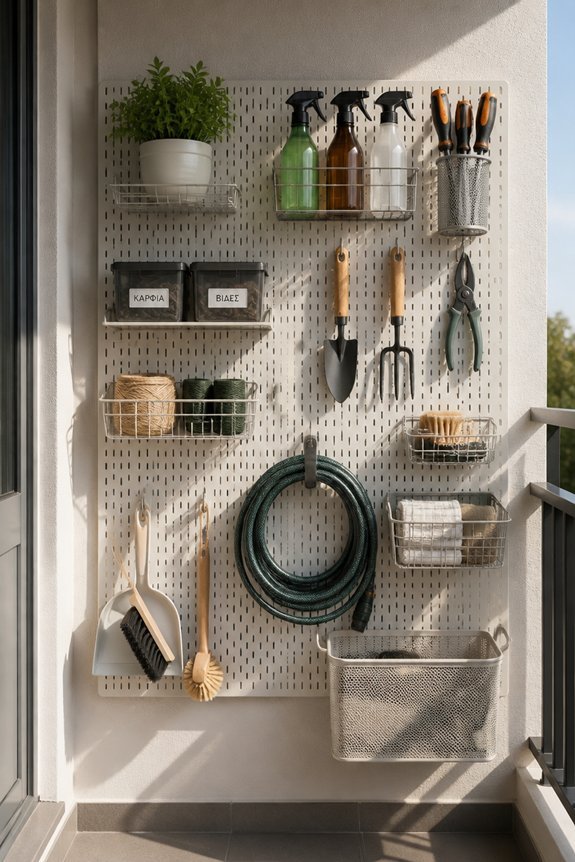
Pegboards offer an efficient wall-mounted storage solution for balcony tools and supplies, utilizing vertical space while keeping frequently used items visible and accessible. Installing a pegboard requires wall anchors, screws, and hooks sized appropriately for weight capacity. Common items include hammers, screwdrivers, wrenches, pruning shears, and measuring tapes.
Paint or stain the pegboard to match balcony aesthetics. Organize tools by category: hand tools on one section, power tools on another, gardening supplies elsewhere. Labeling hook locations prevents misplacement. Pegboards accommodate seasonal adjustments, allowing users to swap items as needs change throughout the year.
Choose Weather-Resistant Cabinets for Long-Term Protection
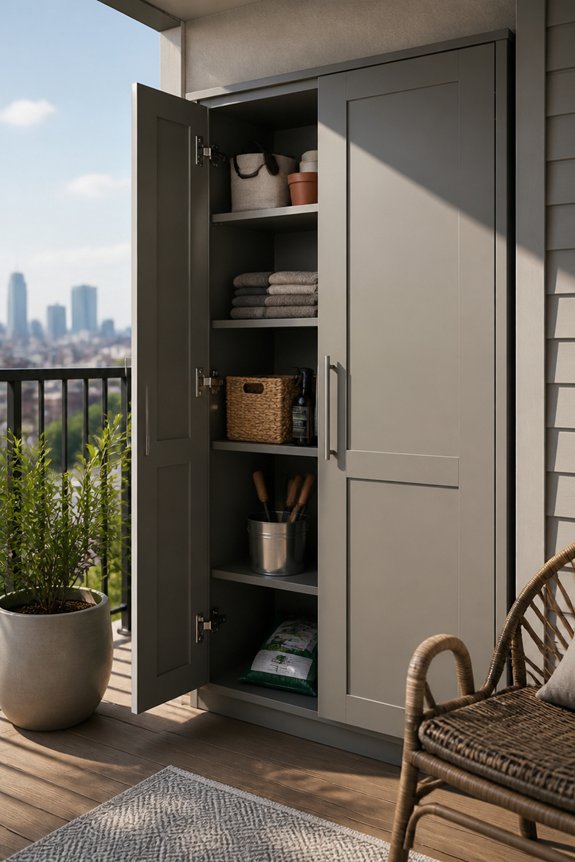
Weather-resistant cabinets provide durable storage that withstands rain, sun exposure, temperature fluctuations, and humidity on outdoor balconies. Materials like powder-coated metal, composite wood, and marine-grade plastic resist weathering and corrosion effectively. Stainless steel hinges and locks prevent rust and deterioration over time.
Sealed seams and drainage holes prevent water accumulation inside units. Teak and cedar cabinets offer natural weather resistance through oil content. Plastic storage boxes with tight-fitting lids protect tools, cleaning supplies, and seasonal items.
Regular maintenance, including occasional wiping and inspection, extends cabinet lifespan. Proper ventilation around stored items prevents mold and mildew development, ensuring contents remain protected year-round.
Hang Organizers on Your Balcony Door
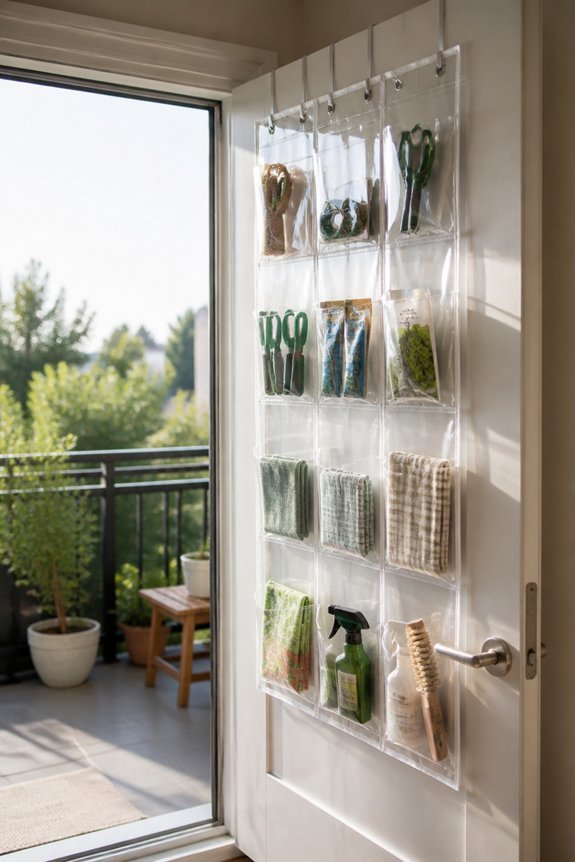
Beyond enclosed cabinet storage, balcony doors offer convenient vertical space for organizing smaller items and frequently used supplies. Over-the-door organizers with clear pockets hold gardening gloves, cleaning cloths, small tools, and maintenance supplies. Hanging shoe organizers work similarly, providing multiple compartments for various items.
These solutions maximize unused door space without requiring installation or permanent fixtures. Clear plastic options allow quick identification of contents without opening pockets. Over-the-door organizers accommodate lightweight items only, preventing door strain. This approach keeps supplies accessible while maintaining a tidy balcony appearance, especially useful for renters unable to install permanent storage solutions.
Label Everything for Effortless Retrieval
When storage containers and organizers hold multiple items, labeling each compartment prevents confusion and saves retrieval time. Adhesive labels, permanent markers, and label makers work effectively for identifying contents on shelves, bins, and drawers. Clear labeling systems should include item names, categories, and quantities when applicable.
Weather-resistant labels prove essential for balcony environments exposed to moisture and temperature changes. Color-coded labels organize items by type or frequency of use. Digital inventory lists, stored on phones or computers, complement physical labels by tracking expiration dates and restocking needs. Consistent labeling practices across all storage areas maintain organization efficiency.
Invest in Stackable Bins to Save Balcony Floor Space
Stackable storage bins maximize vertical space on balconies by utilizing height rather than floor area. Clear plastic containers allow visibility of contents, reducing time spent searching for items. Bins with secure locking lids protect stored materials from weather exposure and pests.
Popular options include modular units that interlock, preventing shifting during wind or movement. Labeling each bin’s exterior enables quick identification without opening containers. Durable polypropylene construction withstands temperature fluctuations and UV exposure.
Organizing items by category: tools, seasonal decorations, cleaning supplies: streamlines retrieval. Stackable designs accommodate varying storage needs without consuming valuable balcony walking space, making them practical solutions for utility areas.
Set Up a Dedicated Cleaning Supply Station
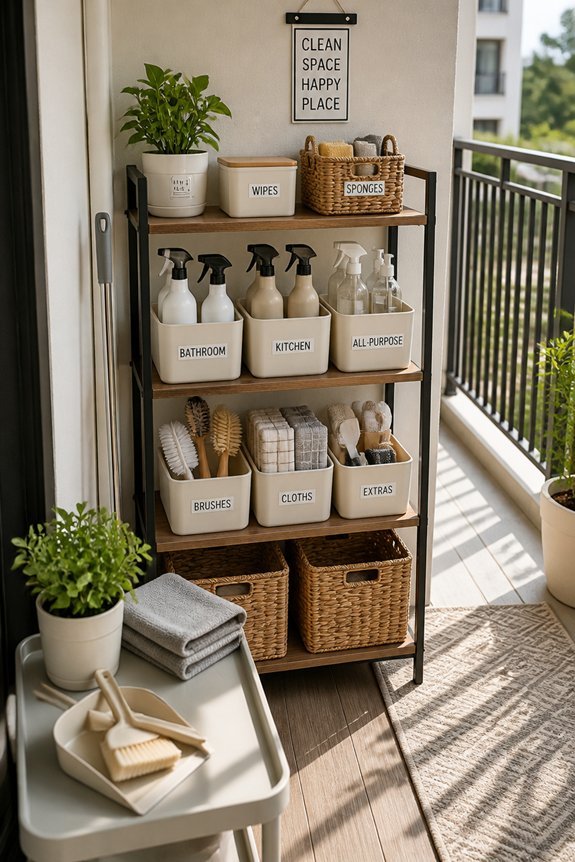
Designating a corner or shelf on the balcony for cleaning supplies creates an organized, accessible station for routine maintenance tasks. Store items like microfiber cloths, brushes, and mild detergent in weatherproof containers or a plastic caddy.
Keep a squeegee for windows, dustpan, and broom nearby for sweeping debris. Label each container clearly to identify contents at a glance. Position the station away from seating areas to prevent interference with relaxation spaces.
This arrangement enables quick access during regular maintenance, reducing time spent gathering supplies from multiple locations throughout the home.
Use Wall-Mounted Hooks for Frequently Used Items
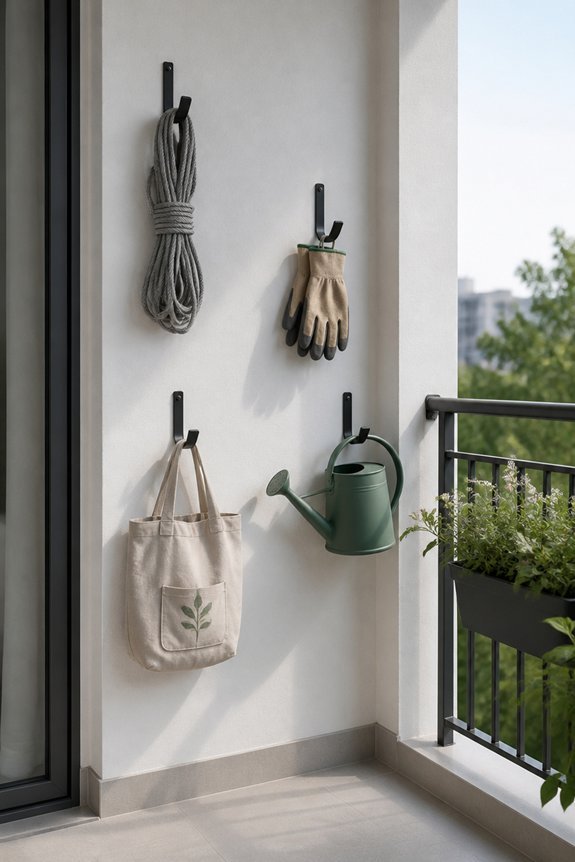
Installing wall-mounted hooks throughout the balcony provides convenient storage for items needed during regular use and maintenance. Hooks hold brooms, dustpans, mops, and cleaning cloths within easy reach. Garden tools, such as small shovels and pruners, can hang safely on designated hooks.
Lightweight items like twine, plant ties, and extension cords organize efficiently on hooks. This vertical storage method keeps the balcony floor clear and reduces clutter. Hooks should be positioned at appropriate heights for safe access. Stainless steel or rust-resistant hooks work well in outdoor environments exposed to moisture. Regular assessment guarantees hooks remain secure and functional.
Install Shelving Units Under Windows for Hidden Storage
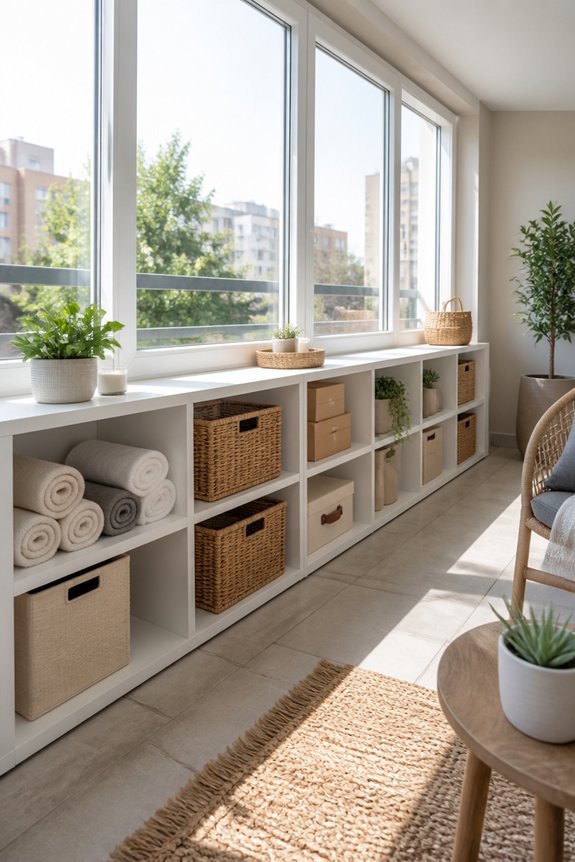
Positioning shelving units beneath balcony windows creates practical storage that remains largely concealed from view. These installations utilize otherwise wasted space effectively, keeping items organized and accessible.
Homeowners can store seasonal decorations, gardening supplies, cleaning equipment, and maintenance tools on multiple tiers. Weather-resistant materials like metal or treated wood withstand moisture and temperature fluctuations. Adjustable shelves accommodate varying item heights, maximizing storage capacity.
Closed cabinet doors provide additional concealment, protecting contents from dust and debris. This approach maintains a clean balcony appearance while organizing utility items conveniently within arm’s reach during regular use.
Store Off-Season Items in Sealed, Labeled Bins
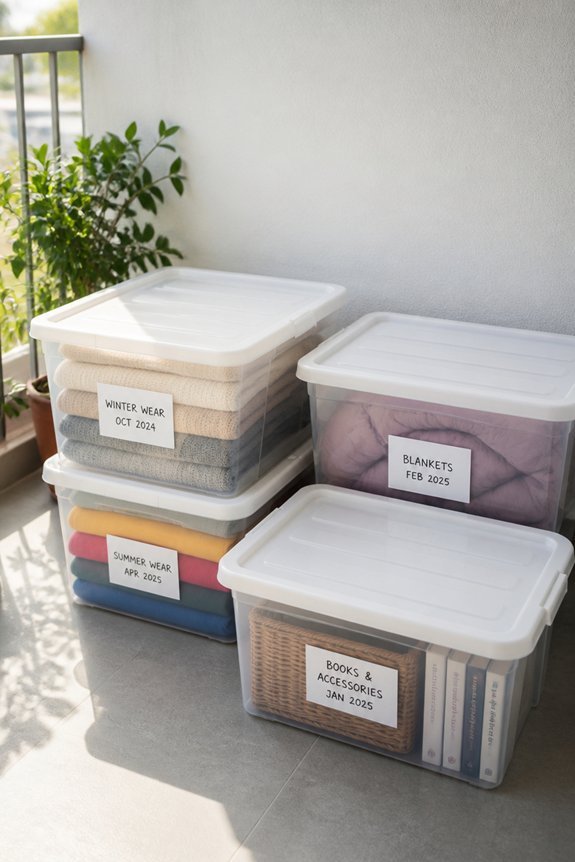
Beyond the fixed storage solutions discussed previously, sealed bins offer flexible organization for items used only during specific seasons. Winter decorations, summer garden tools, and holiday lights benefit from airtight containers that protect contents from moisture and dust. Labeling each bin with its contents, category, and storage date prevents confusion during retrieval. Clear plastic bins allow quick visual identification without opening them.
Stacking bins vertically maximizes vertical space on balconies with limited square footage. Waterproof bins specifically designed for outdoor use resist weather damage better than standard plastic containers. Organizing by season guarantees frequently needed items remain accessible while off-season goods stay protected and out of the way.
Add a Utility Cart for Mobile Balcony Storage
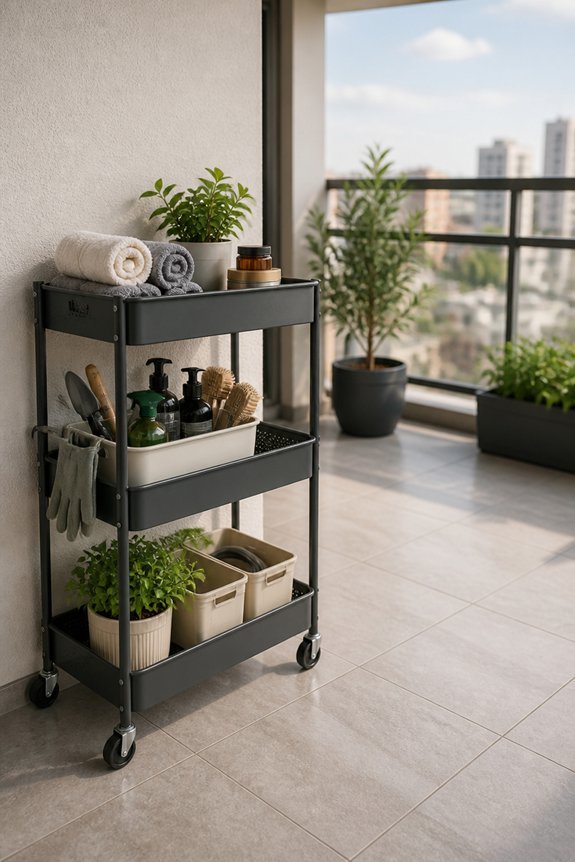
A wheeled utility cart provides movable storage that adapts to changing balcony needs and layouts. These carts, typically made from metal or plastic, accommodate gardening supplies, cleaning equipment, and seasonal items. Multiple tiers maximize vertical space while keeping contents organized and accessible.
Rolling casters allow easy repositioning around the balcony without permanent installation. Metal carts resist moisture better than wooden alternatives, making them suitable for exposed areas. Owners can place carts against walls or corners when not in use, freeing up floor space. Select carts with lockable wheels to prevent unwanted movement during wind or frequent access.
Build a Garden Tool Rack for Outdoor Gear
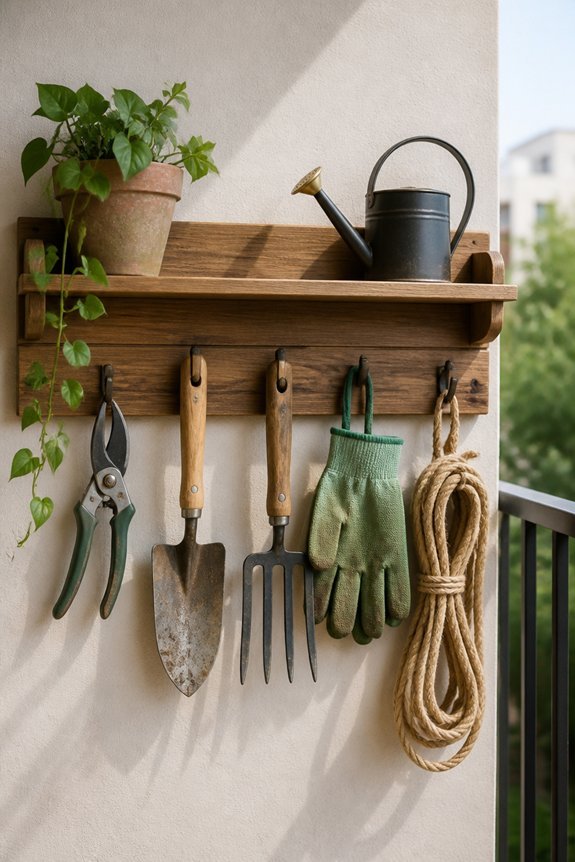
Garden tool racks offer dedicated storage that keeps equipment organized, accessible, and protected from weather exposure. Wall-mounted options work well for balconies with limited space, holding items like shovels, rakes, and pruning shears securely. Vertical designs maximize storage without consuming floor area. Corner racks fit awkwardly shaped spaces effectively.
Materials include metal, wood, or plastic, each offering different durability levels. Installing racks near the balcony entrance provides convenient access for frequent gardening tasks. Hooks accommodate various tool sizes and weights. Proper organization reduces time spent searching for items and extends tool lifespan by preventing rust and damage from contact with other equipment.
Mount a Pegboard for Small Tools and Hardware
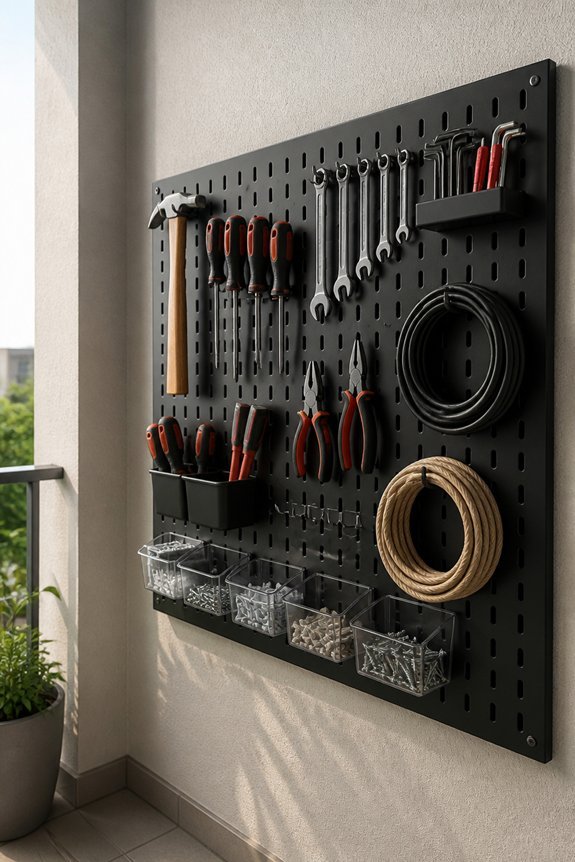
Pegboards complement tool racks by offering flexible storage for smaller items that require individual hanging space. Installing a pegboard on a dry balcony wall creates organized access to hardware, screws, nails, drill bits, and small wrenches.
The system uses interchangeable hooks, baskets, and shelves that adjust to fit specific tool sizes and storage needs. Pegboards work well in narrow spaces where wall-mounted storage matters most. Users can rearrange components as their tool collection changes, making the setup adaptable over time.
Painted pegboards in neutral colors blend seamlessly with balcony décor while maintaining functionality and visibility for quick tool identification and retrieval.
Frequently Asked Questions
How Often Should I Reorganize My Balcony Storage System to Maintain Optimal Functionality?
One should reorganize balcony storage systems quarterly to maintain peak functionality. Seasonal changes, weather exposure, and accumulated debris necessitate regular assessment. Monthly quick tidying helps prevent clutter buildup, ensuring accessibility and protecting stored items from damage.
What’s the Best Way to Protect Stored Items From Extreme Weather Conditions Year-Round?
One protects stored balcony items through weatherproof containers, tarps, and strategic placement away from direct elements. Sealed storage boxes, elevated platforms, and regular maintenance inspections help preserve items across all seasons effectively.
Can I Install Permanent Shelving on a Rental Apartment Balcony Without Losing Deposits?
Like a renter who installed permanent shelving and lost their deposit, most landlords prohibit permanent fixtures. Renters should use freestanding, removable shelving units instead. These maintain the balcony’s original condition, preserve deposits, and provide flexible storage solutions.
Which Storage Solutions Work Best for Balconies With Limited Weight-Bearing Capacity?
Lightweight options prove most effective for balconies with limited weight-bearing capacity. Hanging organizers, fabric storage bins, wall-mounted shelves, and over-the-rail hooks distribute weight efficiently. Foldable containers and vertical storage maximize space while minimizing structural stress.
How Do I Prevent Moisture and Mildew Buildup in Sealed Storage Containers?
A forgotten basement box taught one homeowner that stagnant air breeds decay. Prevention requires ventilation holes drilled into container bottoms, silica gel packets refreshed monthly, and ensuring contents dry completely before sealing.
Conclusion
Organizing a dry balcony requires systematic placement of vertical shelving, weather-resistant cabinets, and labeled storage containers. Tools, chemicals, and seasonal items need designated zones, like a pegboard wall or garden tool rack. Mobile carts and sealed bins facilitate easy access and maintenance. Like a well-organized workshop, a tidy balcony maximizes functionality and protects valuable equipment from environmental damage while keeping essentials readily available.